


 Скачать презентацию Growth Introduction to Economics ETH Zürich Prof Dr
5ed922805c1b8638097d640a4da5b1bb.ppt
- Количество слайдов: 83
 Growth Introduction to Economics ETH Zürich, Prof. Dr. Jan-Egbert Sturm Winter Term 2006/07 10 b
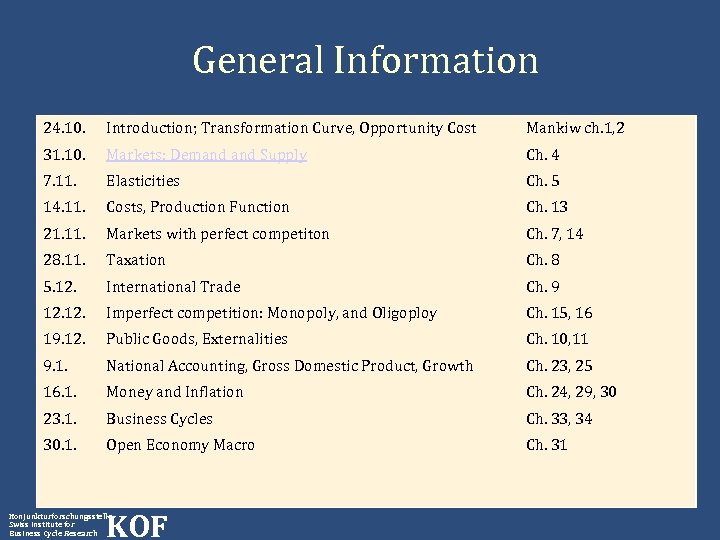 General Information 24. 10. Introduction; Transformation Curve, Opportunity Cost Mankiw ch. 1, 2 31. 10. Markets: Demand Supply Ch. 4 7. 11. Elasticities Ch. 5 14. 11. Costs, Production Function Ch. 13 21. 11. Markets with perfect competiton Ch. 7, 14 28. 11. Taxation Ch. 8 5. 12. International Trade Ch. 9 12. Imperfect competition: Monopoly, and Oligoploy Ch. 15, 16 19. 12. Public Goods, Externalities Ch. 10, 11 9. 1. National Accounting, Gross Domestic Product, Growth Ch. 23, 25 16. 1. Money and Inflation Ch. 24, 29, 30 23. 1. Business Cycles Ch. 33, 34 30. 1. Open Economy Macro Ch. 31 KOF Konjunkturforschungsstelle Swiss Institute for Business Cycle Research
 The Production Function • Production functions with constant returns to scale have an interesting implication. • Setting x = 1/L, • Y/ L = A F(1, K/ L, H/ L, N/ L) Where: Y/L = output per worker K/L = physical capital per worker H/L = human capital per worker N/L = natural resources per worker KOF Konjunkturforschungsstelle Swiss Institute for Business Cycle Research
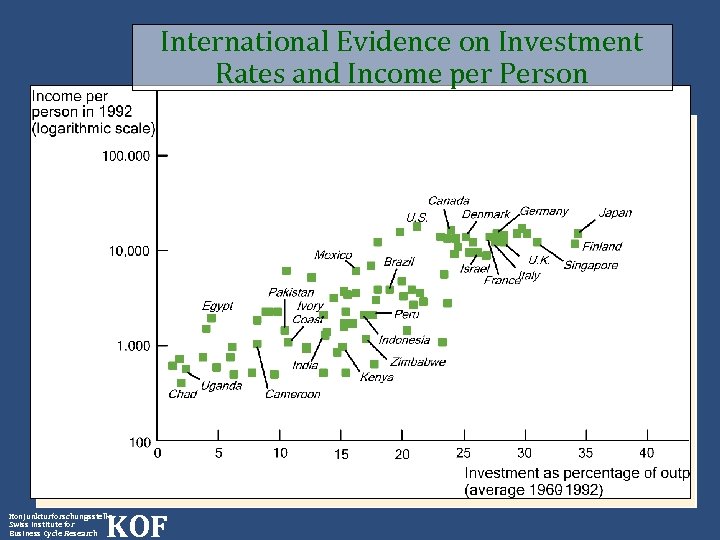 International Evidence on Investment Rates and Income per Person KOF Konjunkturforschungsstelle Swiss Institute for Business Cycle Research
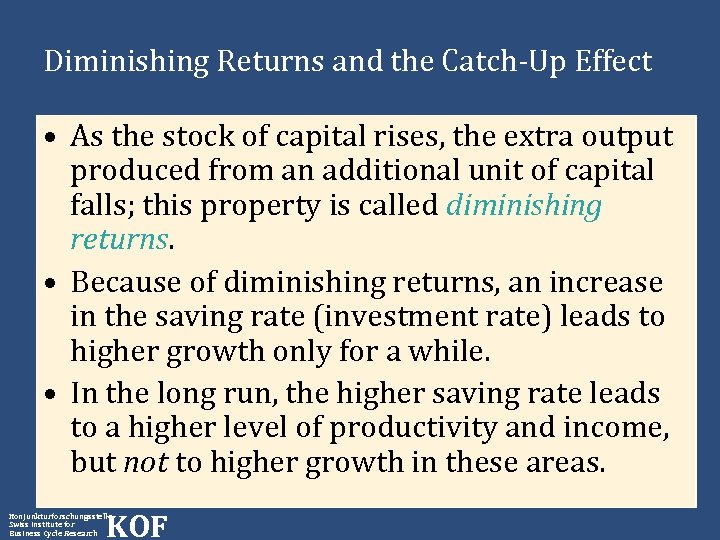 Diminishing Returns and the Catch-Up Effect • As the stock of capital rises, the extra output produced from an additional unit of capital falls; this property is called diminishing returns. • Because of diminishing returns, an increase in the saving rate (investment rate) leads to higher growth only for a while. • In the long run, the higher saving rate leads to a higher level of productivity and income, but not to higher growth in these areas. KOF Konjunkturforschungsstelle Swiss Institute for Business Cycle Research
 Diminishing Returns and the Catch-Up Effect • The catch-up effect refers to the property whereby countries that start off poor tend to grow more rapidly than countries that start off rich. KOF Konjunkturforschungsstelle Swiss Institute for Business Cycle Research
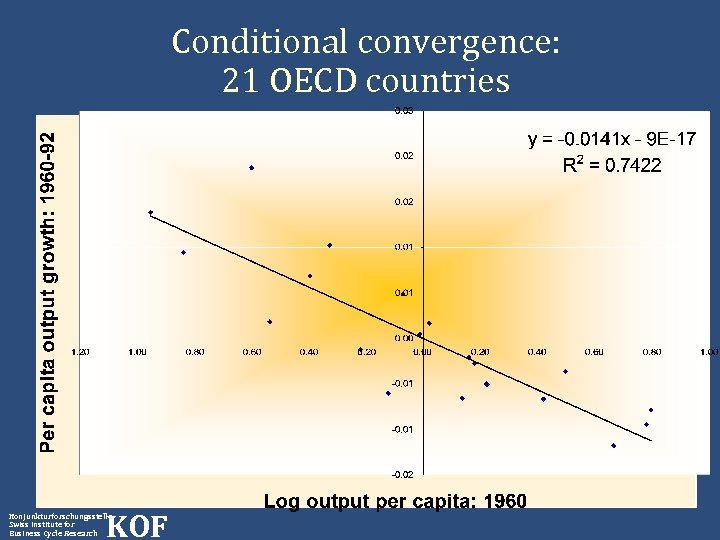 Conditional convergence: 21 OECD countries KOF Konjunkturforschungsstelle Swiss Institute for Business Cycle Research
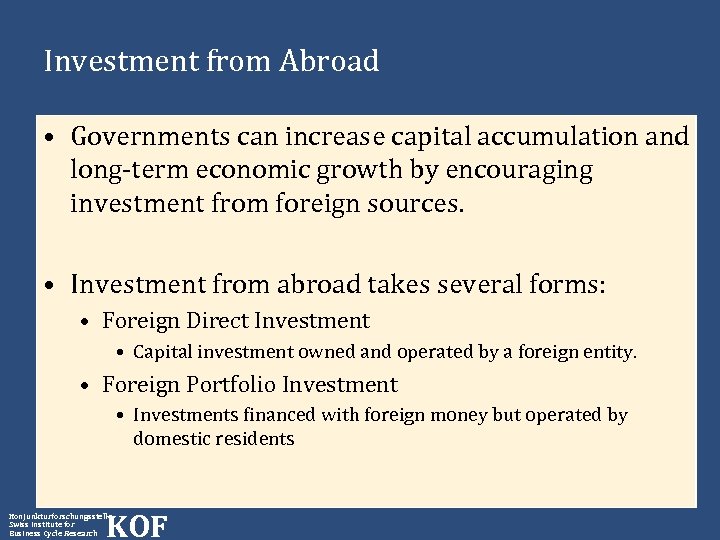 Investment from Abroad • Governments can increase capital accumulation and long-term economic growth by encouraging investment from foreign sources. • Investment from abroad takes several forms: • Foreign Direct Investment • Capital investment owned and operated by a foreign entity. • Foreign Portfolio Investment • Investments financed with foreign money but operated by domestic residents KOF Konjunkturforschungsstelle Swiss Institute for Business Cycle Research
 Education • For a country’s long-run growth, education is at least as important as investment in physical capital. • In the United States, each year of schooling raises a person’s wage, on average, by about 10 percent. • Thus, one way the government can enhance the standard of living is to provide schools and encourage the population to take advantage of them. KOF Konjunkturforschungsstelle Swiss Institute for Business Cycle Research
 Education • An educated person might generate new ideas about how best to produce goods and services, which in turn, might enter society’s pool of knowledge and provide an external benefit to others. • One problem facing some poor countries is the brain drain—the emigration of many of the most highly educated workers to rich countries. KOF Konjunkturforschungsstelle Swiss Institute for Business Cycle Research
 Free Trade • Some countries engage in. . . • . . . inward-orientated trade policies, avoiding interaction with other countries. • . . . outward-orientated trade policies, encouraging interaction with other countries. KOF Konjunkturforschungsstelle Swiss Institute for Business Cycle Research
 Research and Development • The advance of technological knowledge has led to higher standards of living. • Most technological advance comes from private research by firms and individual inventors. • Government can encourage the development of new technologies through research grants, tax breaks, and the patent system. KOF Konjunkturforschungsstelle Swiss Institute for Business Cycle Research
 Money and Inflation Introduction to Economics ETH Zürich, Prof. Dr. Jan-Egbert Sturm Winter Term 2006/07 11
 THE MEANING OF MONEY • Money is the set of assets in an economy that people regularly use to buy goods and services from other people. KOF Konjunkturforschungsstelle Swiss Institute for Business Cycle Research
 The Functions of Money • Money has three functions in the economy: • Medium of exchange • Unit of account • Store of value • Medium of Exchange • A medium of exchange is an item that buyers give to sellers when they want to purchase goods and services. • A medium of exchange is anything that is readily acceptable as payment. KOF Konjunkturforschungsstelle Swiss Institute for Business Cycle Research
 The Functions of Money • Unit of Account • A unit of account is the yardstick people use to post prices and record debts. • Store of Value • A store of value is an item that people can use to transfer purchasing power from the present to the future. KOF Konjunkturforschungsstelle Swiss Institute for Business Cycle Research
 The Kinds of Money • Commodity money takes the form of a commodity with intrinsic value. • Examples: Gold, silver, cigarettes. • Fiat money is used as money because of government decree. • It does not have intrinsic value. • Examples: Coins, currency, check deposits. KOF Konjunkturforschungsstelle Swiss Institute for Business Cycle Research
 BANKS AND THE MONEY SUPPLY • Banks can influence the quantity of demand deposits in the economy and the money supply. • Reserves are deposits that banks have received but have not loaned out. • In a fractional-reserve banking system, banks hold a fraction of the money deposited as reserves and lend out the rest. • Reserve Ratio • The reserve ratio is the fraction of deposits that banks hold as reserves. KOF Konjunkturforschungsstelle Swiss Institute for Business Cycle Research
 Money Creation with Fractional-Reserve Banking • When a bank makes a loan from its reserves, the money supply increases. • The money supply is affected by the amount deposited in banks and the amount that banks loan. • Deposits into a bank are recorded as both assets and liabilities. • The fraction of total deposits that a bank has to keep as reserves is called the reserve ratio. • Loans become an asset to the bank. KOF Konjunkturforschungsstelle Swiss Institute for Business Cycle Research
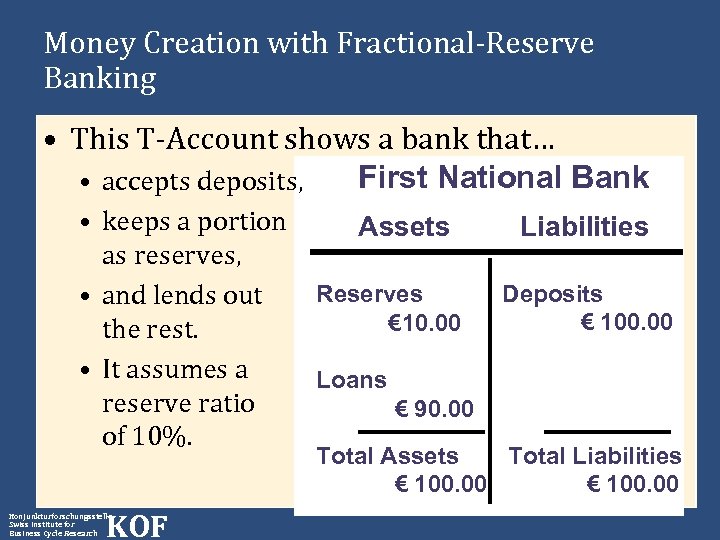 Money Creation with Fractional-Reserve Banking • This T-Account shows a bank that… First National Bank • accepts deposits, • keeps a portion as reserves, • and lends out the rest. • It assumes a reserve ratio of 10%. KOF Konjunkturforschungsstelle Swiss Institute for Business Cycle Research Assets Reserves € 10. 00 Liabilities Deposits € 100. 00 Loans € 90. 00 Total Assets Total Liabilities € 100. 00
 Money Creation with Fractional-Reserve Banking • When one bank loans money, that money is generally deposited into another bank. • This creates more deposits and more reserves to be lent out. • When a bank makes a loan from its reserves, the money supply increases. KOF Konjunkturforschungsstelle Swiss Institute for Business Cycle Research
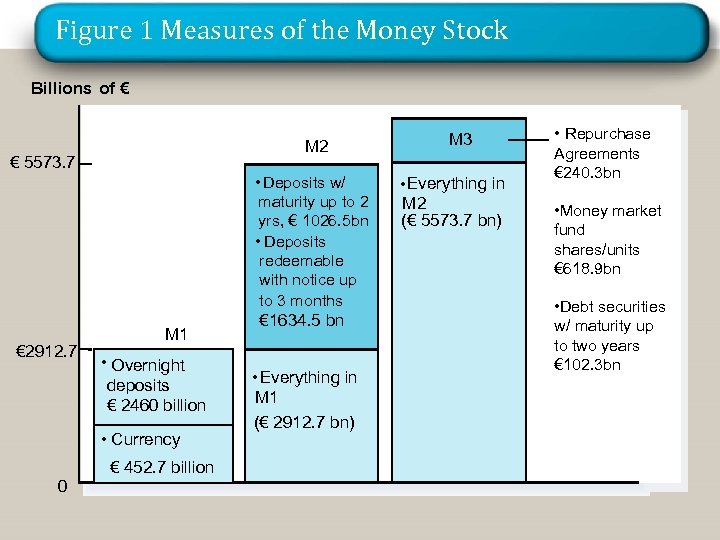 Figure 1 Measures of the Money Stock Billions of € M 2 € 5573. 7 • Deposits w/ maturity up to 2 yrs, € 1026. 5 bn • Deposits redeemable with notice up to 3 months € 2912. 7 M 1 • Overnight deposits € 2460 billion • Currency € 452. 7 billion 0 KOF Konjunkturforschungsstelle Swiss Institute for Business Cycle Research € 1634. 5 bn • Everything in M 1 (€ 2912. 7 bn) M 3 • Everything in M 2 (€ 5573. 7 bn) • Repurchase Agreements € 240. 3 bn • Money market fund shares/units € 618. 9 bn • Debt securities w/ maturity up to two years € 102. 3 bn
 Functions of a Central Bank • Two Primary Functions of Central Banks • Act as a banker’s bank, making loans to banks and as a lender of last resort. • Conducts monetary policy • by controlling the money supply. • by controlling the internal value of the currency (price stability) • by controlling the external value of the currency (exchange rate) KOF Konjunkturforschungsstelle Swiss Institute for Business Cycle Research
 The Central Bank’s Tools of Monetary Control • The Central Bank has three tools in its monetary toolbox: • Open-market operations • Changing the reserve requirement • Changing the discount rate KOF Konjunkturforschungsstelle Swiss Institute for Business Cycle Research
 Problems in Controlling the Money Supply • The CB’s control of the money supply is not precise. • The CB must wrestle with two problems that arise due to fractional-reserve banking. • The CB does not control the amount of money that households choose to hold as deposits in banks. • The CB does not control the amount of money that bankers choose to lend. KOF Konjunkturforschungsstelle Swiss Institute for Business Cycle Research
 Measuring the Cost of Living • Inflation refers to a situation in which the economy’s overall price level is rising. • The inflation rate is the percentage change in the price level from the previous period. KOF Konjunkturforschungsstelle Swiss Institute for Business Cycle Research
 THE CONSUMER PRICE INDEX • The consumer price index (CPI) is a measure of the overall cost of the goods and services bought by a typical consumer. • The BFS reports the Swiss CPI each month. • It is used to monitor changes in the cost of living over time. KOF Konjunkturforschungsstelle Swiss Institute for Business Cycle Research
 How the Consumer Price Index Is Calculated • Fix the Basket: Determine what prices are most important to the typical consumer. • The BFS identifies a market basket of goods and services the typical consumer buys and sets the respective weights based upon a consumer survey. KOF Konjunkturforschungsstelle Swiss Institute for Business Cycle Research
 How the Consumer Price Index Is Calculated • Find the Prices: Find the prices of each of the goods and services in the basket for each point in time. • Compute the Basket’s Cost: Use the data on prices to calculate the cost of the basket of goods and services at different times. • Choose a Base Year : Designate one year as the base year, making it the benchmark against which other years are compared. KOF Konjunkturforschungsstelle Swiss Institute for Business Cycle Research
 How the Consumer Price Index Is Calculated • Compute the Index: Compute the index by dividing the price of the basket in one year by the price in the base year and multiplying by 100. • Compute the inflation rate: The inflation rate is the percentage change in the price index from the preceding period. KOF Konjunkturforschungsstelle Swiss Institute for Business Cycle Research
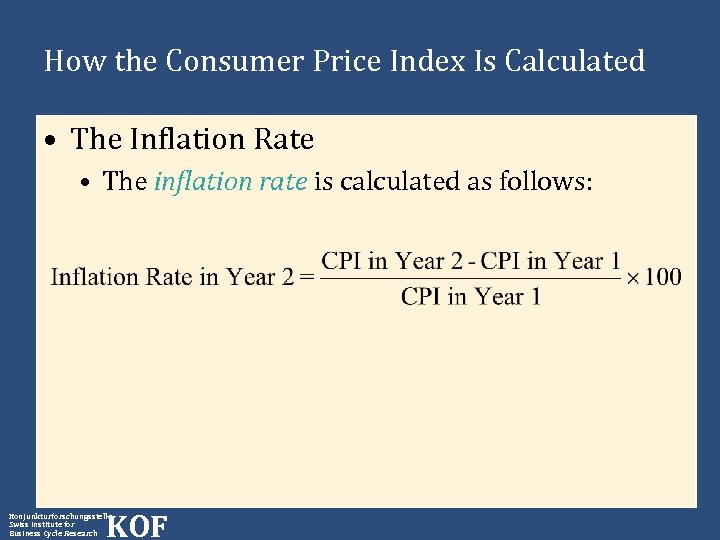 How the Consumer Price Index Is Calculated • The Inflation Rate • The inflation rate is calculated as follows: KOF Konjunkturforschungsstelle Swiss Institute for Business Cycle Research
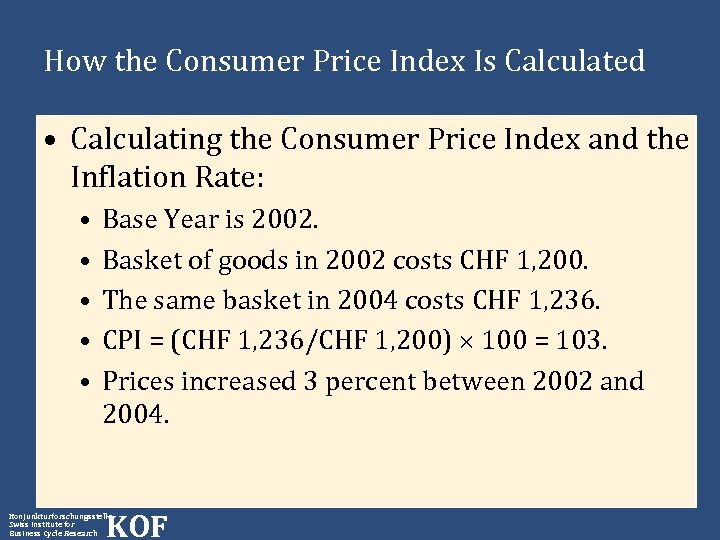 How the Consumer Price Index Is Calculated • Calculating the Consumer Price Index and the Inflation Rate: • • • Base Year is 2002. Basket of goods in 2002 costs CHF 1, 200. The same basket in 2004 costs CHF 1, 236. CPI = (CHF 1, 236/CHF 1, 200) 100 = 103. Prices increased 3 percent between 2002 and 2004. KOF Konjunkturforschungsstelle Swiss Institute for Business Cycle Research
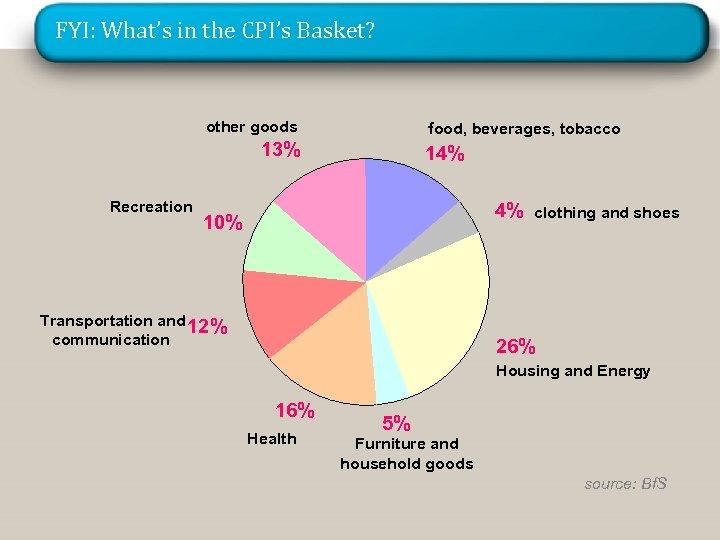 FYI: What’s in the CPI’s Basket? other goods food, beverages, tobacco 13% Recreation 14% 4% 10% Transportation and 12% communication clothing and shoes 26% Housing and Energy 16% Health 5% Furniture and household goods source: Bf. S KOF Konjunkturforschungsstelle Swiss Institute for Business Cycle Research
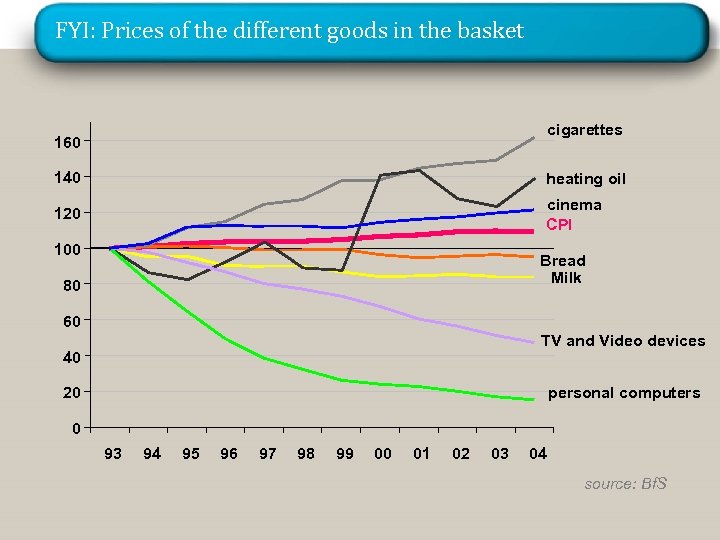 FYI: Prices of the different goods in the basket cigarettes 160 140 heating oil 120 cinema CPI 100 Bread Milk 80 60 TV and Video devices 40 personal computers 20 0 93 94 95 96 97 98 99 00 01 02 03 04 source: Bf. S KOF Konjunkturforschungsstelle Swiss Institute for Business Cycle Research
 Problems in Measuring the Cost of Living • The CPI is an accurate measure of the selected goods that make up the typical bundle, but it is not a perfect measure of the cost of living. • Substitution bias • Introduction of new goods • Unmeasured quality changes KOF Konjunkturforschungsstelle Swiss Institute for Business Cycle Research
 Problems in Measuring the Cost of Living • The substitution bias, introduction of new goods, and unmeasured quality changes cause the CPI to overstate the true cost of living. • The issue is important because many government programs use the CPI to adjust for changes in the overall level of prices. • The CPI overstates inflation by about 1 percentage point per year. KOF Konjunkturforschungsstelle Swiss Institute for Business Cycle Research
 Real and Nominal Interest Rates • Interest represents a payment in the future for a transfer of money in the past. • The nominal interest rate is the interest rate usually reported and not corrected for inflation. • It is the interest rate that a bank pays. • The real interest rate is the nominal interest rate that is corrected for the effects of inflation. KOF Konjunkturforschungsstelle Swiss Institute for Business Cycle Research
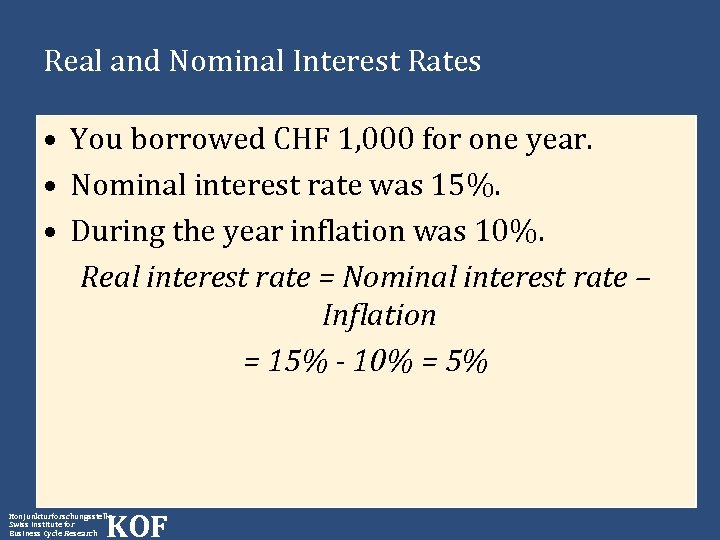 Real and Nominal Interest Rates • You borrowed CHF 1, 000 for one year. • Nominal interest rate was 15%. • During the year inflation was 10%. Real interest rate = Nominal interest rate – Inflation = 15% - 10% = 5% KOF Konjunkturforschungsstelle Swiss Institute for Business Cycle Research
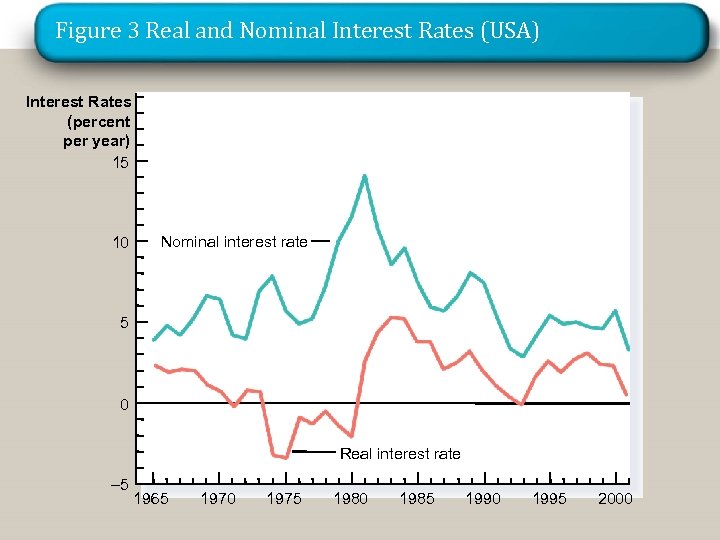 Figure 3 Real and Nominal Interest Rates (USA) Interest Rates (percent per year) 15 10 Nominal interest rate 5 0 Real interest rate – 5 1965 KOF Konjunkturforschungsstelle Swiss Institute for Business Cycle Research 1970 1975 1980 1985 1990 1995 2000
 THE CLASSICAL THEORY OF INFLATION • Inflation is an increase in the overall level of prices. • Hyperinflation is an extraordinarily high rate of inflation. KOF Konjunkturforschungsstelle Swiss Institute for Business Cycle Research
 THE CLASSICAL THEORY OF INFLATION • Inflation: Historical Aspects • Over the past 60 years, prices have risen on average about 5 percent per year in the U. S. • Deflation, meaning decreasing average prices, occurred in the U. S. in the nineteenth century. • Hyperinflation refers to high rates of inflation such as Germany experienced in the 1920 s. • In the 1970 s prices rose by 7 percent per year. • During the 1990 s, prices rose at an average rate of 2 percent per year. KOF Konjunkturforschungsstelle Swiss Institute for Business Cycle Research
 THE CLASSICAL THEORY OF INFLATION • The quantity theory of money is used to explain the long-run determinants of the price level and the inflation rate. • Inflation is an economy-wide phenomenon that concerns the value of the economy’s medium of exchange. • When the overall price level rises, the value of money falls. KOF Konjunkturforschungsstelle Swiss Institute for Business Cycle Research
 Money Supply, Money Demand, and Monetary Equilibrium • The money supply is a policy variable that is controlled by the CB. • Through instruments such as open-market operations, the CB directly controls the quantity of money supplied. • Money demand has several determinants, including interest rates and the average level of prices in the economy. KOF Konjunkturforschungsstelle Swiss Institute for Business Cycle Research
 Money Supply, Money Demand, and Monetary Equilibrium • People hold money because it is the medium of exchange. • The amount of money people choose to hold depends on the prices of goods and services. • In the long run, the overall level of prices adjusts to the level at which the demand for money equals the supply. KOF Konjunkturforschungsstelle Swiss Institute for Business Cycle Research
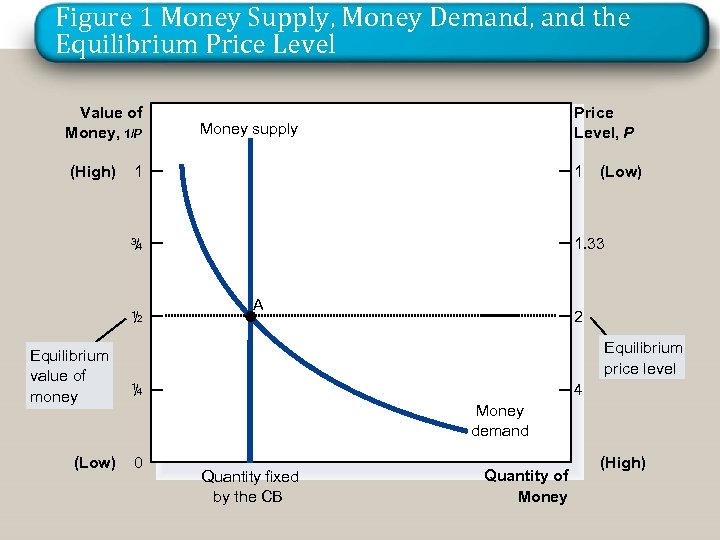 Figure 1 Money Supply, Money Demand, and the Equilibrium Price Level Value of Money, 1/P (High) Price Level, P Money supply 1 1 3 1. 33 /4 / 12 Equilibrium value of money (Low) 2 Equilibrium price level 4 / 14 Money demand 0 KOF Konjunkturforschungsstelle Swiss Institute for Business Cycle Research A (Low) Quantity fixed by the CB Quantity of Money (High)
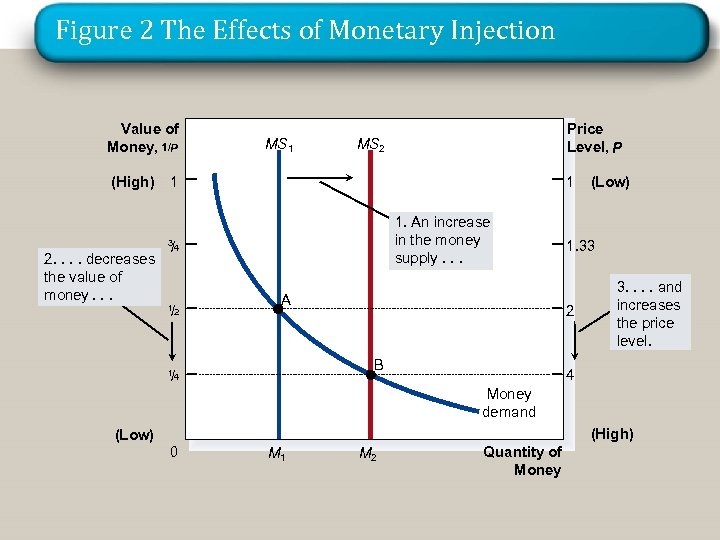 Figure 2 The Effects of Monetary Injection Value of Money, 1/P (High) MS 1 MS 2 1 1 1. An increase in the money supply. . . 3 2. . decreases the value of money. . . Price Level, P /4 12 / A 1. 33 2 B / 14 (Low) 3. . and increases the price level. 4 Money demand (High) (Low) 0 KOF Konjunkturforschungsstelle Swiss Institute for Business Cycle Research M 1 M 2 Quantity of Money
 THE CLASSICAL THEORY OF INFLATION • The Quantity Theory of Money • How the price level is determined and why it might change over time is called the quantity theory of money. • The quantity of money available in the economy determines the value of money. • The primary cause of inflation is the growth in the quantity of money. KOF Konjunkturforschungsstelle Swiss Institute for Business Cycle Research
 The Classical Dichotomy and Monetary Neutrality • Nominal variables are variables measured in monetary units. • Real variables are variables measured in physical units. KOF Konjunkturforschungsstelle Swiss Institute for Business Cycle Research
 The Classical Dichotomy and Monetary Neutrality • According to Hume and others, real economic variables do not change with changes in the money supply. • According to the classical dichotomy, different forces influence real and nominal variables. • Changes in the money supply affect nominal variables but not real variables. • The irrelevance of monetary changes for real variables is called monetary neutrality. KOF Konjunkturforschungsstelle Swiss Institute for Business Cycle Research
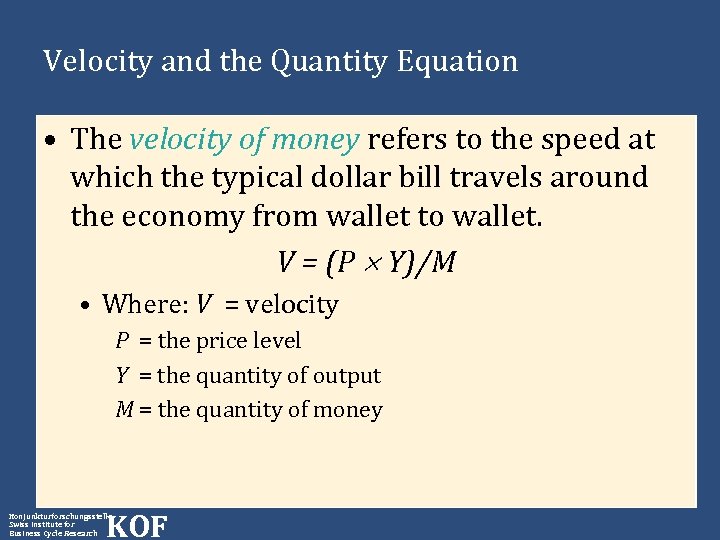 Velocity and the Quantity Equation • The velocity of money refers to the speed at which the typical dollar bill travels around the economy from wallet to wallet. V = (P Y)/M • Where: V = velocity P = the price level Y = the quantity of output M = the quantity of money KOF Konjunkturforschungsstelle Swiss Institute for Business Cycle Research
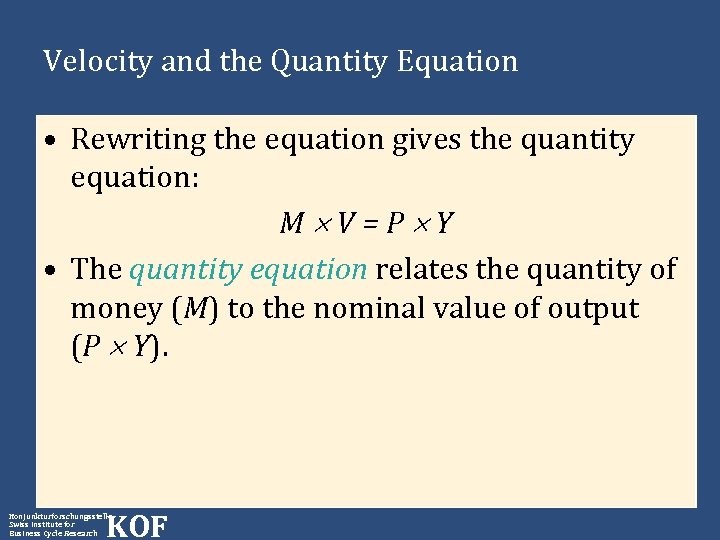 Velocity and the Quantity Equation • Rewriting the equation gives the quantity equation: M V=P Y • The quantity equation relates the quantity of money (M) to the nominal value of output (P Y). KOF Konjunkturforschungsstelle Swiss Institute for Business Cycle Research
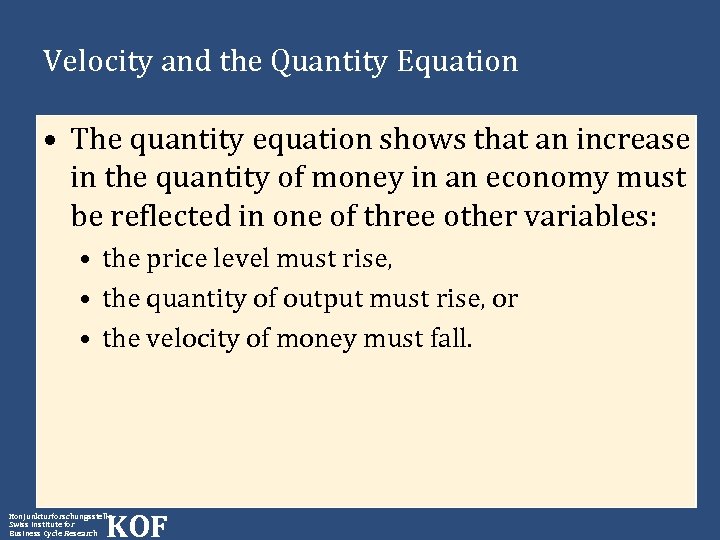 Velocity and the Quantity Equation • The quantity equation shows that an increase in the quantity of money in an economy must be reflected in one of three other variables: • the price level must rise, • the quantity of output must rise, or • the velocity of money must fall. KOF Konjunkturforschungsstelle Swiss Institute for Business Cycle Research
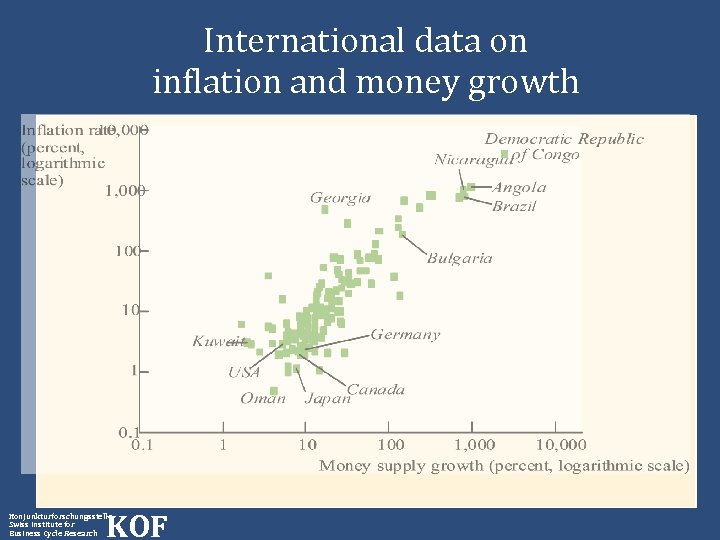 International data on inflation and money growth KOF Konjunkturforschungsstelle Swiss Institute for Business Cycle Research
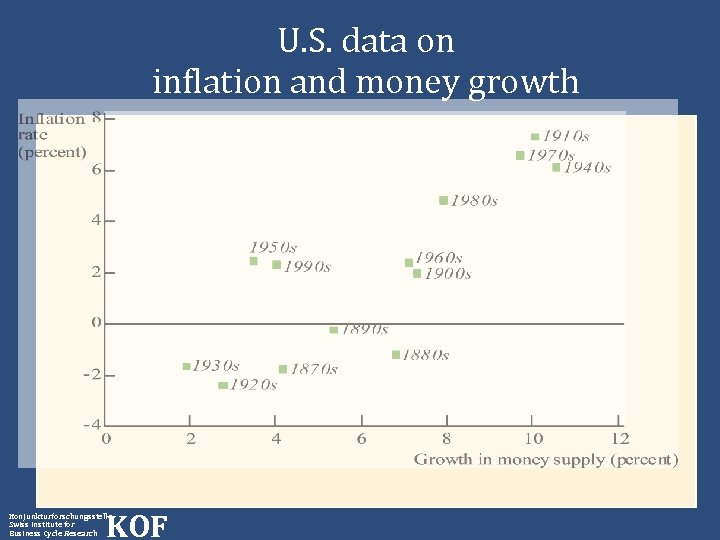 U. S. data on inflation and money growth KOF Konjunkturforschungsstelle Swiss Institute for Business Cycle Research
 Velocity and the Quantity Equation • The Equilibrium Price Level, Inflation Rate, and the Quantity Theory of Money • The velocity of money is relatively stable over time. • When the SNB changes the quantity of money, it causes proportionate changes in the nominal value of output (P Y). • Because money is neutral, money does not affect output. KOF Konjunkturforschungsstelle Swiss Institute for Business Cycle Research
 CASE STUDY: Money and Prices during Four Hyperinflations • Hyperinflation is inflation that exceeds 50 percent per month. • Hyperinflation occurs in some countries because the government prints too much money to pay for its spending. KOF Konjunkturforschungsstelle Swiss Institute for Business Cycle Research
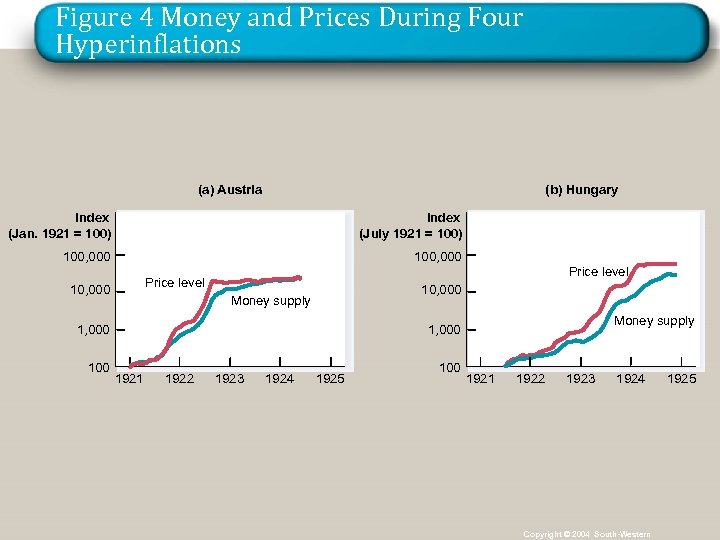 Figure 4 Money and Prices During Four Hyperinflations (a) Austria (b) Hungary Index (Jan. 1921 = 100) Index (July 1921 = 100) 100, 000 Price level 10, 000 Money supply 1, 000 1921 1922 KOF Konjunkturforschungsstelle Swiss Institute for Business Cycle Research Money supply 1, 000 1923 1924 1925 100 1921 1922 1923 1924 Copyright © 2004 South-Western 1925
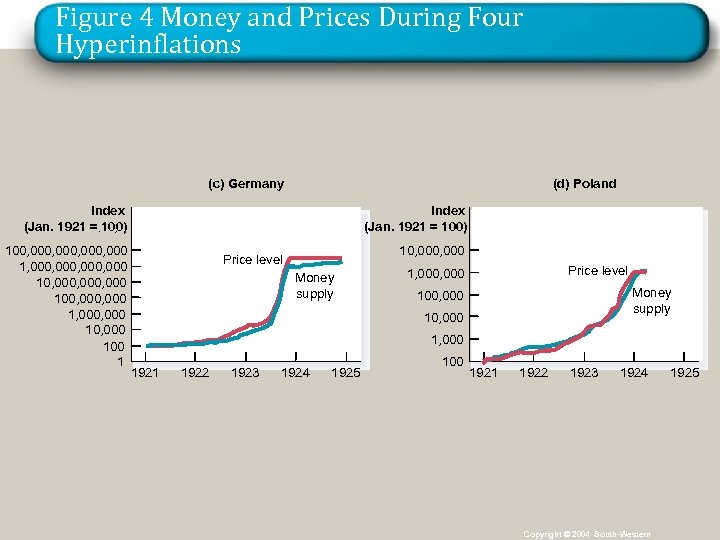 Figure 4 Money and Prices During Four Hyperinflations (c) Germany (d) Poland Index (Jan. 1921 = 100) 100, 000, 000 1, 000, 000 10, 000, 000 100, 000 1, 000 10, 000 1 Index (Jan. 1921 = 100) Money supply Price level 1, 000 Money supply 100, 000 1, 000 1921 KOF Konjunkturforschungsstelle Swiss Institute for Business Cycle Research 10, 000 Price level 1922 1923 1924 1925 100 1921 1922 1923 1924 Copyright © 2004 South-Western 1925
 The Inflation Tax • When the government raises revenue by printing money, it is said to levy an inflation tax. • An inflation tax is like a tax on everyone who holds money. • The inflation ends when the government institutes fiscal reforms such as cuts in government spending. KOF Konjunkturforschungsstelle Swiss Institute for Business Cycle Research
 The Fisher Effect • The Fisher effect refers to a one-to-one adjustment of the nominal interest rate to the inflation rate. • According to the Fisher effect, when the rate of inflation rises, the nominal interest rate rises by the same amount. • The real interest rate stays the same. KOF Konjunkturforschungsstelle Swiss Institute for Business Cycle Research
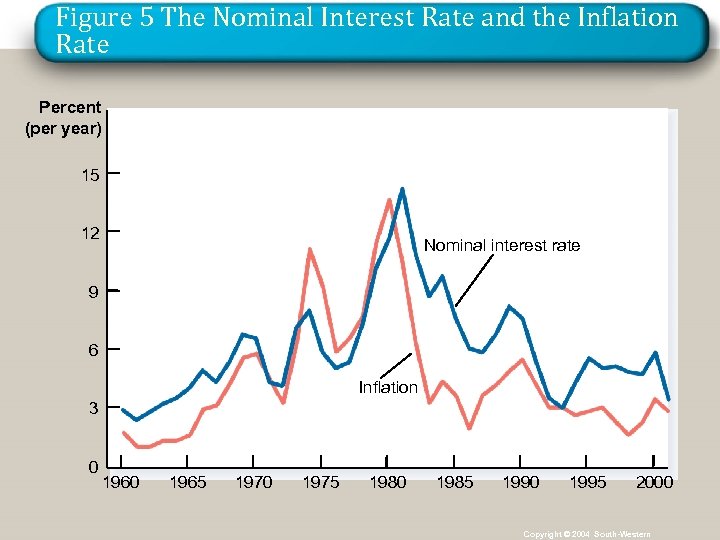 Figure 5 The Nominal Interest Rate and the Inflation Rate Percent (per year) 15 12 Nominal interest rate 9 6 Inflation 3 0 1960 KOF Konjunkturforschungsstelle Swiss Institute for Business Cycle Research 1965 1970 1975 1980 1985 1990 1995 2000 Copyright © 2004 South-Western
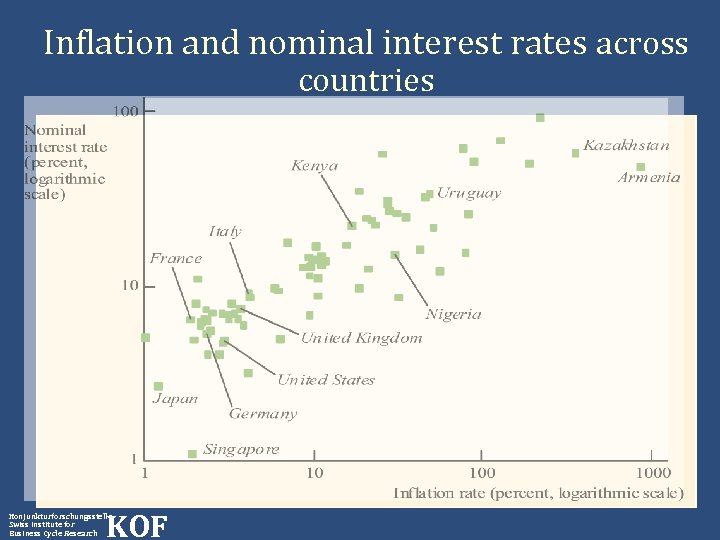 Inflation and nominal interest rates across countries KOF Konjunkturforschungsstelle Swiss Institute for Business Cycle Research
 THE COSTS OF INFLATION • A Fall in Purchasing Power? • Inflation does not in itself reduce people’s real purchasing power. KOF Konjunkturforschungsstelle Swiss Institute for Business Cycle Research
 THE COSTS OF INFLATION • • • Shoeleather costs Menu costs Relative price variability Tax distortions Confusion and inconvenience Arbitrary redistribution of wealth KOF Konjunkturforschungsstelle Swiss Institute for Business Cycle Research
 Shoeleather Costs • Shoeleather costs are the resources wasted when inflation encourages people to reduce their money holdings. • Inflation reduces the real value of money, so people have an incentive to minimize their cash holdings. KOF Konjunkturforschungsstelle Swiss Institute for Business Cycle Research
 Shoeleather Costs • Less cash requires more frequent trips to the bank to withdraw money from interestbearing accounts. • The actual cost of reducing your money holdings is the time and convenience you must sacrifice to keep less money on hand. • Also, extra trips to the bank take time away from productive activities. KOF Konjunkturforschungsstelle Swiss Institute for Business Cycle Research
 Menu Costs • Menu costs are the costs of adjusting prices. • During inflationary times, it is necessary to update price lists and other posted prices. • This is a resource-consuming process that takes away from other productive activities. KOF Konjunkturforschungsstelle Swiss Institute for Business Cycle Research
 Relative-Price Variability and the Misallocation of Resources • Inflation distorts relative prices. • Consumer decisions are distorted, and markets are less able to allocate resources to their best use. KOF Konjunkturforschungsstelle Swiss Institute for Business Cycle Research
 Inflation-Induced Tax Distortion • Inflation exaggerates the size of capital gains and increases the tax burden on this type of income. • With progressive taxation, capital gains are taxed more heavily. KOF Konjunkturforschungsstelle Swiss Institute for Business Cycle Research
 Inflation-Induced Tax Distortion • The income tax treats the nominal interest earned on savings as income, even though part of the nominal interest rate merely compensates for inflation. • The after-tax real interest rate falls, making saving less attractive. KOF Konjunkturforschungsstelle Swiss Institute for Business Cycle Research
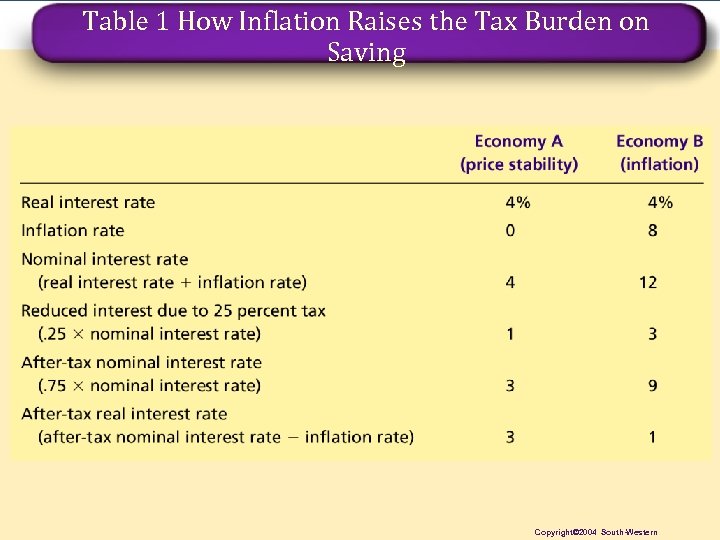 Table 1 How Inflation Raises the Tax Burden on Saving KOF Konjunkturforschungsstelle Swiss Institute for Business Cycle Research Copyright© 2004 South-Western
 Confusion and Inconvenience • When the CB increases the money supply and creates inflation, it erodes the real value of the unit of account. • Inflation causes dollars at different times to have different real values. • Therefore, with rising prices, it is more difficult to compare real revenues, costs, and profits over time. KOF Konjunkturforschungsstelle Swiss Institute for Business Cycle Research
 A Special Cost of Unexpected Inflation: Arbitrary Redistribution of Wealth • Unexpected inflation redistributes wealth among the population in a way that has nothing to do with either merit or need. • These redistributions occur because many loans in the economy are specified in terms of the unit of account—money. KOF Konjunkturforschungsstelle Swiss Institute for Business Cycle Research
 Summary • The term money refers to assets that people regularly use to buy goods and services. • Money serves three functions in an economy: as a medium of exchange, a unit of account, and a store of value. • Commodity money is money that has intrinsic value. • Fiat money is money without intrinsic value. KOF Konjunkturforschungsstelle Swiss Institute for Business Cycle Research
 Summary • The central bank regulates the monetary system. • It controls the money supply through openmarket operations or by changing reserve requirements or the discount rate. KOF Konjunkturforschungsstelle Swiss Institute for Business Cycle Research
 Summary • When banks loan out their deposits, they increase the quantity of money in the economy. • Because the CB cannot control the amount bankers choose to lend or the amount households choose to deposit in banks, the CB’s control of the money supply is imperfect. KOF Konjunkturforschungsstelle Swiss Institute for Business Cycle Research
 Summary • The consumer price index shows the cost of a basket of goods and services relative to the cost of the same basket in the base year. • The index is used to measure the overall level of prices in the economy. • The percentage change in the CPI measures the inflation rate. KOF Konjunkturforschungsstelle Swiss Institute for Business Cycle Research
 Summary • The consumer price index is an imperfect measure of the cost of living for the following three reasons: substitution bias, the introduction of new goods, and unmeasured changes in quality. • Because of measurement problems, the CPI overstates annual inflation by about 1 percentage point. KOF Konjunkturforschungsstelle Swiss Institute for Business Cycle Research
 Summary • Dollar figures from different points in time do not represent a valid comparison of purchasing power. • The real interest rate equals the nominal interest rate minus the rate of inflation. KOF Konjunkturforschungsstelle Swiss Institute for Business Cycle Research
 Summary • The overall level of prices in an economy adjusts to bring money supply and money demand into balance. • When the central bank increases the supply of money, it causes the price level to rise. • Persistent growth in the quantity of money supplied leads to continuing inflation. KOF Konjunkturforschungsstelle Swiss Institute for Business Cycle Research
 Summary • The principle of money neutrality asserts that changes in the quantity of money influence nominal variables but not real variables. • A government can pay for its spending simply by printing more money. • This can result in an “inflation tax” and hyperinflation. KOF Konjunkturforschungsstelle Swiss Institute for Business Cycle Research
 Summary • According to the Fisher effect, when the inflation rate rises, the nominal interest rate rises by the same amount, and the real interest rate stays the same. • Many people think that inflation makes them poorer because it raises the cost of what they buy. • This view is a fallacy because inflation also raises nominal incomes. KOF Konjunkturforschungsstelle Swiss Institute for Business Cycle Research
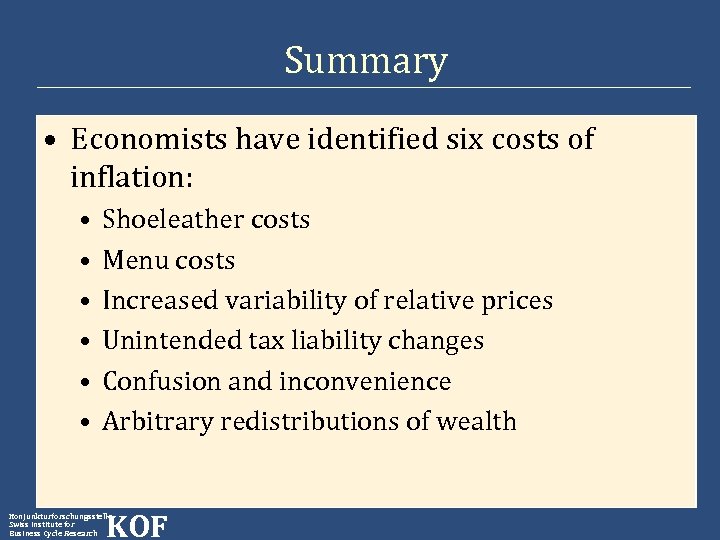 Summary • Economists have identified six costs of inflation: • • • Shoeleather costs Menu costs Increased variability of relative prices Unintended tax liability changes Confusion and inconvenience Arbitrary redistributions of wealth KOF Konjunkturforschungsstelle Swiss Institute for Business Cycle Research