


 Скачать презентацию Group Therapy Training Jerrold Lee Shapiro Ph D
2a234975b1b89a3e5e1bee8ca8e47684.ppt
- Количество слайдов: 38
 Group Therapy Training Jerrold Lee Shapiro, Ph. D. Susan Bernadett-Shapiro, Ph. D. Co-Chairs
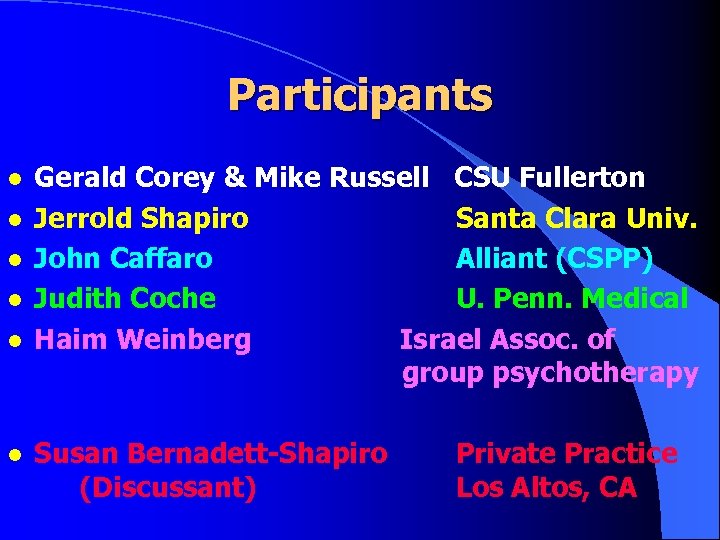 Participants l l l Gerald Corey & Mike Russell CSU Fullerton Jerrold Shapiro Santa Clara Univ. John Caffaro Alliant (CSPP) Judith Coche U. Penn. Medical Haim Weinberg Israel Assoc. of group psychotherapy Susan Bernadett-Shapiro (Discussant) Private Practice Los Altos, CA
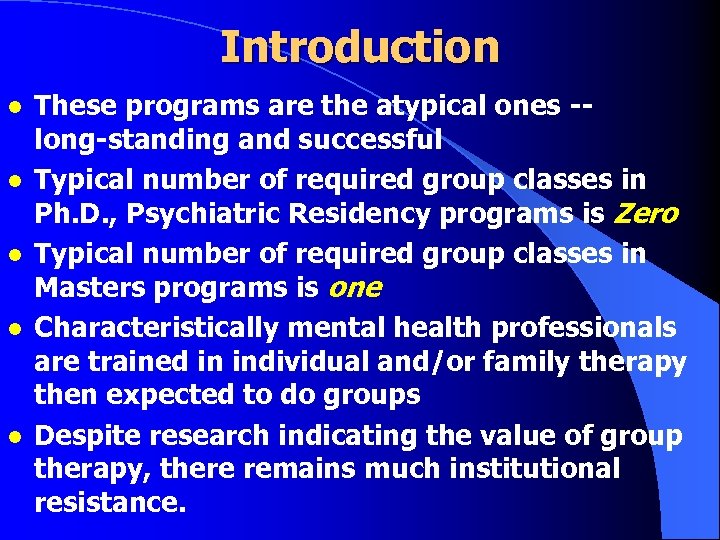 Introduction l l l These programs are the atypical ones -long-standing and successful Typical number of required group classes in Ph. D. , Psychiatric Residency programs is Zero Typical number of required group classes in Masters programs is one Characteristically mental health professionals are trained in individual and/or family therapy then expected to do groups Despite research indicating the value of group therapy, there remains much institutional resistance.
 Group Training for Undergraduates Gerald Corey & J. Michael Russell
 Combining Experiential and Didactic Methods of Teaching Group Counseling J. Michael Russell and Gerald Corey CSU Fullerton
 Experiential Approaches l l best learning how groups function weekend training workshop in which students function both as members and co-facilitators observing live demonstrations by the instructor with students in the group course dealing with students' personal concerns that might enhance or inhibit their ability to function as group counselors
 Ethical Issues in Training Group Counselors l l l Requiring self-growth activities Informed consent as a basic safeguard Combining experiential and didactic approaches in training Blending roles and multiple roles Challenge of maintaining boundaries in training Potential problems of multiple roles in teaching
 Ethical Issues in Training Group Counselors (Cont. ) l l l Pitfalls combining experiential/didactic Safeguard students and enhance learning Distinguishing between training and therapy Use of power and avoidance of exploitation Designing safeguards and creating best possible training climate
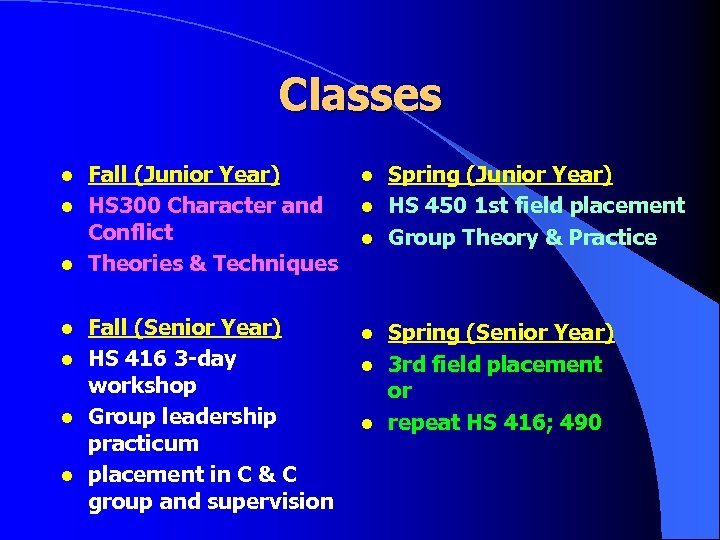 Classes l l l l Fall (Junior Year) HS 300 Character and Conflict Theories & Techniques Fall (Senior Year) HS 416 3 -day workshop Group leadership practicum placement in C & C group and supervision l l l Spring (Junior Year) HS 450 1 st field placement Group Theory & Practice Spring (Senior Year) 3 rd field placement or repeat HS 416; 490
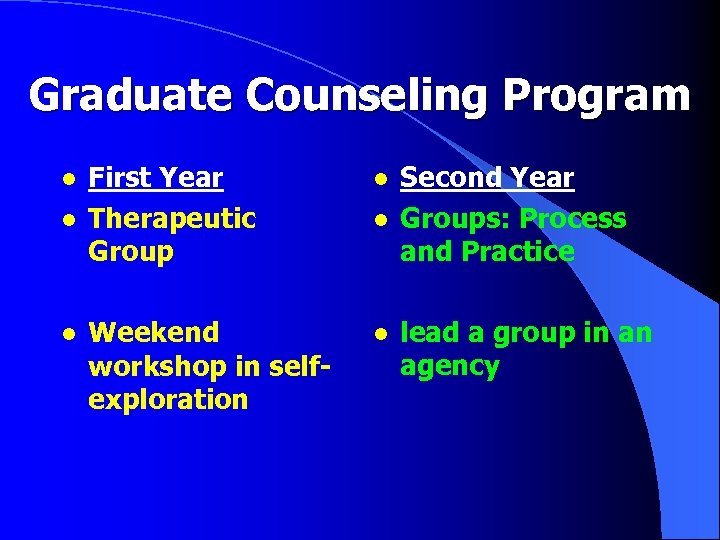 Graduate Counseling Program l l l First Year Therapeutic Group l Weekend workshop in selfexploration l l Second Year Groups: Process and Practice lead a group in an agency
 Masters Level Training Jerrold Lee Shapiro
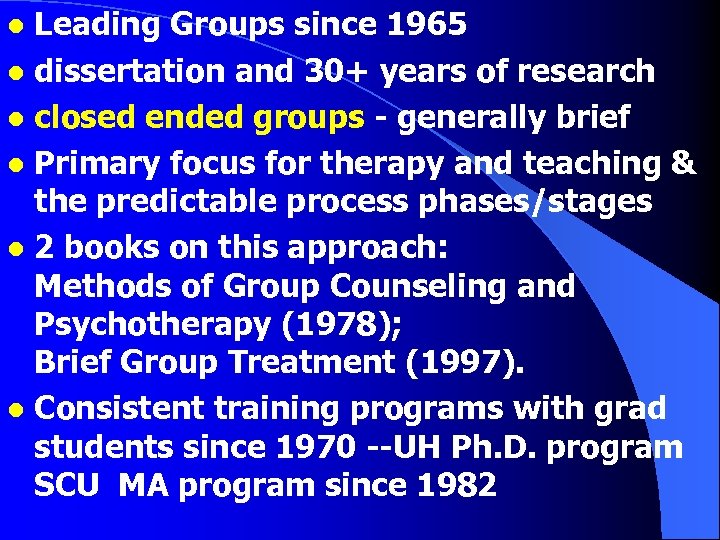 Leading Groups since 1965 l dissertation and 30+ years of research l closed ended groups - generally brief l Primary focus for therapy and teaching & the predictable process phases/stages l 2 books on this approach: Methods of Group Counseling and Psychotherapy (1978); Brief Group Treatment (1997). l Consistent training programs with grad students since 1970 --UH Ph. D. program SCU MA program since 1982 l
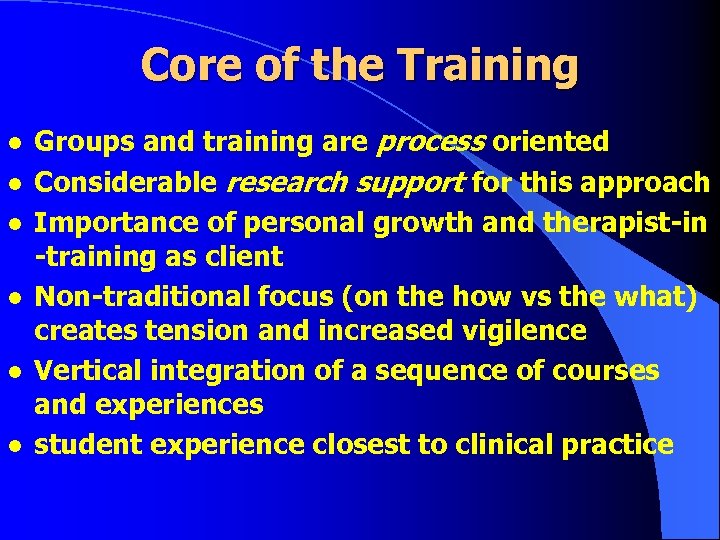 Core of the Training l l l Groups and training are process oriented Considerable research support for this approach Importance of personal growth and therapist-in -training as client Non-traditional focus (on the how vs the what) creates tension and increased vigilence Vertical integration of a sequence of courses and experiences student experience closest to clinical practice
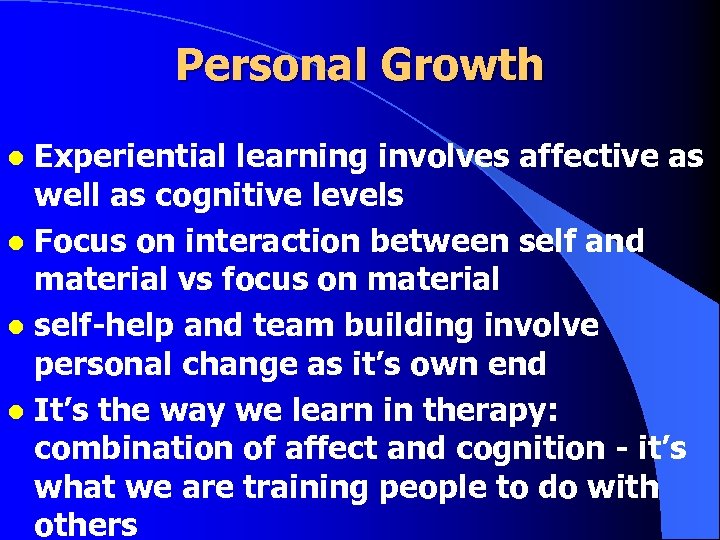 Personal Growth Experiential learning involves affective as well as cognitive levels l Focus on interaction between self and material vs focus on material l self-help and team building involve personal change as it’s own end l It’s the way we learn in therapy: combination of affect and cognition - it’s what we are training people to do with others l
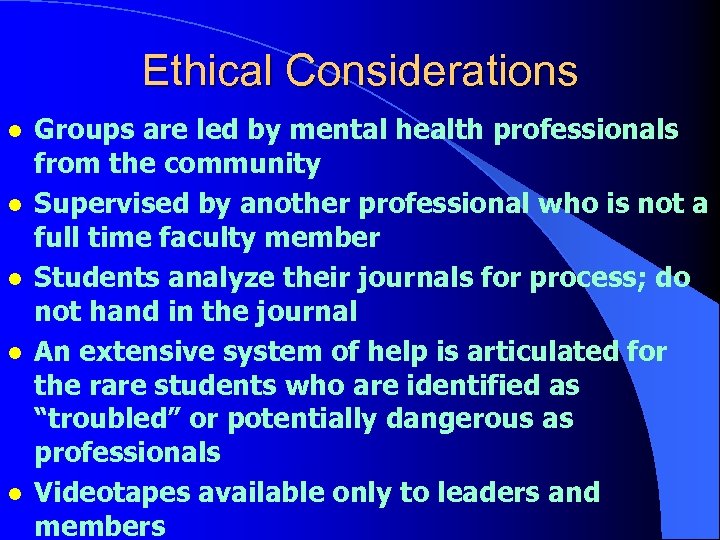 Ethical Considerations l l l Groups are led by mental health professionals from the community Supervised by another professional who is not a full time faculty member Students analyze their journals for process; do not hand in the journal An extensive system of help is articulated for the rare students who are identified as “troubled” or potentially dangerous as professionals Videotapes available only to leaders and members
 SCU PROGRAM Required of all students in the M. A. Program l Required component is one class in group therapy leadership and a lab group. l
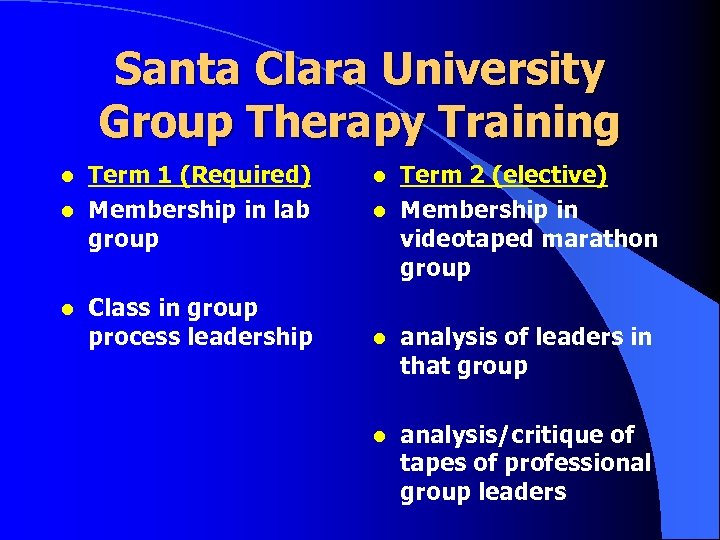 Santa Clara University Group Therapy Training l l l Term 1 (Required) Membership in lab group Class in group process leadership l l Term 2 (elective) Membership in videotaped marathon group l analysis of leaders in that group l analysis/critique of tapes of professional group leaders
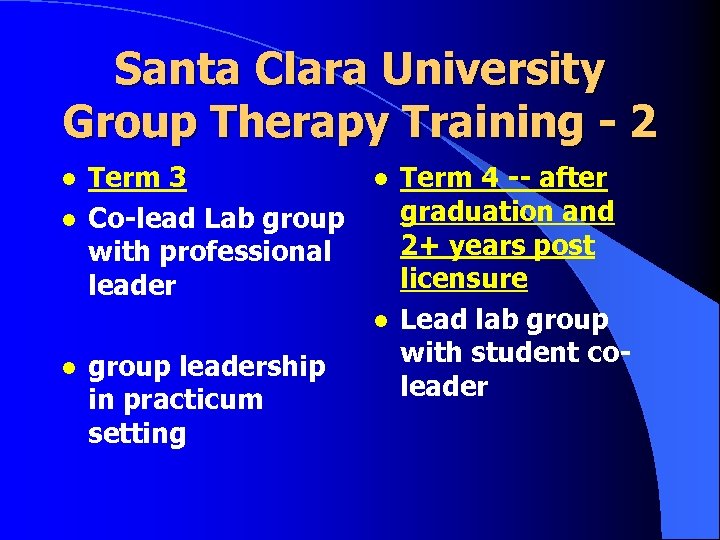 Santa Clara University Group Therapy Training - 2 l l Term 3 Co-lead Lab group with professional leader l l l group leadership in practicum setting Term 4 -- after graduation and 2+ years post licensure Lead lab group with student coleader
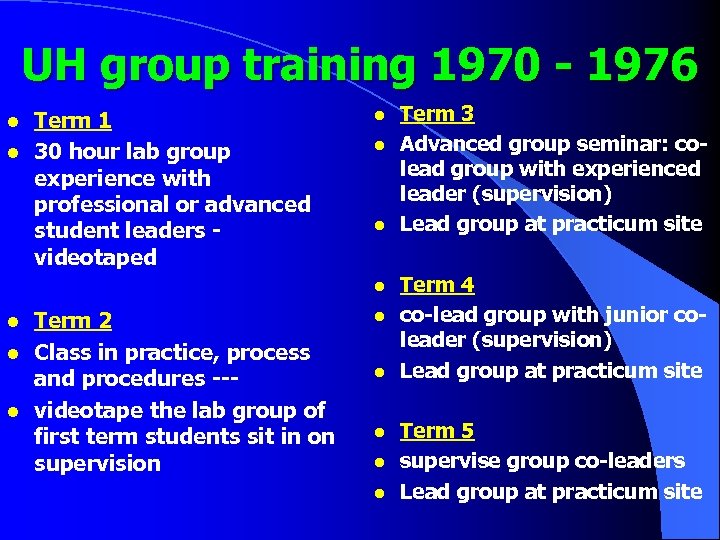 UH group training 1970 - 1976 l l Term 1 30 hour lab group experience with professional or advanced student leaders videotaped l l l l Term 2 Class in practice, process and procedures --videotape the lab group of first term students sit in on supervision l l l Term 3 Advanced group seminar: colead group with experienced leader (supervision) Lead group at practicum site Term 4 co-lead group with junior coleader (supervision) Lead group at practicum site Term 5 supervise group co-leaders Lead group at practicum site
 Group Therapy Training in a Doctoral Program John Caffaro
 Group Therapy Training in a Doctoral Program l Basic Assumptions – Integrative-developmental sequencing l combines didactic and experiential learning l makes use of “reflecting team” l focus on peer learning l emphasis on the integration of knowledge, application of skills, and use of self awareness
 Segment 1: Cohesion Building and Didactic Instruction l l Mini Lecture and Skill Building – assigned readings – structured role plays Development of a “learning group” – ground rules for confidentiality, safety, and accountability
 Segment II: Co-Leadership and the Reflecting Team Environment l l Students co-lead “Learning subgroup” – development of co-leadership skills – observation by reflecting team – instructor serves as live consultant Large Group Debriefing – co-leader self assessment – structured peer supervision
 Segment III: Co-Leadership, Peer Supervision, and Multi-level Reflecting Team l Rotating students co-lead volunteer group – observation by peers – live instructor consultation l Multi-level reflecting team – structured peer supervision – instructor supervision – group member feedback – co-leader self assessment
 STRENGTHENING GROUP THERAPY TRAIINING AT THE UNIVERSITY OF PENNSYLVANIA SCHOOL OF MEDICINE: a Brief Report JUDITH COCHE
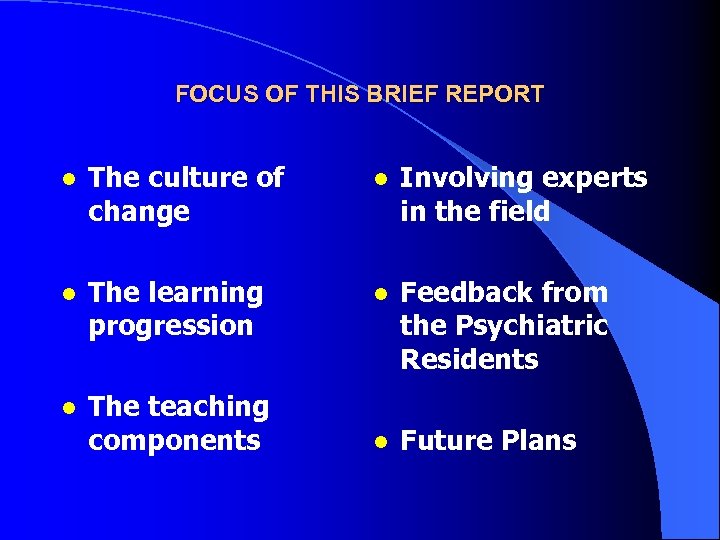 FOCUS OF THIS BRIEF REPORT l The culture of change l Involving experts in the field l The learning progression l Feedback from the Psychiatric Residents l The teaching components l Future Plans
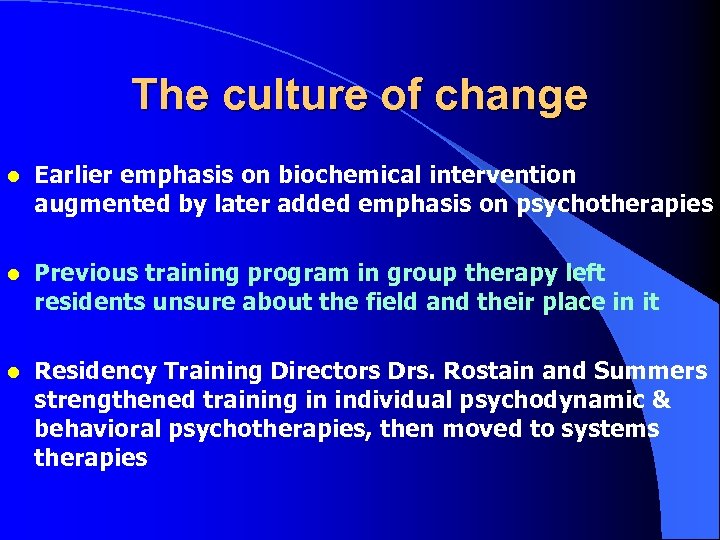 The culture of change l Earlier emphasis on biochemical intervention augmented by later added emphasis on psychotherapies l Previous training program in group therapy left residents unsure about the field and their place in it l Residency Training Directors Drs. Rostain and Summers strengthened training in individual psychodynamic & behavioral psychotherapies, then moved to systems therapies
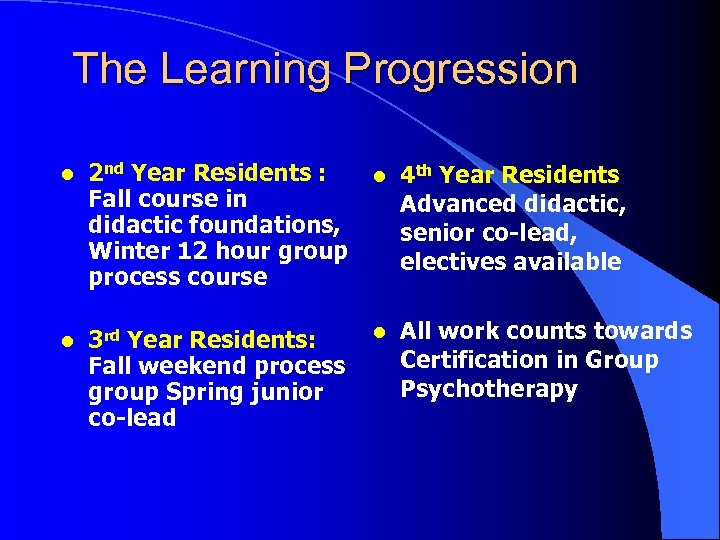 The Learning Progression l 2 nd Year Residents : Fall course in didactic foundations, Winter 12 hour group process course l 3 rd Year Residents: Fall weekend process group Spring junior co-lead l 4 th Year Residents Advanced didactic, senior co-lead, electives available l All work counts towards Certification in Group Psychotherapy
 The Teaching Components l l Didactic learning: structured coursework based on theory, research Experiential: group process experiences off campus, confidentiality maintained Supervision: ongoing individual and group supervision of group work Electives: in the clinical community
 Involving Experts in the Field l Departmental interest in training by Certified Group Therapists l Teaching and Supervision by clinically active adjunctive clinical faculty l Respect for knowledge and research base evident from Residents
 Early Feedback from Residents to first year teaching l Positive feedback – Superb instructor – Role playing and modeling useful – Clear course goals – Useful professionally l Lukewarm Feedback – Egotistical instructor – Requires more structure – Readings too academic – Hard to travel far for short course
 Future Plans for Group Training l l l One reading per class Longer classes help with travel time Each class outlined for maximal clarity Increased focus on practice issues Continued emphasis on process groups Continued integration of Residents’ feedback
 Comparing training programs for group leaders in Israel, Europe and the USA Haim Weinberg
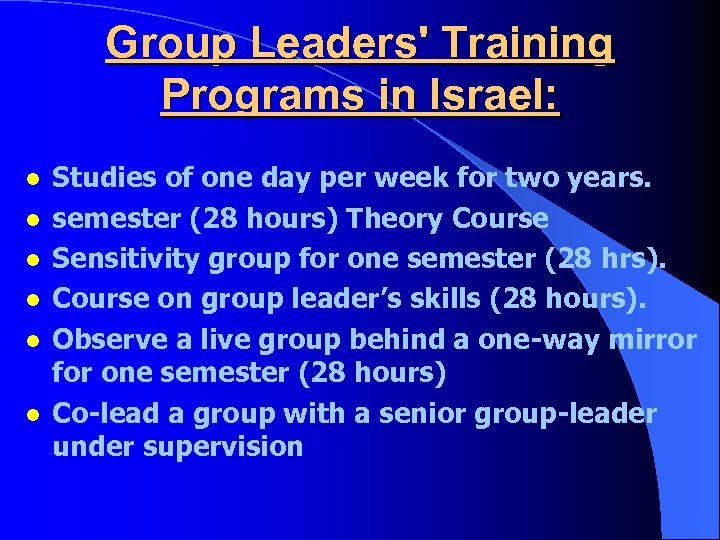 Group Leaders' Training Programs in Israel: l l l Studies of one day per week for two years. semester (28 hours) Theory Course Sensitivity group for one semester (28 hrs). Course on group leader’s skills (28 hours). Observe a live group behind a one-way mirror for one semester (28 hours) Co-lead a group with a senior group-leader under supervision
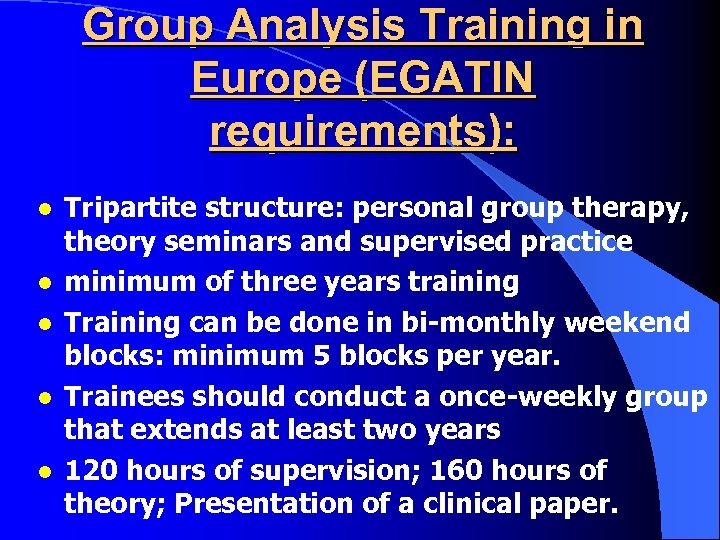 Group Analysis Training in Europe (EGATIN requirements): l l l Tripartite structure: personal group therapy, theory seminars and supervised practice minimum of three years training Training can be done in bi-monthly weekend blocks: minimum 5 blocks per year. Trainees should conduct a once-weekly group that extends at least two years 120 hours of supervision; 160 hours of theory; Presentation of a clinical paper.
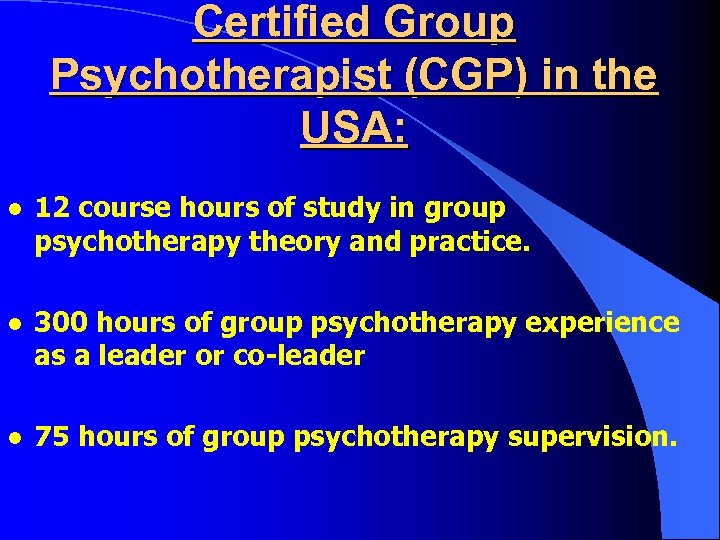 Certified Group Psychotherapist (CGP) in the USA: l 12 course hours of study in group psychotherapy theory and practice. l 300 hours of group psychotherapy experience as a leader or co-leader l 75 hours of group psychotherapy supervision.
 Discussant Susan Bernadett-Shapiro
 FOR A COPY OF THE SLIDES EMAIL: JSHAPIRO@SCU. EDU