


 Скачать презентацию GROUP DISCUSSION FRENCH AND INDIAN WAR GROUP
5c644a4229be849dd546cd906437078e.ppt
- Количество слайдов: 33
 GROUP DISCUSSION: FRENCH AND INDIAN WAR
 GROUP DISCUSSION: COLONIAL TROUBLES WITH NATIVES
 GROUP DISCUSSION: AMERICAN REVOLUTION: AMERICAN DISADVANTAGES
 GROUP DISCUSSION: ARTICLES OF CONFEDERATION
 GROUP DISCUSSION: ESTABLISHMENT OF THE CONSTITUTION
 Chapter 10: Launching the New Ship of State
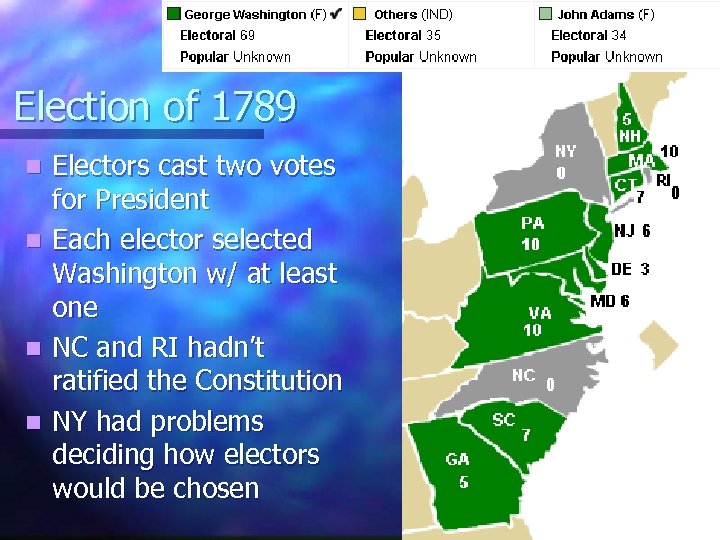 Election of 1789 Electors cast two votes for President n Each elector selected Washington w/ at least one n NC and RI hadn’t ratified the Constitution n NY had problems deciding how electors would be chosen n
 What “new thing” did Washington create as President?
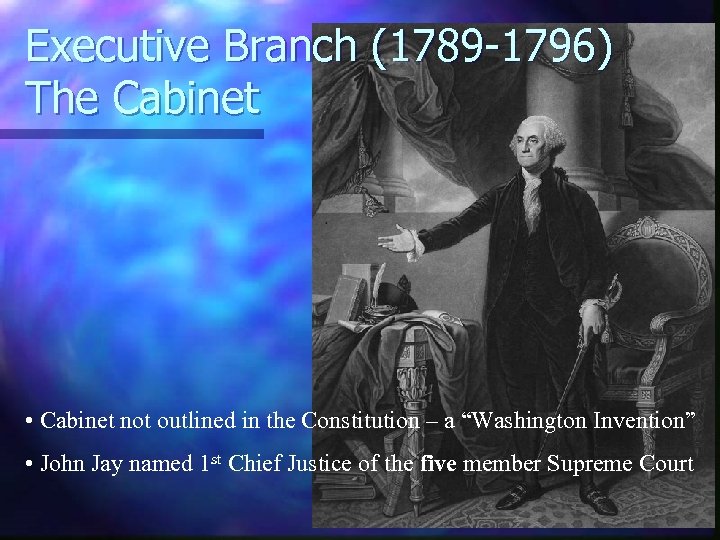 Executive Branch (1789 -1796) The Cabinet • Cabinet not outlined in the Constitution – a “Washington Invention” • John Jay named 1 st Chief Justice of the five member Supreme Court
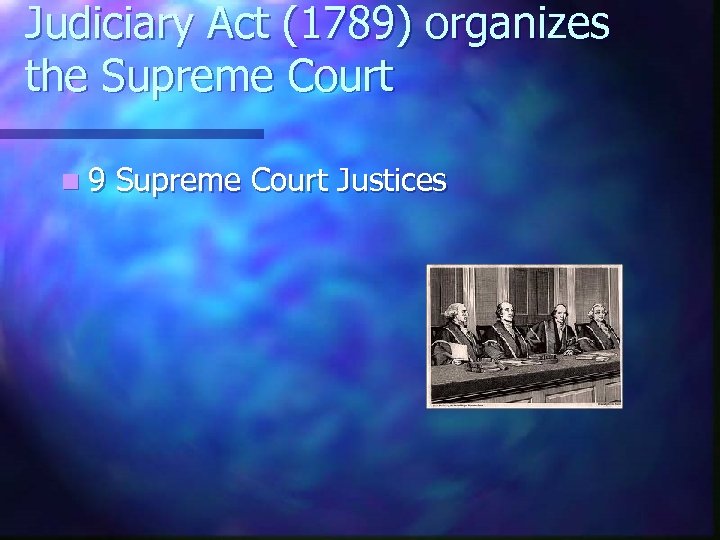 Judiciary Act (1789) organizes the Supreme Court n 9 Supreme Court Justices
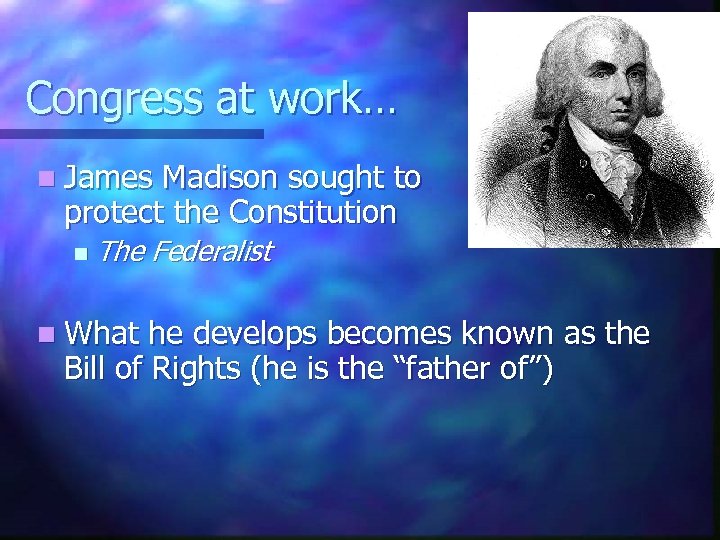 Congress at work… n James Madison sought to protect the Constitution n The Federalist n What he develops becomes known as the Bill of Rights (he is the “father of”)
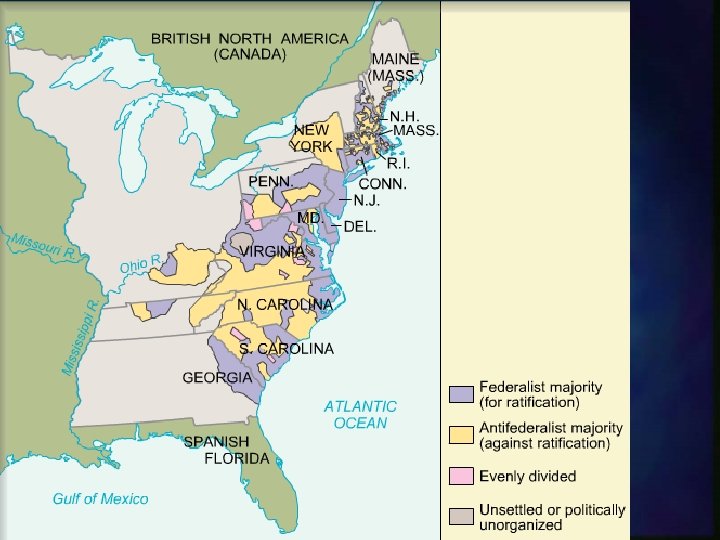
 Why Bill of Rights? n All thirteen states had to ratify the Constitution n Nine states needed to “reset” the country, canceling out the Articles of Confederation n Conservative document that prevented the “mob” from controlling government n Was a surprise to the public
 Anti-Federalists vs. Federalists Anti-Federalists n States’ rights n Backcountry dwellers n Small farmers n Debtors n S. Adams, P. Henry, Richard Henry Lee Federalists n Strong federal gov. n Seaboard dwellers n Wealthy and better educated n Controlled the press (The Federalist Papers) n G. Washington, B. Franklin, Madison, Hamilton, Jay
 New respect for government, a brutal display of force. Whiskey Rebellion (1794) n PA farmers not happy with tariff n Launch an “insurrection” n Washington personally leads militia into PA to restore order (direct opposite of Shay’s Rebellion) n Represents peaceful dialogue over violence in order to change policy
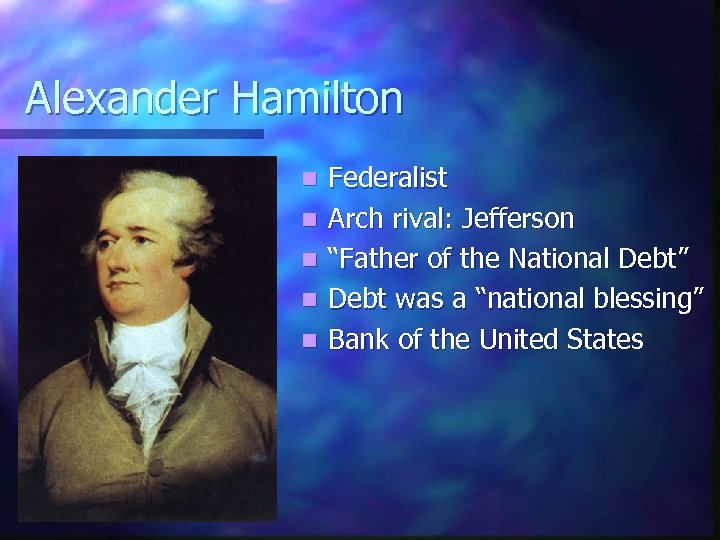 Alexander Hamilton n n Federalist Arch rival: Jefferson “Father of the National Debt” Debt was a “national blessing” Bank of the United States
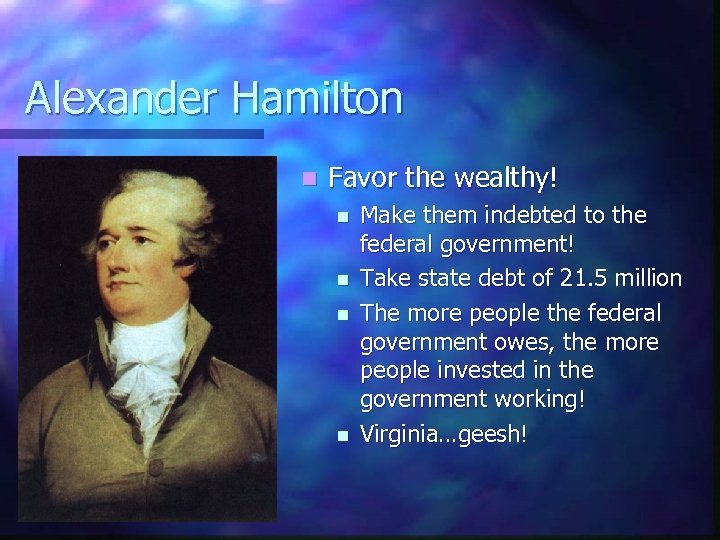 Alexander Hamilton n Favor the wealthy! n n Make them indebted to the federal government! Take state debt of 21. 5 million The more people the federal government owes, the more people invested in the government working! Virginia…geesh!
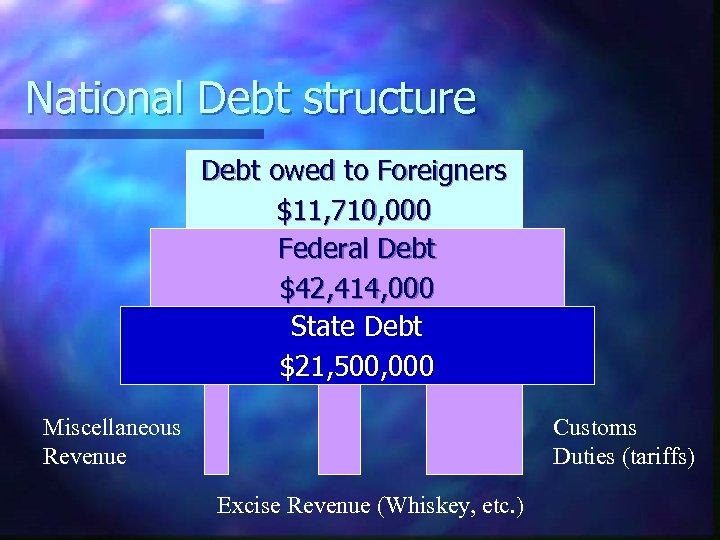 National Debt structure Debt owed to Foreigners $11, 710, 000 Federal Debt $42, 414, 000 State Debt $21, 500, 000 Miscellaneous Revenue Customs Duties (tariffs) Excise Revenue (Whiskey, etc. )
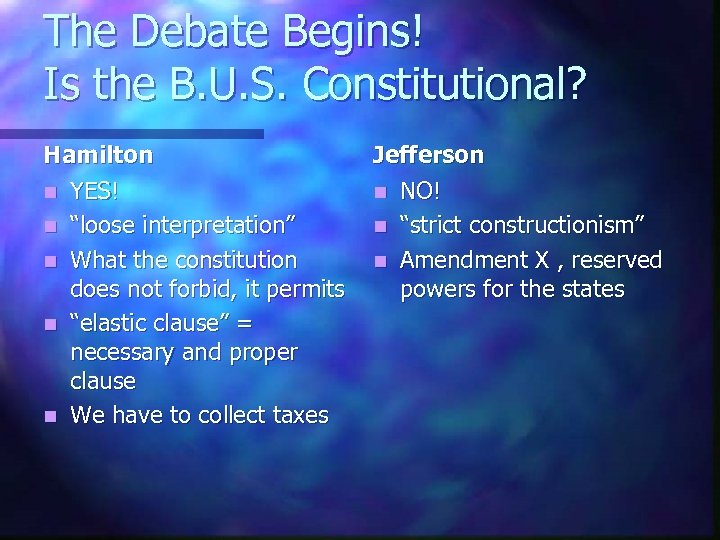 The Debate Begins! Is the B. U. S. Constitutional? Hamilton n YES! n “loose interpretation” n What the constitution does not forbid, it permits n “elastic clause” = necessary and proper clause n We have to collect taxes Jefferson n NO! n “strict constructionism” n Amendment X , reserved powers for the states
 What caused parties to form?
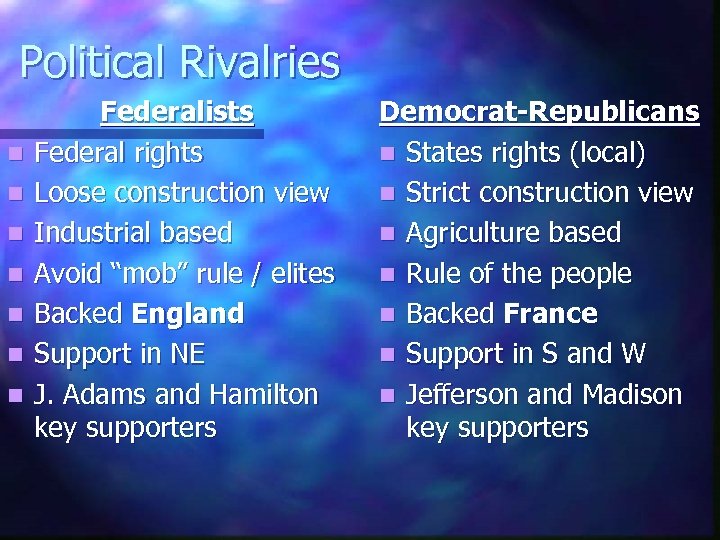 Political Rivalries n n n n Federalists Federal rights Loose construction view Industrial based Avoid “mob” rule / elites Backed England Support in NE J. Adams and Hamilton key supporters Democrat-Republicans n States rights (local) n Strict construction view n Agriculture based n Rule of the people n Backed France n Support in S and W n Jefferson and Madison key supporters
 Jay’s Treaty 1794 n Is John Jay a traitor? n GB impressment n US agrees to pay for F + I War n GB agrees to pay for impressment & damage n North = getting $ from GB n South = paying for the war debt
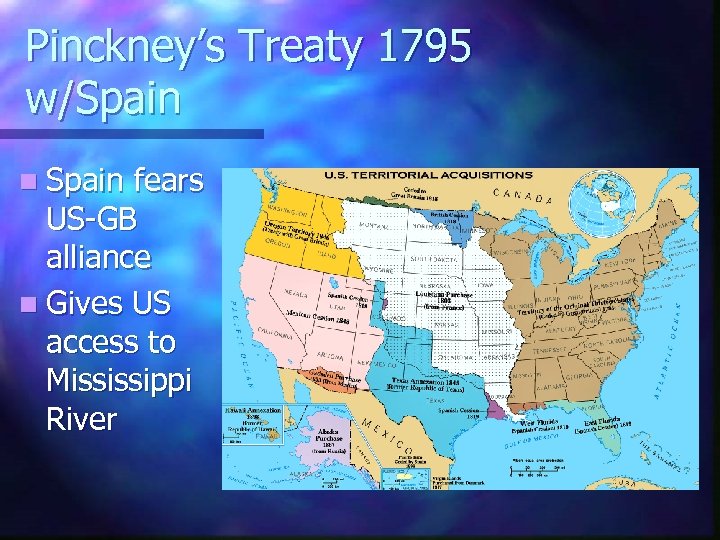 Pinckney’s Treaty 1795 w/Spain n Spain fears US-GB alliance n Gives US access to Mississippi River
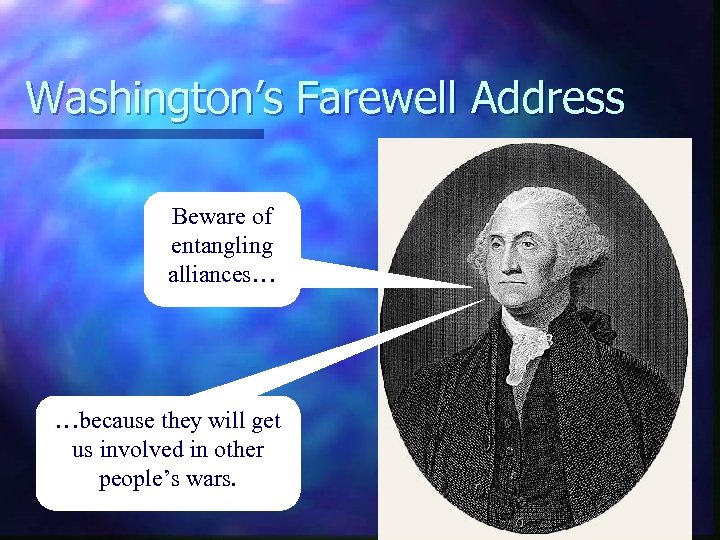 Washington’s Farewell Address Beware of entangling alliances… …because they will get us involved in other people’s wars.
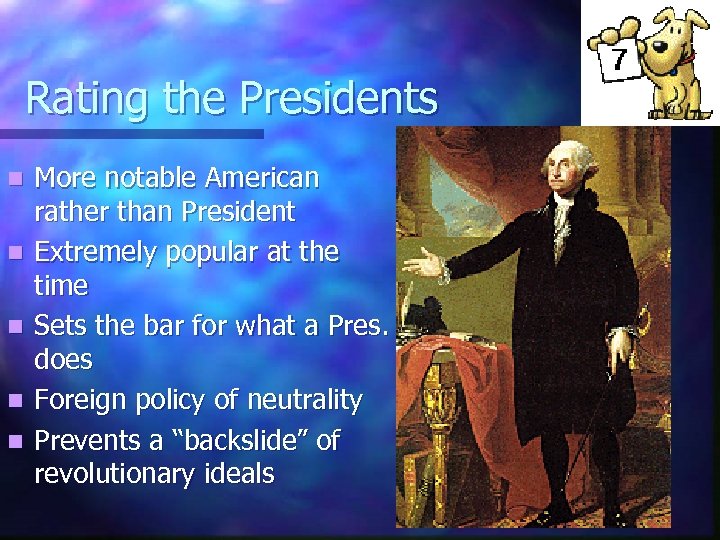 Rating the Presidents n n n More notable American rather than President Extremely popular at the time Sets the bar for what a Pres. does Foreign policy of neutrality Prevents a “backslide” of revolutionary ideals
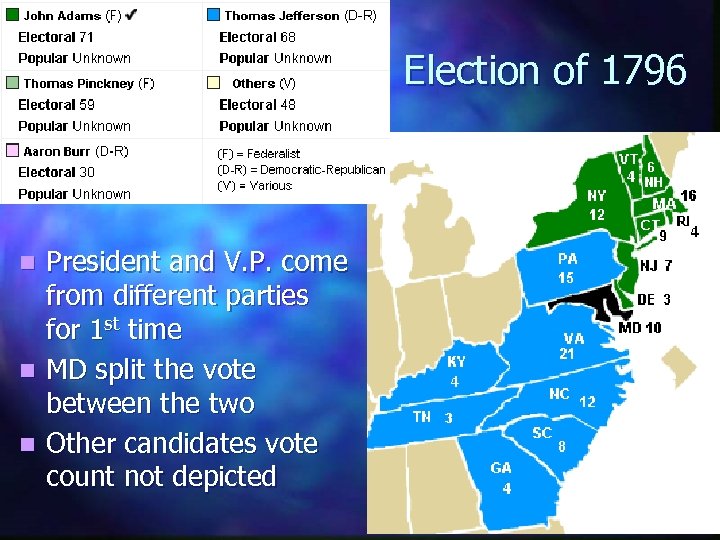 Election of 1796 President and V. P. come from different parties for 1 st time n MD split the vote between the two n Other candidates vote count not depicted n
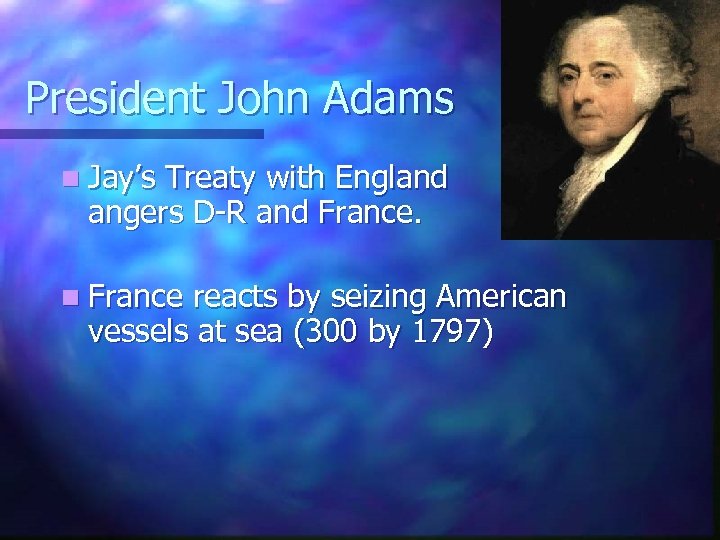 President John Adams n Jay’s Treaty with England angers D-R and France. n France reacts by seizing American vessels at sea (300 by 1797)
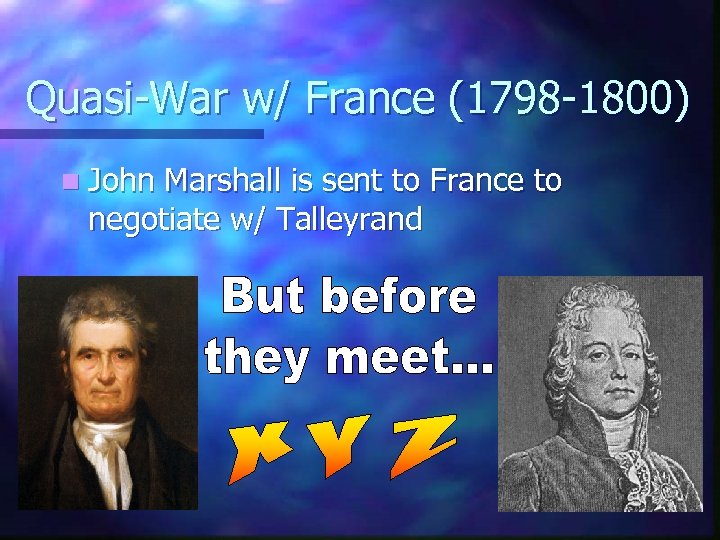 Quasi-War w/ France (1798 -1800) n John Marshall is sent to France to negotiate w/ Talleyrand
 Quasi-War brought to you by the letters X, Y, and Z n They ask for a $250, 000 bribe just to talk to Talleyrand n Marshall refuses and returns to America n “Millions for defense, but not one cent for tribute” n Adams avoids war by appealing to new French ruler Napoleon n Good move…. we will later buy the Louisiana Purchase from France
 Alien and Sedition Acts n Federalists during war fervor pass laws to silence the opposition (D-R) n Poor people/immigrants tend to be D-R n Alien Act Naturalization from 5 to 14 yrs n President can jail or deport in time of war n n Sedition Act Impeding policies of the government = jail n Attacking officials in press = jail and fine n
 Virginia and Kentucky Resolutions n Reaction to the Alien and Sedition Acts n Jefferson writes for Kentucky n Madison writes for Virginia n Develops the idea of “nullification” It infringes on rights n If the federal gov. violates a contract, the states can refuse to accept the law n
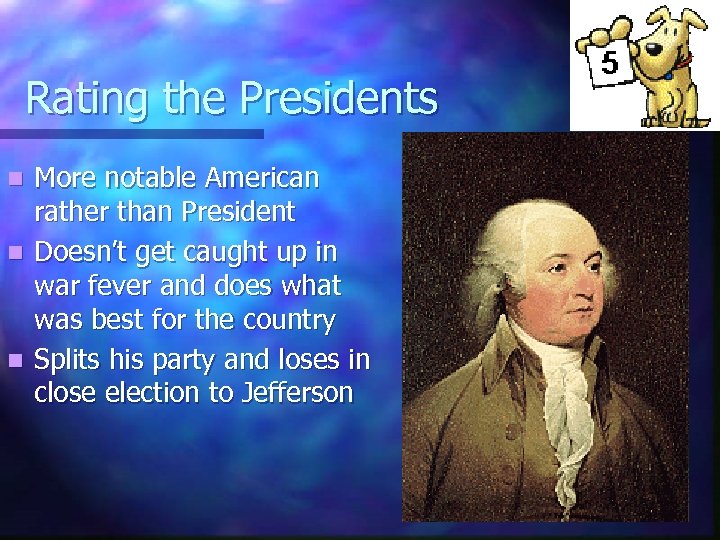 Rating the Presidents More notable American rather than President n Doesn’t get caught up in war fever and does what was best for the country n Splits his party and loses in close election to Jefferson n
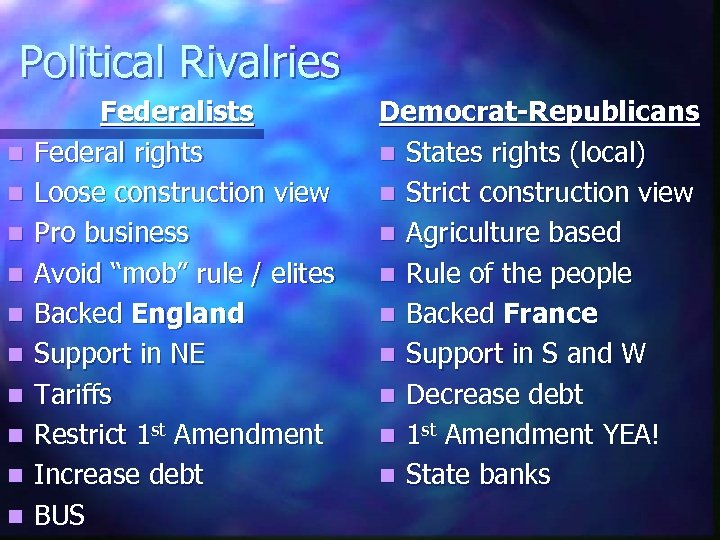 Political Rivalries n n n n n Federalists Federal rights Loose construction view Pro business Avoid “mob” rule / elites Backed England Support in NE Tariffs Restrict 1 st Amendment Increase debt BUS Democrat-Republicans n States rights (local) n Strict construction view n Agriculture based n Rule of the people n Backed France n Support in S and W n Decrease debt n 1 st Amendment YEA! n State banks