 Скачать презентацию GRIDLOCK AVOIDANCE SYSTEM GAS Functional Specifications Briefing
a61fbc6f381114055a2b2a79ec5efaf2.ppt
- Количество слайдов: 35



GRIDLOCK AVOIDANCE SYSTEM (GAS) Functional Specifications Briefing
Briefing Highlights n Introduction n Functional Specs n Project Overview n Schedule/Resources/ Budget n Background/ Objectives n Conclusion n Questions Project
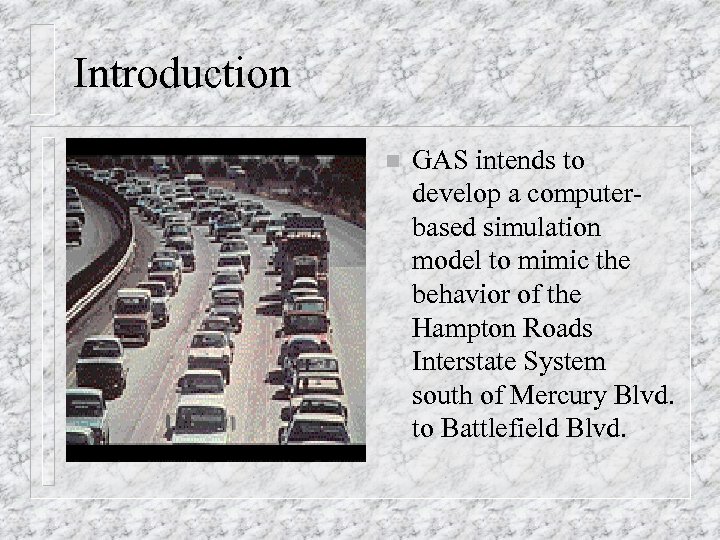
Introduction n GAS intends to develop a computerbased simulation model to mimic the behavior of the Hampton Roads Interstate System south of Mercury Blvd. to Battlefield Blvd.
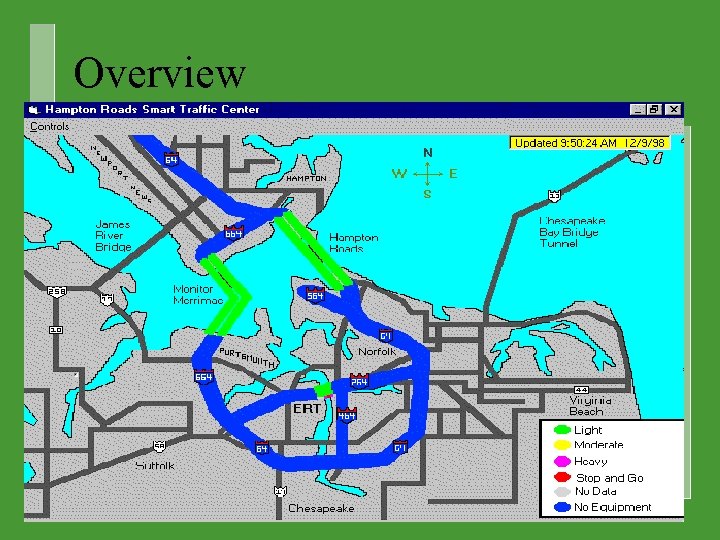
Overview
Overview n Effective operation of the interstate highway system in Hampton Roads is an integral piece of the infrastructure and it is necessary for continued development of the area. n We intend to provide transportation authorities and city planners with data results that describe the system’s operations at current and at modified vehicle flows in two formats; statistical and graphical.
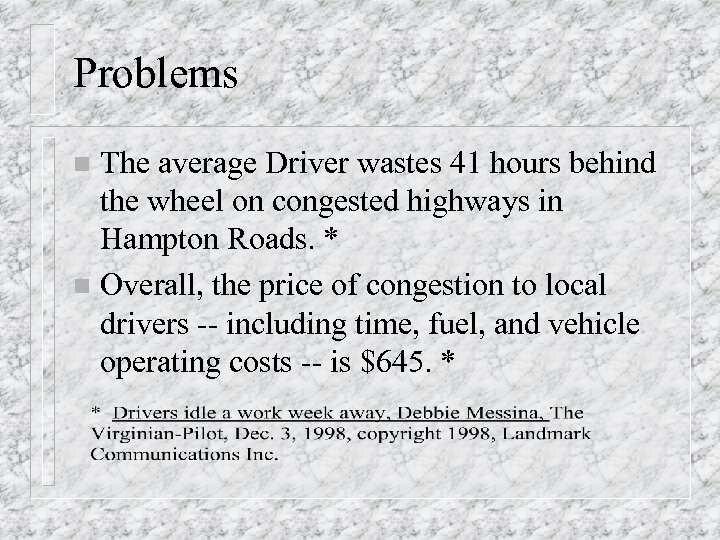
Problems The average Driver wastes 41 hours behind the wheel on congested highways in Hampton Roads. * n Overall, the price of congestion to local drivers -- including time, fuel, and vehicle operating costs -- is $645. * n
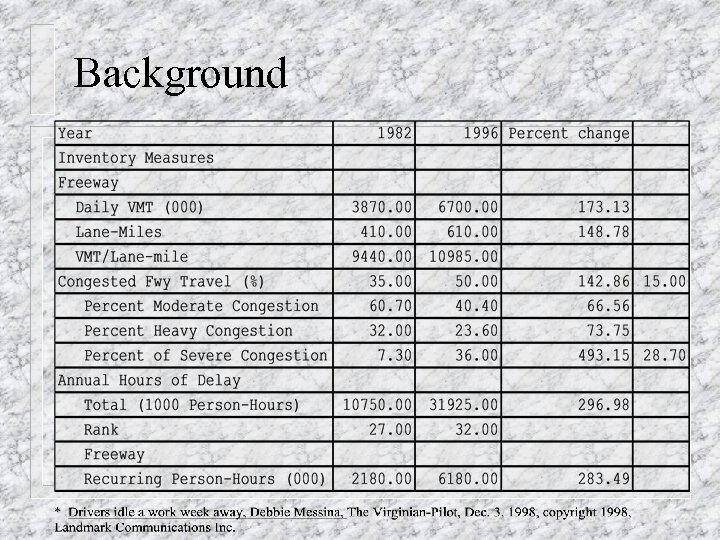
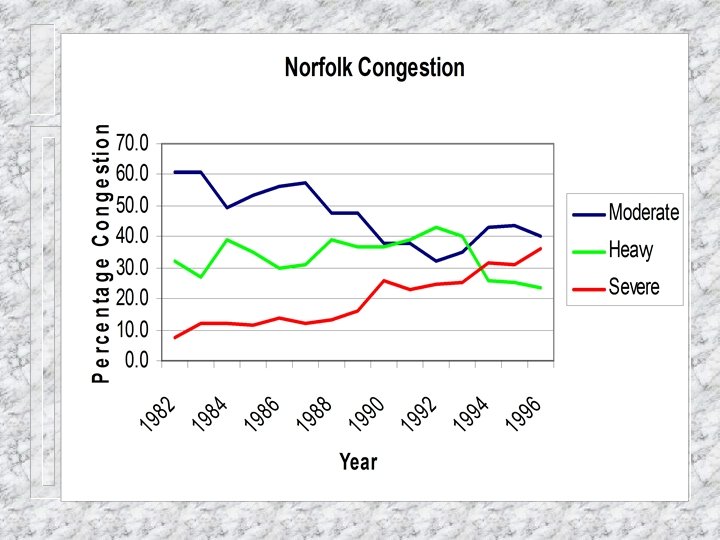
Background
Objectives n Provide transportation authorities and city planners with data results that describe the system’s operations at current and at modified vehicle flows in two formats; statistical and graphical. n Demonstrate a small segment of the Hampton Roads interstate system through simulation for project validation and verification. n Market the project on a consultant basis to other communities. Project completion by the end of the calendar year 2001. Software and hardware to be Y 2 K compliant. n n
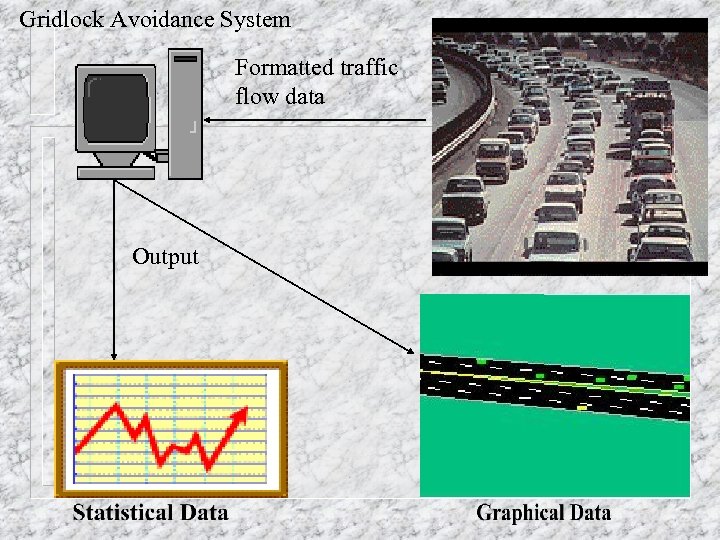
Gridlock Avoidance System Formatted traffic flow data Output

Organization Structure
Functional Specs Can-Dos Produce a detailed, quantitative description of system performance for the present Hampton Roads Interstate Highway. n Long-term lane closures (construction/repairs). n Short-term lane closures (breakdowns/collisions). n
Can-Dos (cont. ) Addition of lanes/interchanges to current system. n Addition of alternative routes to current system. n Reaction of system to speed limit changes. n System reaction to changes in vehicle mix (percentage of cars/trucks/commercial vehicles). n
Can-Dos (cont. ) Introduction of weather phenomena on system (bright sun at eye level during AM and PM hours). n Introduction of weather changes on system. (snow, heavy rain, etc. ). n Introduction of seasonal phenomena to system (tourists, vacationers, etc. ). n
Functional Specs Can’t Do Not a real-time system. n Surface road traffic patterns not included. n Individual lane change tendencies not included. n Driver related attribute tendencies not included. n System entering and exiting for individual vehicles at predetermined points is not illustrated. n
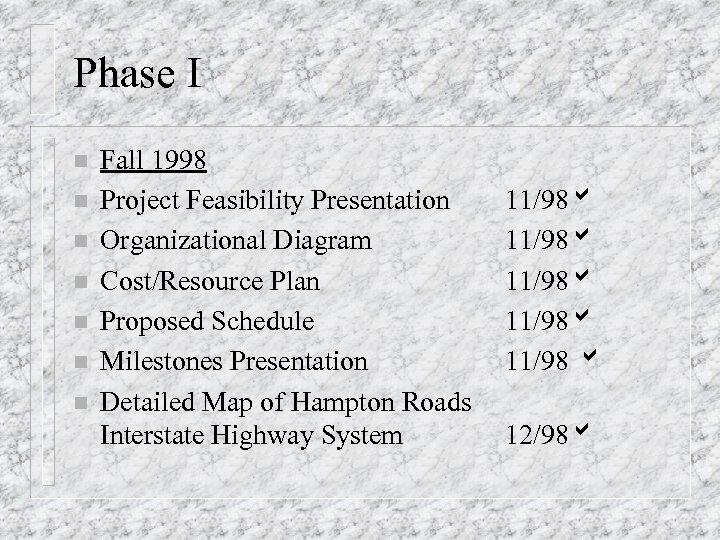
Phase I n n n n Fall 1998 Project Feasibility Presentation Organizational Diagram Cost/Resource Plan Proposed Schedule Milestones Presentation Detailed Map of Hampton Roads Interstate Highway System 11/98 11/98 12/98
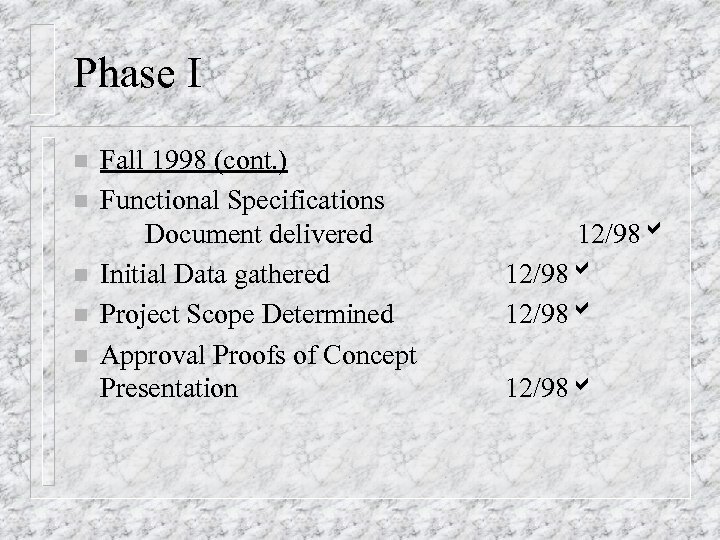
Phase I n n n Fall 1998 (cont. ) Functional Specifications Document delivered Initial Data gathered Project Scope Determined Approval Proofs of Concept Presentation 12/98
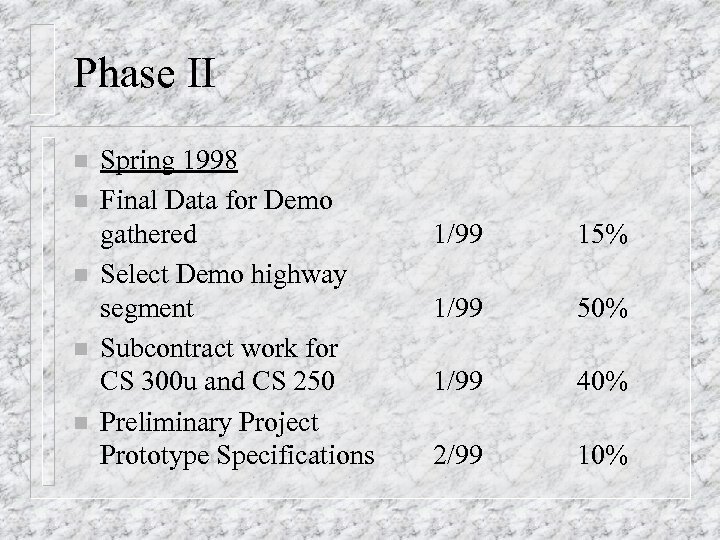
Phase II n n n Spring 1998 Final Data for Demo gathered Select Demo highway segment Subcontract work for CS 300 u and CS 250 Preliminary Project Prototype Specifications 1/99 15% 1/99 50% 1/99 40% 2/99 10%
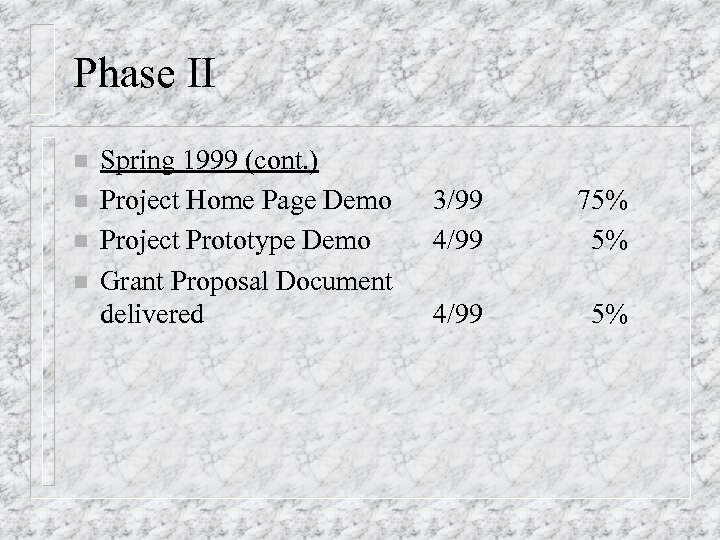
Phase II n n Spring 1999 (cont. ) Project Home Page Demo Project Prototype Demo Grant Proposal Document delivered 3/99 4/99 75% 5% 4/99 5%
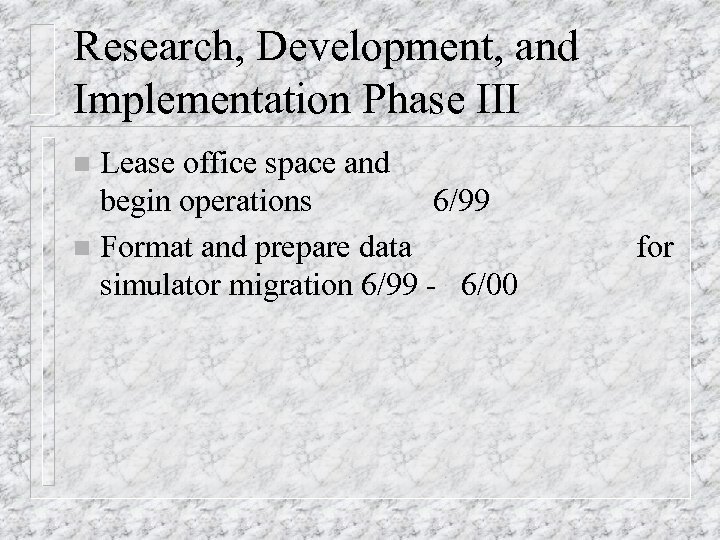
Research, Development, and Implementation Phase III Lease office space and begin operations 6/99 n Format and prepare data simulator migration 6/99 - 6/00 n for
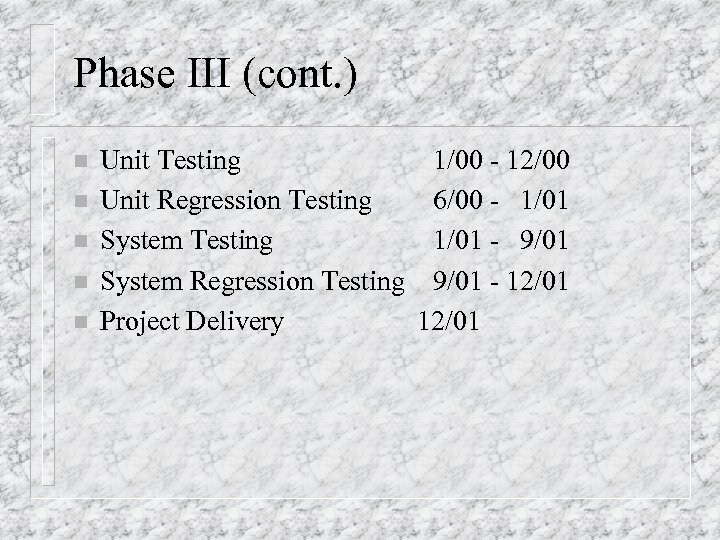
Phase III (cont. ) n n n Unit Testing 1/00 - 12/00 Unit Regression Testing 6/00 - 1/01 System Testing 1/01 - 9/01 System Regression Testing 9/01 - 12/01 Project Delivery 12/01
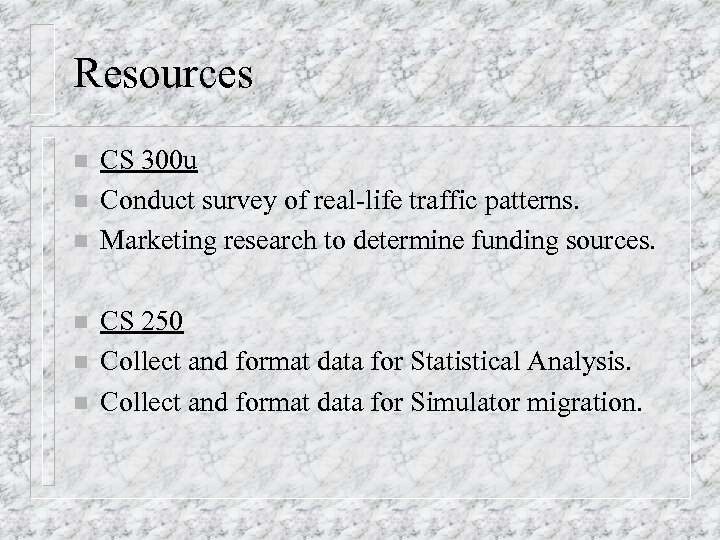
Resources n n n CS 300 u Conduct survey of real-life traffic patterns. Marketing research to determine funding sources. CS 250 Collect and format data for Statistical Analysis. Collect and format data for Simulator migration.
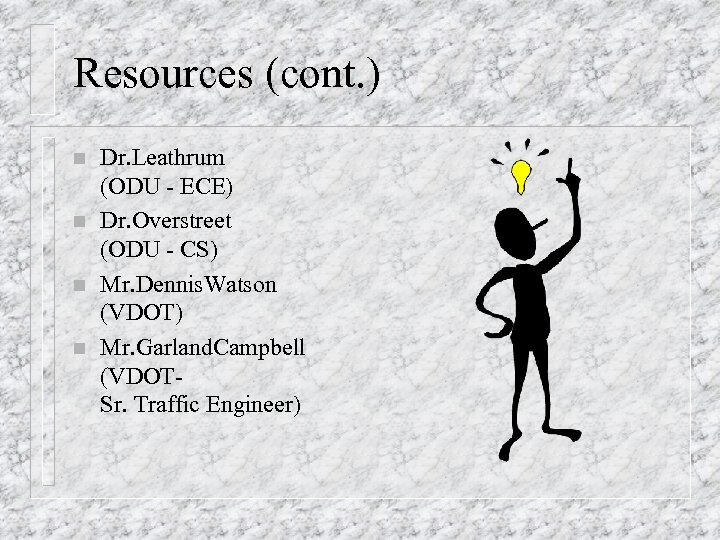
Resources (cont. ) n n Dr. Leathrum (ODU - ECE) Dr. Overstreet (ODU - CS) Mr. Dennis. Watson (VDOT) Mr. Garland. Campbell (VDOTSr. Traffic Engineer)
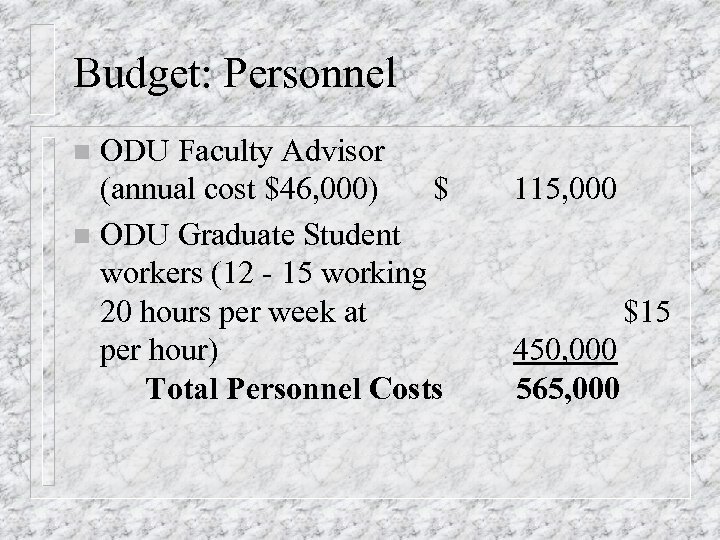
Budget: Personnel ODU Faculty Advisor (annual cost $46, 000) $ n ODU Graduate Student workers (12 - 15 working 20 hours per week at per hour) Total Personnel Costs n 115, 000 $15 450, 000 565, 000
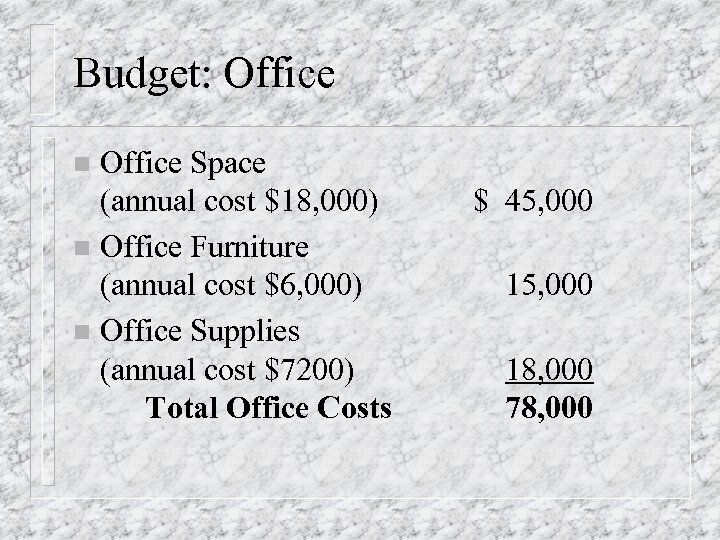
Budget: Office Space (annual cost $18, 000) n Office Furniture (annual cost $6, 000) n Office Supplies (annual cost $7200) Total Office Costs n $ 45, 000 18, 000 78, 000
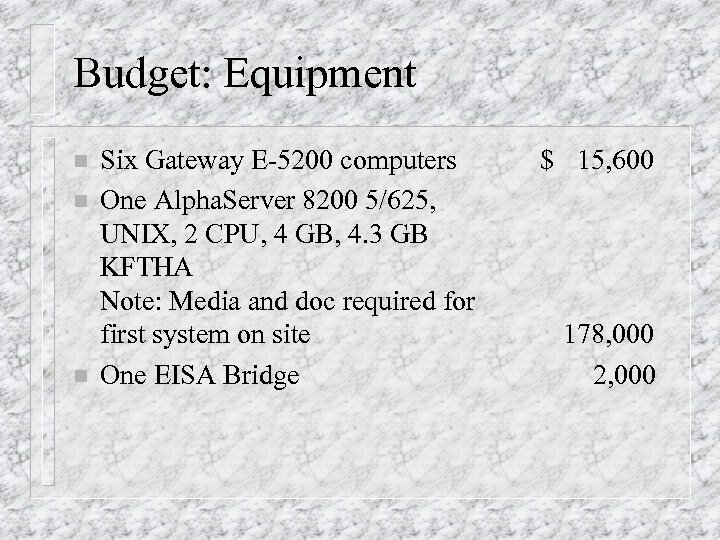
Budget: Equipment n n n Six Gateway E-5200 computers One Alpha. Server 8200 5/625, UNIX, 2 CPU, 4 GB, 4. 3 GB KFTHA Note: Media and doc required for first system on site One EISA Bridge $ 15, 600 178, 000 2, 000
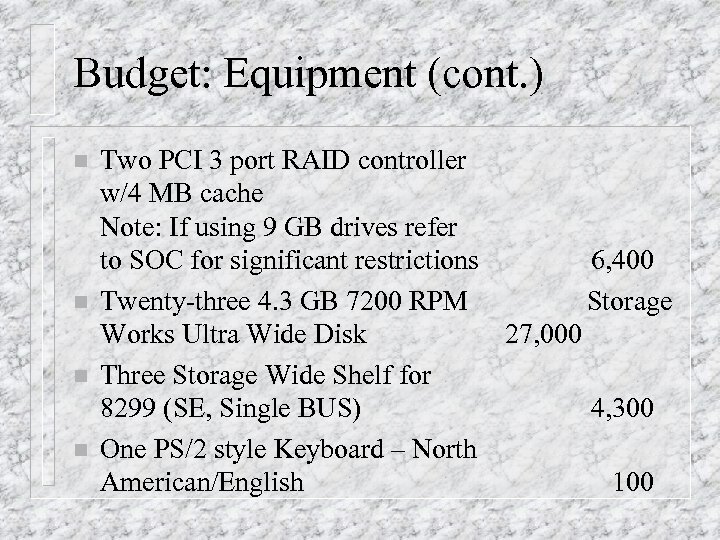
Budget: Equipment (cont. ) n n Two PCI 3 port RAID controller w/4 MB cache Note: If using 9 GB drives refer to SOC for significant restrictions 6, 400 Twenty-three 4. 3 GB 7200 RPM Storage Works Ultra Wide Disk 27, 000 Three Storage Wide Shelf for 8299 (SE, Single BUS) 4, 300 One PS/2 style Keyboard – North American/English 100
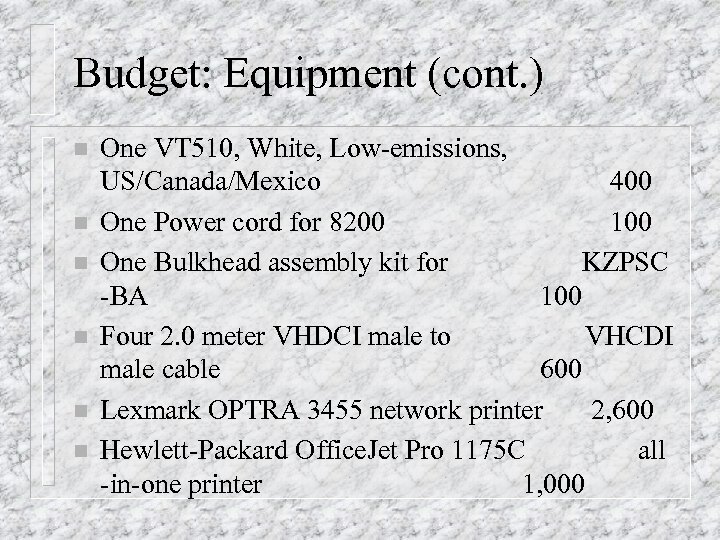
Budget: Equipment (cont. ) n n n One VT 510, White, Low-emissions, US/Canada/Mexico 400 One Power cord for 8200 100 One Bulkhead assembly kit for KZPSC -BA 100 Four 2. 0 meter VHDCI male to VHCDI male cable 600 Lexmark OPTRA 3455 network printer 2, 600 Hewlett-Packard Office. Jet Pro 1175 C all -in-one printer 1, 000
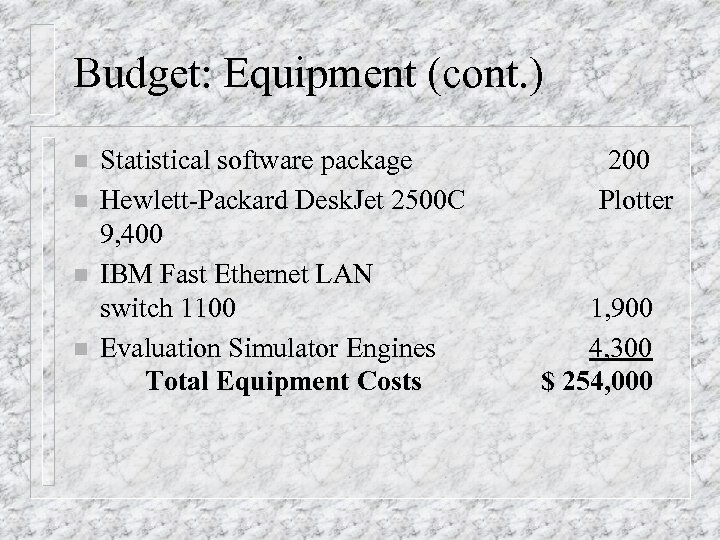
Budget: Equipment (cont. ) n n Statistical software package Hewlett-Packard Desk. Jet 2500 C 9, 400 IBM Fast Ethernet LAN switch 1100 Evaluation Simulator Engines Total Equipment Costs 200 Plotter 1, 900 4, 300 $ 254, 000
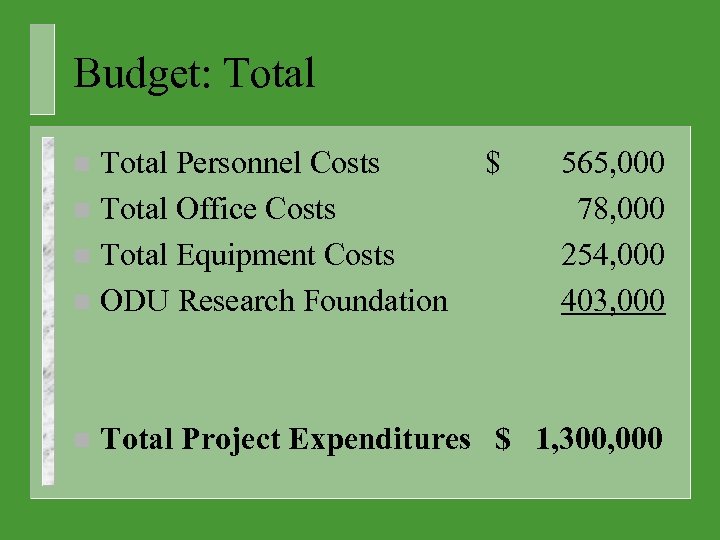
Budget: Total Personnel Costs n Total Office Costs n Total Equipment Costs n ODU Research Foundation n n $ 565, 000 78, 000 254, 000 403, 000 Total Project Expenditures $ 1, 300, 000
Conclusion n The biggest hurdle to overcome is a correct depiction of the current highway system. Through the development of our prototype, the extensive unit and system level testing, and the research data collected from organizations such as the Virginia Department of Transportation, (VDOT), we can deliver a reliable an effective tool to be used in the fight to overcome and eventually defeat ‘Highway Gridlock’ in the Hampton Roads area.
Conclusion n n In order to avoid this threat we must act decisively and quickly. A weapon in our arsenal such as the GAS project could thwart any possibility of surrendering the area to gridlock forever. It will not only preserve our current lifestyle but work to better it in the future.
Conclusion n The risk of gridlock capturing and holding Hampton Roads and many other cities for ransom throughout the United States is a real and identifiable threat. The Gridlock Avoidance System is a necessary tool to insure the stability of the infrastructure of the Hampton Roads area. The risks of not proceeding with the project far outweigh the risks of proceeding on schedule.
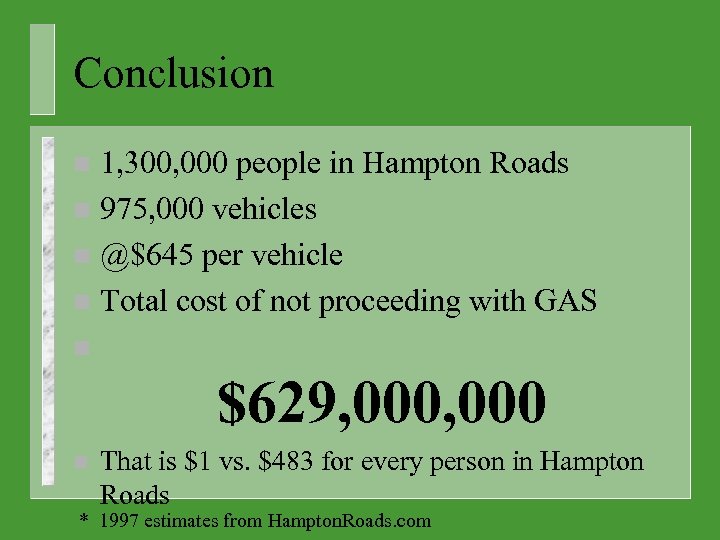
Conclusion 1, 300, 000 people in Hampton Roads n 975, 000 vehicles n @$645 per vehicle n Total cost of not proceeding with GAS n n $629, 000 n That is $1 vs. $483 for every person in Hampton Roads * 1997 estimates from Hampton. Roads. com
Conclusion n Thank you for the opportunity to present our project to you and remember that a vote of confidence for the GAS project will allow Hampton Roads to continue to be a winner now and for future generations.
Скачать презентацию GRIDLOCK AVOIDANCE SYSTEM GAS Functional Specifications Briefing
a61fbc6f381114055a2b2a79ec5efaf2.ppt