


 Скачать презентацию Grid Computing Evolution and Challenges for Resilience
6abdeb2b74b1944f31c73e97d93799d9.ppt
- Количество слайдов: 42
 Grid Computing Evolution and Challenges for Resilience, Performance and Scalability Luca Simoncini University of Pisa, Italy July 2, 2005 WS on “Grid Computing and Dependability” 48 th IFIP WG 10. 4 Hakone, Japan
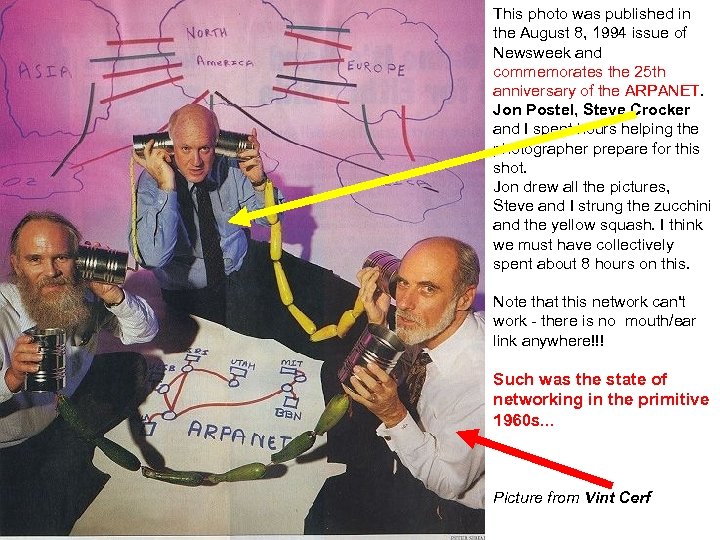 This photo was published in the August 8, 1994 issue of Newsweek and commemorates the 25 th anniversary of the ARPANET. Jon Postel, Steve Crocker and I spent hours helping the photographer prepare for this shot. Jon drew all the pictures, Steve and I strung the zucchini and the yellow squash. I think we must have collectively spent about 8 hours on this. Note that this network can't work - there is no mouth/ear link anywhere!!! Such was the state of networking in the primitive 1960 s. . . Picture from Vint Cerf
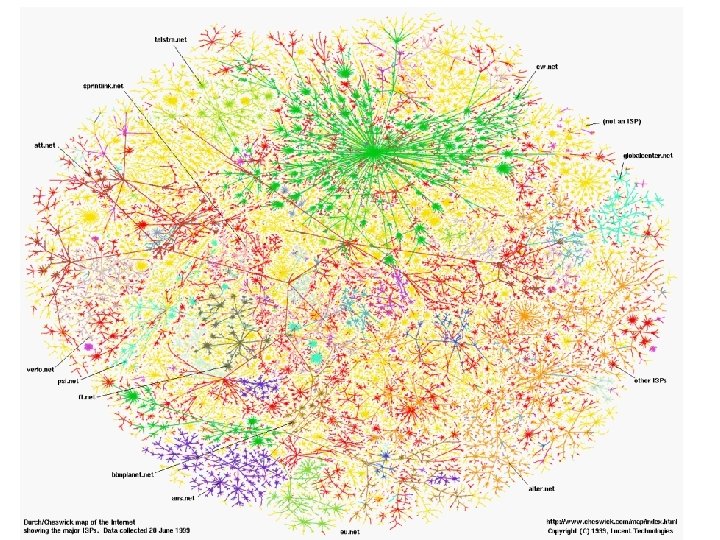 ARPANET Map (1971) 1969 -- Birth of Internet ARPANET commissioned by Do. D for research into networking Back to Photo & Archives || Home || Contact Dr. Roberts Copyright © 2001 Dr. Lawrence G. Roberts Contact webmaster
 Grid Evolution - Metacomputing st Generation Grid The 1 q. Different Supercomputing Resourses v geographically distributed v used as a single powerful parallel machine (clear, High. Performance orientation)
 Grid Evolution The 2 nd Generation Grid computing has emerged as an important new field, distinguished from conventional distributed computing by its focus on large-scale resource sharing, innovative applications, and, in some cases, high-performance orientation.
 The Anatomy of the Grid: Enabling Scalable Virtual Organizations By Ian Foster, Carl Kesselman, and Steven Tuecke The International Journal of High Performance Computing Applications Volume 15, number 3, pages 200– 222, Fall 2001
 Open Question Is the far-reaching vision offered by Grid Computing obscured by the lack of interoperability standards among Grid technologies ?
 Interoperability q. Describes whether or not two components of a system that were developed with different tools or different vendor products can work together How to guarantee interoperability among Grids ?
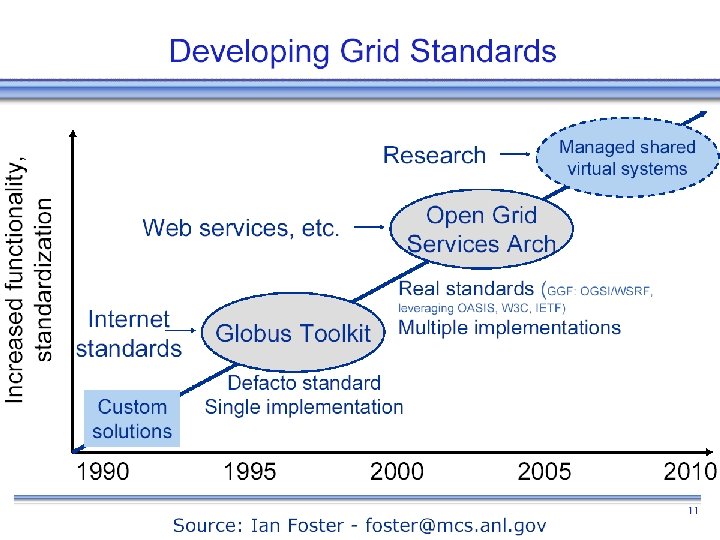
 Grid Evolution rd Generation Grid The 3 The marriage of the Web technology with the 2 nd Generation Grid technology led to new and generic Grid Services
 The Physiology of the Grid An Open Grid Services Architecture for Distributed Systems Integration I. Foster, C. Kesselman, J. Nick, S. Tuecke, January, 2002 http: //www. globus. org/research/papers/ogsa. pdf
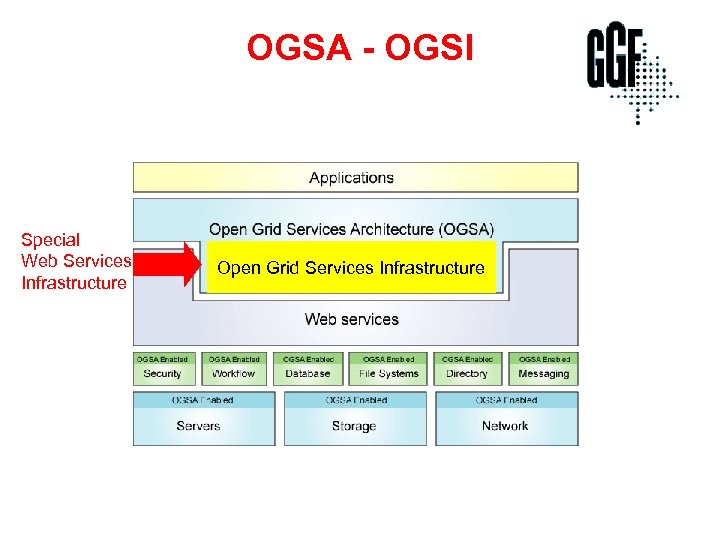 OGSA - OGSI Special Web Services Infrastructure Open Grid Services Infrastructure
 Hot News From January 20, 2004 Major Grid Services News: The Globus Alliance and IBM in conjunction with HP announced details of the new: WS-Resource Framework a further convergence of Grid services and Web services. See: presentations by Daniel Sabbah of IBM and Ian Foster of the Globus Alliance for details.
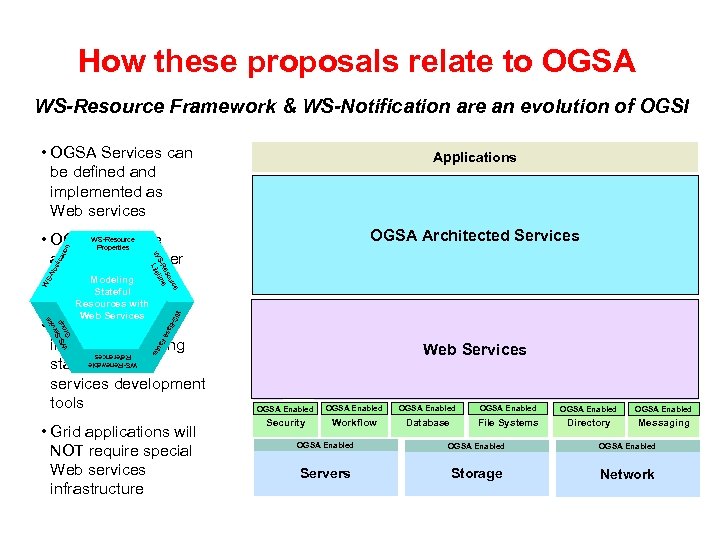 How these proposals relate to OGSA WS-Resource Framework & WS-Notification are an evolution of OGSI • OGSA Services can be defined and implemented as Web services Applications OGSA Architected Services Web Services WS ice erv -S up WS Gro e WS -N oti rc ou es -R ime WS Lifet fica tio n WS-Resource • OGSA can take Properties advantage of other Modeling Web services Stateful standards Resources with OGSI – Open Grid Services Infrastructure Fa -Ba se • OGSA can be implemented using standard Web services development tools s ult Web Services WS-Renewable References • Grid applications will NOT require special Web services infrastructure Web Services OGSA Enabled OGSA Enabled Security Workflow Database File Systems Directory Messaging OGSA Enabled Servers Storage Network
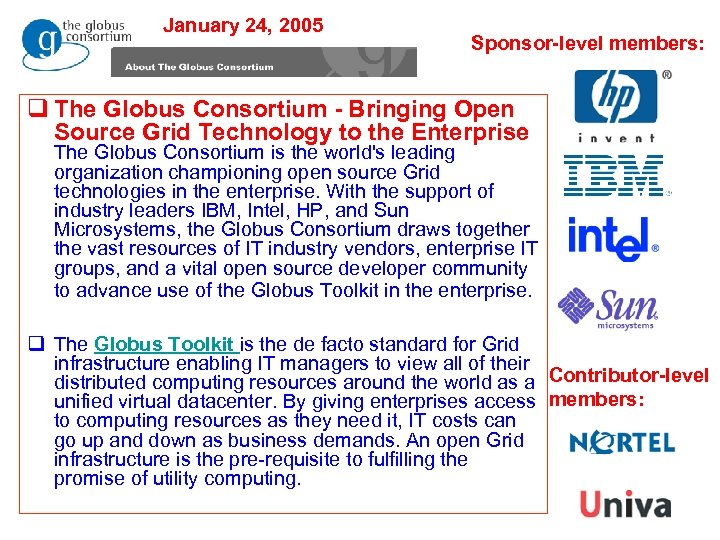 January 24, 2005 Sponsor-level members: q The Globus Consortium - Bringing Open Source Grid Technology to the Enterprise The Globus Consortium is the world's leading organization championing open source Grid technologies in the enterprise. With the support of industry leaders IBM, Intel, HP, and Sun Microsystems, the Globus Consortium draws together the vast resources of IT industry vendors, enterprise IT groups, and a vital open source developer community to advance use of the Globus Toolkit in the enterprise. q The Globus Toolkit is the de facto standard for Grid infrastructure enabling IT managers to view all of their distributed computing resources around the world as a Contributor-level unified virtual datacenter. By giving enterprises access members: to computing resources as they need it, IT costs can go up and down as business demands. An open Grid infrastructure is the pre-requisite to fulfilling the promise of utility computing.
 What is boiling in the (European) pot? ERCIM News No. 59, October 2004 ERCIM News No. 45, April 2001
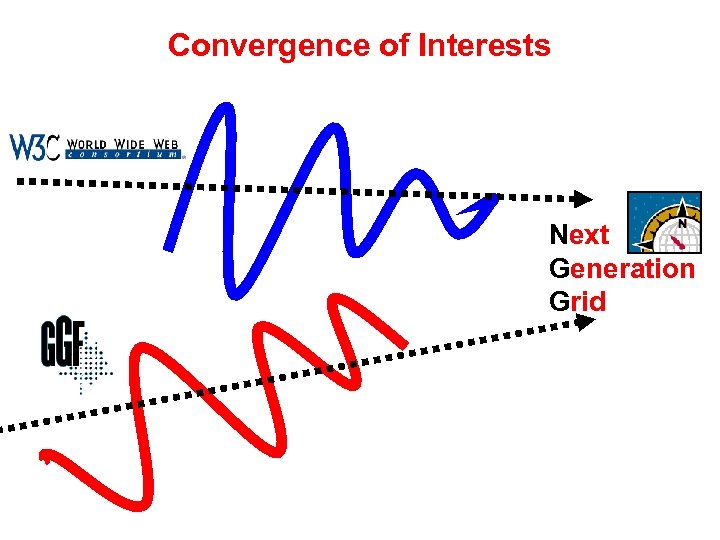
 NGG 1 and NGG 2 Terms of reference q Identify Research Priorities v 5 to 7 year timeframe v. Include implementation strategies q Propose an Implementation Roadmap q Align Priorities with the European Research Agenda q Network and Liaise with the Grid Community q Propose actions to Improve International Collaboration
 grid@asia
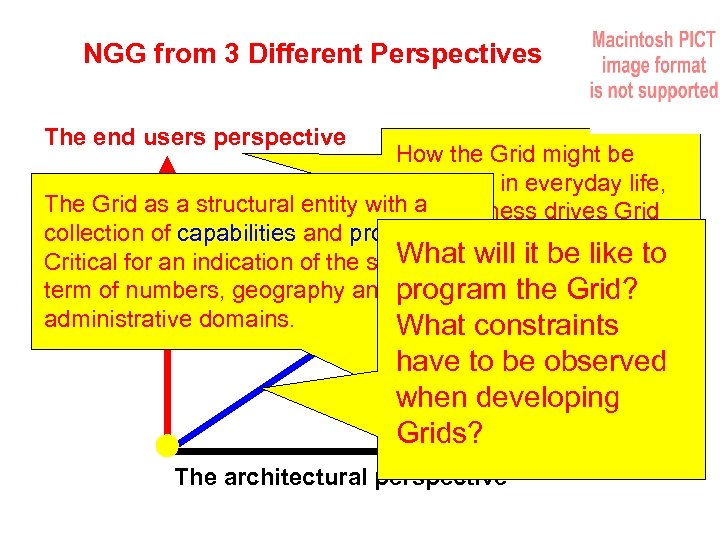 NGG from 3 Different Perspectives The end users perspective How the Grid might be deployed in everyday life, The Grid as a structural entity with a and business drives Grid collection of capabilities and properties. design priorities What will it be like to Critical for an indication of the scale in term of numbers, geography and program the Grid? The software perspective administrative domains. What constraints have to be observed when developing Grids? The architectural perspective
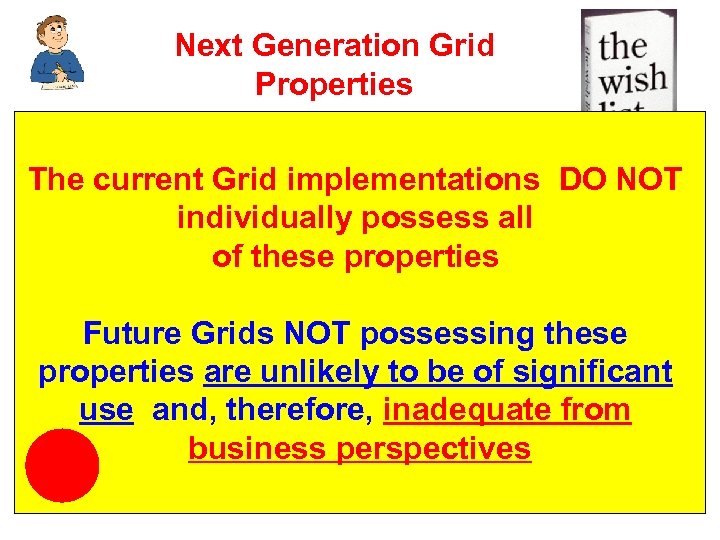
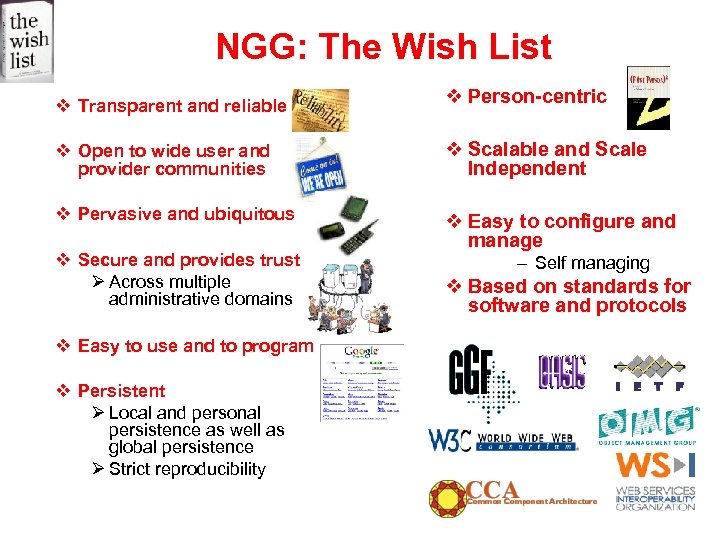 NGG: The Wish List v Transparent and reliable v Person-centric v Open to wide user and provider communities v Scalable and Scale Independent v Pervasive and ubiquitous v Easy to configure and manage v Secure and provides trust Ø Across multiple administrative domains v Easy to use and to program v Persistent Ø Local and personal persistence as well as global persistence Ø Strict reproducibility – Self managing v Based on standards for software and protocols
 Looking into the Future
 From e-Science to €-Business q. Towards the realisation of the "invisible Grid", offering key features for A Service-oriented Knowledge Utility v a new paradigm for software and service delivery, for the next decade. q. Next Generation Grids 2 - Expert Group Report v http: //www. cordis. lu/ist/grids/index. htm v ftp: //ftp. cordis. lu/pub/ist/docs/ngg 2_eg_final. pdf
 Service-Oriented architecture (SOA) Definition http: //www. service-architecture. com/web-services/articles/service-oriented_architecture_soa_definition. html q A service-oriented architecture is essentially a collection of services. q A service is a function that is well-defined, selfcontained, and does not depend on the context or state of other services. q These services communicate with each other. q The communication can involve either simple data passing or it could involve two or more services coordinating some activity.
 Service-Oriented architecture (SOA) Definition http: //msdn. microsoft. com/architecture/soa/default. aspx q The goal for Service Oriented Architecture (SOA) is a world-wide mesh of collaborating services that are published and available for invocation on a Service Bus. q Adopting SOA is essential to delivering the business agility and IT flexibility promised by Web Services. q These benefits are delivered not just by viewing service architecture from a technology perspective or by adopting Web Service protocols, but also by requiring the creation of a Service Oriented Environment that is based on specific key principles.
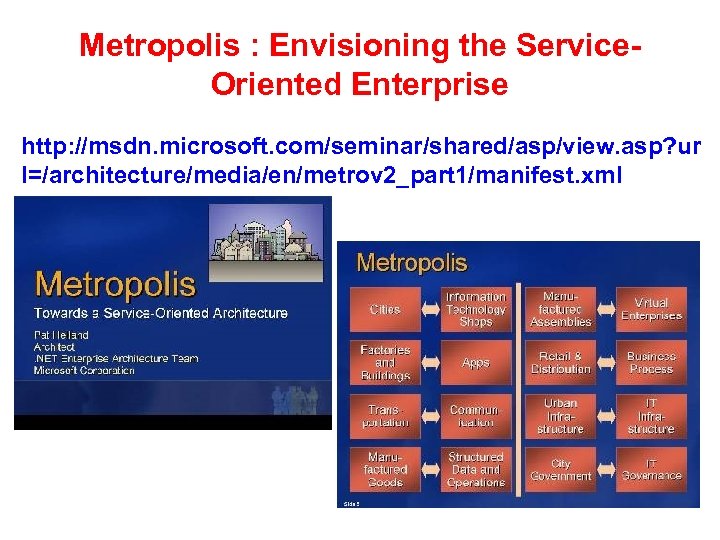 Metropolis : Envisioning the Service. Oriented Enterprise http: //msdn. microsoft. com/seminar/shared/asp/view. asp? ur l=/architecture/media/en/metrov 2_part 1/manifest. xml
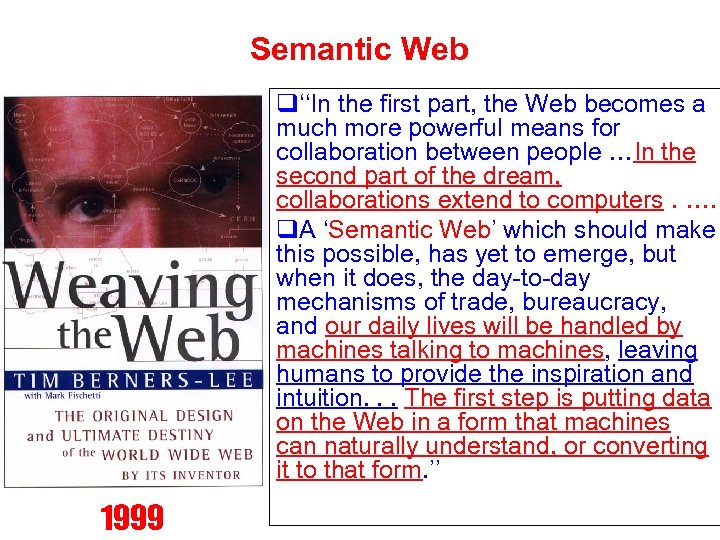 Semantic Web q‘‘In the first part, the Web becomes a much more powerful means for collaboration between people …In the second part of the dream, collaborations extend to computers. …. q. A ‘Semantic Web’ which should make this possible, has yet to emerge, but when it does, the day-to-day mechanisms of trade, bureaucracy, and our daily lives will be handled by machines talking to machines, leaving humans to provide the inspiration and intuition. . . The first step is putting data on the Web in a form that machines can naturally understand, or converting it to that form. ’’ 1999
 Convergence of Interests Next Generation Grid
 Convergence is a need !
 Mandatory No Standard… ? No Industrial/ Business Interest !
 Next Generation Grid Properties J Transparent and reliable J Open to wide user and provider communities The current Grid implementations DO NOT J Pervasive and ubiquitous individually possess all J Secure and provide trust across multiple of these properties administrative domains J Easy to use and to program J Persistent Future Grids NOT possessing these J Based on standards for software and protocols properties are unlikely to be of significant J Person-centric use and, therefore, inadequate from J Scalable J Easy to configure and manage business perspectives
 Performance and Dependability are key properties for NGG, but they are perceived as contrasting properties: 1)Long periods of grid services unavailability impact on 2) performance 3)2)Techniques for resiliency may introduce overheads Performability of grids is a holistic approach that has to include also security and business concerns Challenges for performable grid systems and services
 1. Standardization v Definition of standards for metrics, models, modeling languages and formalisms v Definition of benchmarks v Independent approaches determine different means and tools for metrics and models v Dominant projects that dictate standards, not necessarily have the best approach to performance and dependability Ø Role of and of the other standard bodies
 2. Virtualization enables a service to be offered seamlessly without awareness of what underlying services are used, their location, who provides them and if are used by others: Hierarchy of services that can be managed as atomic entities, but introduce many problems from a modeling and measurement point of view: Ø It is impossible to determine what resources are being used; different uses of the same service can be made by distinct sets of resources Ø If a resources is overused, a task can be migrated to an alternative with different non-functional properties Ø Different services may employ the same set of underlying services, becoming correlated and affected by common mode failures § this is a problem in both analysis and in design for deciding where and when using resilience techniques Ø Difficult prediction of resource’s workload § on-line monitoring of resources but role of interdependencies Ø Complexity of models of system behavior Ø Little work on this issue
 3. Measurement of complex systems The size of grid systems, their heterogeneity and dynamicity create problems for performability analysis. v What to measure and where to measure v Model-based evaluation of large complex systems will have to cope with large state spaces v Simulation will have unacceptable run times v Analytical models of complex systems, if available, are very costly to solve Ø Need of techniques for efficient solutions of large models and for finding simple approximations Ø Production of trustworthy approximations and verifiable techniques for model simplification
 4. Resource management Effective management of resources is a key part for providing Qo. S to customers; managing performability requires up to date knowledge of the state of the system operation: ØBeing entirely up to date is unreasonable ØPerformance may be increased if the choice of where directing a particular request is based on the best information available ØPredictive mechanisms: • efficient decomposition techniques • accurate approximations • scenario specific heuristics Ø Identification of quasi-optimal policies and their evaluation Ø Application oriented easily usable mechanisms
 5. Realistic parameterization of systems Performability models are only as good as the data that is used to populate them. If performance or availability is predicted on a conservative estimate for user demand then the system may have too little capacity and a far poorer expected performability It is important to have accurate information on demand for proposed models to be accurately verified against real data Quite apart some work on grid scheduling, still much is to be done for: • providing the right level of information across a wide range of systems in an accurate and timely manner • providing new applications with accurate historical data from similar applications to be able to make accurate performability predictions
 6. Business metrics v Real metrics of interest are financial v Increasing performability introduces costs there is a need for a trade-off Ø Grid systems are not simply a technical solution, but rather a different way of organizing business Ø The core model is going to be a business process model and the technical models are going to be add-ons to this Ø Need of understanding of charging models and their impact on user behavior The relationship between charging and performability is very complex
 7. Performance and security v Grid systems involve sharing of large set of personal data some of which very valuable v Protection of data is a key issue v Making open systems secure is difficult and can introduce large unwanted overheads v Some users may privilege performance over security and decide to turn off security measure v Even if security developers do not consider performability as orthogonal to security, for sure, it is a secondary consideration for them. Much work has to be done: Ø to define acceptable trade-offs between security and performability Ø to identify accurate even if approximate measures of security
 More Research is needed… introduction of performability services understanding, integration of all these viewpoints and their absorption into standards More international cooperation is needed….