 Скачать презентацию Green Today Jobs Tomorrow May 11 2009 Center
95f59598a6f17ad5f96cff527ceec216.ppt
- Количество слайдов: 30



Green Today Jobs Tomorrow May 11, 2009 Center for Energy Excellence: “Building New Coalitions for Economic Growth” Kettering University 1

Agenda • • • Dr. Michael Harris Dr. Joel Berry Dr. Homayun Navaz Neil Sheridan Questions & Answers Kettering University 2
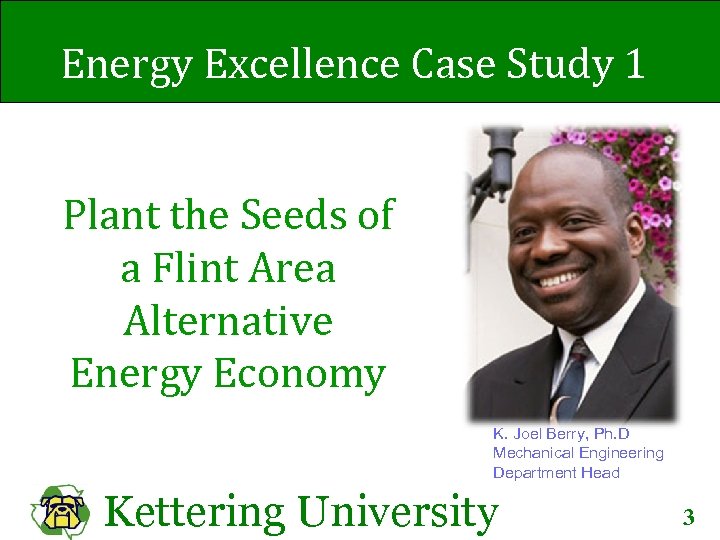
Energy Excellence Case Study 1 Plant the Seeds of a Flint Area Alternative Energy Economy K. Joel Berry, Ph. D Mechanical Engineering Department Head Kettering University 3
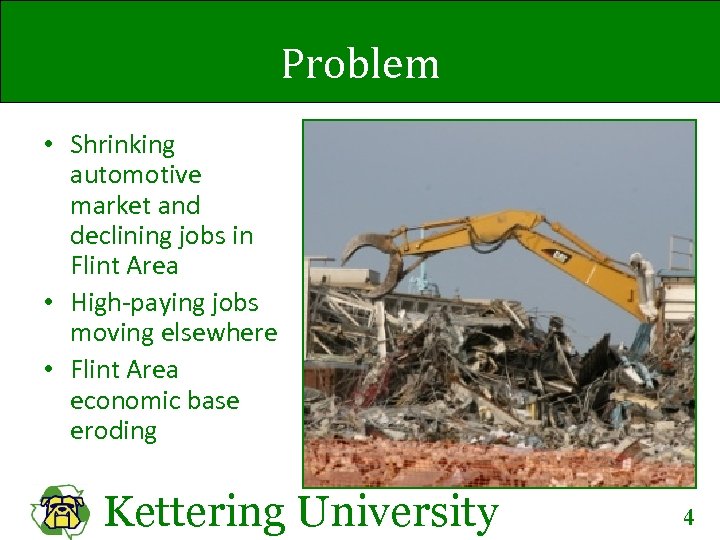
Problem • Shrinking automotive market and declining jobs in Flint Area • High-paying jobs moving elsewhere • Flint Area economic base eroding Kettering University 4
Solution • Kettering to assist in an economic transformation of Flint and Mid-Michigan by development of a Sustainable Energy Economy. • Activities creating high-paying alternative energy jobs for the Flint employment base. Kettering University 5
Approach • Approached the Federal Economic Development Administration for assistance • Work strategically with the MEDC • Collaborate with the Mid-Michigan Innovation Team Kettering University 6
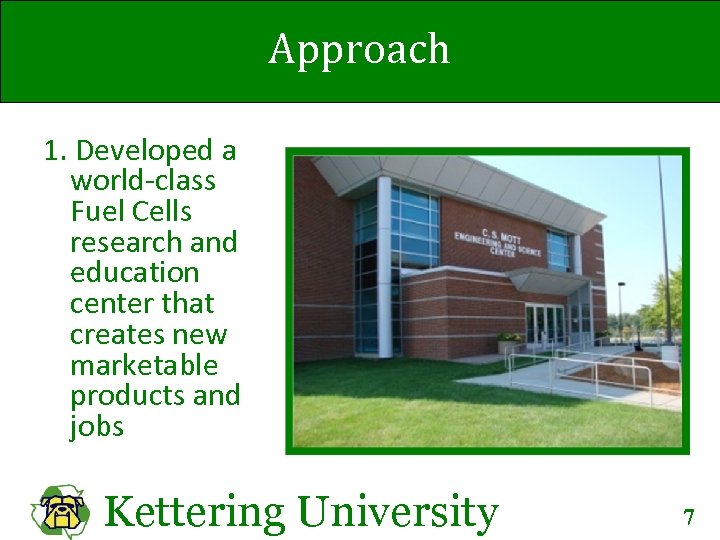
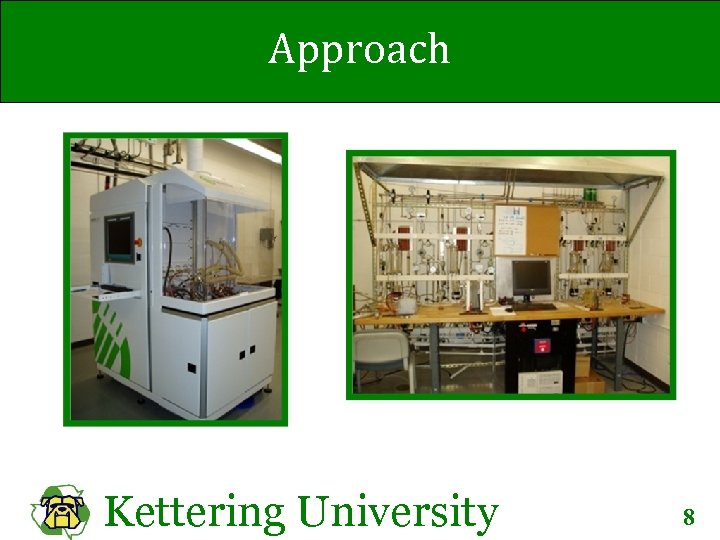
Approach 1. Developed a world-class Fuel Cells research and education center that creates new marketable products and jobs Kettering University 7
Approach Kettering University 8
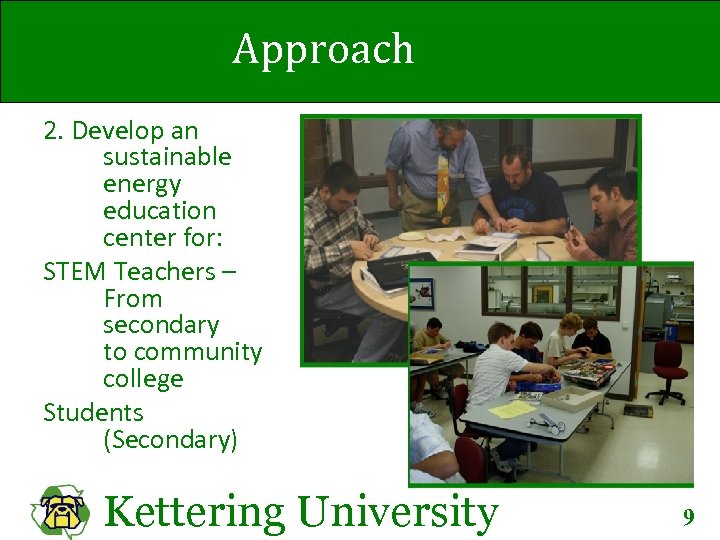
Approach 2. Develop an sustainable energy education center for: STEM Teachers – From secondary to community college Students (Secondary) Kettering University 9
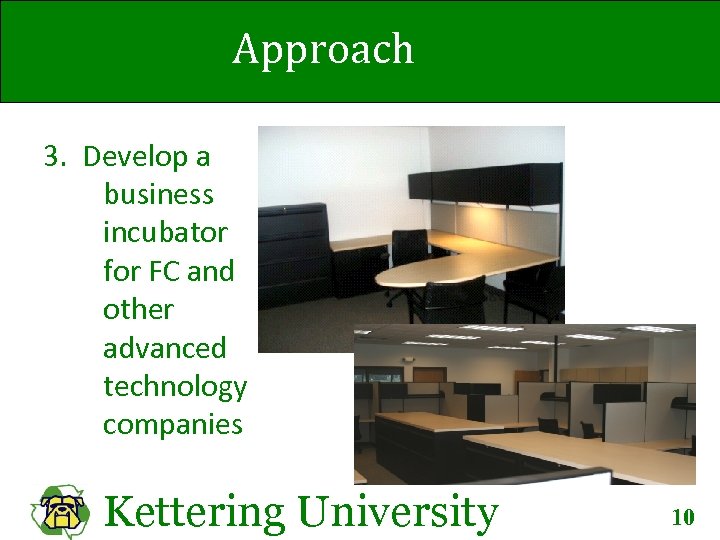
Approach 3. Develop a business incubator for FC and other advanced technology companies Kettering University 10
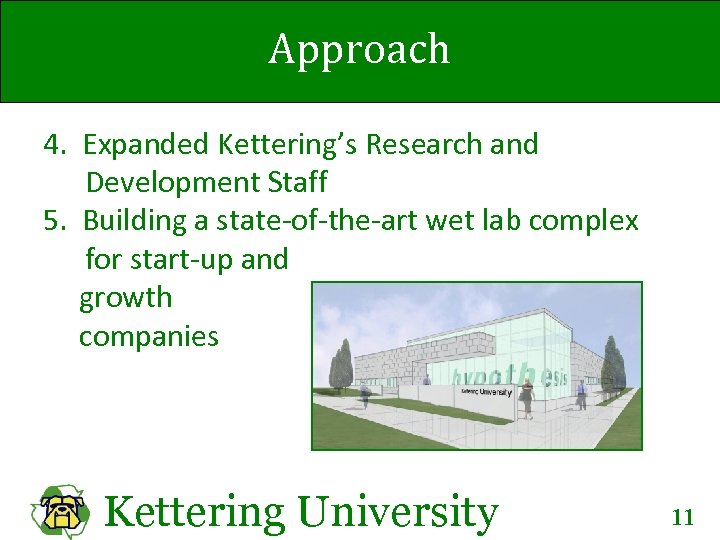
Approach 4. Expanded Kettering’s Research and Development Staff 5. Building a state-of-the-art wet lab complex for start-up and growth companies Kettering University 11
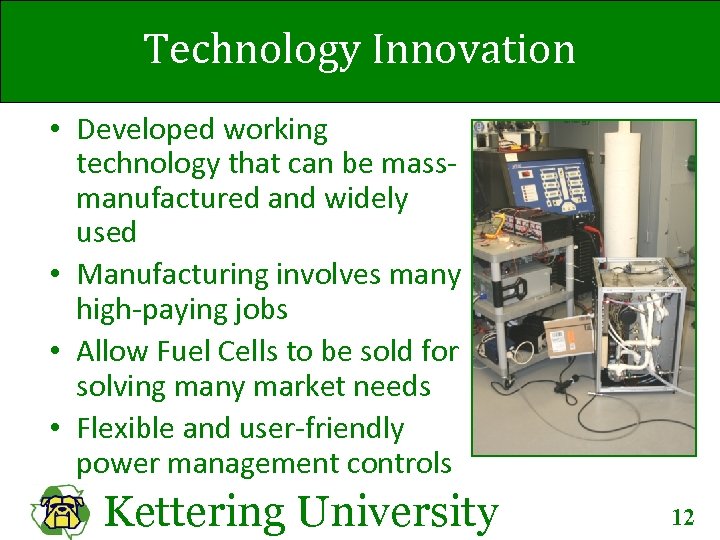
Technology Innovation • Developed working technology that can be massmanufactured and widely used • Manufacturing involves many high-paying jobs • Allow Fuel Cells to be sold for solving many market needs • Flexible and user-friendly power management controls Kettering University 12
Technology Education • Provided research and learning opportunities for Kettering faculty and students • Every Mechanical Engineering student since 2005 has been exposed to Fuel Cells and Hybrid technologies • Pre-College Program • STEM Teachers Kettering University 13
Results • 50 Community College and Secondary Teachers have participated in SEE programs with spin-off programs around the state • Technology spun-out into a new company – GEI “Global Energy Innovations” – 6 Full and part-time employees – Major corporate partner – Has sent robust prototypes to commercial development partners for evaluation Kettering University 14
Results Kettering Tech. Works program hosting two alternative energy start-ups Kettering University 15
Next Steps • Next Steps in Job Creation/Growth – Find investment capital – Scale it up – Begin small-scale manufacturing – Plan for manufacturing and developing local suppliers and workers • Next, make a national contribution – Develop a national educational model to disseminate knowledge – “Coalition of Great Lakes Fuel Cell Education…” Kettering University 16
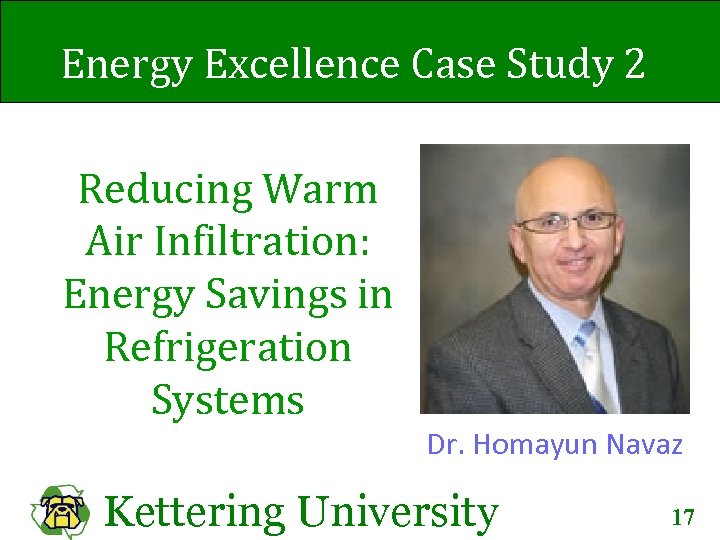
Energy Excellence Case Study 2 Reducing Warm Air Infiltration: Energy Savings in Refrigeration Systems Dr. Homayun Navaz Kettering University 17
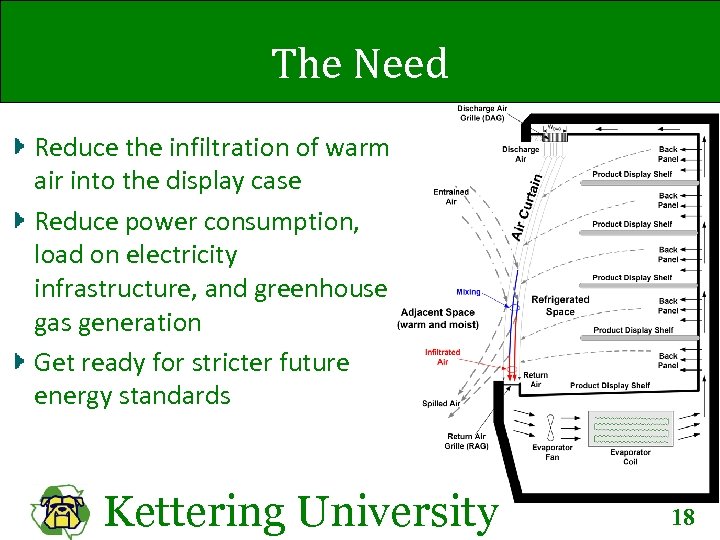
The Need Reduce the infiltration of warm air into the display case Reduce power consumption, load on electricity infrastructure, and greenhouse gas generation Get ready for stricter future energy standards Kettering University 18
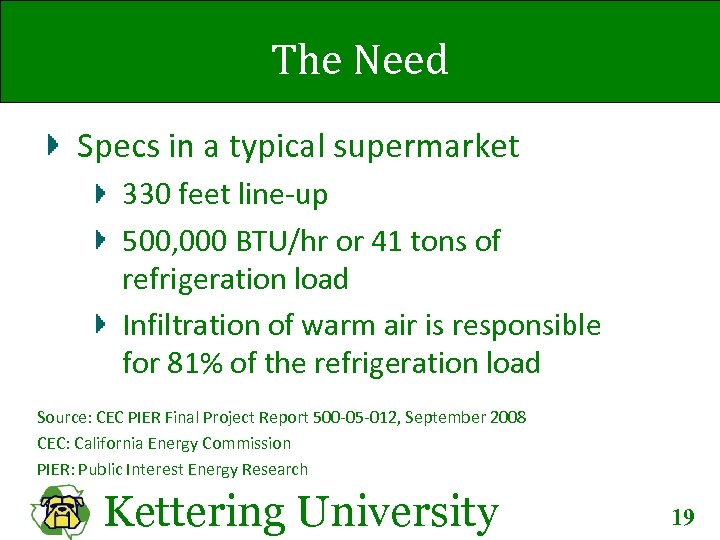
The Need Specs in a typical supermarket 330 feet line-up 500, 000 BTU/hr or 41 tons of refrigeration load Infiltration of warm air is responsible for 81% of the refrigeration load Source: CEC PIER Final Project Report 500 -05 -012, September 2008 CEC: California Energy Commission PIER: Public Interest Energy Research Kettering University 19
Solution • Successfully conducted advanced R & D on warm air infiltration in refrigerated/ air-conditioned space • Effectively modeled the impact of design changes on configuration options • Easily can now measure the actual performance specifications under real-world operating conditions • Successfully reduced the infiltration by 12% Kettering University 20
Approach A hybrid experimental/numerical approach was used to develop: – A software that calculates the infiltration rate of warm air into the refrigerated space (based on artificial intelligence) – Equipment to measure actual infiltration in either labs or in the field (supermarkets) • In Fact: Can be used to measure warm air infiltrating this conference hall Kettering University 21
Innovation Strategy • • • Discovery of the science Gauge commercial and environmental benefits Create the IT and hardware technology Develop industry and peer acknowledgement of its validity Find Partners – Southern California Edison Company – University of Washington (Seattle) – University of Texas (Dallas) – Measurement Sciences, Inc. – Display Case Manufacturers • Hill Phoenix, Inc • Hussmann, Inc. • Southern Store Fixtures, Inc. Kettering University 22
Partners & Investments • Partners: – – – Southern California Edison Company University of Washington (Seattle) University of Texas (Dallas) Measurement Sciences, Inc. Display Case Manufacturers • Hill Phoenix, Inc • Hussmann, Inc. • Southern Store Fixtures, Inc. • Investments – – – $100 K from the Department of Energy $250 K from California Energy Commission $150 K from Southern California Edison Kettering University 23
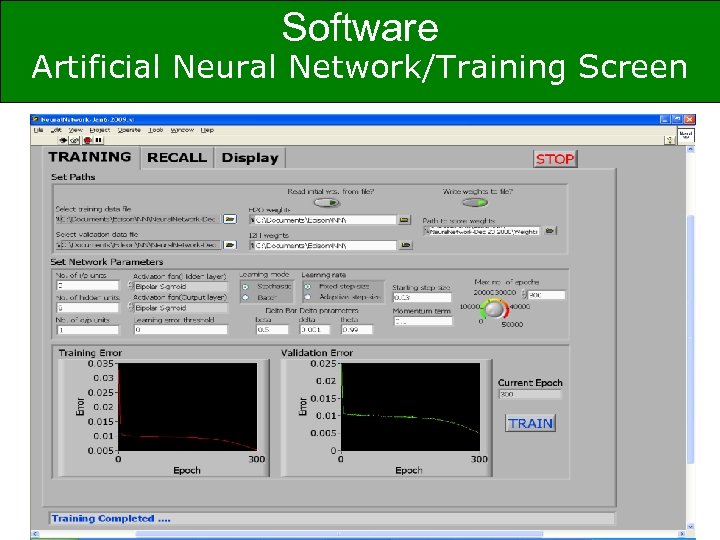
Software Artificial Neural Network/Training Screen Kettering University 24
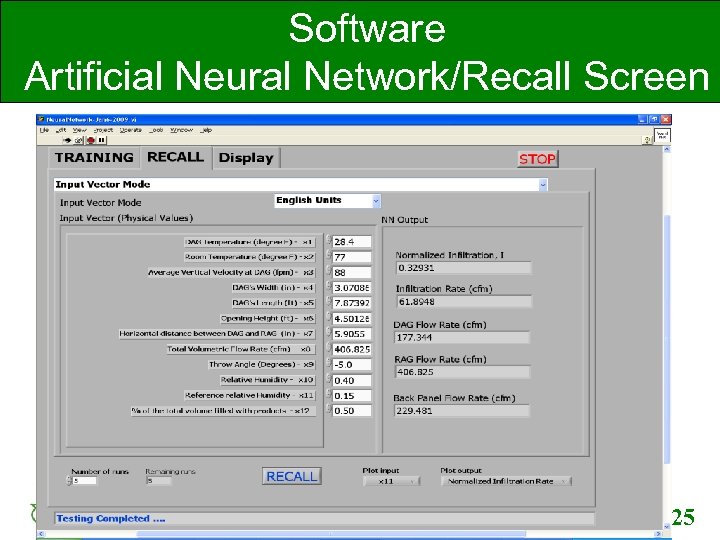
Software Artificial Neural Network/Recall Screen Kettering University 25
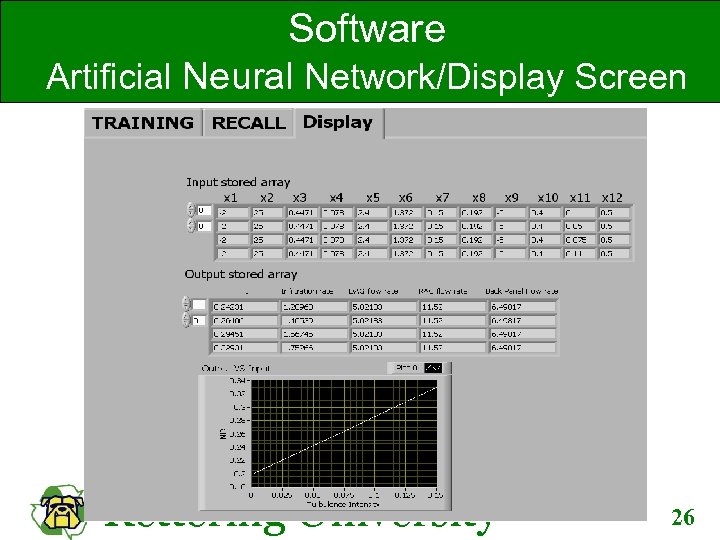
Software Artificial Neural Network/Display Screen Kettering University 26
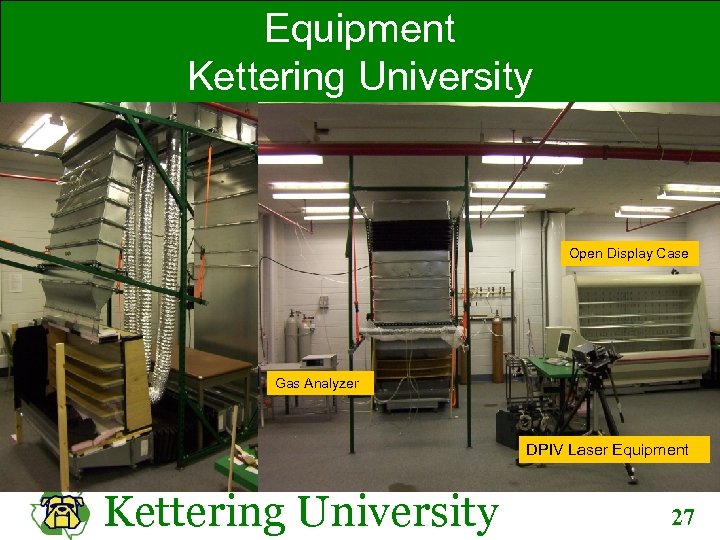
Equipment Kettering University Open Display Case Gas Analyzer DPIV Laser Equipment Kettering University 27
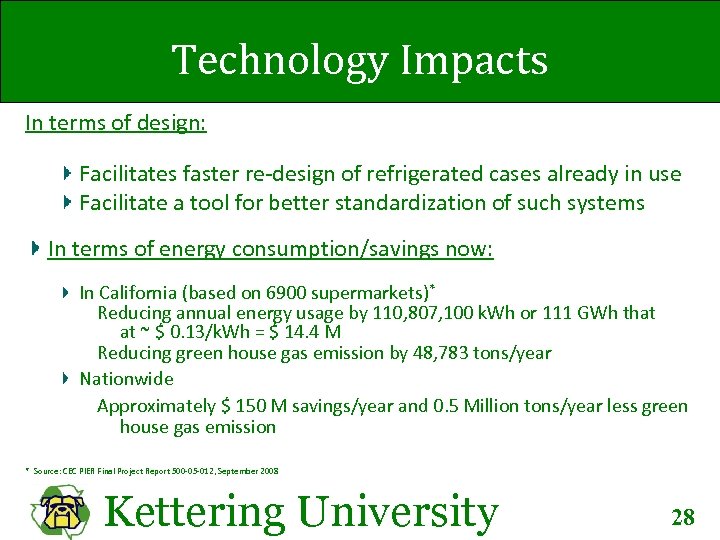
Technology Impacts In terms of design: Facilitates faster re-design of refrigerated cases already in use Facilitate a tool for better standardization of such systems In terms of energy consumption/savings now: In California (based on 6900 supermarkets)* Reducing annual energy usage by 110, 807, 100 k. Wh or 111 GWh that at ~ $ 0. 13/k. Wh = $ 14. 4 M Reducing green house gas emission by 48, 783 tons/year Nationwide Approximately $ 150 M savings/year and 0. 5 Million tons/year less green house gas emission * Source: CEC PIER Final Project Report 500 -05 -012, September 2008 Kettering University 28
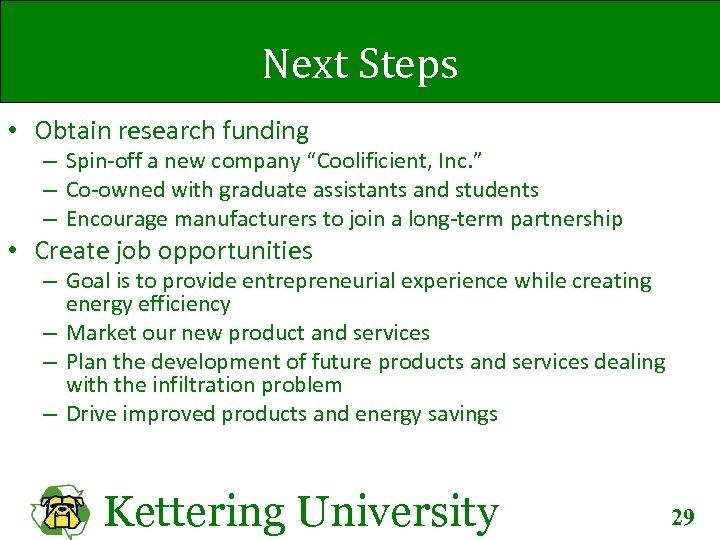
Next Steps • Obtain research funding – Spin-off a new company “Coolificient, Inc. ” – Co-owned with graduate assistants and students – Encourage manufacturers to join a long-term partnership • Create job opportunities – Goal is to provide entrepreneurial experience while creating energy efficiency – Market our new product and services – Plan the development of future products and services dealing with the infiltration problem – Drive improved products and energy savings Kettering University 29
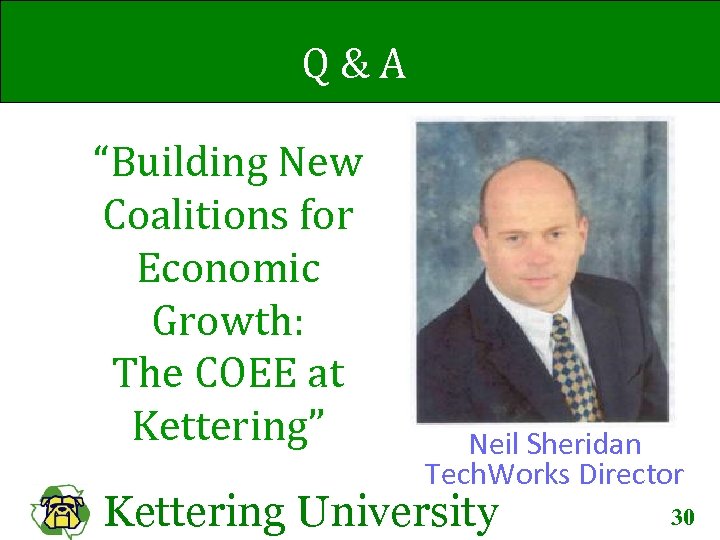
Q&A “Building New Coalitions for Economic Growth: The COEE at Kettering” Neil Sheridan Tech. Works Director Kettering University 30
Скачать презентацию Green Today Jobs Tomorrow May 11 2009 Center
95f59598a6f17ad5f96cff527ceec216.ppt