 Скачать презентацию Greatest philosophers Content Information about David Hume
Greatest_philosophers.pptx
- Количество слайдов: 14



Greatest philosophers
Content: Information about: David Hume and Thomas Hobbes
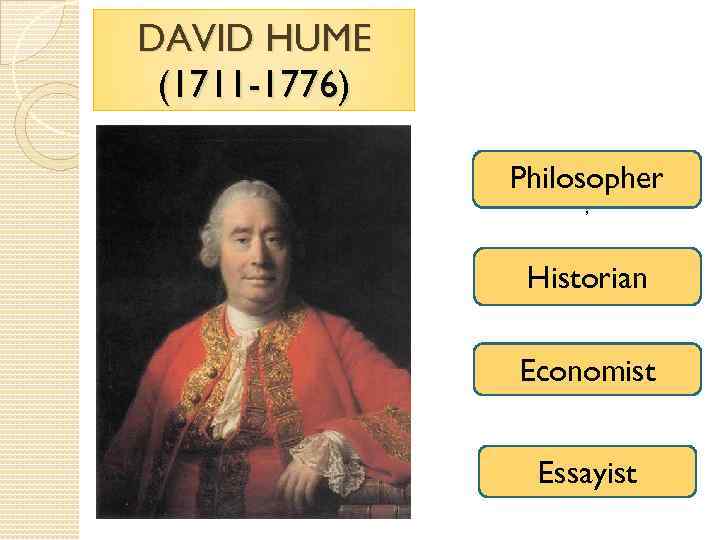
DAVID HUME (1711 -1776) Philosopher , Historian Economist Essayist
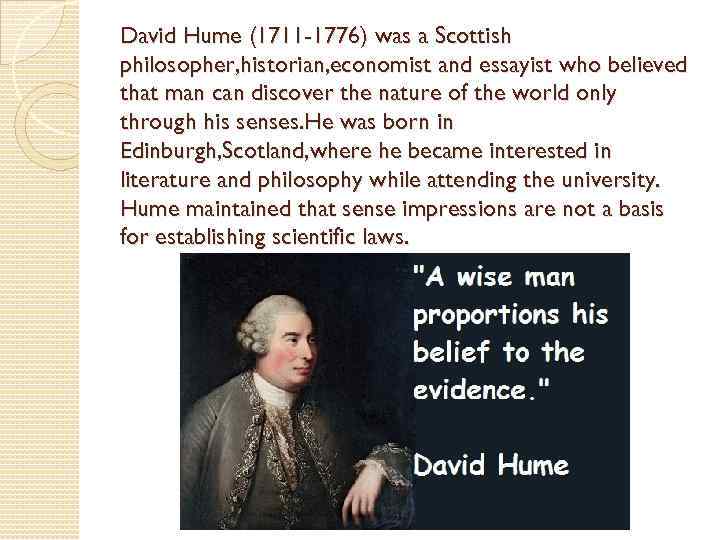
David Hume (1711 -1776) was a Scottish philosopher, historian, economist and essayist who believed that man can discover the nature of the world only through his senses. He was born in Edinburgh, Scotland, where he became interested in literature and philosophy while attending the university. Hume maintained that sense impressions are not a basis for establishing scientific laws.
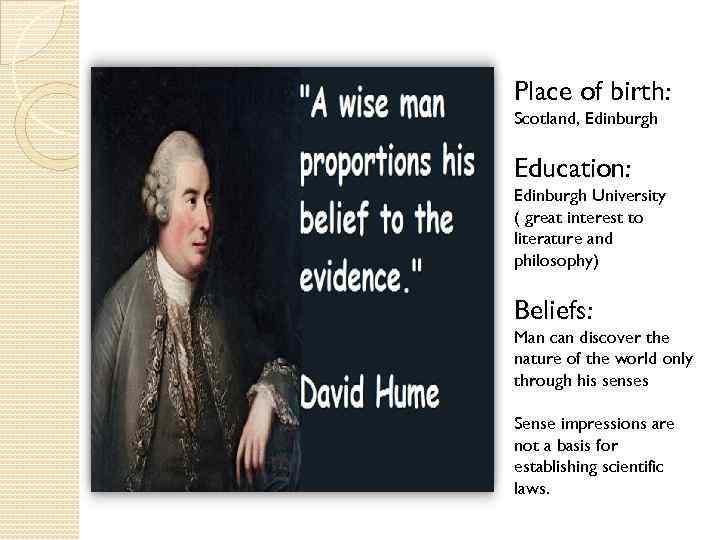
Place of birth: Scotland, Edinburgh Education: Edinburgh University ( great interest to literature and philosophy) Beliefs: Man can discover the nature of the world only through his senses Sense impressions are not a basis for establishing scientific laws.
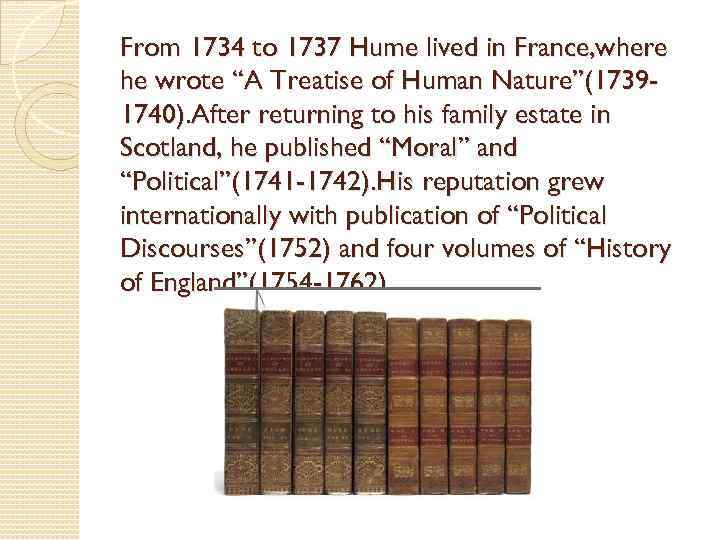
From 1734 to 1737 Hume lived in France, where he wrote “A Treatise of Human Nature”(17391740). After returning to his family estate in Scotland, he published “Moral” and “Political”(1741 -1742). His reputation grew internationally with publication of “Political Discourses”(1752) and four volumes of “History of England”(1754 -1762).
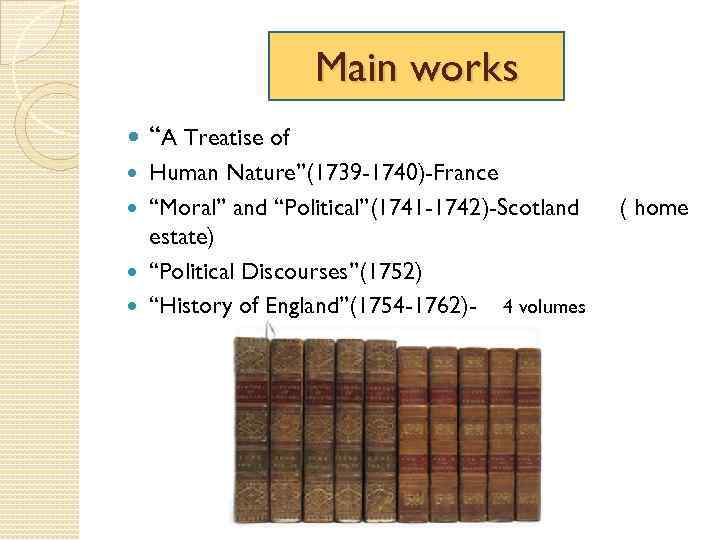
Main works “A Treatise of Human Nature”(1739 -1740)-France “Moral” and “Political”(1741 -1742)-Scotland estate) “Political Discourses”(1752) “History of England”(1754 -1762)- 4 volumes ( home
Also it will be interesting to know: That he was a secretary to the British embassy in Paris from 1763 to 1766. For a time he was undersecretary of state in England. He retired to Edinburgh in 1769. His Dialogues Concerning Natural Religion were published posthumously in 1779 (after his death in Scotland, in Edinburgh on 25 of august in 1776).
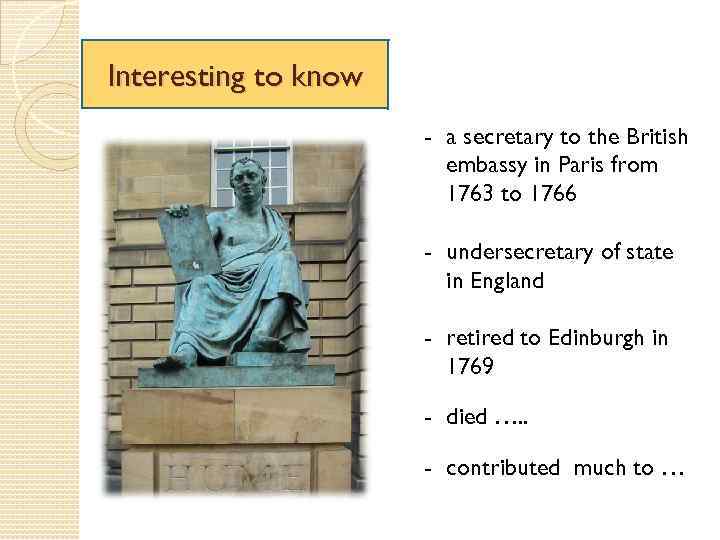
Interesting to know - a secretary to the British embassy in Paris from 1763 to 1766 - undersecretary of state in England - retired to Edinburgh in 1769 - died …. . - contributed much to …
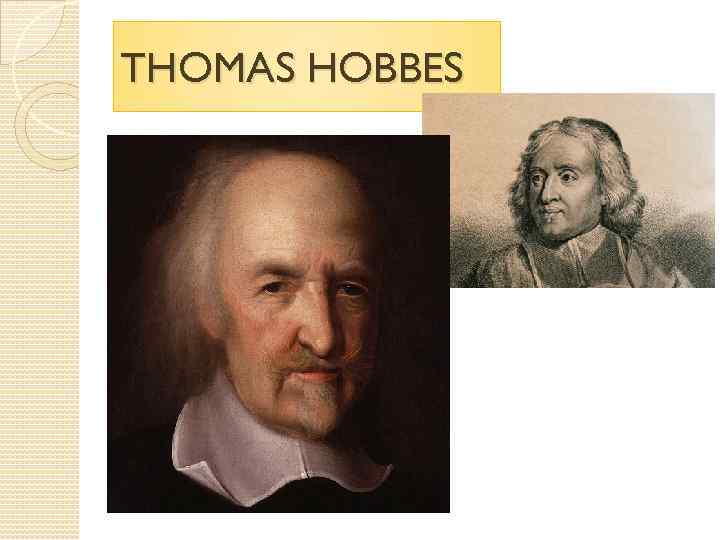
THOMAS HOBBES
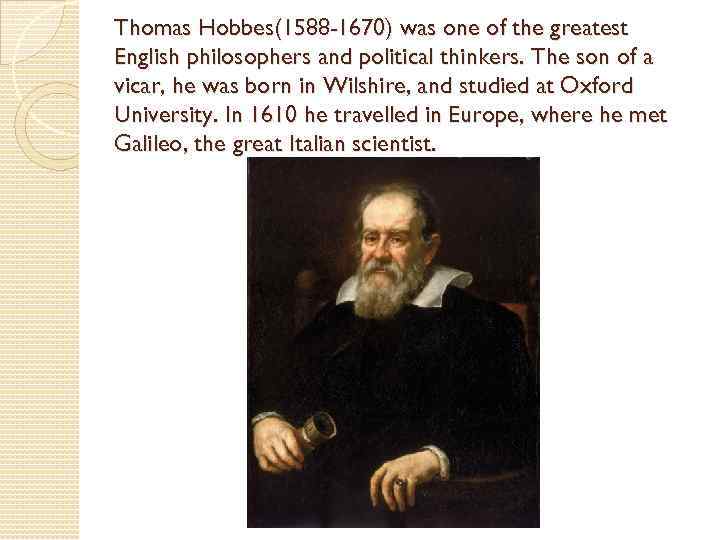
Thomas Hobbes(1588 -1670) was one of the greatest English philosophers and political thinkers. The son of a vicar, he was born in Wilshire, and studied at Oxford University. In 1610 he travelled in Europe, where he met Galileo, the great Italian scientist.
Hobbes believed that every man had a right to live in peace and safety, and that the best form of government was an absolute monarchy(where the king or queen has total control). As the parliamentarians disliked his views, during the English Civil War, from 1640 to 1651 Hobbes lived in Paris. In 1652, after his return home, he published “Leviathan”. After the restoration of the monarchy in 1660, Hobbes was befriended by King Charles II. Although his criticism of religion still got him into trouble in England, his fame had spread abroad, and people travelled great distances to meet him. He died on 4 of december in 1679, in England.
Thank you for attention
Sources
Скачать презентацию Greatest philosophers Content Information about David Hume
Greatest_philosophers.pptx