 Скачать презентацию Graduate School of Management St Petersburg State University
3f31c759a9143ff42cd3128400c5b4b7.ppt
- Количество слайдов: 26



Graduate School of Management St. Petersburg State University June 6, 2008 Michael Klein Chairman of the Institutional Clients Group Vice Chairman, Citi
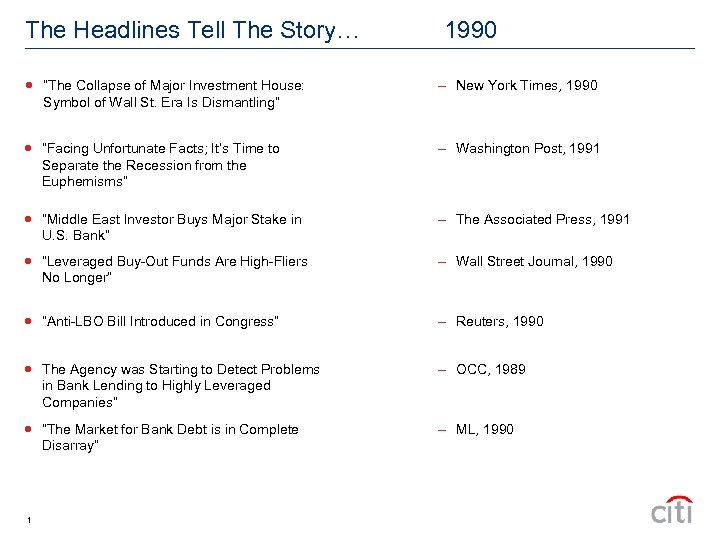
The Headlines Tell The Story… 1990 “The Collapse of Major Investment House: Symbol of Wall St. Era Is Dismantling” – New York Times, 1990 “Facing Unfortunate Facts; It’s Time to Separate the Recession from the Euphemisms” – Washington Post, 1991 “Middle East Investor Buys Major Stake in U. S. Bank” – The Associated Press, 1991 “Leveraged Buy-Out Funds Are High-Fliers No Longer” – Wall Street Journal, 1990 “Anti-LBO Bill Introduced in Congress” – Reuters, 1990 The Agency was Starting to Detect Problems in Bank Lending to Highly Leveraged Companies” – OCC, 1989 “The Market for Bank Debt is in Complete Disarray” – ML, 1990 1
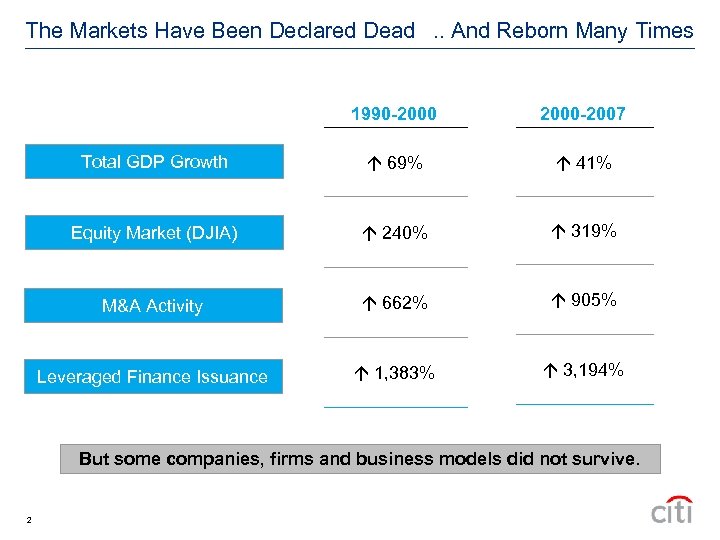
The Markets Have Been Declared Dead. . And Reborn Many Times 1990 -2000 -2007 Total GDP Growth 69% 41% Equity Market (DJIA) 240% 319% M&A Activity 662% 905% Leveraged Finance Issuance 1, 383% 3, 194% But some companies, firms and business models did not survive. 2
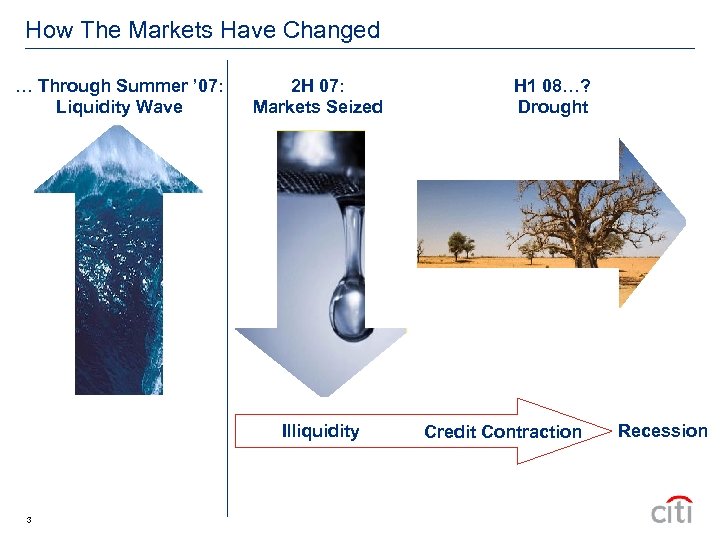
How The Markets Have Changed … Through Summer ’ 07: Liquidity Wave 2 H 07: Markets Seized Illiquidity 3 H 1 08…? Drought Credit Contraction Recession
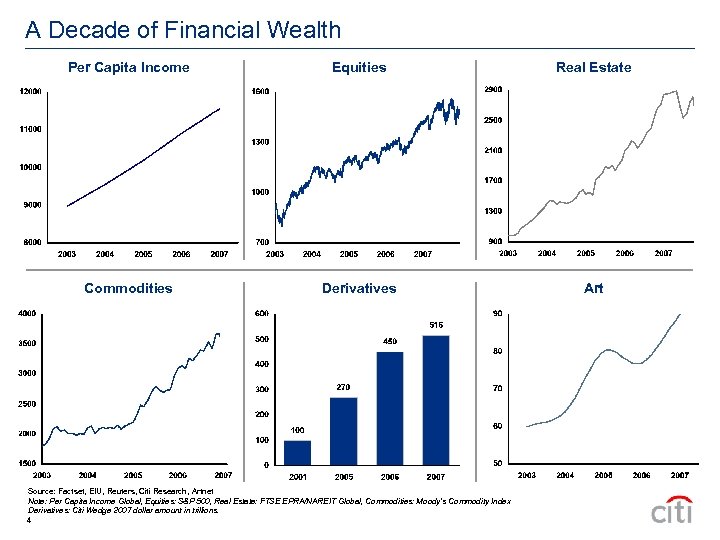
A Decade of Financial Wealth Per Capita Income Equities Real Estate Commodities Derivatives Art Source: Factset, EIU, Reuters, Citi Research, Artnet Note: Per Capita Income Global, Equities: S&P 500, Real Estate: FTSE EPRA/NAREIT Global, Commodities: Moody’s Commodity Index Derivatives: Citi Wedge 2007 dollar amount in trillions. 4
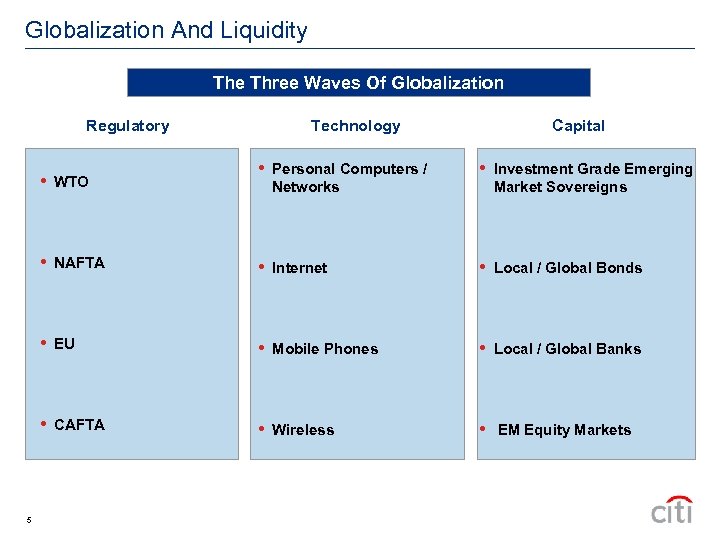
Globalization And Liquidity The Three Waves Of Globalization Regulatory Technology Capital • Personal Computers / Networks • Investment Grade Emerging Market Sovereigns NAFTA • Internet • Local / Global Bonds • EU • Mobile Phones • Local / Global Banks • CAFTA • Wireless • EM Equity Markets • • 5 WTO
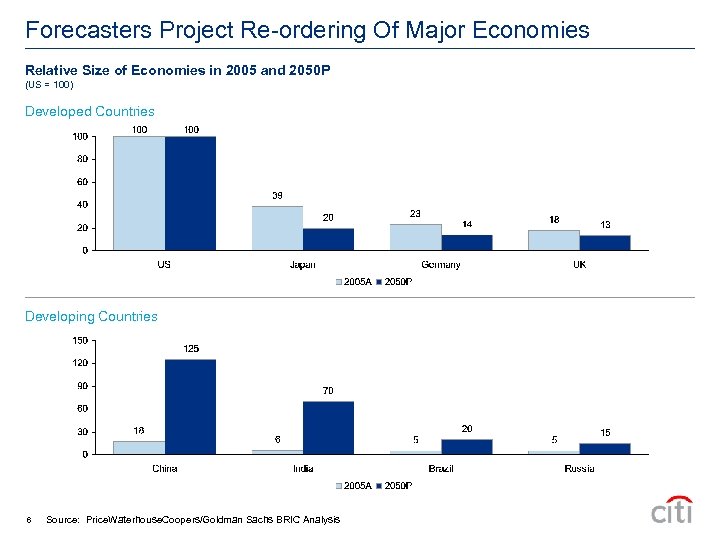
Forecasters Project Re-ordering Of Major Economies Relative Size of Economies in 2005 and 2050 P (US = 100) Developed Countries Developing Countries 6 Source: Price. Waterhouse. Coopers/Goldman Sachs BRIC Analysis
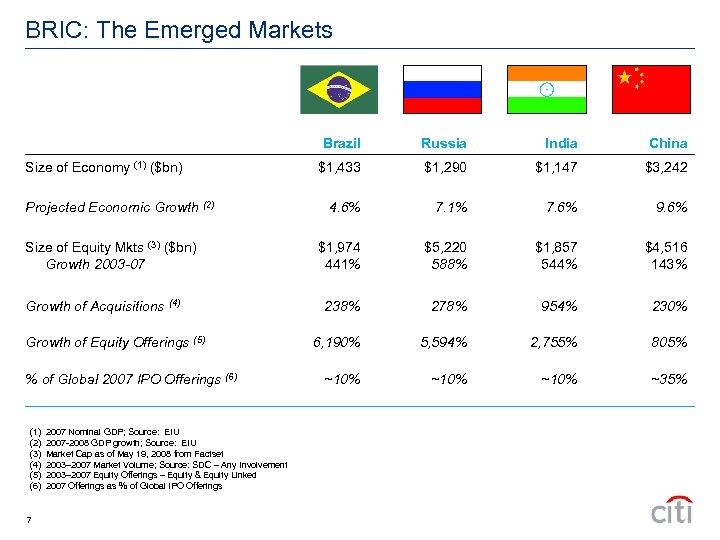
BRIC: The Emerged Markets Brazil Size of Economy (1) ($bn) Projected Economic Growth (2) Size of Equity Mkts (3) ($bn) Growth 2003 -07 Growth of Acquisitions (4) Growth of Equity Offerings (5) % of Global 2007 IPO Offerings (6) (1) (2) (3) (4) (5) (6) 7 2007 Nominal GDP; Source: EIU 2007 -2008 GDP growth; Source: EIU Market Cap as of May 19, 2008 from Factset 2003– 2007 Market Volume; Source: SDC – Any Involvement 2003– 2007 Equity Offerings – Equity & Equity Linked 2007 Offerings as % of Global IPO Offerings Russia India China $1, 433 $1, 290 $1, 147 $3, 242 4. 6% 7. 1% 7. 6% 9. 6% $1, 974 441% $5, 220 588% $1, 857 544% $4, 516 143% 238% 278% 954% 230% 6, 190% 5, 594% 2, 755% 805% ~10% ~35%
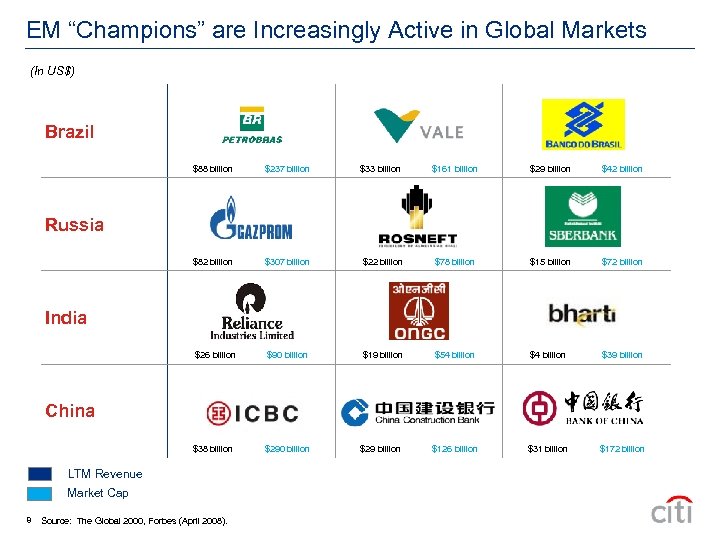
EM “Champions” are Increasingly Active in Global Markets (In US$) Brazil $88 billion $237 billion $33 billion $161 billion $29 billion $42 billion $82 billion $307 billion $22 billion $78 billion $15 billion $72 billion $26 billion $90 billion $19 billion $54 billion $39 billion $38 billion $290 billion $29 billion $126 billion $31 billion $172 billion Russia India China LTM Revenue Market Cap 8 Source: The Global 2000, Forbes (April 2008).
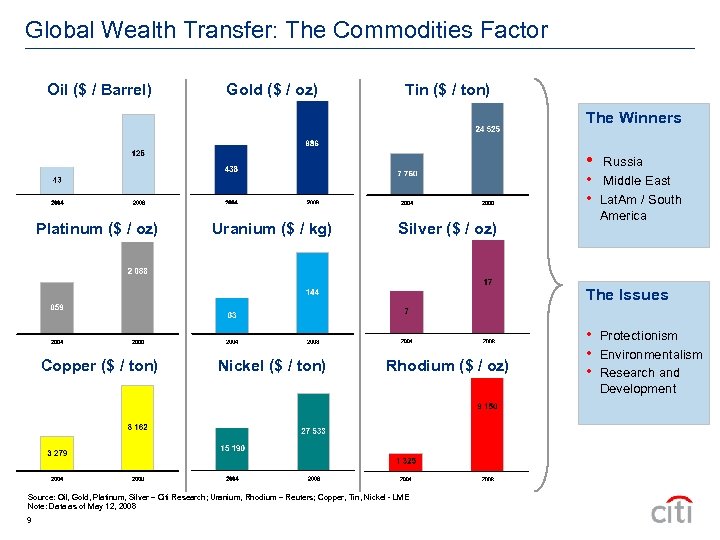
Global Wealth Transfer: The Commodities Factor Oil ($ / Barrel) Gold ($ / oz) Tin ($ / ton) The Winners • • • Platinum ($ / oz) Uranium ($ / kg) Silver ($ / oz) Russia Middle East Lat. Am / South America The Issues Copper ($ / ton) Nickel ($ / ton) Rhodium ($ / oz) Source: Oil, Gold, Platinum, Silver – Citi Research; Uranium, Rhodium – Reuters; Copper, Tin, Nickel - LME Note: Data as of May 12, 2008 9 • • • Protectionism Environmentalism Research and Development
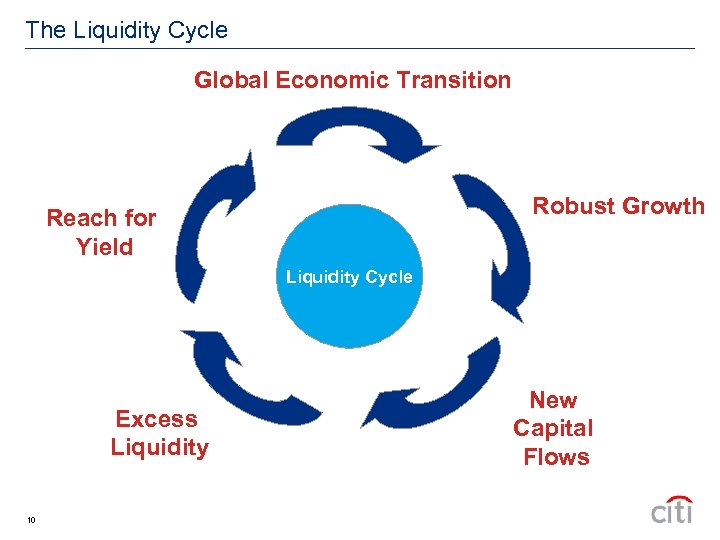
The Liquidity Cycle Global Economic Transition Robust Growth Reach for Yield Liquidity Cycle Excess Liquidity 10 New Capital Flows
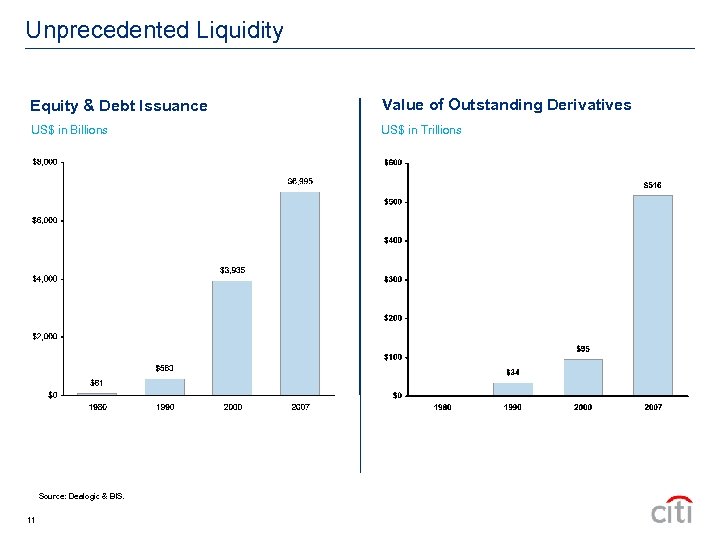
Unprecedented Liquidity Equity & Debt Issuance Value of Outstanding Derivatives US$ in Billions US$ in Trillions Source: Dealogic & BIS. 11
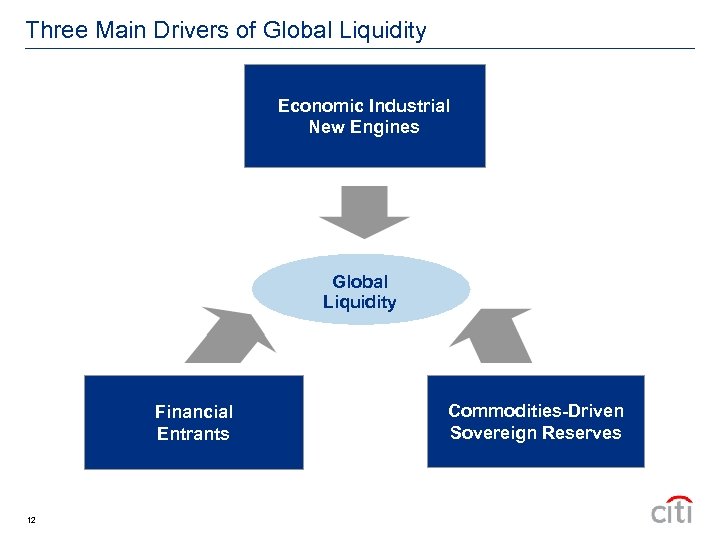
Three Main Drivers of Global Liquidity Economic Industrial New Engines Global Liquidity Financial Entrants 12 Commodities-Driven Sovereign Reserves
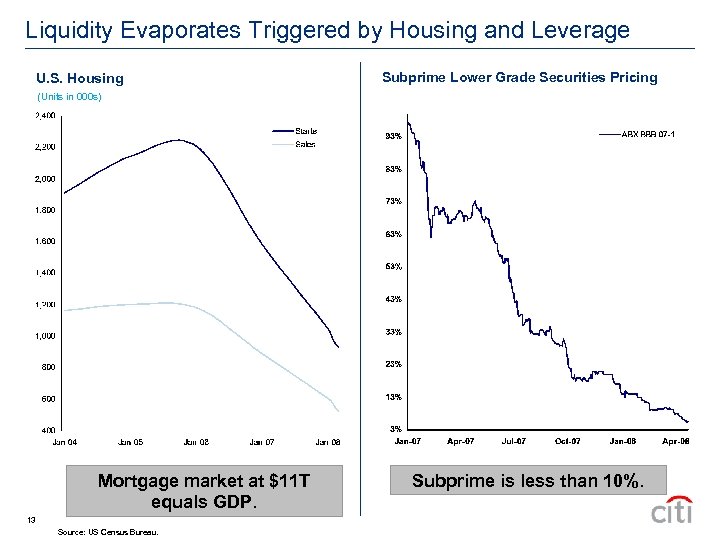
Liquidity Evaporates Triggered by Housing and Leverage U. S. Housing Subprime Lower Grade Securities Pricing (Units in 000 s) Mortgage market at $11 T equals GDP. 13 Source: US Census Bureau. Subprime is less than 10%.
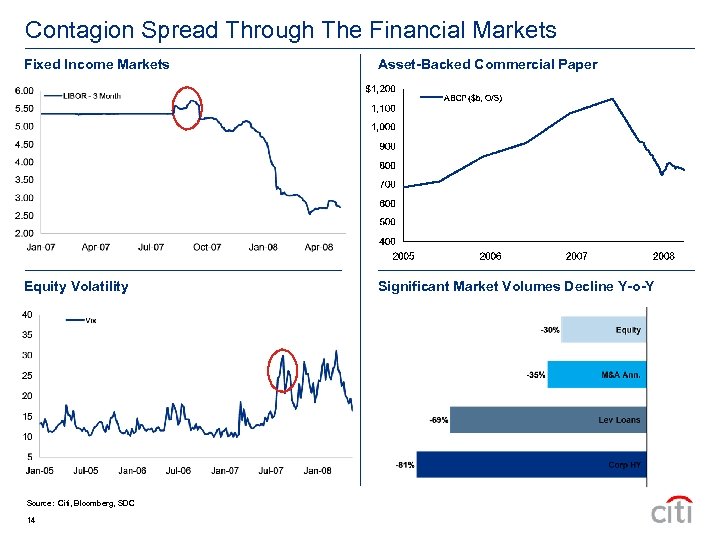
Contagion Spread Through The Financial Markets Fixed Income Markets Asset-Backed Commercial Paper Equity Volatility Significant Market Volumes Decline Y-o-Y Source: Citi, Bloomberg, SDC 14
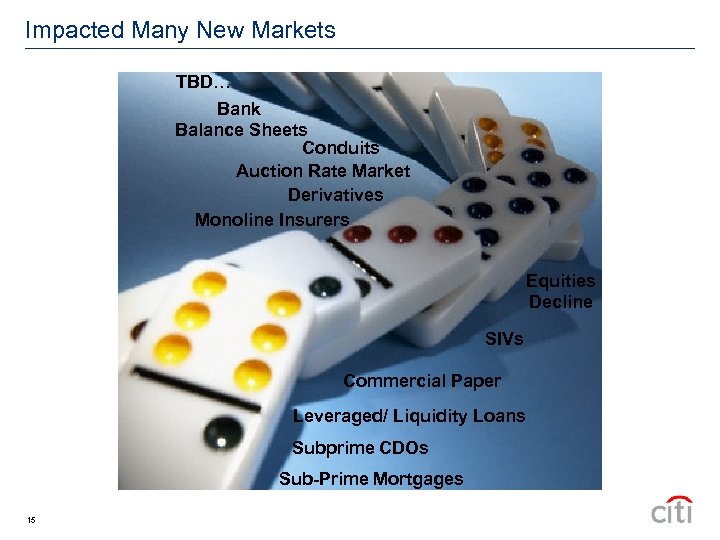
Impacted Many New Markets TBD… Bank Balance Sheets Conduits Auction Rate Market Derivatives Monoline Insurers Equities Decline SIVs Commercial Paper Leveraged/ Liquidity Loans Subprime CDOs Sub-Prime Mortgages 15
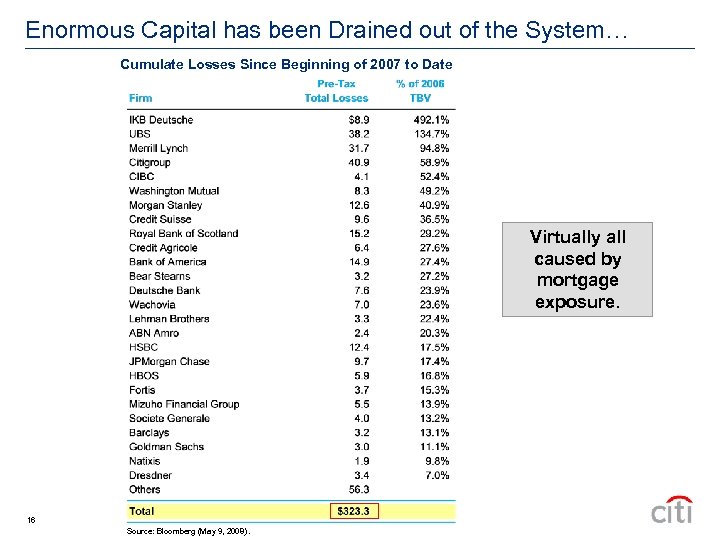
Enormous Capital has been Drained out of the System… Cumulate Losses Since Beginning of 2007 to Date Virtually all caused by mortgage exposure. 16 Source: Bloomberg (May 9, 2008).
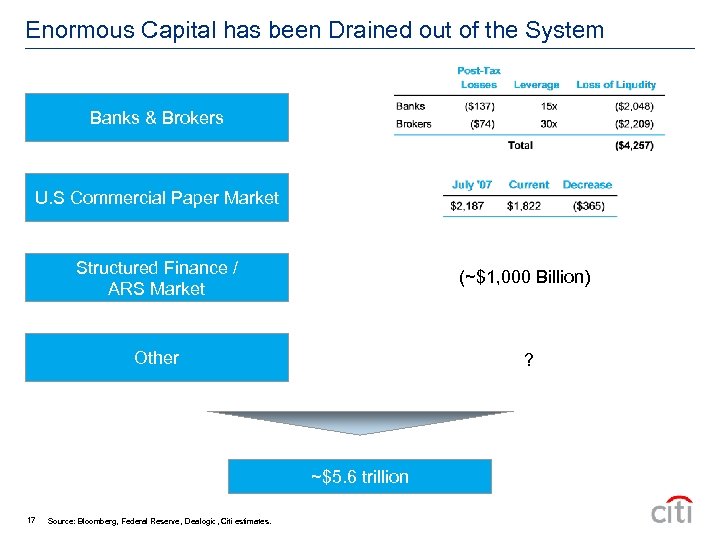
Enormous Capital has been Drained out of the System Banks & Brokers U. S Commercial Paper Market Structured Finance / ARS Market (~$1, 000 Billion) Other ? ~$5. 6 trillion 17 Source: Bloomberg, Federal Reserve, Dealogic, Citi estimates.
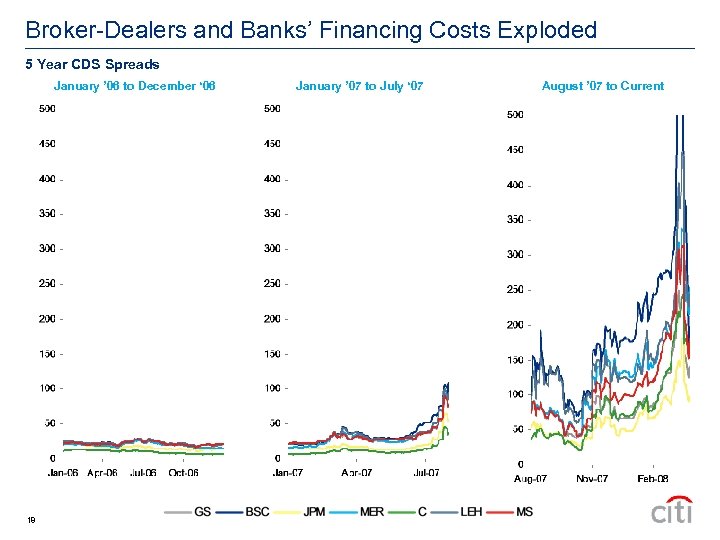
Broker-Dealers and Banks’ Financing Costs Exploded 5 Year CDS Spreads January ’ 06 to December ‘ 06 18 January ’ 07 to July ‘ 07 August ’ 07 to Current
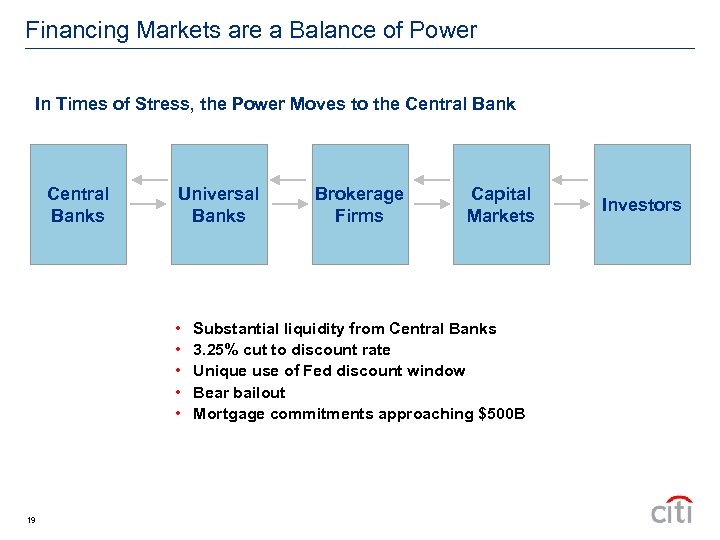
Financing Markets are a Balance of Power In Times of Stress, the Power Moves to the Central Banks Universal Banks • • • 19 Brokerage Firms Capital Markets Substantial liquidity from Central Banks 3. 25% cut to discount rate Unique use of Fed discount window Bear bailout Mortgage commitments approaching $500 B Investors
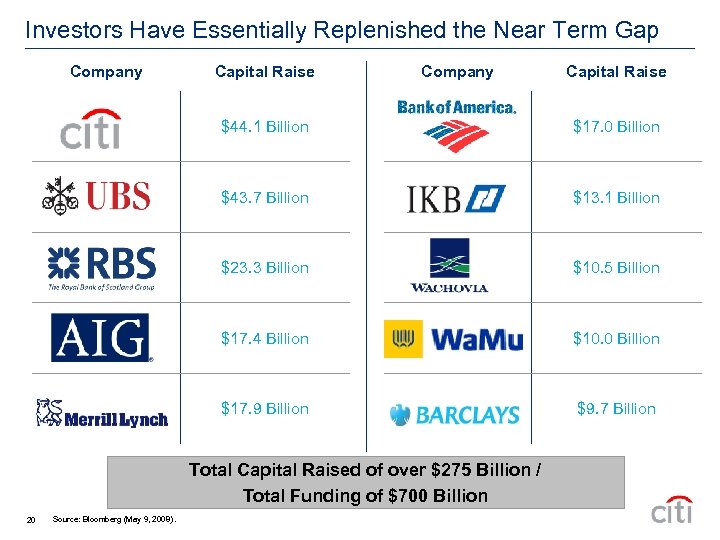
Investors Have Essentially Replenished the Near Term Gap Company Capital Raise $44. 1 Billion $17. 0 Billion $43. 7 Billion $13. 1 Billion $23. 3 Billion $10. 5 Billion $17. 4 Billion $10. 0 Billion $17. 9 Billion $9. 7 Billion Total Capital Raised of over $275 Billion / Total Funding of $700 Billion 20 Source: Bloomberg (May 9, 2008).
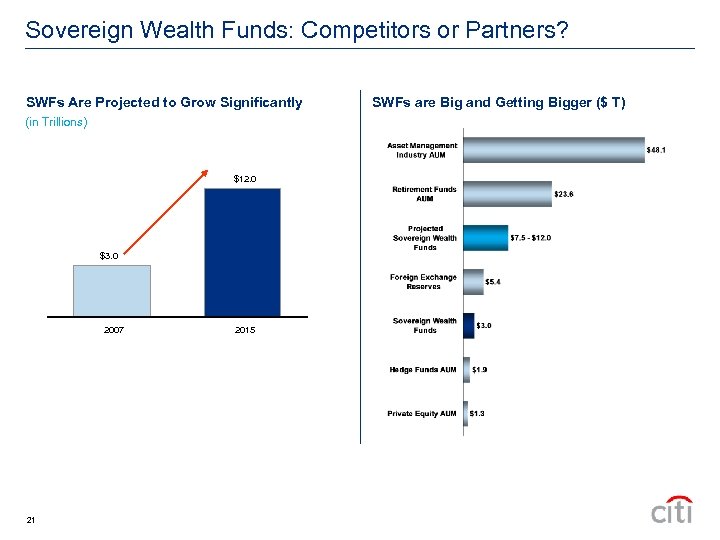
Sovereign Wealth Funds: Competitors or Partners? SWFs Are Projected to Grow Significantly (in Trillions) $12. 0 $3. 0 2007 21 2015 SWFs are Big and Getting Bigger ($ T)
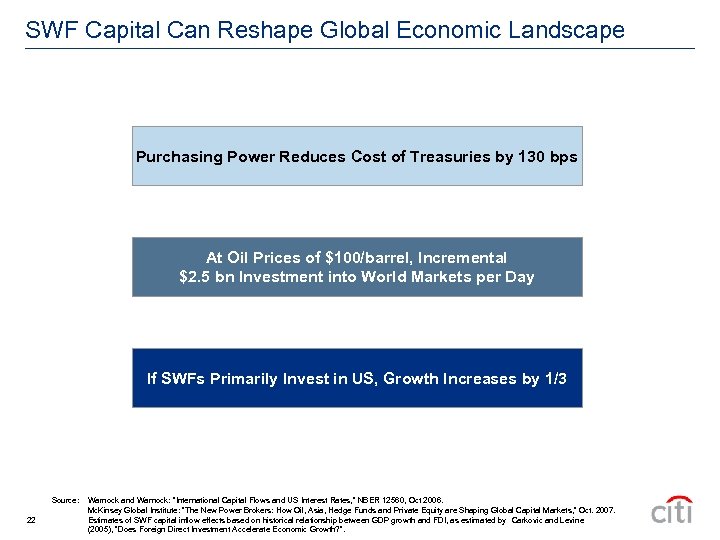
SWF Capital Can Reshape Global Economic Landscape Purchasing Power Reduces Cost of Treasuries by 130 bps At Oil Prices of $100/barrel, Incremental $2. 5 bn Investment into World Markets per Day If SWFs Primarily Invest in US, Growth Increases by 1/3 Source: 22 Warnock and Warnock: “International Capital Flows and US Interest Rates, ” NBER 12560, Oct 2006. Mc. Kinsey Global Institute: “The New Power Brokers: How Oil, Asia, Hedge Funds and Private Equity are Shaping Global Capital Markets, ” Oct. 2007. Estimates of SWF capital inflow effects based on historical relationship between GDP growth and FDI, as estimated by Carkovic and Levine (2005), “Does Foreign Direct Investment Accelerate Economic Growth? ”.
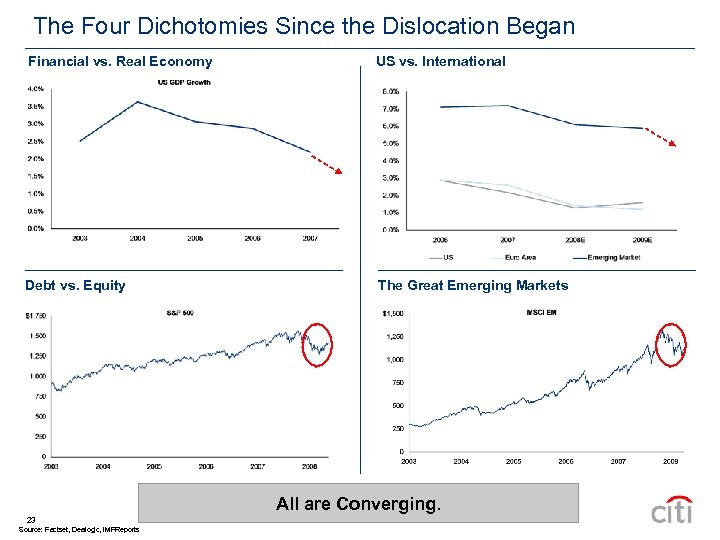
The Four Dichotomies Since the Dislocation Began Financial vs. Real Economy US vs. International Debt vs. Equity The Great Emerging Markets All are Converging. 23 Source: Factset, Dealogic, IMFReports
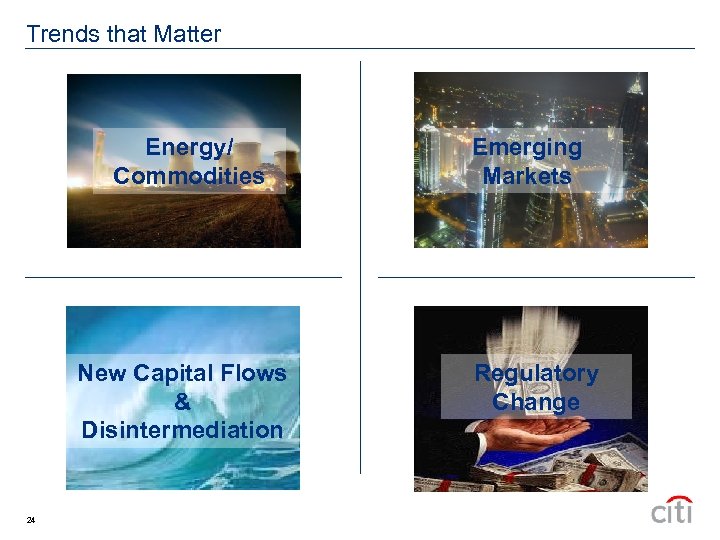
Trends that Matter Energy/ Commodities New Capital Flows & Disintermediation 24 Emerging Markets Regulatory Change New Capital Flows
© 2008 Citigroup Global Markets Inc. Member SIPC. All rights reserved. Citi and Arc Design are trademarks and service marks of Citigroup Inc. or its affiliates and are used and registered throughout the world. In January 2007, Citi released a Climate Change Position Statement, the first US financial institution to do so. As a sustainability leader in the financial sector, Citi has taken concrete steps to address this important issue of climate change by: (a) targeting $50 billion over 10 years to address global climate change: includes significant increases in investment and financing of alternative energy, clean technology, and other carbonemission reduction activities; (b) committing to reduce GHG emissions of all Citi owned and leased properties around the world by 10% by 2011; (c) purchasing more than 52, 000 MWh of green (carbon neutral) power for our operations in 2006; (d) creating Sustainable Development Investments (SDI) that makes private equity investments in renewable energy and clean technologies; (e) providing lending and investing services to clients for renewable energy development and projects; (f) producing equity research related to climate issues that helps to inform investors on risks and opportunities associated with the issue; and (g) engaging with a broad range of stakeholders on the issue of climate change to help advance understanding and solutions. Citi works with its clients in greenhouse gas intensive industries to evaluate emerging risks from climate change and, where appropriate, to mitigate those risks. efficiency, renewable energy & mitigation
Скачать презентацию Graduate School of Management St Petersburg State University
3f31c759a9143ff42cd3128400c5b4b7.ppt