


 Скачать презентацию Government Wide Monitoring and Evaluation System Ronette Engela
dcedabd5fb5ec66f8f0905d5cc1bdd0f.ppt
- Количество слайдов: 49
 Government Wide Monitoring and Evaluation System Ronette Engela The Presidency Kuben Naidoo National Treasury Akiiki Kahimbaara Stats. Sa Mohanuoa Mabidilala DPLG Henk Serfontein DPSA 1
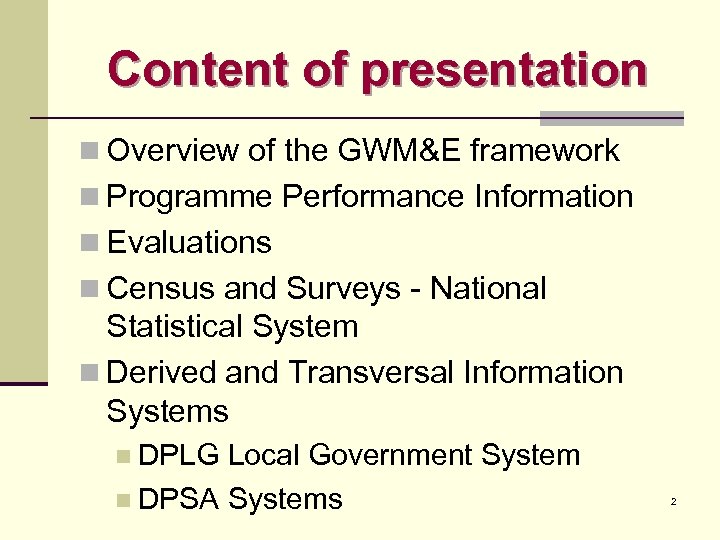 Content of presentation n Overview of the GWM&E framework n Programme Performance Information n Evaluations n Census and Surveys - National Statistical System n Derived and Transversal Information Systems n DPLG Local Government System n DPSA Systems 2
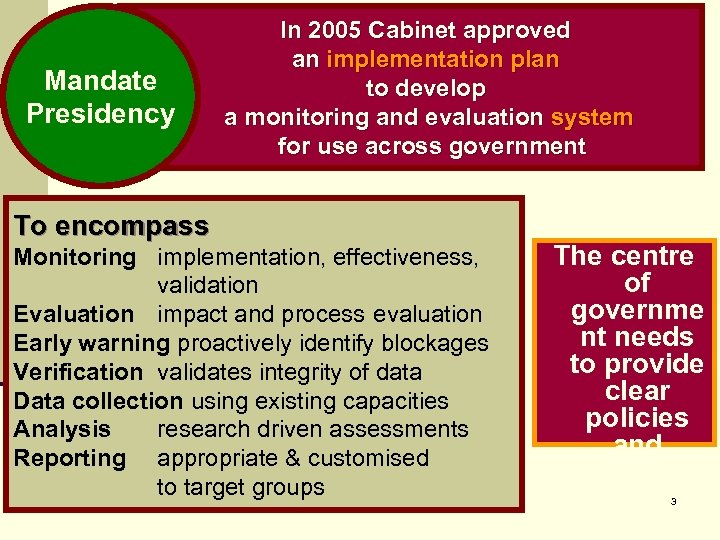 Mandate Presidency In 2005 Cabinet approved an implementation plan to develop a monitoring and evaluation system for use across government To encompass Monitoring implementation, effectiveness, validation Evaluation impact and process evaluation Early warning proactively identify blockages Verification validates integrity of data Data collection using existing capacities Analysis research driven assessments Reporting appropriate & customised to target groups The centre of governme nt needs to provide clear policies and framewor ks 3
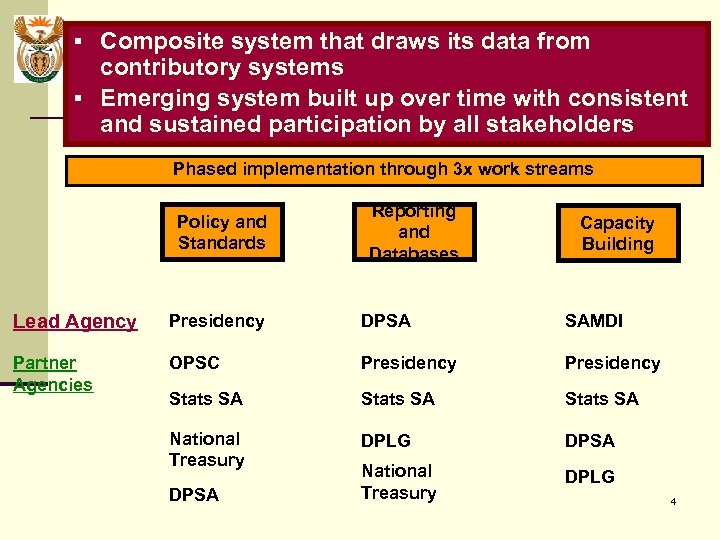 § Composite system that draws its data from contributory systems § Emerging system built up over time with consistent and sustained participation by all stakeholders Phased implementation through 3 x work streams Policy and Standards Reporting and Databases Capacity Building Lead Agency Presidency DPSA SAMDI Partner Agencies OPSC Presidency Stats SA National Treasury DPLG DPSA 4
 Are we still on track? q Missed a number of deadlines q Information needed to inform next phase of development not in place q q Audit of reporting requirements and M&E systems in gov late P&P shifted to Policy and Standards q Independent development of systems q Nearly all provinces q Lack of own capacity - many consultants in sectors q Misconception re ‘System: IT’ Reporting labyrinth plethora of data For example: Provincial dept reports to: • Own dept and exec authority • National concurrent dept • Premier Office • National Treasury 5 • Presidency
 Entry points q Executive reporting q Evidence based decision making for: q Resource allocation q Policy refinement q Extensive executive interest q Support government implementation focus Refine 6
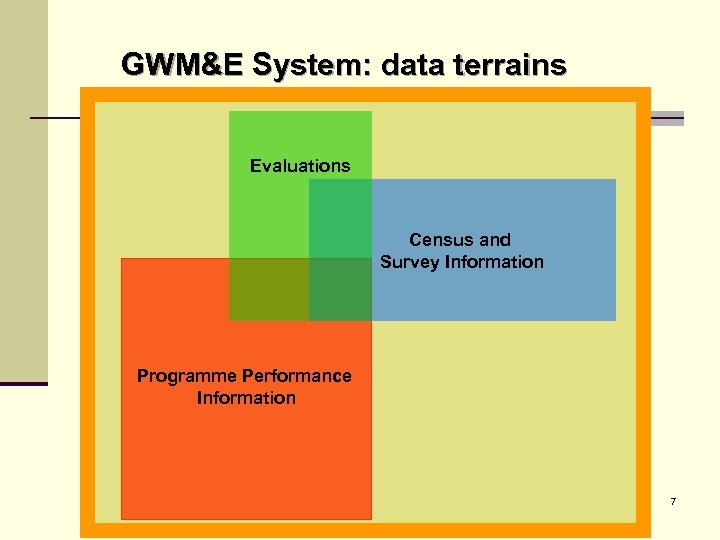 GWM&E System: data terrains Evaluations Census and Survey Information Programme Performance Information 7
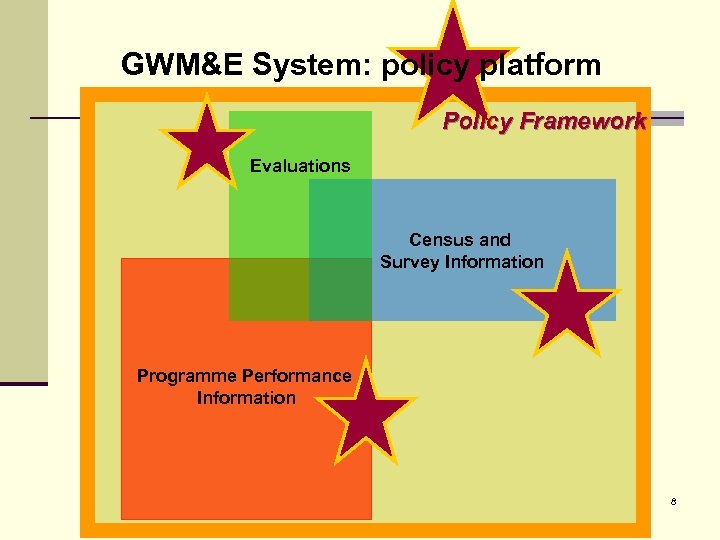 GWM&E System: policy platform Policy Framework Evaluations Census and Survey Information Programme Performance Information 8
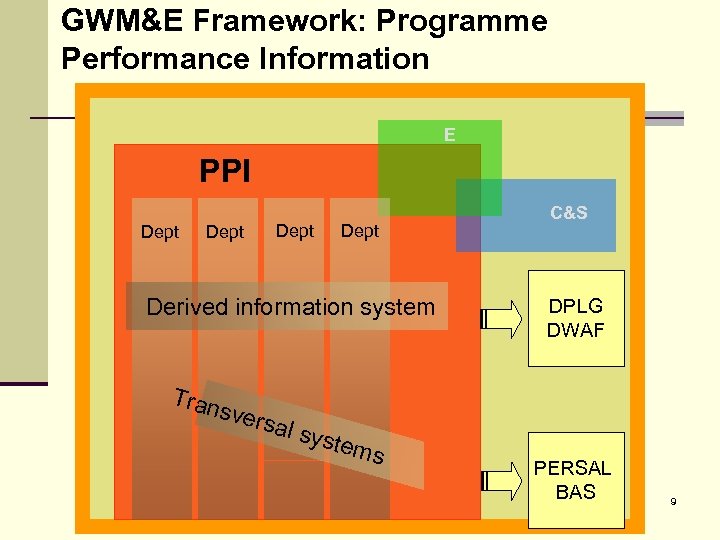 GWM&E Framework: Programme Performance Information E PPI Dept Derived information system Tran sver C&S DPLG DWAF sal s y stem s PERSAL BAS 9
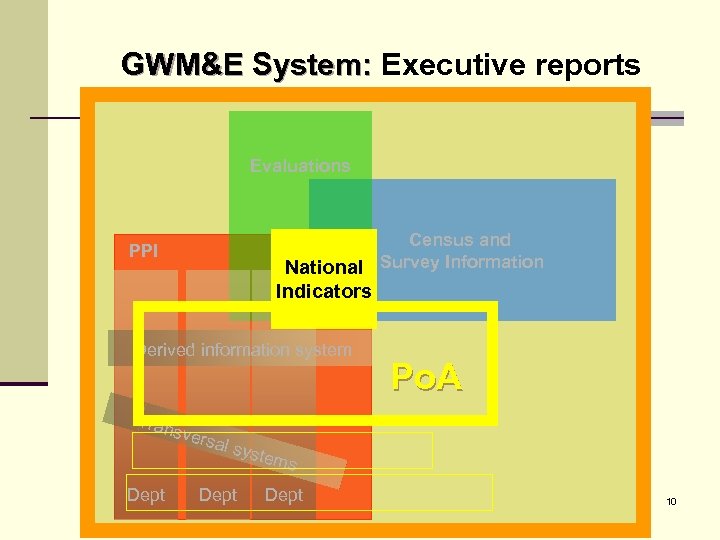 GWM&E System: Executive reports Evaluations Census and National Survey Information PPI Indicators Derived information system Tran sver Dept sal s Dept Po. A yste ms Dept 10
 11
11
 Programme Performance Information Kuben Naidoo National Treasury 12
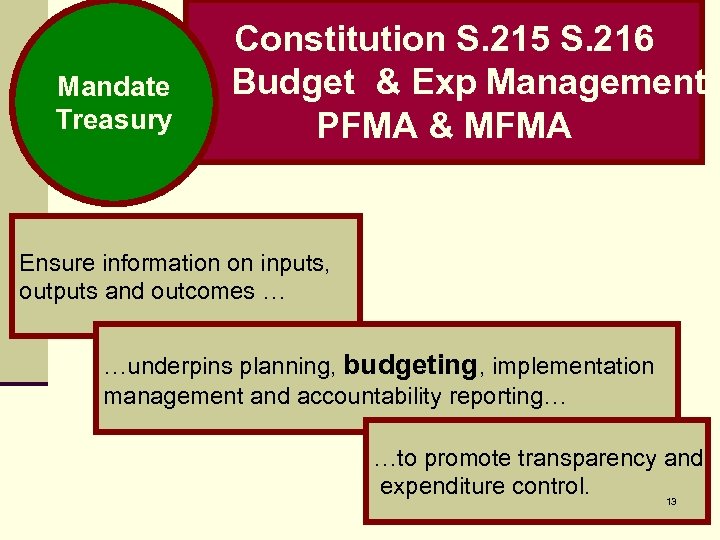 Mandate Treasury Constitution S. 215 S. 216 Budget & Exp Management PFMA & MFMA Ensure information on inputs, outputs and outcomes … …underpins planning, budgeting, implementation management and accountability reporting… …to promote transparency and expenditure control. 13
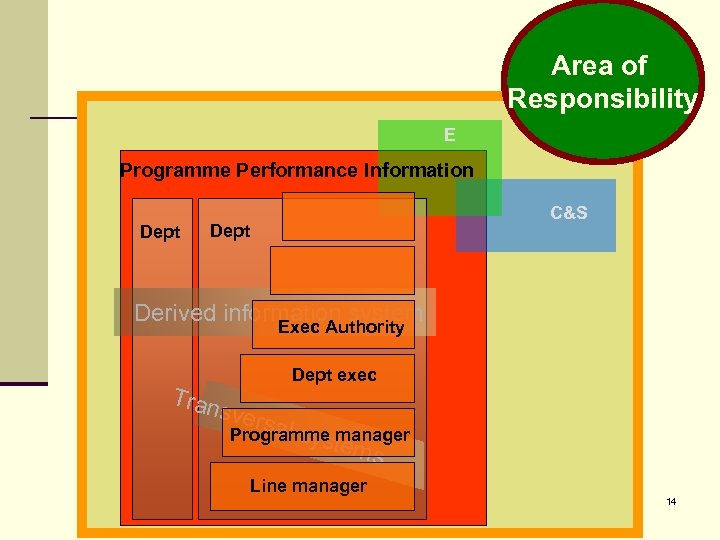 Area of Responsibility E Programme Performance Information Dept C&S Dept Derived information system Exec Authority Tran Dept exec sver s al sy Programme manager s tems Line manager 14
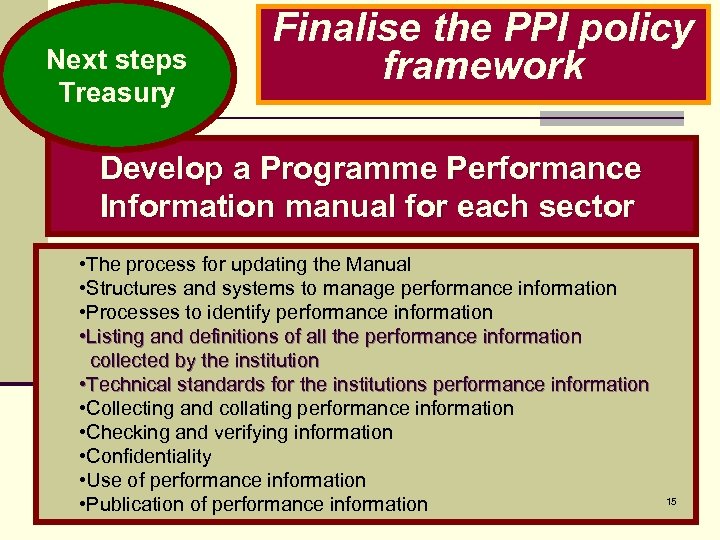 Next steps Treasury Finalise the PPI policy framework Develop a Programme Performance Information manual for each sector • The process for updating the Manual • Structures and systems to manage performance information • Processes to identify performance information • Listing and definitions of all the performance information collected by the institution • Technical standards for the institutions performance information • Collecting and collating performance information • Checking and verifying information • Confidentiality • Use of performance information • Publication of performance information 15
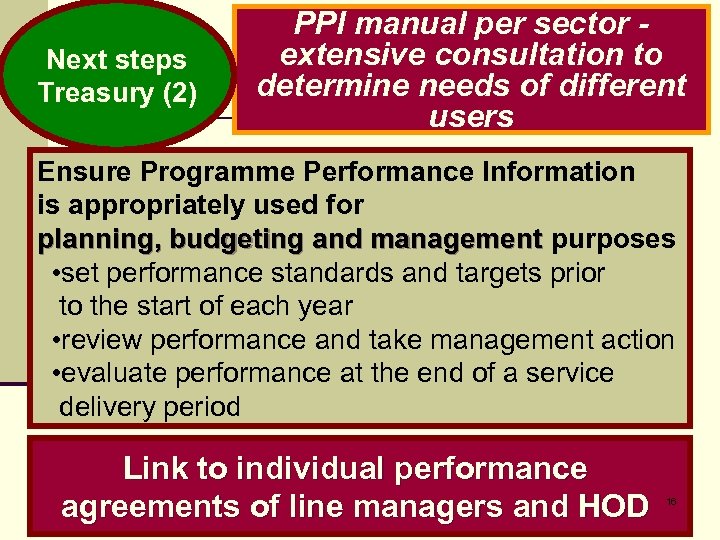 Next steps Treasury (2) PPI manual per sector extensive consultation to determine needs of different users Ensure Programme Performance Information is appropriately used for planning, budgeting and management purposes • set performance standards and targets prior to the start of each year • review performance and take management action • evaluate performance at the end of a service delivery period Link to individual performance agreements of line managers and HOD 16
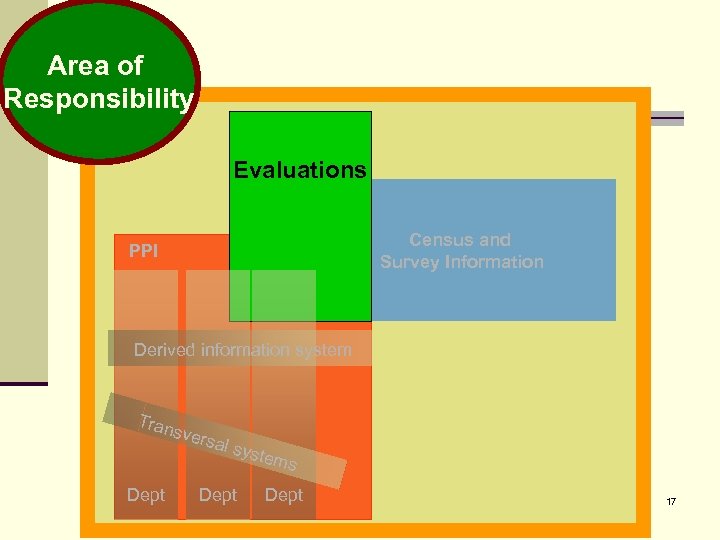 Area of Responsibility Evaluations Census and Survey Information PPI Derived information system Tran sver Dept sal s Dept yste ms Dept 17
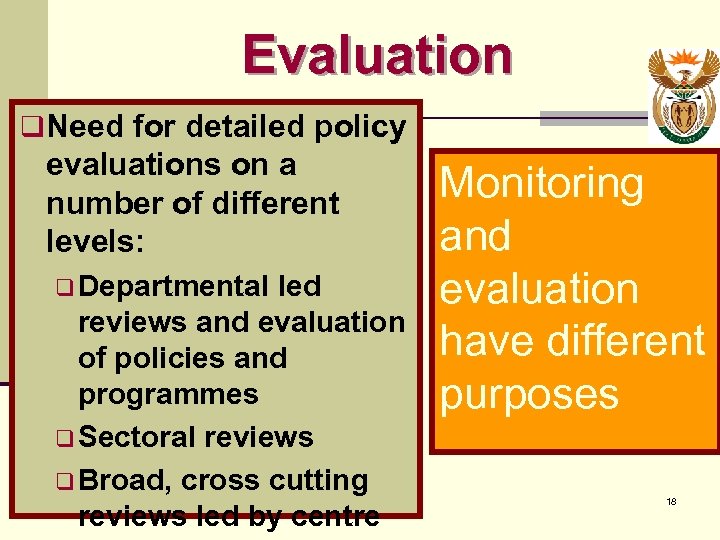 Evaluation q Need for detailed policy evaluations on a number of different levels: q Departmental led reviews and evaluation of policies and programmes q Sectoral reviews q Broad, cross cutting reviews led by centre Monitoring and evaluation have different purposes 18
 National Statistical System Akiiki Kahimbaara Stats. SA 19
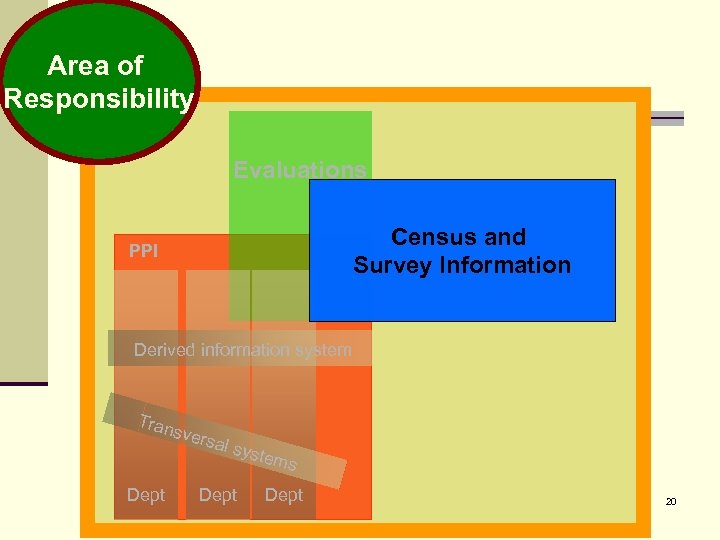 Area of Responsibility Evaluations Census and Survey Information PPI Derived information system Tran sver Dept sal s Dept yste ms Dept 20
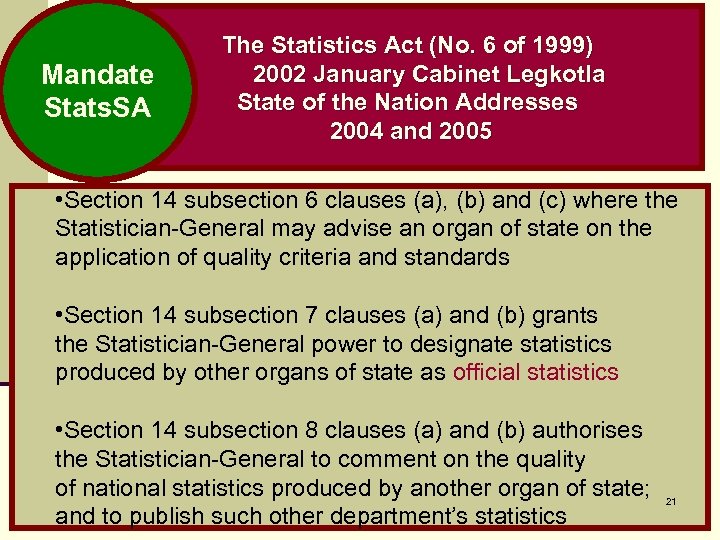 Mandate Stats. SA The Statistics Act (No. 6 of 1999) 2002 January Cabinet Legkotla State of the Nation Addresses 2004 and 2005 • Section 14 subsection 6 clauses (a), (b) and (c) where the Statistician-General may advise an organ of state on the application of quality criteria and standards • Section 14 subsection 7 clauses (a) and (b) grants the Statistician-General power to designate statistics produced by other organs of state as official statistics • Section 14 subsection 8 clauses (a) and (b) authorises the Statistician-General to comment on the quality of national statistics produced by another organ of state; and to publish such other department’s statistics 21
![Problem Official statistics Demand for information [user groups or indicator categories] • Insufficient supply](https://present5.com/presentation/dcedabd5fb5ec66f8f0905d5cc1bdd0f/image-22.jpg "Problem Official statistics Demand for information [user groups or indicator categories] • Insufficient supply") Problem Official statistics Demand for information [user groups or indicator categories] • Insufficient supply of information Unknown quality • Uncertain quality? Poor comparability Isolated producers No shared standards • Insufficient statistical skills Stats SA Other producers [departments, CSOs, etc] 22
Problem Official statistics Demand for information [user groups or indicator categories] • Insufficient supply of information Unknown quality • Uncertain quality? Poor comparability Isolated producers No shared standards • Insufficient statistical skills Stats SA Other producers [departments, CSOs, etc] 22
![[quality, sustainable] • Sufficient skills ck ba ed • Adequate information • Reliable information](https://present5.com/presentation/dcedabd5fb5ec66f8f0905d5cc1bdd0f/image-23.jpg "[quality, sustainable] • Sufficient skills ck ba ed • Adequate information • Reliable information") [quality, sustainable] • Sufficient skills ck ba ed • Adequate information • Reliable information ed Fe Demand for information [user groups or Indicator categories] Fe ba ck Proposed solution Regulatory environment Stats SA • Statistics Law • Governance structure • Quality standards • Advocacy programme • Code of conduct Coordination Other producers [departments, CSOs, etc] 23
[quality, sustainable] • Sufficient skills ck ba ed • Adequate information • Reliable information ed Fe Demand for information [user groups or Indicator categories] Fe ba ck Proposed solution Regulatory environment Stats SA • Statistics Law • Governance structure • Quality standards • Advocacy programme • Code of conduct Coordination Other producers [departments, CSOs, etc] 23
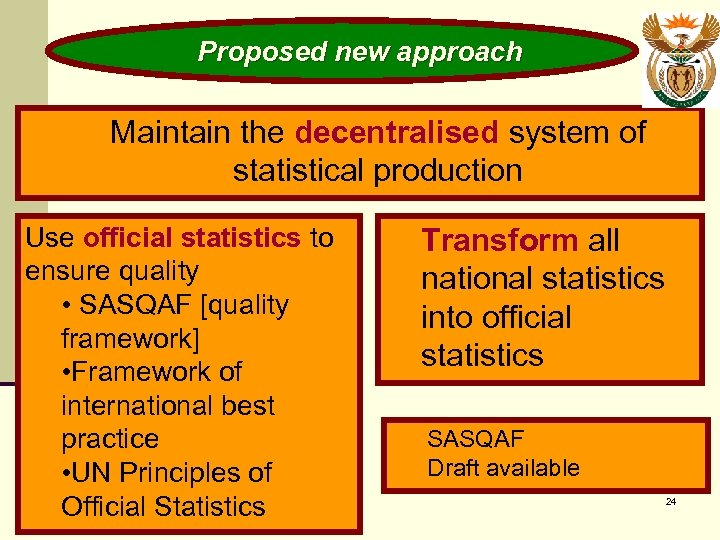 Proposed new approach Maintain the decentralised system of statistical production Use official statistics to ensure quality • SASQAF [quality framework] • Framework of international best practice • UN Principles of Official Statistics Transform all national statistics into official statistics SASQAF Draft available 24
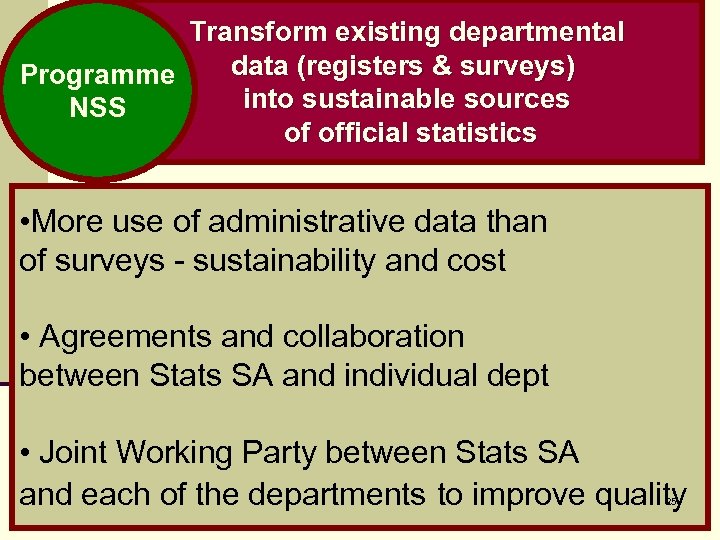 Transform existing departmental data (registers & surveys) Programme into sustainable sources NSS of official statistics • More use of administrative data than of surveys - sustainability and cost • Agreements and collaboration between Stats SA and individual dept • Joint Working Party between Stats SA and each of the departments to improve quality 25
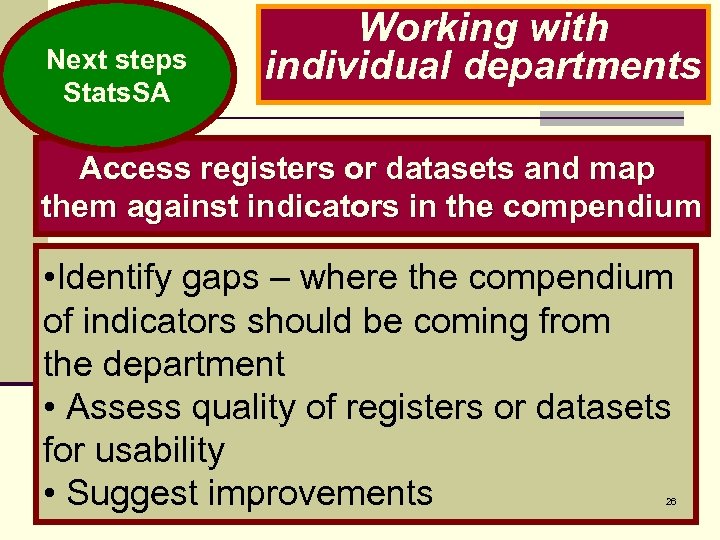 Next steps Stats. SA Working with individual departments Access registers or datasets and map them against indicators in the compendium • Identify gaps – where the compendium of indicators should be coming from the department • Assess quality of registers or datasets for usability • Suggest improvements 26
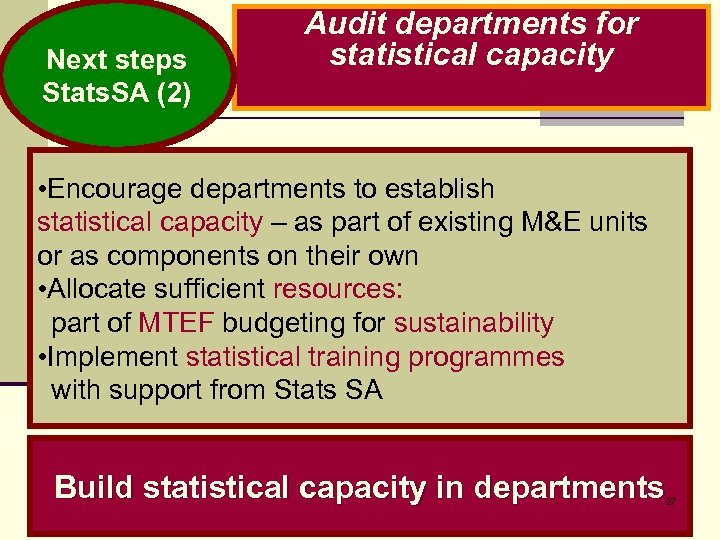 Next steps Stats. SA (2) Audit departments for statistical capacity • Encourage departments to establish statistical capacity – as part of existing M&E units or as components on their own • Allocate sufficient resources: part of MTEF budgeting for sustainability • Implement statistical training programmes with support from Stats SA Build statistical capacity in departments 27
 Concerns Inadequate appreciation of the practice of managing for results • Measurement of performance and “objective” info for planning and decision-making not a priority • Current practice of existing M&E units without measurement Circumlocutionary behaviour of public officers (multiple formalities) • Waiting for approval (all the way to the minister!): inadequate delegation of authority • Lack of institutional memory in government departments [change the head: start afresh] • Operational silos – protecting one’s turf • Cover-ups: fear of exposure 28
 Derived system: DPLG local government Mohanuoa Mabidilala DPLG 29
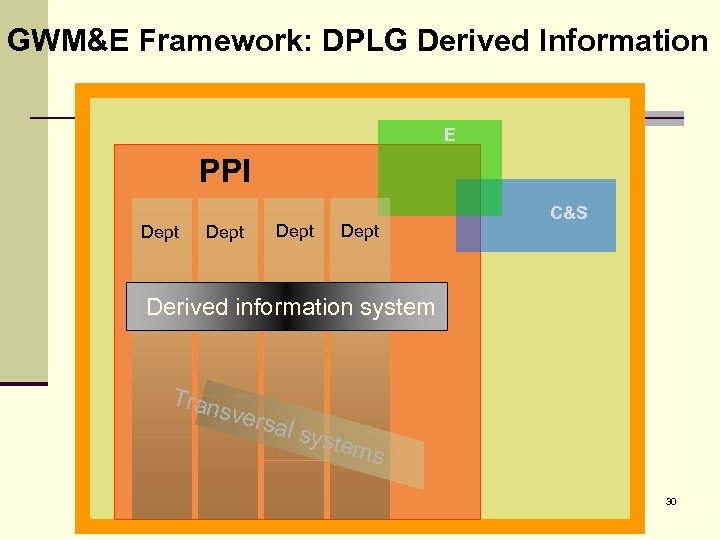 GWM&E Framework: DPLG Derived Information E PPI Dept C&S Derived information system Tran sver s al sy stem s 30
 Mandate DPLG Constitution Chapter 3 & 7 Municipal Systems Act Municipal Structure’s Act Function of DPLG • develop national policies and legislation with regards to Provinces and Local Govt, and to monitor the implementation • to support Provinces and Local Govt in fulfilling their constitutional and legal mandate 31
 Responsibility DPLG Monitoring, Reporting & Evaluation • Developing and implementing an integrated monitoring and evaluation system (dplg) • Providing leadership and support to Local Govt for the successful implementation of the GWM&E framework • The development of an MR&E capacity in the province and local government to monitor and report implementation of the 5 Year Local Government Strategic Agenda (2006 – 2011) 32
 Responsibility DPLG 2 DPLG will develop and implement a system for assessing local govt service delivery 5 Local Govt KPAs • Municipal Transformation and Organisational Development • Basic Service Delivery • Local Economic Development • Financial Viability and Management • Public Participation and Community Involvement 33
 Responsibility DPLG Collaboration with key departments • The Presidency • National Treasury • Dept of Public Service and Administration • Dept of Water and Forestry • Dept of Mineral and Energy • Dept of Housing • Statistics South Africa • South African Institute for Management Development (MR&E capacity building) 34
 Problem DPLG assessed readiness of provincial depts of local govt to do Local govt M&E Varying degrees: of understanding and of M&E capacity and readiness • Lack of integrated approach to local government M&E across 3 spheres • Lack of appropriate M&E reporting structures to monitor local government service delivery • Capacity and capability to monitor local govt service delivery 35
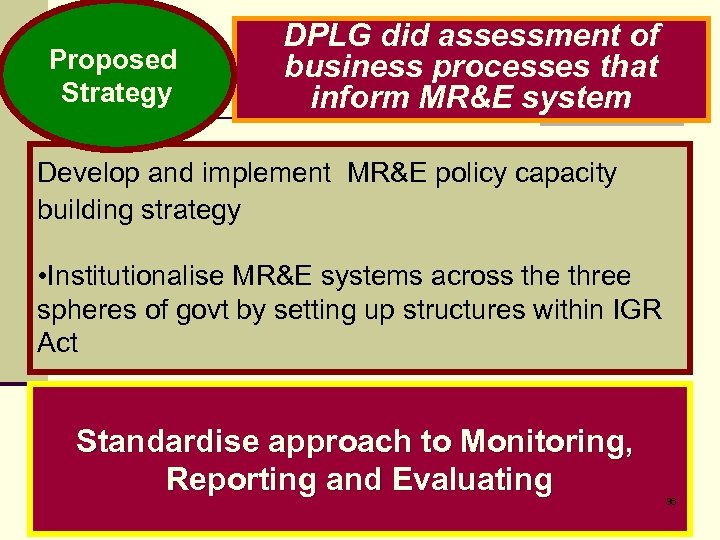 Proposed Strategy DPLG did assessment of business processes that inform MR&E system Develop and implement MR&E policy capacity building strategy • Institutionalise MR&E systems across the three spheres of govt by setting up structures within IGR Act Standardise approach to Monitoring, Reporting and Evaluating 36
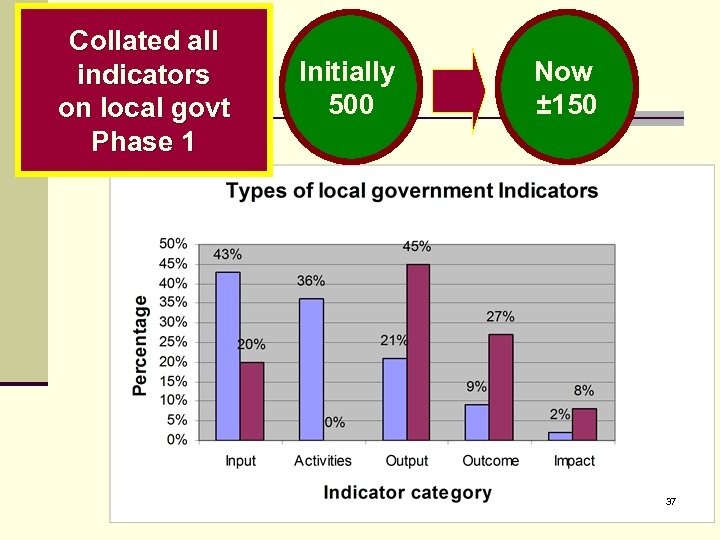 Collated all indicators on local govt Phase 1 Initially 500 Now ± 150 37
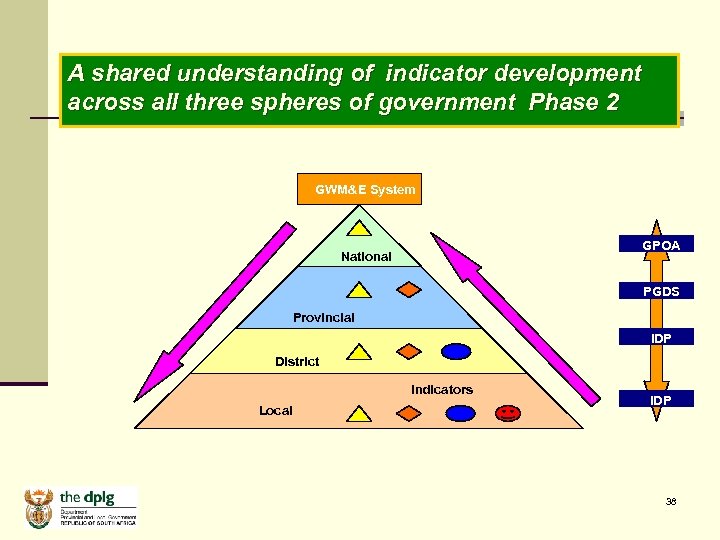 A shared understanding of indicator development across all three spheres of government Phase 2 GWM&E System GPOA National PGDS Provincial IDP District Indicators Local IDP 38
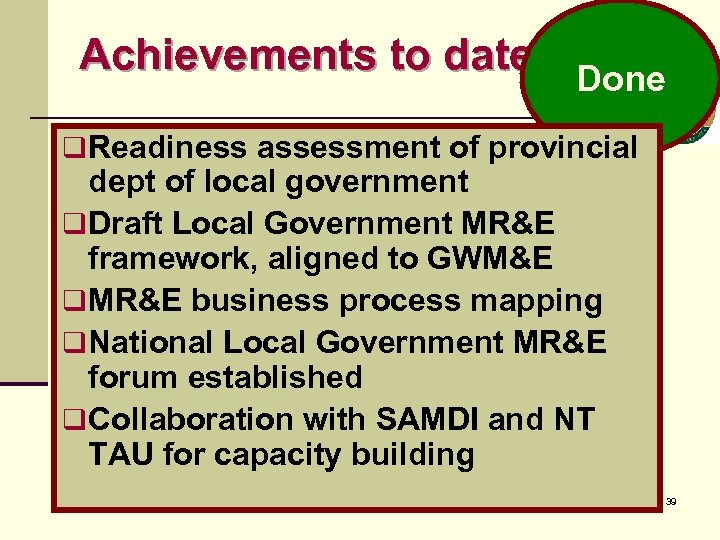 Achievements to date Done q Readiness assessment of provincial dept of local government q Draft Local Government MR&E framework, aligned to GWM&E q MR&E business process mapping q National Local Government MR&E forum established q Collaboration with SAMDI and NT TAU for capacity building 39
 Next steps Plans q Finalise Local Government M&E policy framework q Develop a compendium of indicators for Local Government q Design and implement Local govt MR&E system that extracts information with multiple sector departments that deal with Local Government – based on impact model q Capacity building for provinces and municipalities 40
 Derived system: DPSA Henk Serfontein. DPSA 41
 Mandate DPSA Public Service Act • Responsible for public service transformation • Custodian of public management frameworks • Performance and knowledge management • Service delivery improvement Co-Chair of the Governance and Administration Cluster Co-Chair the GWM&E Task Team Aim Increase public service effectiveness and improve governance 42
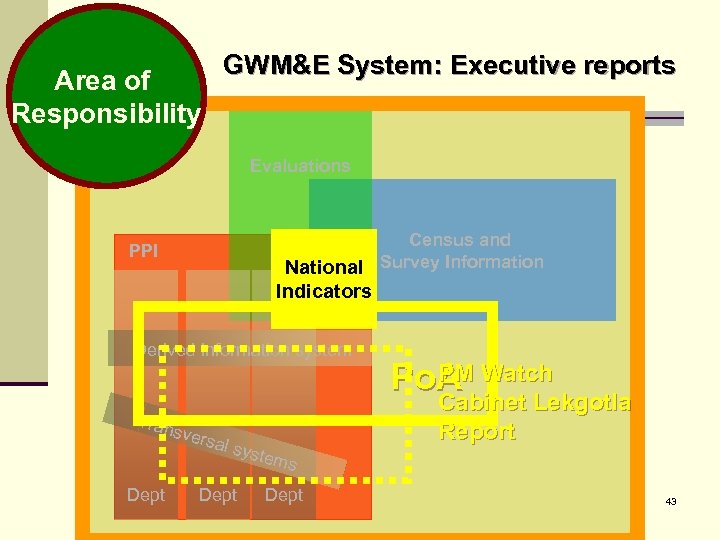 Area of Responsibility GWM&E System: Executive reports Evaluations Census and National Survey Information PPI Indicators Derived information system Tran sver Dept sal s Dept PM Po. A Watch Cabinet Lekgotla Report yste ms Dept 43
 Lead agency on databases Responsibility DPSA and Reporting Work stream Two major initiatives currently in development Public Management Watch q. Extracts HR and Budget expenditure data q. Identifies vulnerable departments HR utilisation Report q. Derived from departmental annual reports q. Focuses on how well HR is used 44
 New development Creation of q. Year end Report qbi- annual Cabinet ma. Kgo ma. Kg • Will draw from various GWM&E sources • To provide useful, practical updates • Executive level information • High strategic overview. 45
 Challenges DPSA Task: Improving public management outside financial and expenditure issues • DPSA M&E capacity overstretched (APRM etc. ) • Building public participation systems a key issue • Must enhance GWM&E stakeholder relations • Overcoming formalistic compliance by sectors and provinces. Linking the performance management and measurement systems needs dedicated attention 46
 Next steps DPSA Priority: Work stream 2 objectives Data bases and reporting • Priority streamlining reporting burden • Compilation of reporting requirement Master list • Undertake consultations with systems users • Focus on improving understanding of their needs • Develop database architecture 47
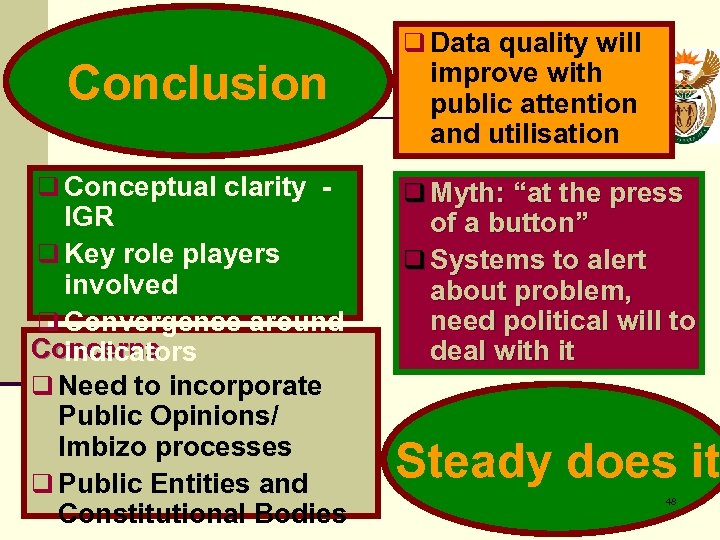 Conclusion q Conceptual clarity - IGR q Key role players involved q Convergence around Concerns indicators q Need to incorporate Public Opinions/ Imbizo processes q Public Entities and Constitutional Bodies q Data quality will improve with public attention and utilisation q Myth: “at the press of a button” q Systems to alert about problem, need political will to deal with it Steady does it 48
 Ke ya leboga Ke a leboha Ke a leboga Ngiyabonga Ndiyabulela Ngiyathokoza Ngiyabonga Inkomu Ndi khou livhuha Dankie Thank you 49