


 Скачать презентацию Government spending History in the US
6657fab297e47137b3aeae7b73210da4.ppt
- Количество слайдов: 39
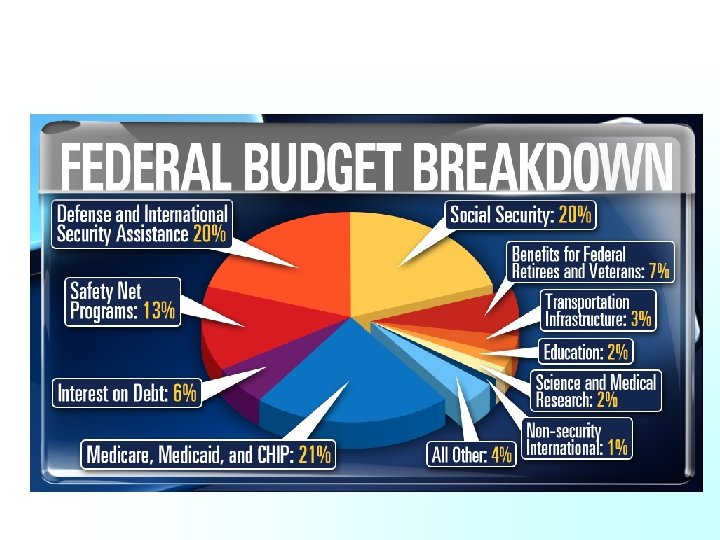
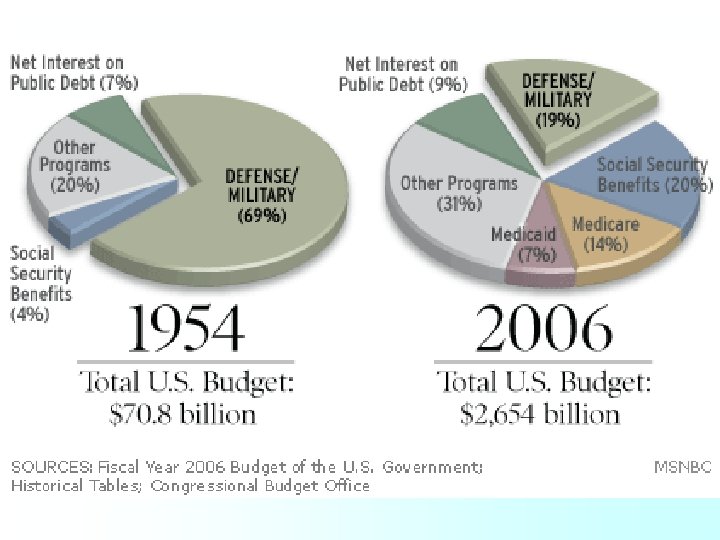
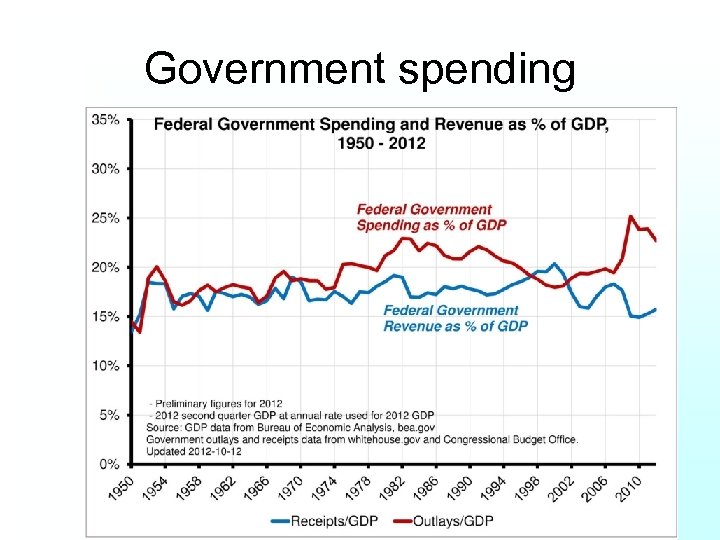 Government spending
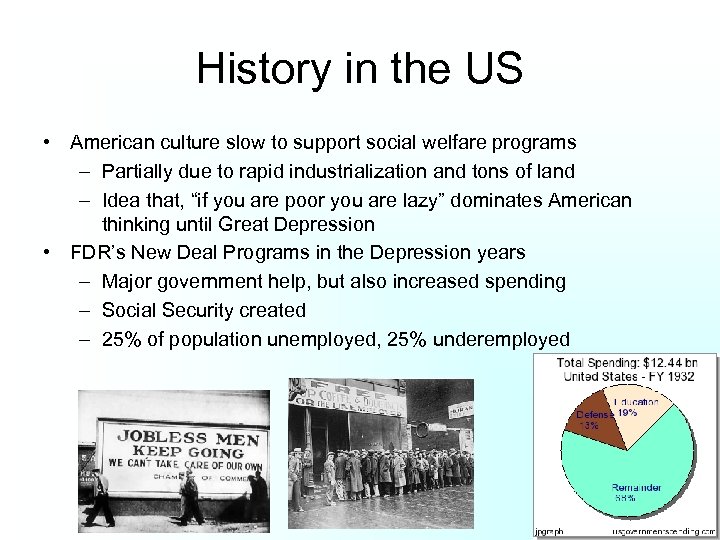 History in the US • American culture slow to support social welfare programs – Partially due to rapid industrialization and tons of land – Idea that, “if you are poor you are lazy” dominates American thinking until Great Depression • FDR’s New Deal Programs in the Depression years – Major government help, but also increased spending – Social Security created – 25% of population unemployed, 25% underemployed
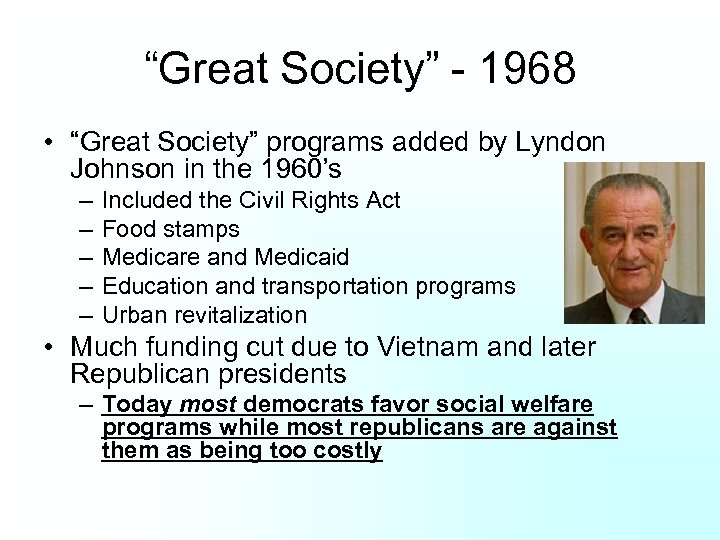 “Great Society” - 1968 • “Great Society” programs added by Lyndon Johnson in the 1960’s – – – Included the Civil Rights Act Food stamps Medicare and Medicaid Education and transportation programs Urban revitalization • Much funding cut due to Vietnam and later Republican presidents – Today most democrats favor social welfare programs while most republicans are against them as being too costly
 Largest programs today 1. Social Security 2. Medicare – healthcare for 65 years and older 3. Medicaid – healthcare for poor provided by US govt and state 4. Unemployment compensation 5. Temporary Assistance to Needy Families (TANF) AKA “Welfare” 6. Food stamps 7. Public housing
 Social Security • Worker pays 7. 65% of gross income and employer pays 7. 65% with cap at $70, 000 • Can collect as early as 62 but with penalty – Younger you are, longer to wait for “full retirement. ” Currently at 67. • Payments based on how much you pay in • Also receive SSI payments (supplemental security income) for disability, blindness, drop in income, death of breadwinner. • Everyone eligible for payments
 • Social Security reform? ? – Ratio of those paying in vs. those taking out: • 1950 = 16. 5: 1 • 2000 = 3. 4: 1 – Project it could run out by 2041 • 48 million Americans currently collect Social Security payments and number is increasing
 http: //www. benefits. gov/
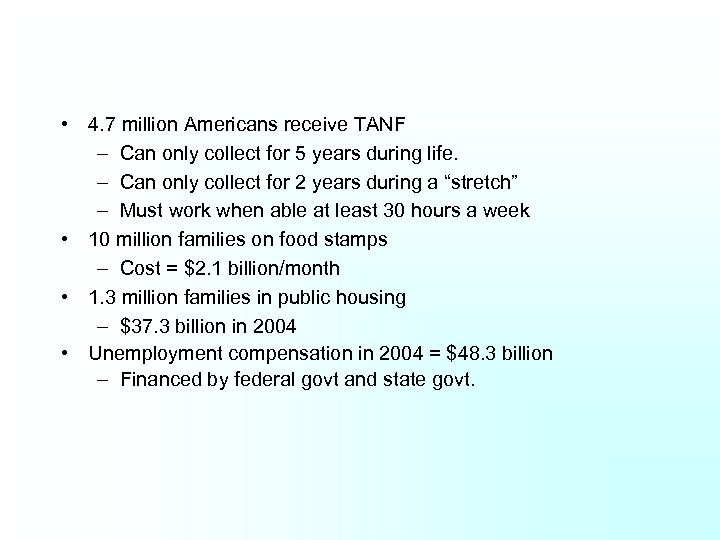 • 4. 7 million Americans receive TANF – Can only collect for 5 years during life. – Can only collect for 2 years during a “stretch” – Must work when able at least 30 hours a week • 10 million families on food stamps – Cost = $2. 1 billion/month • 1. 3 million families in public housing – $37. 3 billion in 2004 • Unemployment compensation in 2004 = $48. 3 billion – Financed by federal govt and state govt.
 Geography of govt. benefits • http: //www. nytimes. com/interactive/2012/0 2/12/us/entitlement-map. html? ref=us
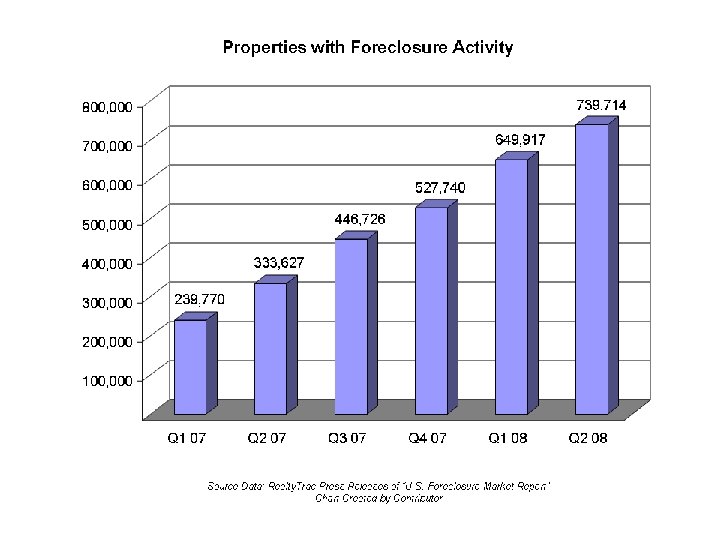
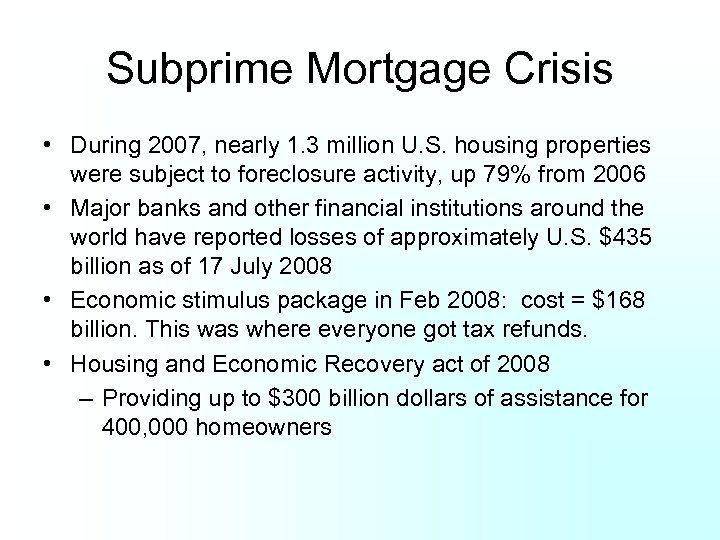 Subprime Mortgage Crisis • During 2007, nearly 1. 3 million U. S. housing properties were subject to foreclosure activity, up 79% from 2006 • Major banks and other financial institutions around the world have reported losses of approximately U. S. $435 billion as of 17 July 2008 • Economic stimulus package in Feb 2008: cost = $168 billion. This was where everyone got tax refunds. • Housing and Economic Recovery act of 2008 – Providing up to $300 billion dollars of assistance for 400, 000 homeowners
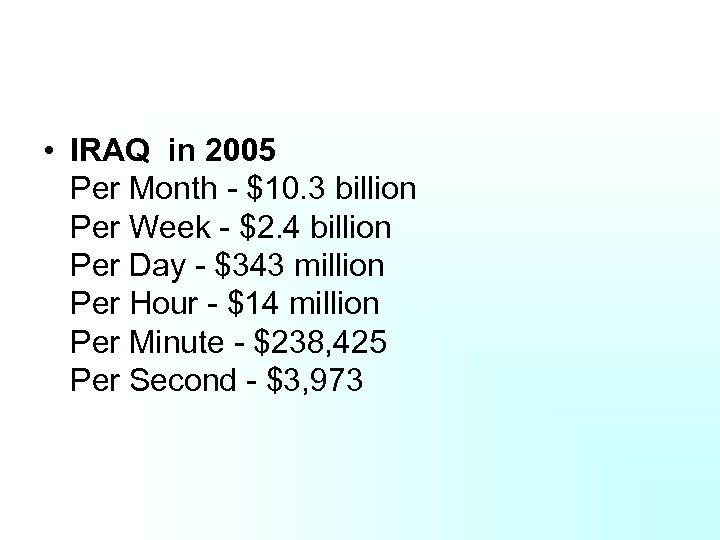 • IRAQ in 2005 Per Month - $10. 3 billion Per Week - $2. 4 billion Per Day - $343 million Per Hour - $14 million Per Minute - $238, 425 Per Second - $3, 973
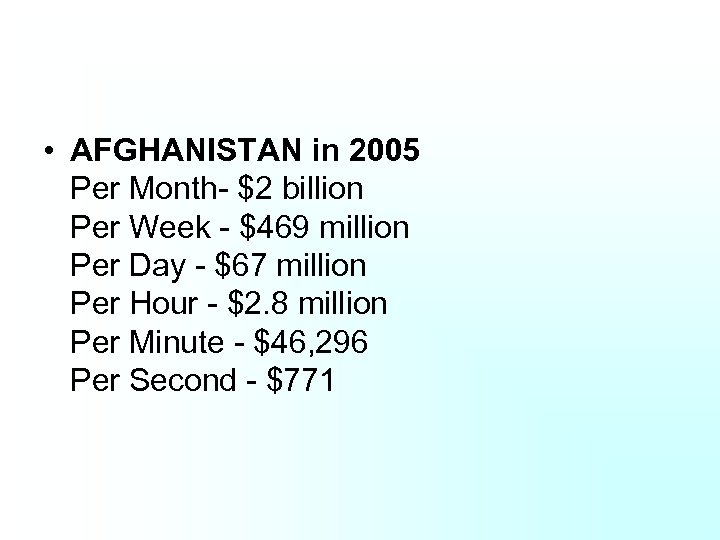 • AFGHANISTAN in 2005 Per Month- $2 billion Per Week - $469 million Per Day - $67 million Per Hour - $2. 8 million Per Minute - $46, 296 Per Second - $771
 American Recovery and Reinvestment Act of 2009 (aka Stimulus Bill) • Stimulus Watch • Funded projects and tax rebates all over the nation to jump start the economy and create new jobs • SS tax break grew out of this, expired at end of 2012 • Cost: $787 billion
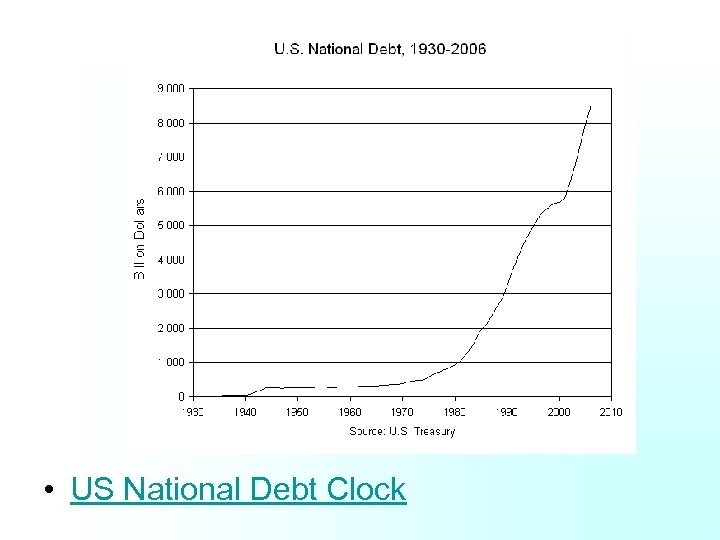 • US National Debt Clock
 Article on deficit 1/26/15 • http: //www. usatoday. com/story/news/politi cs/2015/01/26/cbo-reportbudget/22353147/ • 2015 proposal summary tables http: //www. whitehouse. gov/sites/default/fil es/omb/budget/fy 2015/assets/tables. pdf
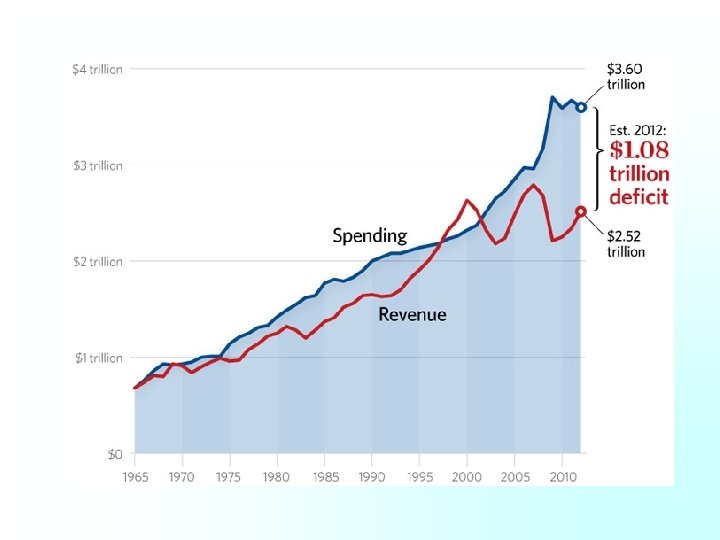
 • • • • FY 2014 - $280 billion. FY 2013 - $973 billion. FY 2012 - $1. 087 trillion. FY 2011 - $1. 299 trillion. FY 2010 - $1. 294 trillion. FY 2009 - $1. 413 trillion. FY 2008 - $459 billion. FY 2007 - $161 billion. FY 2006 - $248 billion. FY 2005 - $318 billion. FY 2004 - $413 billion. FY 2003 - $378 billion. FY 2002 - $158 billion. FY 2001 - $128 billion surplus.
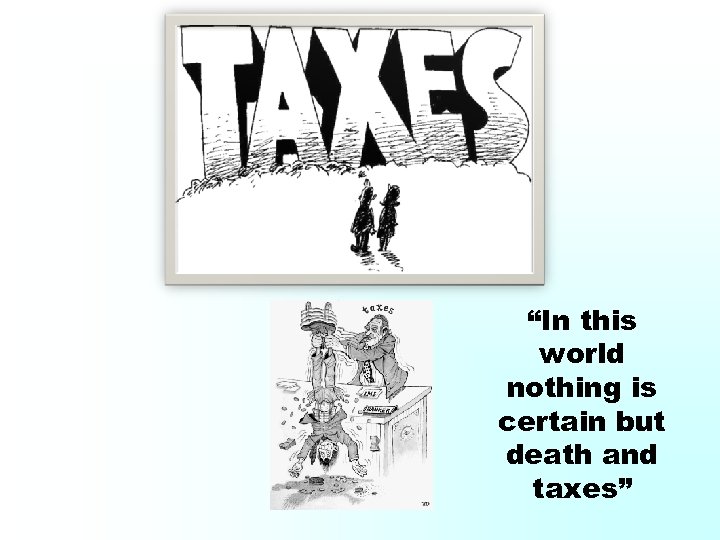 “In this world nothing is certain but death and taxes”
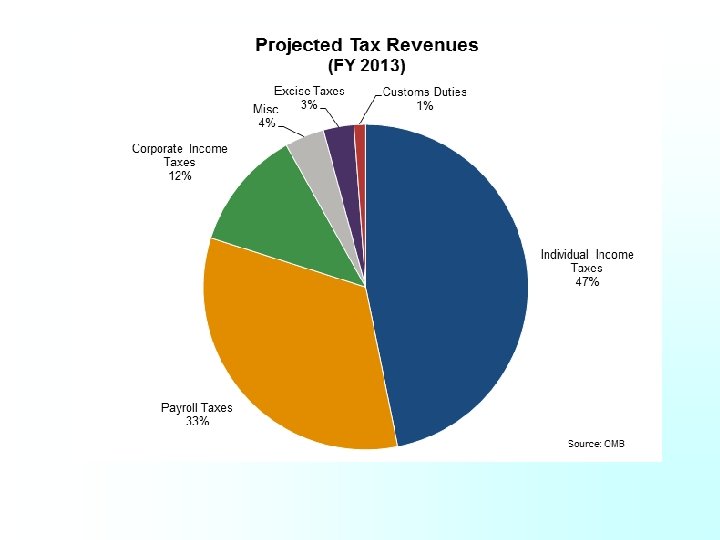
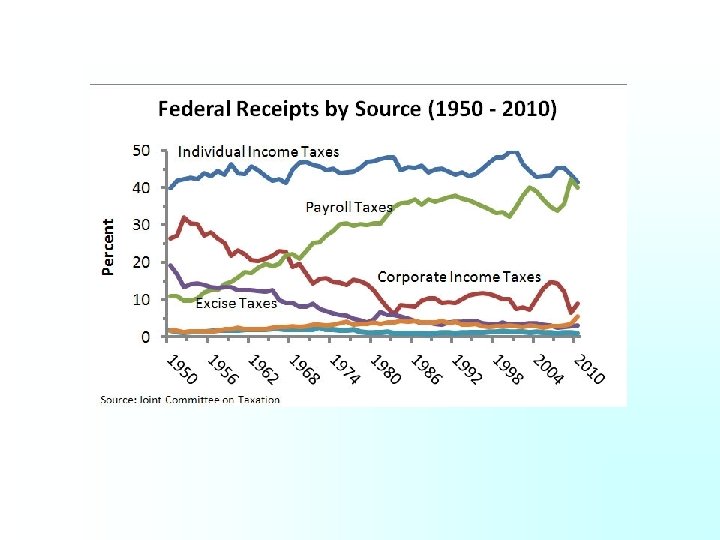
 Taxes right out of paycheck (at least) 1. 2. 3. 4. Federal income tax State income tax (3. 07%) Local (township) tax (usually ~ 1%) Social Security (7. 65%, also matched by employer. Had been previously dropped to 6. 25% for 2 years) 5. Medicare (1. 45%, also matched by employer) 6. Local wage or occupation tax (varies by municipality) 7. Unemployment (very small amount)
 Other taxes we pay to various sources: • • • Permit or license taxes Gasoline taxes (federal is 42 cents plus any state) Excise taxes (tobacco, alcohol, ect. ) Inheritance tax Unemployment taxes Property taxes Tolls Car rental taxes Hotel taxes Other “luxury taxes” Phone/internet/tv surcharges or taxes
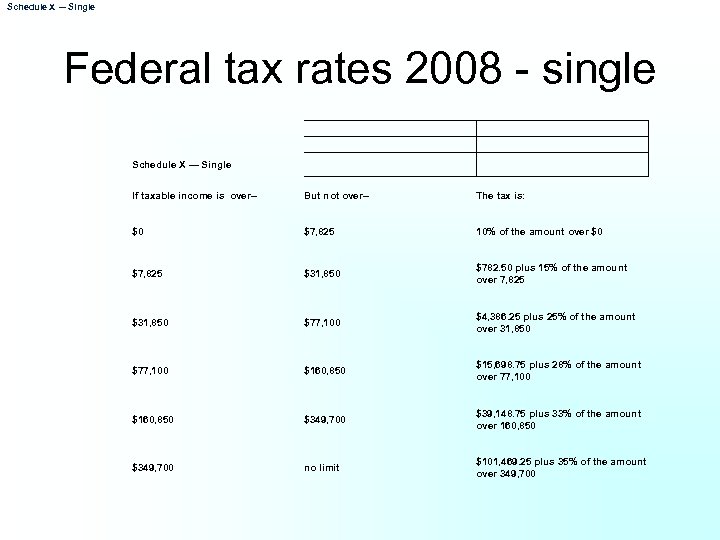 Schedule X — Single Federal tax rates 2008 - single Schedule X — Single If taxable income is over-- But not over-- The tax is: $0 $7, 825 10% of the amount over $0 $7, 825 $31, 850 $782. 50 plus 15% of the amount over 7, 825 $31, 850 $77, 100 $4, 386. 25 plus 25% of the amount over 31, 850 $77, 100 $160, 850 $15, 698. 75 plus 28% of the amount over 77, 100 $160, 850 $349, 700 $39, 148. 75 plus 33% of the amount over 160, 850 $349, 700 no limit $101, 469. 25 plus 35% of the amount over 349, 700
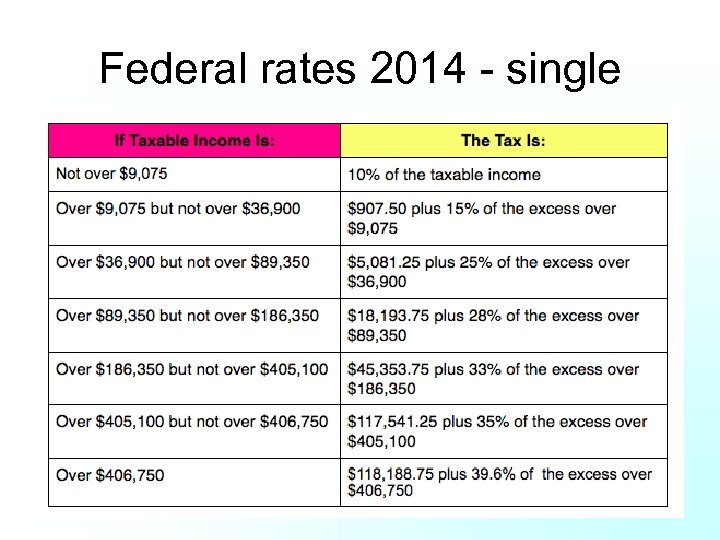 Federal rates 2014 - single
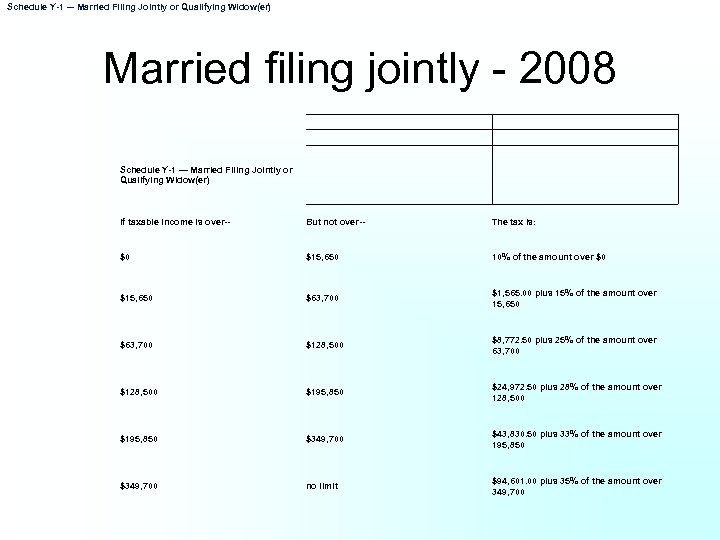 Schedule Y-1 — Married Filing Jointly or Qualifying Widow(er) Married filing jointly - 2008 Schedule Y-1 — Married Filing Jointly or Qualifying Widow(er) If taxable income is over-- But not over-- The tax is: $0 $15, 650 10% of the amount over $0 $15, 650 $63, 700 $1, 565. 00 plus 15% of the amount over 15, 650 $63, 700 $128, 500 $8, 772. 50 plus 25% of the amount over 63, 700 $128, 500 $195, 850 $24, 972. 50 plus 28% of the amount over 128, 500 $195, 850 $349, 700 $43, 830. 50 plus 33% of the amount over 195, 850 $349, 700 no limit $94, 601. 00 plus 35% of the amount over 349, 700
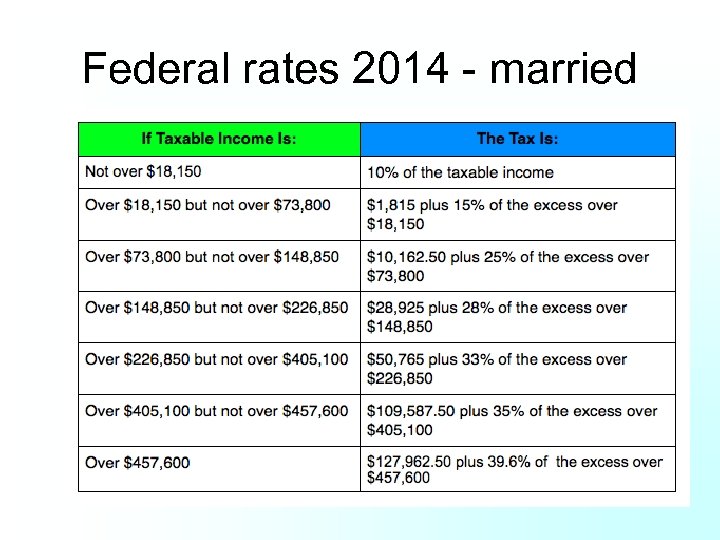 Federal rates 2014 - married
 • History of tax rates
 “Doing taxes” • When you “do your taxes” at the end of the year, all you are doing is checking to see if you paid the right amount over the past months – Have to do this for local, state, and federal
 W-4 When start a job, have to fill out W-4 ◦ Can make changes to this whenever you want ◦ Decides how much federal income tax you will pay each paycheck. If you don’t pay enough, will have to pay later If pay too much, get refund later FORM Important info is withholding allowances ◦ Lower the number, more taxes taken out ◦ Higher # signifies you will have many deductions ◦ Most singles put either 0 or 1
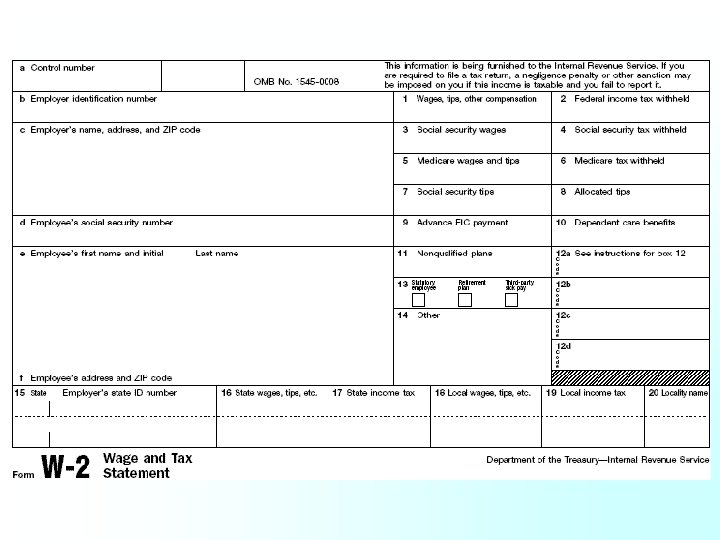
 When you do your taxes… • You are compiling all of your income as well as things called deductions for the calendar year • Income – Required to be sent a W-2 form from every job you had. This states income and taxes paid. These then are submitted with taxes. – Also have to include income from investments
 Deductions • The federal government does not tax your entire income, rather they allow you to deduct from the amount that is taxed for certain expenses. – Ex: if I make $30, 000 a year and I have two kids, I might receive $5, 000 in deductions (just a guess). Therefore I’d only have to pay taxes on $25, 000.
 Typical deductions • • Children or other dependents (huge amount) Disabilities Mortgage interest Money spent on certain other taxes (PA tax) Charitable contributions Certain business expenses Education expenses (tax credit, worth more than normal deduction) • College investment for child
 Recent deductions • Certain “green” home improvements • Buying a house in 2009 • Electric car tax credit • Deductions constantly change and there are thousands, hence why software or accountants are helpful • You always have to save receipts or proof of deductions
 Standard deduction – 2012 • Everyone at least gets a standard deduction which is $5, 950 for a single nondependent • It is $8, 700 for the head of a household • Or $11, 900 for married filing together
 A few tax reform ideas: 1. Flat tax 2. Reduce deductions, collapse brackets, and reduce overall rates 3. National sales tax of almost 30% in place of income tax 4. VAT tax in addition to income tax 5. National sales tax in addition to income tax