 Скачать презентацию Government of The Republic of Trinidad and Tobago
ef0aa65168fc5eb60c6e9a6db028a2e2.ppt
- Количество слайдов: 21



Government of The Republic of Trinidad and Tobago ICT Division, Ministry of Public Administration and Information www. fastforward. tt Governmental Interconnection Critical Components of an Effective and Efficient Governmental Intranet Colombia November 2006 Adam Montserin Executive Manger E-Government Ministry of Public Administration & Information
Agenda • • Trinidad and Tobago Strategies for Transformation Trinidad & Tobago E-Government agenda Government connectivity Intranet applications Trinidad & Tobago e-government Portal Interoperability & Interconnection Standards TT Serve common counter service
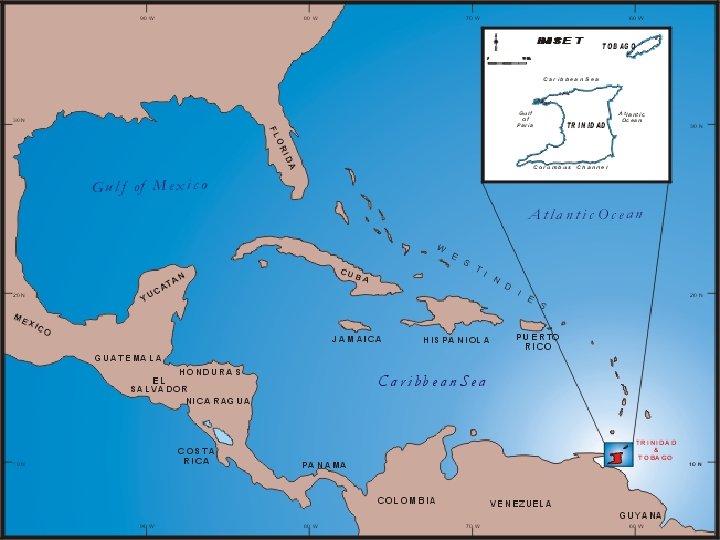
Country Profile – Trinidad & Tobago Trinidad and Tobago is a twin-island State situated at the southern most point of the Caribbean archipelago, north of South America – Official Name: The Republic of Trinidad and Tobago Name – Independence: From Great Britain (UK) August 31, 1962 Independence – Population: 1. 3 million (approx. ) Population • Trinidad: 1, 250, 000 • Tobago: 50, 000 – Capital: Port-of-Spain; Population: 300, 000 Capital Population – Area: 5, 128 sq km (1, 980 sq miles) Area • Trinidad: area: 4828 sq km (1864 sq miles); length 80 km (50 miles ); width 59 Trinidad km (37 miles) • Tobago: area: 300 sq km (116 sq miles); length 41 km ( 25. 5 miles); width 12 km Tobago (7. 5 miles) – Official language: English; First official foreign language: Spanish language
Strategies for Transformation Vision 2020 – National Strategic Plan for Development • The Prioritization of ICT Government has recognized the importance of transforming the economy away from its dependence on oil and gas revenue. Accordingly, ICTs have been selected – • to be a new engine of growth and economic prosperity • to set the foundation for the transformation of Trinidad and Tobago into a knowledge-based society fastforward – National ICT Strategy (www. fastforward. tt) • National ICT Vision “Trinidad and Tobago is in a prominent position in the global information society through real and lasting improvements in social, economic and cultural development caused by the deployment and usage of information and communications technology – A roadmap for a connected, informed, innovative and competitive nation – Complements and builds upon Vision 2020
Trinidad & Tobago E-Government agenda • E-Government FOCUS – – – Deploy a high performance, reliable, scalable and secure National Communication Backbone connecting all the offices and departments of the public service Install a world –class e-Government Portal to provide “One Stop, Non Stop” access to client-centric information and services Implement enterprise intranet and back-office solutions that provide reliability and consistency Use Electronic Service Delivery as a catalyst for broad public sector reform and a move towards horizontal government Develop supporting policies and standards
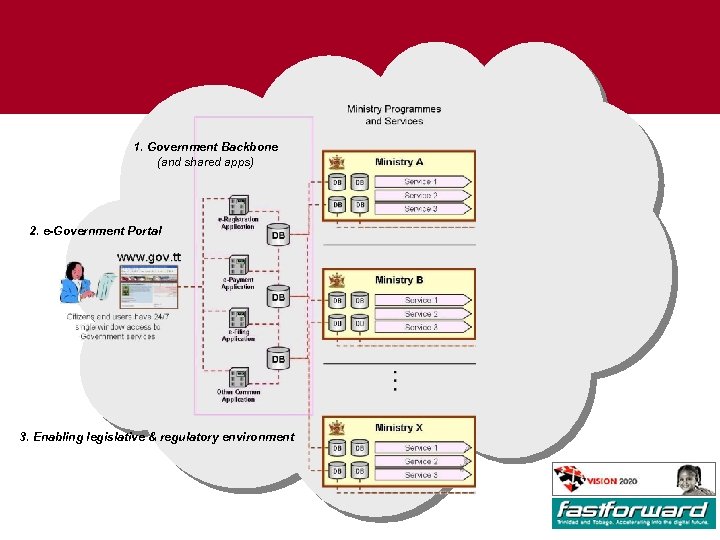
1. Government Backbone (and shared apps) 2. e-Government Portal 3. Enabling legislative & regulatory environment
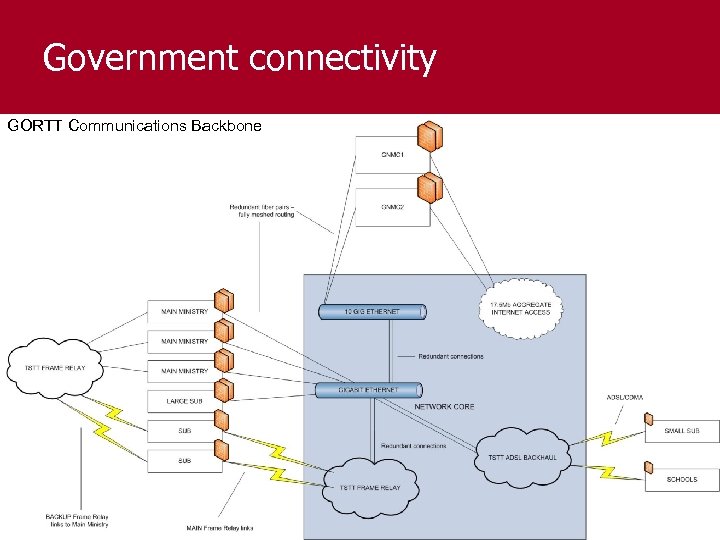
Government connectivity GORTT Communications Backbone
Government connectivity • Network Solution – – Core Network Redundant 10 GB Ethernet Capacity GNMC Internet Connection 17. 5 MB Capacity Main Ministry Network Redundant 1 GB Ethernet Capacity (scalable to Redundant 10 GB) – Network Site (Type 3. 5/3. 6) Redundant 100 Mbit/1 GB Ethernet Capacity (scalable to Redundant 10 GB) – Network Site (Type 8) ADSL / CDMA
Government connectivity • Infrastructure Application Components – Security: Checkpoint • Security Management software version upgrade (Provider NGX) • Perimiter Security software version upgrade (VPN-1 NGX) – Messaging: Microsoft Exchange • Instant Messaging software (Live Communication Server 2005) • Active Directory software (Windows 2003) • Messaging Software (Exchange 2003 Server 3. 5) – Anti-Virus: Mc. Afee • Anti-Virus software (Virus Scan 8, Group Shield 6, E-Policy Orchestrator ver 3. 5) – Help Desk: Service. Plus
Intranet applications • Integrated Human Resource Information System – A project initiated in 2001 to automate the HRM function and the implementation of an integrated Payroll system for the Public service – HR Processes » Training Administration » Competency Management » Career and Succession Planning » Performance Management » Labour Relations » Health and Safety – Workflow – Employee Self Service
Intranet applications • EDMS Electronic Data Management System – – – Enterprise Content Management Software that combines integrated Document Management, Business Process Management and Records Management in a single application. Enabling Ministries to import, route, manage and archive the content that drives all of their processes. To date approximately 290, 000 Cabinet Minutes and Notes and approximately 48, 000 other document types have been captured, converted and included in the system. Current implementation of the ‘Physical Records Management’ module
Productivity applications • Ministry of Health – RHA Financial Application, RHA HR & Payroll Application, Oncology Application, AIDS Monitoring Application, E-Health Application, Telemedicine Application • Ministry of Works & Transport - Licensing Application • Elections & Boundaries Commission – Electronic Registration • Service Commission – IHRIS Application, Financial Application, IGP • Ministry of Finance – Integrated Tax Application • Ministry of Local Government – GIS Application • Ministry of National Security (Immigration) – Passport Application • Ministry of Education – School Information Mgt, Curriculum Application, Distance Education • Elections & Boundaries – Electronic Voting
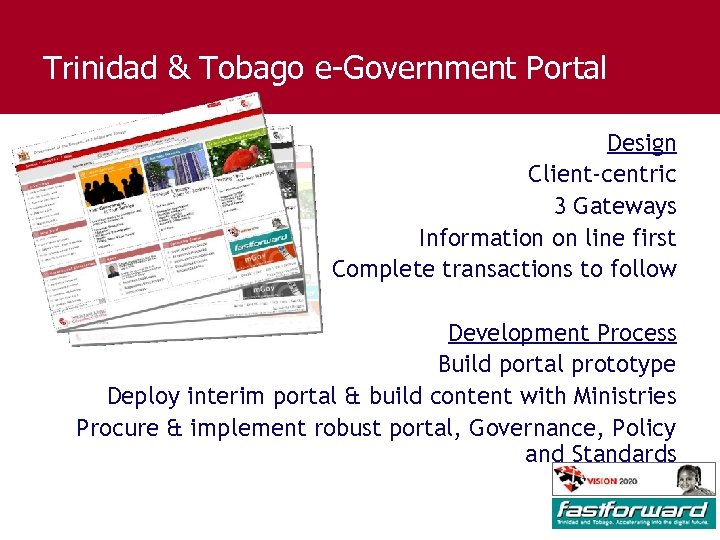
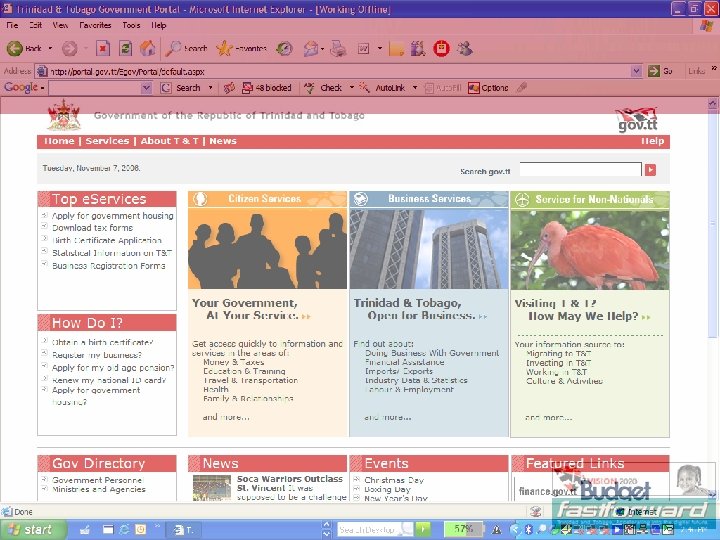
Trinidad & Tobago e-Government Portal Design Client-centric 3 Gateways Information on line first Complete transactions to follow Development Process Build portal prototype Deploy interim portal & build content with Ministries Procure & implement robust portal, Governance, Policy and Standards
Interoperability & Interconnection Standards • In line with the e-government agenda, to better manage the widespread development/ transformation of the public service, and its ability to provide services, GORTT has undertaken a number of initiatives to standardize processes and technologies to create an e-Government Interoperability framework. • Major Initiatives: – TT e-GIF project: to identify common international technical standards, as well as information and network security. – Data Commissioner - to define the data protection standards within GORTT – Cryptology Policy – to define appropriate standards of encryption for use in various levels of Go. RTT operations
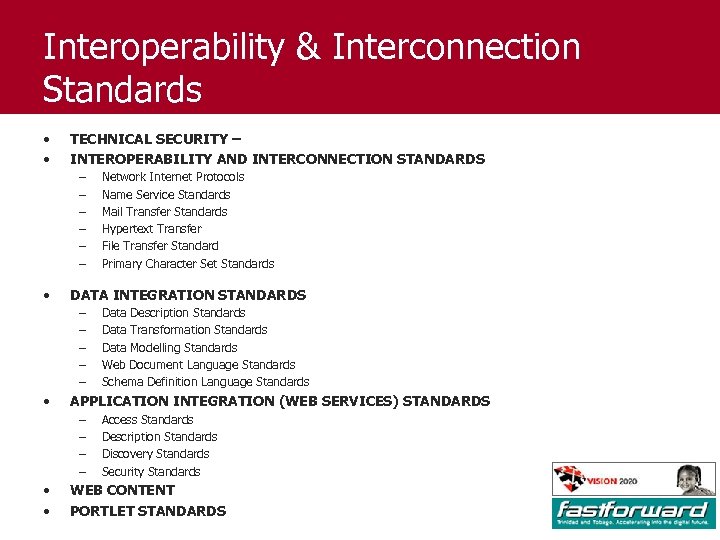
Interoperability & Interconnection Standards • • TECHNICAL SECURITY – INTEROPERABILITY AND INTERCONNECTION STANDARDS – – – • DATA INTEGRATION STANDARDS – – – • Data Description Standards Data Transformation Standards Data Modelling Standards Web Document Language Standards Schema Definition Language Standards APPLICATION INTEGRATION (WEB SERVICES) STANDARDS – – • • Network Internet Protocols Name Service Standards Mail Transfer Standards Hypertext Transfer File Transfer Standard Primary Character Set Standards Access Standards Description Standards Discovery Standards Security Standards WEB CONTENT PORTLET STANDARDS
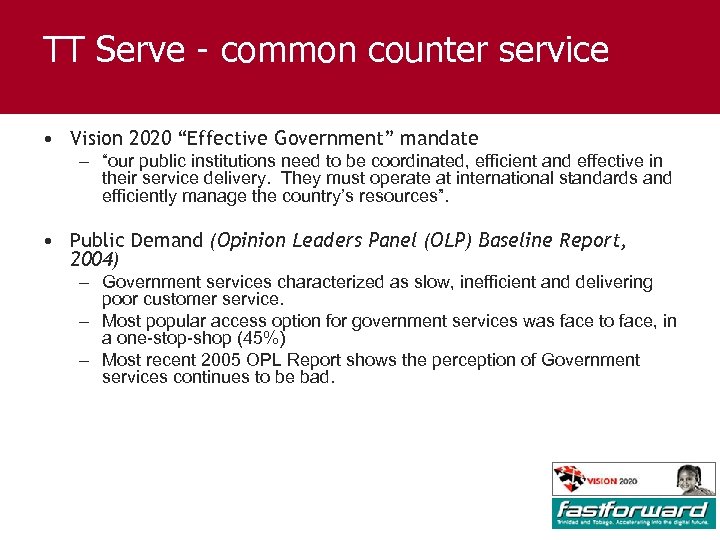
TT Serve - common counter service • Vision 2020 “Effective Government” mandate – “our public institutions need to be coordinated, efficient and effective in their service delivery. They must operate at international standards and efficiently manage the country’s resources”. • Public Demand (Opinion Leaders Panel (OLP) Baseline Report, 2004) – Government services characterized as slow, inefficient and delivering poor customer service. – Most popular access option for government services was face to face, in a one-stop-shop (45%) – Most recent 2005 OPL Report shows the perception of Government services continues to be bad.
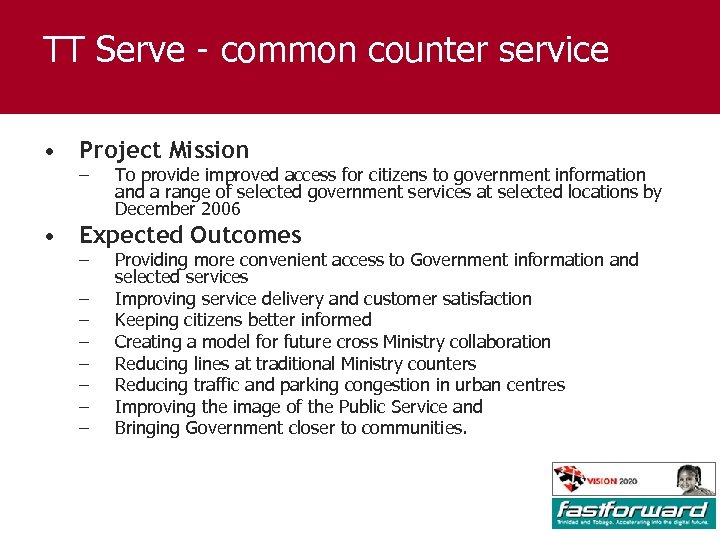
TT Serve - common counter service • Project Mission – To provide improved access for citizens to government information and a range of selected government services at selected locations by December 2006 • Expected Outcomes – – – – Providing more convenient access to Government information and selected services Improving service delivery and customer satisfaction Keeping citizens better informed Creating a model for future cross Ministry collaboration Reducing lines at traditional Ministry counters Reducing traffic and parking congestion in urban centres Improving the image of the Public Service and Bringing Government closer to communities.
Summary & Next steps • GORTT Communications Backbone completion • E-Government Portal completion – Outward & inward facing • Adopt Government Interoperability Framework • Implement common services Intranet • Move forward with TT Serve initiative

Thank you! Adam Montserin montserina@pai. gov. tt
Скачать презентацию Government of The Republic of Trinidad and Tobago
ef0aa65168fc5eb60c6e9a6db028a2e2.ppt