 Скачать презентацию Government Affairs Update South Florida Chapter Neil Reichenberg
68f0110863f4cfc000a32c3c604ccfd1.ppt
- Количество слайдов: 24



Government Affairs Update South Florida Chapter Neil Reichenberg, CAE Executive Director
Overview The focus this year is on the election and budget issues as both sides look to the November election when the President, the entire House of Representatives and 1/3 of the Senate will be elected If the Congress does nothing, the deficit would be cut by $7. 1 trillion over the next decade leading to an almost balanced budget in 2021
Overview The Congress passed the payroll tax extension and the extension of unemployment benefits At the end of the year, the payroll tax extension and the ‘Bush’ tax cuts expire. The automatic spending cuts from the failure of the ‘super committee to reach agreement extension become effective in 2013 Post-election session will need to deal with these issues
Economy Unemployment rate remained at 8. 3% in February, but has dropped 0. 8% since last August 227, 000 jobs added in February – 24 th consecutive month of growth Government job loss has slowed from last year where it averaged 22, 000/month • Local government excluding education lost 2, 700 jobs. • Total unemployment (including those who are under -employed) is 14. 9% 12. 8 million people are unemployed
Economy IPMA-HR Employment Outlook survey showed a 7% increase to 55% in the number of organizations planning to hire this year & a 10% decline in anticipated layoffs as compared to 2010 US debt is now almost $15. 5 trillion or close to $50, 000 person Debt info available at http: //usdebtclock. org
Pension Reform Senator Orrin Hatch (R-UT) issued report on January 10 Headline – Public Pension Debt at $4. 4 trillion Report says that state and local pension debt threatens overall health of government Hatch indicates he will be introducing legislation in the coming weeks
Pension Reform The Hatch report recommends that any pension reform action taken by Congress achieve three goals: 1) affordability and cost certainty for taxpayers; 2) retirement income security for public employees; and 3) prevent federal bailout of states.
Pension Reform According to the National Conference of State Legislatures 39 states made significant changes to retirement plans in 2010/2011 Government Accounting Standards Board (GASB) is considering changes to reporting requirements IPMA-HR commented on proposal
Pension Reform Public Employee Pension Transparency Act introduced last year Requires public pensions to report liabilities in two ways (1) the current method and (2) using fair market value and private sector assumptions Those that refuse will not be able to issue federally-tax exempt bonds
Pension Reform IPMA-HR opposes the bill and joined NLC, NACo, NASRA on testimony Creates a federal standard for state and local pension funds State and local funds are heavily regulated
Pensions The IRS issued a notice announcing that it is delaying implementation of the normal retirement age regulations until 2013 The regulation would require state and local government plans to adjust or abandon their use of years of service when determining normal retirement age IPMA-HR is part of a coalition working to extend the deadline or eliminate the provision
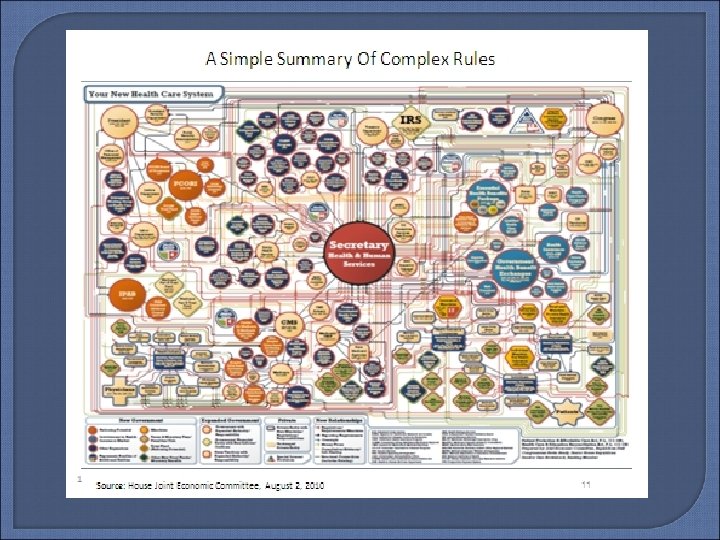
Healthcare Reform Oral argument is scheduled for 5. 5 hours from March 26 th – 28 th on the health care reform law The central issue is the individual mandate which requires individuals to purchase health insurance or pay a fine – can the government regulate inactivity?
Healthcare Reform Other issues that the Supreme Court will consider include: • Since the penalties for not purchasing insurance aren’t implemented until 2014, can the court rule on this issue? • Expanding Medicaid to cover everyone with incomes of less than 133% of the poverty level is unconstitutional because of the burden it places on states • If the individual mandate is unconstitutional, is this provision severable from the rest of the law
Workforce Issues Workforce issues introduced, but not expected to be considered this session: • Legislation prohibiting employers from refusing to hire an individual based on his or her unemployed status • Legislation requiring employers to provide up to seven days of paid sick leave per year to employees who could use the time off for their own illness or that of a family member
Workforce Issues Workforce issues that have been introduced but not expected to be passed: • Legislation prohibiting employment discrimination based on sexual orientation or gender identity • Technical legislation concerning sex discrimination in compensation that would eliminate the defense of showing that a wage difference resulted from any factor other than sex and replace it with a bona fide factor other than sex defense that could be used only if business necessity is demonstrated
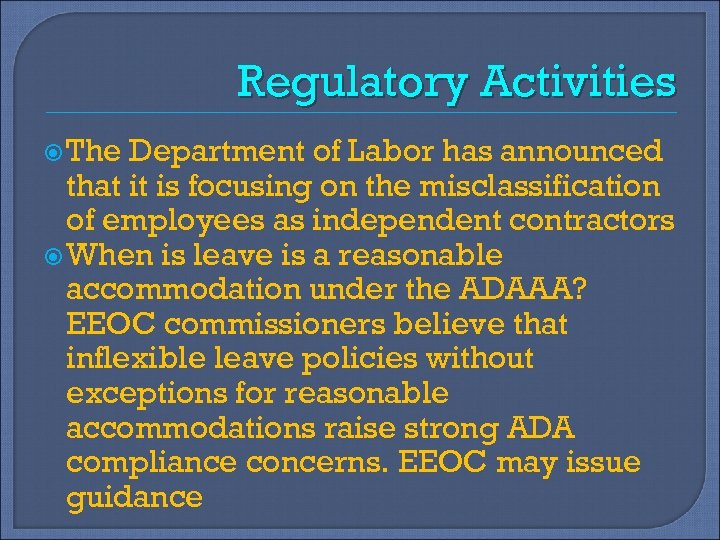
Regulatory Activities The Department of Labor has announced that it is focusing on the misclassification of employees as independent contractors When is leave is a reasonable accommodation under the ADAAA? EEOC commissioners believe that inflexible leave policies without exceptions for reasonable accommodations raise strong ADA compliance concerns. EEOC may issue guidance
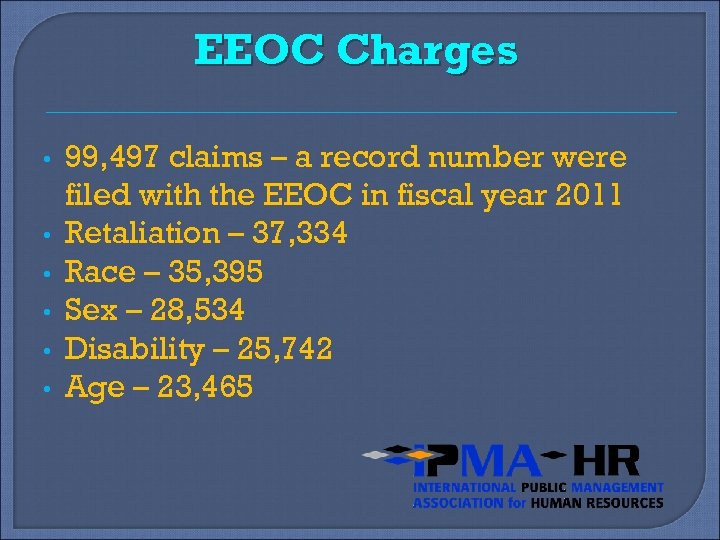
EEOC Charges • • • 99, 497 claims – a record number were filed with the EEOC in fiscal year 2011 Retaliation – 37, 334 Race – 35, 395 Sex – 28, 534 Disability – 25, 742 Age – 23, 465
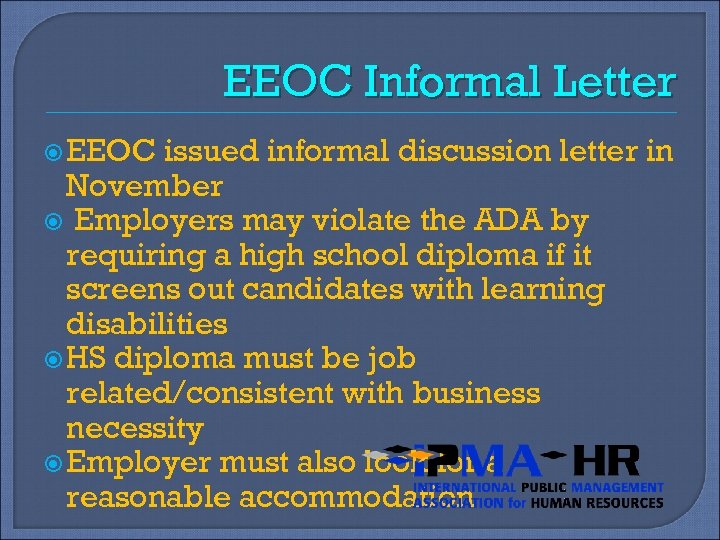
EEOC Informal Letter EEOC issued informal discussion letter in November Employers may violate the ADA by requiring a high school diploma if it screens out candidates with learning disabilities HS diploma must be job related/consistent with business necessity Employer must also look for a reasonable accommodation
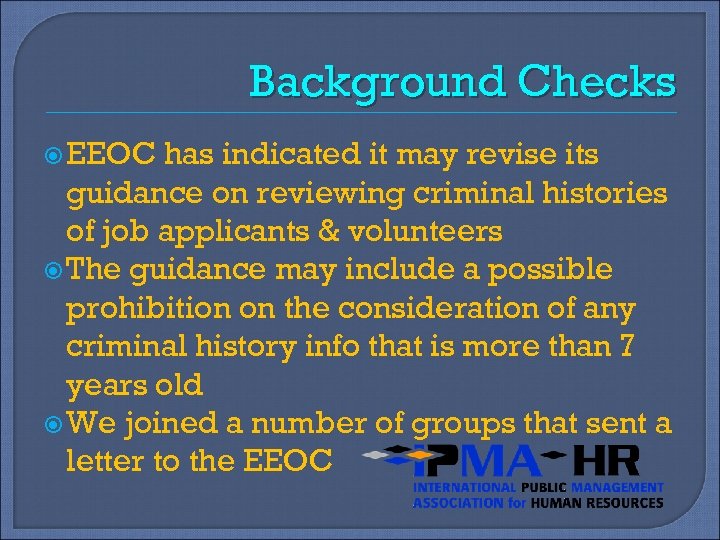
Background Checks EEOC has indicated it may revise its guidance on reviewing criminal histories of job applicants & volunteers The guidance may include a possible prohibition on the consideration of any criminal history info that is more than 7 years old We joined a number of groups that sent a letter to the EEOC
Employing Disabled Veterans EEOC issued two new guidance documents focusing on employment rights of disabled veterans The guidance documents offer a strong statement by the EEOC that the commission intends to aggressively enforce anti-discrimination laws that apply to veterans with service-connected disabilities
Military Leave The Department of Labor issued a proposed rule codifying the 2009 changes made to the FMLA Military caregiver leave provisions apply to veterans as well as those on active duty and to members of the armed forces as well as to members of the guard and reserve Military caregiver leave includes an injury or illness that existed prior to service and was aggravated in the line of duty on active duty. The leave is available to veterans with a serious injury if the veteran was a member of the military at any time during the five years preceding the date of the medical treatment
Military Leave Intermittent leave • When the regulations were update in 2008, the DOL made a change to intermittent leave to allow employers to account for intermittent leave in different increments during the day, if this is used for other types of leave. • For example, if an employer accounts for leave time at the beginning of a shift in 6 minute increments, but if leave is taken during the middle of a shift in 1 hour increments an employer could treat FMLA leave the same way • The DOL is proposing to remove this flexibility & return to the prior requirement that FMLA leave be accounted for in the smallest increment of leave used by the employer
For additional information, please contact: Neil Reichenberg nreichenberg@ipma-hr. org
Скачать презентацию Government Affairs Update South Florida Chapter Neil Reichenberg
68f0110863f4cfc000a32c3c604ccfd1.ppt