


 Скачать презентацию Goodheart-Willcox Co Inc 4 The
bda29e0b7895e038ae109a5ac6d6381b.ppt
- Количество слайдов: 57
 © Goodheart-Willcox Co. , Inc.
 4 The Global Economy © Goodheart-Willcox Co. , Inc.
 Chapter Objectives • Outline advantages and disadvantages related to globalization. • Explain why countries specialize and how this leads to international trade. • Analyze the effect of multinational companies on the global economy. • Describe the relationship between currency strength and the balance of trade. © Goodheart-Willcox Co. , Inc. continued
 Chapter Objectives • Cite examples to show international trade affects the overall economy, businesses, workers, and consumers. • Describe what you can do to develop the skills needed to succeed in a global economy. © Goodheart-Willcox Co. , Inc.
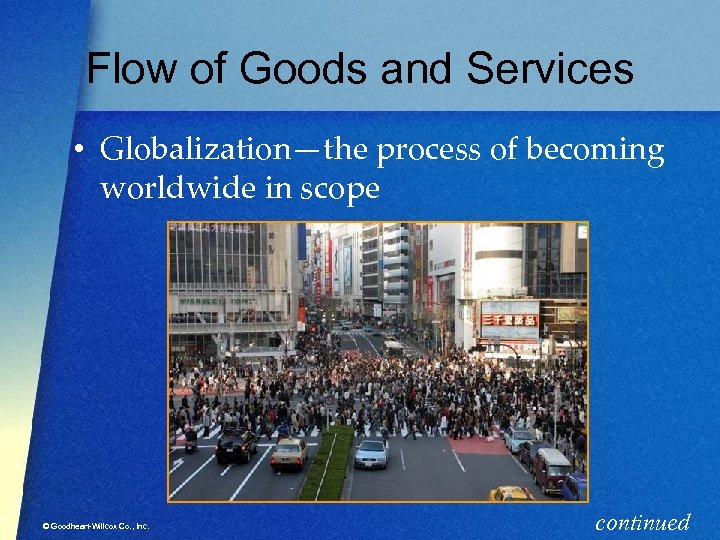 Flow of Goods and Services • Globalization—the process of becoming worldwide in scope © Goodheart-Willcox Co. , Inc. continued
 Flow of Goods and Services • Economic globalization is changing the way people communicate, shop, and conduct business • Understanding economic globalization will help you hold your own in the job market and in the marketplace © Goodheart-Willcox Co. , Inc. continued
 Flow of Goods and Services • International trade has existed for thousands of years • Most trade today occurs between businesses in different countries; not between individuals or nations • Trade is discussed in terms of imports and exports © Goodheart-Willcox Co. , Inc.
 What Is Traded • Finished products such as – food – furniture – toys – computers • Intermediate goods used to produce other goods such as – car parts – semiconductors for computers © Goodheart-Willcox Co. , Inc. continued
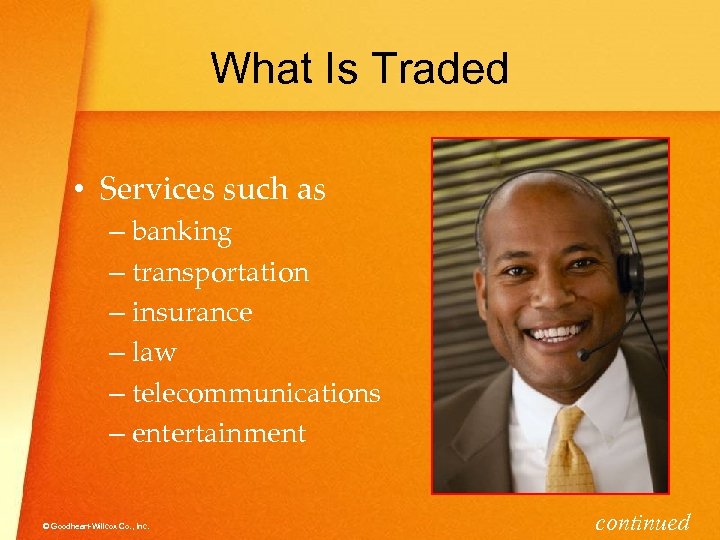 What Is Traded • Services such as – banking – transportation – insurance – law – telecommunications – entertainment © Goodheart-Willcox Co. , Inc. continued
 What Is Traded • Investments such as – money and capital invested by businesses into building factories in other countries – salaries and wages paid by businesses to workers in foreign countries – purchase of securities, real estate, and other investments in other countries © Goodheart-Willcox Co. , Inc.
 Why Trades Occur • Each party in a trade benefits from the transaction • No country can produce all the goods and services that its people and businesses want • Countries specialize in particular goods and services and trade for what they cannot produce © Goodheart-Willcox Co. , Inc.
 Natural Resources, Climate, and Geography • These factors determine what a country can and cannot produce – Saudi Arabia produces oil – Countries with tropical climates can produce rubber, bananas, and things that only grow in that climate © Goodheart-Willcox Co. , Inc.
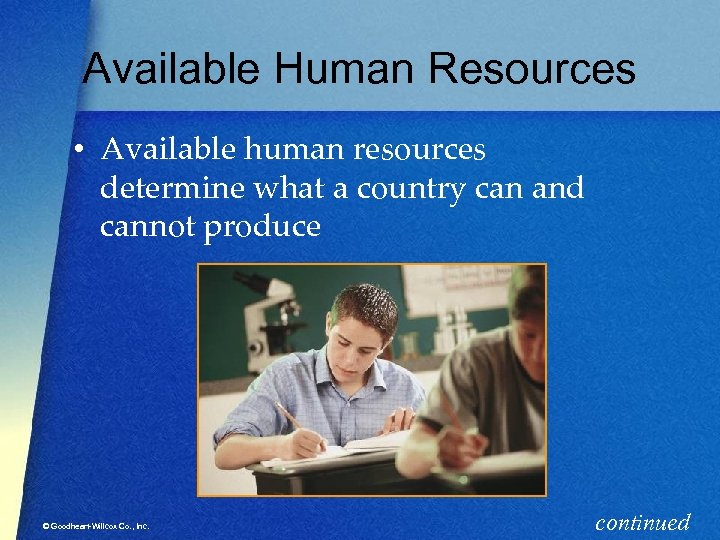 Available Human Resources • Available human resources determine what a country can and cannot produce © Goodheart-Willcox Co. , Inc. continued
 Available Human Resources • Labor-intensive industries locate where labor costs are low • Industries requiring educated workers locate in countries with high literacy rates and systems of higher education © Goodheart-Willcox Co. , Inc.
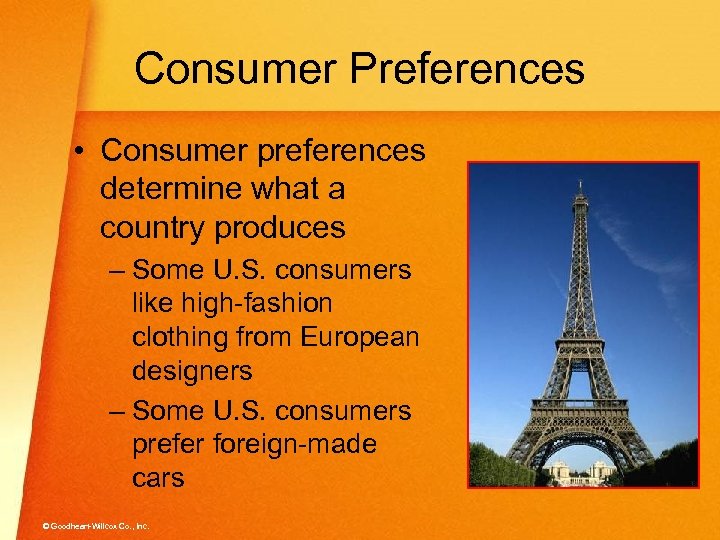 Consumer Preferences • Consumer preferences determine what a country produces – Some U. S. consumers like high-fashion clothing from European designers – Some U. S. consumers prefer foreign-made cars © Goodheart-Willcox Co. , Inc.
 Comparative Advantage • Comparative advantage explains why a country that can produce everything it needs still benefits from trade • Nations benefit when they specialize in activities for which their opportunity costs are lowest • By expanding into foreign markets, businesses can take advantage of economies of scale © Goodheart-Willcox Co. , Inc.
 U. S. Trade • The U. S. is world’s largest importer • Over 20 percent of world’s total output is from the U. S. • Millions of people around the world depend on the U. S. for their livelihoods © Goodheart-Willcox Co. , Inc. continued
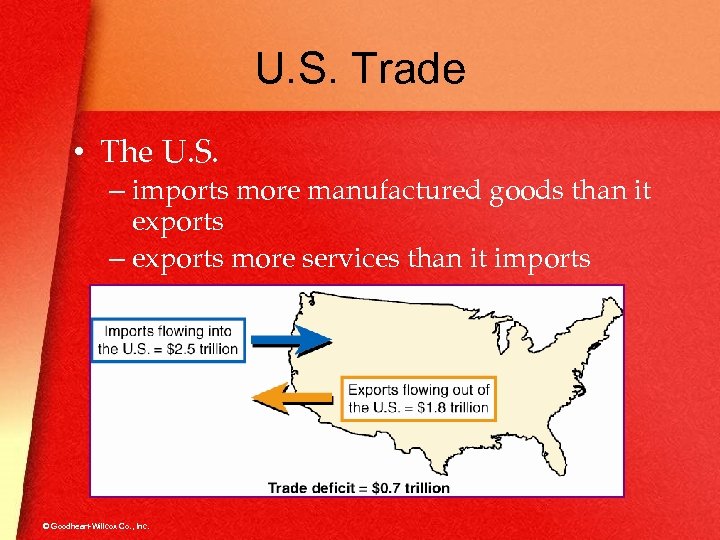 U. S. Trade • The U. S. – imports more manufactured goods than it exports – exports more services than it imports © Goodheart-Willcox Co. , Inc.
 Flow of Labor • Globalization has increased the flow of migrants • Migrants leave their homelands to – escape persecution, war, economic crisis, natural disasters, crime, corruption – seek better opportunities to work and earn a living wage © Goodheart-Willcox Co. , Inc.
 Impact of Multinationals • Much of globalization today is driven by multinational corporations – These are large companies, often comprised of many businesses • Subsidiary— a business controlled by another business © Goodheart-Willcox Co. , Inc.
 One Product, Many Origins • Parts and labor to make a product can come from many different countries • Outsourcing involves doing one or more aspects of a business in a different country © Goodheart-Willcox Co. , Inc. continued
 One Product, Many Origins • Offshore outsourcing occurs because businesses seek advantages in other countries • It benefits workers in other countries by creating new job opportunities • It hurts workers in the U. S. when jobs are moved elsewhere © Goodheart-Willcox Co. , Inc.
 Flows of Capital Investment • Flows of capital across borders is a major source of globalization today © Goodheart-Willcox Co. , Inc. continued
 Flows of Capital Investment • One-third of global trade is the movement of raw materials, goods, services, and product parts from one subsidiary of a multinational to another • International investment occurs when investors buy or sell the stocks and bonds of foreign companies © Goodheart-Willcox Co. , Inc.
 Collusion and Cartels • Some large multinational corporations dominate their industries and influence governments and global trade policies • A cartel exists when a group of countries or firms exert worldwide control over the production and pricing of a product or service © Goodheart-Willcox Co. , Inc.
 International Monetary System • When buyers and sellers using different currencies want to trade, they must determine the value of one currency in relation to the other • Different types of currency are bought and sold on the foreign exchange market © Goodheart-Willcox Co. , Inc.
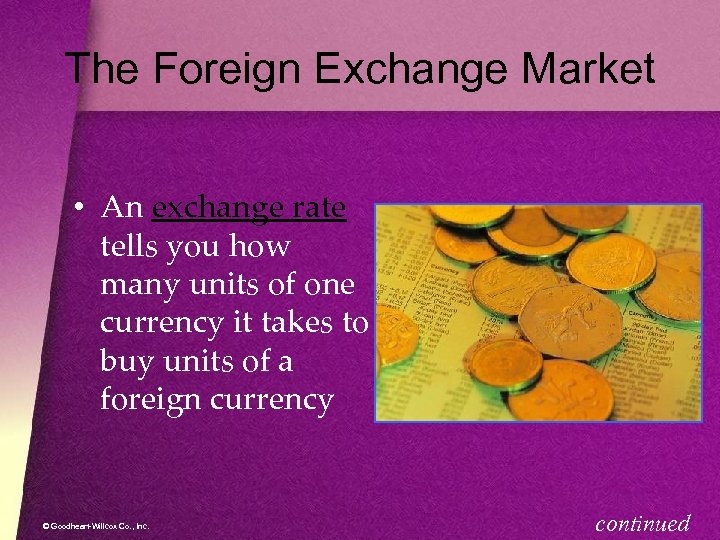 The Foreign Exchange Market • An exchange rate tells you how many units of one currency it takes to buy units of a foreign currency © Goodheart-Willcox Co. , Inc. continued
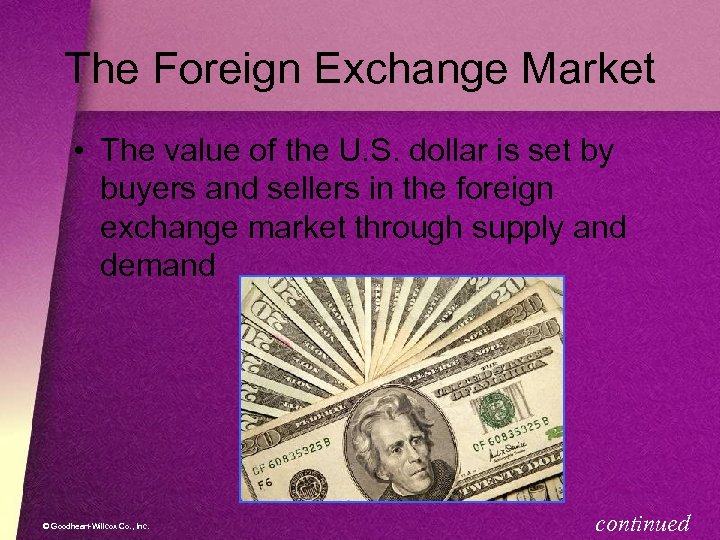 The Foreign Exchange Market • The value of the U. S. dollar is set by buyers and sellers in the foreign exchange market through supply and demand © Goodheart-Willcox Co. , Inc. continued
 The Foreign Exchange Market • Factors that affect exchange rates: – Political and economic stability—stable countries draw foreign investors – Interest rates—higher interest rates draw foreign investors, raise demand for a currency – U. S. dollar is the international reserve currency © Goodheart-Willcox Co. , Inc.
 Buying and Selling U. S. Dollars • The foreign exchange market/rate affects you when you – travel to another country and must exchange dollars foreign currency – buy goods and services made in other countries or by foreign companies – conduct business in another country © Goodheart-Willcox Co. , Inc.
 Trade and Exchange Rates • When the U. S. dollar is strong, – goods and services imported into the U. S. cost less – U. S. consumers get more for their dollars and buy more imports – foreign buyers get less for their money © Goodheart-Willcox Co. , Inc. continued
 Trade and Exchange Rates • When the U. S. dollar is weak, – goods and services imported into the U. S. cost more – U. S. consumers get less for their dollars and buy fewer imports – foreign buyers get more for their money © Goodheart-Willcox Co. , Inc.
 The U. S. Trade Deficit • Balance of trade is the difference between total imports and total exports; recorded in balance of payments • Trade deficit develops when a country buys or imports more than it sells • Trade surplus develops when a country sells or exports more than it buys © Goodheart-Willcox Co. , Inc. continued
 The U. S. Trade Deficit • The U. S. has run a substantial trade deficit since 1976 • The U. S. has the largest deficit and China has the largest trade surplus • Other countries accumulate U. S. dollars with which they buy more U. S. goods, services, and investments © Goodheart-Willcox Co. , Inc.
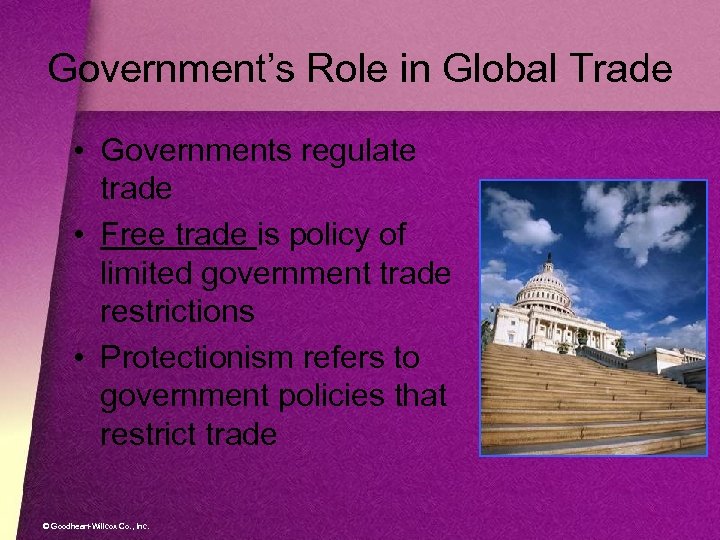 Government’s Role in Global Trade • Governments regulate trade • Free trade is policy of limited government trade restrictions • Protectionism refers to government policies that restrict trade © Goodheart-Willcox Co. , Inc.
 Why Nations Favor Free Trade • Stimulates growth and raises productivity and living standards in free-trade countries • Allows countries to specialize in goods and services they produce most efficiently and trade for the rest • Gives consumers a greater selection of goods and services at lower prices © Goodheart-Willcox Co. , Inc. continued
 Why Nations Favor Free Trade • Generates innovation as a result of global competition and the exchange of ideas and technologies • Creates new investment opportunities • Promotes cooperation and peaceful relations among nations that are trading partners © Goodheart-Willcox Co. , Inc.
 Why Nations Favor Restricted Trade • To protect domestic industries and jobs from foreign competition • To reduce dependence on foreign imports • To control the export of products and technologies that can threaten national security • To address unfair trade practices of other countries that hurt domestic companies © Goodheart-Willcox Co. , Inc.
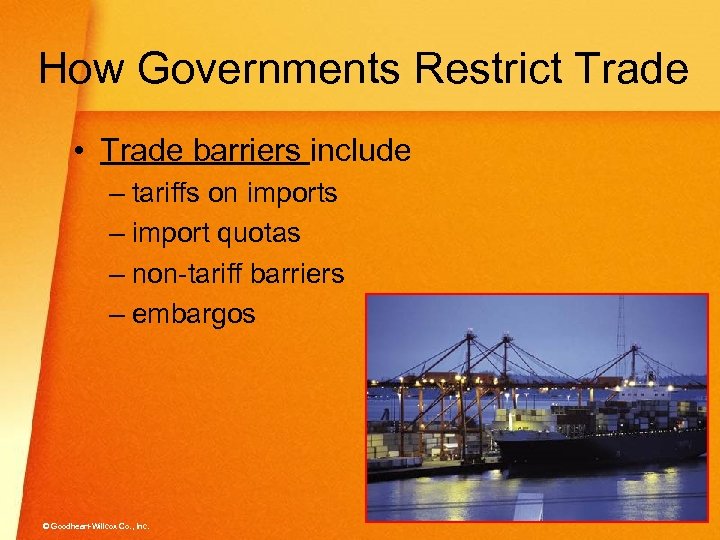 How Governments Restrict Trade • Trade barriers include – tariffs on imports – import quotas – non-tariff barriers – embargos © Goodheart-Willcox Co. , Inc.
 Subsidies • A form of protectionism • Government gives payments, tax breaks, or other incentives to domestic businesses and industries • Subsidized goods can be offered at lower prices, giving them an advantage over imported goods © Goodheart-Willcox Co. , Inc.
 Currency Manipulation • When a currency is devalued, – exports become cheaper in world markets – exports and foreign investment increase and imports decrease – unfair competition is created © Goodheart-Willcox Co. , Inc.
 Trade Organizations and Agreements • Create economic opportunities for participating nations due to free trade and investment • Example: North American Free Trade Agreement (NAFTA) – U. S. , Canada, Mexico © Goodheart-Willcox Co. , Inc. continued
 Trade Organizations and Agreements • European Union (EU) is a powerful organization of 27 countries • 15 EU countries share a common currency © Goodheart-Willcox Co. , Inc.
 World Trade Organization • The World Trade Organization is an international organization created in 1995 • Consists of 151 member nations • WTO’s mission is – to establish fair trade practices – to mediate trade disputes among member nations © Goodheart-Willcox Co. , Inc.
 Other Important Global Organizations • • World Bank International Monetary Fund (IMF) G-20 United Nations (UN) © Goodheart-Willcox Co. , Inc.
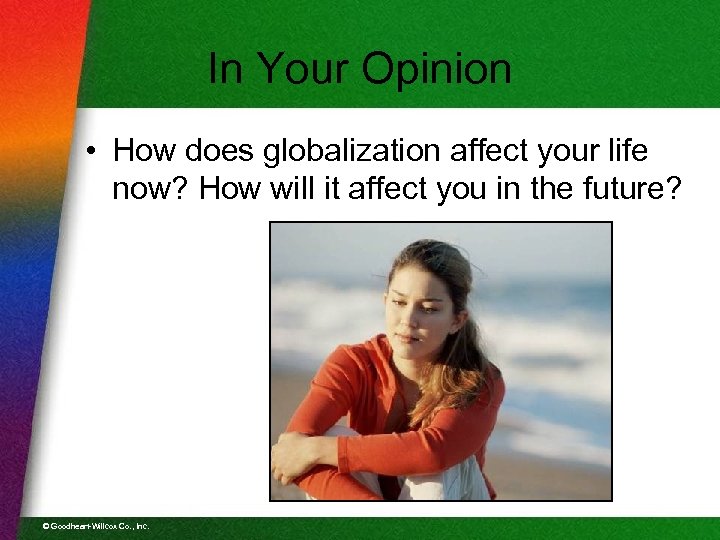 In Your Opinion • How does globalization affect your life now? How will it affect you in the future? © Goodheart-Willcox Co. , Inc.
 Globalization and You, the Student • You already buy goods and services from other countries • Globalization will present you with both opportunities and challenges © Goodheart-Willcox Co. , Inc.
 As a Worker • You may work for a multinational corporation with subsidiaries in other countries • You may work for a foreign-owned corporation in the U. S. • Your managers and coworkers may be foreign-born © Goodheart-Willcox Co. , Inc. continued
 As a Worker • As an entrepreneur, you may sell your products and services in other countries • You may lose your job if your employer – outsources your job – cannot compete with competition from foreign companies © Goodheart-Willcox Co. , Inc.
 What You Can Do • Continue your education • Consider science- and math-related occupations • Keep your skills sharp • Learn a foreign language • Learn about world affairs • Travel or live abroad © Goodheart-Willcox Co. , Inc.
 Central Ideas of the Chapter • Globalization is the growing economic interconnectedness of people around the world. • Globalization presents new opportunities and dilemmas. © Goodheart-Willcox Co. , Inc.
 Glossary of Key Terms Back • balance of payments. An account of the flow of goods, services, and money coming into and going out of the country. • capital. Money used to generate income or to invest in a business or asset. • cartel. A group of countries or firms that control the production and pricing of a product or service. • comparative advantage. The benefit to the party that has the lower opportunity cost in pursuing a given course of action. © Goodheart-Willcox Co. , Inc.
 Glossary of Key Terms Back • economic globalization. The flow of goods, services, labor, money, innovative ideas, and technology across borders. • economies of scale. The concept that cost of producing one unit of something declines as the number of units produced rises. • European Union (EU). A group of nations joined together to form a trade sector, most of which use a common currency called the euro. • exchange rate. The value of one currency compared to another. © Goodheart-Willcox Co. , Inc.
 Glossary of Key Terms Back • exports. The goods and services grown or made in a particular country and then sold in world markets • free trade. A policy of limited government trade restrictions. • imports. Goods and services that come into a country from foreign countries. • international trade. The buying and selling of goods and services across national borders and among the people of different nations. © Goodheart-Willcox Co. , Inc.
 Glossary of Key Terms Back • migrants. People who move from one place or country to another. • multinational corporation. A business that operates in more than one country. • North American Free Trade Agreement (NAFTA). An agreement that lowered trade barriers and opened markets among the United States, Canada, and Mexico. • offshore outsourcing. The procedure of moving sections of a business to another country. © Goodheart-Willcox Co. , Inc.
 Glossary of Key Terms Back • outsourcing. The procedure of a company moving sections of its business to other companies or to its own subsidiaries. • specialization. The range of products and services a country can produce and then trade for whatever it cannot produce. • trade barrier. Any action taken to control or limit imports. © Goodheart-Willcox Co. , Inc.
 Glossary of Key Terms Back • trade deficit. The loss of economic power due to a country importing more than it is exporting over a period of time. • trade surplus. A gain of economic power due to a country exporting more than it is exporting over a period of time. • World Trade Organization (WTO). An international organization that mediates trade disputes among 151 member nations and establishes trade practices that are acceptable and fair to all nations. © Goodheart-Willcox Co. , Inc.