 Скачать презентацию Going Carbon Neutral The Village Surveys What s
e991226522776d8e306eec768e59ab56.ppt
- Количество слайдов: 16



Going Carbon Neutral: The Village Surveys
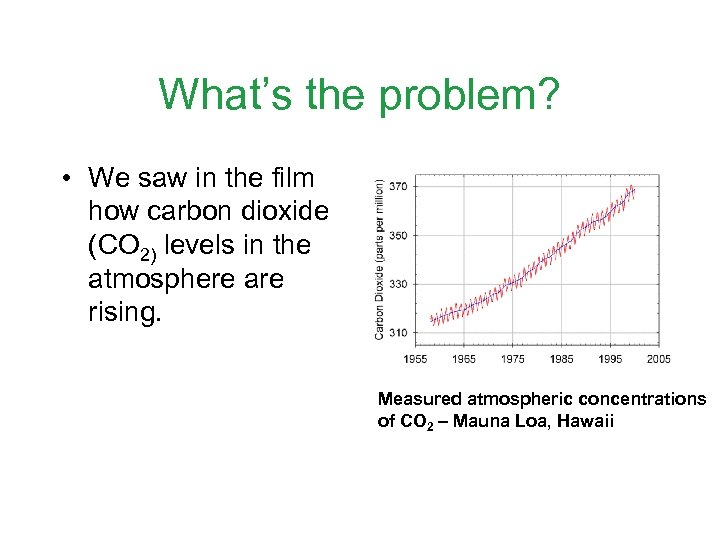
What’s the problem? • We saw in the film how carbon dioxide (CO 2) levels in the atmosphere are rising. Measured atmospheric concentrations of CO 2 – Mauna Loa, Hawaii
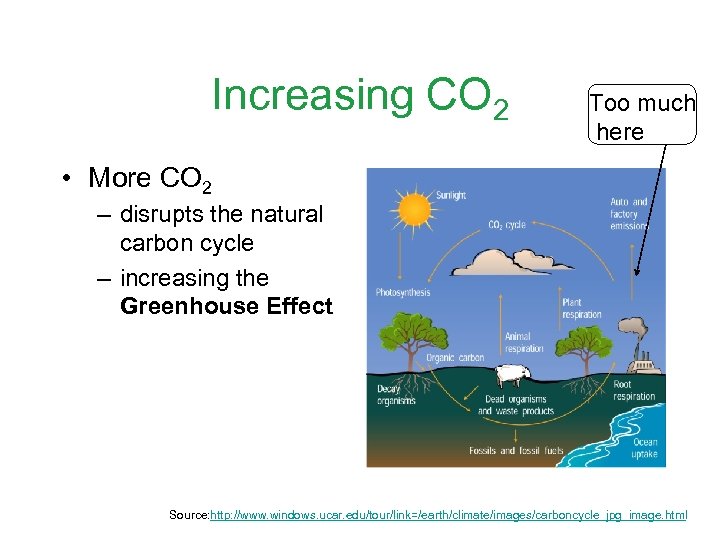
Increasing CO 2 Too much here • More CO 2 – disrupts the natural carbon cycle – increasing the Greenhouse Effect Source: http: //www. windows. ucar. edu/tour/link=/earth/climate/images/carboncycle_jpg_image. html
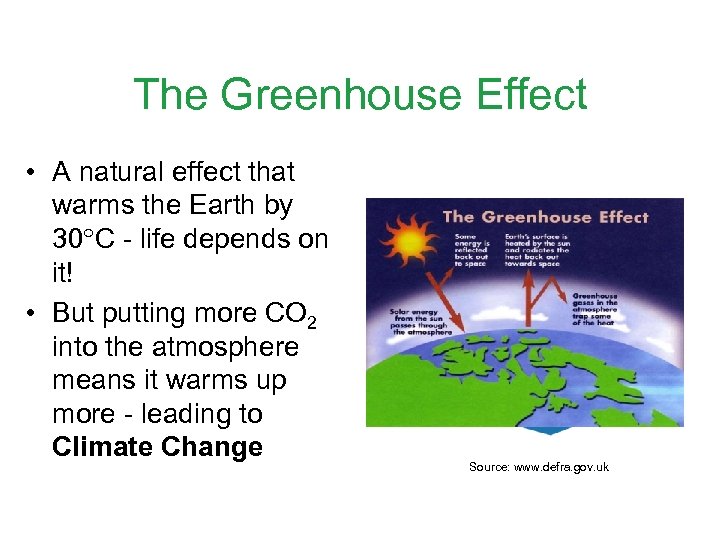
The Greenhouse Effect • A natural effect that warms the Earth by 30 C - life depends on it! • But putting more CO 2 into the atmosphere means it warms up more - leading to Climate Change Source: www. defra. gov. uk
What can we do? • To slow down the warming we can try to re-balance the carbon cycle by: – putting less carbon dioxide into the atmosphere – and taking more out • The film presents us with a challenge • What’s our response?
Carbon budget • We can start by looking at what we are doing locally • We can calculate a carbon budget ~ a bit like using a bank account ~ to see what we are putting in and what we are taking out
A carbon budget for Ashton Hayes • Within the village we need to know where we are now - a baseline survey to calculate Sources of CO 2 - activities that put CO 2 into the atmosphere Sinks of CO 2 - activities that take CO 2 out of the atmosphere
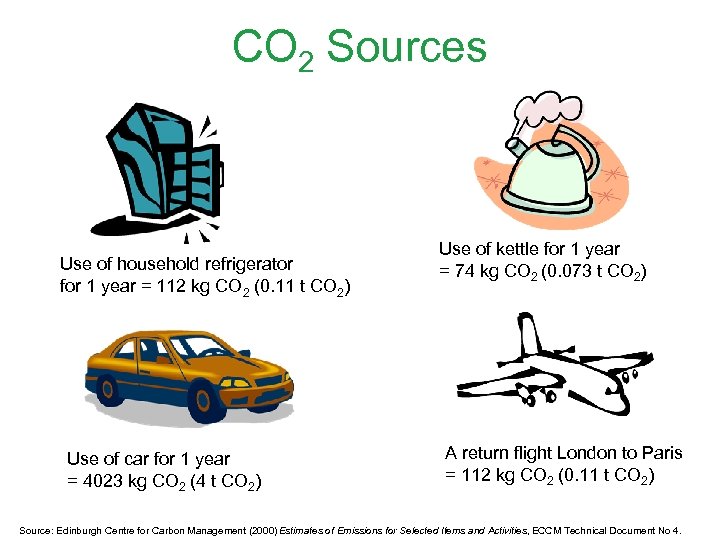
CO 2 Sources Use of household refrigerator for 1 year = 112 kg CO 2 (0. 11 t CO 2) Use of car for 1 year = 4023 kg CO 2 (4 t CO 2) Use of kettle for 1 year = 74 kg CO 2 (0. 073 t CO 2) A return flight London to Paris = 112 kg CO 2 (0. 11 t CO 2) Source: Edinburgh Centre for Carbon Management (2000) Estimates of Emissions for Selected Items and Activities, ECCM Technical Document No 4.
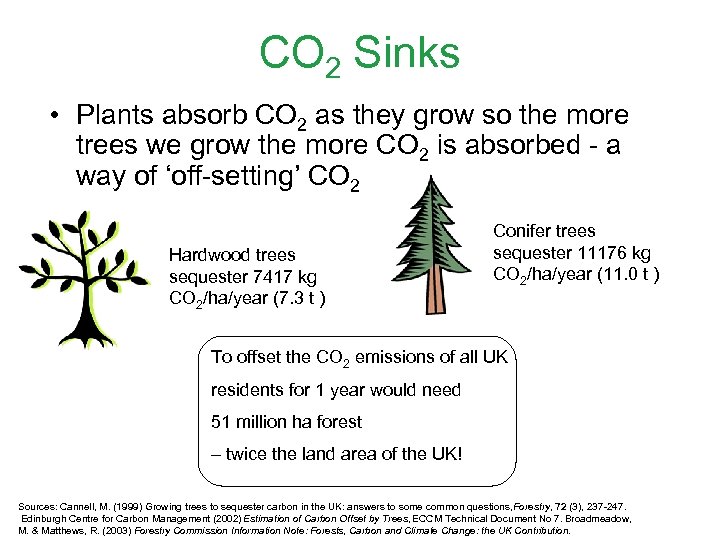
CO 2 Sinks • Plants absorb CO 2 as they grow so the more trees we grow the more CO 2 is absorbed - a way of ‘off-setting’ CO 2 Hardwood trees sequester 7417 kg CO 2/ha/year (7. 3 t ) Conifer trees sequester 11176 kg CO 2/ha/year (11. 0 t ) To offset the CO 2 emissions of all UK residents for 1 year would need 51 million ha forest – twice the land area of the UK! Sources: Cannell, M. (1999) Growing trees to sequester carbon in the UK: answers to some common questions, Forestry, 72 (3), 237 -247. Edinburgh Centre for Carbon Management (2002) Estimation of Carbon Offset by Trees, ECCM Technical Document No 7. Broadmeadow, M. & Matthews, R. (2003) Forestry Commission Information Note: Forests, Carbon and Climate Change: the UK Contribution.
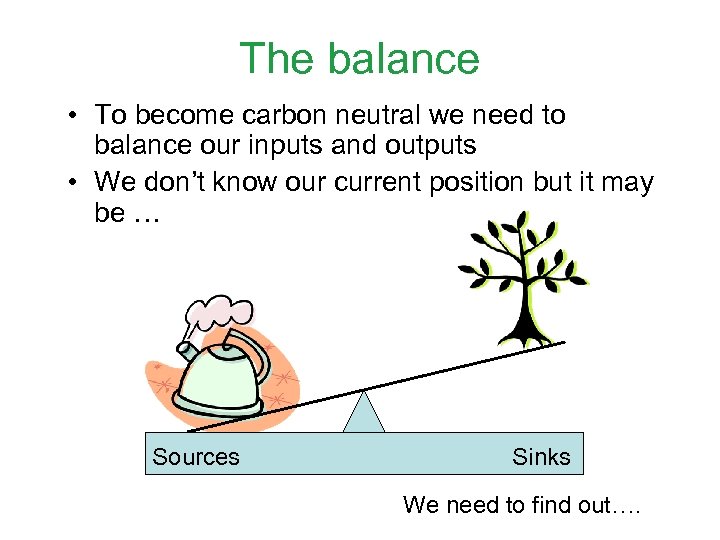
The balance • To become carbon neutral we need to balance our inputs and outputs • We don’t know our current position but it may be … Sources Sinks We need to find out….
The Village Surveys • In May/June some students from the University of Chester will be in the village carrying out surveys of our sources and sinks of CO 2 • They will wear sweatshirts with the University and Going Carbon Neutral logos so they will be easy to identify
Surveying the sources • The students will conduct house to house surveys asking questions about: – Energy use and travel patterns – Interest in planting trees, using solar panels, using small, quiet wind turbines – Using alternative forms of transport • We will be working closely with EEAC, EST and Cred and we aim not to duplicate questions • This information will help us to calculate sources and how we might reduce them
Surveying the sinks • The students will try to assess sinks by: – Using aerial photos and satellite images to map vegetation in the village – Field survey e. g. counting trees – The household survey will also ask about trees.
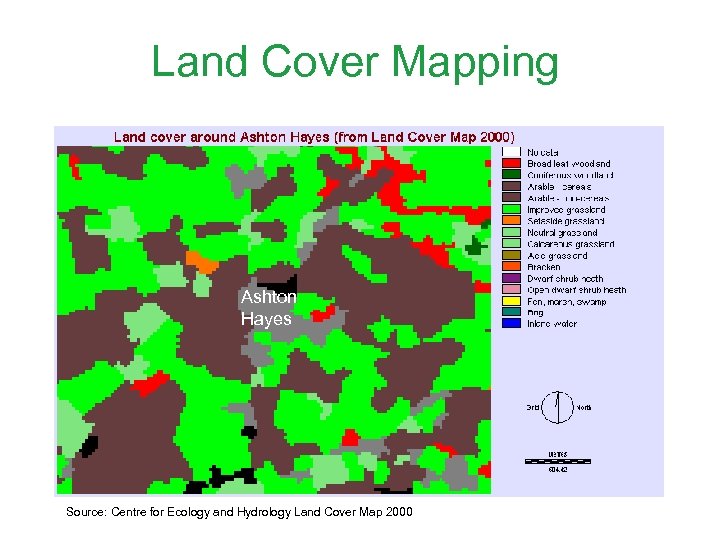
Land Cover Mapping Ashton Hayes Source: Centre for Ecology and Hydrology Land Cover Map 2000
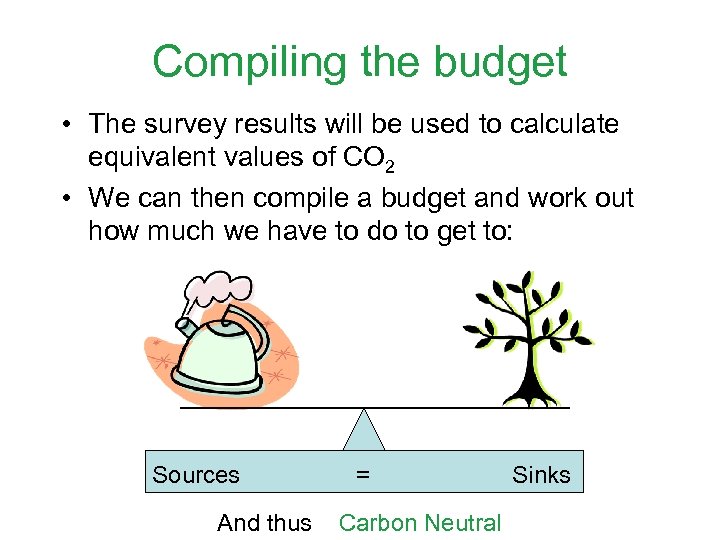
Compiling the budget • The survey results will be used to calculate equivalent values of CO 2 • We can then compile a budget and work out how much we have to do to get to: Sources And thus = Carbon Neutral Sinks
Feedback and Development • The students will produce a written report of their findings and also make a presentation of them to the village. • In future years we will survey the uptake of energy efficiency measures, rates of tree planting etc and recalculate the budget so that we can monitor our progress. • Look out for the sweatshirts in May!!
Скачать презентацию Going Carbon Neutral The Village Surveys What s
e991226522776d8e306eec768e59ab56.ppt