


 Скачать презентацию Goal Setting Theory of Motivation TAMENE KENENI WALGA
Goal_Setting_Theory_of_Motivation.pptx
- Количество слайдов: 13
 Goal Setting Theory of Motivation TAMENE KENENI WALGA TATIANA ALESHKOVSKAYA KSENIA STEBLOVSKAYA
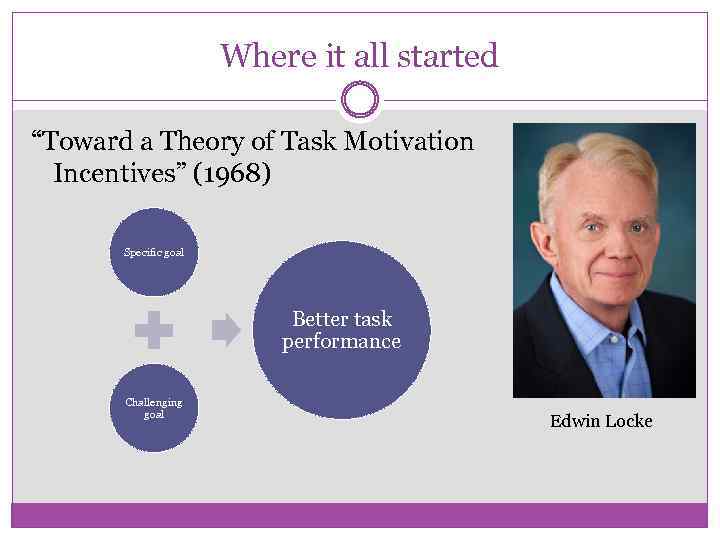 Where it all started “Toward a Theory of Task Motivation Incentives” (1968) and Specific goal Better task performance Challenging goal Edwin Locke
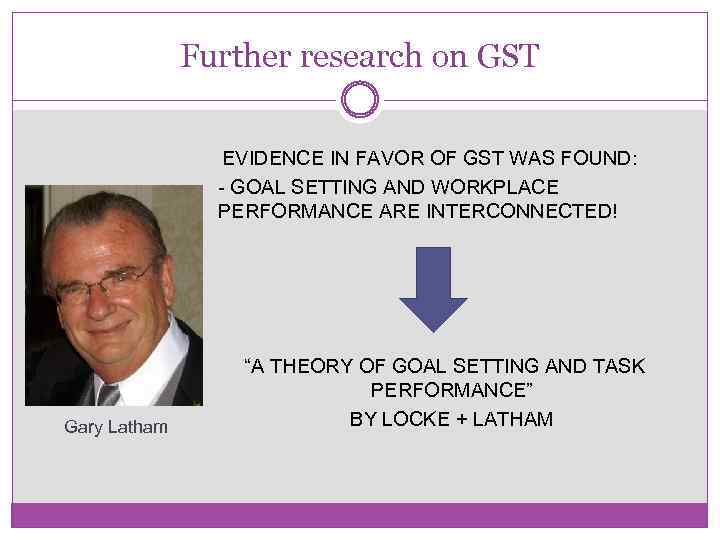 Further research on GST EVIDENCE IN FAVOR OF GST WAS FOUND: - GOAL SETTING AND WORKPLACE PERFORMANCE ARE INTERCONNECTED! Gary Latham “A THEORY OF GOAL SETTING AND TASK PERFORMANCE” BY LOCKE + LATHAM
 Goal: what a person tries to accomplish through behavior and actions Goal setting theory: identifies goals that are most effective in producing high levels of motivation and performance Goal setting can operate to enhance both intrinsic motivation and extrinsic motivation
 5 Principles of Goal Setting Clarity Task Complexity Feedback Challenge Commitment
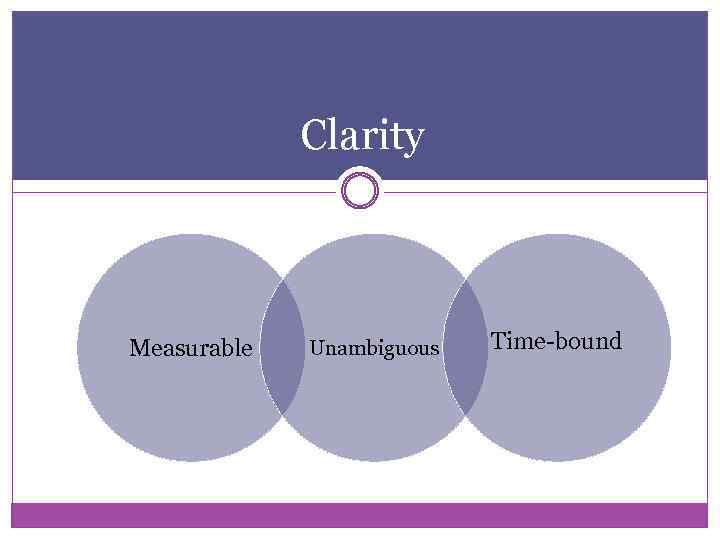 Clarity Measurable Unambiguous Time-bound
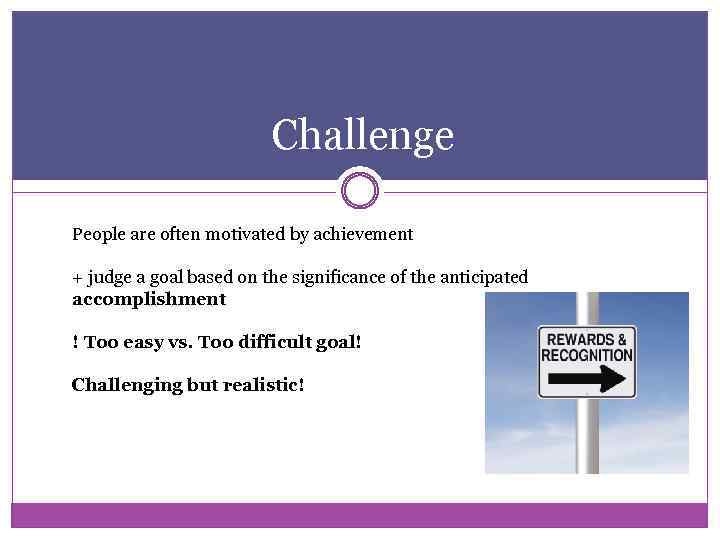 Challenge People are often motivated by achievement + judge a goal based on the significance of the anticipated accomplishment ! Too easy vs. Too difficult goal! Challenging but realistic!
 Commitment Goals are effective when employees understand agree upon them. The goal is credible as long as the employees believe that the goal is consistent with the goal of the company. Goal commitment <-> Difficulty
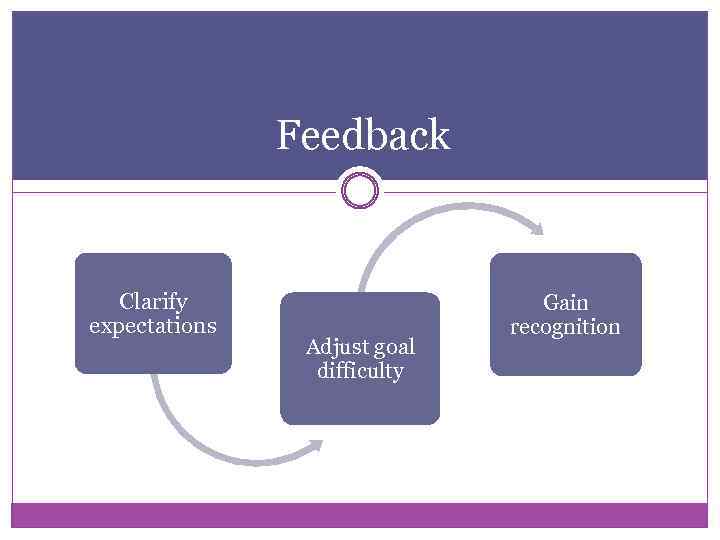 Feedback Clarify expectations Adjust goal difficulty Gain recognition
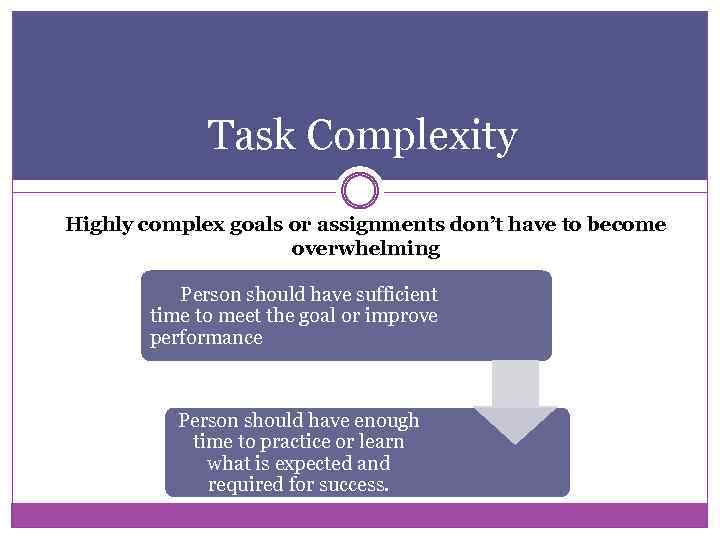 Task Complexity Highly complex goals or assignments don’t have to become overwhelming Person should have sufficient time to meet the goal or improve performance Person should have enough time to practice or learn what is expected and required for success.
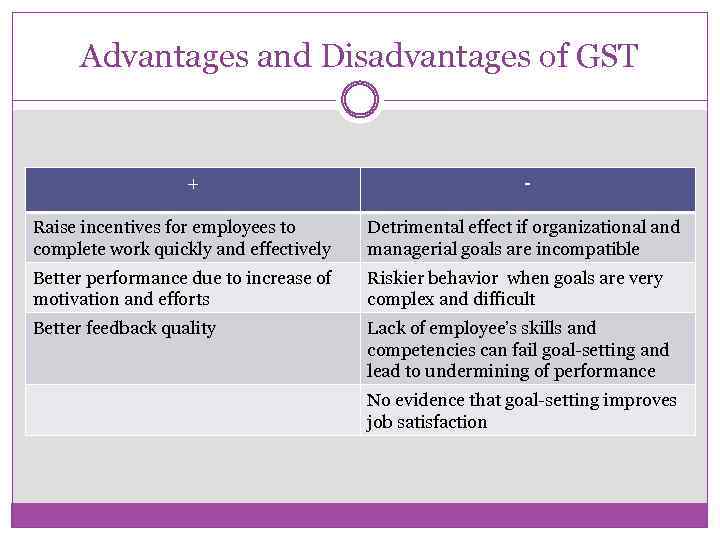 Advantages and Disadvantages of GST + - Raise incentives for employees to complete work quickly and effectively Detrimental effect if organizational and managerial goals are incompatible Better performance due to increase of motivation and efforts Riskier behavior when goals are very complex and difficult Better feedback quality Lack of employee’s skills and competencies can fail goal-setting and lead to undermining of performance No evidence that goal-setting improves job satisfaction
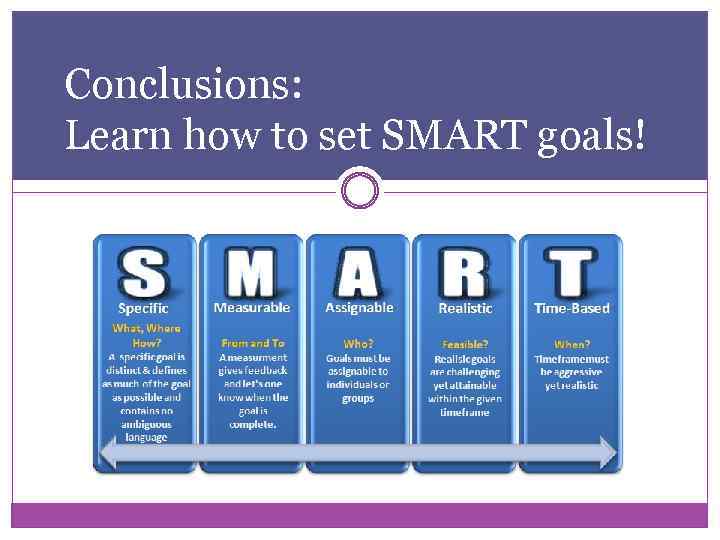 Conclusions: Learn how to set SMART goals!
 Thank you for your attention!