 Скачать презентацию GMDH and FAKE GAME Evolving ensembles of inductive
c5d5990a7070786648d95d7e5b3ce962.ppt
- Количество слайдов: 67



GMDH and FAKE GAME: Evolving ensembles of inductive models Pavel Kordík CTU Prague, Faculty of Electrical Engineering, Department of Computer Science
Outline of the tutorial … • Introduction, FAKE GAME framework, architecture of GAME • GAME – niching genetic algorithm • GAME – ensemble methods – Trying to improve accuracy • GAME – ensemble methods – Models’ quality – Credibility estimation 2
Theory in background • • Knowledge discovery Data preprocessing Data mining Neural networks Inductive models Continuous optimization Ensemble of models Information visualization 3
Problem statement • Knowledge discovery (from databases) is time consuming and expert skills demanding task. • Data preprocessing is extremely time consuming process. • Data mining involves many experiments to find proper methods and to adjust their parameters. • Black-box data mining methods such us neural networks are not considered credible. • Knowledge extraction from data mining methods is often very complicated. 4
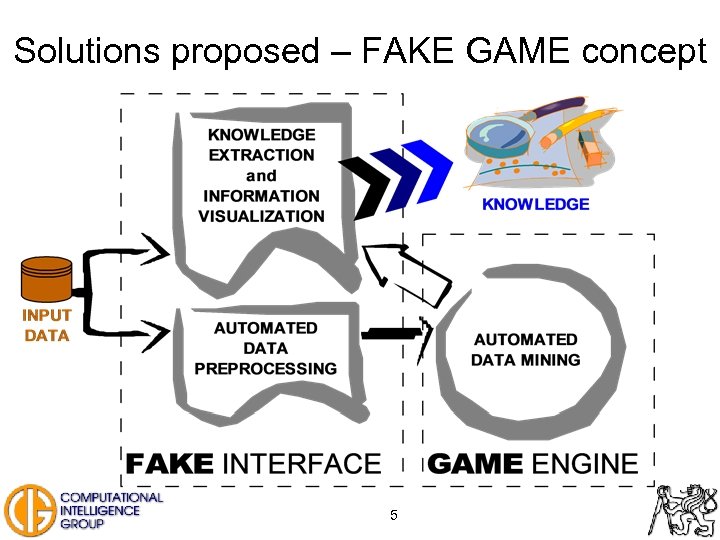
Solutions proposed – FAKE GAME concept 5
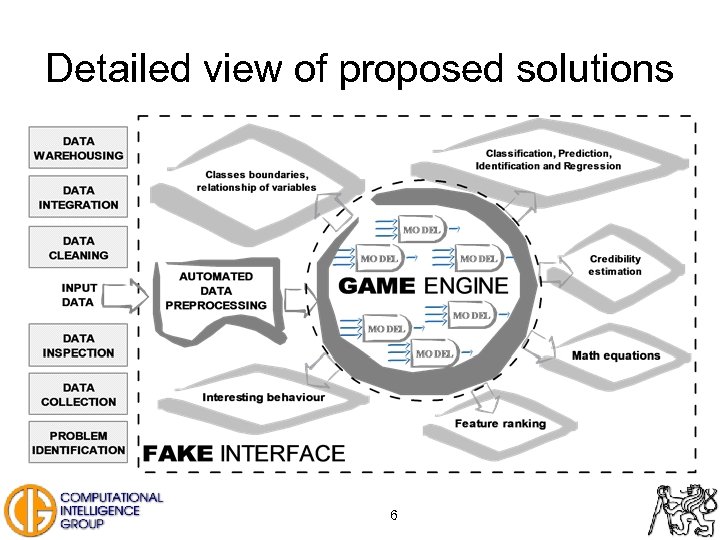
Detailed view of proposed solutions 6
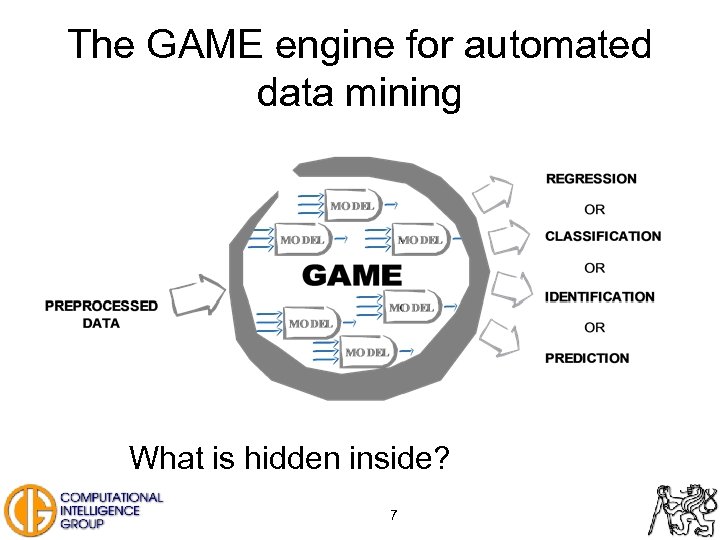
The GAME engine for automated data mining What is hidden inside? 7
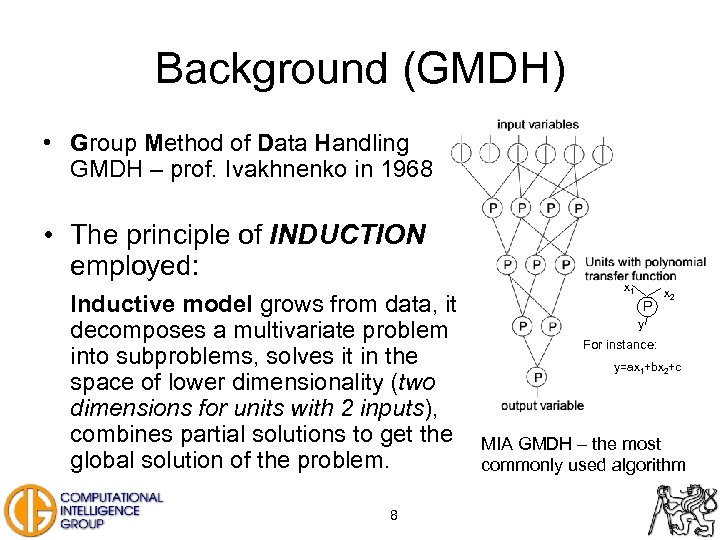
Background (GMDH) • Group Method of Data Handling GMDH – prof. Ivakhnenko in 1968 • The principle of INDUCTION employed: Inductive model grows from data, it decomposes a multivariate problem into subproblems, solves it in the space of lower dimensionality (two dimensions for units with 2 inputs), combines partial solutions to get the global solution of the problem. 8 x 1 P x 2 y For instance: y=ax 1+bx 2+c MIA GMDH – the most commonly used algorithm
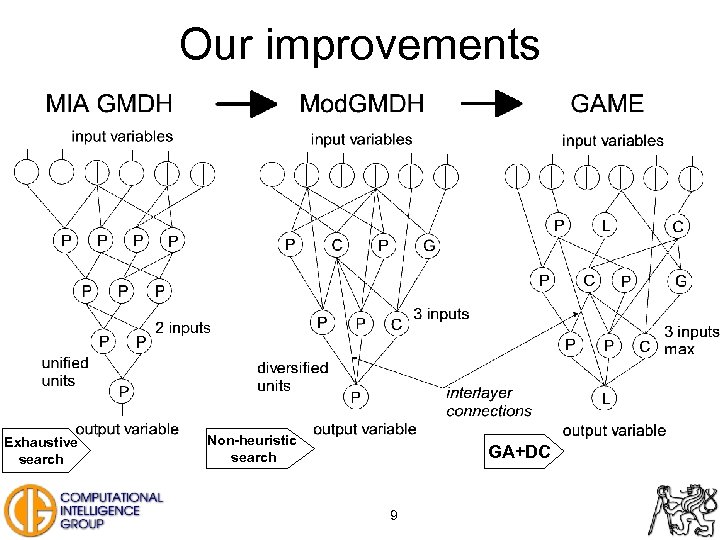
Our improvements Exhaustive search Non-heuristic search GA+DC 9
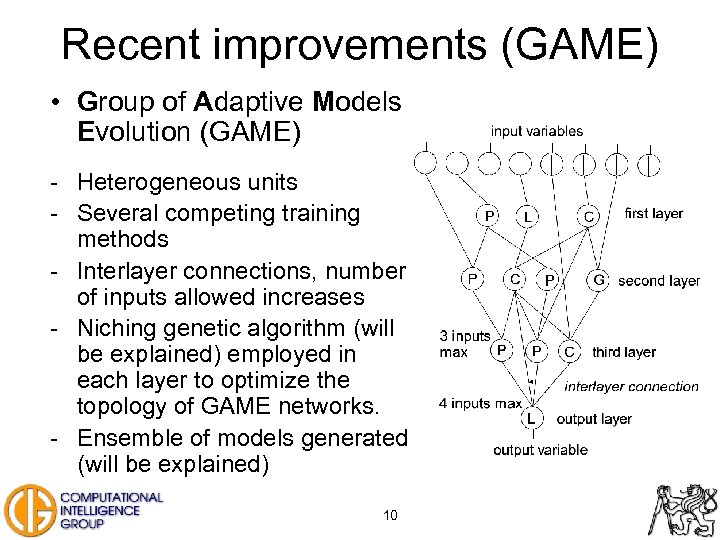
Recent improvements (GAME) • Group of Adaptive Models Evolution (GAME) - Heterogeneous units - Several competing training methods - Interlayer connections, number of inputs allowed increases - Niching genetic algorithm (will be explained) employed in each layer to optimize the topology of GAME networks. - Ensemble of models generated (will be explained) 10
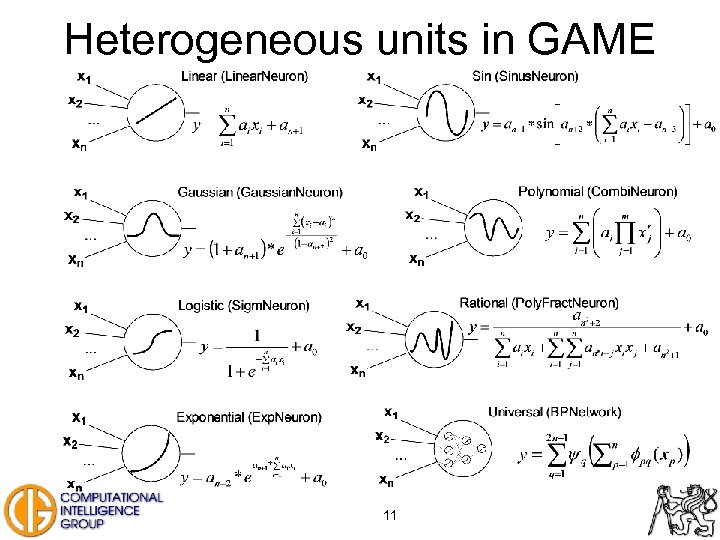
Heterogeneous units in GAME 11
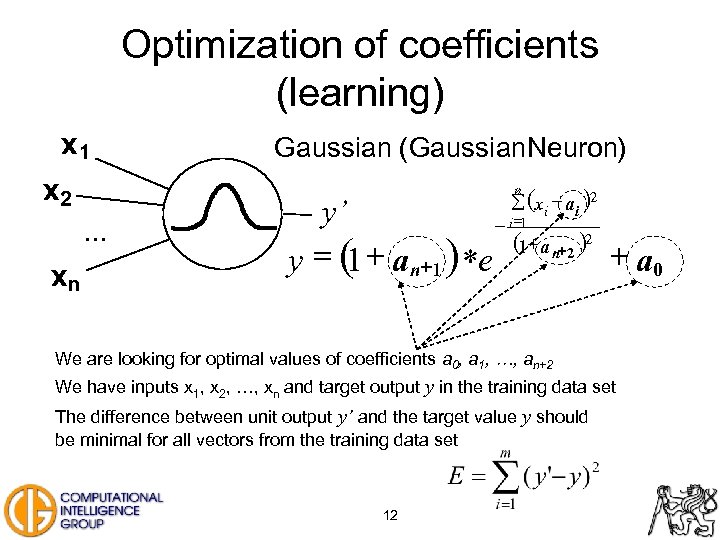
Optimization of coefficients (learning) x 1 x 2. . . xn Gaussian (Gaussian. Neuron) å (x i - a i )2 n y’ y = ( + an+1 ) *e 1 - i =1 (1+ a n+2 )2 + a 0 We are looking for optimal values of coefficients a 0, a 1, …, an+2 We have inputs x 1, x 2, …, xn and target output y in the training data set The difference between unit output y’ and the target value y should be minimal for all vectors from the training data set 12
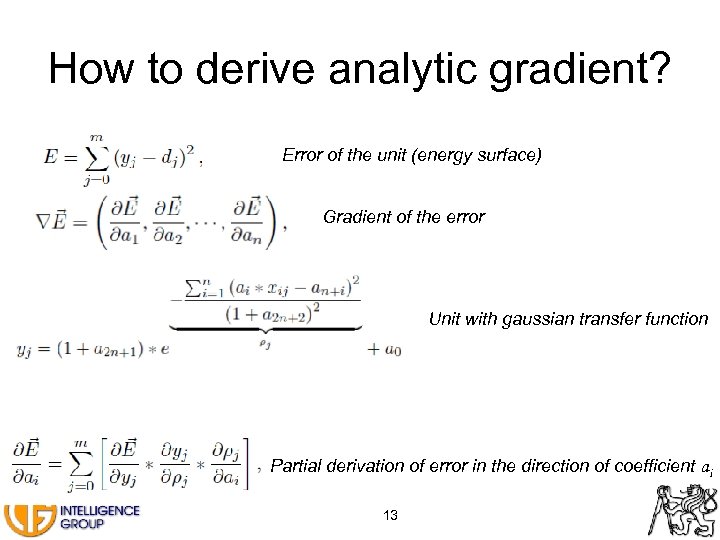
How to derive analytic gradient? Error of the unit (energy surface) Gradient of the error Unit with gaussian transfer function Partial derivation of error in the direction of coefficient ai 13
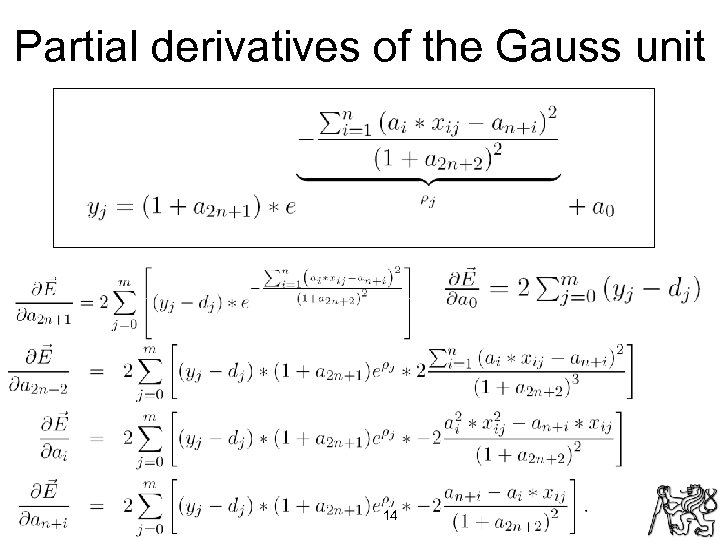
Partial derivatives of the Gauss unit 14
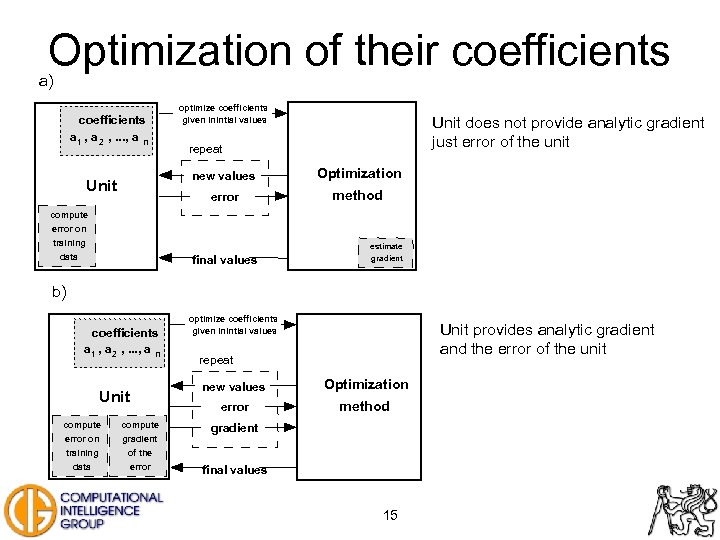
Optimization of their coefficients a) coefficients a 1 , a 2 , . . . , a n optimize coefficients given inintial values Unit does not provide analytic gradient just error of the unit repeat new values Optimization error Unit method compute error on training estimate data final values gradient b) coefficients a 1 , a 2 , . . . , a n Unit compute error on gradient training error Unit provides analytic gradient and the error of the unit repeat new values Optimization error method of the data optimize coefficients given inintial values gradient final values 15
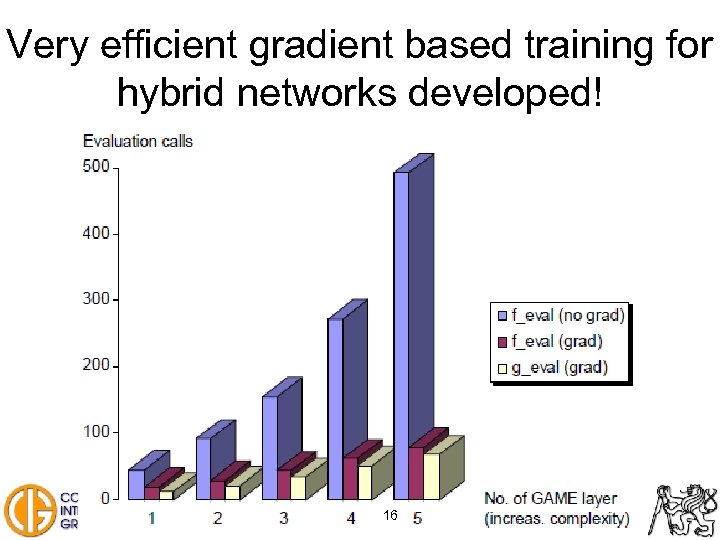
Very efficient gradient based training for hybrid networks developed! 16
Outline of the talk … • Introduction, FAKE GAME framework, architecture of GAME • GAME – niching genetic algorithm • GAME – ensemble methods – Trying to improve accuracy • GAME – ensemble methods – Models’ quality – Credibility estimation 17
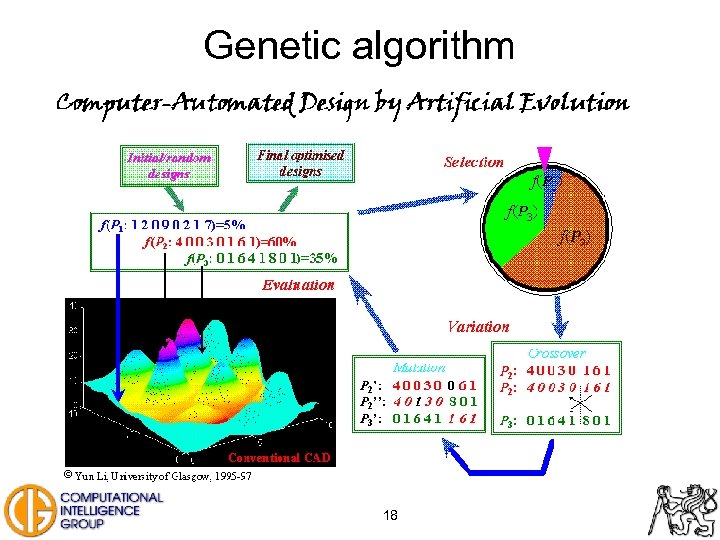
Genetic algorithm 18
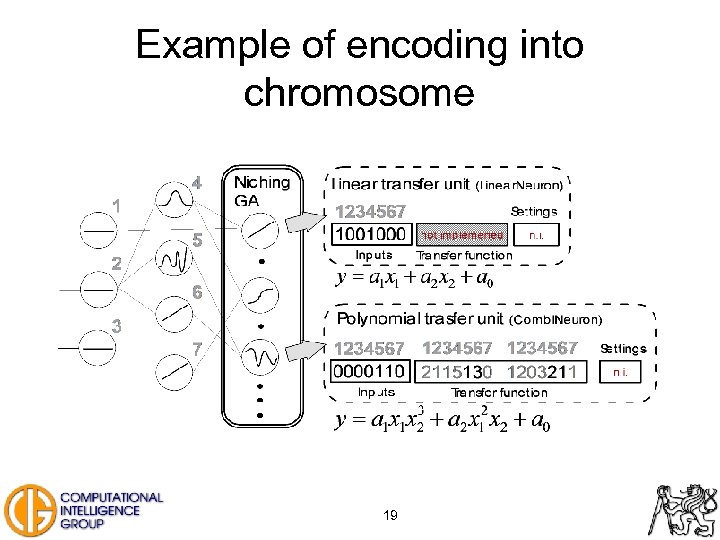
Example of encoding into chromosome 19
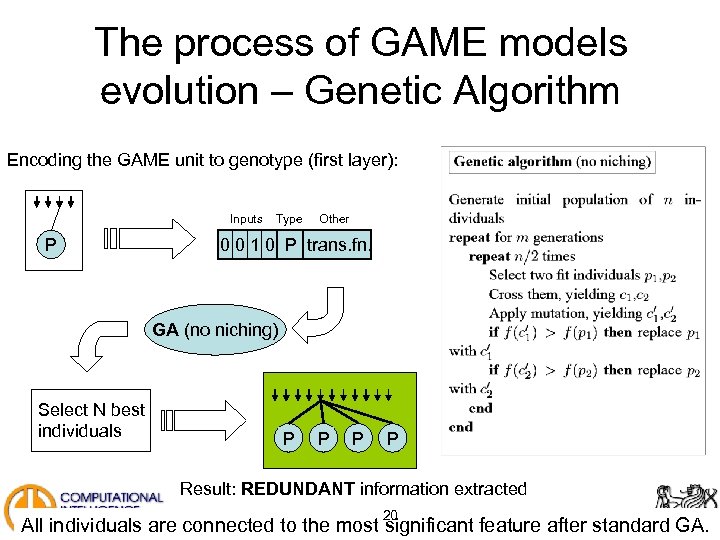
The process of GAME models evolution – Genetic Algorithm Encoding the GAME unit to genotype (first layer): Inputs P Type Other 0 0 1 0 P trans. fn. GA (no niching) Select N best individuals P P Result: REDUNDANT information extracted 20 All individuals are connected to the most significant feature after standard GA.
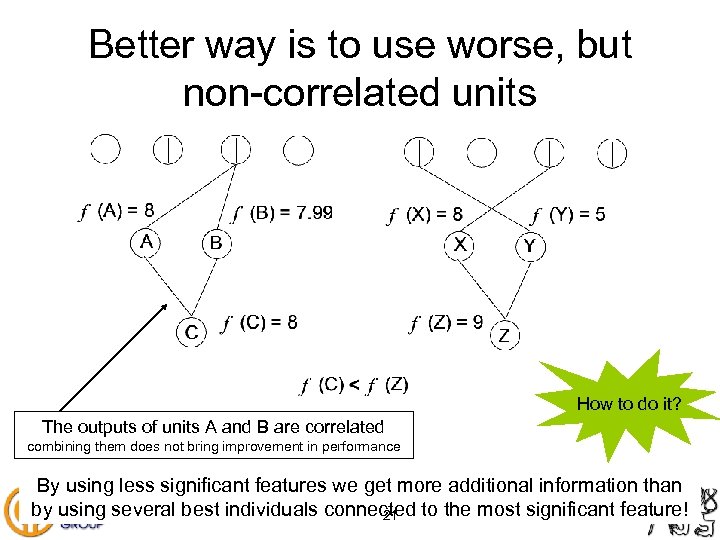
Better way is to use worse, but non-correlated units How to do it? The outputs of units A and B are correlated combining them does not bring improvement in performance By using less significant features we get more additional information than by using several best individuals connected to the most significant feature! 21
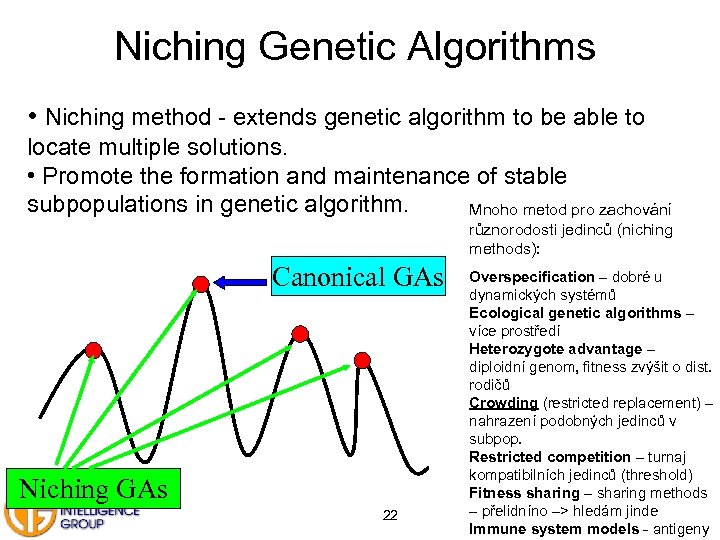
Niching Genetic Algorithms • Niching method - extends genetic algorithm to be able to locate multiple solutions. • Promote the formation and maintenance of stable subpopulations in genetic algorithm. Mnoho metod pro zachování různorodosti jedinců (niching methods): Canonical GAs Niching GAs 22 Overspecification – dobré u dynamických systémů Ecological genetic algorithms – více prostředí Heterozygote advantage – diploidní genom, fitness zvýšit o dist. rodičů Crowding (restricted replacement) – nahrazení podobných jedinců v subpop. Restricted competition – turnaj kompatibilních jedinců (threshold) Fitness sharing – sharing methods – přelidníno –> hledám jinde Immune system models - antigeny
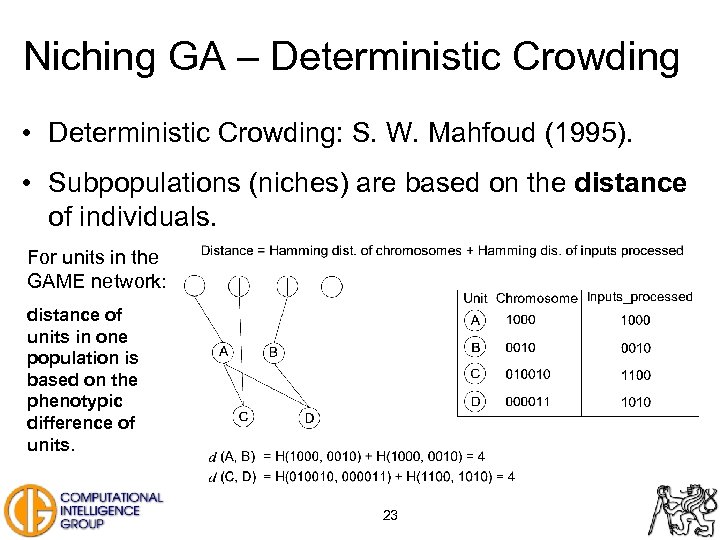
Niching GA – Deterministic Crowding • Deterministic Crowding: S. W. Mahfoud (1995). • Subpopulations (niches) are based on the distance of individuals. For units in the GAME network: distance of units in one population is based on the phenotypic difference of units. 23
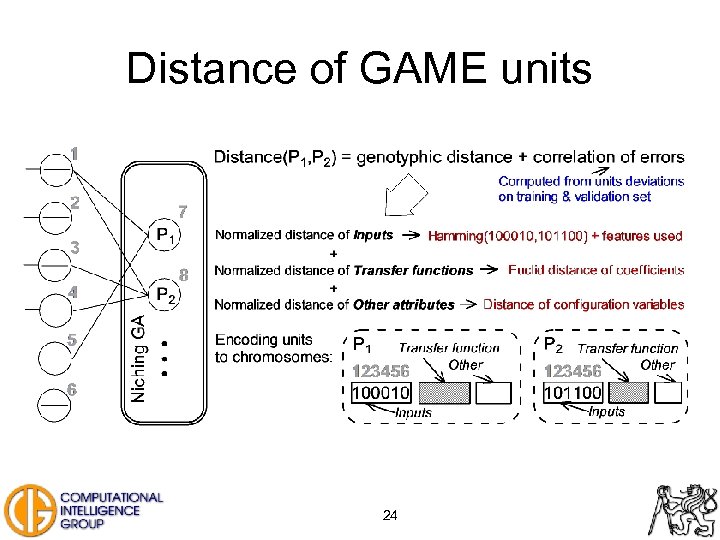
Distance of GAME units 24
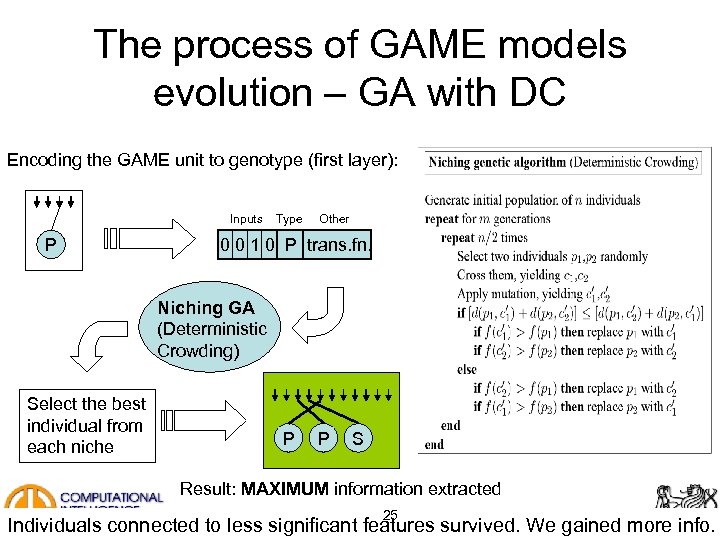
The process of GAME models evolution – GA with DC Encoding the GAME unit to genotype (first layer): Inputs P Type Other 0 0 1 0 P trans. fn. Niching GA (Deterministic Crowding) Select the best individual from each niche P P S Result: MAXIMUM information extracted 25 Individuals connected to less significant features survived. We gained more info.
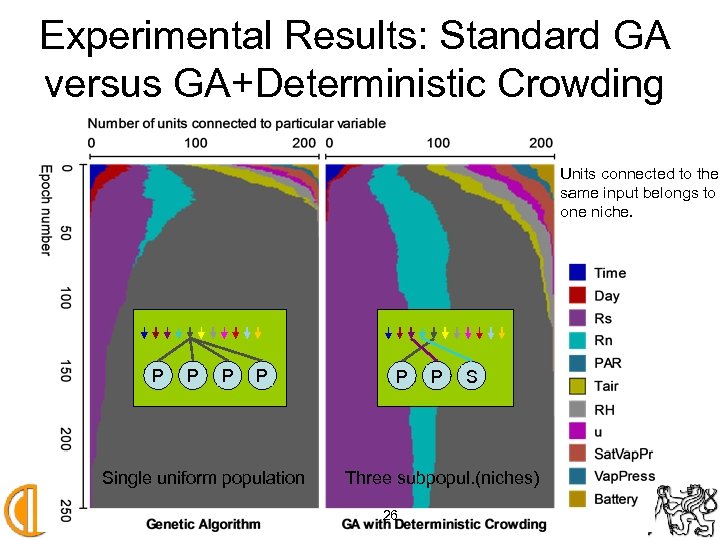
Experimental Results: Standard GA versus GA+Deterministic Crowding Units connected to the same input belongs to one niche. P P Single uniform population P P S Three subpopul. (niches) 26
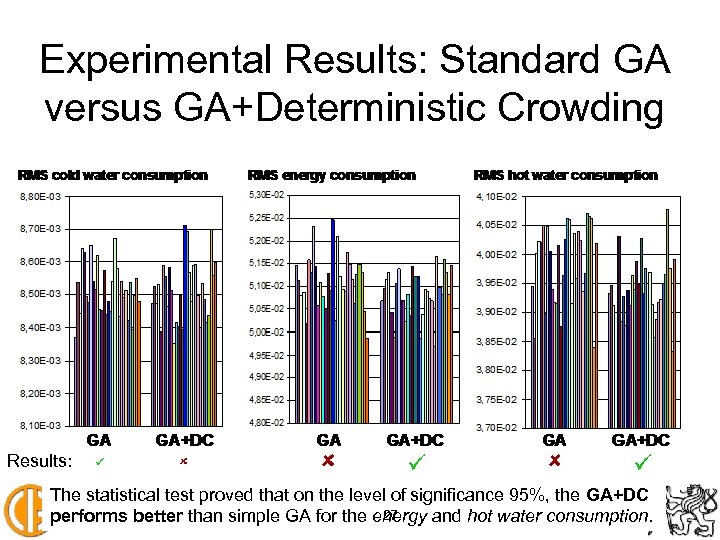
Experimental Results: Standard GA versus GA+Deterministic Crowding Results: ü ü ü The statistical test proved that on the level of significance 95%, the GA+DC 27 performs better than simple GA for the energy and hot water consumption.
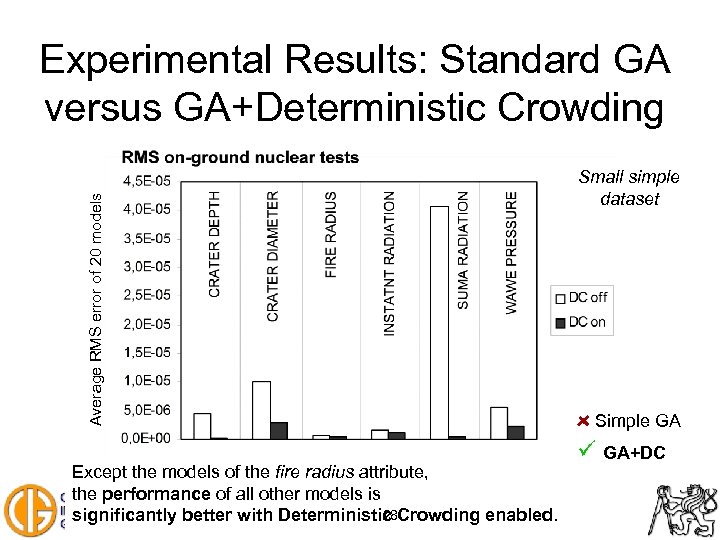
Average RMS error of 20 models Experimental Results: Standard GA versus GA+Deterministic Crowding Except the models of the fire radius attribute, the performance of all other models is 28 significantly better with Deterministic Crowding enabled. Small simple dataset Simple GA ü GA+DC
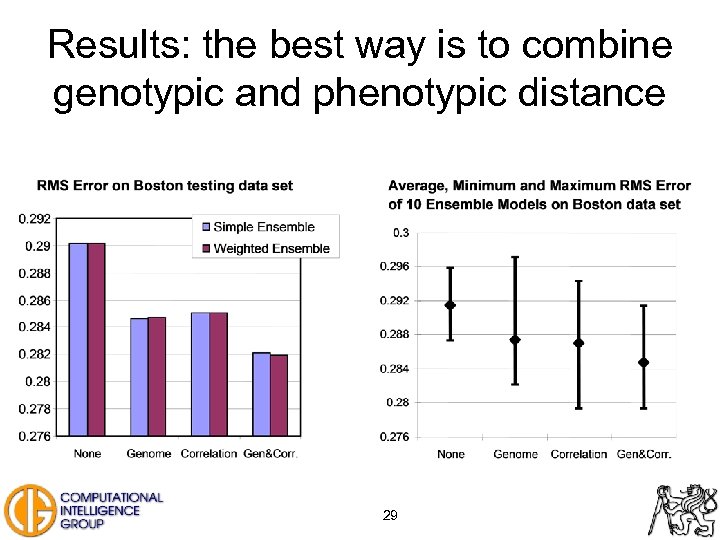
Results: the best way is to combine genotypic and phenotypic distance 29
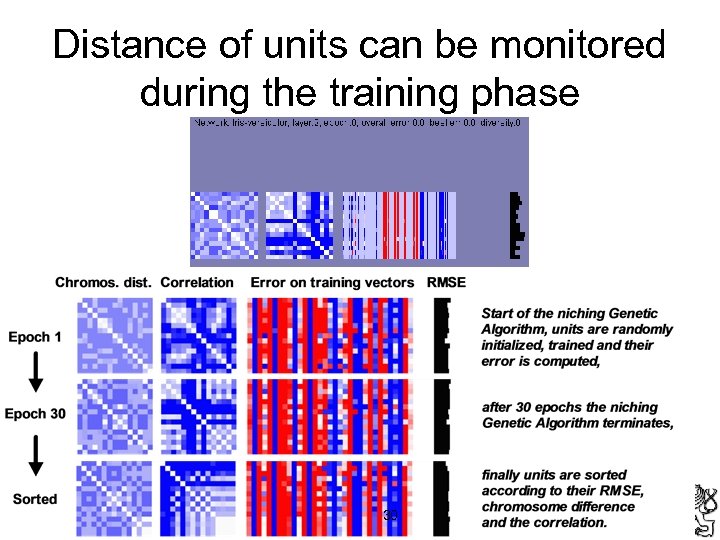
Distance of units can be monitored during the training phase 30
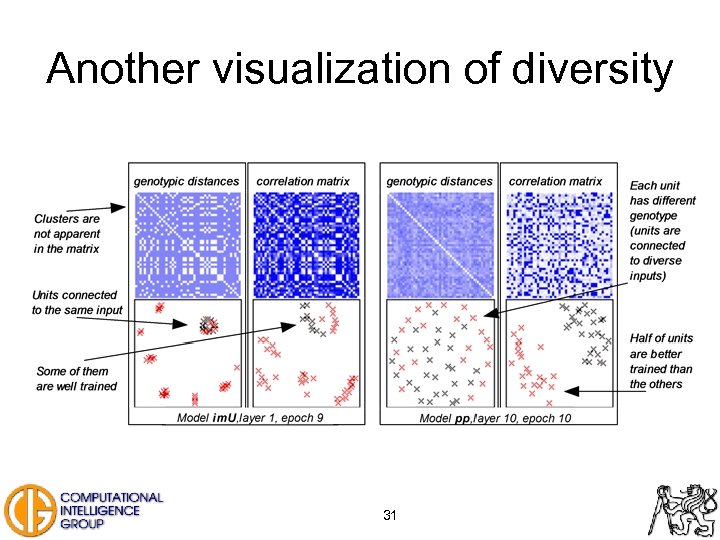
Another visualization of diversity 31
GA or niching GA? • Genetic search is more effective than exhaustive search • The use of niching genetic algorithm (e. g. with Deterministic Crowding) is beneficial: – More accurate models are generated – Feature ranking can be derived – Non-correlated units (active neurons) can be evolved • The crossover of active neurons in transfer function brings further improvements 32
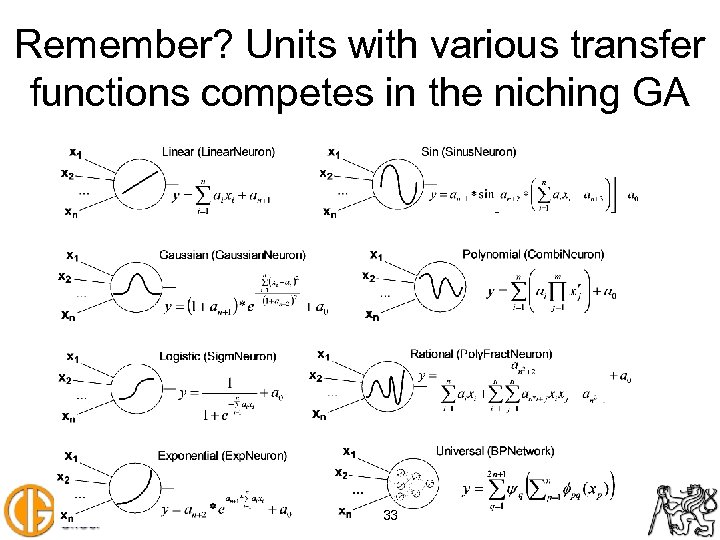
Remember? Units with various transfer functions competes in the niching GA 33
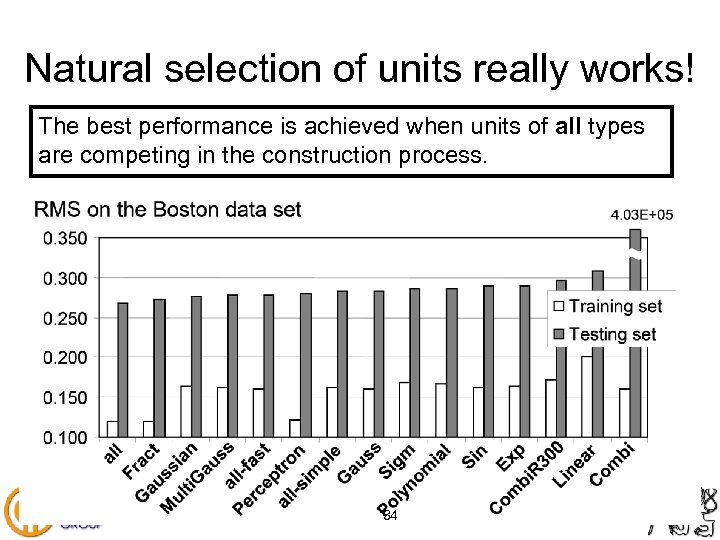
Natural selection of units really works! The best performance is achieved when units of all types are competing in the construction process. 34
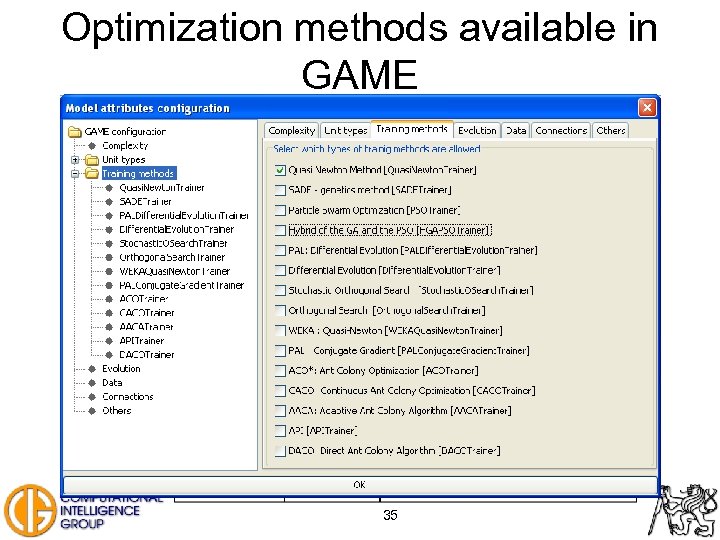
Optimization methods available in GAME 35
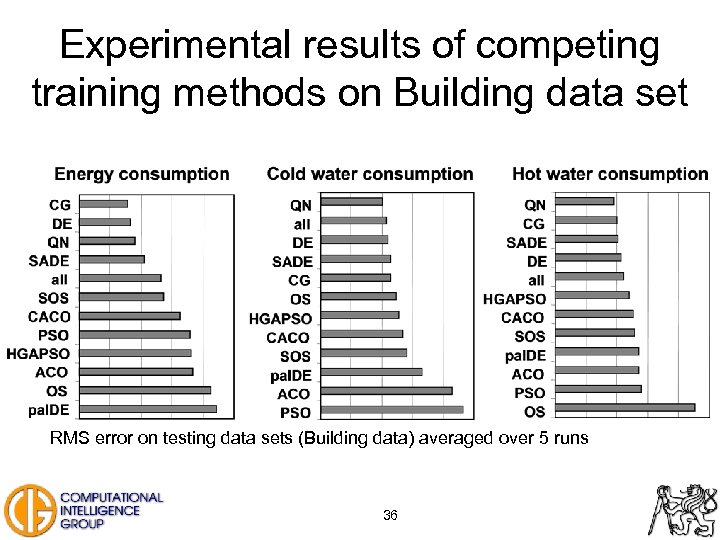
Experimental results of competing training methods on Building data set RMS error on testing data sets (Building data) averaged over 5 runs 36
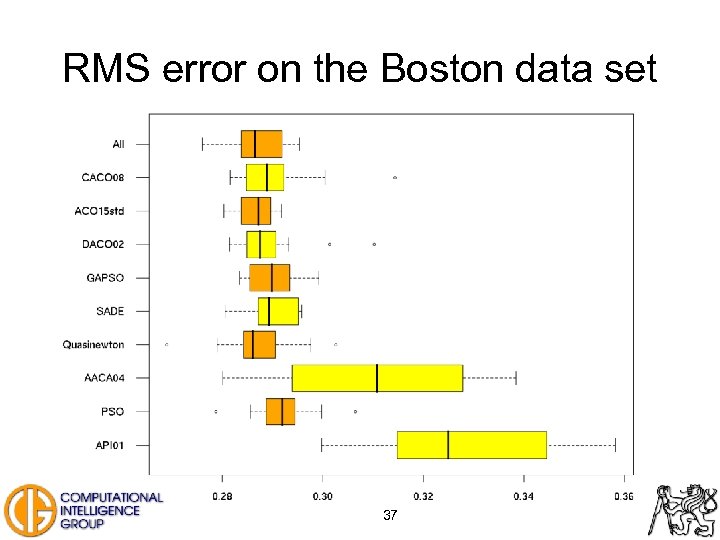
RMS error on the Boston data set 37
![Classification accuracy [%] on the Spiral data set 38](https://present5.com/presentation/c5d5990a7070786648d95d7e5b3ce962/image-38.jpg "Classification accuracy [%] on the Spiral data set 38")
Classification accuracy [%] on the Spiral data set 38
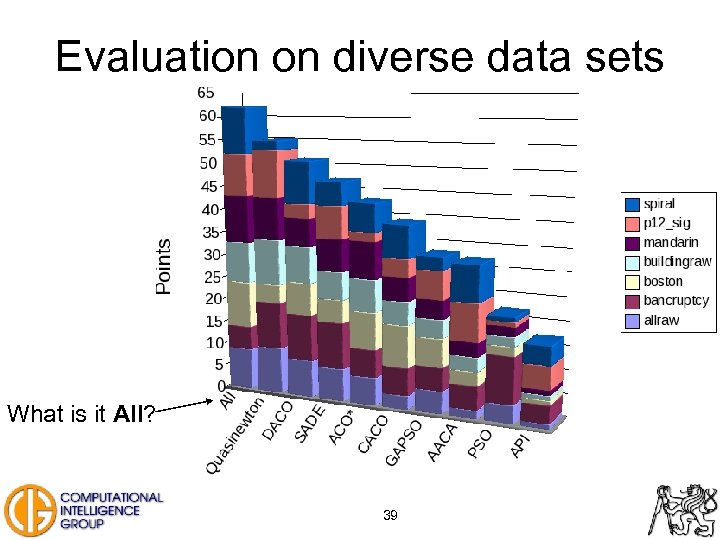
Evaluation on diverse data sets What is it All? 39
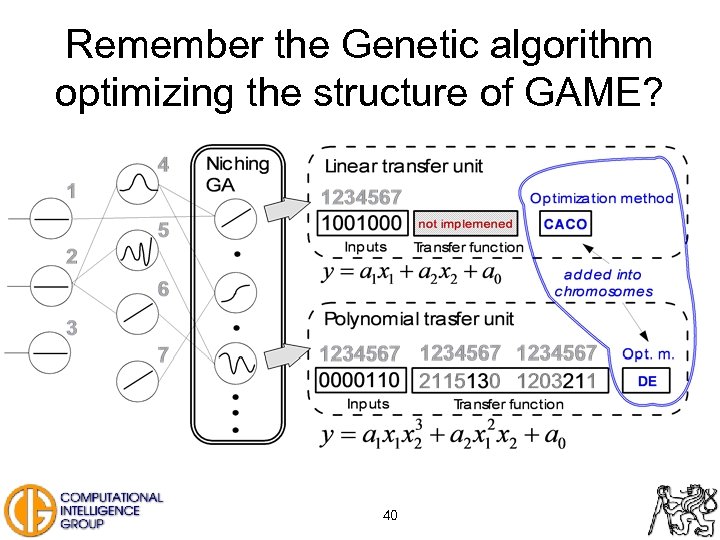
Remember the Genetic algorithm optimizing the structure of GAME? 40
Outline of the talk … • Introduction, FAKE GAME framework, architecture of GAME • GAME – niching genetic algorithm • GAME – ensemble methods – Trying to improve accuracy • GAME – ensemble methods – Models’ quality – Credibility estimation 41
Ensemble models – why to use it? • Hot topic in machine learning communities • Successfully applied in several areas such as: – – – – Face recognition [Gutta 96, Huang 00] Optical character recognition [Drucker 93, Mao 98] Scientific image analysis [Cherkauer 96] Medical diagnosis [Cunningham 00, Zhou 02] Seismic signal classification [Shimshoni 98] Drug discovery [Langdon 02] Feature extraction [Brown 02] 42
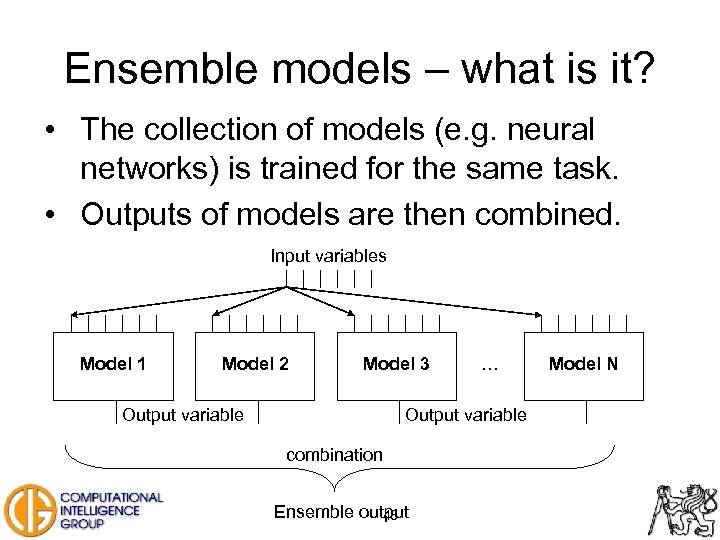
Ensemble models – what is it? • The collection of models (e. g. neural networks) is trained for the same task. • Outputs of models are then combined. Input variables Model 1 Model 2 Model 3 Output variable … Output variable combination Ensemble output 43 Model N
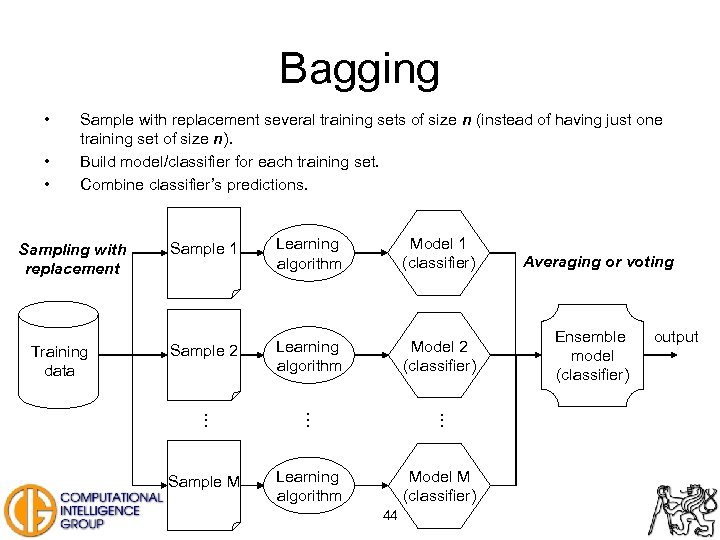
Bagging • • • Sample with replacement several training sets of size n (instead of having just one training set of size n). Build model/classifier for each training set. Combine classifier’s predictions. Sampling with replacement Training data Sample 1 Learning algorithm Model 1 (classifier) Sample 2 Learning algorithm Model 2 (classifier) . . Sample M Learning algorithm Model M (classifier) 44 Averaging or voting Ensemble model (classifier) output
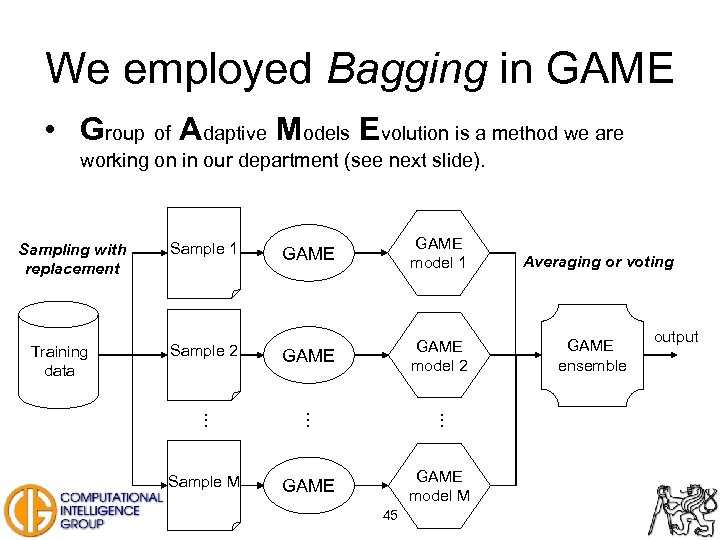
We employed Bagging in GAME • Group of Adaptive Models Evolution is a method we are working on in our department (see next slide). Sampling with replacement Training data GAME model 1 Sample 2 GAME model 2 . . Sample M GAME model M Sample 1 45 Averaging or voting GAME ensemble output
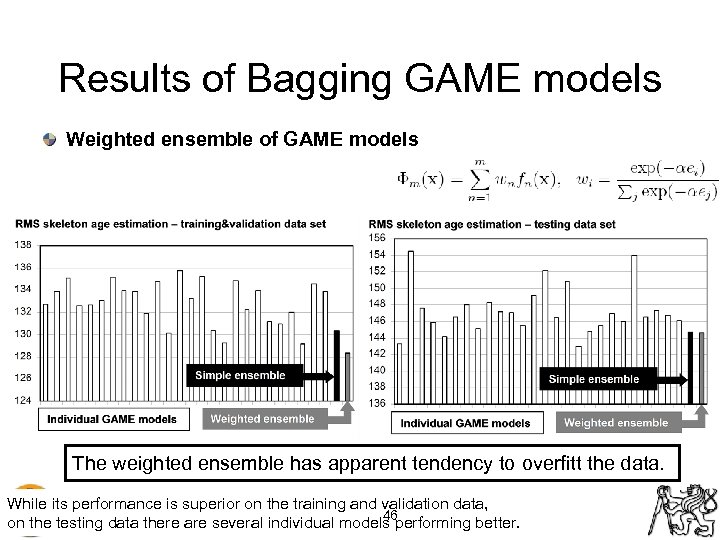
Results of Bagging GAME models Weighted ensemble of GAME models The weighted ensemble has apparent tendency to overfitt the data. While its performance is superior on the training and validation data, 46 on the testing data there are several individual models performing better.
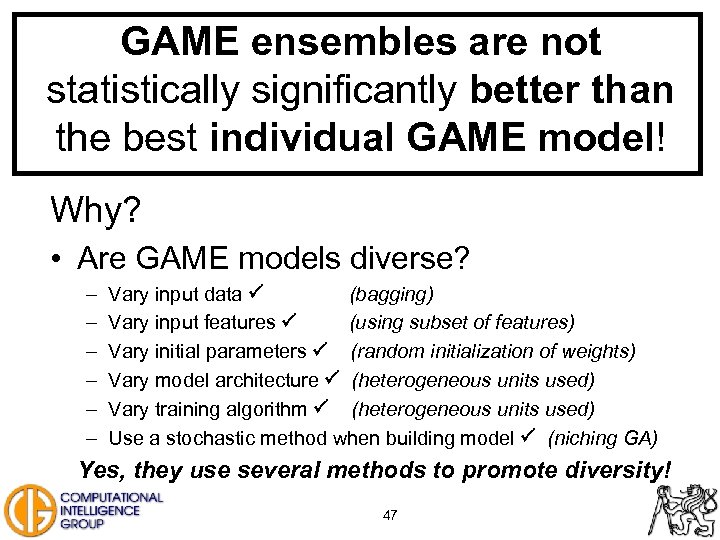
GAME ensembles are not statistically significantly better than the best individual GAME model! Why? • Are GAME models diverse? – – – Vary input data (bagging) Vary input features (using subset of features) Vary initial parameters (random initialization of weights) Vary model architecture (heterogeneous units used) Vary training algorithm (heterogeneous units used) Use a stochastic method when building model (niching GA) Yes, they use several methods to promote diversity! 47
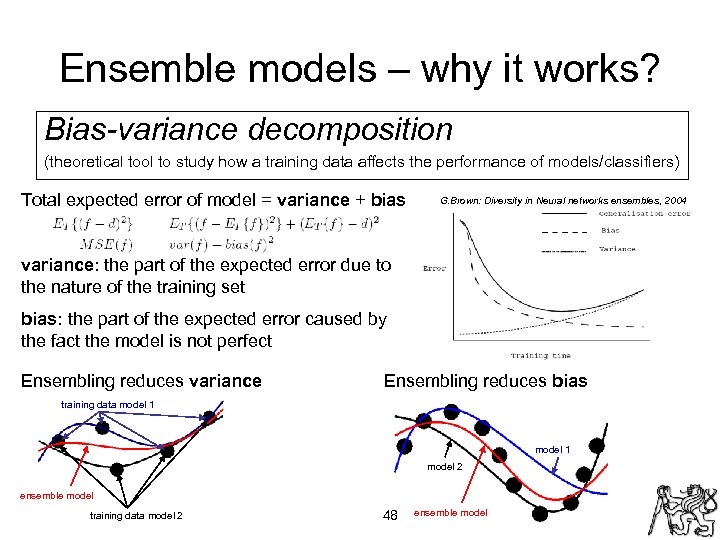
Ensemble models – why it works? Bias-variance decomposition (theoretical tool to study how a training data affects the performance of models/classifiers) Total expected error of model = variance + bias G. Brown: Diversity in Neural networks ensembles, 2004 variance: the part of the expected error due to the nature of the training set bias: the part of the expected error caused by the fact the model is not perfect Ensembling reduces variance Ensembling reduces bias training data model 1 model 2 ensemble model training data model 2 48 ensemble model
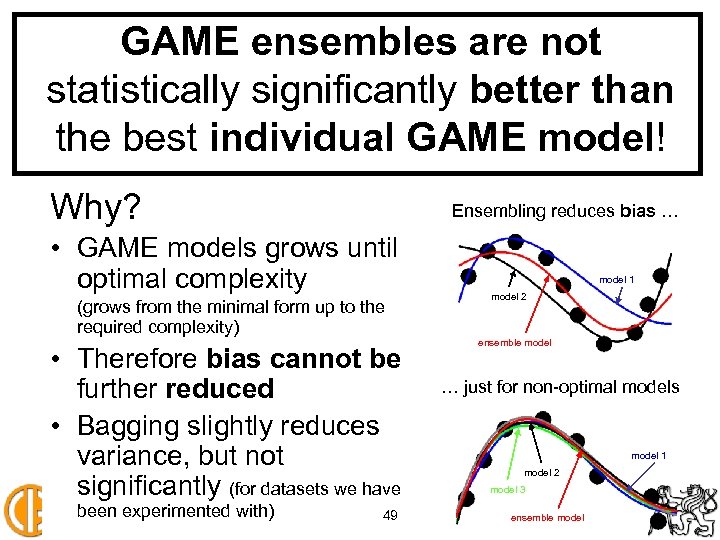
GAME ensembles are not statistically significantly better than the best individual GAME model! Why? Ensembling reduces bias … • GAME models grows until optimal complexity (grows from the minimal form up to the required complexity) • Therefore bias cannot be further reduced • Bagging slightly reduces variance, but not significantly (for datasets we have been experimented with) 49 model 1 model 2 ensemble model … just for non-optimal models model 1 model 2 model 3 ensemble model
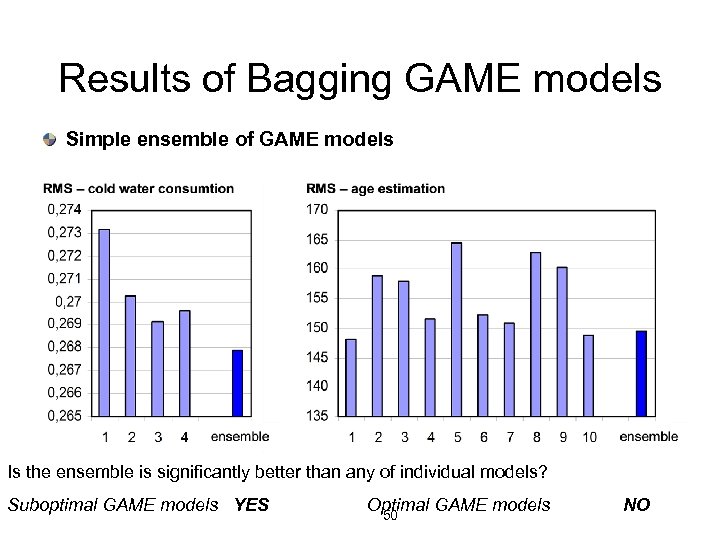
Results of Bagging GAME models Simple ensemble of GAME models Is the ensemble is significantly better than any of individual models? Suboptimal GAME models YES Optimal GAME models 50 NO
Outline of the talk … • Introduction, FAKE GAME framework, architecture of GAME • GAME – niching genetic algorithm • GAME – ensemble methods – Trying to improve accuracy • GAME – ensemble methods – Models’ quality – Credibility estimation 51
Ensembles can estimate credibility • We found out that ensembling GAME models does not further improve accuracy of modelling. • Why to use ensemble then? • There is one big advantage that ensemble models can provide: Using ensemble of models we can estimate credibility for any input vector. • Ensembles are starting to be used in this manner in several real world applications: 52
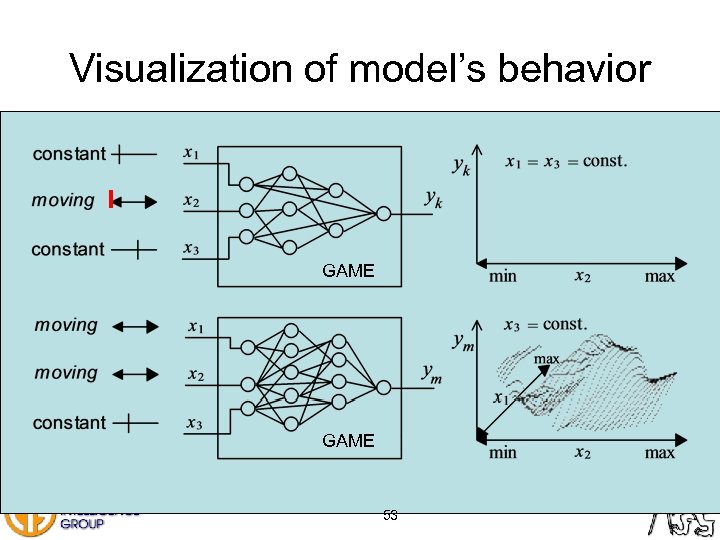
Visualization of model’s behavior GAME 53
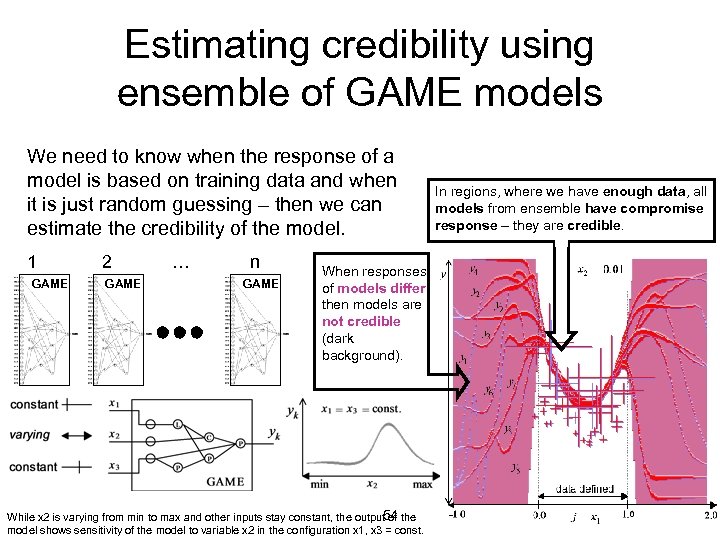
Estimating credibility using ensemble of GAME models We need to know when the response of a model is based on training data and when it is just random guessing – then we can estimate the credibility of the model. 1 GAME 2 GAME … n GAME When responses of models differ then models are not credible (dark background). 54 While x 2 is varying from min to max and other inputs stay constant, the output of the model shows sensitivity of the model to variable x 2 in the configuration x 1, x 3 = const. In regions, where we have enough data, all models from ensemble have compromise response – they are credible.
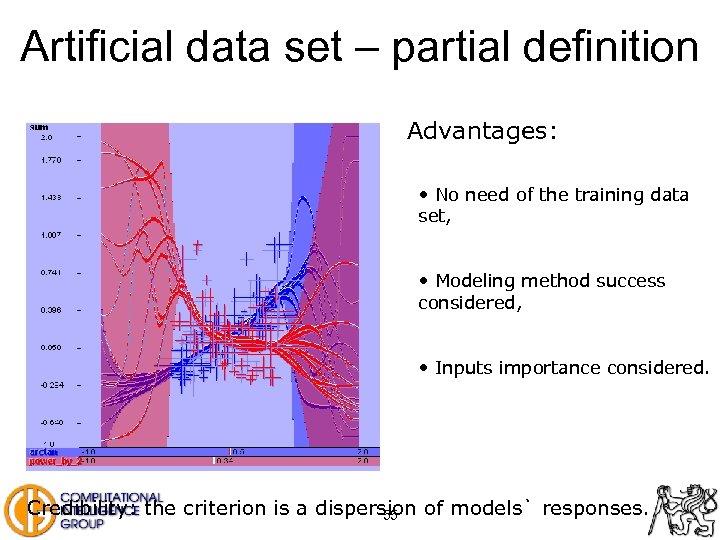
Artificial data set – partial definition Advantages: • No need of the training data set, • Modeling method success considered, • Inputs importance considered. Credibility: the criterion is a dispersion of models` responses. 55
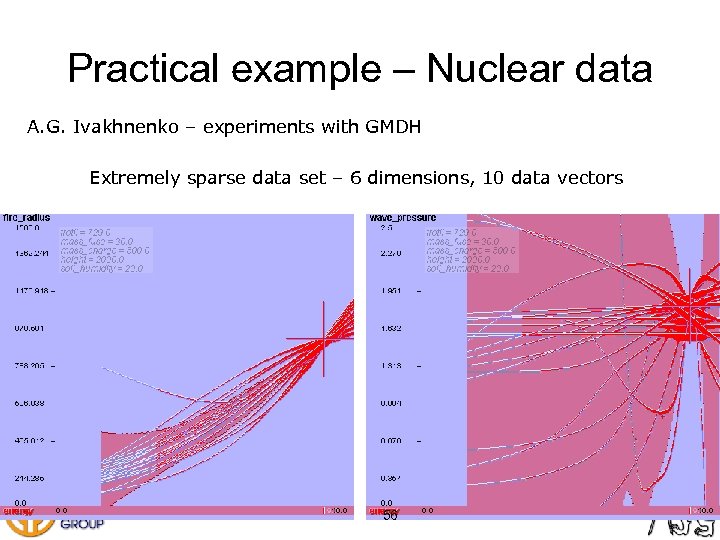
Practical example – Nuclear data A. G. Ivakhnenko – experiments with GMDH Extremely sparse data set – 6 dimensions, 10 data vectors 56
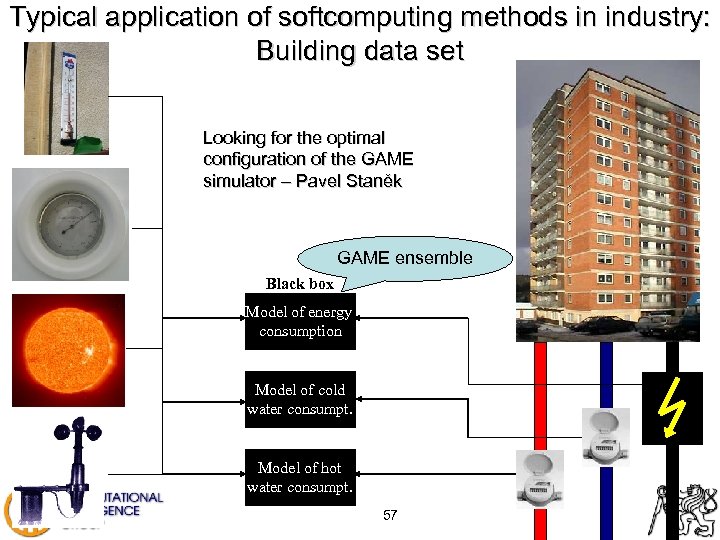
Typical application of softcomputing methods in industry: Building data set Looking for the optimal configuration of the GAME simulator – Pavel Staněk GAME ensemble Black box Model of energy consumption Model of cold water consumpt. Model of hot water consumpt. 57
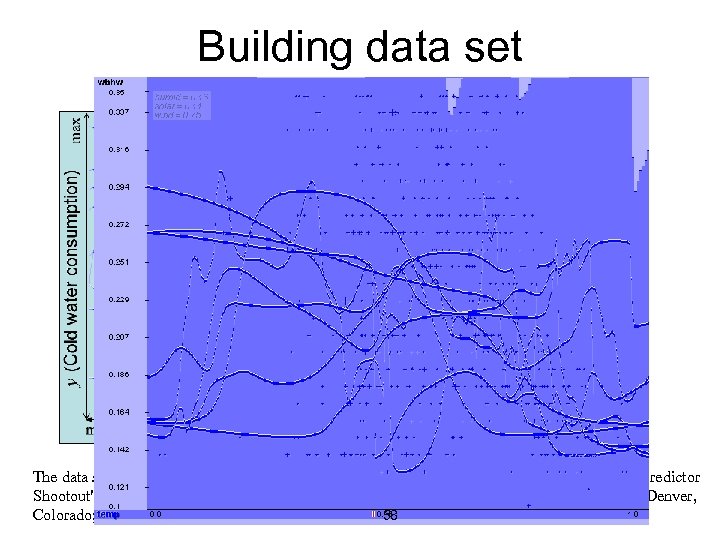
Building data set The data set is problem A of the "Great energy predictor shootout" contest. "The Great Energy Predictor Shootout" - The First Building Data Analysis And Prediction Competition; ASHRAE Meeting; Denver, 58 Colorado; June, 1993;
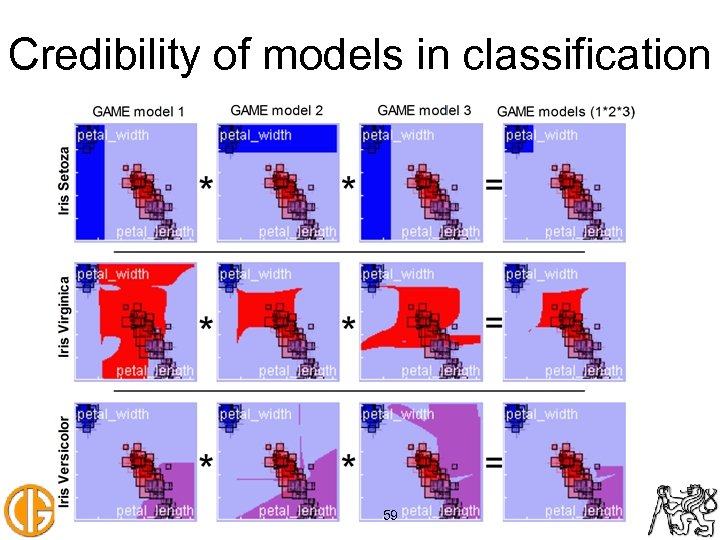
Credibility of models in classification 59
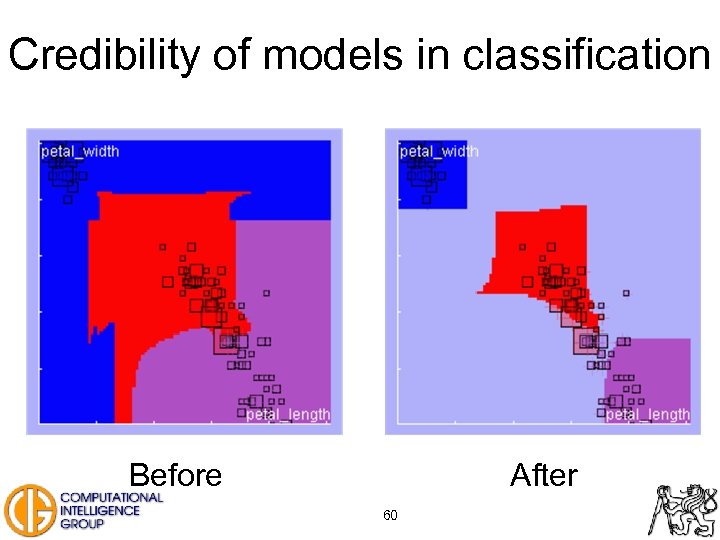
Credibility of models in classification Before After 60
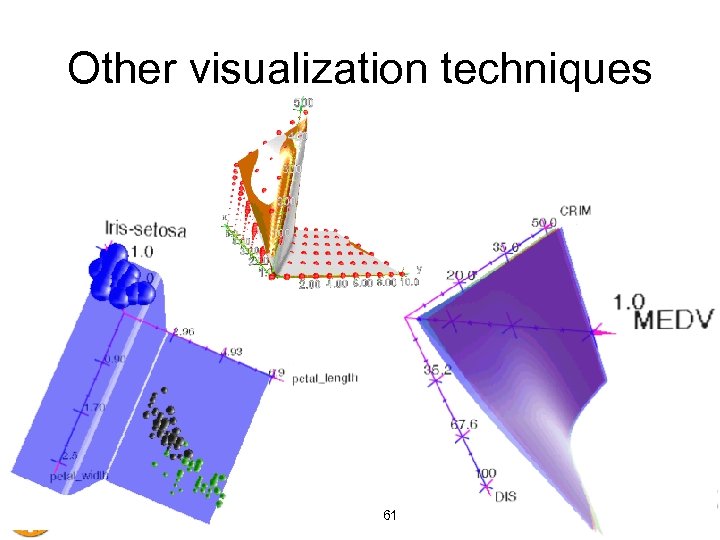
Other visualization techniques 61
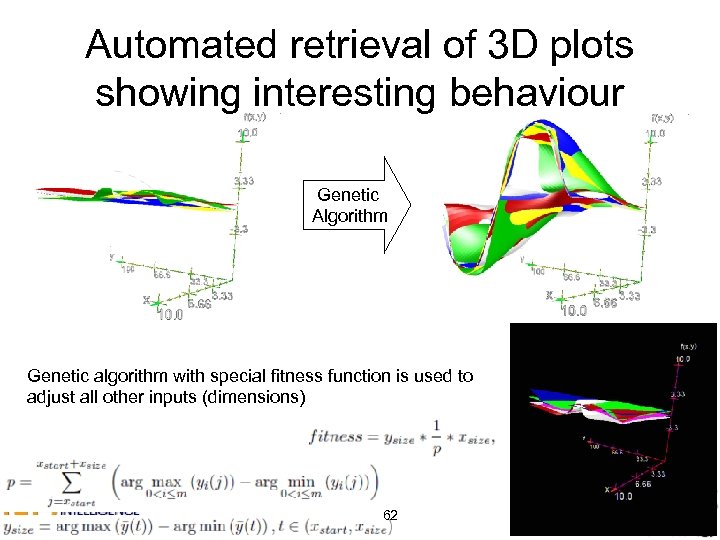
Automated retrieval of 3 D plots showing interesting behaviour Genetic Algorithm Genetic algorithm with special fitness function is used to adjust all other inputs (dimensions) 62
Conclusion New quality in modeling: • GAME models adapt to the data set complexity. • Hybrid models more accurate than models with single type of unit • Compromise response of the ensemble indicates valid system states. • Black-box model gives estimation of its accuracy (2, 3 ± 0, 1) • Automated retrieval of “interesting plots” of system behavior • Java application developed – real time simulation of models 63
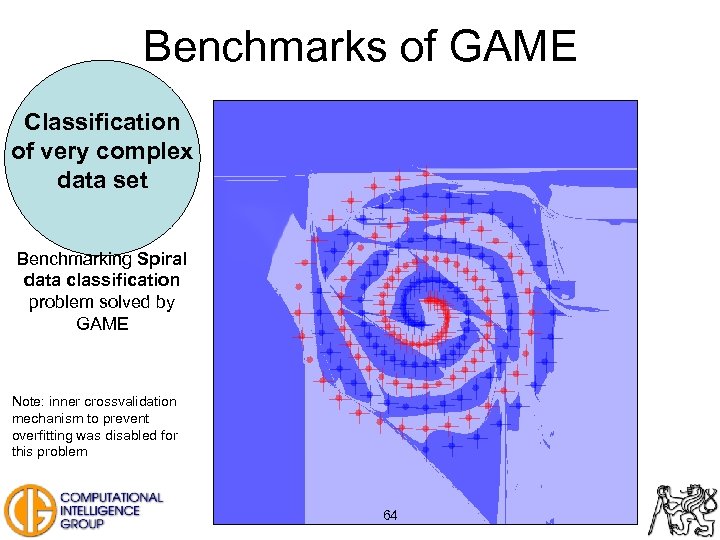
Benchmarks of GAME Classification of very complex data set Benchmarking Spiral data classification problem solved by GAME Note: inner crossvalidation mechanism to prevent overfitting was disabled for this problem 64
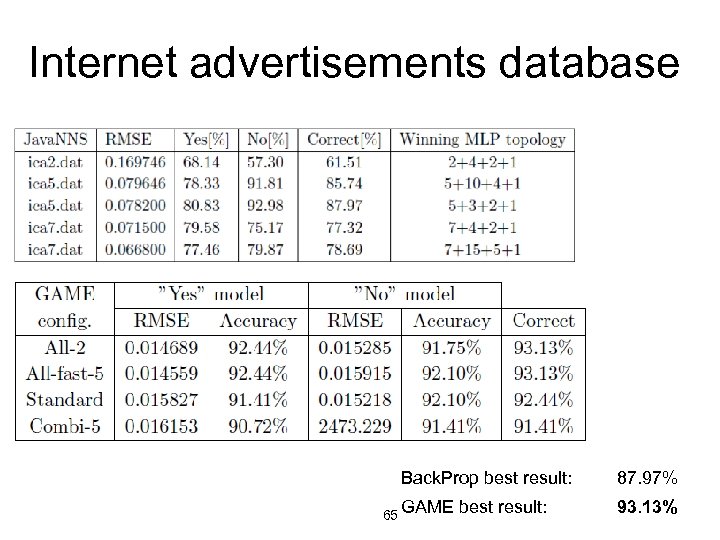
Internet advertisements database Back. Prop best result: 65 GAME best result: 87. 97% 93. 13%
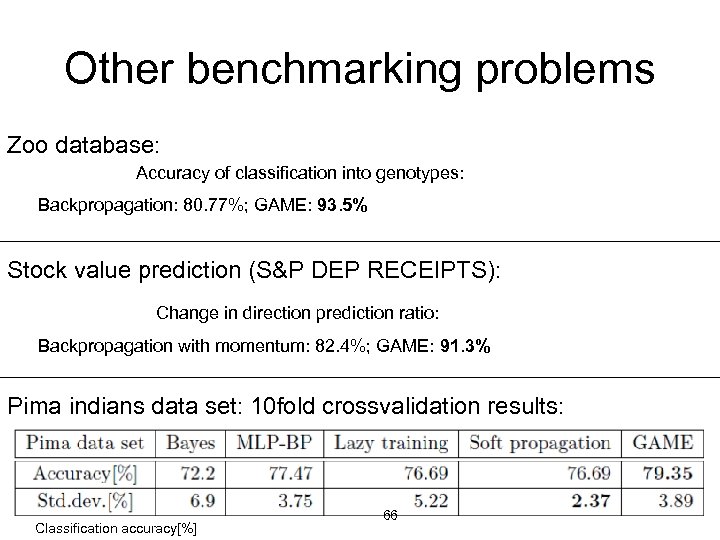
Other benchmarking problems Zoo database: Accuracy of classification into genotypes: Backpropagation: 80. 77%; GAME: 93. 5% Stock value prediction (S&P DEP RECEIPTS): Change in direction prediction ratio: Backpropagation with momentum: 82. 4%; GAME: 91. 3% Pima indians data set: 10 fold crossvalidation results: Classification accuracy[%] 66

Thank you! 67
Скачать презентацию GMDH and FAKE GAME Evolving ensembles of inductive
c5d5990a7070786648d95d7e5b3ce962.ppt