 Скачать презентацию Global Warming and Florida What you can do
664dd48829f3932b6516977ac75bf1df.ppt
- Количество слайдов: 36



Global Warming and Florida; What you can do about it. Mark van Soestbergen International Carbon Bank and Exchange, Inc. UF, School of Building Construction August 29, 2002
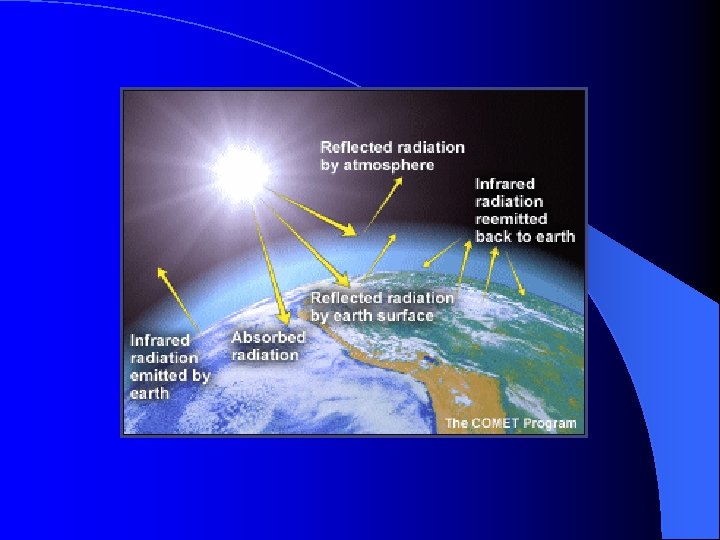
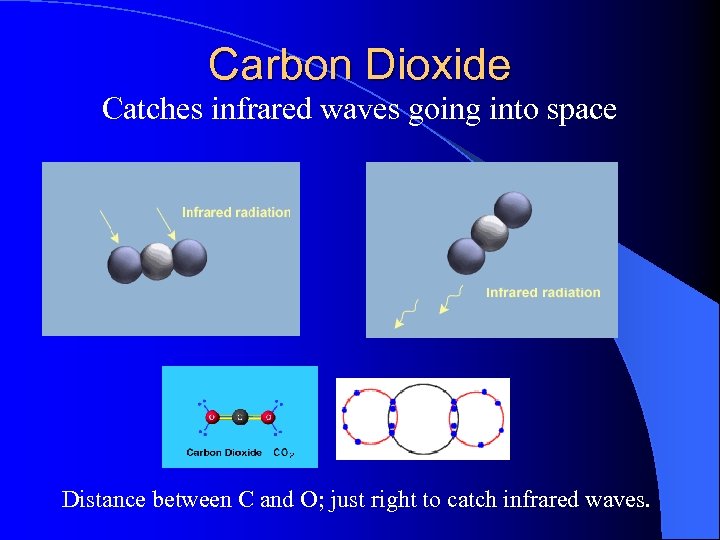
Carbon Dioxide Catches infrared waves going into space Distance between C and O; just right to catch infrared waves.
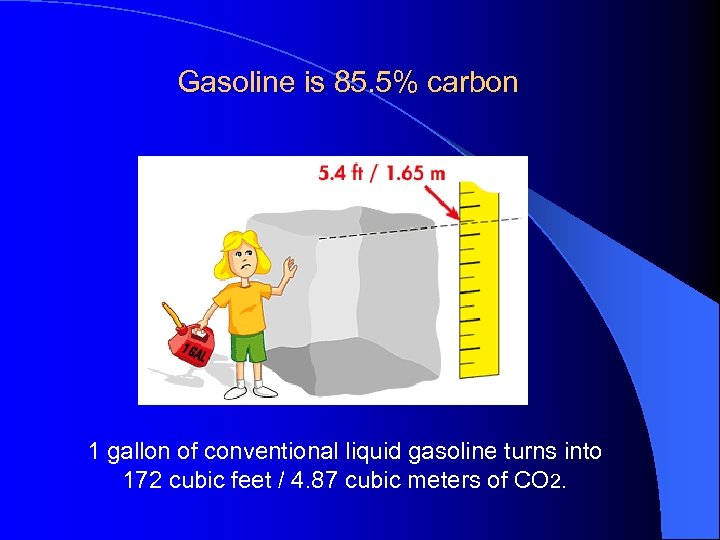
Gasoline is 85. 5% carbon 1 gallon of conventional liquid gasoline turns into 172 cubic feet / 4. 87 cubic meters of CO 2.
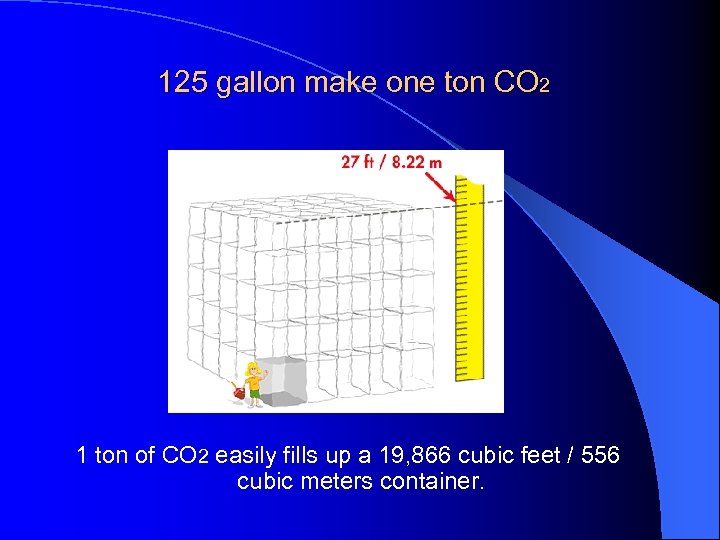
125 gallon make one ton CO 2 1 ton of CO 2 easily fills up a 19, 866 cubic feet / 556 cubic meters container.
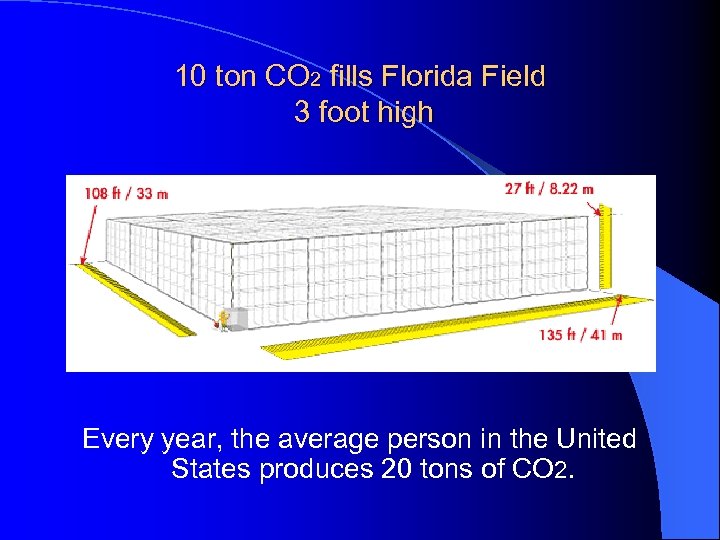
10 ton CO 2 fills Florida Field 3 foot high Every year, the average person in the United States produces 20 tons of CO 2.
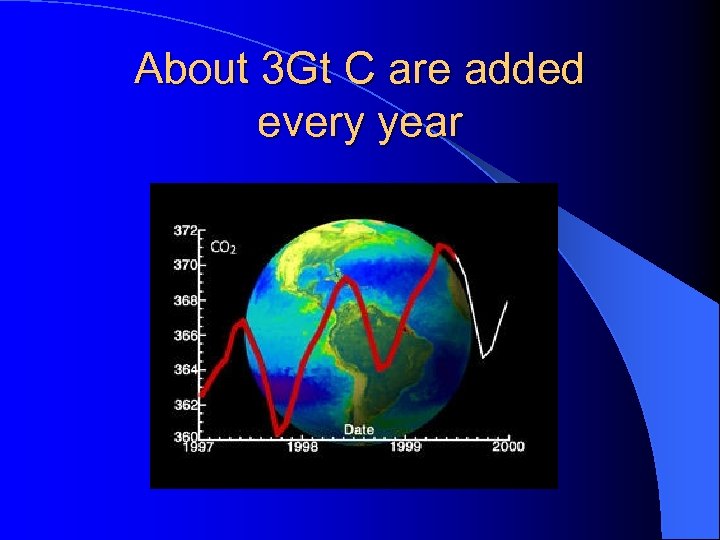
About 3 Gt C are added every year
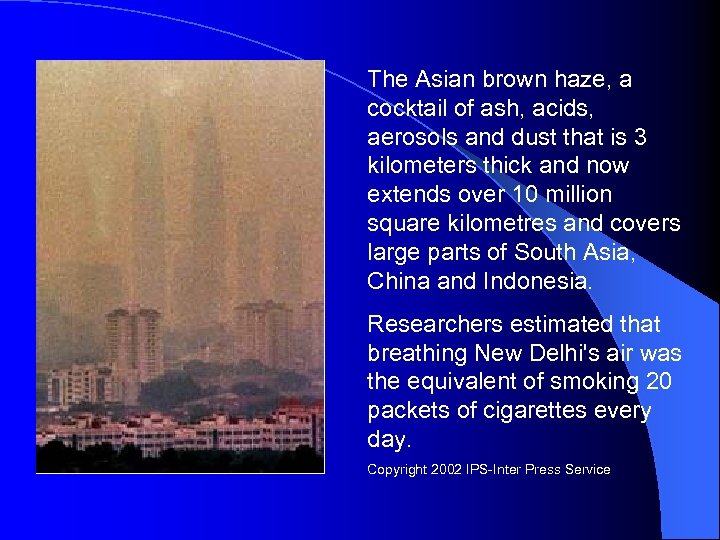
The Asian brown haze, a cocktail of ash, acids, aerosols and dust that is 3 kilometers thick and now extends over 10 million square kilometres and covers large parts of South Asia, China and Indonesia. Researchers estimated that breathing New Delhi's air was the equivalent of smoking 20 packets of cigarettes every day. Copyright 2002 IPS-Inter Press Service
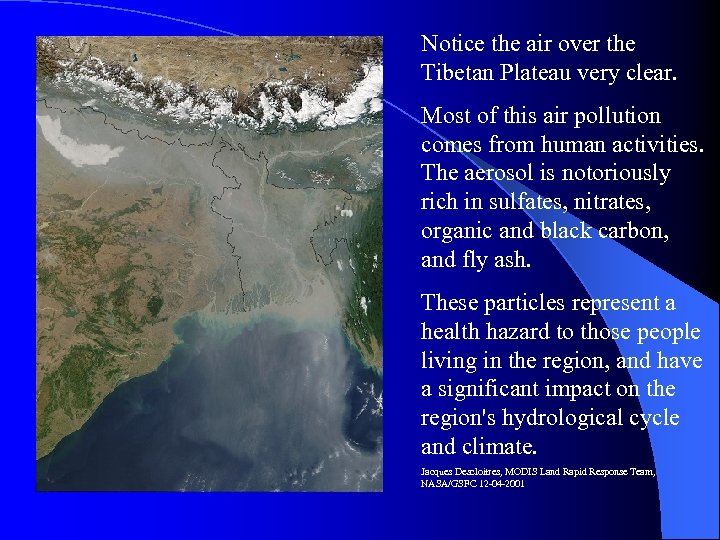
Notice the air over the Tibetan Plateau very clear. Most of this air pollution comes from human activities. The aerosol is notoriously rich in sulfates, nitrates, organic and black carbon, and fly ash. These particles represent a health hazard to those people living in the region, and have a significant impact on the region's hydrological cycle and climate. Jacques Descloitres, MODIS Land Rapid Response Team, NASA/GSFC 12 -04 -2001
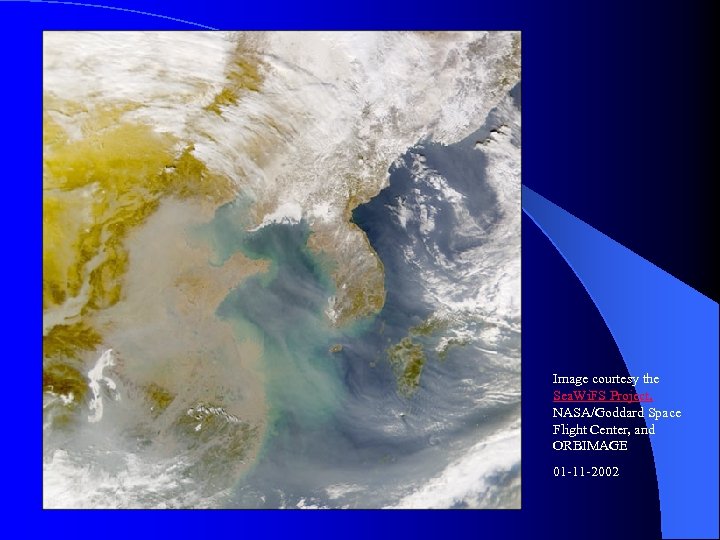
Image courtesy the Sea. Wi. FS Project, NASA/Goddard Space Flight Center, and ORBIMAGE 01 -11 -2002
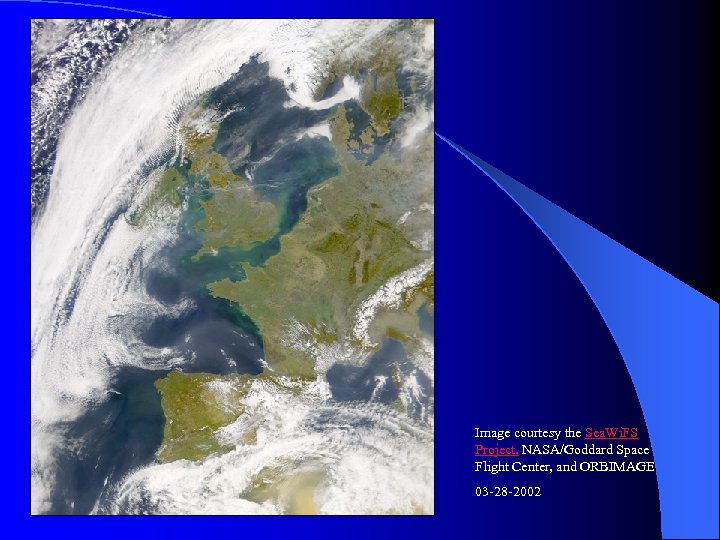
Image courtesy the Sea. Wi. FS Project, NASA/Goddard Space Flight Center, and ORBIMAGE 03 -28 -2002
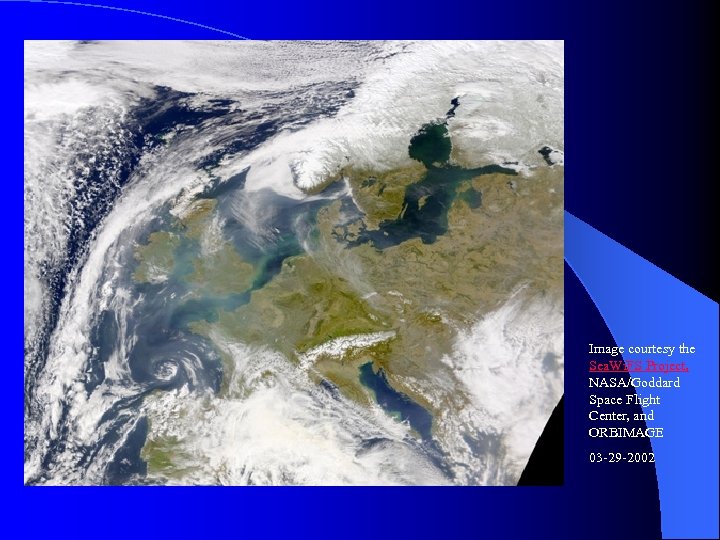
Image courtesy the Sea. Wi. FS Project, NASA/Goddard Space Flight Center, and ORBIMAGE 03 -29 -2002
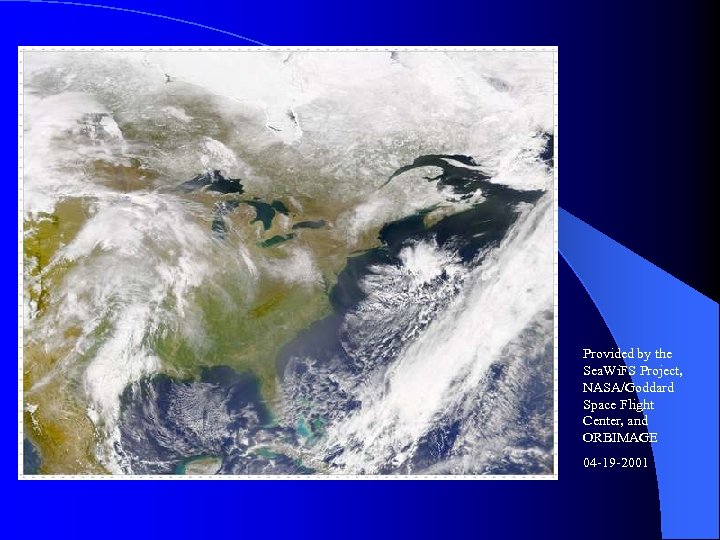
Provided by the Sea. Wi. FS Project, NASA/Goddard Space Flight Center, and ORBIMAGE 04 -19 -2001
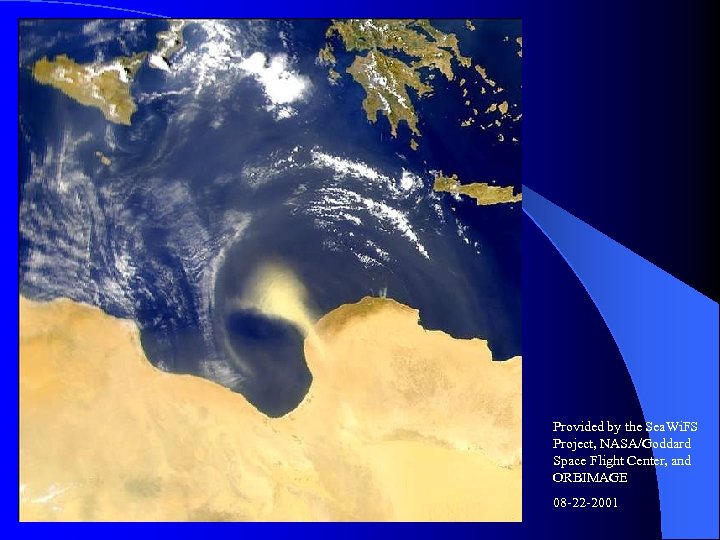
Provided by the Sea. Wi. FS Project, NASA/Goddard Space Flight Center, and ORBIMAGE 08 -22 -2001
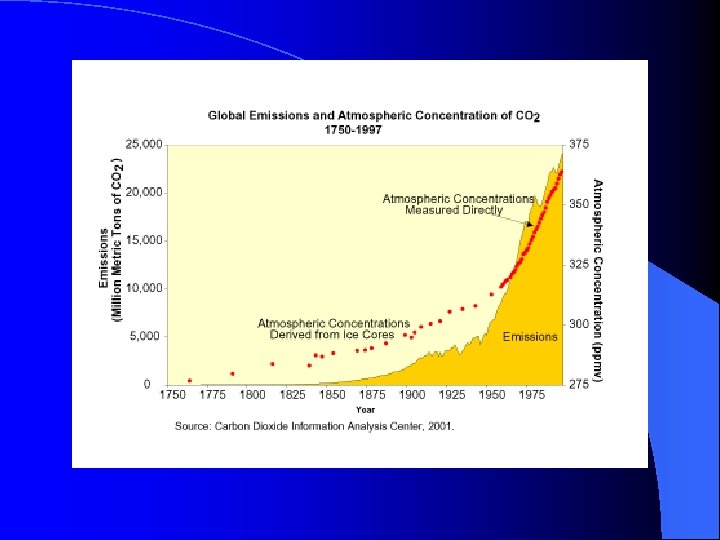
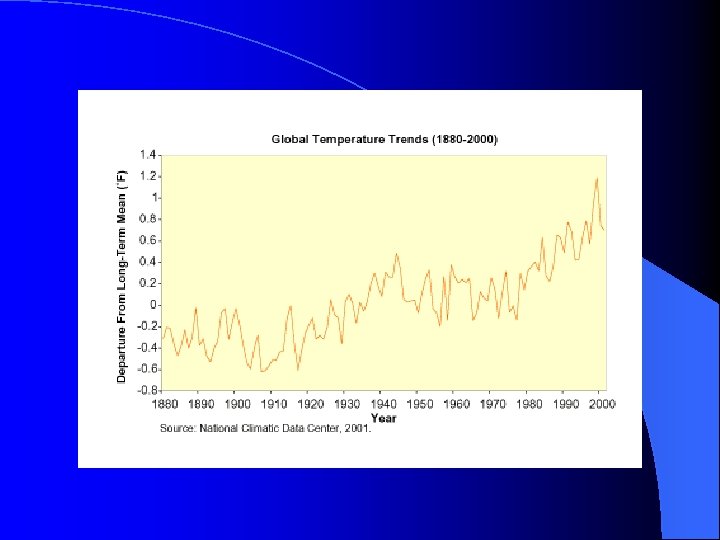
Climate Change changes everything l More CO 2 changes plant behavior l More CO 2 increases temperature of the atmosphere, the surface, the earth’s crust and the oceans l Distribution of energy through currents on the planet l Global hydro cycle; rain and moisture
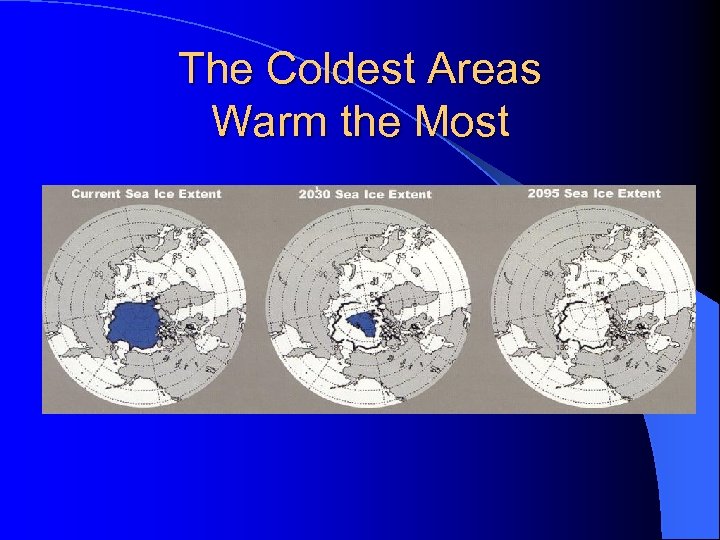
The Coldest Areas Warm the Most
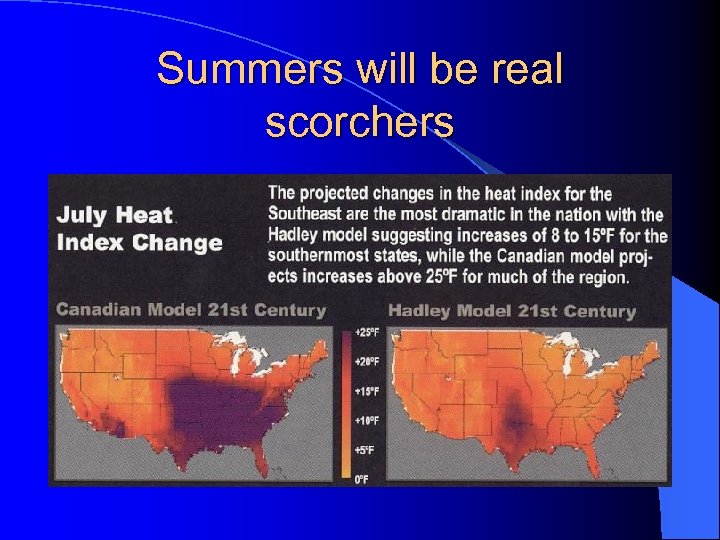
Summers will be real scorchers
Florida -Average temperature increase of 5 ~10°F -July temperature increase of ~ 15°F -Reversal of summer-wet, winter-dry -Change in soil / Fire risk -Vectors -Tropical diseases -Sea level rise -Intensive Storms -Will happen anyway
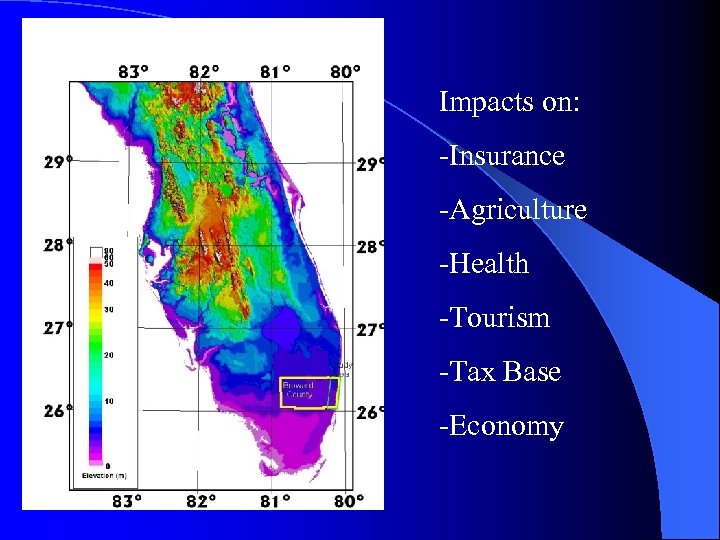
Impacts on: -Insurance -Agriculture -Health -Tourism -Tax Base -Economy
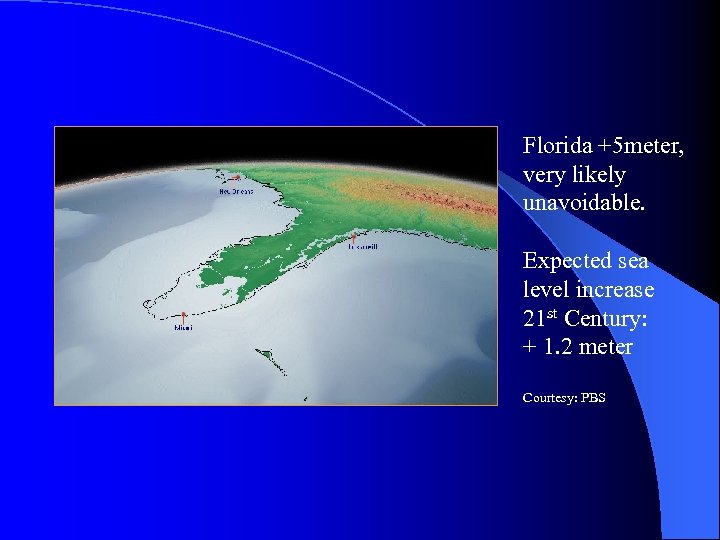
Florida +5 meter, very likely unavoidable. Expected sea level increase 21 st Century: + 1. 2 meter Courtesy: PBS
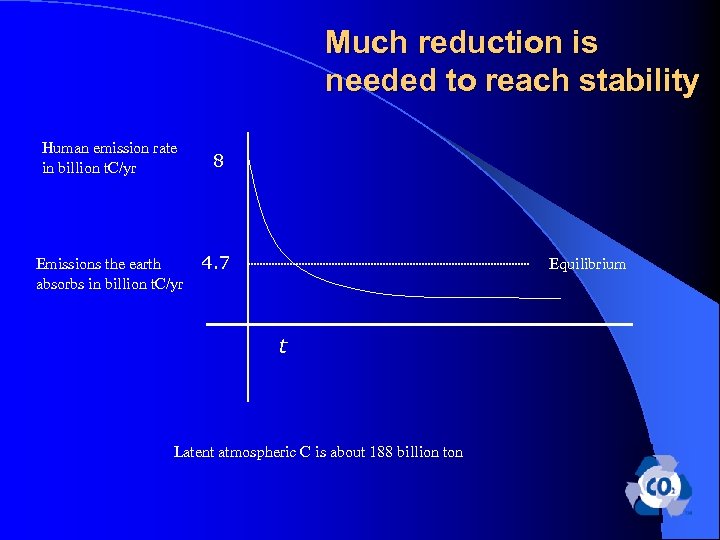
Much reduction is needed to reach stability Human emission rate in billion t. C/yr Emissions the earth absorbs in billion t. C/yr 8 4. 7 Equilibrium t Latent atmospheric C is about 188 billion ton
Climate Change: A hundred year problem l Achieving carbon-neutrality (the switch to clean energy) = 30 years? l Absorption of latent carbon (sequestration) 7% of planet surface = 150 years?
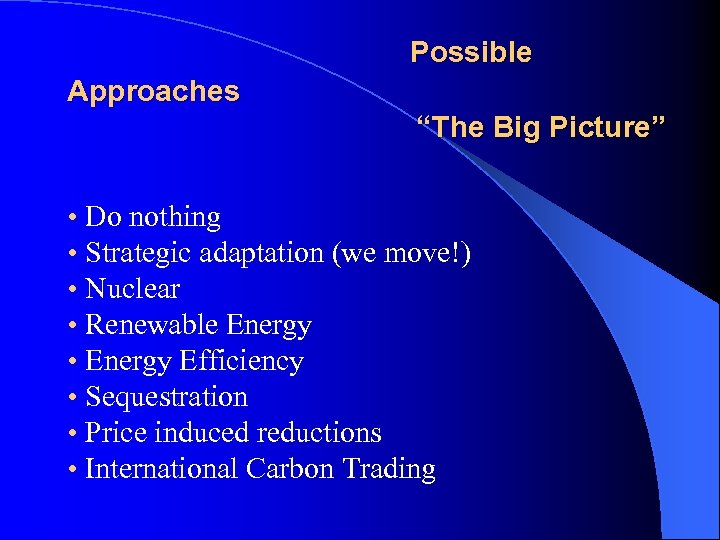
Possible Approaches “The Big Picture” • Do nothing • Strategic adaptation (we move!) • Nuclear • Renewable Energy • Energy Efficiency • Sequestration • Price induced reductions • International Carbon Trading
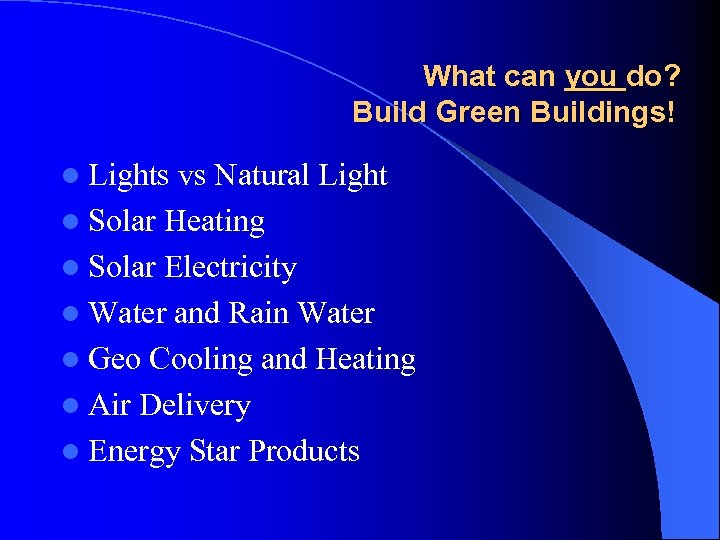
What can you do? Build Green Buildings! l Lights vs Natural Light l Solar Heating l Solar Electricity l Water and Rain Water l Geo Cooling and Heating l Air Delivery l Energy Star Products
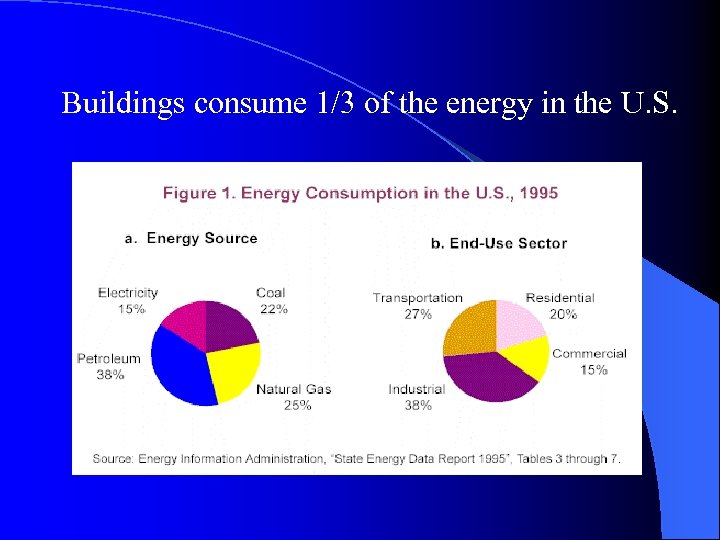
Buildings consume 1/3 of the energy in the U. S.
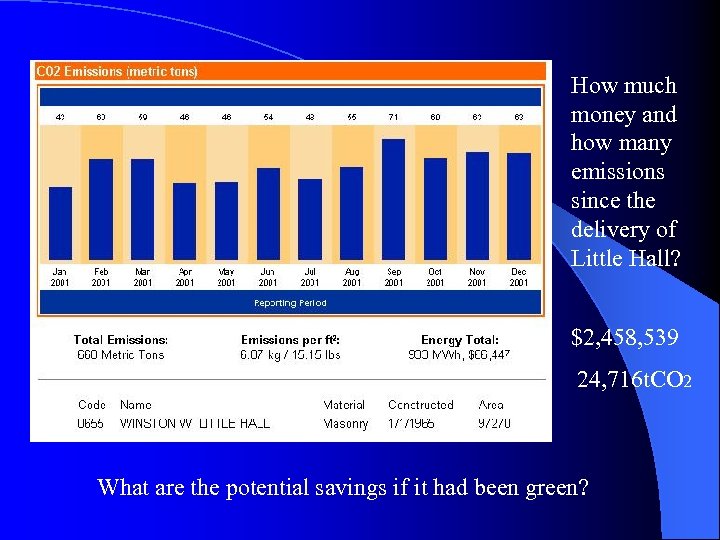
How much money and how many emissions since the delivery of Little Hall? $2, 458, 539 24, 716 t. CO 2 What are the potential savings if it had been green?
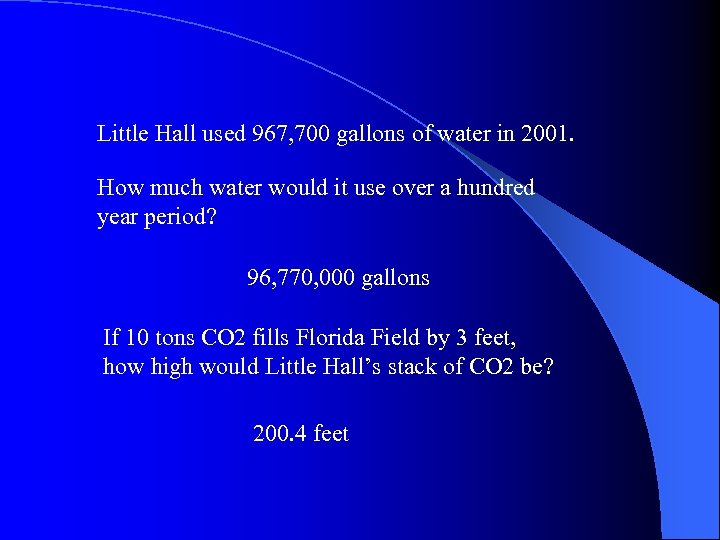
Little Hall used 967, 700 gallons of water in 2001. How much water would it use over a hundred year period? 96, 770, 000 gallons If 10 tons CO 2 fills Florida Field by 3 feet, how high would Little Hall’s stack of CO 2 be? 200. 4 feet
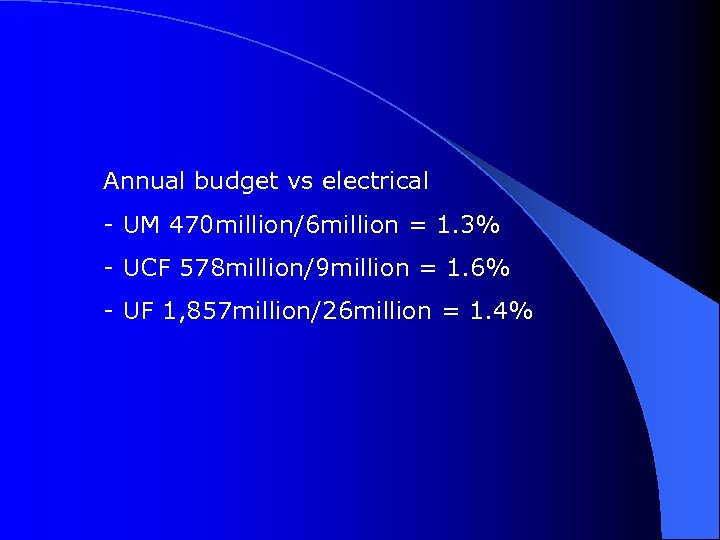
Annual budget vs electrical - UM 470 million/6 million = 1. 3% - UCF 578 million/9 million = 1. 6% - UF 1, 857 million/26 million = 1. 4%
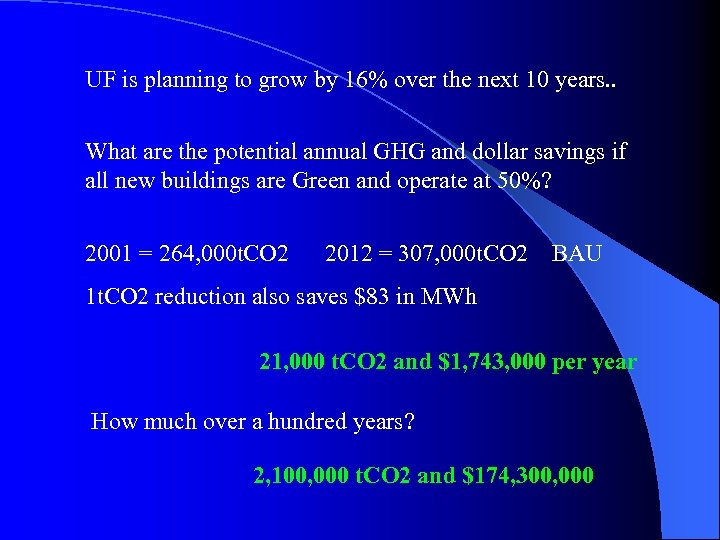
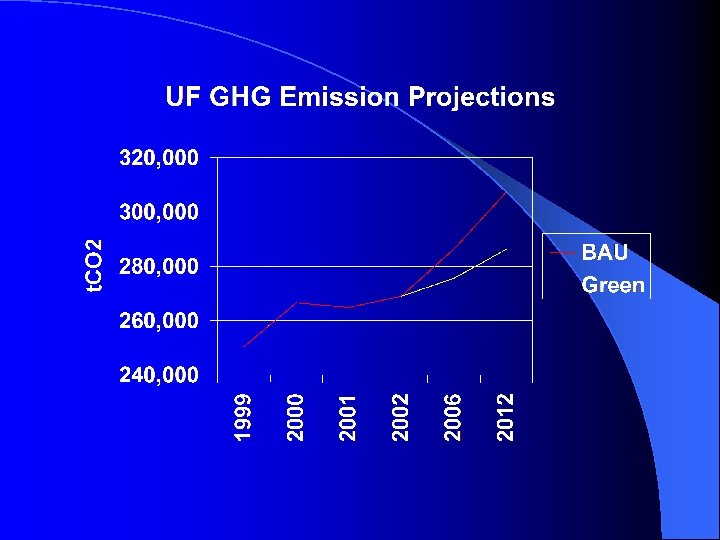
UF is planning to grow by 16% over the next 10 years. . What are the potential annual GHG and dollar savings if all new buildings are Green and operate at 50%? 2001 = 264, 000 t. CO 2 2012 = 307, 000 t. CO 2 BAU 1 t. CO 2 reduction also saves $83 in MWh 21, 000 t. CO 2 and $1, 743, 000 per year How much over a hundred years? 2, 100, 000 t. CO 2 and $174, 300, 000
Conclusion: Green Buildings save MONEY Green Buildings save the environment Green Buildings make for happy campers & increase productivity What will you be doing over the next few years? Make Green Buildings!!
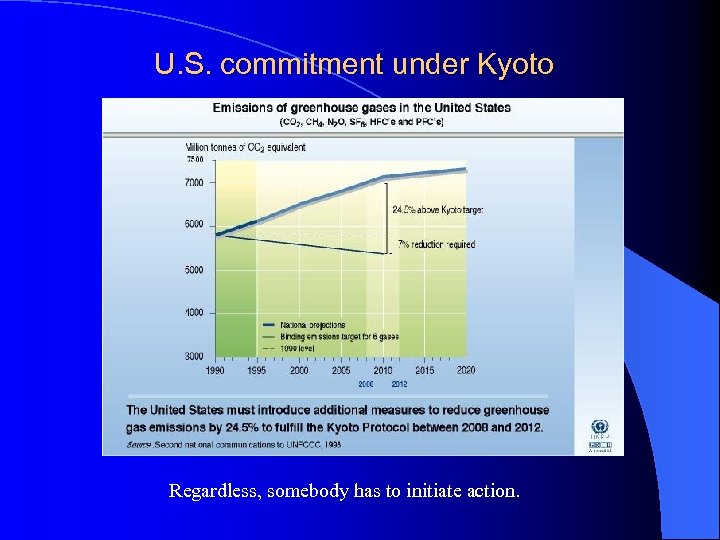
U. S. commitment under Kyoto Regardless, somebody has to initiate action.
Links and Resources l l l l http: //www. icbe. com/uf_audit/ http: //www. ucar. edu/learn/1_1_1. htm http: //www. ucsusa. org/environment/gulf. html http: //www. epa. gov/globalwarming/visitorcenter/lists. html http: //www. pbs. org/wgbh/warming/ http: //www. icbe. com/carbondatabase/reductions. asp http: //www. climatesafe. com/intro_flash. asp http: //visibleearth. nasa. gov/advsearch. html
Contact ICBE - Nice meeting all of you! Mark van Soestbergen mark@icbe. com 352 367 1144 tel 352 335 9140 fax Toward Climate Stability™
Скачать презентацию Global Warming and Florida What you can do
664dd48829f3932b6516977ac75bf1df.ppt