 Скачать презентацию Global Trends in Chemistry Publishing Background and Developments
54a095c0435d0ca21f1fc6e7d779b66e.ppt
- Количество слайдов: 35



Global Trends in Chemistry Publishing Background and Developments Presented by: James Milne Ph. D, Publisher – Organic & Inorganic Chemistry Date: June 2008 Presentation created by James Milne 2007 / 2008
Presentation § § About Elsevier Scientific Publishing § § § General Background General Trends from Japan 2
ABOUT ELSEVIER
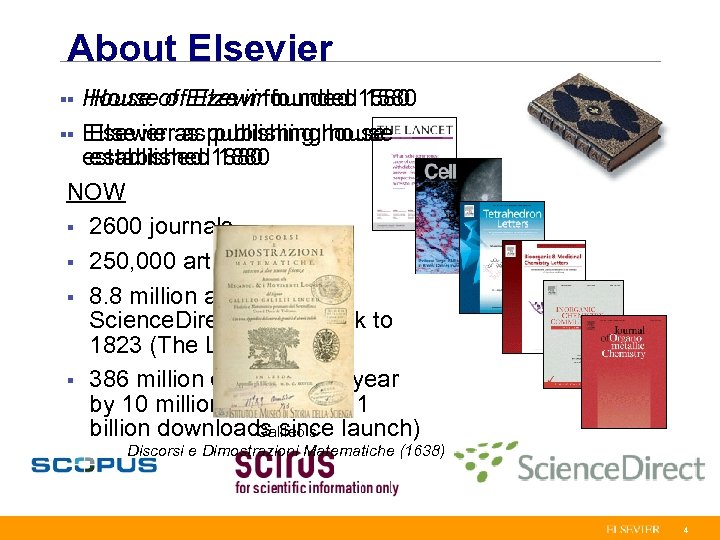
About Elsevier House of Elzevir founded 1580 §§ Elsevier as publishing house established 1880 NOW § 2600 journals § 250, 000 articles a year § 8. 8 million articles on Science. Direct, going back to 1823 (The Lancet) § 386 million downloads a year by 10 million users (over 1 billion downloads since launch) Galileo’s §§ Discorsi e Dimostrazioni Matematiche (1638) 4
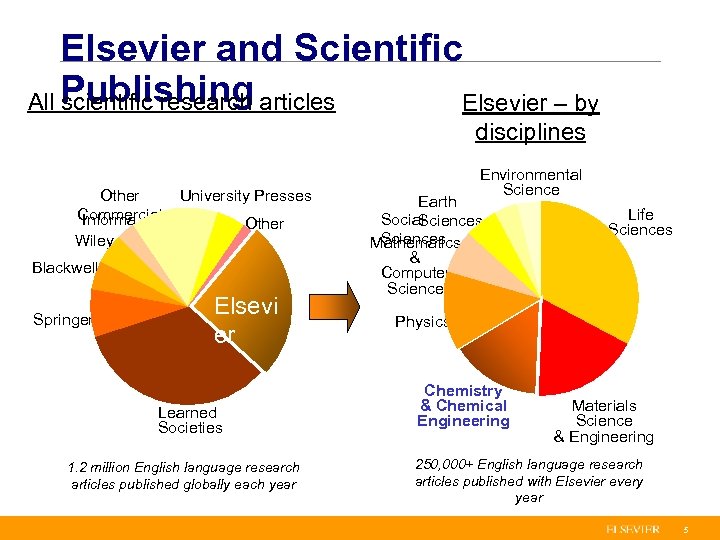
Elsevier and Scientific All Publishing articles scientific research Elsevier – by disciplines Other Commercial Informa Wiley University Presses Other Blackwell Springer Elsevi er Learned Societies 1. 2 million English language research articles published globally each year Environmental Science Earth Social Sciences Mathematics & Computer Science Life Sciences Physics Chemistry & Chemical Engineering Materials Science & Engineering 250, 000+ English language research articles published with Elsevier every year 5
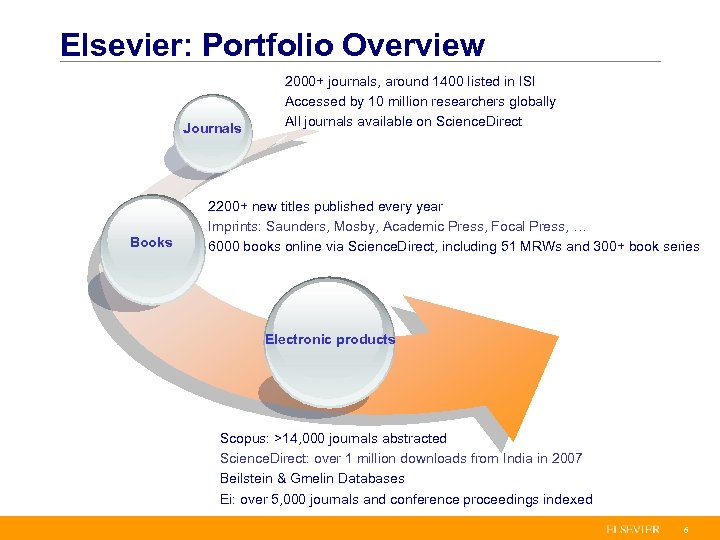
Elsevier: Portfolio Overview Journals Books 2000+ journals, around 1400 listed in ISI Accessed by 10 million researchers globally All journals available on Science. Direct 2200+ new titles published every year Imprints: Saunders, Mosby, Academic Press, Focal Press, … 6000 books online via Science. Direct, including 51 MRWs and 300+ book series Electronic products Scopus: >14, 000 journals abstracted Science. Direct: over 1 million downloads from India in 2007 Beilstein & Gmelin Databases Ei: over 5, 000 journals and conference proceedings indexed 6
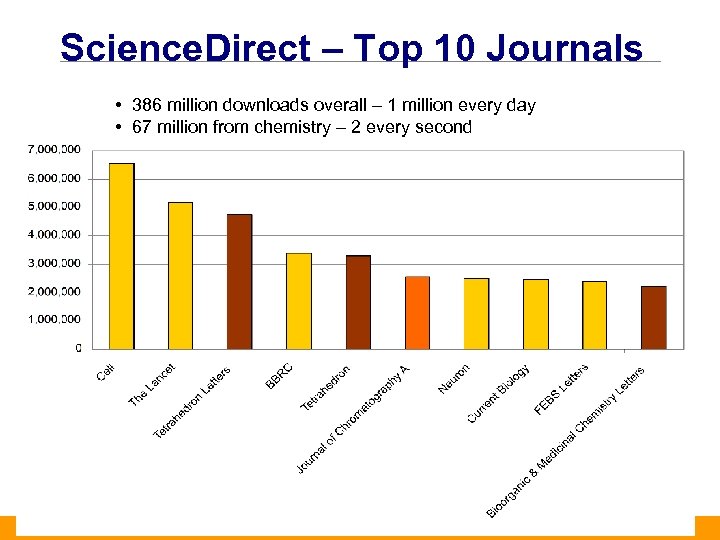
Science. Direct – Top 10 Journals • 386 million downloads overall – 1 million every day • 67 million from chemistry – 2 every second 7
SCIENTIFIC PUBLISHING
Why have Scientific Publishing ? Communication of research results and discoveries between scientists § Sounds straightforward… § 9
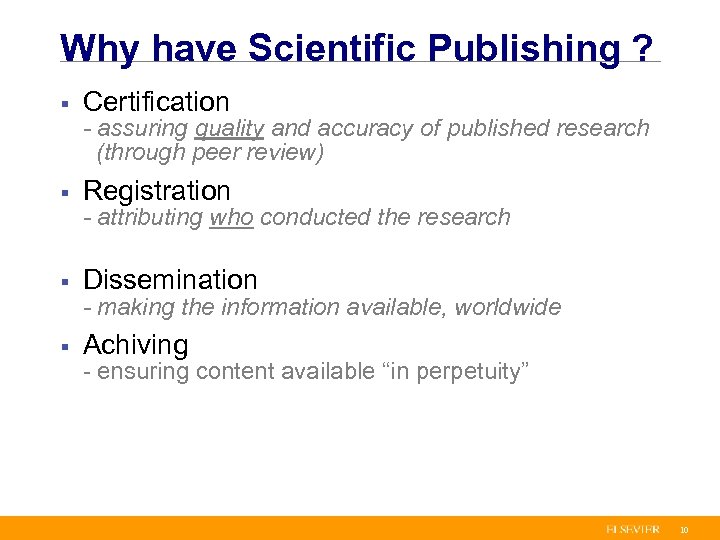
Why have Scientific Publishing ? § Certification § Registration § Dissemination § Achiving - assuring quality and accuracy of published research (through peer review) - attributing who conducted the research - making the information available, worldwide - ensuring content available “in perpetuity” 10
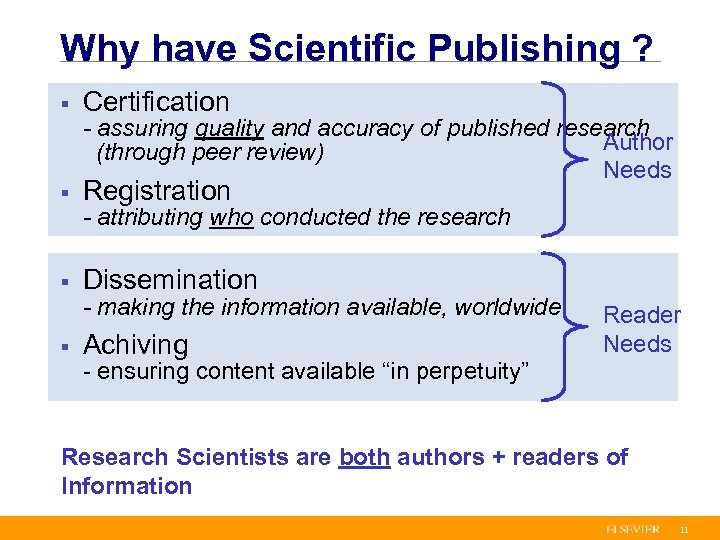
Why have Scientific Publishing ? § Certification § Registration § § - assuring quality and accuracy of published research Author (through peer review) Needs - attributing who conducted the research Dissemination - making the information available, worldwide Achiving Reader Needs - ensuring content available “in perpetuity” Research Scientists are both authors + readers of Information 11
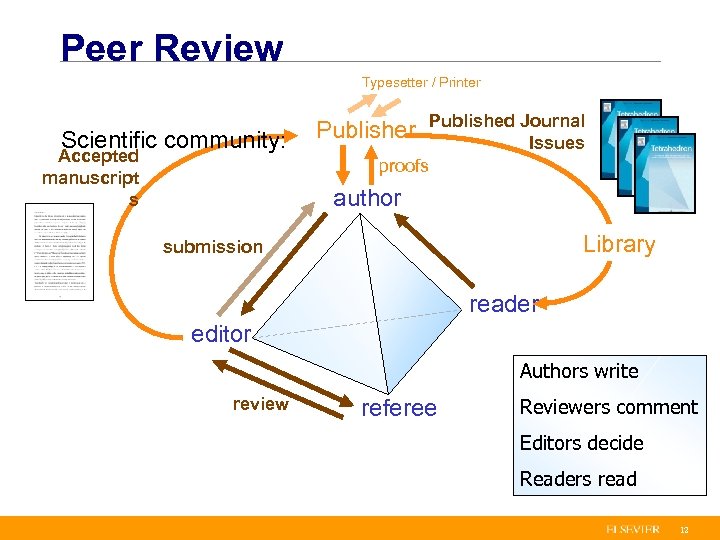
Peer Review Typesetter / Printer Scientific community: Accepted manuscript s Publisher Published Journal Issues proofs author Library submission reader editor Authors write review referee Reviewers comment Editors decide Readers read 12
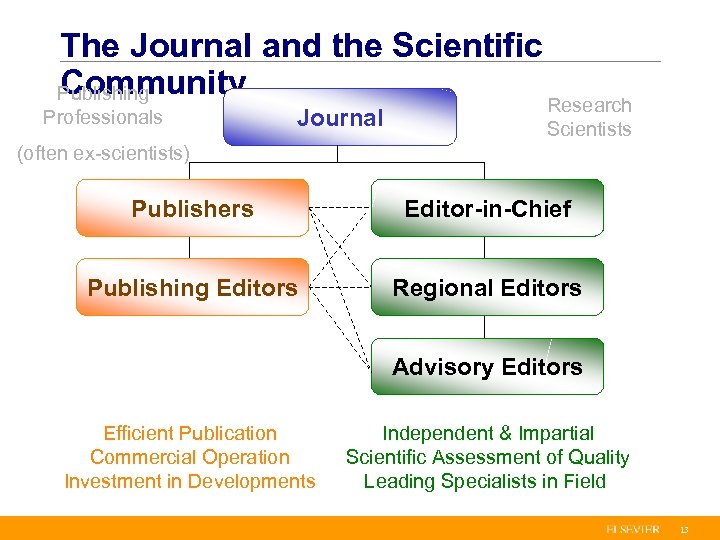
The Journal and the Scientific Community Publishing Professionals Journal Research Scientists (often ex-scientists) Publishers Editor-in-Chief Publishing Editors Regional Editors Advisory Editors Efficient Publication Commercial Operation Investment in Developments Independent & Impartial Scientific Assessment of Quality Leading Specialists in Field 13
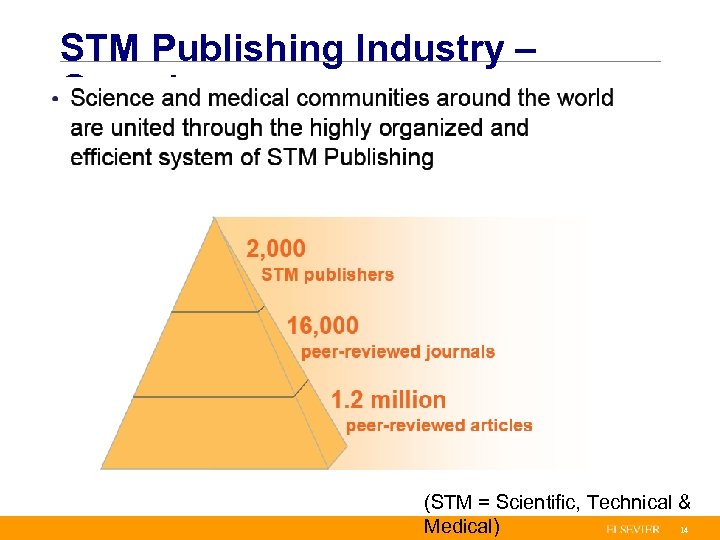
STM Publishing Industry – Overview (STM = Scientific, Technical & 14 Medical)
TRENDS IN JOURNAL PUBLISHING
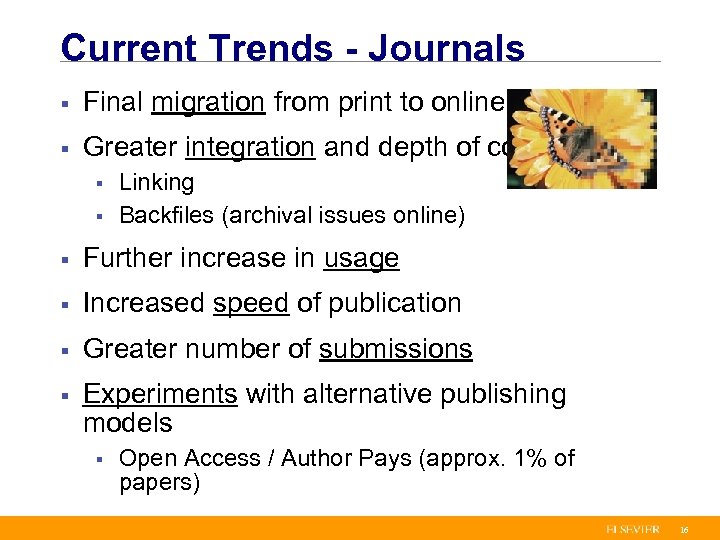
Current Trends - Journals § Final migration from print to online § Greater integration and depth of content § § Linking Backfiles (archival issues online) § Further increase in usage § Increased speed of publication § Greater number of submissions § Experiments with alternative publishing models § Open Access / Author Pays (approx. 1% of papers) 16
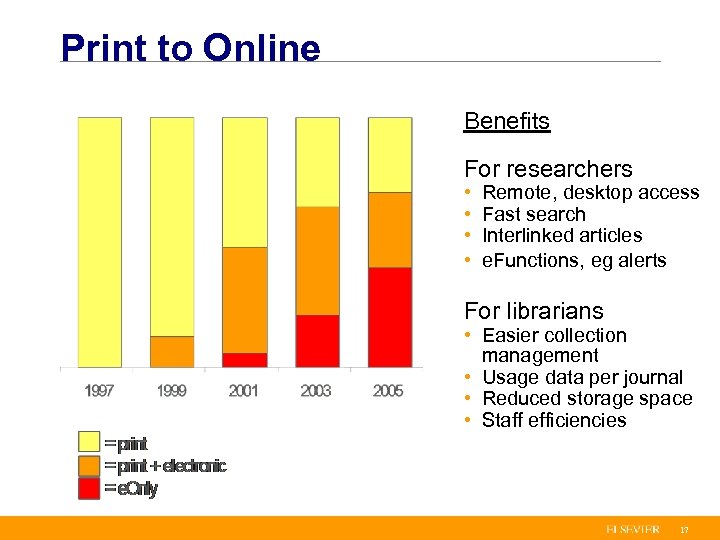
Print to Online Benefits For researchers • • Remote, desktop access Fast search Interlinked articles e. Functions, eg alerts For librarians • Easier collection management • Usage data per journal • Reduced storage space • Staff efficiencies 17
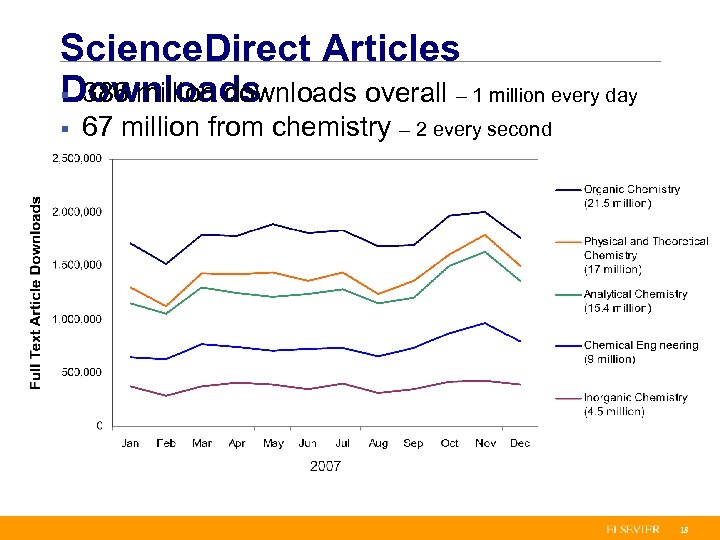
Science. Direct Articles Downloads § 386 million downloads overall – 1 million every day § 67 million from chemistry – 2 every second 18
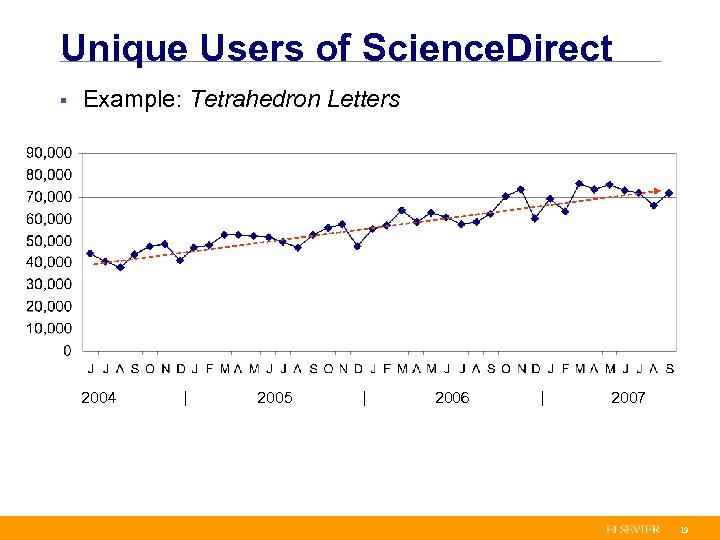
Unique Users of Science. Direct § Example: Tetrahedron Letters 2004 | 2005 | 2006 | 2007 19
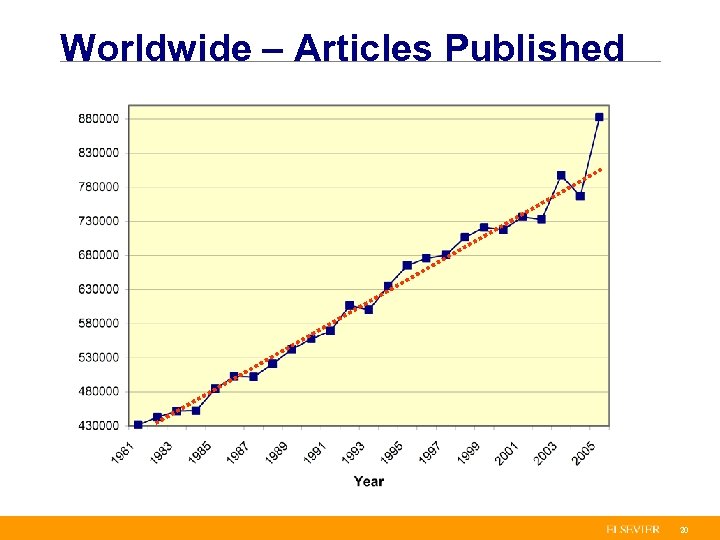
Worldwide – Articles Published 20

TRENDS FROM JAPAN
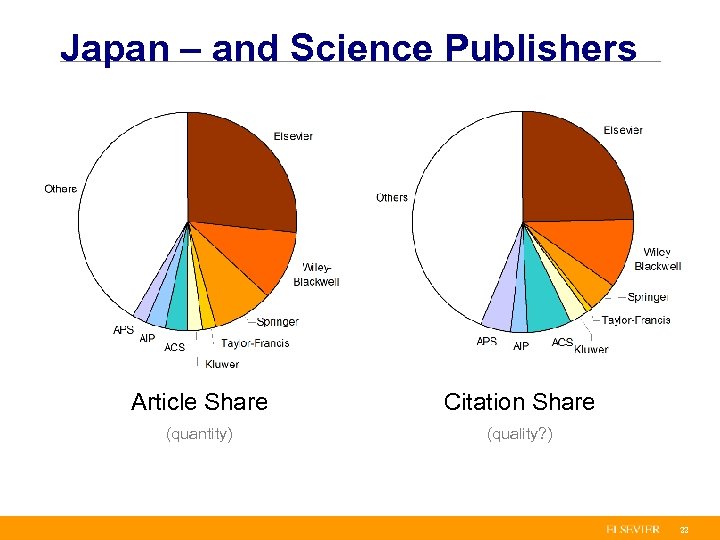
Japan – and Science Publishers Article Share Citation Share (quantity) (quality? ) 22
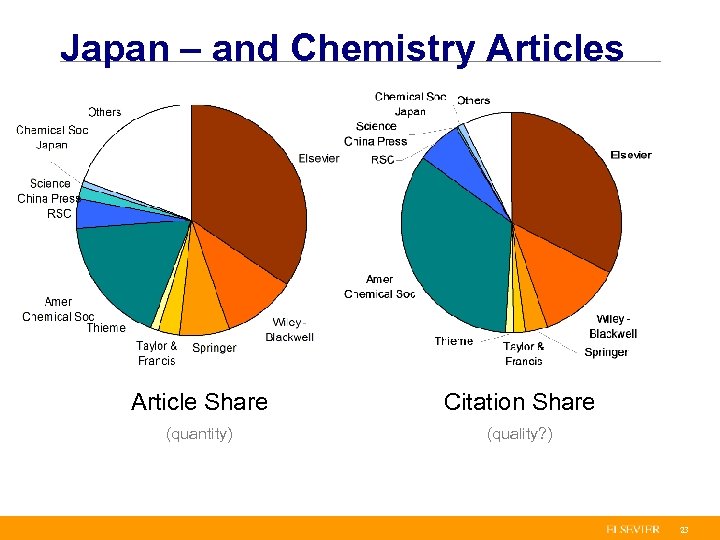
Japan – and Chemistry Articles Article Share Citation Share (quantity) (quality? ) 23
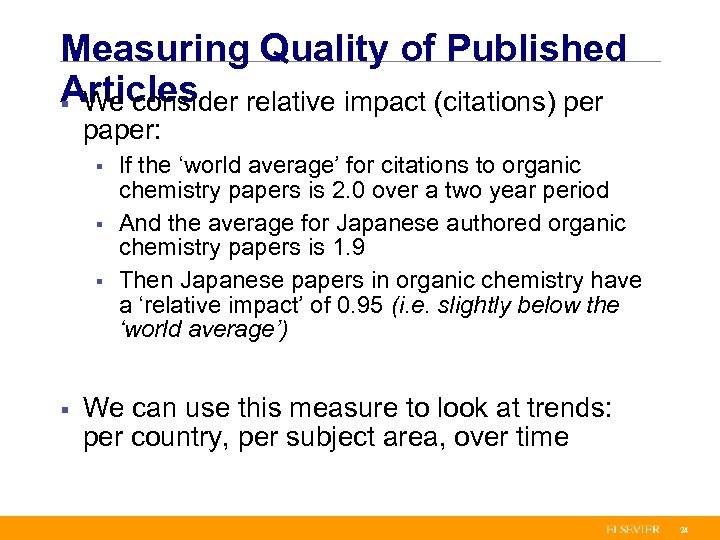
Measuring Quality of Published Articles relative impact (citations) per § We consider paper: § § If the ‘world average’ for citations to organic chemistry papers is 2. 0 over a two year period And the average for Japanese authored organic chemistry papers is 1. 9 Then Japanese papers in organic chemistry have a ‘relative impact’ of 0. 95 (i. e. slightly below the ‘world average’) We can use this measure to look at trends: per country, per subject area, over time 24
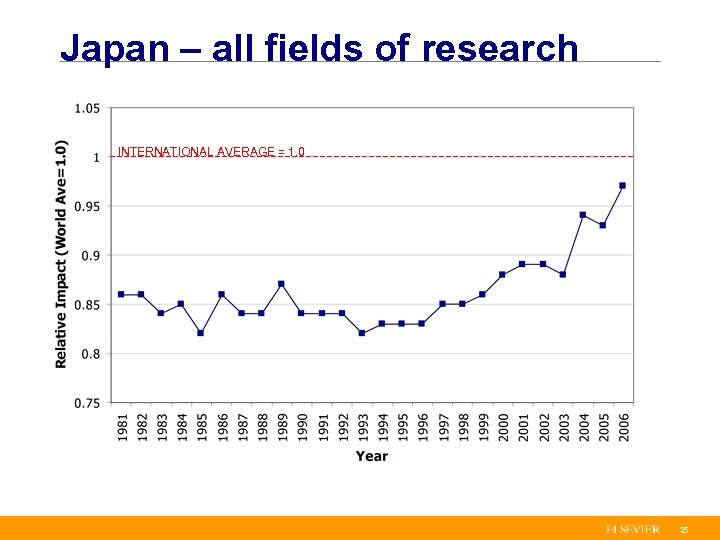
Japan – all fields of research INTERNATIONAL AVERAGE = 1. 0 25
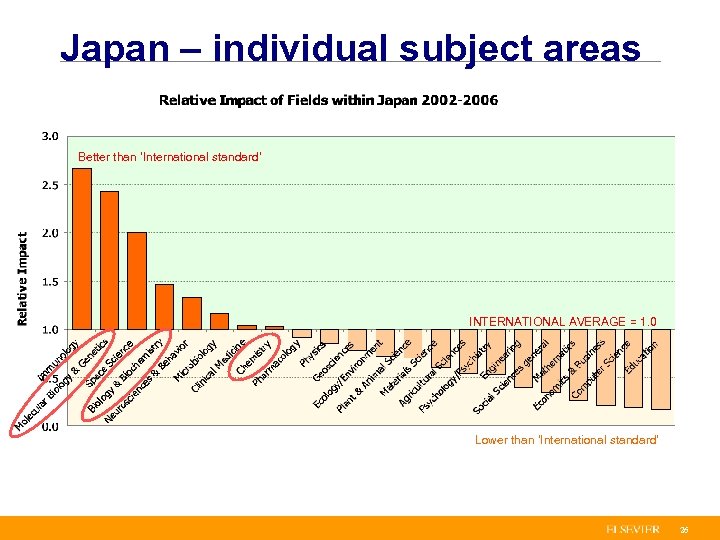
Japan – individual subject areas Better than ‘International standard’ INTERNATIONAL AVERAGE = 1. 0 Lower than ‘International standard’ 26
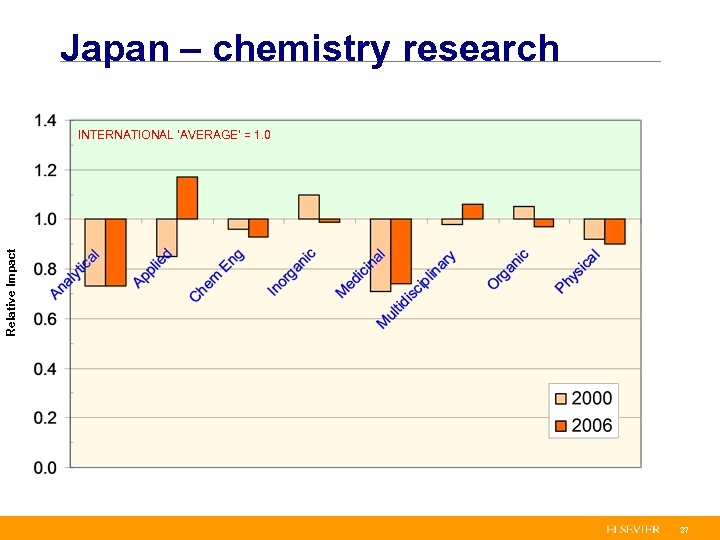
Japan – chemistry research Relative Impact INTERNATIONAL ‘AVERAGE’ = 1. 0 27
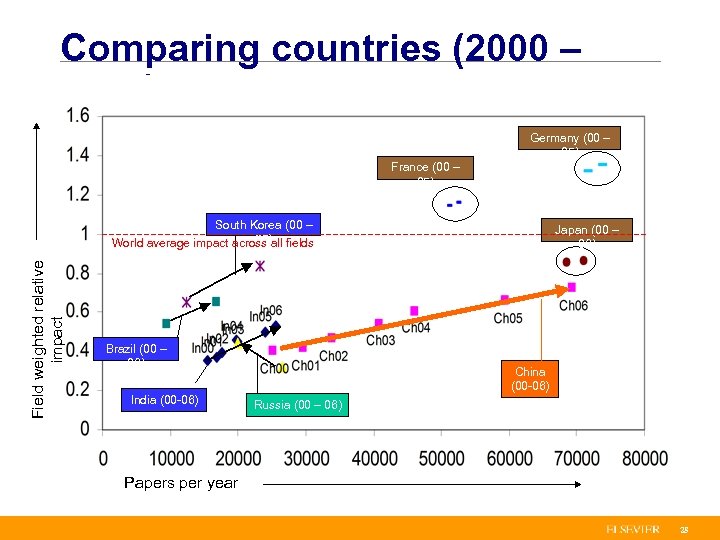
Comparing countries (2000 – 2006) Germany (00 – 05) France (00 – 05) Field weighted relative impact South Korea (00 – 05) World average impact across all fields Brazil (00 – 06) India (00 -06) Japan (00 – 06) China (00 -06) Russia (00 – 06) Papers per year 28
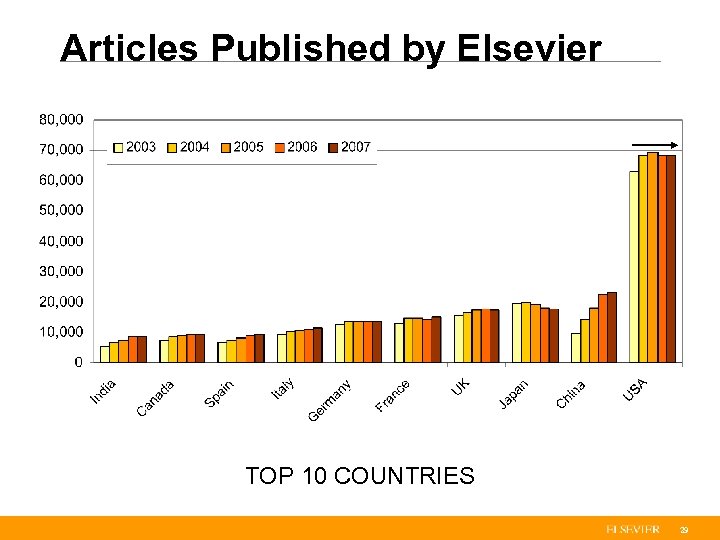
Articles Published by Elsevier TOP 10 COUNTRIES 29
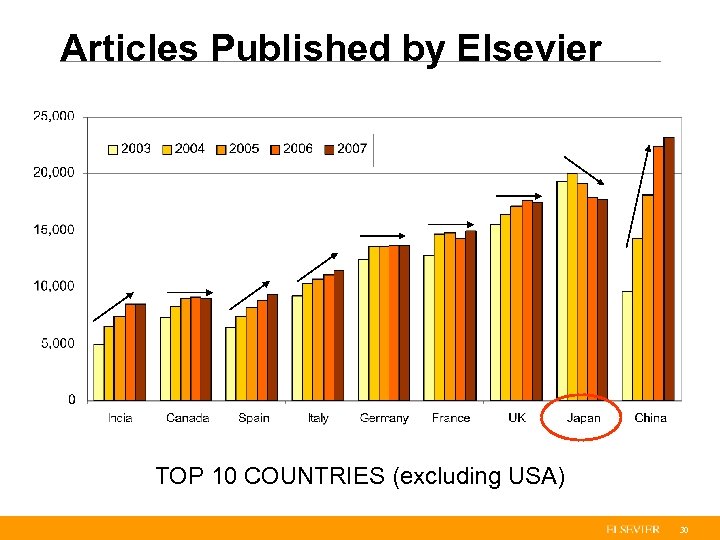
Articles Published by Elsevier TOP 10 COUNTRIES (excluding USA) 30
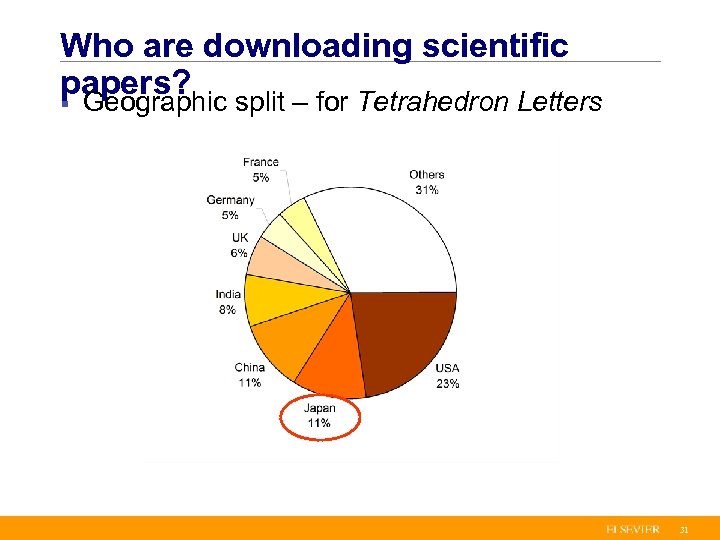
Who are downloading scientific papers? split – for Tetrahedron Letters § Geographic 31
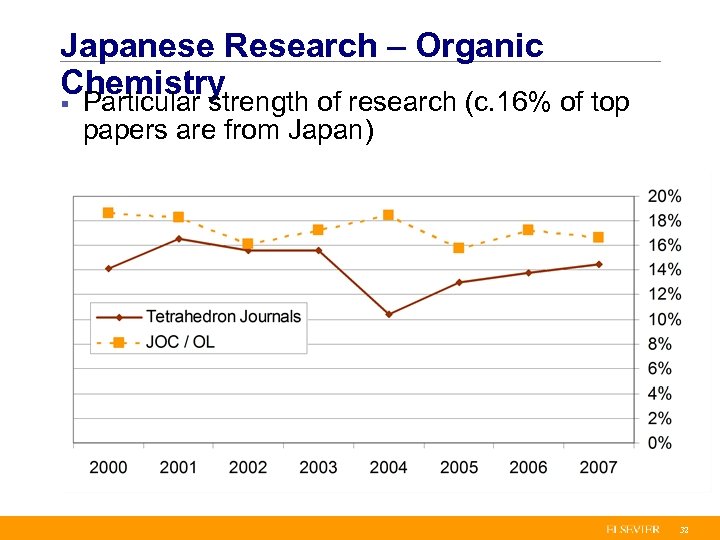
Japanese Research – Organic Chemistry § Particular strength of research (c. 16% of top papers are from Japan) 32
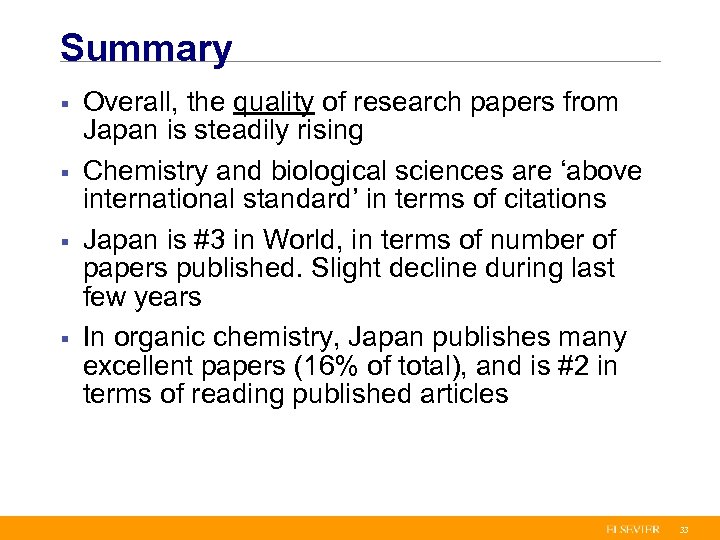
Summary § § Overall, the quality of research papers from Japan is steadily rising Chemistry and biological sciences are ‘above international standard’ in terms of citations Japan is #3 in World, in terms of number of papers published. Slight decline during last few years In organic chemistry, Japan publishes many excellent papers (16% of total), and is #2 in terms of reading published articles 33
Thank you for your attention Oxford University Standlake Village, Oxfordshire James Milne Ph. D Publisher Organic & Inorganic Chemistry Elsevier, Oxford, UK j. milne@elsevier. com 34
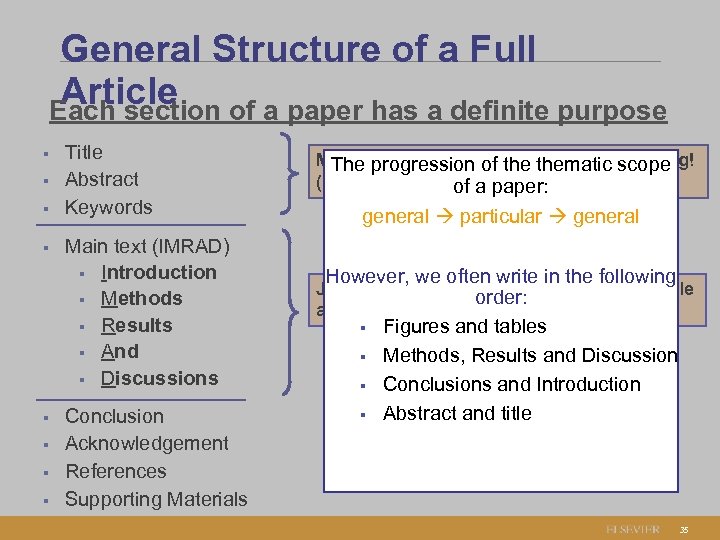
General Structure of a Full Article of a paper has a definite purpose Each section § § § § Title Abstract Keywords Main text (IMRAD) § Introduction § Methods § Results § And § Discussions Conclusion Acknowledgement References Supporting Materials Make them easy forof thematic scope The progression indexing and searching! (informative, attractive, effective) of a paper: general particular general However, we often write in the following Journal space is precious. Make your article order: as brief as possible. § § Figures and tables Methods, Results and Discussion Conclusions and Introduction Abstract and title 35
Скачать презентацию Global Trends in Chemistry Publishing Background and Developments
54a095c0435d0ca21f1fc6e7d779b66e.ppt