 Скачать презентацию Global Population Trends Shaping The Strategic Future Nicholas
4e3273a7d1e461fea878084e5e9ba61b.ppt
- Количество слайдов: 32




Global Population Trends: Shaping The Strategic Future Nicholas Eberstadt Henry Wendt Chair in Political Economy American Enterprise Institute eberstadt@aei. org The Sixth Herzliya Conference On the Balance of Israel’s National Security January 21 -24, 2006 Herzliya, Israel
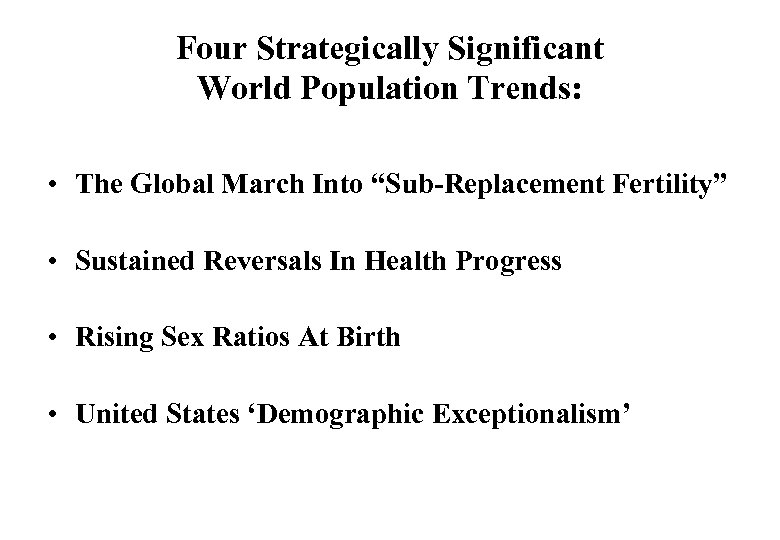
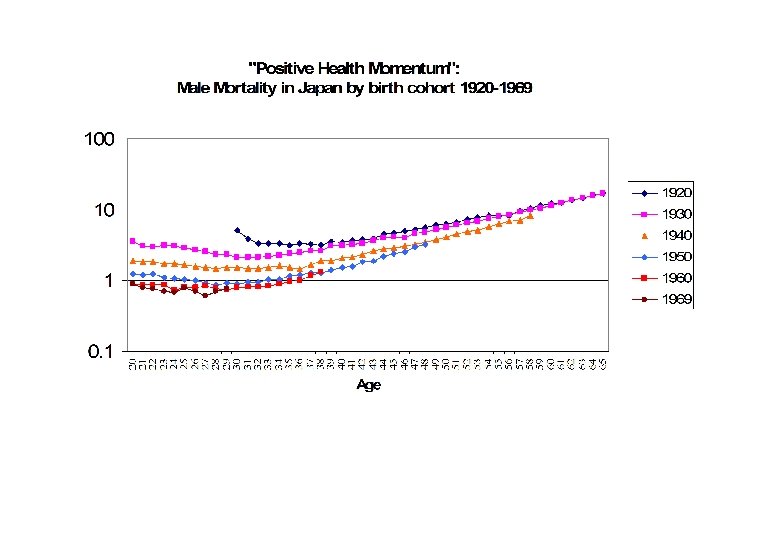
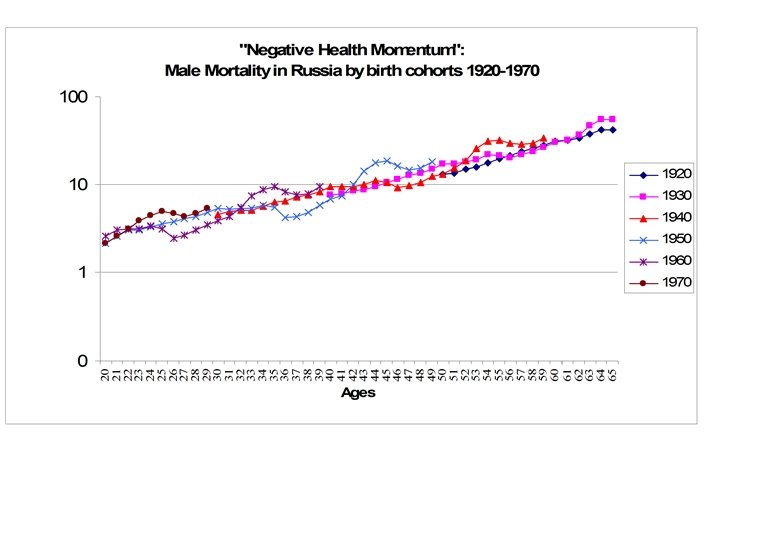
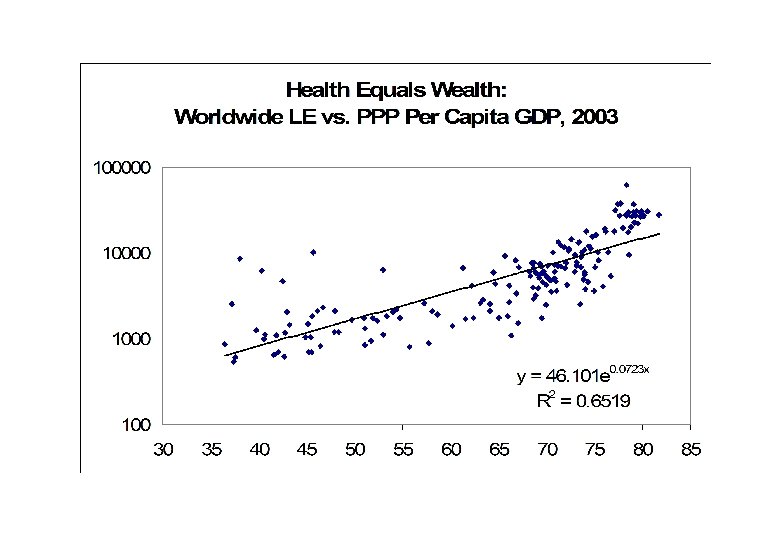
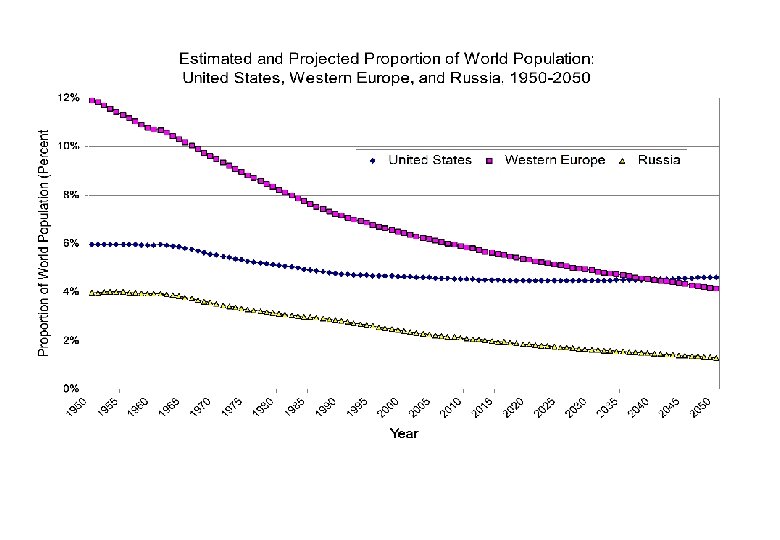
Four Strategically Significant World Population Trends: • The Global March Into “Sub-Replacement Fertility” • Sustained Reversals In Health Progress • Rising Sex Ratios At Birth • United States ‘Demographic Exceptionalism’
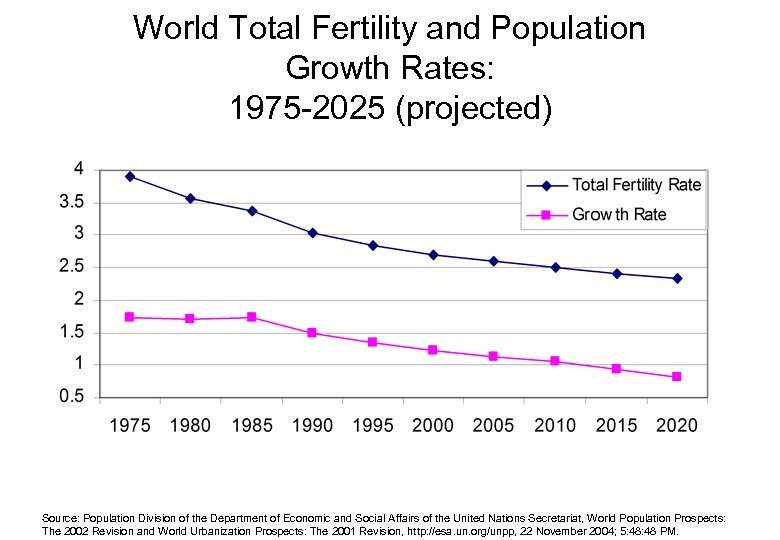
World Total Fertility and Population Growth Rates: 1975 -2025 (projected) Source: Population Division of the Department of Economic and Social Affairs of the United Nations Secretariat, World Population Prospects: The 2002 Revision and World Urbanization Prospects: The 2001 Revision, http: //esa. un. org/unpp, 22 November 2004; 5: 48 PM.
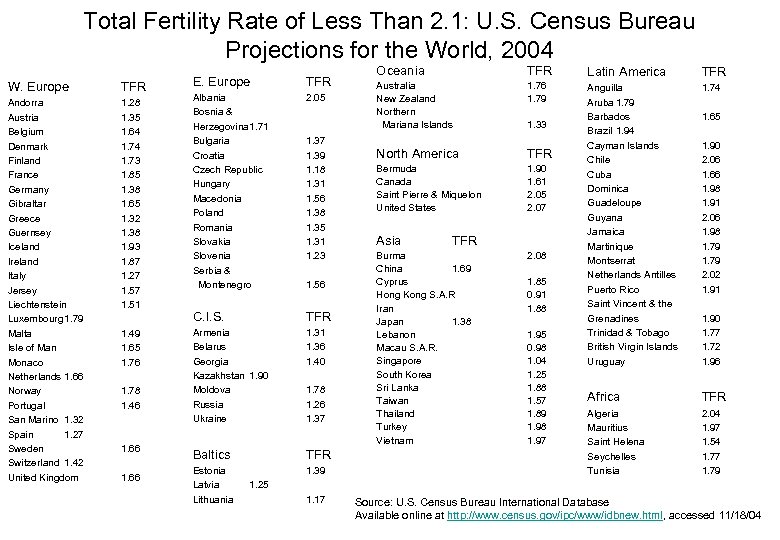
Total Fertility Rate of Less Than 2. 1: U. S. Census Bureau Projections for the World, 2004 W. Europe TFR Andorra Austria Belgium Denmark Finland France Germany Gibraltar Greece Guernsey Iceland Ireland Italy Jersey Liechtenstein Luxembourg 1. 79 Malta Isle of Man Monaco Netherlands 1. 66 Norway Portugal San Marino 1. 32 Spain 1. 27 Sweden Switzerland 1. 42 United Kingdom 1. 28 1. 35 1. 64 1. 73 1. 85 1. 38 1. 65 1. 32 1. 38 1. 93 1. 87 1. 27 1. 51 1. 49 1. 65 1. 76 1. 78 1. 46 1. 66 E. Europe TFR Albania Bosnia & Herzegovina 1. 71 Bulgaria Croatia Czech Republic Hungary Macedonia Poland Romania Slovakia Slovenia Serbia & Montenegro 2. 05 C. I. S. TFR Armenia Belarus Georgia Kazakhstan 1. 90 Moldova Russia Ukraine 1. 31 1. 36 1. 40 Baltics TFR Estonia Latvia Lithuania 1. 39 1. 37 1. 39 1. 18 1. 31 1. 56 1. 38 1. 35 1. 31 1. 23 1. 56 1. 78 1. 26 1. 37 Oceania TFR Latin America TFR Australia New Zealand Northern Mariana Islands 1. 76 1. 79 1. 74 North America TFR Bermuda Canada Saint Pierre & Miquelon United States 1. 90 1. 61 2. 05 2. 07 Anguilla Aruba 1. 79 Barbados Brazil 1. 94 Cayman Islands Chile Cuba Dominica Guadeloupe Guyana Jamaica Martinique Montserrat Netherlands Antilles Puerto Rico Saint Vincent & the Grenadines Trinidad & Tobago British Virgin Islands Uruguay Africa TFR Algeria Mauritius Saint Helena Seychelles Tunisia 2. 04 1. 97 1. 54 1. 77 1. 79 Asia 1. 33 TFR Burma China 1. 69 Cyprus Hong Kong S. A. R Iran Japan 1. 38 Lebanon Macau S. A. R. Singapore South Korea Sri Lanka Taiwan Thailand Turkey Vietnam 2. 08 1. 85 0. 91 1. 88 1. 95 0. 98 1. 04 1. 25 1. 88 1. 57 1. 89 1. 98 1. 97 1. 65 1. 90 2. 06 1. 66 1. 98 1. 91 2. 06 1. 98 1. 79 2. 02 1. 91 1. 90 1. 77 1. 72 1. 96 1. 25 1. 17 Source: U. S. Census Bureau International Database Available online at http: //www. census. gov/ipc/www/idbnew. html, accessed 11/18/04
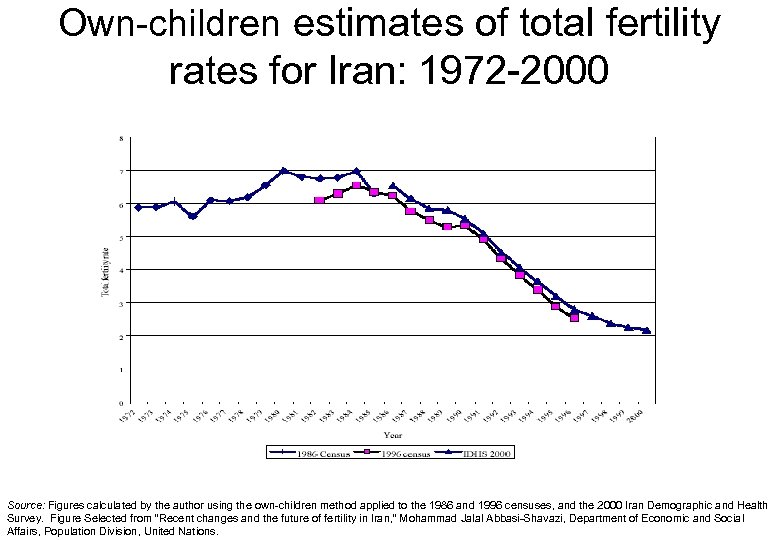
Own-children estimates of total fertility rates for Iran: 1972 -2000 Source: Figures calculated by the author using the own-children method applied to the 1986 and 1996 censuses, and the 2000 Iran Demographic and Health Survey. Figure Selected from “Recent changes and the future of fertility in Iran, ” Mohammad Jalal Abbasi-Shavazi, Department of Economic and Social Affairs, Population Division, United Nations.
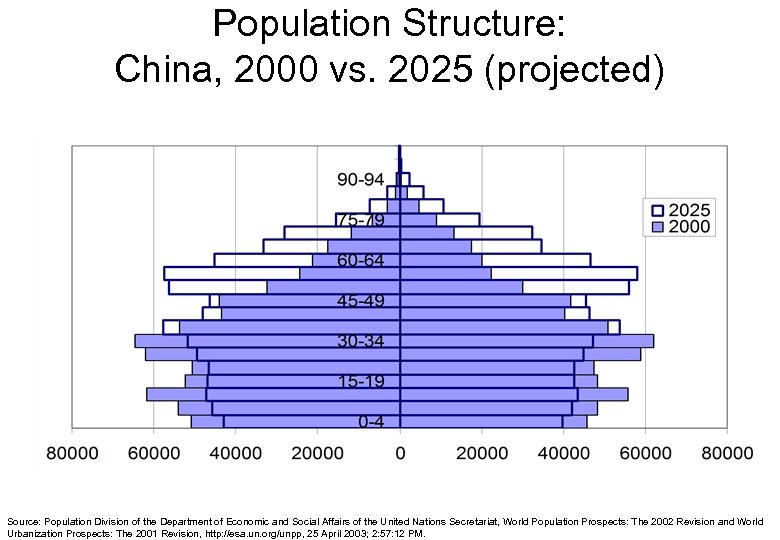
Population Structure: China, 2000 vs. 2025 (projected) Source: Population Division of the Department of Economic and Social Affairs of the United Nations Secretariat, World Population Prospects: The 2002 Revision and World Urbanization Prospects: The 2001 Revision, http: //esa. un. org/unpp, 25 April 2003; 2: 57: 12 PM.
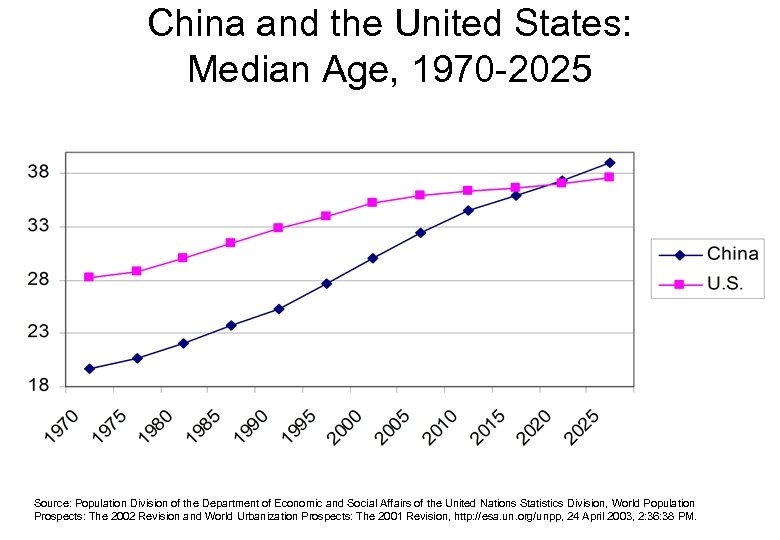
China and the United States: Median Age, 1970 -2025 Source: Population Division of the Department of Economic and Social Affairs of the United Nations Statistics Division, World Population Prospects: The 2002 Revision and World Urbanization Prospects: The 2001 Revision, http: //esa. un. org/unpp, 24 April 2003, 2: 36: 38 PM.
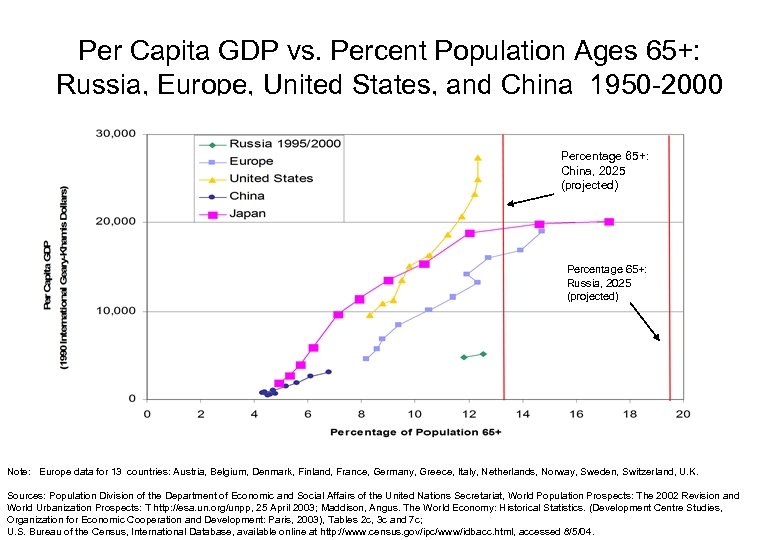
Per Capita GDP vs. Percent Population Ages 65+: Russia, Europe, United States, and China 1950 -2000 Percentage 65+: China, 2025 (projected) Percentage 65+: Russia, 2025 (projected) Note: Europe data for 13 countries: Austria, Belgium, Denmark, Finland, France, Germany, Greece, Italy, Netherlands, Norway, Sweden, Switzerland, U. K. Sources: Population Division of the Department of Economic and Social Affairs of the United Nations Secretariat, World Population Prospects: The 2002 Revision and World Urbanization Prospects: T http: //esa. un. org/unpp, 25 April 2003; Maddison, Angus. The World Economy: Historical Statistics. (Development Centre Studies, Organization for Economic Cooperation and Development: Paris, 2003), Tables 2 c, 3 c and 7 c; U. S. Bureau of the Census, International Database, available online at http: //www. census. gov/ipc/www/idbacc. html, accessed 8/5/04.
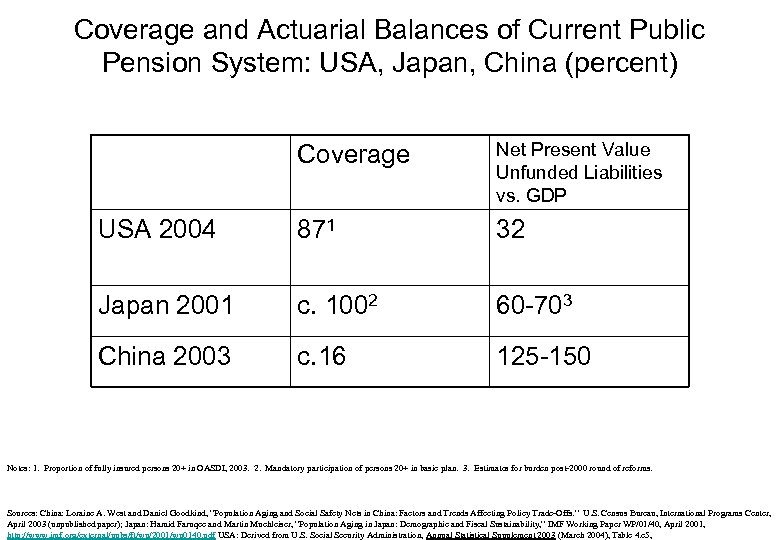
Coverage and Actuarial Balances of Current Public Pension System: USA, Japan, China (percent) Coverage Net Present Value Unfunded Liabilities vs. GDP USA 2004 871 32 Japan 2001 c. 1002 60 -703 China 2003 c. 16 125 -150 Notes: 1. Proportion of fully insured persons 20+ in OASDI, 2003. 2. Mandatory participation of persons 20+ in basic plan. 3. Estimates for burden post-2000 round of reforms. Sources: China: Loraine A. West and Daniel Goodkind, “Population Aging and Social Safety Nets in China: Factors and Trends Affecting Policy Trade-Offs. ” U. S. Census Bureau, International Programs Center, April 2003 (unpublished paper); Japan: Hamid Faruqee and Martin Muehleiser, “Population Aging in Japan: Demographic and Fiscal Sustainability, ” IMF Working Paper WP/01/40, April 2001, http: //www. imf. org/external/pubs/ft/wp/2001/wp 0140. pdf USA: Derived from U. S. Social Security Administration, Annual Statistical Supplement 2003 (March 2004), Table 4. c 5,
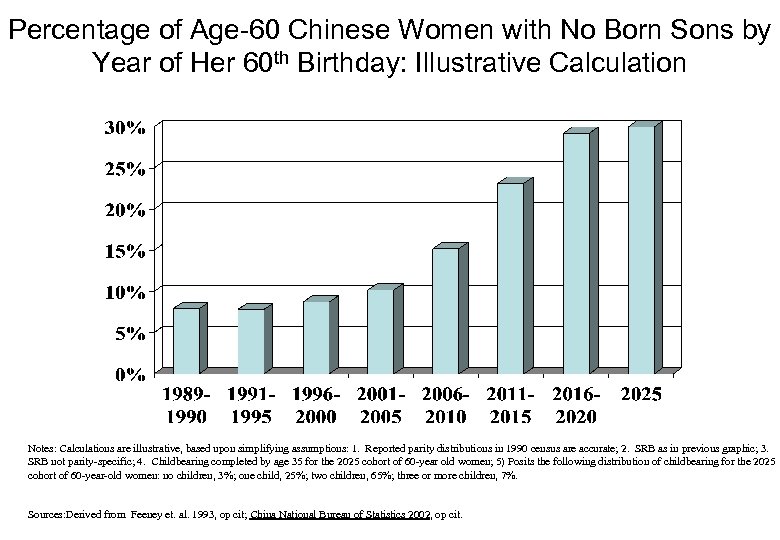
Percentage of Age-60 Chinese Women with No Born Sons by Year of Her 60 th Birthday: Illustrative Calculation Notes: Calculations are illustrative, based upon simplifying assumptions: 1. Reported parity distributions in 1990 census are accurate; 2. SRB as in previous graphic; 3. SRB not parity-specific; 4. Childbearing completed by age 35 for the 2025 cohort of 60 -year old women; 5) Posits the following distribution of childbearing for the 2025 cohort of 60 -year-old women: no children, 3%; one child, 25%; two children, 65%; three or more children, 7%. Sources: Derived from Feeney et. al. 1993, op cit; China National Bureau of Statistics 2002, op cit.
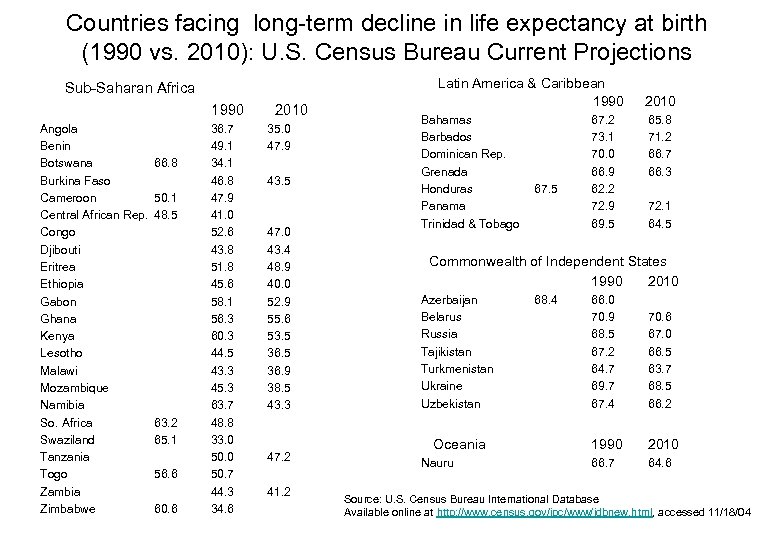
Countries facing long-term decline in life expectancy at birth (1990 vs. 2010): U. S. Census Bureau Current Projections Sub-Saharan Africa 1990 Angola Benin Botswana Burkina Faso Cameroon Central African Rep. Congo Djibouti Eritrea Ethiopia Gabon Ghana Kenya Lesotho Malawi Mozambique Namibia So. Africa Swaziland Tanzania Togo Zambia Zimbabwe 66. 8 50. 1 48. 5 63. 2 65. 1 56. 6 60. 6 36. 7 49. 1 34. 1 46. 8 47. 9 41. 0 52. 6 43. 8 51. 8 45. 6 58. 1 56. 3 60. 3 44. 5 43. 3 45. 3 63. 7 48. 8 33. 0 50. 7 44. 3 34. 6 2010 35. 0 47. 9 43. 5 47. 0 43. 4 48. 9 40. 0 52. 9 55. 6 53. 5 36. 9 38. 5 43. 3 47. 2 41. 2 Latin America & Caribbean 1990 Bahamas Barbados Dominican Rep. Grenada Honduras Panama Trinidad & Tobago 67. 5 67. 2 73. 1 70. 0 66. 9 62. 2 72. 9 69. 5 2010 65. 8 71. 2 66. 7 66. 3 72. 1 64. 5 Commonwealth of Independent States 1990 2010 Azerbaijan Belarus Russia Tajikistan Turkmenistan Ukraine Uzbekistan Oceania Nauru 68. 4 66. 0 70. 9 68. 5 67. 2 64. 7 69. 7 67. 4 70. 6 67. 0 66. 5 63. 7 68. 5 66. 2 1990 2010 66. 7 64. 6 Source: U. S. Census Bureau International Database Available online at http: //www. census. gov/ipc/www/idbnew. html, accessed 11/18/04
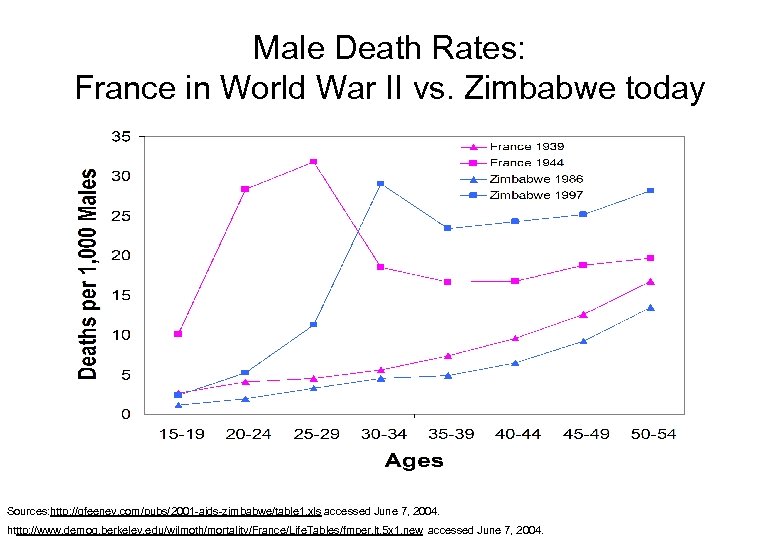
Male Death Rates: France in World War II vs. Zimbabwe today Sources: http: //gfeeney. com/pubs/2001 -aids-zimbabwe/table 1. xls accessed June 7, 2004. htttp: //www. demog. berkeley. edu/wilmoth/mortality/France/Life. Tables/fmper. lt. 5 x 1. new accessed June 7, 2004.
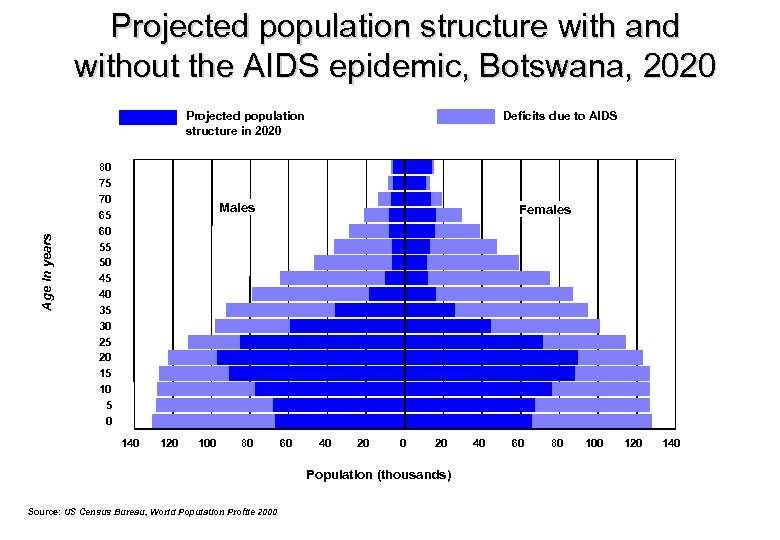
Projected population structure with and without the AIDS epidemic, Botswana, 2020 Age in years Projected population structure in 2020 80 75 70 65 60 55 50 45 40 35 30 25 20 15 10 5 0 Deficits due to AIDS Males 140 120 100 80 Females 60 40 20 Population (thousands) Source: US Census Bureau, World Population Profile 2000 40 60 80 100 120 140
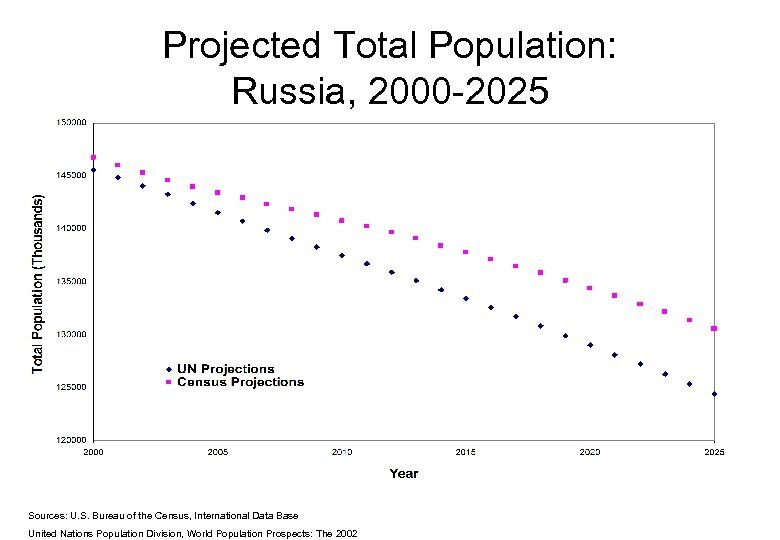
Projected Total Population: Russia, 2000 -2025 Sources: U. S. Bureau of the Census, International Data Base United Nations Population Division, World Population Prospects: The 2002
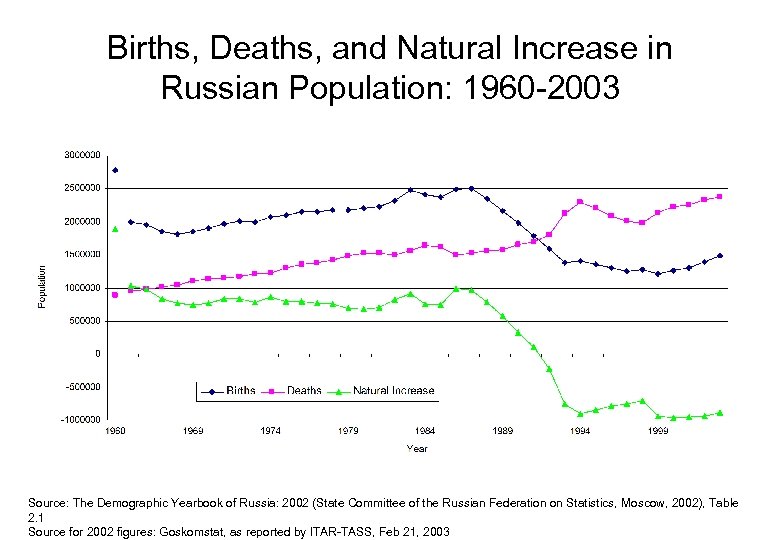
Births, Deaths, and Natural Increase in Russian Population: 1960 -2003 Source: The Demographic Yearbook of Russia: 2002 (State Committee of the Russian Federation on Statistics, Moscow, 2002), Table 2. 1 Source for 2002 figures: Goskomstat, as reported by ITAR-TASS, Feb 21, 2003
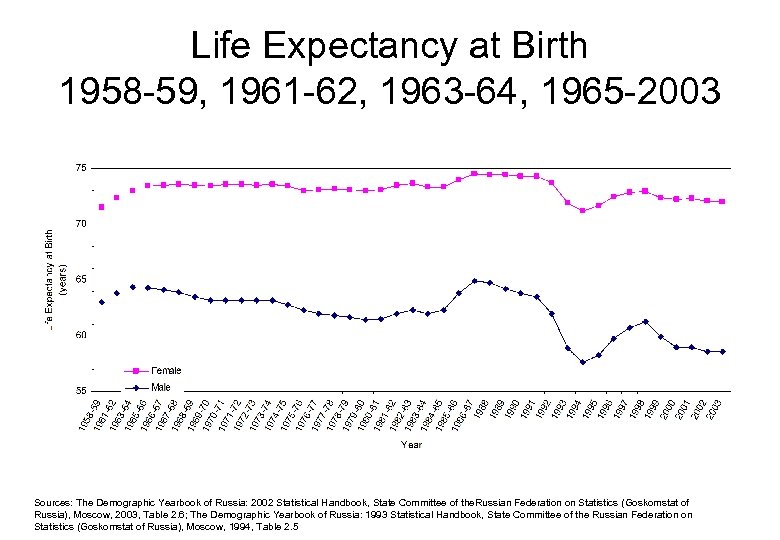
Life Expectancy at Birth 1958 -59, 1961 -62, 1963 -64, 1965 -2003 Sources: The Demographic Yearbook of Russia: 2002 Statistical Handbook, State Committee of the Russian Federation on Statistics (Goskomstat of Russia), Moscow, 2003, Table 2. 6; The Demographic Yearbook of Russia: 1993 Statistical Handbook, State Committee of the Russian Federation on Statistics (Goskomstat of Russia), Moscow, 1994, Table 2. 5
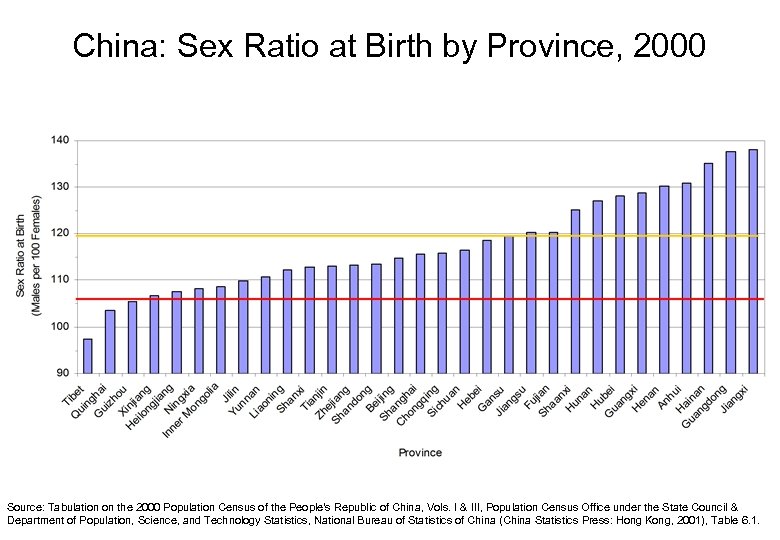
China: Sex Ratio at Birth by Province, 2000 Source: Tabulation on the 2000 Population Census of the People's Republic of China, Vols. I & III, Population Census Office under the State Council & Department of Population, Science, and Technology Statistics, National Bureau of Statistics of China (China Statistics Press: Hong Kong, 2001), Table 6. 1.
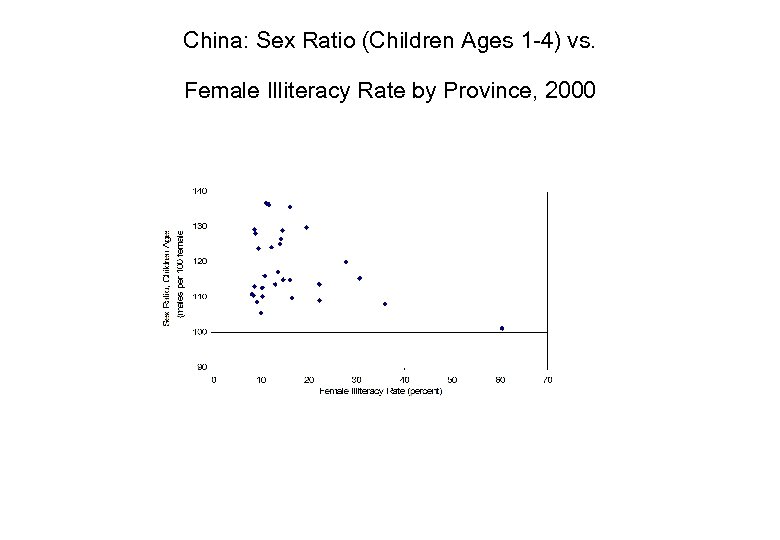
China: Sex Ratio (Children Ages 1 -4) vs. Female Illiteracy Rate by Province, 2000
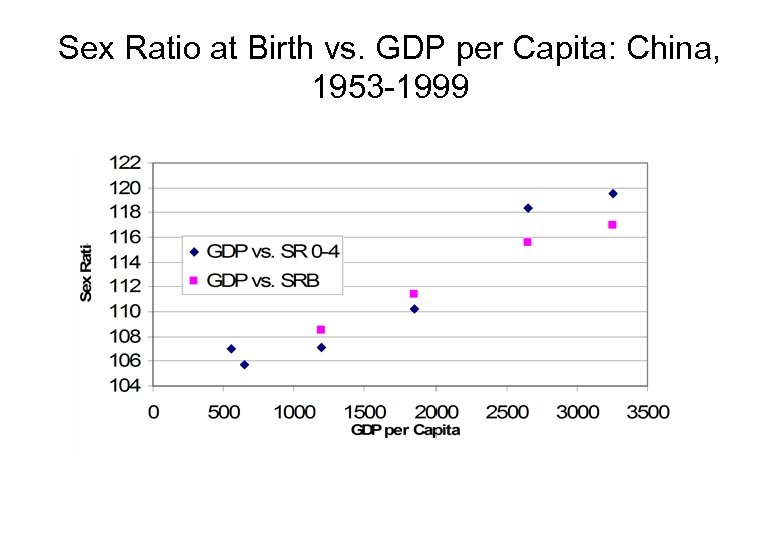
Sex Ratio at Birth vs. GDP per Capita: China, 1953 -1999
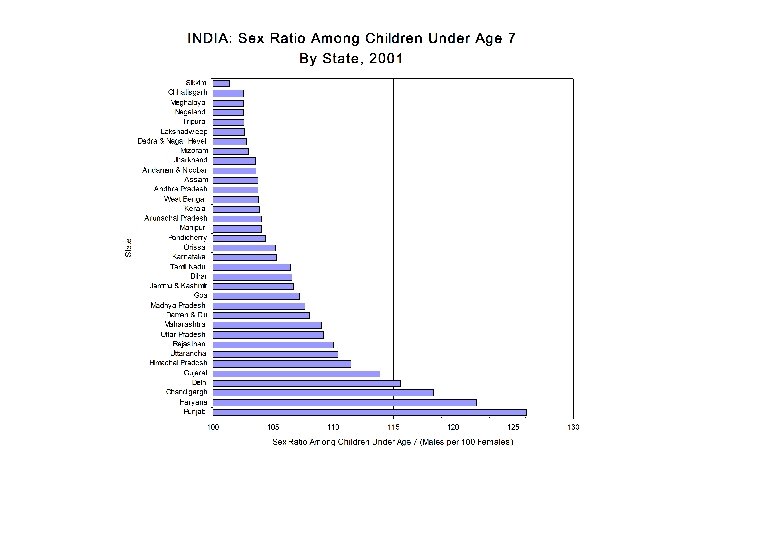
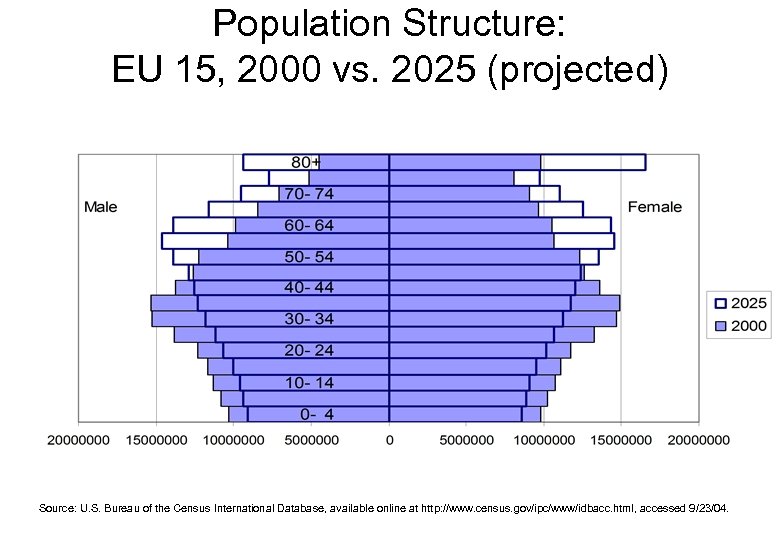
Population Structure: EU 15, 2000 vs. 2025 (projected) Source: U. S. Bureau of the Census International Database, available online at http: //www. census. gov/ipc/www/idbacc. html, accessed 9/23/04.
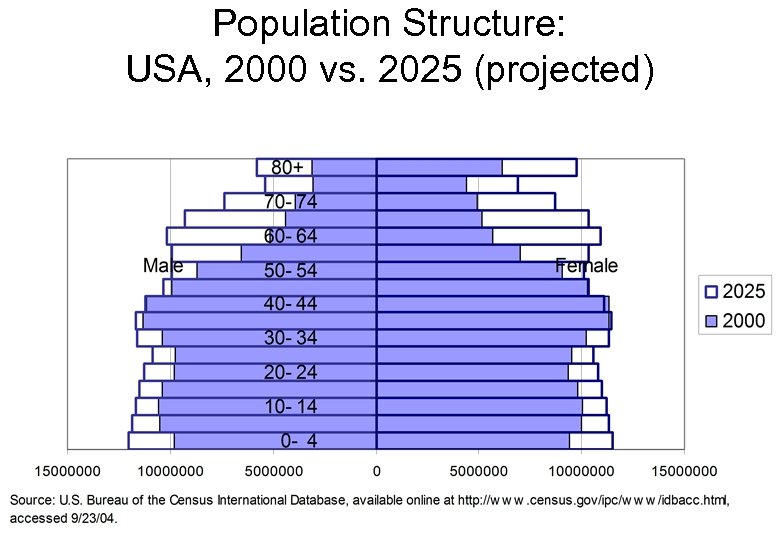
Population Structure: USA, 2000 vs. 2025 (projected)
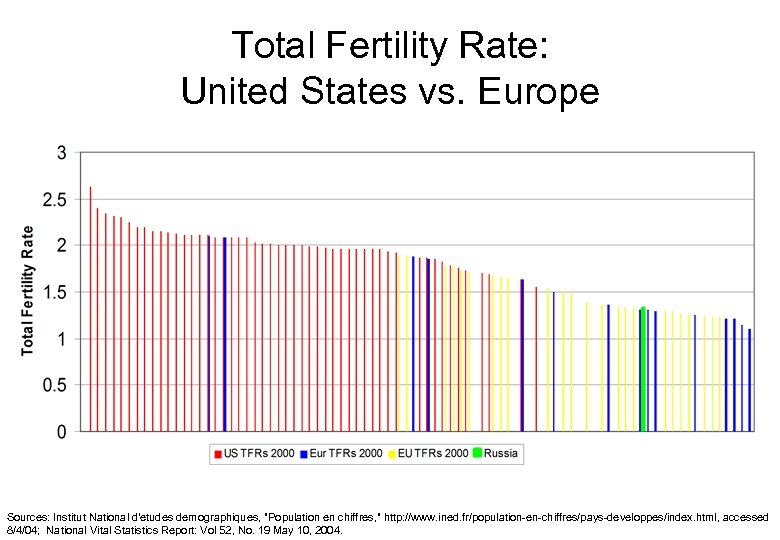
Total Fertility Rate: United States vs. Europe Sources: Institut National d'etudes demographiques, "Population en chiffres, " http: //www. ined. fr/population-en-chiffres/pays-developpes/index. html, accessed 8/4/04; National Vital Statistics Report: Vol 52, No. 19 May 10, 2004.
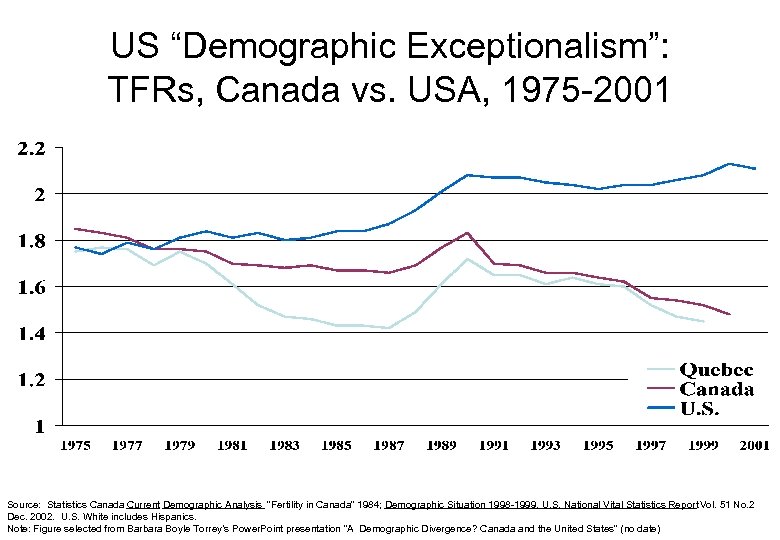
US “Demographic Exceptionalism”: TFRs, Canada vs. USA, 1975 -2001 Source: Statistics Canada Current Demographic Analysis “Fertility in Canada” 1984; Demographic Situation 1998 -1999. U. S. National Vital Statistics Report Vol. 51 No. 2 Dec. 2002. U. S. White includes Hispanics. Note: Figure selected from Barbara Boyle Torrey’s Power. Point presentation “A Demographic Divergence? Canada and the United States” (no date)
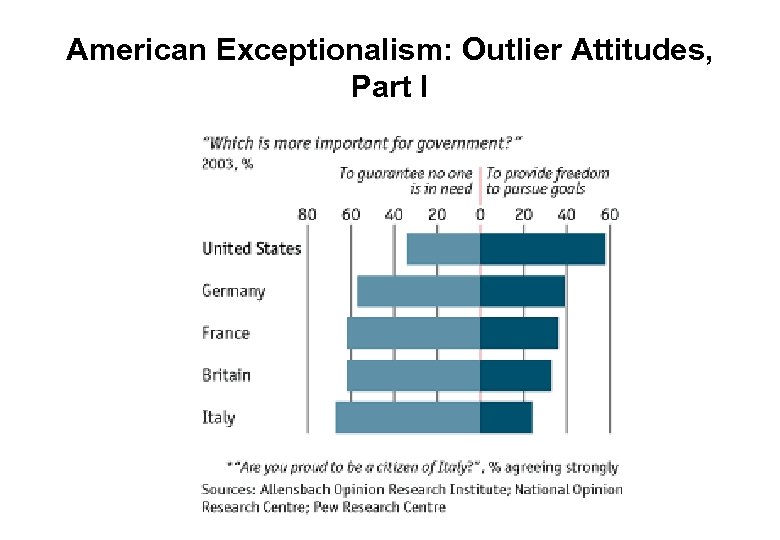
American Exceptionalism: Outlier Attitudes, Part I
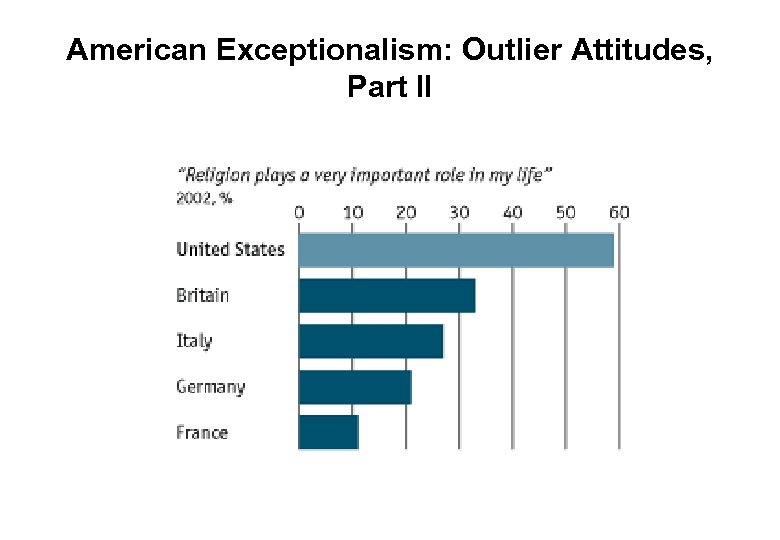
American Exceptionalism: Outlier Attitudes, Part II
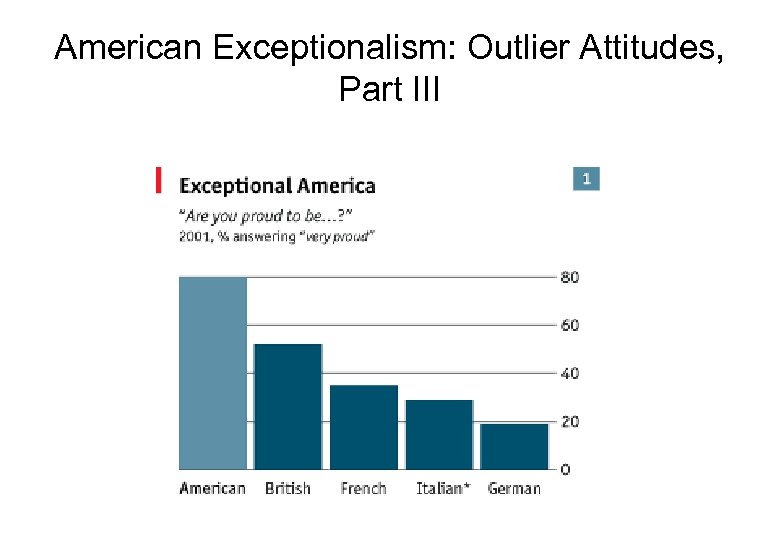
American Exceptionalism: Outlier Attitudes, Part III
 Скачать презентацию Global Population Trends Shaping The Strategic Future Nicholas
4e3273a7d1e461fea878084e5e9ba61b.ppt