 Скачать презентацию Global lessons for leadership development Higher School of
65e0326c247b22ca09a54ff29973d176.ppt
- Количество слайдов: 16



Global lessons for leadership development Higher School of Economics, Moscow Michael Barber October 2010
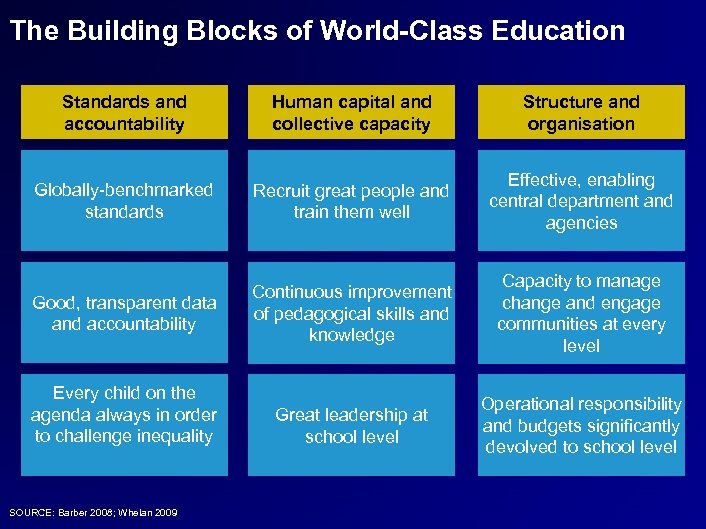
The Building Blocks of World-Class Education Standards and accountability Human capital and collective capacity Structure and organisation Globally-benchmarked standards Recruit great people and train them well Effective, enabling central department and agencies Good, transparent data and accountability Continuous improvement of pedagogical skills and knowledge Capacity to manage change and engage communities at every level Great leadership at school level Operational responsibility and budgets significantly devolved to school level Every child on the agenda always in order to challenge inequality SOURCE: Barber 2008; Whelan 2009
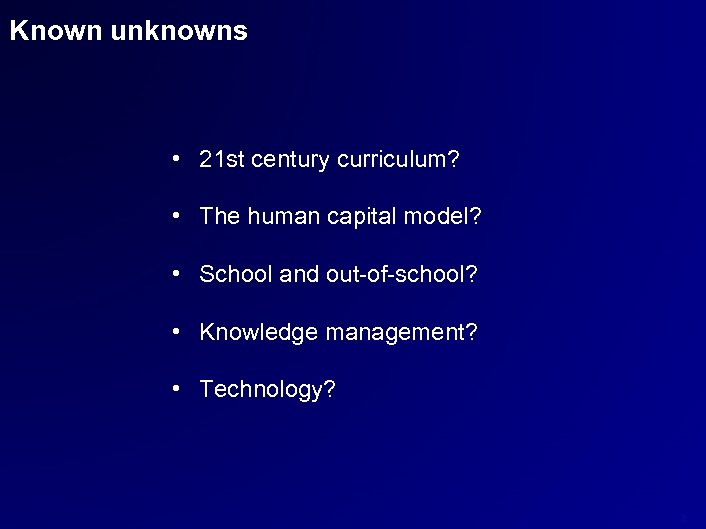
Known unknowns • 21 st century curriculum? • The human capital model? • School and out-of-school? • Knowledge management? • Technology? 2
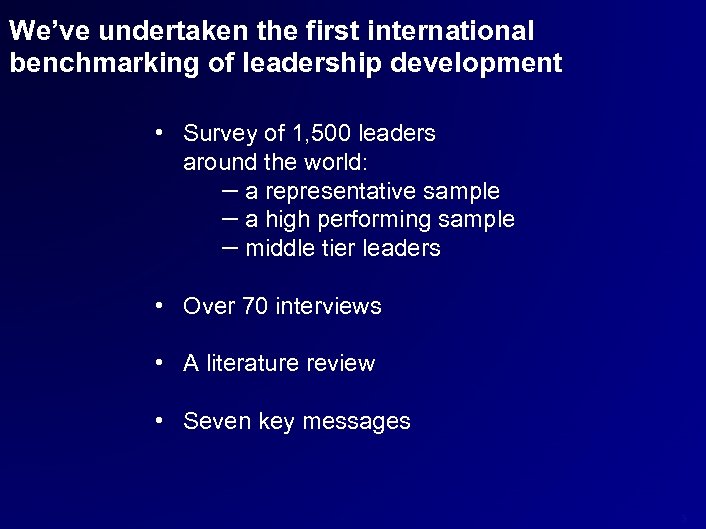
We’ve undertaken the first international benchmarking of leadership development • Survey of 1, 500 leaders around the world: – a representative sample – a high performing sample – middle tier leaders • Over 70 interviews • A literature review • Seven key messages 3
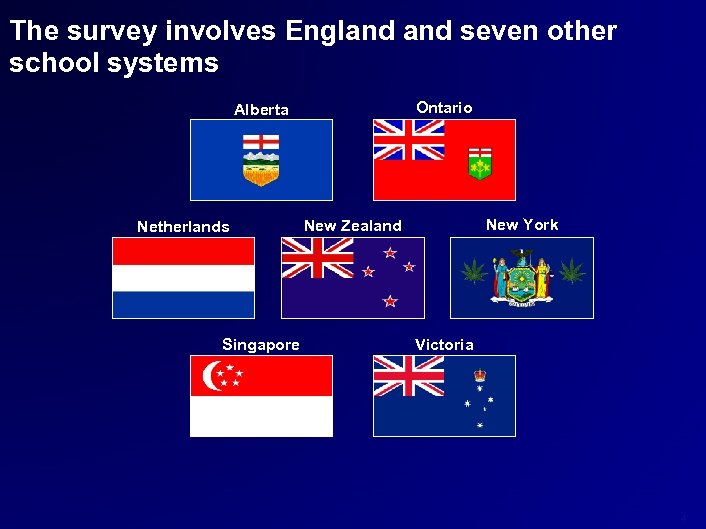
The survey involves England seven other school systems Ontario Alberta Netherlands Singapore New York New Zealand Victoria 4
1 Great school systems require great school leaders “One of the key revelations over the last ten years is that school leadership is not just an HR issue, it is a strategic issue. ” “School leadership is second only to classroom teaching as an influence on pupil learning. ” SOURCE: Interviews; Whelan F, “Lessons Learned” (2009) 5
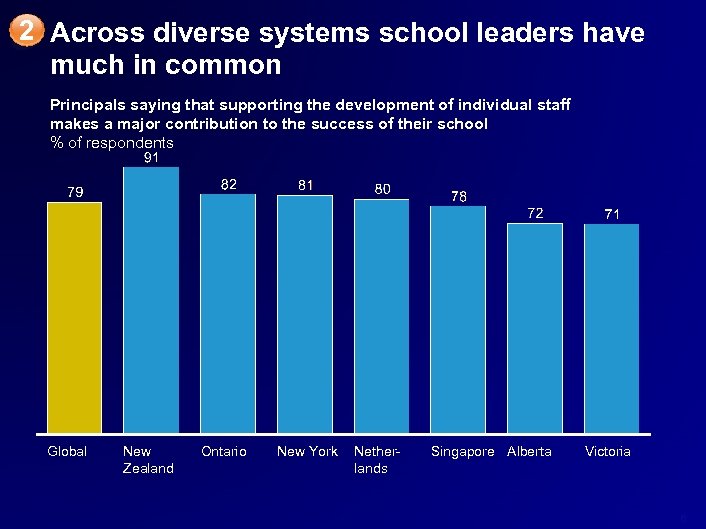
2 Across diverse systems school leaders have much in common Principals saying that supporting the development of individual staff makes a major contribution to the success of their school % of respondents Global New Zealand Ontario New York Netherlands Singapore Alberta Victoria 6
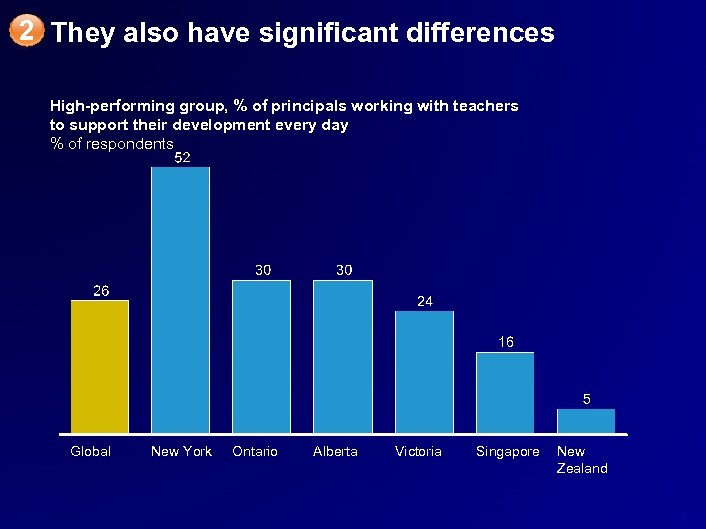
2 They also have significant differences High-performing group, % of principals working with teachers to support their development every day % of respondents Global New York Ontario Alberta Victoria Singapore New Zealand 7
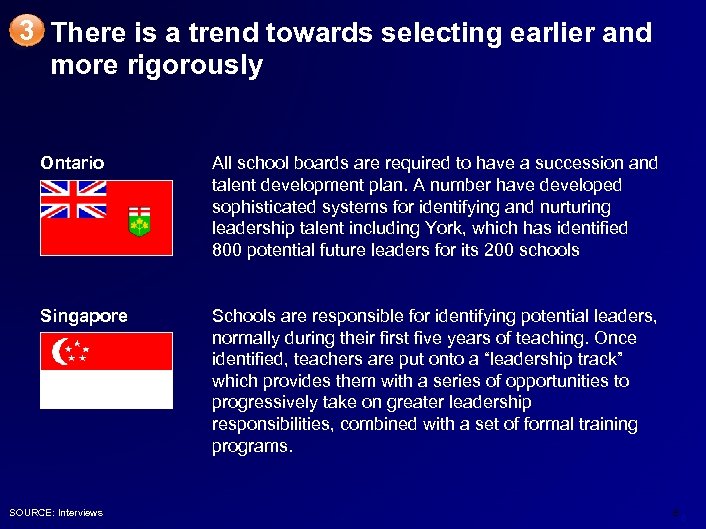
3 There is a trend towards selecting earlier and more rigorously Ontario All school boards are required to have a succession and talent development plan. A number have developed sophisticated systems for identifying and nurturing leadership talent including York, which has identified 800 potential future leaders for its 200 schools Singapore Schools are responsible for identifying potential leaders, normally during their first five years of teaching. Once identified, teachers are put onto a “leadership track” which provides them with a series of opportunities to progressively take on greater leadership responsibilities, combined with a set of formal training programs. SOURCE: Interviews 8 8
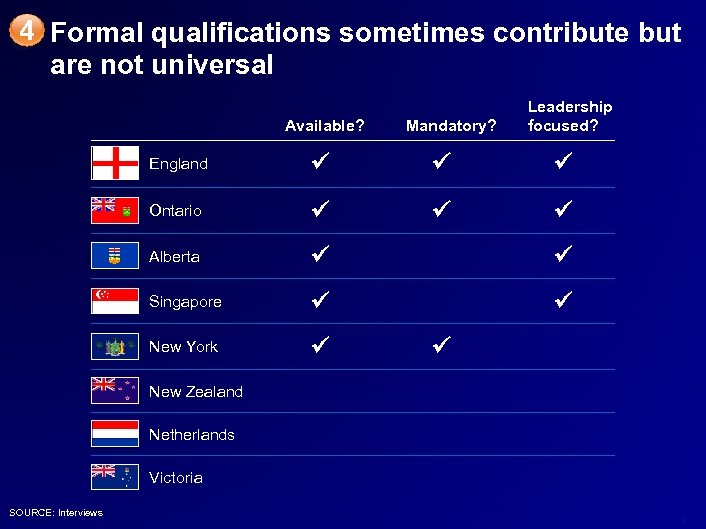
4 Formal qualifications sometimes contribute but are not universal Available? Mandatory? Leadership focused? England Ontario Alberta Singapore New York New Zealand Netherlands Victoria SOURCE: Interviews 9
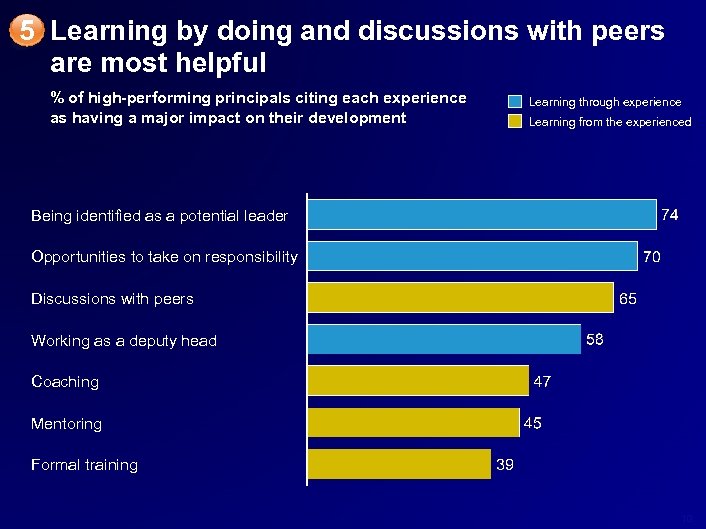
5 Learning by doing and discussions with peers are most helpful % of high-performing principals citing each experience as having a major impact on their development Learning through experience Learning from the experienced Being identified as a potential leader Opportunities to take on responsibility Discussions with peers Working as a deputy head Coaching Mentoring Formal training 10
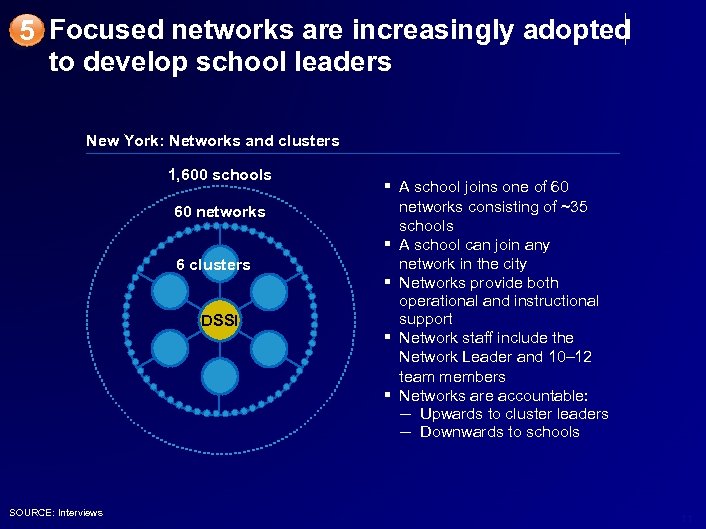
5 Focused networks are increasingly adopted to develop school leaders New York: Networks and clusters 1, 600 schools ▪ 60 networks ▪ 6 clusters DSSI ▪ ▪ ▪ SOURCE: Interviews A school joins one of 60 networks consisting of ~35 schools A school can join any network in the city Networks provide both operational and instructional support Network staff include the Network Leader and 10– 12 team members Networks are accountable: – Upwards to cluster leaders – Downwards to schools 11
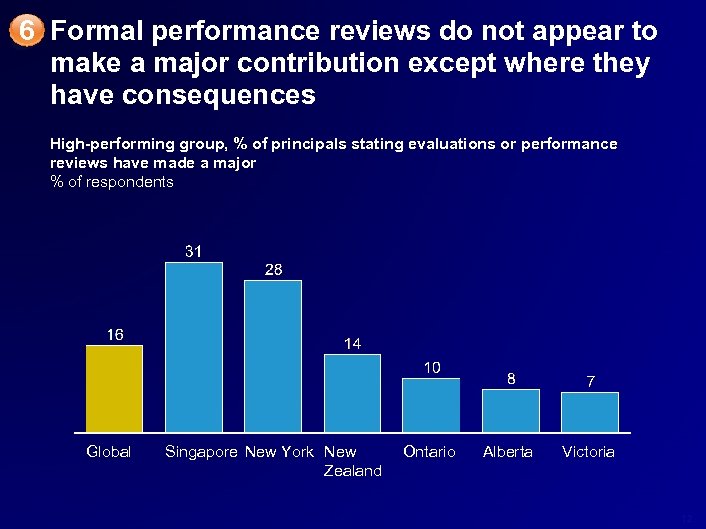
6 Formal performance reviews do not appear to make a major contribution except where they have consequences High-performing group, % of principals stating evaluations or performance reviews have made a major % of respondents Global Singapore New York New Zealand Ontario Alberta Victoria 12
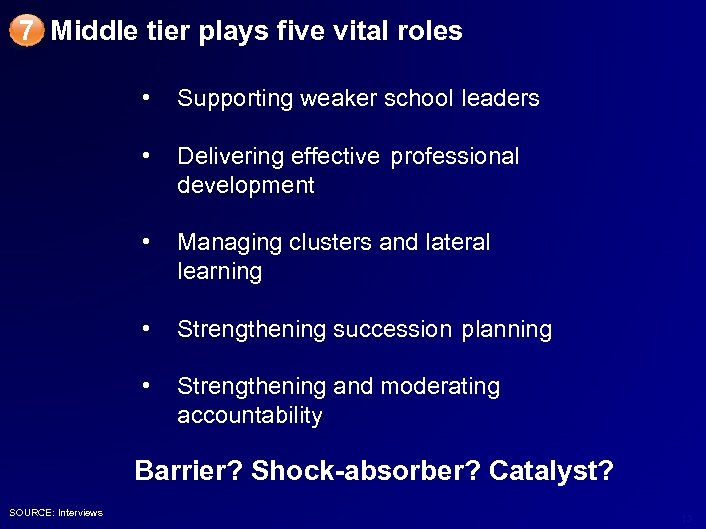
7 Middle tier plays five vital roles • Supporting weaker school leaders • Delivering effective professional development • Managing clusters and lateral learning • Strengthening succession planning • Strengthening and moderating accountability Barrier? Shock-absorber? Catalyst? SOURCE: Interviews 13
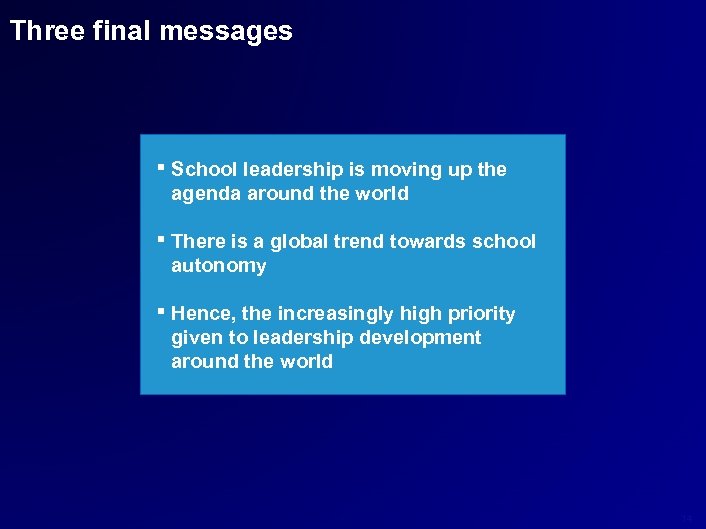
Three final messages ▪ School leadership is moving up the agenda around the world ▪ There is a global trend towards school autonomy ▪ Hence, the increasingly high priority given to leadership development around the world 14
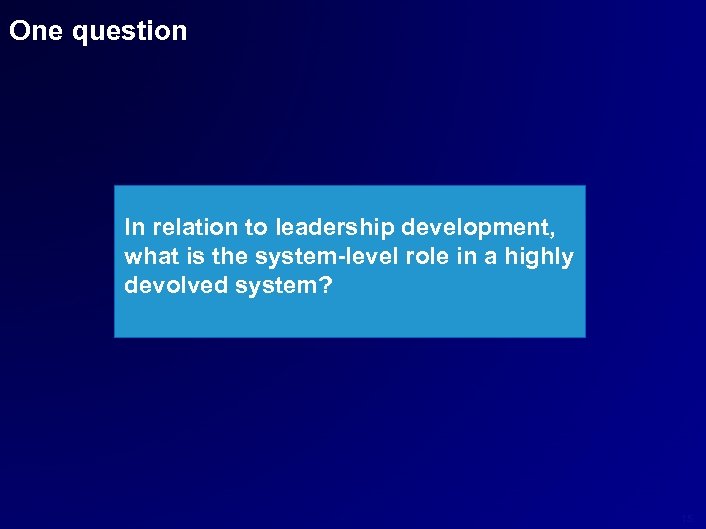
One question In relation to leadership development, what is the system-level role in a highly devolved system? 15
Скачать презентацию Global lessons for leadership development Higher School of
65e0326c247b22ca09a54ff29973d176.ppt