 Скачать презентацию Global Lake Ecological Observatory Network — GLEON Catalyzing
d552bef40d8b156a6aac6e7910af0f23.ppt
- Количество слайдов: 38



Global Lake Ecological Observatory Network - GLEON: Catalyzing Global Team Science based on PRAGMA 15 July 2006 Peter Arzberger Tim Kratz, Fang-Pang Lin Philip Papadopoulos, Mason Katz Gabriele Wienhausen, Linda Feldman And many more
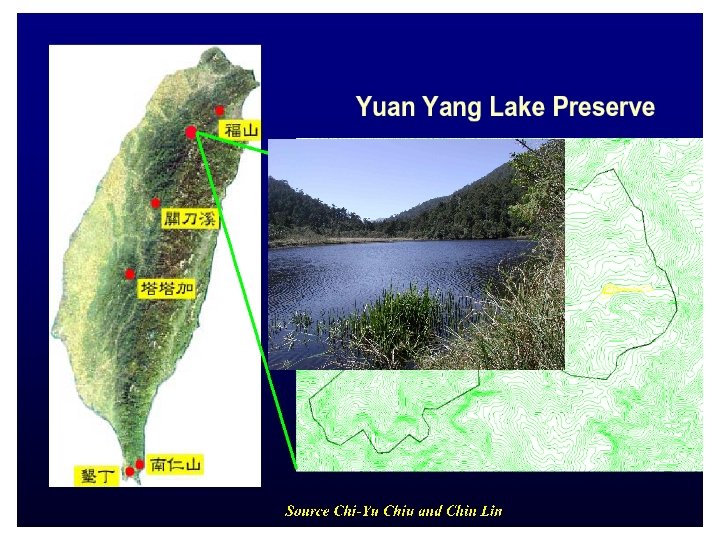
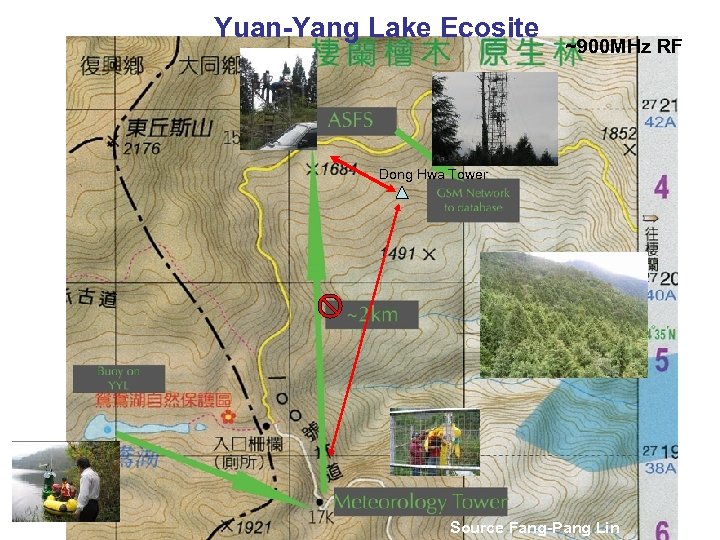
Yuan-Yang Lake Ecosite ~900 MHz RF Dong Hwa Tower Source Fang-Pang Lin
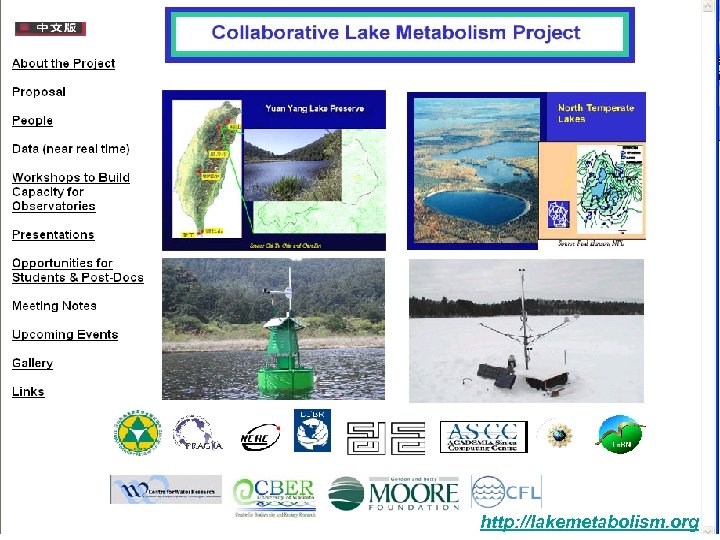
Lake Metabolism Website http: //lakemetabolism. org
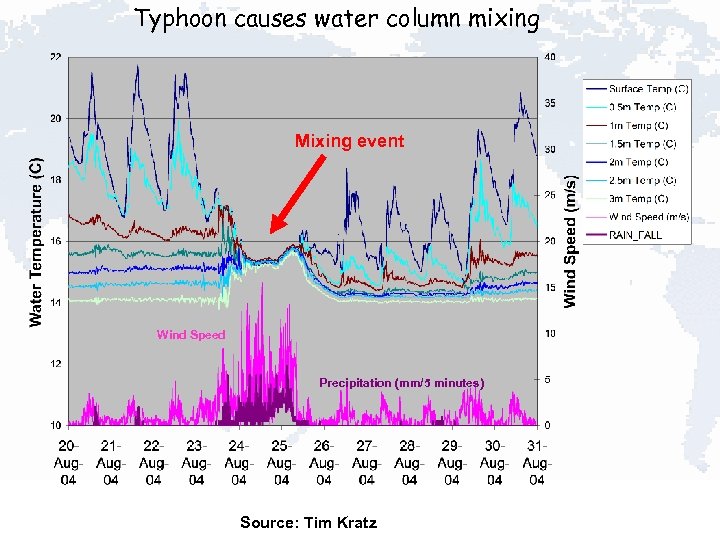
Typhoon causes water column mixing Mixing event Wind Speed Precipitation (mm/5 minutes) Source: Tim Kratz
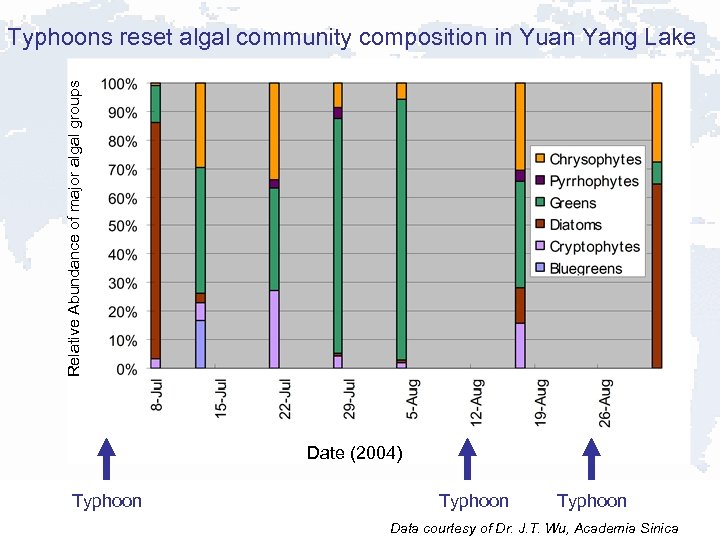
Relative Abundance of major algal groups Typhoons reset algal community composition in Yuan Yang Lake Date (2004) Typhoon Data courtesy of Dr. J. T. Wu, Academia Sinica
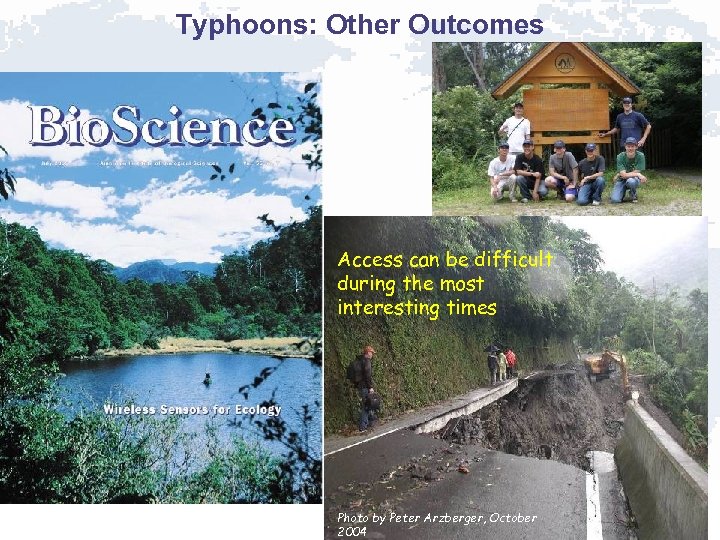
Typhoons: Other Outcomes Access can be difficult during the most interesting times Photo by Peter Arzberger, October 2004
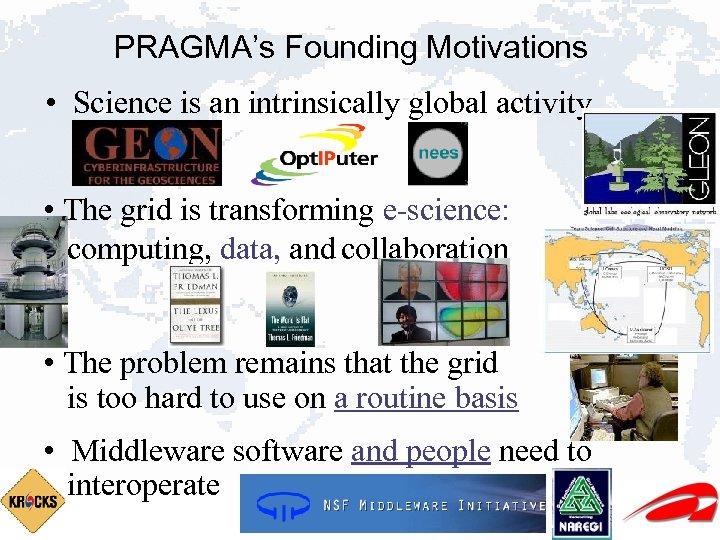
PRAGMA’s Founding Motivations • Science is an intrinsically global activity • The grid is transforming e-science: computing, data, and collaboration • The problem remains that the grid is too hard to use on a routine basis • Middleware software and people need to interoperate
PRAGMA Overarching Goals Establish sustained collaborations and Advance the use of the grid technologies for applications among a community of investigators working with leading institutions around the Pacific Rim Working closely with established activities that promote grid activities or the underlying infrastructure, both in the Pacific Rim and globally. http: //www. pragma-grid. net
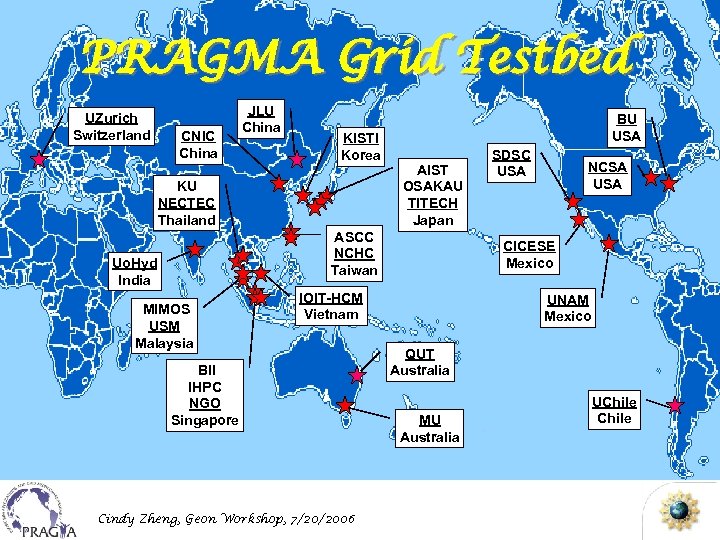
PRAGMA Grid Testbed UZurich Switzerland CNIC China JLU China KISTI Korea KU NECTEC Thailand BU USA AIST OSAKAU TITECH Japan ASCC NCHC Taiwan Uo. Hyd India MIMOS USM Malaysia Cindy Zheng, Geon Workshop, 7/20/2006 NCSA USA CICESE Mexico IOIT-HCM Vietnam BII IHPC NGO Singapore SDSC USA UNAM Mexico QUT Australia MU Australia UChile
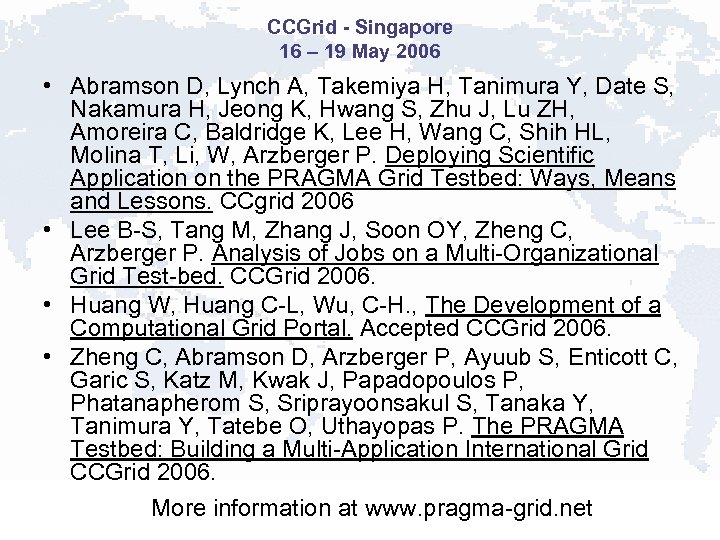
CCGrid - Singapore 16 – 19 May 2006 • Abramson D, Lynch A, Takemiya H, Tanimura Y, Date S, Nakamura H, Jeong K, Hwang S, Zhu J, Lu ZH, Amoreira C, Baldridge K, Lee H, Wang C, Shih HL, Molina T, Li, W, Arzberger P. Deploying Scientific Application on the PRAGMA Grid Testbed: Ways, Means and Lessons. CCgrid 2006 • Lee B-S, Tang M, Zhang J, Soon OY, Zheng C, Arzberger P. Analysis of Jobs on a Multi-Organizational Grid Test-bed. CCGrid 2006. • Huang W, Huang C-L, Wu, C-H. , The Development of a Computational Grid Portal. Accepted CCGrid 2006. • Zheng C, Abramson D, Arzberger P, Ayuub S, Enticott C, Garic S, Katz M, Kwak J, Papadopoulos P, Phatanapherom S, Sriprayoonsakul S, Tanaka Y, Tanimura Y, Tatebe O, Uthayopas P. The PRAGMA Testbed: Building a Multi-Application International Grid CCGrid 2006. More information at www. pragma-grid. net
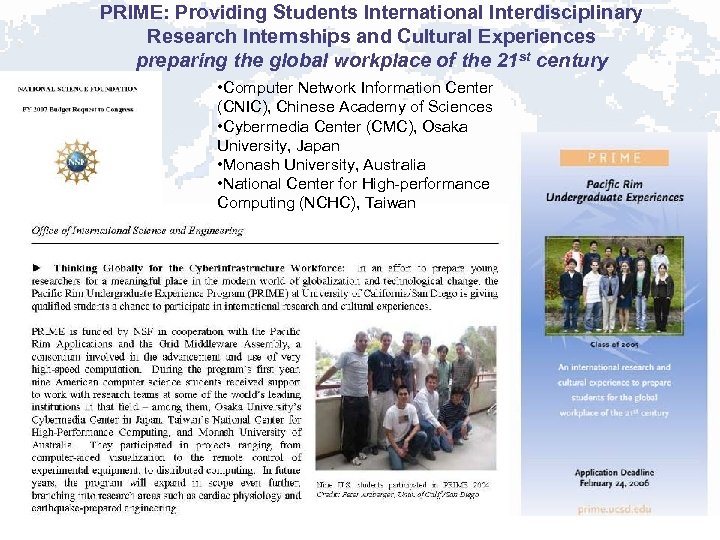
PRIME: Providing Students International Interdisciplinary Research Internships and Cultural Experiences preparing the global workplace of the 21 st century • Computer Network Information Center (CNIC), Chinese Academy of Sciences • Cybermedia Center (CMC), Osaka University, Japan • Monash University, Australia • National Center for High-performance Computing (NCHC), Taiwan
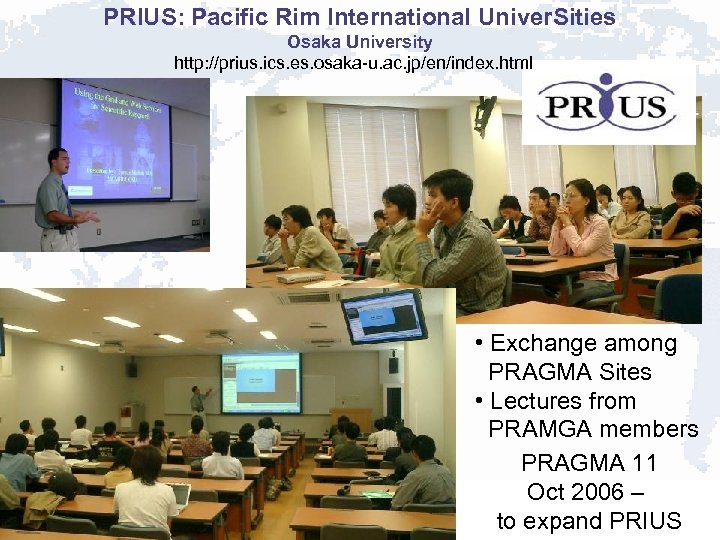
PRIUS: Pacific Rim International Univer. Sities Osaka University http: //prius. ics. es. osaka-u. ac. jp/en/index. html • • Exchange among PRAGMA Sites • Lectures from PRAMGA members PRAGMA 11 Oct 2006 – to expand PRIUS
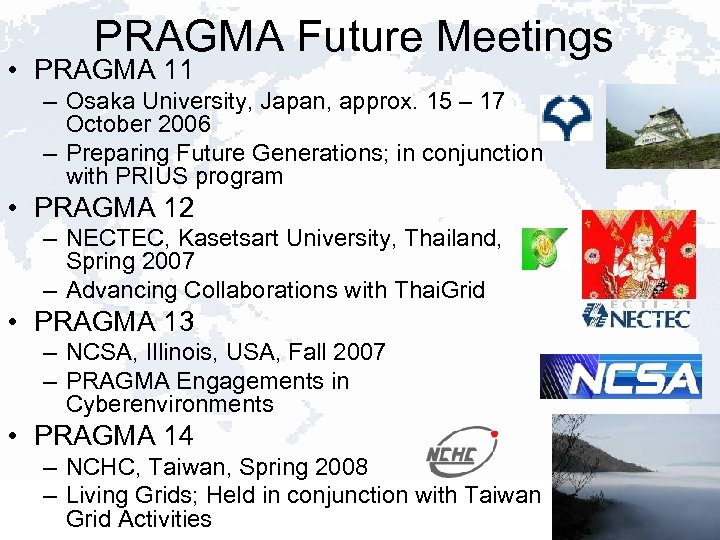
PRAGMA Future Meetings • PRAGMA 11 – Osaka University, Japan, approx. 15 – 17 October 2006 – Preparing Future Generations; in conjunction with PRIUS program • PRAGMA 12 – NECTEC, Kasetsart University, Thailand, Spring 2007 – Advancing Collaborations with Thai. Grid • PRAGMA 13 – NCSA, Illinois, USA, Fall 2007 – PRAGMA Engagements in Cyberenvironments • PRAGMA 14 – NCHC, Taiwan, Spring 2008 – Living Grids; Held in conjunction with Taiwan Grid Activities
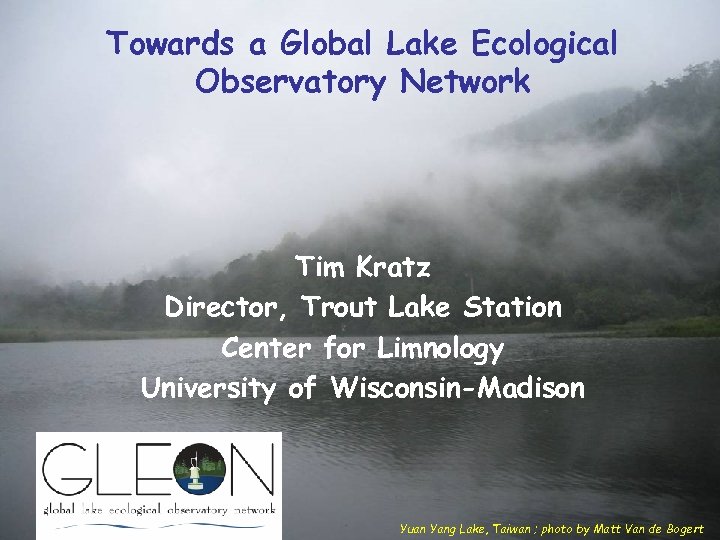
Towards a Global Lake Ecological Observatory Network Tim Kratz Director, Trout Lake Station Center for Limnology University of Wisconsin-Madison Yuan Yang Lake, Taiwan ; photo by Matt Van de Bogert
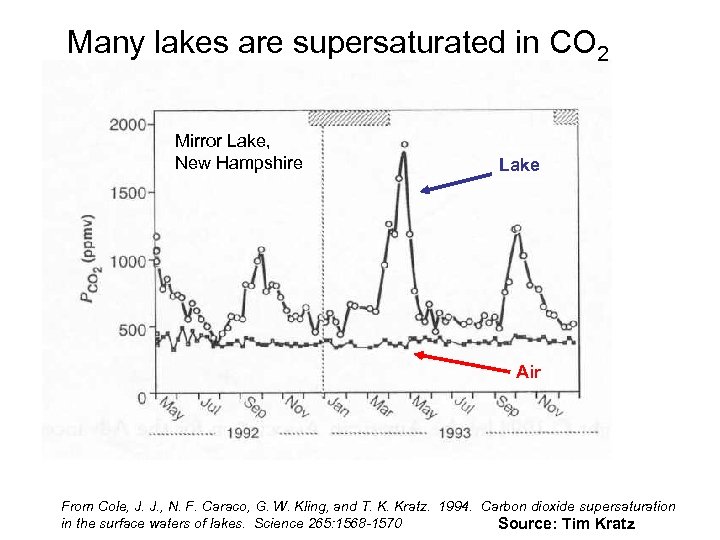
Many lakes are supersaturated in CO 2 Mirror Lake, New Hampshire Lake Air From Cole, J. J. , N. F. Caraco, G. W. Kling, and T. K. Kratz. 1994. Carbon dioxide supersaturation in the surface waters of lakes. Science 265: 1568 -1570 Source: Tim Kratz
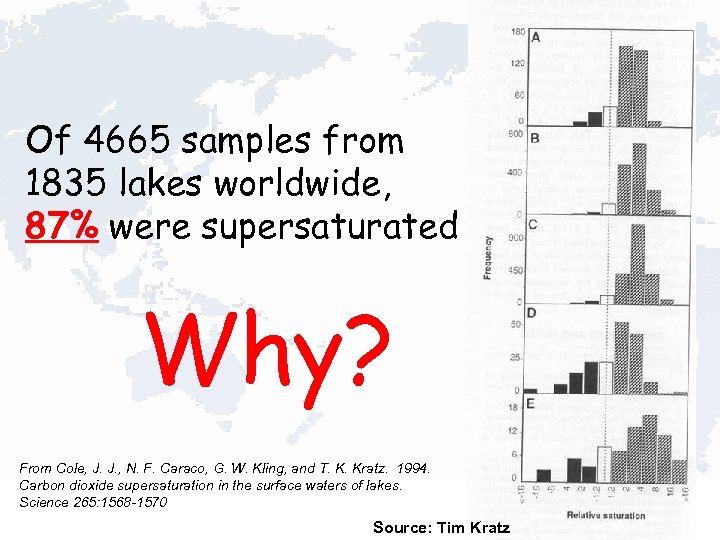
Of 4665 samples from 1835 lakes worldwide, 87% were supersaturated Why? From Cole, J. J. , N. F. Caraco, G. W. Kling, and T. K. Kratz. 1994. Carbon dioxide supersaturation in the surface waters of lakes. Science 265: 1568 -1570 Source: Tim Kratz
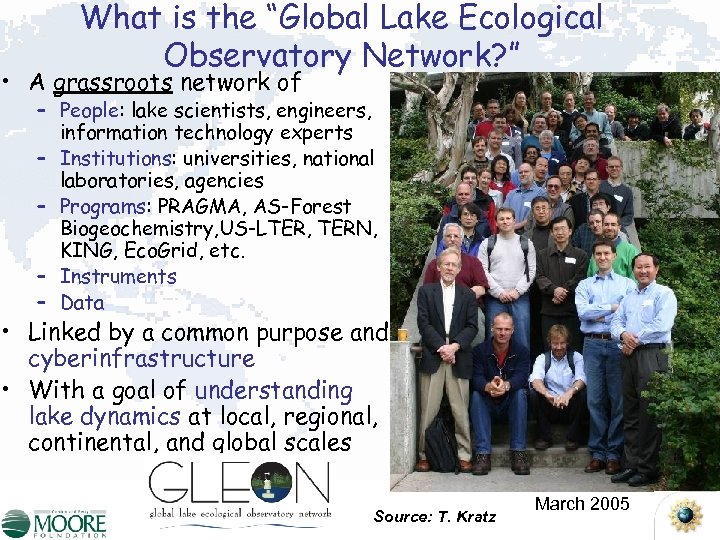
What is the “Global Lake Ecological Observatory Network? ” • A grassroots network of – People: lake scientists, engineers, information technology experts – Institutions: universities, national laboratories, agencies – Programs: PRAGMA, AS-Forest Biogeochemistry, US-LTER, TERN, KING, Eco. Grid, etc. – Instruments – Data • Linked by a common purpose and cyberinfrastructure • With a goal of understanding lake dynamics at local, regional, continental, and global scales Source: T. Kratz March 2005
Vision and Driving Rationale for GLEON • A global network of hundreds of instrumented lakes, data, researchers, students, • Predict lake ecosystems response to natural and anthropogenic mediated events – Through improved data inputs to simulation models – To better plan and preserve freshwater resources on the planet
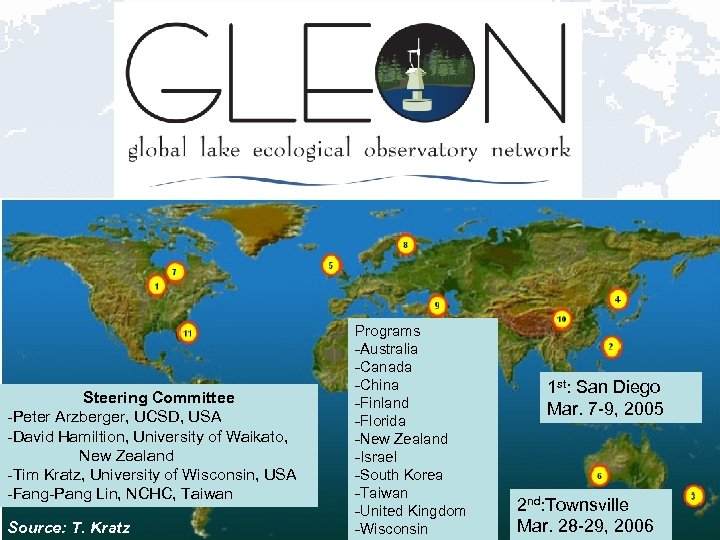
Steering Committee -Peter Arzberger, UCSD, USA -David Hamiltion, University of Waikato, New Zealand -Tim Kratz, University of Wisconsin, USA -Fang-Pang Lin, NCHC, Taiwan Source: T. Kratz Programs -Australia -Canada -China -Finland -Florida -New Zealand -Israel -South Korea -Taiwan -United Kingdom -Wisconsin 1 st: San Diego Mar. 7 -9, 2005 2 nd: Townsville Mar. 28 -29, 2006
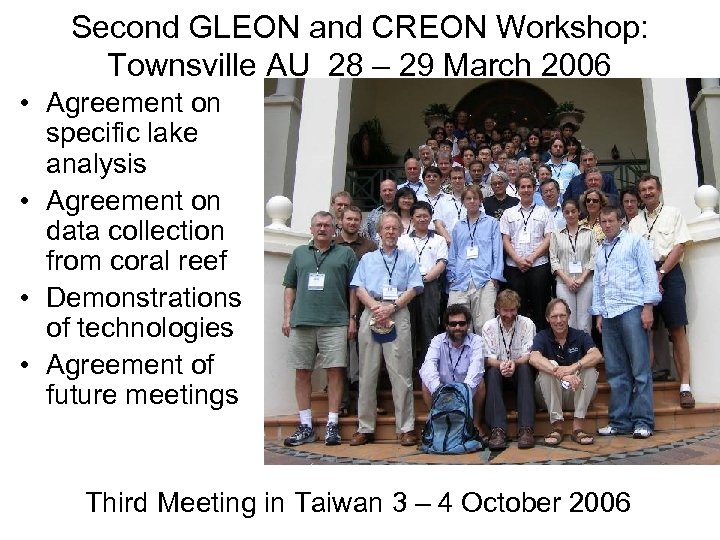
Second GLEON and CREON Workshop: Townsville AU 28 – 29 March 2006 • Agreement on specific lake analysis • Agreement on data collection from coral reef • Demonstrations of technologies • Agreement of future meetings Third Meeting in Taiwan 3 – 4 October 2006
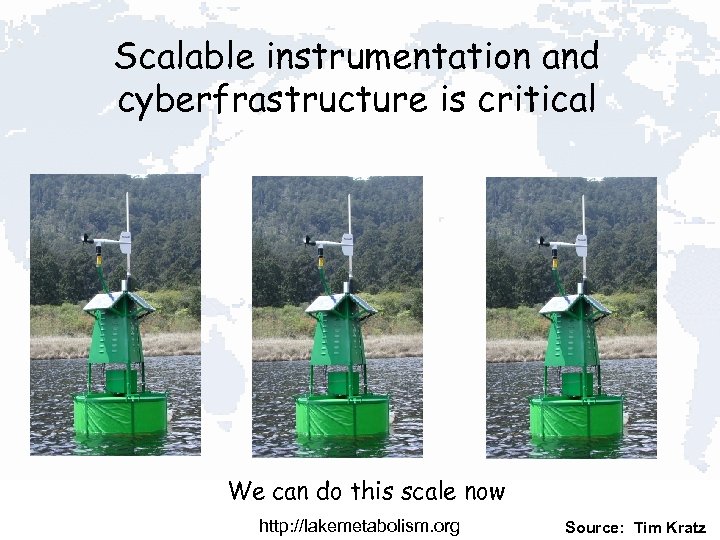
Scalable instrumentation and cyberfrastructure is critical We can do this scale now http: //lakemetabolism. org Source: Tim Kratz
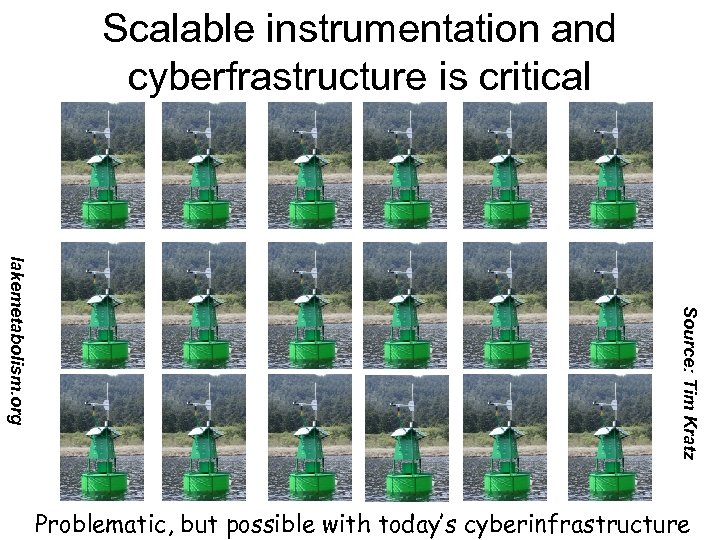
Scalable instrumentation and cyberfrastructure is critical Source: Tim Kratz lakemetabolism. org Problematic, but possible with today’s cyberinfrastructure
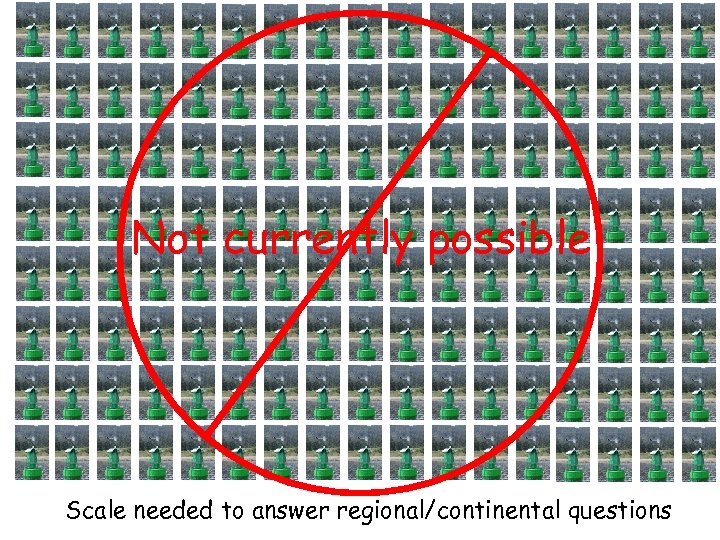
Not currently possible Scale needed to answer regional/continental questions
Addressing the Scaling Challenge NSF NEON Award • Collaborative Research: Automating Scaling and Data Processing in a Network of Sensors: Towards a Global Network for Lake Metabolism Research and Education – UCSD, UWI, IU, SUNY-Binghamton • Automate – Instrument management – QA/QC and Event Detection • Service Oriented Architecture • Broaden Involvement of Students
Building Community Based, Grass-Roots Research Networks: The Cases of Global Lake Ecological Observatory Network (GLEON) and of Coral Reef Ecological Observatory Network (CREON) A proposal to • • • Develop a robust, persistent infrastructure and interface for data sharing and analysis Assist specific sites in establishing monitoring systems to produce data Hold a series of working meetings and engage other network projects
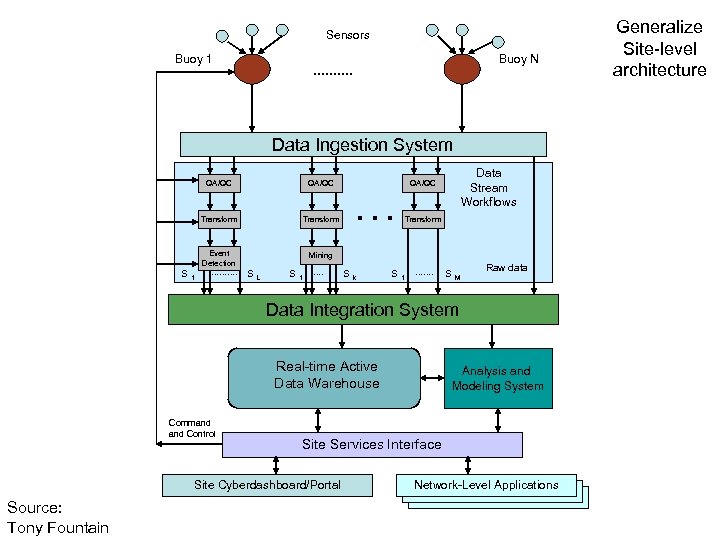
Sensors Buoy 1 Buoy N ………. Data Ingestion System QA/QC Transform S 1 QA/QC Transform Event Detection ………. Data Stream Workflows Mining S L S 1 …. … S k S 1 QA/QC Transform ……. S M Raw data Data Integration System Real-time Active Data Warehouse Command Control Site Services Interface Site Cyberdashboard/Portal Source: Tony Fountain Analysis and Modeling System Network-Level Applications Generalize Site-level architecture
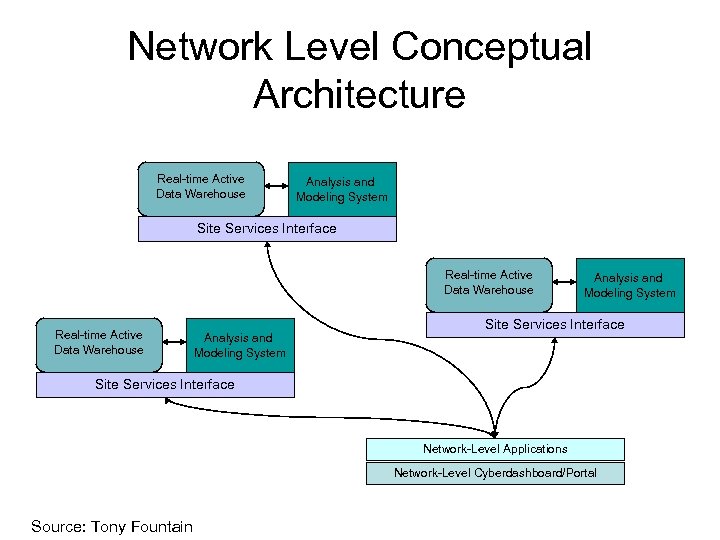
Network Level Conceptual Architecture Real-time Active Data Warehouse Analysis and Modeling System Site Services Interface Network-Level Applications Network-Level Cyberdashboard/Portal Source: Tony Fountain
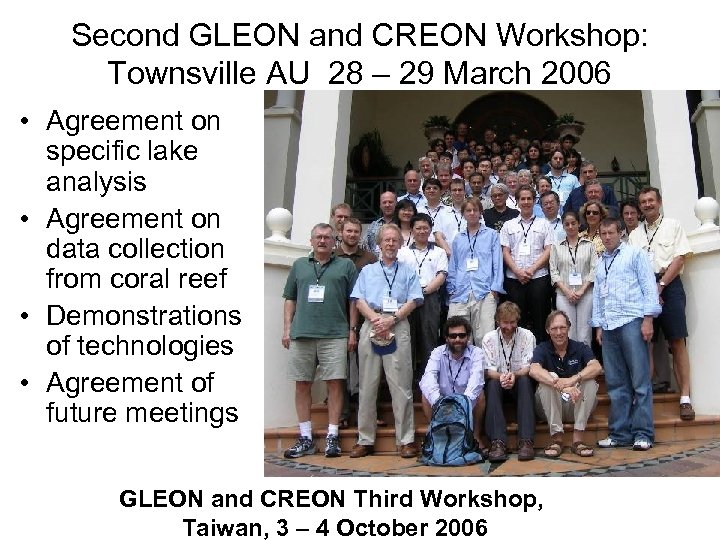
Second GLEON and CREON Workshop: Townsville AU 28 – 29 March 2006 • Agreement on specific lake analysis • Agreement on data collection from coral reef • Demonstrations of technologies • Agreement of future meetings GLEON and CREON Third Workshop, Taiwan, 3 – 4 October 2006
References • Kratz, Timothy K. , Peter Arzberger, Barbara J. Benson, Chih-Yu Chiu, Kenneth Chiu, Longjiang Ding, Tony Fountain, David Hamilton, Paul C. Hanson, Yu Hen Hu, Fang-Pang Lin, Donald F. Mc. Mullen, Sameer Tilak, Chin Wu. (in press). Toward a Global Lake Ecological Observatory Network. Proceedings of the Karelian Institute. • Porter, J. , P. Arzberger, H. Braun, P. Bryant, S. Gage, T. Hansen, P. Hanson, F. Lin, C. Lin, T. K. Kratz, W. Michener, S. Shapiro, and T. Williams. 2005. Wireless sensor networks for ecology. Bioscience 55: 561 -572. • Sensors for Environmental Observations, National Science Foundation Workshop Report (Seattle WA, Dec 2004) 2005 http: //www. wtec. org/seo
Future Activities • Link together a collection of networks – Work with partners in PRAGMA: NCHC, NECTEC, NARC, and others U Waikato, NIGLAS, … • Create test bed for sensors and sensor network
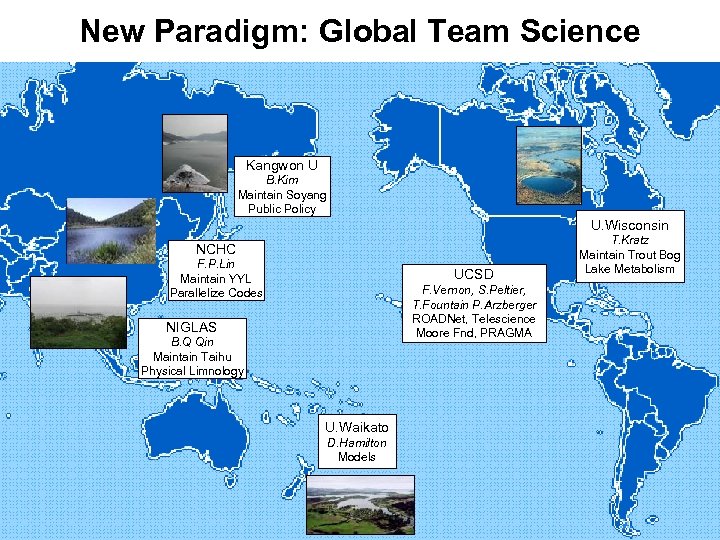
New Paradigm: Global Team Science Kangwon U B. Kim Maintain Soyang Public Policy U. Wisconsin NCHC F. P. Lin Maintain YYL Parallelize Codes UCSD F. Vernon, S. Peltier, T. Fountain P. Arzberger ROADNet, Telescience Moore Fnd, PRAGMA NIGLAS B. Q Qin Maintain Taihu Physical Limnology U. Waikato D. Hamilton Models T. Kratz Maintain Trout Bog Lake Metabolism
Acknowledgements • PRAGMA – Philip Papadopoulos (UCSD) – Mason Katz, Wilfred Li, Kim Baldridge, Tomas Molina, Cindy Zheng – Fang-Pang Lin (NCHC) – And many others at all 28 institutions, in particular the Steering Committee • Tim Kratz (U WI) David Hamilton (U Waikato) Fang-Pang Lin (NCHC) And others at 10 other sites CREON – Sally Holbrook (UCSB) – Stuart Kininmonth (AIMS) PRIME – Gabriele Wienhausen – Linda Feldman – All Host sites and students • PRIUS – Shinji Shimojo (Osaka) – Susumu Date (Osaka) • GLEON – – • • CAMERA – Larry Smarr – Paul Gilna • NSF – Bill Chang – Many others • • Gordon and Betty Moore Foundation National Institutes of Health
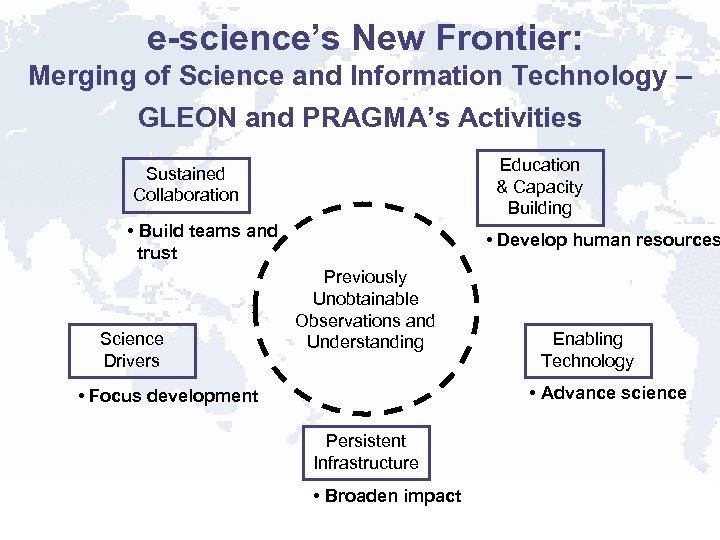
e-science’s New Frontier: Merging of Science and Information Technology – GLEON and PRAGMA’s Activities Education & Capacity Building Sustained Collaboration • Build teams and trust Science Drivers • Develop human resources Previously Unobtainable Observations and Understanding Enabling Technology • Advance science • Focus development Persistent Infrastructure • Broaden impact
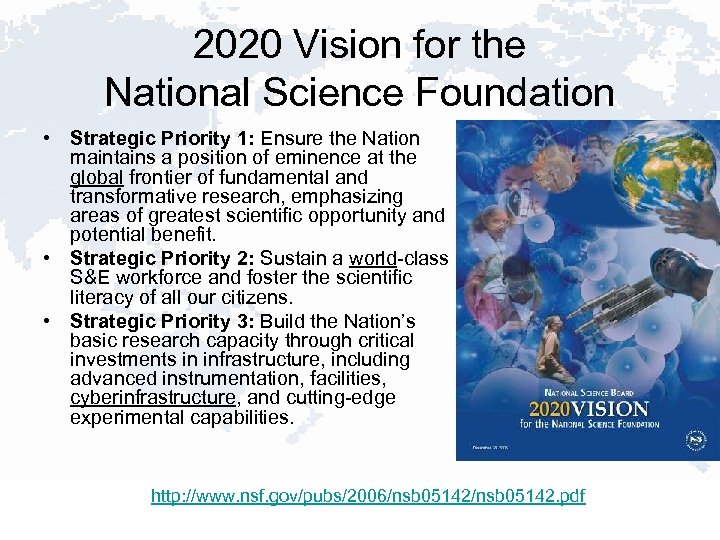
2020 Vision for the National Science Foundation • Strategic Priority 1: Ensure the Nation maintains a position of eminence at the global frontier of fundamental and transformative research, emphasizing areas of greatest scientific opportunity and potential benefit. • Strategic Priority 2: Sustain a world-class S&E workforce and foster the scientific literacy of all our citizens. • Strategic Priority 3: Build the Nation’s basic research capacity through critical investments in infrastructure, including advanced instrumentation, facilities, cyberinfrastructure, and cutting-edge experimental capabilities. http: //www. nsf. gov/pubs/2006/nsb 05142. pdf
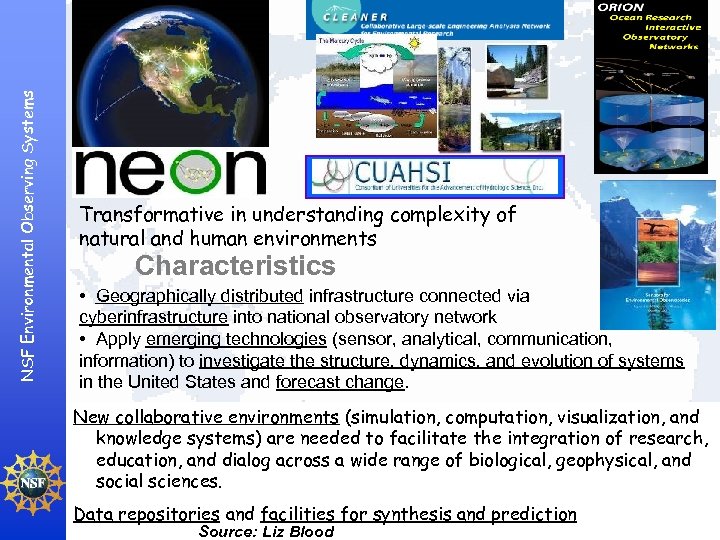
NSF Environmental Observing Systems Transformative in understanding complexity of natural and human environments Characteristics • Geographically distributed infrastructure connected via cyberinfrastructure into national observatory network • Apply emerging technologies (sensor, analytical, communication, information) to investigate the structure, dynamics, and evolution of systems in the United States and forecast change. New collaborative environments (simulation, computation, visualization, and knowledge systems) are needed to facilitate the integration of research, education, and dialog across a wide range of biological, geophysical, and social sciences. Data repositories and facilities for synthesis and prediction Source: Liz Blood
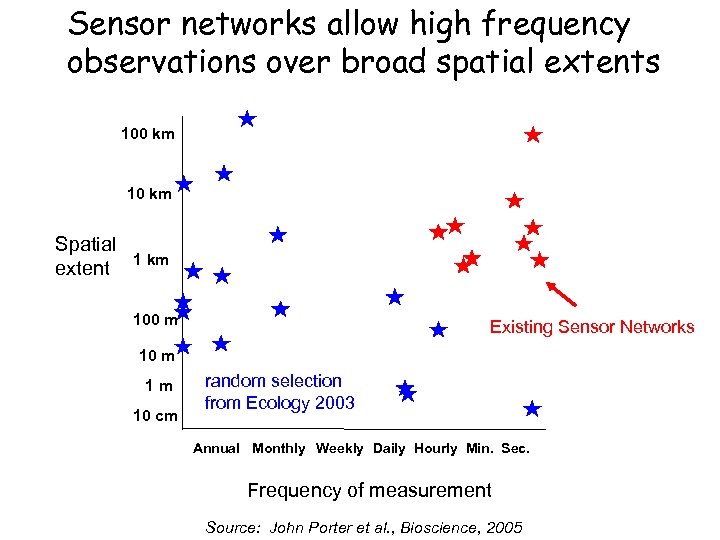
Sensor networks allow high frequency observations over broad spatial extents 100 km 10 km Spatial extent 1 km 100 m Existing Sensor Networks 10 m 1 m 10 cm random selection from Ecology 2003 Annual Monthly Weekly Daily Hourly Min. Sec. Frequency of measurement Source: John Porter et al. , Bioscience, 2005
Скачать презентацию Global Lake Ecological Observatory Network — GLEON Catalyzing
d552bef40d8b156a6aac6e7910af0f23.ppt