 Скачать презентацию Global Hunger There around one billion hungry
4b52daa77d4d11c50ba54a85e922d02e.ppt
- Количество слайдов: 31



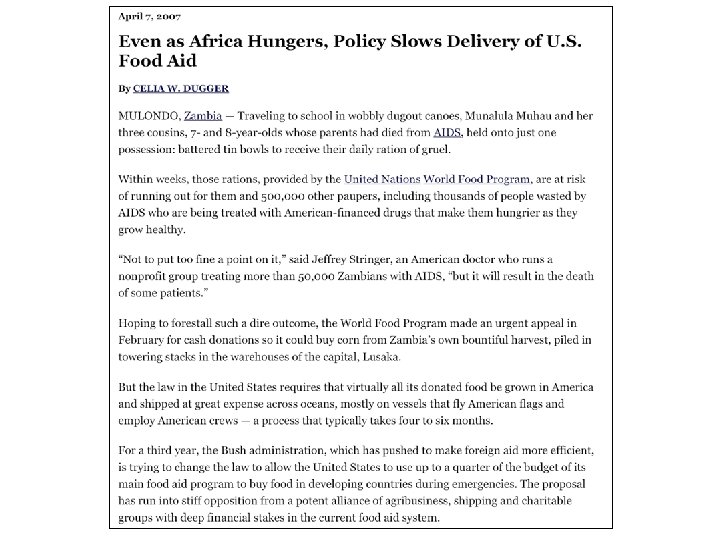
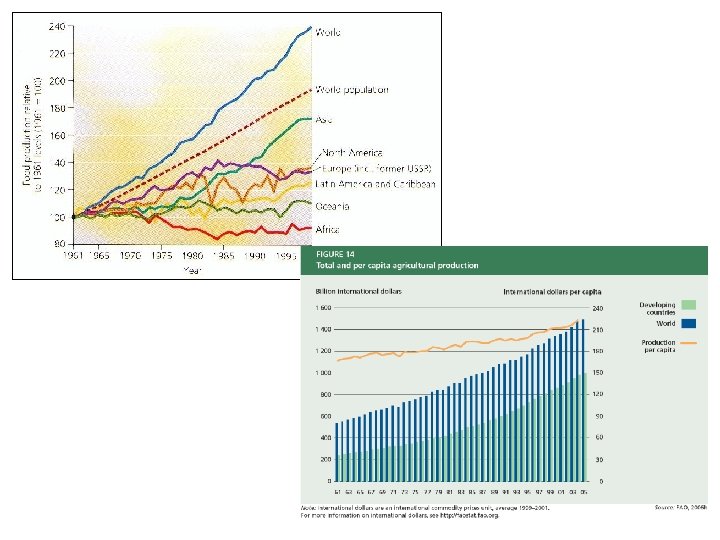
Global Hunger • There around one billion hungry people in the world (one in seven people in the world is hungry). • The number has increased during the past decade. • There is enough produced in the world so that, if they could get it, all ~7 billion people in the world could consume >3000 calories per day. • Why and how does hunger occur? • What can/should be done about it?
• Defining hunger Global Hunger --This is important b/c problems often get defined in terms of available and/or economically/politically/socially convenient solutions “When I give food to the poor, they call me a saint. When I ask why the poor have no food, they call me a communist. ” (Brazilian archbishop Dom Helder Camara) --Hunger can be defined as inadequate or insufficient : o. Consumption of calories (undernutrition) o. Consumption of nutrients/minerals (malnutrition) o. Ability to reliably enough food to live a healthy, active life (food insecurity) o. Capability to reliably access socially/culturally acceptable food in socially acceptable ways (food insecurity)
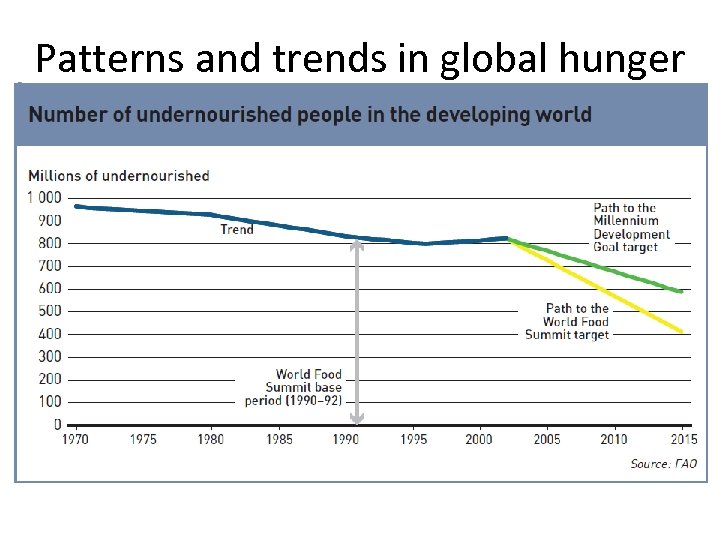
Patterns and trends in global hunger
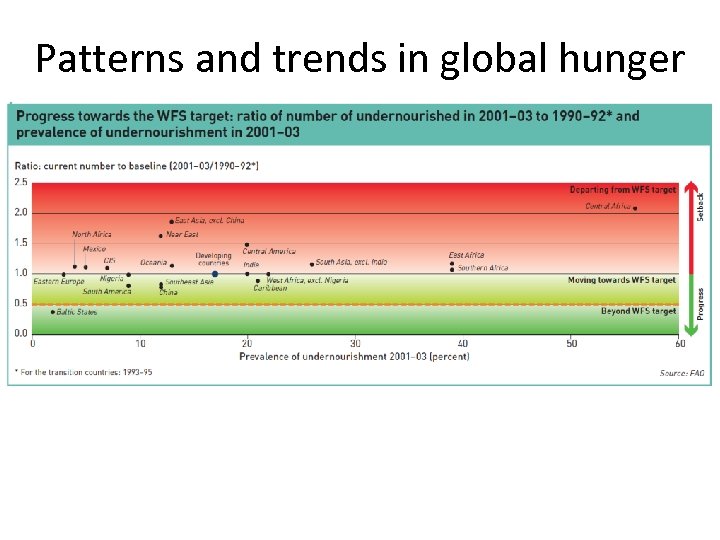
Patterns and trends in global hunger
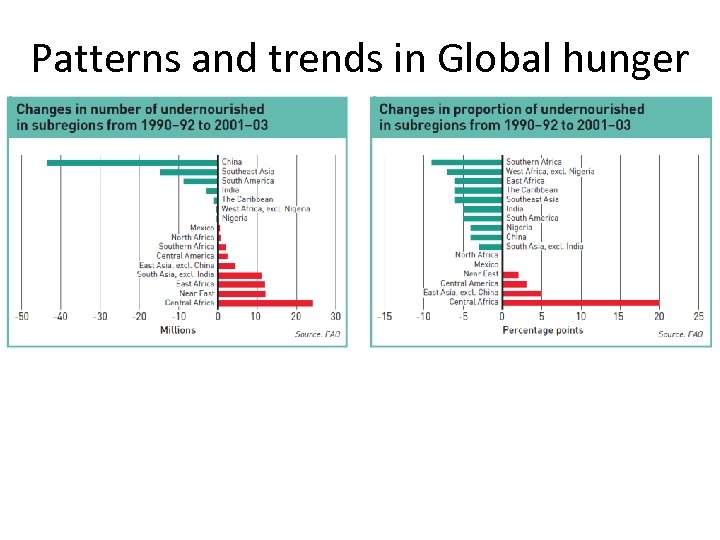
Patterns and trends in Global hunger
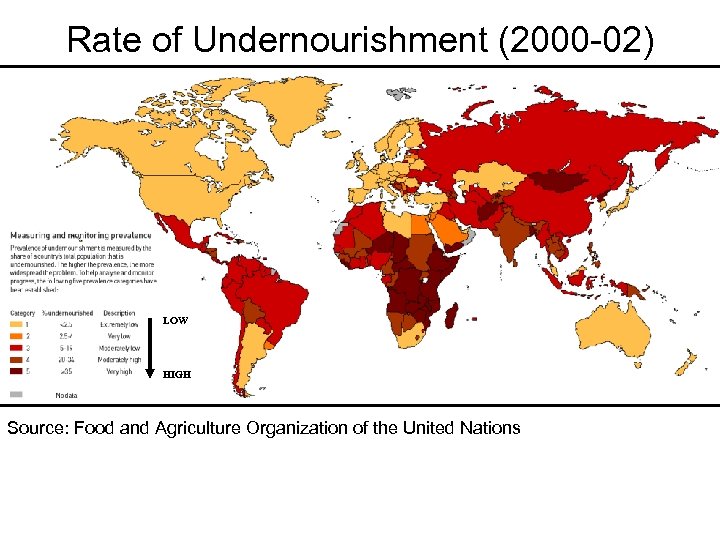
Rate of Undernourishment (2000 -02) LOW HIGH Source: Food and Agriculture Organization of the United Nations
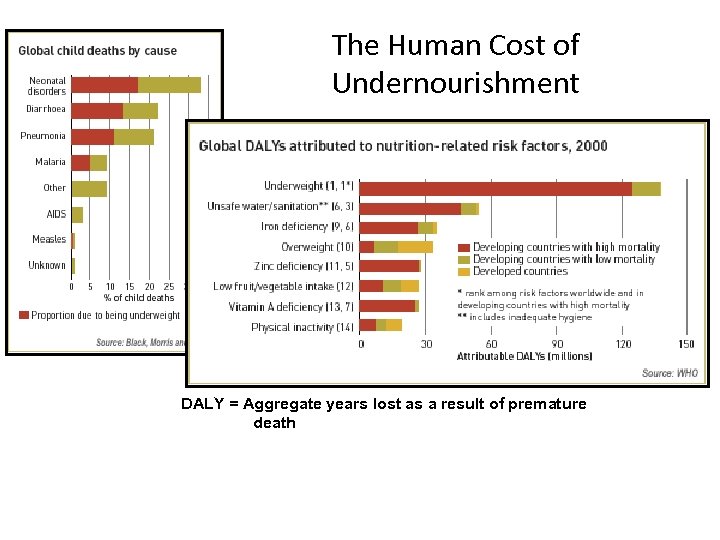
The Human Cost of Undernourishment DALY = Aggregate years lost as a result of premature death
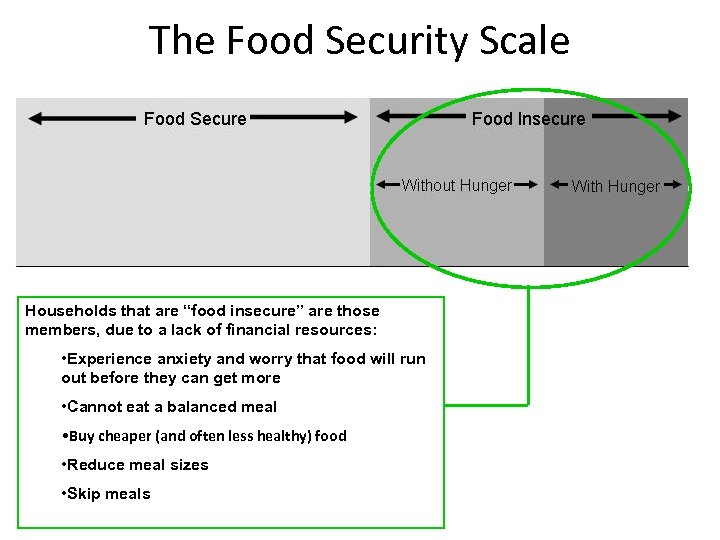
The Food Security Scale Households that are “food insecure” are those members, due to a lack of financial resources: • Experience anxiety and worry that food will run out before they can get more • Cannot eat a balanced meal • Buy cheaper (and often less healthy) food • Reduce meal sizes • Skip meals
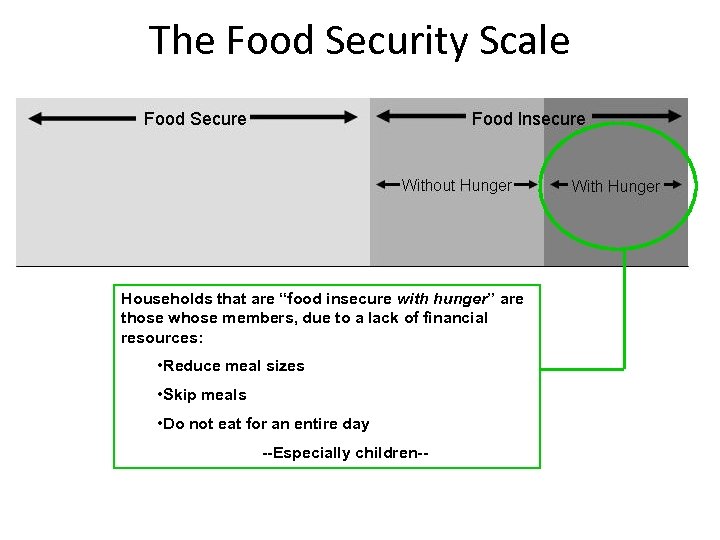
The Food Security Scale Households that are “food insecure with hunger” are those whose members, due to a lack of financial resources: • Reduce meal sizes • Skip meals • Do not eat for an entire day --Especially children--
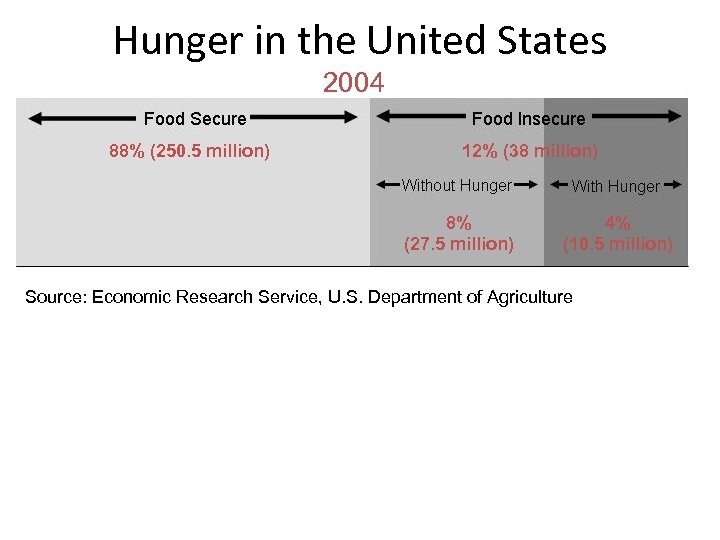
Hunger in the United States 2004 88% (250. 5 million) 12% (38 million) 8% (27. 5 million) 4% (10. 5 million) Source: Economic Research Service, U. S. Department of Agriculture
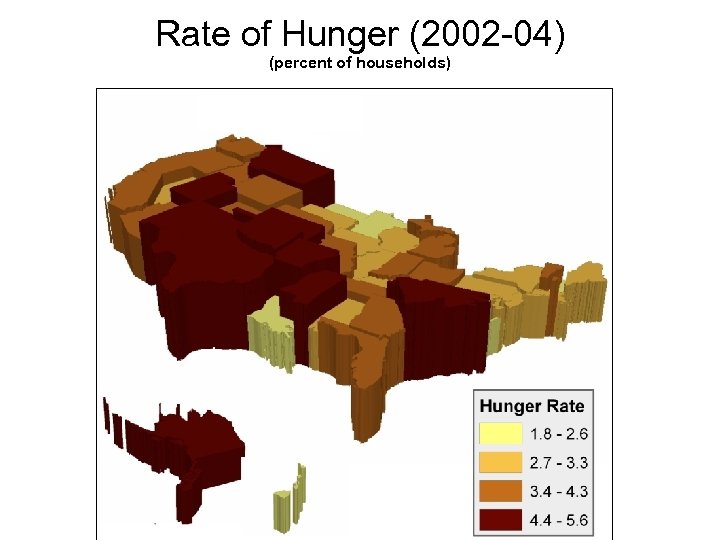
Rate of Hunger (2002 -04) (percent of households)
World Food Program • United Nations organization directed to combat global hunger • Est. 1961 Didn’t cover this, won’t be on the exam. • Provides emergency and development food and aid • In 2001, provided food to 77 mil people in 82 countries • Most of food is distributed to displaced people and refugees • Relies entirely on voluntary contributions from countries, businesses and organizations, and indivdiuals
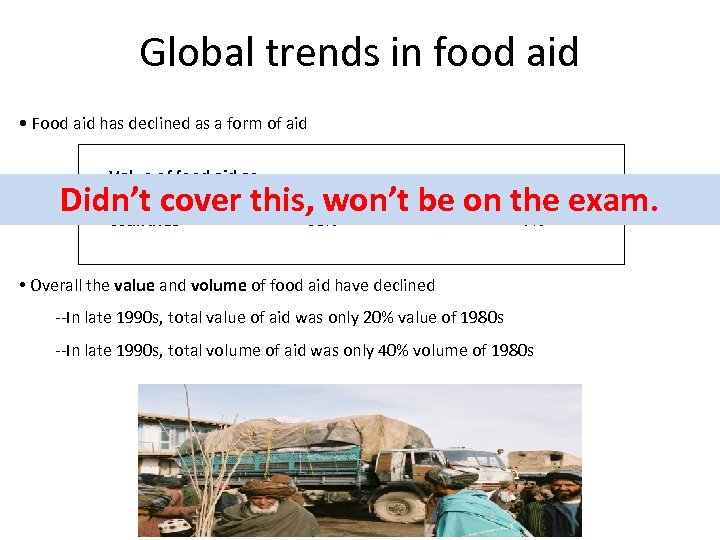
Global trends in food aid • Food aid has declined as a form of aid Value of food aid as share of all aid from countries 1960 s/70 s 1990 s Didn’t cover this, won’t be on the exam. 30% 7% • Overall the value and volume of food aid have declined --In late 1990 s, total value of aid was only 20% value of 1980 s --In late 1990 s, total volume of aid was only 40% volume of 1980 s
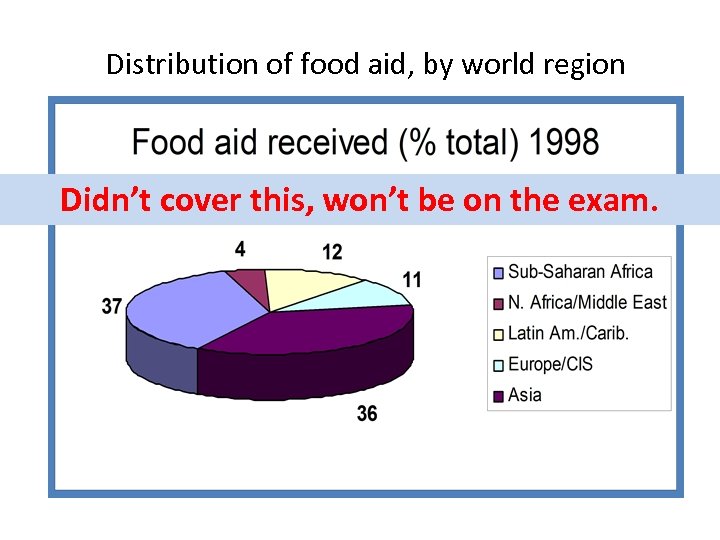
Distribution of food aid, by world region Didn’t cover this, won’t be on the exam.
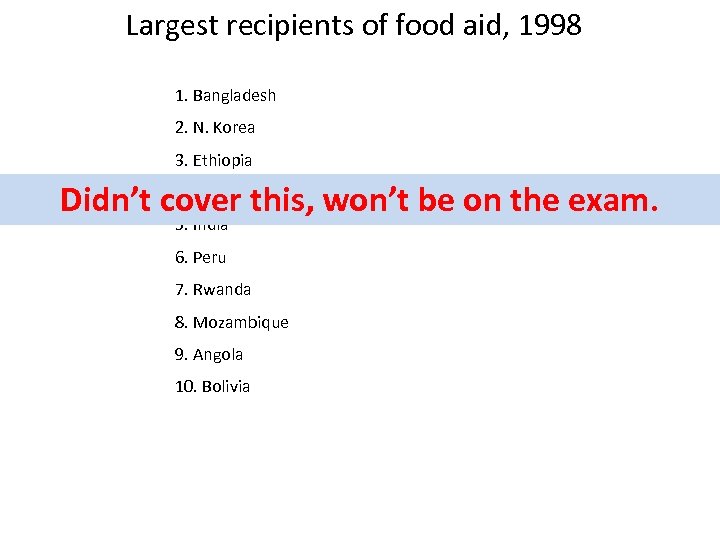
Largest recipients of food aid, 1998 1. Bangladesh 2. N. Korea 3. Ethiopia 4. Indonesia Didn’t cover this, won’t be on the exam. 5. India 6. Peru 7. Rwanda 8. Mozambique 9. Angola 10. Bolivia
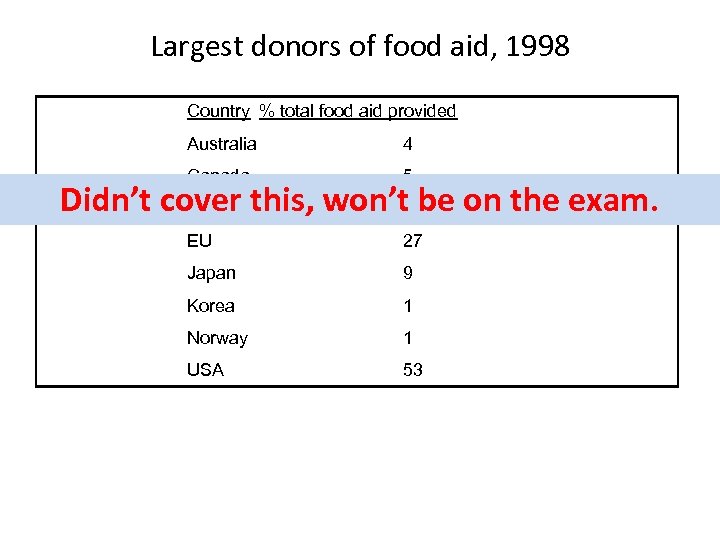
Largest donors of food aid, 1998 Country % total food aid provided Australia 4 Canada 5 EU 27 Japan 9 Korea 1 Norway 1 USA 53 Didn’t cover this, won’t 1 be on the exam. China
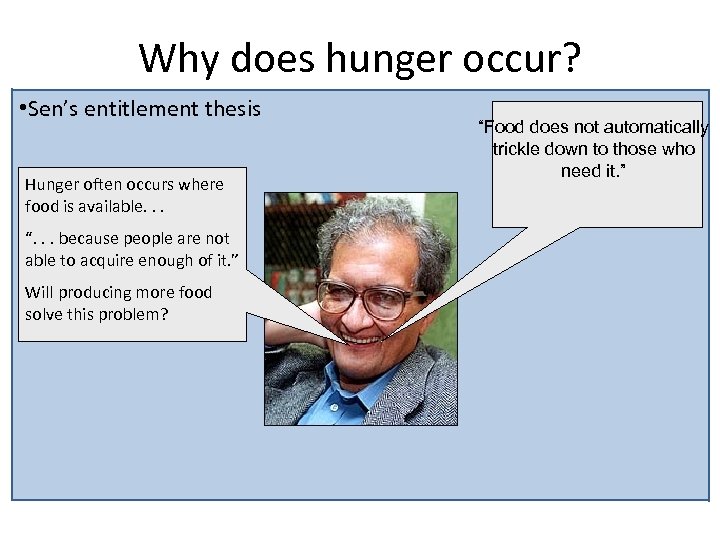
Why does hunger occur? • Sen’s entitlement thesis Hunger often occurs where food is available. . . “. . . because people are not able to acquire enough of it. ” Will producing more food solve this problem? “Food does not automatically trickle down to those who need it. ”
Why does hunger occur? • Sen’s entitlement thesis Hunger occurs when/where people are not able to legitimately acquire enough food. In other words, hunger occurs when legitimate modes of acquiring food are disrupted.
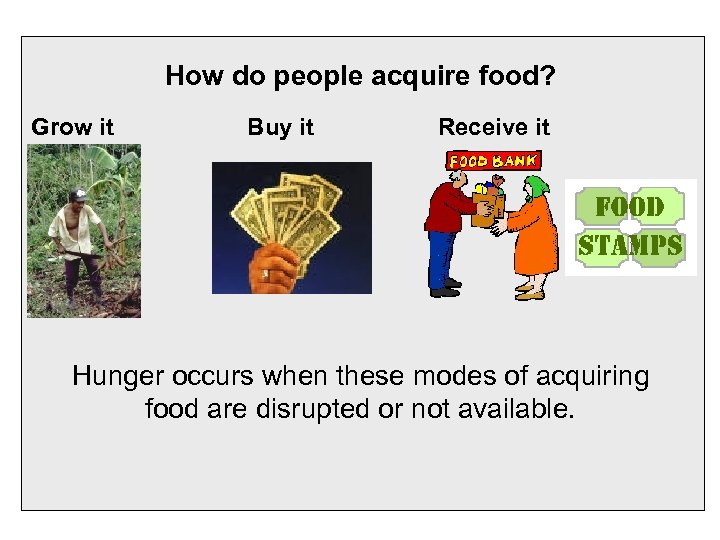
How do people acquire food? Grow it Buy it Receive it Hunger occurs when these modes of acquiring food are disrupted or not available.
Famine Complex process of social breakdown, involving: Didn’t cover this, won’t be on the exam.
Famine Beyond these elements, “insiders” and “outsiders” typically have differing concepts of famine. Didn’t cover this, won’t be on the exam. Outsiders Insiders Mass starvation Exhaustion of coping strategies
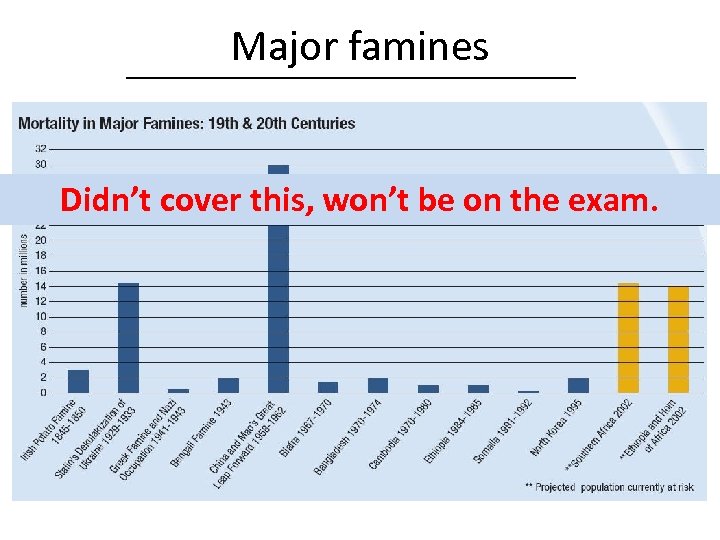
Major famines Didn’t cover this, won’t be on the exam.
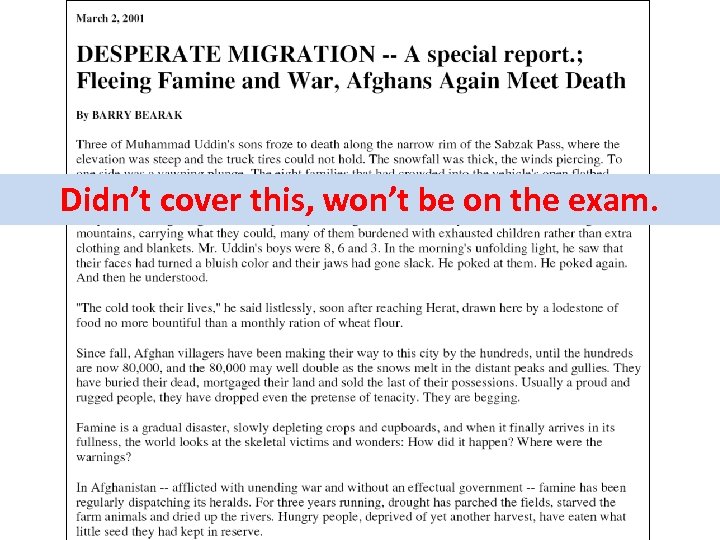
Didn’t cover this, won’t be on the exam.
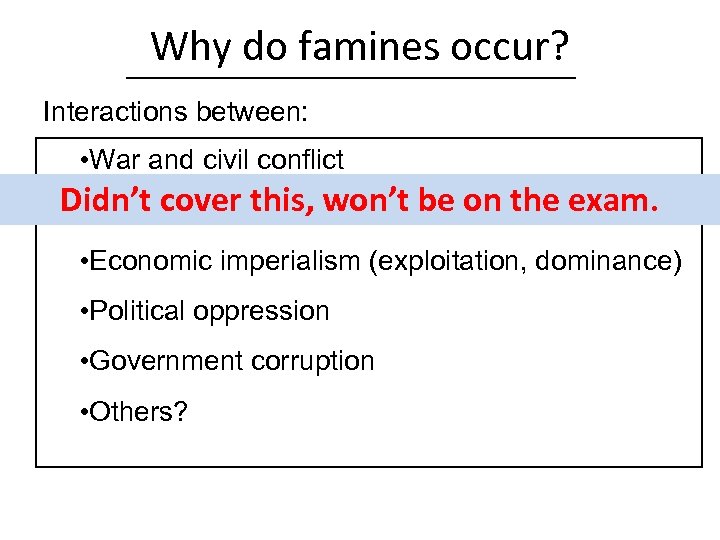
Why do famines occur? Interactions between: • War and civil conflict Didn’t cover this, won’t be on the exam. • Natural events (drought, flooding) • Economic imperialism (exploitation, dominance) • Political oppression • Government corruption • Others?
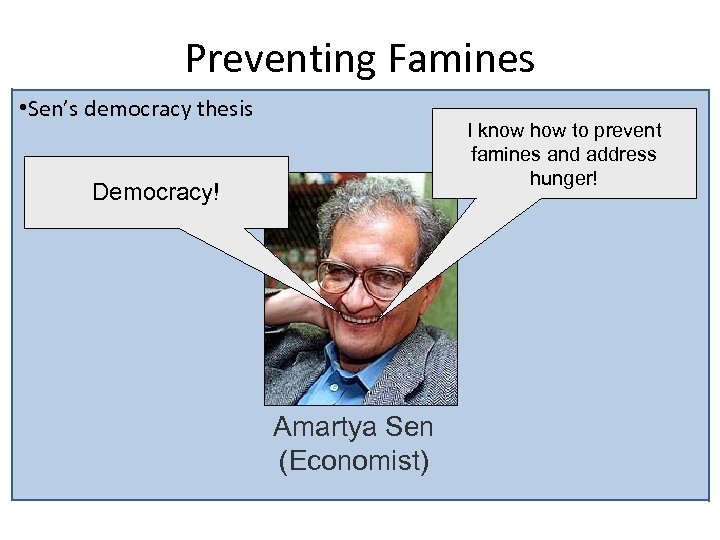
Preventing Famines • Sen’s democracy thesis I know how to prevent famines and address hunger! Democracy! Amartya Sen (Economist)
Preventing Famines • Sen’s democracy thesis Effective political rights and oppositional politics can and do enhance food entitlements
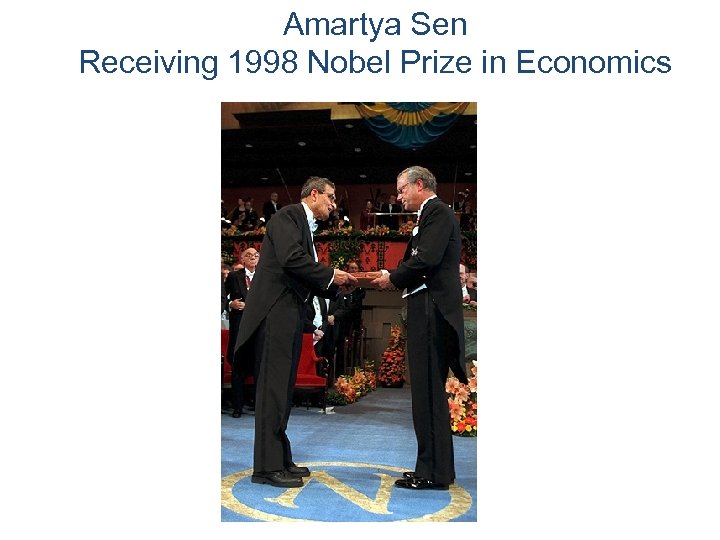
Amartya Sen Receiving 1998 Nobel Prize in Economics
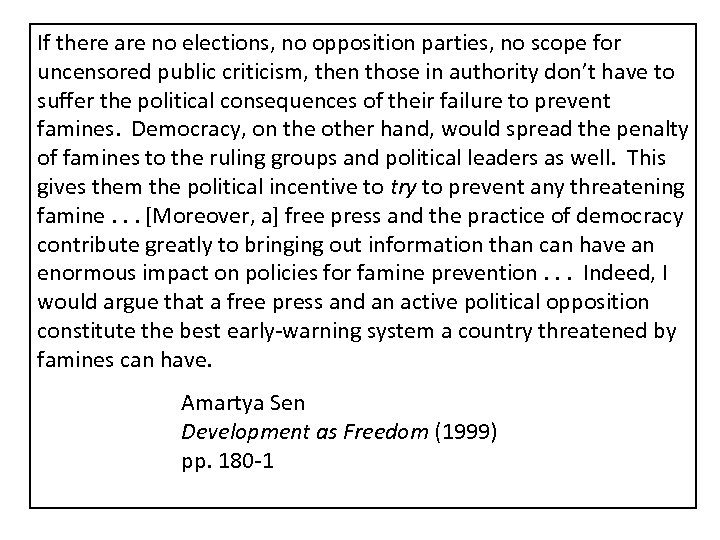
If there are no elections, no opposition parties, no scope for uncensored public criticism, then those in authority don’t have to suffer the political consequences of their failure to prevent famines. Democracy, on the other hand, would spread the penalty of famines to the ruling groups and political leaders as well. This gives them the political incentive to try to prevent any threatening famine. . . [Moreover, a] free press and the practice of democracy contribute greatly to bringing out information than can have an enormous impact on policies for famine prevention. . . Indeed, I would argue that a free press and an active political opposition constitute the best early-warning system a country threatened by famines can have. Amartya Sen Development as Freedom (1999) pp. 180 -1
Скачать презентацию Global Hunger There around one billion hungry
4b52daa77d4d11c50ba54a85e922d02e.ppt