 Скачать презентацию Global Enterprise Content Management How to save and
948f7c0e7e7b8076d64d48d252d00d9c.ppt
- Количество слайдов: 20



Global Enterprise Content Management How to save and earn money on your documentation while increasing quality by Agneta Weisberg Symmetri Konsult AB
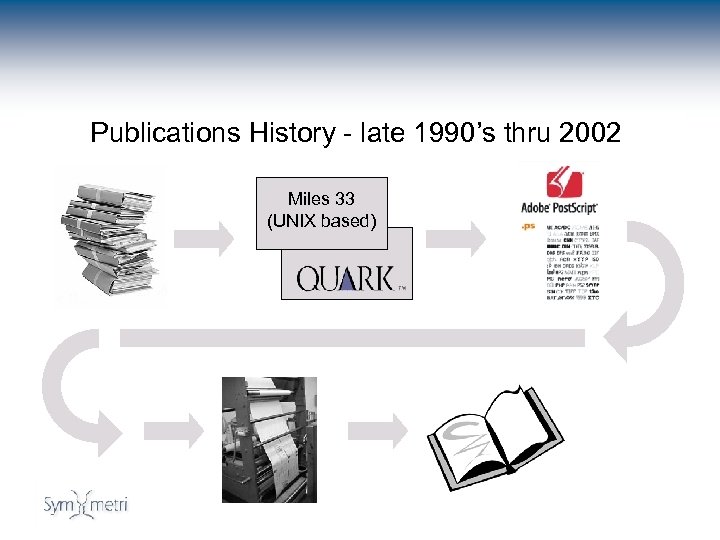
Publications History - -late -1980’s 1990’s Publications History late Early 1980’s Publications History - 1960 thru 1990’s Publications History 1990’sthru 2002 early 1970’s Miles 33 (UNIX based) Miles 33 SGML (UNIX based) 1992
Background • Increasing the amount of products introduced to the market. • Increasing demands on documentation usability. - understanding the content - readability of the content - content accuracy – on time • European demands on end user language. • Acquisitions, export, branding, resale of products
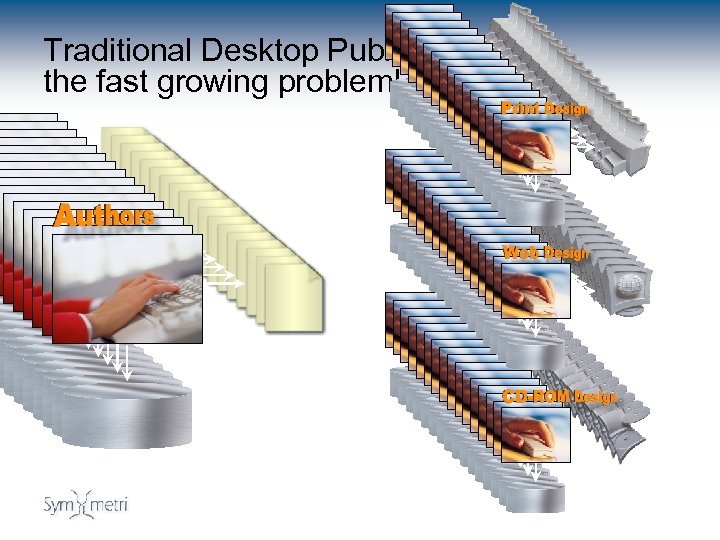
Traditional Desktop Publishing – the fast growing problem!
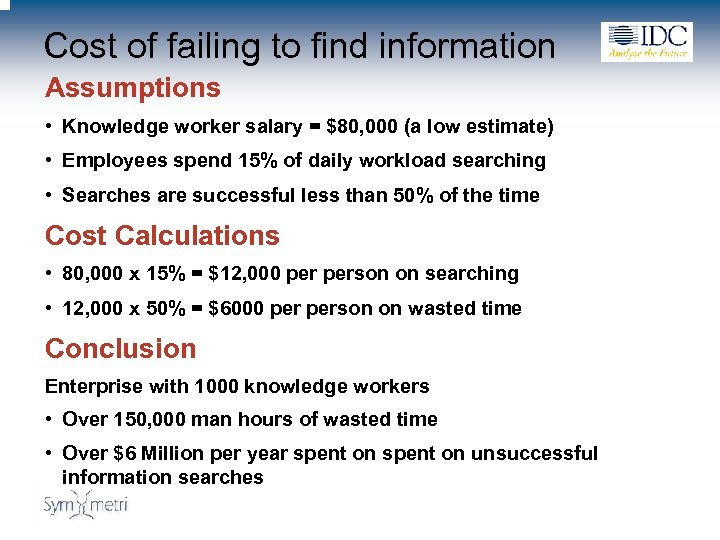
Cost of failing to find information Assumptions • Knowledge worker salary = $80, 000 (a low estimate) • Employees spend 15% of daily workload searching • Searches are successful less than 50% of the time Cost Calculations • 80, 000 x 15% = $12, 000 person on searching • 12, 000 x 50% = $6000 person on wasted time Conclusion Enterprise with 1000 knowledge workers • Over 150, 000 man hours of wasted time • Over $6 Million per year spent on unsuccessful information searches
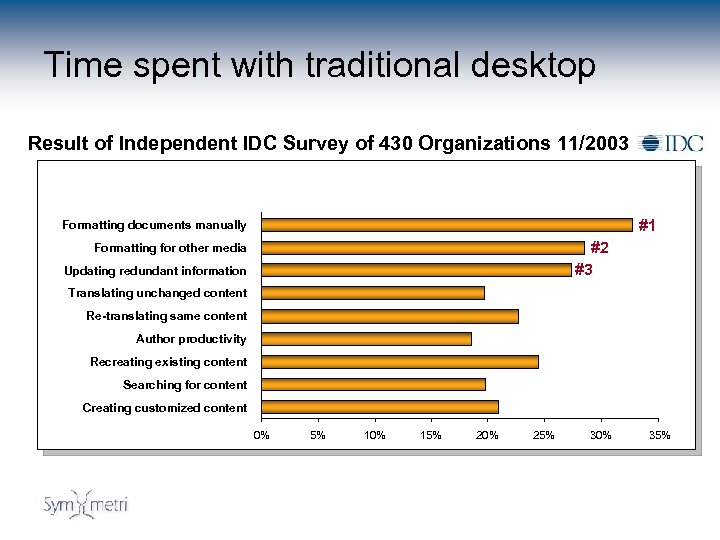
Time spent with traditional desktop Result of Independent IDC Survey of 430 Organizations 11/2003 #1 Formatting documents manually #2 #3 Formatting for other media Updating redundant information Translating unchanged content Re-translating same content Author productivity Recreating existing content Searching for content Creating customized content 0% 5% 10% 15% 20% 25% 30% 35%
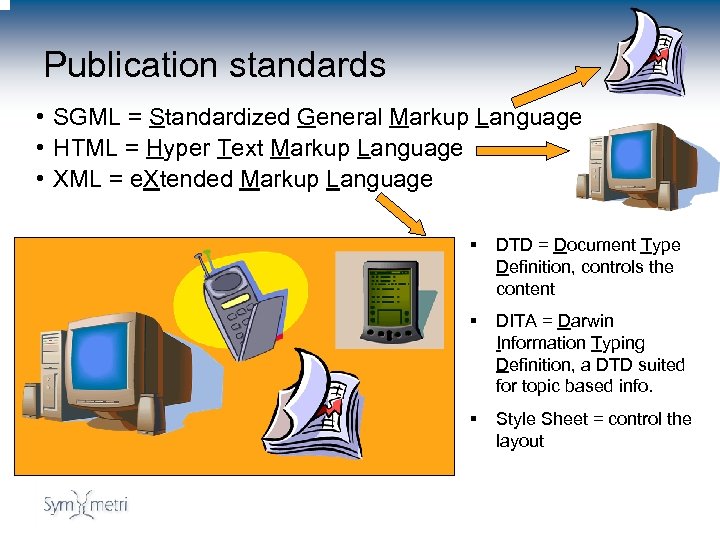
Publication standards • SGML = Standardized General Markup Language • HTML = Hyper Text Markup Language • XML = e. Xtended Markup Language DTD = Document Type Definition, controls the content DITA = Darwin Information Typing Definition, a DTD suited for topic based info. Style Sheet = control the layout
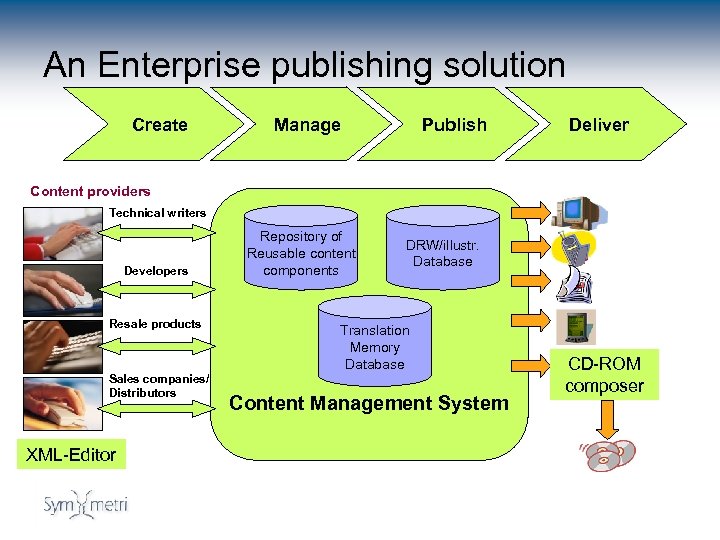
An Enterprise publishing solution Create Manage Publish Deliver Content providers Technical writers Developers Resale products Sales companies/ Distributors XML-Editor Repository of Reusable content components DRW/illustr. Database Translation Memory Database Content Management System CD-ROM composer
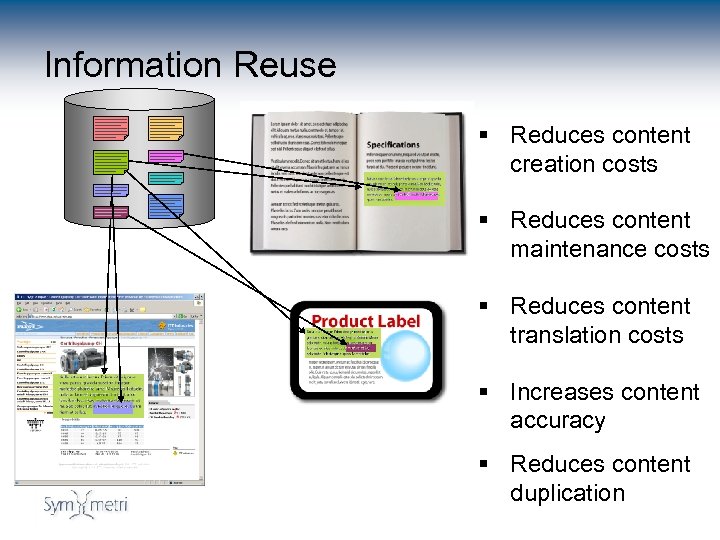
Information Reuse Reduces content creation costs Reduces content maintenance costs Reduces content translation costs Increases content accuracy Reduces content duplication
Enterprise Publishing vs. Desktop Publishing • Desktop Publishing is about: – Personal productivity and creativity – Producing a single document at a time – Ensuring that print output will look good • Enterprise Publishing is about: – Leveraging content across the enterprise – Producing multiple outputs from a single source – Publishing across multiple delivery channels
What's in it for you? Documentation: - that is always accurate - that is available much faster - that is more accessible and user friendly - that is easily searchable - that can be reused in different contexts - that can be accessed and presented in different media - that is uniform and has a corporate “look and feel” - that can be put in a new context for various target groups
The Benefits of Enterprise Publishing • • • Less repetitive work with single source. Improved content quality. Ability to reuse content and translations. Common enterprise vocabulary. Common enterprise technology for creating, managing and publishing information.
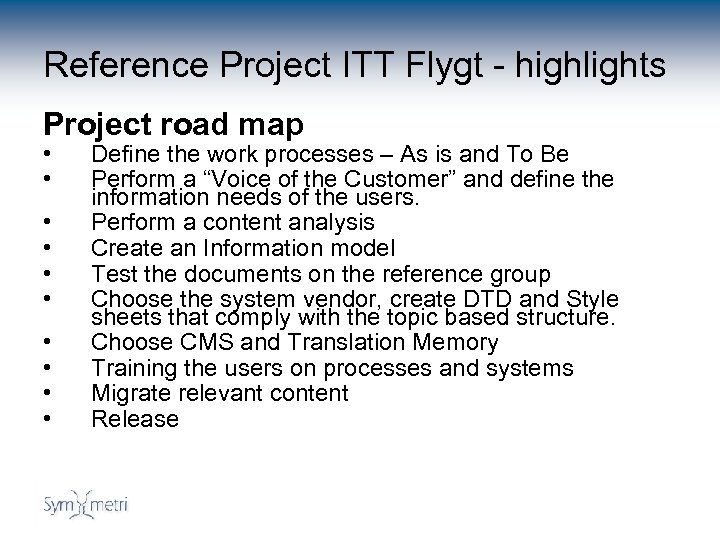
Reference Project ITT Flygt - highlights Project road map • • • Define the work processes – As is and To Be Perform a “Voice of the Customer” and define the information needs of the users. Perform a content analysis Create an Information model Test the documents on the reference group Choose the system vendor, create DTD and Style sheets that comply with the topic based structure. Choose CMS and Translation Memory Training the users on processes and systems Migrate relevant content Release
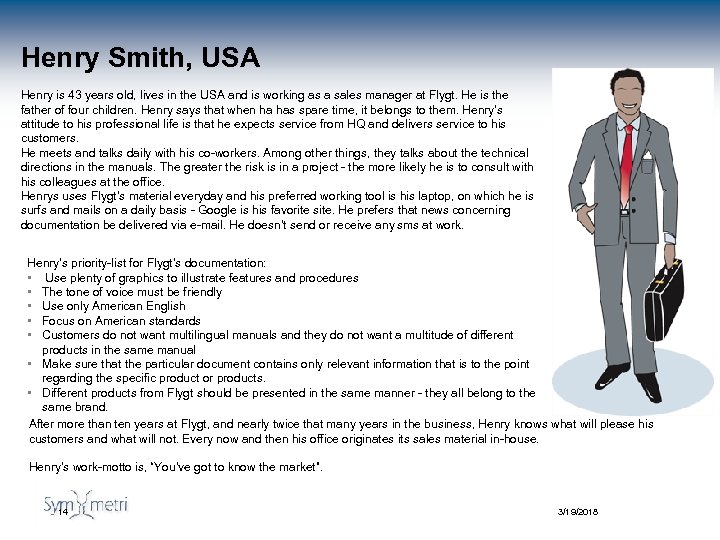
Henry Smith, USA Henry is 43 years old, lives in the USA and is working as a sales manager at Flygt. He is the father of four children. Henry says that when ha has spare time, it belongs to them. Henry’s attitude to his professional life is that he expects service from HQ and delivers service to his customers. He meets and talks daily with his co-workers. Among other things, they talks about the technical directions in the manuals. The greater the risk is in a project - the more likely he is to consult with his colleagues at the office. Henrys uses Flygt’s material everyday and his preferred working tool is his laptop, on which he is surfs and mails on a daily basis - Google is his favorite site. He prefers that news concerning documentation be delivered via e-mail. He doesn’t send or receive any sms at work. Henry’s priority-list for Flygt’s documentation: • Use plenty of graphics to illustrate features and procedures • The tone of voice must be friendly • Use only American English • Focus on American standards • Customers do not want multilingual manuals and they do not want a multitude of different products in the same manual • Make sure that the particular document contains only relevant information that is to the point regarding the specific product or products. • Different products from Flygt should be presented in the same manner - they all belong to the same brand. After more than ten years at Flygt, and nearly twice that many years in the business, Henry knows what will please his customers and what will not. Every now and then his office originates its sales material in-house. Henry’s work-motto is, “You’ve got to know the market”. 14 3/19/2018
IMAP - Information Mapping History – U. S. Air force initiated the project – Robert E. Horn released the method 1967 – IBM developed the DITA DTD as a tool to support the Information Mapping documentation process. Reference: For more information, see www. infomap. com
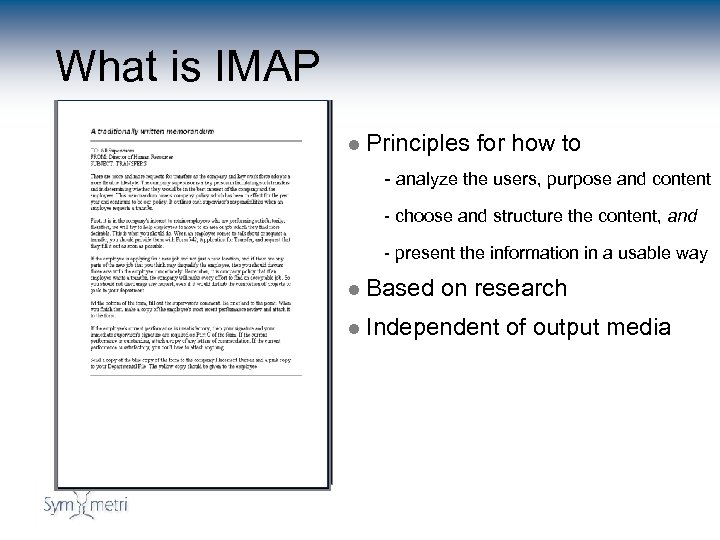
What is IMAP l Principles for how to - analyze the users, purpose and content - choose and structure the content, and - present the information in a usable way l Based on research l Independent of output media
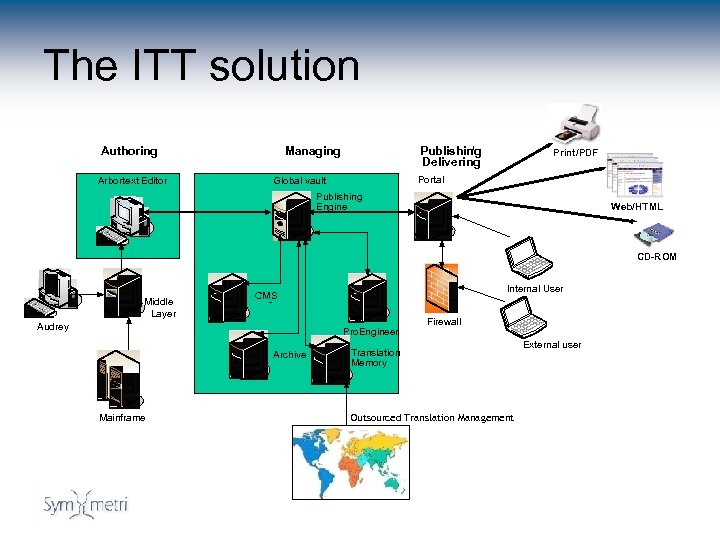
The ITT solution Authoring Arbortext Editor Publishing / Delivering Managing Print/PDF Portal Global vault Publishing Engine Web/HTML CD-ROM Middle Layer Internal User CMS - Audrey Pro. Engineer Archive Mainframe Firewall Translation Memory Outsourced Translation Management External user
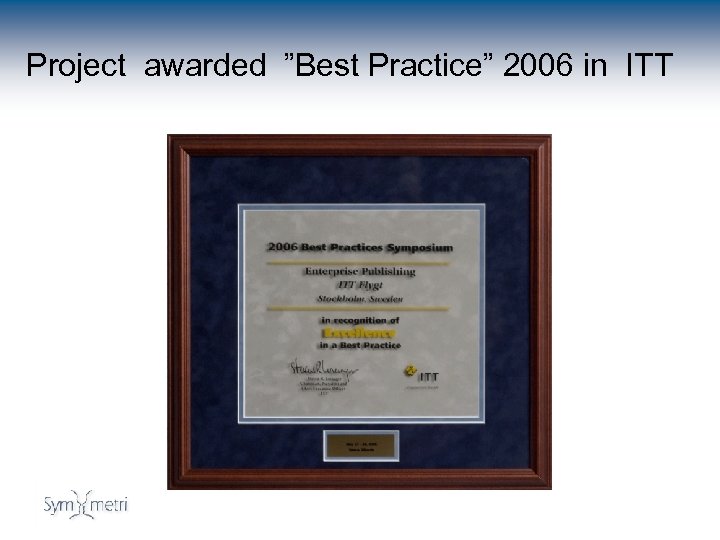
Project awarded ”Best Practice” 2006 in ITT
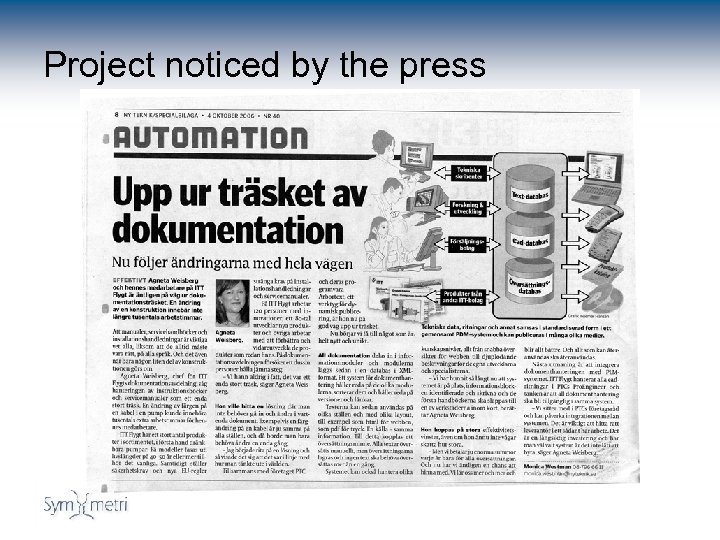
Project noticed by the press
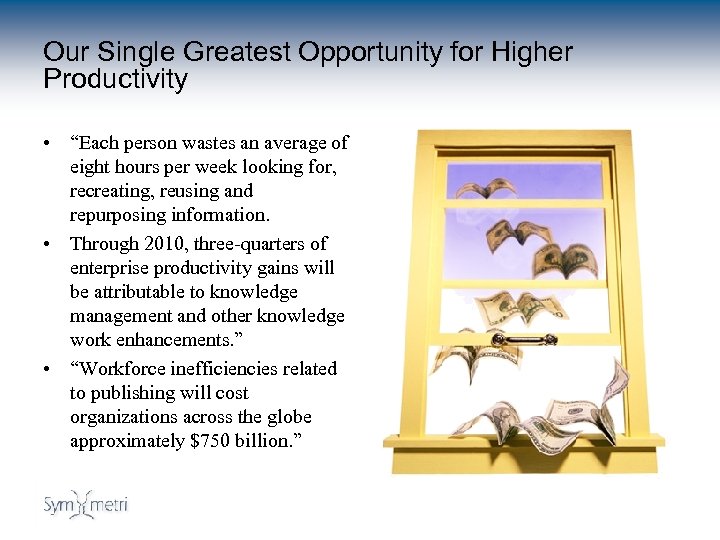
Our Single Greatest Opportunity for Higher Productivity • “Each person wastes an average of eight hours per week looking for, recreating, reusing and repurposing information. • Through 2010, three-quarters of enterprise productivity gains will be attributable to knowledge management and other knowledge work enhancements. ” • “Workforce inefficiencies related to publishing will cost organizations across the globe approximately $750 billion. ”
Скачать презентацию Global Enterprise Content Management How to save and
948f7c0e7e7b8076d64d48d252d00d9c.ppt