 Скачать презентацию Global Airlines Industry Alla Serebrova Delta Airlines
10d96c40ac3943fe9958c7c5823df082.ppt
- Количество слайдов: 100



Global Airlines Industry – Alla Serebrova Delta Airlines - Eugene Southwest Airlines - Shaun British Airways - Alex
Presentation Agenda QIndustry Characteristics QCurrent State QMarket Outlook QCompanies in focus: Q Delta Airlines Q Southwest Q British Airways
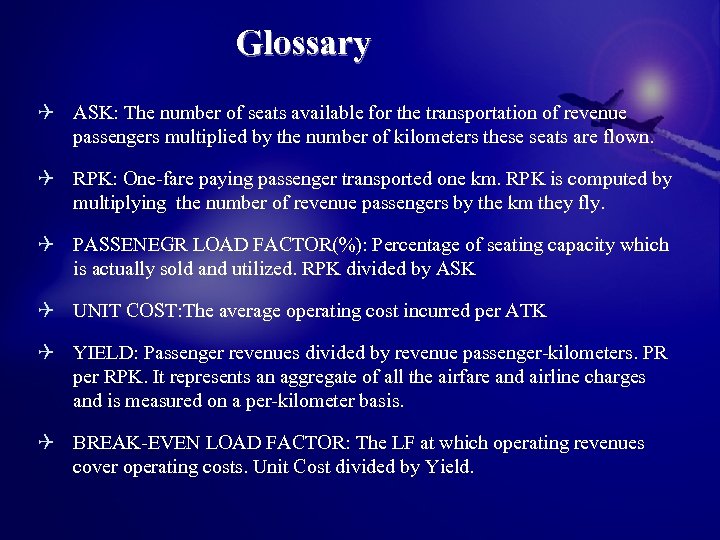
Glossary Q ASK: The number of seats available for the transportation of revenue passengers multiplied by the number of kilometers these seats are flown. Q RPK: One-fare paying passenger transported one km. RPK is computed by multiplying the number of revenue passengers by the km they fly. Q PASSENEGR LOAD FACTOR(%): Percentage of seating capacity which is actually sold and utilized. RPK divided by ASK Q UNIT COST: The average operating cost incurred per ATK Q YIELD: Passenger revenues divided by revenue passenger-kilometers. PR per RPK. It represents an aggregate of all the airfare and airline charges and is measured on a per-kilometer basis. Q BREAK-EVEN LOAD FACTOR: The LF at which operating revenues cover operating costs. Unit Cost divided by Yield.
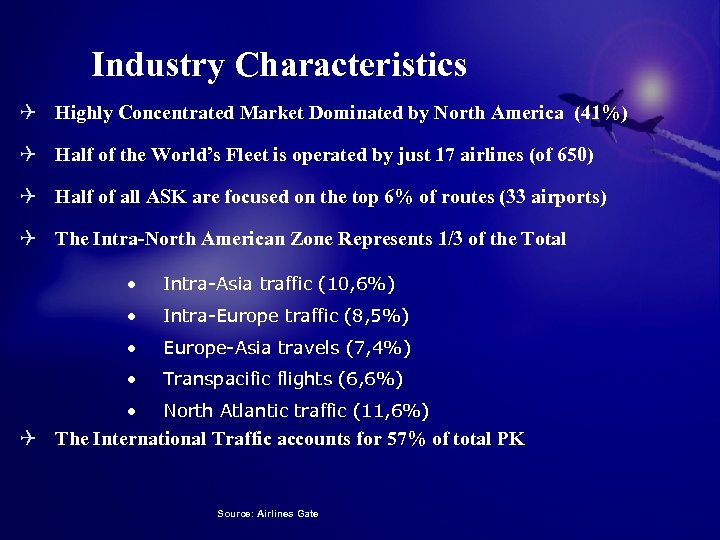
Industry Characteristics Q Highly Concentrated Market Dominated by North America (41%) Q Half of the World’s Fleet is operated by just 17 airlines (of 650) Q Half of all ASK are focused on the top 6% of routes (33 airports) Q The Intra-North American Zone Represents 1/3 of the Total · Intra-Asia traffic (10, 6%) · Intra-Europe traffic (8, 5%) · Europe-Asia travels (7, 4%) · Transpacific flights (6, 6%) · North Atlantic traffic (11, 6%) Q The International Traffic accounts for 57% of total PK Source: Airlines Gate
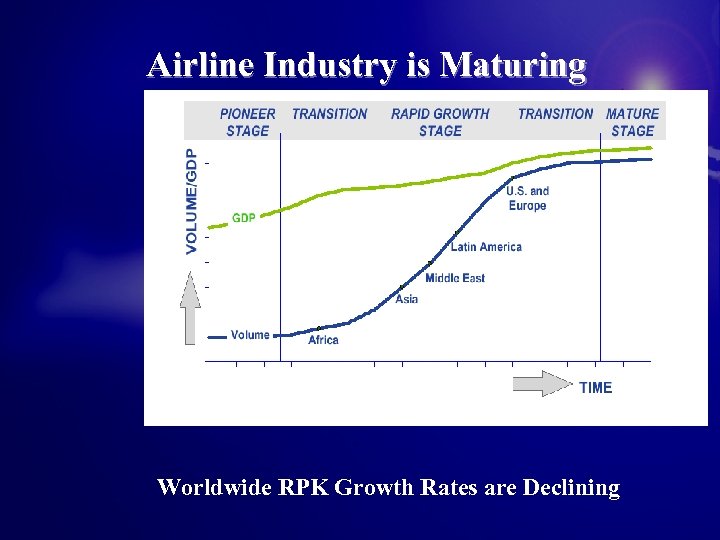
Airline Industry is Maturing Worldwide RPK Growth Rates are Declining
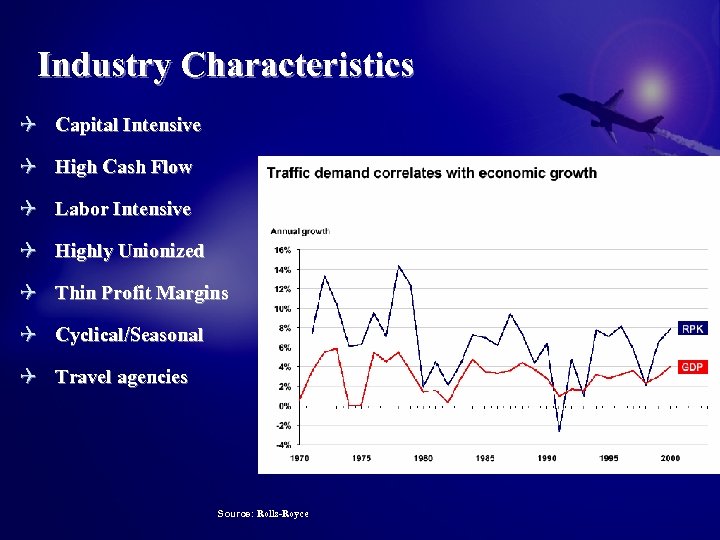
Industry Characteristics Q Capital Intensive Q High Cash Flow Q Labor Intensive Q Highly Unionized Q Thin Profit Margins Q Cyclical/Seasonal Q Travel agencies Source: Rolls-Royce
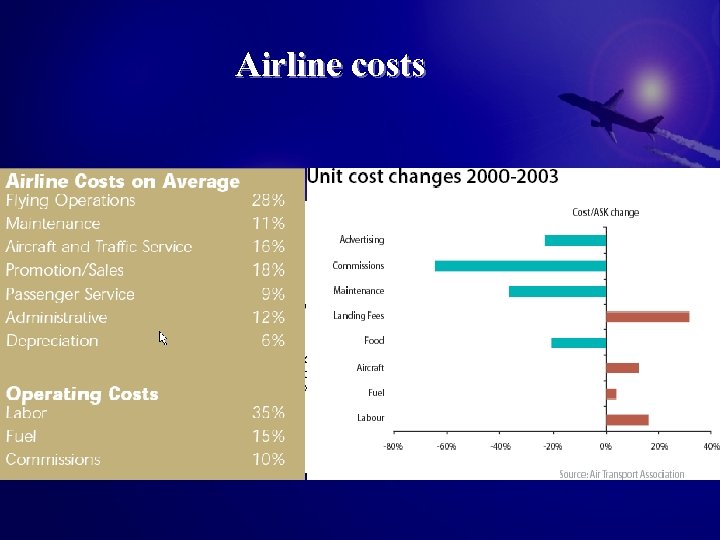
Airline costs
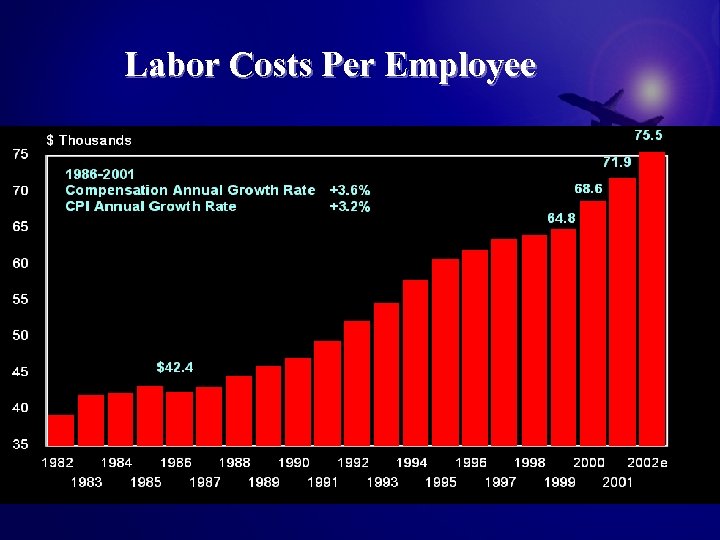
Labor Costs Per Employee
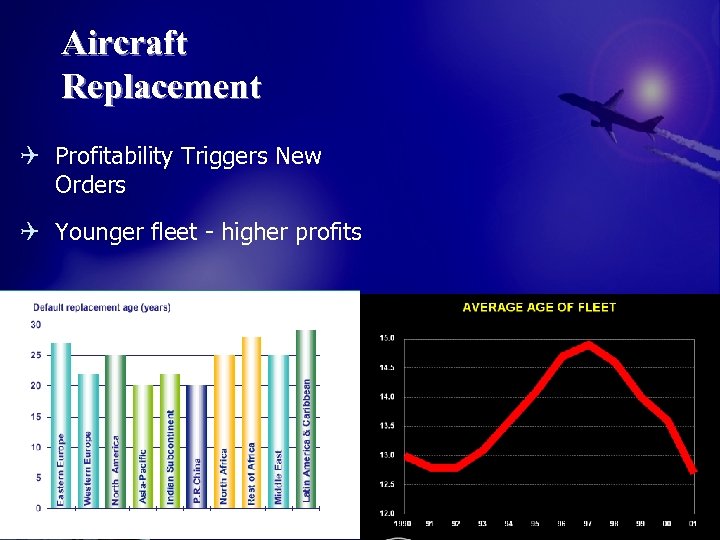
Aircraft Replacement Q Profitability Triggers New Orders Q Younger fleet - higher profits
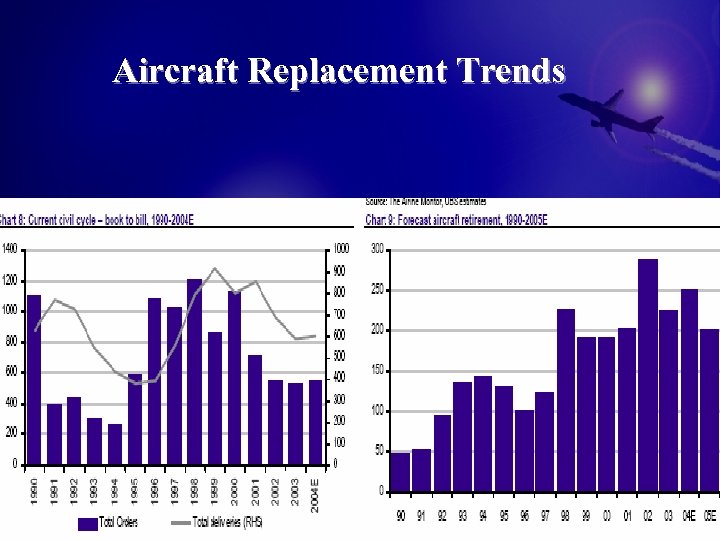
Aircraft Replacement Trends
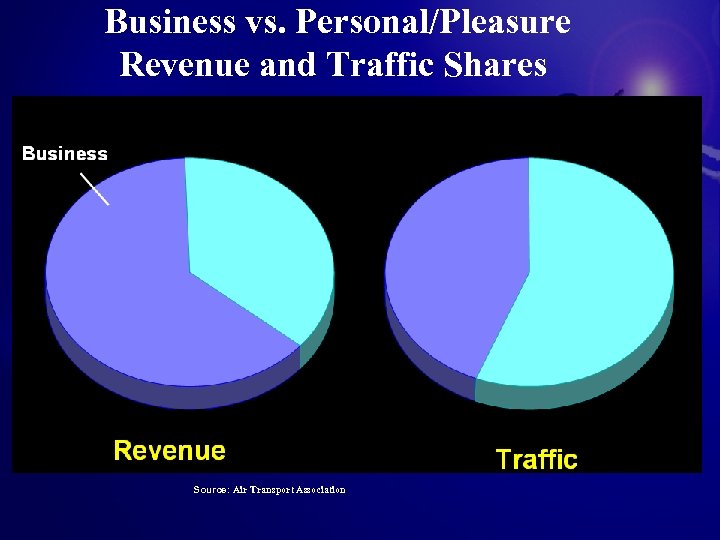
Business vs. Personal/Pleasure Revenue and Traffic Shares Source: Air Transport Association
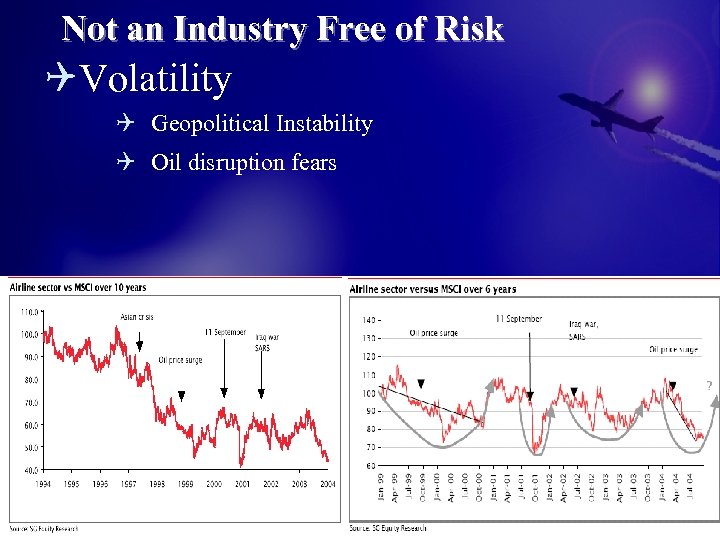
Not an Industry Free of Risk QVolatility Q Geopolitical Instability Q Oil disruption fears
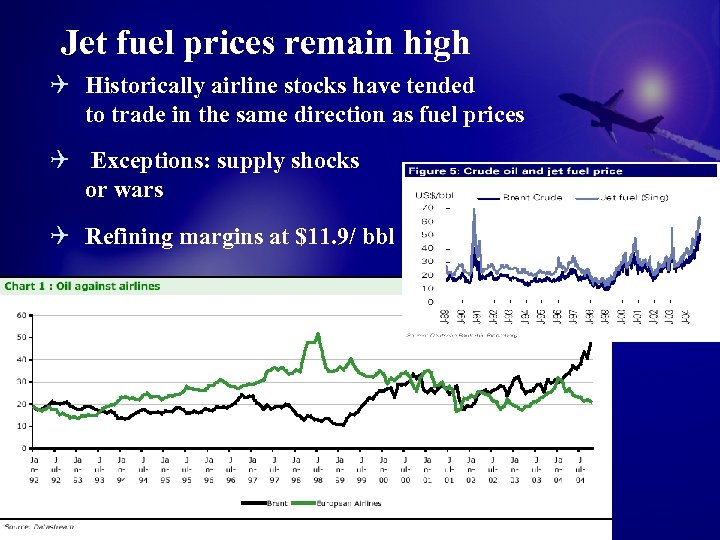
Jet fuel prices remain high Q Historically airline stocks have tended to trade in the same direction as fuel prices Q Exceptions: supply shocks or wars Q Refining margins at $11. 9/ bbl
Deregulation and its effects Q The US experience - 1978 Q International traffic - bilateral agreements Q Hub and spoke networks development Q Europe (1993) and Asia are still lagging behind Q State aid distortion Q Government indifference Q Airport constraints Q Restriction of slot sales Q Logical outcomes of deregulation: Q Regional LCC: Q Alliances
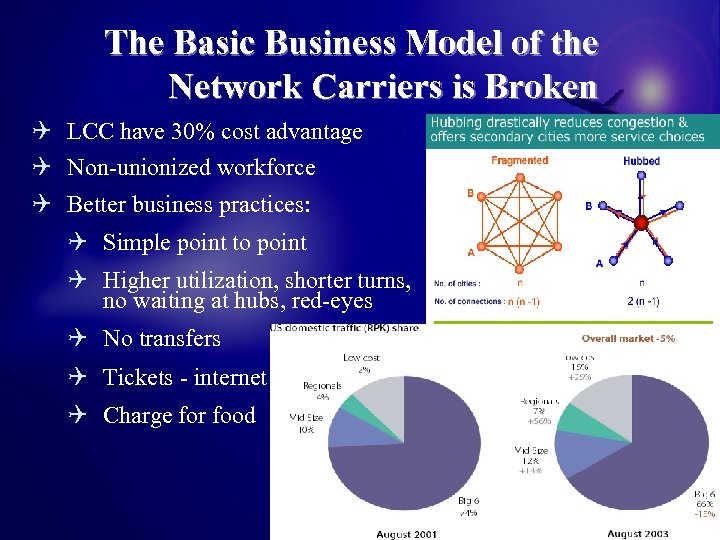
The Basic Business Model of the Network Carriers is Broken Q LCC have 30% cost advantage Q Non-unionized workforce Q Better business practices: Q Simple point to point Q Higher utilization, shorter turns, no waiting at hubs, red-eyes Q No transfers Q Tickets - internet Q Charge for food and drink
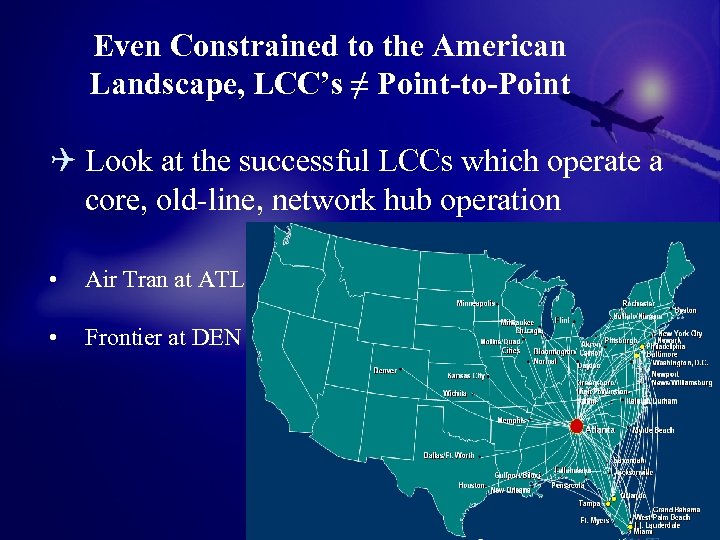
Even Constrained to the American Landscape, LCC’s ≠ Point-to-Point Q Look at the successful LCCs which operate a core, old-line, network hub operation • Air Tran at ATL • Frontier at DEN
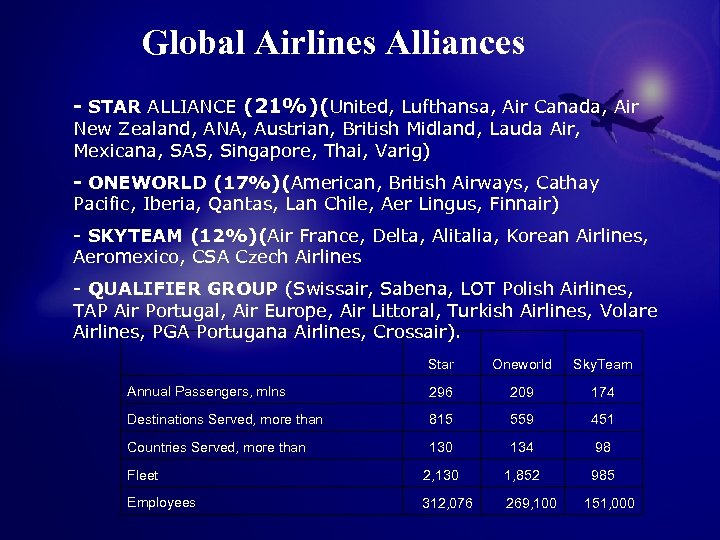
Global Airlines Alliances - STAR ALLIANCE (21%)(United, Lufthansa, Air Canada, Air New Zealand, ANA, Austrian, British Midland, Lauda Air, Mexicana, SAS, Singapore, Thai, Varig) - ONEWORLD (17%)(American, British Airways, Cathay Pacific, Iberia, Qantas, Lan Chile, Aer Lingus, Finnair) - SKYTEAM (12%)(Air France, Delta, Alitalia, Korean Airlines, Aeromexico, CSA Czech Airlines - QUALIFIER GROUP (Swissair, Sabena, LOT Polish Airlines, TAP Air Portugal, Air Europe, Air Littoral, Turkish Airlines, Volare Airlines, PGA Portugana Airlines, Crossair). Star Oneworld Sky. Team Annual Passengers, mlns 296 209 174 Destinations Served, more than 815 559 451 Countries Served, more than 130 134 98 Fleet 2, 130 1, 852 985 Employees 312, 076 269, 100 151, 000
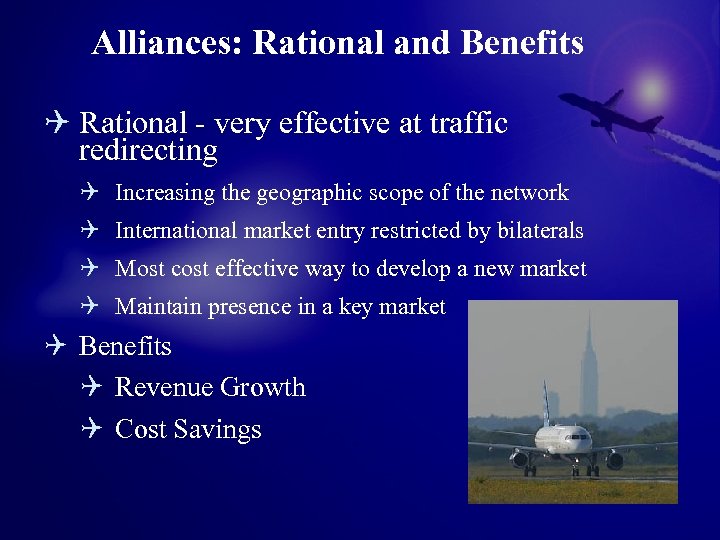
Alliances: Rational and Benefits Q Rational - very effective at traffic redirecting Q Increasing the geographic scope of the network Q International market entry restricted by bilaterals Q Most cost effective way to develop a new market Q Maintain presence in a key market Q Benefits Q Revenue Growth Q Cost Savings
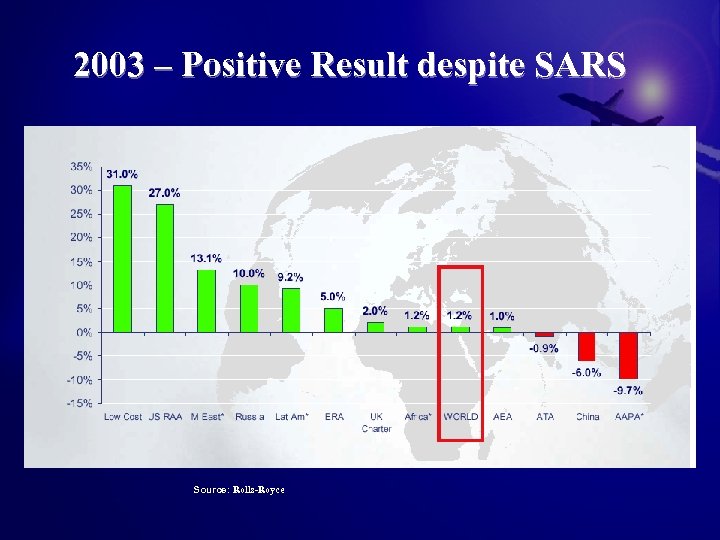
2003 – Positive Result despite SARS Q bbb Q ccc Source: Rolls-Royce
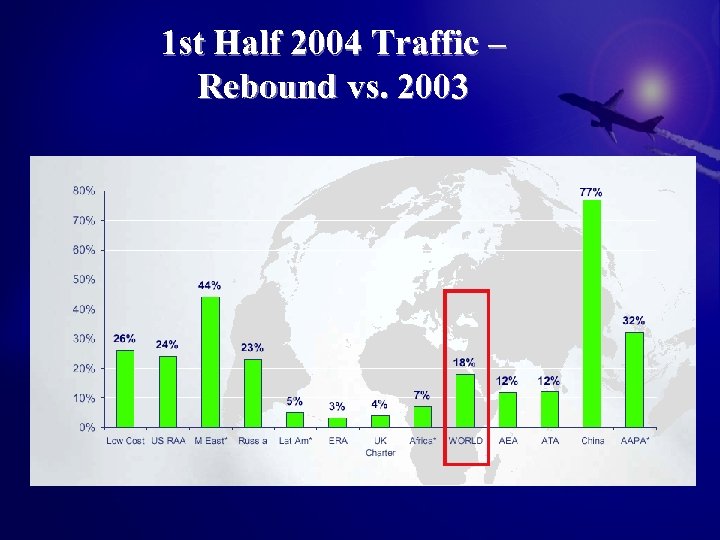
1 st Half 2004 Traffic – Rebound vs. 2003
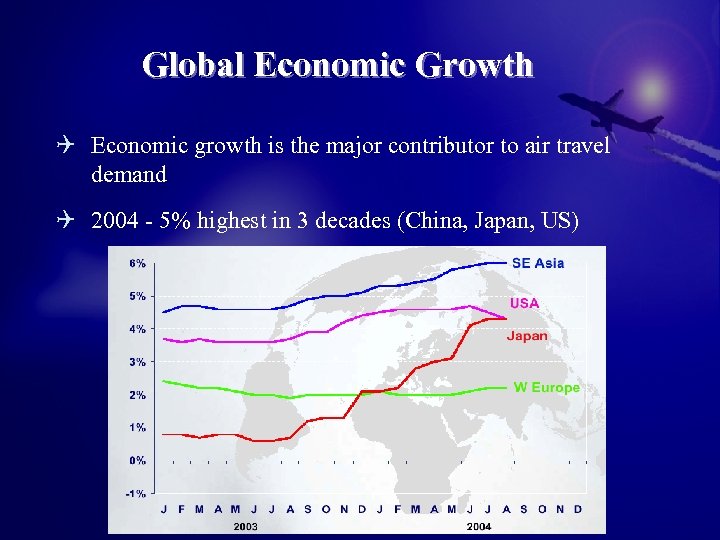
Global Economic Growth Q Economic growth is the major contributor to air travel demand Q 2004 - 5% highest in 3 decades (China, Japan, US)
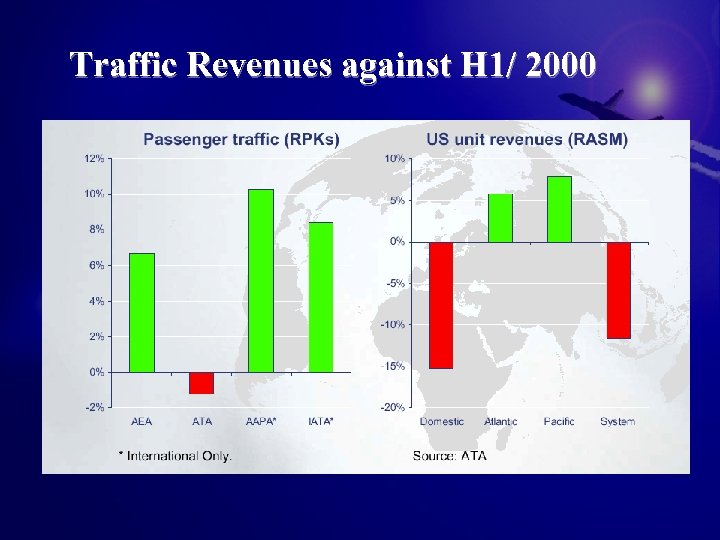
Traffic Revenues against H 1/ 2000
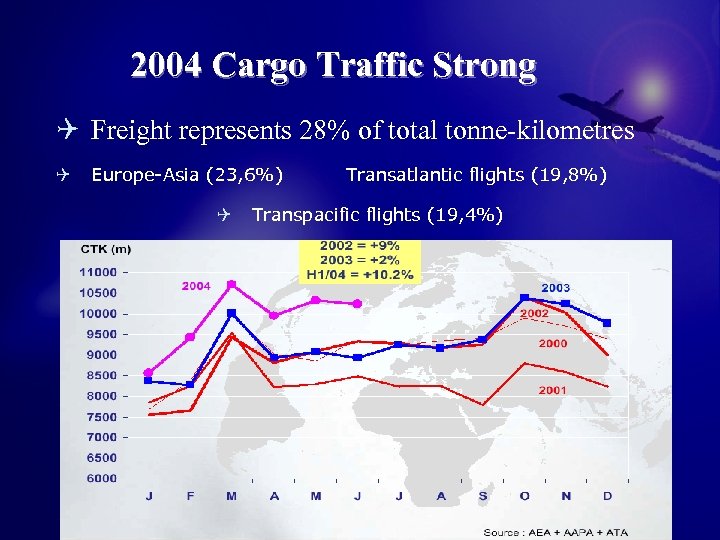
2004 Cargo Traffic Strong Q Freight represents 28% of total tonne-kilometres Q Europe-Asia (23, 6%) Q Transatlantic flights (19, 8%) Transpacific flights (19, 4%)
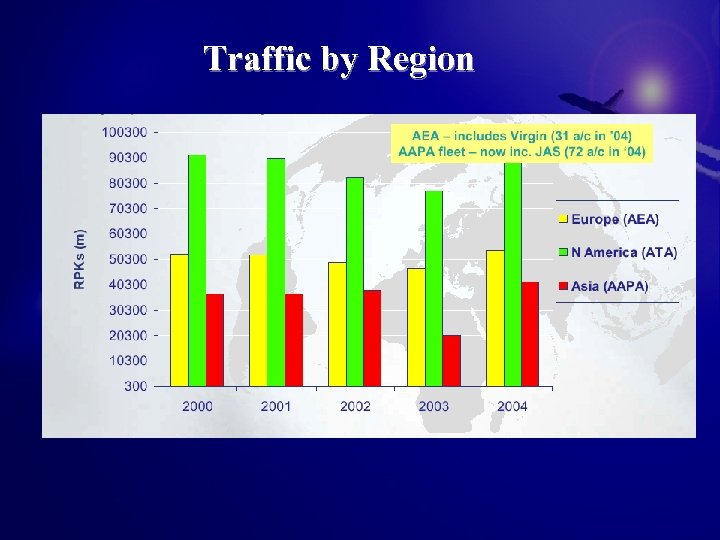
Traffic by Region
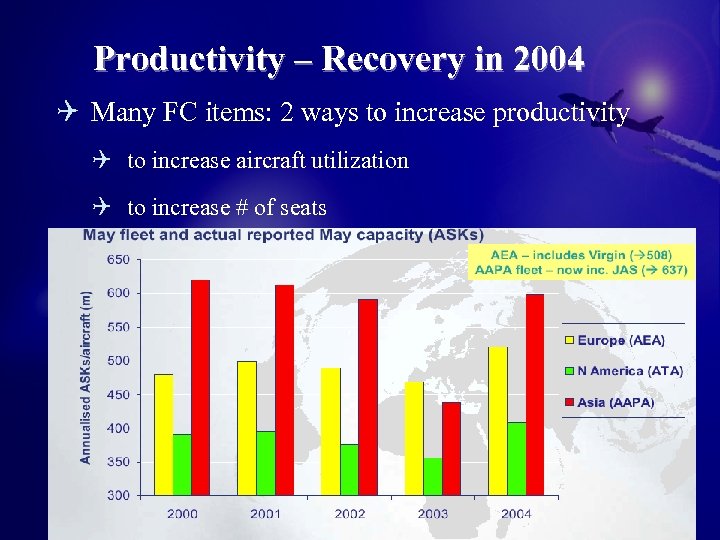
Productivity – Recovery in 2004 Q Many FC items: 2 ways to increase productivity Q to increase aircraft utilization Q to increase # of seats
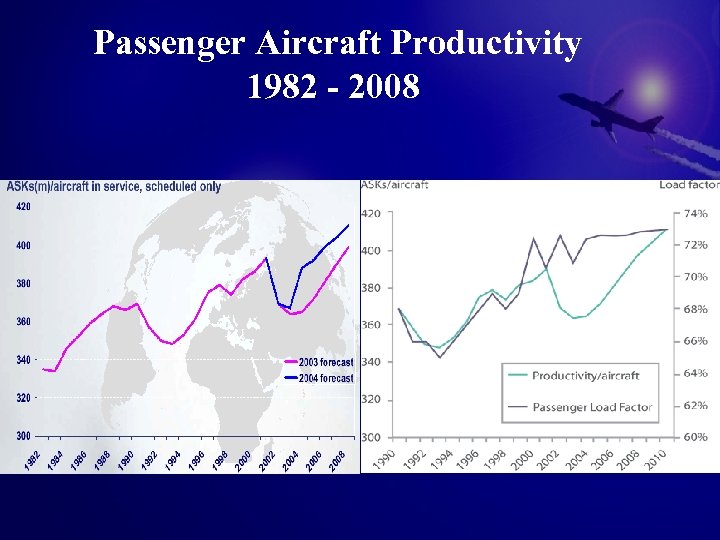
Passenger Aircraft Productivity 1982 - 2008
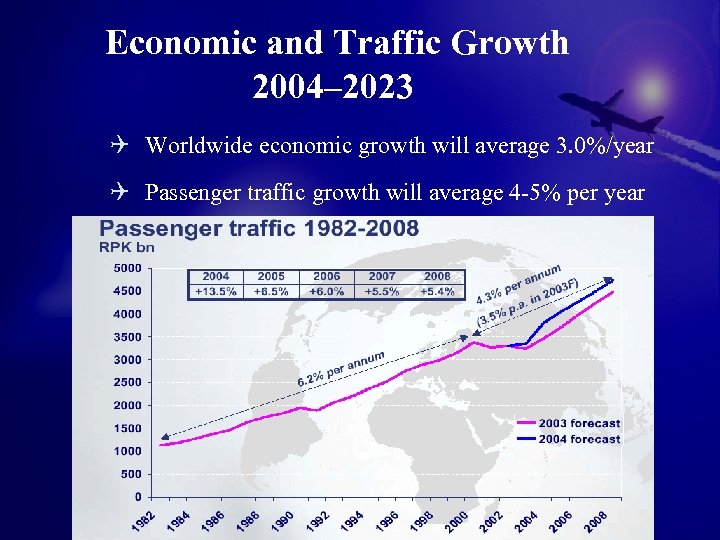
Economic and Traffic Growth 2004– 2023 Q Worldwide economic growth will average 3. 0%/year Q Passenger traffic growth will average 4 -5% per year Q Cargo traffic growth will average 6. 2% per year
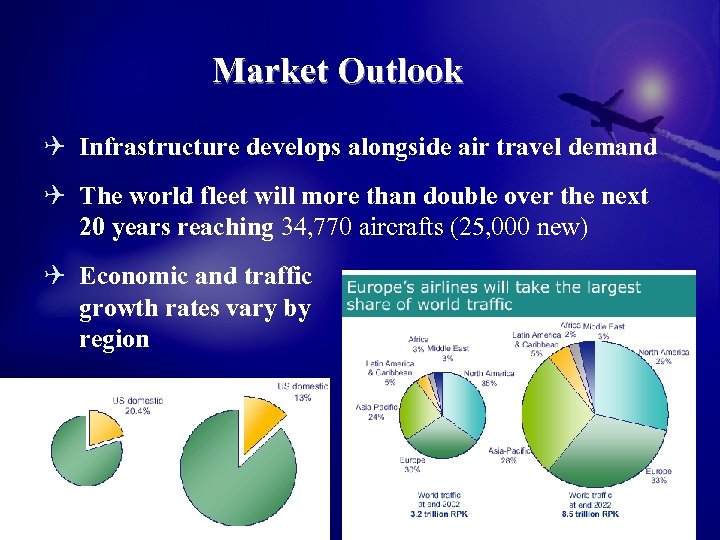
Market Outlook Q Infrastructure develops alongside air travel demand Q The world fleet will more than double over the next 20 years reaching 34, 770 aircrafts (25, 000 new) Q Economic and traffic growth rates vary by region
Summary • • • 2004 traffic forecast now +13. 5% (18% ytd) Driven by strong GDP growth in N America Recovery from SARS in Asia Aircraft overcapacity being eliminated Productivity recovered to pre- 9/ 11 levels (75%) Airline profits recovering in Asia But yields still very weak in US and Intra- Europe Costs impacted by $ fuel price Inability to pass on rises to consumers in US domestic market Delivery upturn in 2005 - 2007 consistent with traffic and productivity projections Longer term growth increasingly driven by Asia
D e l t a A i r l i n e s
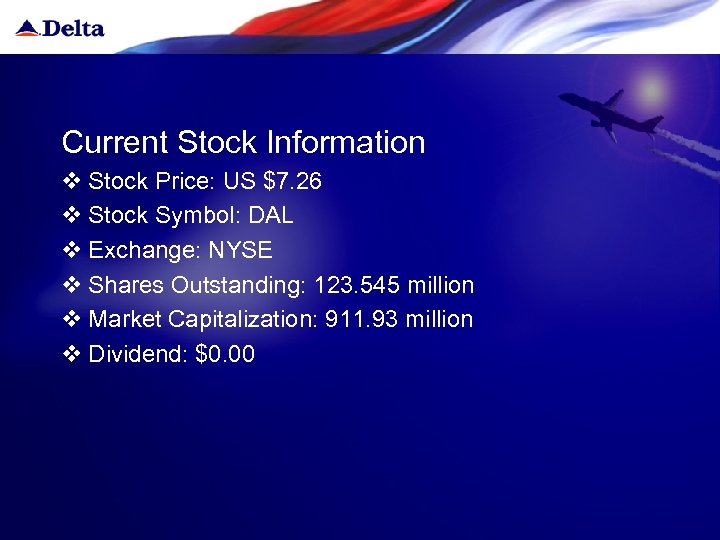
Current Stock Information v Stock Price: US $7. 26 v Stock Symbol: DAL v Exchange: NYSE v Shares Outstanding: 123. 545 million v Market Capitalization: 911. 93 million v Dividend: $0. 00
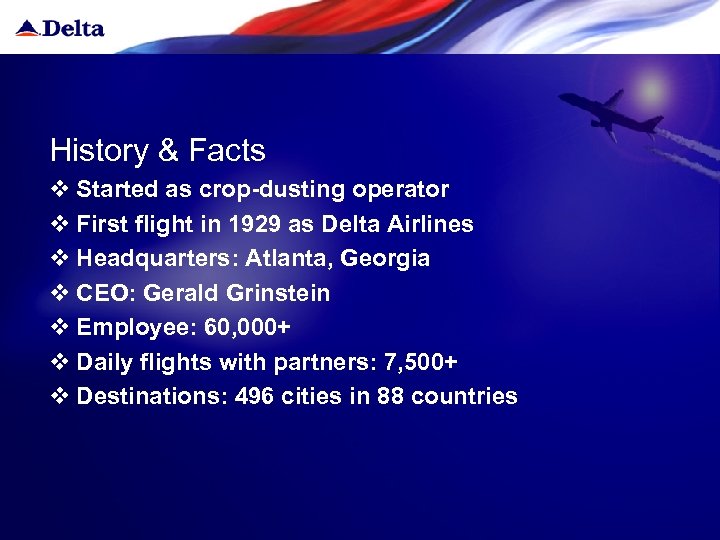
History & Facts v Started as crop-dusting operator v First flight in 1929 as Delta Airlines v Headquarters: Atlanta, Georgia v CEO: Gerald Grinstein v Employee: 60, 000+ v Daily flights with partners: 7, 500+ v Destinations: 496 cities in 88 countries
Management Team v Gerald Grinstein - Chief Executive Officer, 20 yrs experience in airline industry v Michael Palumbo - Vice President, Chief Financial Officer, responsible for Trans World Airlines’ on time performance from worst to first v Joe Kolshark - Chief of Operations, served Delta for 16 yrs, 757/767 Captain v Jim Whitehurst - Chief Network and Planning Officer v Curtis Robb - Chief Information Officer, 30 yrs information technology experience
Business Structure v Connection carriers • • • American Eagle Atlantic Southeast Airlines Chautauqua Airlines Comair Sky. West v Shuttle • Northeastern States v Sky. Team Alliance • Global Alliance v Song • Low-cost Carrier v Codeshare Partners
Current Situation v Losing over $3 billion since 2001 v Facing bankruptcy protection, Chapter 11 filing v Expecting 2, 000 maintenance, 3, 000 customer service and 1, 800 management job losses in 2005 v Agreed 32. 5% pay cut, fewer benefits for pilots, saving nearly $1 billion
Reasons for Delta’s Suffering v Low cost carriers with minimal debt loads offering low fares v Use of high-cost hub-and-spoke operation v Increase in fuel price v Greater choices to select from v Sept. 11 incident causing less demand v SARS outbreak v Highest operating per unit cost v Inability to maintain sufficient liquidity v Significantly higher pilot salaries
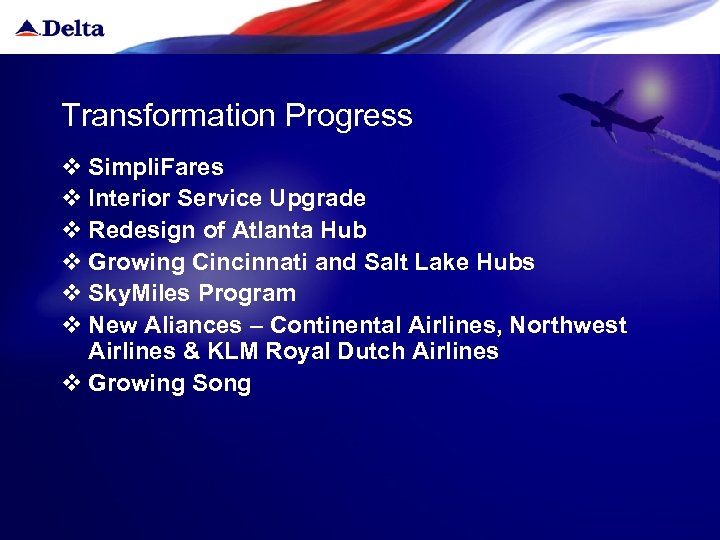
Transformation Progress v Simpli. Fares v Interior Service Upgrade v Redesign of Atlanta Hub v Growing Cincinnati and Salt Lake Hubs v Sky. Miles Program v New Aliances – Continental Airlines, Northwest Airlines & KLM Royal Dutch Airlines v Growing Song
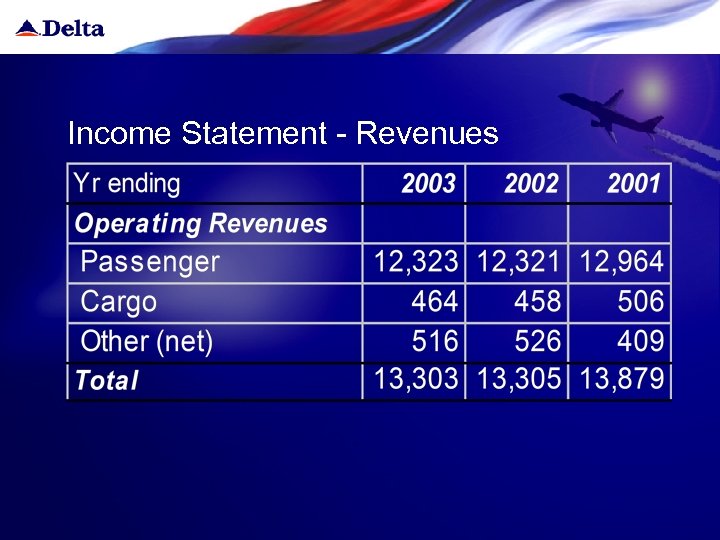
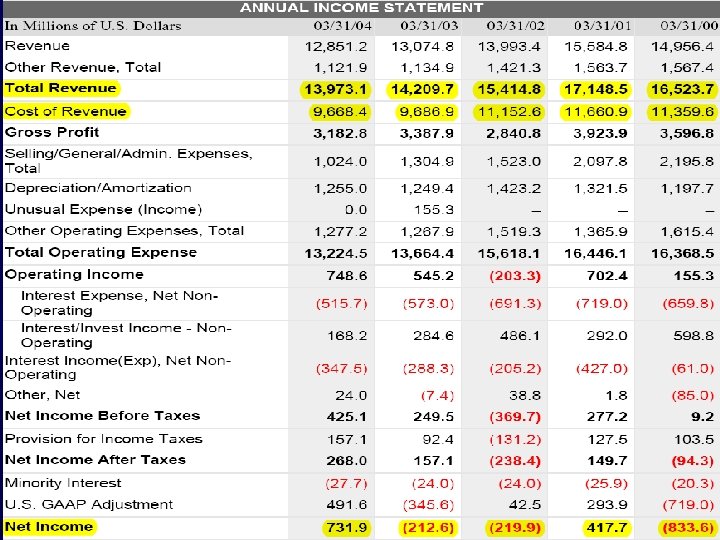
Income Statement - Revenues
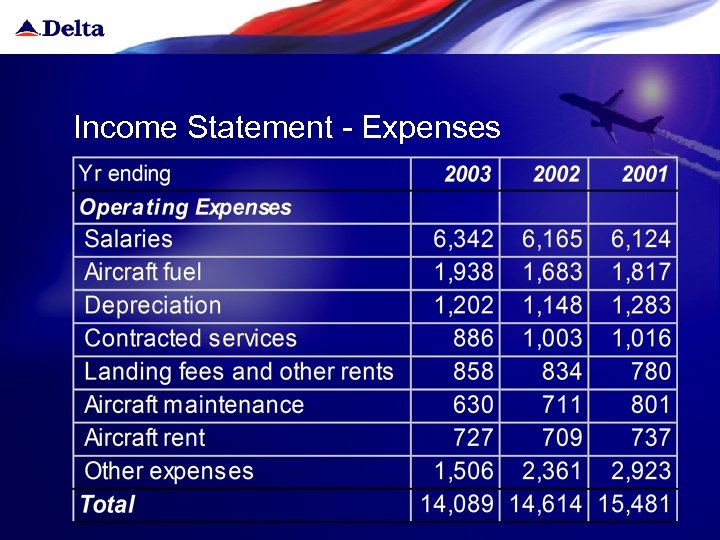
Income Statement - Expenses
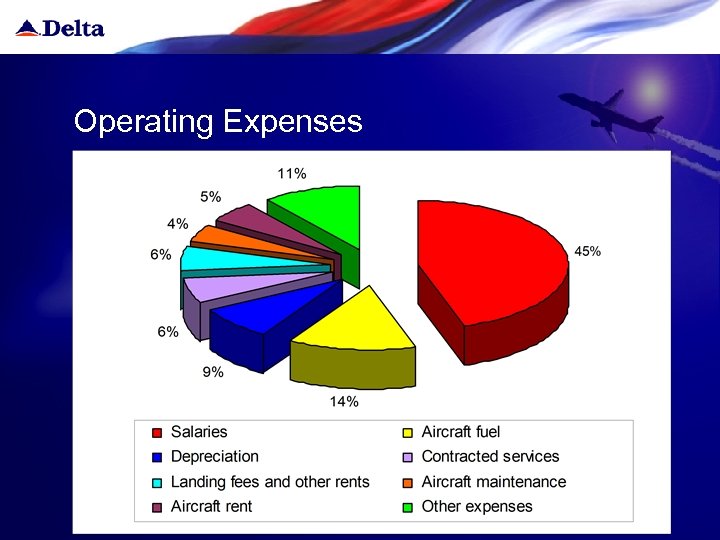
Operating Expenses
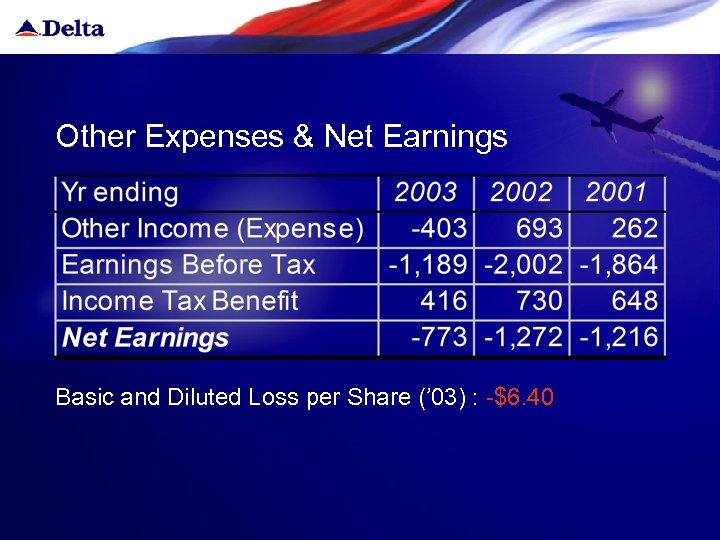
Other Expenses & Net Earnings Basic and Diluted Loss per Share (’ 03) : -$6. 40
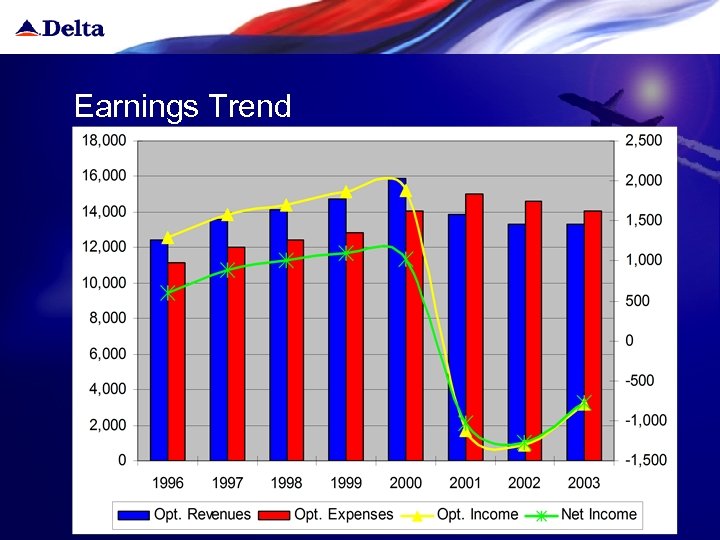
Earnings Trend
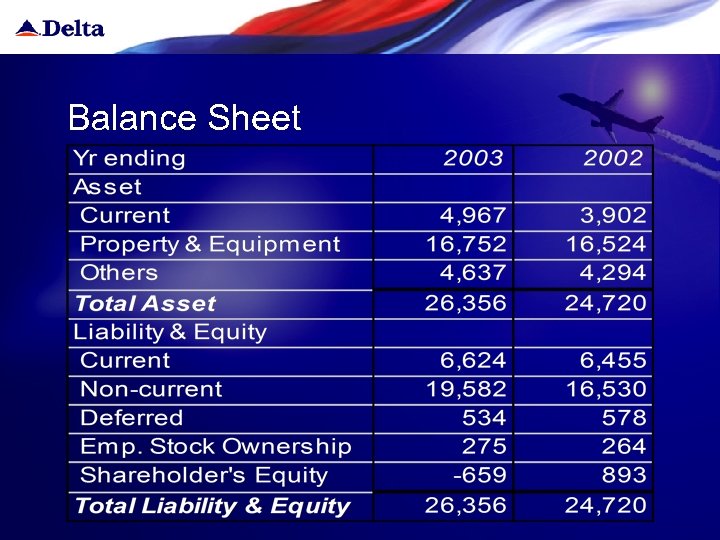
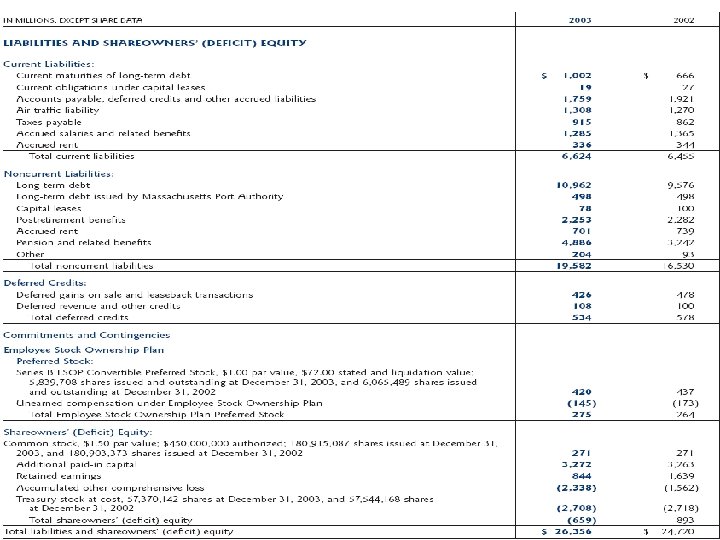
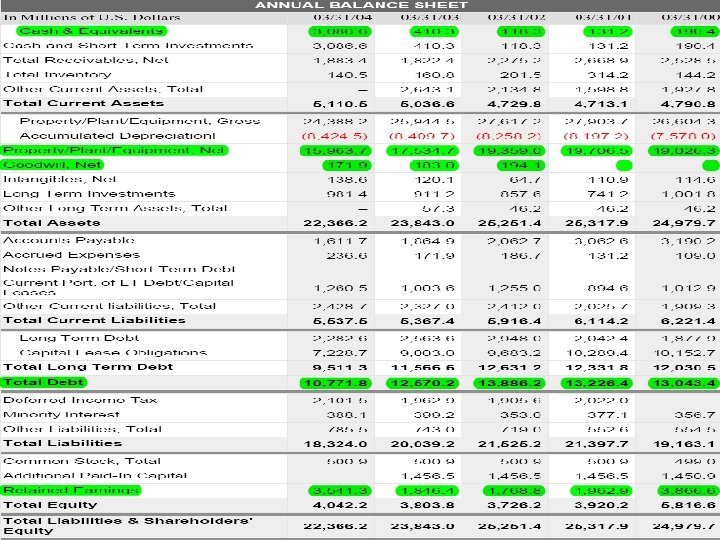
Balance Sheet
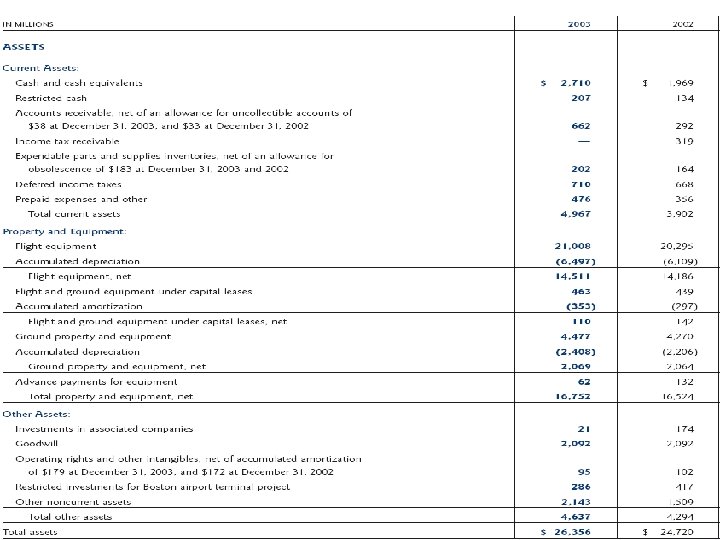
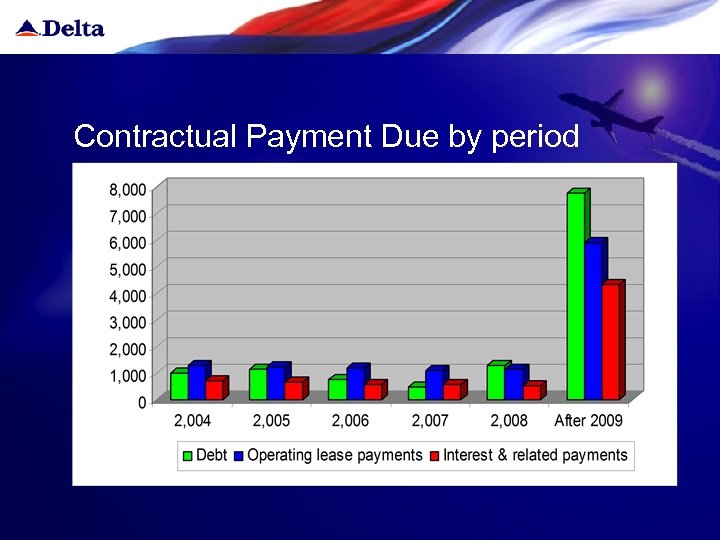
Contractual Payment Due by period
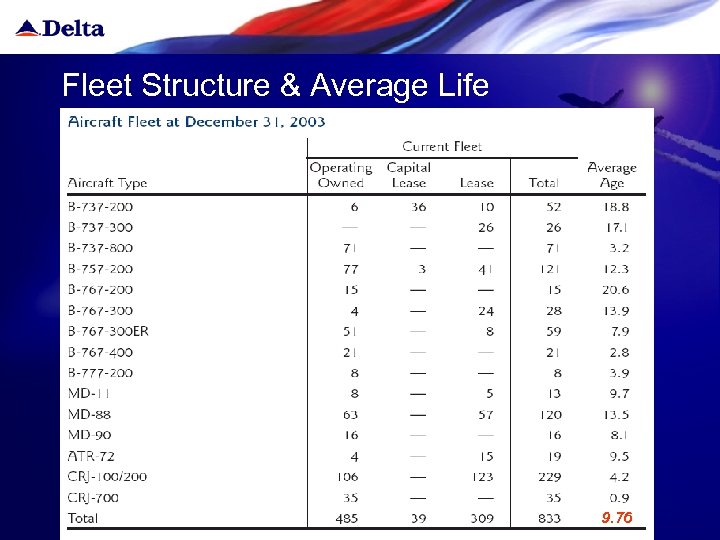
Fleet Structure & Average Life 9. 76
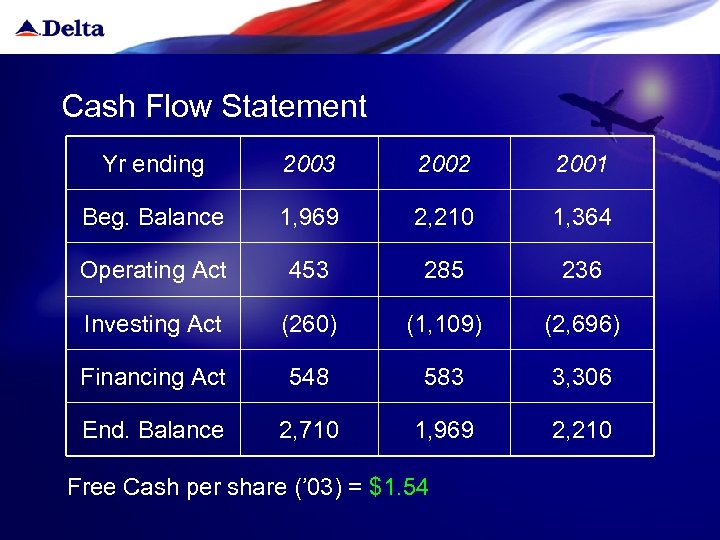
Cash Flow Statement Yr ending 2003 2002 2001 Beg. Balance 1, 969 2, 210 1, 364 Operating Act 453 285 236 Investing Act (260) (1, 109) (2, 696) Financing Act 548 583 3, 306 End. Balance 2, 710 1, 969 2, 210 Free Cash per share (’ 03) = $1. 54
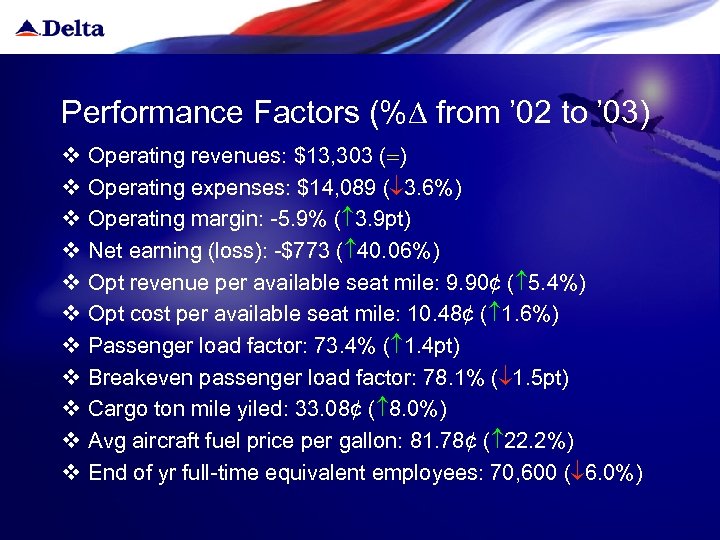
Performance Factors (% from ’ 02 to ’ 03) v v v Operating revenues: $13, 303 ( ) Operating expenses: $14, 089 ( 3. 6%) Operating margin: -5. 9% ( 3. 9 pt) Net earning (loss): -$773 ( 40. 06%) Opt revenue per available seat mile: 9. 90¢ ( 5. 4%) Opt cost per available seat mile: 10. 48¢ ( 1. 6%) Passenger load factor: 73. 4% ( 1. 4 pt) Breakeven passenger load factor: 78. 1% ( 1. 5 pt) Cargo ton mile yiled: 33. 08¢ ( 8. 0%) Avg aircraft fuel price per gallon: 81. 78¢ ( 22. 2%) End of yr full-time equivalent employees: 70, 600 ( 6. 0%)
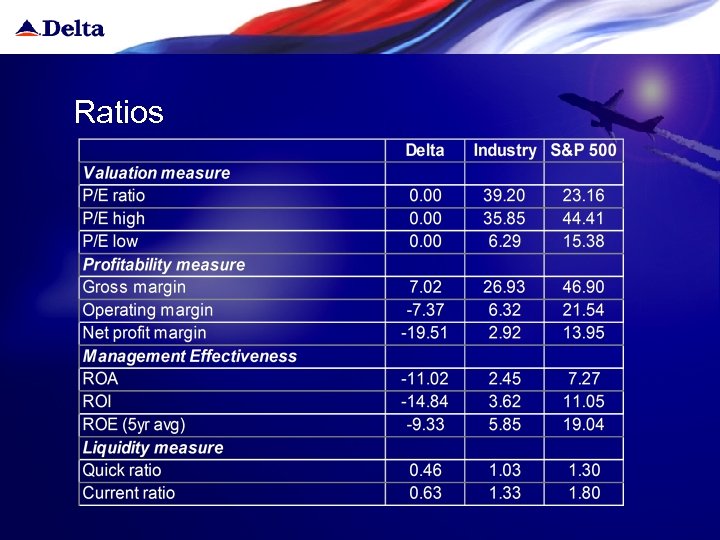
Ratios
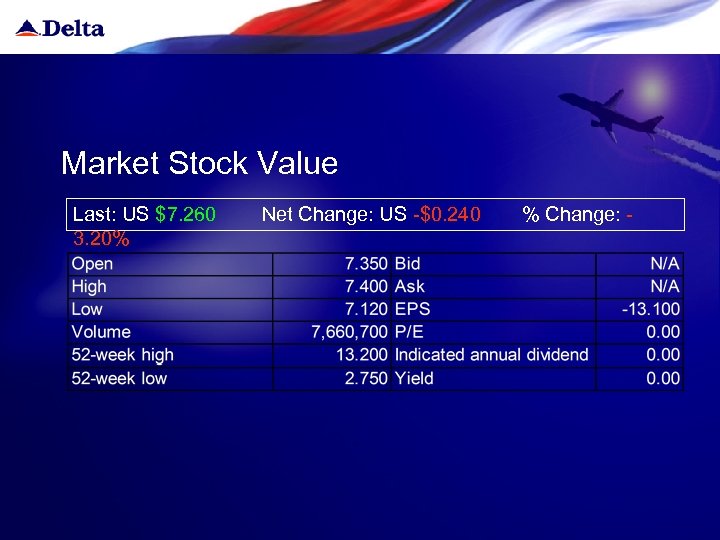
Market Stock Value Last: US $7. 260 3. 20% Net Change: US -$0. 240 % Change: -
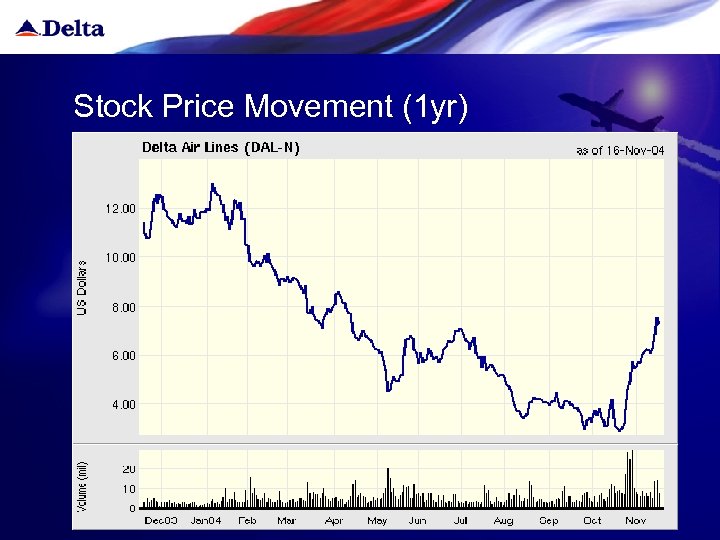
Stock Price Movement (1 yr)
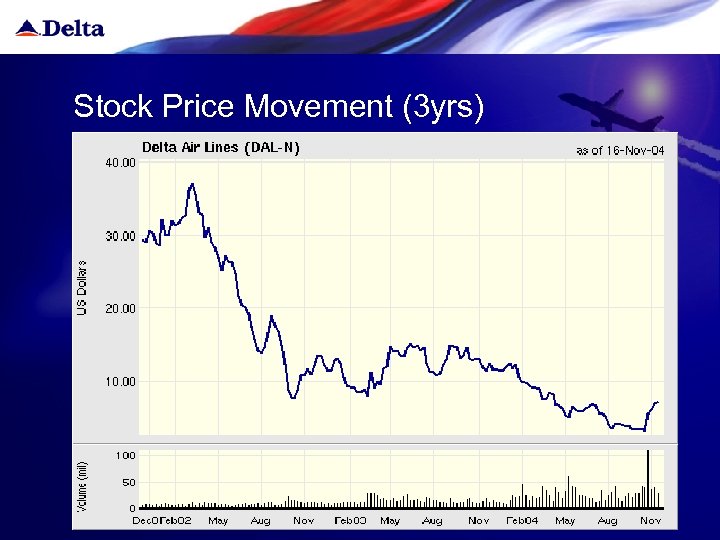
Stock Price Movement (3 yrs)
Recommendation v v Huge Outstanding LT Debt Extremely Volatile Market Condition No Dividend Payment Continuous Down Stream Stock Movement - SELL -
Southwest Airlines
Stock Information QStock Symbol: LUV QStock Exchange: NYSE QStock Price: $15. 89 QShares Outstanding: 793. 33 M QMarket Cap: 12. 606 B QDividend: $0. 018
Company History Q Commenced service on June 18, 1971 – using 3 Boeing 737 aircraft servicing state of Texas Q simple notion: lowest possible fares, ontime delivery, and excellent customer service. Q Became a major airline in 1989 Q 2003 was 31 st consecutive year of profitability
Corporate Statistics Q Offers flights within United States Q 2900 flights per day Q Flies to 59 cities (60 airports) in 31 states Q Operates 405 Boeing 737 jets
Awards Q Named “Most admired airline” for the second straight year in 2003 by FORTUNE magazine Q Ranked in top 5 for “Best companies in America to work for” by FORTUNE magazine Q Ranked #1 in fewest customer complaints for 13 th consecutive year- Department of Transportation's Consumer Report.
Southwest Officers Executive Position Service Herb Kelleher Chairman of the Board 33 yrs Gary C. Kelly CEO 18 yrs Colleen Barrett President 26 yrs Donna Connover VP Cust. Operations 27 yrs Joyce Rogge VP Marketing 16 yrs Greg Crum VP Flight Operations 25 yrs
Industry Competitors Q Main competitor is the automobile Q Other discount airlines ie. Jetblue, Air. Tran Airways Q Challenges from old-line carriers and they’re subsidiary upstarts
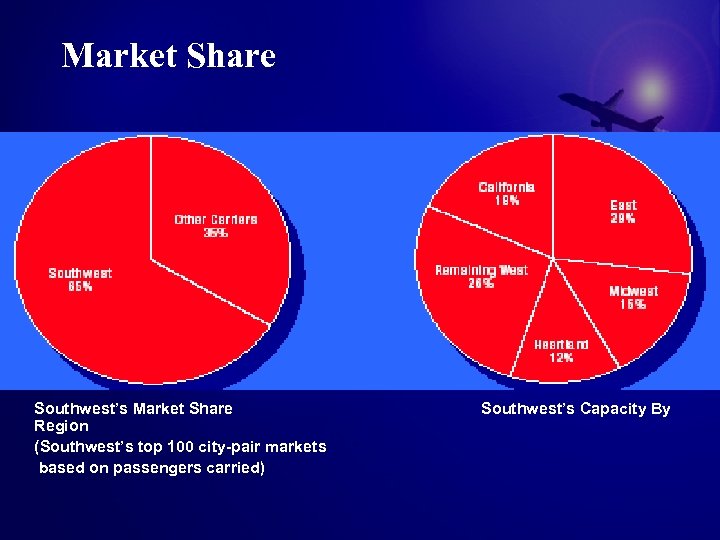
Market Share Southwest’s Market Share Southwest’s Capacity By Region (Southwest’s top 100 city-pair markets based on passengers carried)
External Challenges Q Florida hurricanes Q Post 9/11 terrorism concerns Q Increased security measures Q Technology
Competitive Advantage Q customer service Q Point-to-point carrying strategy Q Quick turnaround strategy Q low fares Q performance enhancing winglets Q Employee productivity – one of the lowest operating cost structures in the industry

New Jet Design
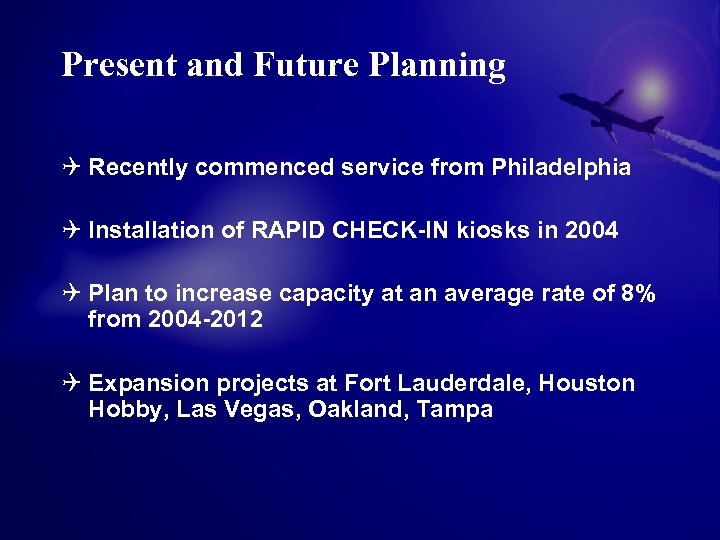
Present and Future Planning Q Recently commenced service from Philadelphia Q Installation of RAPID CHECK-IN kiosks in 2004 Q Plan to increase capacity at an average rate of 8% from 2004 -2012 Q Expansion projects at Fort Lauderdale, Houston Hobby, Las Vegas, Oakland, Tampa
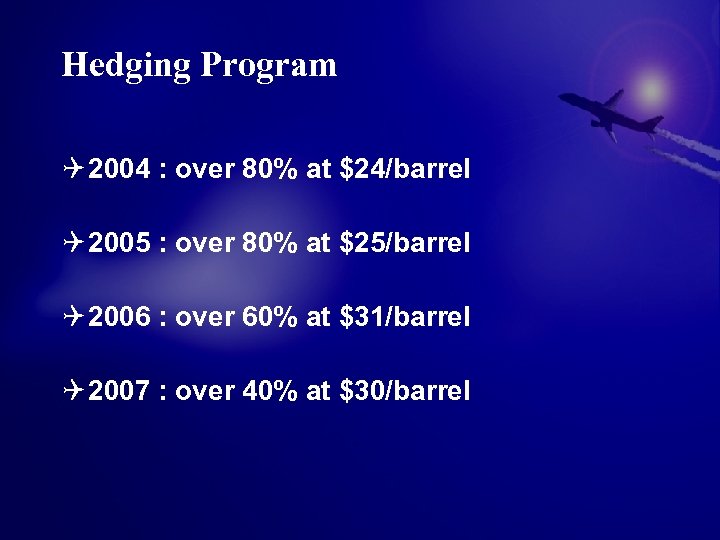
Hedging Program Q 2004 : over 80% at $24/barrel Q 2005 : over 80% at $25/barrel Q 2006 : over 60% at $31/barrel Q 2007 : over 40% at $30/barrel
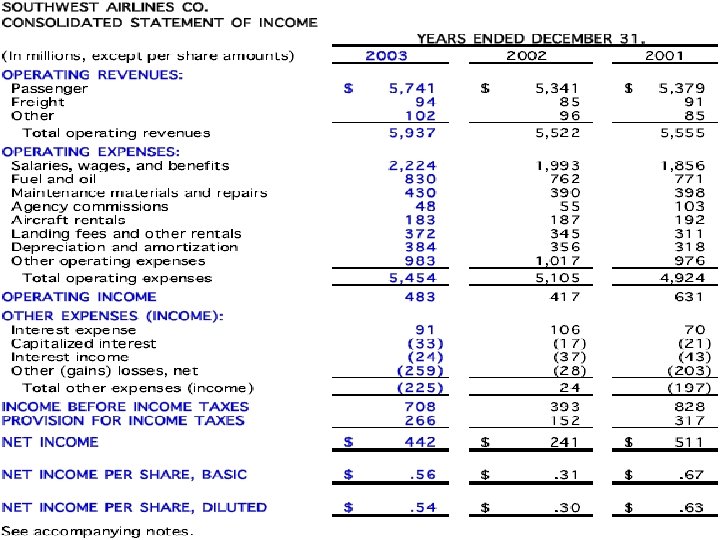
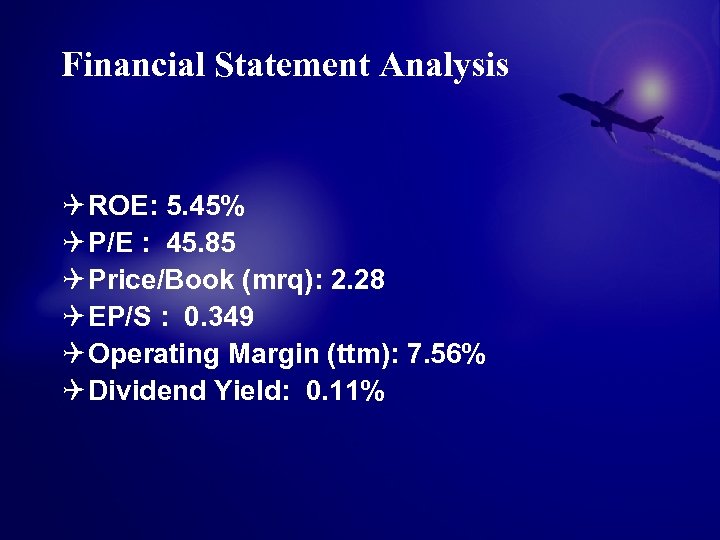
Financial Statement Analysis Q ROE: 5. 45% Q P/E : 45. 85 Q Price/Book (mrq): 2. 28 Q EP/S : 0. 349 Q Operating Margin (ttm): 7. 56% Q Dividend Yield: 0. 11%
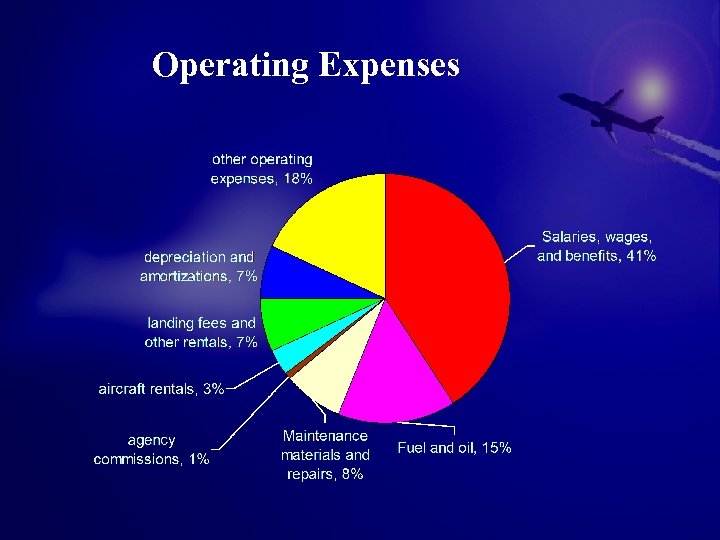
Operating Expenses
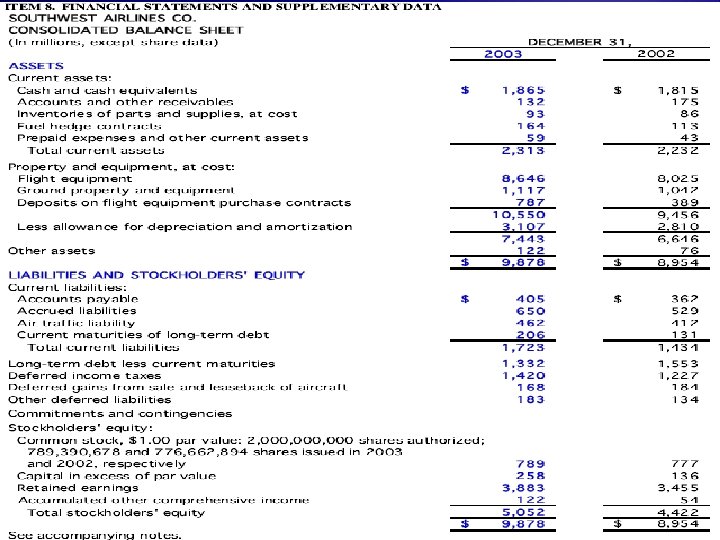
Income Statement
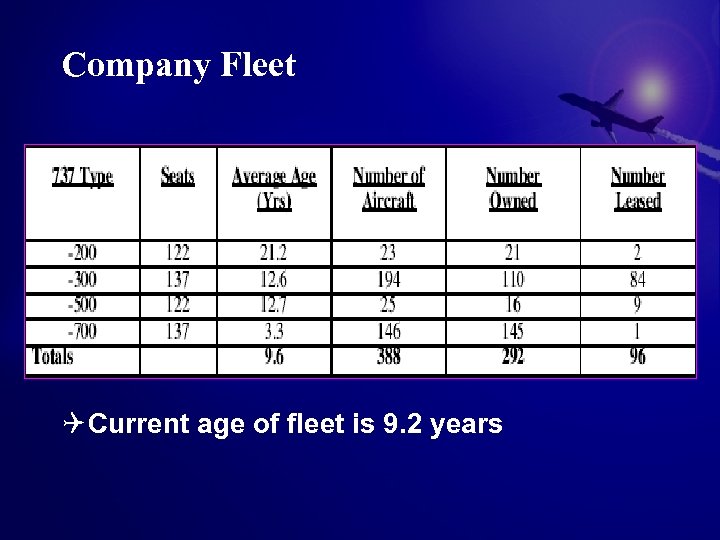
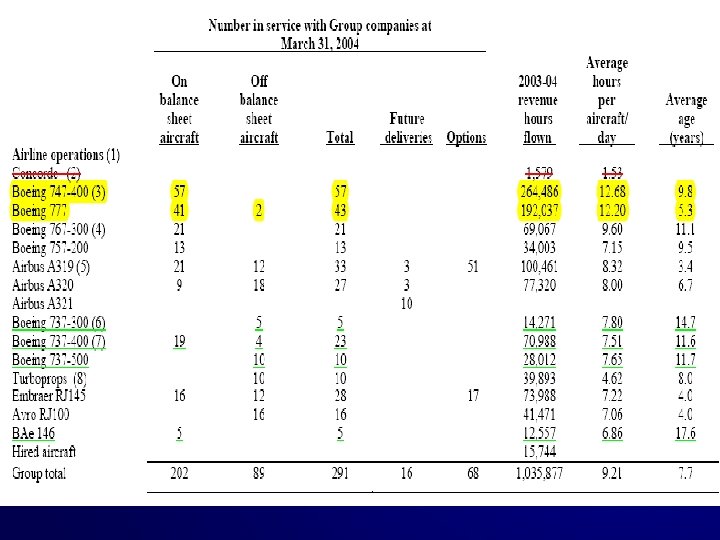
Company Fleet Q Current age of fleet is 9. 2 years
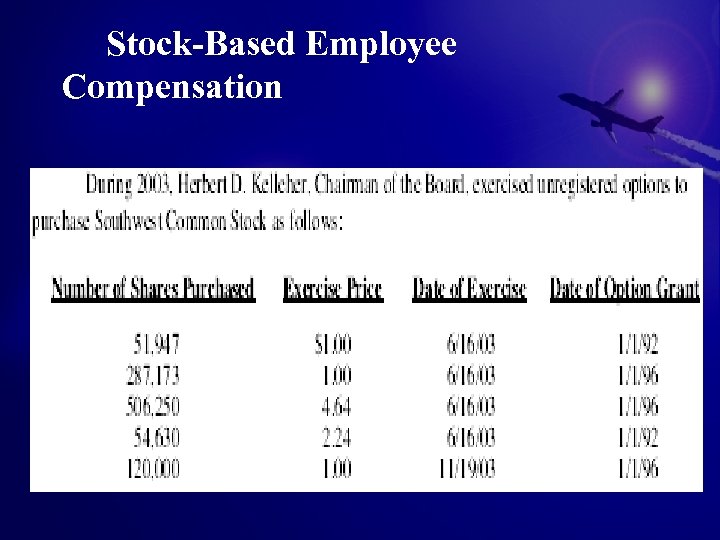
Stock-Based Employee Compensation
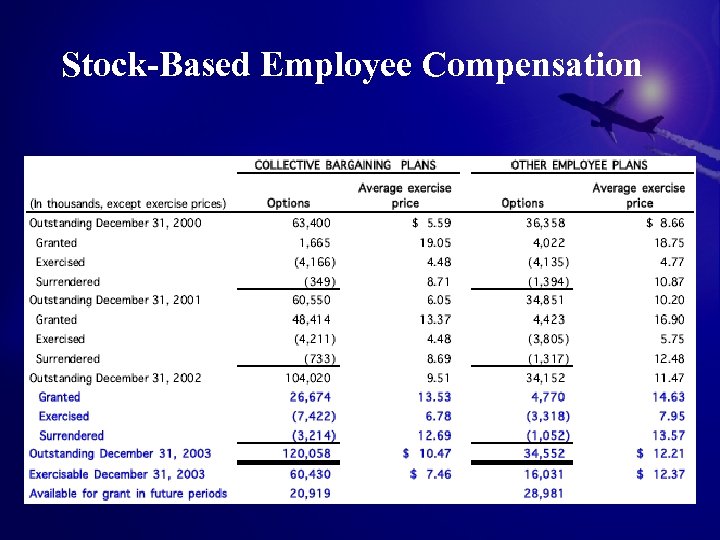
Stock-Based Employee Compensation
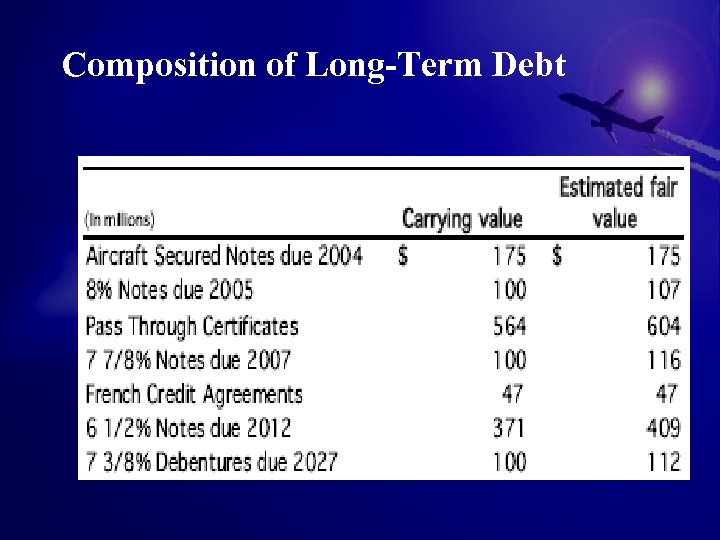
Composition of Long-Term Debt
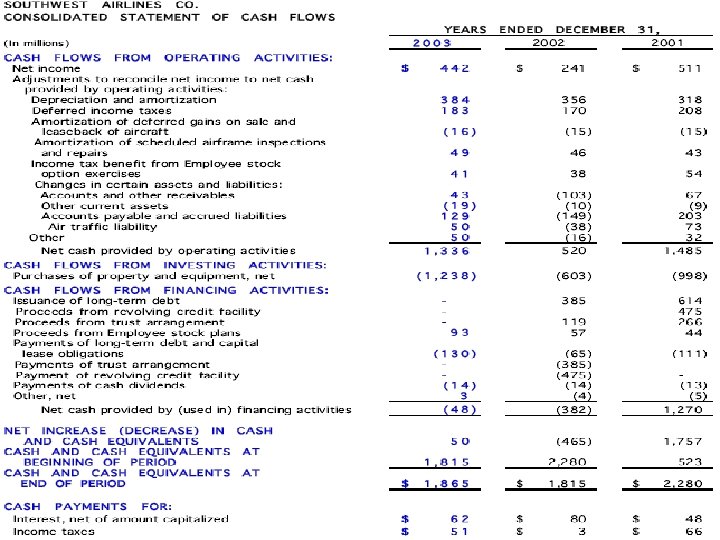
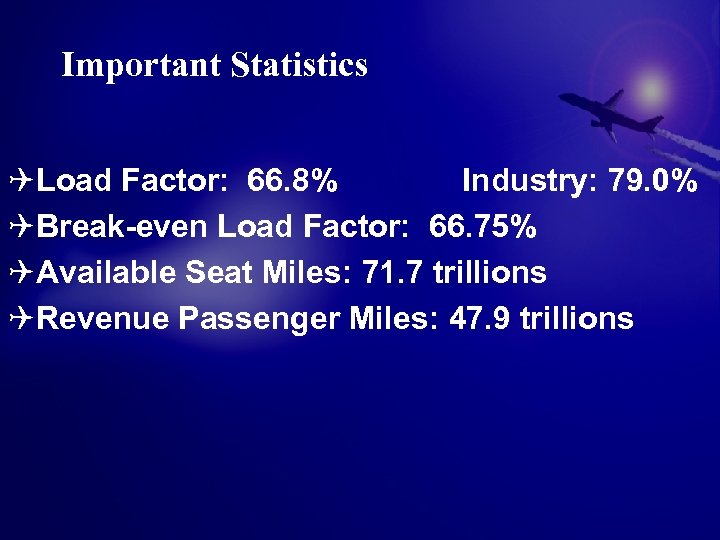
Important Statistics QLoad Factor: 66. 8% Industry: 79. 0% QBreak-even Load Factor: 66. 75% QAvailable Seat Miles: 71. 7 trillions QRevenue Passenger Miles: 47. 9 trillions
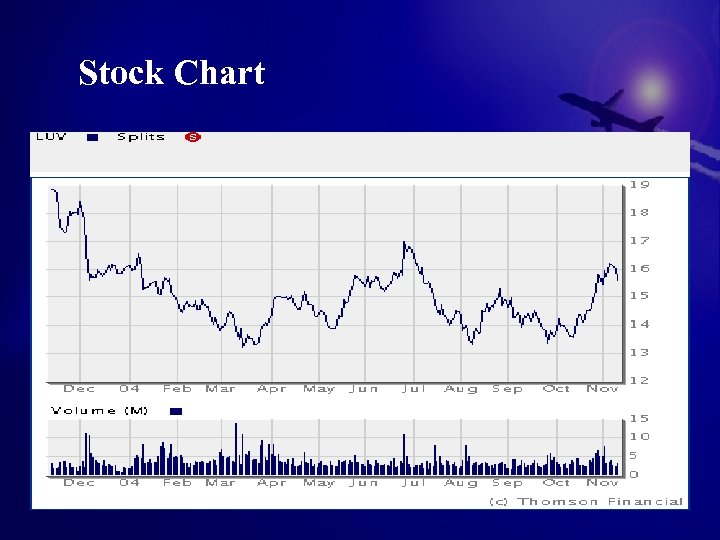
Stock Chart
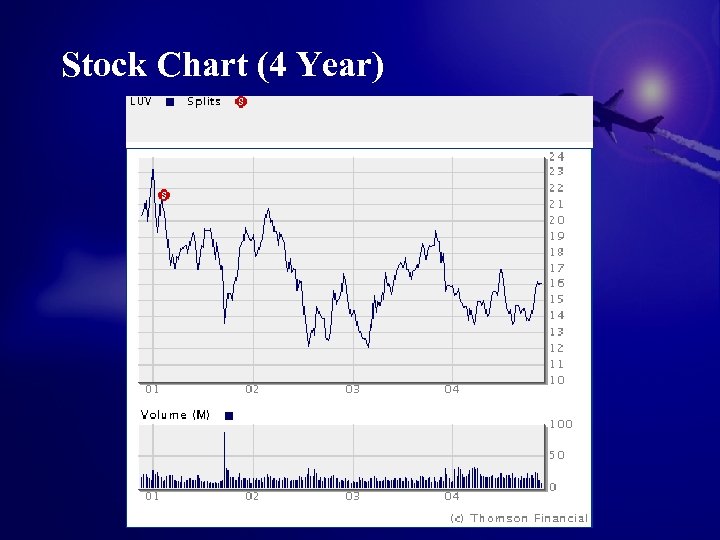
Stock Chart (4 Year)
Recommendataion QHold
By Alexei
Company History Background QStart as a merger of small UK air companies in early 19 th QNationalized in 1939 (British Overseas Airways Corporation) QIn 1979 Government intention to sell BOAC QBA privatised in 1987
Market background Q Public company with limited distribution of shares outside UK (in ADR form) Q Stocks Traded § At London Stock Exchange (BAY) § At New York Stock Exchange (ADR: BAB) Q Number of shares: 1, 082, 845, 212 Q Price per share: NYSE: $41. 48 Q Dividends counts in Pounds Q Debt corporate rating stands at BB+ § Stable, backed by fleet § 3. 3 bn ₤
Service/Products Q BA provides scheduled passenger and cargo Airline services § 154 destinations in 75 countries (last year 174 destinations in 83 countries) § carried more than 36 million passengers last year Q Programmes § Club World flat bed § World Traveller Plus § Club loyalty programme Q Main base of operation (airports) § Airport Heathrow (hub structure) 38% of all passengers § Gatwick (new structure point to point) § New York John F. Kennedy International Airport (hub) Q Alliances § Oneworld: Aer Lingus, American Airlines, British Airways, Cathay Pacific, Finnair, Iberia, Lan Chile and Qantas § DBA Q Franchise § Six airways: Loganair, GB Airways, British Mediterranean Airways, Sun Air of Scandinavia, Comair of South Africa and Regional Air of Kenya
Management Q Rod Eddinghton § Chief Executive Board Member since 2000 (in industry since 1979) Q John Rishton § Chief Financial Officer. Appointed in September 2001. In BA since 1994 Q Martin George § Director Marketing and Communications. Appointed in 1997. In BA since 1987 Q Mike Street • Director Customer Service and Operations since 1997. Executive Board Member since 2000 Q Robert Webb QC • General Counsel. Joined British Airways in 1998
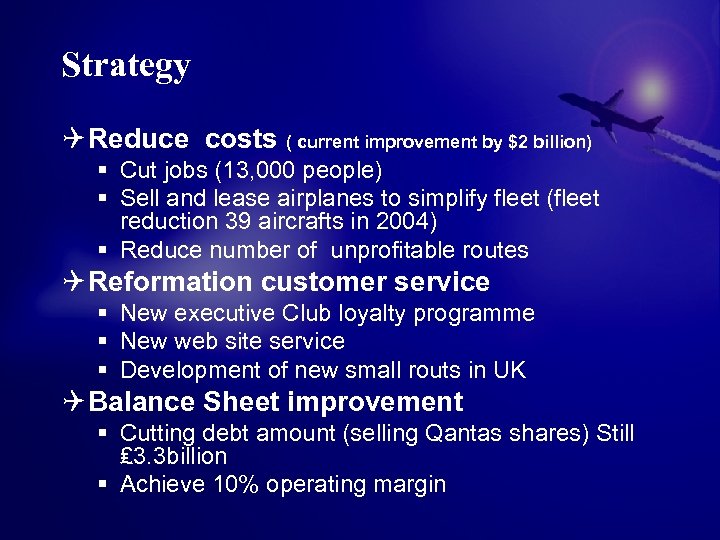
Strategy Q Reduce costs ( current improvement by $2 billion) § Cut jobs (13, 000 people) § Sell and lease airplanes to simplify fleet (fleet reduction 39 aircrafts in 2004) § Reduce number of unprofitable routes Q Reformation customer service § New executive Club loyalty programme § New web site service § Development of new small routs in UK Q Balance Sheet improvement § Cutting debt amount (selling Qantas shares) Still ₤ 3. 3 billion § Achieve 10% operating margin
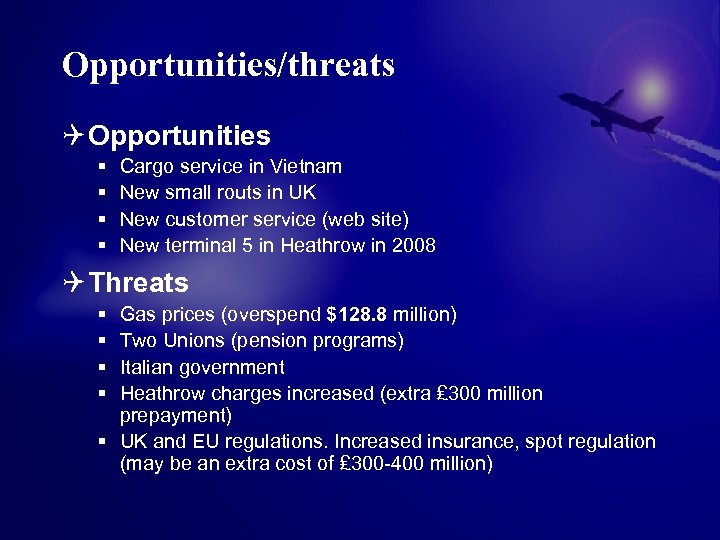
Opportunities/threats Q Opportunities § § Cargo service in Vietnam New small routs in UK New customer service (web site) New terminal 5 in Heathrow in 2008 Q Threats § § Gas prices (overspend $128. 8 million) Two Unions (pension programs) Italian government Heathrow charges increased (extra ₤ 300 million prepayment) § UK and EU regulations. Increased insurance, spot regulation (may be an extra cost of ₤ 300 -400 million)
Competitors QLufthansa QAir France QSmall domestic and European carriers QDelta QUnited
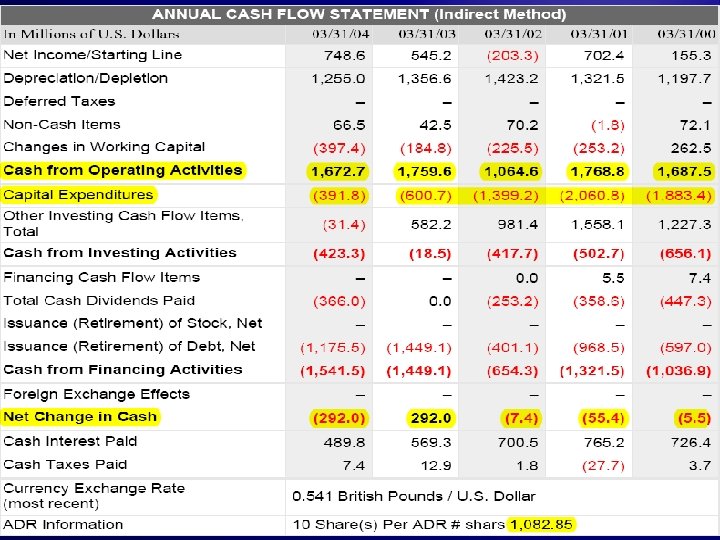
Financial statement analysis QBalance Sheet QIncome Statement QCash flow Statement QMain problem – different standards and currency conversion
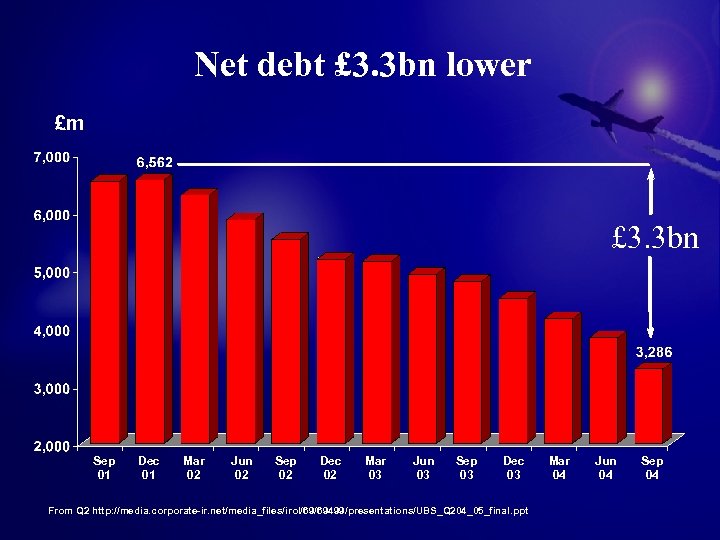
Net debt £ 3. 3 bn lower £m £ 3. 3 bn Sep 01 Dec 01 Mar 02 Jun 02 Sep 02 Dec 02 Mar 03 Jun 03 Sep 03 Dec 03 From Q 2 http: //media. corporate-ir. net/media_files/irol/69/69499/presentations/UBS_Q 204_05_final. ppt Mar 04 Jun 04 Sep 04
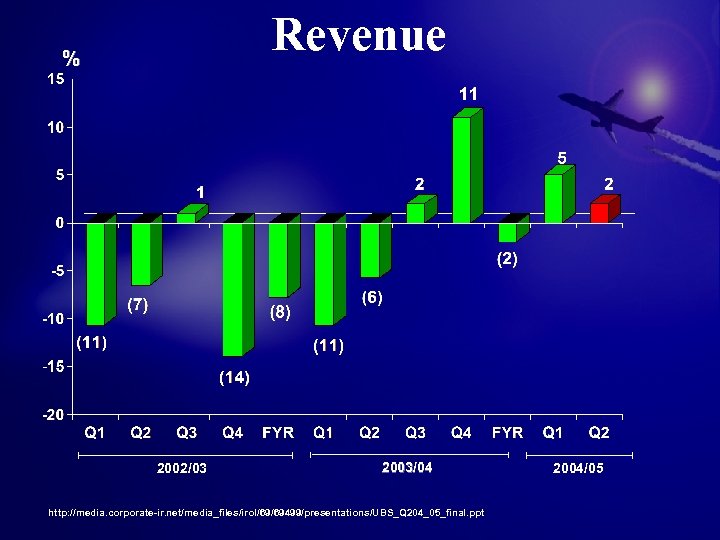
Revenue % 2002/03 2003/04 http: //media. corporate-ir. net/media_files/irol/69/69499/presentations/UBS_Q 204_05_final. ppt 2004/05
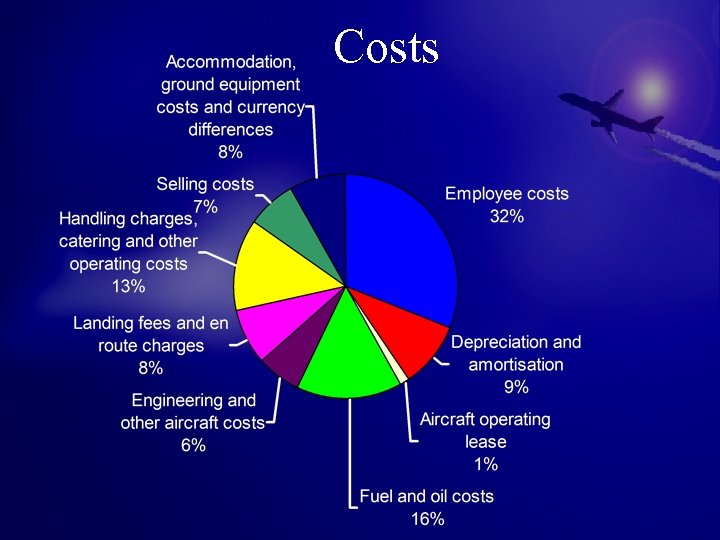
Costs
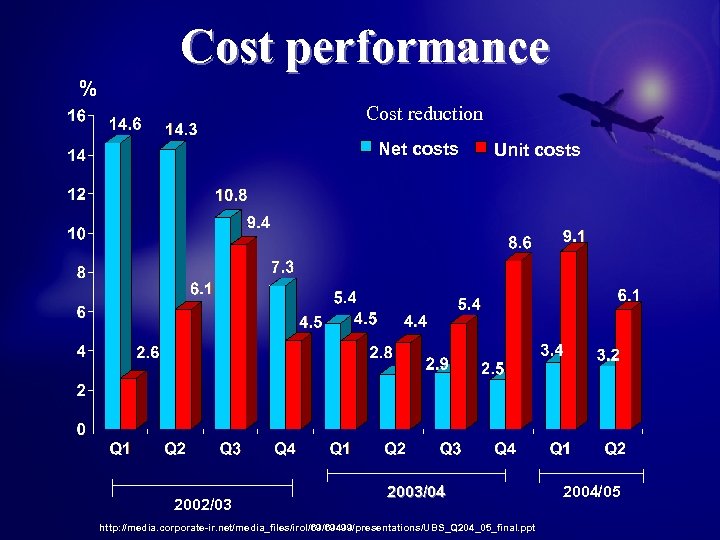
Cost performance % Cost reduction Net costs 2002/03 Unit costs 2003/04 http: //media. corporate-ir. net/media_files/irol/69/69499/presentations/UBS_Q 204_05_final. ppt 2004/05
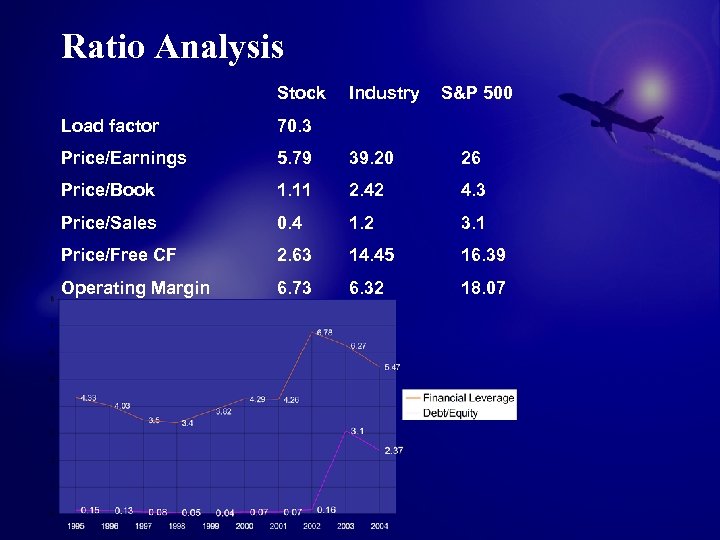
Ratio Analysis Stock Industry S&P 500 Load factor 70. 3 Price/Earnings 5. 79 39. 20 26 Price/Book 1. 11 2. 42 4. 3 Price/Sales 0. 4 1. 2 3. 1 Price/Free CF 2. 63 14. 45 16. 39 Operating Margin 6. 73 6. 32 18. 07
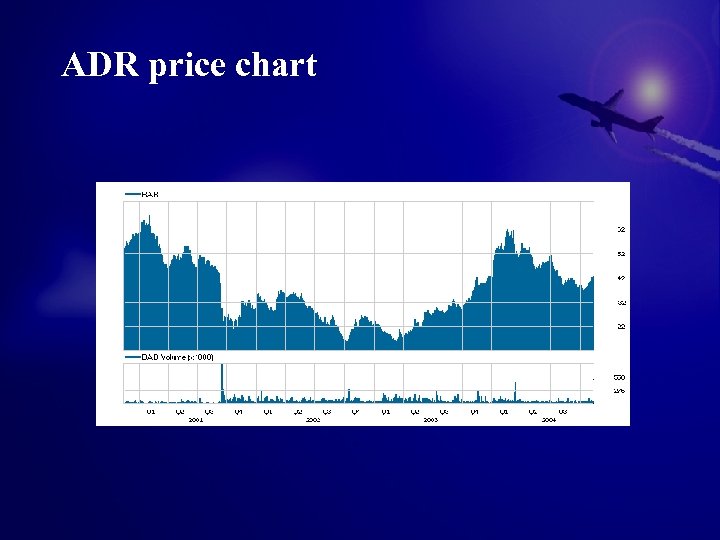
ADR price chart
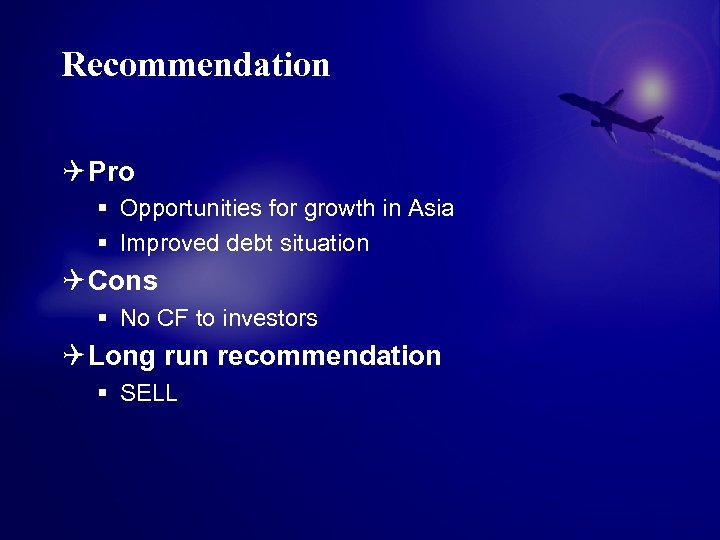
Recommendation Q Pro § Opportunities for growth in Asia § Improved debt situation Q Cons § No CF to investors Q Long run recommendation § SELL
 Скачать презентацию Global Airlines Industry Alla Serebrova Delta Airlines
10d96c40ac3943fe9958c7c5823df082.ppt