


 Скачать презентацию Gliomas OPT 3 -6 of pediatric
68827112ae9ae6a4fb52cc89e9997fa6.ppt
- Количество слайдов: 31
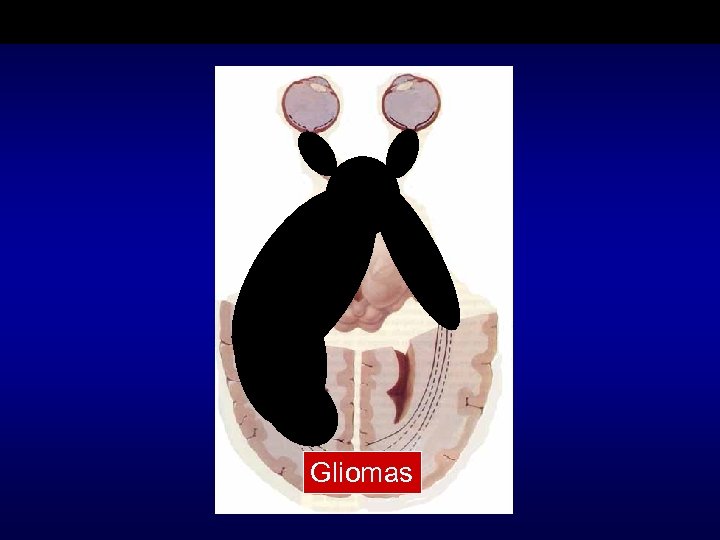 Gliomas
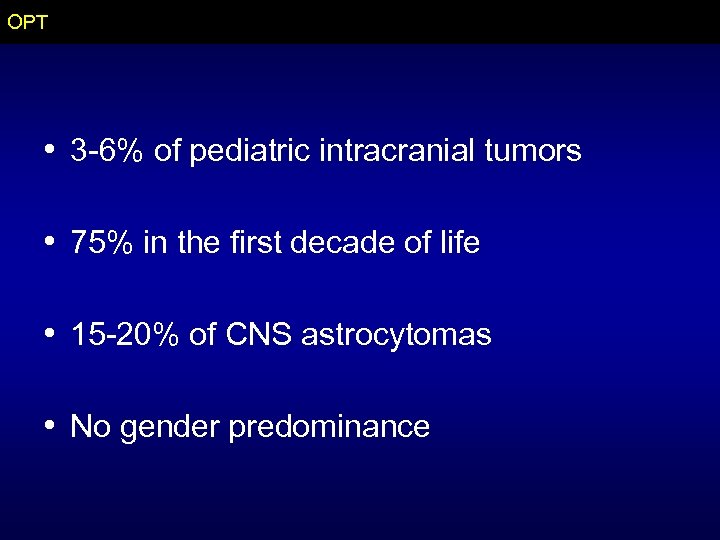 OPT • 3 -6% of pediatric intracranial tumors • 75% in the first decade of life • 15 -20% of CNS astrocytomas • No gender predominance
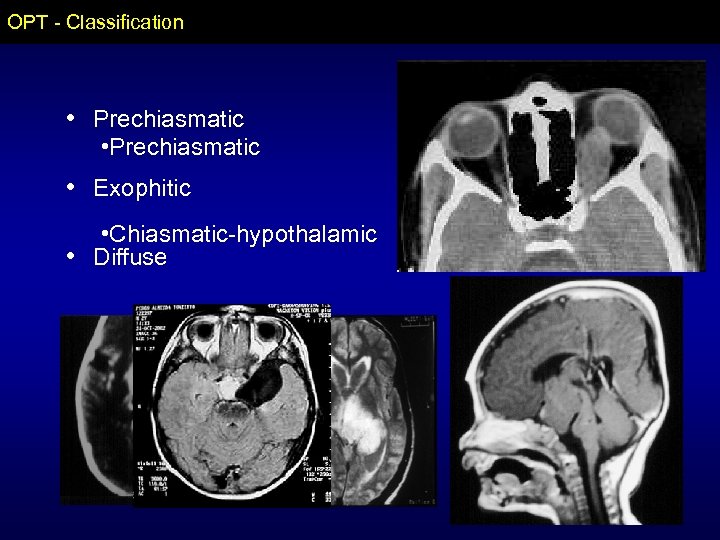 OPT - Classification • Prechiasmatic • Exophitic • Chiasmatic-hypothalamic • Diffuse
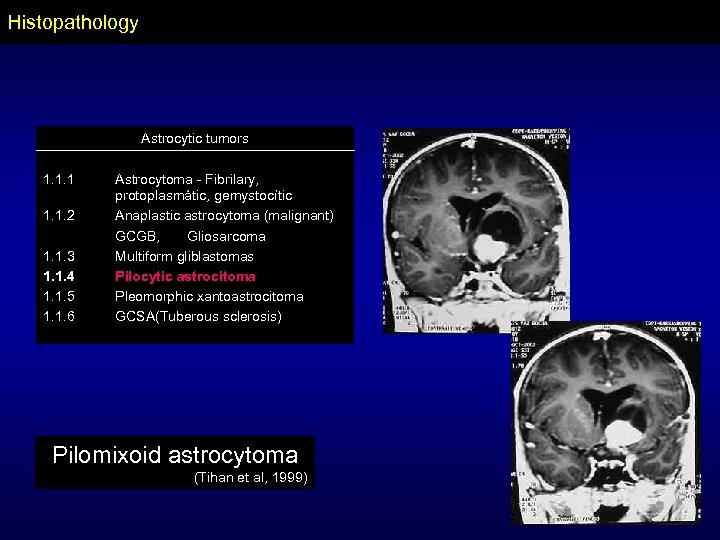 Histopathology Astrocytic tumors 1. 1. 1. 2 1. 1. 3 1. 1. 4 1. 1. 5 1. 1. 6 Astrocytoma - Fibrilary, protoplasmátic, gemystocític Anaplastic astrocytoma (malignant) GCGB, Gliosarcoma Multiform gliblastomas Pilocytic astrocitoma Pleomorphic xantoastrocitoma GCSA(Tuberous sclerosis) Pilomixoid astrocytoma (Tihan et al, 1999)
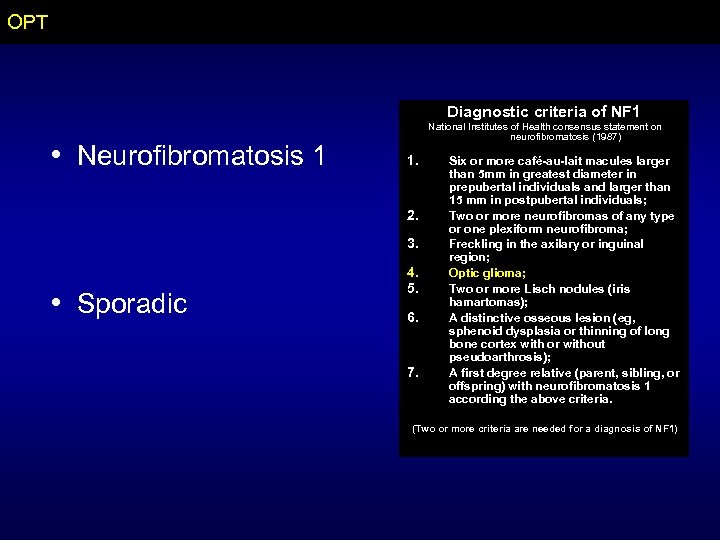 OPT Diagnostic criteria of NF 1 • Neurofibromatosis 1 National Institutes of Health consensus statement on neurofibromatosis (1987) 1. 2. 3. • Sporadic 4. 5. 6. 7. Six or more café-au-lait macules larger than 5 mm in greatest diameter in prepubertal individuals and larger than 15 mm in postpubertal individuals; Two or more neurofibromas of any type or one plexiform neurofibroma; Freckling in the axilary or inguinal region; Optic glioma; Two or more Lisch nodules (iris hamartomas); A distinctive osseous lesion (eg, sphenoid dysplasia or thinning of long bone cortex with or without pseudoarthrosis); A first degree relative (parent, sibling, or offspring) with neurofibromatosis 1 according the above criteria. (Two or more criteria are needed for a diagnosis of NF 1)
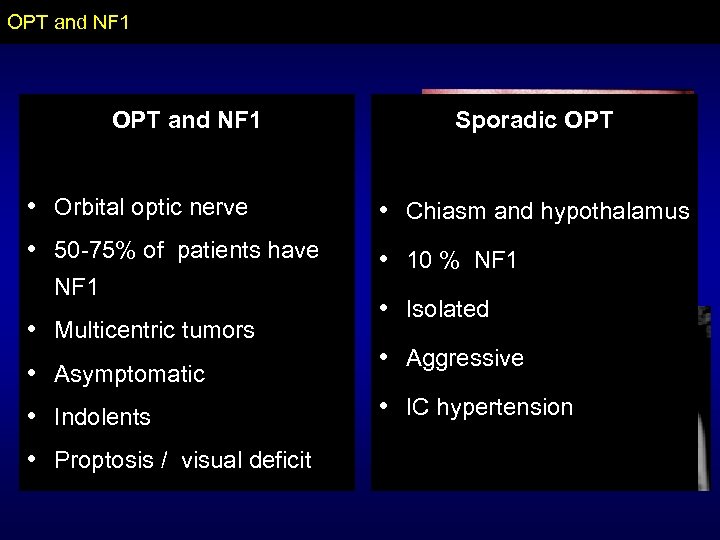 OPT and NF 1 Sporadic OPT • Orbital optic nerve • Chiasm and hypothalamus • 50 -75% of patients have • 10 % NF 1 • Multicentric tumors • Asymptomatic • Indolents • Proptosis / visual deficit • Isolated • Aggressive • IC hypertension
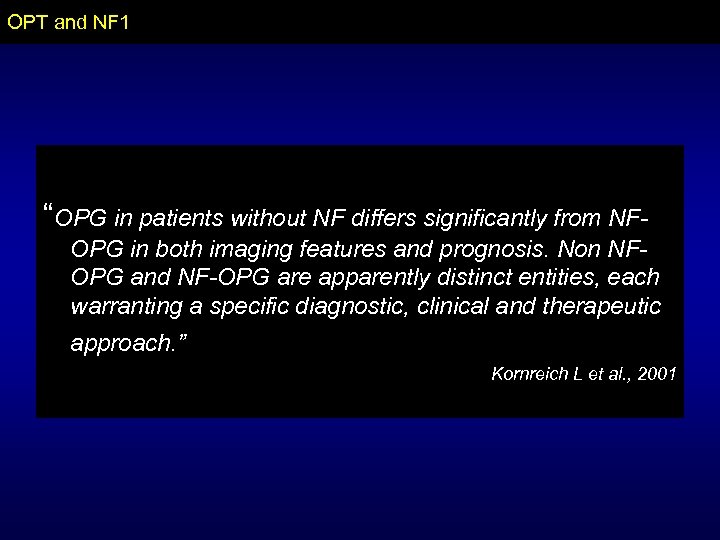 OPT and NF 1 “OPG in patients without NF differs significantly from NFOPG in both imaging features and prognosis. Non NFOPG and NF-OPG are apparently distinct entities, each warranting a specific diagnostic, clinical and therapeutic approach. ” Kornreich L et al. , 2001
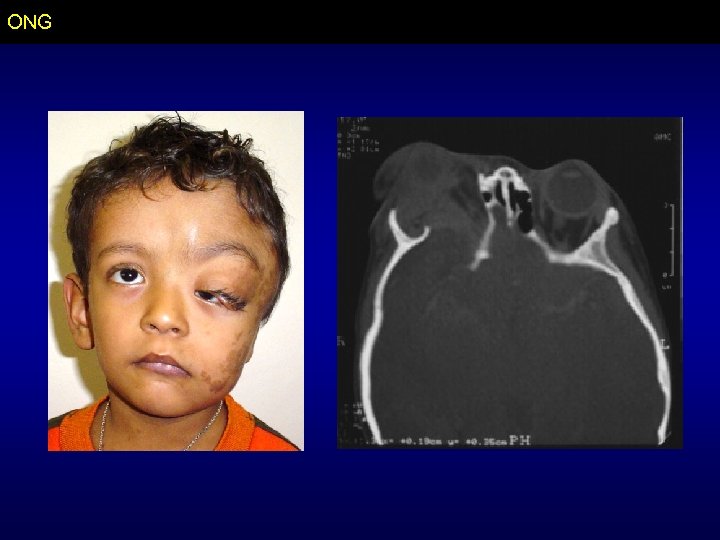
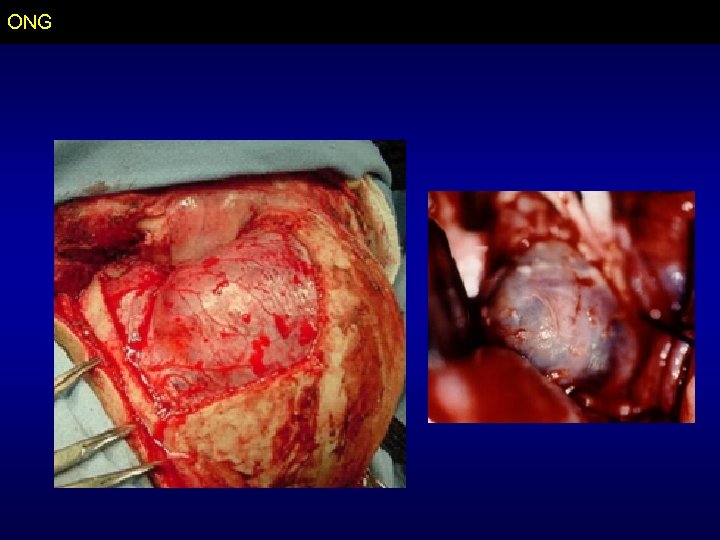
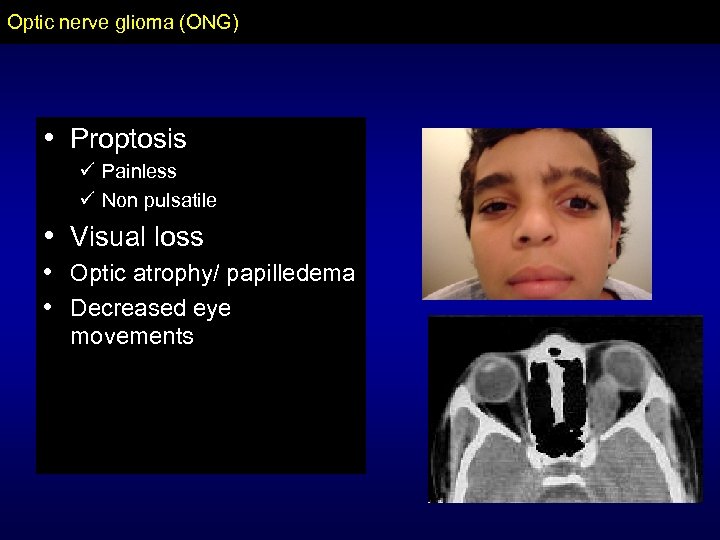 Optic nerve glioma (ONG) • Proptosis ü Painless ü Non pulsatile • Visual loss • Optic atrophy/ papilledema • Decreased eye movements
 ONG
ONG
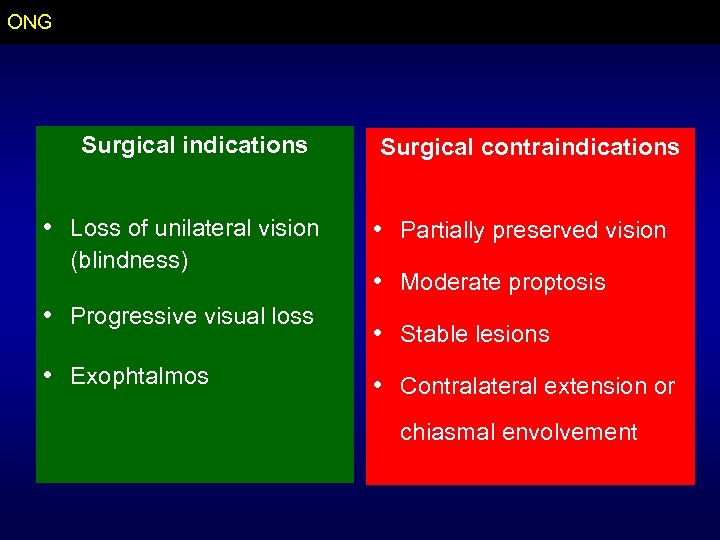 ONG Surgical indications • Loss of unilateral vision (blindness) • Progressive visual loss • Exophtalmos Surgical contraindications • Partially preserved vision • Moderate proptosis • Stable lesions • Contralateral extension or chiasmal envolvement
 ONG
ONG
 ONG
ONG
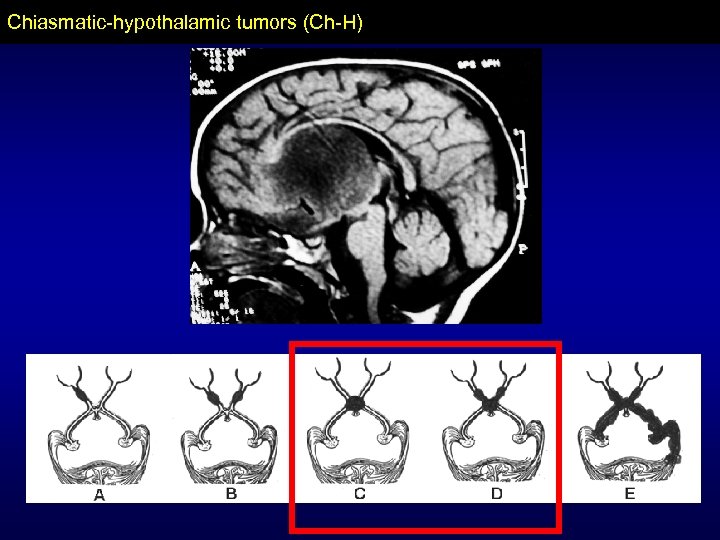 Chiasmatic-hypothalamic tumors (Ch-H)
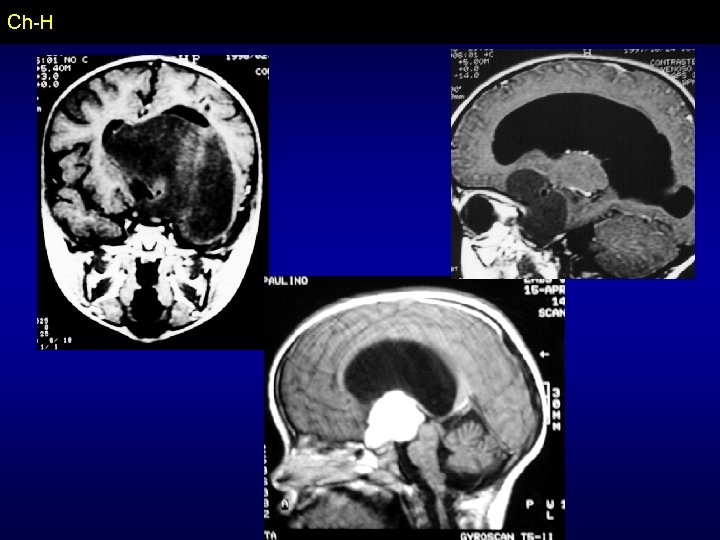 Ch-H
Ch-H
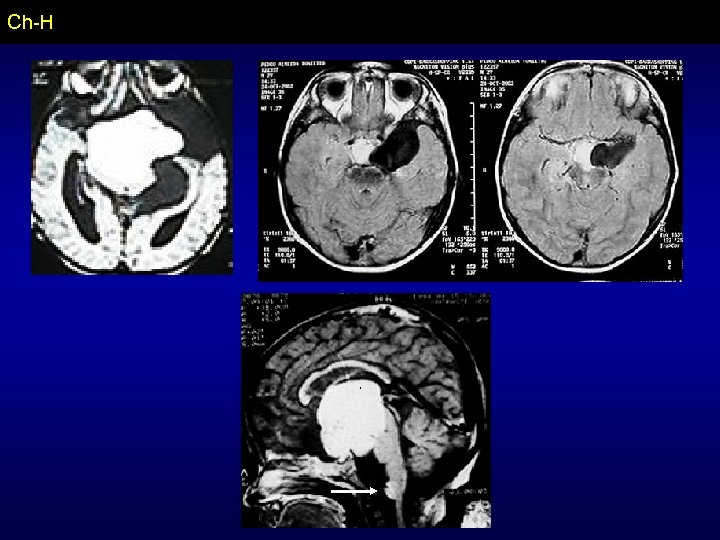 Ch-H
Ch-H
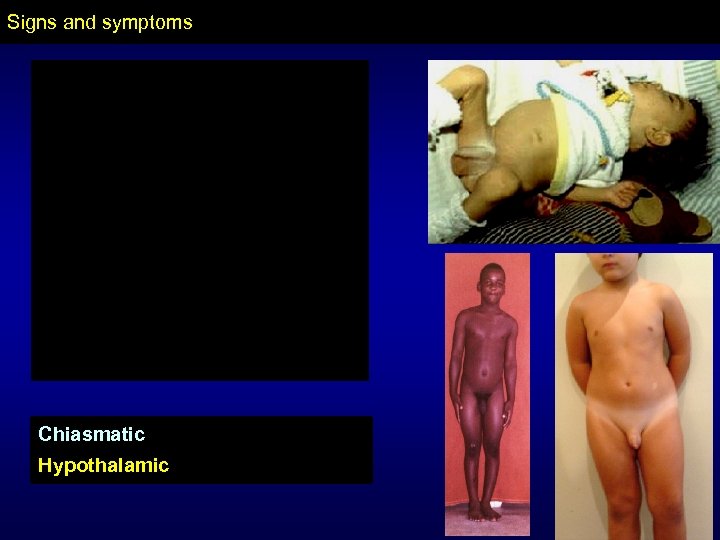 Signs and symptoms Chiasmatic Hypothalamic
 Ch-H tumors : Problems in management • Natural history and course üNumber of patients üVariability of treatment options üLack of prospective of studies • Biologic behavior What is the best treatment ?
 Ch-H – Options of treatment • Observation ü Stable lesions ü NF 1 • Surgery ü Radical subtotal ü Limited § Decompression § Biopsy • Chemotherapy • Radiation therapy
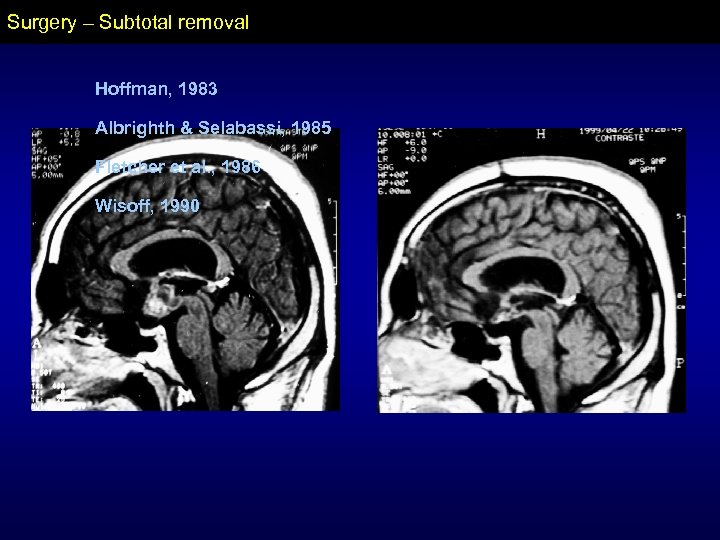 Surgery – Subtotal removal Hoffman, 1983 Albrighth & Selabassi, 1985 Fletcher et al. , 1986 Wisoff, 1990
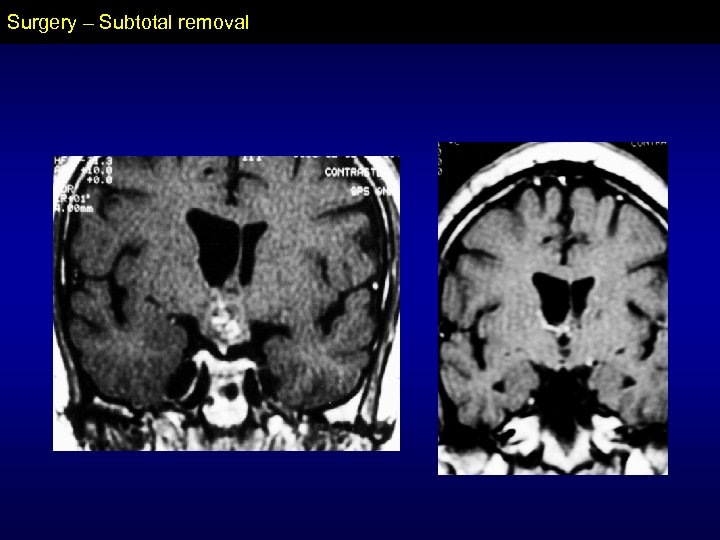 Surgery – Subtotal removal
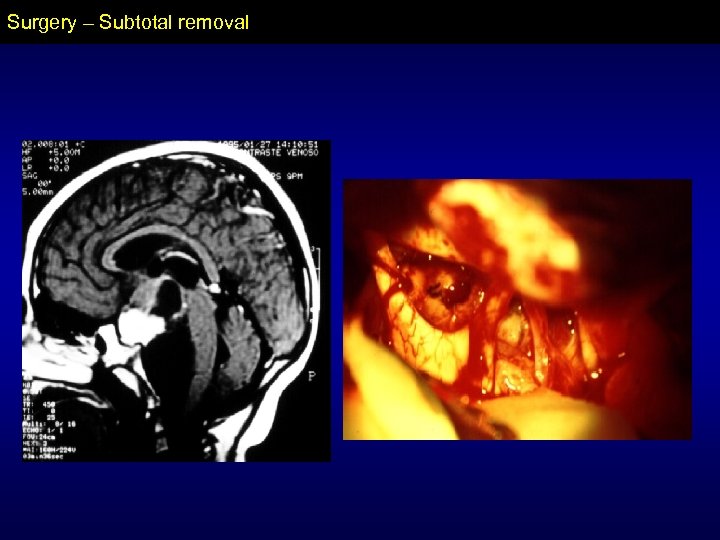 Surgery – Subtotal removal
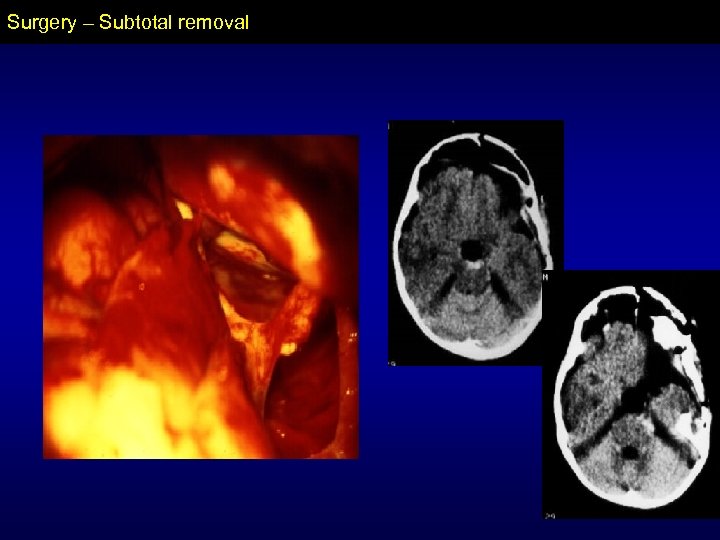 Surgery – Subtotal removal
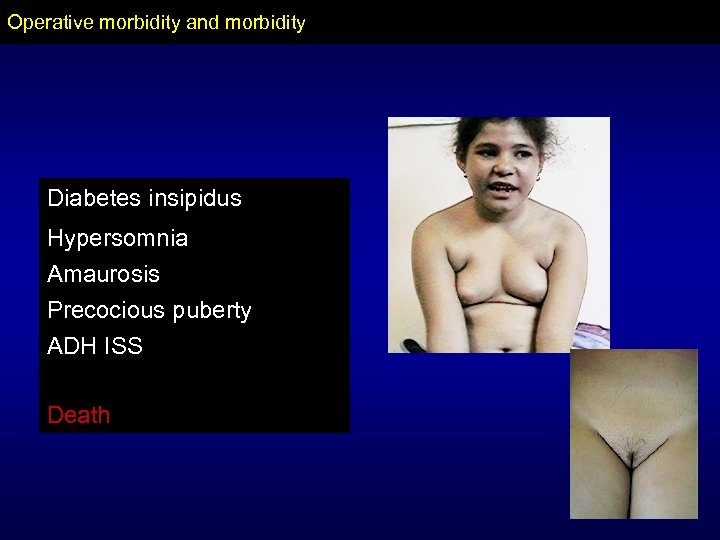 Operative morbidity and morbidity Diabetes insipidus Hypersomnia Amaurosis Precocious puberty ADH ISS Death
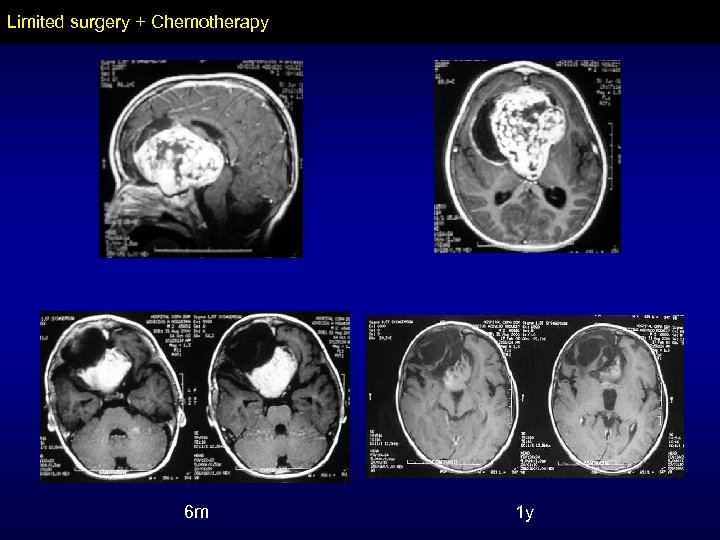 Limited surgery + Chemotherapy 6 m 1 y
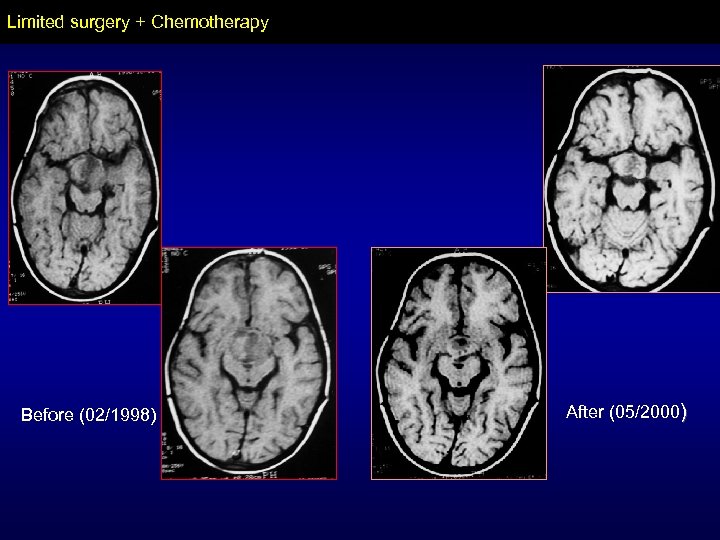 Limited surgery + Chemotherapy Before (02/1998) After (05/2000)
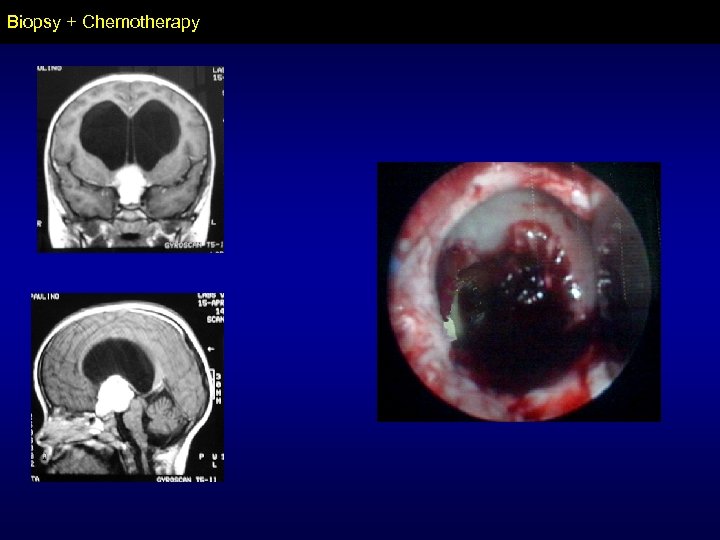 Biopsy + Chemotherapy
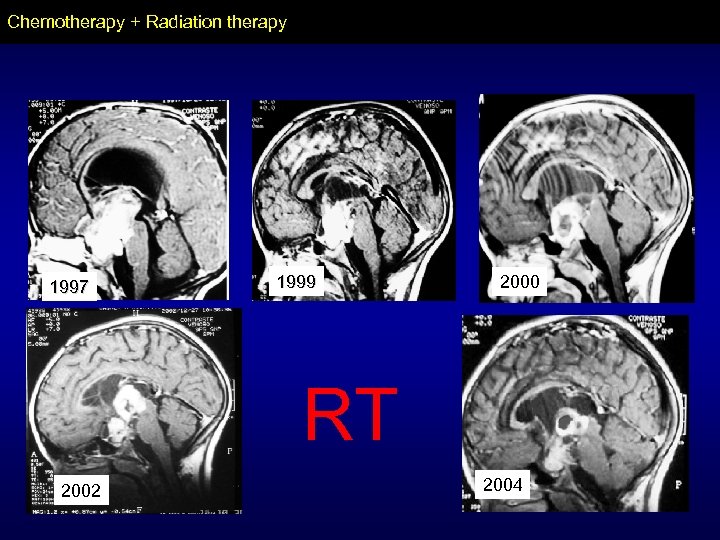
 Current trends • Avoid radiation therapy • Delay radiation therapy
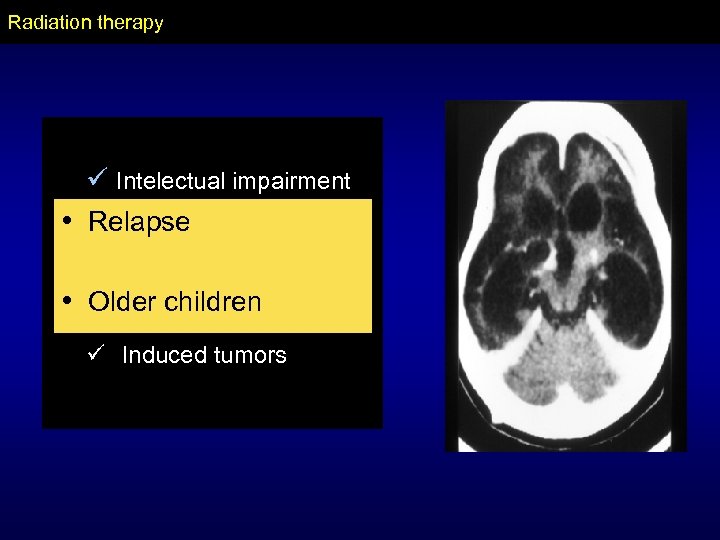 Radiation therapy ü Intelectual impairment • ü Visual impairment Relapse • ü Endocrine impairment ü Moyamoya disease Older children ü Brain infarction ü Induced tumors
 Chemotherapy + Radiation therapy 1997 1999 2000 RT 2002 2004
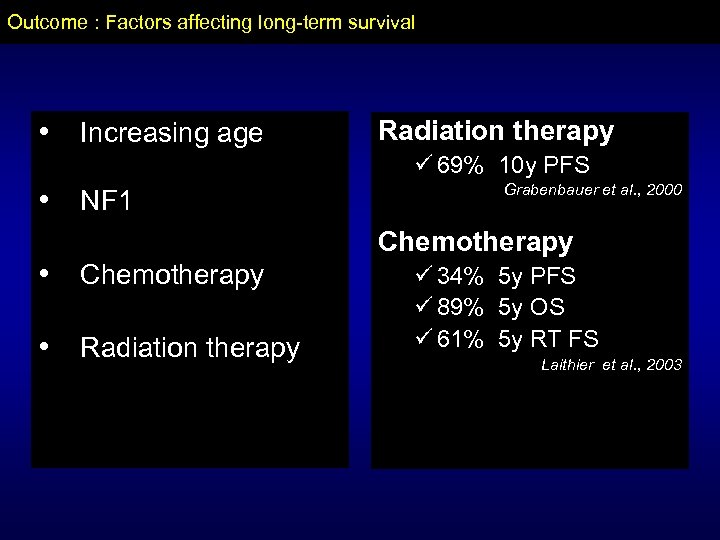 Outcome : Factors affecting long-term survival • Increasing age Radiation therapy ü 69% 10 y PFS • NF 1 • Chemotherapy • Radiation therapy Grabenbauer et al. , 2000 Chemotherapy ü 34% 5 y PFS ü 89% 5 y OS ü 61% 5 y RT FS Laithier et al. , 2003
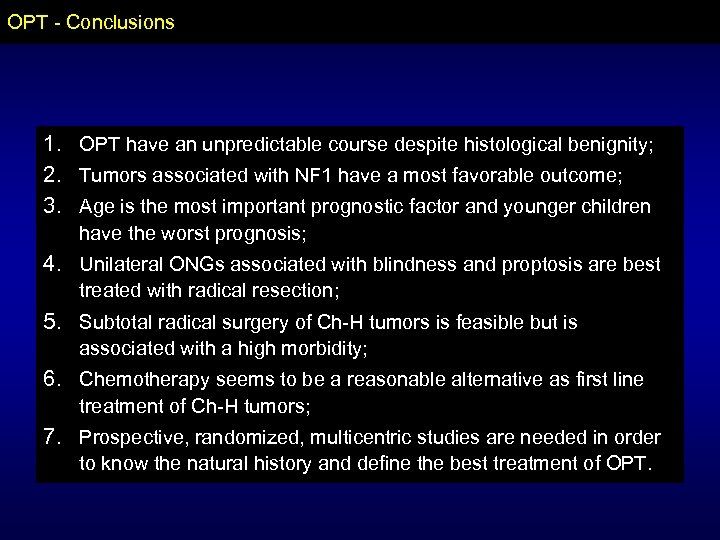 OPT - Conclusions 1. OPT have an unpredictable course despite histological benignity; 2. Tumors associated with NF 1 have a most favorable outcome; 3. Age is the most important prognostic factor and younger children have the worst prognosis; 4. Unilateral ONGs associated with blindness and proptosis are best treated with radical resection; 5. Subtotal radical surgery of Ch-H tumors is feasible but is associated with a high morbidity; 6. Chemotherapy seems to be a reasonable alternative as first line treatment of Ch-H tumors; 7. Prospective, randomized, multicentric studies are needed in order to know the natural history and define the best treatment of OPT.