


 Скачать презентацию Gilded Age Politics Gilded Age Politics
40ffa9c801f3992886d6f2582f47fc8f.ppt
- Количество слайдов: 34
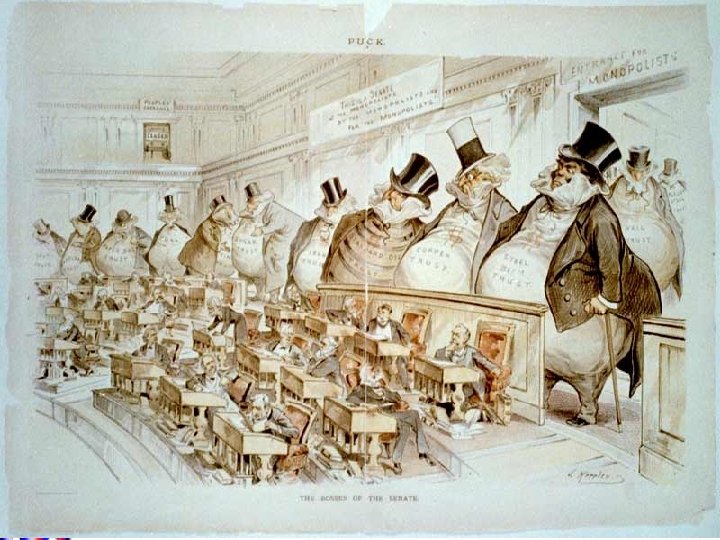 Gilded Age Politics
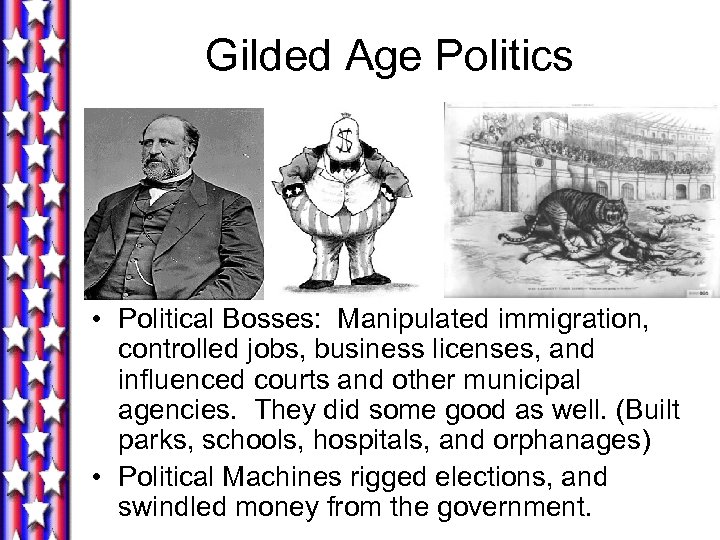 Gilded Age Politics • Political Bosses: Manipulated immigration, controlled jobs, business licenses, and influenced courts and other municipal agencies. They did some good as well. (Built parks, schools, hospitals, and orphanages) • Political Machines rigged elections, and swindled money from the government.
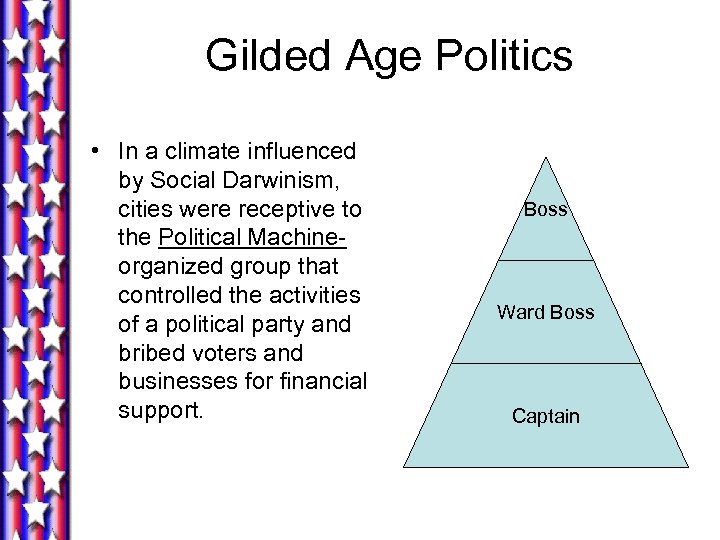 Gilded Age Politics • In a climate influenced by Social Darwinism, cities were receptive to the Political Machineorganized group that controlled the activities of a political party and bribed voters and businesses for financial support. Boss Ward Boss Captain
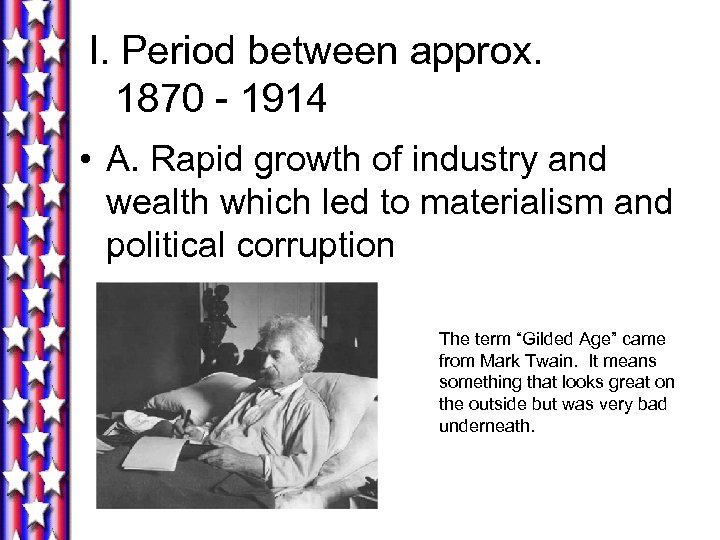 I. Period between approx. 1870 - 1914 • A. Rapid growth of industry and wealth which led to materialism and political corruption The term “Gilded Age” came from Mark Twain. It means something that looks great on the outside but was very bad underneath.
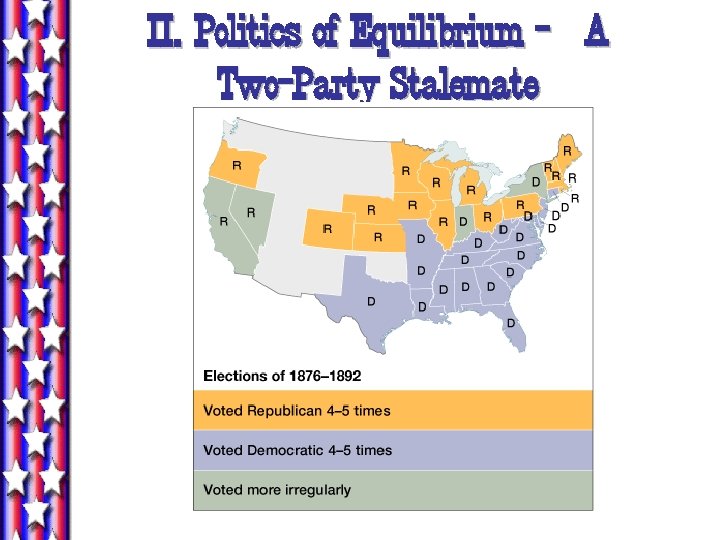 II. Politics of Equilibrium - A Two-Party Stalemate
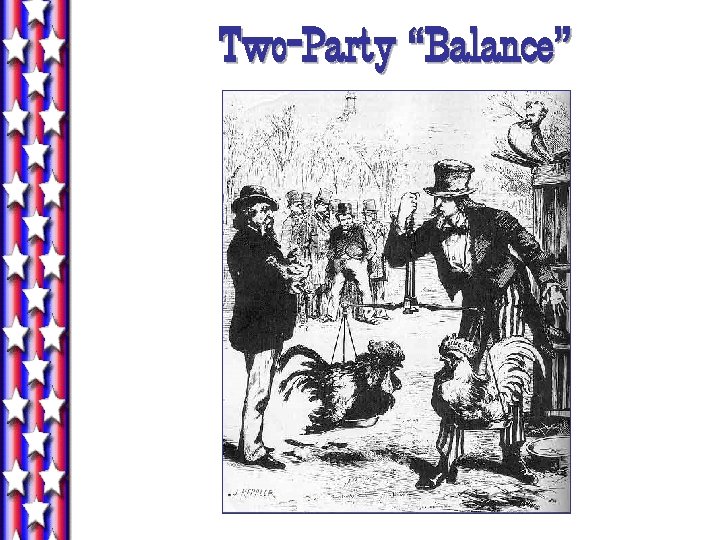 Two-Party “Balance”
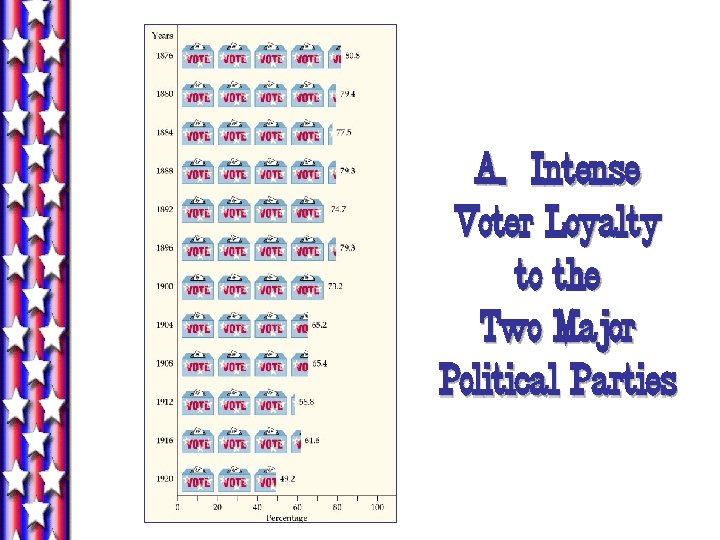 A. Intense Voter Loyalty to the Two Major Political Parties
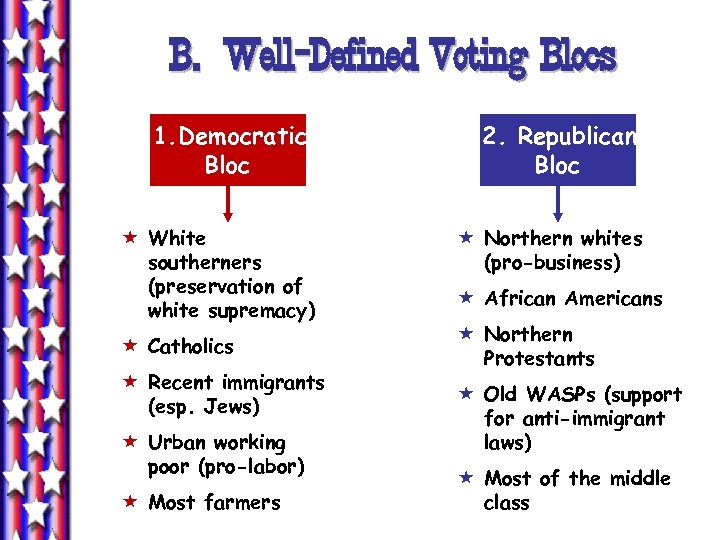 B. Well-Defined Voting Blocs 1. Democratic Bloc « White southerners (preservation of white supremacy) « Catholics « Recent immigrants (esp. Jews) « Urban working poor (pro-labor) « Most farmers 2. Republican Bloc « Northern whites (pro-business) « African Americans « Northern Protestants « Old WASPs (support for anti-immigrant laws) « Most of the middle class
 III. Very Laissez Faire Federal Govt. « A. From 1870 -1900 Govt. did very little domestically. « B. Main duties of the federal govt. : Ø 1. Deliver the mail. Ø 2. Maintain a national military. Ø 3. Collect taxes & tariffs. Ø 4. Conduct a foreign policy.
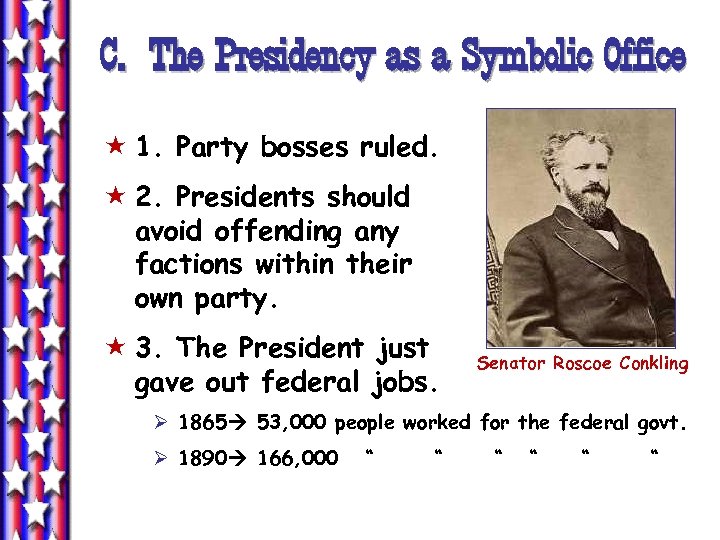 C. The Presidency as a Symbolic Office « 1. Party bosses ruled. « 2. Presidents should avoid offending any factions within their own party. « 3. The President just gave out federal jobs. Senator Roscoe Conkling Ø 1865 53, 000 people worked for the federal govt. Ø 1890 166, 000 “ “ “
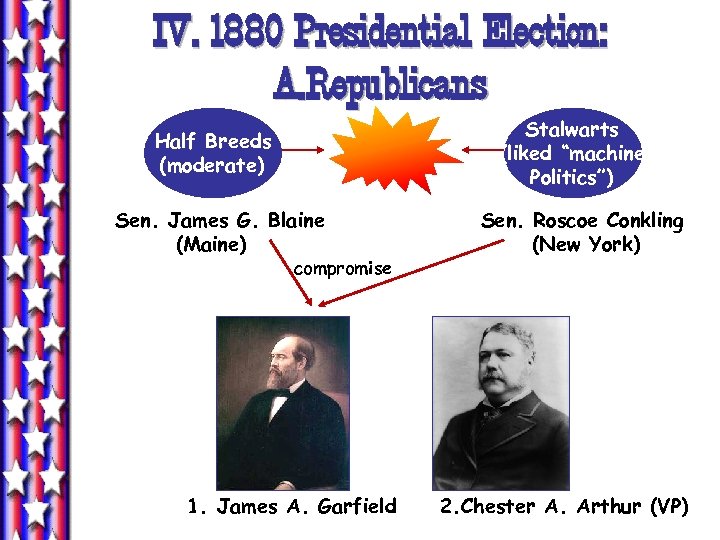 IV. 1880 Presidential Election: A. Republicans Stalwarts (liked “machine Politics”) Half Breeds (moderate) Sen. James G. Blaine (Maine) compromise 1. James A. Garfield Sen. Roscoe Conkling (New York) 2. Chester A. Arthur (VP)
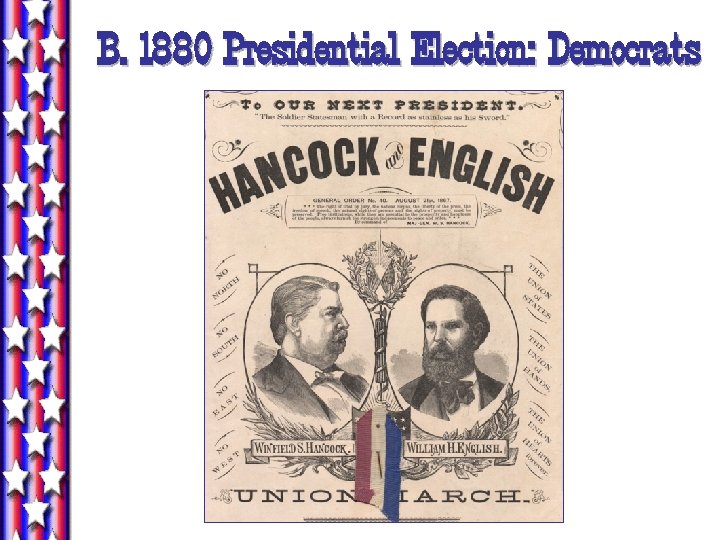 B. 1880 Presidential Election: Democrats
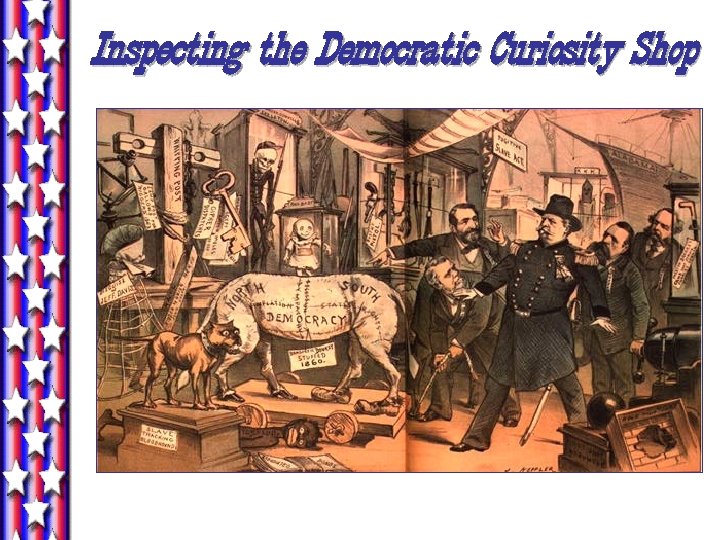 Inspecting the Democratic Curiosity Shop
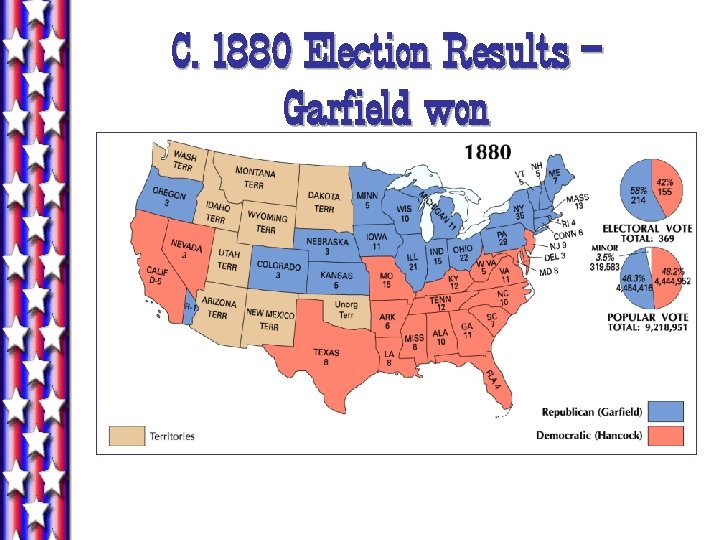 C. 1880 Election Results – Garfield won
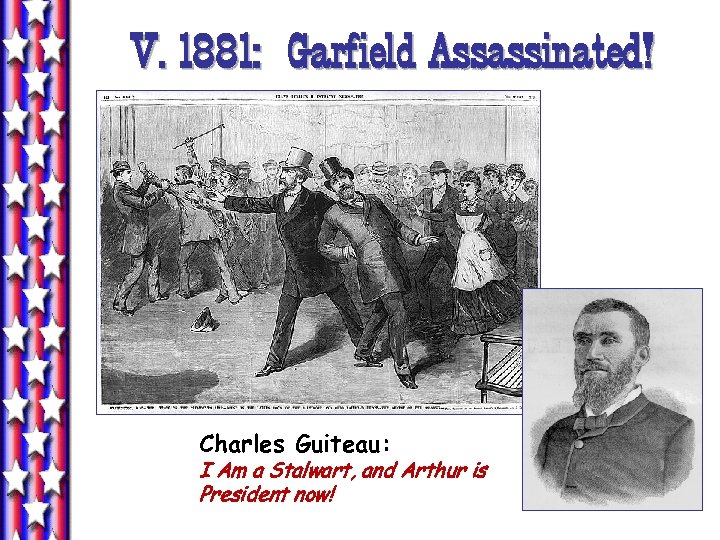 V. 1881: Garfield Assassinated! Charles Guiteau: I Am a Stalwart, and Arthur is President now!
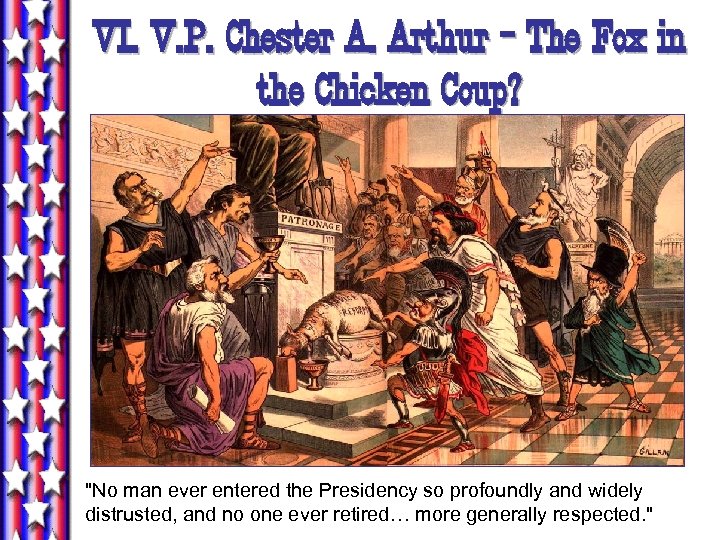 VI. V. P. Chester A. Arthur - The Fox in the Chicken Coup? "No man ever entered the Presidency so profoundly and widely distrusted, and no one ever retired… more generally respected. "
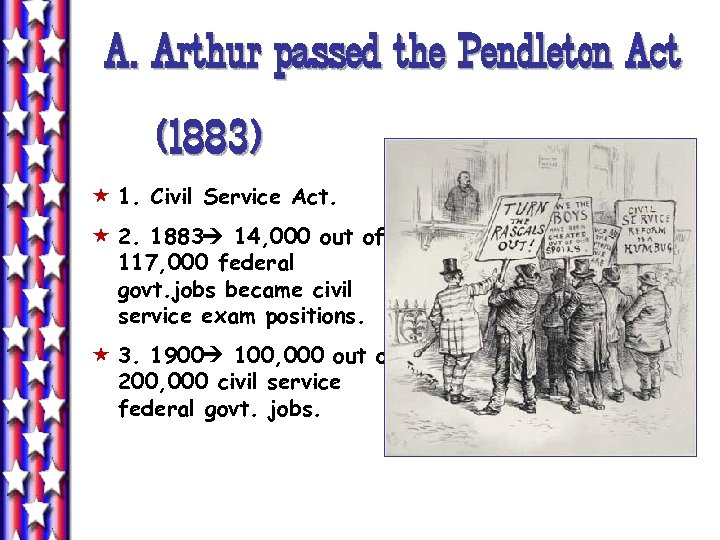 A. Arthur passed the Pendleton Act (1883) « 1. Civil Service Act. « 2. 1883 14, 000 out of 117, 000 federal govt. jobs became civil service exam positions. « 3. 1900 100, 000 out of 200, 000 civil service federal govt. jobs.
 VII. 1884 Election • A. Cleveland made many mad • 1. Reformers thought he didn’t do enough • 2. Stalwarts thought he reformed too much
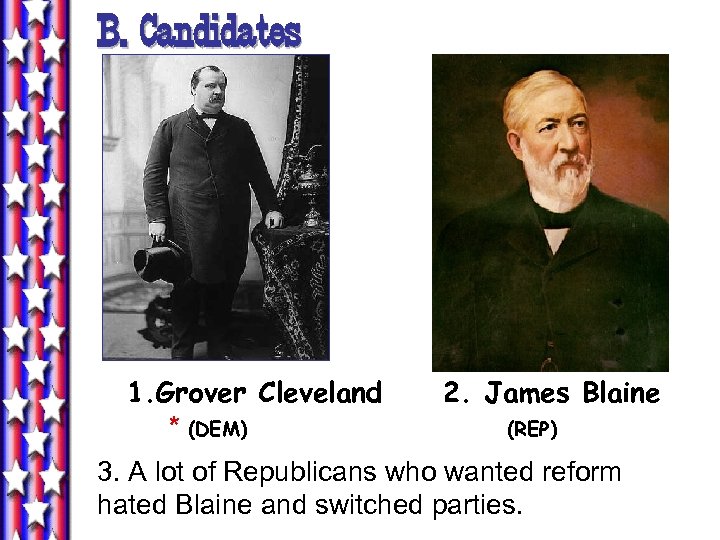 B. Candidates 1. Grover Cleveland * (DEM) 2. James Blaine (REP) 3. A lot of Republicans who wanted reform hated Blaine and switched parties.
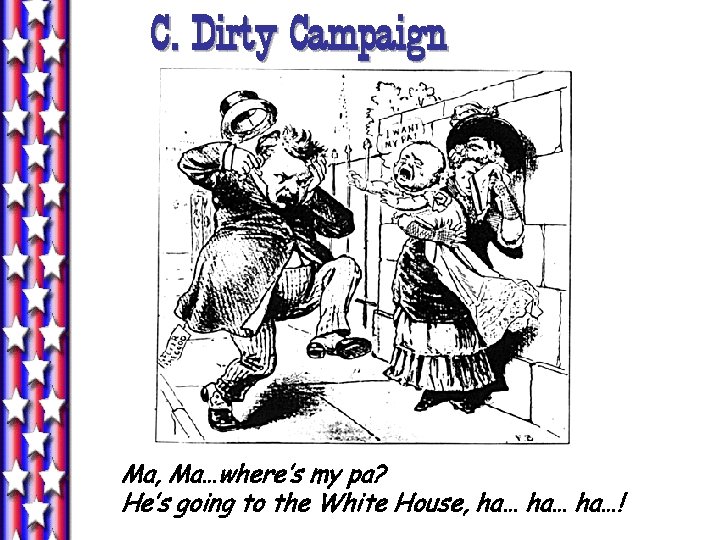 C. Dirty Campaign Ma, Ma…where’s my pa? He’s going to the White House, ha… ha…!
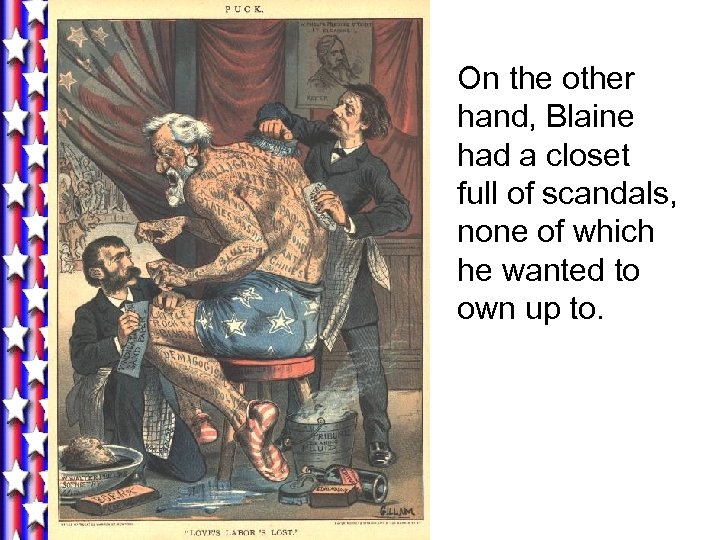 On the other hand, Blaine had a closet full of scandals, none of which he wanted to own up to.
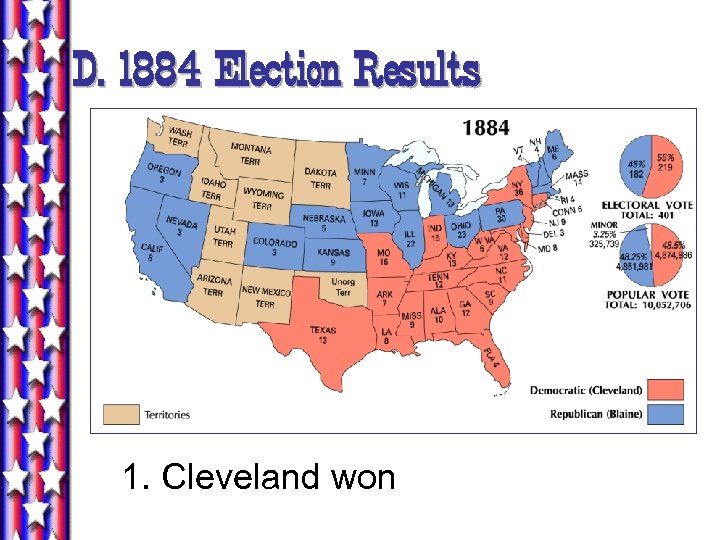 D. 1884 Election Results 1. Cleveland won
 VIII. Cleveland’s First Term « A. The “Veto Governor” from New York. « B. First Democratic elected since 1856. « C. A public office is a public trust! « D. His laissez-faire presidency: Ø 1. Opposed bills to assist the poor as well as the rich. Ø 2. Vetoed over 200 special pension bills for Civil War veterans!
 The Tariff Issue « After the Civil War, Congress raised tariffs to protect new US industries. « Big business wanted to continue this; consumers did not. « 1885 tariffs earned the US $100 mil. in surplus! « Mugwumps opposed it WHY? ? ? « President Cleveland’s view on tariffs? ? « Tariffs became a major issue in the 1888 presidential election.
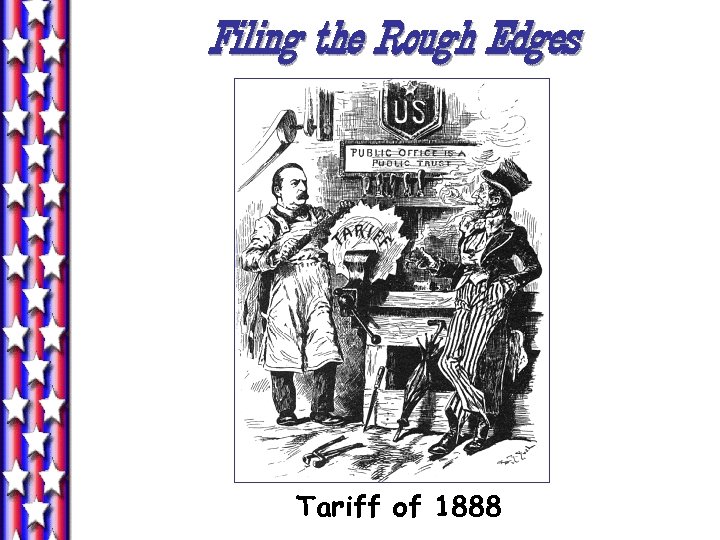 Filing the Rough Edges Tariff of 1888
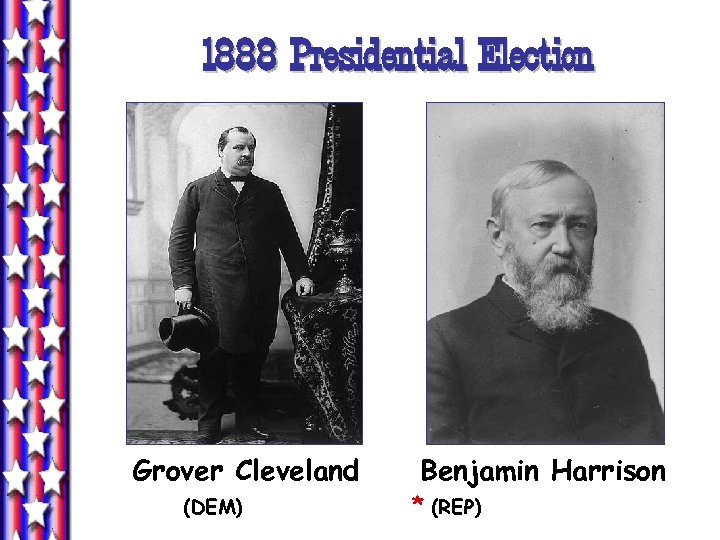 1888 Presidential Election Grover Cleveland (DEM) Benjamin Harrison * (REP)
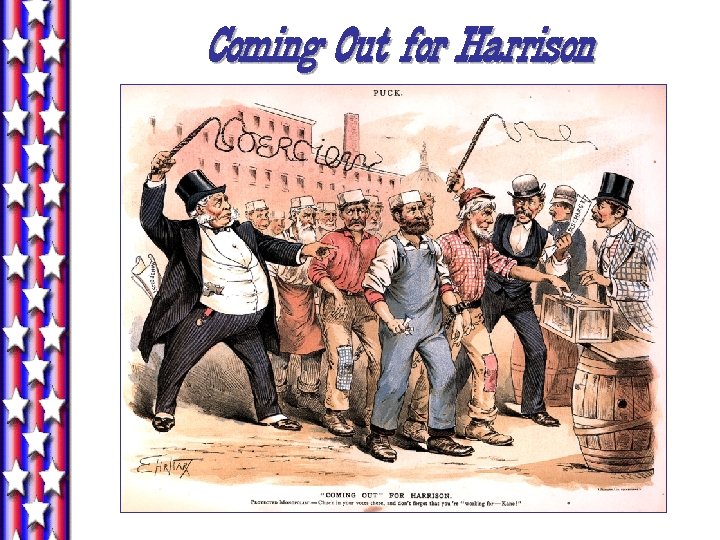 Coming Out for Harrison
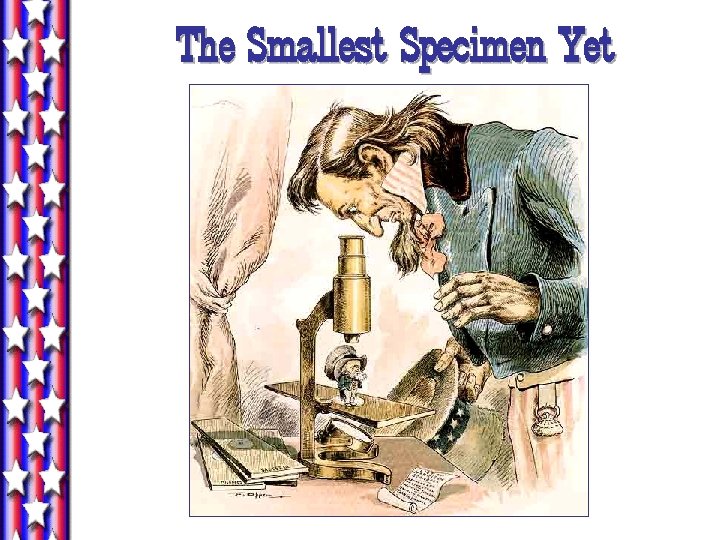 The Smallest Specimen Yet
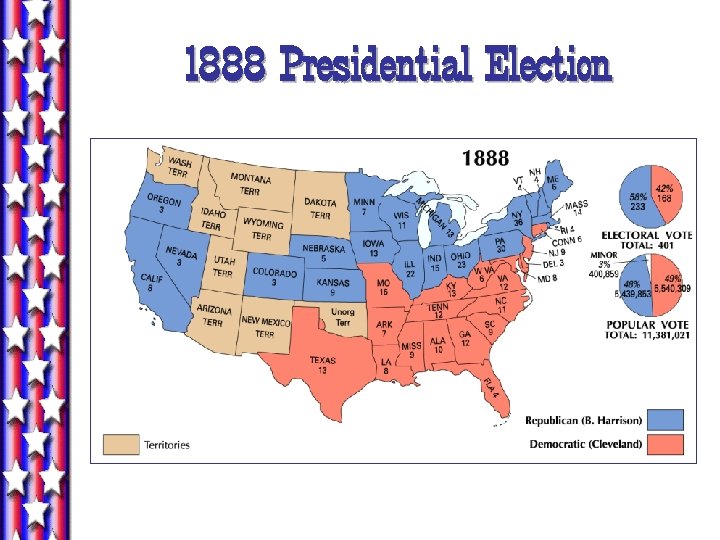 1888 Presidential Election
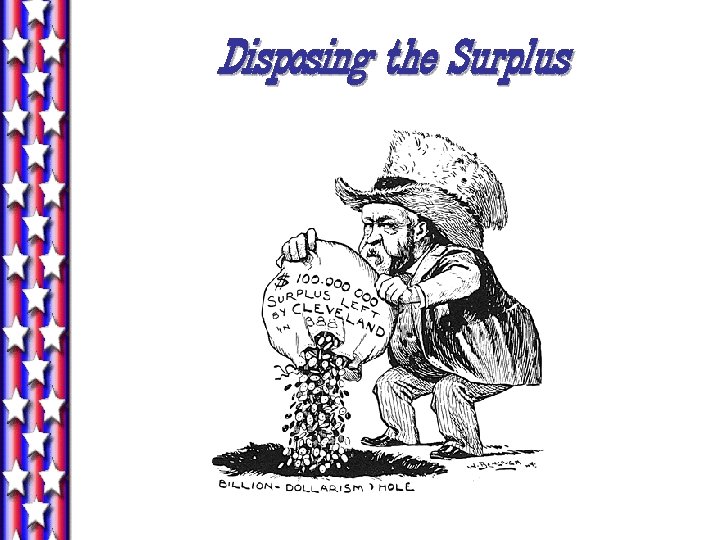 Disposing the Surplus
 Changing Public Opinion « Americans wanted the federal govt. to deal with growing soc. & eco. problems & to curb the power of the trusts: Ø Interstate Commerce Act – 1887 Ø Sherman Antitrust Act – 1890 Ø Mc. Kinley Tariff – 1890 § Based on theory that prosperity flowed directly from protectionism. § Increased already high rates another 4%! Ø Rep. Party suffered big losses in 1890 (even Mc. Kinley lost his House seat!).
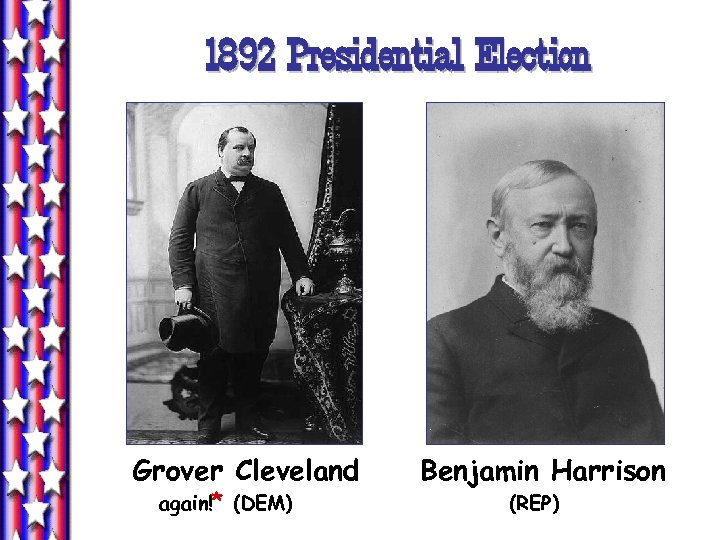 1892 Presidential Election Grover Cleveland again!* (DEM) Benjamin Harrison (REP)
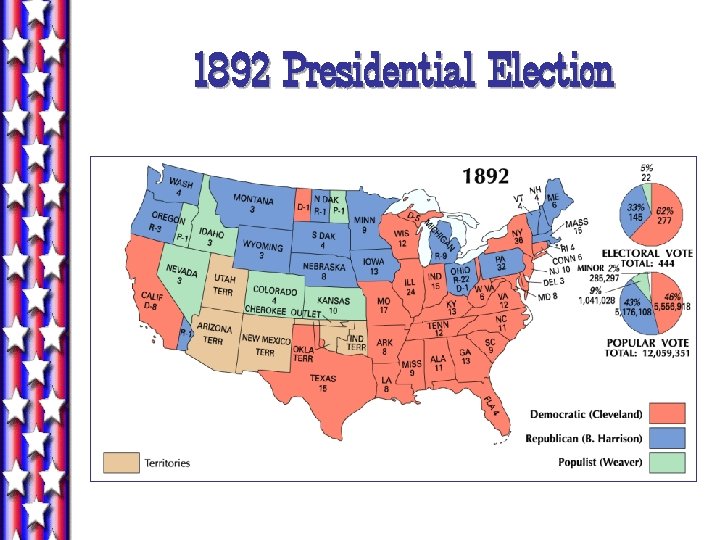 1892 Presidential Election
 Cleveland Loses Support Fast! « The only President to serve two nonconsecutive terms. « Blamed for the 1893 Panic. « Defended the gold standard. « Used federal troops in the 1894 Pullman strike. « Refused to sign the Wilson-Gorman Tariff of 1894. « Repealed the Sherman Silver Purchase Act.