 Скачать презентацию Getting to Zero Carbon Heather Stamp Low Carbon
36c384a379a0cd27201a609e331812b6.ppt
- Количество слайдов: 18



Getting to Zero Carbon Heather Stamp Low Carbon R&D Manager National Energy Services
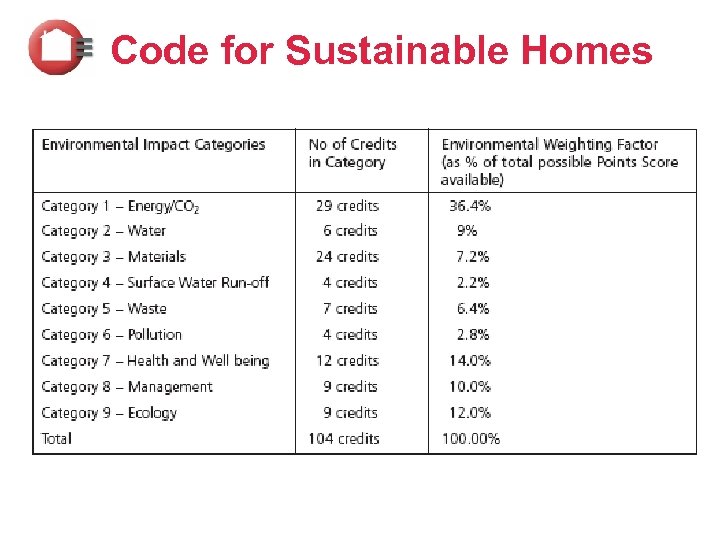
Code for Sustainable Homes
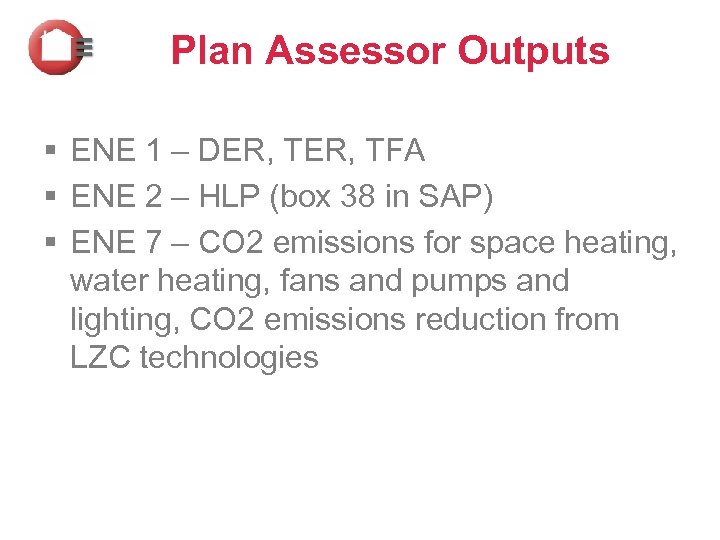
Plan Assessor Outputs § ENE 1 – DER, TFA § ENE 2 – HLP (box 38 in SAP) § ENE 7 – CO 2 emissions for space heating, water heating, fans and pumps and lighting, CO 2 emissions reduction from LZC technologies
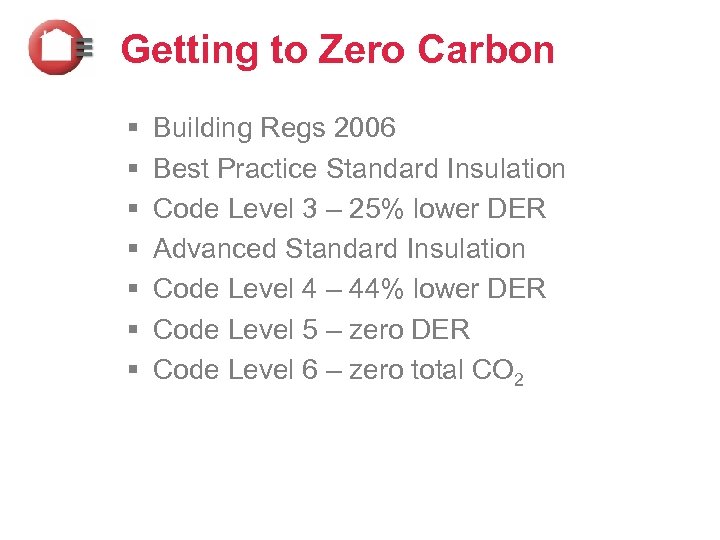
Getting to Zero Carbon § § § § Building Regs 2006 Best Practice Standard Insulation Code Level 3 – 25% lower DER Advanced Standard Insulation Code Level 4 – 44% lower DER Code Level 5 – zero DER Code Level 6 – zero total CO 2
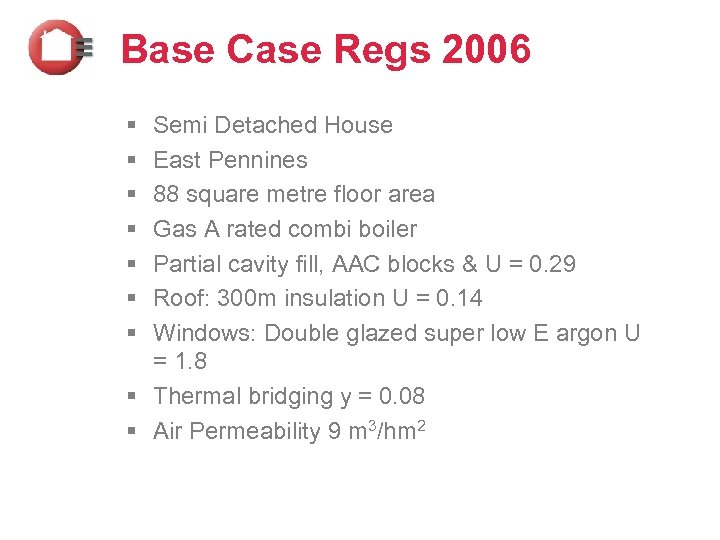
Base Case Regs 2006 § § § § Semi Detached House East Pennines 88 square metre floor area Gas A rated combi boiler Partial cavity fill, AAC blocks & U = 0. 29 Roof: 300 m insulation U = 0. 14 Windows: Double glazed super low E argon U = 1. 8 § Thermal bridging y = 0. 08 § Air Permeability 9 m 3/hm 2
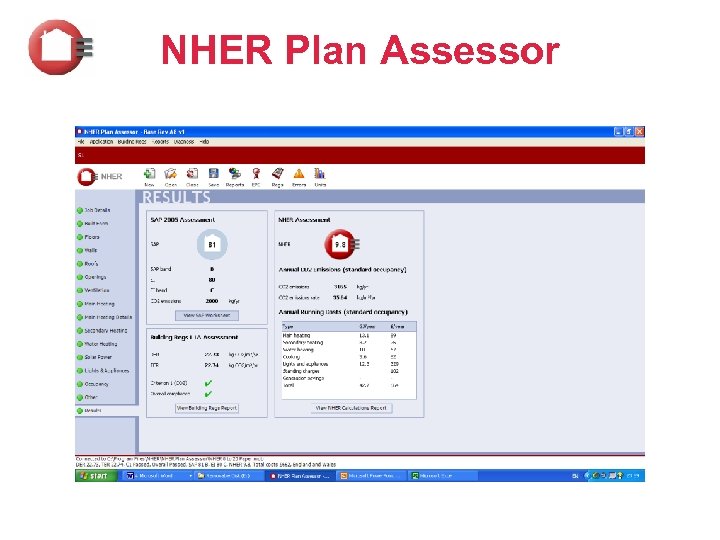
NHER Plan Assessor
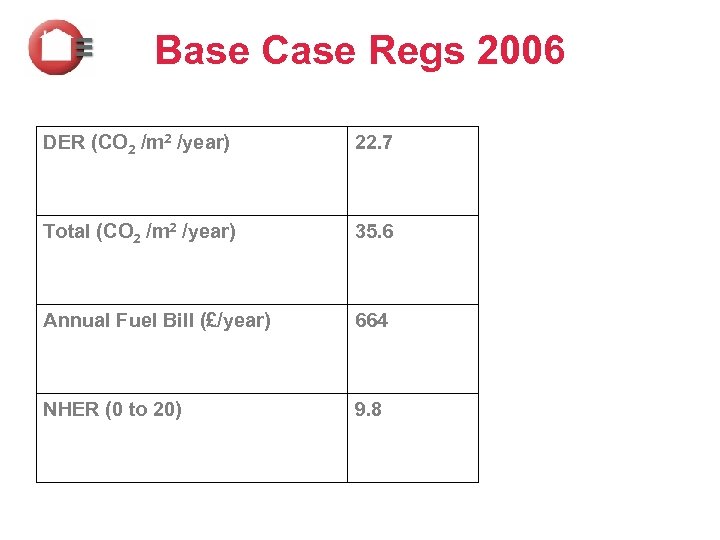
Base Case Regs 2006 DER (CO 2 /m 2 /year) 22. 7 Total (CO 2 /m 2 /year) 35. 6 Annual Fuel Bill (£/year) 664 NHER (0 to 20) 9. 8
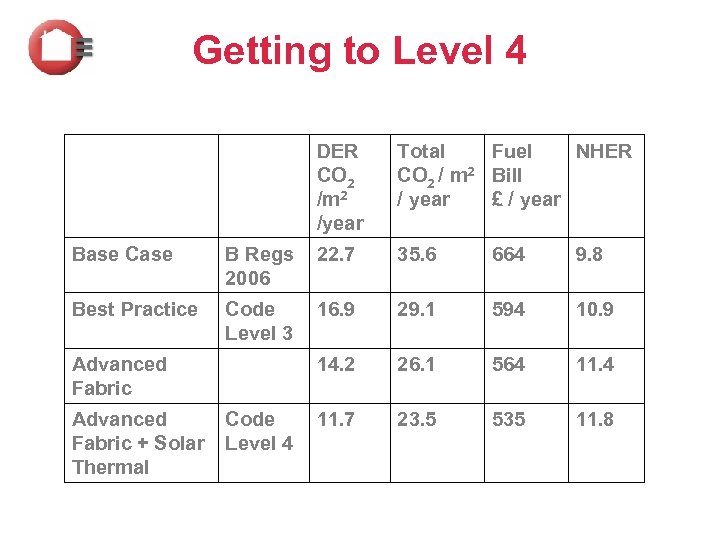
Getting to Level 4 DER CO 2 /m 2 /year Total Fuel NHER CO 2 / m 2 Bill / year £ / year Base Case B Regs 2006 22. 7 35. 6 664 9. 8 Best Practice Code Level 3 16. 9 29. 1 594 10. 9 14. 2 26. 1 564 11. 7 23. 5 535 11. 8 Advanced Fabric + Solar Thermal Code Level 4
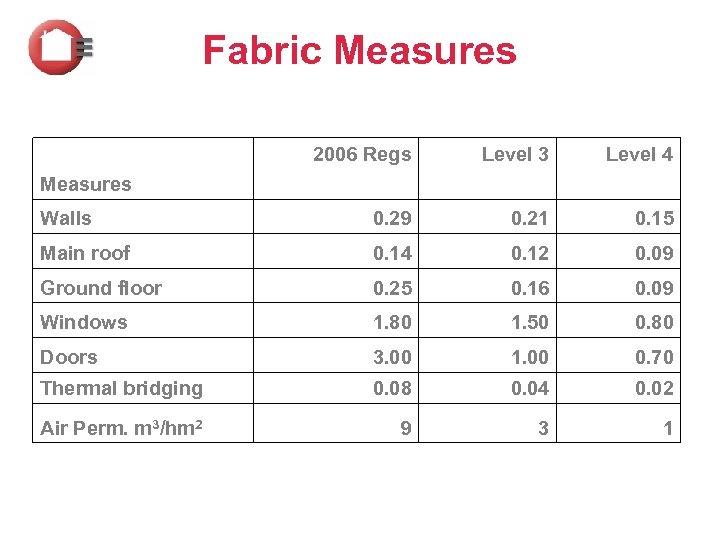
Fabric Measures 2006 Regs Level 3 Level 4 Walls 0. 29 0. 21 0. 15 Main roof 0. 14 0. 12 0. 09 Ground floor 0. 25 0. 16 0. 09 Windows 1. 80 1. 50 0. 80 Doors 3. 00 1. 00 0. 70 Thermal bridging 0. 08 0. 04 0. 02 Air Perm. m 3/hm 2 9 3 1 Measures
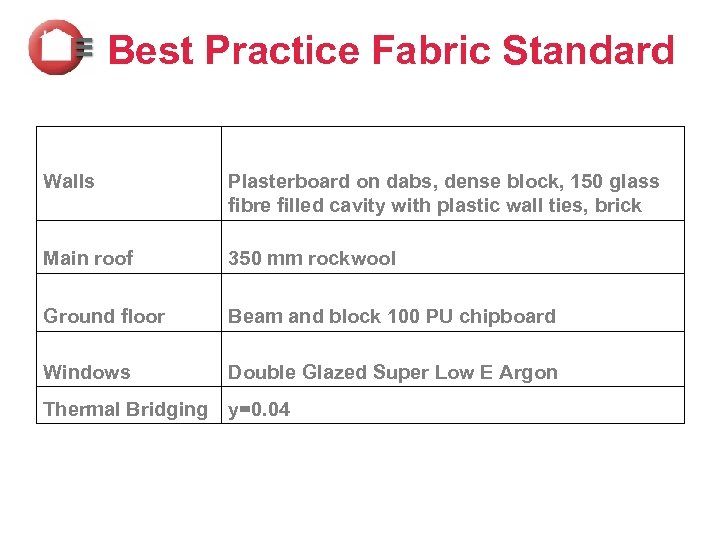
Best Practice Fabric Standard Walls Plasterboard on dabs, dense block, 150 glass fibre filled cavity with plastic wall ties, brick Main roof 350 mm rockwool Ground floor Beam and block 100 PU chipboard Windows Double Glazed Super Low E Argon Thermal Bridging y=0. 04
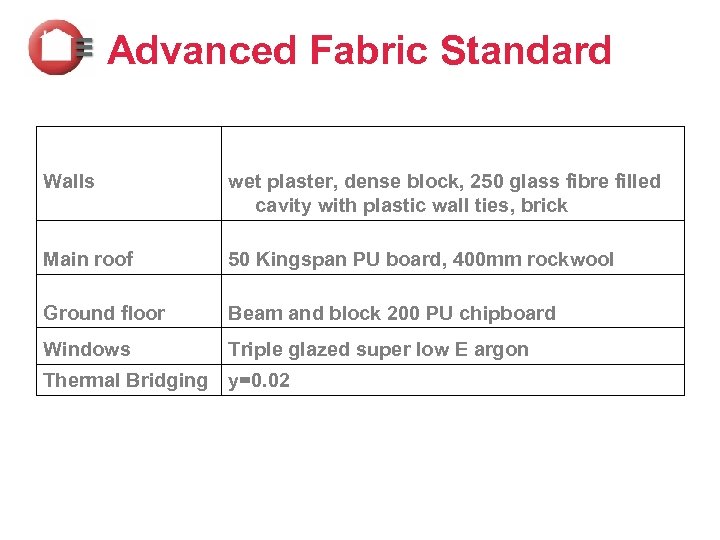
Advanced Fabric Standard Walls wet plaster, dense block, 250 glass fibre filled cavity with plastic wall ties, brick Main roof 50 Kingspan PU board, 400 mm rockwool Ground floor Beam and block 200 PU chipboard Windows Triple glazed super low E argon Thermal Bridging y=0. 02
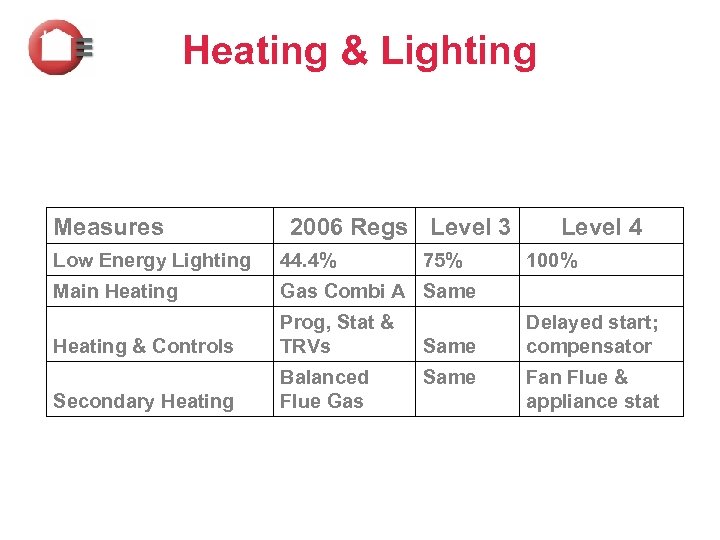
Heating & Lighting Measures 2006 Regs Level 3 Low Energy Lighting 44. 4% 75% Main Heating Gas Combi A Same Heating & Controls Prog, Stat & TRVs Secondary Heating Balanced Flue Gas Level 4 Same 100% Delayed start; compensator Fan Flue & appliance stat
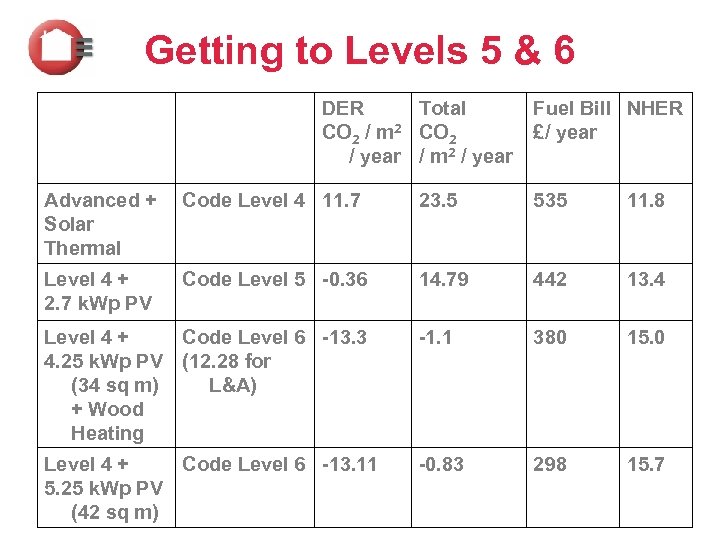
Getting to Levels 5 & 6 DER Total CO 2 / m 2 CO 2 / year / m 2 / year Fuel Bill NHER £/ year Advanced + Solar Thermal Code Level 4 11. 7 23. 5 535 11. 8 Level 4 + 2. 7 k. Wp PV Code Level 5 -0. 36 14. 79 442 13. 4 Level 4 + Code Level 6 -13. 3 4. 25 k. Wp PV (12. 28 for (34 sq m) L&A) + Wood Heating -1. 1 380 15. 0 Level 4 + Code Level 6 -13. 11 5. 25 k. Wp PV (42 sq m) -0. 83 298 15. 7
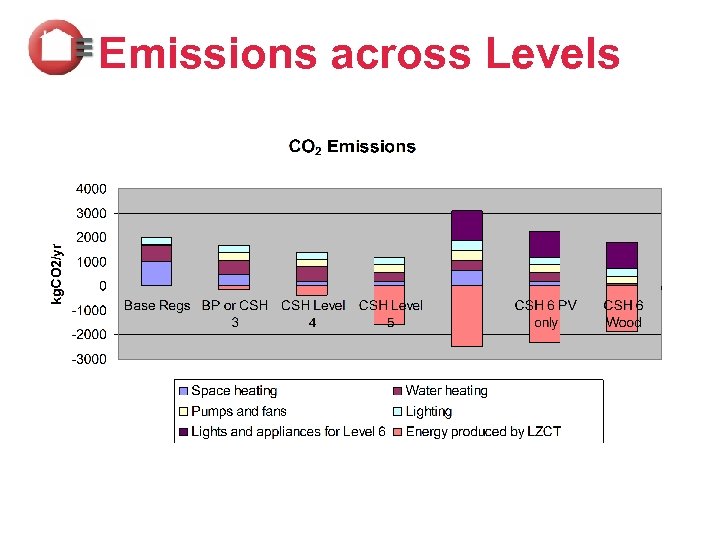
Emissions across Levels
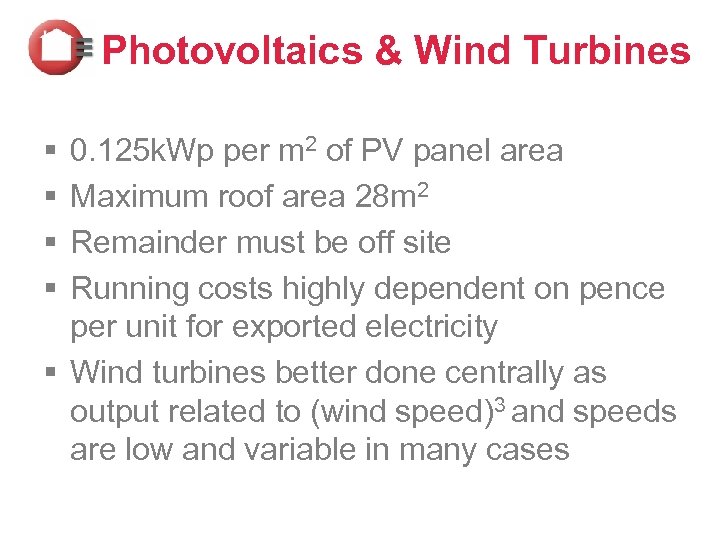
Photovoltaics & Wind Turbines § § 0. 125 k. Wp per m 2 of PV panel area Maximum roof area 28 m 2 Remainder must be off site Running costs highly dependent on pence per unit for exported electricity § Wind turbines better done centrally as output related to (wind speed)3 and speeds are low and variable in many cases
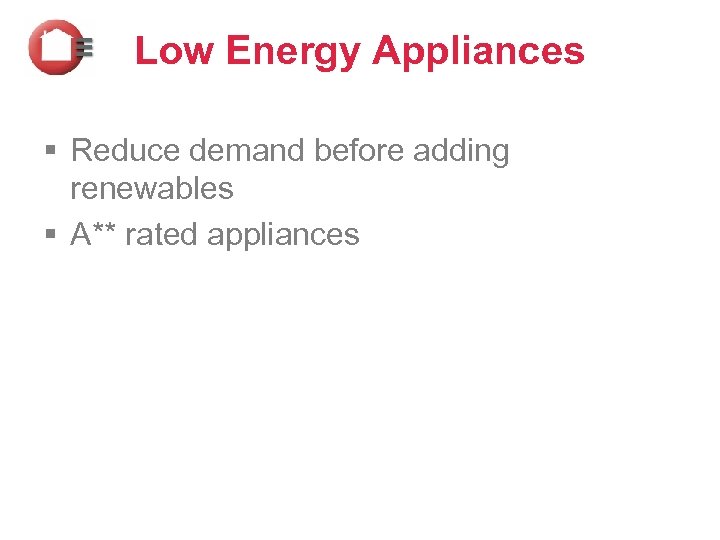
Low Energy Appliances § Reduce demand before adding renewables § A** rated appliances
Key Conclusions § § Maximise fabric improvements Minimise electricity consumption Level 4 achievable with solar thermal Level 5 needs PV over remaining whole roof area § Level 6 requires off site generation § Carbon strategy + running cost info
Key Issues / Questions § Measuring zero carbon § Ratings not sensitive to appliances, power showers, spray taps etc. § Cost per unit of exported electricity § High cost per unit of low carbon options § High capital costs of low carbon technologies § Consumers need fuel bill estimates too § Also focus on demand reduction as well as design
Скачать презентацию Getting to Zero Carbon Heather Stamp Low Carbon
36c384a379a0cd27201a609e331812b6.ppt