


 Скачать презентацию Getting people to change drivers and motivators of
69c4886148f26d2f2e10a0325cef3cc1.ppt
- Количество слайдов: 35
 Getting people to change: drivers and motivators of behaviour Tara Garnett Food Climate Research Network - University of Surrey HDC/STC 19 April 2010
 Three questions to explore • What sort of change do we actually want & why? – (Focus on climate change) • What shapes the way people buy and eat now? • How might change be achieved?
 Presentation outline 1. Setting the scene: food chain’s contribution to GHG emissions 2. What part do fruit and veg play? 3. What are the GHG implications of trends in fruit & veg consumption? 4. What might a healthy sustainable diet look like? Role of fruit and veg in this? 5. What shapes our consumption habits and what are our attitudes to consuming more sustainably? 6. Drivers of change: making change happen 7. A bit about the FCRN
 1. Food and its contribution to greenhouse gas (GHG) emissions
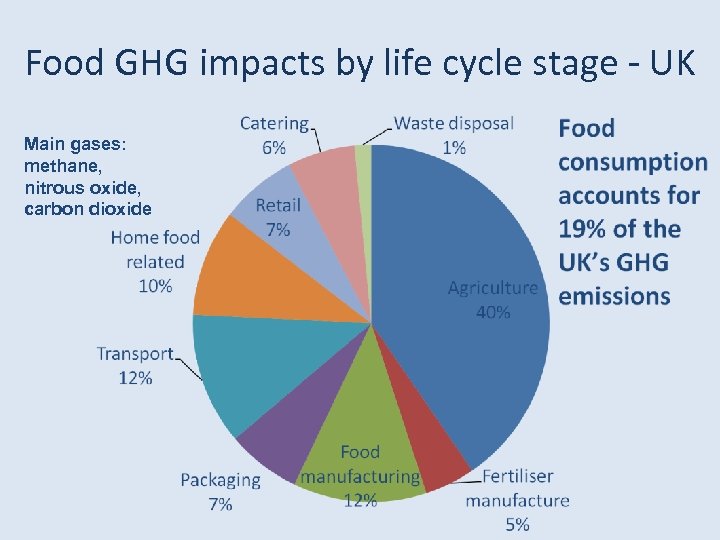 Food GHG impacts by life cycle stage - UK Main gases: methane, nitrous oxide, carbon dioxide
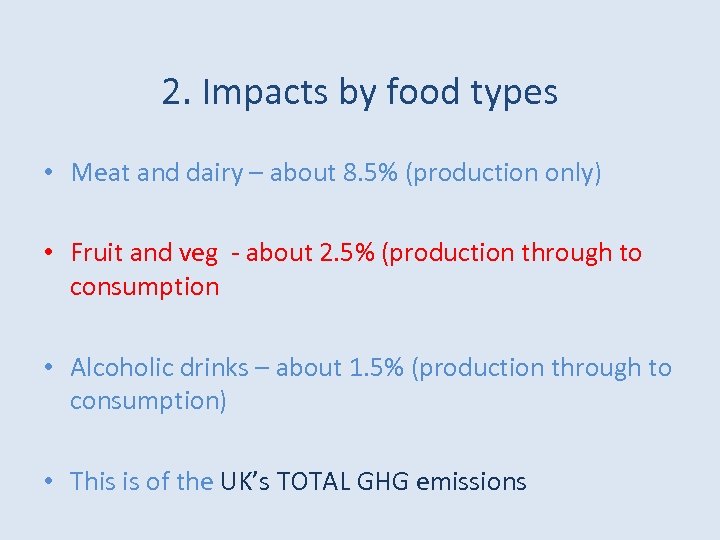 2. Impacts by food types • Meat and dairy – about 8. 5% (production only) • Fruit and veg - about 2. 5% (production through to consumption • Alcoholic drinks – about 1. 5% (production through to consumption) • This is of the UK’s TOTAL GHG emissions
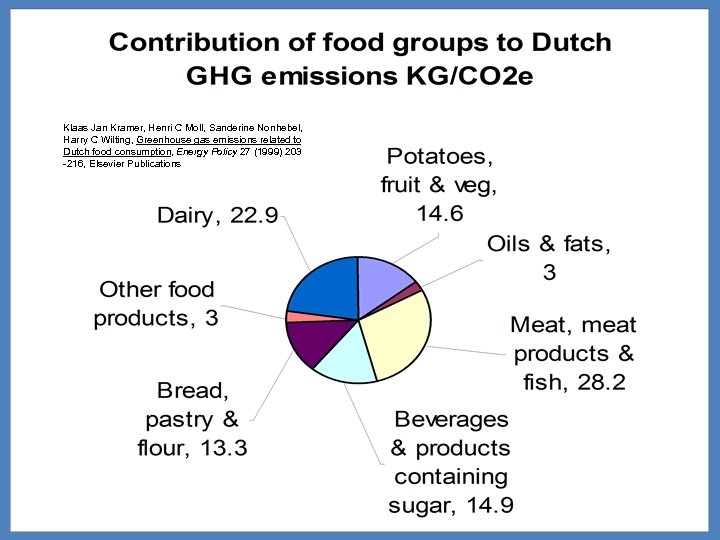 Klaas Jan Kramer, Henri C Moll, Sanderine Nonhebel, Harry C Wilting, Greenhouse gas emissions related to Dutch food consumption, Energy Policy 27 (1999) 203 -216, Elsevier Publications
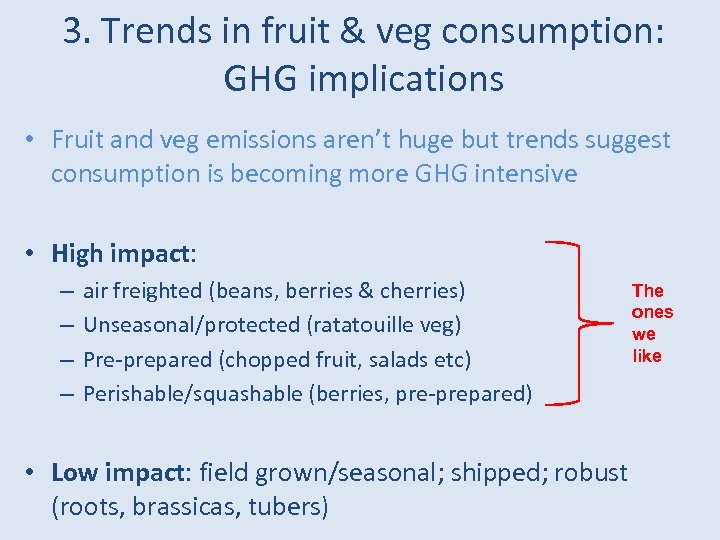 3. Trends in fruit & veg consumption: GHG implications • Fruit and veg emissions aren’t huge but trends suggest consumption is becoming more GHG intensive • High impact: – – air freighted (beans, berries & cherries) Unseasonal/protected (ratatouille veg) Pre-prepared (chopped fruit, salads etc) Perishable/squashable (berries, pre-prepared) • Low impact: field grown/seasonal; shipped; robust (roots, brassicas, tubers) The ones we like
 If we ate more fruit and veg would overall emissions go up or down? • Depends what they replace: Meat? Bread? Chocolate? • Depends which produce we choose: Blueberries or apples? French beans or cabbage?
 4. What might a low impact diet look like? NB: focus here on GHGs – but other issues eg. fish, water, development, rural economies etc. important too
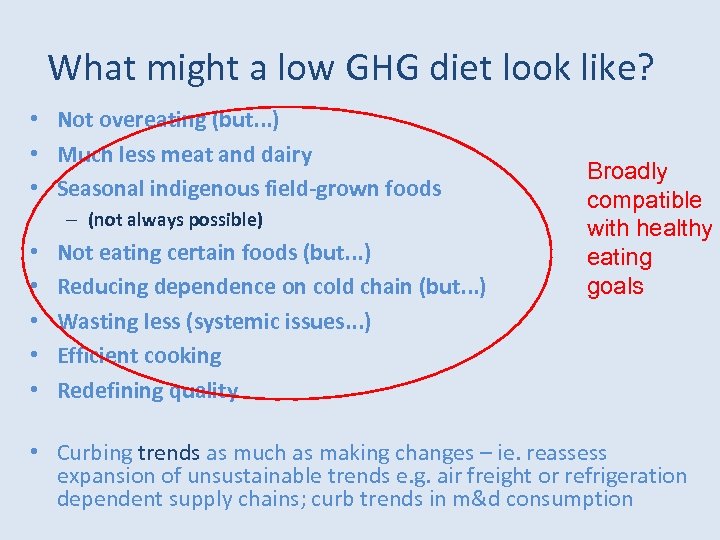 What might a low GHG diet look like? • Not overeating (but. . . ) • Much less meat and dairy • Seasonal indigenous field-grown foods – (not always possible) • • • Not eating certain foods (but. . . ) Reducing dependence on cold chain (but. . . ) Wasting less (systemic issues. . . ) Efficient cooking Redefining quality Broadly compatible with healthy eating goals • Curbing trends as much as making changes – ie. reassess expansion of unsustainable trends e. g. air freight or refrigeration dependent supply chains; curb trends in m&d consumption
 Specifically for fruit and veg – this is difficult! Need to consider: a. What kind of fruit & veg to buy b. How to store and cook them c. Waste d. Other issues: water use, peat, pesticides, local communities and international development
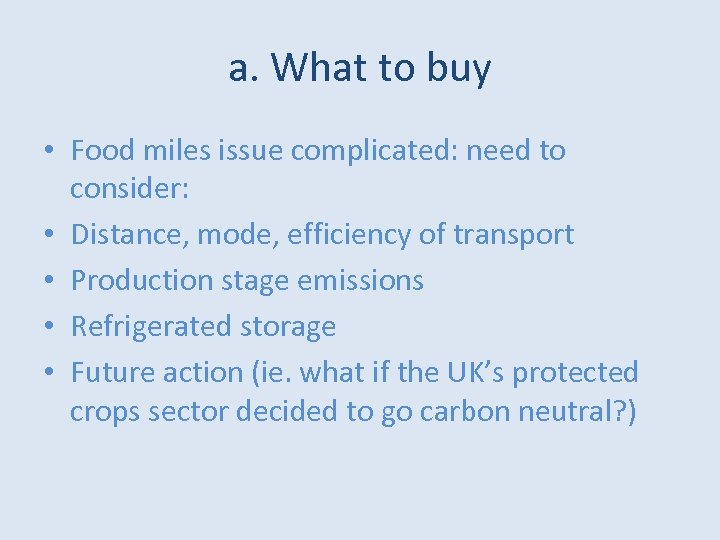 a. What to buy • Food miles issue complicated: need to consider: • Distance, mode, efficiency of transport • Production stage emissions • Refrigerated storage • Future action (ie. what if the UK’s protected crops sector decided to go carbon neutral? )
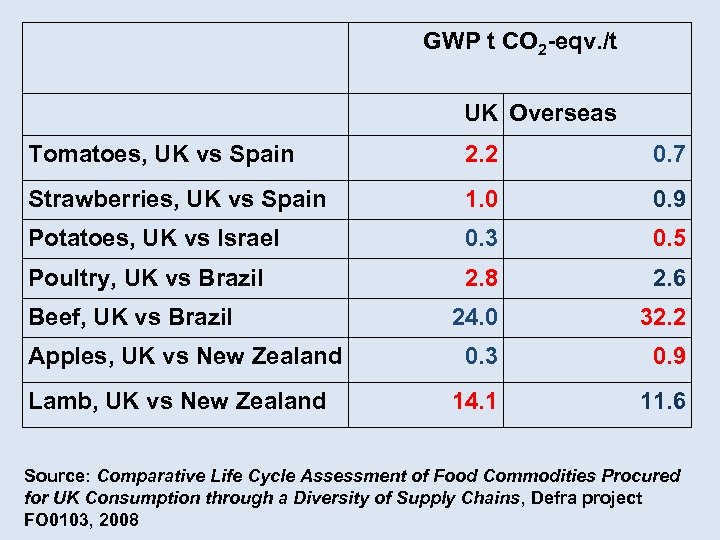 GWP t CO 2 -eqv. /t UK Overseas Tomatoes, UK vs Spain 2. 2 0. 7 Strawberries, UK vs Spain 1. 0 0. 9 Potatoes, UK vs Israel 0. 3 0. 5 Poultry, UK vs Brazil 2. 8 2. 6 24. 0 32. 2 0. 3 0. 9 14. 1 11. 6 Beef, UK vs Brazil Apples, UK vs New Zealand Lamb, UK vs New Zealand Source: Comparative Life Cycle Assessment of Food Commodities Procured for UK Consumption through a Diversity of Supply Chains, Defra project FO 0103, 2008
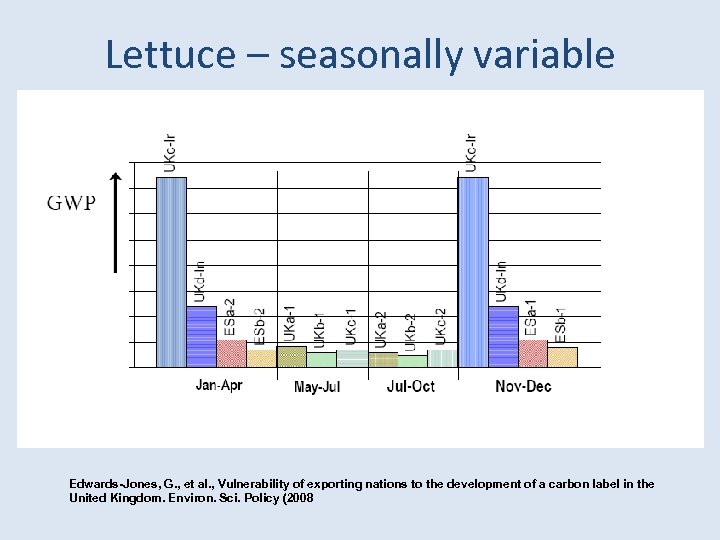 Lettuce – seasonally variable Edwards-Jones, G. , et al. , Vulnerability of exporting nations to the development of a carbon label in the United Kingdom. Environ. Sci. Policy (2008
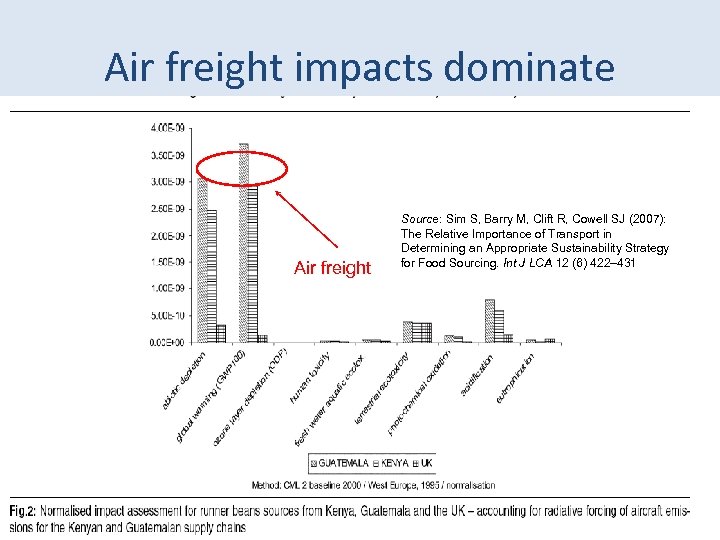 Air freight impacts dominate Air freight Source: Sim S, Barry M, Clift R, Cowell SJ (2007): The Relative Importance of Transport in Determining an Appropriate Sustainability Strategy for Food Sourcing. Int J LCA 12 (6) 422– 431
 How to store and cook • Complex relationship between refrigeration and waste: – Fridge as waste saver – Fridge as black hole – Refrigeration dependence – shapes consumption • Cooking can be significant overall contributor to life cycle of food – eg. baked potatoes; ‘roast a single head of garlic for 30 minutes’
 Waste • Household food waste 65% food waste in supply chain (WRAP 2010); • Wasted food represents a waste of all the emissions generated during the course of producing it • Household food waste equivalent to 26 MTCO 2 eq of which 20 MTCO 2 eq is food waste (ie not packaging) • 40% avoidable food waste is fruit & veg
 Other issues – lots of them Two examples: • Poverty and international development: – 1 -1. 5 mill people dependent on export horticulture in SSA (up to 120, 000 directly employed) • Water – Spain tomatoes grown in very water stressed areas
 General advice given on fruit & vegetables • Defra: Buy local and in season – Real value or ‘way in’ to thinking about environment? • FEC recommendations: Local and in season as outcome rather than goal of sustainability • More variability of supply – less waste, less need for imports to meet year round demand or certain specifications
 5. What shapes our food behaviour and how do we feel about consuming more sustainably?
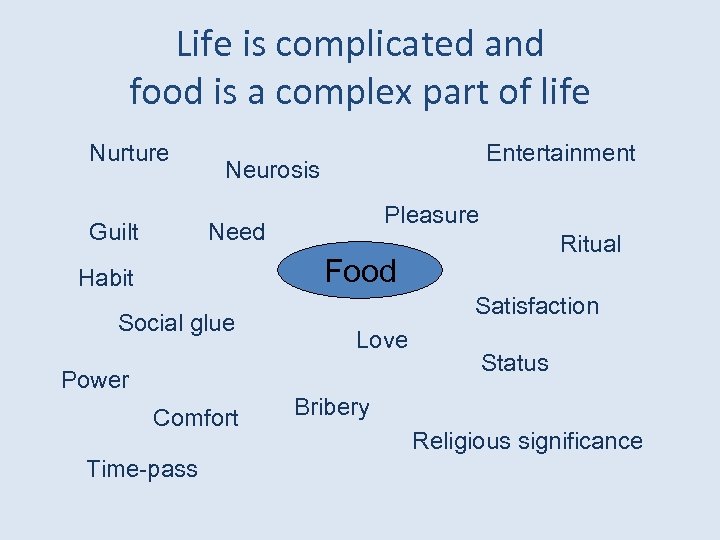 Life is complicated and food is a complex part of life Nurture Guilt Entertainment Neurosis Pleasure Need Ritual Food Habit Social glue Satisfaction Love Power Comfort Time-pass Status Bribery Religious significance
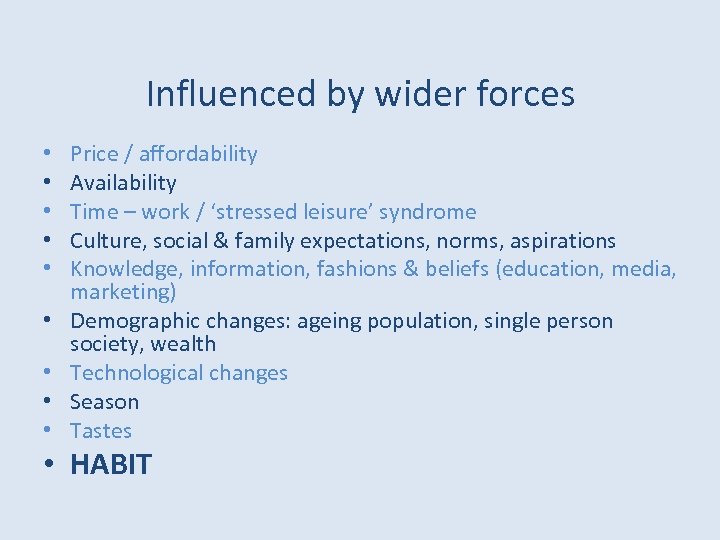 Influenced by wider forces • • • Price / affordability Availability Time – work / ‘stressed leisure’ syndrome Culture, social & family expectations, norms, aspirations Knowledge, information, fashions & beliefs (education, media, marketing) Demographic changes: ageing population, single person society, wealth Technological changes Season Tastes • HABIT
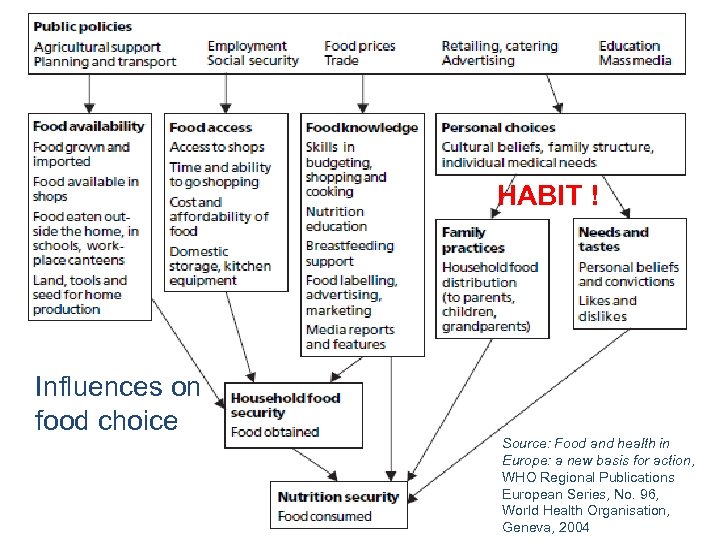 HABIT ! Influences on food choice Source: Food and health in Europe: a new basis for action, WHO Regional Publications European Series, No. 96, World Health Organisation, Geneva, 2004
 General conclusions from the literature (1)* • People are ‘locked-in to their behaviours because of the social, economic and cultural context within which they operate – the context therefore needs to change • Price, taste, appearance very important • People don’t really look at labels or only the bits they’re interested in • Environmental considerations not a motivator for behaviour for many • * work of Tim Jackson for SDC, recent Defra synthesis review EV 0510; review of labelling by FSA, Opinion Leader Research/Brook Lynhurst and masses more
 General conclusions from the literature (2) • People are well disposed to the idea of local if it is seen to offer something that mainstream doesn’t; not so sure what seasonal is • Grow your own becoming more popular esp among 25 -44 yr olds • Health considered by some a way in to environmental thinking – but getting people to eat healthily for their own self interest is hard enough! • Local considered more important than organic • What people say is not what they do. . .
 But things can change: • EG. free range and the Hugh/Jamie effect • Since March last year: £ 55. 2 million increase in spend on Freedom Food labelled chicken (from £ 16. 4 million to £ 71. 6 million) • More than 26 million drop for standard chicken
 6. What are the implications if we want to change behaviour? • What behaviour change do we want? – More fruit and veg but of a less GHG intensive type (generally more seasonal & indigenous) – More acceptance of non-availability; cosmetic variability – People to eat what they buy – Less meat and dairy • Advice, info and handy leaflets aren’t going to do the job • No single magic solution
 Structural change is needed • Fruit and veg needs to be affordable • Less GHG-intensive produce needs to be heavily promoted through price, availability, marketing • Major role for public procurement; restaurant and catering sectors • Re-learning and re-skilling: cooking and eating in schools vital • Habits & norms need to change: role of government, industry, media, NGOs, workplaces and schools
 7. About the FCRN Funded by one of the UK research councils Based at Surrey University Focuses on: • Researching food chain contribution to GHG emissions and options for emissions reduction – technology, behaviour, policy • Sharing and communicating information on food & climate change with member network
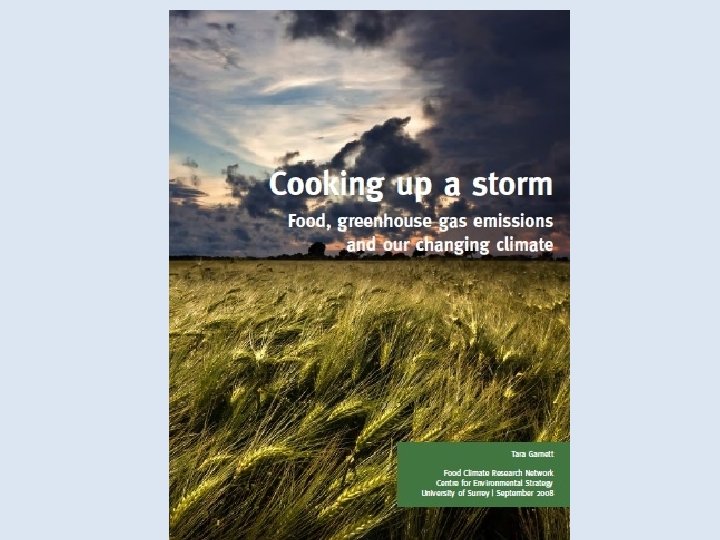
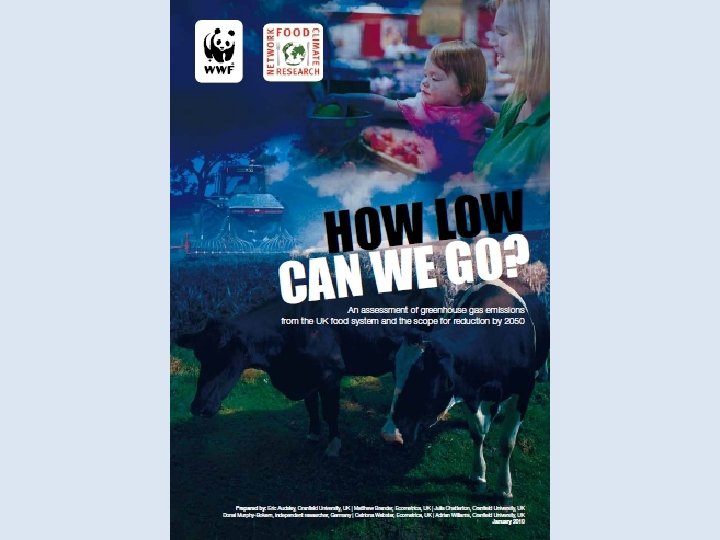
 FCRN outputs • Five comprehensive in-house studies so far: 1. 2. 3. 4. 5. Fruit & vegetables Alcoholic drinks Food refrigeration Meat & dairy Synthesis paper • One commissioned study • All at www. fcrn. org. uk
 • • • Comprehensive website: see www. fcrn. org. uk @80, 000 web hits Working seminars: To inform research Networking: To catalyse further research Mailings: emails sent 2 x weekly to 1600+ members (all sectors, all disciplines, UK & abroad) Open to all – please join
 Thank you Tara Garnett taragarnett@blueyonder. co. uk www. fcrn. org. uk Food Climate Research Network