


 Скачать презентацию Getting Ahead of the Avalanche How everyone can
a770e2fd3c93bcca4467474710ba6432.ppt
- Количество слайдов: 35
 Getting Ahead of the Avalanche: How everyone can benefit from a near-infinite amount of technology Rick Hayes-Roth Professor, Information Sciences, NPS, Monterey, CA. hayes-roth@nps. edu November, 2007 #1
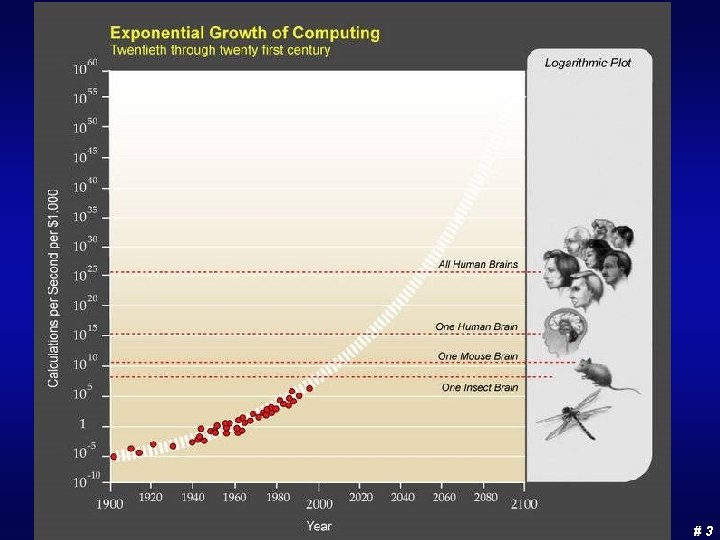
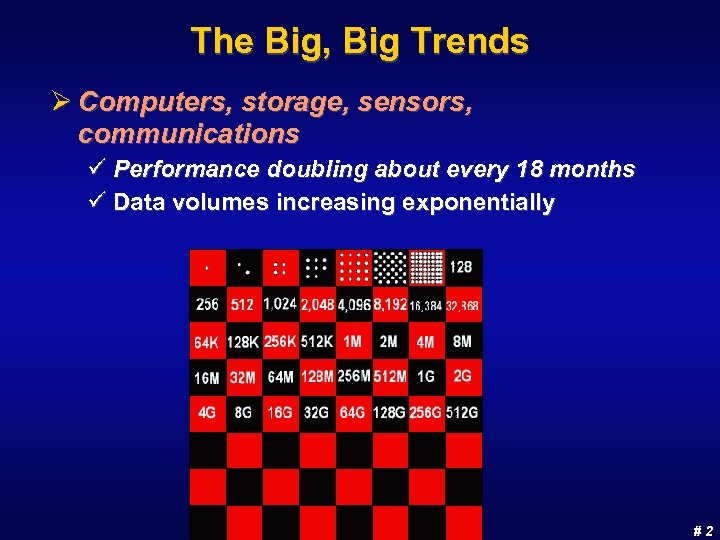 The Big, Big Trends Ø Computers, storage, sensors, communications ü Performance doubling about every 18 months ü Data volumes increasing exponentially #2
 #3
#3
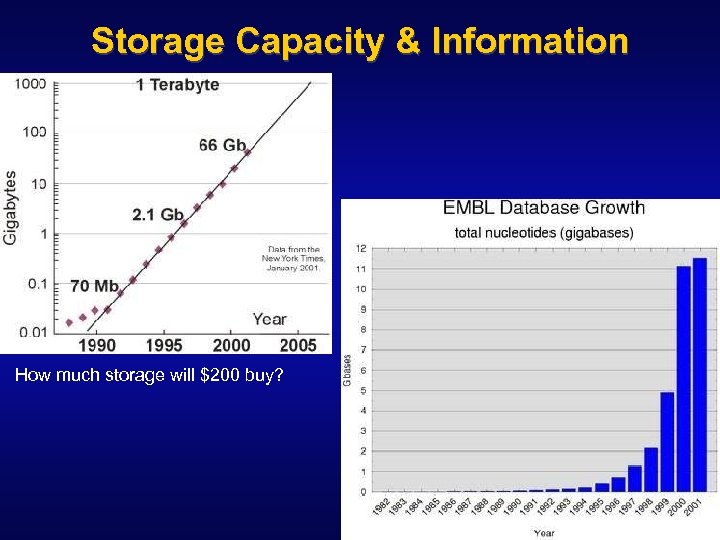 Storage Capacity & Information How much storage will $200 buy? #4
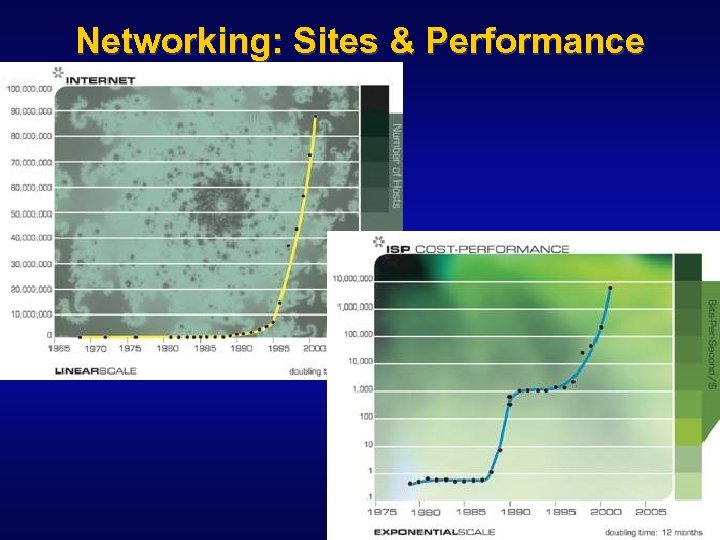 Networking: Sites & Performance #5
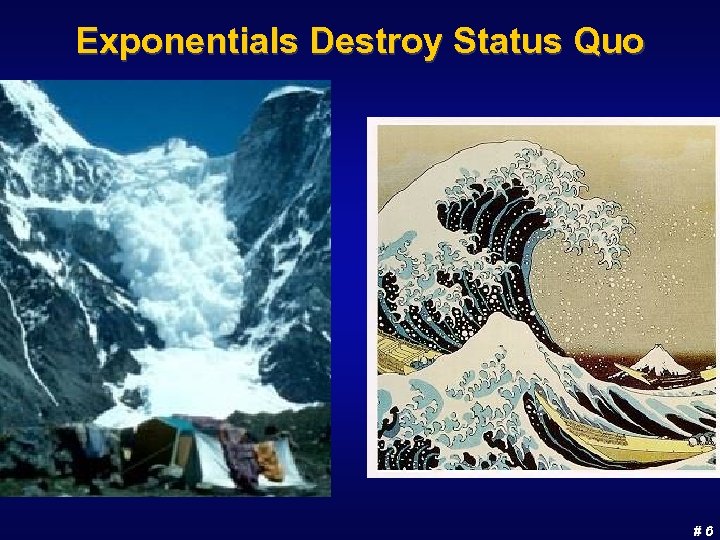 Exponentials Destroy Status Quo #6
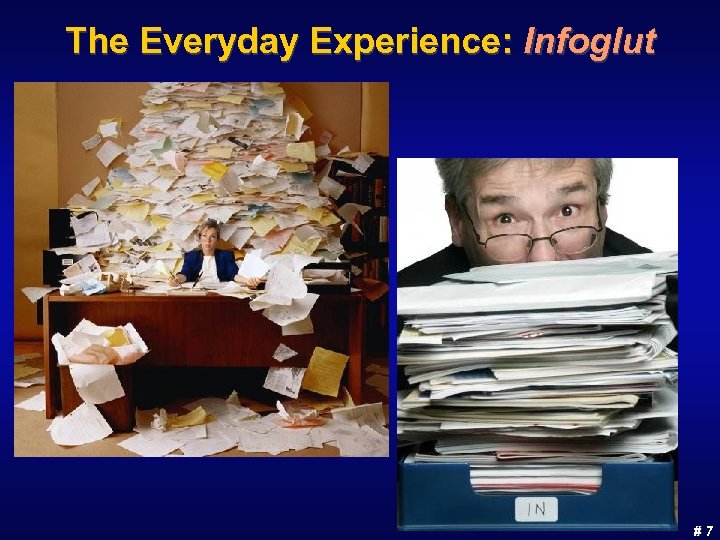 The Everyday Experience: Infoglut #7
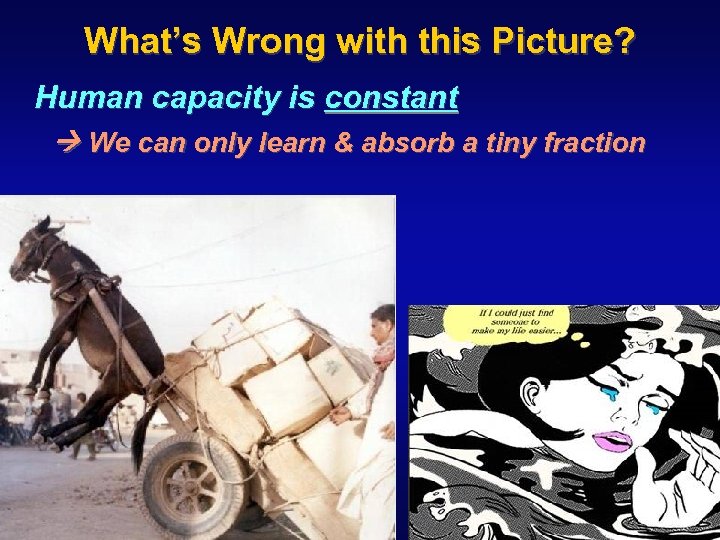 What’s Wrong with this Picture? Human capacity is constant We can only learn & absorb a tiny fraction #8
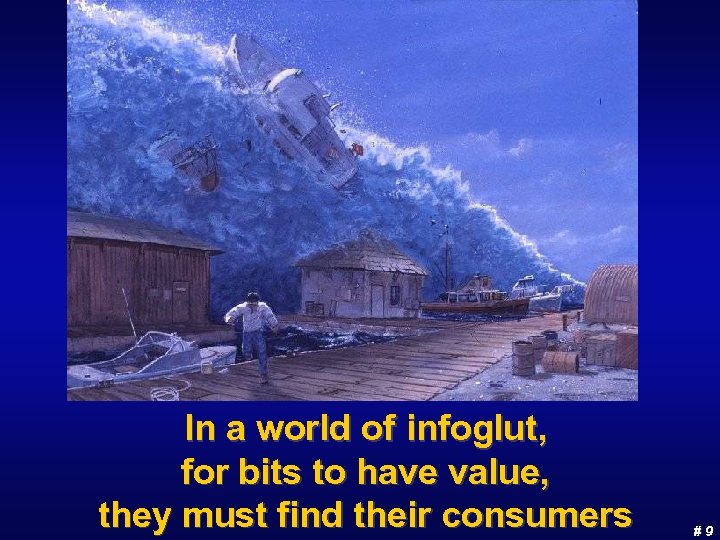 In a world of infoglut, for bits to have value, they must find their consumers #9
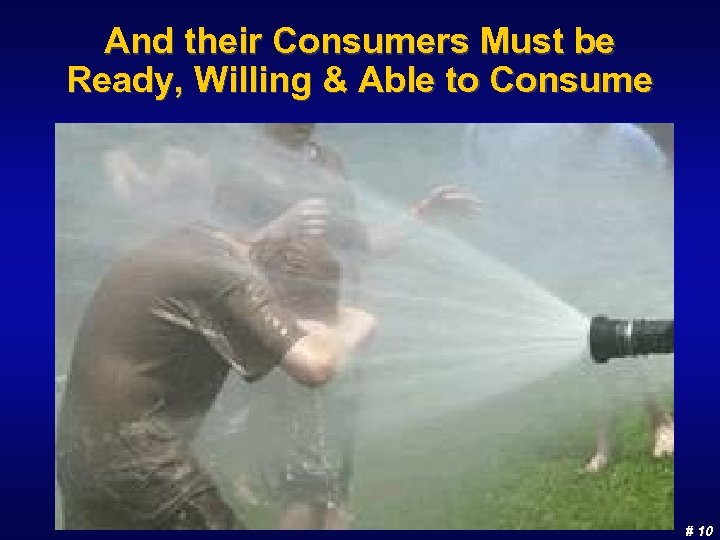 And their Consumers Must be Ready, Willing & Able to Consume # 10
 Plausible Outcomes 1. A small number of channels for all content 2. A small number of devices for all content 3. A small number of suppliers for all content 4. A user-centric value delivery system Me-centric services: Consumers delegate concerns to their agents, and these agents deliver customized value # 11
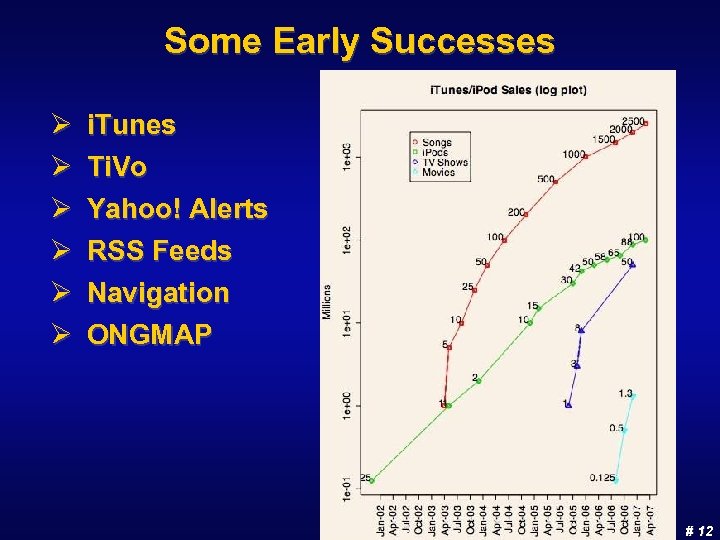 Some Early Successes Ø Ø Ø i. Tunes Ti. Vo Yahoo! Alerts RSS Feeds Navigation ONGMAP # 12
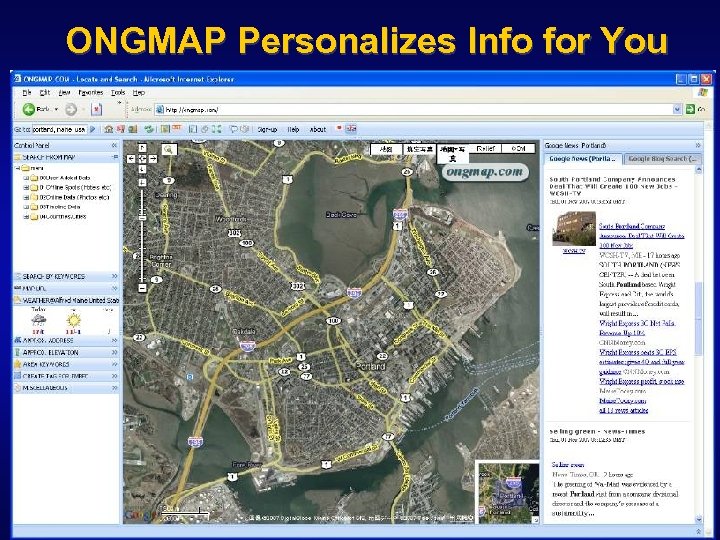 ONGMAP Personalizes Info for You # 13
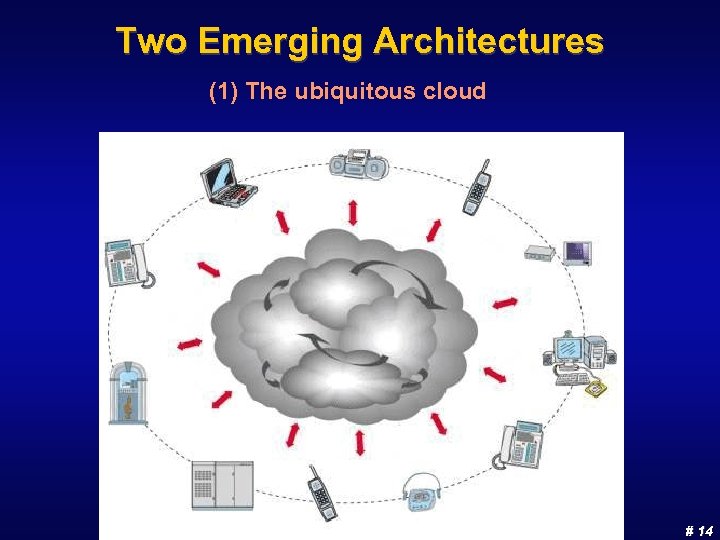 Two Emerging Architectures (1) The ubiquitous cloud # 14
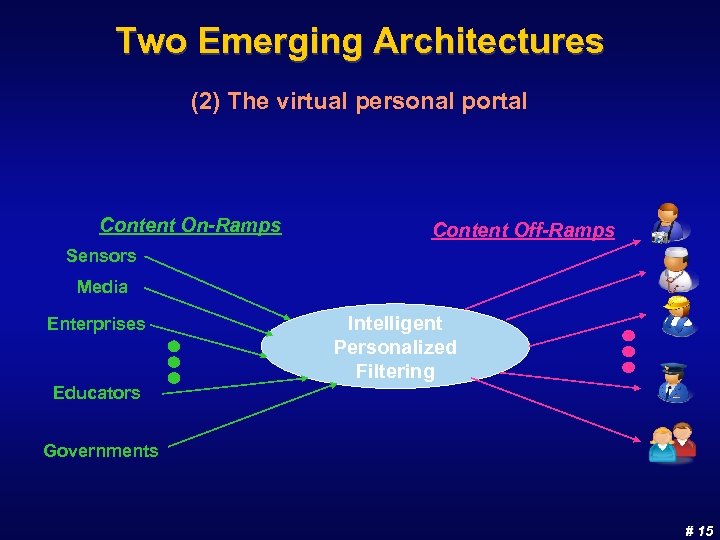 Two Emerging Architectures (2) The virtual personal portal Content On-Ramps Content Off-Ramps Sensors Media Enterprises Intelligent Personalized Filtering Educators Governments # 15
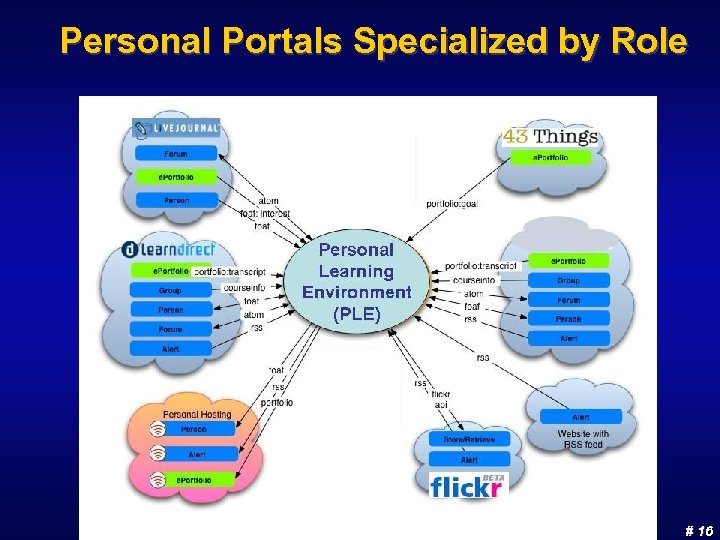 Personal Portals Specialized by Role # 16
 Two Basic Approaches: Pull v. Push n Smart Pull - Each consumer seeks and acquires whatever information it needs, when and as needed n Smart Push - Each consumer tells network agents what conditions or events it would value detecting # 17
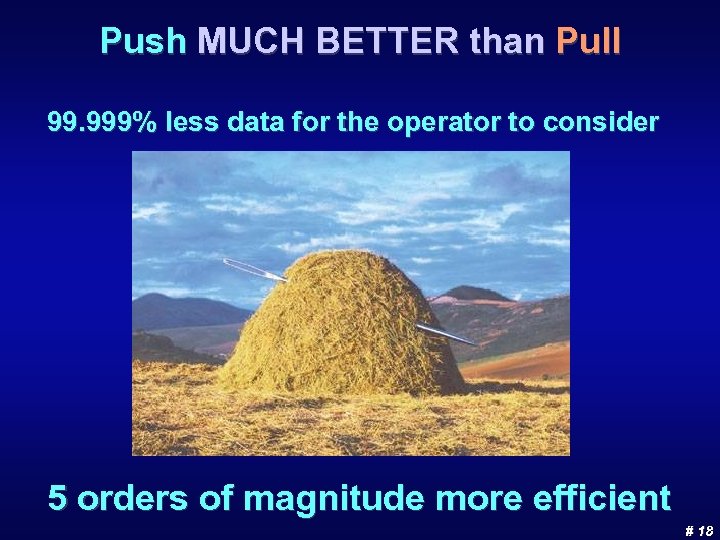 Push MUCH BETTER than Pull 99. 999% less data for the operator to consider 5 orders of magnitude more efficient # 18
 Condition Monitoring is Key n Conditions of Interest (COIs) u “Continuous queries” about important possible events n High-value events are detected u Flow with priority n Low-value data do not flow # 19
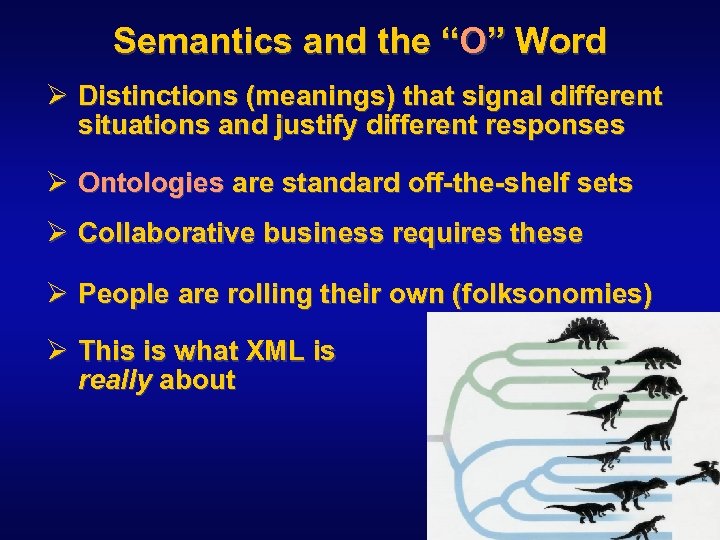 Semantics and the “O” Word Ø Distinctions (meanings) that signal different situations and justify different responses Ø Ontologies are standard off-the-shelf sets Ø Collaborative business requires these Ø People are rolling their own (folksonomies) Ø This is what XML is really about # 20
 Technology Shortfalls (Opportunities) 1. Vocabularies that match consumer concepts 2. An expression language for conditions of interest 3. “Cartridges” or “blades” for the most popular database products to support these vocabularies and expressions 4. High-performance event detectors, especially forecast space-time intersections 5. Tools to audit information flows and to determine specifically “why” particular alerts occurred or “why not” when they didn’t 6. Tools to improve the information value chains by fixing bugs in the vocabularies, expressions or COIs. # 21
 Conclusions n In a world of near-infinite data volumes, people will need machines to filter data intelligently for them u This requires “semantic” understanding & dynamic context n Centering on the user’s context produces enormous advantages u Up to 5 orders of magnitude improvement n Just as supply chain integration revolutionized the manufacturing and delivery of molecules, valued bit delivery chains will revolutionize the information industry # 22
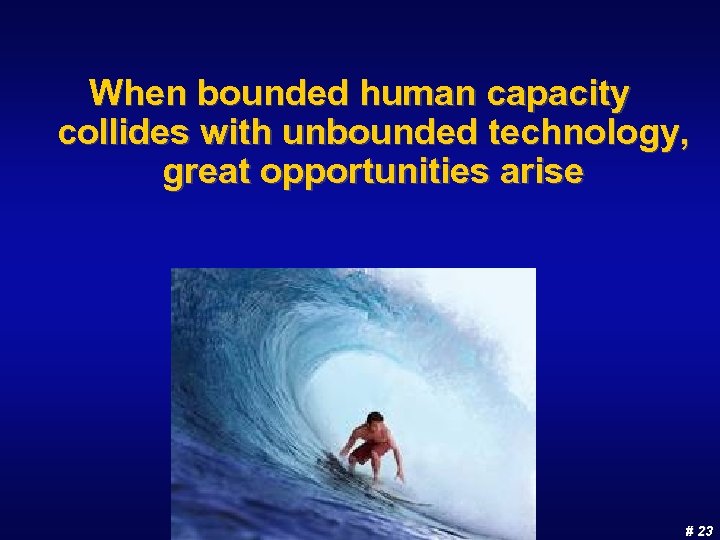 When bounded human capacity collides with unbounded technology, great opportunities arise # 23
 Backup Slides # 24
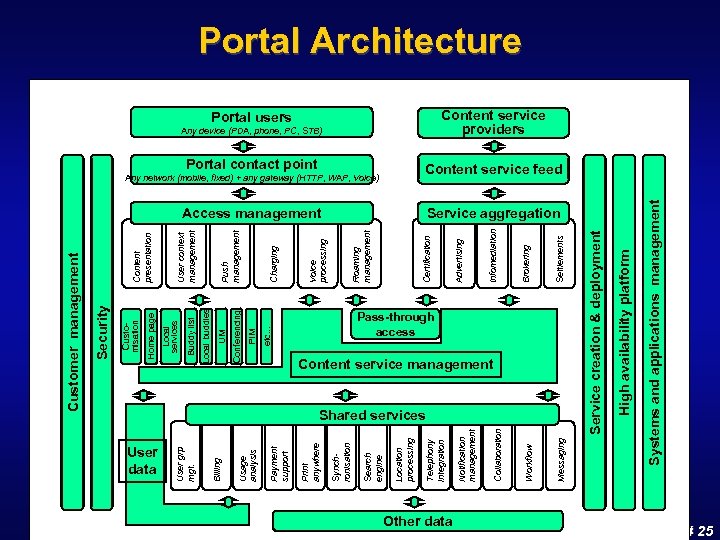 User data Other data Pass-through access Content service management Shared services High availability platform Service creation & deployment Settlements Brokering Service aggregation Systems and applications management Messaging Workflow Access management Infomediation Portal contact point Collaboration Portal users Advertising Certification Roaming management Voice processing Charging Push management User context management Any device (PDA, phone, PC, STB) Notification management etc. . . PIM Conferencing UM Local buddies Buddy list Local services Content presentation Any network (mobile, fixed) + any gateway (HTTP, WAP, Voice) Telephony integration Location processing Search engine Synchronisation Print anywhere Payment support Usage analysis Billing User grp mgt. Home page Customisation Security Customer management Portal Architecture Content service providers Content service feed # 25
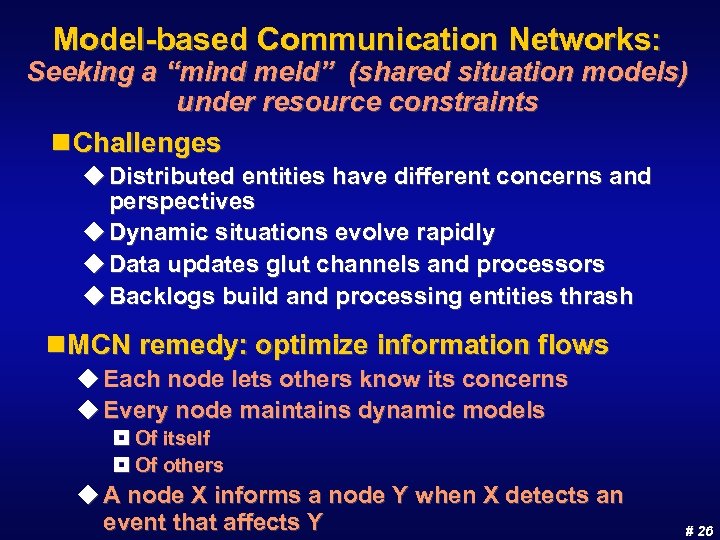 Model-based Communication Networks: Seeking a “mind meld” (shared situation models) under resource constraints n Challenges u Distributed entities have different concerns and perspectives u Dynamic situations evolve rapidly u Data updates glut channels and processors u Backlogs build and processing entities thrash n MCN remedy: optimize information flows u Each node lets others know its concerns u Every node maintains dynamic models ¦ Of itself ¦ Of others u A node X informs a node Y when X detects an event that affects Y # 26
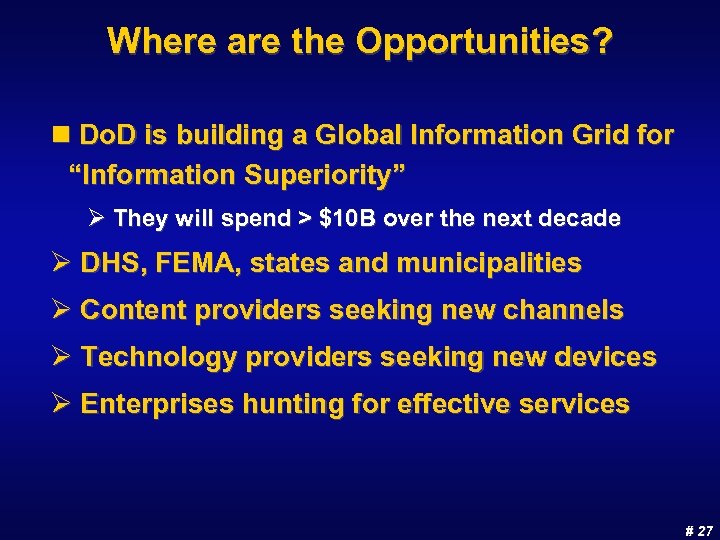 Where are the Opportunities? n Do. D is building a Global Information Grid for “Information Superiority” Ø They will spend > $10 B over the next decade Ø DHS, FEMA, states and municipalities Ø Content providers seeking new channels Ø Technology providers seeking new devices Ø Enterprises hunting for effective services # 27
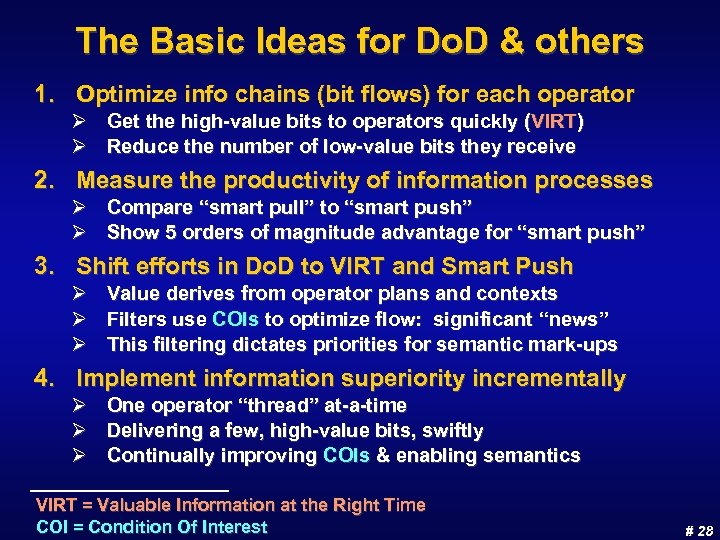 The Basic Ideas for Do. D & others 1. Optimize info chains (bit flows) for each operator Ø Get the high-value bits to operators quickly (VIRT) Ø Reduce the number of low-value bits they receive 2. Measure the productivity of information processes Ø Compare “smart pull” to “smart push” Ø Show 5 orders of magnitude advantage for “smart push” 3. Shift efforts in Do. D to VIRT and Smart Push Ø Value derives from operator plans and contexts Ø Filters use COIs to optimize flow: significant “news” Ø This filtering dictates priorities for semantic mark-ups 4. Implement information superiority incrementally Ø Ø Ø One operator “thread” at-a-time Delivering a few, high-value bits, swiftly Continually improving COIs & enabling semantics VIRT = Valuable Information at the Right Time COI = Condition Of Interest # 28
 Condition Monitoring is Key n Conditions of Interest (COIs) u u u Computable expressions (“continuous queries”) Describe critical assumptions (like CCIRs) Depend on operator’s evolving context ¦ Usually reflect phase of a mission & current status n High-value events are detected u u Data describing the event match the COI The event is “news” The COI assures the event is still “relevant” Bits reporting the event flow with priority n Low-value data do not flow u Generally “relevant” data not matching a COI u Repeated and redundant data, not newsworthy # 29
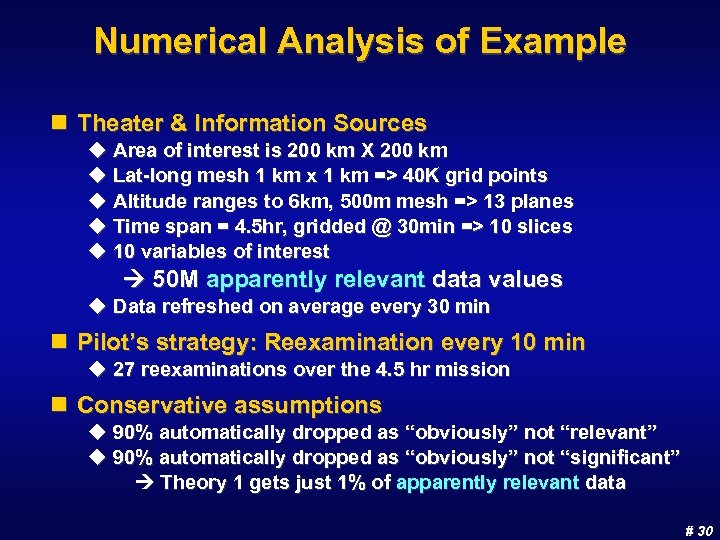 Numerical Analysis of Example n Theater & Information Sources u Area of interest is 200 km X 200 km u Lat-long mesh 1 km x 1 km => 40 K grid points u Altitude ranges to 6 km, 500 m mesh => 13 planes u Time span = 4. 5 hr, gridded @ 30 min => 10 slices u 10 variables of interest 50 M apparently relevant data values u Data refreshed on average every 30 min n Pilot’s strategy: Reexamination every 10 min u 27 reexaminations over the 4. 5 hr mission n Conservative assumptions u 90% automatically dropped as “obviously” not “relevant” u 90% automatically dropped as “obviously” not “significant” Theory 1 gets just 1% of apparently relevant data # 30
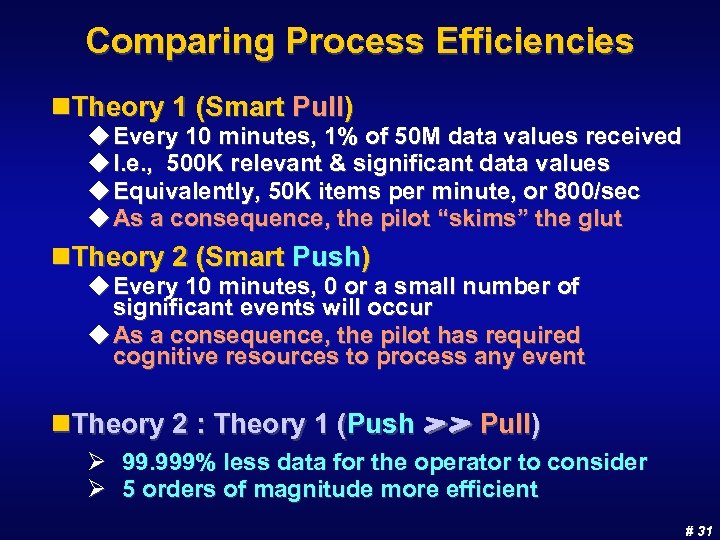 Comparing Process Efficiencies n. Theory 1 (Smart Pull) u Every 10 minutes, 1% of 50 M data values received u I. e. , 500 K relevant & significant data values u Equivalently, 50 K items per minute, or 800/sec u As a consequence, the pilot “skims” the glut n. Theory 2 (Smart Push) u Every 10 minutes, 0 or a small number of significant events will occur u As a consequence, the pilot has required cognitive resources to process any event n. Theory 2 : Theory 1 (Push >> Pull) Ø 99. 999% less data for the operator to consider Ø 5 orders of magnitude more efficient # 31
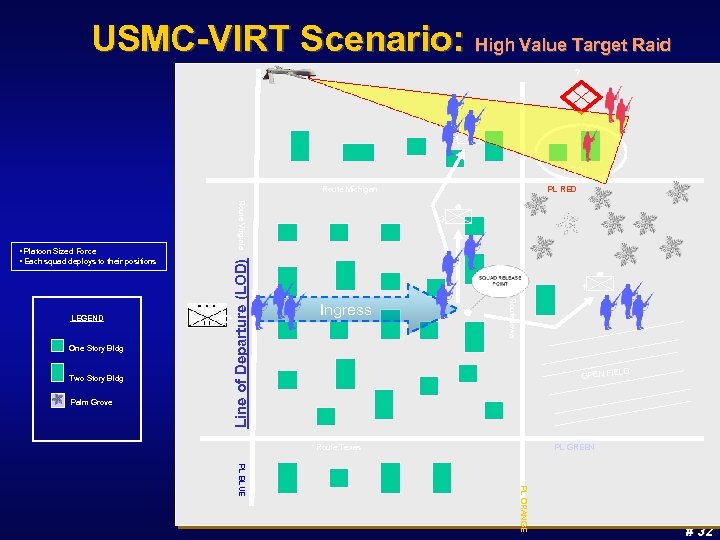 USMC-VIRT Scenario: High Value Target Raid ? ? 2 OBJ Route Michigan Two Story Bldg Palm Grove Line of Departure (LOD) One Story Bldg (+) 3 1 Ingress Route Iowa LEGEND Route Virginia • Platoon Sized Force • Each squad deploys to their positions PL RED OPEN FIELD Route Texas PL GREEN PL ORANGE PL BLUE # 32
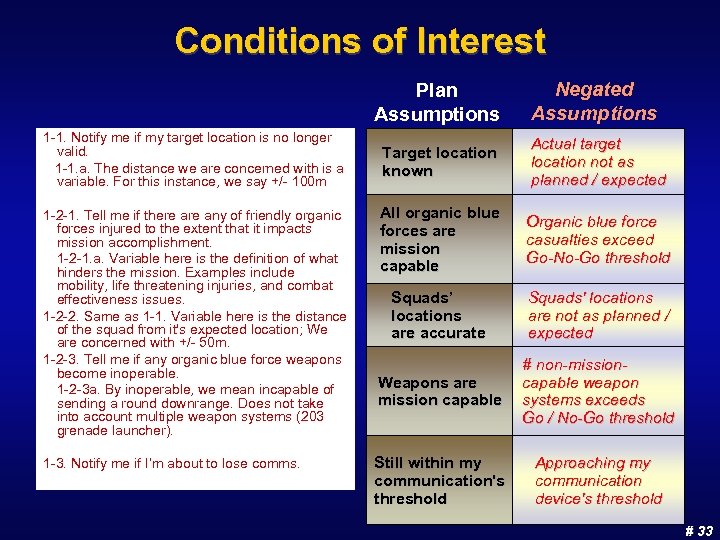 Conditions of Interest Plan Assumptions 1 -1. Notify me if my target location is no longer valid. 1 -1. a. The distance we are concerned with is a variable. For this instance, we say +/- 100 m 1 -2 -1. Tell me if there any of friendly organic forces injured to the extent that it impacts mission accomplishment. 1 -2 -1. a. Variable here is the definition of what hinders the mission. Examples include mobility, life threatening injuries, and combat effectiveness issues. 1 -2 -2. Same as 1 -1. Variable here is the distance of the squad from it's expected location; We are concerned with +/- 50 m. 1 -2 -3. Tell me if any organic blue force weapons become inoperable. 1 -2 -3 a. By inoperable, we mean incapable of sending a round downrange. Does not take into account multiple weapon systems (203 grenade launcher). 1 -3. Notify me if I’m about to lose comms. Negated Assumptions Target location known Actual target location not as planned / expected All organic blue forces are mission capable Organic blue force casualties exceed Go-No-Go threshold Squads’ locations are accurate Squads' locations are not as planned / expected Weapons are mission capable # non-missioncapable weapon systems exceeds Go / No-Go threshold Still within my communication's threshold Approaching my communication device's threshold # 33
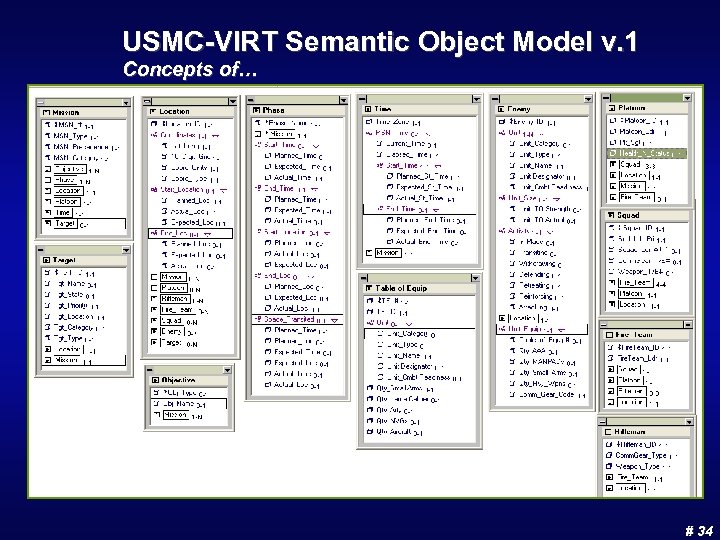 USMC-VIRT Semantic Object Model v. 1 Concepts of… # 34
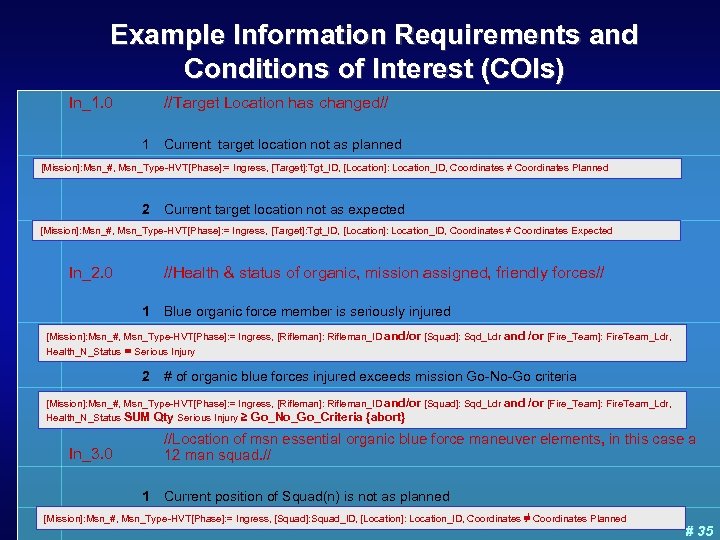 Example Information Requirements and Conditions of Interest (COIs) In_1. 0 //Target Location has changed// 1 Current target location not as planned [Mission]: Msn_#, Msn_Type-HVT[Phase]: = Ingress, [Target]: Tgt_ID, [Location]: Location_ID, Coordinates ≠ Coordinates Planned 2 Current target location not as expected [Mission]: Msn_#, Msn_Type-HVT[Phase]: = Ingress, [Target]: Tgt_ID, [Location]: Location_ID, Coordinates ≠ Coordinates Expected In_2. 0 //Health & status of organic, mission assigned, friendly forces// 1 Blue organic force member is seriously injured [Mission]: Msn_#, Msn_Type-HVT[Phase]: = Ingress, [Rifleman]: Rifleman_ID and/or [Squad]: Sqd_Ldr and Health_N_Status = Serious Injury 2 /or [Fire_Team]: Fire. Team_Ldr, # of organic blue forces injured exceeds mission Go-No-Go criteria [Mission]: Msn_#, Msn_Type-HVT[Phase]: = Ingress, [Rifleman]: Rifleman_ID and/or [Squad]: Sqd_Ldr and Health_N_Status SUM Qty Serious Injury ≥ Go_No_Go_Criteria {abort} /or [Fire_Team]: Fire. Team_Ldr, //Location of msn essential organic blue force maneuver elements, in this case a 12 man squad. // 1 In_3. 0 Current position of Squad(n) is not as planned [Mission]: Msn_#, Msn_Type-HVT[Phase]: = Ingress, [Squad]: Squad_ID, [Location]: Location_ID, Coordinates ≠ Coordinates Planned # 35