 Скачать презентацию Get United Organized Labor Economics LAP 5
297aa4a99db3b2de4c33b0b5aff85620.ppt
- Количество слайдов: 54



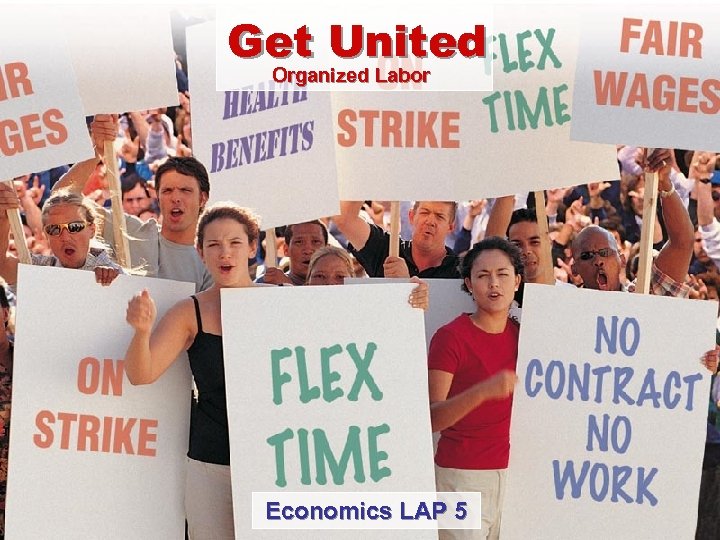
Get United Organized Labor Economics LAP 5
Objectives Explain the purpose(s) of labor unions. Describe the impact of organized labor on employees and businesses.
Objective Explain the purpose(s) of labor unions.
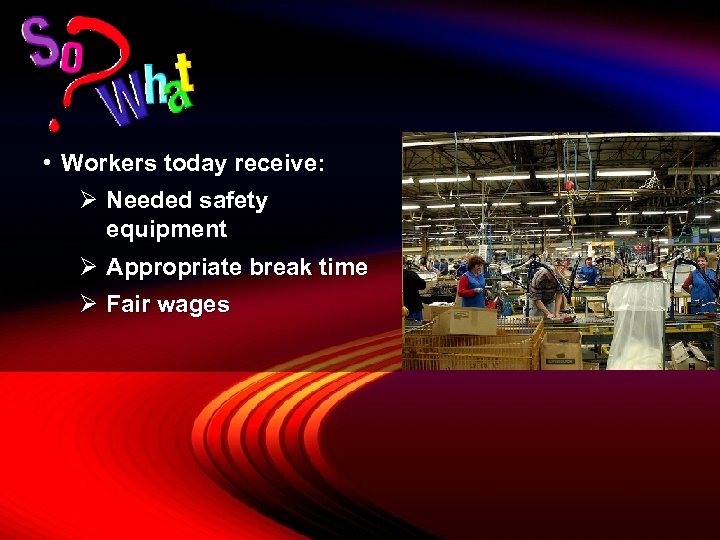
• Workers today receive: Ø Needed safety equipment Ø Appropriate break time Ø Fair wages
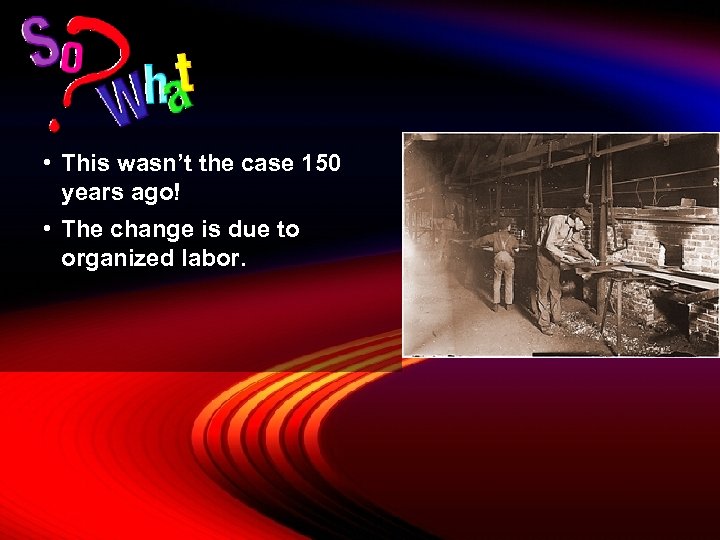
• This wasn’t the case 150 years ago! • The change is due to organized labor.
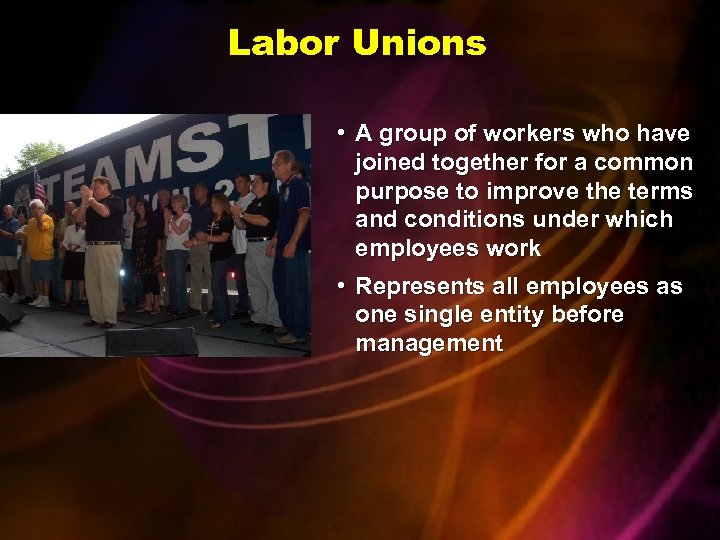
Labor Unions • A group of workers who have joined together for a common purpose to improve the terms and conditions under which employees work • Represents all employees as one single entity before management
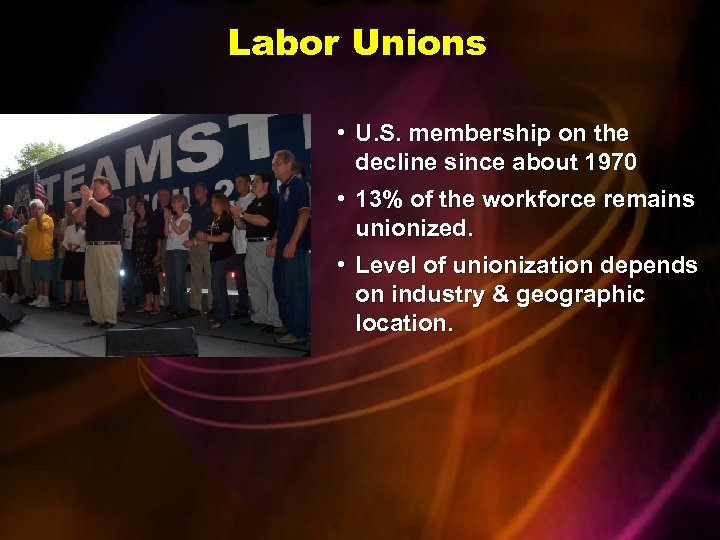
Labor Unions • U. S. membership on the decline since about 1970 • 13% of the workforce remains unionized. • Level of unionization depends on industry & geographic location.
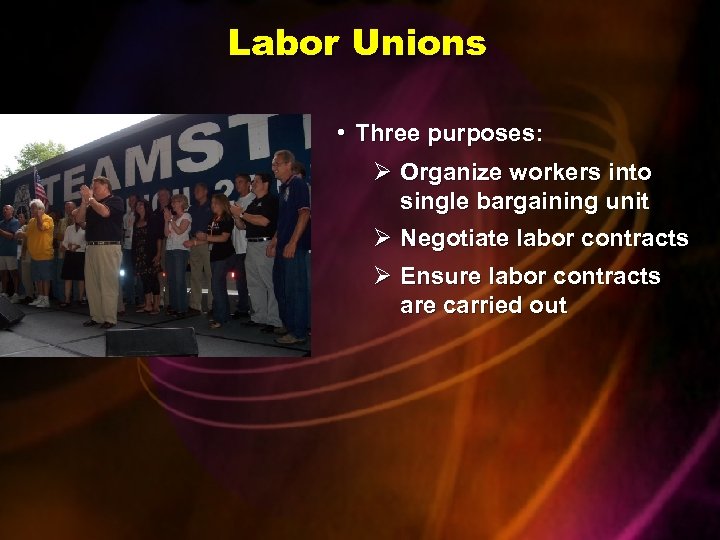
Labor Unions • Three purposes: Ø Organize workers into single bargaining unit Ø Negotiate labor contracts Ø Ensure labor contracts are carried out
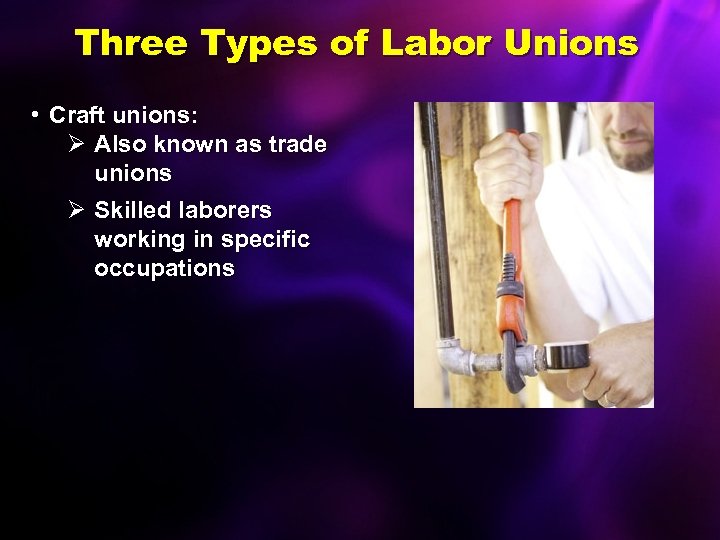
Three Types of Labor Unions • Craft unions: Ø Also known as trade unions Ø Skilled laborers working in specific occupations
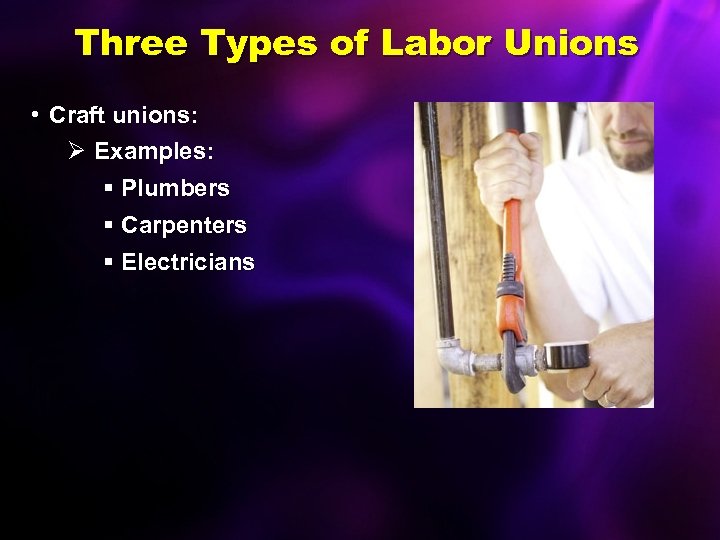
Three Types of Labor Unions • Craft unions: Ø Examples: § Plumbers § Carpenters § Electricians
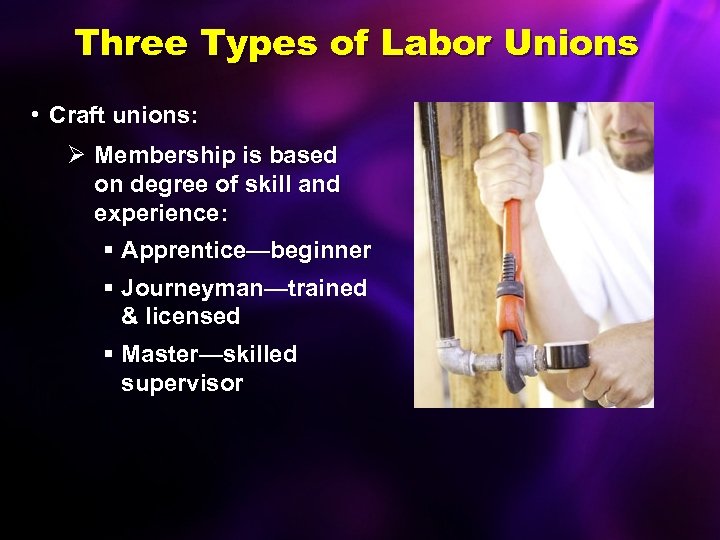
Three Types of Labor Unions • Craft unions: Ø Membership is based on degree of skill and experience: § Apprentice—beginner § Journeyman—trained & licensed § Master—skilled supervisor
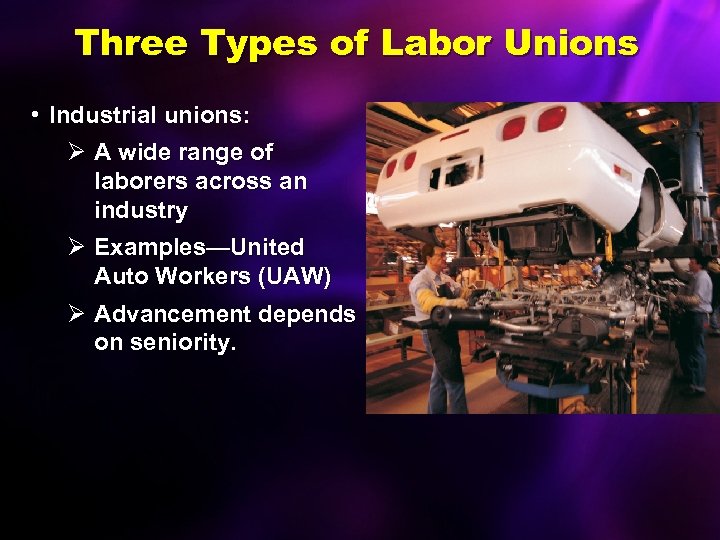
Three Types of Labor Unions • Industrial unions: Ø A wide range of laborers across an industry Ø Examples—United Auto Workers (UAW) Ø Advancement depends on seniority.
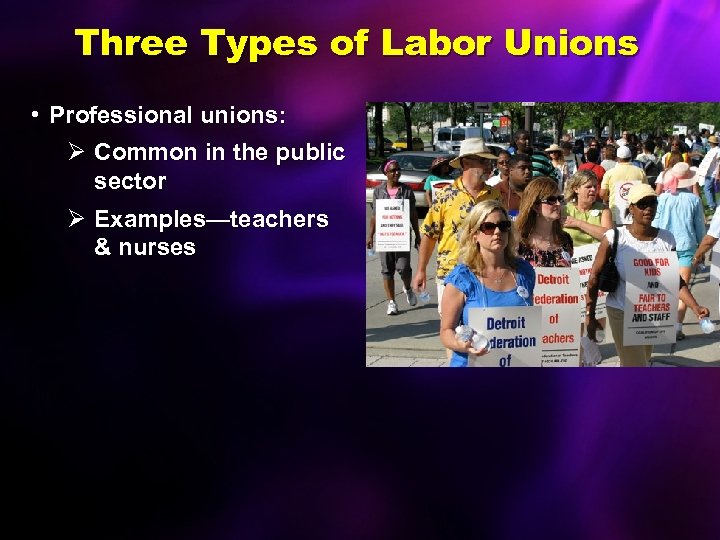
Three Types of Labor Unions • Professional unions: Ø Common in the public sector Ø Examples—teachers & nurses
Levels of Union Organization • Local union: Ø Chapter of national or international union that represents workers at a specific company or in a specific geographic area Ø About 60, 000 in the U. S.
Levels of Union Organization • Local union: Ø Responsible for: § Electing officers § Scheduling meetings § Providing membership services § Engaging in community activities
Levels of Union Organization • National/International union: Ø Provides leadership for local unions Ø Assists in contract negotiations Ø About 75 in U. S. & Canada Ø Example—American Postal Workers Union (APWU)
Levels of Union Organization • Federation: Ø Consists of several national unions of different kinds that join together to further their common purposes
Levels of Union Organization • Federation: Ø Two in U. S. : § AFL-CIO § Change to Win Coalition • Unions not in a federation are independent unions.
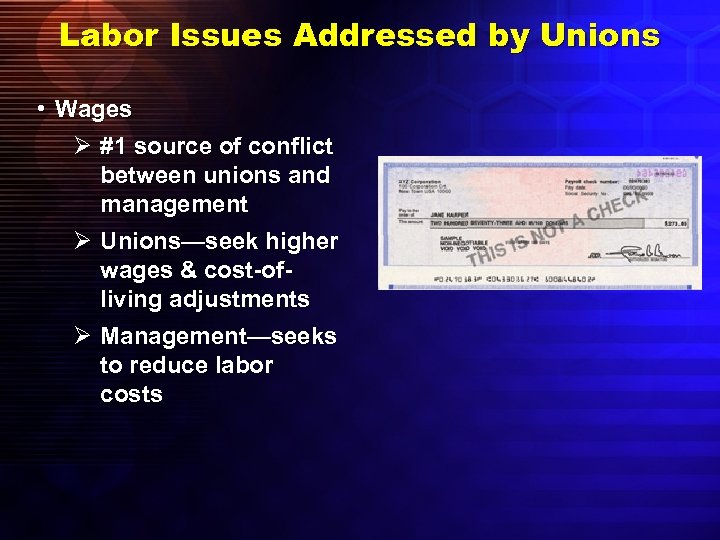
Labor Issues Addressed by Unions • Wages Ø #1 source of conflict between unions and management Ø Unions—seek higher wages & cost-ofliving adjustments Ø Management—seeks to reduce labor costs
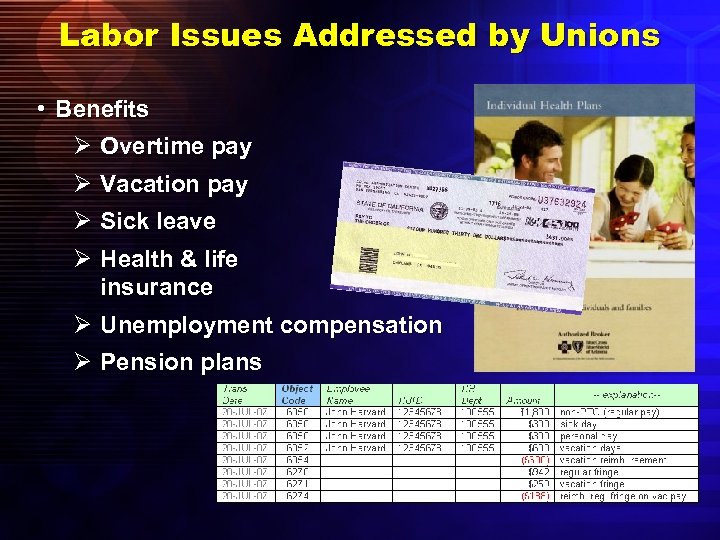
Labor Issues Addressed by Unions • Benefits Ø Overtime pay Ø Vacation pay Ø Sick leave Ø Health & life insurance Ø Unemployment compensation Ø Pension plans
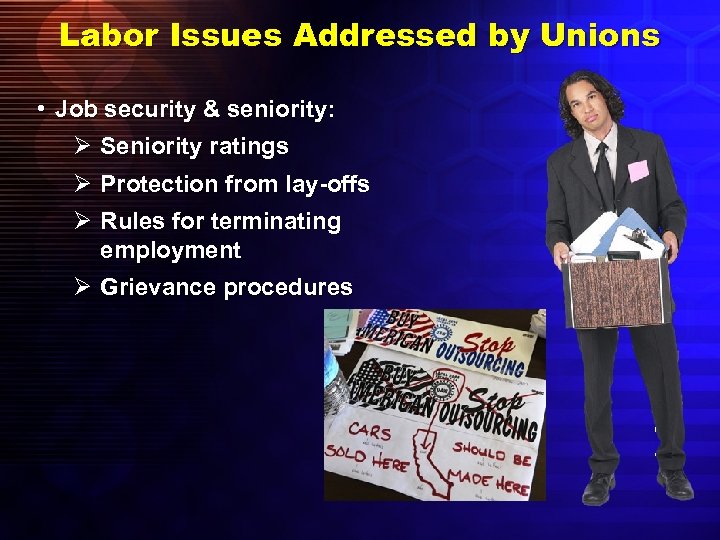
Labor Issues Addressed by Unions • Job security & seniority: Ø Seniority ratings Ø Protection from lay-offs Ø Rules for terminating employment Ø Grievance procedures
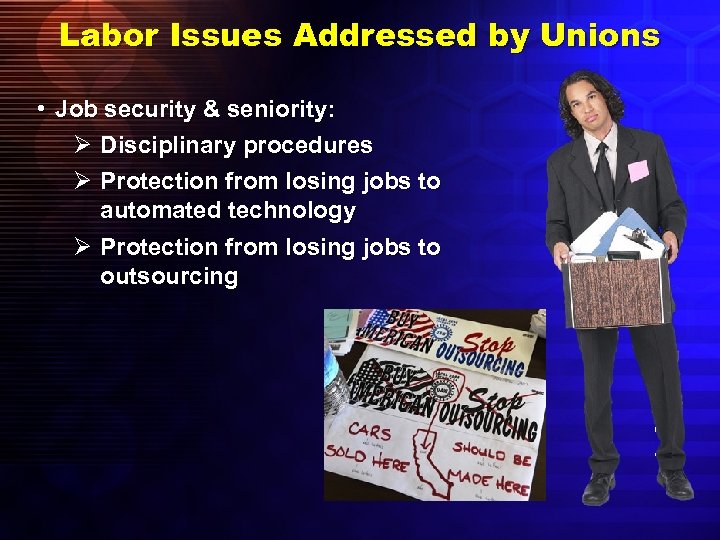
Labor Issues Addressed by Unions • Job security & seniority: Ø Disciplinary procedures Ø Protection from losing jobs to automated technology Ø Protection from losing jobs to outsourcing
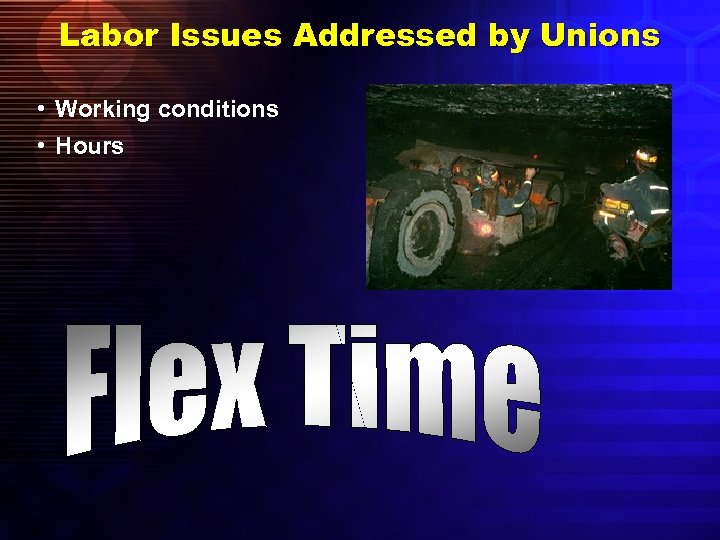
Labor Issues Addressed by Unions • Working conditions • Hours
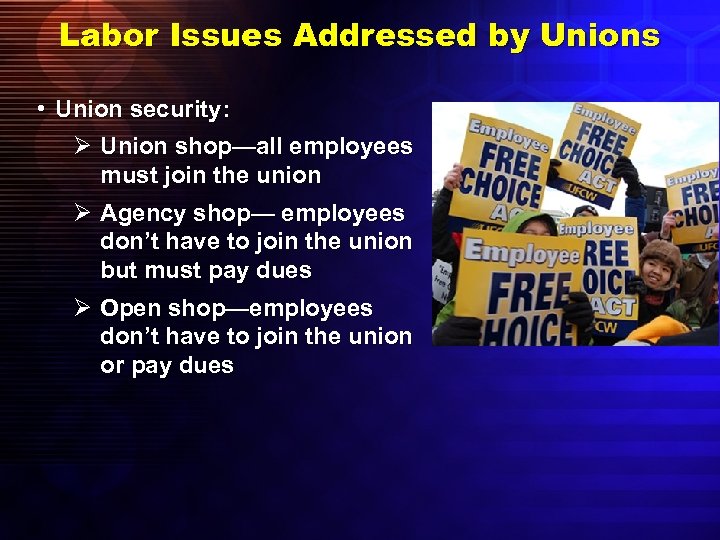
Labor Issues Addressed by Unions • Union security: Ø Union shop—all employees must join the union Ø Agency shop— employees don’t have to join the union but must pay dues Ø Open shop—employees don’t have to join the union or pay dues
Labor Issues Addressed by Unions • Management rights—what rights will management retain in the labor contract (hiring, firing, etc. )?
Objective Describe the impact of organized labor on employees and businesses.
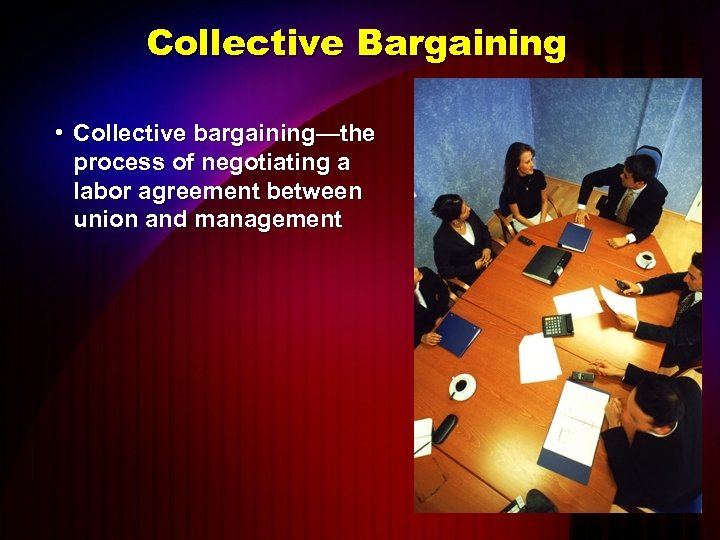
Collective Bargaining • Collective bargaining—the process of negotiating a labor agreement between union and management
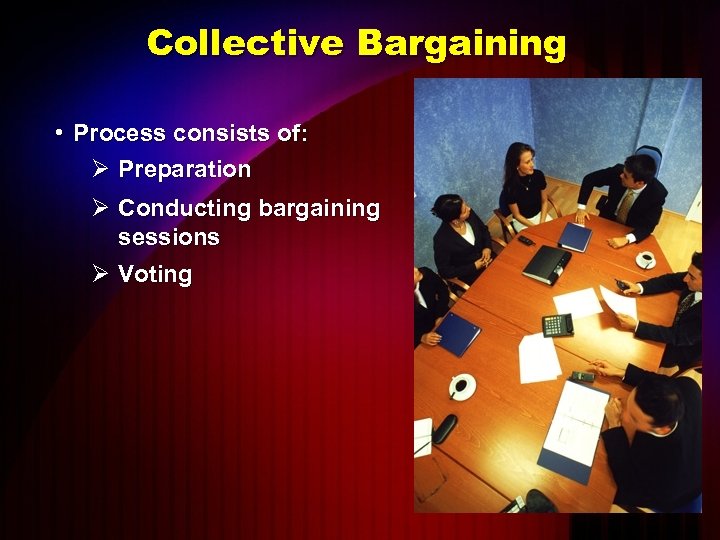
Collective Bargaining • Process consists of: Ø Preparation Ø Conducting bargaining sessions Ø Voting
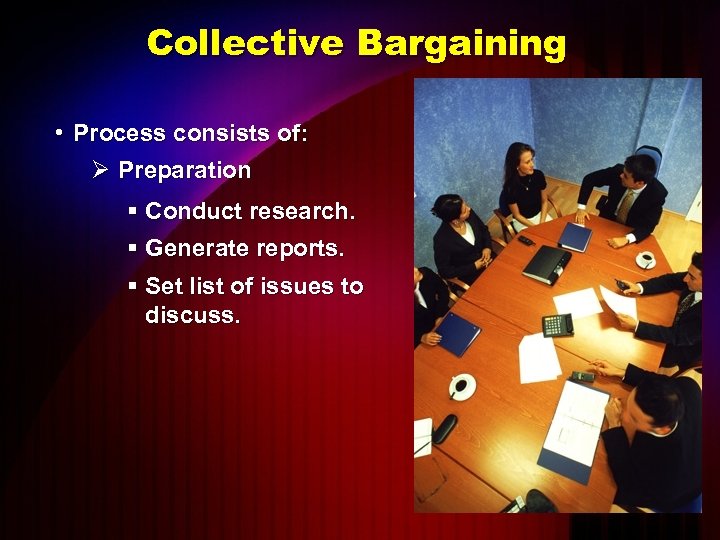
Collective Bargaining • Process consists of: Ø Preparation § Conduct research. § Generate reports. § Set list of issues to discuss.
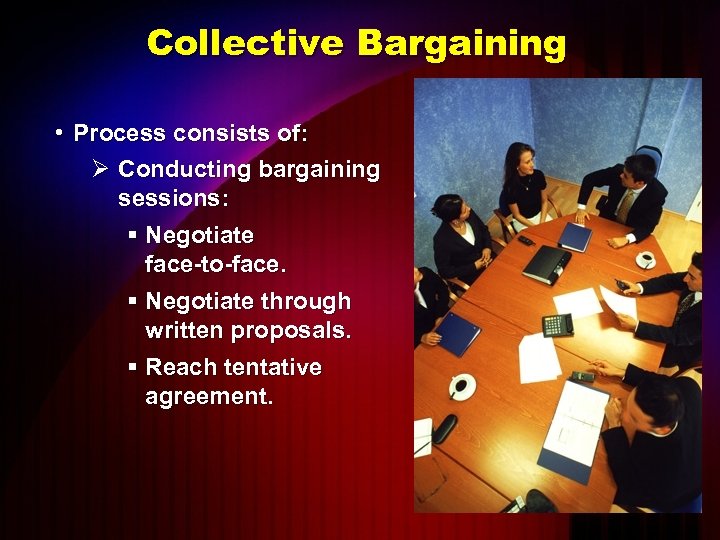
Collective Bargaining • Process consists of: Ø Conducting bargaining sessions: § Negotiate face-to-face. § Negotiate through written proposals. § Reach tentative agreement.
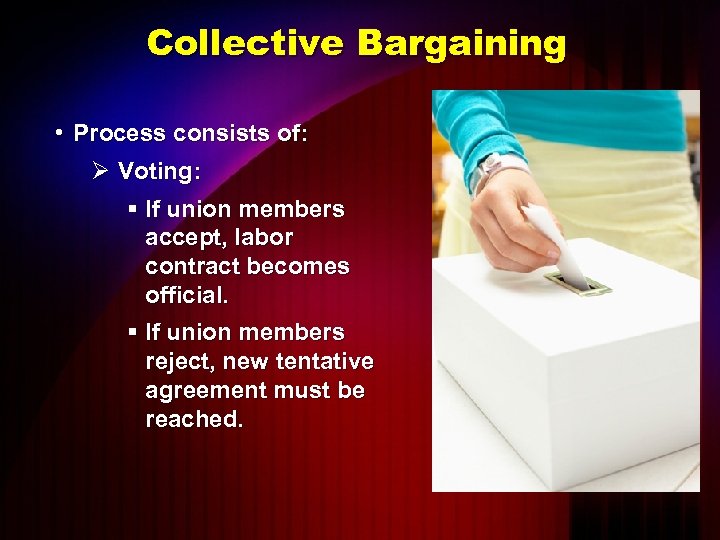
Collective Bargaining • Process consists of: Ø Voting: § If union members accept, labor contract becomes official. § If union members reject, new tentative agreement must be reached.
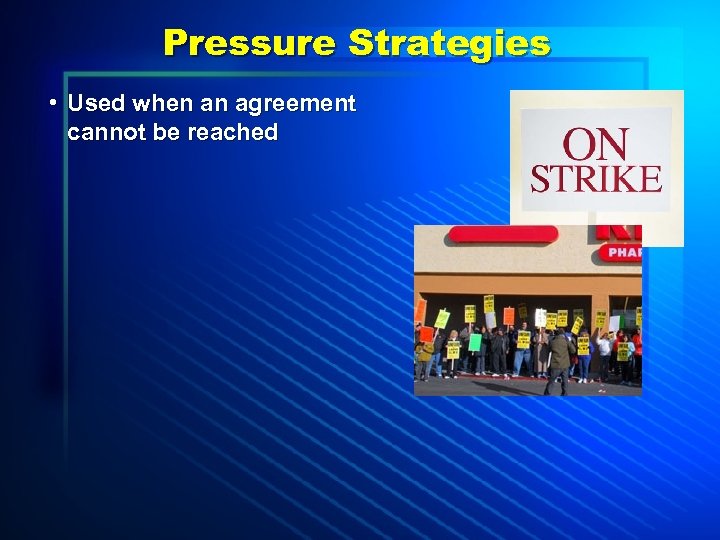
Pressure Strategies • Used when an agreement cannot be reached
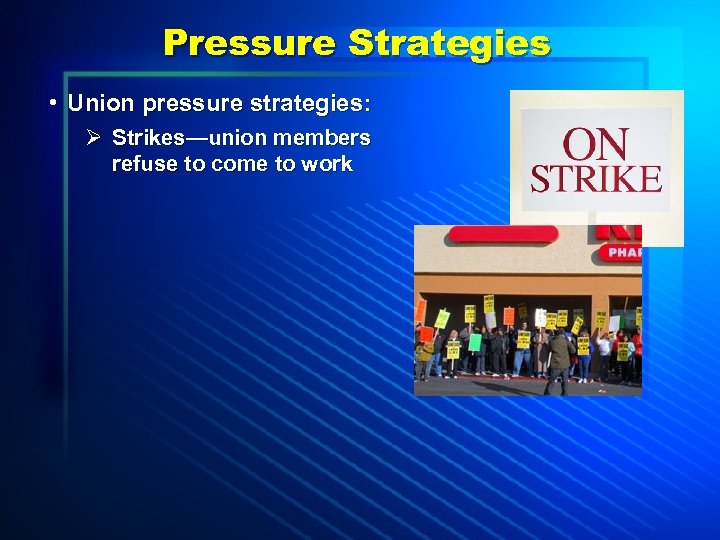
Pressure Strategies • Union pressure strategies: Ø Strikes—union members refuse to come to work
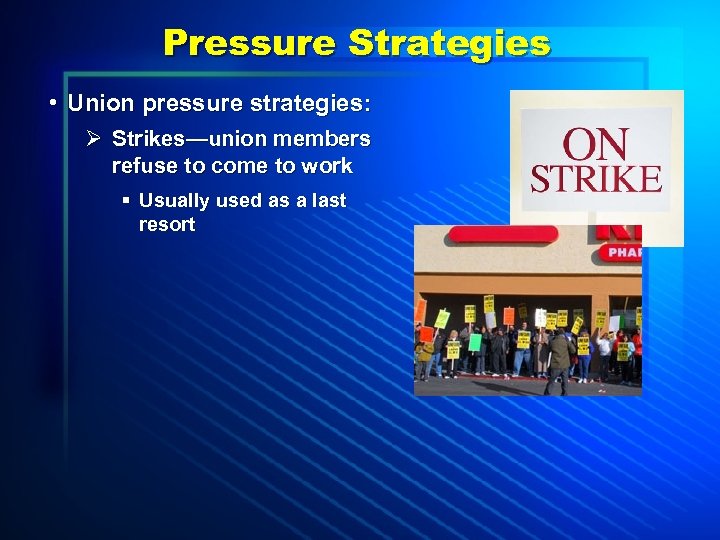
Pressure Strategies • Union pressure strategies: Ø Strikes—union members refuse to come to work § Usually used as a last resort
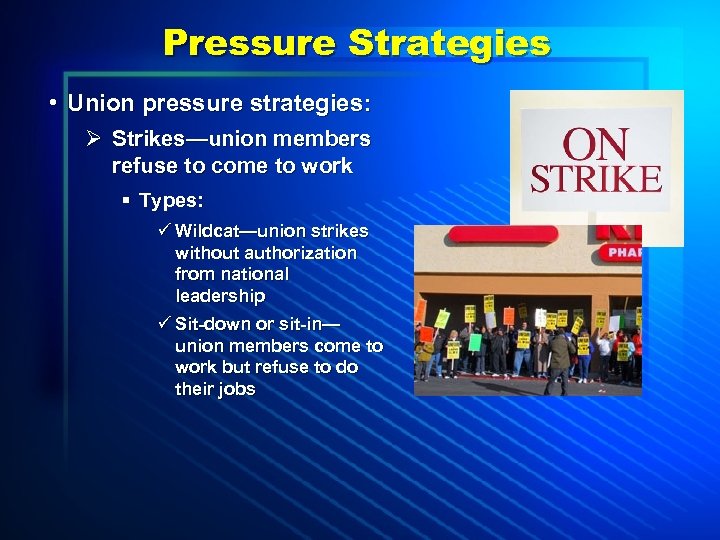
Pressure Strategies • Union pressure strategies: Ø Strikes—union members refuse to come to work § Types: ü Wildcat—union strikes without authorization from national leadership ü Sit-down or sit-in— union members come to work but refuse to do their jobs
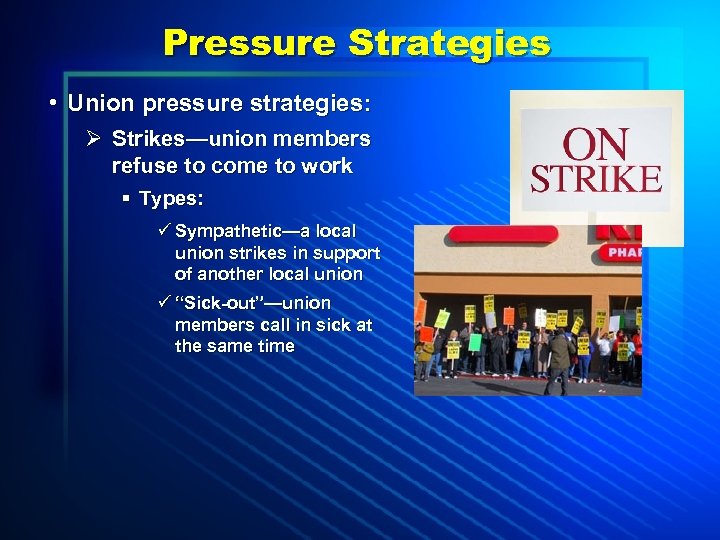
Pressure Strategies • Union pressure strategies: Ø Strikes—union members refuse to come to work § Types: ü Sympathetic—a local union strikes in support of another local union ü “Sick-out”—union members call in sick at the same time
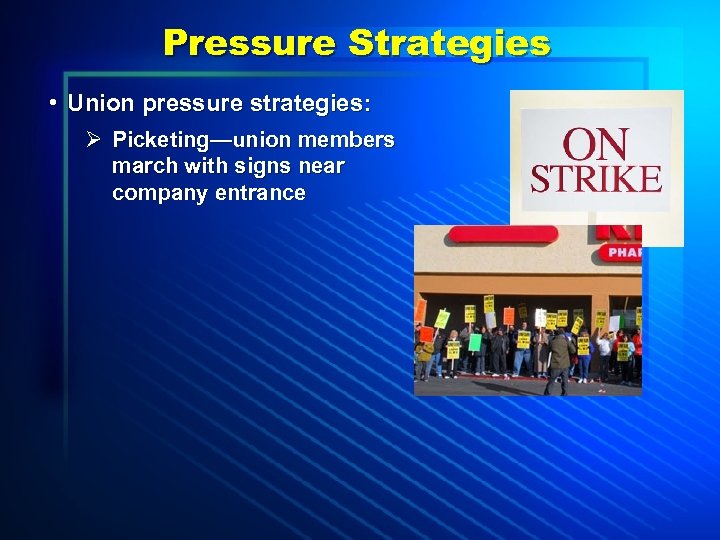
Pressure Strategies • Union pressure strategies: Ø Picketing—union members march with signs near company entrance
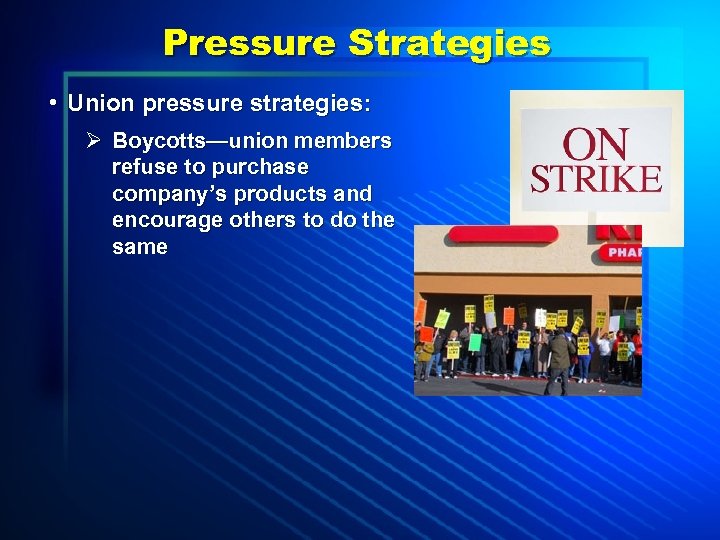
Pressure Strategies • Union pressure strategies: Ø Boycotts—union members refuse to purchase company’s products and encourage others to do the same
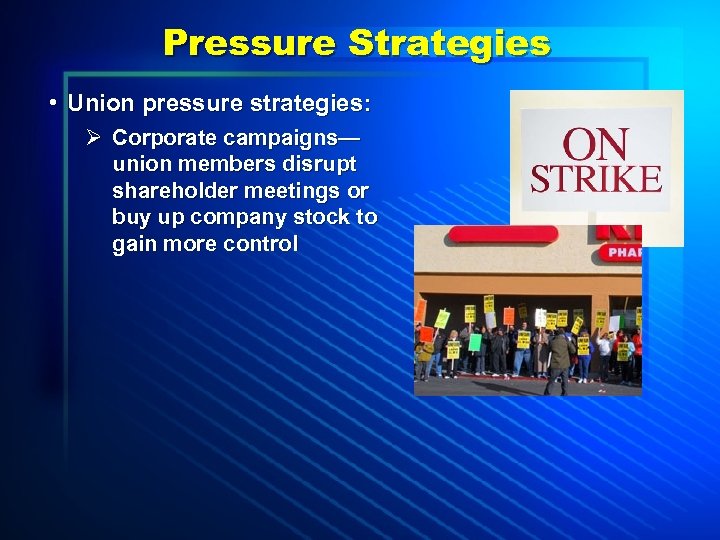
Pressure Strategies • Union pressure strategies: Ø Corporate campaigns— union members disrupt shareholder meetings or buy up company stock to gain more control
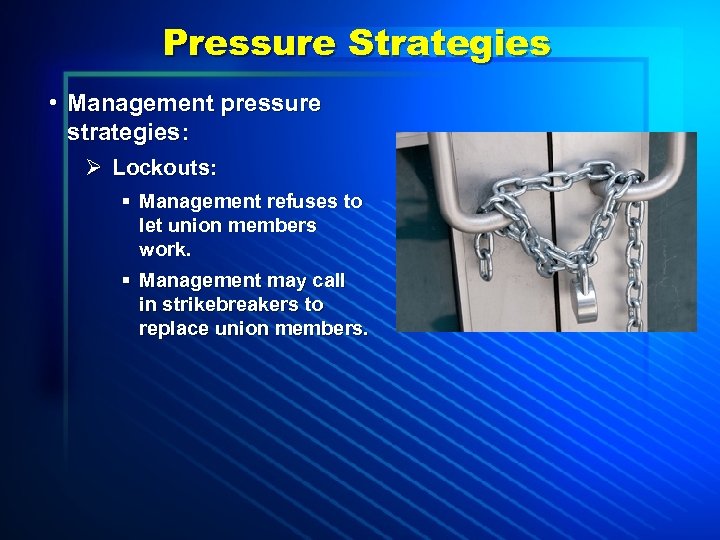
Pressure Strategies • Management pressure strategies: Ø Lockouts: § Management refuses to let union members work. § Management may call in strikebreakers to replace union members.
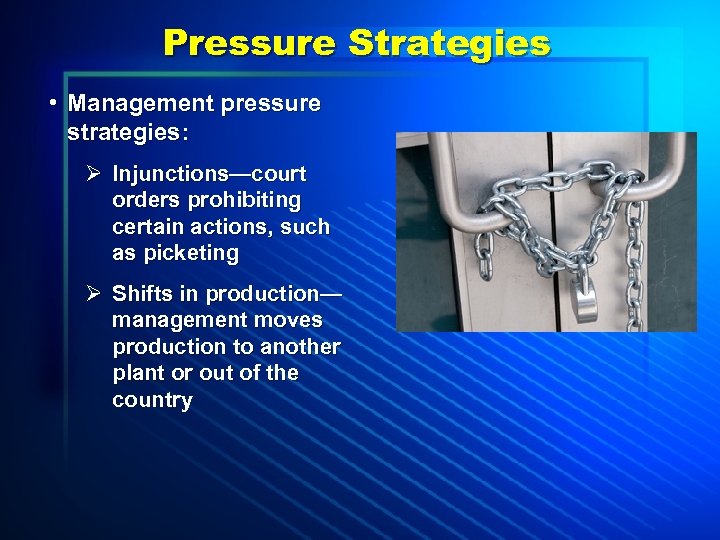
Pressure Strategies • Management pressure strategies: Ø Injunctions—court orders prohibiting certain actions, such as picketing Ø Shifts in production— management moves production to another plant or out of the country
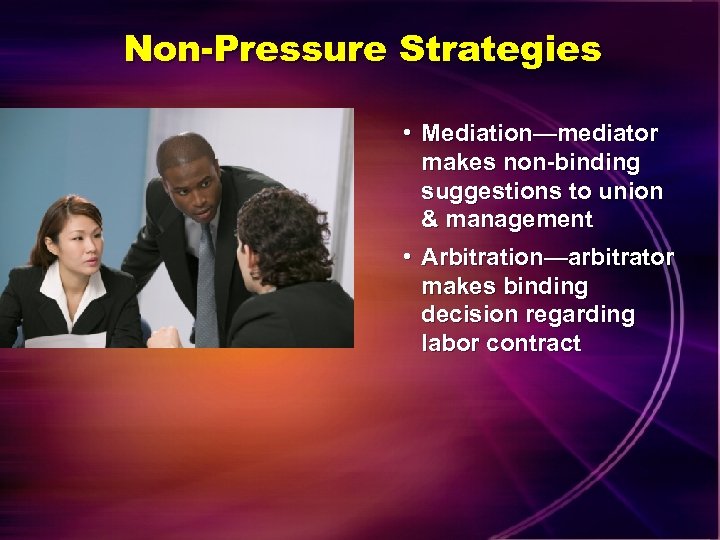
Non-Pressure Strategies • Mediation—mediator makes non-binding suggestions to union & management • Arbitration—arbitrator makes binding decision regarding labor contract
Impact of Unionism • Advantages for workers: Ø Higher wages Ø Better benefits Ø Improved working conditions
Impact of Unionism • Advantages for workers: Ø Increased personal dignity Ø Increased bargaining power Ø Fairer treatment
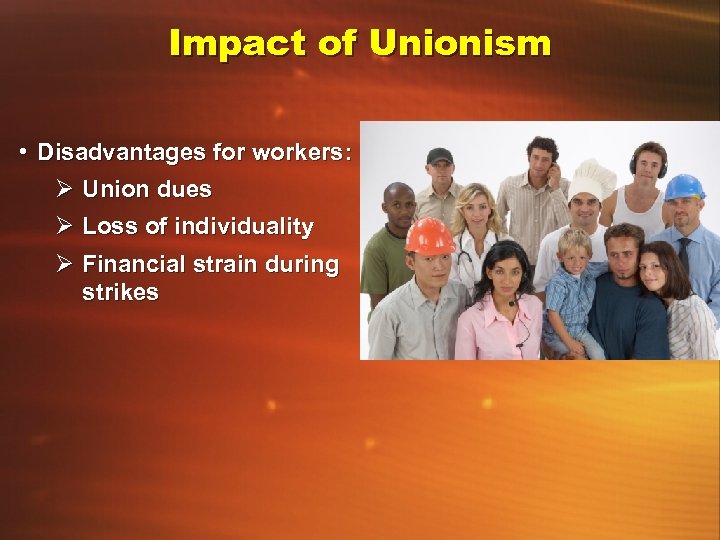
Impact of Unionism • Disadvantages for workers: Ø Union dues Ø Loss of individuality Ø Financial strain during strikes
Impact of Unionism • Advantages for businesses: Ø Security of a labor contract Ø Help with recruitment
Impact of Unionism • Disadvantages for businesses: Ø Increased costs Ø Decreased control Ø Loss of time & sales during strikes
• Is your state a right-to-work state or is it heavily unionized? • Are there any unionized companies in your town? • What national/international unions are represented? • How has unionization affected your community?
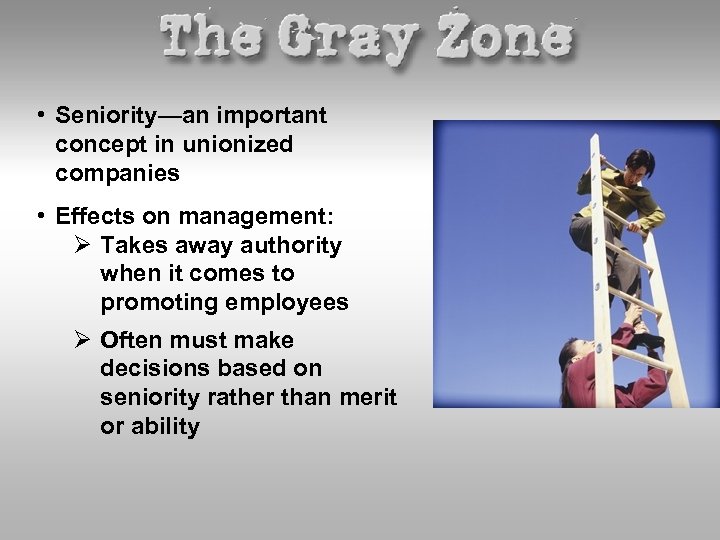
• Seniority—an important concept in unionized companies • Effects on management: Ø Takes away authority when it comes to promoting employees Ø Often must make decisions based on seniority rather than merit or ability
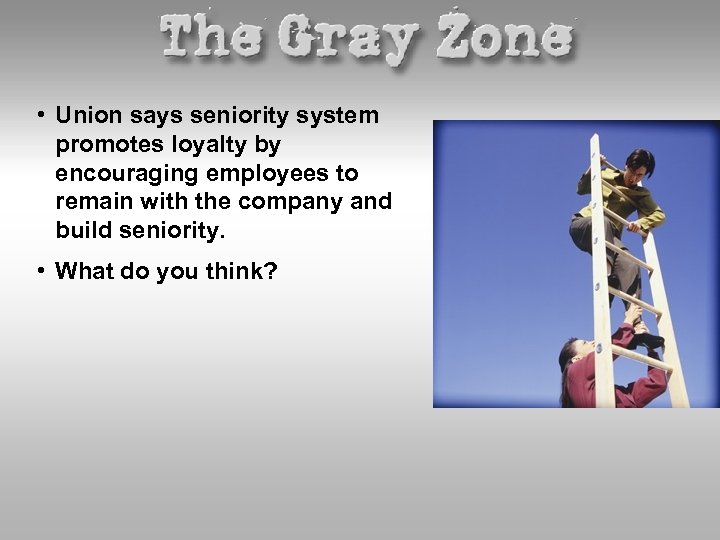
• Union says seniority system promotes loyalty by encouraging employees to remain with the company and build seniority. • What do you think?
MBAResearch Acknowledgments Original Developers Christopher C. Burke, Sarah Bartlett Borich, MBAResearch Version 1. 0 Copyright © 2011 MBA Research and Curriculum Center®

Digital-based photography sources: DIGITAL VISION LTD. Teenager Today Obj. B: #130271 Photos copyright Digital Vision Ltd. , all rights reserved. 833 Fourth Ave. SW, Suite 800 Calgary, AB, Canada T 2 P 3 T 5

Copyright: All photographic digital images on this CD are owned by the aforementioned photographic resources or their licensors and are protected by the United States copyright laws, international treaty provisions, and applicable laws. No title to or intellectual property rights to the images on this CD are transferred to you. These sources retain all rights and are not to be used, digitally copied, transferred, or manipulated in any way. To do so is a violation of federal copyright laws.
 Скачать презентацию Get United Organized Labor Economics LAP 5
297aa4a99db3b2de4c33b0b5aff85620.ppt