 Скачать презентацию Geospatial cognition and understanding of Global Energy Systems
86ced55eb2b699560d20b0b480c5ff71.ppt
- Количество слайдов: 38



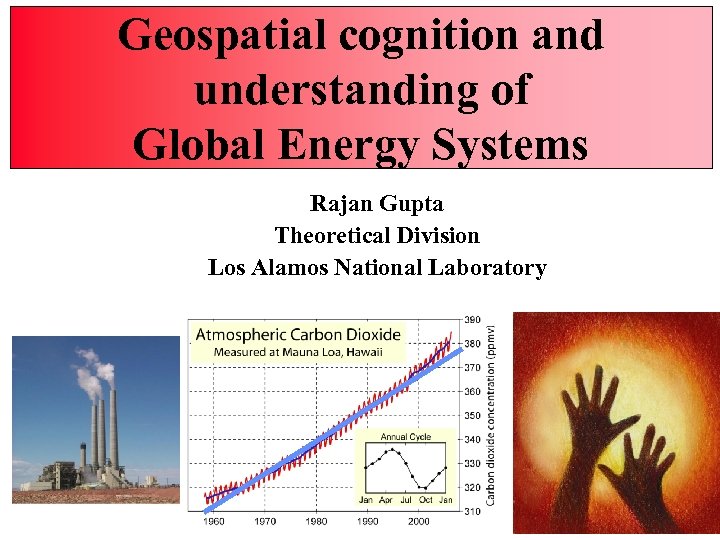
Geospatial cognition and understanding of Global Energy Systems Rajan Gupta Theoretical Division Los Alamos National Laboratory
Developers UNM Students (ECE, CS) ü Harihar Shankar • Ratheesh Prabhu Rajendran • Parthiban Jayabal ü Aswin T. Y. Venkata ü Saravanan Poosanthiram Sponsors Faculty at UNM (ECE) • Chaouki Abdallah • Greg Heileman LANL • David Daniel (CCS) • Fernando Gonzalez (STBRL) ü Rajan Gupta • V. Morris (UGS) • LANL • NM Consortium
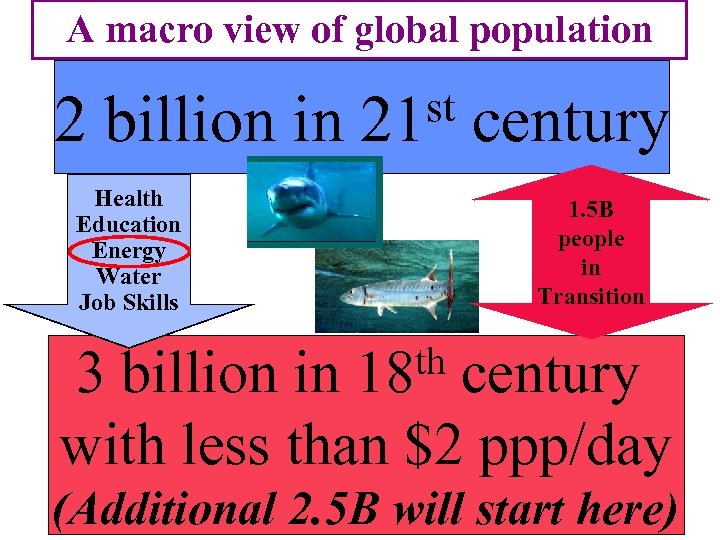
A macro view of global population 2 billion in st 21 Health Education Energy Water Job Skills century 1. 5 B people in Transition th 18 3 billion in century with less than $2 ppp/day (Additional 2. 5 B will start here)
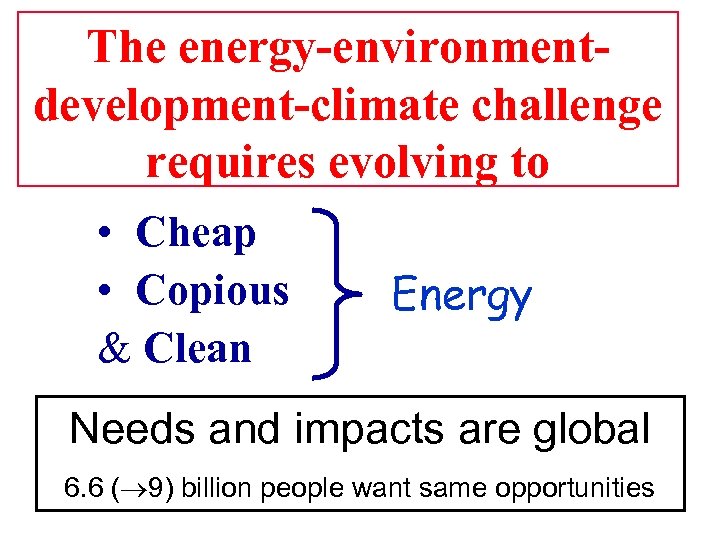
The energy-environmentdevelopment-climate challenge requires evolving to • Cheap • Copious Clean Energy Needs and impacts are global 6. 6 ( 9) billion people want same opportunities
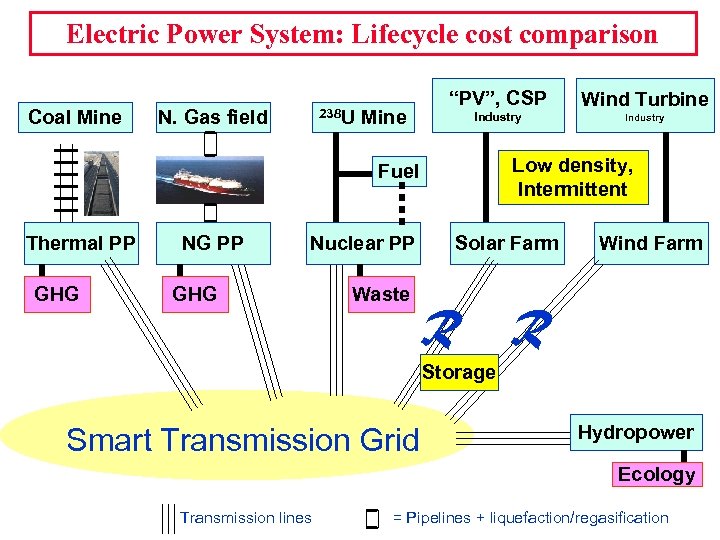
Electric Power System: Lifecycle cost comparison Coal Mine 238 U N. Gas field “PV”, CSP Mine Industry GHG NG PP Nuclear PP GHG Waste Industry Low density, Intermittent Fuel Thermal PP Wind Turbine Solar Farm R Wind Farm R Storage Smart Transmission Grid Hydropower Ecology Transmission lines = Pipelines + liquefaction/regasification
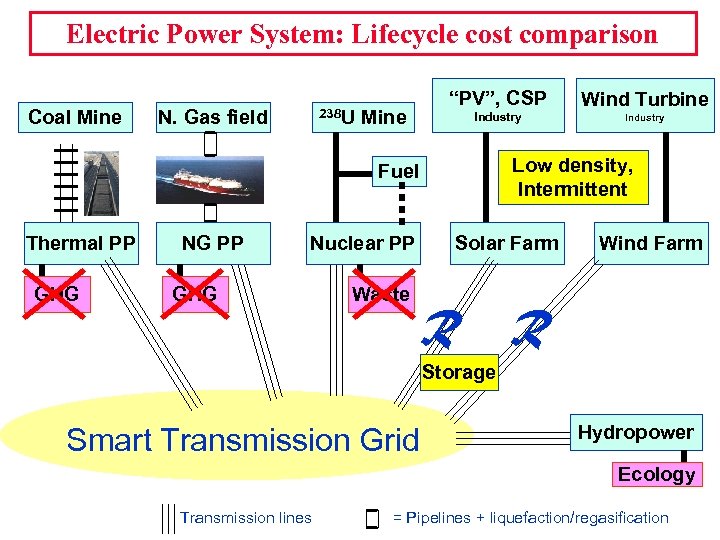
Electric Power System: Lifecycle cost comparison Coal Mine 238 U N. Gas field “PV”, CSP Mine Industry GHG NG PP Nuclear PP GHG Waste Industry Low density, Intermittent Fuel Thermal PP Wind Turbine Solar Farm R Wind Farm R Storage Smart Transmission Grid Hydropower Ecology Transmission lines = Pipelines + liquefaction/regasification
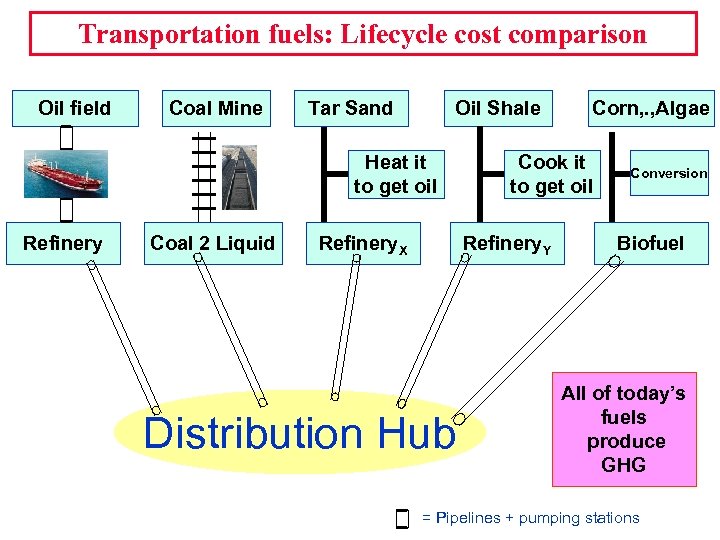
Transportation fuels: Lifecycle cost comparison Oil field Coal Mine Tar Sand Oil Shale Heat it to get oil Refinery Coal 2 Liquid Refinery. X Cook it to get oil Refinery. Y Distribution Hub Corn, . , Algae Conversion Biofuel All of today’s fuels produce GHG = Pipelines + pumping stations
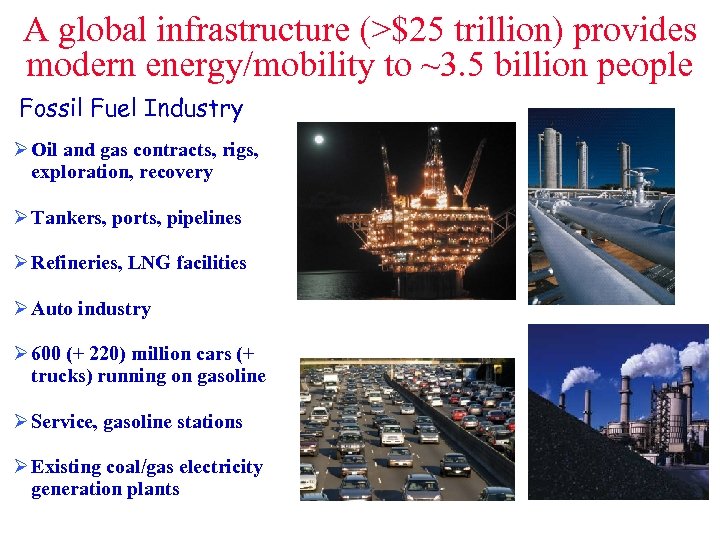
A global infrastructure (>$25 trillion) provides modern energy/mobility to ~3. 5 billion people Fossil Fuel Industry Ø Oil and gas contracts, rigs, exploration, recovery Ø Tankers, ports, pipelines Ø Refineries, LNG facilities Ø Auto industry Ø 600 (+ 220) million cars (+ trucks) running on gasoline Ø Service, gasoline stations Ø Existing coal/gas electricity generation plants
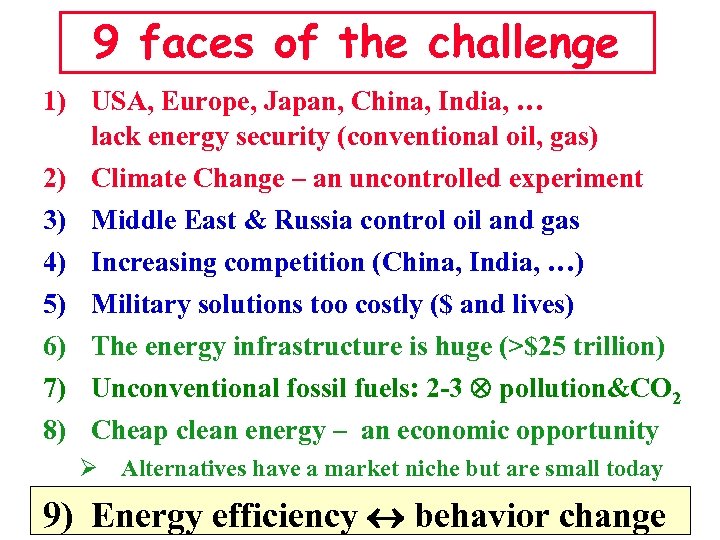
9 faces of the challenge 1) USA, Europe, Japan, China, India, … lack energy security (conventional oil, gas) 2) Climate Change – an uncontrolled experiment 3) Middle East & Russia control oil and gas 4) Increasing competition (China, India, …) 5) Military solutions too costly ($ and lives) 6) The energy infrastructure is huge (>$25 trillion) 7) Unconventional fossil fuels: 2 -3 pollution&CO 2 8) Cheap clean energy – an economic opportunity Ø Alternatives have a market niche but are small today 9) Energy efficiency behavior change
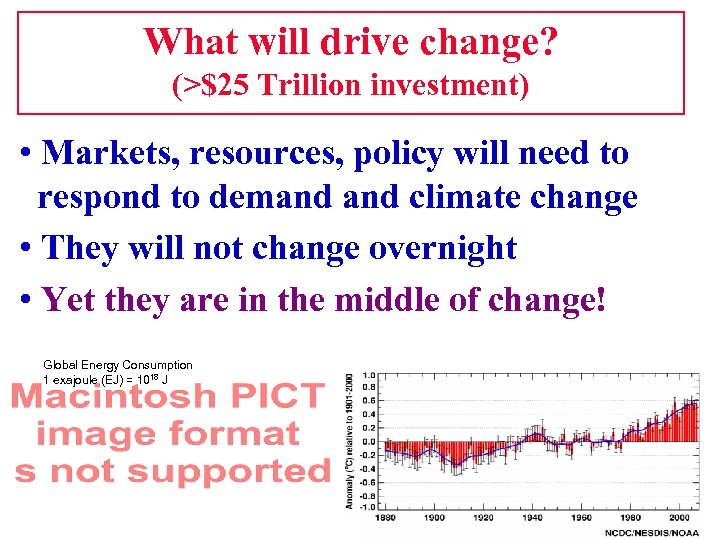
What will drive change? (>$25 Trillion investment) • Markets, resources, policy will need to respond to demand climate change • They will not change overnight • Yet they are in the middle of change! Global Energy Consumption 1 exajoule (EJ) = 1018 J
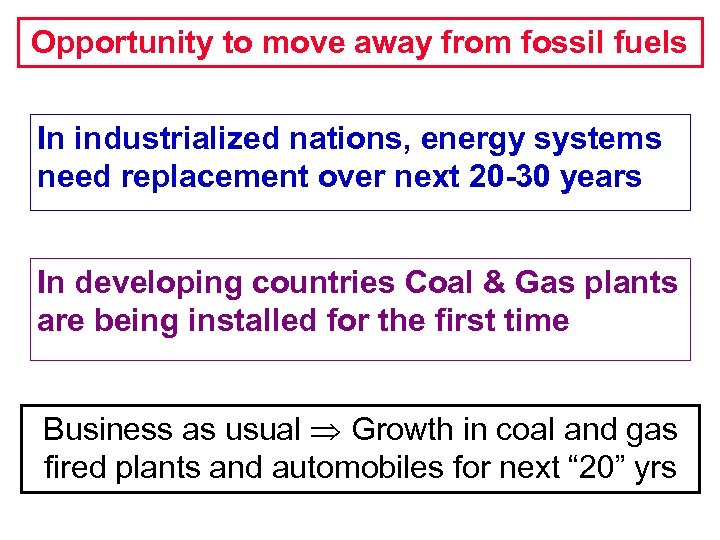
Opportunity to move away from fossil fuels In industrialized nations, energy systems need replacement over next 20 -30 years In developing countries Coal & Gas plants are being installed for the first time Business as usual Growth in coal and gas fired plants and automobiles for next “ 20” yrs
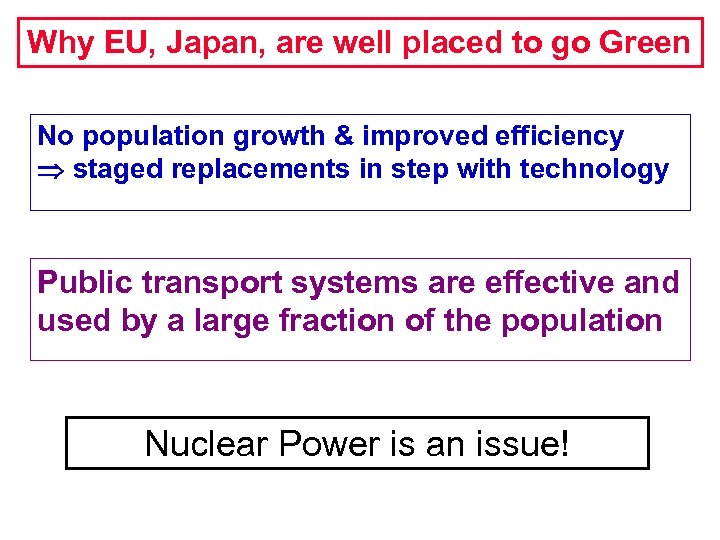
Why EU, Japan, are well placed to go Green No population growth & improved efficiency staged replacements in step with technology Public transport systems are effective and used by a large fraction of the population Nuclear Power is an issue!
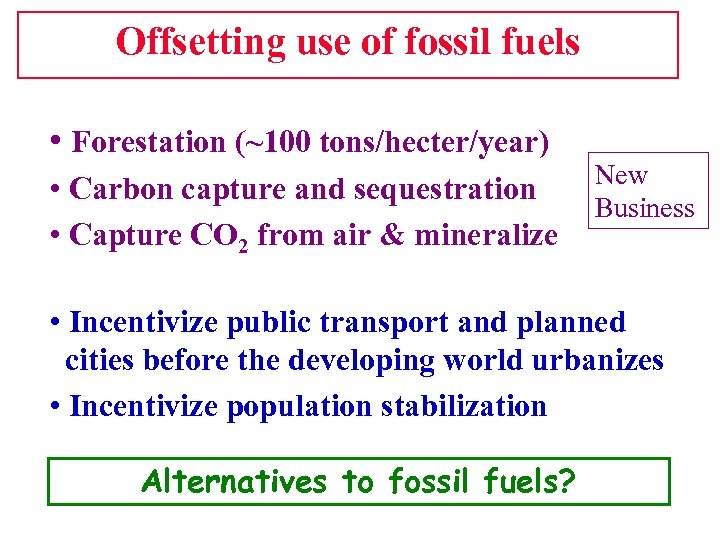
Offsetting use of fossil fuels • Forestation (~100 tons/hecter/year) • Carbon capture and sequestration • Capture CO 2 from air & mineralize New Business • Incentivize public transport and planned cities before the developing world urbanizes • Incentivize population stabilization Alternatives to fossil fuels?
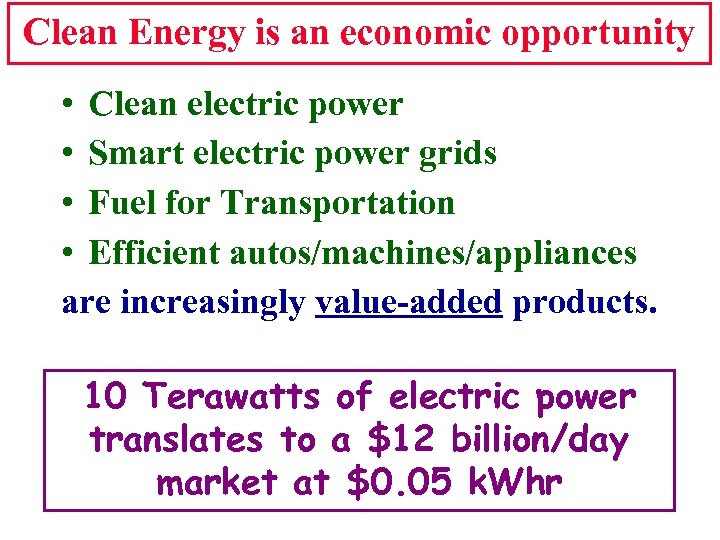
Clean Energy is an economic opportunity • Clean electric power • Smart electric power grids • Fuel for Transportation • Efficient autos/machines/appliances are increasingly value-added products. 10 Terawatts of electric power translates to a $12 billion/day market at $0. 05 k. Whr
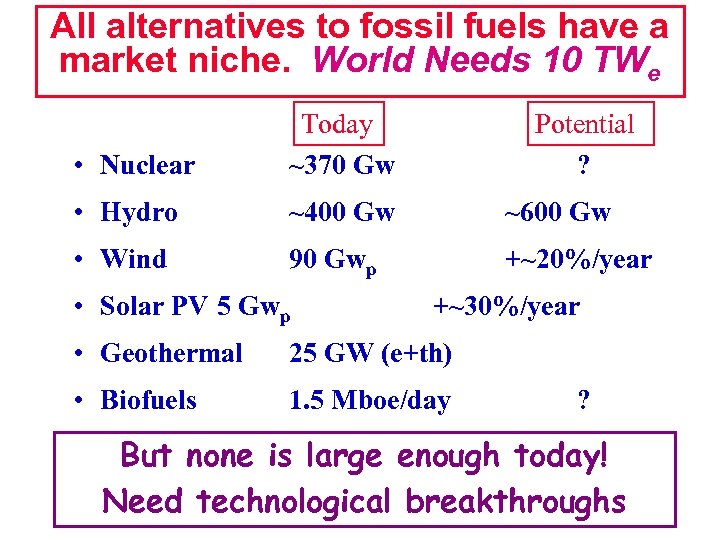
All alternatives to fossil fuels have a market niche. World Needs 10 TWe • Nuclear Today ~370 Gw • Hydro ~400 Gw ~600 Gw • Wind 90 Gwp +~20%/year • Solar PV 5 Gwp Potential ? +~30%/year • Geothermal 25 GW (e+th) • Biofuels 1. 5 Mboe/day ? But none is large enough today! Need technological breakthroughs
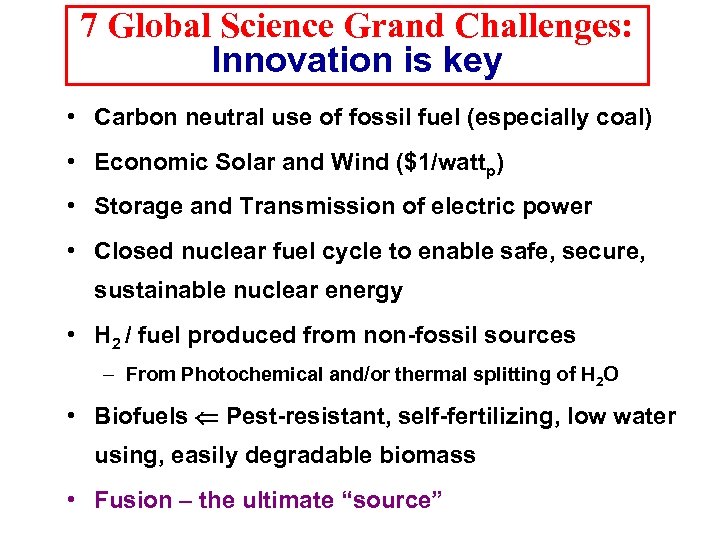
7 Global Science Grand Challenges: Innovation is key • Carbon neutral use of fossil fuel (especially coal) • Economic Solar and Wind ($1/wattp) • Storage and Transmission of electric power • Closed nuclear fuel cycle to enable safe, secure, sustainable nuclear energy • H 2 / fuel produced from non-fossil sources – From Photochemical and/or thermal splitting of H 2 O • Biofuels Pest-resistant, self-fertilizing, low water using, easily degradable biomass • Fusion – the ultimate “source”
![Until technology provides solution[s] Need Top Down & Bottom Up Effort • Evolution of](https://present5.com/presentation/86ced55eb2b699560d20b0b480c5ff71/image-17.jpg "Until technology provides solution[s] Need Top Down & Bottom Up Effort • Evolution of")
Until technology provides solution[s] Need Top Down & Bottom Up Effort • Evolution of the large infrastructure • Access versus environmental (climate) challenge • Policy, regulations, incentives Enlightened evolution Accelerated transition • • Individual’s energy footprint Individual decisions Cooperative action Distributed generation Efficient use of energy
Evolutionary transformation to cheap, clean energy will require understanding and accommodation of • Regional constraints and differences • Economic opportunities • Technology insertion and diffusion • Policies and incentives • Treaties and Regulations – Monitoring, Measuring, Validation
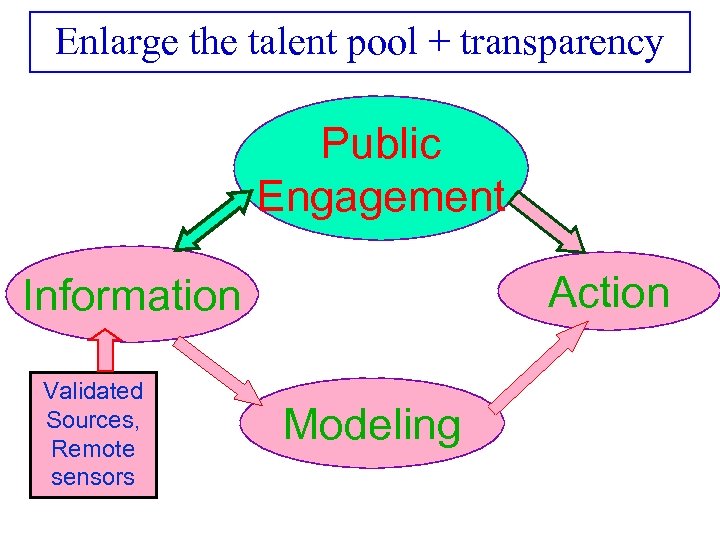
Enlarge the talent pool + transparency Public Engagement Action Information Validated Sources, Remote sensors Modeling
Global Energy Observatory (GEO) Goal 1: to assemble, annotate, store and analyze the global energy system Goal 2: understand the dynamics of change in various energy systems Goal 3: educate & influence the transition to affordable carbon neutral energy systems
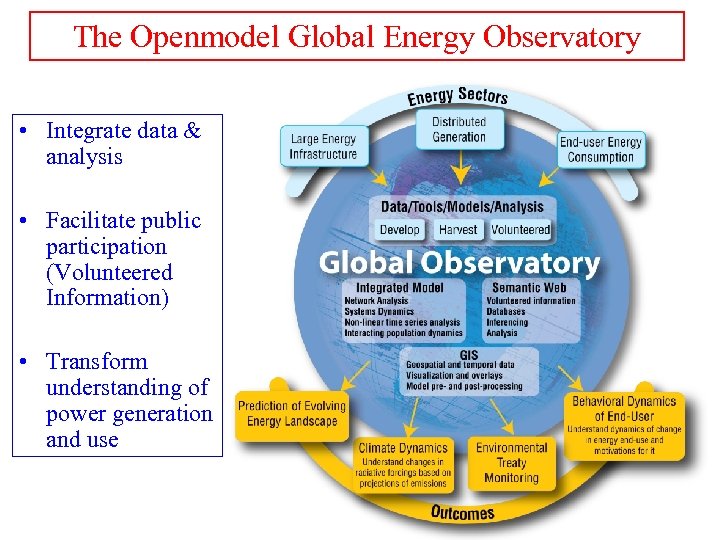
The Openmodel Global Energy Observatory • Integrate data & analysis • Facilitate public participation (Volunteered Information) • Transform understanding of power generation and use
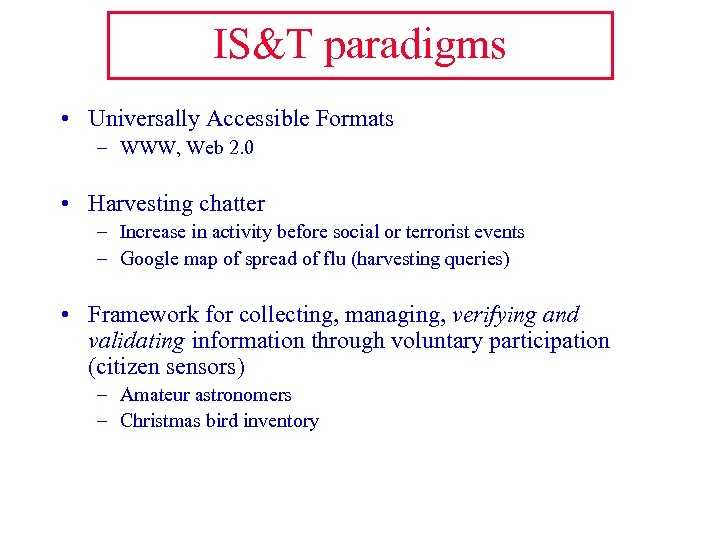
IS&T paradigms • Universally Accessible Formats – WWW, Web 2. 0 • Harvesting chatter – Increase in activity before social or terrorist events – Google map of spread of flu (harvesting queries) • Framework for collecting, managing, verifying and validating information through voluntary participation (citizen sensors) – Amateur astronomers – Christmas bird inventory
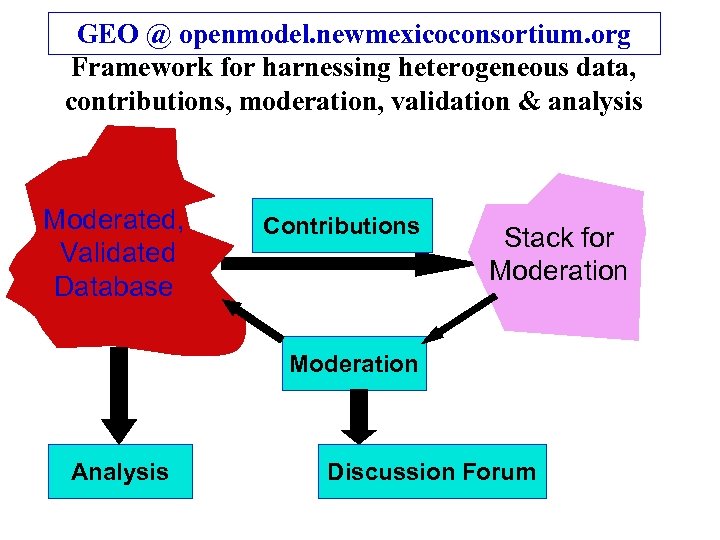
GEO @ openmodel. newmexicoconsortium. org Framework for harnessing heterogeneous data, contributions, moderation, validation & analysis Moderated, Validated Database Contributions Stack for Moderation Analysis Discussion Forum
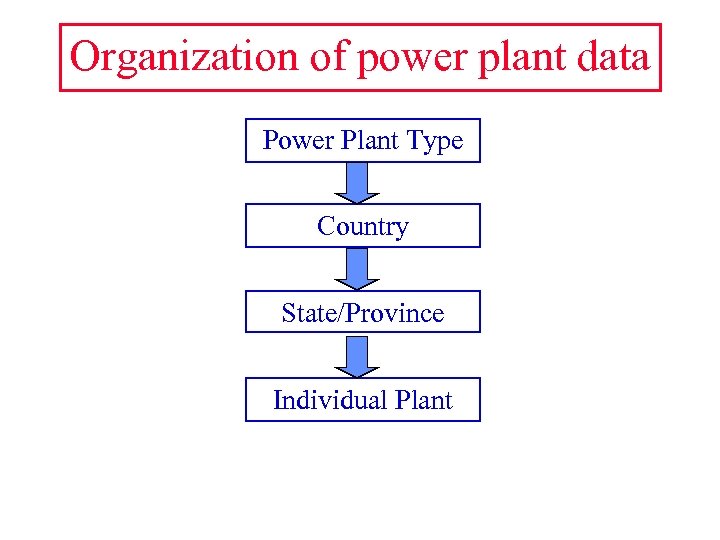
Organization of power plant data Power Plant Type Country State/Province Individual Plant
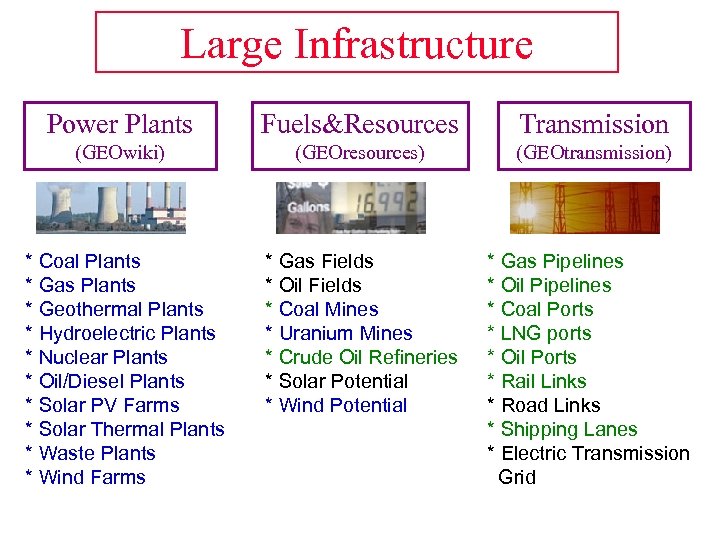
Large Infrastructure Power Plants Fuels&Resources Transmission (GEOwiki) (GEOresources) (GEOtransmission) * Coal Plants * Gas Plants * Geothermal Plants * Hydroelectric Plants * Nuclear Plants * Oil/Diesel Plants * Solar PV Farms * Solar Thermal Plants * Waste Plants * Wind Farms * Gas Fields * Oil Fields * Coal Mines * Uranium Mines * Crude Oil Refineries * Solar Potential * Wind Potential * Gas Pipelines * Oil Pipelines * Coal Ports * LNG ports * Oil Ports * Rail Links * Road Links * Shipping Lanes * Electric Transmission Grid
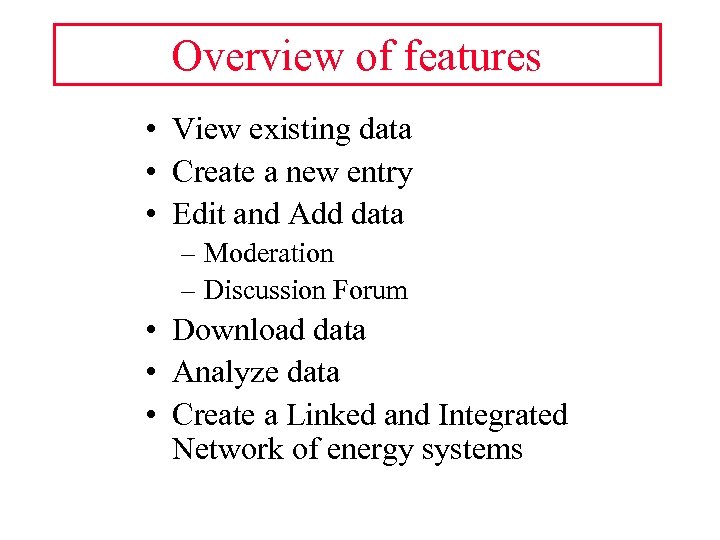
Overview of features • View existing data • Create a new entry • Edit and Add data – Moderation – Discussion Forum • Download data • Analyze data • Create a Linked and Integrated Network of energy systems
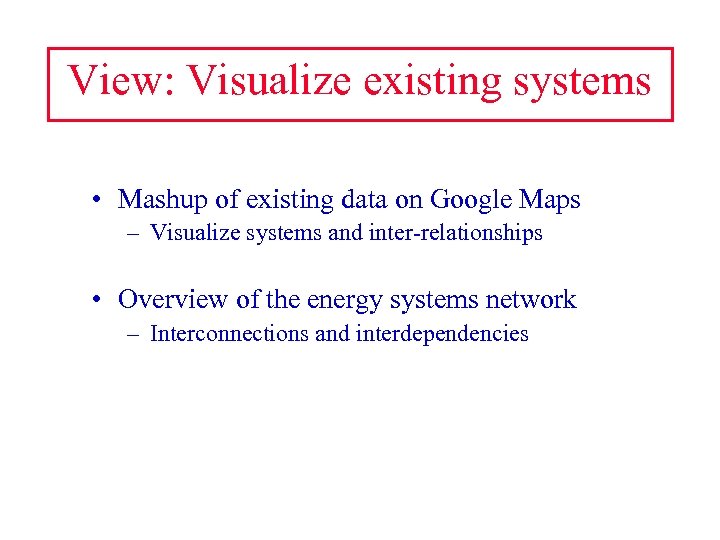
View: Visualize existing systems • Mashup of existing data on Google Maps – Visualize systems and inter-relationships • Overview of the energy systems network – Interconnections and interdependencies
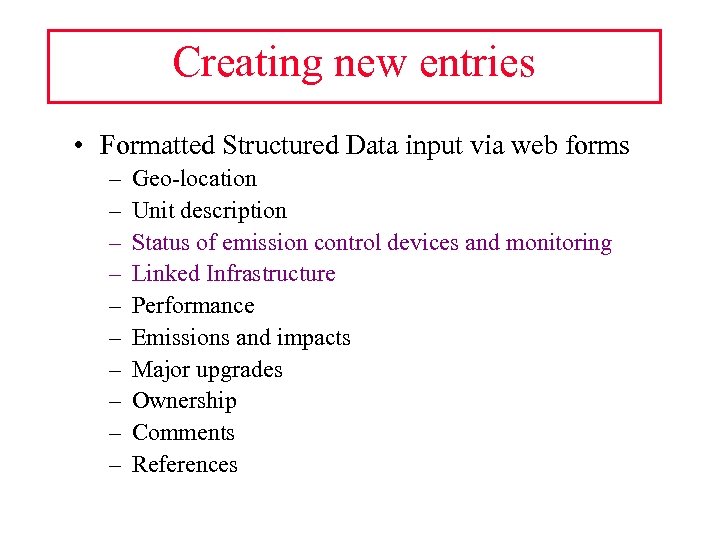
Creating new entries • Formatted Structured Data input via web forms – – – – – Geo-location Unit description Status of emission control devices and monitoring Linked Infrastructure Performance Emissions and impacts Major upgrades Ownership Comments References
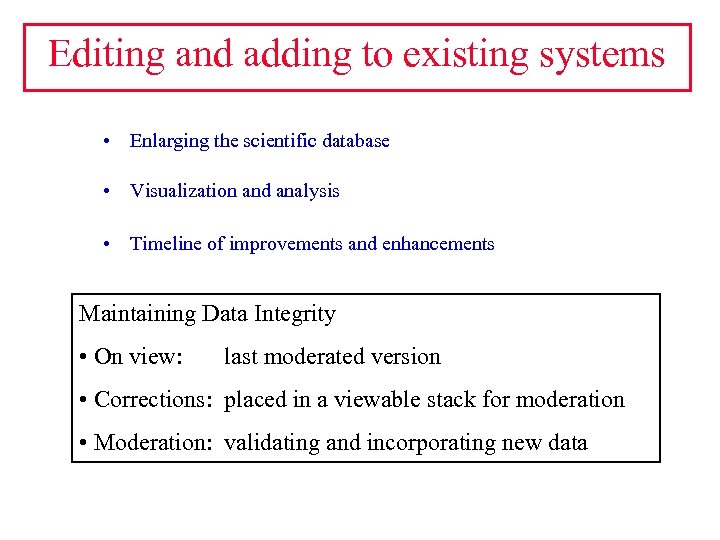
Editing and adding to existing systems • Enlarging the scientific database • Visualization and analysis • Timeline of improvements and enhancements Maintaining Data Integrity • On view: last moderated version • Corrections: placed in a viewable stack for moderation • Moderation: validating and incorporating new data
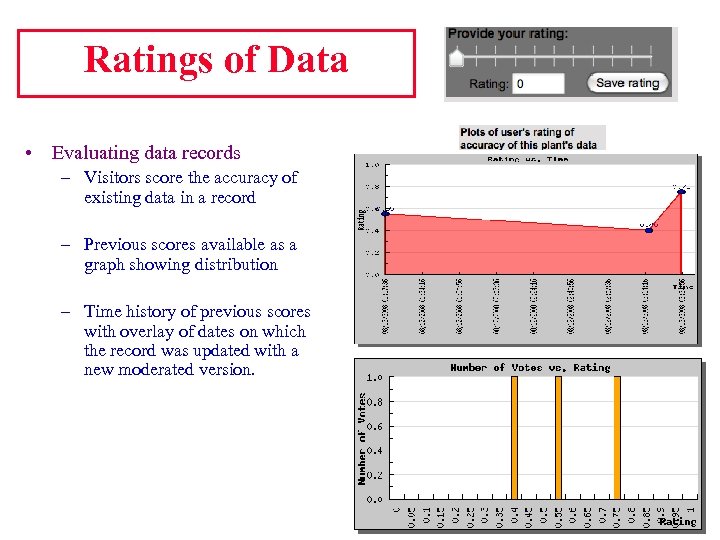
Ratings of Data • Evaluating data records – Visitors score the accuracy of existing data in a record – Previous scores available as a graph showing distribution – Time history of previous scores with overlay of dates on which the record was updated with a new moderated version.
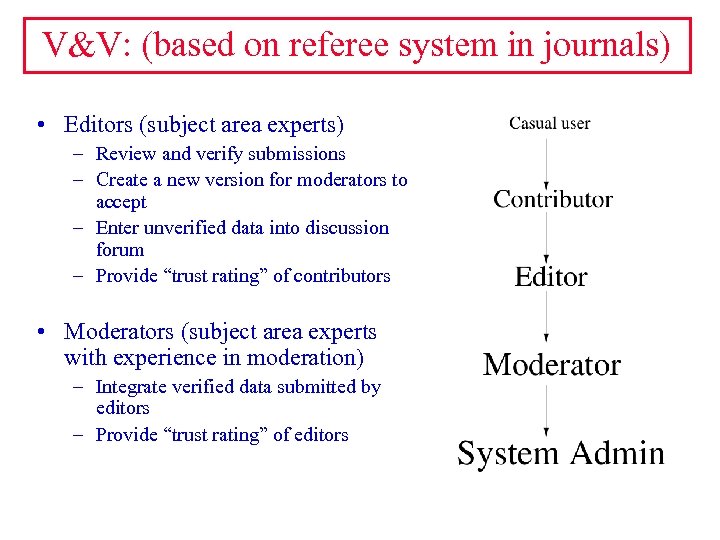
V&V: (based on referee system in journals) • Editors (subject area experts) – Review and verify submissions – Create a new version for moderators to accept – Enter unverified data into discussion forum – Provide “trust rating” of contributors • Moderators (subject area experts with experience in moderation) – Integrate verified data submitted by editors – Provide “trust rating” of editors
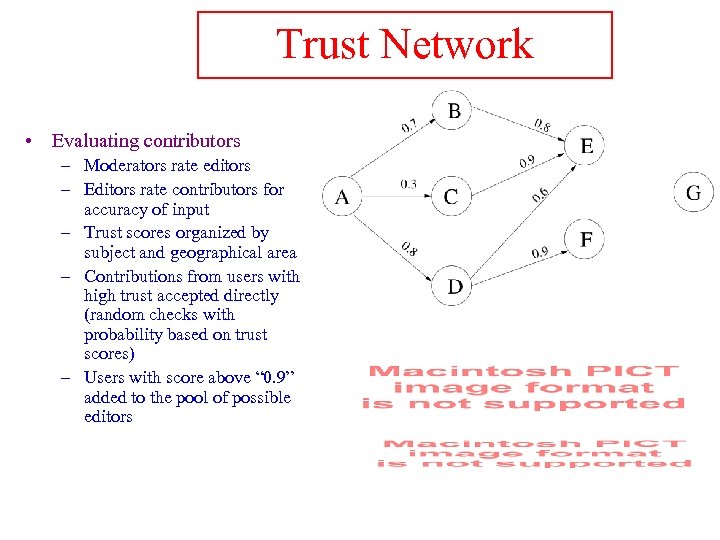
Trust Network • Evaluating contributors – Moderators rate editors – Editors rate contributors for accuracy of input – Trust scores organized by subject and geographical area – Contributions from users with high trust accepted directly (random checks with probability based on trust scores) – Users with score above “ 0. 9” added to the pool of possible editors
Analysis • Understand drivers • Correlate (growth, scaling laws, …) with – demographics – economic activity – land water use • Multi-sector network models: – Feedbacks, nonlinearities, tipping points – Crisis & Bottlenecks – Evolution towards Smart / Green grids • Understand the dynamics of change in energy systems • Expose and validate options of carbon neutral systems
Modeling • • • Exploring scenarios Exploring options Exploring consequences Connecting multiple sectors / networks Validation of data Providing input to policy
Why Open. Model? Why not just buy information from “Platts”? • Easy and free access for casual users • Many more people can engage and contribute • Topics, data, information selected by a diverse public and experts and not just by a few experts & what sells • Rapid and constant updates • Constant scrutiny and validation of data • Mashups and analyses contributing to education and policy • Tracking growth in – Distributed Generation and Storage – Energy Efficiency • Smart Grids GEO Platts (Wikipedia Britannica)
Partnerships and Collaborations • • High Schools, Colleges, Universities, Research Labs Academics and Scholars Utilities and energy companies Special Interest Groups – WWF: Influenced moving the East Siberia-Pacific Ocean pipeline further from Lake Baikal – Greenpeace – Sierra Club – Industry • Informed Public
Education • Course EDUC 223 B, School of Education, UC Berkeley. Instructor Prof. Michael Ranney. Exercise and evaluate the prototype system from a reasoning and cognitive perspective. • Course SC/NATS 1840. 06 on Science, Technology and the Environment, Physics Department, York University, Canada. Instructor Prof. Carl Wolf. (242 students) Map the Canadian energy system. Develop a plan to meet the growing energy needs of a region. • Course 33 -115 on Energy and Environmental Issues, Physics Department, Carnegie-Mellon University. Instructor Prof. John Nagle. Twelve students are using GEO to understand current energy systems of eight regions (Illinois, Texas, Connecticut, Pennsylvania, India, Hong Kong, Taiwan, Mexico, and the UK).
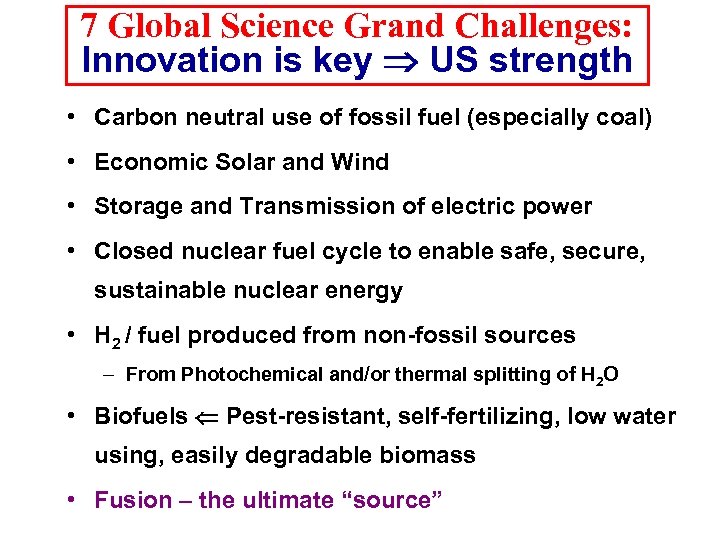
7 Global Science Grand Challenges: Innovation is key US strength • Carbon neutral use of fossil fuel (especially coal) • Economic Solar and Wind • Storage and Transmission of electric power • Closed nuclear fuel cycle to enable safe, secure, sustainable nuclear energy • H 2 / fuel produced from non-fossil sources – From Photochemical and/or thermal splitting of H 2 O • Biofuels Pest-resistant, self-fertilizing, low water using, easily degradable biomass • Fusion – the ultimate “source”
Скачать презентацию Geospatial cognition and understanding of Global Energy Systems
86ced55eb2b699560d20b0b480c5ff71.ppt