


 Скачать презентацию George Mason School of Law Contracts I Why
dd1ce75b6ff8c671541f8665103e79fe.ppt
- Количество слайдов: 103
 George Mason School of Law Contracts I Why Enforce Contracts F. H. Buckley fbuckley@gmu. edu 1
 Next Day o Contract Law in the State of Nature 2
 Contracts I 1. Why Enforce Contracts 3
 Contracts I 1. Why Enforce Contracts 2. Where Contracts Should Not Be Enforced 4
 Contracts I 1. Why Enforce Contracts 2. Where Contracts Should Not Be Enforced 3. Formation of Contracts 5
 Contracts I 1. Why Enforce Contracts 2. Where Contracts Should Not Be Enforced 3. Formation of Contracts 4. Consideration 6
 Contracts I 1. Why Enforce Contracts 2. Where Contracts Should Not Be Enforced 3. Formation of Contracts 4. Consideration 5. Relational Contracts 7
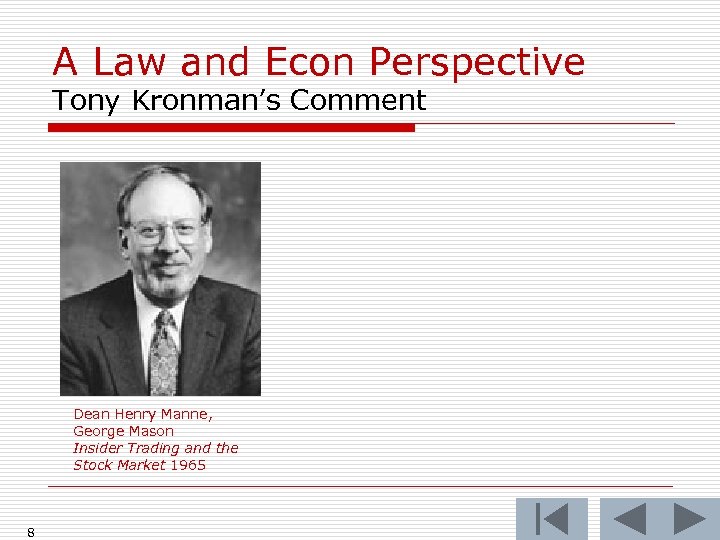 A Law and Econ Perspective Tony Kronman’s Comment Dean Henry Manne, George Mason Insider Trading and the Stock Market 1965 8
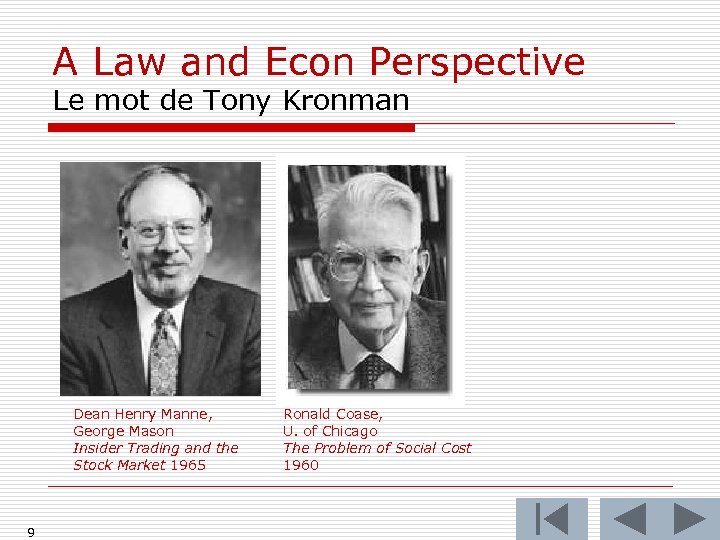 A Law and Econ Perspective Le mot de Tony Kronman Dean Henry Manne, George Mason Insider Trading and the Stock Market 1965 9 Ronald Coase, U. of Chicago The Problem of Social Cost 1960
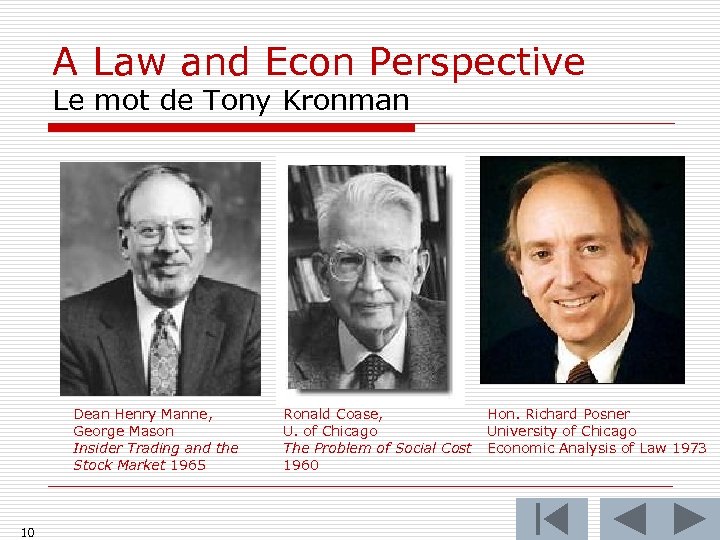 A Law and Econ Perspective Le mot de Tony Kronman Dean Henry Manne, George Mason Insider Trading and the Stock Market 1965 10 Ronald Coase, U. of Chicago The Problem of Social Cost 1960 Hon. Richard Posner University of Chicago Economic Analysis of Law 1973
 A Preliminary Question o Who cares if we enforce contracts? o The nihilism of the 1970 s: What’s wrong with this contract? n “If one person does not lose, the other does not gain. ” Augustine 11
 A Preliminary Question o Who cares if we enforce contracts? o The nihilism of the 1970 s: What’s wrong with this contract? n Consumerism: It’s always Williams v. Walker-Thomas 12
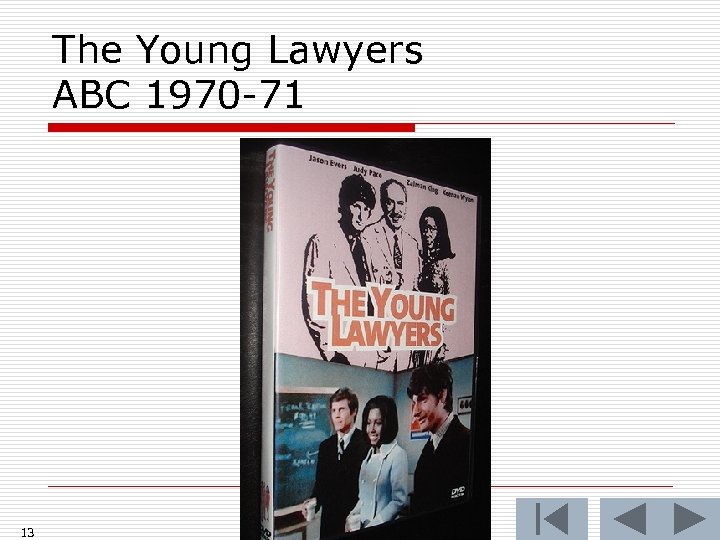 The Young Lawyers ABC 1970 -71 13
 So why enforce contracts? o Casebook suggests two principles n An “Autonomy Principle” n The Efficiency Norms of Law and Economics 14
 Autonomy o How am I more free if I subject myself to fetters? 15
 Autonomy o How am I more free if I subject myself to fetters? o Ex post vs. ex ante 16
 Promising and Efficiency Norms o The benefit afforded by promissory institutions is a greater assurance of performance n Which is strengthened when contractual sanctions are added to moral ones. 17
 Promising and Efficiency Norms o The benefit afforded by promissory institutions is a greater assurance of performance o So why is that important? 18
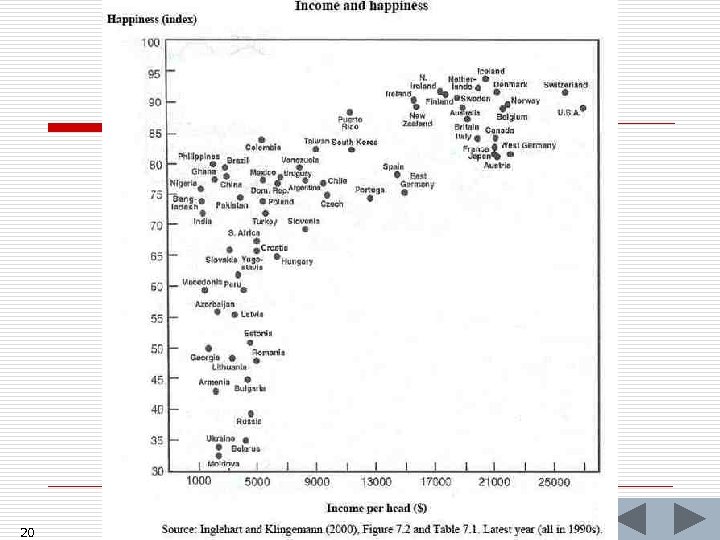
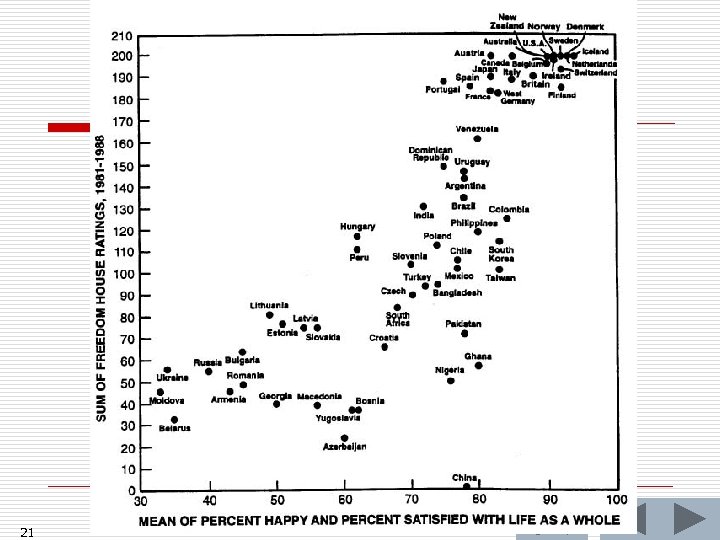
 Promising and Efficiency Norms o The benefit afforded by promissory institutions is a greater assurance of performance o So why is that important? n Let’s assume that contract enforceability has something to do with societal wealth 19
 20
20
 21
21
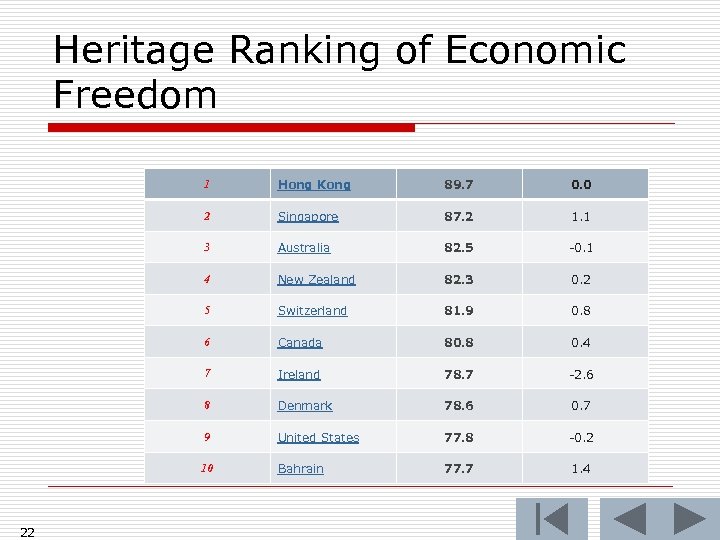 Heritage Ranking of Economic Freedom 1 89. 7 0. 0 2 Singapore 87. 2 1. 1 3 Australia 82. 5 -0. 1 4 New Zealand 82. 3 0. 2 5 Switzerland 81. 9 0. 8 6 Canada 80. 8 0. 4 7 Ireland 78. 7 -2. 6 8 Denmark 78. 6 0. 7 9 United States 77. 8 -0. 2 10 22 Hong Kong Bahrain 77. 7 1. 4
 Where does contract law come in? o What is the relationship between promising and wealth? 23
 Where does contract law come in? o What is the relationship between promising and wealth? o Between enforceable promises and wealth? 24
 Where does contract law come in? o What is the relationship between promising and wealth? o Between enforceable promises and wealth? o How about bare promises without contract enforcement? 25
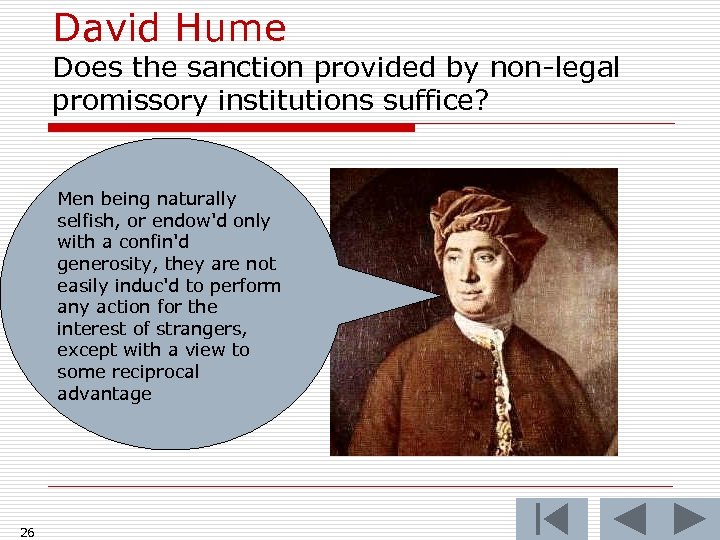 David Hume Does the sanction provided by non-legal promissory institutions suffice? Men being naturally selfish, or endow'd only with a confin'd generosity, they are not easily induc'd to perform any action for the interest of strangers, except with a view to some reciprocal advantage 26
 The possibility of defection destroys trust Hobbes, Leviathan 14. 18 (1651) o o 27 If a covenant be made wherein neither of the parties perform presently, but trust one another, in the condition of mere nature (which is a condition of war of every man against every man) upon any reasonable suspicion, it is void… For he that performeth first hath no assurance the other will perform after, because the bonds of words are too weak to bridle men's ambition, avarice, anger, and other passions, without the fear of some coercive power; which in the condition of mere nature, where all men are equal, and judges of the justness of their own fears, cannot possibly be supposed. And therefore he which performeth first doth but betray himself to his enemy.
 The Prisoners’ Dilemma Underlies Hobbes’ Insight o A simple game that has become the dominant paradigm for social scientists since it was invented about 1960. o How the game works – and why didn’t it work for Dilbert 28
 The paradox of the PD game o While cooperation is collectively rational, defection is individually rational. 29
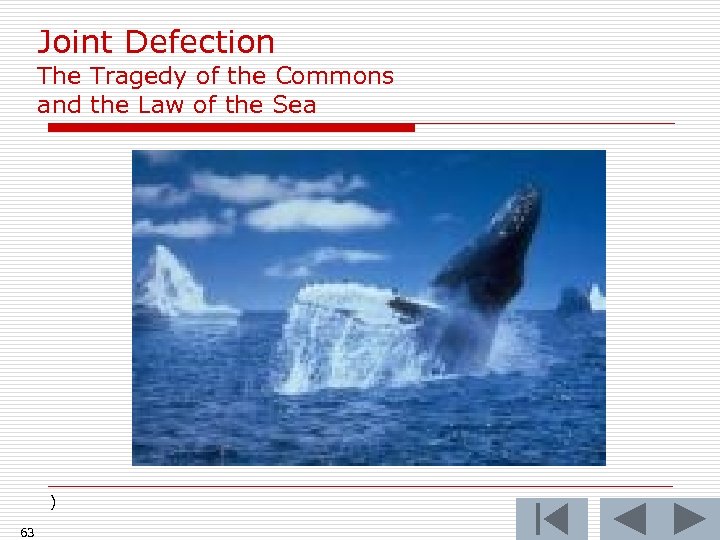
 The paradox of the PD game o While cooperation is collectively rational, defection is individually rational. o The undersupply of cooperation is “the tragedy of the commons. ” Garrett Hardin, The Tragedy of the Commons (1968). 30
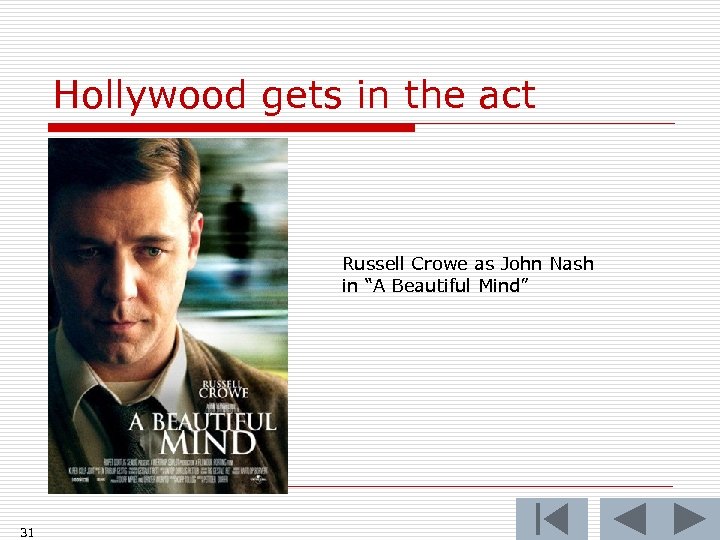 Hollywood gets in the act Russell Crowe as John Nash in “A Beautiful Mind” 31
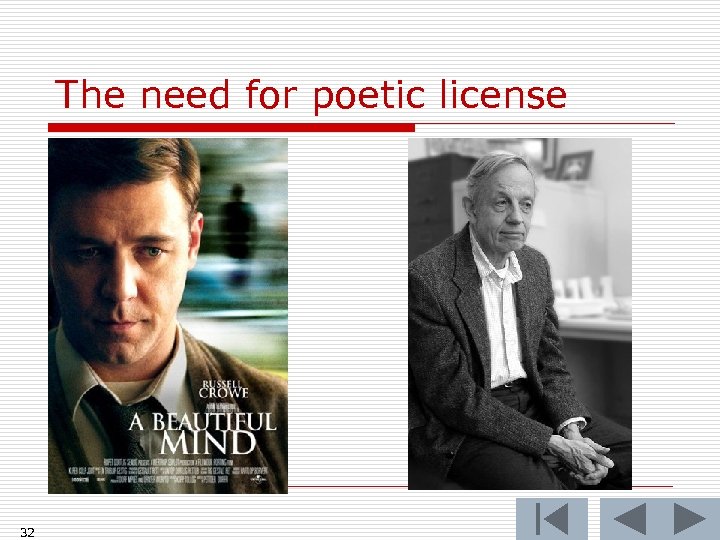 The need for poetic license 32
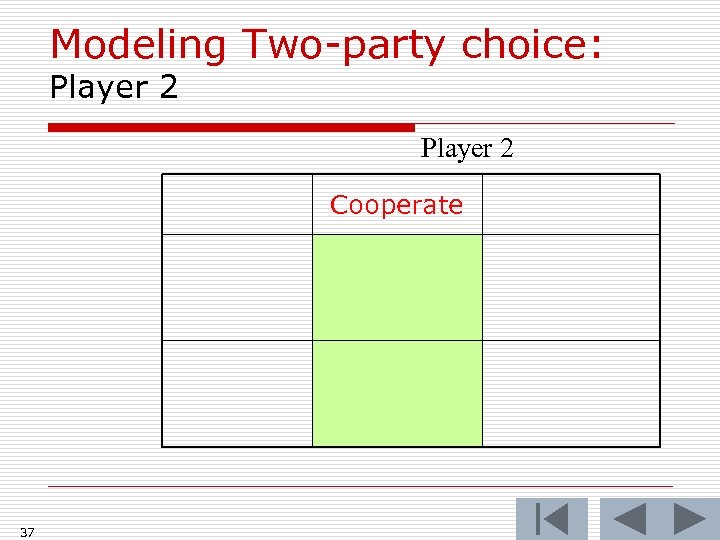
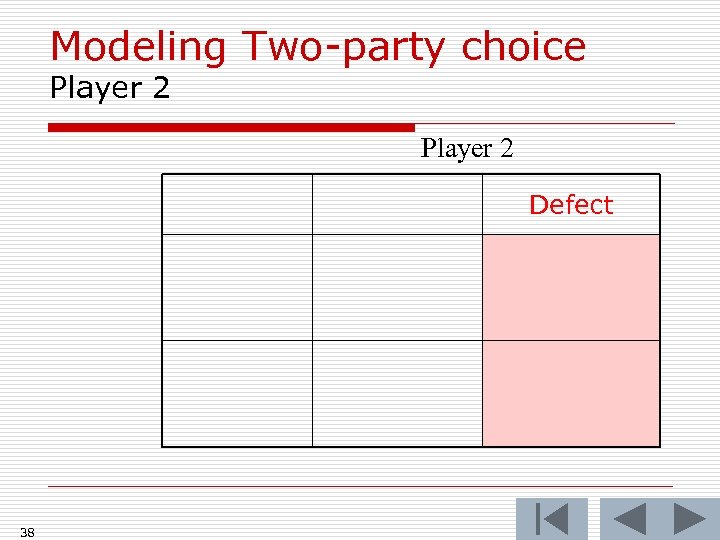
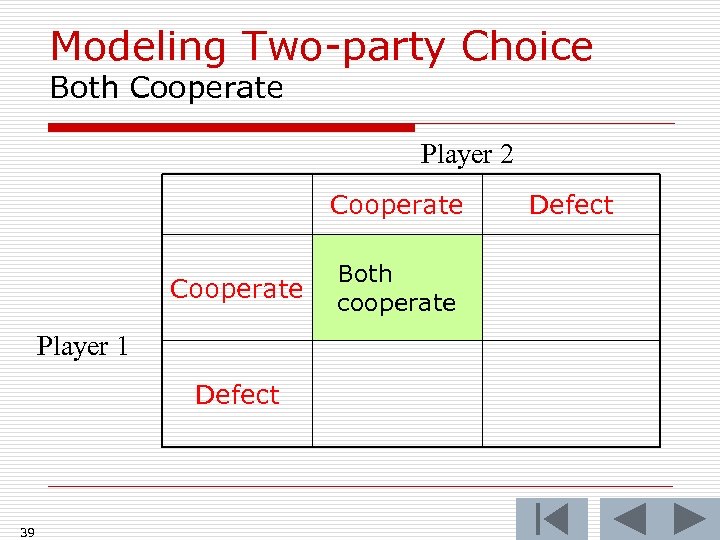
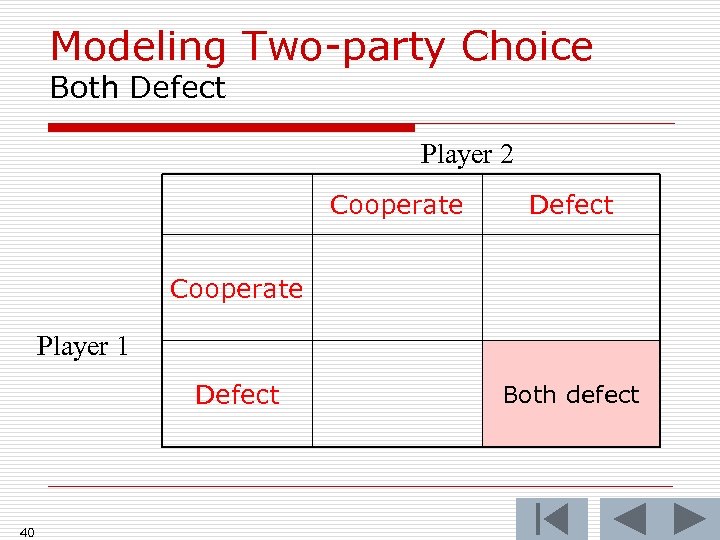
 Modeling PD games o Game theoretic problems: payoffs for each player depend on actions of both 33
 Modeling PD games o Game theoretic problems: payoffs for each player depend on actions of both o Two possible strategies: A party cooperates when he performs valueincreasing promises, and defects when he breaches 34
 Modeling Two-party choice Cooperate Player 1 35
 Modeling Two-party choice Player 1 Defect 36
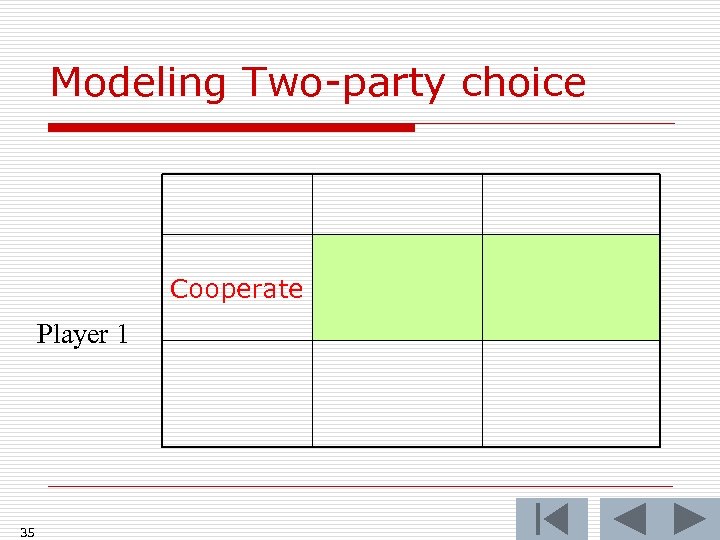
 Modeling Two-party choice: Player 2 Cooperate 37
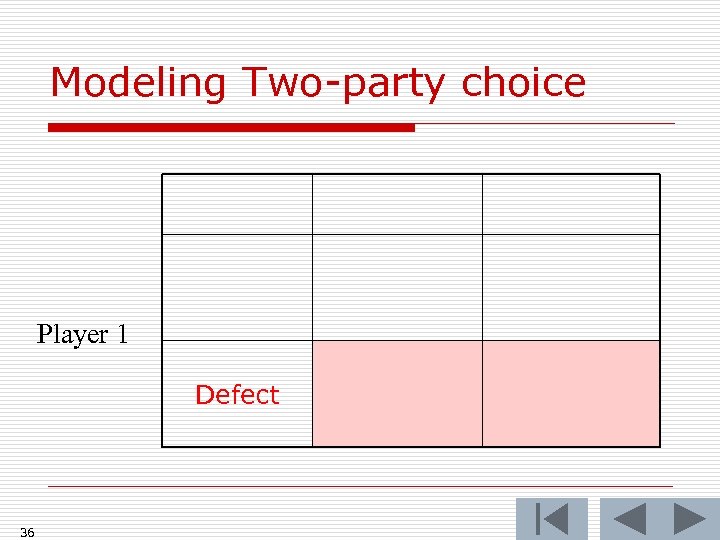
 Modeling Two-party choice Player 2 Defect 38
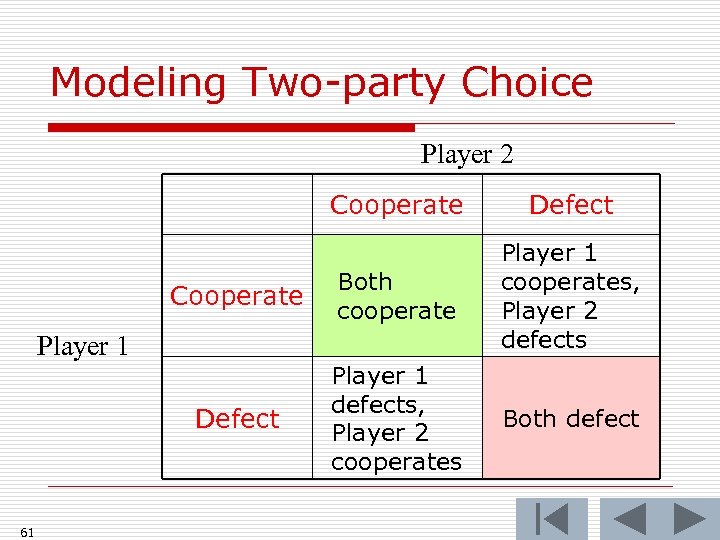
 Modeling Two-party Choice Both Cooperate Player 2 Cooperate Player 1 Defect 39 Both cooperate Defect
 Modeling Two-party Choice Both Defect Player 2 Cooperate Defect Cooperate Player 1 Defect 40 Both defect
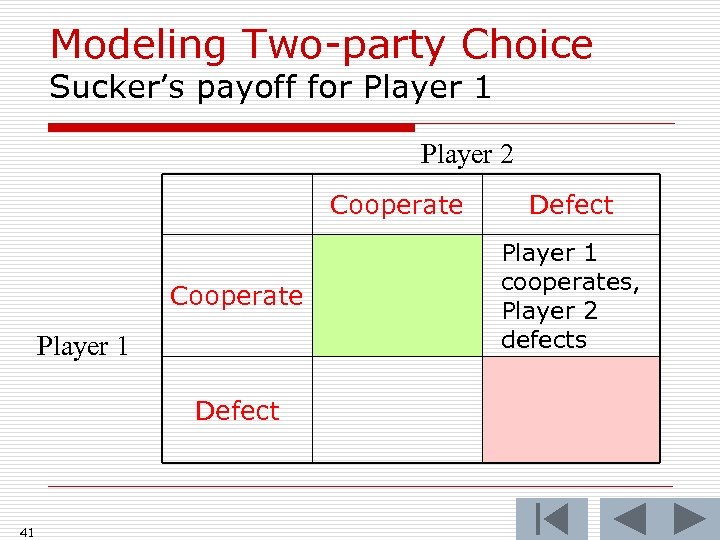 Modeling Two-party Choice Sucker’s payoff for Player 1 Player 2 Cooperate Player 1 Defect 41 Defect Player 1 cooperates, Player 2 defects
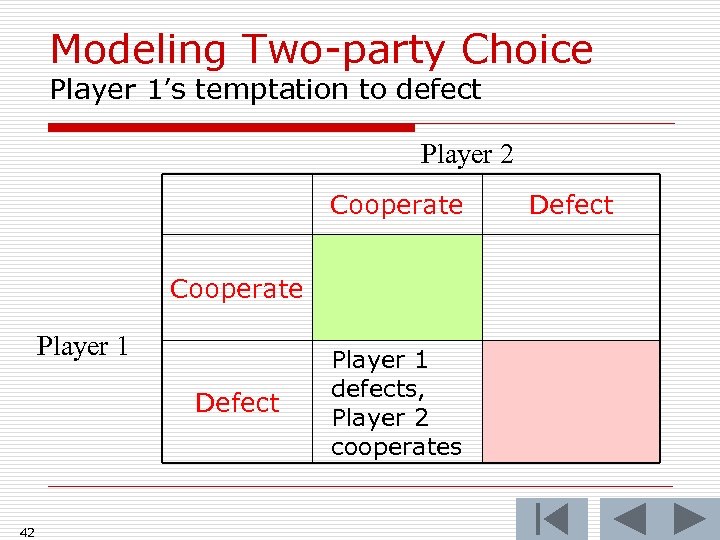 Modeling Two-party Choice Player 1’s temptation to defect Player 2 Cooperate Player 1 Defect 42 Player 1 defects, Player 2 cooperates Defect
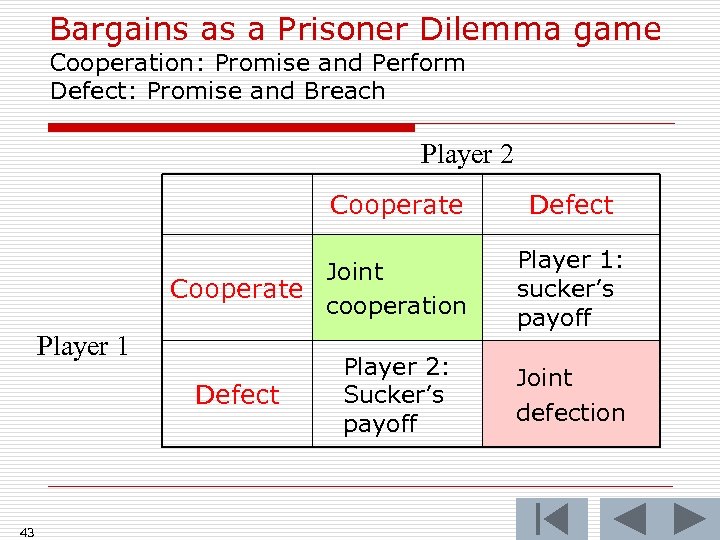 Bargains as a Prisoner Dilemma game Cooperation: Promise and Perform Defect: Promise and Breach Player 2 Cooperate Joint Cooperate cooperation Player 1 Defect 43 Player 2: Sucker’s payoff Defect Player 1: sucker’s payoff Joint defection
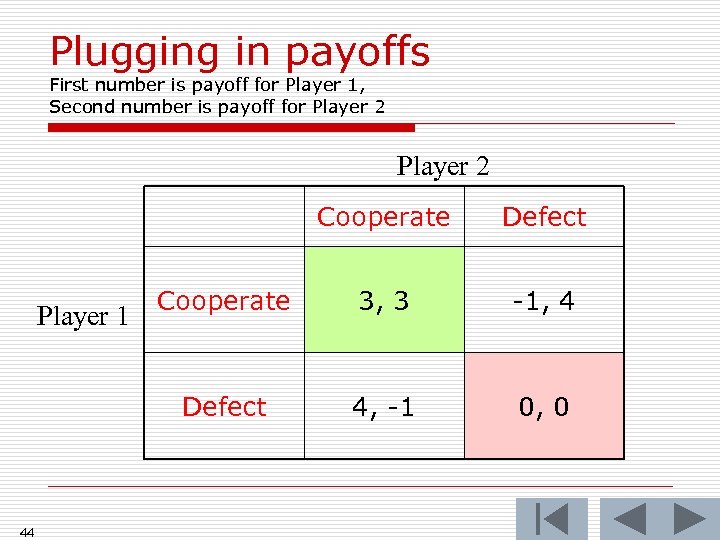 Plugging in payoffs First number is payoff for Player 1, Second number is payoff for Player 2 Cooperate 44 Cooperate 3, 3 -1, 4 Defect Player 1 Defect 4, -1 0, 0
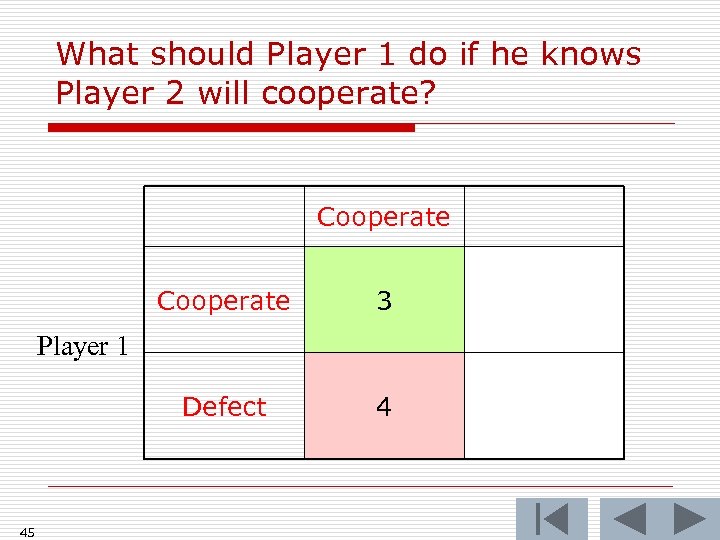 What should Player 1 do if he knows Player 2 will cooperate? Cooperate 3 Defect 4 Player 1 45
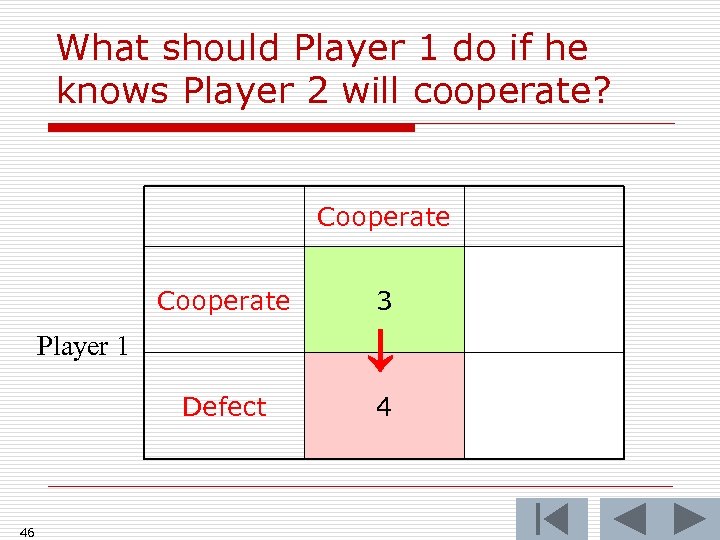 What should Player 1 do if he knows Player 2 will cooperate? Cooperate Player 1 Defect 46 3 4
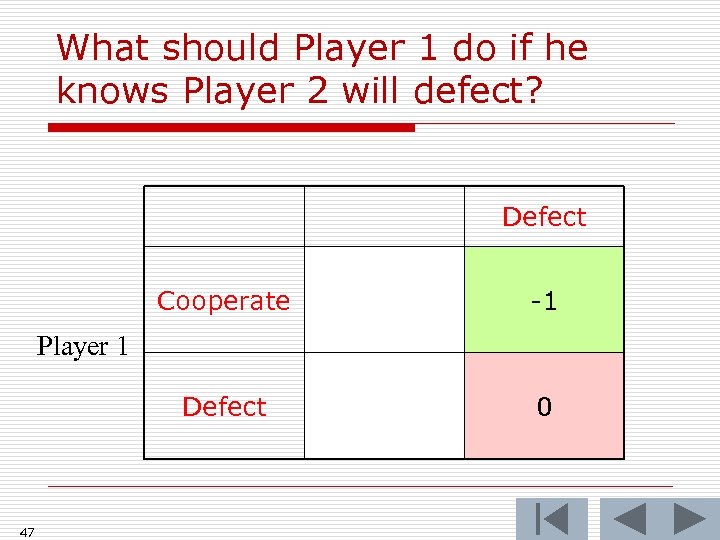 What should Player 1 do if he knows Player 2 will defect? Defect Cooperate -1 Defect 0 Player 1 47
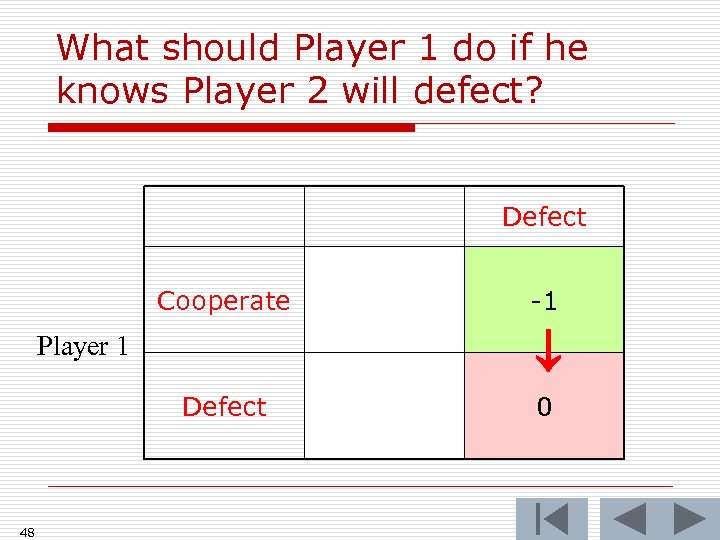 What should Player 1 do if he knows Player 2 will defect? Defect Cooperate Player 1 Defect 48 -1 0
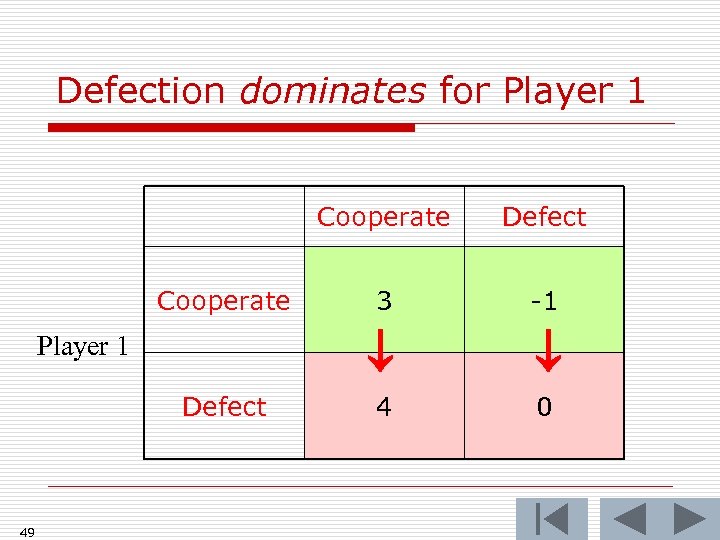 Defection dominates for Player 1 Cooperate Player 1 Defect 49 3 -1 Cooperate Defect 4 0
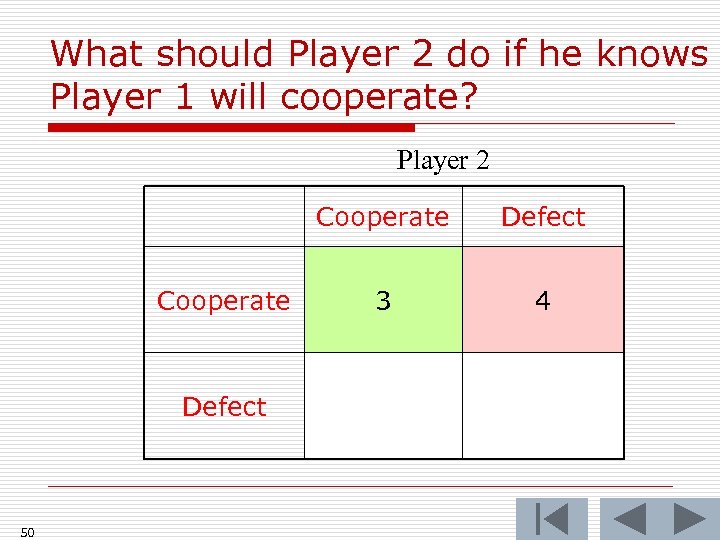 What should Player 2 do if he knows Player 1 will cooperate? Player 2 Cooperate Defect 50 Defect 3 4
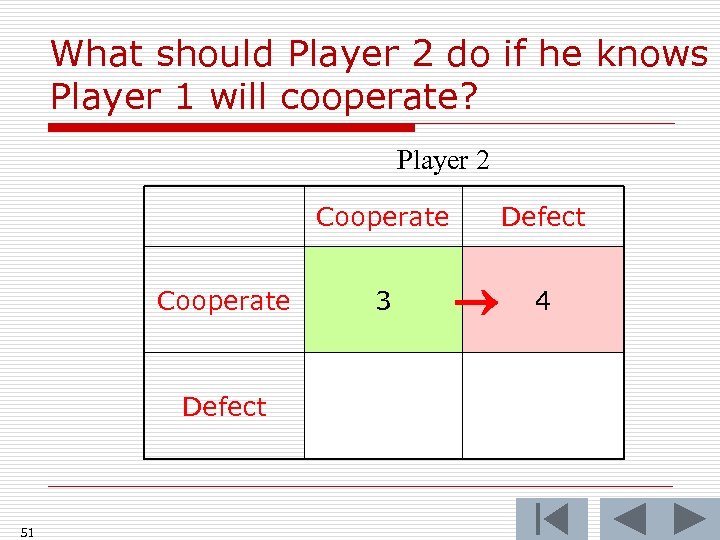 What should Player 2 do if he knows Player 1 will cooperate? Player 2 Cooperate Defect 51 Defect 3 4 Cooperate
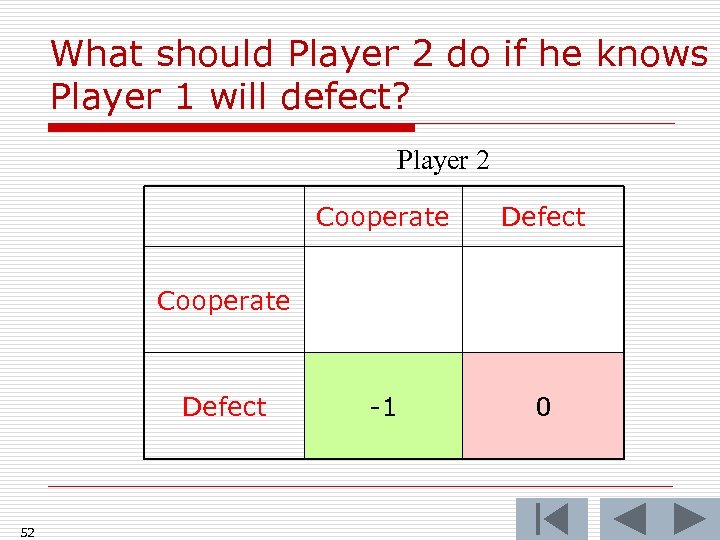 What should Player 2 do if he knows Player 1 will defect? Player 2 Cooperate Defect -1 0 Cooperate Defect 52
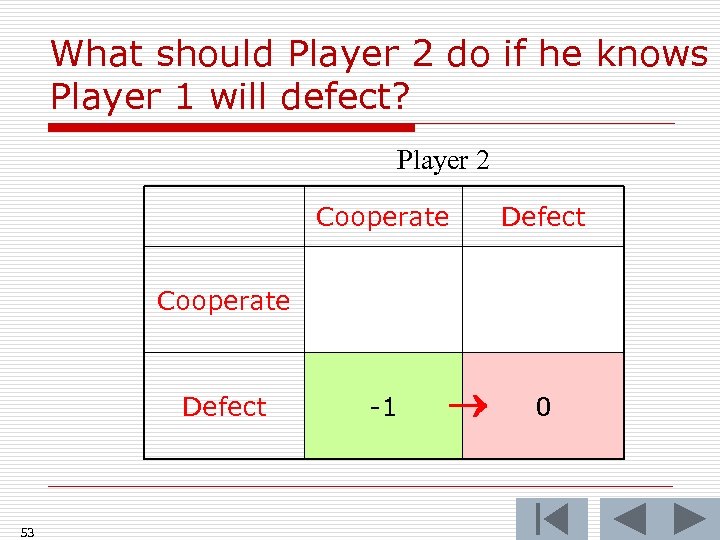 What should Player 2 do if he knows Player 1 will defect? Player 2 Cooperate Defect -1 0 Defect 53 Cooperate
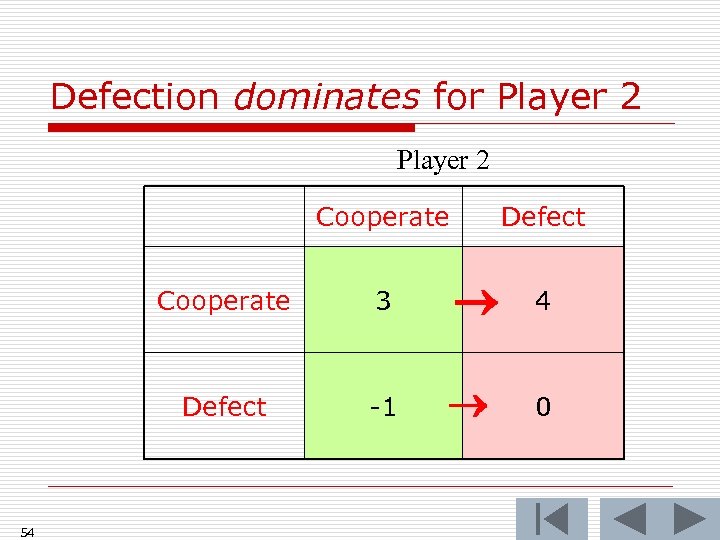 Defection dominates for Player 2 Cooperate 3 4 Defect 54 Defect -1 Player 2 0
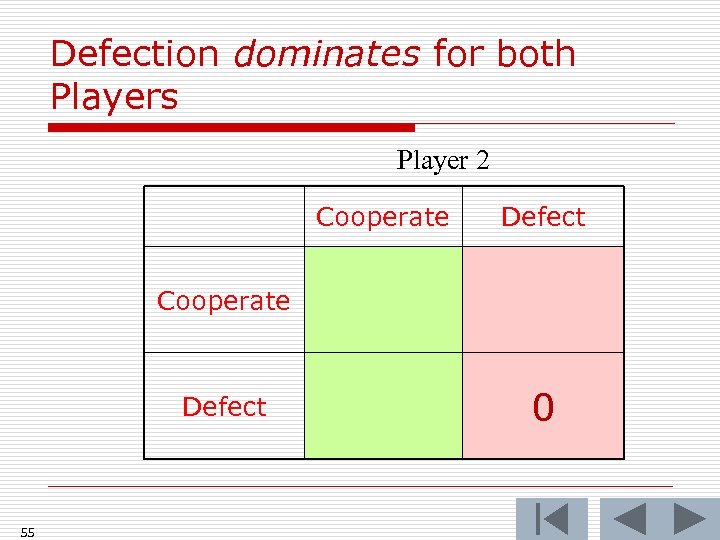 Defection dominates for both Players Player 2 Cooperate Defect 55 0
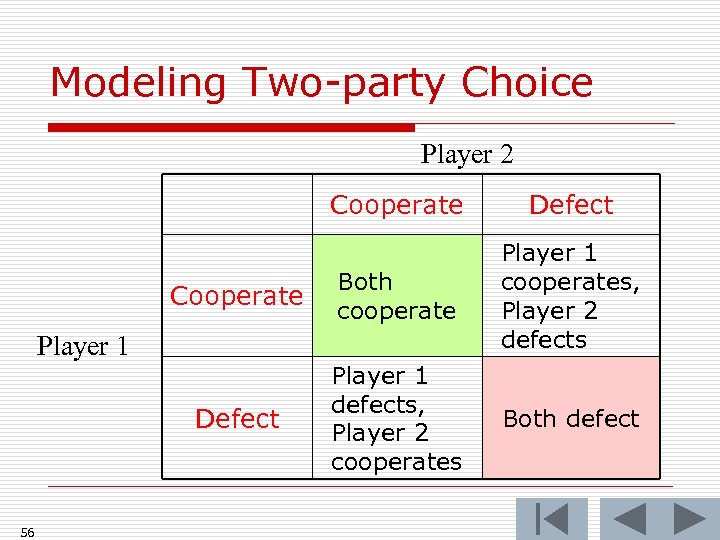 Modeling Two-party Choice Player 2 Cooperate Defect Cooperate Both cooperate Player 1 cooperates, Player 2 defects Defect Player 1 defects, Player 2 cooperates Both defect Player 1 56
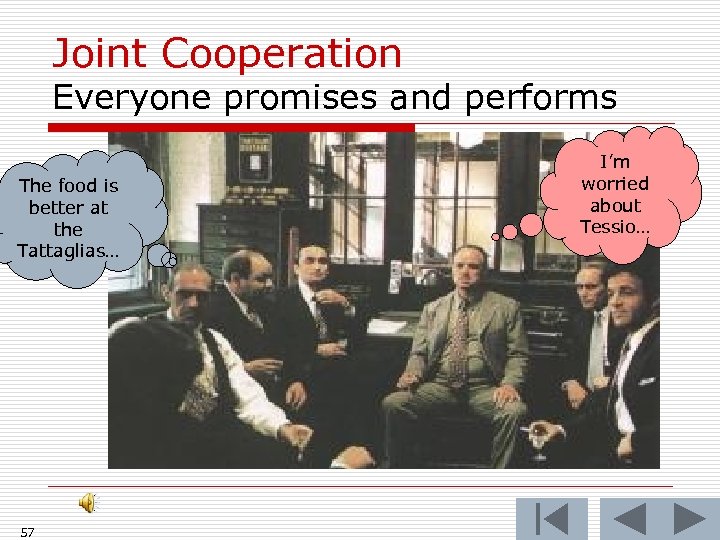 Joint Cooperation Everyone promises and performs The food is better at the Tattaglias… 57 I’m worried about Tessio…
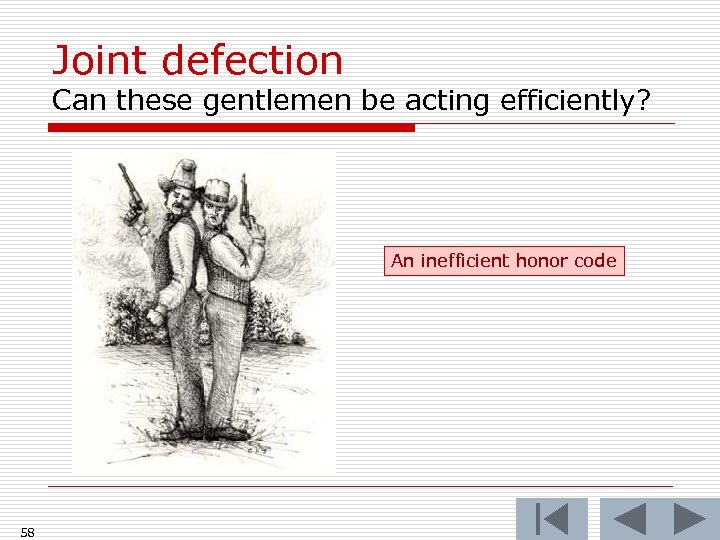 Joint defection Can these gentlemen be acting efficiently? An inefficient honor code 58
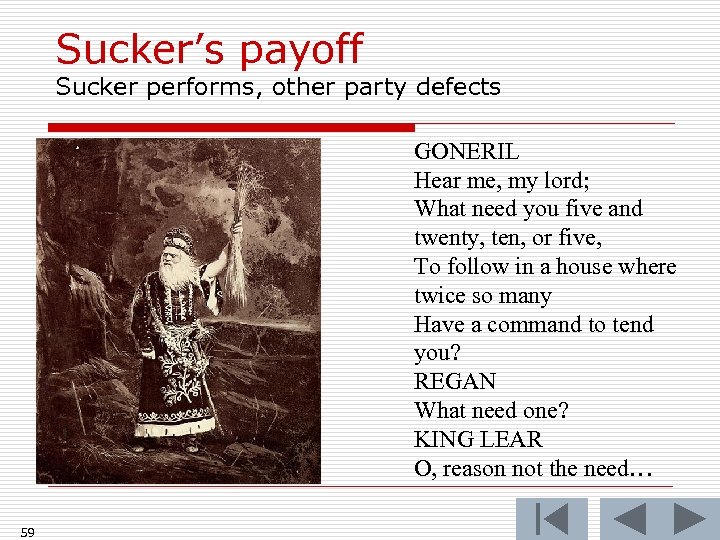 Sucker’s payoff Sucker performs, other party defects GONERIL Hear me, my lord; What need you five and twenty, ten, or five, To follow in a house where twice so many Have a command to tend you? REGAN What need one? KING LEAR O, reason not the need… 59
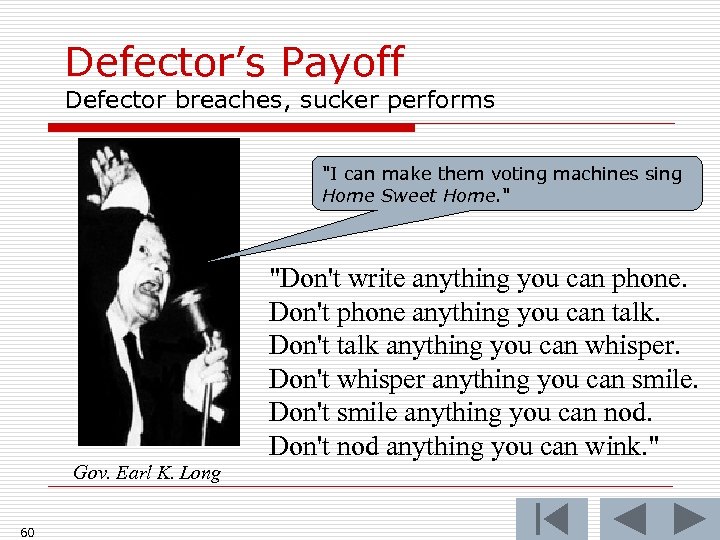 Defector’s Payoff Defector breaches, sucker performs "I can make them voting machines sing Home Sweet Home. " "Don't write anything you can phone. Don't phone anything you can talk. Don't talk anything you can whisper. Don't whisper anything you can smile. Don't smile anything you can nod. Don't nod anything you can wink. " Gov. Earl K. Long 60
 Modeling Two-party Choice Player 2 Cooperate Defect Cooperate Both cooperate Player 1 cooperates, Player 2 defects Defect Player 1 defects, Player 2 cooperates Both defect Player 1 61
 PD games help to explain why we do dumb things o Over-fish lakes and oceans o Pollute o Arms race o Fail to exploit bargaining gains 62
 Joint Defection The Tragedy of the Commons and the Law of the Sea ) 63
 How about promises without contract law? o You want to buy a 1956 Ford… 64
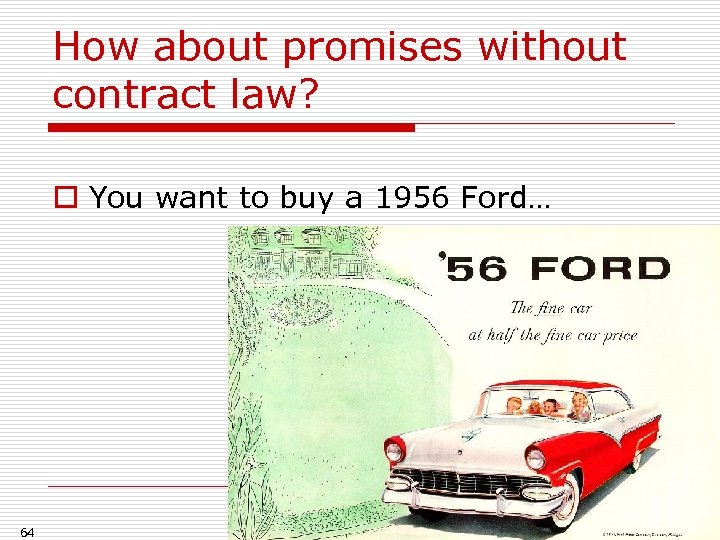
 Promises without contract law o You want to buy a 1956 Ford… o Of the remaining 1956 Fords, half are worth nothing (“lemons”) and the other half are worth $5000 (“beauts”) 65
 Promises without contract law o You want to buy a 1956 Ford… o Of the remaining 1956 Fords, half are worth nothing (“lemons”) and the other half are worth $5000 (“beauts”) o The seller tells you it’s a beaut. 66
 Promises without contract law o You want to buy a 1956 Ford… o Of the remaining 1956 Fords, half are worth nothing (“lemons”) and the other half are worth $5000 (“beauts”) o The seller knows which kind of car he has but you can’t tell them apart 67
 Promises without contract law o Of the remaining 1956 Fords, half are worth nothing (“lemons”) and the other half are worth $5000 (“beauts”) o The seller knows which kind of car he has but you can’t tell them apart o What would you pay for one? 68
 Promises without contract law o Of the remaining 1956 Fords, half are worth nothing (“lemons”) and the other half are worth $5000 (“beauts”) o The seller knows which kind of car he has but you can’t tell them apart o The trick: Seller’s willingness to sell is a signal n Akerlof, The Market for Lemons, 84 Q. J. Econ. 488 (1970) 69
 Promises without contract law o Of the remaining 1956 Fords, half are worth nothing (“lemons”) and the other half are worth $5000 (“beauts”) o The seller knows which kind of car he has but you can’t tell them apart o Question: Is the seller satisfied with this result? 70
 Contract Law as a solution o Suppose that the defector is penalized through legal sanctions so that the incentive to defect disappears. 71
 What if contracts are prohibited? 72
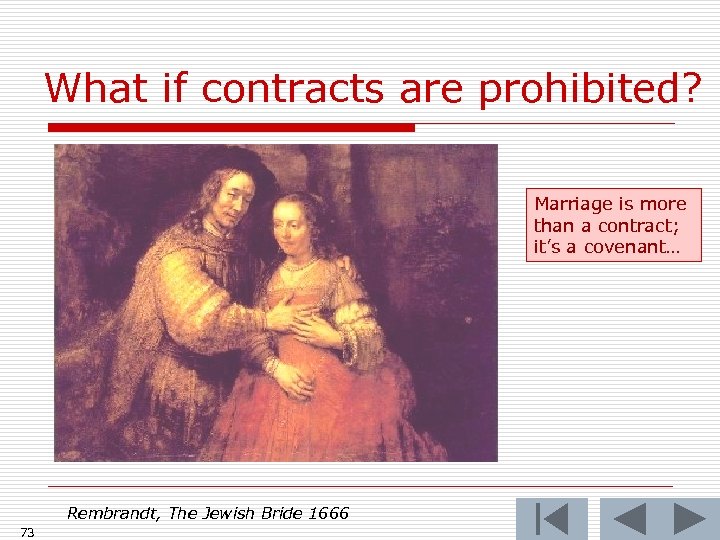 What if contracts are prohibited? Marriage is more than a contract; it’s a covenant… Rembrandt, The Jewish Bride 1666 73
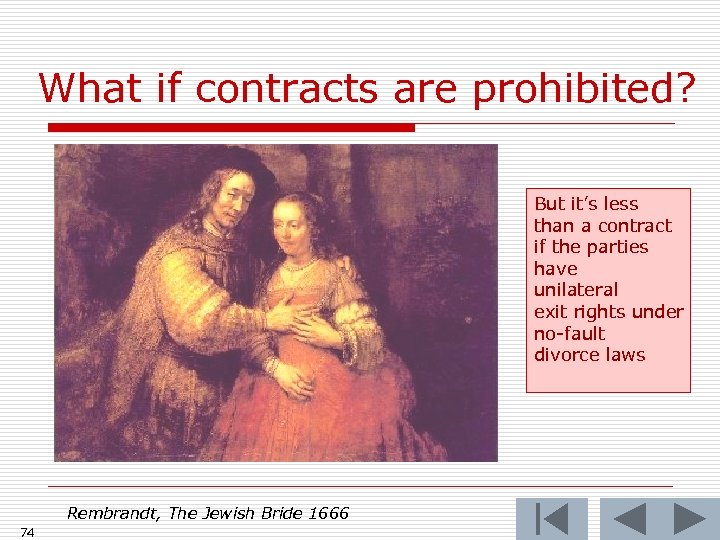 What if contracts are prohibited? But it’s less than a contract if the parties have unilateral exit rights under no-fault divorce laws Rembrandt, The Jewish Bride 1666 74
 Marriage, Divorce, Natality o What did no-fault divorce do to the cost of matrimonial fault? 75
 Marriage, Divorce, Natality o What did no-fault divorce do to the cost of matrimonial fault? n Under fault, the straying party pays if he wants a divorce—or if his spouse seeks one n So fault is costly in a fault regime 76
 Marriage, Divorce, Natality o What did no-fault divorce do to the cost of matrimonial fault? o So how do you think no-fault divorce laws affected divorce levels? n 77 Bring and Buckley, 18 Int. Rev. Law & Econ. 325 (1998)
 Marriage, Divorce, Natality o How would you expect the parties to react to the increased probability of divorce? 78
 Marriage, Divorce, Natality o How would you expect the parties to react to the increased probability of divorce? n Fewer marriages 79
 Marriage, Divorce, Natality o How would you expect the parties to react to the increased probability of divorce? n Fewer marriages n Increased female participation in the labor force 80
 Marriage, Divorce, Natality o How would you expect the parties to react to the increased probability of divorce? n Fewer marriages n Increased female participation in the labor force n Increased human capital investments by women 81
 Marriage, Divorce, Natality o How would you expect the parties to react to the increased probability of divorce? n Fewer marriages n Increased female participation in the labor force n Increased human capital investments by women n And what about kids? 82
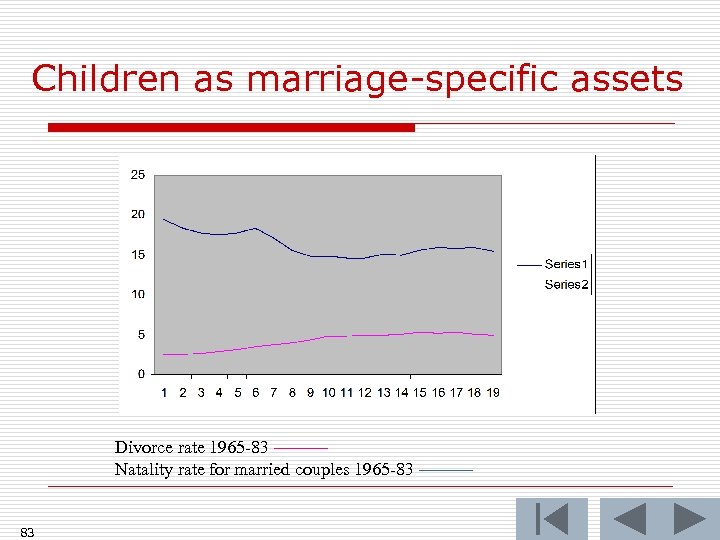 Children as marriage-specific assets Divorce rate 1965 -83 ——— Natality rate for married couples 1965 -83 ——— 83
 Absent legal barriers, will the parties always write a binding contract? o The Coase Theorem: Parties will enter a binding contract to exploit all bargaining games unless prevented from doing so by transaction costs 84
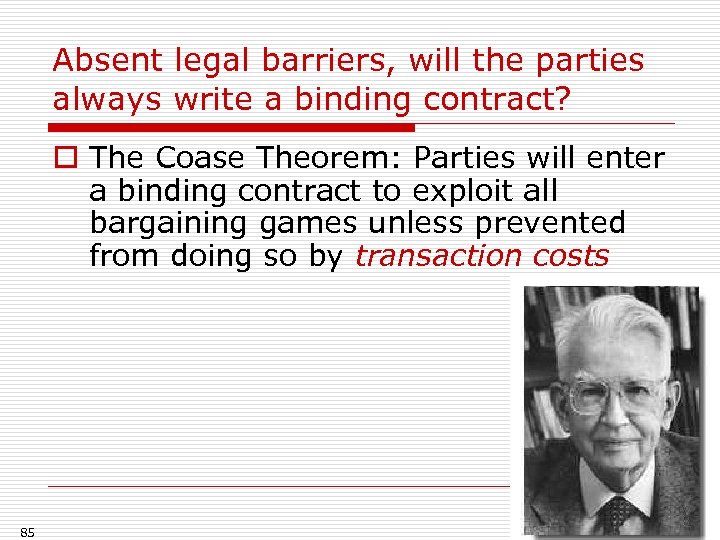 Absent legal barriers, will the parties always write a binding contract? o The Coase Theorem: Parties will enter a binding contract to exploit all bargaining games unless prevented from doing so by transaction costs 85
 So what are transaction costs? o Give examples of things that get in the way of bargaining 86
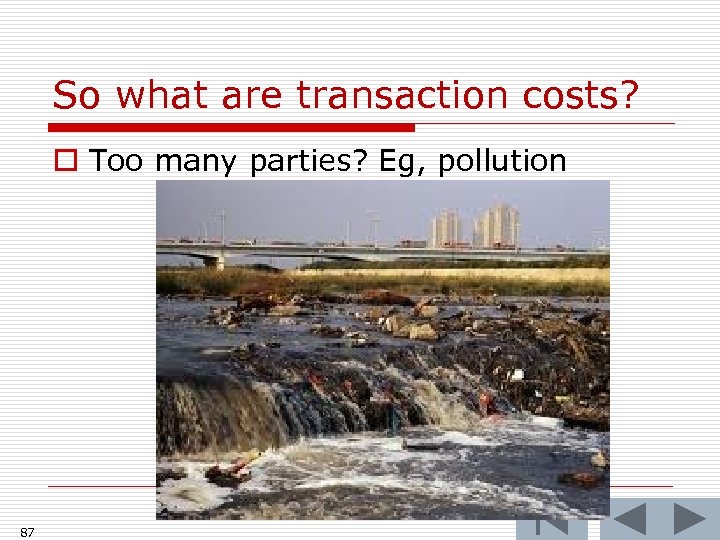 So what are transaction costs? o Too many parties? Eg, pollution 87
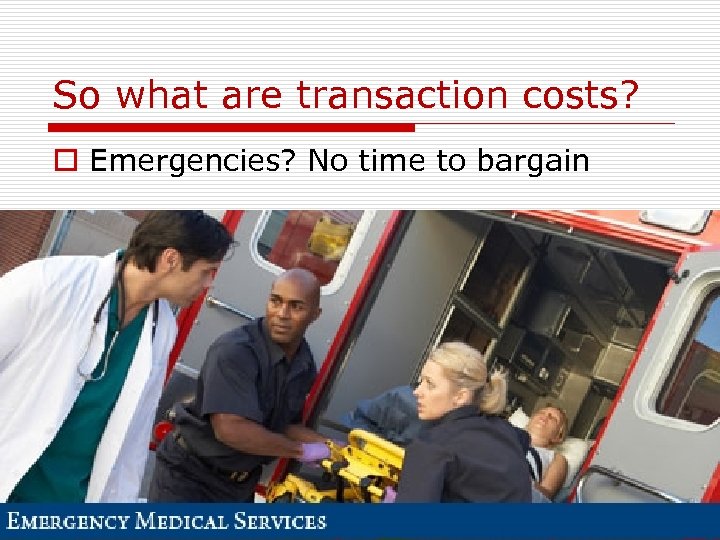 So what are transaction costs? o Emergencies? No time to bargain 88
 So what are transaction costs? o Information processing problems? 89
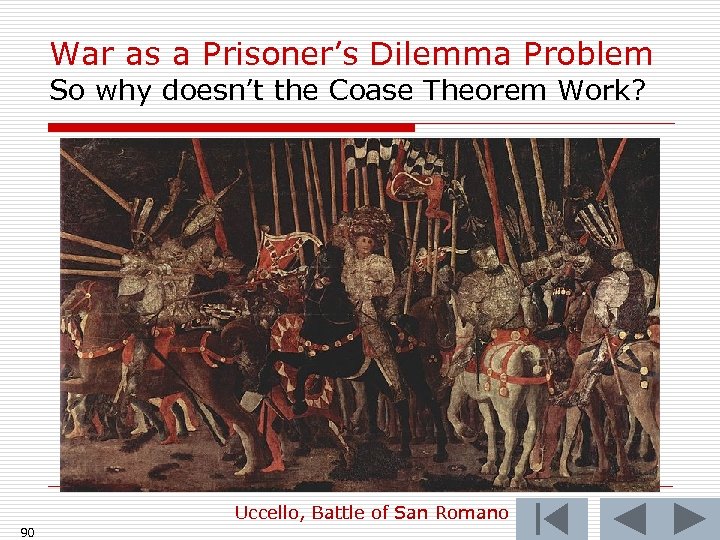 War as a Prisoner’s Dilemma Problem So why doesn’t the Coase Theorem Work? Uccello, Battle of San Romano 90
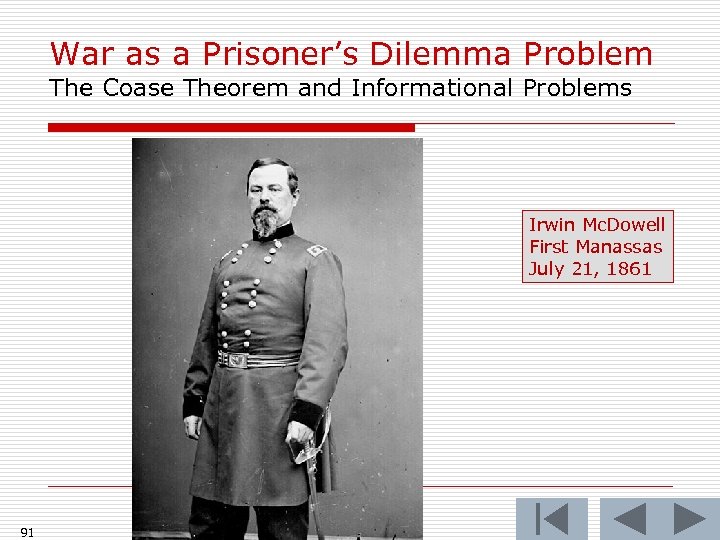 War as a Prisoner’s Dilemma Problem The Coase Theorem and Informational Problems Irwin Mc. Dowell First Manassas July 21, 1861 91
 War as a Prisoner’s Dilemma Problem The Absence of a Bargaining Space 92
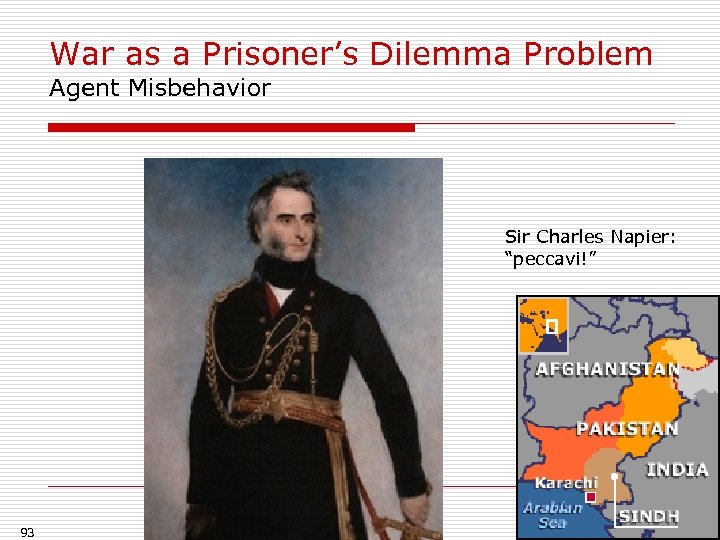 War as a Prisoner’s Dilemma Problem Agent Misbehavior Sir Charles Napier: “peccavi!” 93
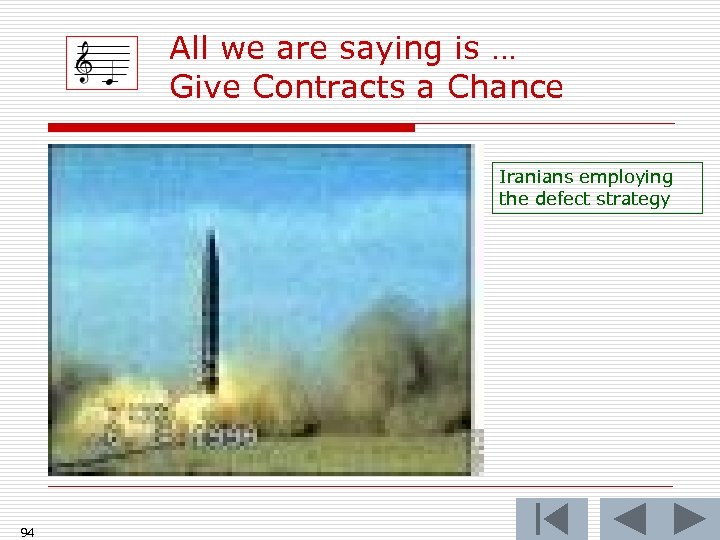 All we are saying is … Give Contracts a Chance Iranians employing the defect strategy 94
 Is there no cooperation without binding contracts? 95
 Cooperation without Law? o Voting 96
 Cooperation without Law? o Voting o No littering 97
 Cooperation without Law? o It’s 1998. There are two plans for an online dictionary. One is Encarta, promoted by Microsoft, whoich hires editors. The other relies on individuals to submit entries for free… 98
 Wikeconomics o It’s 1998. There are two plans for an online dictionary. One is Encarta, promoted by Microsoft, which hires editors. The other relies on individuals to submit entries for free… 99
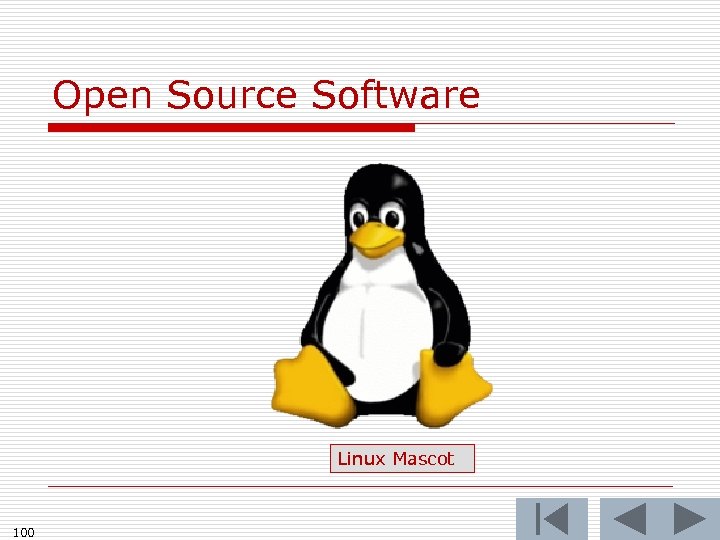 Open Source Software Linux Mascot 100
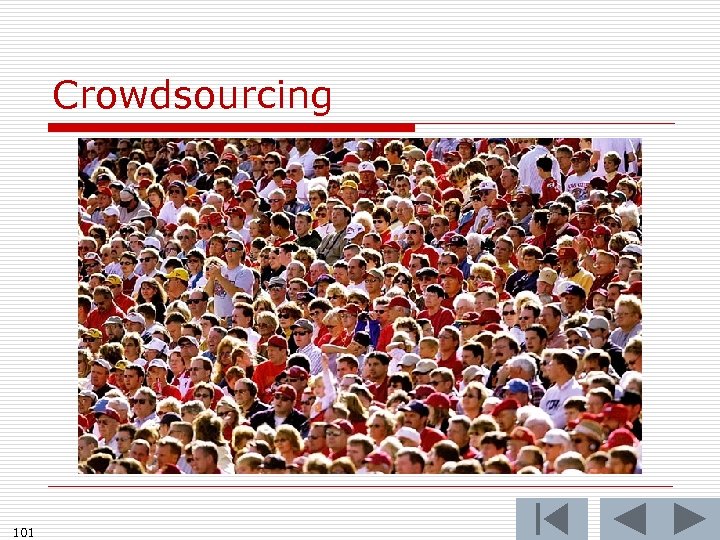 Crowdsourcing 101
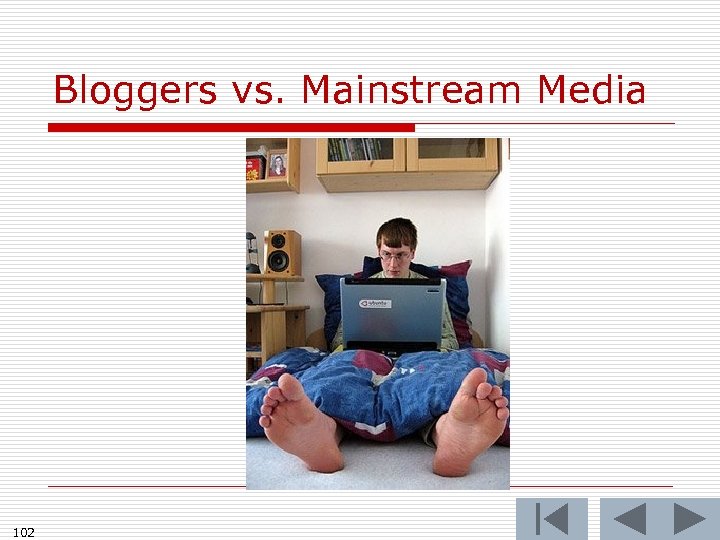 Bloggers vs. Mainstream Media 102
 George Mason School of Law Contracts I Bargaining Games F. H. Buckley fbuckley@gmu. edu 103