 Скачать презентацию Geologists use the word sand to describe solid
946d542f88af790db60250a00c17fc7a.ppt
- Количество слайдов: 29




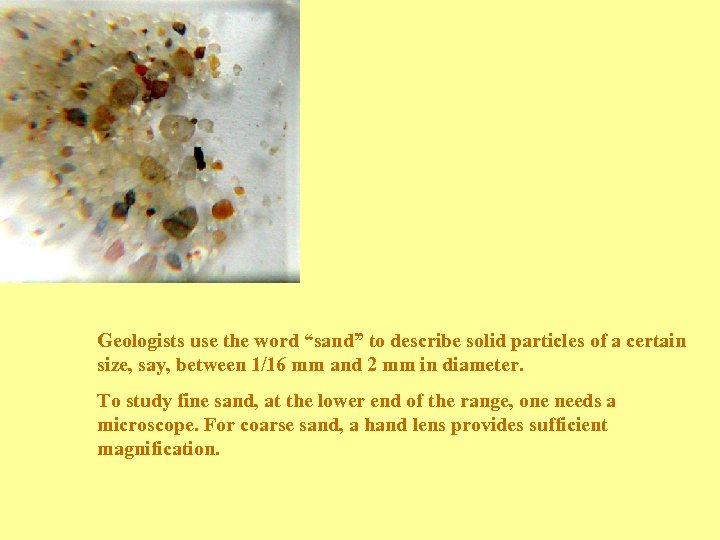
Geologists use the word “sand” to describe solid particles of a certain size, say, between 1/16 mm and 2 mm in diameter. To study fine sand, at the lower end of the range, one needs a microscope. For coarse sand, a hand lens provides sufficient magnification.

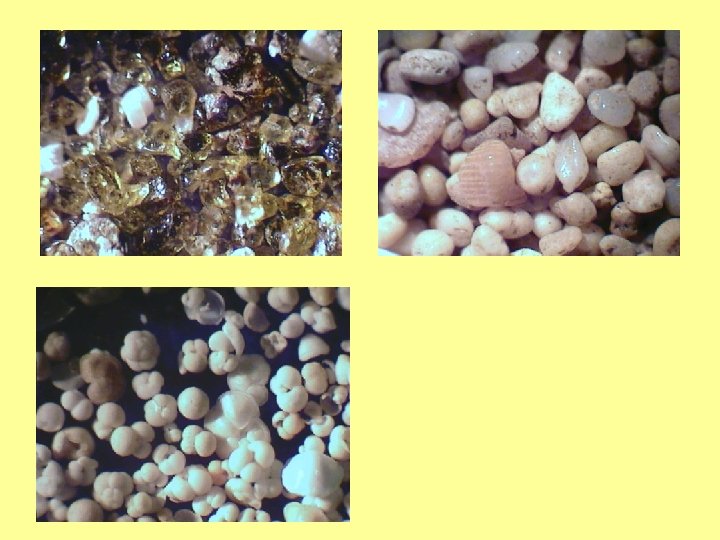
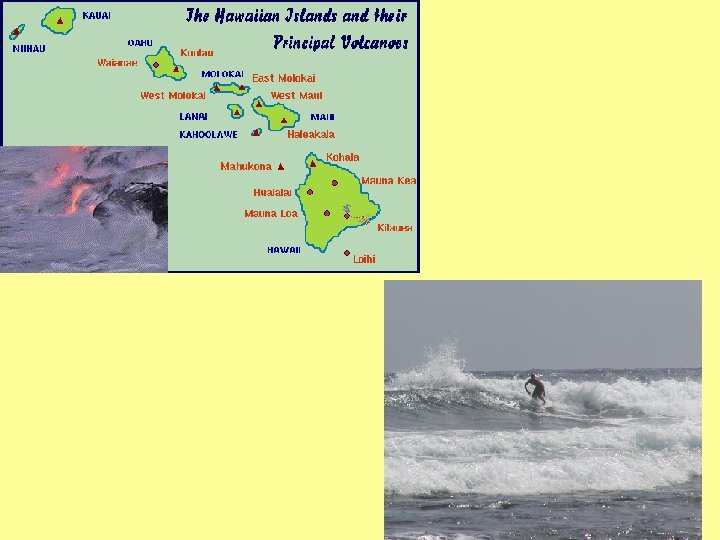
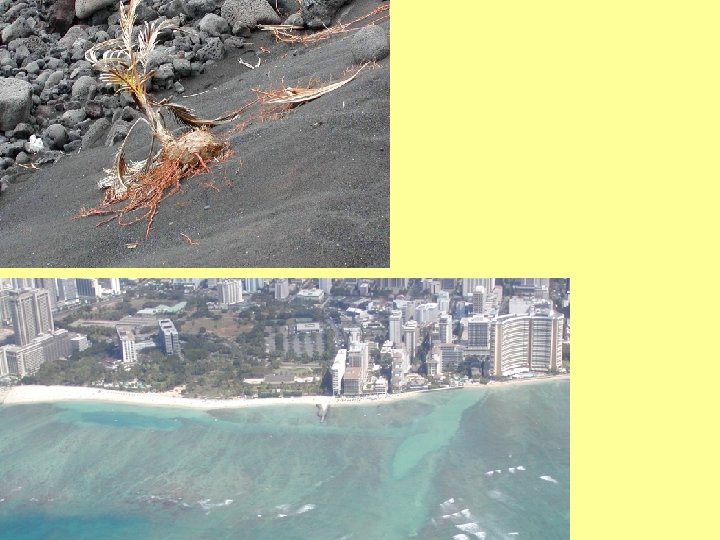
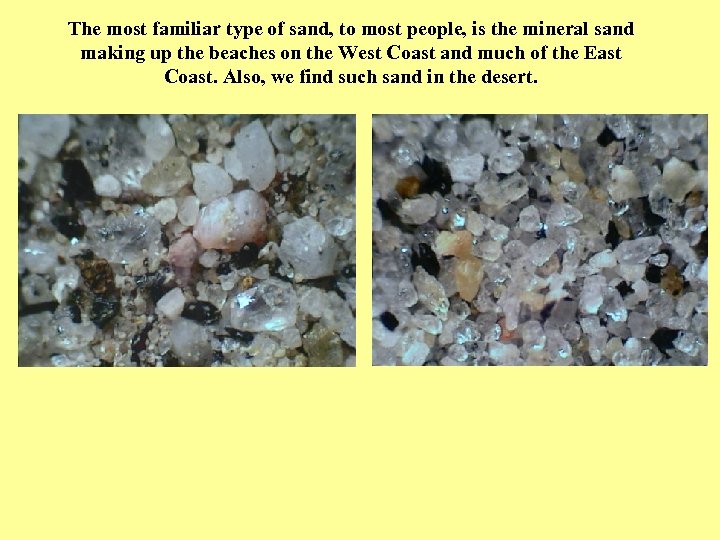
The most familiar type of sand, to most people, is the mineral sand making up the beaches on the West Coast and much of the East Coast. Also, we find such sand in the desert.
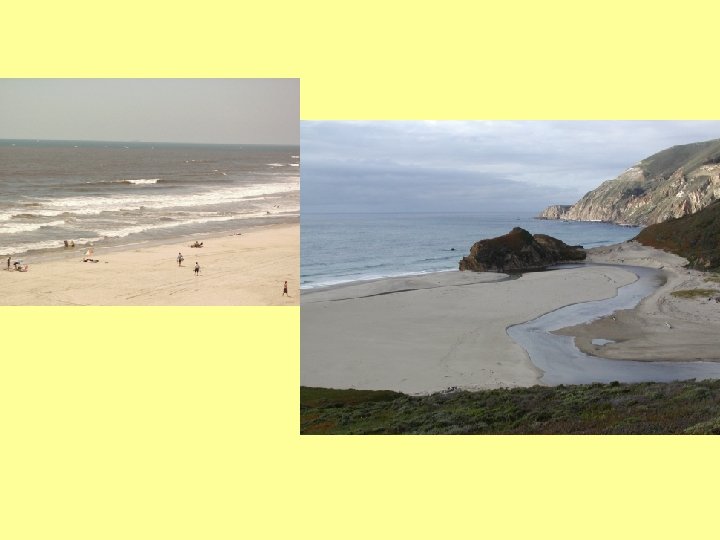
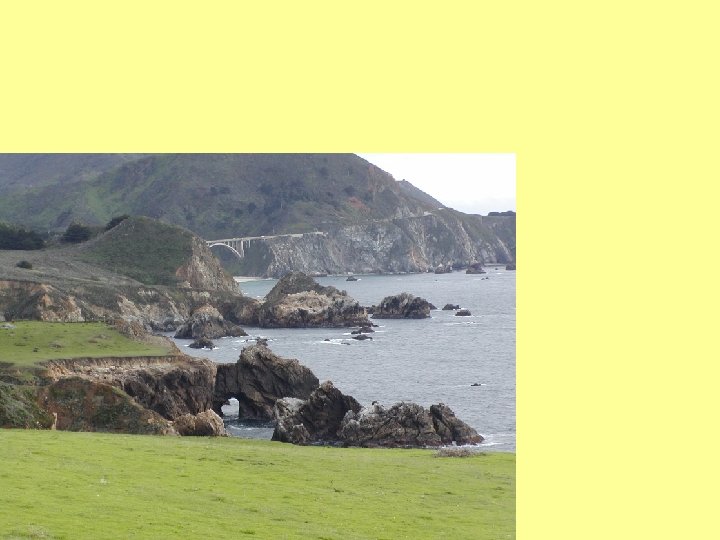
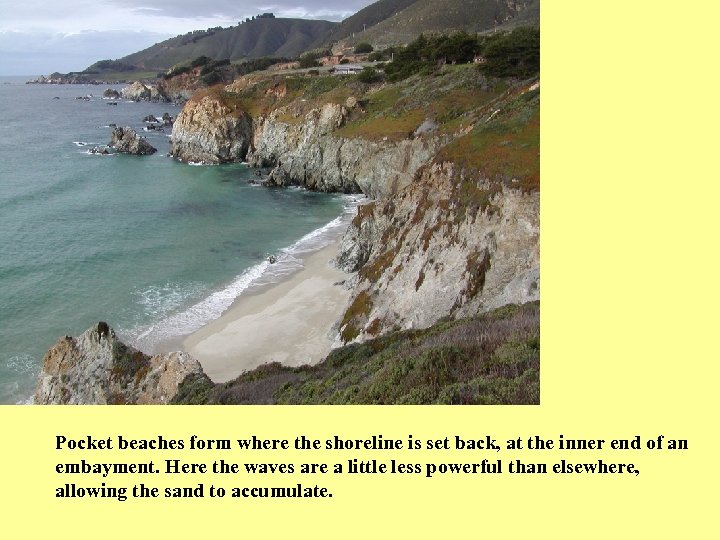
Pocket beaches form where the shoreline is set back, at the inner end of an embayment. Here the waves are a little less powerful than elsewhere, allowing the sand to accumulate.
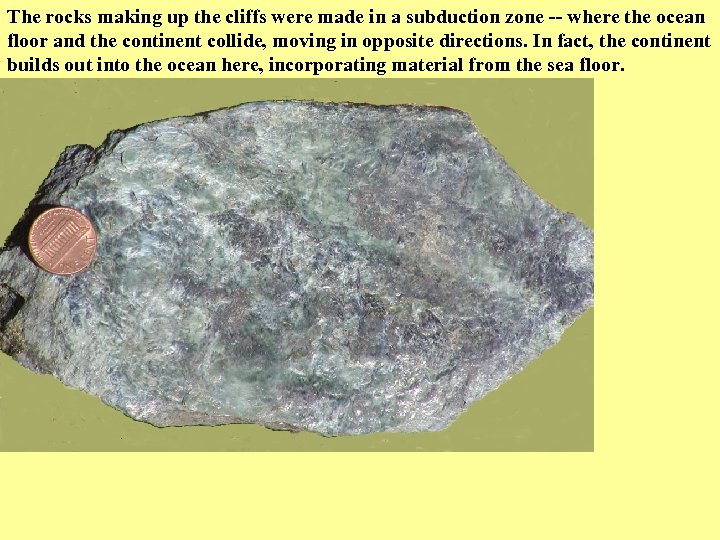
The rocks making up the cliffs were made in a subduction zone -- where the ocean floor and the continent collide, moving in opposite directions. In fact, the continent builds out into the ocean here, incorporating material from the sea floor.
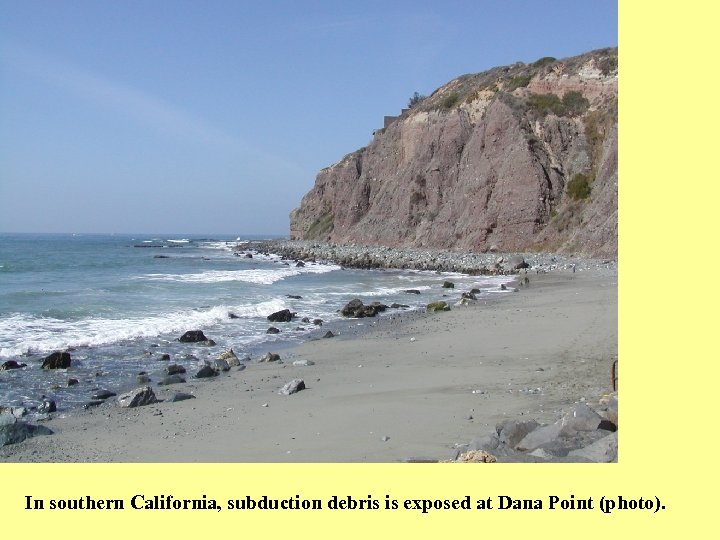
In southern California, subduction debris is exposed at Dana Point (photo).
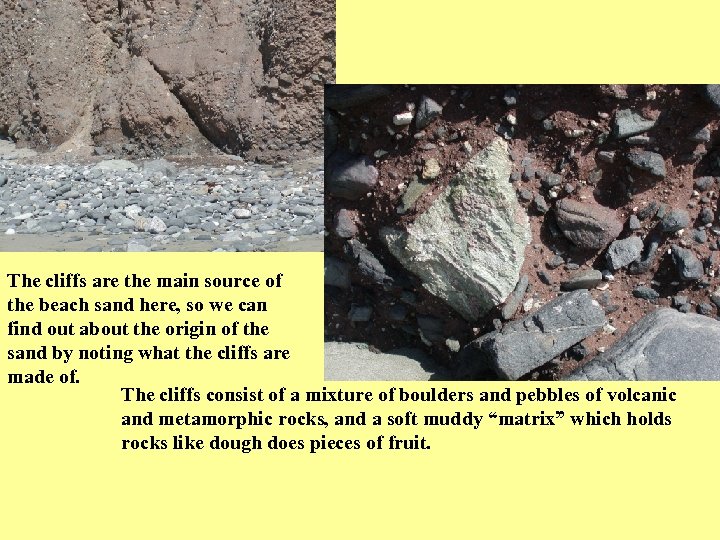
The cliffs are the main source of the beach sand here, so we can find out about the origin of the sand by noting what the cliffs are made of. The cliffs consist of a mixture of boulders and pebbles of volcanic and metamorphic rocks, and a soft muddy “matrix” which holds rocks like dough does pieces of fruit.
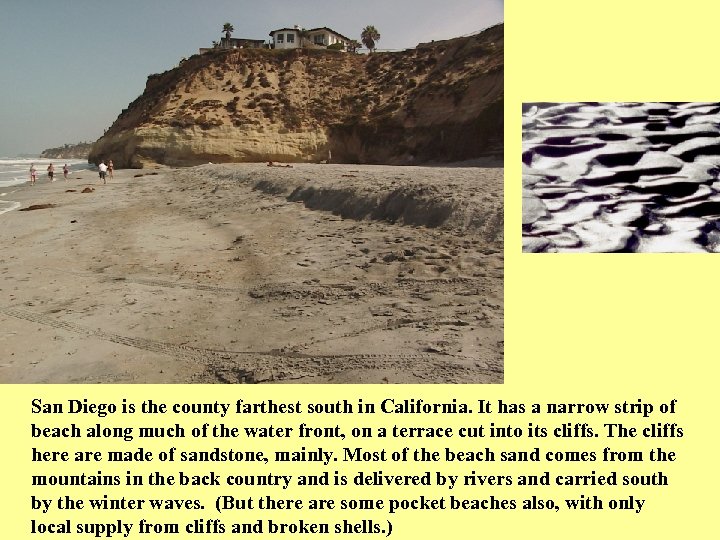
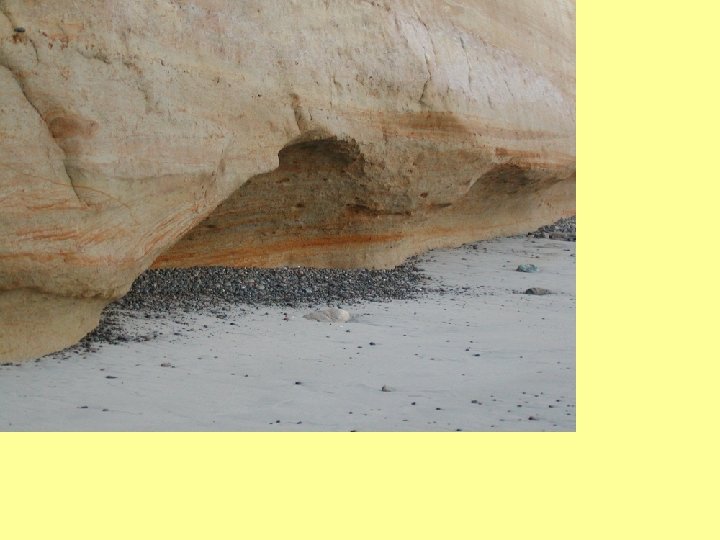
San Diego is the county farthest south in California. It has a narrow strip of beach along much of the water front, on a terrace cut into its cliffs. The cliffs here are made of sandstone, mainly. Most of the beach sand comes from the mountains in the back country and is delivered by rivers and carried south by the winter waves. (But there are some pocket beaches also, with only local supply from cliffs and broken shells. )
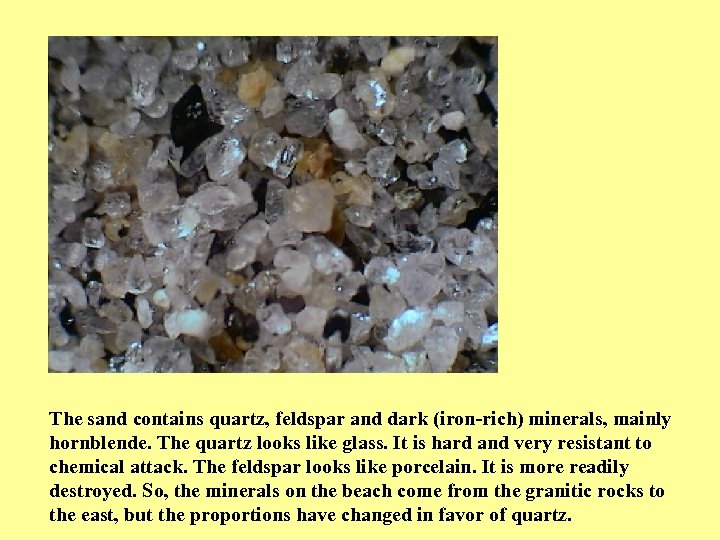
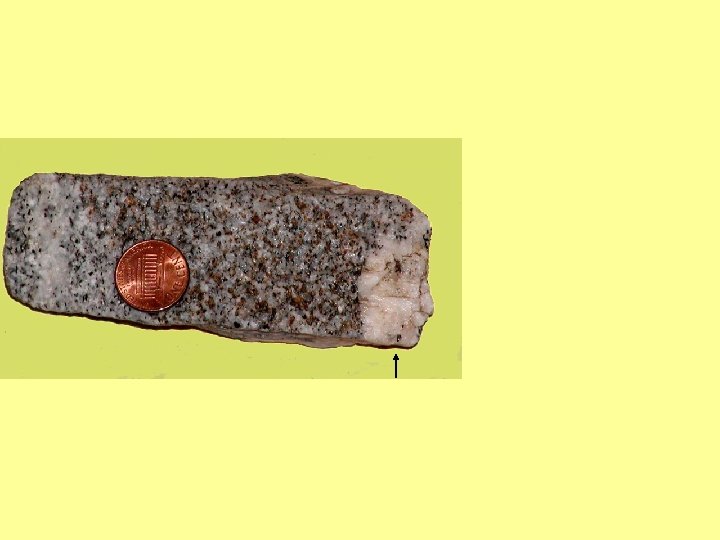
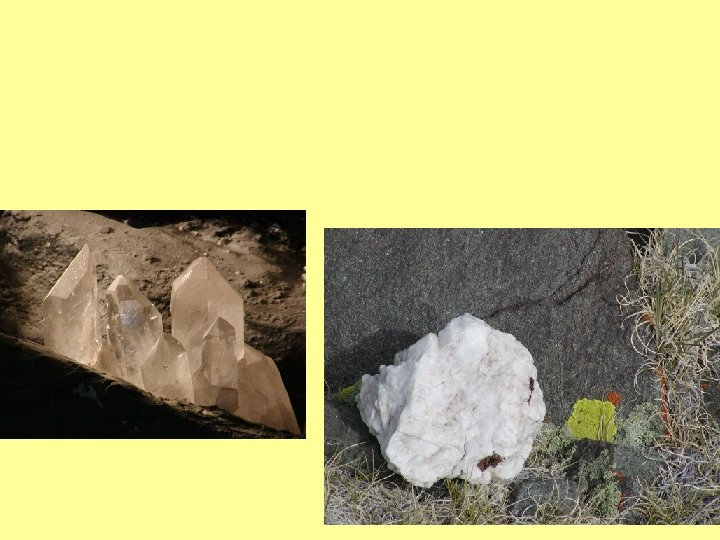
The sand contains quartz, feldspar and dark (iron-rich) minerals, mainly hornblende. The quartz looks like glass. It is hard and very resistant to chemical attack. The feldspar looks like porcelain. It is more readily destroyed. So, the minerals on the beach come from the granitic rocks to the east, but the proportions have changed in favor of quartz.
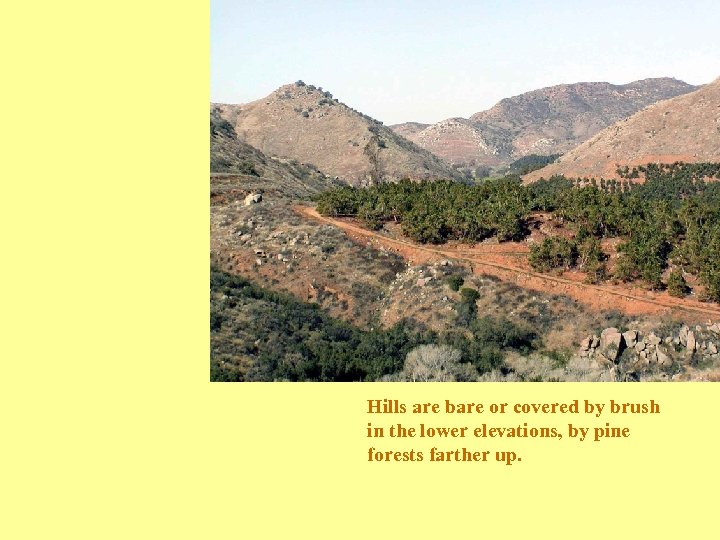
Hills are bare or covered by brush in the lower elevations, by pine forests farther up.
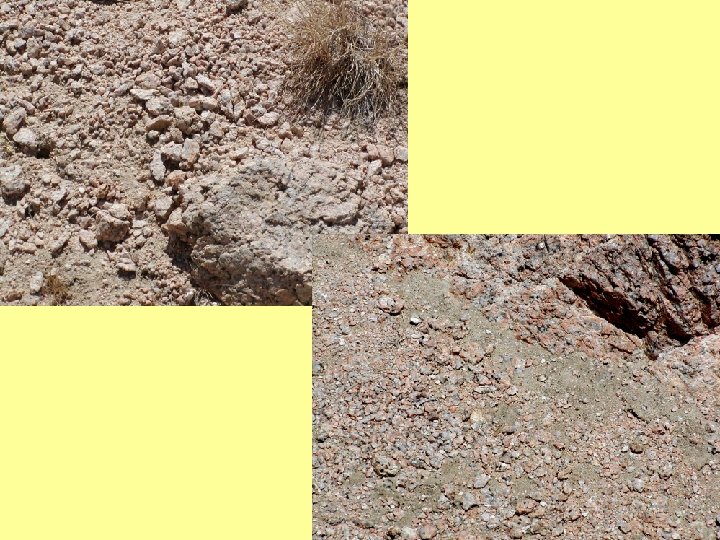
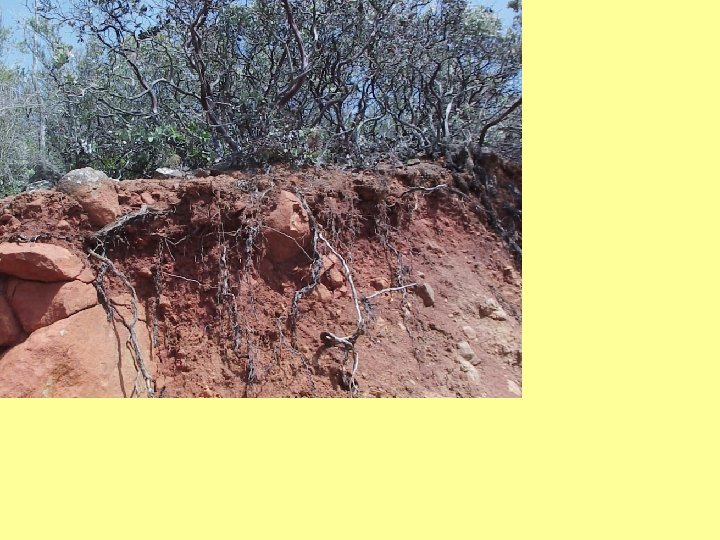
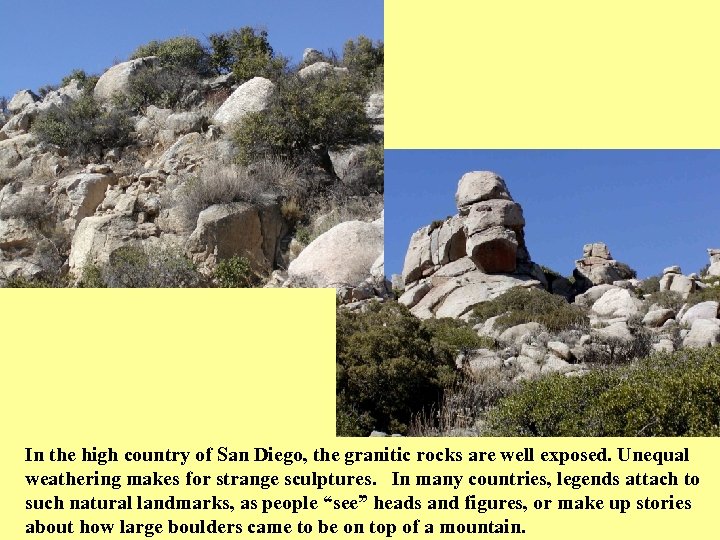
In the high country of San Diego, the granitic rocks are well exposed. Unequal weathering makes for strange sculptures. In many countries, legends attach to such natural landmarks, as people “see” heads and figures, or make up stories about how large boulders came to be on top of a mountain.
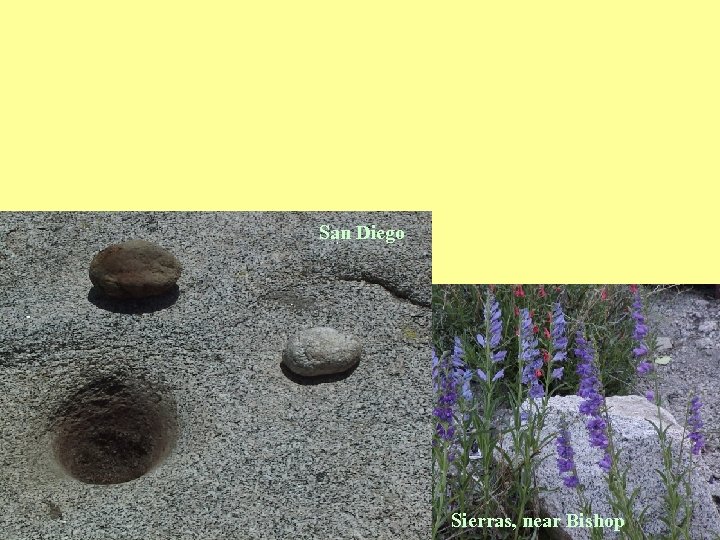
San Diego Sierras, near Bishop
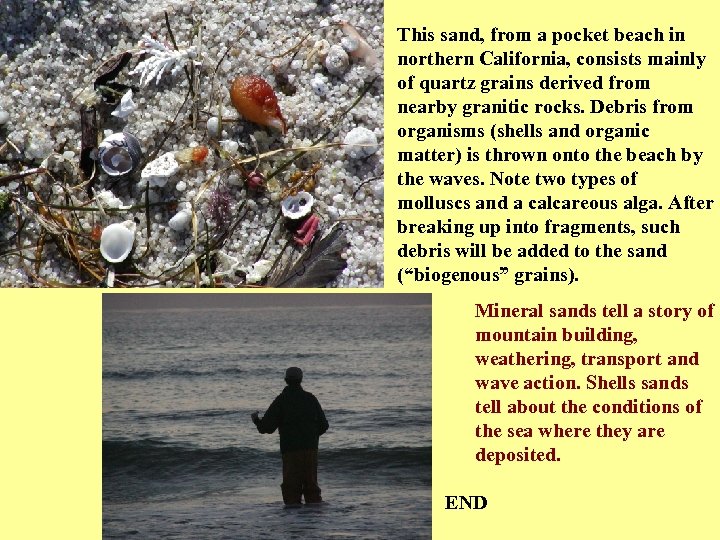
This sand, from a pocket beach in northern California, consists mainly of quartz grains derived from nearby granitic rocks. Debris from organisms (shells and organic matter) is thrown onto the beach by the waves. Note two types of molluscs and a calcareous alga. After breaking up into fragments, such debris will be added to the sand (“biogenous” grains). Mineral sands tell a story of mountain building, weathering, transport and wave action. Shells sands tell about the conditions of the sea where they are deposited. END
 Скачать презентацию Geologists use the word sand to describe solid
946d542f88af790db60250a00c17fc7a.ppt