


 Скачать презентацию geography of the middle east 1 the
120f05e488fc4be70e75390f50af7d44.ppt
- Количество слайдов: 16
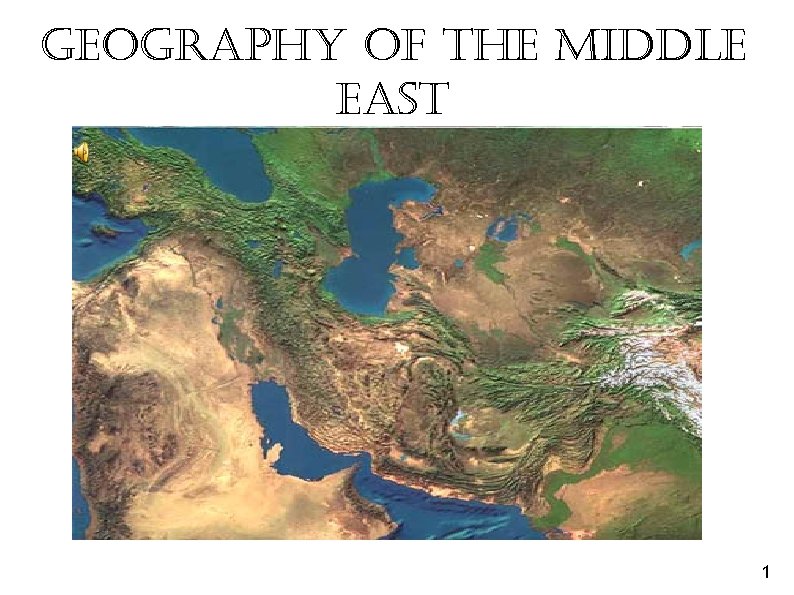 geography of the middle east 1
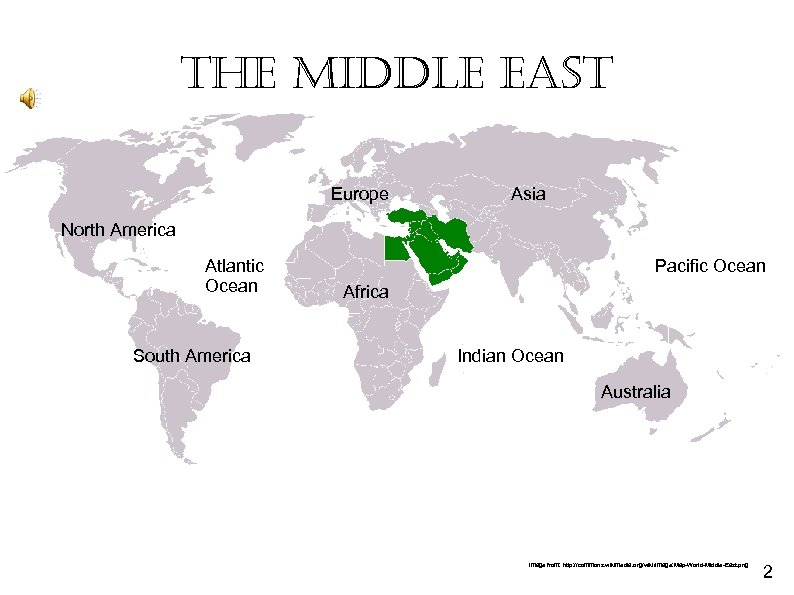 the middle east Europe Asia North America Atlantic Ocean South America Pacific Ocean Africa Indian Ocean Australia Image from: http: //commons. wikimedia. org/wiki/Image: Map-World-Middle-East. png 2
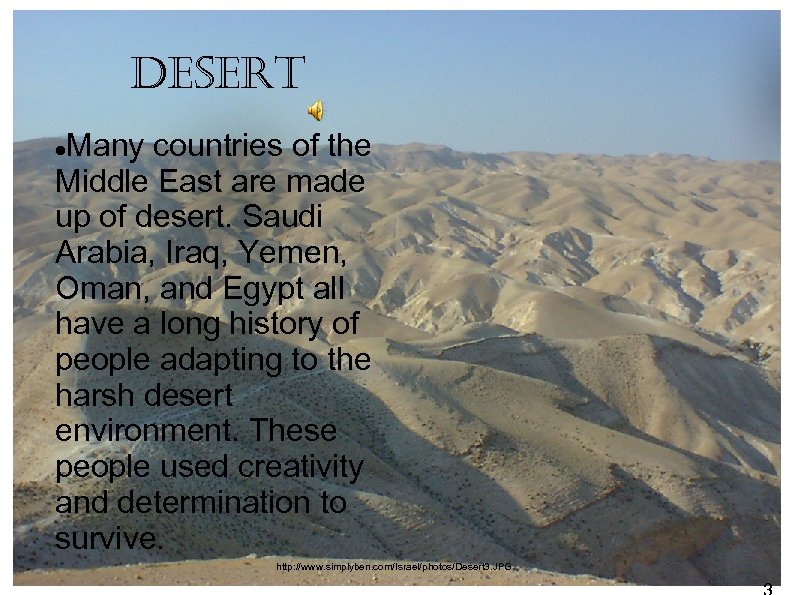 desert Many countries of the Middle East are made up of desert. Saudi Arabia, Iraq, Yemen, Oman, and Egypt all have a long history of people adapting to the harsh desert environment. These people used creativity and determination to survive. http: //www. simplyben. com/Israel/photos/Desert 3. JPG
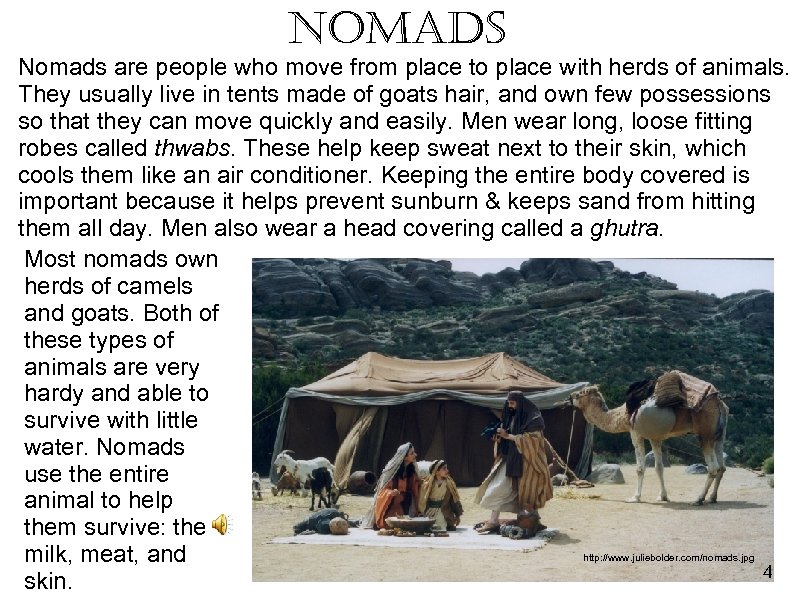 nomads Nomads are people who move from place to place with herds of animals. They usually live in tents made of goats hair, and own few possessions so that they can move quickly and easily. Men wear long, loose fitting robes called thwabs. These help keep sweat next to their skin, which cools them like an air conditioner. Keeping the entire body covered is important because it helps prevent sunburn & keeps sand from hitting them all day. Men also wear a head covering called a ghutra. Most nomads own herds of camels and goats. Both of these types of animals are very hardy and able to survive with little water. Nomads use the entire animal to help them survive: the http: //www. juliebolder. com/nomads. jpg milk, meat, and 4 skin.
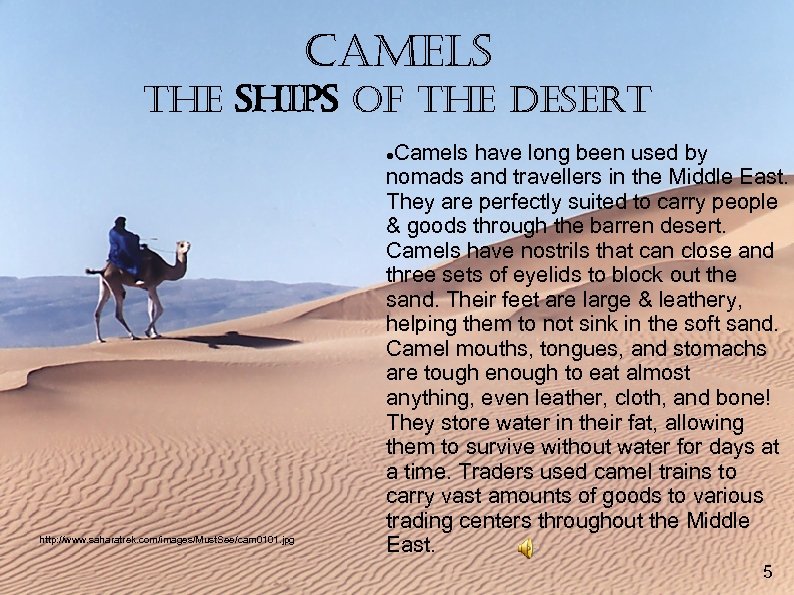 camels the ships of the desert Camels have long been used by nomads and travellers in the Middle East. They are perfectly suited to carry people & goods through the barren desert. Camels have nostrils that can close and three sets of eyelids to block out the sand. Their feet are large & leathery, helping them to not sink in the soft sand. Camel mouths, tongues, and stomachs are tough enough to eat almost anything, even leather, cloth, and bone! They store water in their fat, allowing them to survive without water for days at a time. Traders used camel trains to carry vast amounts of goods to various trading centers throughout the Middle East. http: //www. saharatrek. com/images/Must. See/cam 0101. jpg 5
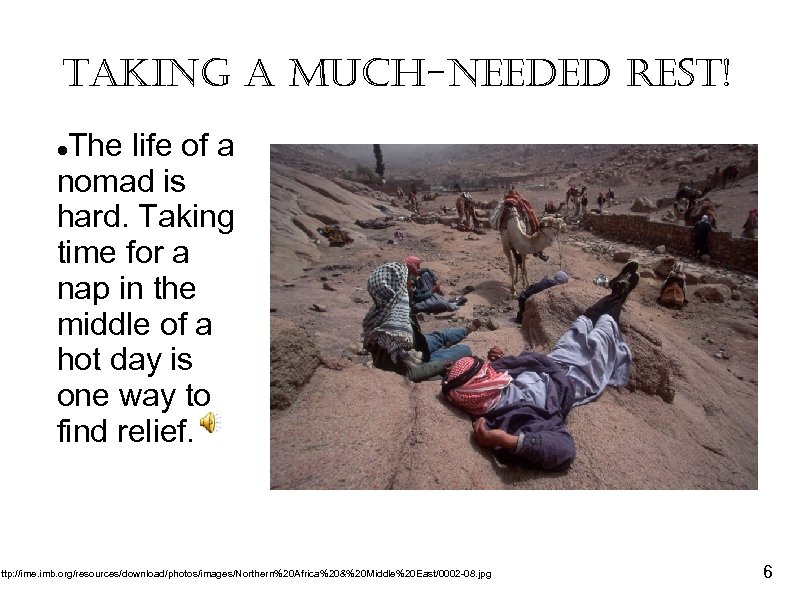 taking a much-needed rest! The life of a nomad is hard. Taking time for a nap in the middle of a hot day is one way to find relief. http: //ime. imb. org/resources/download/photos/images/Northern%20 Africa%20&%20 Middle%20 East/0002 -08. jpg 6
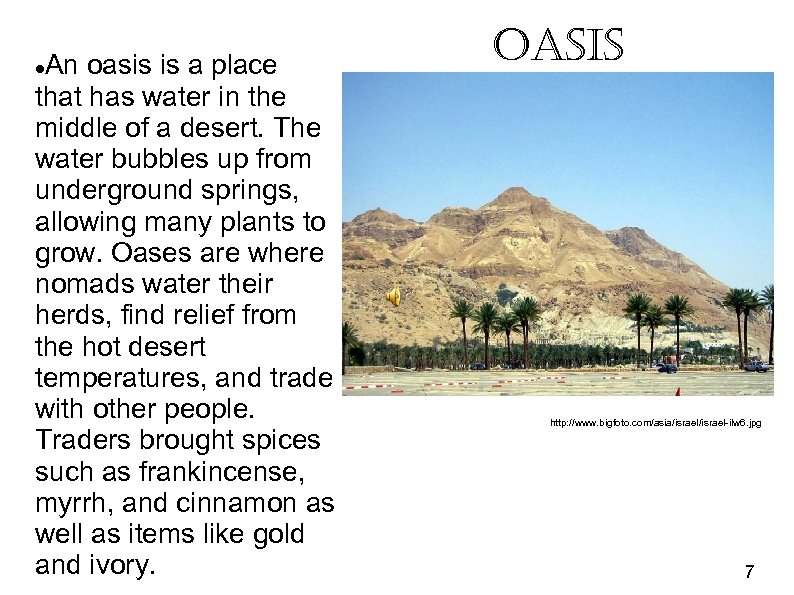 An oasis is a place that has water in the middle of a desert. The water bubbles up from underground springs, allowing many plants to grow. Oases are where nomads water their herds, find relief from the hot desert temperatures, and trade with other people. Traders brought spices such as frankincense, myrrh, and cinnamon as well as items like gold and ivory. oasis http: //www. bigfoto. com/asia/israel-ilw 6. jpg 7
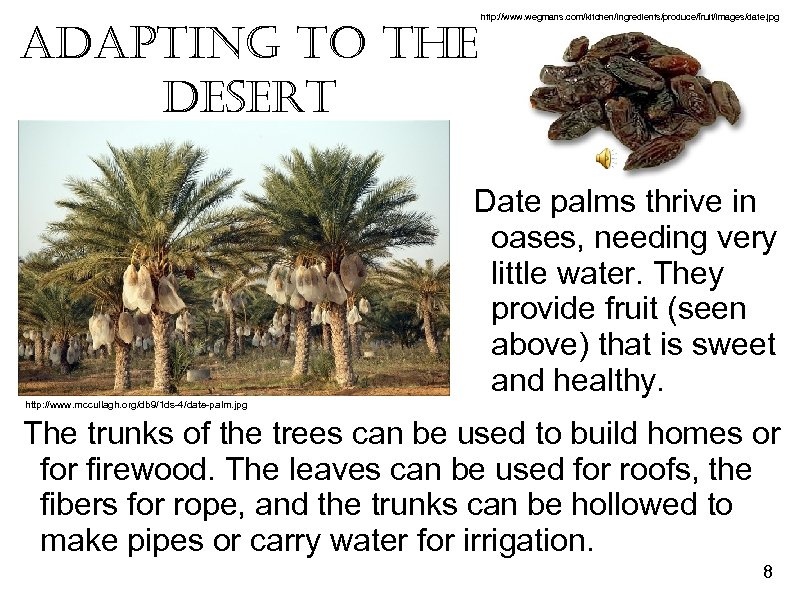 adapting to the desert http: //www. wegmans. com/kitchen/ingredients/produce/fruit/images/date. jpg Date palms thrive in oases, needing very little water. They provide fruit (seen above) that is sweet and healthy. http: //www. mccullagh. org/db 9/1 ds-4/date-palm. jpg The trunks of the trees can be used to build homes or firewood. The leaves can be used for roofs, the fibers for rope, and the trunks can be hollowed to make pipes or carry water for irrigation. 8
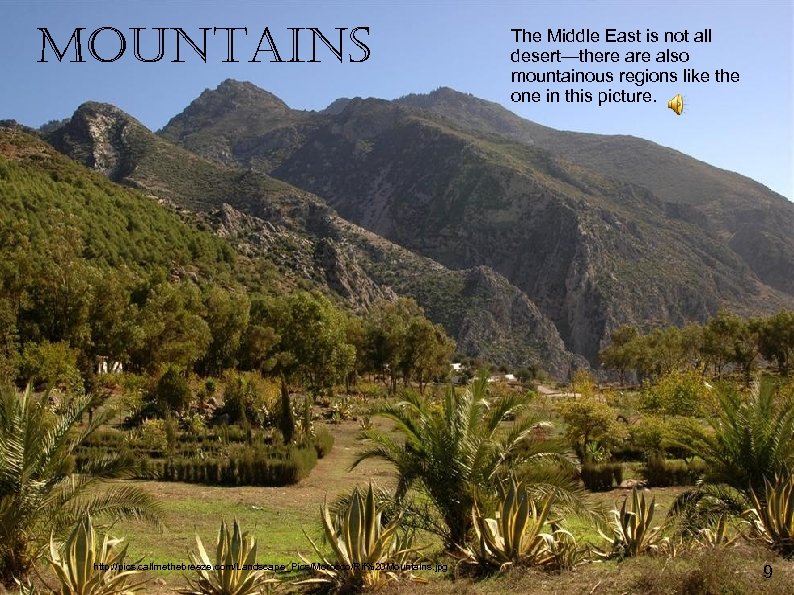 mountains http: //pics. callmethebreeze. com/Landscape_Pics/Morocco/Rif%20 Mountains. jpg The Middle East is not all desert—there also mountainous regions like the one in this picture. 9
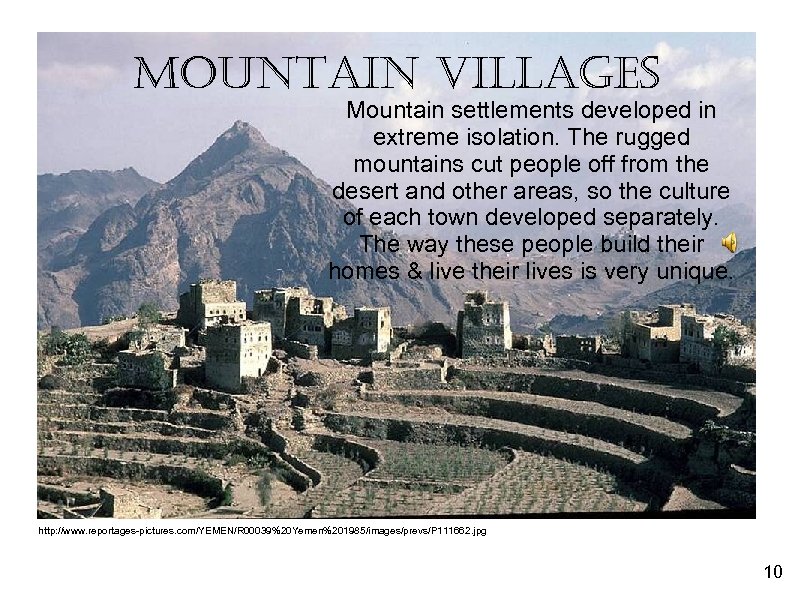 mountain villages Mountain settlements developed in extreme isolation. The rugged mountains cut people off from the desert and other areas, so the culture of each town developed separately. The way these people build their homes & live their lives is very unique. http: //www. reportages-pictures. com/YEMEN/R 00039%20 Yemen%201985/images/prevs/P 111662. jpg 10
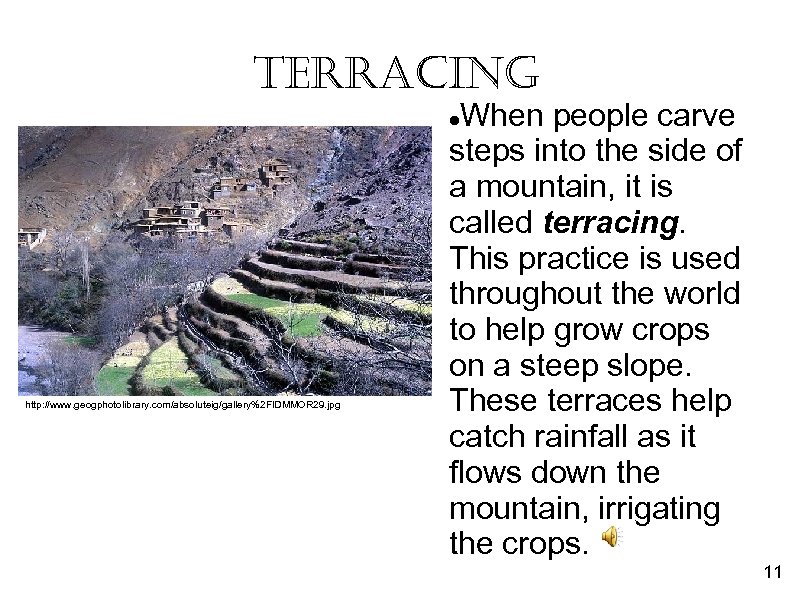 terracing When people carve steps into the side of a mountain, it is called terracing. This practice is used throughout the world to help grow crops on a steep slope. These terraces help catch rainfall as it flows down the mountain, irrigating the crops. http: //www. geogphotolibrary. com/absoluteig/gallery%2 FIDMMOR 29. jpg 11
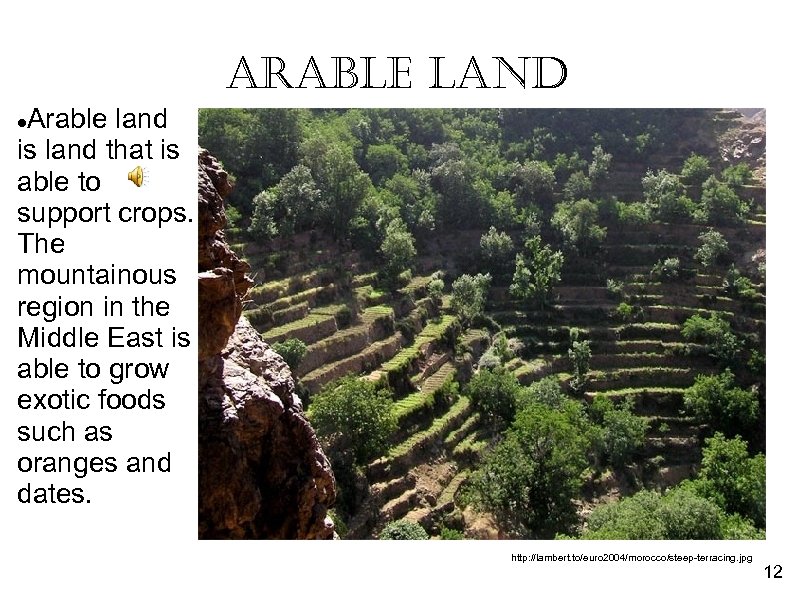 arable land Arable land is land that is able to support crops. The mountainous region in the Middle East is able to grow exotic foods such as oranges and dates. http: //lambert. to/euro 2004/morocco/steep-terracing. jpg 12
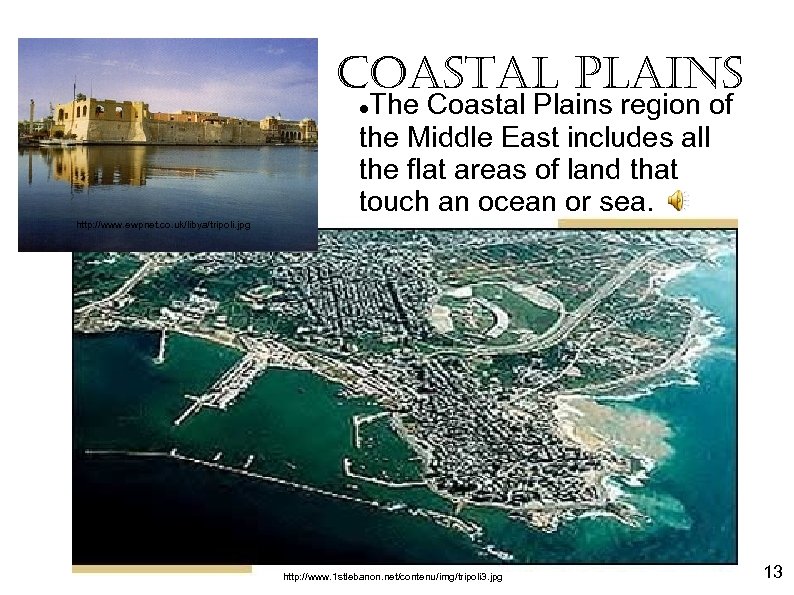 coastal plains The Coastal Plains region of the Middle East includes all the flat areas of land that touch an ocean or sea. http: //www. ewpnet. co. uk/libya/tripoli. jpg http: //www. 1 stlebanon. net/contenu/img/tripoli 3. jpg 13
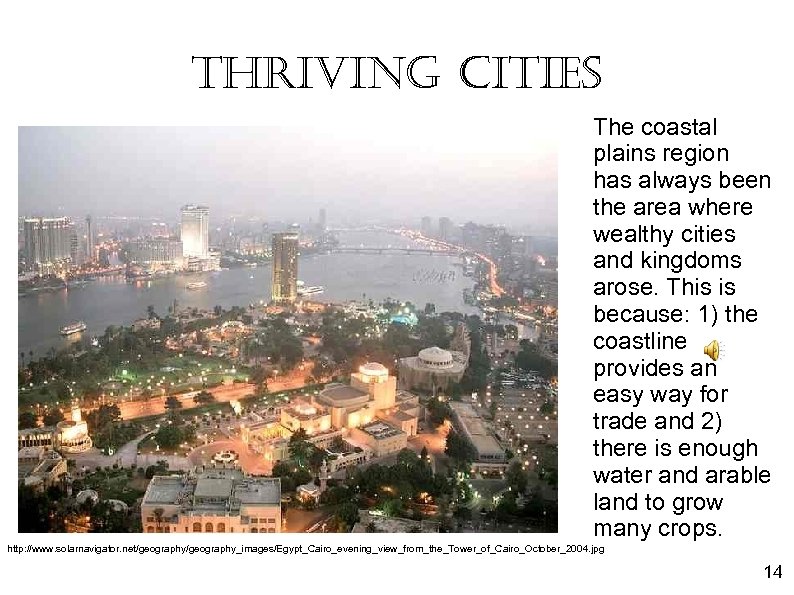 thriving cities The coastal plains region has always been the area where wealthy cities and kingdoms arose. This is because: 1) the coastline provides an easy way for trade and 2) there is enough water and arable land to grow many crops. http: //www. solarnavigator. net/geography_images/Egypt_Cairo_evening_view_from_the_Tower_of_Cairo_October_2004. jpg 14
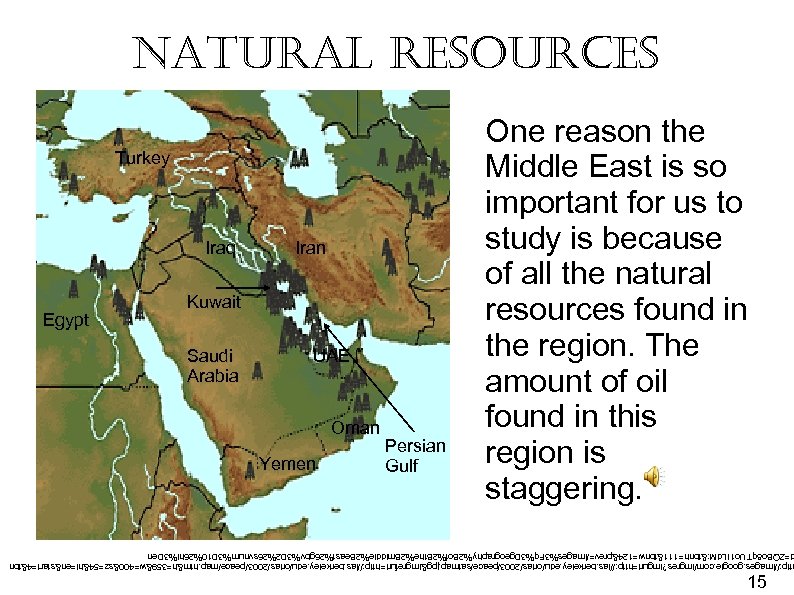 15 ttp: //images. google. com/imgres? imgurl=http: //ias. berkeley. edu/orias/2003/peace/satmap. jpg&imgrefurl=http: //ias. berkeley. edu/orias/2003/peace/map. htm&h=359&w=400&sz=54&hl=en&start=4&tbn =ZQBo 8 q. TUo 1 ILd. M: &tbnh=111&tbnw=124&prev=/images%3 Fq%3 Dgeography%2 Bof%2 Bthe%2 Bmiddle%2 Beast%26 gbv%3 D 2%26 svnum%3 D 10%26 hl%3 Den Yemen Oman Saudi Arabia Egypt Persian Gulf UAE Kuwait Iraq Iran Turkey One reason the Middle East is so important for us to study is because of all the natural resources found in the region. The amount of oil found in this region is staggering. natural resources
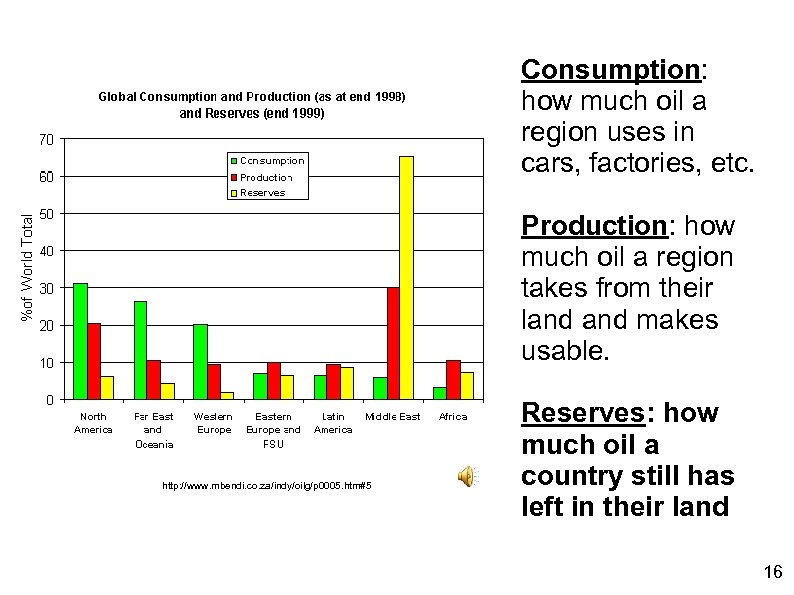 Consumption: how much oil a region uses in cars, factories, etc. Production: how much oil a region takes from their land makes usable. http: //www. mbendi. co. za/indy/oilg/p 0005. htm#5 Reserves: how much oil a country still has left in their land 16