


 Скачать презентацию Geography of Folk Culture Lecture Outline California State
67184d0679318193717015375e96b4d9.ppt
- Количество слайдов: 66
 Geography of Folk Culture Lecture Outline California State University, Northridge
 What is Folk Culture? • Popular – large and ever changing mass of people – division of labor – money based economy – police and army maintain order – heterogeneity and • Folk – traditional ways – often rural – cohesive and homogenous – little labor specialization – family maintains order – subsistence economy
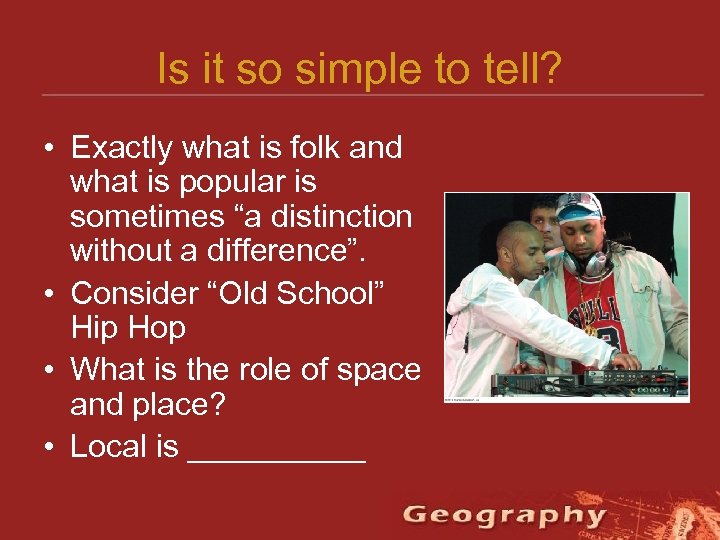 Is it so simple to tell? • Exactly what is folk and what is popular is sometimes “a distinction without a difference”. • Consider “Old School” Hip Hop • What is the role of space and place? • Local is _____
 What? - Cultural Features • Material Culture-things that can be touched and tasted (artifacts). • Non-material-things that can’t be seen, touched or tasted such as, songs or folk tales (mentifacts). • Some Geographers study nothing but folk material items.
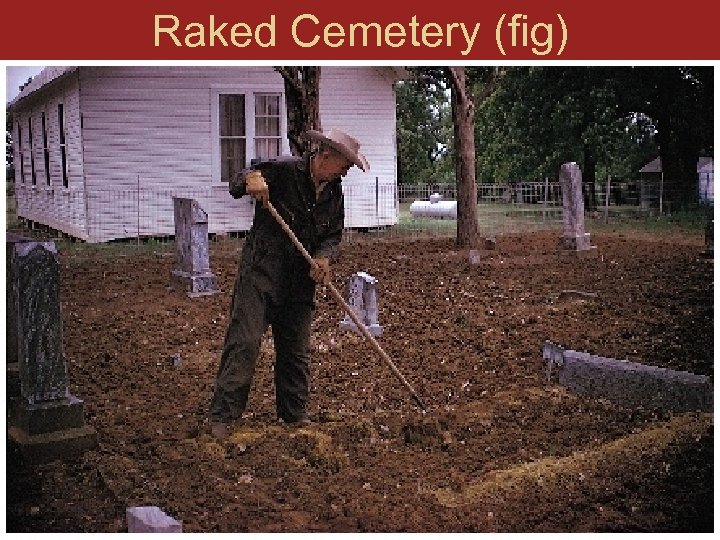 Raked Cemetery (fig)
 Folk Culture Regions • Defined on the basis of their individual cultural elements. • Included among these traits are: – Foodways – Song, dance and stories – Holidays, celebrations – Housing stock
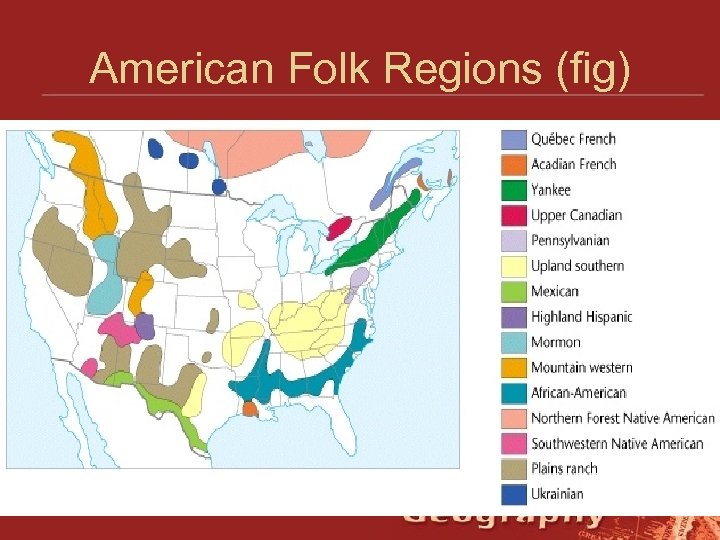 American Folk Regions (fig)
 Folk Food Regions • Geography of “spiciness” – Why? • Do any folk food regions still exist in the United States? • What would be a regional specialty for Southern California?
 Folk Medicine • Roots, barks and fruits of plants used to cure ailments. • Still preserved in parts of Appalachia, Indian reservations and the Hispanic borderlands. • Also in the Asian culture groups.
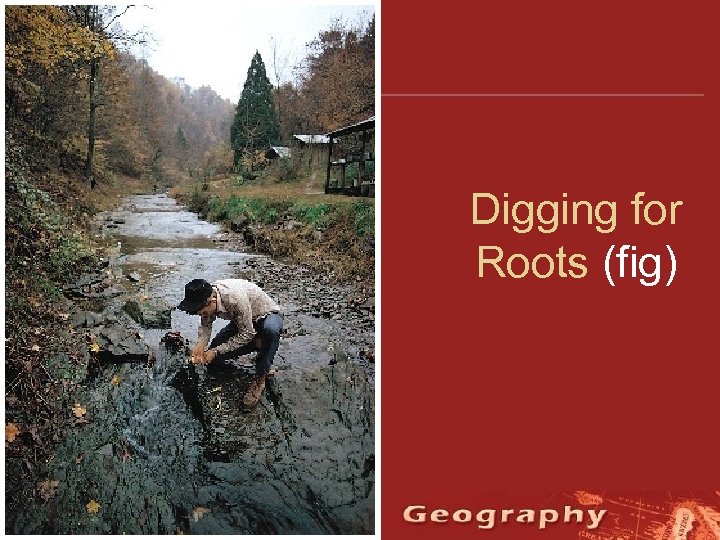 Digging for Roots (fig)
 Why dig? • COLUMBUS, Ohio (AP) - State wildlife officers have identified dozens of ginseng harvesting violations in their effort to protect the medicinal herb. The Ohio Department of Natural Resources says officers have uncovered over 60 violations involving more than 30 people. No one has been charged. Ron Rogers, wildlife law-enforcement supervisor for central Ohio, says the state regulates ginseng to discourage over-harvesting, preserve the wild plants and allow them to reach maturity. Last year, 3, 626 pounds of ginseng were legally harvested in Ohio's mature woodlands. The dried roots sell for $400 a pound. Potential violations include digging ginseng without landowner permission, off-season collecting or possession, failure to maintain accurate records and failure to certify ginseng prior to export.
 Geophagy • Dirt and clay eating • Still practiced in Africa and some parts of the American South. • Why? • Parasites, nutrition, religion.
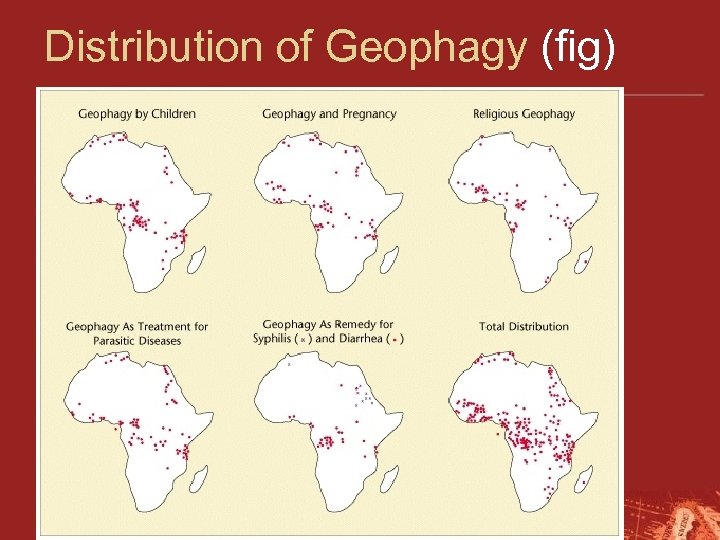 Distribution of Geophagy (fig)
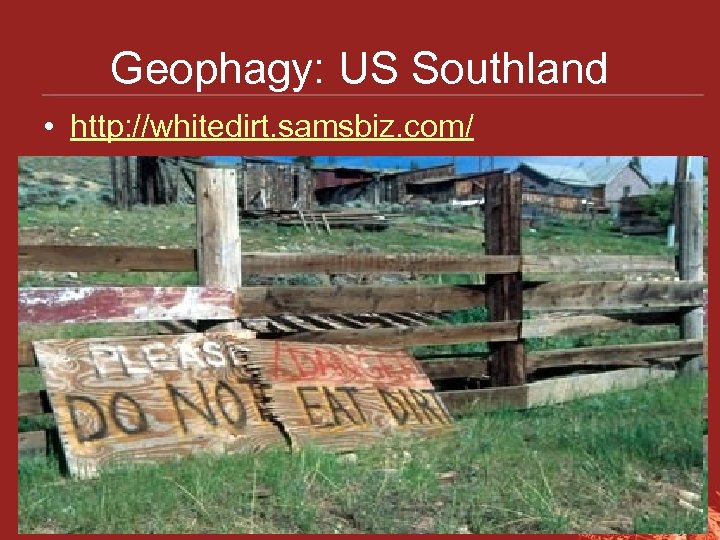 Geophagy: US Southland • http: //whitedirt. samsbiz. com/
 Folk Music • Folk music is that music that is produced largely for local consumption. • Profit motive is low. • Often uses homemade, or modest instrumentation (or none) • Often reflects the peculiarities of the local culture, local performance venues and even local climate conditions.
 Lining Out • The “lining out” style of church singing is an ancient folk singing style brought from the British Isles to the United States. • It has long since died out in New England where it was once most popular. • It can still be found in two types of places: • http: //www. youtube. com/watch? v=j. By. Wbx. Ig 7 OI • http: //www. youtube. com/watch? v=s. NOIY 5 lqep. A • http: //www. youtube. com/watch? v=2 o 0 No. CAHpvg
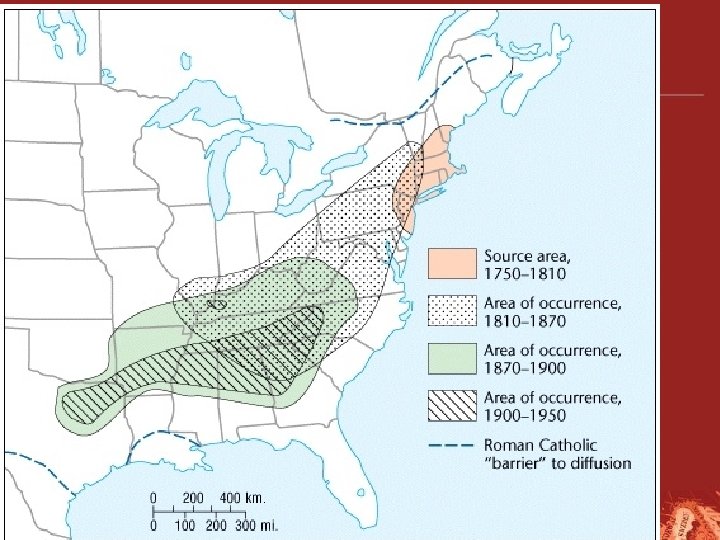 Diffusion of Yankee Folk Singing (fig)
 Why is it “here and not there” • Still most popular in the Upland South and among black churches. Why? • Camp meetings and Yankee teachers. • Why has this style diminished in the source area? • Why did it not spread to South Louisiana, or Southern California?
 Cultural Integration in Folk Geography • Many folk practices are accepted into the larger world, and sometimes money is earned. • Popular culture frequently derived from folk materials. • Folk cultures also absorb popular culture
 Example: Mountain Moonshine • Came with the Scots-Irish in the 1700 s • Enjoyed much popularity during the prohibition era. • Often most popular in devout Baptist/Methodist areas and in dry counties. • Good money maker-much better than corn! • What is the geographic factor? • Major bust in July 2000 in Carolinas, TN. • Stock car racing and Moonshiners?
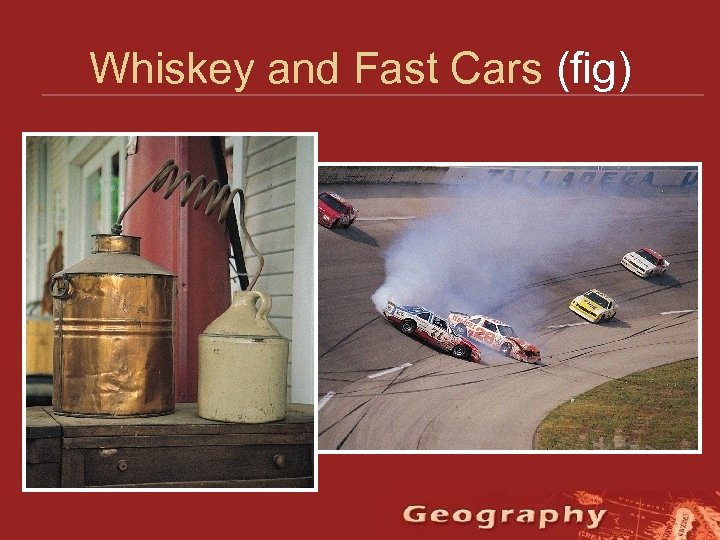 Whiskey and Fast Cars (fig)
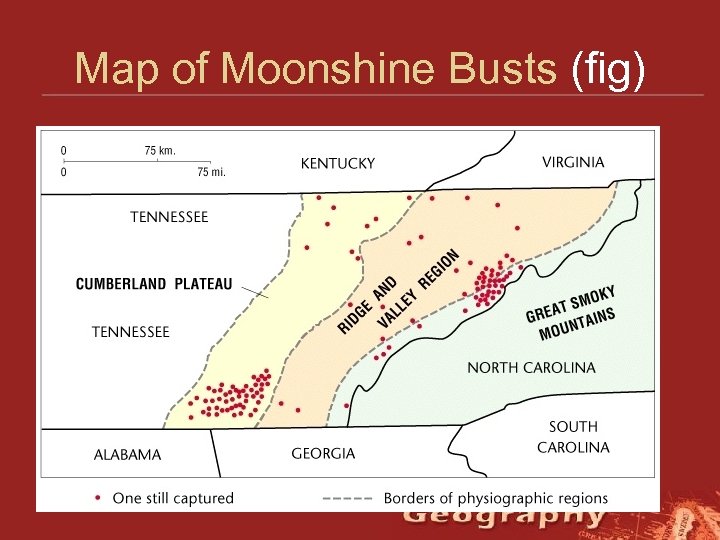 Map of Moonshine Busts (fig)
 Country & Western Music • • We got bof’ kinds of music hyear. . . Derived from Scots-Irish roots. Fiddle heavy-bagpipe substitute? Stayed in the mountains for decades Mixed with African elements Role of Ralph Peer and WSM. Popularized, electrified and homogenized by Nashville.
 Example: Bluegrass • • Bill Monroe Scottish Church singing Mountain Jazz Arnold Shultz and Uncle Pen Place oriented Voice pitch and sexual mores? http: //www. youtube. com/watch? v=r 2 XT 9 u 7 iw 9 o&feature=related
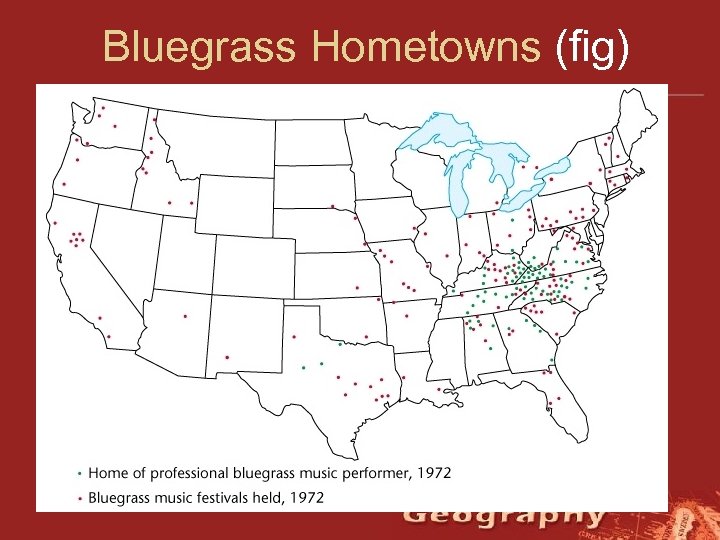 Bluegrass Hometowns (fig)
 Folk Landscapes • Folk architecture is a good indicator of past folk life activity. • Structures built from collective memory. • Functional and often specific to natural conditions
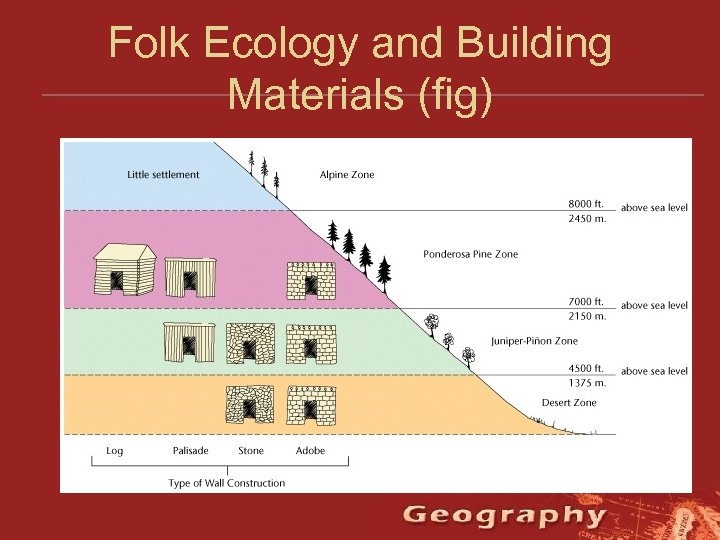 Folk Ecology and Building Materials (fig)
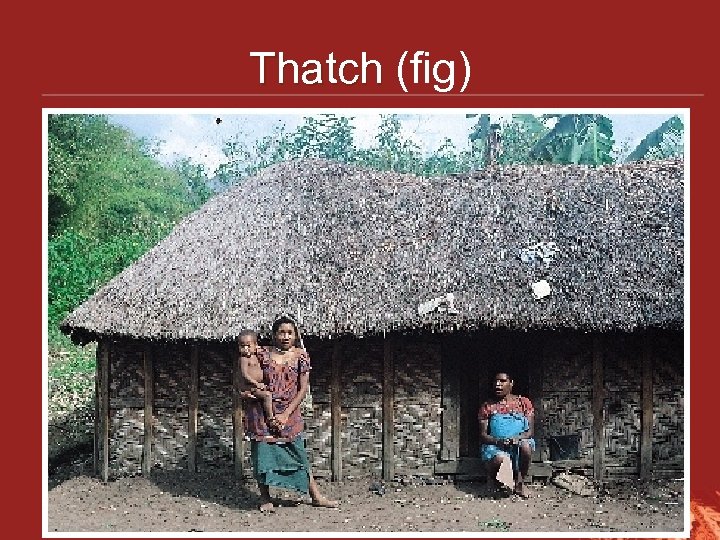 Thatch (fig) Thatch
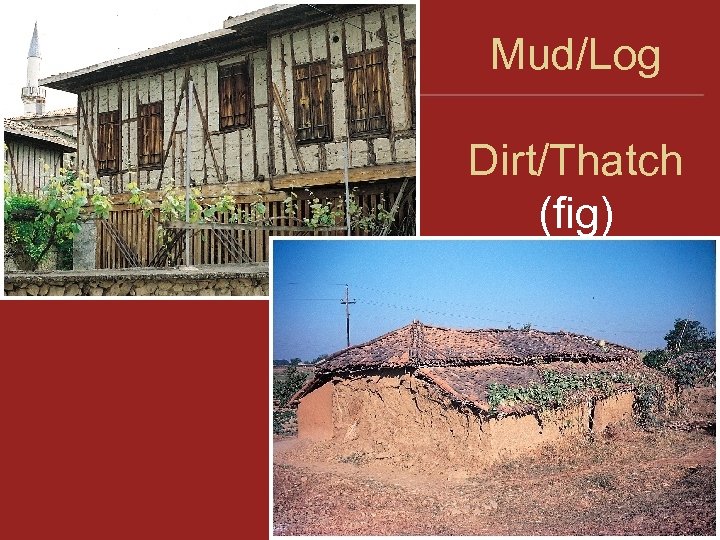 Mud/Log Dirt/Thatch (fig)
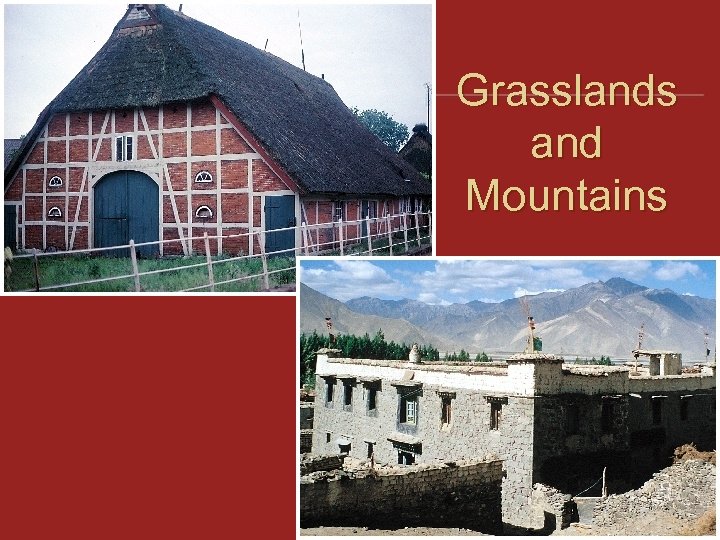 Grasslands and Mountains
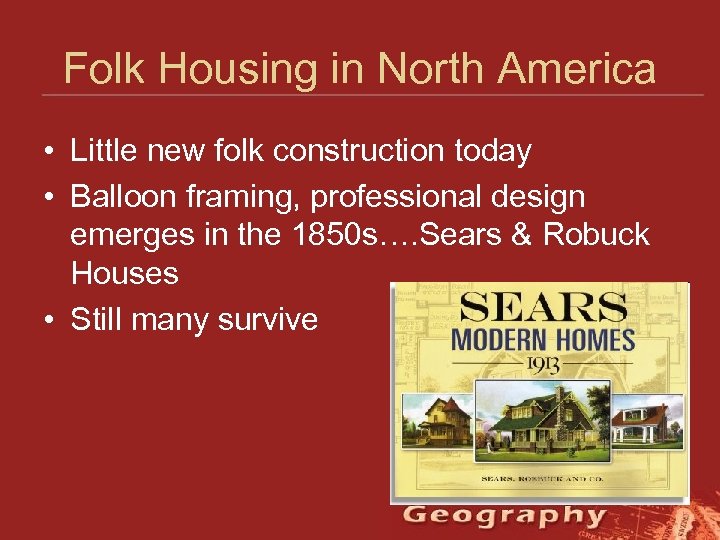 Folk Housing in North America • Little new folk construction today • Balloon framing, professional design emerges in the 1850 s…. Sears & Robuck Houses • Still many survive
 Building Materials • A sure clue to folk architecture is the local source materials. • Buildings made from distant materials are rarely of folk origins. – Bricks, grass, wood, stone • Climate influences choice of materials • Adobe houses of the Southwest
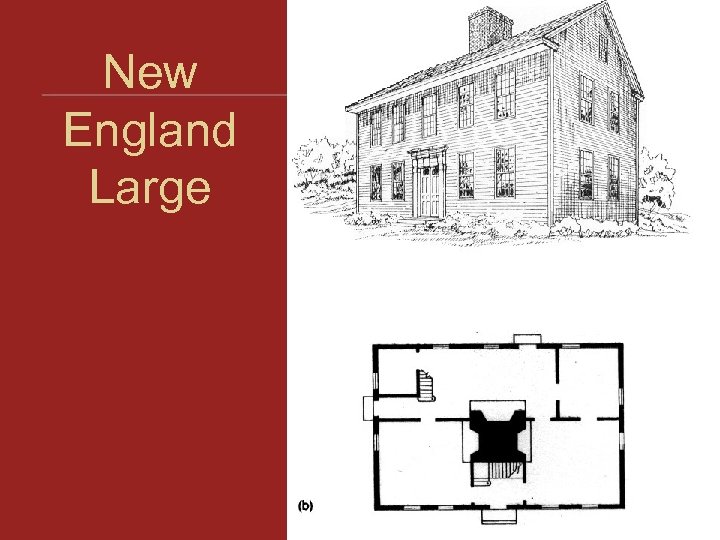
 Floor Plan • The floor plan of a house is another clue to its folk origins. • Many times the exterior of a house has been redone making it hard to determine its folk past. • Certain floor plans are common in certain regions of the United States.
 Other clues • Consider the shape and pitch of the roof • Placement of the chimney (s) • Number and location of doors and windows. • Design of the porch…if there is one.
 Four Main North American Styles • • Yankee Midwestern Upland South Lowland South • French
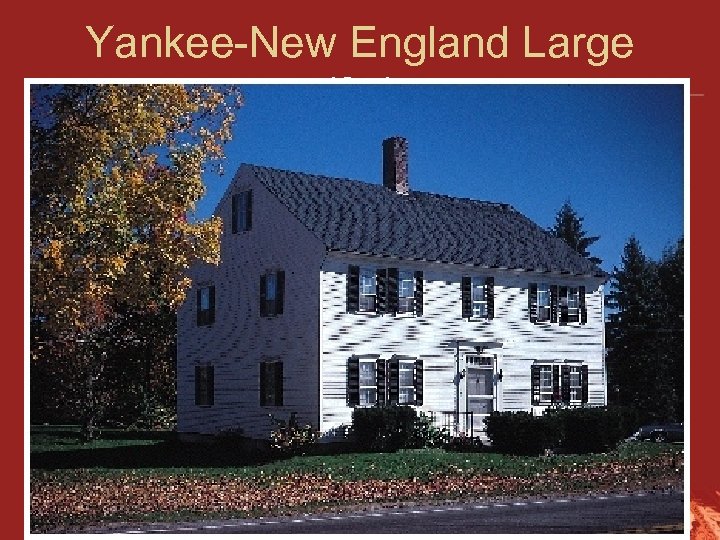
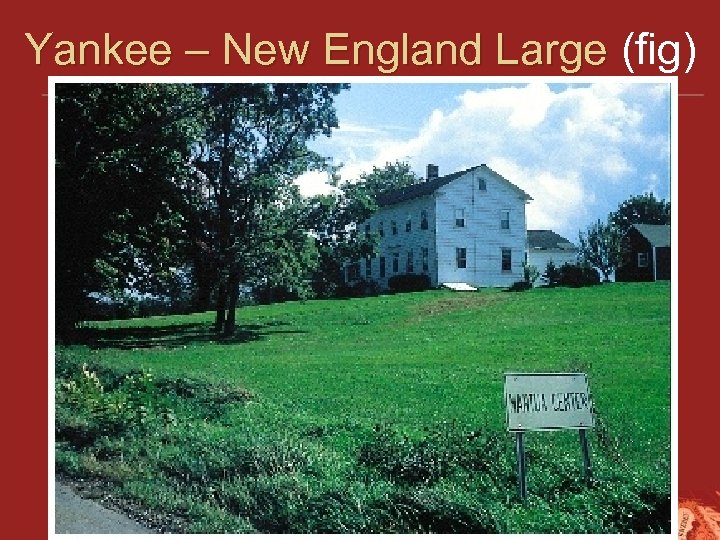
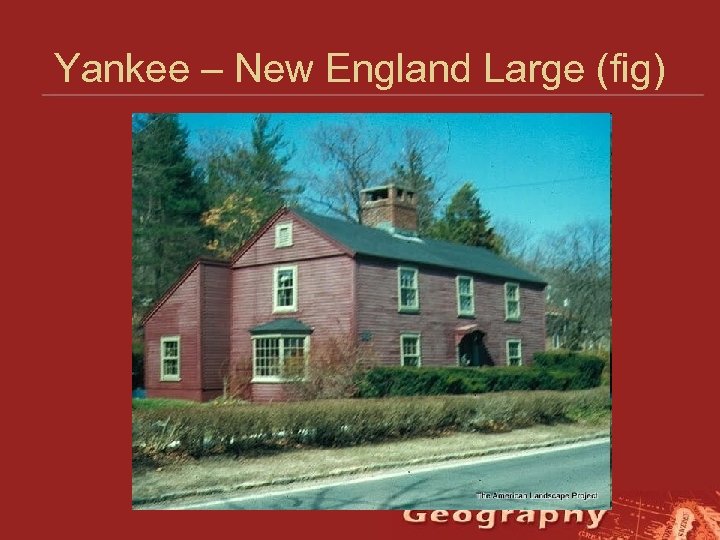
 Yankee • Found mostly in New England the Great Lakes region of the Midwest. • Features typically include: – Large central chimney – Rooms arranged around central chimney – Steeply pitched roofs – Symmetry is important – Frequent style references to Greece/Rome
 New England Large
 Yankee-New England Large (fig)
 Yankee – New England Large (fig) Yankee – New England Large
 Yankee – New England Large (fig)
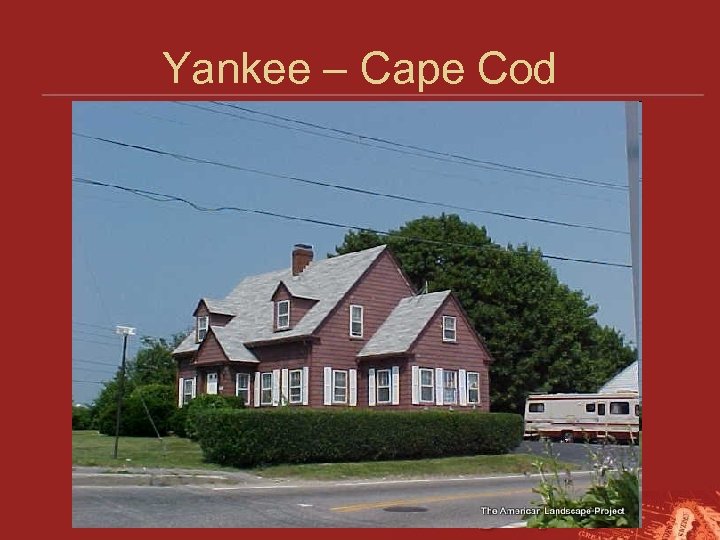
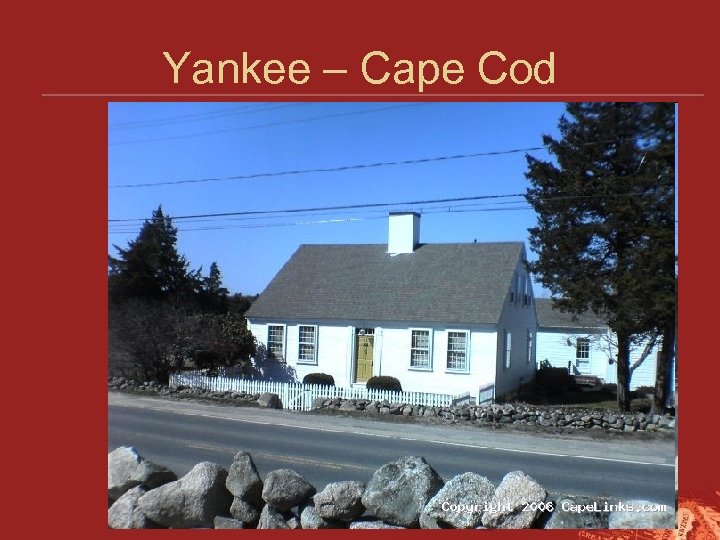
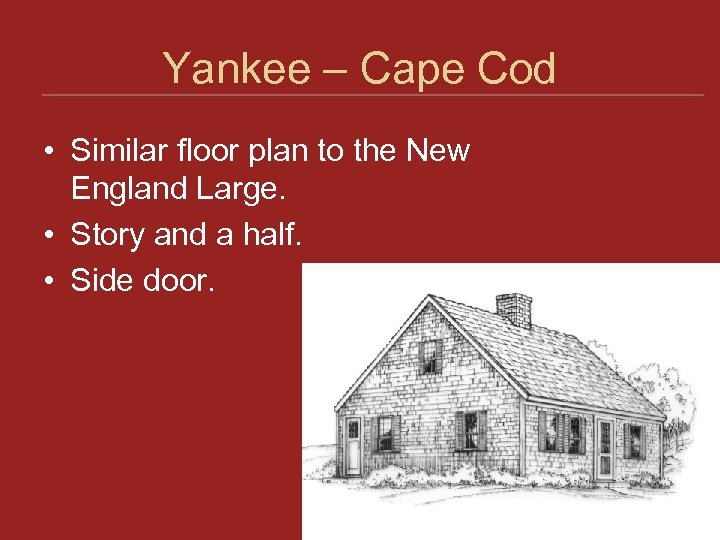 Yankee – Cape Cod • Similar floor plan to the New England Large. • Story and a half. • Side door.
 Yankee – Cape Cod
 Yankee – Cape Cod
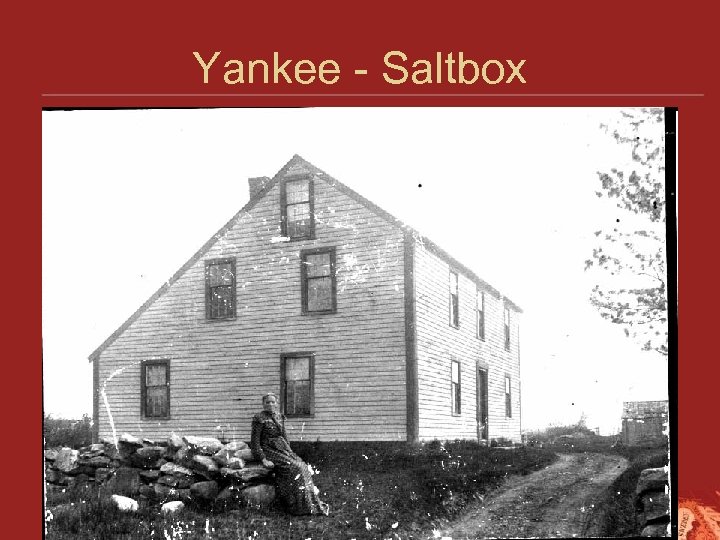
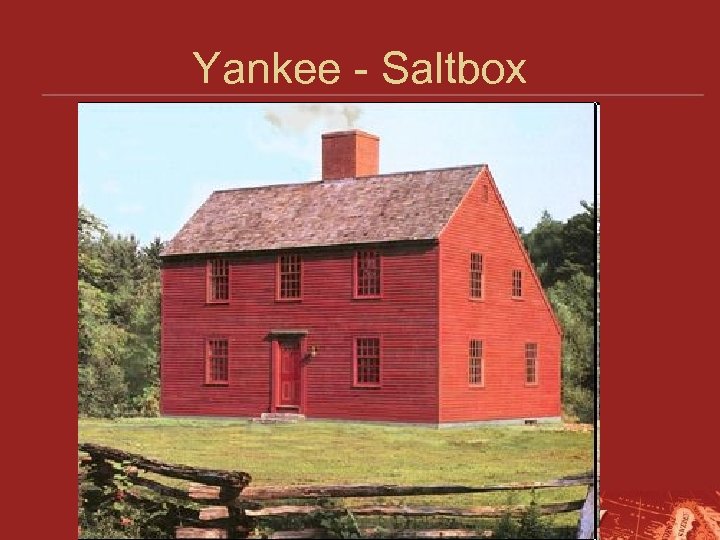
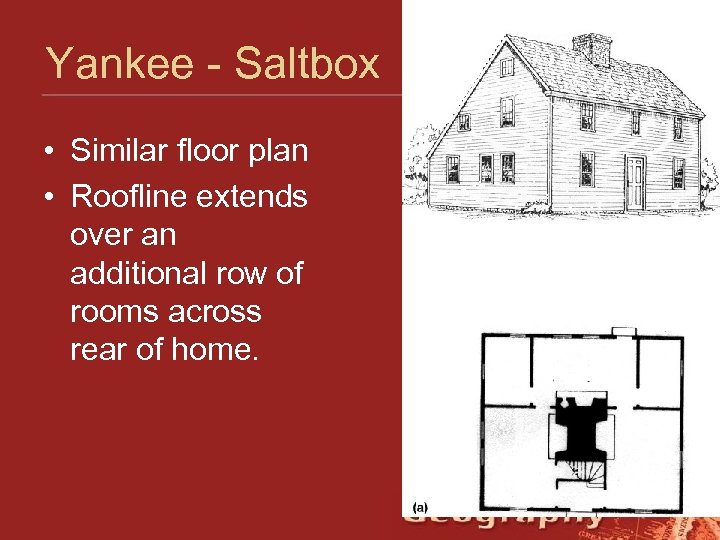 Yankee - Saltbox • Similar floor plan • Roofline extends over an additional row of rooms across rear of home.
 Yankee - Saltbox
 Yankee - Saltbox
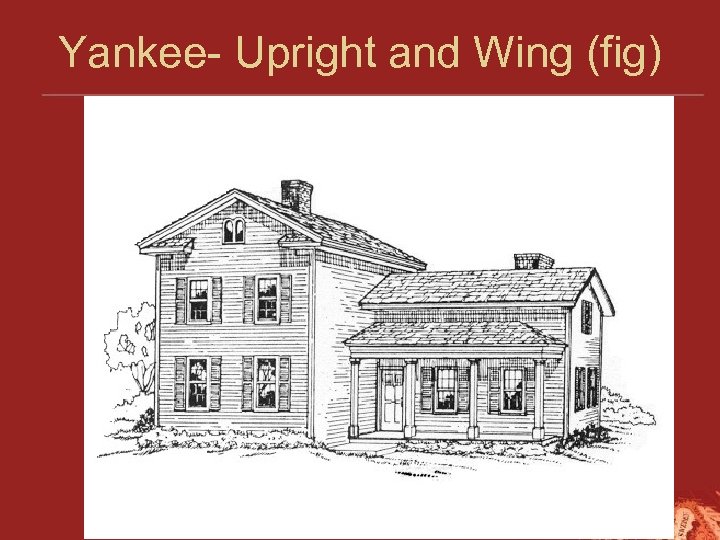
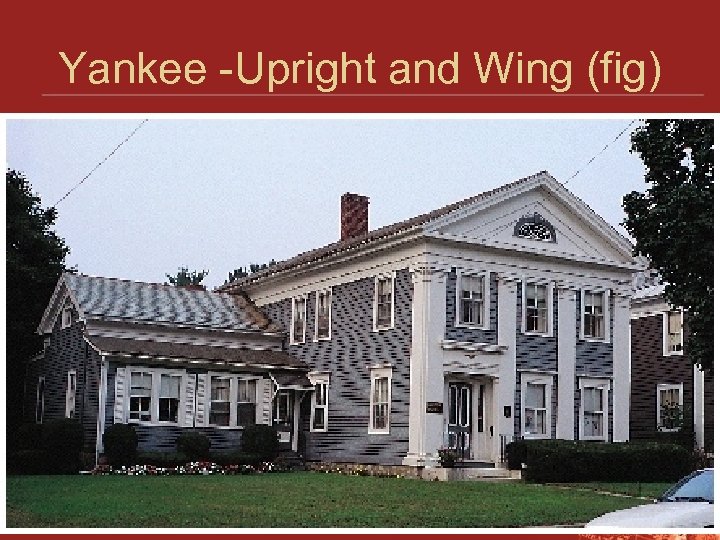
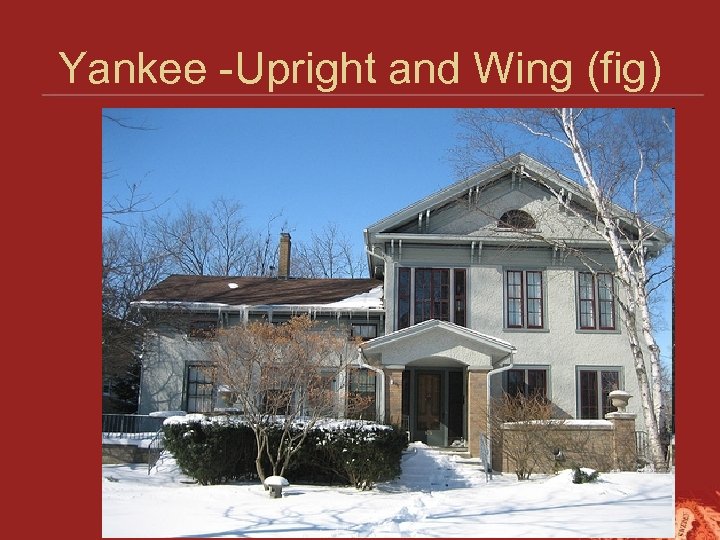
 Yankee -Upright and Wing (fig) • Demonstrates the infusion of popular culture (style) into the more purely functional folk house (type). • This house is in some ways a New England Large, turned sideways, so the gabled end faces the street to give it a Classical Appearance, which became popular in the early 1800. • Later becomes fully “Greek Revival”
 Yankee- Upright and Wing (fig)
 Yankee -Upright and Wing (fig)
 Yankee -Upright and Wing (fig)
 Midwest / Mid Atlantic • The Midwest and Mid Atlantic states have only two, similar house types. • Both are one room deep and two rooms wide • Both have gable end chimneys • Both have central hallways
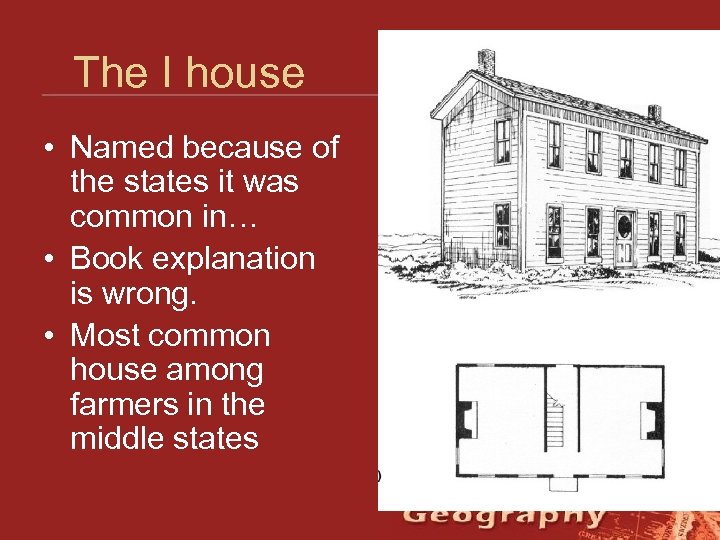 The I house • Named because of the states it was common in… • Book explanation is wrong. • Most common house among farmers in the middle states
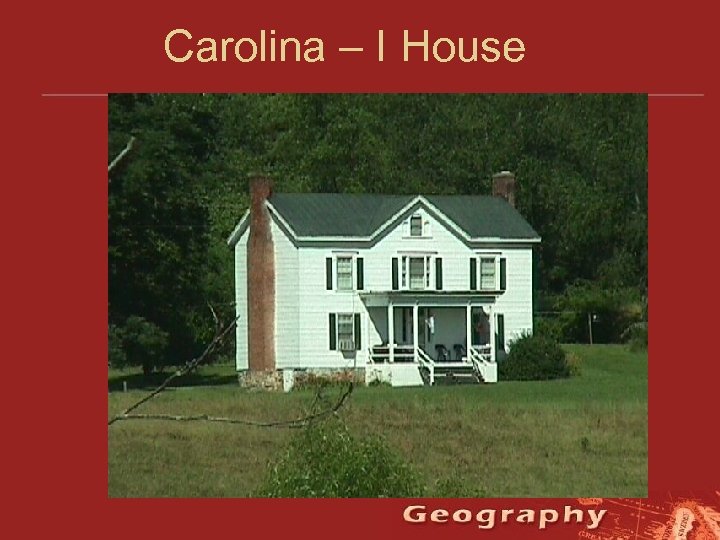 Carolina – I House
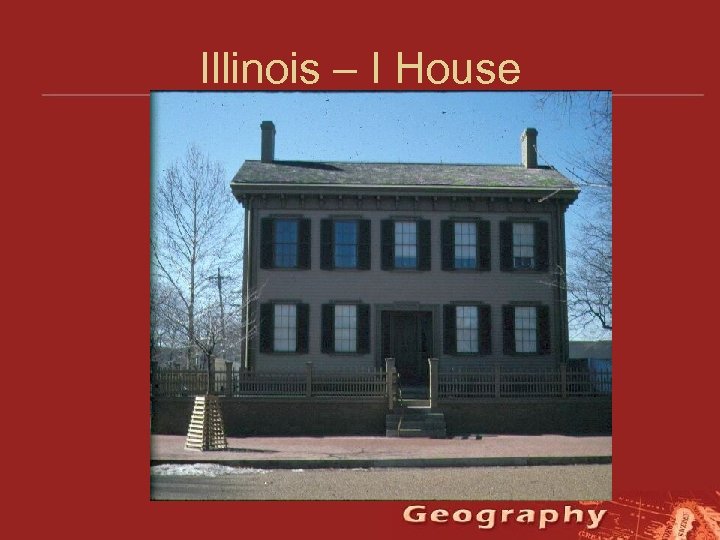 Illinois – I House
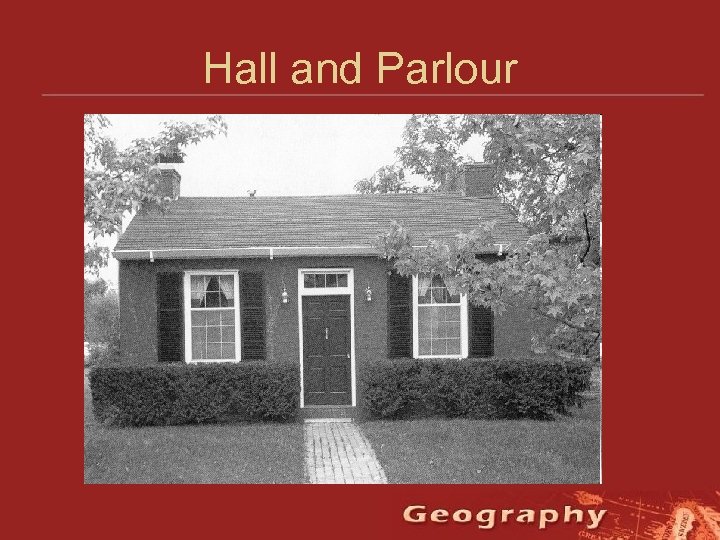 Hall and Parlour
 Upland South • The Upland South is the “hillbilly” south, or the part that was not dominated by plantation agriculture. • Scots-Irish and Germanic influences are primary.
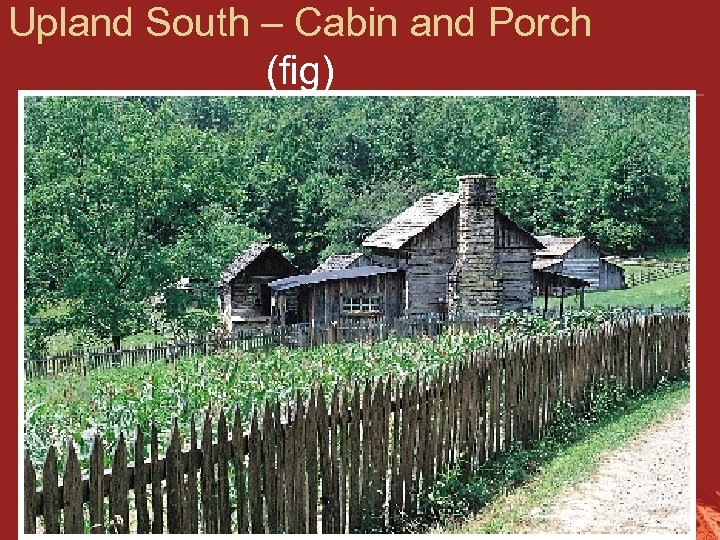 Upland South – Cabin and Porch (fig)
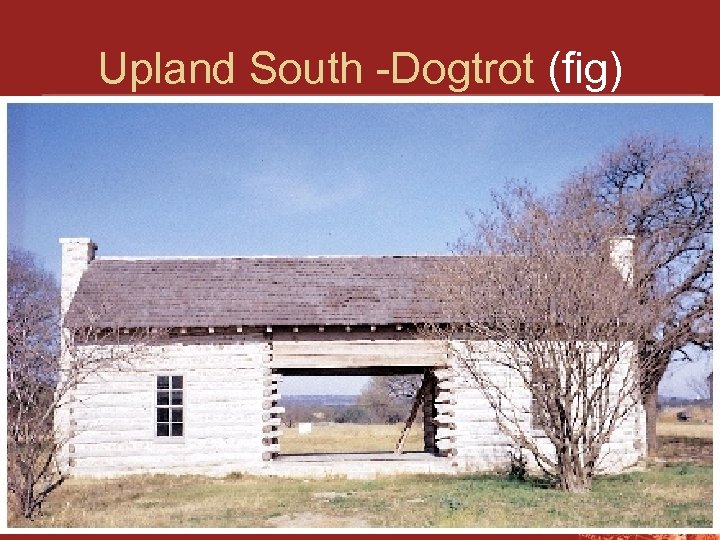 Upland South -Dogtrot (fig)
 Lowland South • The old plantation South • African and Caribbean influences are evident • Rare to find middle class housing
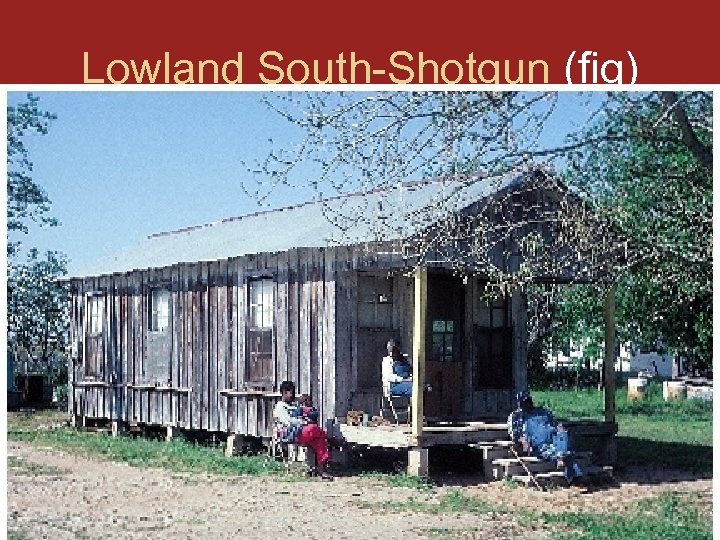 Lowland South-Shotgun (fig)
 Other Regional Specialties • In some regions, the ethnic heritage of the local population remained dominant because there was less influence from other ethnicities or nationalities. • They remain distinct today.
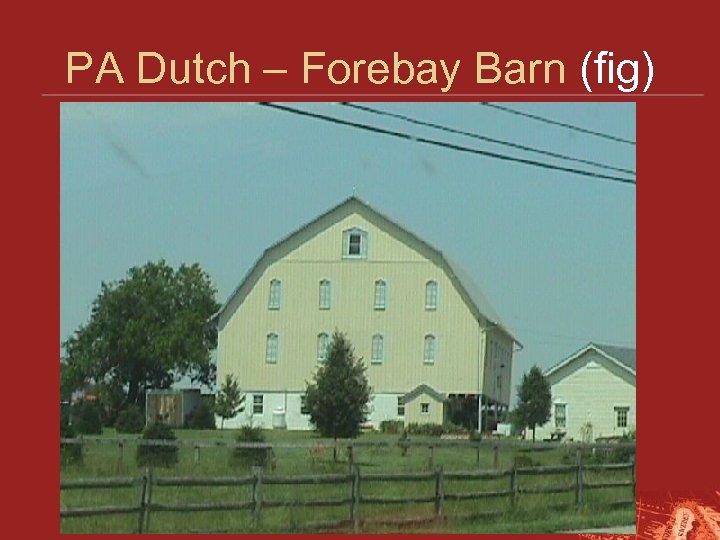 PA Dutch – Forebay Barn (fig)
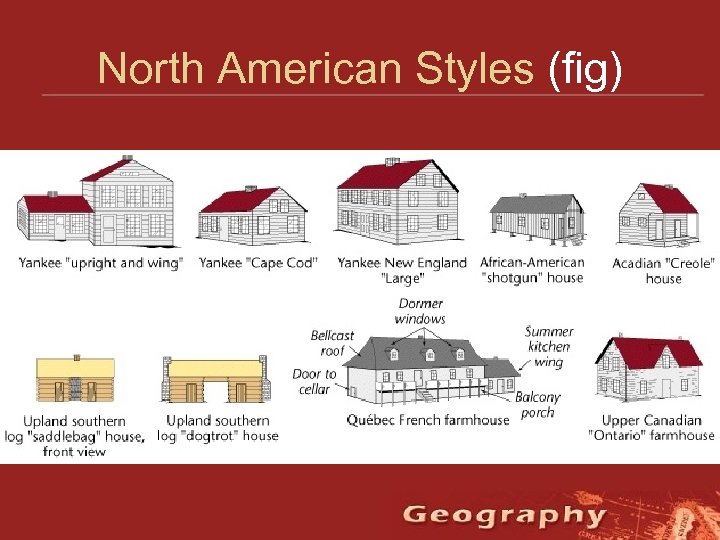 North American Styles (fig)
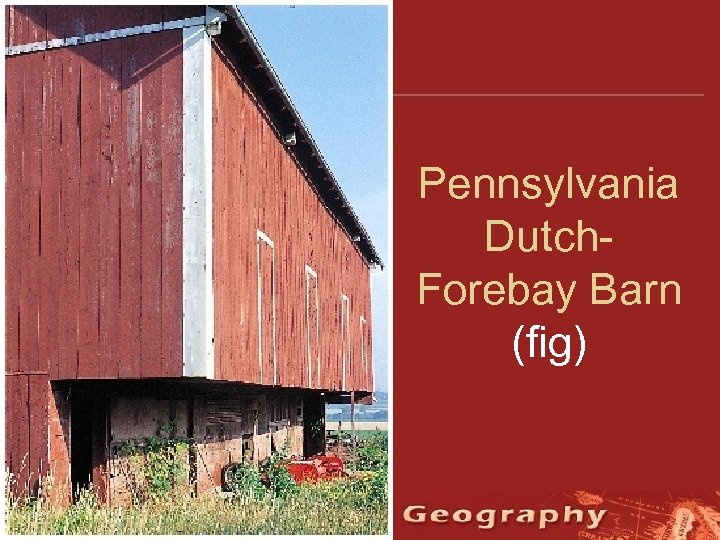 Pennsylvania Dutch- Forebay Barn (fig)
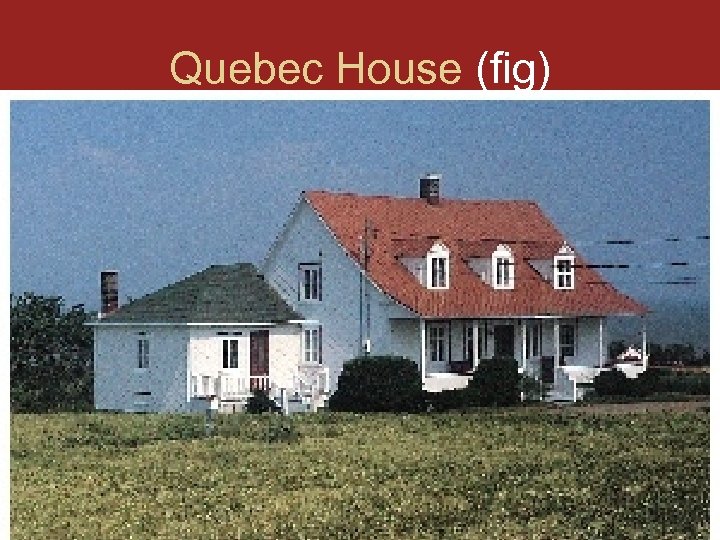 Quebec House (fig)
 Study Guide • http: //www. csun. edu/~sg 4002/courses/107_study_folk. html