


 Скачать презентацию GEOG 80 Transport Geography Professor Dr Jean-Paul
0826762c55060169b223224c43a6ec52.ppt
- Количество слайдов: 53
 GEOG 80 – Transport Geography Professor: Dr. Jean-Paul Rodrigue Topic 1 – Transportation and Geography A. B. C. D. What is Transport Geography? Transportation and Space Historical Evolution of Transportation II
 C – Historical Evolution of Transportation I ■ 1. Transportation in the Pre-Industrial Era (pre 1800 s) ■ 2. The Industrial Revolution and Transportation (1800 -1870) ■ 3. Emergence of Modern Transportation Systems (1870 -1920)
 1. Transportation in the Pre-Industrial Era (pre 1800 s) ■ Limited transport technology • • No mechanized forms of transportation. Harnessing animal labor and wind. Isolation and limited long distance trade. Reliance on maritime and fluvial transportation for long distance trade. • High value commodities (e. g. Silk Road). ■ Transportation and empire building • Roman Empire (road network, 80, 000 kilometers, 200 AD). • Chinese Empire (canal system, 2, 500 kilometers).
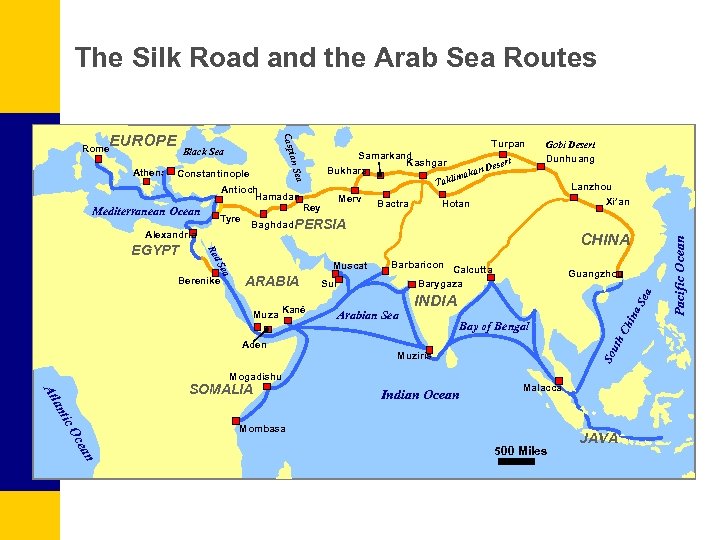 The Silk Road and the Arab Sea Routes Mediterranean Ocean Tyre Alexandria Rey Hotan Bactra Baghdad PERSIA Muza Kané Aden Sur Arabian Sea Guangzhou Sea ARABIA Barbaricon Calcutta Barygaza INDIA Bay of Bengal So uth ea d. S Berenike Muscat Lanzhou Xi’an CHINA Re EGYPT Merv Muziris Mogadishu Atl SOMALIA Indian Ocean Malacca tic an n ea Oc Mombasa 500 Miles JAVA Pacific Ocean Antioch Hamadan Gobi Desert Dunhuang ina ea Constantinople Turpan Samarkand rt Kashgar Dese Bukhara akan im Takl Ch Black Sea ian S Athens Casp EUROPE Rome
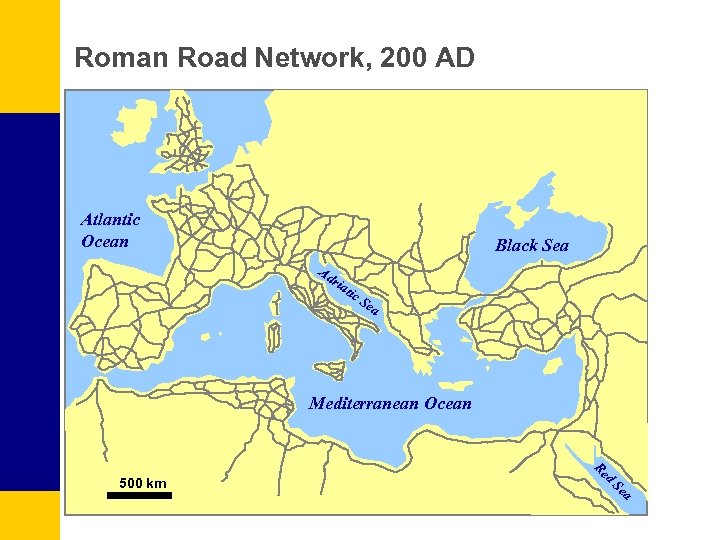 Roman Road Network, 200 AD Atlantic Ocean Black Sea Ad ria t ic S ea Mediterranean Ocean 500 km Re d Se a
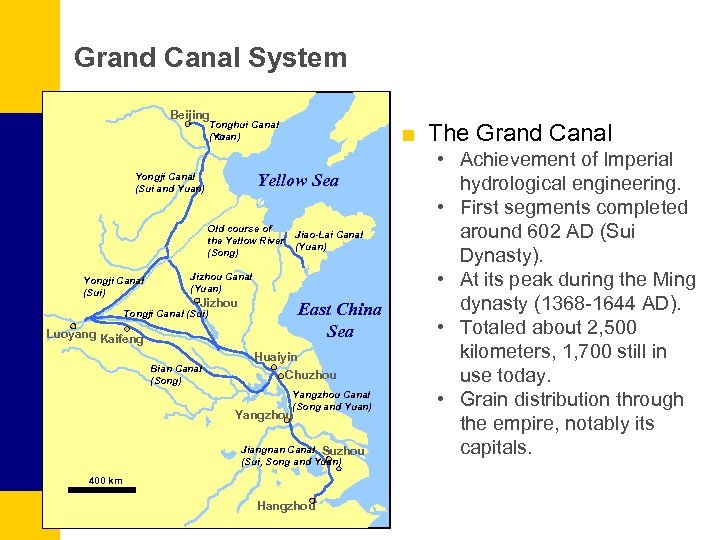 Grand Canal System Beijing ■ The Grand Canal Tonghui Canal (Yuan) Yellow Sea Yongji Canal (Sui and Yuan) Old course of the Yellow River (Song) Yongji Canal (Sui) Jiao-Lai Canal (Yuan) Jizhou East China Sea Tongji Canal (Sui) Luoyang Kaifeng Bian Canal (Song) Huaiyin Chuzhou Yangzhou Canal (Song and Yuan) Yangzhou Jiangnan Canal Suzhou (Sui, Song and Yuan) 400 km Hangzhou • Achievement of Imperial hydrological engineering. • First segments completed around 602 AD (Sui Dynasty). • At its peak during the Ming dynasty (1368 -1644 AD). • Totaled about 2, 500 kilometers, 1, 700 still in use today. • Grain distribution through the empire, notably its capitals.
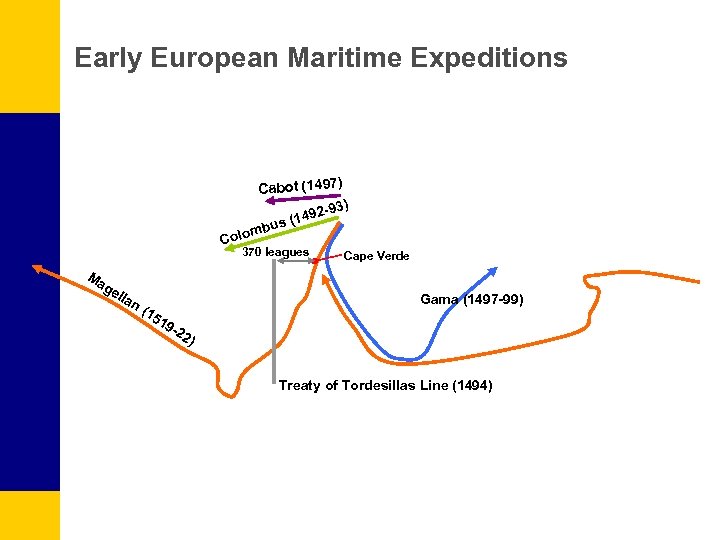
 1. Transportation in the Pre-Industrial Era (pre 1800 s) ■ European expansion • Mastery of sailing and artillery. • Eastern trade route: • • Discovered by Portugal. Cape of good hope reached by 1481. Gama (1497 -99) first to reach India. China reached by 1513. • Western trade route: • • Discovered by Columbus (1492). Failed to reach Asia (America discovered). Cabot tried (1497), but also failed. Magellan (1519 -22) successful to round the world. • Establishment of colonial empires.
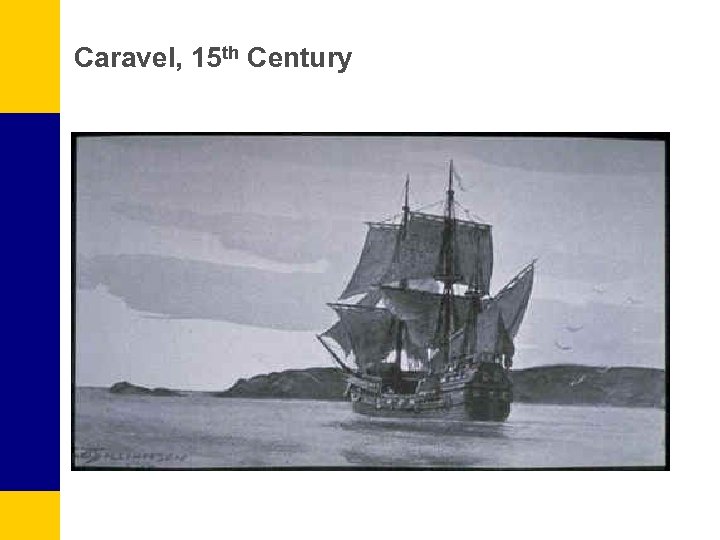 Caravel, 15 th Century
 Early European Maritime Expeditions Cabot (1497) -93) 1492 us ( lomb Co 370 leagues Ma ge lla n( 15 Cape Verde Gama (1497 -99) 19 -22 ) Treaty of Tordesillas Line (1494)
 Colonial Trade Pattern, North Atlantic, 18 th Century 1) Sugar, Molasses, Slaves 2) Flour, Meat, Lumber go, Lu di urs, In o, F c Tobac las r, Mo s ses North America Europe its , Fru 1 2 North Atlantic Ocean Ma nu fac tu re Suga Africa West Indies Dominant wind Trade Route South America Slaves, Gold, Pe p per
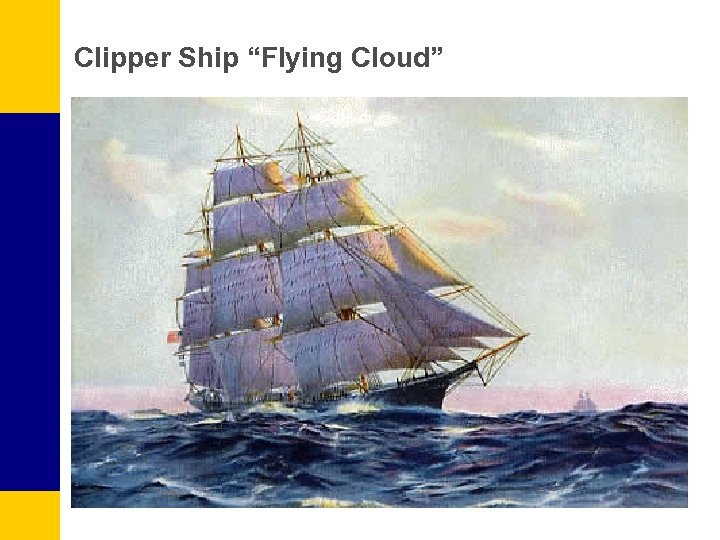
 2. The Industrial Revolution and Transportation (1800 -1870) ■ Mechanization of transportation • Steam engine (as a water pump). • First steamship on the Delaware river (1790). • Would lead to the development of railways. ■ Regular maritime routes • Notably over the North Atlantic (Europe – North America). • The era of clipper ships: • Fast cargo ships used for intercontinental trade (Asia, Europe, America). • The emergence of the steamship: • Savannah (first to cross the Atlantic in 1820). • Great Britain (first steel and helix propelled ship, 1844).
 Clipper Ship “Flying Cloud”
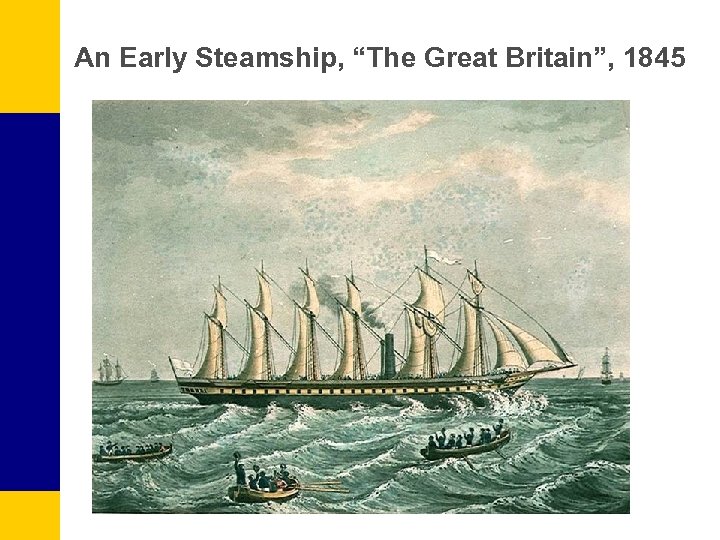 An Early Steamship, “The Great Britain”, 1845
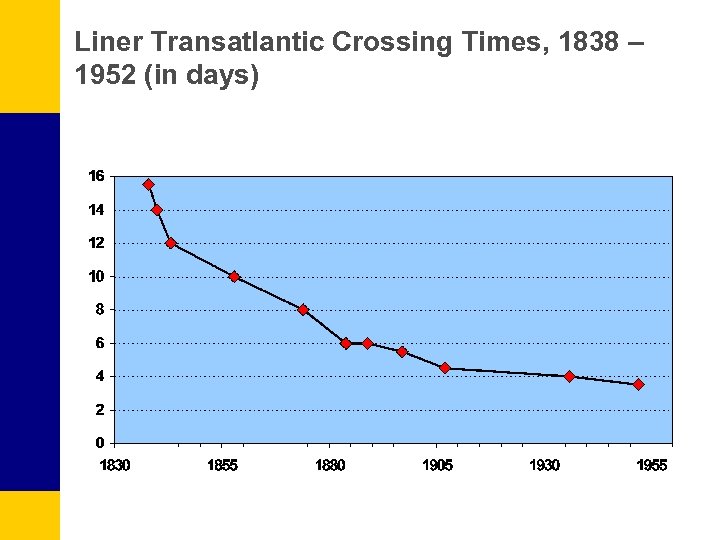 Liner Transatlantic Crossing Times, 1838 – 1952 (in days)
 2. The Industrial Revolution and Transportation (1800 -1870) ■ Land transport systems • Serious problems of land transportation. • Roads were commonly unpaved and could not be used to effectively carry heavy loads. • Attempts to develop toll road systems (Turnpikes in UK). ■ Freight shipping canals • Bridgewater Canal, Britain, 1761. • Erie Canal, New York, 1825. • Linking different segments of fluvial systems into a comprehensive waterway system. • Fluvial barges. • Lowered significantly land transport costs. • Permitted initial industrialization.
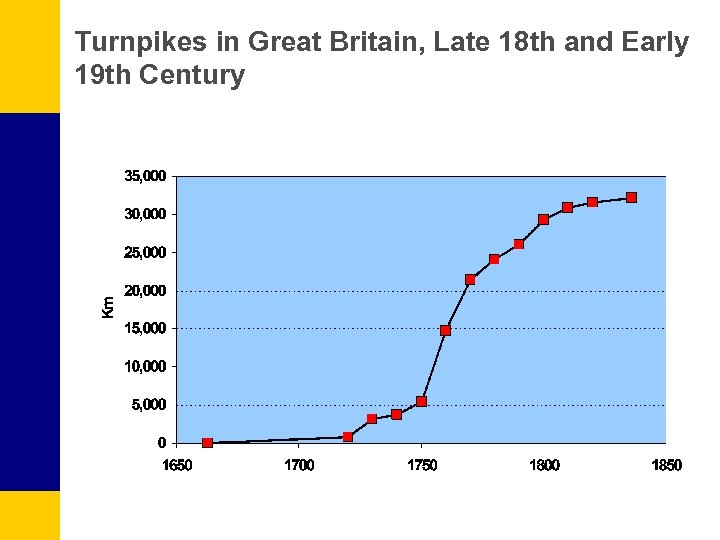 Turnpikes in Great Britain, Late 18 th and Early 19 th Century
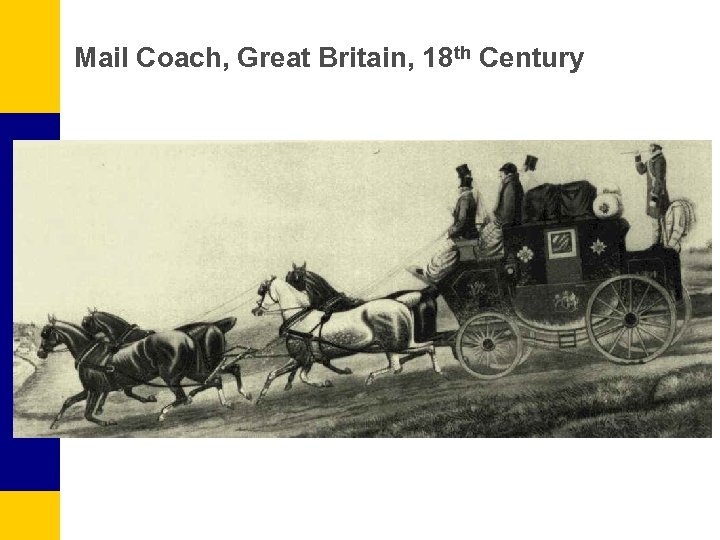 Mail Coach, Great Britain, 18 th Century
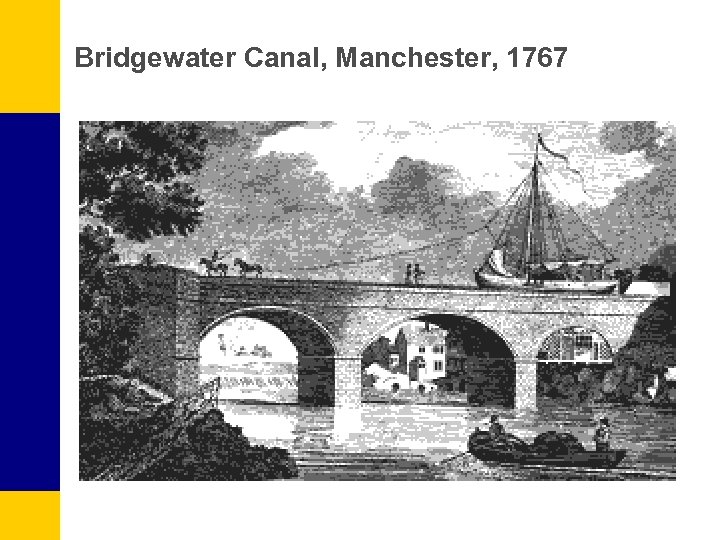 Bridgewater Canal, Manchester, 1767
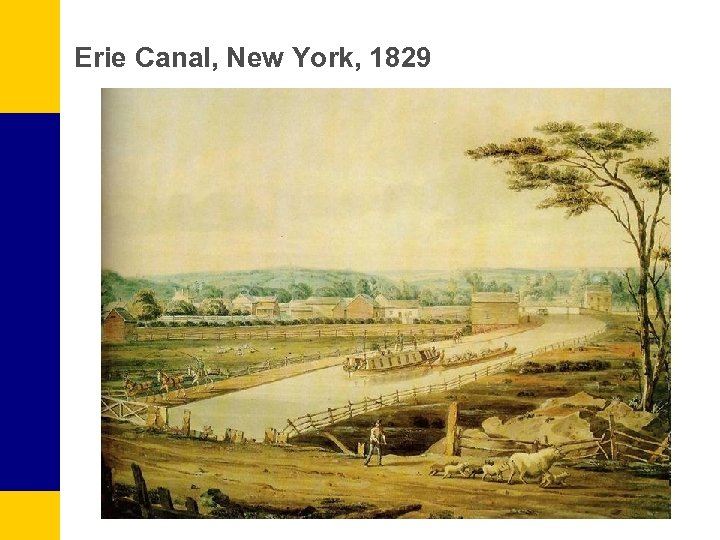 Erie Canal, New York, 1829
 2. The Industrial Revolution and Transportation (1800 -1870) ■ Railway systems • First commercial rail line in 1830 (Manchester. Liverpool; 40 miles). • Access to national resources and markets: • The triumph of inland transportation. • First urban systems. • End of the canal era: • Many canals fell into disrepair. • Unable to compete with the speed and flexibility of rail. • Only the most strategic links were kept. • From a point-to-point to an integrated rail system: • Large companies. • Standard gauge.
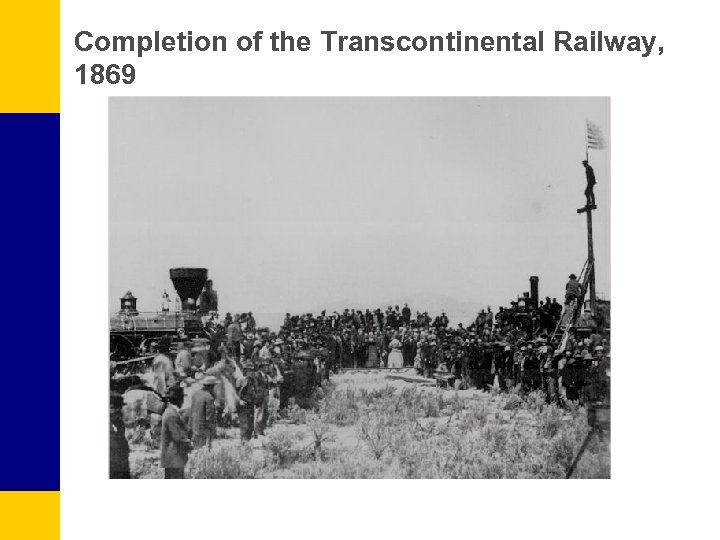 Completion of the Transcontinental Railway, 1869
 3. Emergence of Modern Transportation Systems (1870 -1920) ■ Growth of international transportation • Shift from coal to oil in ships: • Reduce their energy consumption by a factor of 90%. • Increase in ship size (no longer limited by wood). • Construction of the Suez and Panama canals. ■ Dominance of the rail transport system • By the early 20 th century, most systems reached their peak. • Overinvestment and over development. • A phase of decline then began.
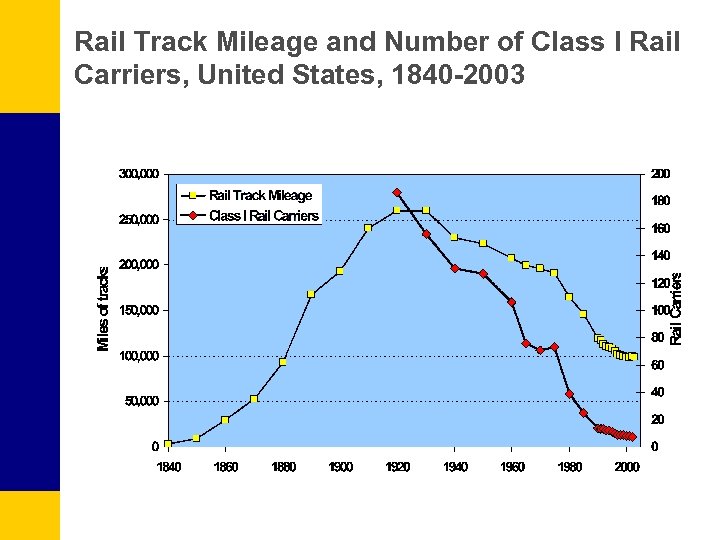 Rail Track Mileage and Number of Class I Rail Carriers, United States, 1840 -2003
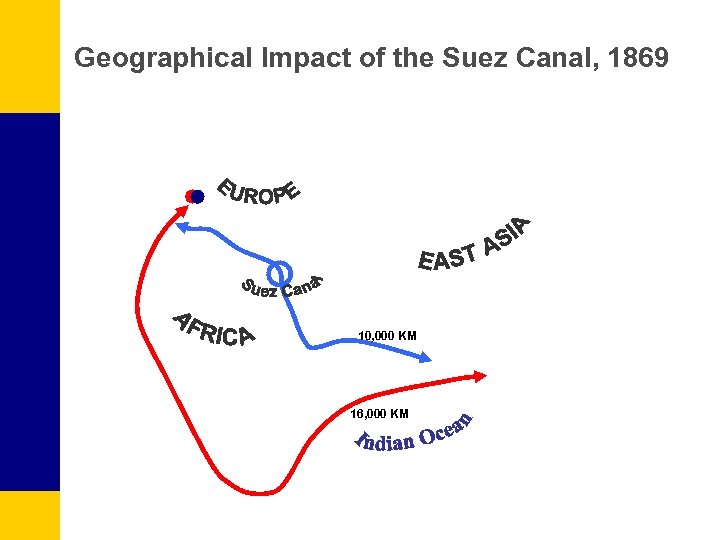 Geographical Impact of the Suez Canal, 1869 10, 000 KM 16, 000 KM
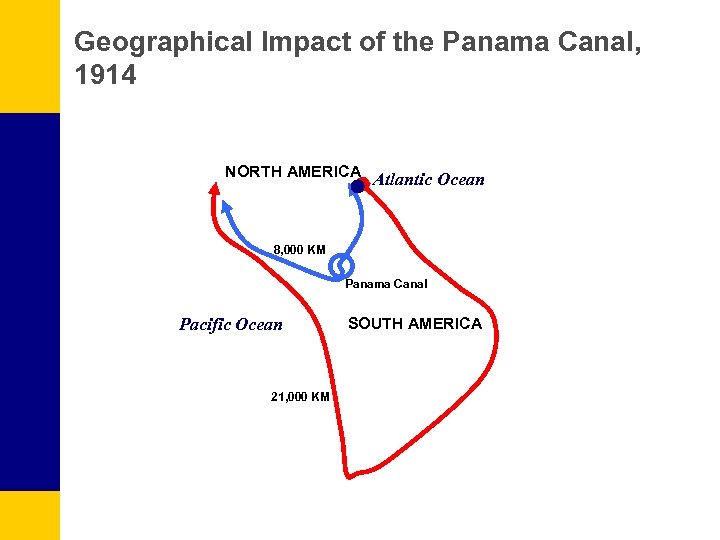 Geographical Impact of the Panama Canal, 1914 NORTH AMERICA Atlantic Ocean 8, 000 KM Panama Canal Pacific Ocean 21, 000 KM SOUTH AMERICA
 3. Emergence of Modern Transportation Systems (1870 -1920) ■ Modern urban transportation • Increase in urban population. • Introduction of tramways (1880; horse drawn, and then electric). • Urban sprawl and the specialization of economic functions. • Underground metro systems in large cities (London, 1863). • Bicycle (1867); cheap mobility for the masses. ■ Modern telecommunications • Telegraph (1844). • Associated with the growth of railways and international shipping. • Business transactions became more efficient.
 D – Historical Evolution of Transportation II ■ 1. Transportation in the Fordist Era (1920 -1970) ■ 2. A New Context for Transportation : the Post. Fordist Era (1970 -) ■ 3. Future Transportation
 1. Transportation in the Fordist Era (1920 -1970) ■ Internal combustion engine • Diesel engine (1885). • Extended flexibility of movements. • Fast, inexpensive and ubiquitous transport modes (cars, buses and truck). ■ Mass production system • Applied by Ford for car manufacturing. • Ford Model T: about 14 million Ford Model T were built (1913 -1927). • Increased demand for oil products and other raw materials (steel and rubber).
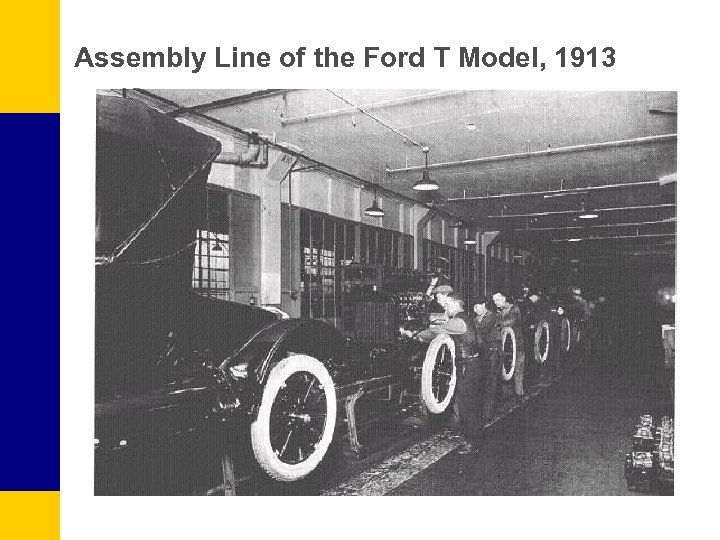 Assembly Line of the Ford T Model, 1913
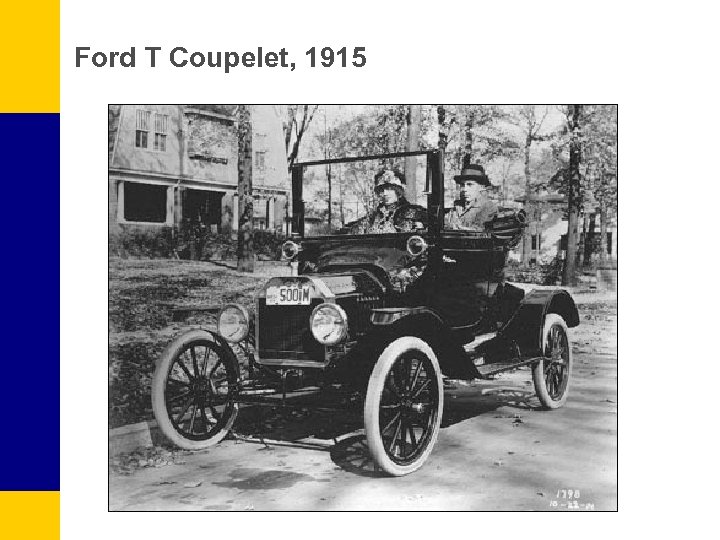 Ford T Coupelet, 1915
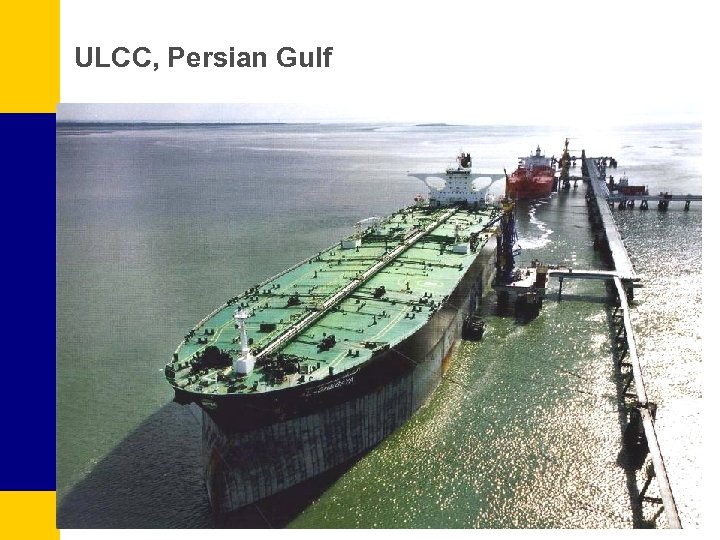
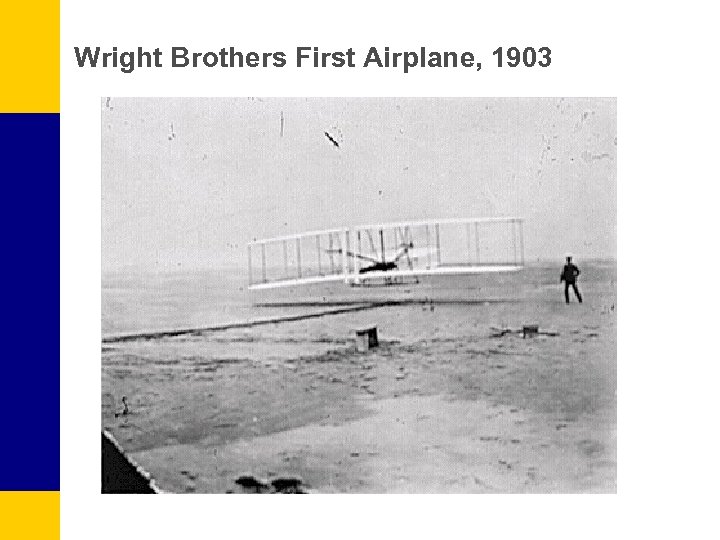
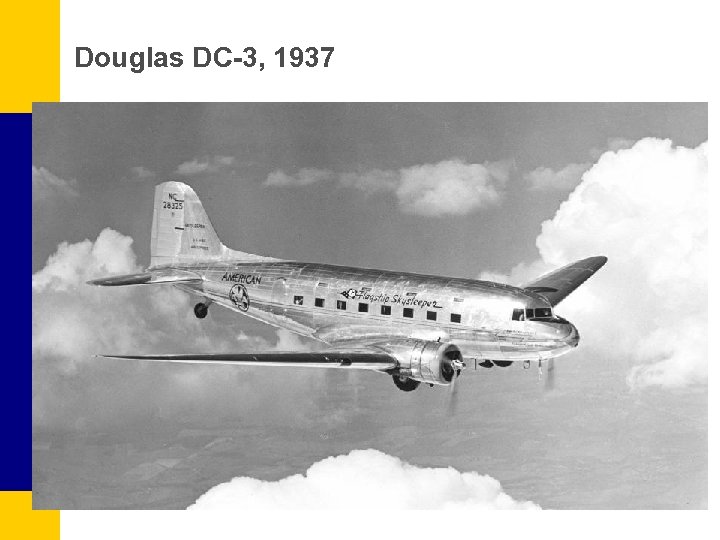
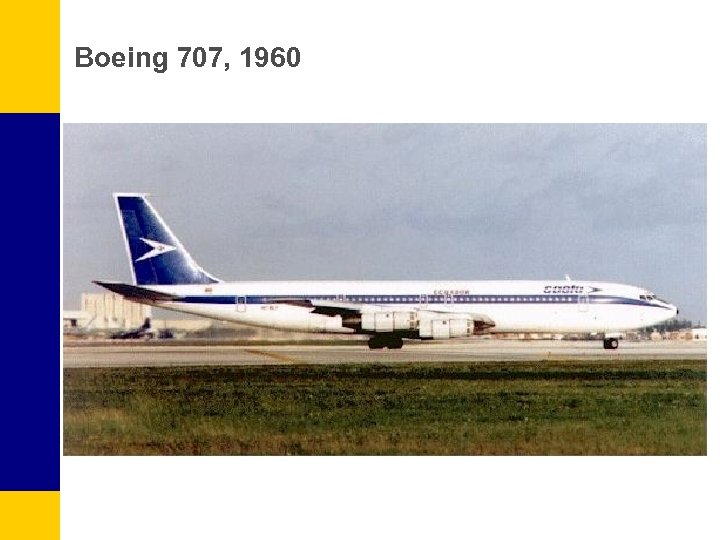
 1. Transportation in the Fordist Era (1920 -1970) ■ Economies of scale • Mass consumption of resources. • Bulk commodities such as minerals and grain over long distances. • Oil Tankers. ■ Propelled flight • Wright brothers (1903). • Commercial air transport service between England France (1919). • Expansion of regional / national air transport services (1920 s-1930 s). • Douglas DC-3 (1935). • First commercial jet plane (Boeing 707; 1958).
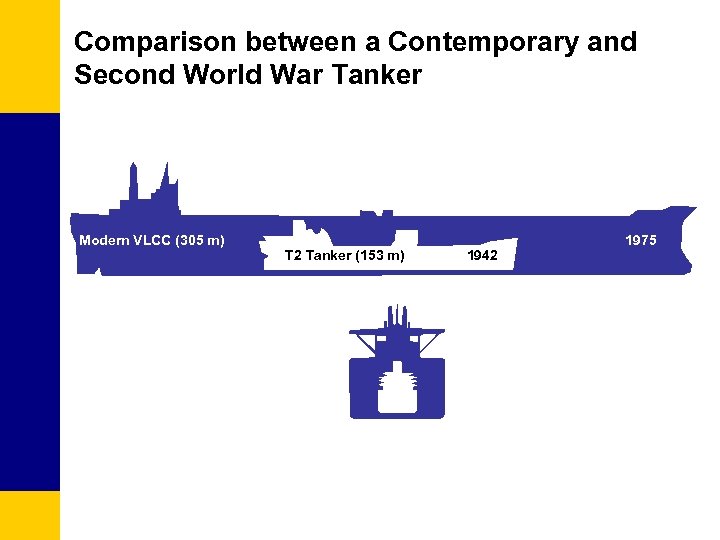 Comparison between a Contemporary and Second World War Tanker Modern VLCC (305 m) T 2 Tanker (153 m) 1942 1975
 ULCC, Persian Gulf
 Wright Brothers First Airplane, 1903
 Douglas DC-3, 1937
 Boeing 707, 1960
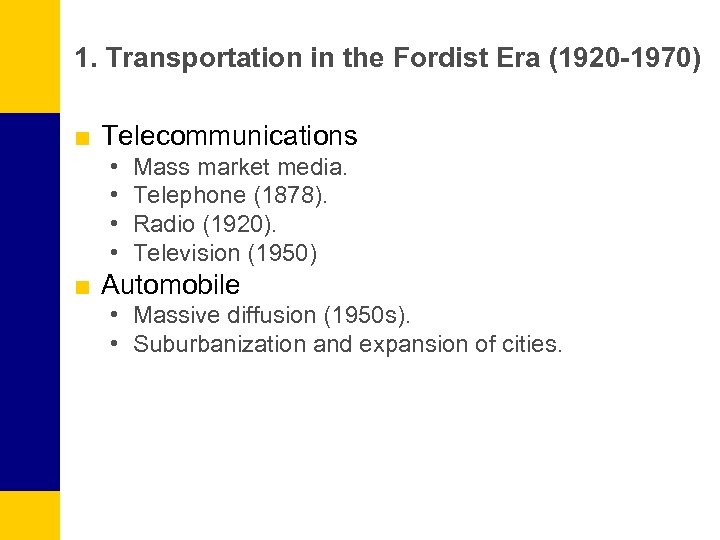 1. Transportation in the Fordist Era (1920 -1970) ■ Telecommunications • • Mass market media. Telephone (1878). Radio (1920). Television (1950) ■ Automobile • Massive diffusion (1950 s). • Suburbanization and expansion of cities.
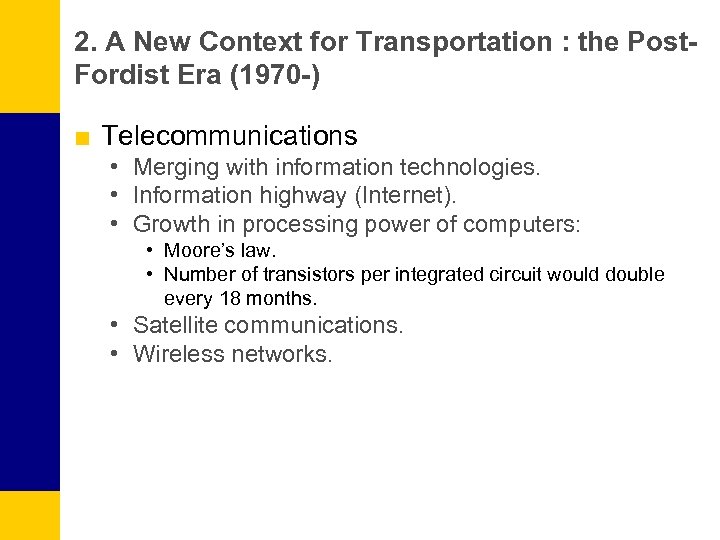 2. A New Context for Transportation : the Post. Fordist Era (1970 -) ■ Telecommunications • Merging with information technologies. • Information highway (Internet). • Growth in processing power of computers: • Moore’s law. • Number of transistors per integrated circuit would double every 18 months. • Satellite communications. • Wireless networks.
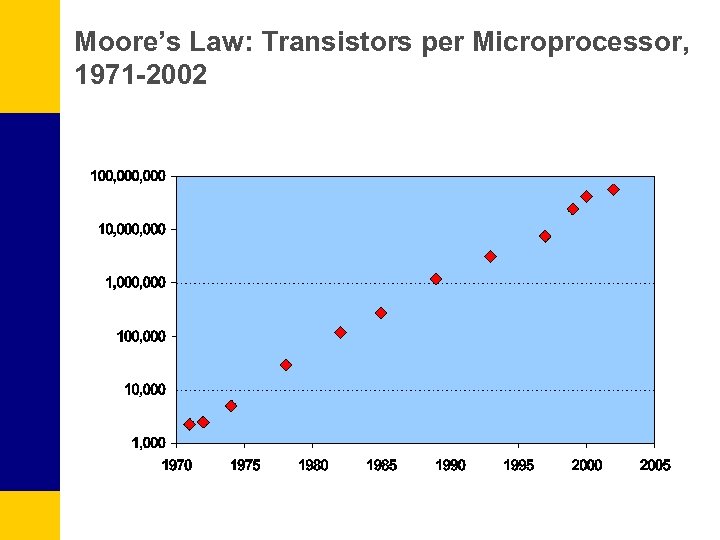 Moore’s Law: Transistors per Microprocessor, 1971 -2002
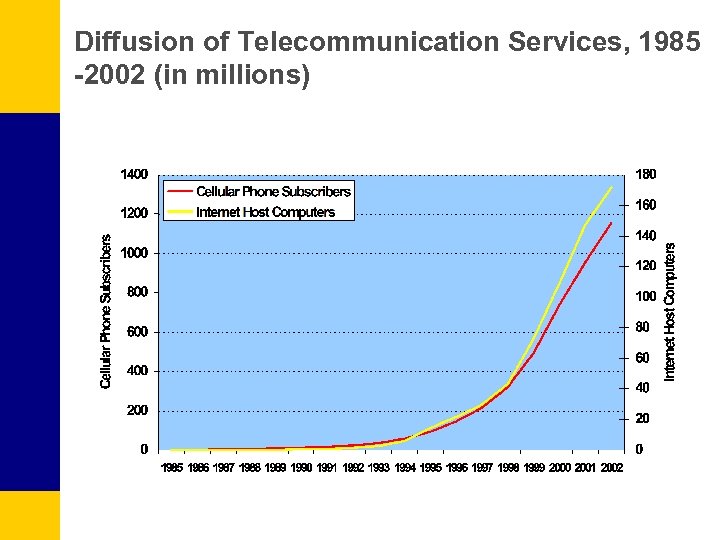 Diffusion of Telecommunication Services, 1985 -2002 (in millions)
 2. A New Context for Transportation : the Post. Fordist Era (1970 -) ■ Globalization of trade • • Fragmentation of the production. International division of labor. The principle of “just-in-time”. Development of logistics. ■ Containerization • Increased flexibility of freight transport. • First containership, Ideal-X (1956). • Cellular containerships (1967). ■ Massification of air transport • Boeing 747 (1969).
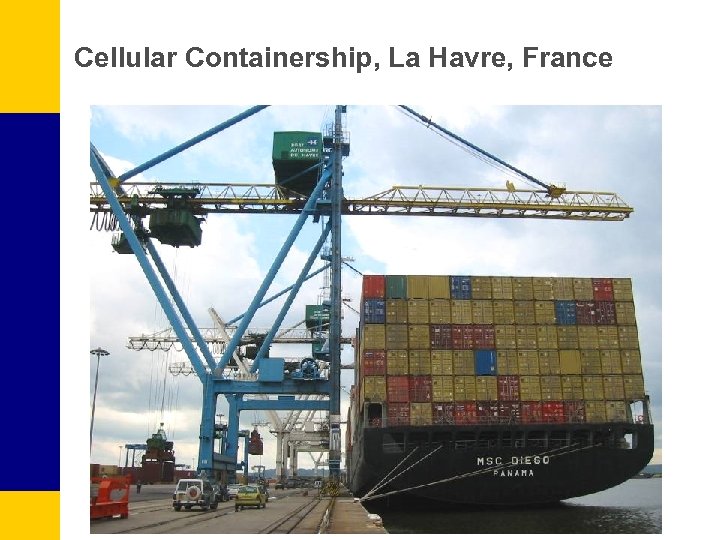 Cellular Containership, La Havre, France
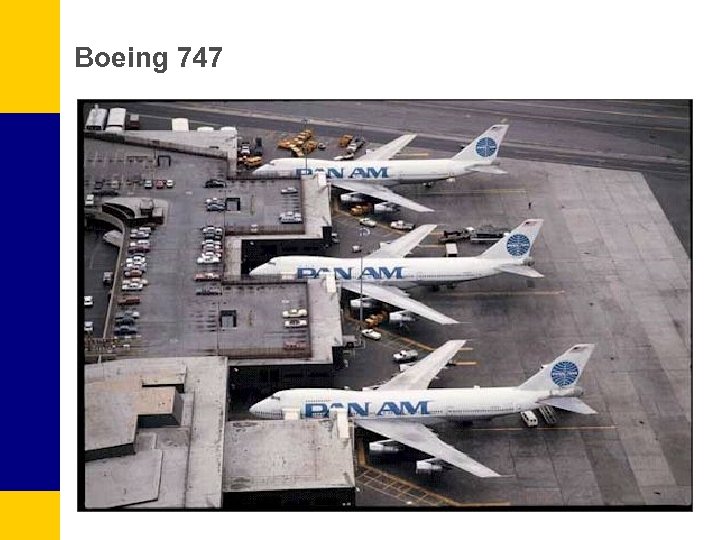 Boeing 747
 2. A New Context for Transportation : the Post. Fordist Era (1970 -) ■ High-speed train networks • Shinkansen, Japan (1964). • TGV, France (1981). ■ Globalization of car manufacturing • Three major players, US, Germany and Japan. • New producers (Korea). • 80% of oil consumption attributed to road transportation. ■ Transport crisis • Innovations in transport modes. • Reduction of energy consumption. • Alternative sources of energy.
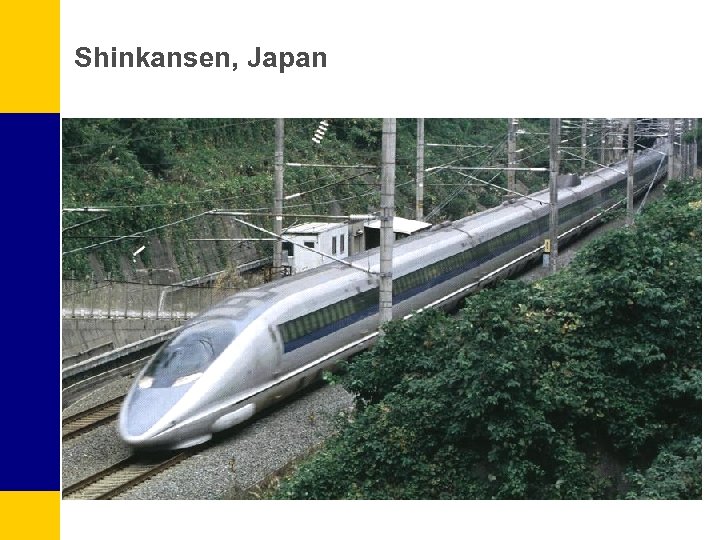 Shinkansen, Japan
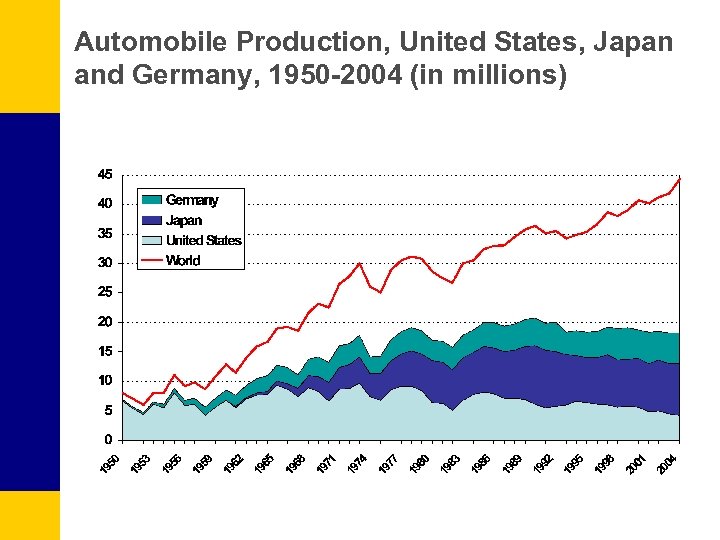 Automobile Production, United States, Japan and Germany, 1950 -2004 (in millions)
 3. Future Transportation ■ Cyclic character of transport innovations • Innovations lead to a wave of development. • Introduction: • Private entrepreneurs and innovators. • Growth: • Fast adoption. • Often involves a “paradigm shift” event. • Maturity: • Maximal spatial coverage. • Government involvement (investment, regulations, etc. ) • Rationalization/obsolescence: • Diminishing returns (Segment or system-wide). • A mix of regulations (protect public interests) and deregulations (increase productivity). • Our current freight transport systems are in a phase of rationalization.
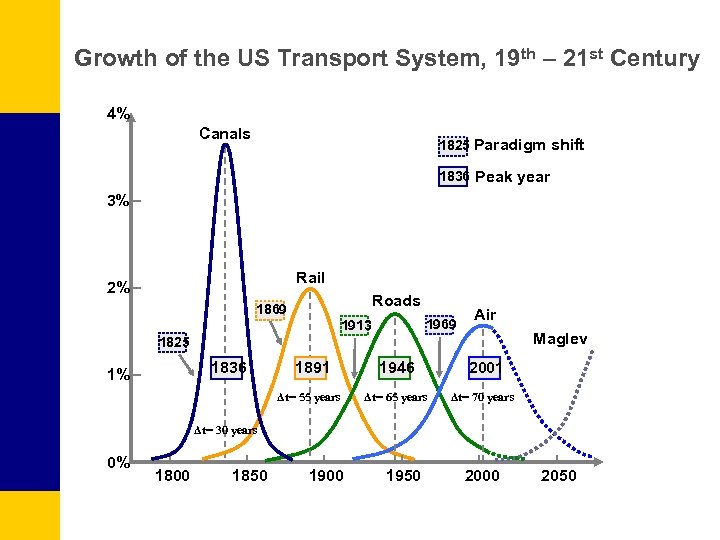 Growth of the US Transport System, 19 th – 21 st Century 4% Canals 1825 Paradigm shift 1836 Peak year 3% Rail 2% Roads 1869 1913 Air Maglev 1825 1836 1% 1891 Δt= 55 years 1946 Δt= 65 years 2001 Δt= 70 years Δt= 30 years 0% 1800 1850 1900 1950 2000 2050
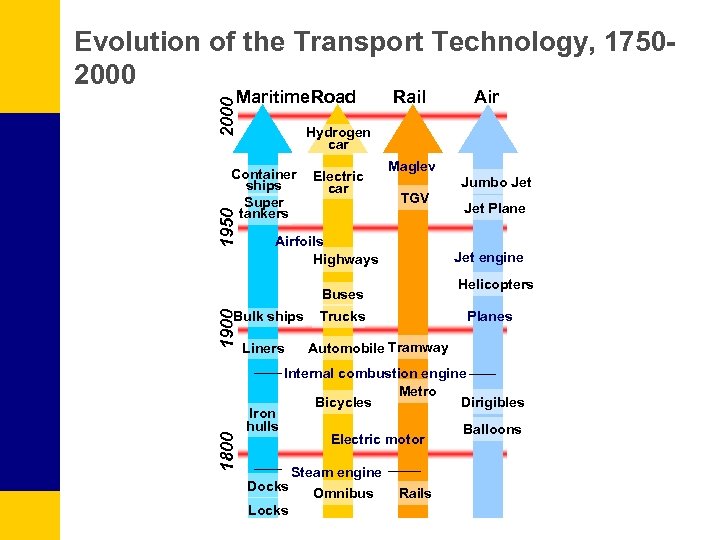 Evolution of the Transport Technology, 17502000 Maritime. Road Electric car Maglev Jumbo Jet TGV Airfoils Highways 1900 Bulk ships Liners Iron hulls Jet Plane Jet engine Helicopters Buses 1800 Air Hydrogen car Container ships Super tankers 1950 Rail Trucks Planes Automobile Tramway Internal combustion engine Metro Dirigibles Bicycles Docks Locks Electric motor Steam engine Omnibus Rails Balloons
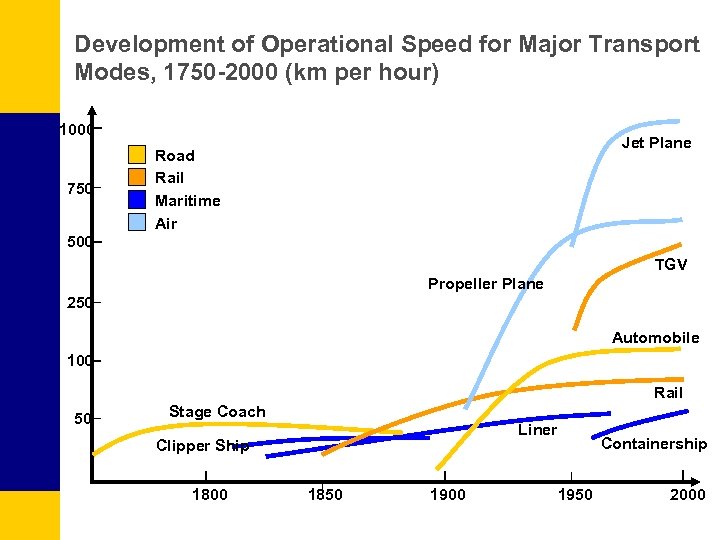 Development of Operational Speed for Major Transport Modes, 1750 -2000 (km per hour) 1000 750 Jet Plane Road Rail Maritime Air 500 TGV Propeller Plane 250 Automobile 100 Rail 50 Stage Coach Liner Clipper Ship 1800 1850 1900 Containership 1950 2000
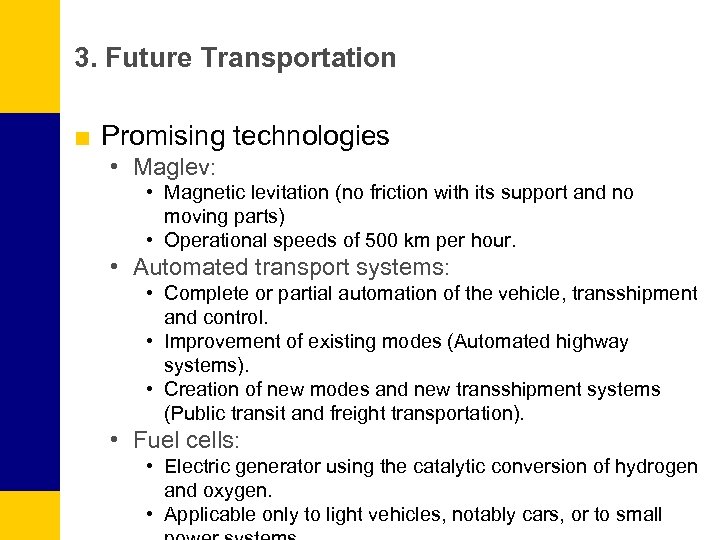 3. Future Transportation ■ Promising technologies • Maglev: • Magnetic levitation (no friction with its support and no moving parts) • Operational speeds of 500 km per hour. • Automated transport systems: • Complete or partial automation of the vehicle, transshipment and control. • Improvement of existing modes (Automated highway systems). • Creation of new modes and new transshipment systems (Public transit and freight transportation). • Fuel cells: • Electric generator using the catalytic conversion of hydrogen and oxygen. • Applicable only to light vehicles, notably cars, or to small
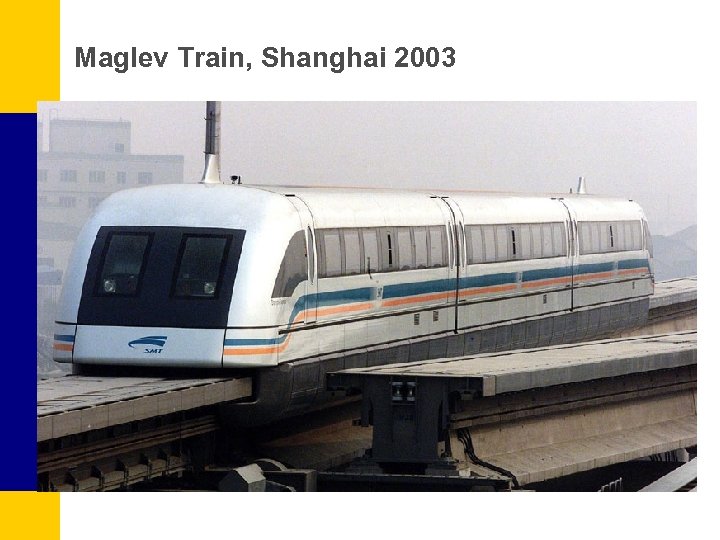 Maglev Train, Shanghai 2003
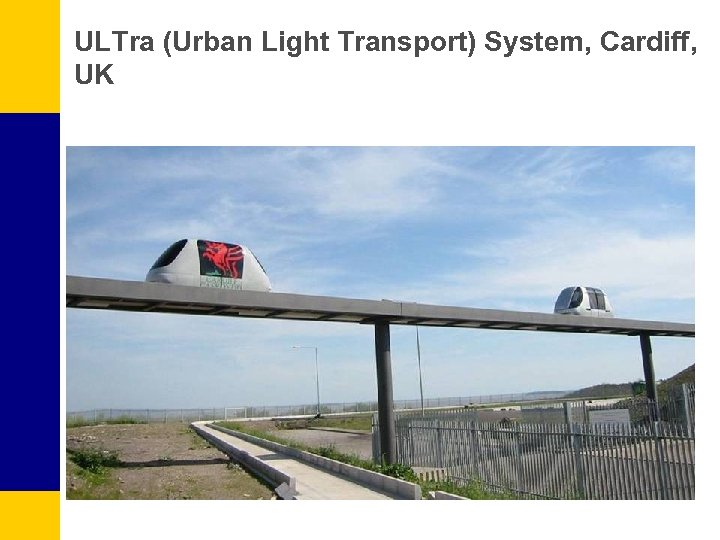 ULTra (Urban Light Transport) System, Cardiff, UK