 Скачать презентацию Genetics of obesity From genetics to functional genomics
8fe8ad725447c19d7d87dd3cd3062fe2.ppt
- Количество слайдов: 71



Genetics of obesity From genetics to functional genomics Prof. Karine Clément Inserm U 872 Nutriomique Université Paris 6/Cordelier Research Centre Endocrinology and Nutrition Dept, Pitié-Salpêtrière Paris Karine. clement@psl. aphp. fr
Genetics of obesity from genetics to functional genomics Contents of presentation Slides Introduction Monogenic obesity: case study BBS Other mono- and oligogenic examples Polygenic obesity: pertinent genes and risk factors Gene-gene and gene-environment interactions The future Abbreviations used 3– 5 6 – 21 22 – 41 42 – 57 58 – 63 64 – 69 70 - 71
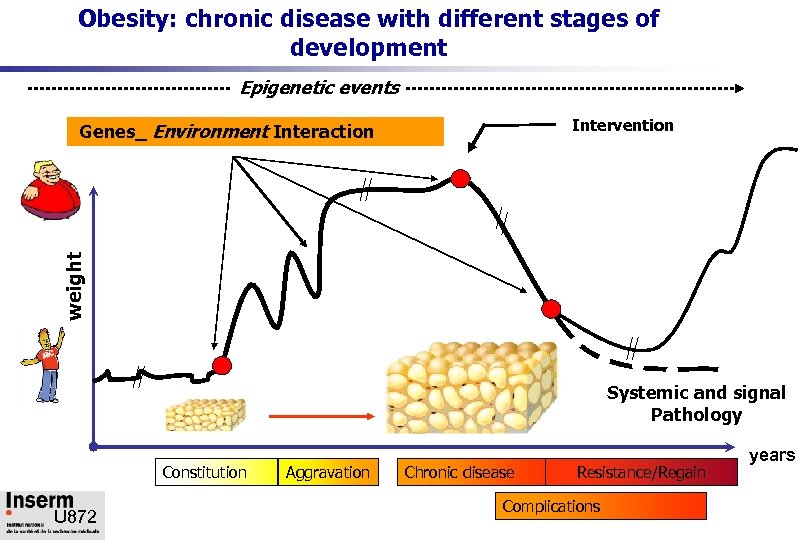
Obesity: chronic disease with different stages of development Epigenetic events Intervention weight Genes_ Environment Interaction Systemic and signal Pathology Constitution U 872 Aggravation Chronic disease Resistance/Regain Complications years
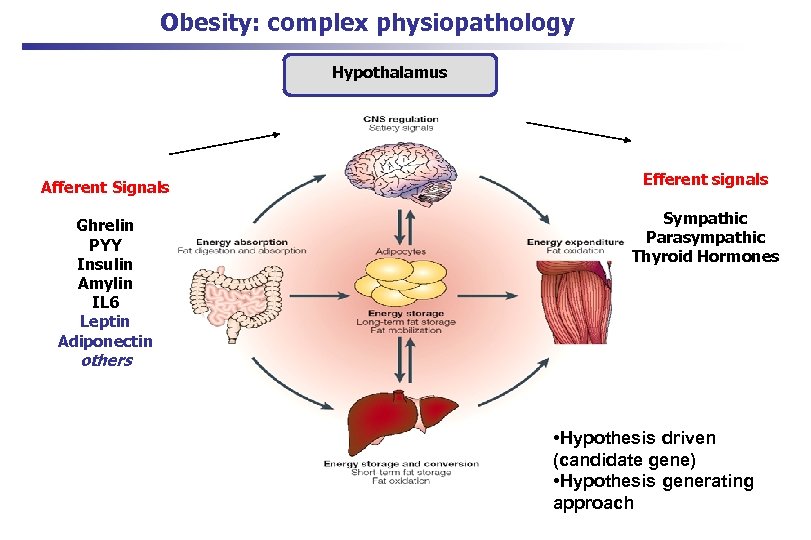
Obesity: complex physiopathology Hypothalamus Afferent Signals Efferent signals Ghrelin PYY Insulin Amylin IL 6 Leptin Adiponectin Sympathic Parasympathic Thyroid Hormones others • Hypothesis driven (candidate gene) • Hypothesis generating approach
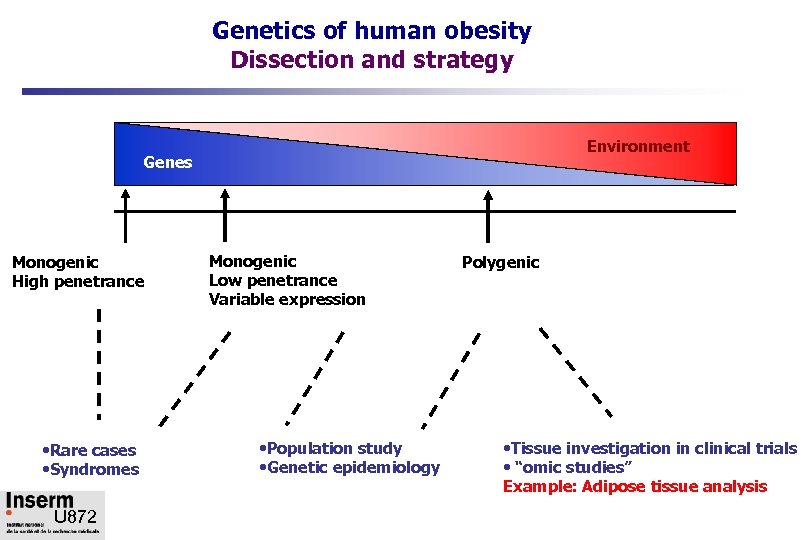
Genetics of human obesity Dissection and strategy Environment Genes Monogenic High penetrance • Rare cases • Syndromes U 872 Monogenic Low penetrance Variable expression • Population study • Genetic epidemiology Polygenic • Tissue investigation in clinical trials • “omic studies” Example: Adipose tissue analysis
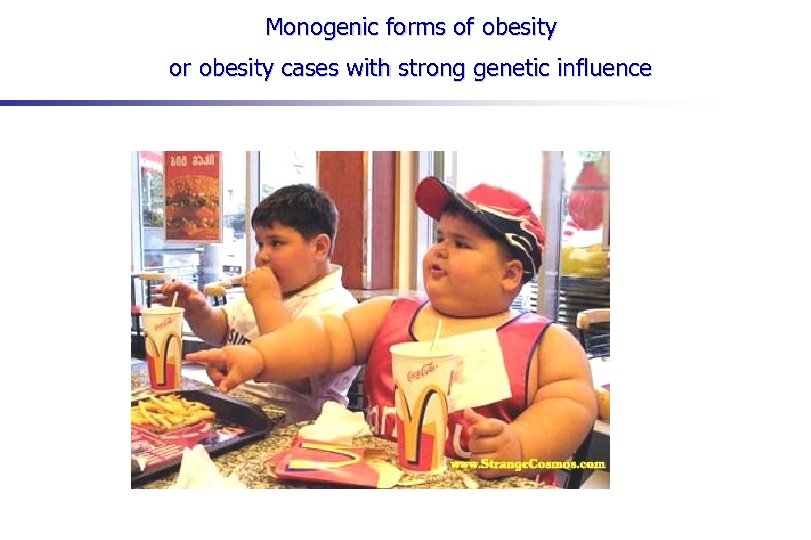
Monogenic forms of obesity or obesity cases with strong genetic influence
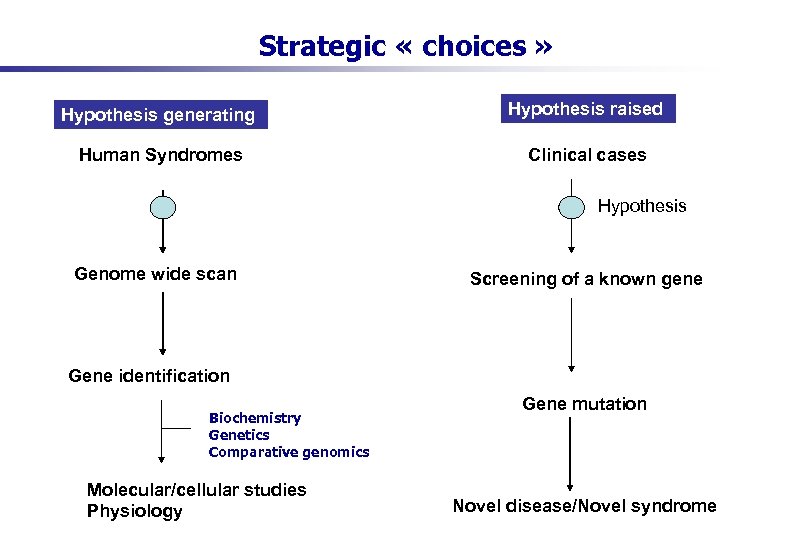
Strategic « choices » Hypothesis generating Human Syndromes Hypothesis raised Clinical cases Hypothesis Genome wide scan Screening of a known gene Gene identification Biochemistry Genetics Comparative genomics Molecular/cellular studies Physiology Gene mutation Novel disease/Novel syndrome
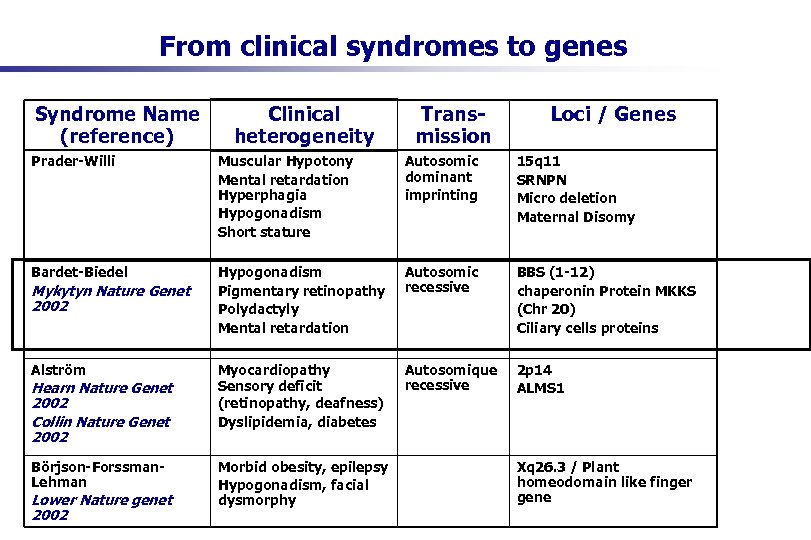
From clinical syndromes to genes Syndrome Name (reference) Clinical heterogeneity Transmission Loci / Genes Prader-Willi Muscular Hypotony Mental retardation Hyperphagia Hypogonadism Short stature Autosomic dominant imprinting 15 q 11 SRNPN Micro deletion Maternal Disomy Bardet-Biedel Hypogonadism Pigmentary retinopathy Polydactyly Mental retardation Autosomic recessive BBS (1 -12) chaperonin Protein MKKS (Chr 20) Ciliary cells proteins Myocardiopathy Sensory deficit (retinopathy, deafness) Dyslipidemia, diabetes Autosomique recessive 2 p 14 ALMS 1 Mykytyn Nature Genet 2002 Alström Hearn Nature Genet 2002 Collin Nature Genet 2002 Börjson-Forssman. Lehman Lower Nature genet 2002 Morbid obesity, epilepsy Hypogonadism, facial dysmorphy Xq 26. 3 / Plant homeodomain like finger gene
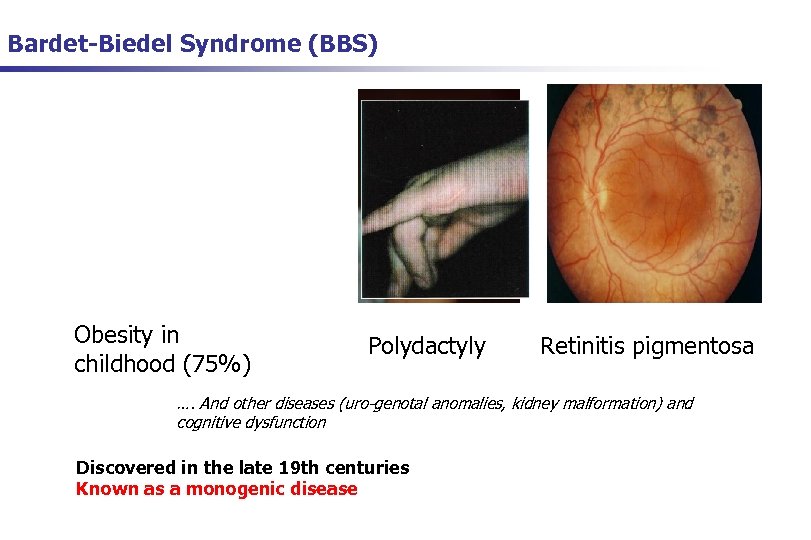
Bardet-Biedel Syndrome (BBS) Obesity in childhood (75%) Polydactyly Retinitis pigmentosa …. And other diseases (uro-genotal anomalies, kidney malformation) and cognitive dysfunction Discovered in the late 19 th centuries Known as a monogenic disease
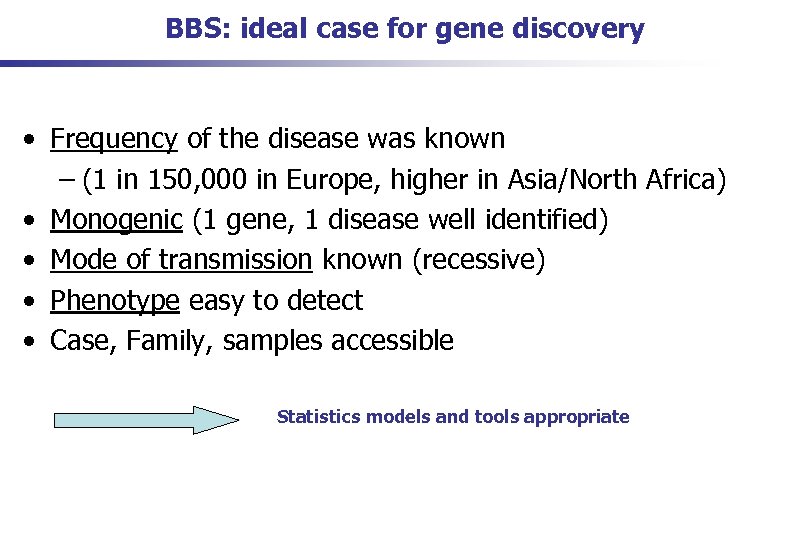
BBS: ideal case for gene discovery • Frequency of the disease was known – (1 in 150, 000 in Europe, higher in Asia/North Africa) • Monogenic (1 gene, 1 disease well identified) • Mode of transmission known (recessive) • Phenotype easy to detect • Case, Family, samples accessible Statistics models and tools appropriate
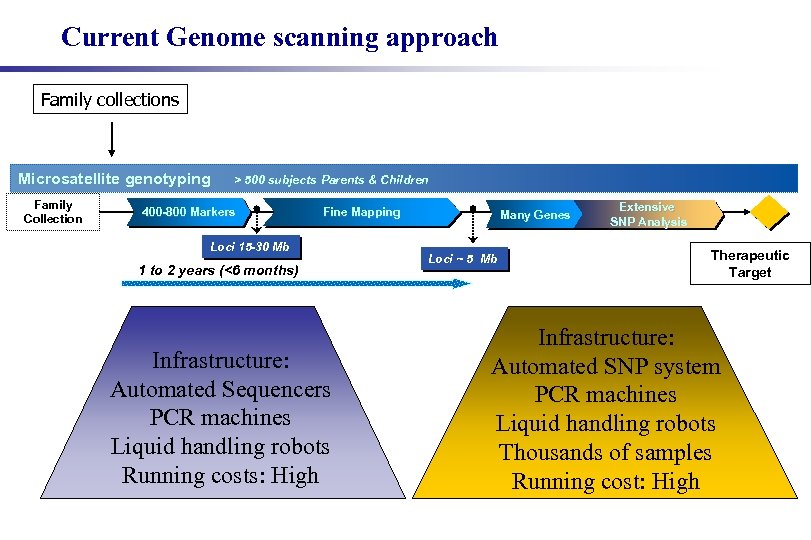
Current Genome scanning approach Family collections Microsatellite genotyping Family Collection > 500 subjects Parents & Children 400 -800 Markers Fine Mapping Loci 15 -30 Mb 1 to 2 years (<6 months) Infrastructure: Automated Sequencers PCR machines Liquid handling robots Running costs: High Many Genes Many Loci ~ 5 Mb Extensive SNP Analysis Therapeutic Target Infrastructure: Automated SNP system PCR machines Liquid handling robots Thousands of samples Running cost: High
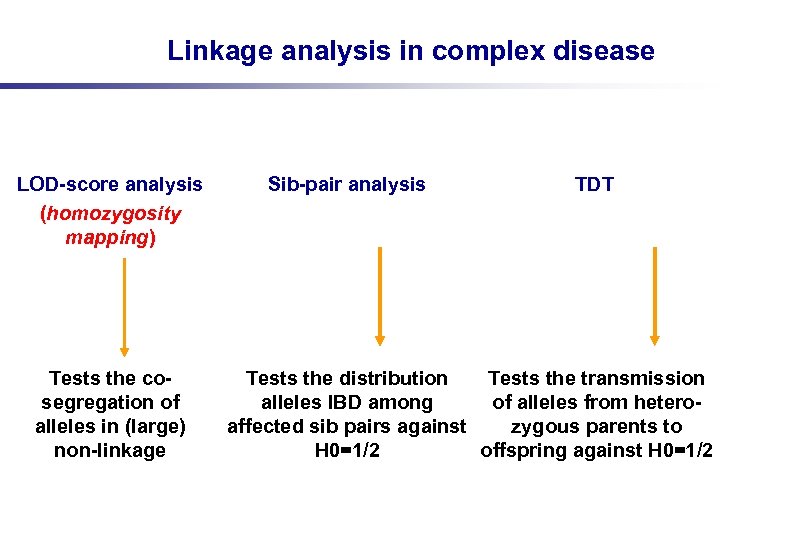
Linkage analysis in complex disease Linkage analysis LOD-score analysis (homozygosity mapping) Tests the cosegregation of alleles in (large) non-linkage Sib-pair analysis TDT Tests the distribution Tests the transmission alleles IBD among of alleles from heteroaffected sib pairs against zygous parents to H 0=1/2 offspring against H 0=1/2
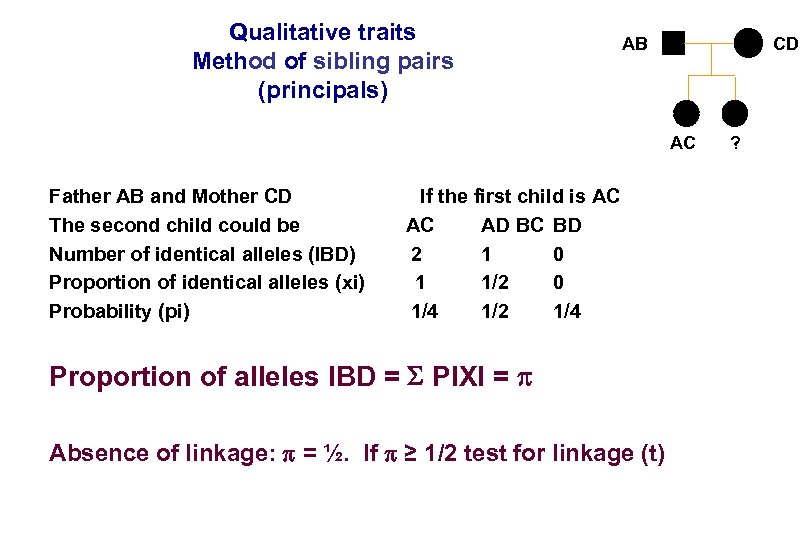
Qualitative traits Method of sibling pairs (principals) AB CD AC Father AB and Mother CD If the first child is AC The second child could be AC AD BC BD Number of identical alleles (IBD) 2 1 0 Proportion of identical alleles (xi) 1 1/2 0 Probability (pi) 1/4 1/2 1/4 Proportion of alleles IBD = PIXI = Absence of linkage: = ½. If ≥ 1/2 test for linkage (t) ?
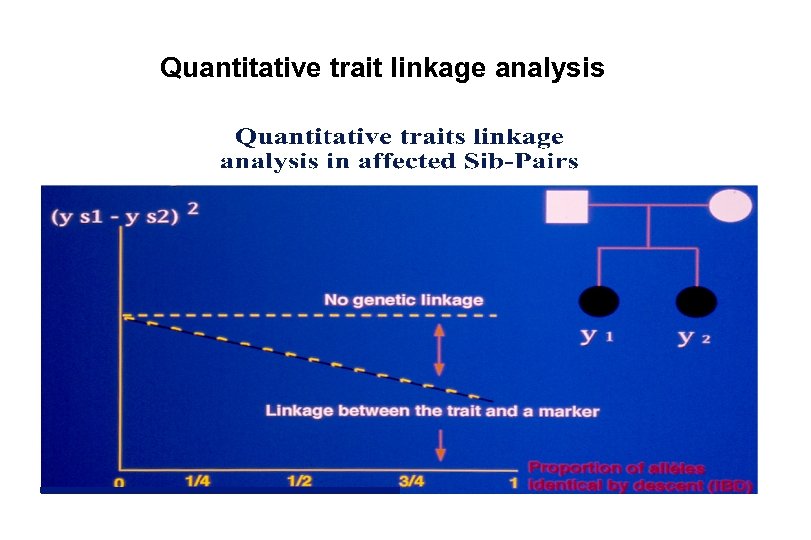
Quantitative trait linkage analysis
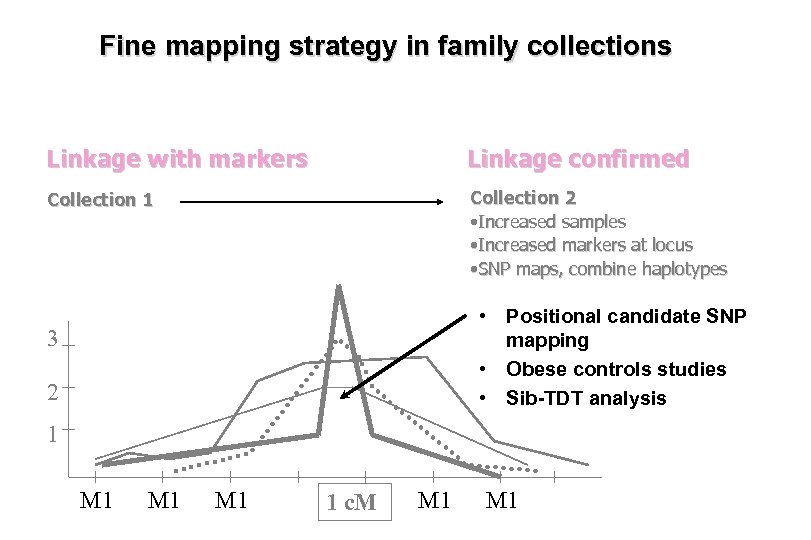
Fine mapping strategy in family collections Linkage with markers Linkage confirmed Collection 1 Collection 2 • Increased samples • Increased markers at locus • SNP maps, combine haplotypes • Positional candidate SNP mapping • Obese controls studies • Sib-TDT analysis 3 2 1 M 1 M 1 1 c. M M 1
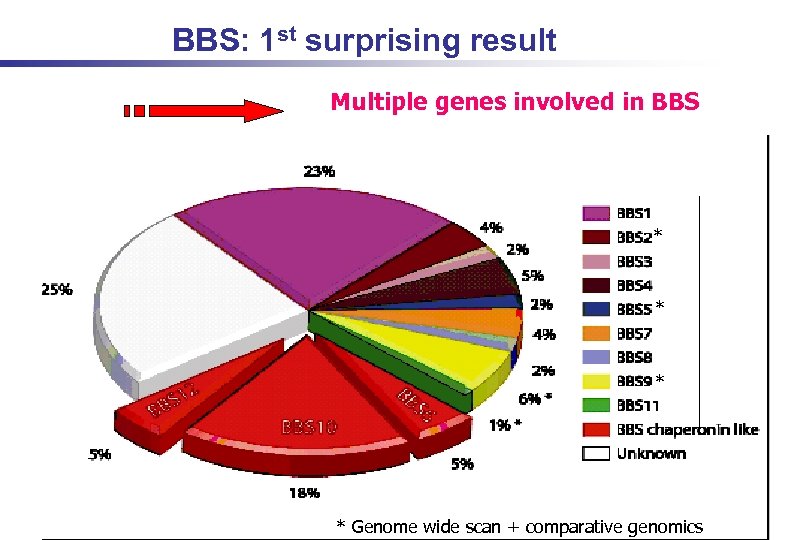
BBS: 1 st surprising result Multiple genes involved in BBS * * Genome wide scan + comparative genomics
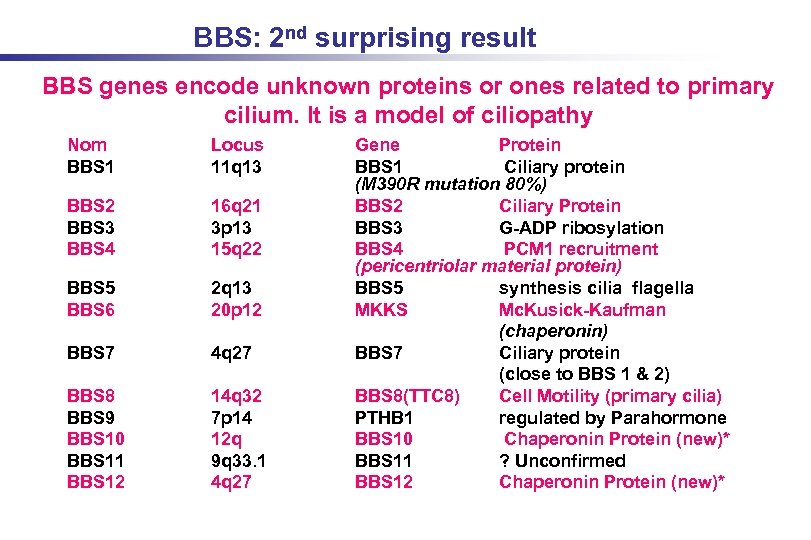
BBS: 2 nd surprising result BBS genes encode unknown proteins or ones related to primary cilium. It is a model of ciliopathy Nom BBS 1 Locus 11 q 13 BBS 2 BBS 3 BBS 4 16 q 21 3 p 13 15 q 22 BBS 5 BBS 6 2 q 13 20 p 12 BBS 7 4 q 27 BBS 8 BBS 9 BBS 10 BBS 11 BBS 12 14 q 32 7 p 14 12 q 9 q 33. 1 4 q 27 Gene Protein BBS 1 Ciliary protein (M 390 R mutation 80%) BBS 2 Ciliary Protein BBS 3 G-ADP ribosylation BBS 4 PCM 1 recruitment (pericentriolar material protein) BBS 5 synthesis cilia flagella MKKS Mc. Kusick-Kaufman (chaperonin) BBS 7 Ciliary protein (close to BBS 1 & 2) BBS 8(TTC 8) Cell Motility (primary cilia) PTHB 1 regulated by Parahormone BBS 10 Chaperonin Protein (new)* BBS 11 ? Unconfirmed BBS 12 Chaperonin Protein (new)*
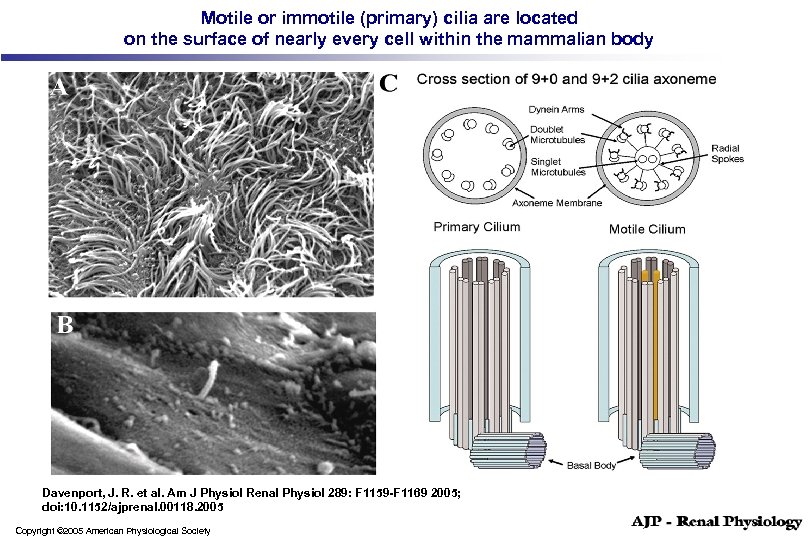
Motile or immotile (primary) cilia are located on the surface of nearly every cell within the mammalian body Davenport, J. R. et al. Am J Physiol Renal Physiol 289: F 1159 -F 1169 2005; doi: 10. 1152/ajprenal. 00118. 2005 Copyright © 2005 American Physiological Society
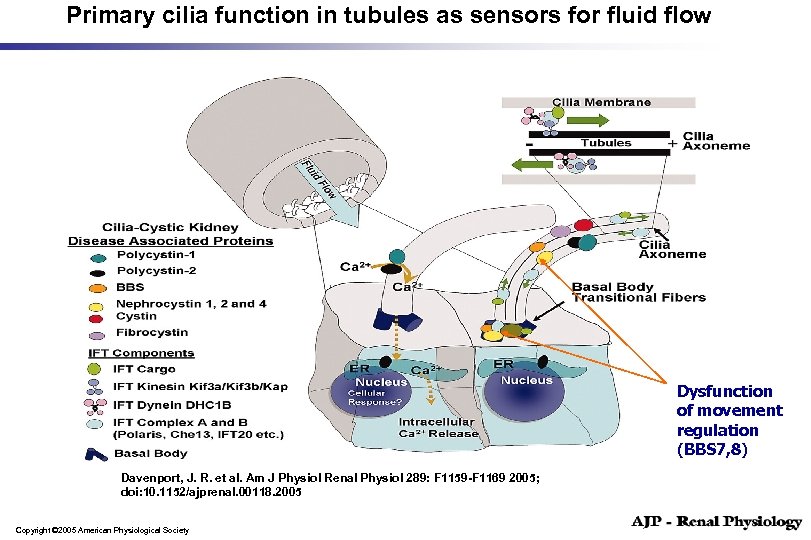
Primary cilia function in tubules as sensors for fluid flow Dysfunction of movement regulation (BBS 7, 8) Davenport, J. R. et al. Am J Physiol Renal Physiol 289: F 1159 -F 1169 2005; doi: 10. 1152/ajprenal. 00118. 2005 Copyright © 2005 American Physiological Society
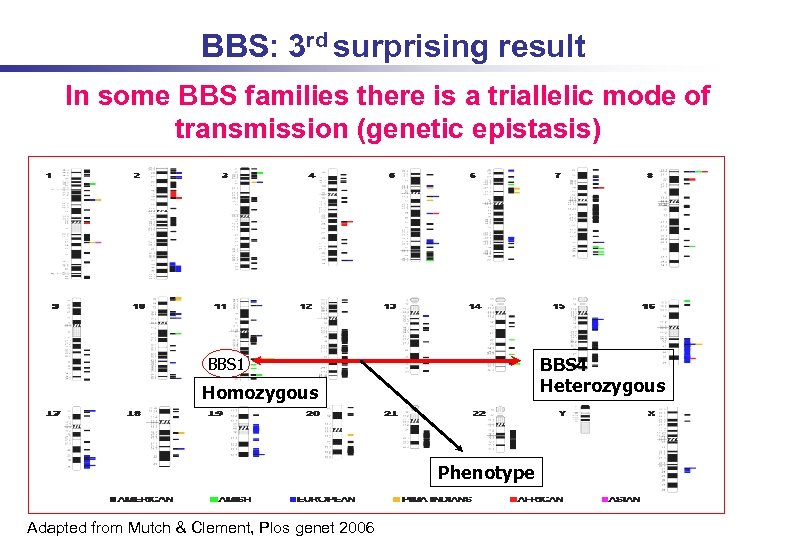
BBS: 3 rd surprising result In some BBS families there is a triallelic mode of transmission (genetic epistasis) BBS 4 Heterozygous BBS 1 Homozygous Phenotype Adapted from Mutch & Clement, Plos genet 2006
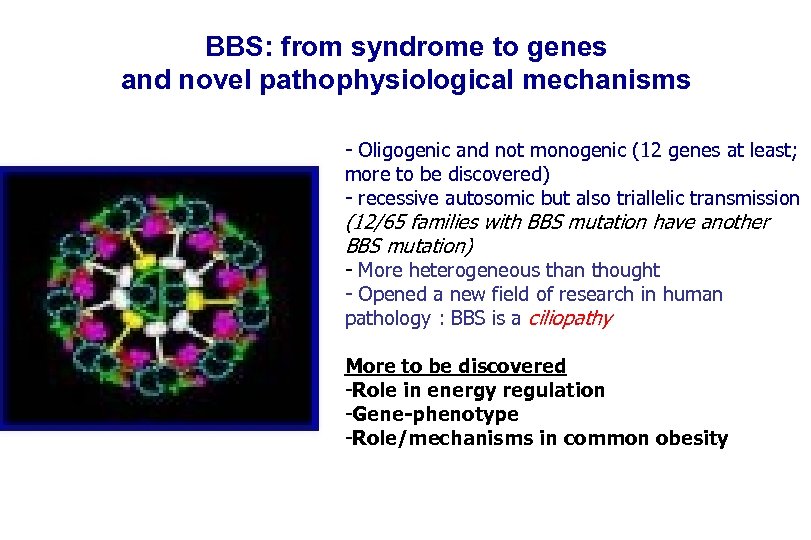
BBS: from syndrome to genes and novel pathophysiological mechanisms - Oligogenic and not monogenic (12 genes at least; more to be discovered) - recessive autosomic but also triallelic transmission (12/65 families with BBS mutation have another BBS mutation) - More heterogeneous than thought - Opened a new field of research in human pathology : BBS is a ciliopathy More to be discovered -Role in energy regulation -Gene-phenotype -Role/mechanisms in common obesity
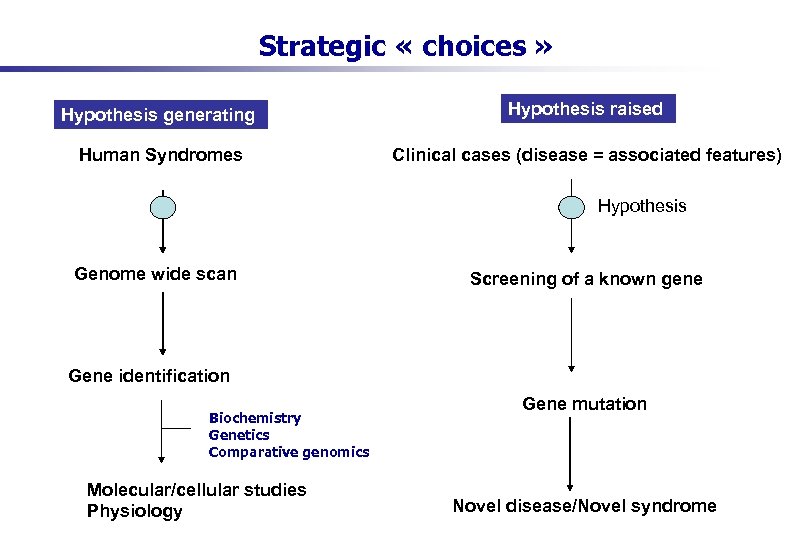
Strategic « choices » Hypothesis generating Human Syndromes Hypothesis raised Clinical cases (disease = associated features) Hypothesis Genome wide scan Screening of a known gene Gene identification Biochemistry Genetics Comparative genomics Molecular/cellular studies Physiology Gene mutation Novel disease/Novel syndrome
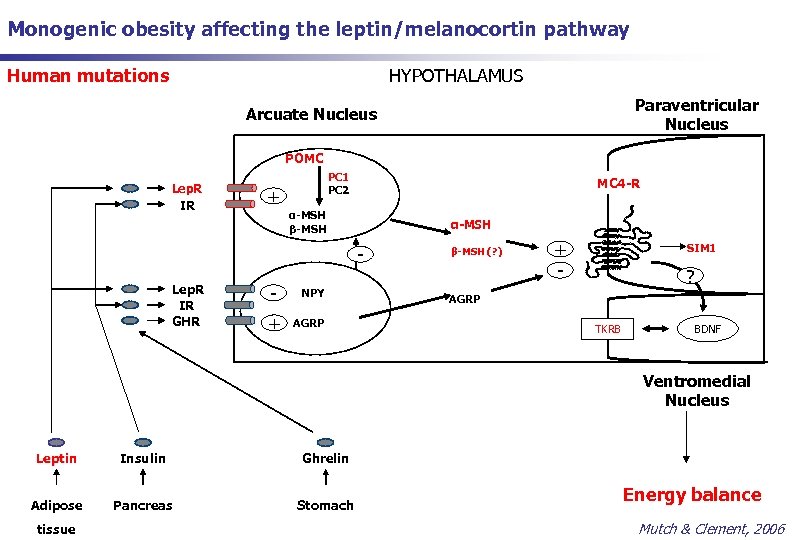
Monogenic obesity affecting the leptin/melanocortin pathway Human mutations HYPOTHALAMUS Paraventricular Nucleus Arcuate Nucleus POMC Lep. R IR PC 1 PC 2 + MC 4 -R α-MSH β-MSH α-MSH Lep. R IR GHR + NPY AGRP β-MSH (? ) + - SIM 1 ? AGRP TKRB BDNF Ventromedial Nucleus Leptin Insulin Ghrelin Adipose Pancreas Stomach tissue Energy balance Mutch & Clement, 2006
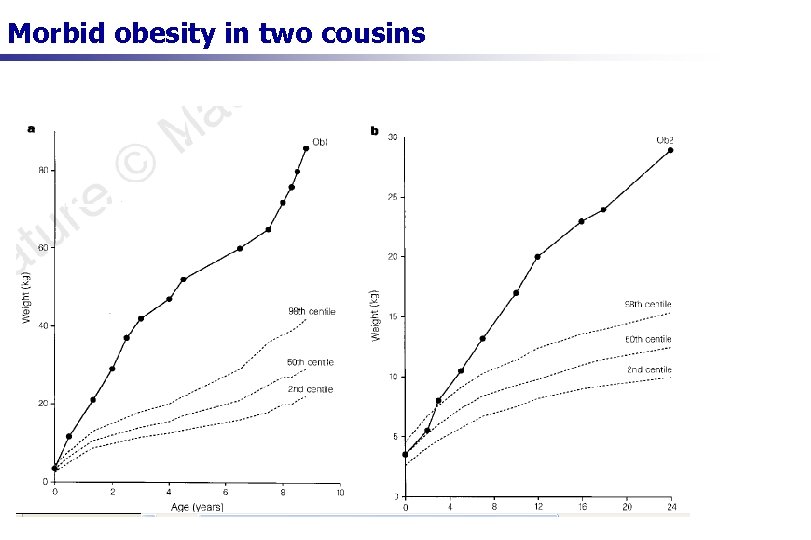
Morbid obesity in two cousins
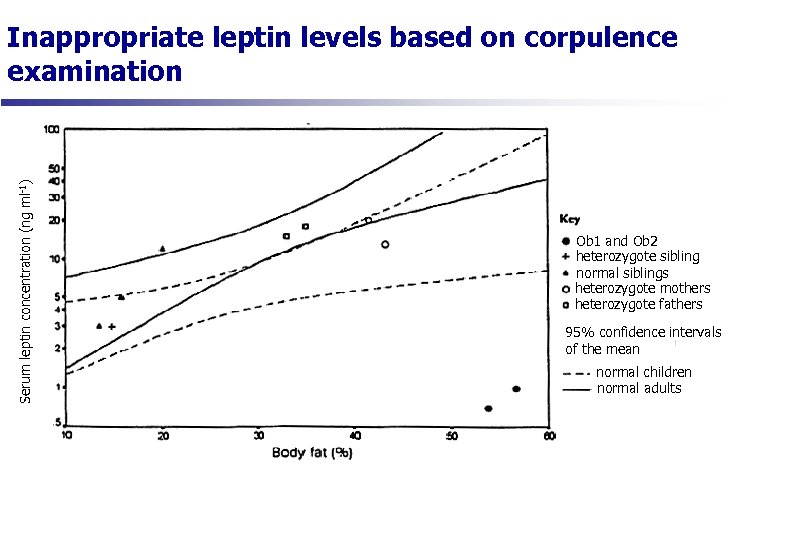
Serum leptin concentration (ng ml-1) Inappropriate leptin levels based on corpulence examination Ob 1 and Ob 2 heterozygote sibling normal siblings heterozygote mothers heterozygote fathers 95% confidence intervals of the mean normal children normal adults
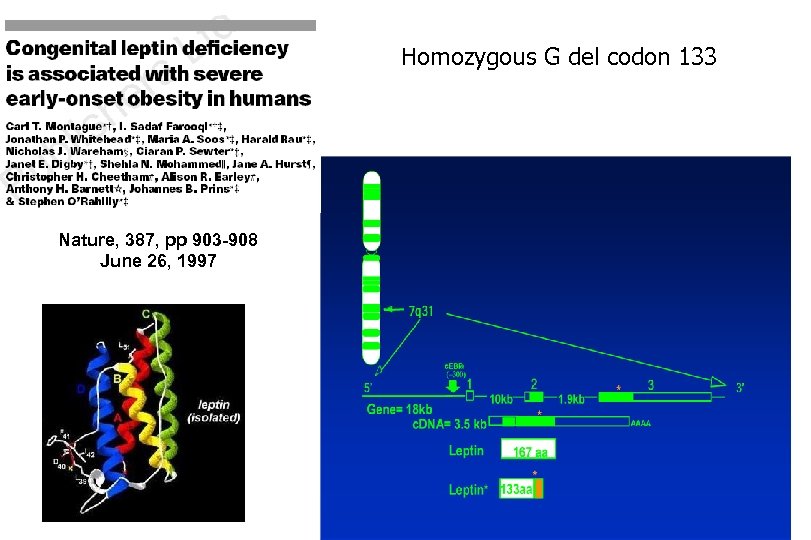
Homozygous G del codon 133 Nature, 387, pp 903 -908 June 26, 1997
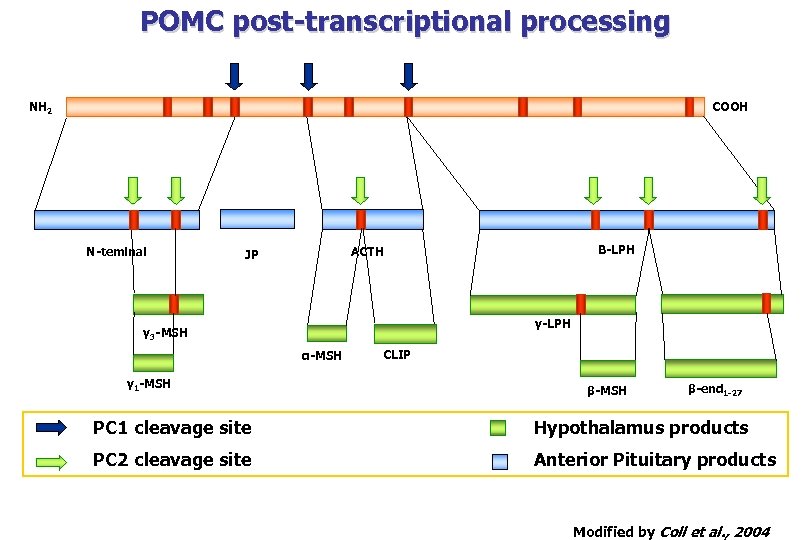
POMC post-transcriptional processing NH 2 COOH N-teminal γ-LPH γ 3 -MSH α-MSH γ 1 -MSH Β-LPH ACTH JP CLIP β-MSH β-end 1 -27 PC 1 cleavage site Hypothalamus products PC 2 cleavage site Anterior Pituitary products Modified by Coll et al. , 2004
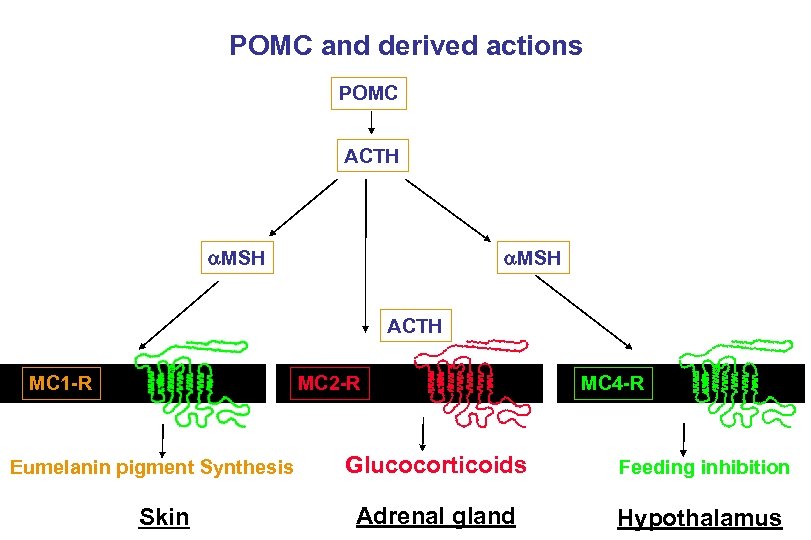
POMC and derived actions POMC ACTH MSH ACTH MC 1 -R MC 2 -R Eumelanin pigment Synthesis Skin MC 4 -R s s Glucocorticoids Feeding inhibition Adrenal gland Hypothalamus
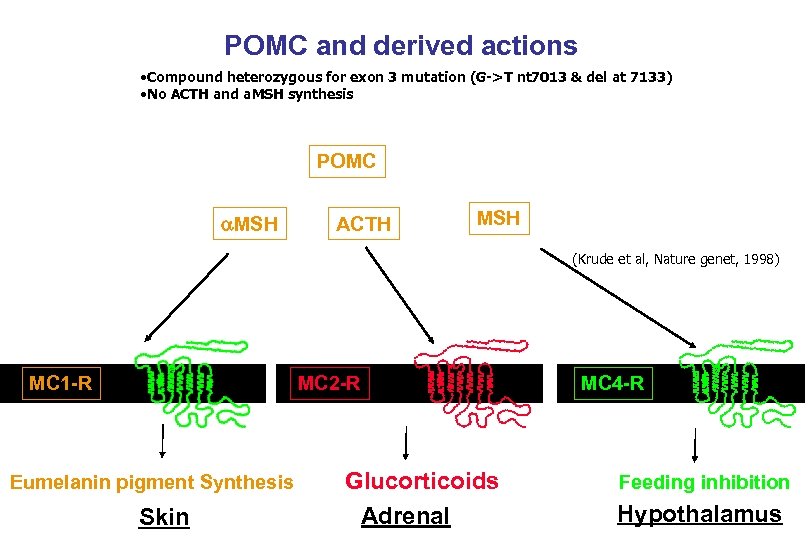
POMC and derived actions • Compound heterozygous for exon 3 mutation (G->T nt 7013 & del at 7133) • No ACTH and a. MSH synthesis POMC MSH ACTH MSH (Krude et al, Nature genet, 1998) MC 1 -R MC 2 -R Eumelanin pigment Synthesis Skin Glucorticoids Adrenal MC 4 -R s s Feeding inhibition Hypothalamus
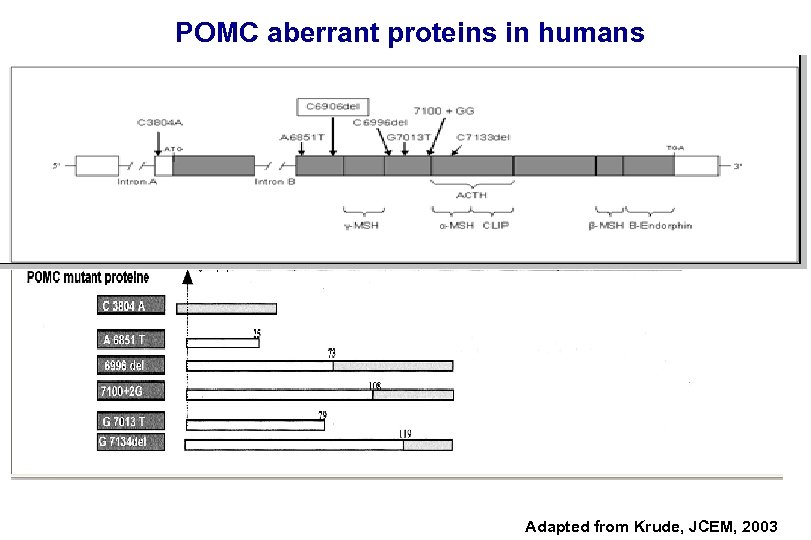
POMC aberrant proteins in humans Adapted from Krude, JCEM, 2003
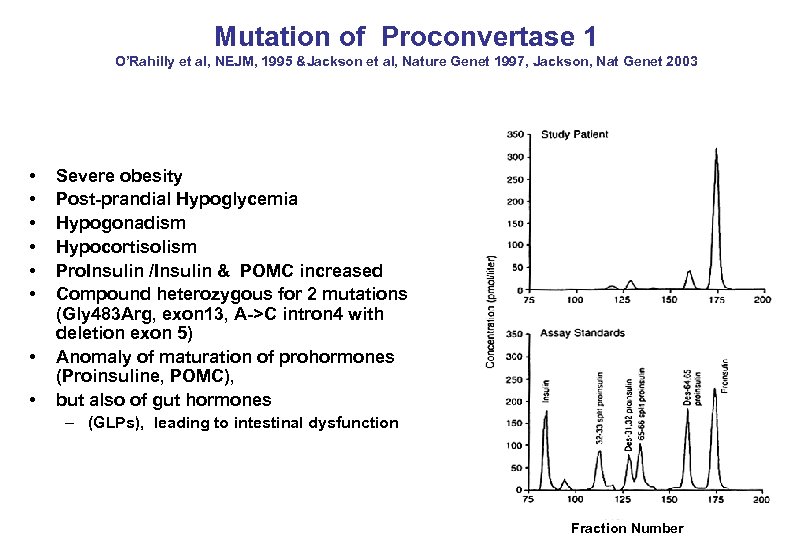
Mutation of Proconvertase 1 O’Rahilly et al, NEJM, 1995 &Jackson et al, Nature Genet 1997, Jackson, Nat Genet 2003 • • Severe obesity Post-prandial Hypoglycemia Hypogonadism Hypocortisolism Pro. Insulin /Insulin & POMC increased Compound heterozygous for 2 mutations (Gly 483 Arg, exon 13, A->C intron 4 with deletion exon 5) Anomaly of maturation of prohormones (Proinsuline, POMC), but also of gut hormones – (GLPs), leading to intestinal dysfunction Fraction Number
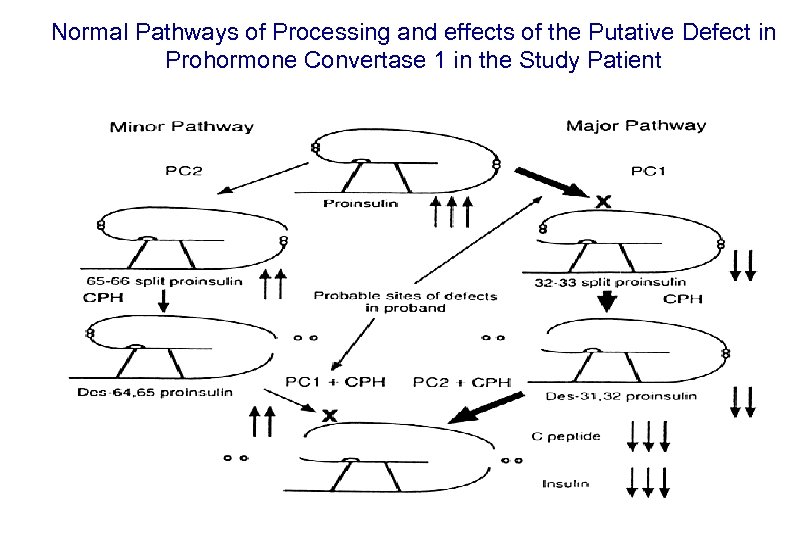
Normal Pathways of Processing and effects of the Putative Defect in Prohormone Convertase 1 in the Study Patient
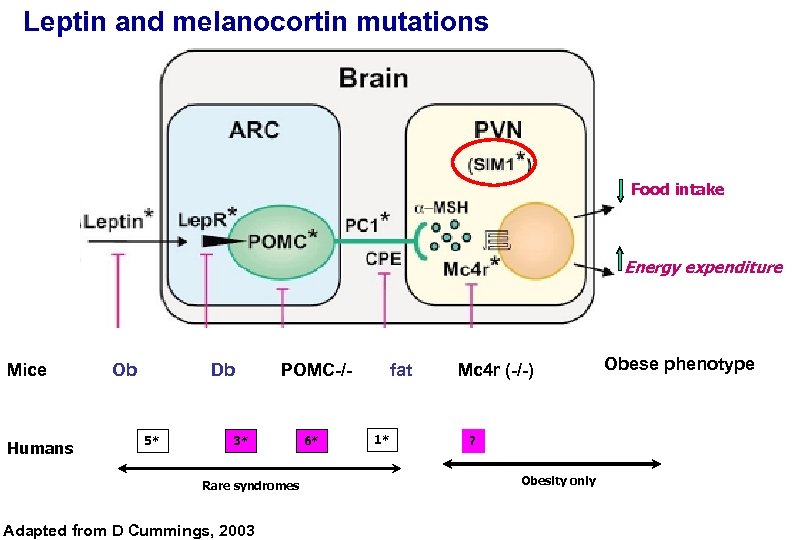
Leptin and melanocortin mutations Food intake Energy expenditure Mice Humans Ob Db 5* POMC-/- 3* Rare syndromes Adapted from D Cummings, 2003 6* fat 1* Mc 4 r (-/-) ? Obesity only Obese phenotype
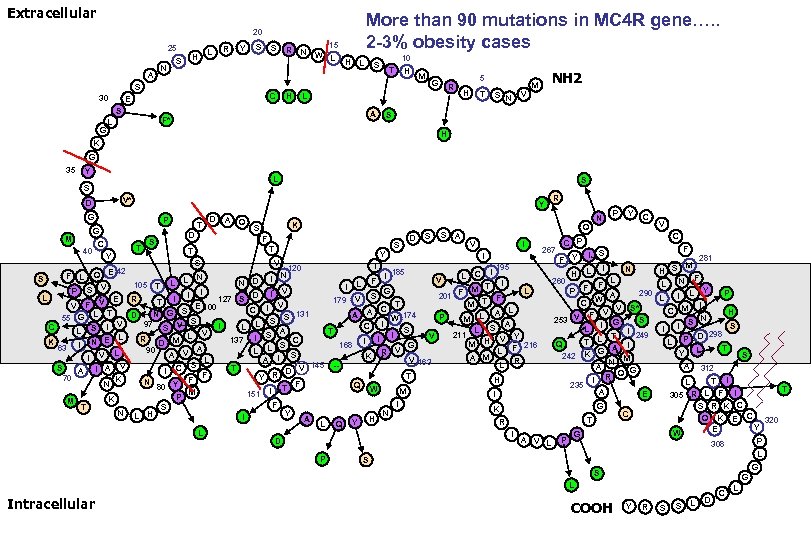
Extracellular More than 90 mutations in MC 4 R gene…. . 2 -3% obesity cases 20 25 A N S H L R Y S S R N 15 W L H L 10 S T H M G S 30 C E H S G H L A F* L 5 R NH 2 M T S N V S H K G 35 Y L S S V* D Y G P G M C 40 Y Q E 42 T S T D D A Q S S F V S Y 120 P N K T T R I D S S Q A V I I 185 Y I 195 F I I F S L Y V C C P 267 C N H S M 281 H I L C I N L V 260 F N D L F 105 T L T I I L V Y P F P S V L G I F M 290 P I I A I L 201 L F L E R 127 S D 179 V S T I C W T M T V F V V E 100 M I V S* I C C C H A L T N G S A A D F V P S 131 55 G L W 174 M L 253 V S S N G L S I 97 V A V S I C I S L I C S I L I S L S T I L S V 298 S A 211 249 V L T V Y I I R P D C M L E L 137 I K L T N D M H Q I S 168 I 216 G 63 I T A 90 V L L L F G A Y I S V L A V S K R 242 K M I A M V 163 A I L N L R A 312 A V 145 -S C S A V T A I I D Q G F T Y R 70 K H I R T I N L N F Y F 235 Q W 80 T I T M M A 151 E I 305 R L F I P K M I F S R K C G S T K N Y N L H C I Q K E C H A T 320 R L Q Y Y E L W G I A V L P D P 308 L P S G L L C D Y R S S L S F L Intracellular COOH
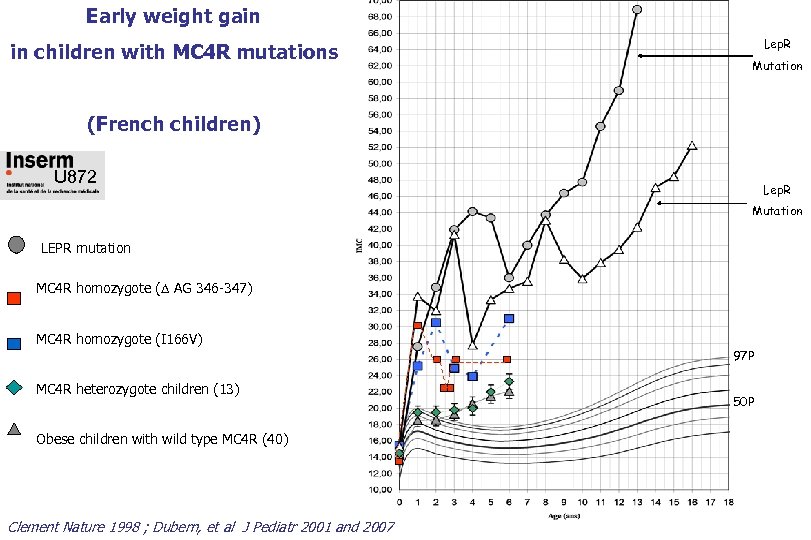
Early weight gain in children with MC 4 R mutations Lep. R Mutation (French children) U 872 Lep. R Mutation LEPR mutation MC 4 R homozygote ( AG 346 -347) MC 4 R homozygote (I 166 V) 97 P MC 4 R heterozygote children (13) Obese children with wild type MC 4 R (40) Clement Nature 1998 ; Dubern, et al J Pediatr 2001 and 2007 50 P
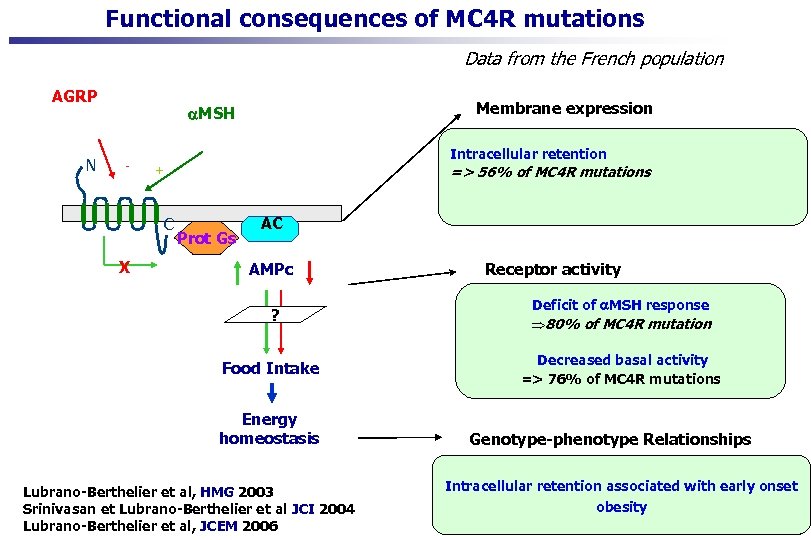
Functional consequences of MC 4 R mutations Data from the French population AGRP N Membrane expression MSH - Intracellular retention => 56% of MC 4 R mutations + C X Prot Gs AC AMPc ? Food Intake Energy homeostasis Lubrano-Berthelier et al, HMG 2003 Srinivasan et Lubrano-Berthelier et al JCI 2004 Lubrano-Berthelier et al, JCEM 2006 Receptor activity Deficit of MSH response Þ 80% of MC 4 R mutation Decreased basal activity => 76% of MC 4 R mutations Genotype-phenotype Relationships Intracellular retention associated with early onset obesity
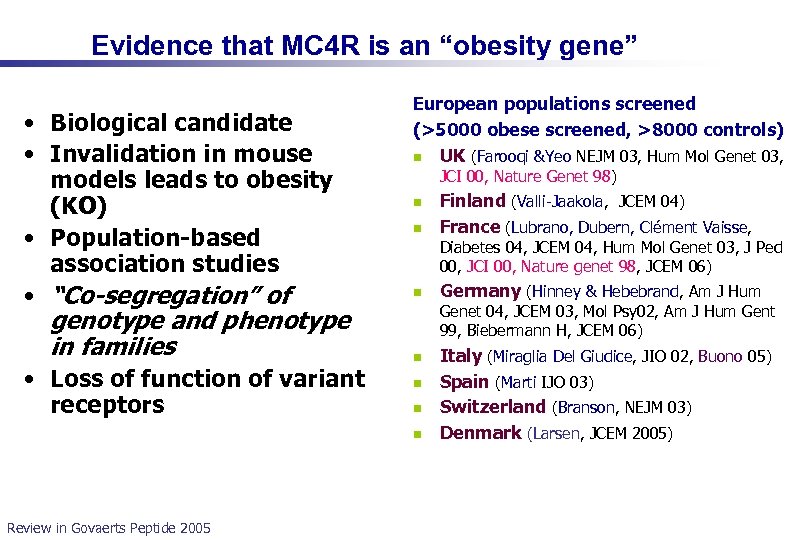
Evidence that MC 4 R is an “obesity gene” • Biological candidate • Invalidation in mouse models leads to obesity (KO) • Population-based association studies • “Co-segregation” of genotype and phenotype in families • Loss of function of variant receptors European populations screened (>5000 obese screened, >8000 controls) n UK (Farooqi &Yeo NEJM 03, Hum Mol Genet 03, JCI 00, Nature Genet 98) n n Diabetes 04, JCEM 04, Hum Mol Genet 03, J Ped 00, JCI 00, Nature genet 98, JCEM 06) n Germany (Hinney & Hebebrand, Am J Hum Genet 04, JCEM 03, Mol Psy 02, Am J Hum Gent 99, Biebermann H, JCEM 06) n n Review in Govaerts Peptide 2005 Finland (Valli-Jaakola, JCEM 04) France (Lubrano, Dubern, Clément Vaisse, Italy (Miraglia Del Giudice, JIO 02, Buono 05) Spain (Marti IJO 03) Switzerland (Branson, NEJM 03) Denmark (Larsen, JCEM 2005)
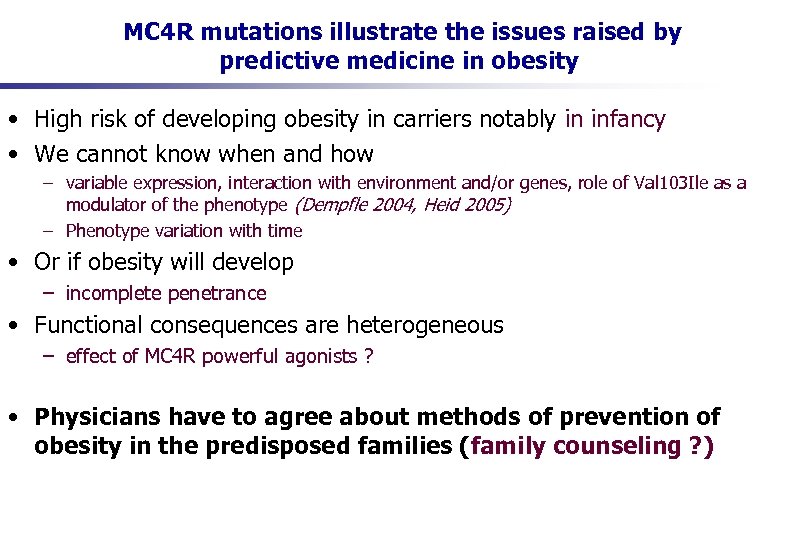
MC 4 R mutations illustrate the issues raised by predictive medicine in obesity • High risk of developing obesity in carriers notably in infancy • We cannot know when and how – variable expression, interaction with environment and/or genes, role of Val 103 Ile as a modulator of the phenotype (Dempfle 2004, Heid 2005) – Phenotype variation with time • Or if obesity will develop – incomplete penetrance • Functional consequences are heterogeneous – effect of MC 4 R powerful agonists ? • Physicians have to agree about methods of prevention of obesity in the predisposed families (family counseling ? )
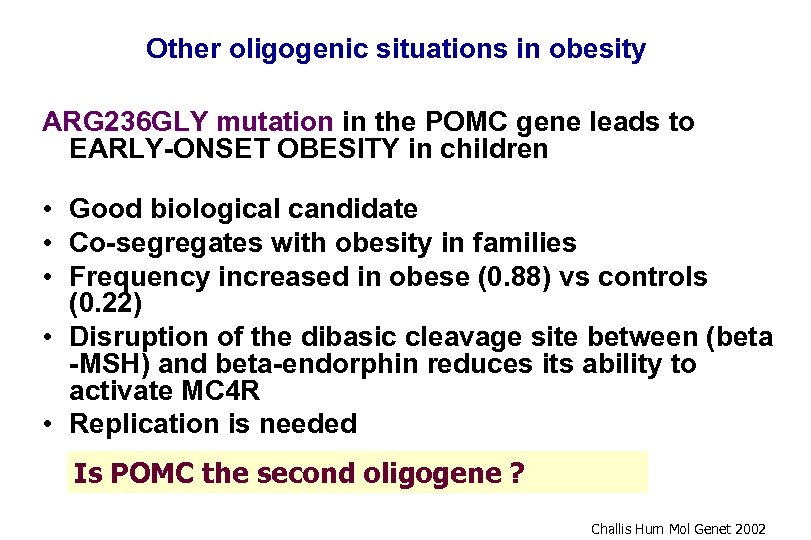
Other oligogenic situations in obesity ARG 236 GLY mutation in the POMC gene leads to EARLY-ONSET OBESITY in children • Good biological candidate • Co-segregates with obesity in families • Frequency increased in obese (0. 88) vs controls (0. 22) • Disruption of the dibasic cleavage site between (beta -MSH) and beta-endorphin reduces its ability to activate MC 4 R • Replication is needed Is POMC the second oligogene ? Challis Hum Mol Genet 2002
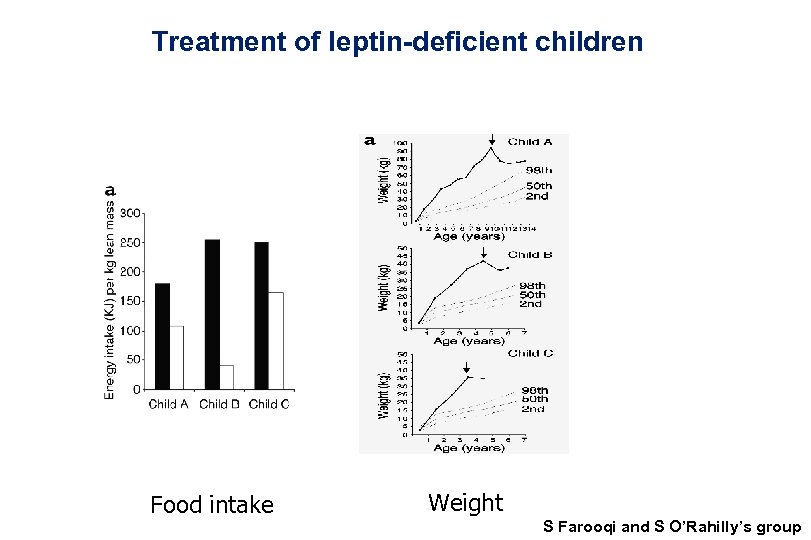
Treatment of leptin-deficient children Food intake Weight S Farooqi and S O’Rahilly’s group
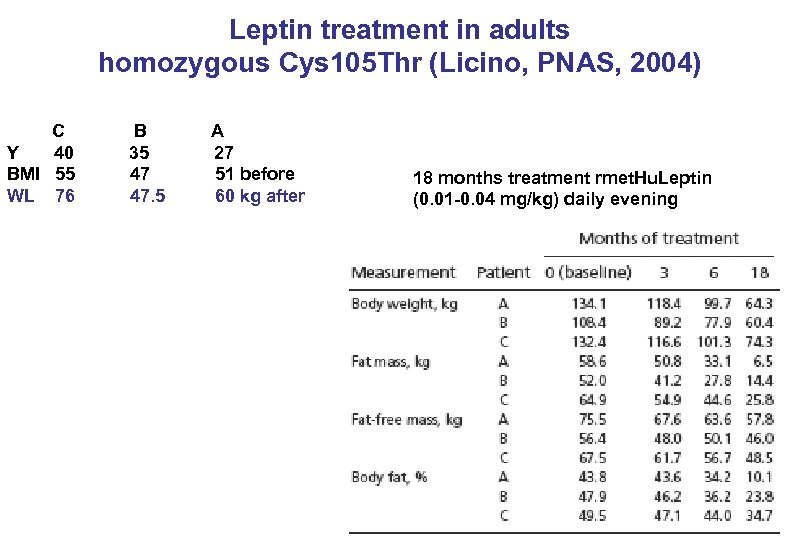
Leptin treatment in adults homozygous Cys 105 Thr (Licino, PNAS, 2004) C B A Y 40 35 27 BMI 55 47 51 before WL 76 47. 5 60 kg after 18 months treatment rmet. Hu. Leptin (0. 01 -0. 04 mg/kg) daily evening
Rare monogenic mutation Polygenic obesity Challenge Discover pertinent genes, gene combinations and interactions KCNJ 11 y erg n de se ea cr In APOE GNB 3 AGT HSL ADRB 3 MC 4 R PPARG UCP 1 INS-VNTR LPL mt. DNA HNF 1 A y GYS LEPR, POMC, PCSK 1 SIM 1, LEP, others g er d e e as r ec MC 4 R D en e ur t di n pe ex
Methodological caveats A challenge for gene-environment interaction studies • Power (increased sample size) – Major improvement in the last years (data pooling) • Multiple testing (statistical result corrected) • Replication (test in independent groups) • Biological validation – Functional assessment of putative disease-causing variants – Evidence for pathophysiological role of the implicated gene Tabor Nat Rev Genet 2002 Cardon Nature Rev Genet 2001 Freely Associating Nature Genet 1999
Food Nutrient Genes Variation in the DNA Epigenetic --- C ----- G ----- A ----- T --- Express differently depending on the combination with the environment Not reversible Nakao M. Gene. 2001 278: 25 -31.
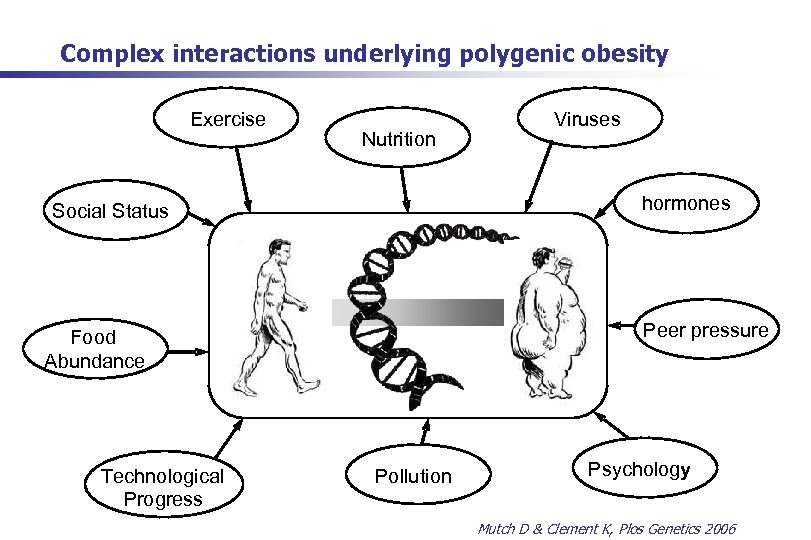
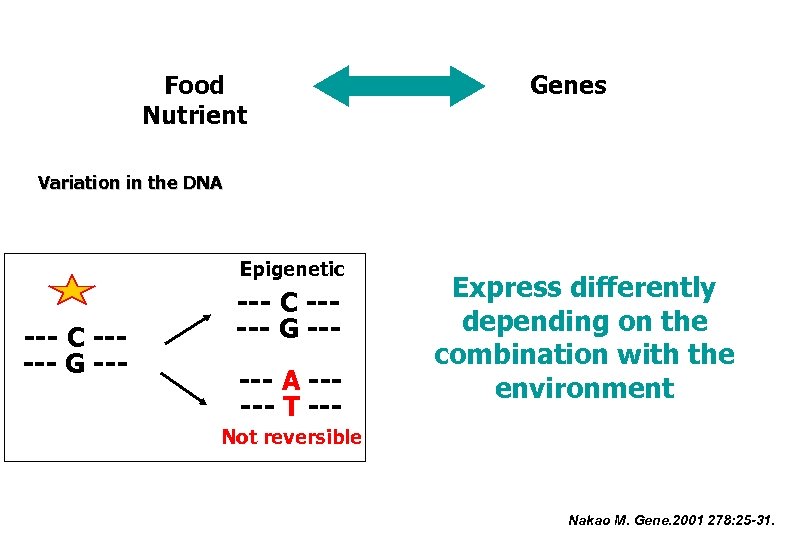
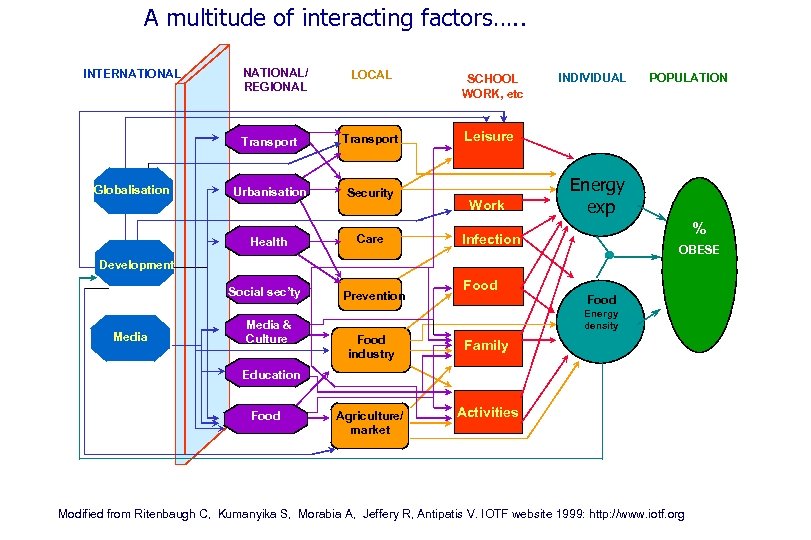
Complex interactions underlying polygenic obesity Exercise Nutrition hormones Social Status Peer pressure Food Abundance Technological Progress Viruses Pollution Psychology Mutch D & Clement K, Plos Genetics 2006
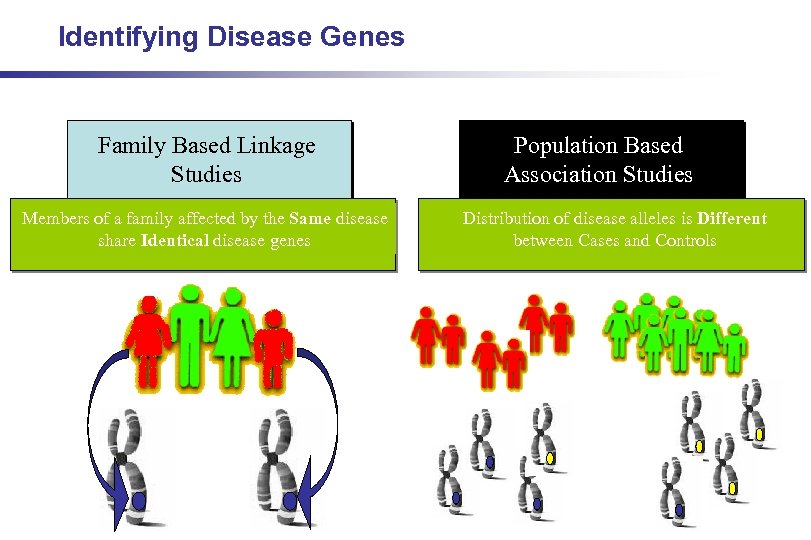
Identifying Disease Genes Family Based Linkage Studies Members of a family affected by the Same disease share Identical disease genes Population Based Association Studies Distribution of disease alleles is Different between Cases and Controls
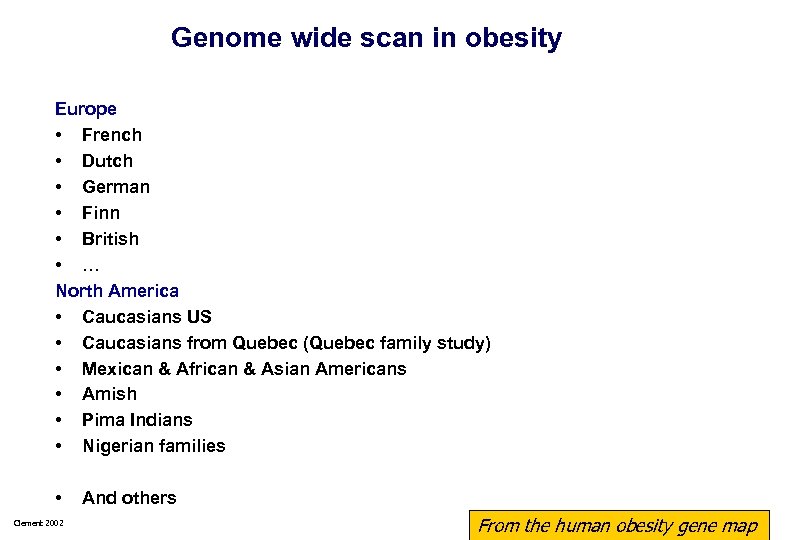
Genome wide scan in obesity Europe • French • Dutch • German • Finn • British • … North America • Caucasians US • Caucasians from Quebec (Quebec family study) • Mexican & African & Asian Americans • Amish • Pima Indians • Nigerian families • Clement 2002 And others From the human obesity gene map
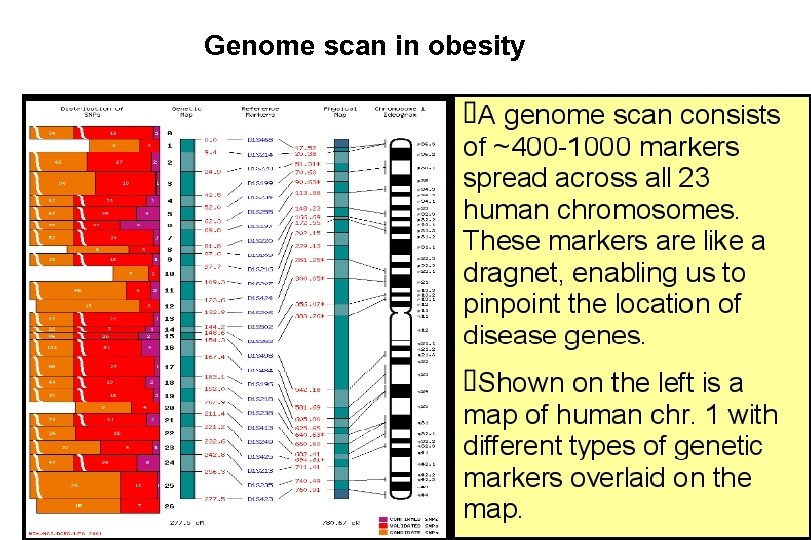
Genome scan in obesity
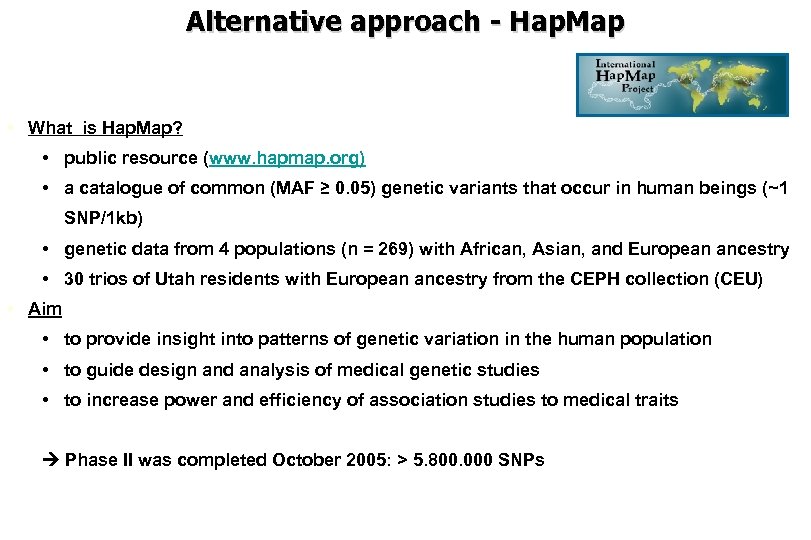
Alternative approach - Hap. Map • What is Hap. Map? • public resource (www. hapmap. org) • a catalogue of common (MAF ≥ 0. 05) genetic variants that occur in human beings (~1 SNP/1 kb) • genetic data from 4 populations (n = 269) with African, Asian, and European ancestry • 30 trios of Utah residents with European ancestry from the CEPH collection (CEU) • Aim • to provide insight into patterns of genetic variation in the human population • to guide design and analysis of medical genetic studies • to increase power and efficiency of association studies to medical traits Phase II was completed October 2005: > 5. 800. 000 SNPs
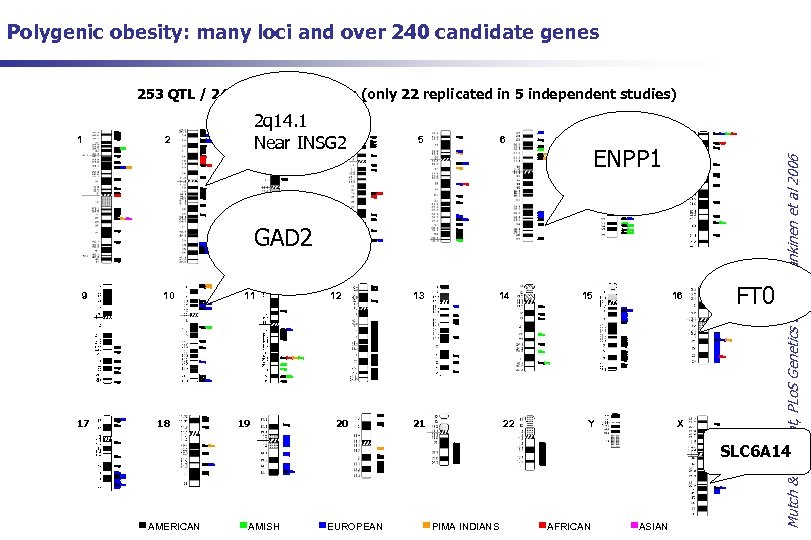
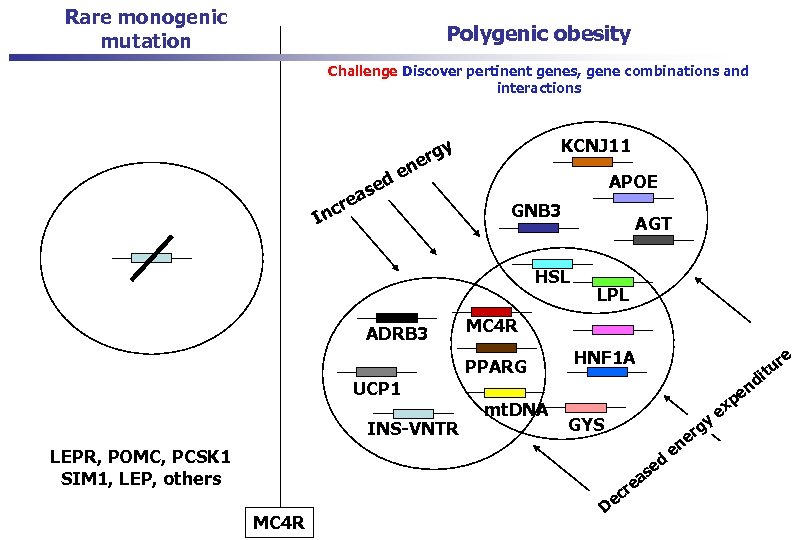
Polygenic obesity: many loci and over 240 candidate genes 253 QTL / 244 candidate genes (only 22 replicated in 5 independent studies) 2 8 5 6 7 13 14 15 16 Y X ENPP 1 GAD 2 9 17 10 18 11 19 12 20 21 22 FT 0 Mutch & Clément, PLo. S Genetics 2006 ; Rankinen et al 2006 1 2 q 14. 1 3 4 Near INSG 2 SLC 6 A 14 AMERICAN AMISH EUROPEAN PIMA INDIANS AFRICAN ASIAN
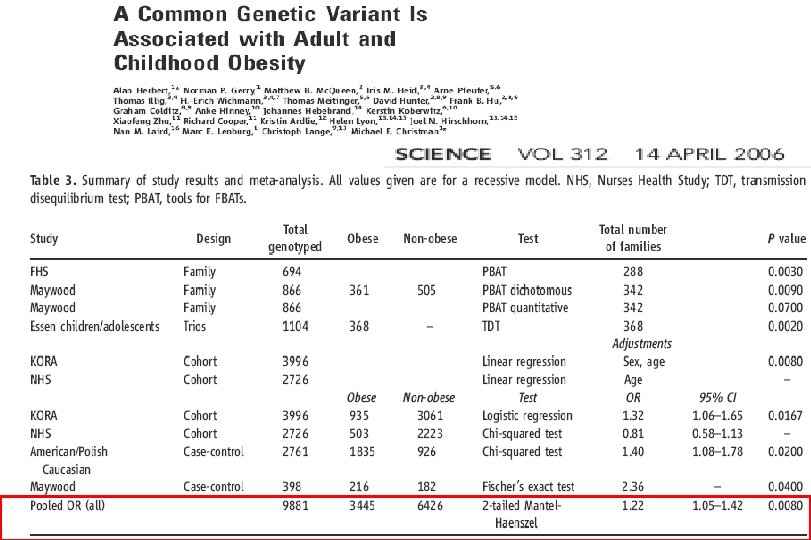
Positional candidates? • Chromosome Xq 24. Suviolahti et al, JCI 2003 found association between obesity and an SNP • Chromosome 10 linked locus. Boutin et al, PLOS 2003 : a SNP haplotype, in GAD 2, involved in • Chromosome 6. Meyre et al. Nature Genet (2005): association between a 3 -allele risk haplotype • Chromosome 2. Herbert et al Science 2006 found an association near a SNP upstream the INSIG 2 • Chromosome 16 q 12. Scott et al, Frayling et all Science 2007 found an association between the haplotype in the 3'-untranslated region of SLC 6 A 14, an (amino solute carrier family 6 member 14) acid transporter involved in serotonin synthesis and for SNP haplotypes of the SLC 6 A 14 gene (P = 0. 0007 -0. 006). No recent news about his role or other confirmation GABA Formation, associated with morbid obesity in French adults. Not replicated in independent population (*4), incl. functional study defined by the polymorphisms K 121 Q, IVS 20 del. T-1, and A-G+1044 TGA) and childhood obesity (OR = 1. 69), morbid or moderate obesity in adults (OR= 1. 50), and type II diabetes (OR = 1. 56). ENPP 1 is a membrane glycoprotein that inhibits insulin receptor. Not replicated in independent populations gene associated with common obesity in adults and children. fused toes (FT 0) gene and obesity in children and adults. Association confirmed by Dina et al Nat. Genet 2007. Large population discussed but gene role unknown. Replication?
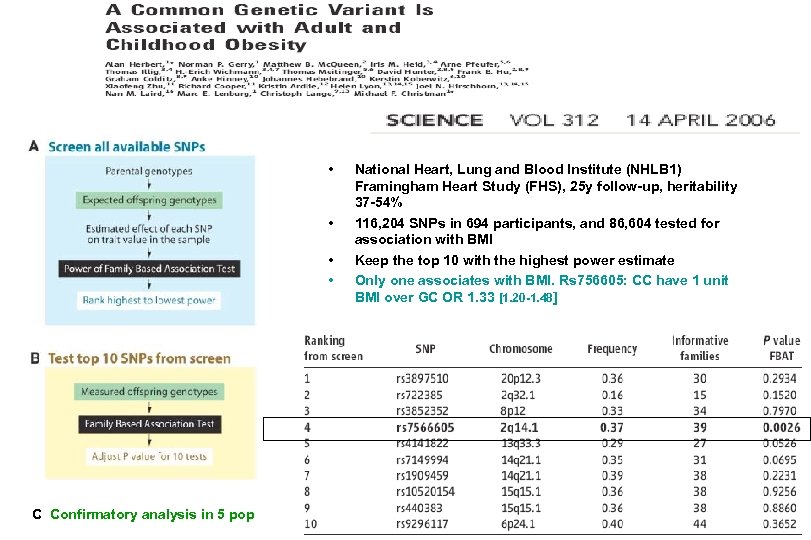
• • C Confirmatory analysis in 5 pop National Heart, Lung and Blood Institute (NHLB 1) Framingham Heart Study (FHS), 25 y follow-up, heritability 37 -54% 116, 204 SNPs in 694 participants, and 86, 604 tested for association with BMI Keep the top 10 with the highest power estimate Only one associates with BMI. Rs 756605: CC have 1 unit BMI over GC OR 1. 33 [1. 20 -1. 48]
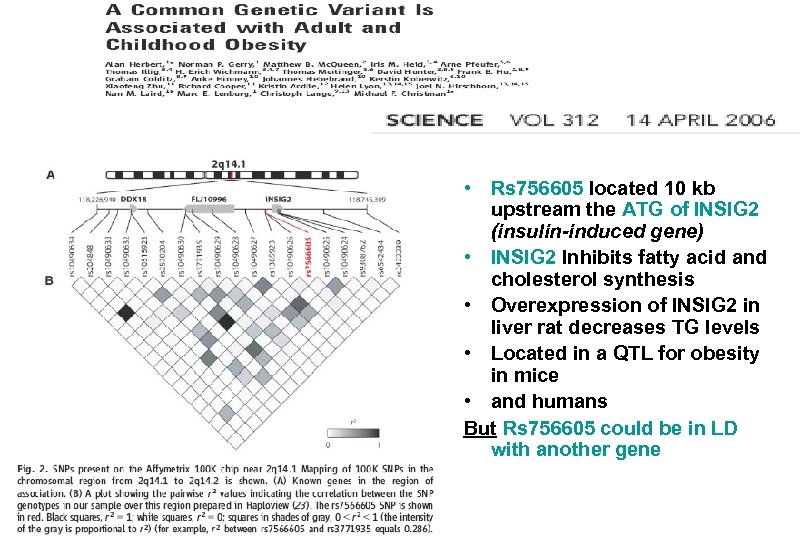
• Rs 756605 located 10 kb upstream the ATG of INSIG 2 (insulin-induced gene) • INSIG 2 Inhibits fatty acid and cholesterol synthesis • Overexpression of INSIG 2 in liver rat decreases TG levels • Located in a QTL for obesity in mice • and humans But Rs 756605 could be in LD with another gene
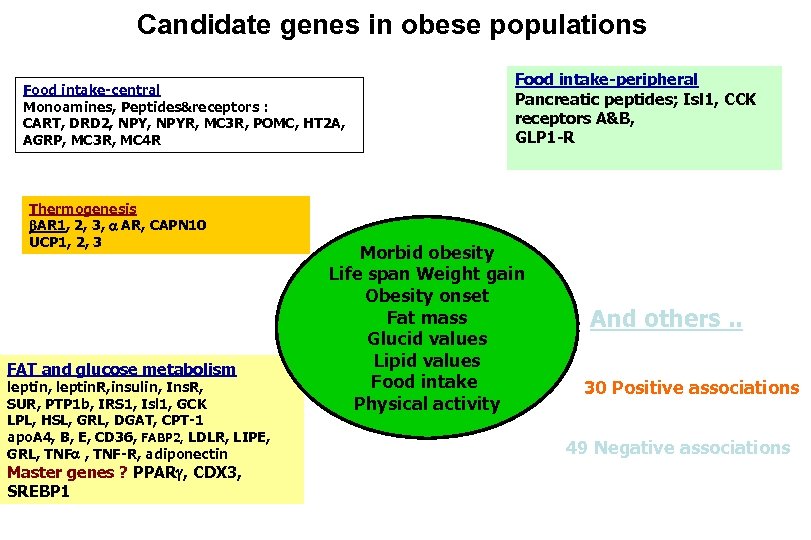
Candidate genes in obese populations Food intake-central Monoamines, Peptides&receptors : CART, DRD 2, NPYR, MC 3 R, POMC, HT 2 A, AGRP, MC 3 R, MC 4 R Thermogenesis b. AR 1, 2, 3, AR, CAPN 10 UCP 1, 2, 3 FAT and glucose metabolism leptin, leptin. R, insulin, Ins. R, SUR, PTP 1 b, IRS 1, Isl 1, GCK LPL, HSL, GRL, DGAT, CPT-1 apo. A 4, B, E, CD 36, FABP 2, LDLR, LIPE, GRL, TNF-R, adiponectin Master genes ? PPARg, CDX 3, SREBP 1 Food intake-peripheral Pancreatic peptides; Isl 1, CCK receptors A&B, GLP 1 -R Morbid obesity Life span Weight gain Obesity onset Fat mass Glucid values Lipid values Food intake Physical activity And others. . 30 Positive associations 49 Negative associations
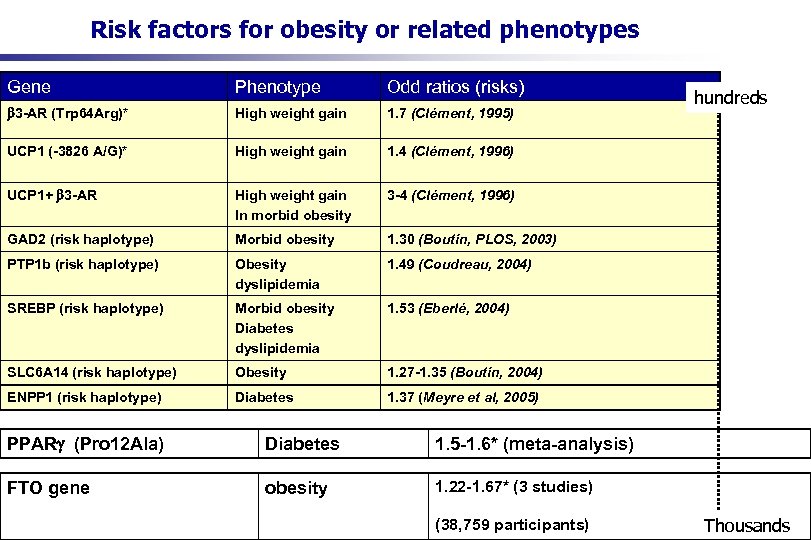
Risk factors for obesity or related phenotypes Gene Phenotype Odd ratios (risks) b 3 -AR (Trp 64 Arg)* High weight gain 1. 7 (Clément, 1995) UCP 1 (-3826 A/G)* High weight gain 1. 4 (Clément, 1996) UCP 1+ b 3 -AR High weight gain In morbid obesity 3 -4 (Clément, 1996) GAD 2 (risk haplotype) Morbid obesity 1. 30 (Boutin, PLOS, 2003) PTP 1 b (risk haplotype) Obesity dyslipidemia 1. 49 (Coudreau, 2004) SREBP (risk haplotype) Morbid obesity Diabetes dyslipidemia 1. 53 (Eberlé, 2004) SLC 6 A 14 (risk haplotype) Obesity 1. 27 -1. 35 (Boutin, 2004) ENPP 1 (risk haplotype) Diabetes 1. 37 (Meyre et al, 2005) PPARg (Pro 12 Ala) Diabetes 1. 5 -1. 6* (meta-analysis) FTO gene obesity hundreds 1. 22 -1. 67* (3 studies) (38, 759 participants) Thousands
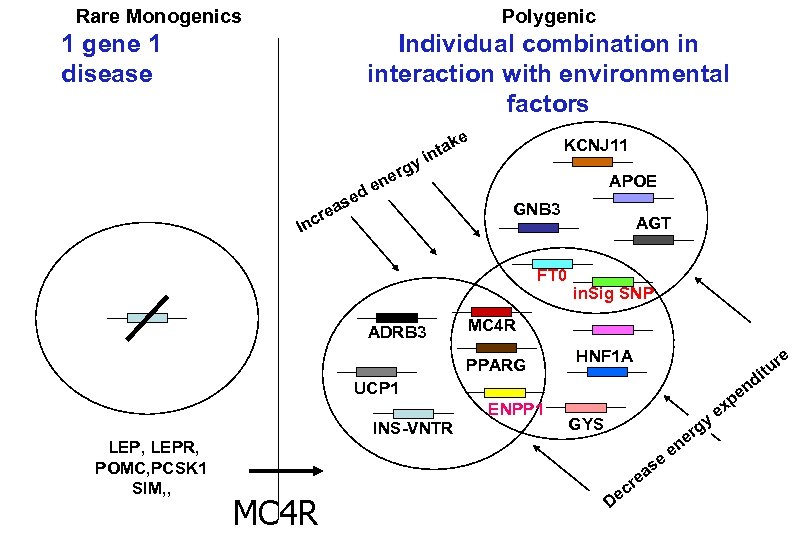
Rare Monogenics Polygenic 1 gene 1 disease Individual combination in interaction with environmental factors y erg e tak in KCNJ 11 APOE n e ed s a cre In GNB 3 FT 0 ADRB 3 AGT in. Sig SNP MC 4 R PPARG HNF 1 A e d UCP 1 INS-VNTR LEP, LEPR, POMC, PCSK 1 SIM, , ENPP 1 gy er GYS n s MC 4 R r tu i ec D a re e e ex n pe
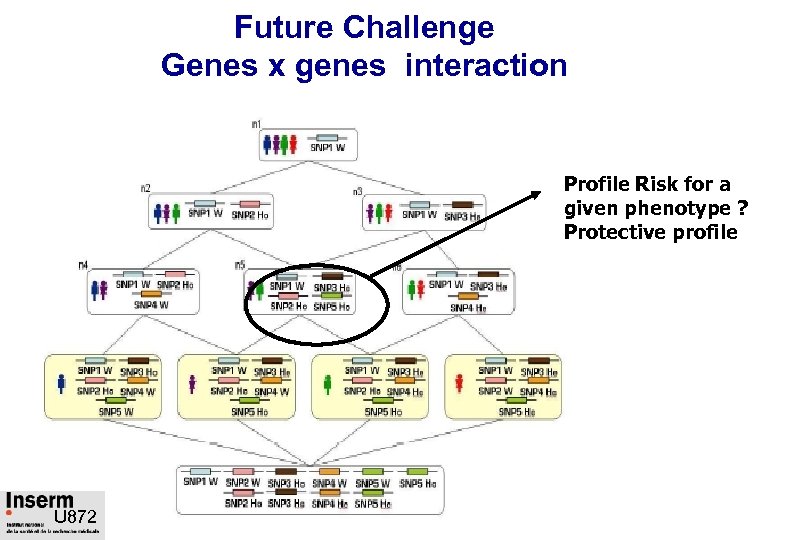
Future Challenge Genes x genes interaction Profile Risk for a given phenotype ? Protective profile U 872
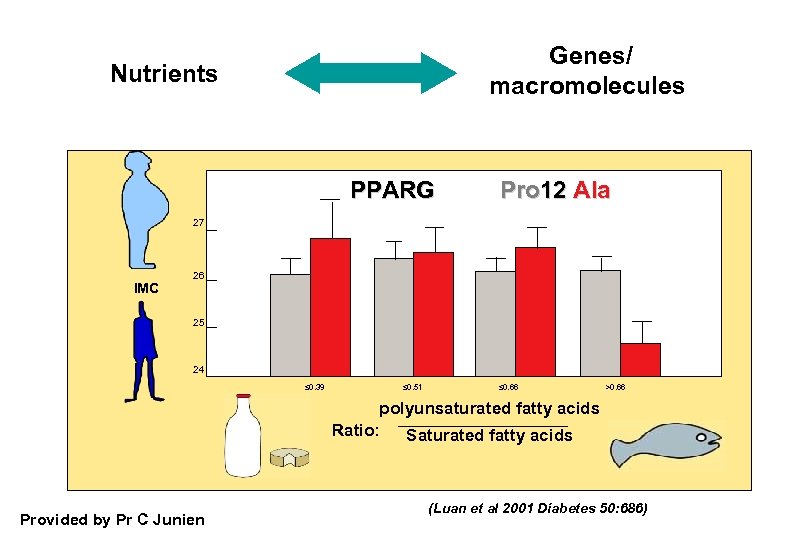
Genes/ macromolecules Nutrients PPARG Pro 12 Ala 27 IMC 26 25 24 ≤ 0. 39 ≤ 0. 51 ≤ 0. 66 >0. 66 polyunsaturated fatty acids Ratio: Saturated fatty acids Provided by Pr C Junien (Luan et al 2001 Diabetes 50: 686)
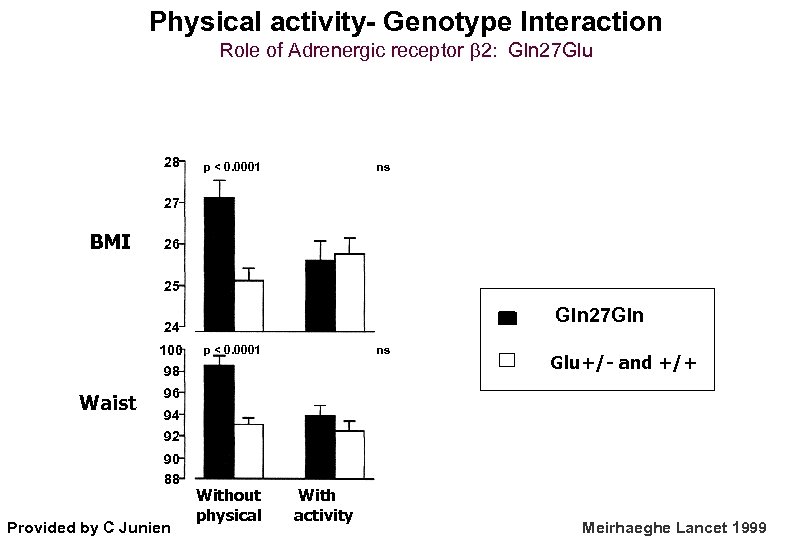
Physical activity- Genotype Interaction Role of Adrenergic receptor b 2: Gln 27 Glu 28 p < 0. 0001 ns 27 BMI 26 25 Gln 27 Gln 24 100 p < 0. 0001 ns 98 Waist Glu+/- and +/+ 96 94 92 90 88 Provided by C Junien Without physical With activity Meirhaeghe Lancet 1999
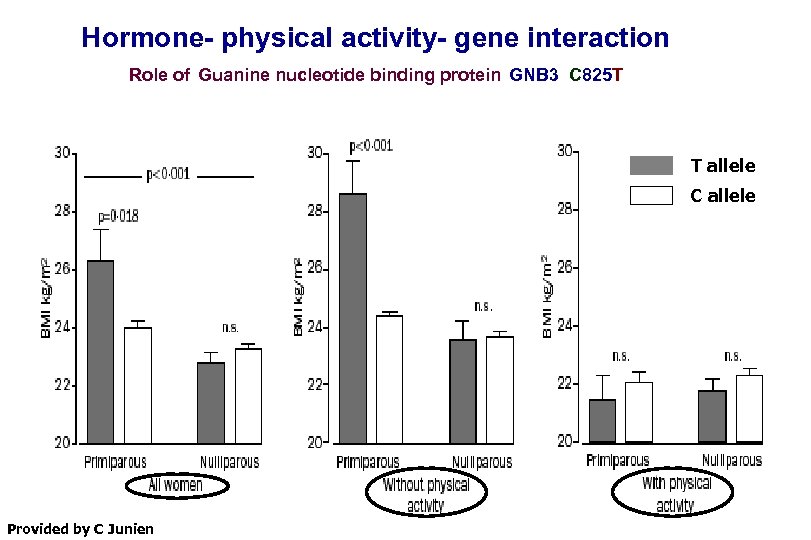
Hormone- physical activity- gene interaction Role of Guanine nucleotide binding protein GNB 3 C 825 T T allele C allele Provided by C Junien
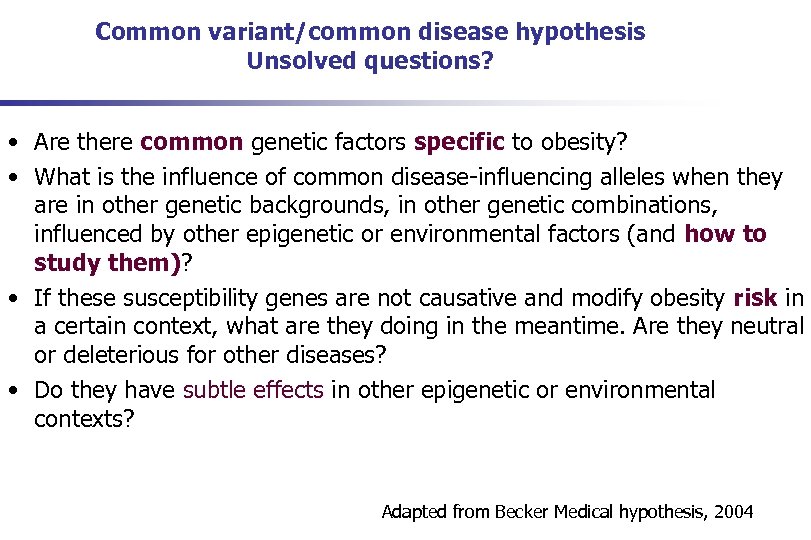
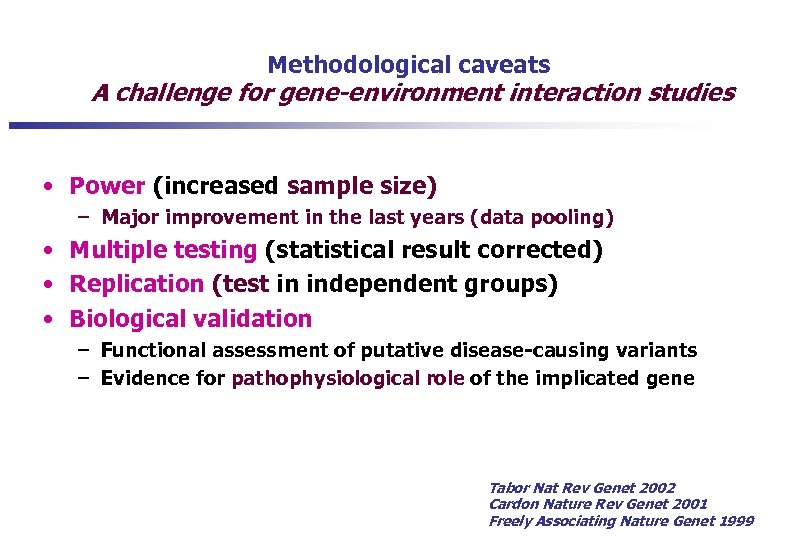
Common variant/common disease hypothesis Unsolved questions? • Are there common genetic factors specific to obesity? • What is the influence of common disease-influencing alleles when they are in other genetic backgrounds, in other genetic combinations, influenced by other epigenetic or environmental factors (and how to study them)? • If these susceptibility genes are not causative and modify obesity risk in a certain context, what are they doing in the meantime. Are they neutral or deleterious for other diseases? • Do they have subtle effects in other epigenetic or environmental contexts? Adapted from Becker Medical hypothesis, 2004
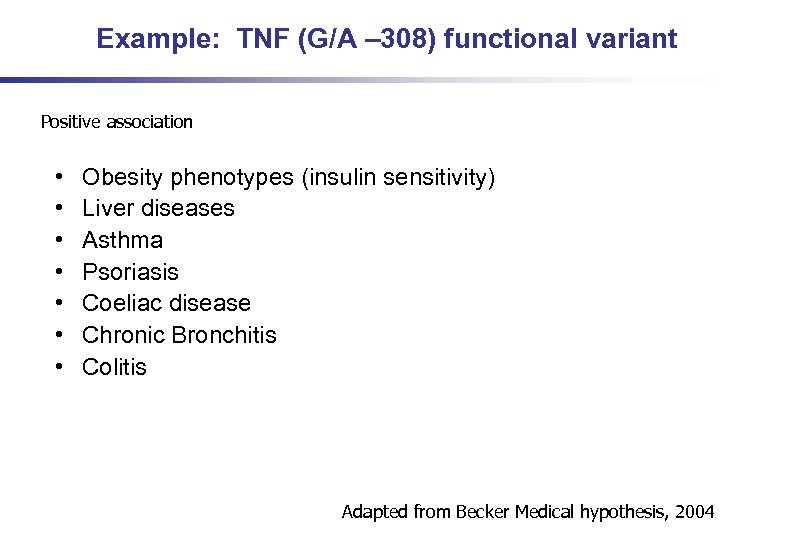
Example: TNF (G/A – 308) functional variant Positive association • • Obesity phenotypes (insulin sensitivity) Liver diseases Asthma Psoriasis Coeliac disease Chronic Bronchitis Colitis Adapted from Becker Medical hypothesis, 2004
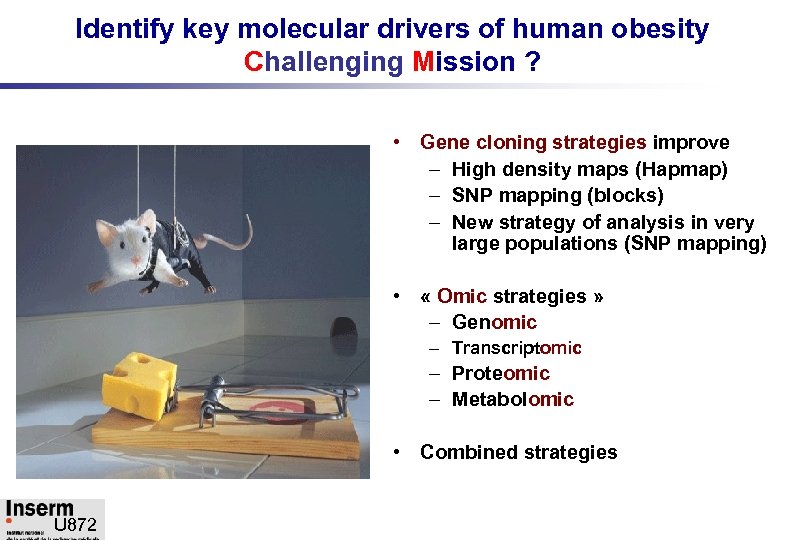
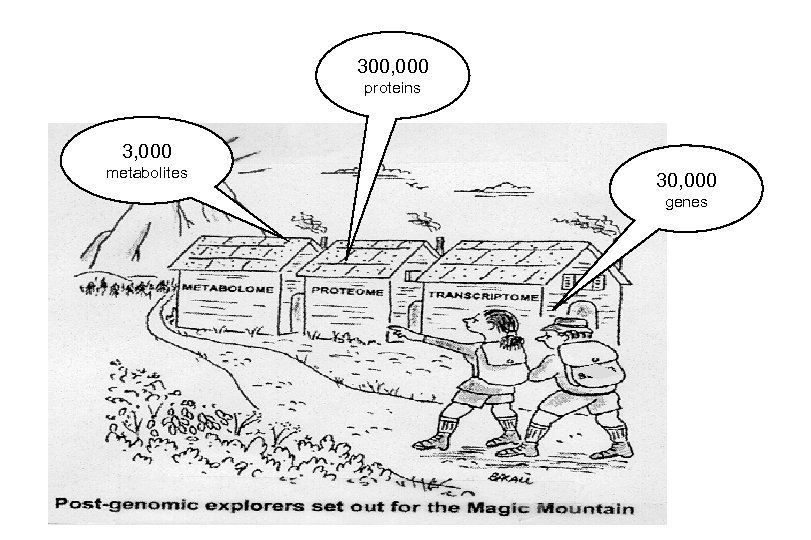
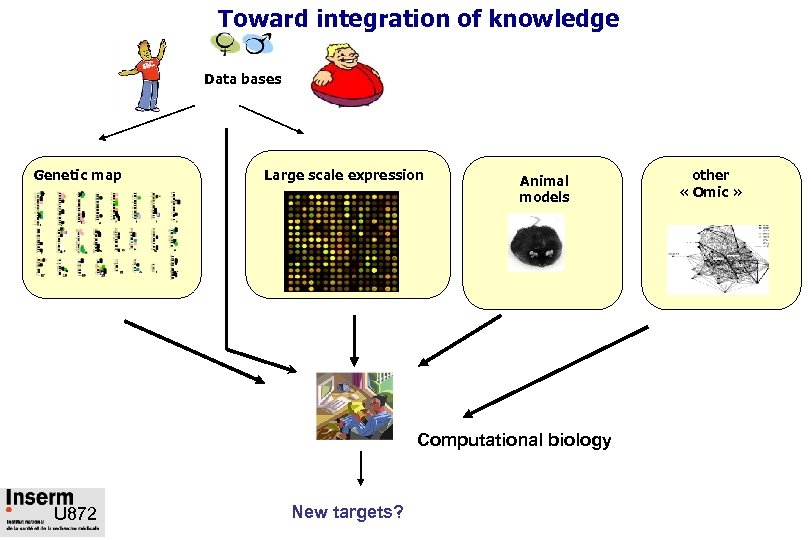
Identify key molecular drivers of human obesity Challenging Mission ? • Gene cloning strategies improve – High density maps (Hapmap) – SNP mapping (blocks) – New strategy of analysis in very large populations (SNP mapping) • « Omic strategies » – Genomic – Transcriptomic – Proteomic – Metabolomic • Combined strategies U 872
300, 000 proteins 3, 000 metabolites 30, 000 genes
Toward integration of knowledge Data bases Genetic map Large scale expression Animal models Computational biology U 872 New targets? other « Omic »
A multitude of interacting factors…. . INTERNATIONAL/ REGIONAL LOCAL Transport Urbanisation INDIVIDUAL POPULATION Leisure Transport Security Health Globalisation SCHOOL WORK, etc Care Work Energy exp % Infection OBESE Development Social sec’ty Media & Culture Food Prevention Food Energy density Food industry Family Education Food Agriculture/ market Activities Modified from Ritenbaugh C, Kumanyika S, Morabia A, Jeffery R, Antipatis V. IOTF website 1999: http: //www. iotf. org
Strategy and tool transition Genes The better the tools become, the clearer the picture…. . Experiments
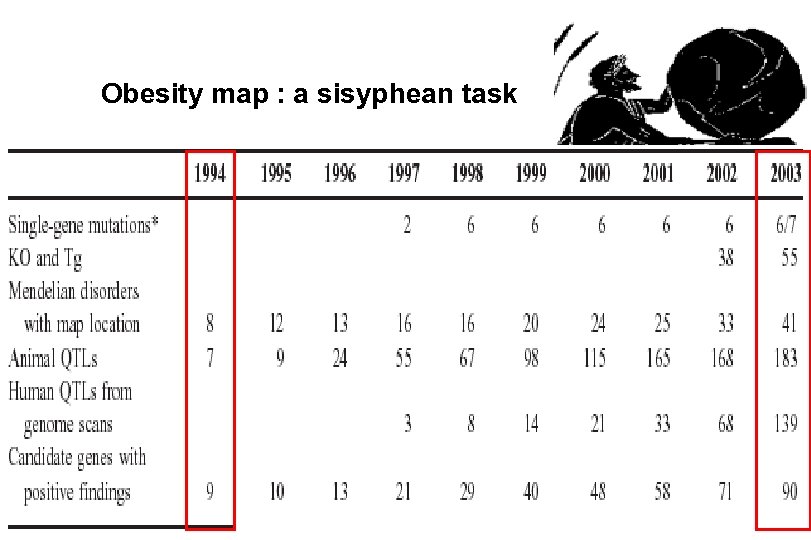
Obesity map : a sisyphean task
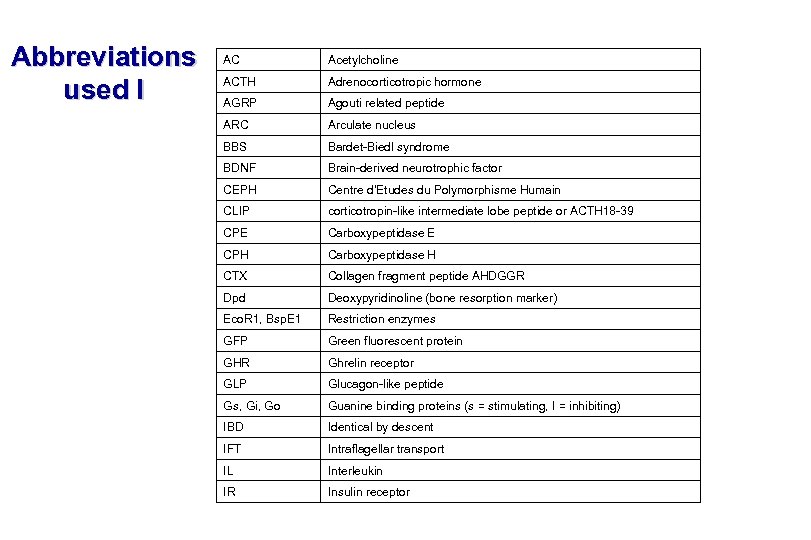
Abbreviations used I AC Acetylcholine ACTH Adrenocorticotropic hormone AGRP Agouti related peptide ARC Arculate nucleus BBS Bardet-Biedl syndrome BDNF Brain-derived neurotrophic factor CEPH Centre d’Etudes du Polymorphisme Humain CLIP corticotropin-like intermediate lobe peptide or ACTH 18 -39 CPE Carboxypeptidase E CPH Carboxypeptidase H CTX Collagen fragment peptide AHDGGR Dpd Deoxypyridinoline (bone resorption marker) Eco. R 1, Bsp. E 1 Restriction enzymes GFP Green fluorescent protein GHR Ghrelin receptor GLP Glucagon-like peptide Gs, Gi, Go Guanine binding proteins (s = stimulating, I = inhibiting) IBD Identical by descent IFT Intraflagellar transport IL Interleukin IR Insulin receptor
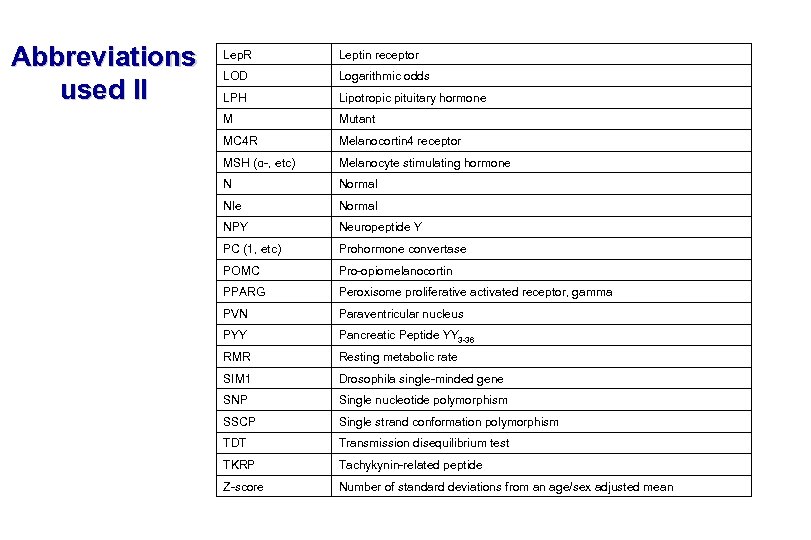
Abbreviations used II Lep. R Leptin receptor LOD Logarithmic odds LPH Lipotropic pituitary hormone M Mutant MC 4 R Melanocortin 4 receptor MSH (α-, etc) Melanocyte stimulating hormone N Normal NIe Normal NPY Neuropeptide Y PC (1, etc) Prohormone convertase POMC Pro-opiomelanocortin PPARG Peroxisome proliferative activated receptor, gamma PVN Paraventricular nucleus PYY Pancreatic Peptide YY 3 -36 RMR Resting metabolic rate SIM 1 Drosophila single-minded gene SNP Single nucleotide polymorphism SSCP Single strand conformation polymorphism TDT Transmission disequilibrium test TKRP Tachykynin-related peptide Z-score Number of standard deviations from an age/sex adjusted mean
Скачать презентацию Genetics of obesity From genetics to functional genomics
8fe8ad725447c19d7d87dd3cd3062fe2.ppt