 Скачать презентацию Genetic Engineering OBJECTIVES 1 TO RECAP BASIC CELL
Genetic_Engineering_Intro.pptx
- Количество слайдов: 11



Genetic Engineering OBJECTIVES 1. TO RECAP BASIC CELL AND GENETIC TERMS 2. TO BE ABLE TO DEFINE DESCRIBE GENETIC ENGINEERING
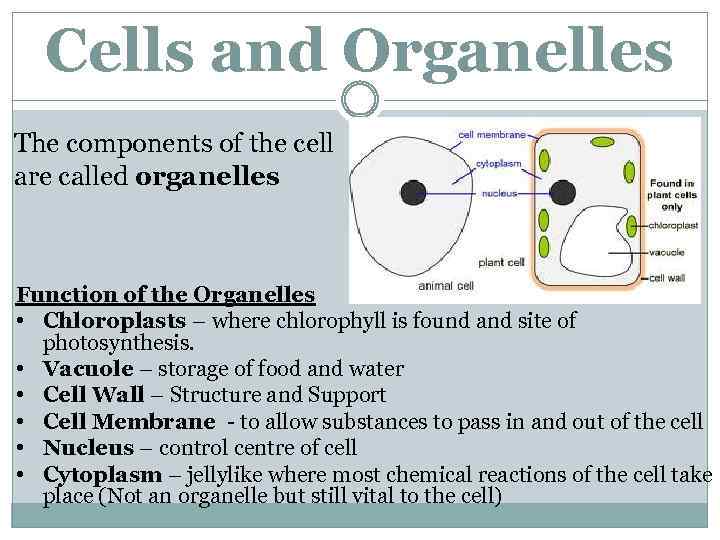
Cells and Organelles The components of the cell are called organelles Function of the Organelles • Chloroplasts – where chlorophyll is found and site of photosynthesis. • Vacuole – storage of food and water • Cell Wall – Structure and Support • Cell Membrane - to allow substances to pass in and out of the cell • Nucleus – control centre of cell • Cytoplasm – jellylike where most chemical reactions of the cell take place (Not an organelle but still vital to the cell)
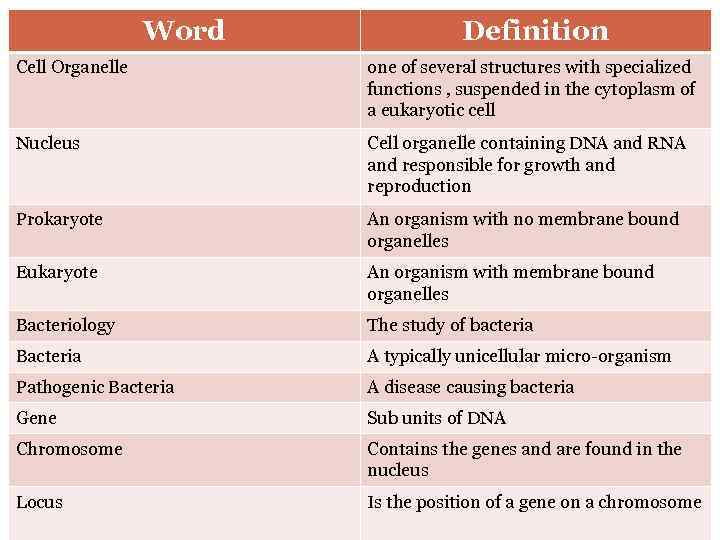
Word Cell Organelle Definition Keywordsone of several structures with specialized – Recap! functions , suspended in the cytoplasm of a eukaryotic cell Nucleus Cell organelle containing DNA and RNA and responsible for growth and reproduction Prokaryote An organism with no membrane bound organelles Eukaryote An organism with membrane bound organelles Bacteriology The study of bacteria Bacteria A typically unicellular micro-organism Pathogenic Bacteria A disease causing bacteria Gene Sub units of DNA Chromosome Contains the genes and are found in the nucleus Locus Is the position of a gene on a chromosome
Genetic Engineering Genetic engineering is the deliberate, controlled manipulation of the genes in an organism, with the intent of making that organism better in some way.
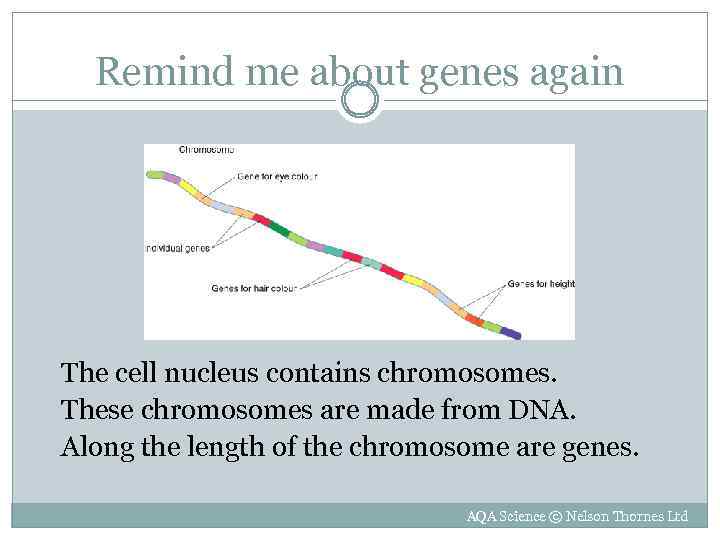
Remind me about genes again The cell nucleus contains chromosomes. These chromosomes are made from DNA. Along the length of the chromosome are genes. AQA Science © Nelson Thornes Ltd 2006 5
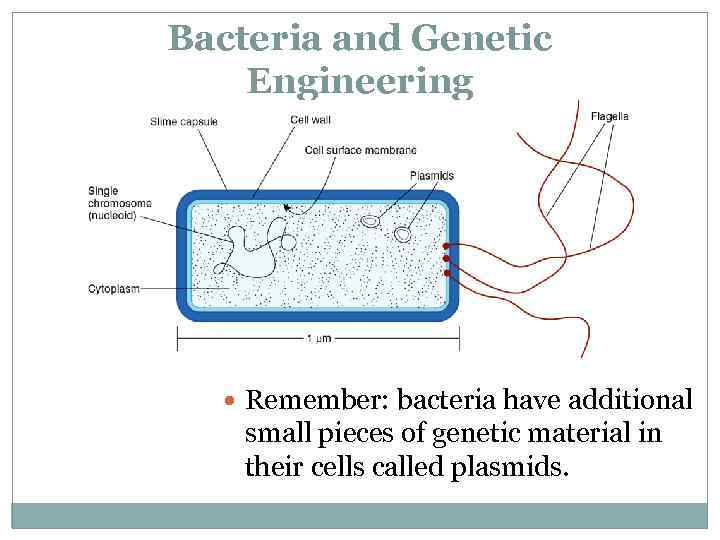
Bacteria and Genetic Engineering Remember: bacteria have additional small pieces of genetic material in their cells called plasmids.
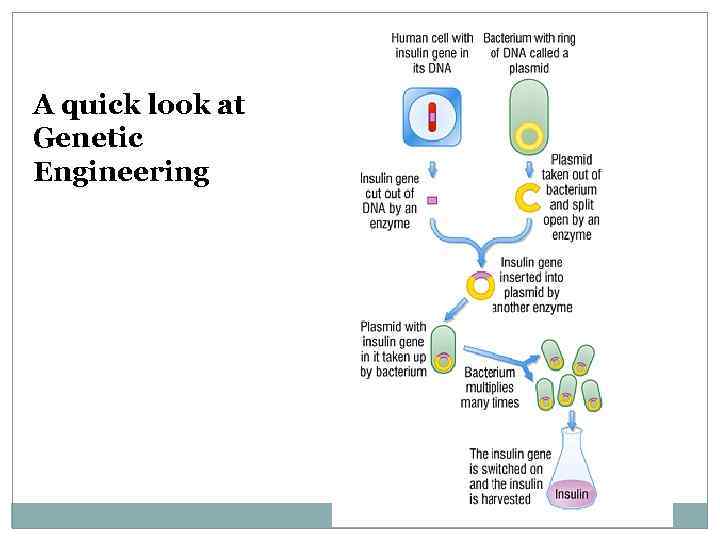
A quick look at Genetic Engineering
Thinking Time What could be the possible advantages or disadvantages with Genetic Engineering?
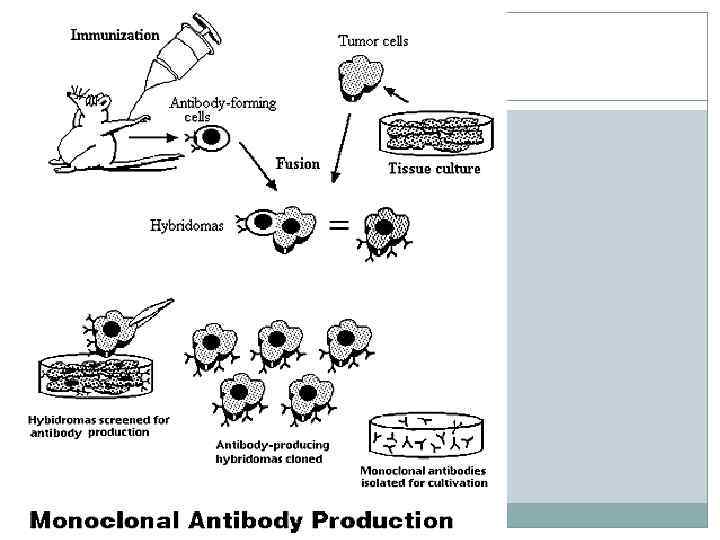
What are monoclonal antibodies? Antibodies are proteins produced by the B lymphocytes of the immune system in response to foreign proteins, called antigens. Antibodies function as markers, binding to the antigen so that the antigen molecules can be recognized and destroyed by phagocytes. The part of the antigen that the antibody binds to is called the epitope. The epitope is thus a short amino acid sequence that the antibody is able to recognize (Campbell NA, 1996). Two features of the antibody-epitope relationship are key to the use of monoclonal antibodies as a molecular tool. specificity -- the antibody binds only to its particular epitope sufficiency -- the epitope can bind to the antibody on its own, i. e. the presence of the whole antigen molecule is not necessary Structurally antibodies are proteins consisting of four polypeptide chains. These four chains form a quaternary structure somewhat resembling a Y shape. Figure 1 shows the three dimensional structure of immunoglobulin G, a typical antibody, and its schematic representation. Each B cell in an organism synthesizes only one kind of antibody. In an organism, there is an entire population of different types of B cells and their respective antibodies that were produced in response to the various antigens that the organism had been exposed to. However to be useful as a tool, molecular biologists need substantial amounts of a single antibody (and that antibody alone). Therefore we need a method to culture a population of B cells derived from a single ancestral B cell, so that this population of B cells would allow us to harvest a single kind of antibody. This population of cells would be correctly described as monoclonal, and the antibodies produced by this population of B cells are called monoclonal antibodies. In contrast, antibodies obtained from the blood of an immunized animal are called polyclonal antibodies.
Uses of Monoclonal Antibodies Monoclonal bodies have a variety of academic, medical and commercial uses. Antibodies are used in several diagnostic tests to detect small amounts of drugs, toxins or hormones, e. g. monoclonal antibodies to human chorionic gonadotropin (HCG) are used in pregnancy test kits (Biotech, 1989). Another diagnostic uses of antibodies is the diagnosis of AIDS by the ELISA test. Antibodies are used in the radioimmunodetection and radioimmunotherapy of cancer, and some new methods can even target only the cell membranes of cancerous cells (Chaudhari et al, 1994). Monoclonal antibodies can be used to treat viral diseases, traditionally considered "untreatable". Monoclonal antibodies can be used to classify strains of a single pathogen, e. g. Neisseria gonorrhoeae can be typed using monoclonal antibodies (Wang et al, 1977). Researchers use monoclonal antibodies to identify and to trace specific cells or molecules in an organism, e. g. developmental biologists at the University of Oregon use monoclonal antibodies to find out which proteins are responsible for cell differentiation in the respiratory system (Fratella, 1998). OKT 3, an antibody to the T 3 antigen of T cells, is used to alleviate the problem of organ rejection in patients who have had organ transplants (Transweb, 1996).
Скачать презентацию Genetic Engineering OBJECTIVES 1 TO RECAP BASIC CELL
Genetic_Engineering_Intro.pptx