


 Скачать презентацию Generalized Energy conservation H K p 79 Energy IN
43eed399ac0c1fc5766be98ce68365c3.ppt
- Количество слайдов: 25
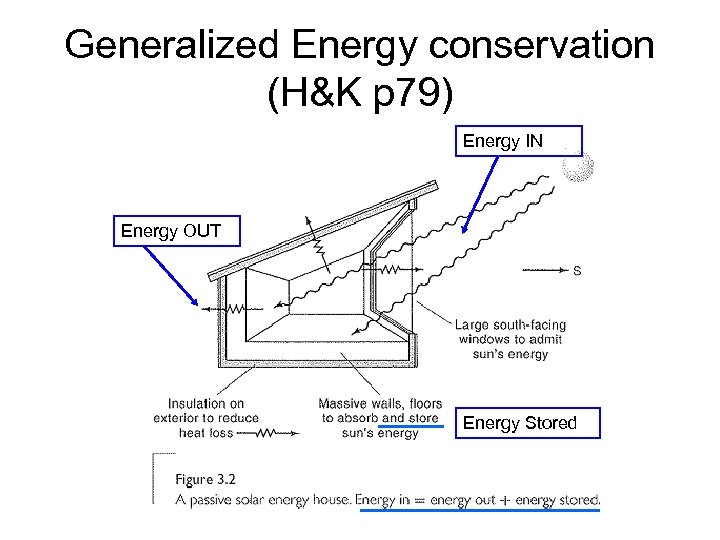 Generalized Energy conservation (H&K p 79) Energy IN Energy OUT Energy Stored
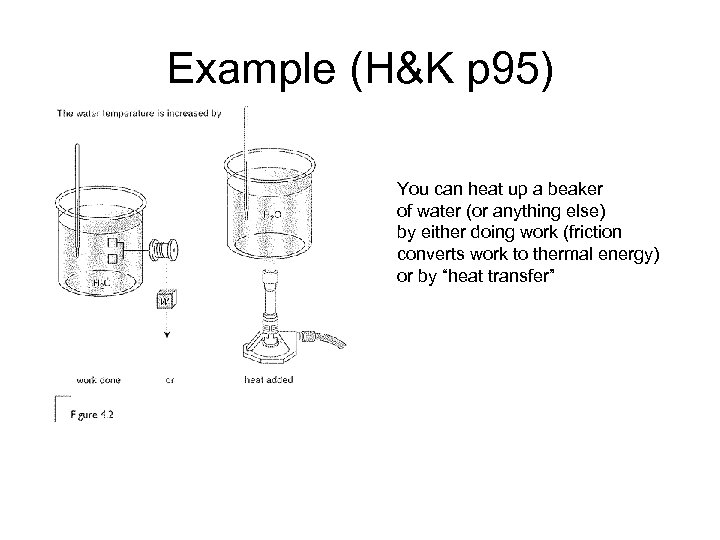 Example (H&K p 95) You can heat up a beaker of water (or anything else) by either doing work (friction converts work to thermal energy) or by “heat transfer”
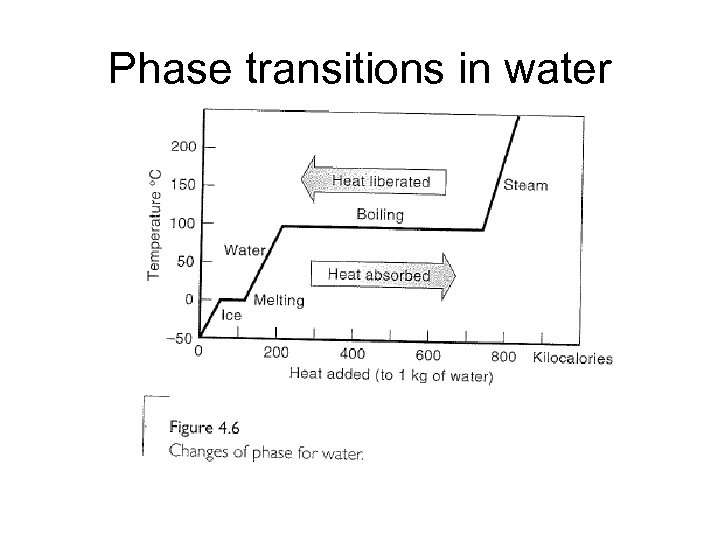 Phase transitions in water
 Specific Heats • • Ice (near 0 o. C) Water (near 0 o. C) Aluminum Copper 2090 J/kg. K=2090 J/kg. Co 4186 J/kg. K=1. 00 cal/kg. Co 900 J/kg. K 387 J/kg. K Temperature Scales: • • 0 o. C = 273. 15 K ice melts at this temp 100 o. C = 373. 15 K water boils at this temp O K is absolute zero, the coldest temperature possible. Note that 1 Co = 1 K (1 Celsius degree temp difference is 1 K difference as well). The Celsius degree and the Kelvin are the same size! The only difference in the scales is the position of the origin, hence the two scales are equivalent for talking about temperature DIFFERENCES, but not for talking about actual temperature readings.
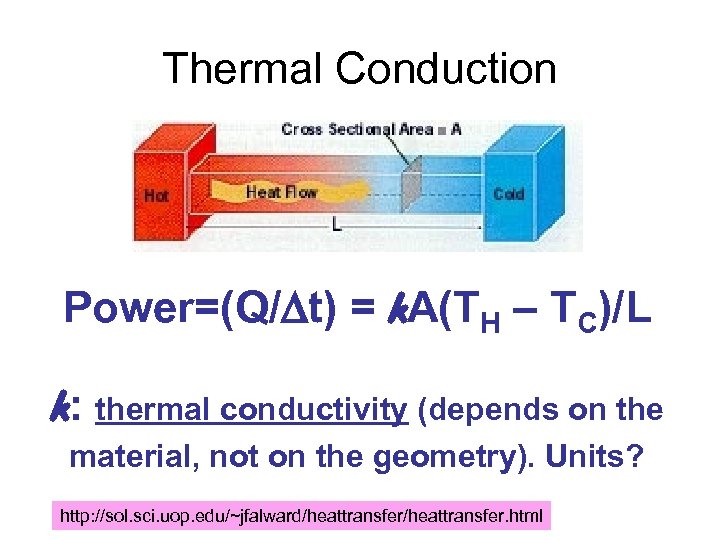 Thermal Conduction Power=(Q/Dt) = k. A(TH – TC)/L k: thermal conductivity (depends on the material, not on the geometry). Units? http: //sol. sci. uop. edu/~jfalward/heattransfer. html
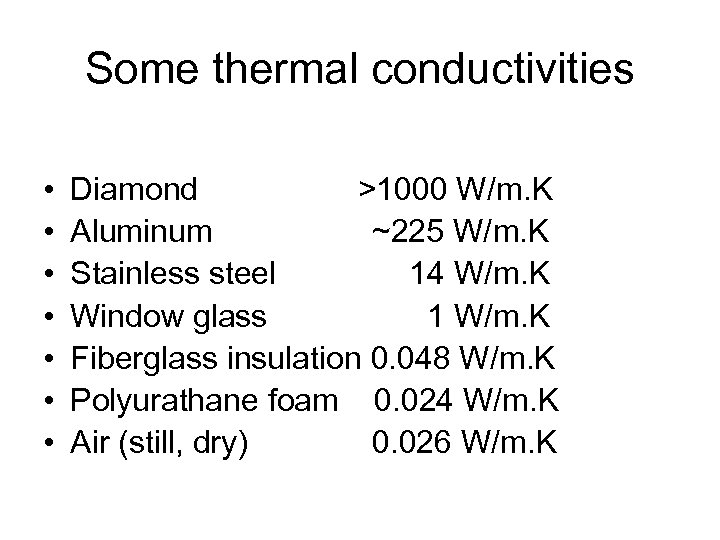 Some thermal conductivities • • Diamond >1000 W/m. K Aluminum ~225 W/m. K Stainless steel 14 W/m. K Window glass 1 W/m. K Fiberglass insulation 0. 048 W/m. K Polyurathane foam 0. 024 W/m. K Air (still, dry) 0. 026 W/m. K
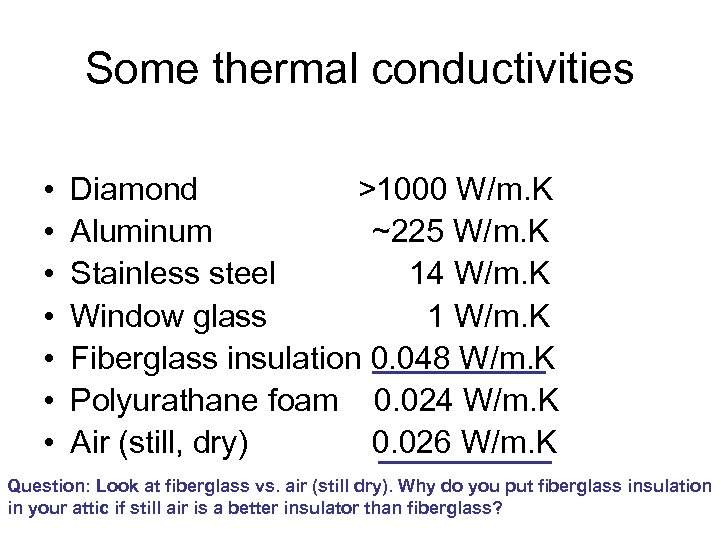 Some thermal conductivities • • Diamond >1000 W/m. K Aluminum ~225 W/m. K Stainless steel 14 W/m. K Window glass 1 W/m. K Fiberglass insulation 0. 048 W/m. K Polyurathane foam 0. 024 W/m. K Air (still, dry) 0. 026 W/m. K Question: Look at fiberglass vs. air (still dry). Why do you put fiberglass insulation in your attic if still air is a better insulator than fiberglass?
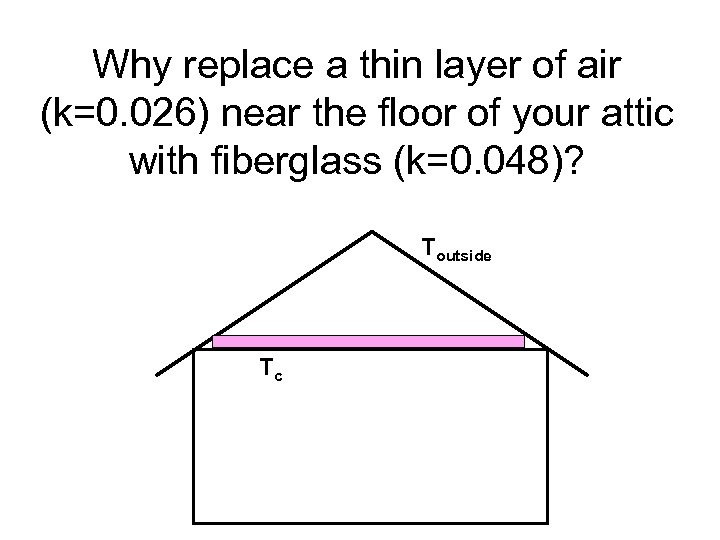 Why replace a thin layer of air (k=0. 026) near the floor of your attic with fiberglass (k=0. 048)? Toutside Tc
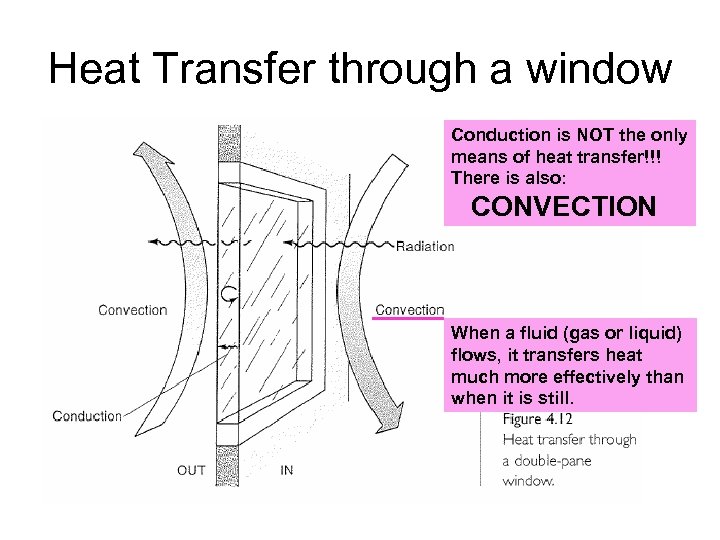 Heat Transfer through a window Conduction is NOT the only means of heat transfer!!! There is also: CONVECTION When a fluid (gas or liquid) flows, it transfers heat much more effectively than when it is still.
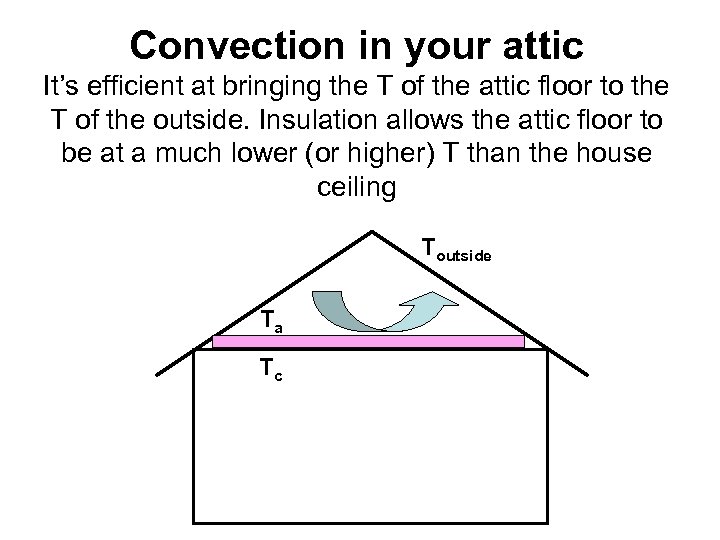 Convection in your attic It’s efficient at bringing the T of the attic floor to the T of the outside. Insulation allows the attic floor to be at a much lower (or higher) T than the house ceiling Toutside Ta Tc
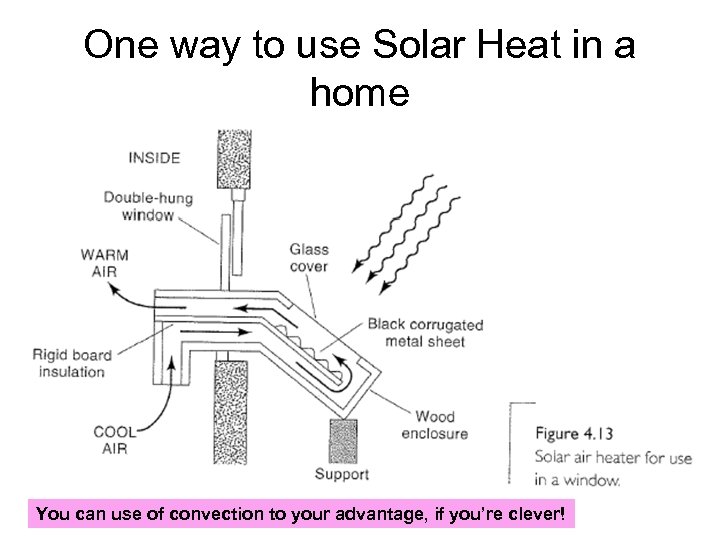 One way to use Solar Heat in a home You can use of convection to your advantage, if you’re clever!
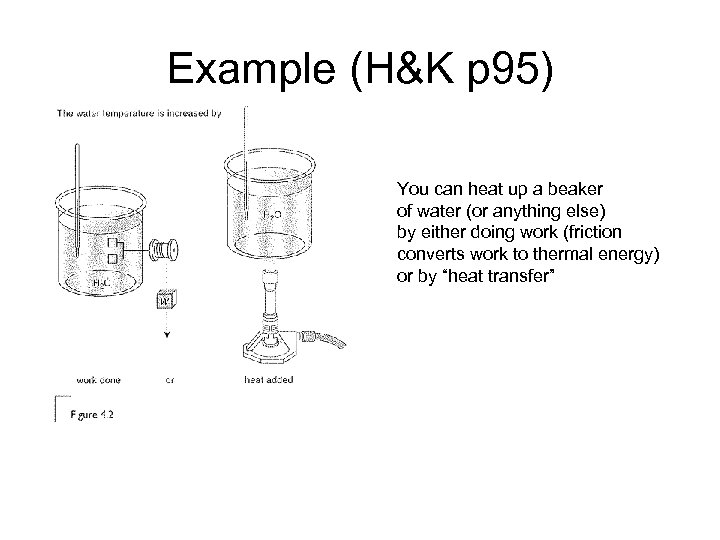 Example (H&K p 95) You can heat up a beaker of water (or anything else) by either doing work (friction converts work to thermal energy) or by “heat transfer”
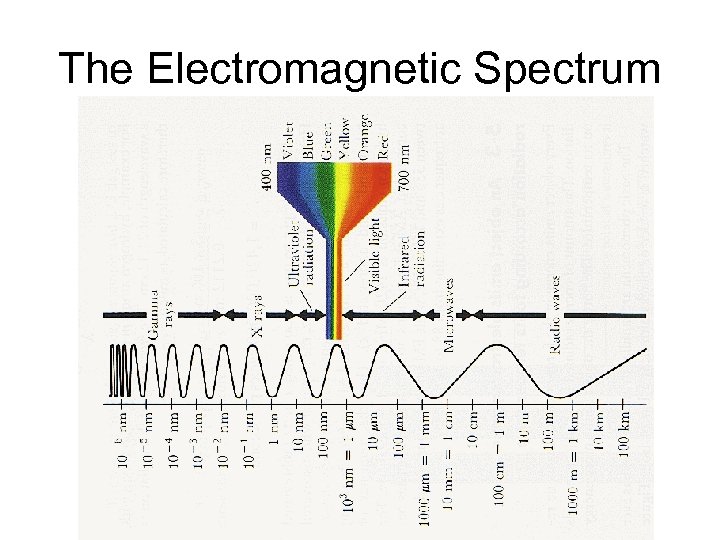 The Electromagnetic Spectrum
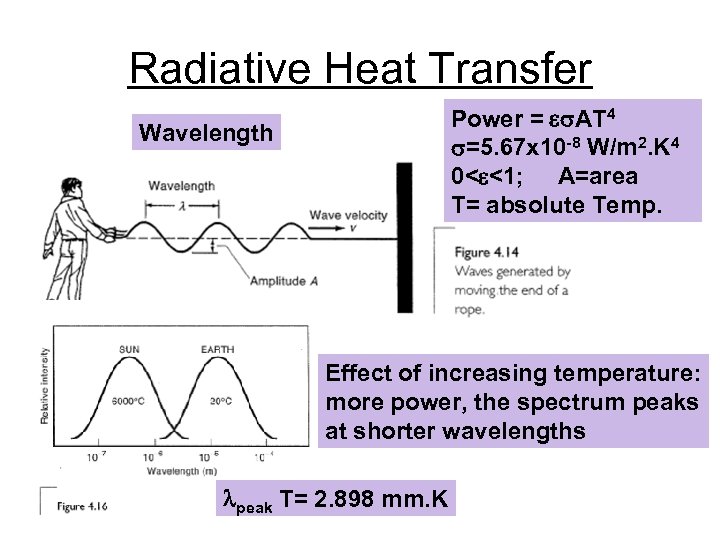 Radiative Heat Transfer Power = es. AT 4 s=5. 67 x 10 -8 W/m 2. K 4 0
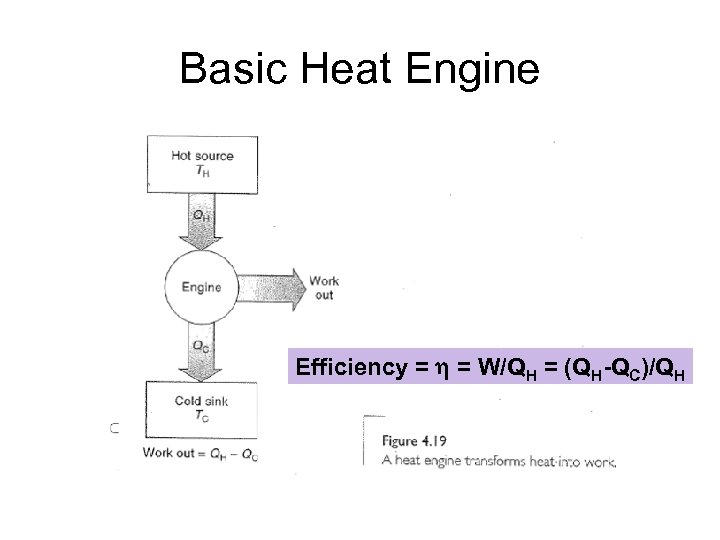 Basic Heat Engine Efficiency = h = W/QH = (QH-QC)/QH
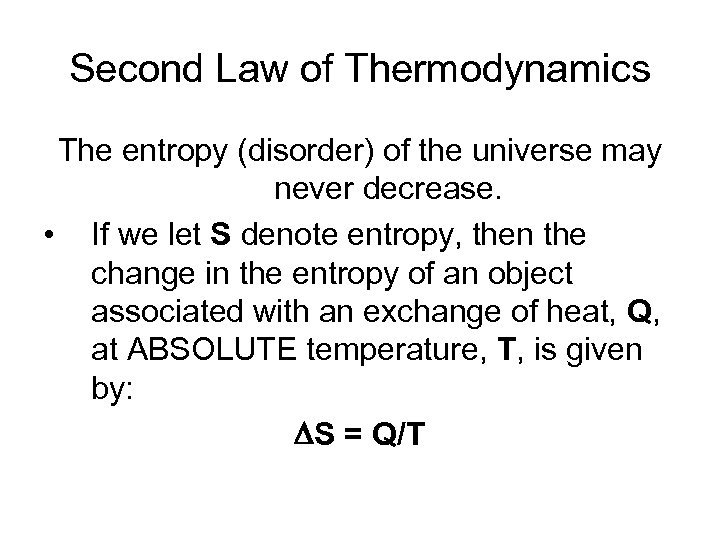 Second Law of Thermodynamics The entropy (disorder) of the universe may never decrease. • If we let S denote entropy, then the change in the entropy of an object associated with an exchange of heat, Q, at ABSOLUTE temperature, T, is given by: DS = Q/T
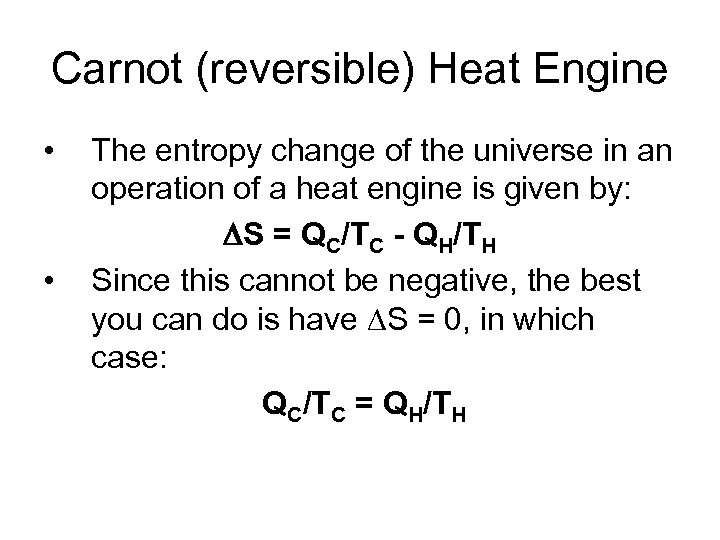 Carnot (reversible) Heat Engine • • The entropy change of the universe in an operation of a heat engine is given by: DS = QC/TC - QH/TH Since this cannot be negative, the best you can do is have DS = 0, in which case: QC/TC = QH/TH
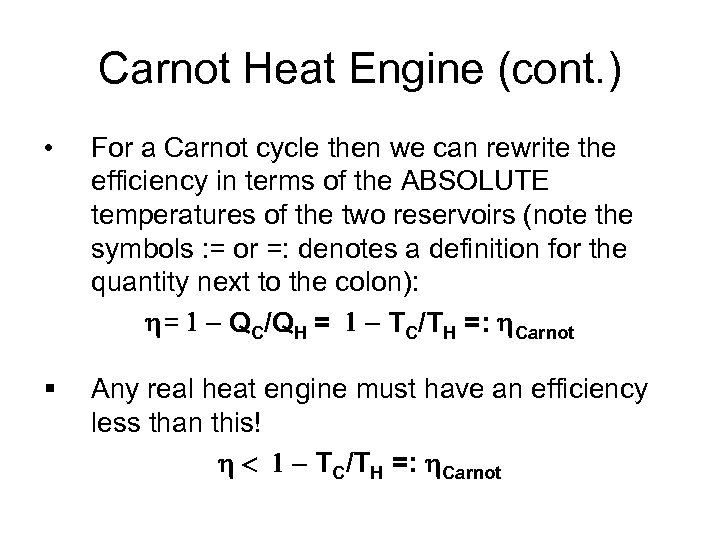 Carnot Heat Engine (cont. ) • For a Carnot cycle then we can rewrite the efficiency in terms of the ABSOLUTE temperatures of the two reservoirs (note the symbols : = or =: denotes a definition for the quantity next to the colon): h= 1 - QC/QH = 1 - TC/TH =: h. Carnot § Any real heat engine must have an efficiency less than this! h < 1 - TC/TH =: h. Carnot
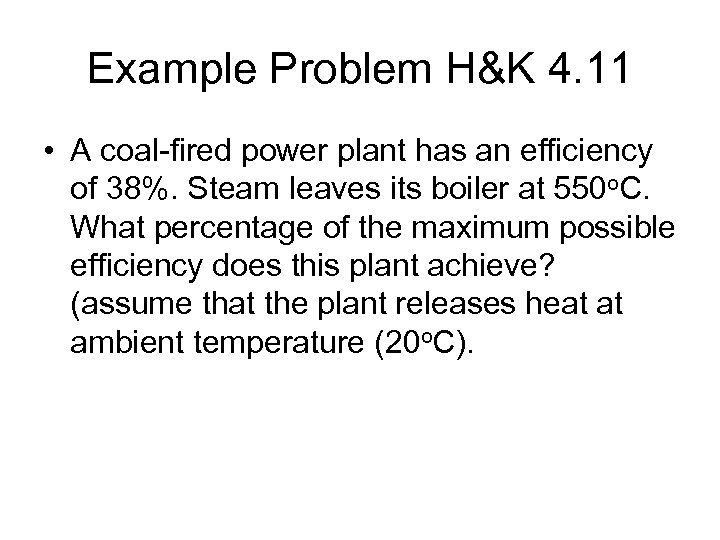 Example Problem H&K 4. 11 • A coal-fired power plant has an efficiency of 38%. Steam leaves its boiler at 550 o. C. What percentage of the maximum possible efficiency does this plant achieve? (assume that the plant releases heat at ambient temperature (20 o. C).
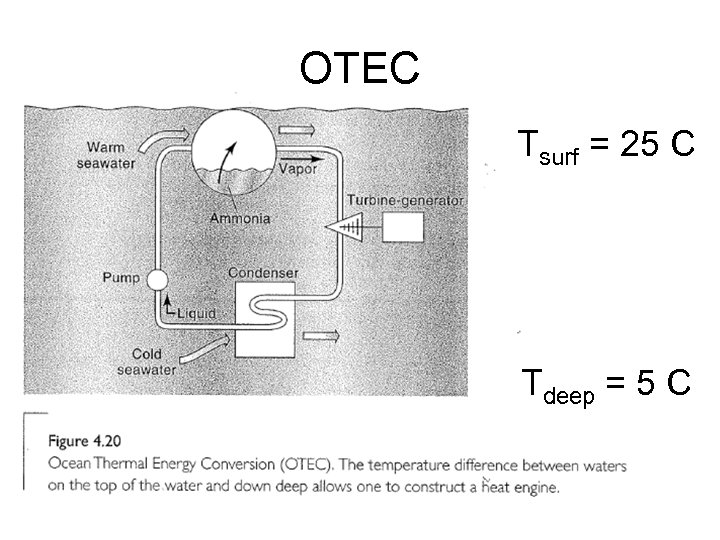 OTEC Tsurf = 25 C Tdeep = 5 C
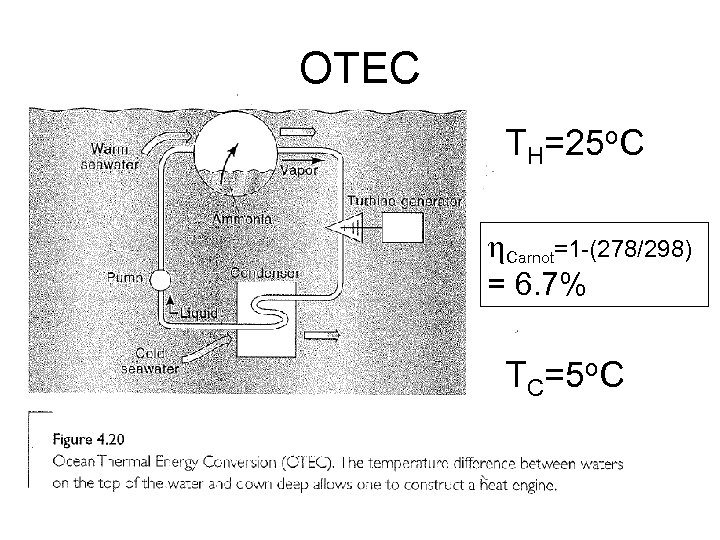 OTEC TH=25 o. C h. Carnot=1 -(278/298) = 6. 7% TC=5 o. C
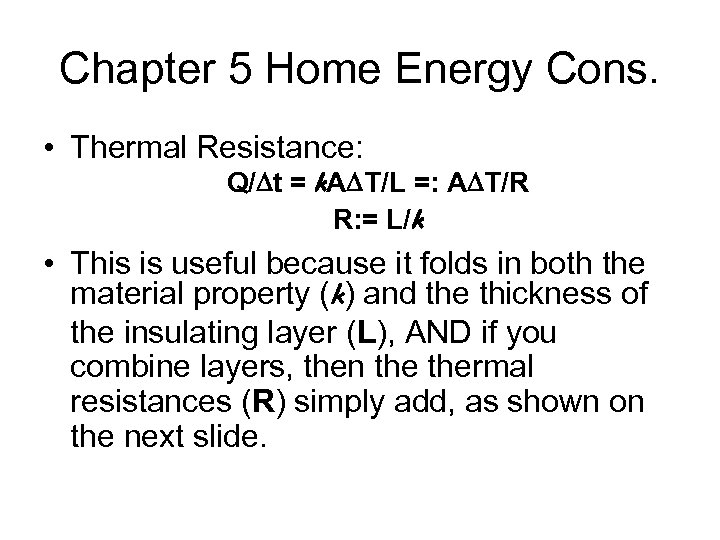 Chapter 5 Home Energy Cons. • Thermal Resistance: Q/Dt = k. ADT/L =: ADT/R R: = L/k • This is useful because it folds in both the material property (k) and the thickness of the insulating layer (L), AND if you combine layers, then thermal resistances (R) simply add, as shown on the next slide.
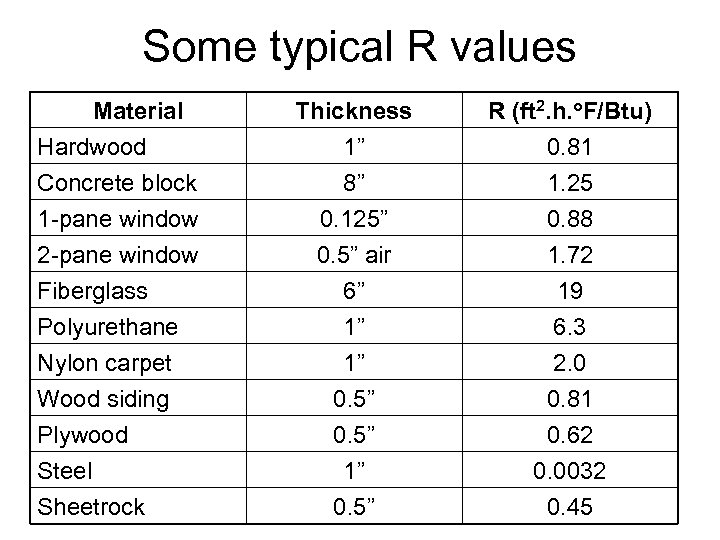 Some typical R values Material Hardwood Concrete block 1 -pane window Thickness 1” 8” 0. 125” R (ft 2. h. o. F/Btu) 0. 81 1. 25 0. 88 2 -pane window Fiberglass Polyurethane Nylon carpet Wood siding Plywood Steel Sheetrock 0. 5” air 6” 1” 1” 0. 5” 1. 72 19 6. 3 2. 0 0. 81 0. 62 0. 0032 0. 45
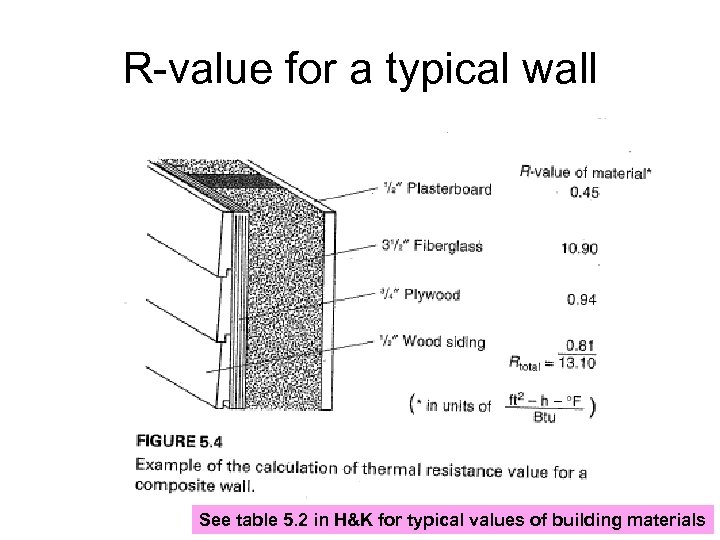 R-value for a typical wall See table 5. 2 in H&K for typical values of building materials
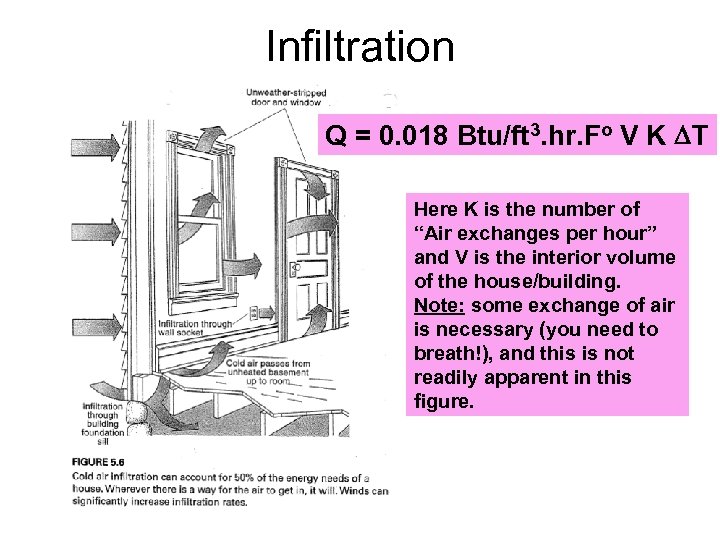 Infiltration Q = 0. 018 Btu/ft 3. hr. Fo V K DT Here K is the number of “Air exchanges per hour” and V is the interior volume of the house/building. Note: some exchange of air is necessary (you need to breath!), and this is not readily apparent in this figure.