

General Psychology lectures 14

 Скачать презентацию General Psychology lectures 14
General Psychology lecture 14-15.ppt
- Количество слайдов: 15
General Psychology lectures 14 -15 Stress and adjustment. 1. Stress and adjustment 2. Causes of stress 3. Reactions to stress: a. Anxiety b. General adaptation syndrome c. Burnout
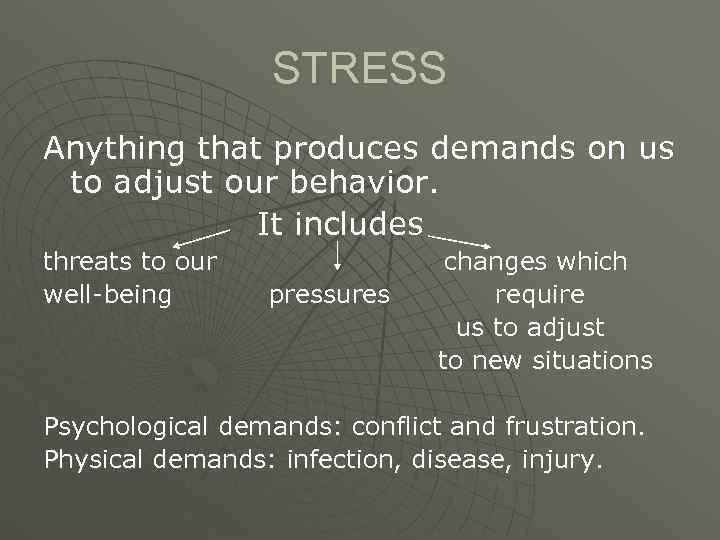
STRESS Anything that produces demands on us to adjust our behavior. It includes threats to our changes which well-being pressures require us to adjust to new situations Psychological demands: conflict and frustration. Physical demands: infection, disease, injury.
Adjustment A person is considered well-adjusted when he is able to meet the changing demands of his environment. 3 adaptive responses : 1)maladjustment (poor personal effectiveness); 2) Adjustment (satisfactory) 3) Competence (excellent) (well-adjustment)
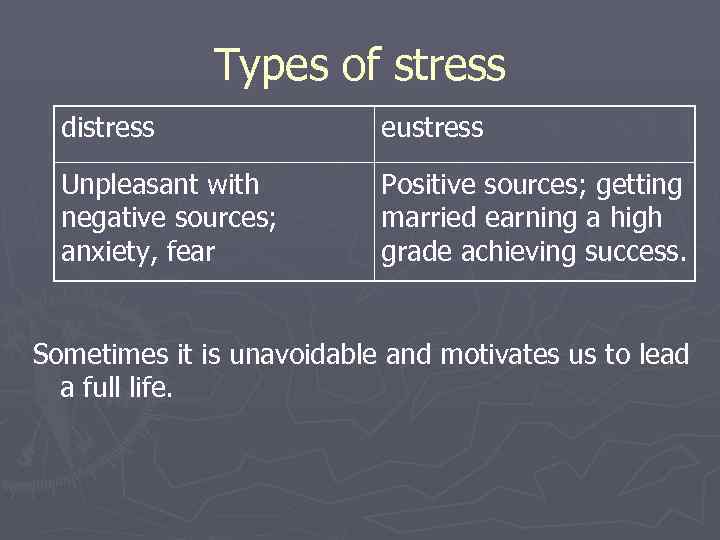
Types of stress distress eustress Unpleasant with Positive sources; getting negative sources; married earning a high anxiety, fear grade achieving success. Sometimes it is unavoidable and motivates us to lead a full life.
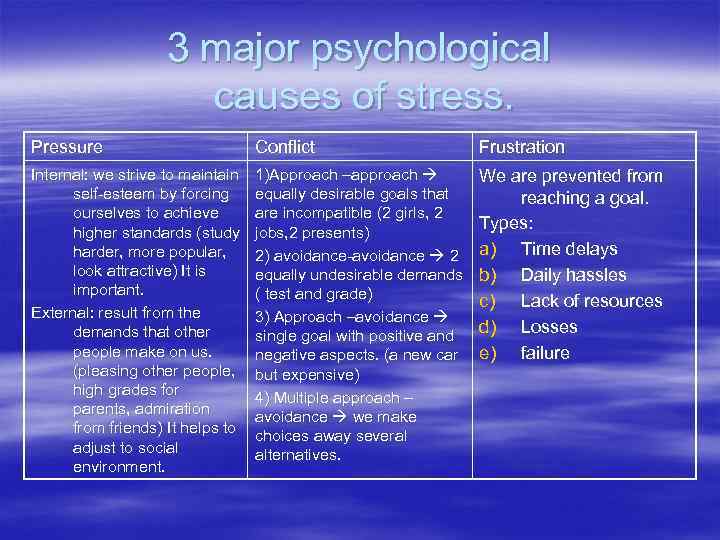
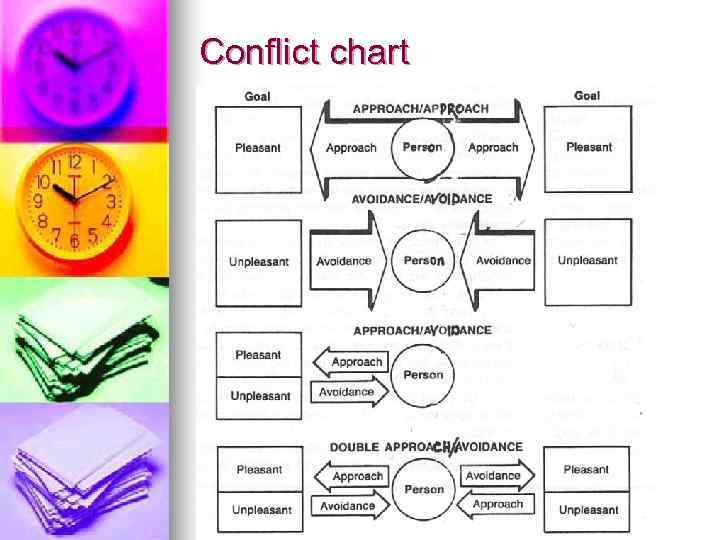
3 major psychological causes of stress. Pressure Conflict Frustration Internal: we strive to maintain 1)Approach –approach We are prevented from self-esteem by forcing equally desirable goals that reaching a goal. ourselves to achieve are incompatible (2 girls, 2 higher standards (study jobs, 2 presents) Types: harder, more popular, 2) avoidance-avoidance 2 a) Time delays look attractive) It is equally undesirable demands b) Daily hassles important. ( test and grade) c) Lack of resources External: result from the 3) Approach –avoidance demands that other single goal with positive and d) Losses people make on us. negative aspects. (a new car e) failure (pleasing other people, but expensive) high grades for 4) Multiple approach – parents, admiration avoidance we make from friends) It helps to choices away several adjust to social alternatives. environment.
Conflict chart
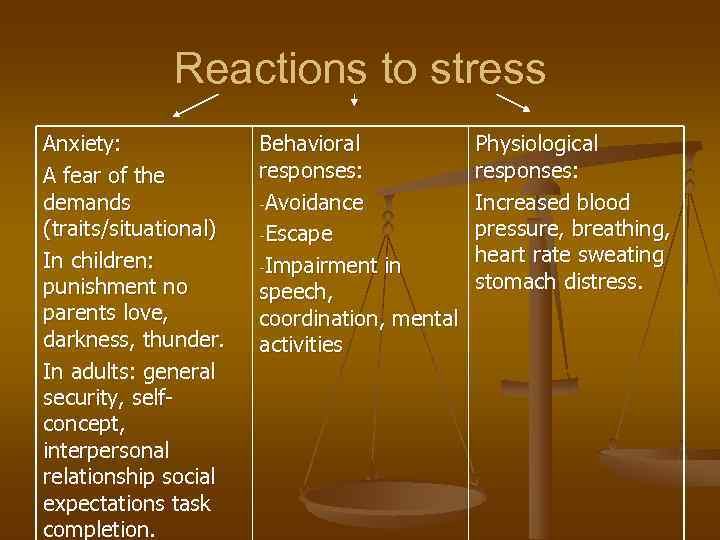
Reactions to stress Anxiety: Behavioral Physiological A fear of the responses: demands -Avoidance Increased blood (traits/situational) -Escape pressure, breathing, In children: -Impairment in heart rate sweating punishment no speech, stomach distress. parents love, coordination, mental darkness, thunder. activities In adults: general security, self- concept, interpersonal relationship social expectations task completion.
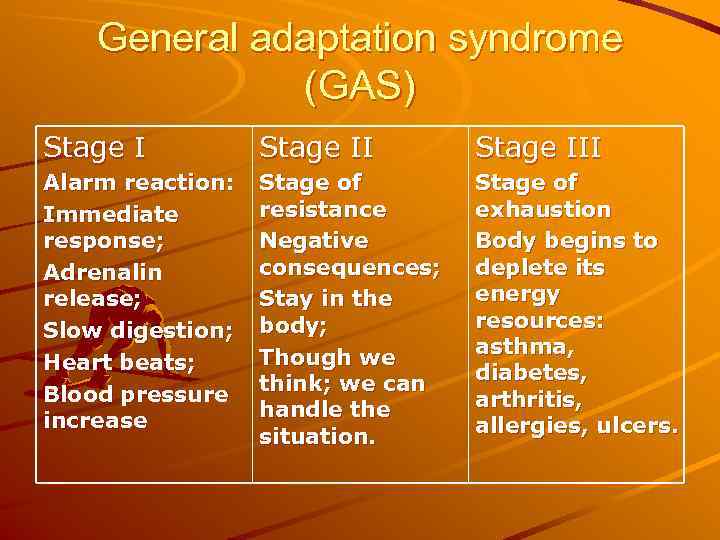
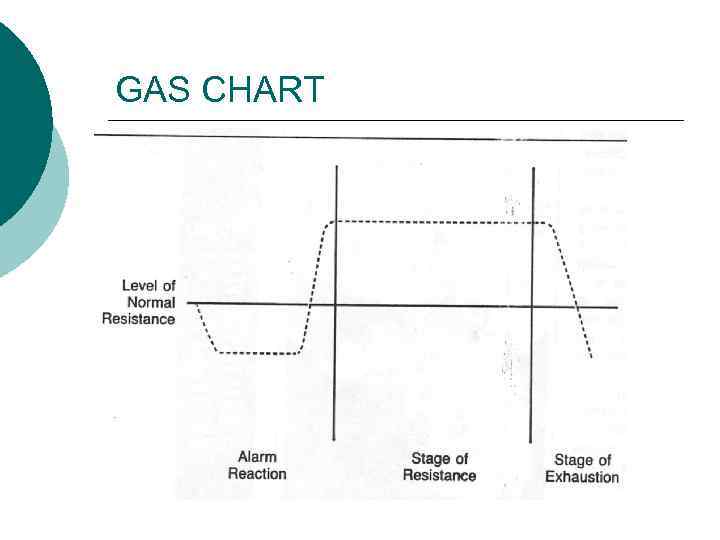
General adaptation syndrome (GAS) Stage III Alarm reaction: Stage of Immediate resistance exhaustion response; Negative Body begins to Adrenalin consequences; deplete its release; Stay in the energy Slow digestion; body; resources: Though we asthma, Heart beats; diabetes, Blood pressure think; we can handle the arthritis, increase allergies, ulcers. situation.
GAS CHART
Burnout A depletion of our physical and mental resources. People who often experience burnout: - achievers, taking extra work, courses; - teachers, giving extra help to students - Responsible ones – more than can do. Stress persists until burnout occurs.
Symptoms of Burnout n Exhaustion n Detachment n Boredom n Impatience (irritability) n Sense omnipotence (only you) n Feelings unappreciated n Physiological problems Occupations: nurses, teachers, counselors, doctors, therapists, policy, social workers too much contact with people.
Solutions to burnout. 1. Setting realistic goals, manageable but still challenging. 2. Know you limits – no additional responsibilities. 3. Don’t become involved emotionally with other people 4. Enjoy yourself by taking a break.
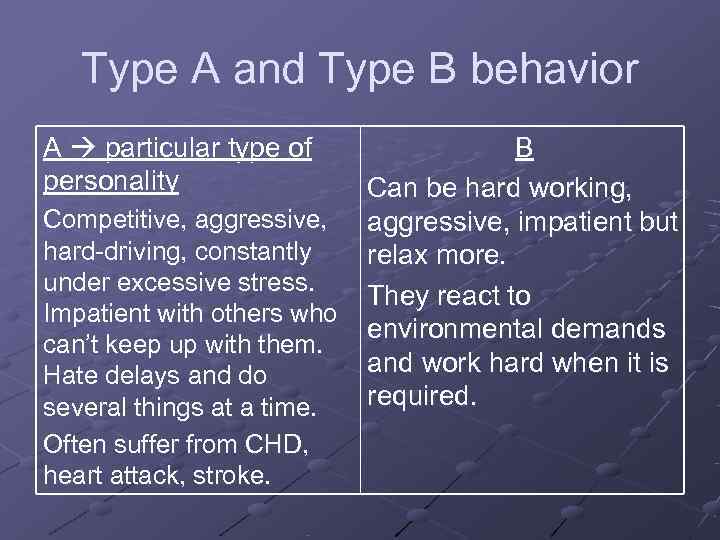
Type A and Type B behavior A particular type of B personality Can be hard working, Competitive, aggressive, impatient but hard-driving, constantly relax more. under excessive stress. They react to Impatient with others who environmental demands can’t keep up with them. Hate delays and do and work hard when it is several things at a time. required. Often suffer from CHD, heart attack, stroke.
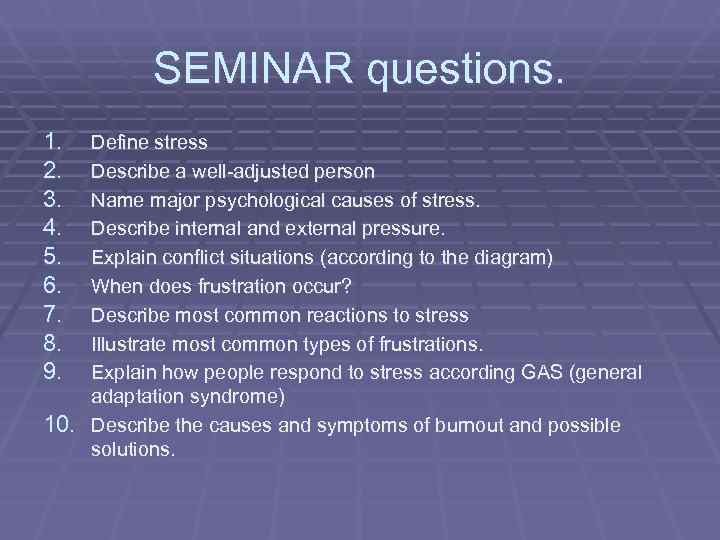
SEMINAR questions. 1. Define stress 2. Describe a well-adjusted person 3. Name major psychological causes of stress. 4. Describe internal and external pressure. 5. Explain conflict situations (according to the diagram) 6. When does frustration occur? 7. Describe most common reactions to stress 8. Illustrate most common types of frustrations. 9. Explain how people respond to stress according GAS (general adaptation syndrome) 10. Describe the causes and symptoms of burnout and possible solutions.
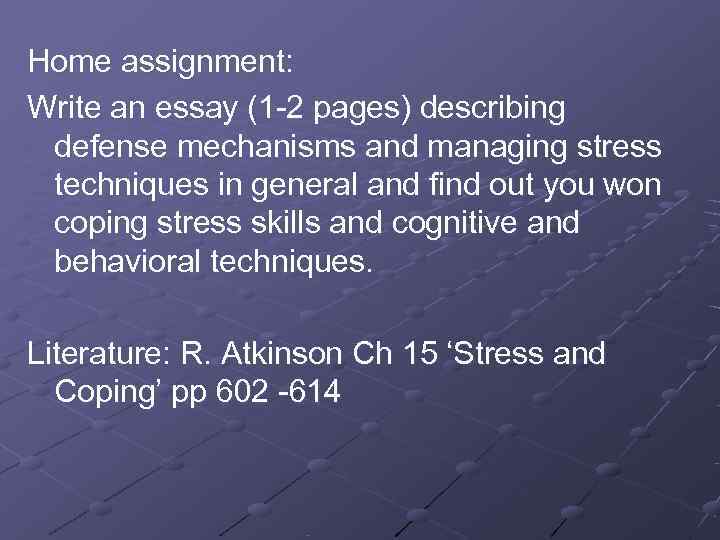
Home assignment: Write an essay (1 -2 pages) describing defense mechanisms and managing stress techniques in general and find out you won coping stress skills and cognitive and behavioral techniques. Literature: R. Atkinson Ch 15 ‘Stress and Coping’ pp 602 -614