

General Psychology lectures 12 -13

 Скачать презентацию General Psychology lectures 12 -13
General Psychology lecture 12-13.ppt
- Количество слайдов: 16
General Psychology lectures 12 -13 Emotions 1. Definition, characteristics and classification of emotions. 2. Theories of emotion. a. James –Lange Theory b. Arousal-Cognition theory c. The opponent-process theory. 3. Interpersonal Attraction: liking, loving.
Definition. ‘Emotion’ and ‘motivation’ have a common origin – Latin term – ‘emovere’ – to disturb or move away. So, emotions accompany many of our motivations. Emotions are complex private events as a response to stimulus that involve physiological arousal, subjective feeling, cognitive interpretation, and overt behavior.
Characteristics 1) Different emotions have a similar physiological basis. 2) Some emotions are innate (dogs also bare teeth when they’re angry) Many emotions are learned (though conditioning) (different cultures express some emotions in different ways – in China: clapping hands disappointment; sticking out tongue surprise)
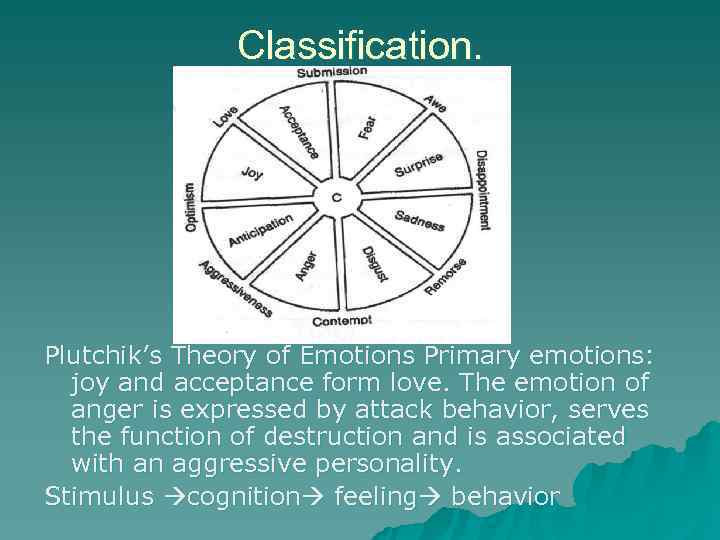
Classification. Plutchik’s Theory of Emotions Primary emotions: joy and acceptance form love. The emotion of anger is expressed by attack behavior, serves the function of destruction and is associated with an aggressive personality. Stimulus cognition feeling behavior
Stimulus behavior arousal feeling The James-Lange Theory (1884) (1885) Behavior precedes feeling : We feel sad because we are crying; We jump quickly to safety (when a car is approaching us) and then we feel fear or anger. (it is untestable, many scientists criticized this theory)
Stimulus arousal cognition Arousal –Cognition Theory (1962) First physiologically aroused Second look for environmental explanation for our arousal Third interpret our situation cognitively and label our arousal as an appropriate emotion. Cognition plays the important role in determining emotions.
The Opponent-Process Theory (Rich. Solomon 1980 – emotions as pairs of opposites: fear relief; pleasant pain) When one emotion is experienced (fear), the other is suppressed (relief). (skydivers fear as they jump, relief when they land: with time fear decreases, relief increases) – a model of drug addiction.
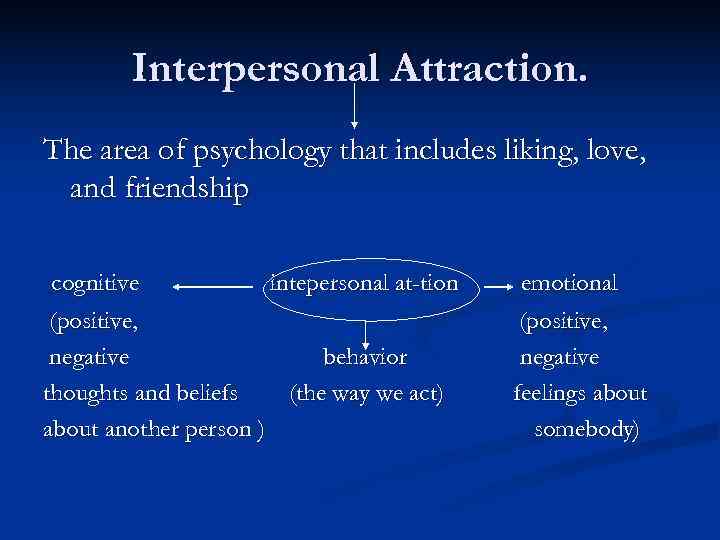
Interpersonal Attraction. The area of psychology that includes liking, love, and friendship cognitive intepersonal at-tion emotional (positive, (positive, negative behavior negative thoughts and beliefs (the way we act) feelings about another person ) somebody)
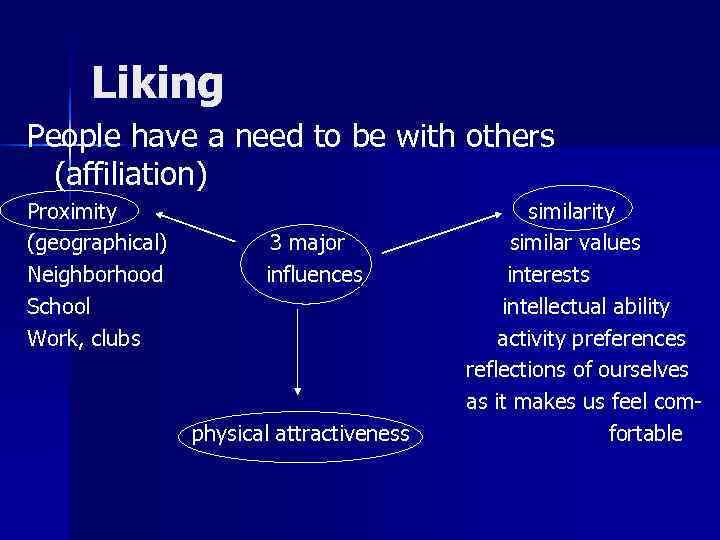
Liking People have a need to be with others (affiliation) Proximity similarity (geographical) 3 major similar values Neighborhood influences interests School intellectual ability Work, clubs activity preferences reflections of ourselves as it makes us feel com- physical attractiveness fortable
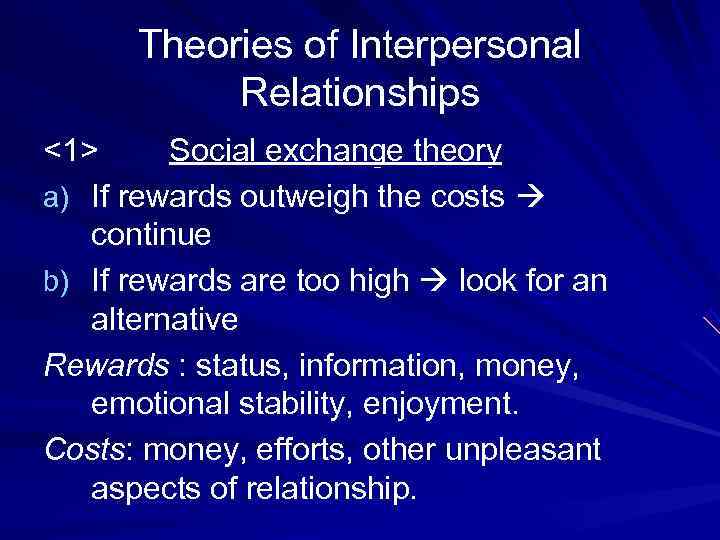
Theories of Interpersonal Relationships <1> Social exchange theory a) If rewards outweigh the costs continue b) If rewards are too high look for an alternative Rewards : status, information, money, emotional stability, enjoyment. Costs: money, efforts, other unpleasant aspects of relationship.
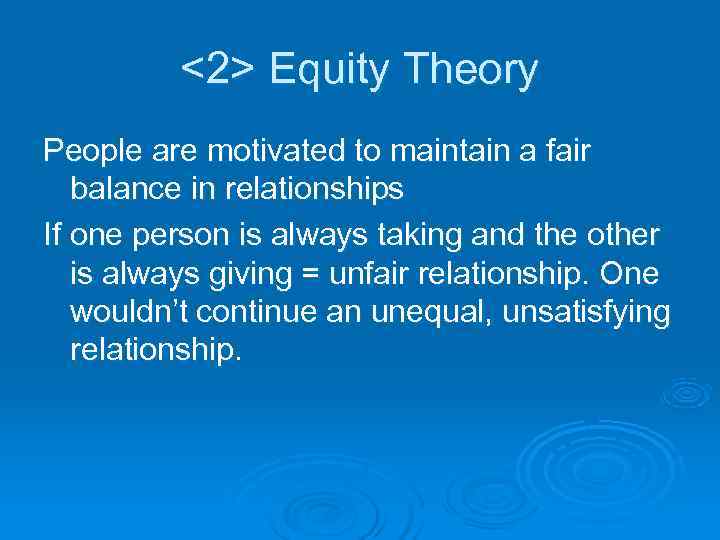
<2> Equity Theory People are motivated to maintain a fair balance in relationships If one person is always taking and the other is always giving = unfair relationship. One wouldn’t continue an unequal, unsatisfying relationship.
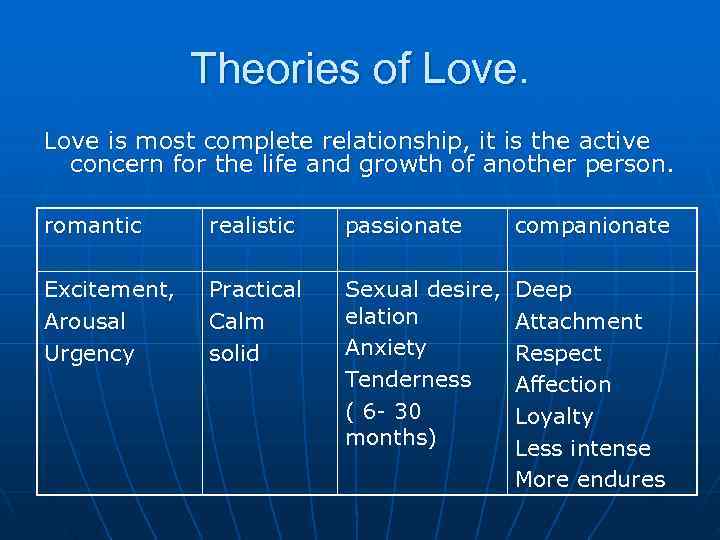
Theories of Love is most complete relationship, it is the active concern for the life and growth of another person. romantic realistic passionate companionate Excitement, Practical Sexual desire, Deep Arousal Calm elation Attachment Urgency solid Anxiety Respect Tenderness Affection ( 6 - 30 Loyalty months) Less intense More endures
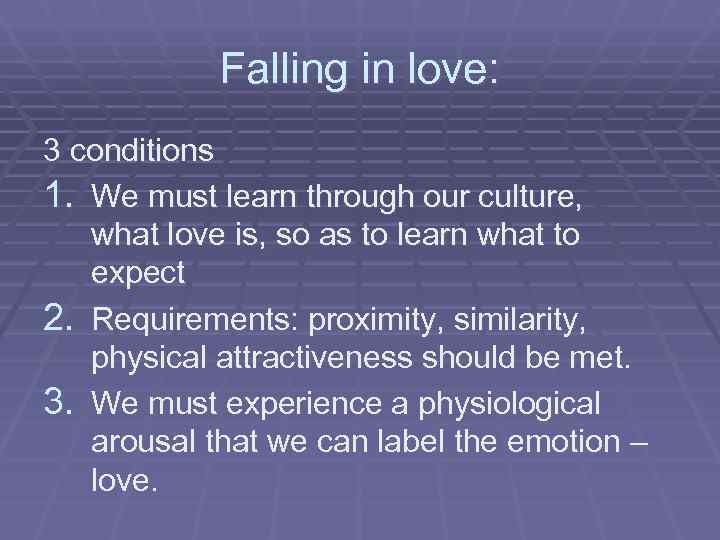
Falling in love: 3 conditions 1. We must learn through our culture, what love is, so as to learn what to expect 2. Requirements: proximity, similarity, physical attractiveness should be met. 3. We must experience a physiological arousal that we can label the emotion – love.
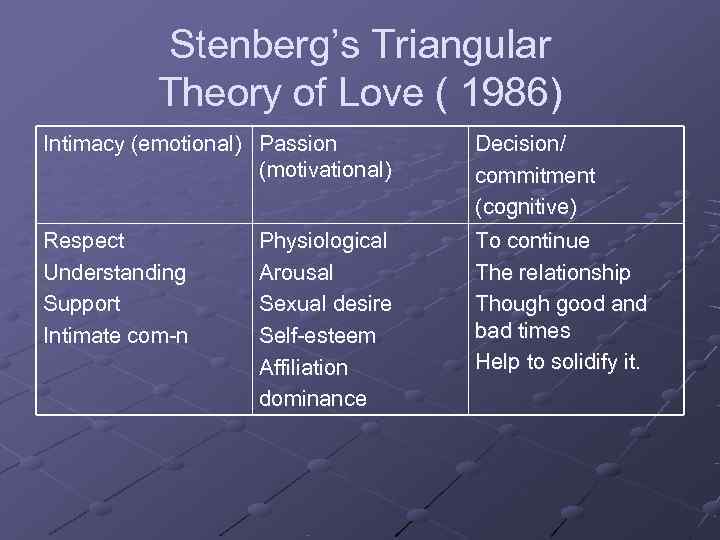
Stenberg’s Triangular Theory of Love ( 1986) Intimacy (emotional) Passion Decision/ (motivational) commitment (cognitive) Respect Physiological To continue Understanding Arousal The relationship Support Sexual desire Though good and Intimate com-n Self-esteem bad times Affiliation Help to solidify it. dominance
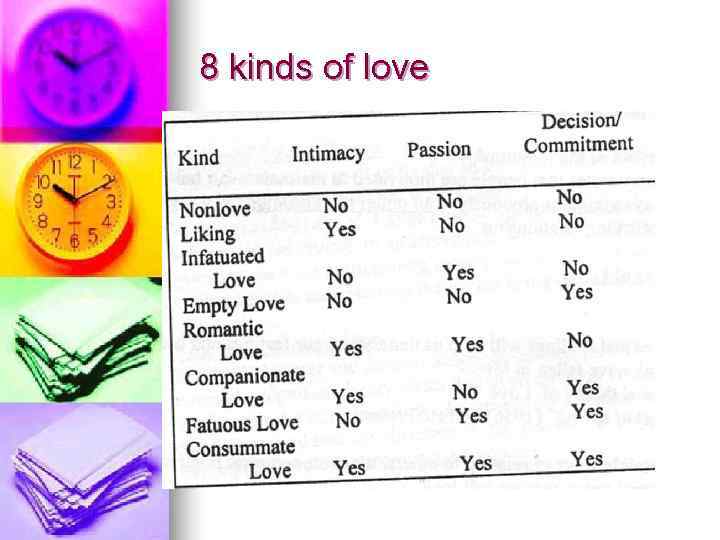
8 kinds of love
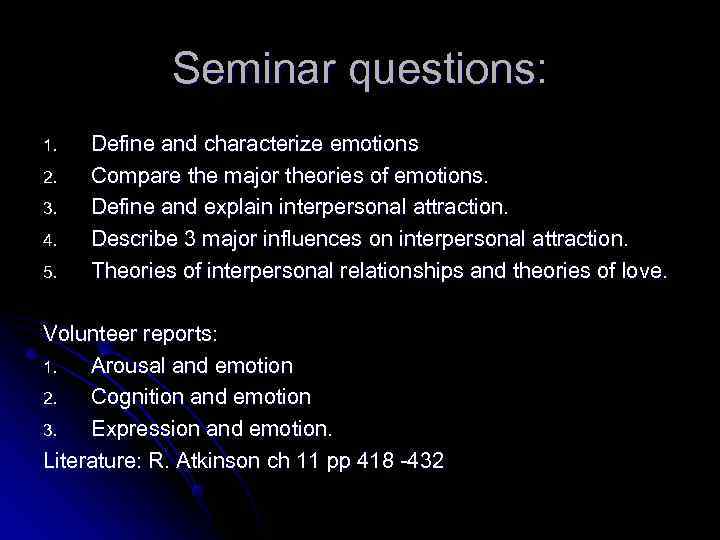
Seminar questions: 1. Define and characterize emotions 2. Compare the major theories of emotions. 3. Define and explain interpersonal attraction. 4. Describe 3 major influences on interpersonal attraction. 5. Theories of interpersonal relationships and theories of love. Volunteer reports: 1. Arousal and emotion 2. Cognition and emotion 3. Expression and emotion. Literature: R. Atkinson ch 11 pp 418 -432