 Скачать презентацию General planning of biodiversity buffer zones and wetlands
1caae15b8d94fe9949d97f8a3432ade4.ppt
- Количество слайдов: 23



General planning of biodiversity, buffer zones and wetlands in the agricultural environment and Teho Plus Project Senior Adviser Mikko Jaakkola Centre for Economic Development, Transport and the Environment, Mikko Jaakkola 3/18/2018 1
The planning is. . • A part of the implementation of Finnish agri-environment programme (RDP) • Funded by Ministry of Agriculture and Forestry • Coordinated by regional environment authorities • A way to find out needs in the planning area, present ideas and possibilities offered by the area and location • Large scale planning (river basin, region, municipality) Centre for Economic Development, Transport and the Environment 3/18/2018 2
The planning is done to. . • To increase landowners interest in water protection and other environmental issues • To increase farmers willingness to apply for support for establishment and management of buffer zones and wetlands as well as other special measures • Find out where the measures should be located to be most effective and get them there • To allocate the support funds to optimal sites • To make better co-operation and understanding between different interest groups concerning agriculture and environment Centre for Economic Development, Transport and the Environment 3/18/2018 3
The planning is done in co-operation with • Farmers and landowners • Regional and local agriculture, forestry and fishery authorities • Regional and local unions of farmers • Local advisory organisations • Other interest groups ( associations for nature, conservation, local hunting and fishing clubs, other NGO etc. ) The planning is not • farm-scale planning, construction planning, site specific designing, no surveying or making measurements, no considering permits possibly needed Centre for Economic Development, Transport and the Environment 3/18/2018 4
The planning is done on the areas where • Agriculture is the most prevailing form of land use , nutrient load to waters from agriculture is considerable • Risk of erosion is high, flooding occurs frequently • Water quality needs improving and there is local willingness to act • There are nature protection areas, red list species , valuable habitats, lot of variety in landscape = potential biodiversity is high Centre for Economic Development, Transport and the Environment, 3/18/2018 5
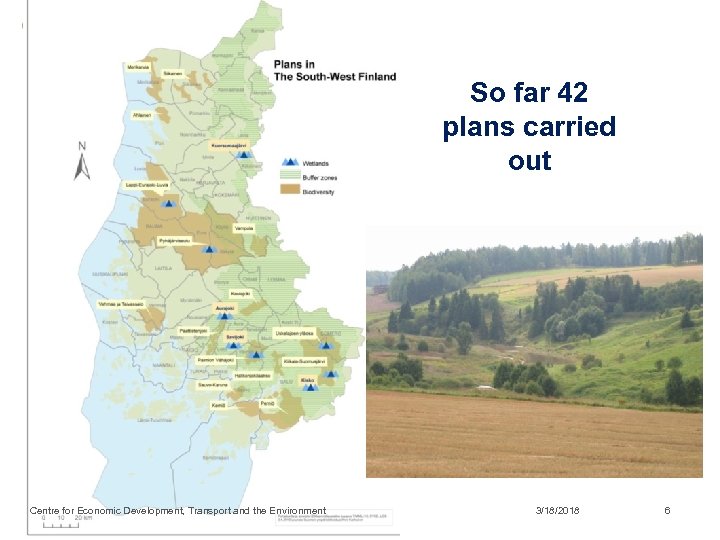
So far 42 plans carried out Centre for Economic Development, Transport and the Environment 3/18/2018 6
The planning procedure 1. background research catchment area, channels, land use, topography, soil, nature protection areas, valuable habitats and species, old maps, aerial photos etc. , analyses using GIS 2. field investigation, always targeted by background information mapping suitable sites for buffer zones, wetlands, potential biodiversity, vegetation etc. 3. landowners (and local authorities, interest groups etc) are informed on every phases of the planning process and always before field work when possible sites are on the maps before the final plan and maps are drawn everyone interested has possibility to comment on the draft maps and plans – 4. “open house”presentations and deciding – invitation is sent to every farmer on the planning area, others are invited by newspaper ads 5. publishing : reports, booklets or map presentations 6. voluntary establishment and management of bufferzones, maintaining meadows or other kinds of biodiversity objects or construction of wetlands Centre for Economic Development, Transport and the Environment 3/18/2018 7
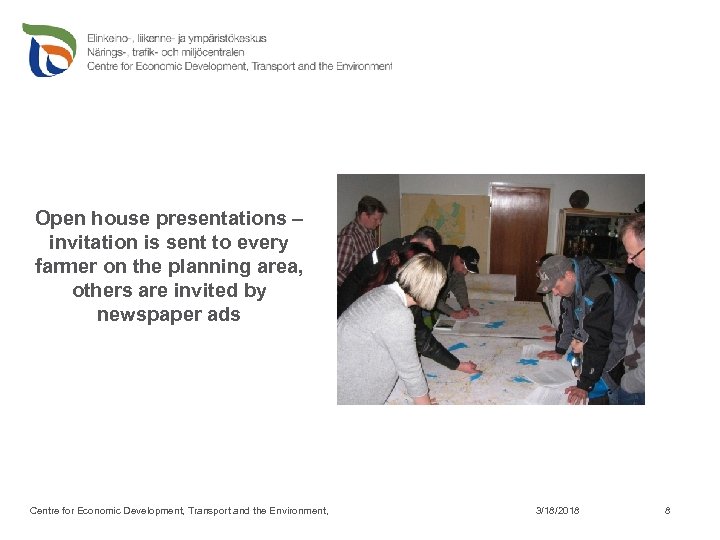
Open house presentations – invitation is sent to every farmer on the planning area, others are invited by newspaper ads Centre for Economic Development, Transport and the Environment, 3/18/2018 8
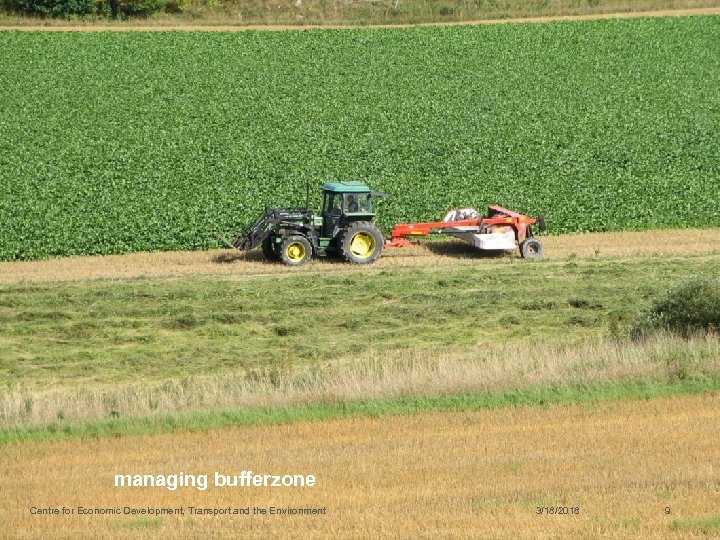
managing bufferzone Centre for Economic Development, Transport and the Environment 3/18/2018 9
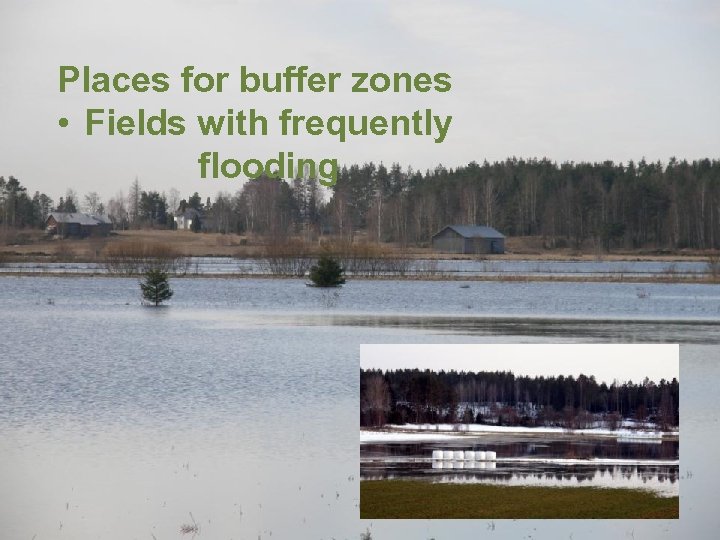
Places for buffer zones • Fields with frequently flooding March 2010
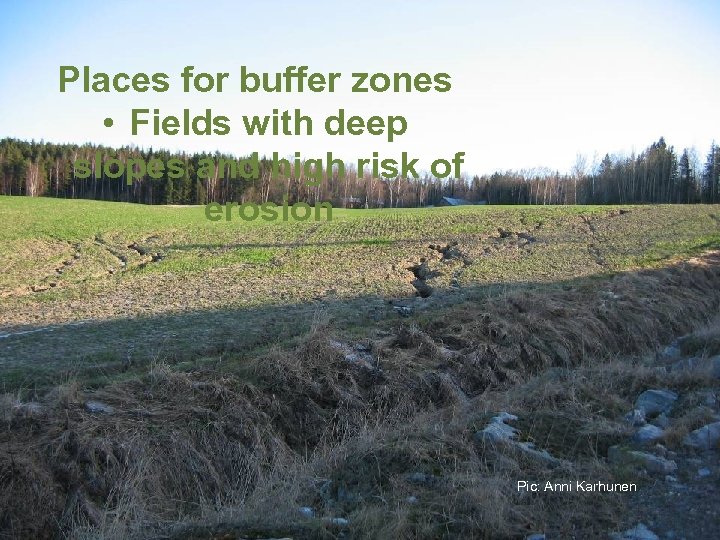
Places for buffer zones • Fields with deep slopes and high risk of erosion Pic: Anni Karhunen 3/18/2018 Lounais-Suomen ympäristökeskus /Anni Karhunen 11
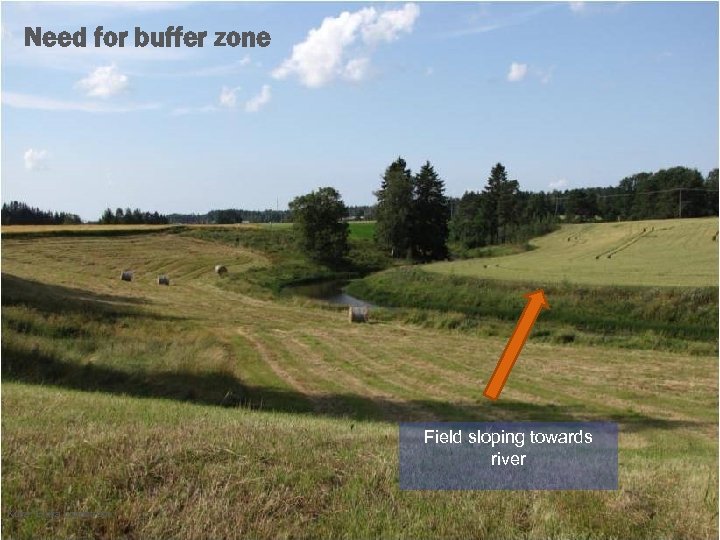
Need for buffer zone Field sloping towards river Kuva: Eriika Lundström
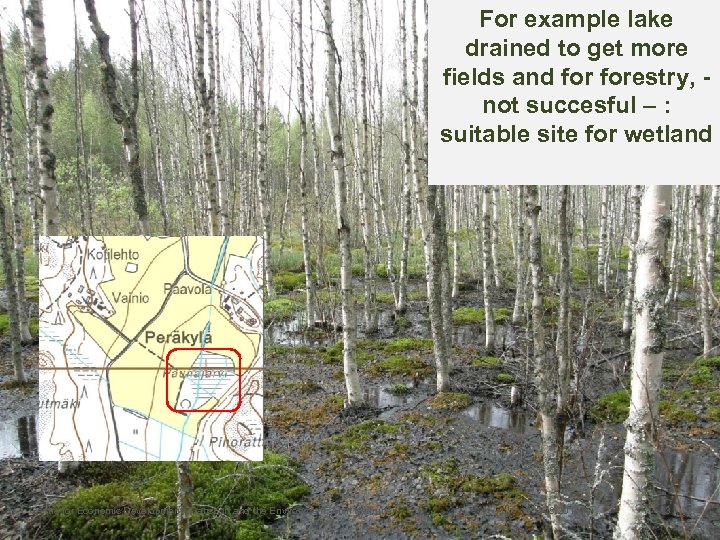
For example lake drained to get more fields and forestry, not succesful – : suitable site for wetland Centre for Economic Development, Transport and the Environment, Anni Karhunen 3/18/2018 13
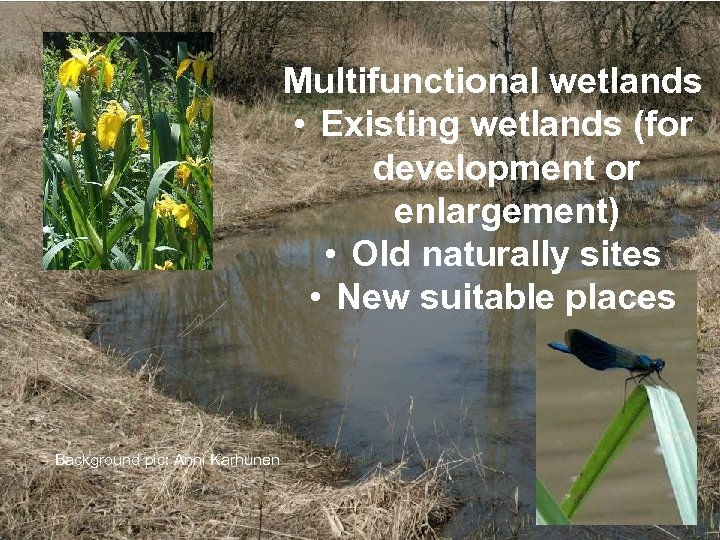
Multifunctional wetlands • Existing wetlands (for development or enlargement) • Old naturally sites • New suitable places Background pic: Anni Karhunen 3/18/2018 Lounais-Suomen ympäristökeskus /Anni Karhunen 14
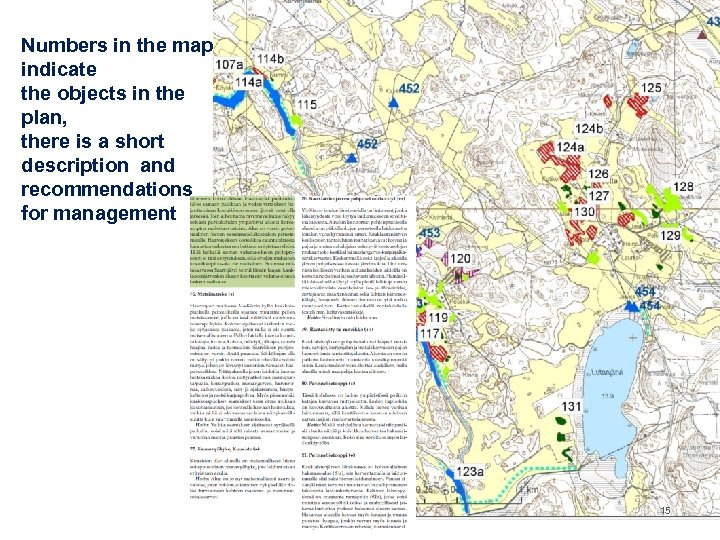
Numbers in the map indicate the objects in the plan, there is a short description and recommendations for management 15
Good results : • • More applications and more commitments from planning areas • Giving comments and making decisions about applications easier When the need is already assessed and in GIS-system (work of • Most of applications from the sites where buffer zone or other special measure is really needed or is effective authorities is easier) • Planning has been a good advisory tool in the environmental issues concerning farming • Information collected during planning is useful and valid long time e. g. for other planning process or advisory projects Centre for Economic Development, Transport and the Environment, 3/18/2018 16
But… • Planning doesn’t improve water quality or promote biodiversity • Should we do something else ? – e. g. still only 30 -50 % of buffer zones needed in the catchments are established at its best • Bufferzones and wetlands improve water quality only little, not state of our coastal waters, even if local effects are positive • • (loading from agricultural land enters the water bodies through field drainage system) Improvements in water quality are painfully slow Planning hasn’t solved management problems (e. g. how to manage meadows cost-effectively without cattle or what to do with bufferzone grass) Centre for Economic Development, Transport and the Environment 3/18/2018 17
There is the need to change the planning methods or the focus ? • Need to control water flow in drainage areas - floods and drouhgts, should the planning be done from stronger hydrological viewpoint ? • More co-operation with forestry sector ? Pilot project in SW Finland with forest sector (METSO-network Programme) • Target to biodiversity or water protection, soil protection or all ? • Towards real catchment scale planning or a maybe more effective farm scale planning or both? Centre for Economic Development, Transport and the Environment 3/18/2018 18
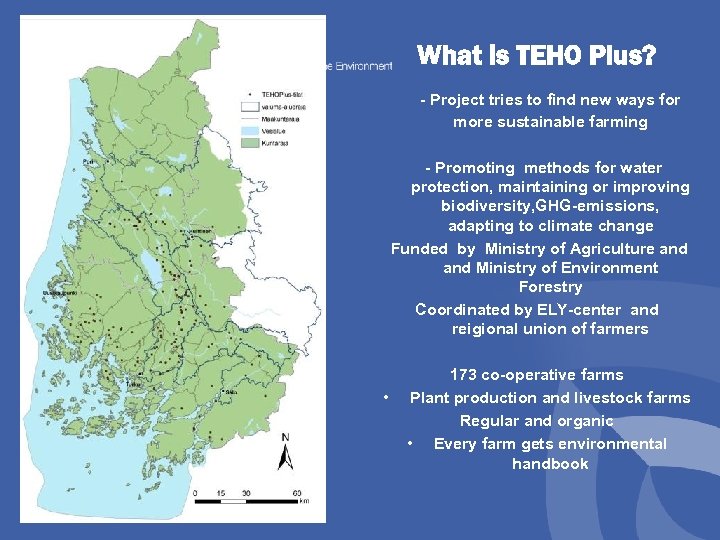
What is TEHO Plus? - Project tries to find new ways for more sustainable farming - Promoting methods for water protection, maintaining or improving biodiversity, GHG-emissions, adapting to climate change Funded by Ministry of Agriculture and Ministry of Environment Forestry Coordinated by ELY-center and reigional union of farmers • 173 co-operative farms Plant production and livestock farms Regular and organic • Every farm gets environmental handbook
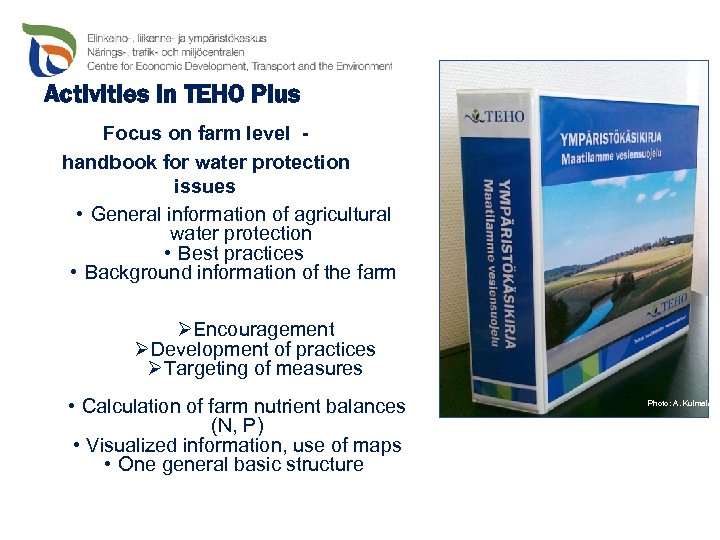
Activities in TEHO Plus Focus on farm level handbook for water protection issues • General information of agricultural water protection • Best practices • Background information of the farm ØEncouragement ØDevelopment of practices ØTargeting of measures • Calculation of farm nutrient balances (N, P) • Visualized information, use of maps • One general basic structure Photo: A. Kulmala
Activities in TEHO Plus Handbook of farm’s environment issues • The farmers involved in the project have gained increased environmental awareness on both water protection and biodiversity issues through the advisory work • With the help of the maps, farmers have been shown the field plots on their own farms which are exposed to the most serious risk of erosion. This is backed up by information on nutrient balances and phosphorus figures. • During farm visits the farms have been assessed as to whether they provide suitable places for buffer zones, wetlands and sedimentation ponds.
Activities in TEHO Plus • New knowledge has been produced on catch crop cultivation after growing early vegetables. Significance will increase if it will be more autumn rains and milder winters due to climate change • Nutrient balances have been included in advisory services on a farm-specific basis. • Proposals have been made on the structure of planned agrienvironmental aid program 2014 – and for utilising GIS data in the targeting of environmental actions.
Thank you for your attention! Centre for Economic Development, Transport and the Environment 3/18/2018 23
Скачать презентацию General planning of biodiversity buffer zones and wetlands
1caae15b8d94fe9949d97f8a3432ade4.ppt