


 Скачать презентацию Gene Syst International Inc and Gene Syst RGV
e189cbe23aee7e1787ac81dc803052db.ppt
- Количество слайдов: 23
 Gene. Syst, International, Inc. and Gene. Syst RGV, LLC A New Beginning In Waste Treatment www. genesyst. com
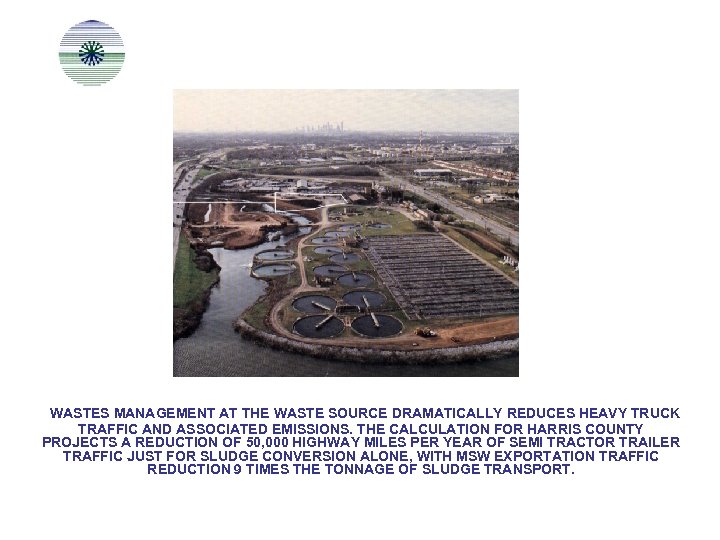 WASTES MANAGEMENT AT THE WASTE SOURCE DRAMATICALLY REDUCES HEAVY TRUCK TRAFFIC AND ASSOCIATED EMISSIONS. THE CALCULATION FOR HARRIS COUNTY PROJECTS A REDUCTION OF 50, 000 HIGHWAY MILES PER YEAR OF SEMI TRACTOR TRAILER TRAFFIC JUST FOR SLUDGE CONVERSION ALONE, WITH MSW EXPORTATION TRAFFIC REDUCTION 9 TIMES THE TONNAGE OF SLUDGE TRANSPORT.
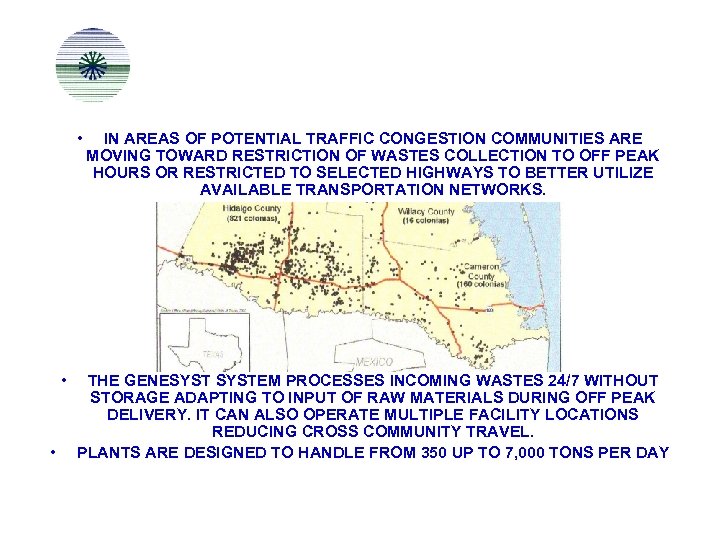 • • • IN AREAS OF POTENTIAL TRAFFIC CONGESTION COMMUNITIES ARE MOVING TOWARD RESTRICTION OF WASTES COLLECTION TO OFF PEAK HOURS OR RESTRICTED TO SELECTED HIGHWAYS TO BETTER UTILIZE AVAILABLE TRANSPORTATION NETWORKS. THE GENESYSTEM PROCESSES INCOMING WASTES 24/7 WITHOUT STORAGE ADAPTING TO INPUT OF RAW MATERIALS DURING OFF PEAK DELIVERY. IT CAN ALSO OPERATE MULTIPLE FACILITY LOCATIONS REDUCING CROSS COMMUNITY TRAVEL. PLANTS ARE DESIGNED TO HANDLE FROM 350 UP TO 7, 000 TONS PER DAY
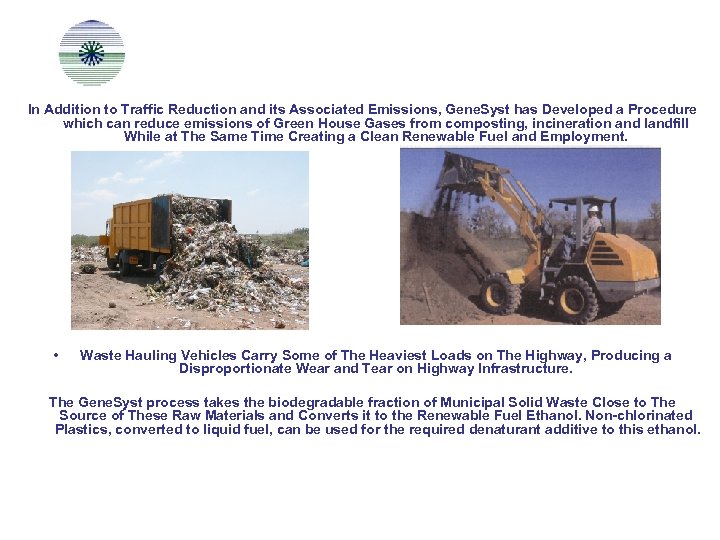 In Addition to Traffic Reduction and its Associated Emissions, Gene. Syst has Developed a Procedure which can reduce emissions of Green House Gases from composting, incineration and landfill While at The Same Time Creating a Clean Renewable Fuel and Employment. • Waste Hauling Vehicles Carry Some of The Heaviest Loads on The Highway, Producing a Disproportionate Wear and Tear on Highway Infrastructure. The Gene. Syst process takes the biodegradable fraction of Municipal Solid Waste Close to The Source of These Raw Materials and Converts it to the Renewable Fuel Ethanol. Non-chlorinated Plastics, converted to liquid fuel, can be used for the required denaturant additive to this ethanol.
![Ethanol has been made by fermenting Saccharides [Sugars] and Starches. These products can be](https://present5.com/presentation/e189cbe23aee7e1787ac81dc803052db/image-5.jpg "Ethanol has been made by fermenting Saccharides [Sugars] and Starches. These products can be") Ethanol has been made by fermenting Saccharides [Sugars] and Starches. These products can be found in Crops like Sugar Cane and Beet, Corn, Maize, Rice and Potatoes, but many of these Materials are subject to a significant cost to raise, gather and transport. Most of these Crop yields can be subject to Seasonal or Climatic influences, but most important, are in greatest demand to feed people.
Ethanol has been made by fermenting Saccharides [Sugars] and Starches. These products can be found in Crops like Sugar Cane and Beet, Corn, Maize, Rice and Potatoes, but many of these Materials are subject to a significant cost to raise, gather and transport. Most of these Crop yields can be subject to Seasonal or Climatic influences, but most important, are in greatest demand to feed people.
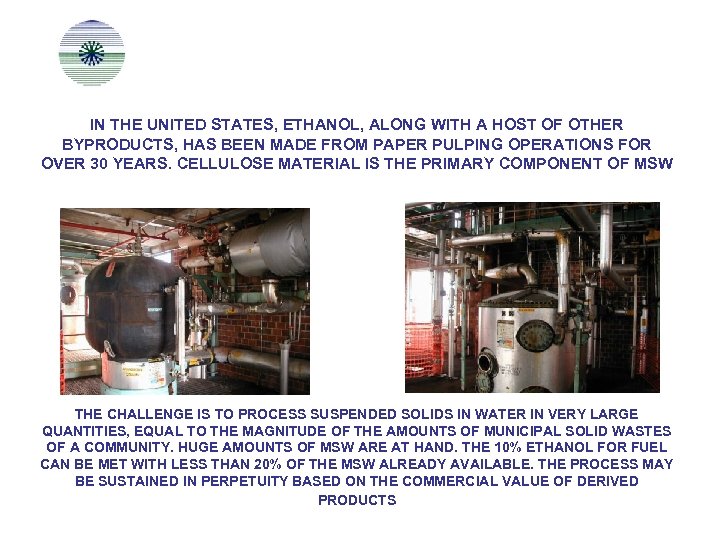 IN THE UNITED STATES, ETHANOL, ALONG WITH A HOST OF OTHER BYPRODUCTS, HAS BEEN MADE FROM PAPER PULPING OPERATIONS FOR OVER 30 YEARS. CELLULOSE MATERIAL IS THE PRIMARY COMPONENT OF MSW THE CHALLENGE IS TO PROCESS SUSPENDED SOLIDS IN WATER IN VERY LARGE QUANTITIES, EQUAL TO THE MAGNITUDE OF THE AMOUNTS OF MUNICIPAL SOLID WASTES OF A COMMUNITY. HUGE AMOUNTS OF MSW ARE AT HAND. THE 10% ETHANOL FOR FUEL CAN BE MET WITH LESS THAN 20% OF THE MSW ALREADY AVAILABLE. THE PROCESS MAY BE SUSTAINED IN PERPETUITY BASED ON THE COMMERCIAL VALUE OF DERIVED PRODUCTS
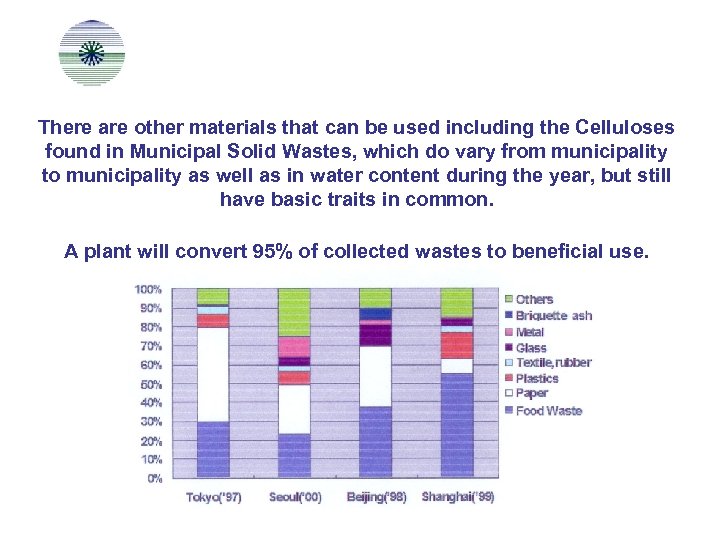 There are other materials that can be used including the Celluloses found in Municipal Solid Wastes, which do vary from municipality to municipality as well as in water content during the year, but still have basic traits in common. A plant will convert 95% of collected wastes to beneficial use.
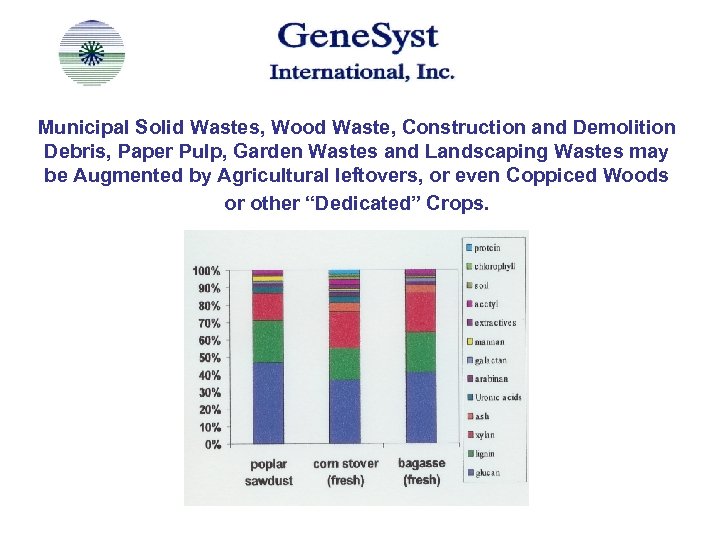 Municipal Solid Wastes, Wood Waste, Construction and Demolition Debris, Paper Pulp, Garden Wastes and Landscaping Wastes may be Augmented by Agricultural leftovers, or even Coppiced Woods or other “Dedicated” Crops.
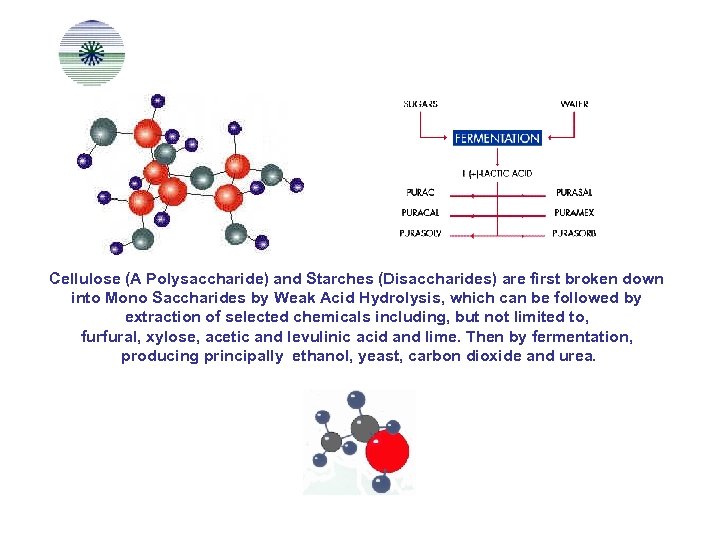 Cellulose (A Polysaccharide) and Starches (Disaccharides) are first broken down into Mono Saccharides by Weak Acid Hydrolysis, which can be followed by extraction of selected chemicals including, but not limited to, furfural, xylose, acetic and levulinic acid and lime. Then by fermentation, producing principally ethanol, yeast, carbon dioxide and urea.
 PARTIAL LIST OF POTENTIAL RAW MATERIALS ØFOOD WASTES ØRESTAURANT WASTES ØMAGAZINE PAPER ØOFFICE PAPER ØPAPER SCRAPS ØNEWS PRINT ØCARDBOARD ØCROP STOVER ØCROP CHAFF ØSCRAP WOOD ØLANDSCAPING DEBRIS ØROAD SWEEPINGS ØHARBOUR SKIMMINGS ØYARD WASTES ØSEWER SCREENINGS ØSEPTIC WASTES ØDILUTE SLUDGE ØCROP PROCESSING ØGARDEN WASTES ØPULP & PAPER WASTES ØWOOD WASTES ØCOTTON CLOTH ØFEED LOT MANURE ØFIBRE BOARD ØSPENT GRAIN LIQUOR ØGRAIN ETHANOL WASTES ØEXPIRED FOOD & DRINK ØMSW FLUFF
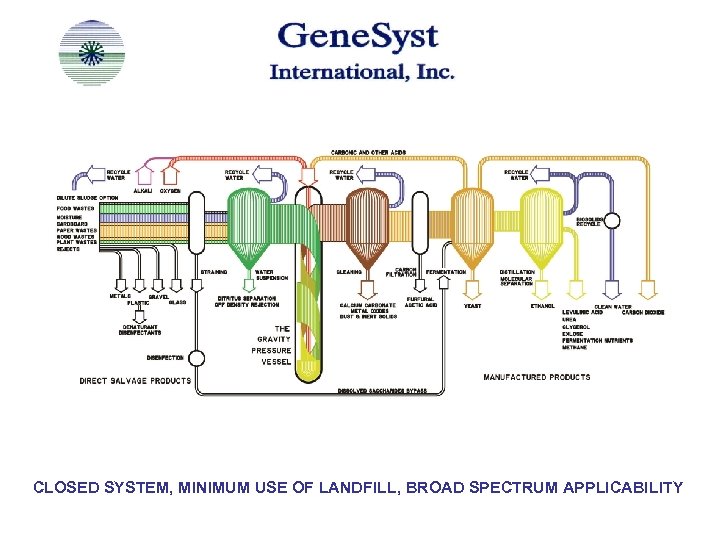 CLOSED SYSTEM, MINIMUM USE OF LANDFILL, BROAD SPECTRUM APPLICABILITY
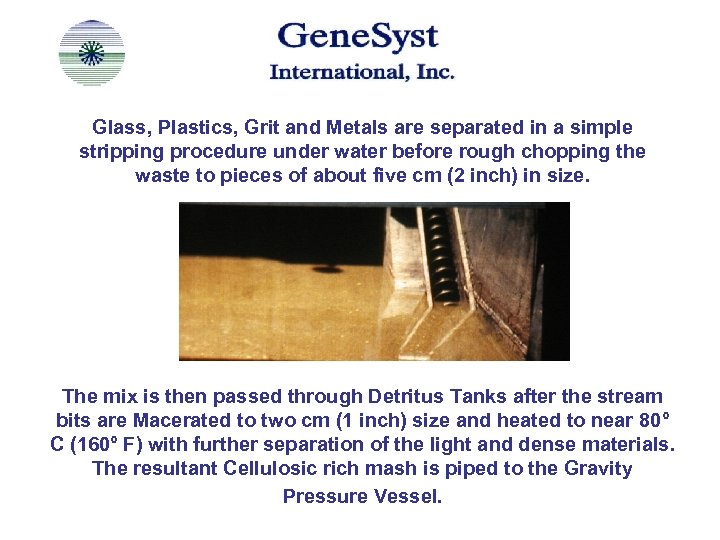 Glass, Plastics, Grit and Metals are separated in a simple stripping procedure under water before rough chopping the waste to pieces of about five cm (2 inch) in size. The mix is then passed through Detritus Tanks after the stream bits are Macerated to two cm (1 inch) size and heated to near 80° C (160° F) with further separation of the light and dense materials. The resultant Cellulosic rich mash is piped to the Gravity Pressure Vessel.
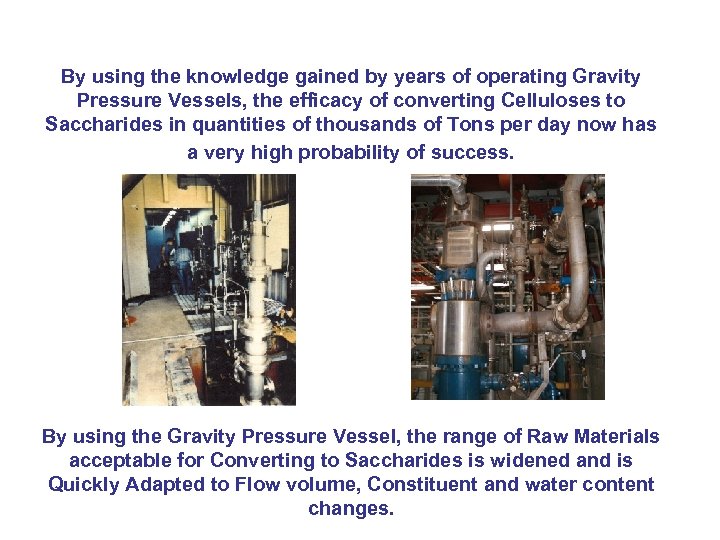 By using the knowledge gained by years of operating Gravity Pressure Vessels, the efficacy of converting Celluloses to Saccharides in quantities of thousands of Tons per day now has a very high probability of success. By using the Gravity Pressure Vessel, the range of Raw Materials acceptable for Converting to Saccharides is widened and is Quickly Adapted to Flow volume, Constituent and water content changes.
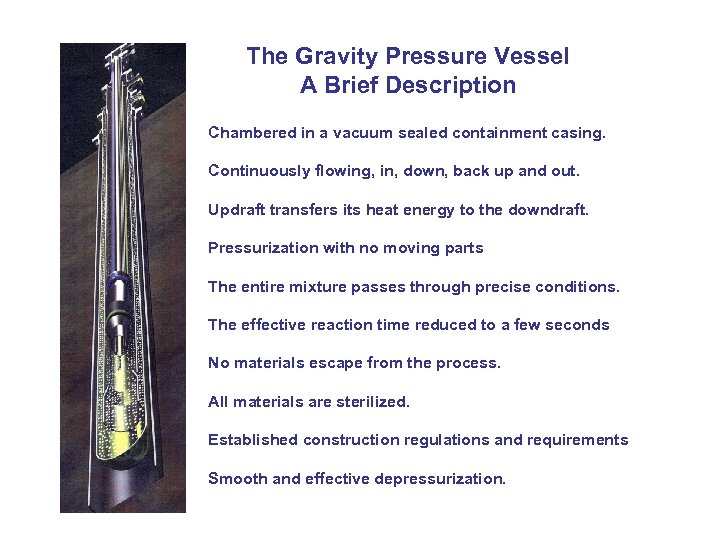 The Gravity Pressure Vessel A Brief Description Chambered in a vacuum sealed containment casing. Continuously flowing, in, down, back up and out. Updraft transfers its heat energy to the downdraft. Pressurization with no moving parts The entire mixture passes through precise conditions. The effective reaction time reduced to a few seconds No materials escape from the process. All materials are sterilized. Established construction regulations and requirements Smooth and effective depressurization.
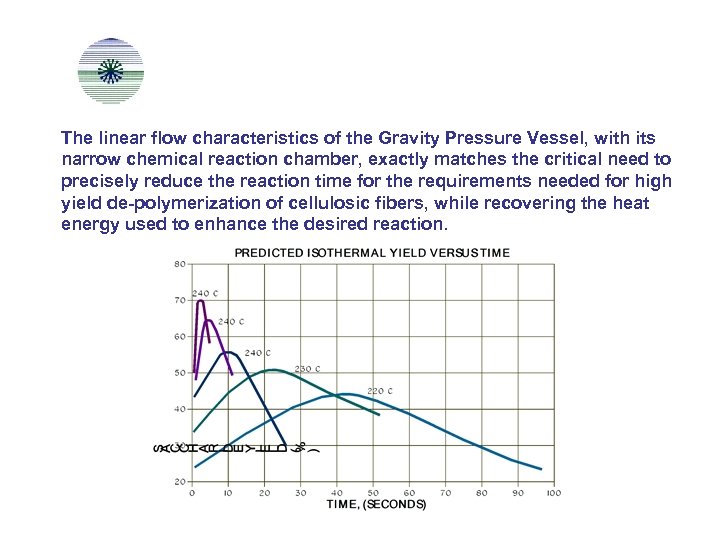 The linear flow characteristics of the Gravity Pressure Vessel, with its narrow chemical reaction chamber, exactly matches the critical need to precisely reduce the reaction time for the requirements needed for high yield de-polymerization of cellulosic fibers, while recovering the heat energy used to enhance the desired reaction.
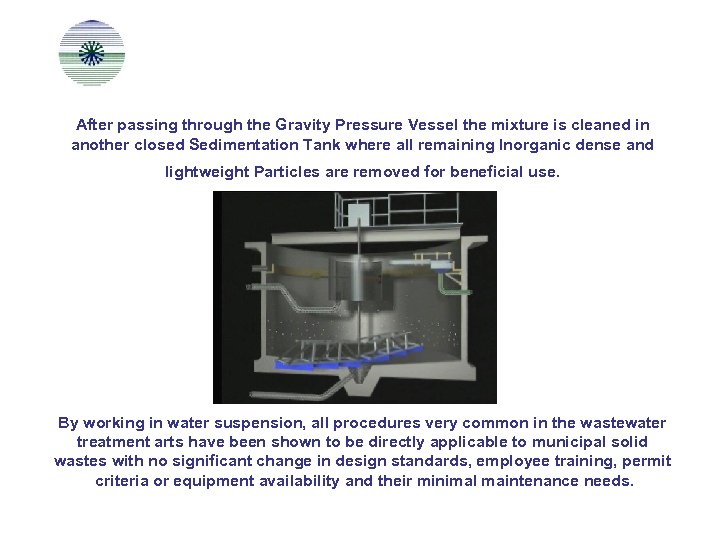 After passing through the Gravity Pressure Vessel the mixture is cleaned in another closed Sedimentation Tank where all remaining Inorganic dense and lightweight Particles are removed for beneficial use. By working in water suspension, all procedures very common in the wastewater treatment arts have been shown to be directly applicable to municipal solid wastes with no significant change in design standards, employee training, permit criteria or equipment availability and their minimal maintenance needs.
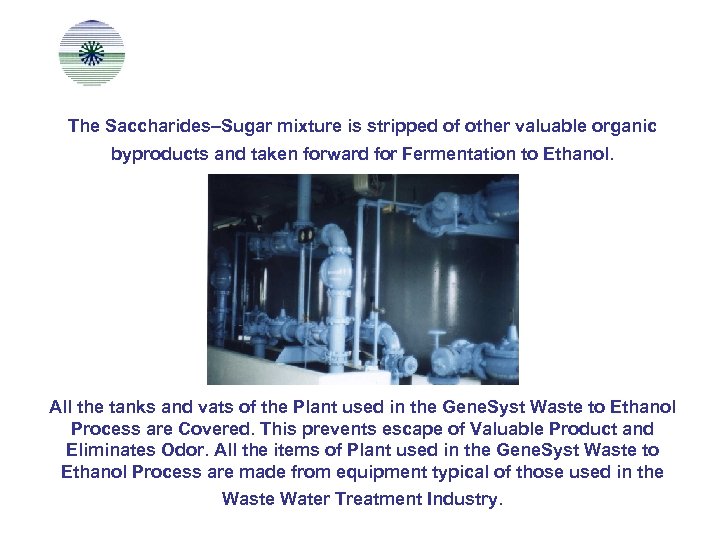 The Saccharides–Sugar mixture is stripped of other valuable organic byproducts and taken forward for Fermentation to Ethanol. All the tanks and vats of the Plant used in the Gene. Syst Waste to Ethanol Process are Covered. This prevents escape of Valuable Product and Eliminates Odor. All the items of Plant used in the Gene. Syst Waste to Ethanol Process are made from equipment typical of those used in the Waste Water Treatment Industry.
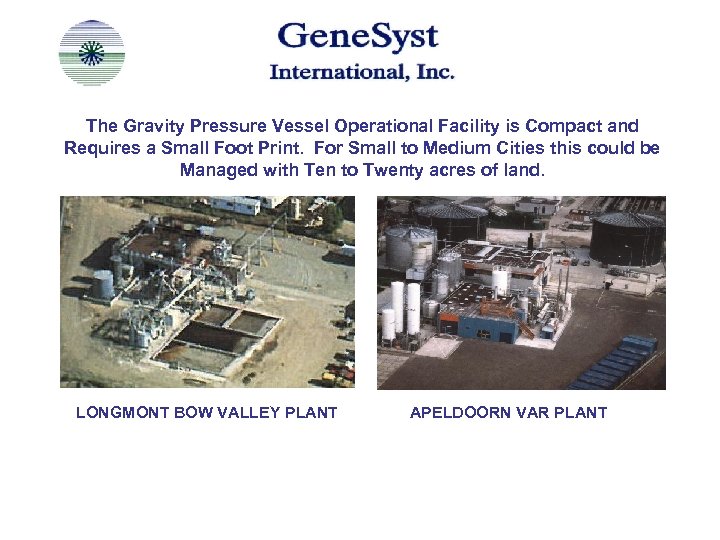 The Gravity Pressure Vessel Operational Facility is Compact and Requires a Small Foot Print. For Small to Medium Cities this could be Managed with Ten to Twenty acres of land. LONGMONT BOW VALLEY PLANT APELDOORN VAR PLANT
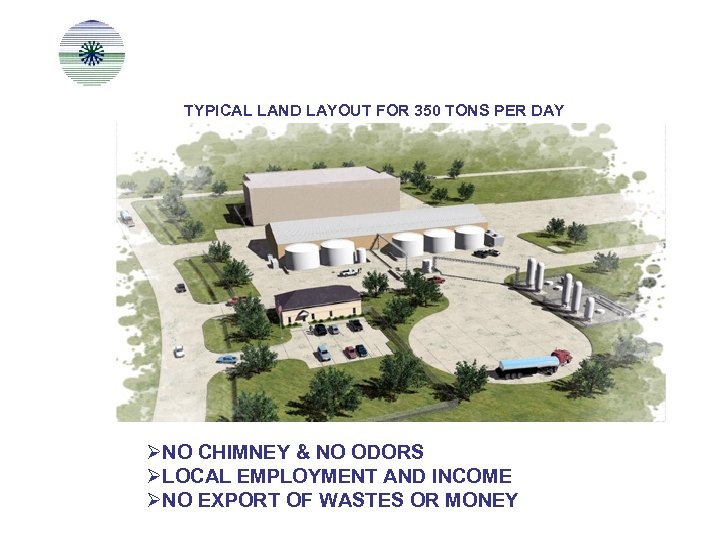 TYPICAL LAND LAYOUT FOR 350 TONS PER DAY ØNO CHIMNEY & NO ODORS ØLOCAL EMPLOYMENT AND INCOME ØNO EXPORT OF WASTES OR MONEY
 ETHANOL Ø CAN BE MADE FROM ALL KINDS OF MUNICIPAL SOLID WASTE Ø CAN BE STORED WITHOUT LOSS OF VALUE Ø CAN BE SHIPPED WITHOUT LOSS OF VALUE Ø ELIMINATES THE HEALTH HAZARDS OF WASTES STORAGE Ø ELIMINATES THE LONG TERM LIABILITY OF WASTES STORAGE Ø CAN BE PRODUCED WITHIN THE COMMUNITY Ø HAS A VITAL RECIRCULATION OF WEALTH BENEFIT Ø MEETS THE AIMS OF SUSTAINABILITY Ø ELIMINATES THE GREENHOUSE GASSES OF WASTE STORAGE Ø ELIMINATES THE NEED FOR WASTE EXPORT
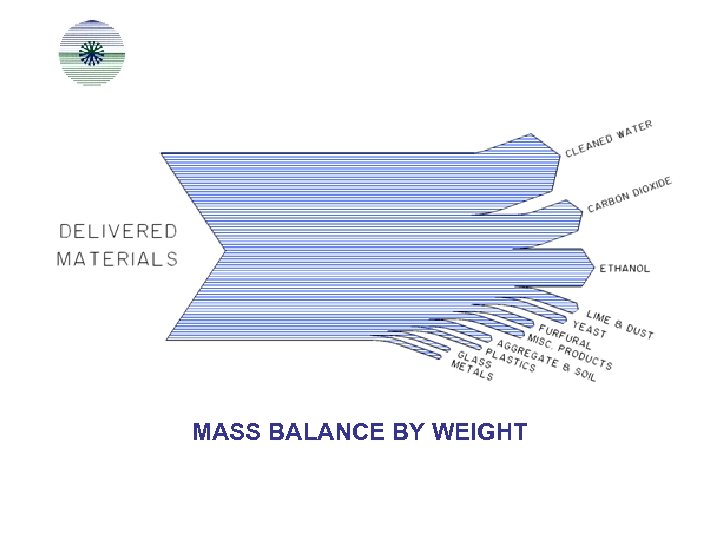 MASS BALANCE BY WEIGHT
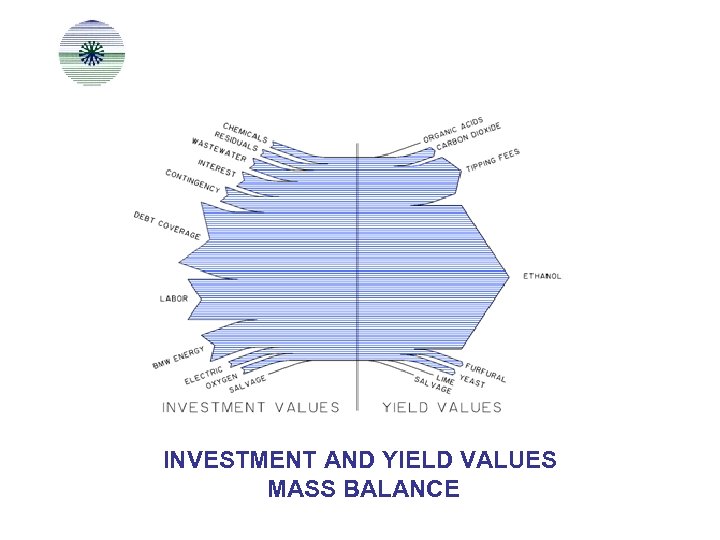 INVESTMENT AND YIELD VALUES MASS BALANCE
 IN SUMMARY WHAT WILL THE GENESYST PROCESS ACHIEVE A PERMANENT SOLUTION OF YOUR WASTE PROBLEMS SATISFIES ALL PROJECTED ENVIRONMENTAL OBJECTIVES AN UP TO DATE USE OF LONG ESTABLISHED ENGINEERING ARTS HIGHEST AND BEST REUSE OF WASTES LESS TRAFFIC, MORE EMPLOYMENT, BETTER PAYROLLS FINANCIALLY SELF SUPPORTING -- REQUIRING NO SUBSIDY RETAINMENT OF WEALTH WITHIN THE COMMUNITY