


 Скачать презентацию Gator Tech Smart House CNT 5517 -5564 Dr
7cad1f8992de9e7eafb05998456c7e46.ppt
- Количество слайдов: 37
 Gator Tech Smart House CNT 5517 -5564 Dr. Sumi Helal Computer & Information Science & Engineering Department University of Florida, Gainesville, FL 32611 helal@cise. ufl. edu
 Reading Materials • A. Helal, W. Mann, H. Elzabadani, J. King, Y. Kaddourah and E. Jansen, "Gator Tech Smart House: A Programmable Pervasive Space", IEEE Computer magazine, March 2005, pp 64 -74. (pdf) • A. Helal, J. King, H. Zabadani and Y Kaddourah, "The Gator Tech Smart House: An Assistive Environment for Successful Aging, " Book Chapter in "Advanced Intelligent Environments, " H. Hagrass, Editor, Springer Verlag
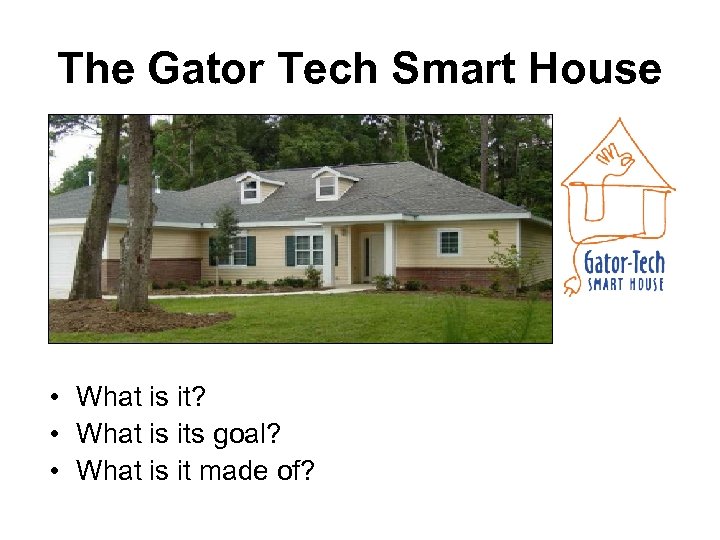 The Gator Tech Smart House • What is it? • What is its goal? • What is it made of?
 What is the GTSH? • A 2500 sq ft single family house in the Oak Hammock Continuous Care Retirement Community, in Gainesville, Florida. • A Pervasive Computing Space • An experimental laboratory in which pervasive computing middleware and applications are innovated and validated by engineers as well as end users.
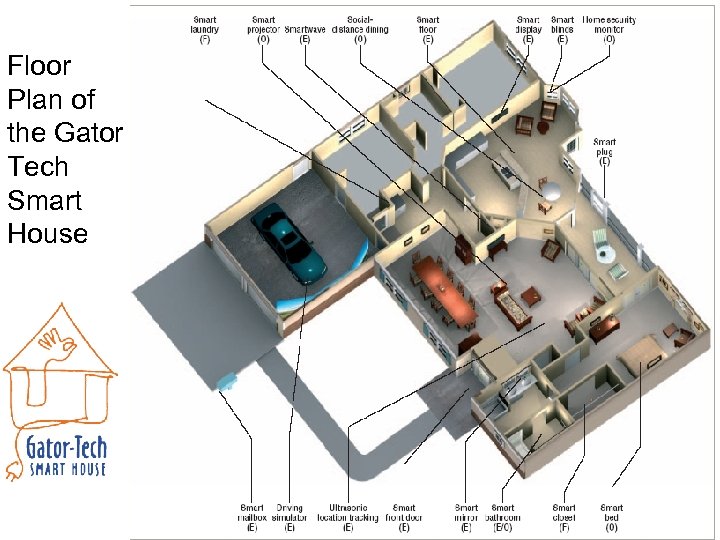 Floor Plan of the Gator Tech Smart House
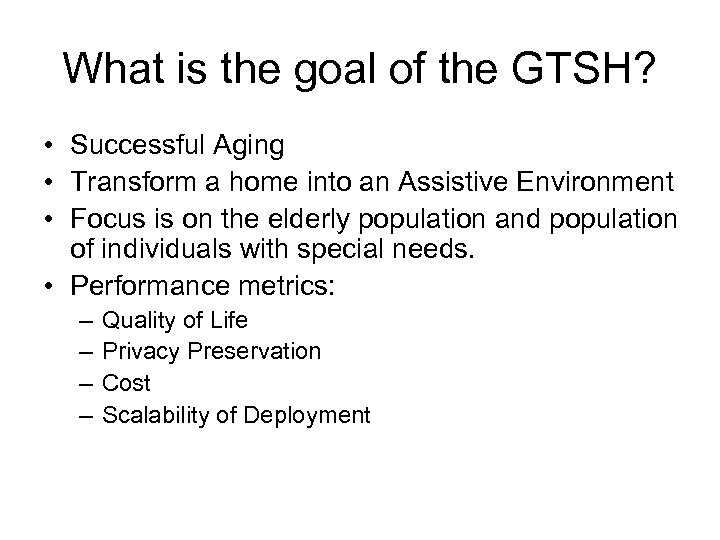 What is the goal of the GTSH? • Successful Aging • Transform a home into an Assistive Environment • Focus is on the elderly population and population of individuals with special needs. • Performance metrics: – – Quality of Life Privacy Preservation Cost Scalability of Deployment
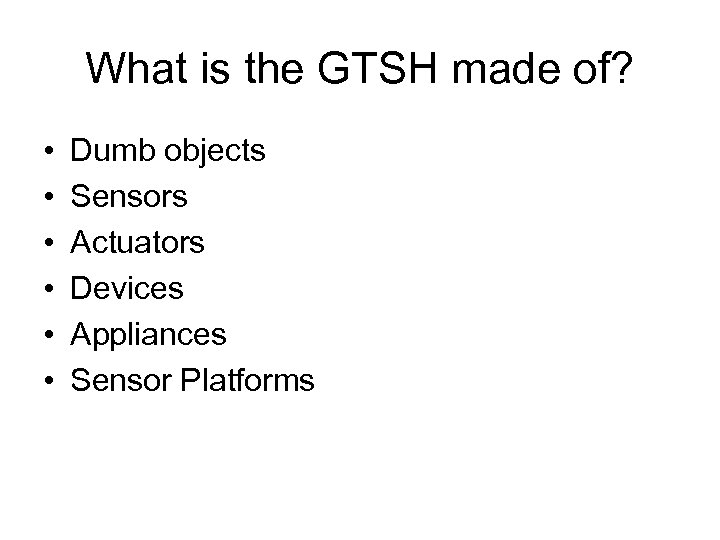 What is the GTSH made of? • • • Dumb objects Sensors Actuators Devices Appliances Sensor Platforms
 Sensors and Actuators
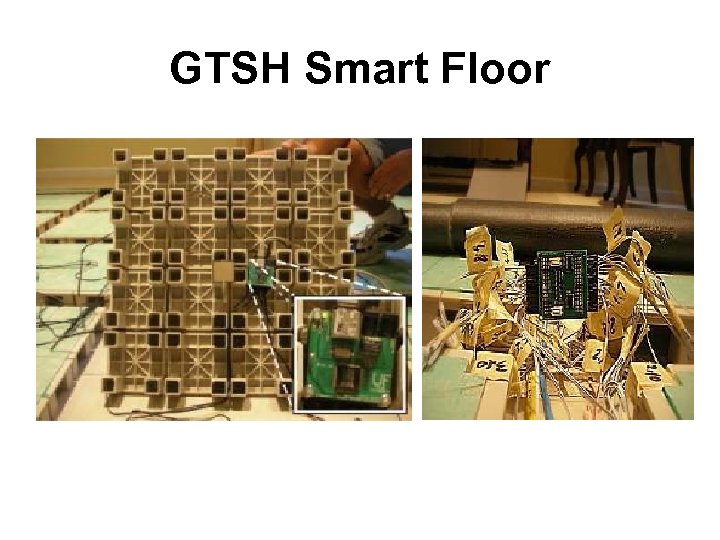
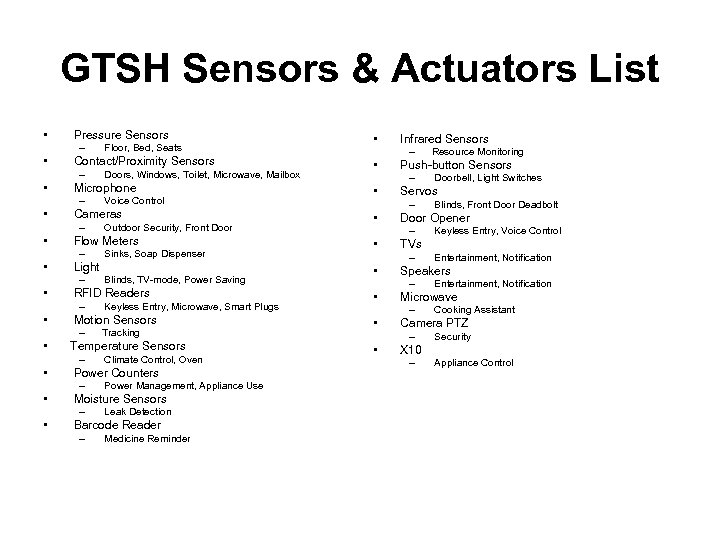 GTSH Sensors & Actuators List • Pressure Sensors – • Floor, Bed, Seats Contact/Proximity Sensors – Doors, Windows, Toilet, Microwave, Mailbox • Microphone • Cameras – – • Sinks, Soap Dispenser Light – • Outdoor Security, Front Door Flow Meters – • Voice Control Blinds, TV-mode, Power Saving RFID Readers – Keyless Entry, Microwave, Smart Plugs • Motion Sensors • Temperature Sensors – – Tracking Climate Control, Oven • Power Counters • Moisture Sensors – – • Power Management, Appliance Use Leak Detection Barcode Reader – Medicine Reminder • Infrared Sensors – Resource Monitoring • Push-button Sensors • Servos – – • Doorbell, Light Switches Blinds, Front Door Deadbolt Door Opener – Keyless Entry, Voice Control • TVs • Speakers – – Entertainment, Notification • Microwave • Camera PTZ – – • Cooking Assistant Security X 10 – Appliance Control
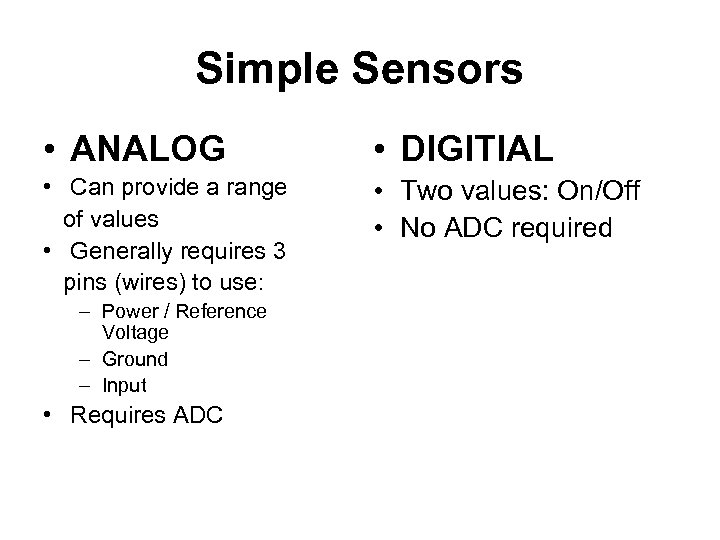 Simple Sensors • ANALOG • DIGITIAL • Can provide a range of values • Generally requires 3 pins (wires) to use: • Two values: On/Off • No ADC required – Power / Reference Voltage – Ground – Input • Requires ADC
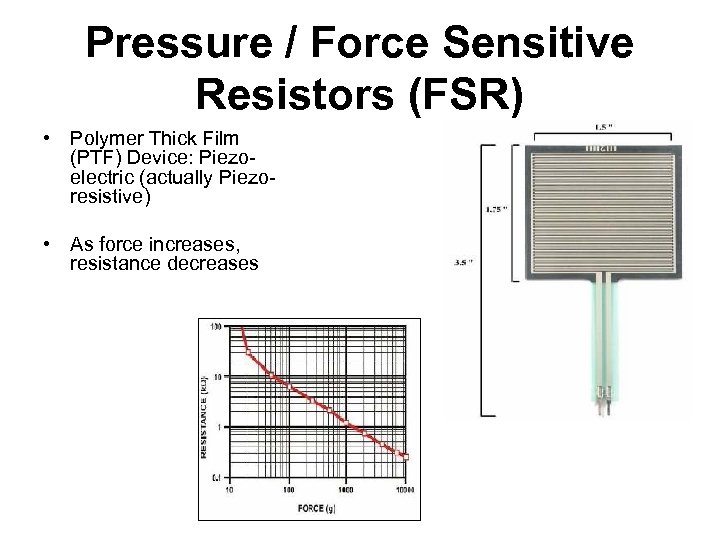 Pressure / Force Sensitive Resistors (FSR) • Polymer Thick Film (PTF) Device: Piezoelectric (actually Piezoresistive) • As force increases, resistance decreases
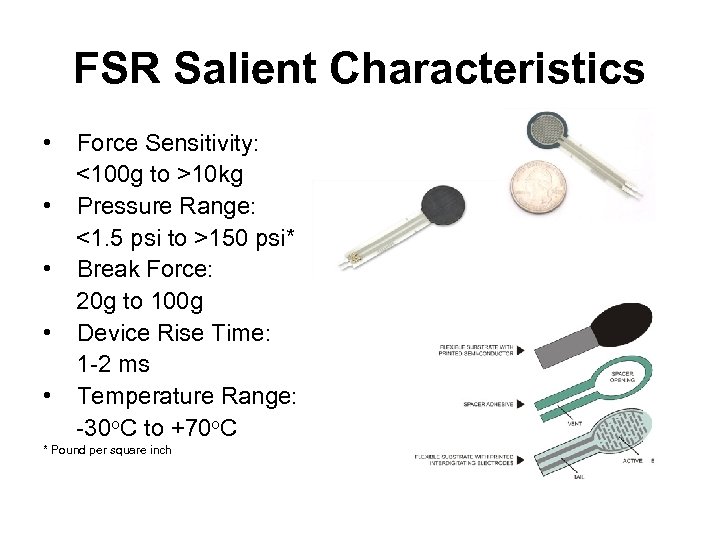 FSR Salient Characteristics • • • Force Sensitivity: <100 g to >10 kg Pressure Range: <1. 5 psi to >150 psi* Break Force: 20 g to 100 g Device Rise Time: 1 -2 ms Temperature Range: -30 o. C to +70 o. C * Pound per square inch
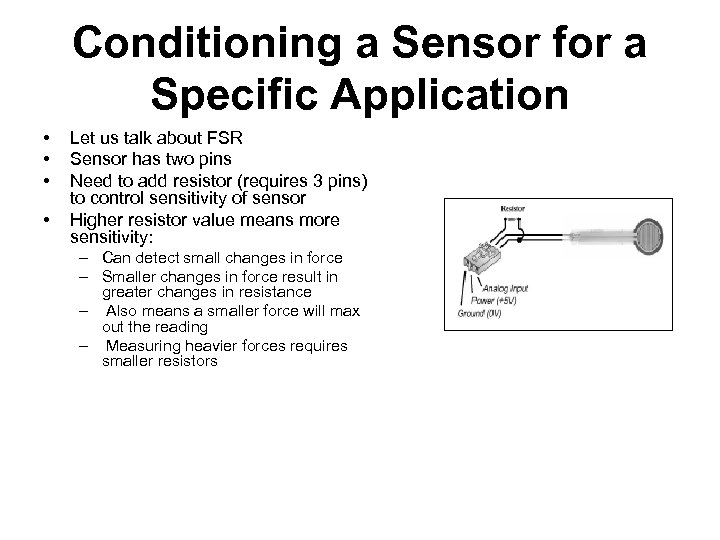 Conditioning a Sensor for a Specific Application • • Let us talk about FSR Sensor has two pins Need to add resistor (requires 3 pins) to control sensitivity of sensor Higher resistor value means more sensitivity: – Can detect small changes in force – Smaller changes in force result in greater changes in resistance – Also means a smaller force will max out the reading – Measuring heavier forces requires smaller resistors
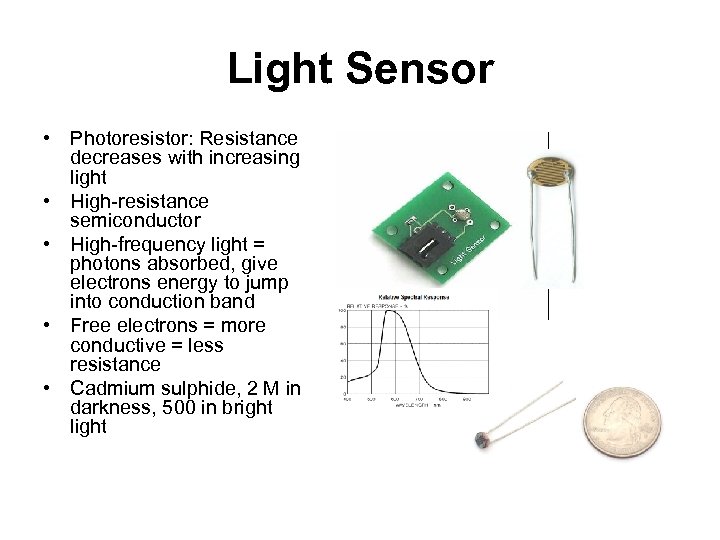 Light Sensor • Photoresistor: Resistance decreases with increasing light • High-resistance semiconductor • High-frequency light = photons absorbed, give electrons energy to jump into conduction band • Free electrons = more conductive = less resistance • Cadmium sulphide, 2 M in darkness, 500 in bright light
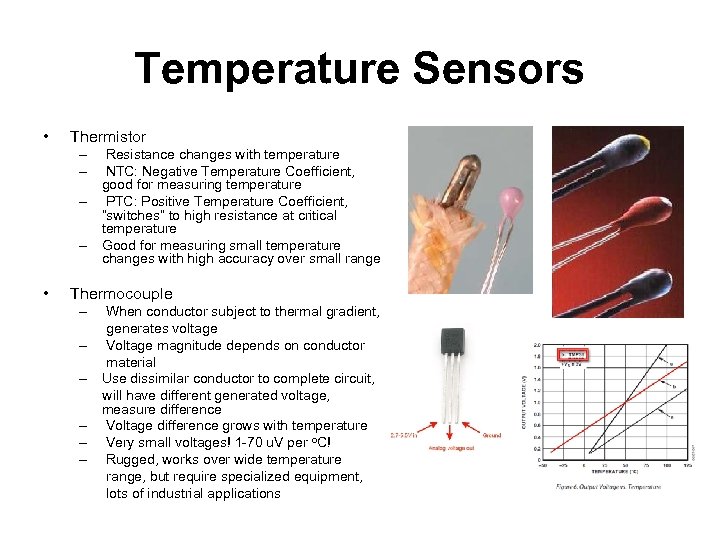 Temperature Sensors • Thermistor – – • Resistance changes with temperature NTC: Negative Temperature Coefficient, good for measuring temperature PTC: Positive Temperature Coefficient, “switches” to high resistance at critical temperature Good for measuring small temperature changes with high accuracy over small range Thermocouple – – – When conductor subject to thermal gradient, generates voltage Voltage magnitude depends on conductor material Use dissimilar conductor to complete circuit, will have different generated voltage, measure difference Voltage difference grows with temperature Very small voltages! 1 -70 u. V per o. C! Rugged, works over wide temperature range, but require specialized equipment, lots of industrial applications
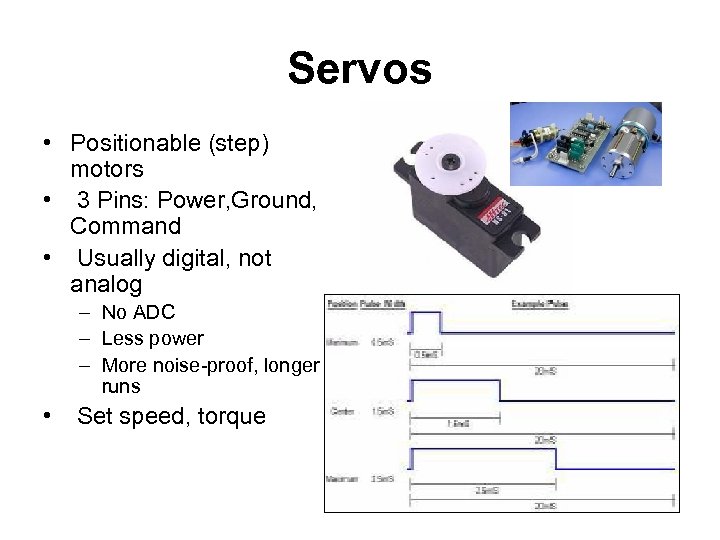 Servos • Positionable (step) motors • 3 Pins: Power, Ground, Command • Usually digital, not analog – No ADC – Less power – More noise-proof, longer runs • Set speed, torque
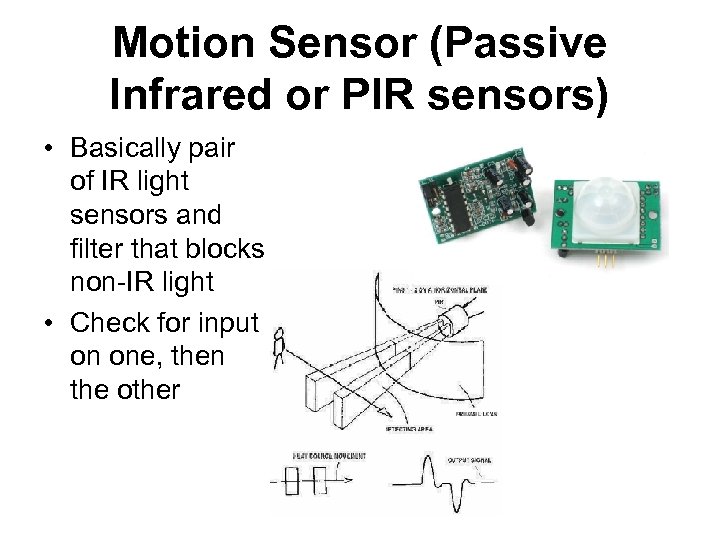 Motion Sensor (Passive Infrared or PIR sensors) • Basically pair of IR light sensors and filter that blocks non-IR light • Check for input on one, then the other
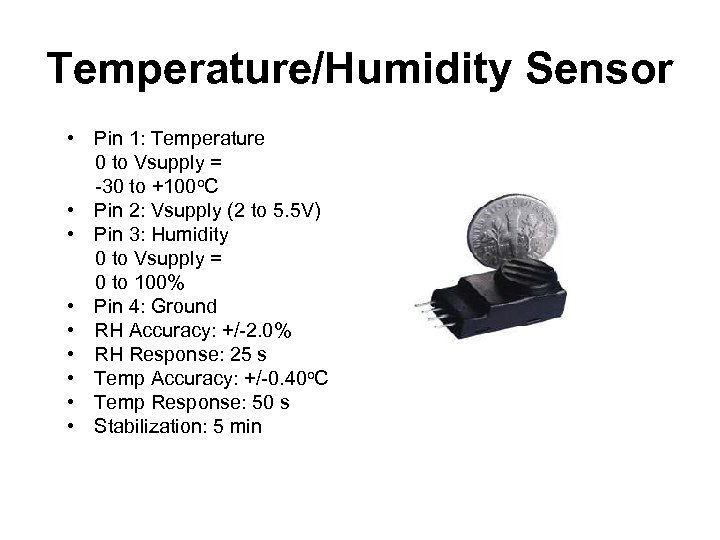 Temperature/Humidity Sensor • Pin 1: Temperature 0 to Vsupply = -30 to +100 o. C • Pin 2: Vsupply (2 to 5. 5 V) • Pin 3: Humidity 0 to Vsupply = 0 to 100% • Pin 4: Ground • RH Accuracy: +/-2. 0% • RH Response: 25 s • Temp Accuracy: +/-0. 40 o. C • Temp Response: 50 s • Stabilization: 5 min
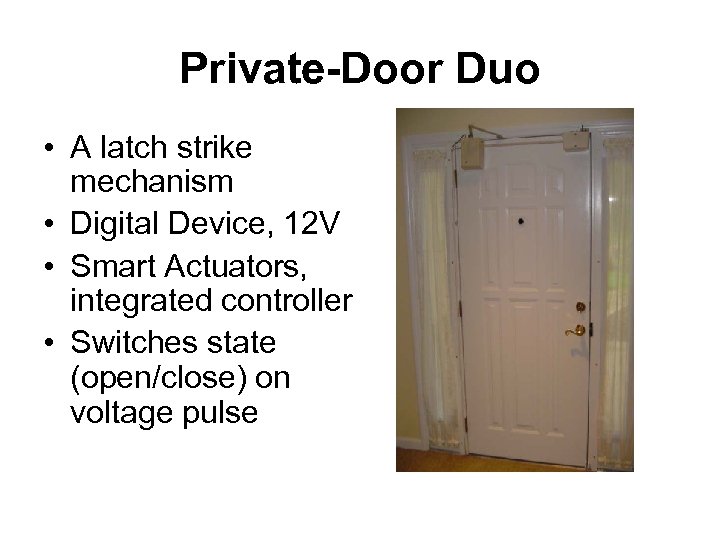 Private-Door Duo • A latch strike mechanism • Digital Device, 12 V • Smart Actuators, integrated controller • Switches state (open/close) on voltage pulse
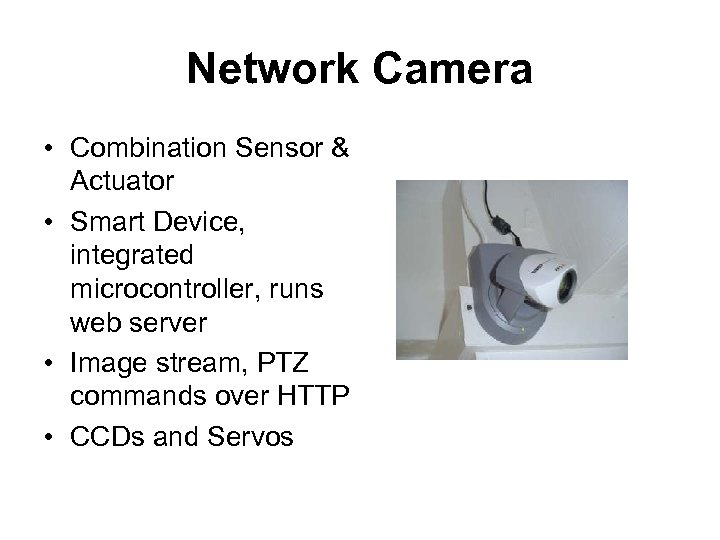 Network Camera • Combination Sensor & Actuator • Smart Device, integrated microcontroller, runs web server • Image stream, PTZ commands over HTTP • CCDs and Servos
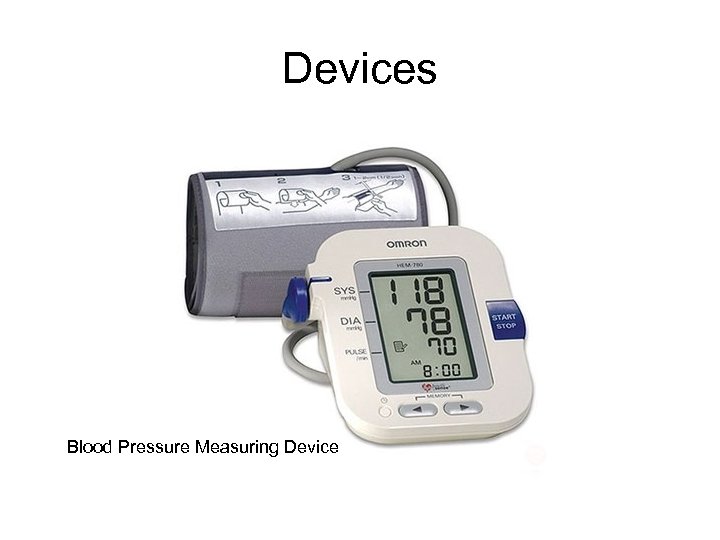 Devices Blood Pressure Measuring Device
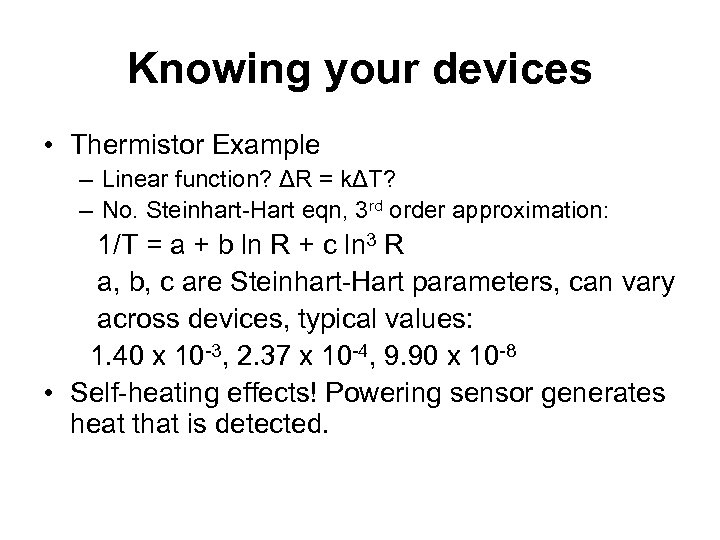 Knowing your devices • Thermistor Example – Linear function? ΔR = kΔT? – No. Steinhart-Hart eqn, 3 rd order approximation: 1/T = a + b ln R + c ln 3 R a, b, c are Steinhart-Hart parameters, can vary across devices, typical values: 1. 40 x 10 -3, 2. 37 x 10 -4, 9. 90 x 10 -8 • Self-heating effects! Powering sensor generates heat that is detected.
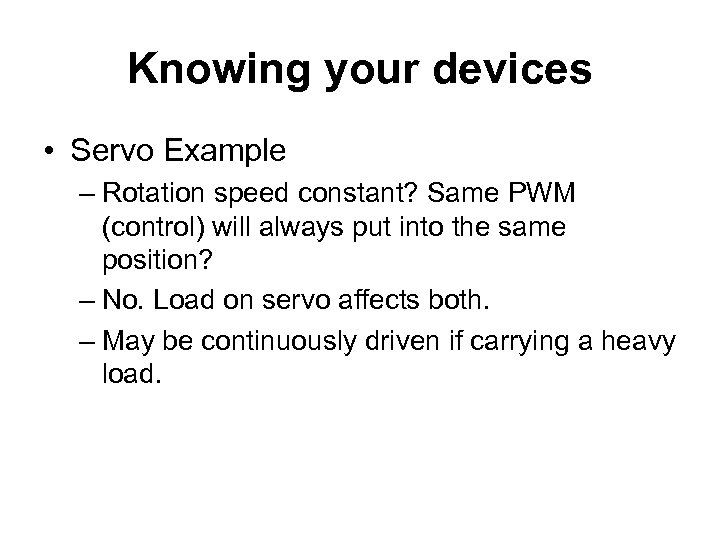 Knowing your devices • Servo Example – Rotation speed constant? Same PWM (control) will always put into the same position? – No. Load on servo affects both. – May be continuously driven if carrying a heavy load.
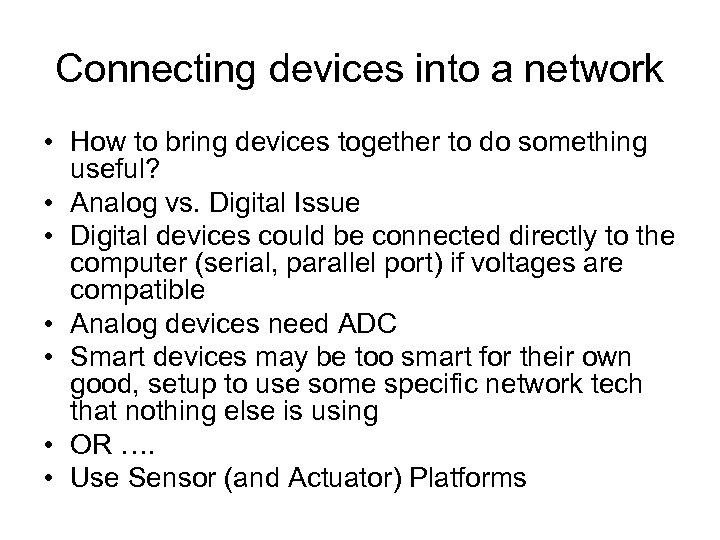 Connecting devices into a network • How to bring devices together to do something useful? • Analog vs. Digital Issue • Digital devices could be connected directly to the computer (serial, parallel port) if voltages are compatible • Analog devices need ADC • Smart devices may be too smart for their own good, setup to use some specific network tech that nothing else is using • OR …. • Use Sensor (and Actuator) Platforms
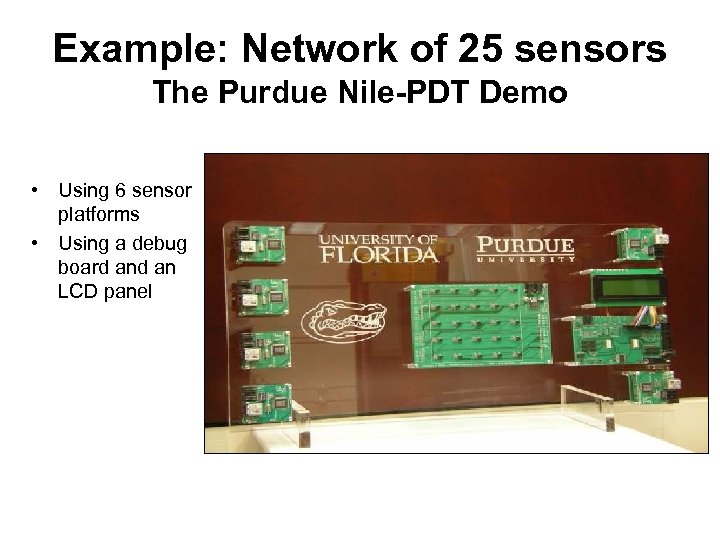 Example: Network of 25 sensors The Purdue Nile-PDT Demo • Using 6 sensor platforms • Using a debug board an LCD panel
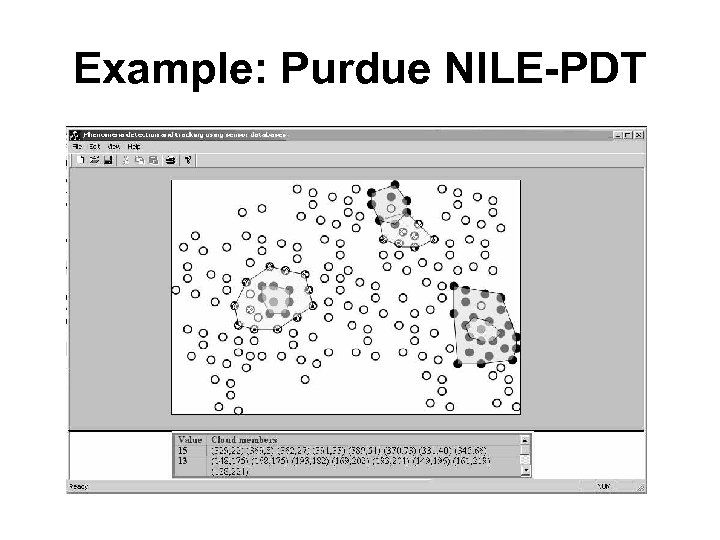 Example: Purdue NILE-PDT
 Sensor Platforms
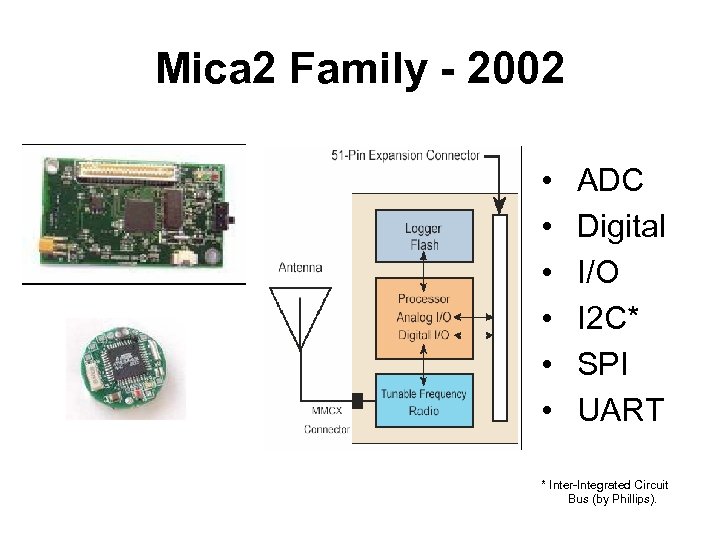 Mica 2 Family - 2002 • • • ADC Digital I/O I 2 C* SPI UART * Inter-Integrated Circuit Bus (by Phillips).
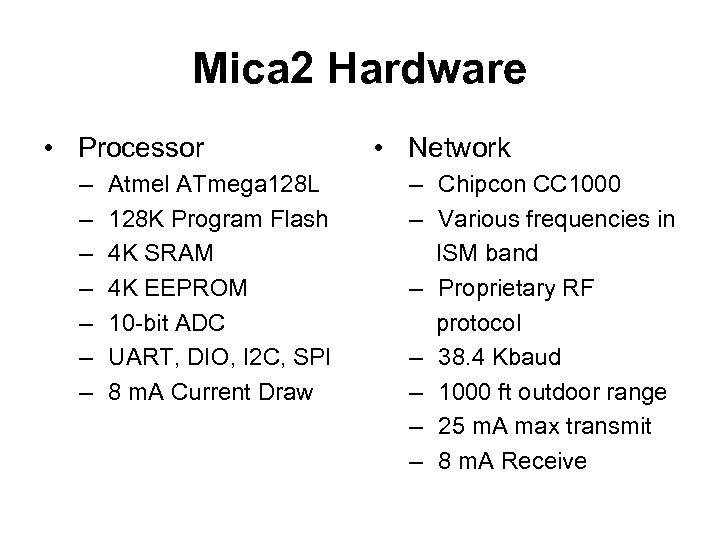 Mica 2 Hardware • Processor – – – – Atmel ATmega 128 L 128 K Program Flash 4 K SRAM 4 K EEPROM 10 -bit ADC UART, DIO, I 2 C, SPI 8 m. A Current Draw • Network – Chipcon CC 1000 – Various frequencies in ISM band – Proprietary RF protocol – 38. 4 Kbaud – 1000 ft outdoor range – 25 m. A max transmit – 8 m. A Receive
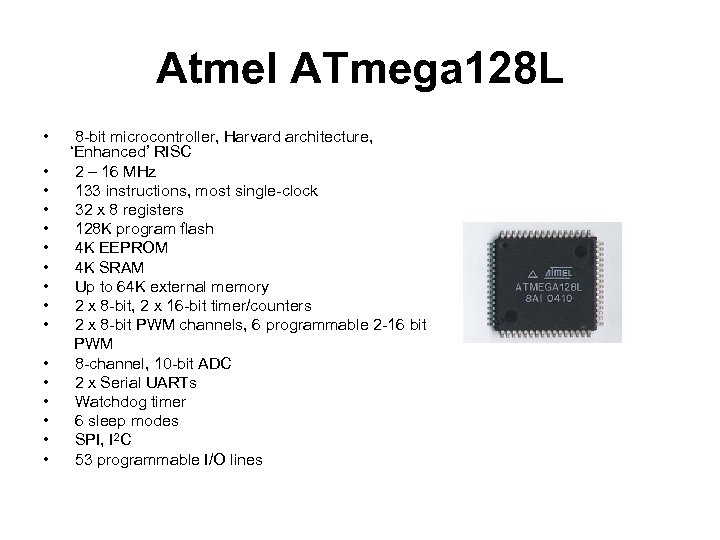 Atmel ATmega 128 L • • • • 8 -bit microcontroller, Harvard architecture, ‘Enhanced’ RISC 2 – 16 MHz 133 instructions, most single-clock 32 x 8 registers 128 K program flash 4 K EEPROM 4 K SRAM Up to 64 K external memory 2 x 8 -bit, 2 x 16 -bit timer/counters 2 x 8 -bit PWM channels, 6 programmable 2 -16 bit PWM 8 -channel, 10 -bit ADC 2 x Serial UARTs Watchdog timer 6 sleep modes SPI, I 2 C 53 programmable I/O lines
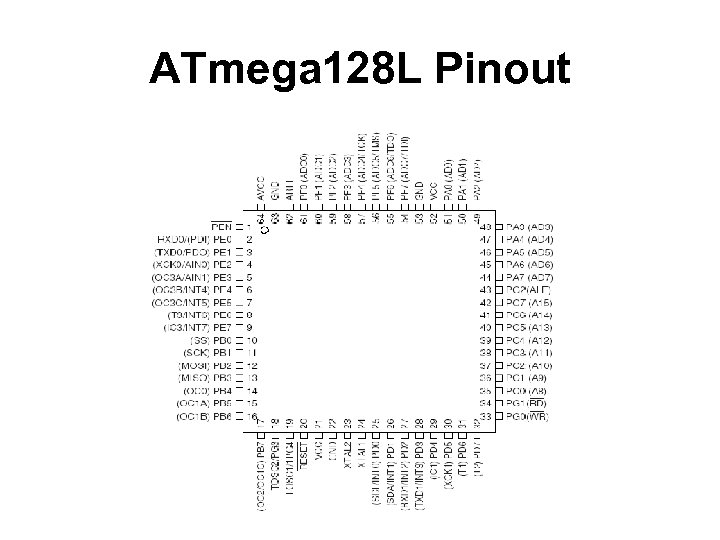 ATmega 128 L Pinout
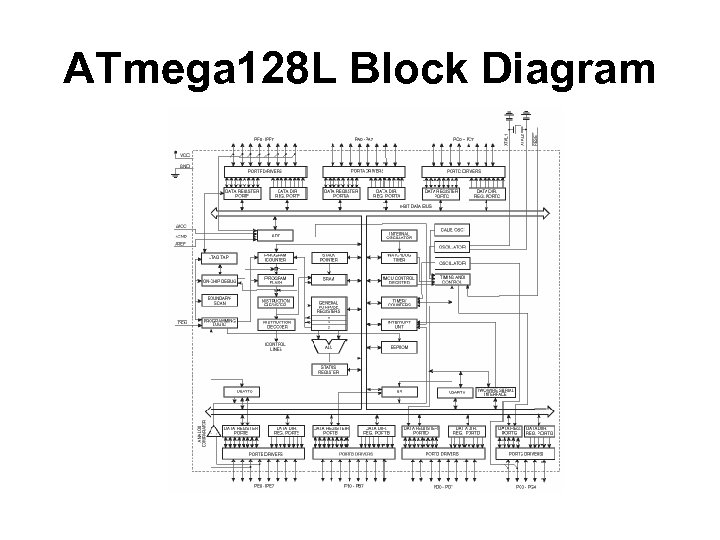 ATmega 128 L Block Diagram
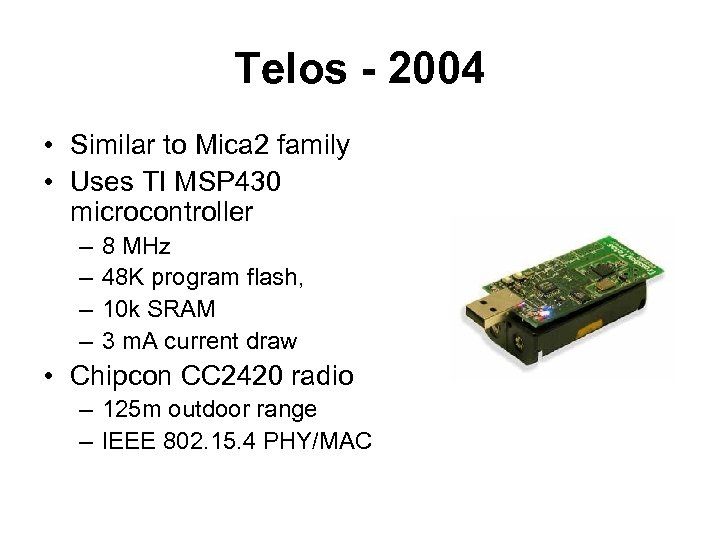 Telos - 2004 • Similar to Mica 2 family • Uses TI MSP 430 microcontroller – – 8 MHz 48 K program flash, 10 k SRAM 3 m. A current draw • Chipcon CC 2420 radio – 125 m outdoor range – IEEE 802. 15. 4 PHY/MAC
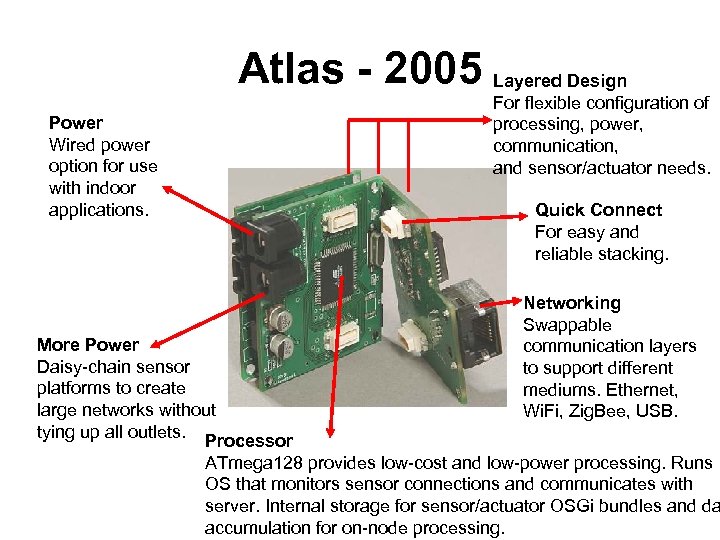 Atlas - 2005 Layered Design Power Wired power option for use with indoor applications. For flexible configuration of processing, power, communication, and sensor/actuator needs. Quick Connect For easy and reliable stacking. Networking Swappable communication layers to support different mediums. Ethernet, Wi. Fi, Zig. Bee, USB. More Power Daisy-chain sensor platforms to create large networks without tying up all outlets. Processor ATmega 128 provides low-cost and low-power processing. Runs OS that monitors sensor connections and communicates with server. Internal storage for sensor/actuator OSGi bundles and da accumulation for on-node processing.
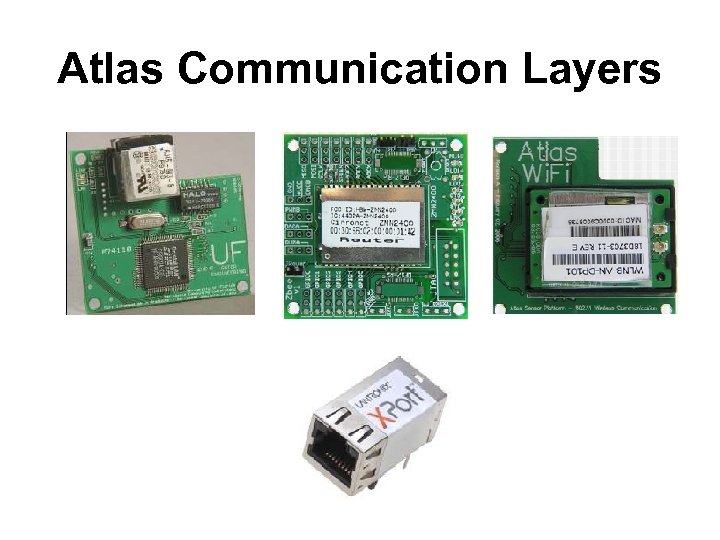 Atlas Communication Layers
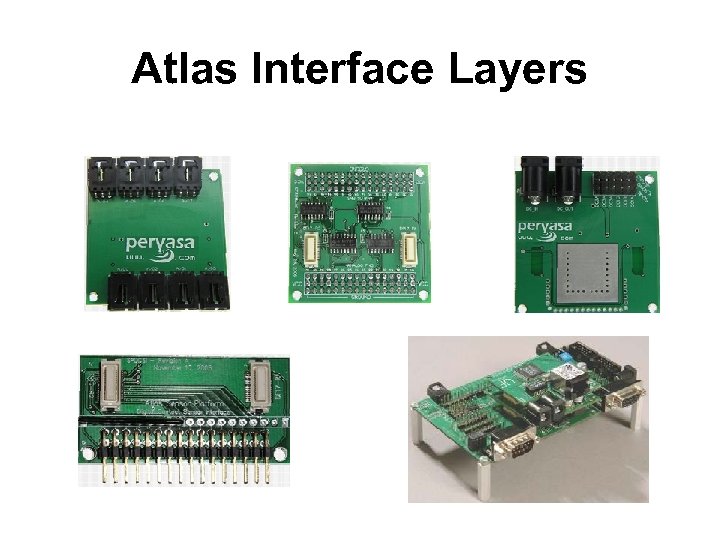 Atlas Interface Layers
 GTSH Smart Floor