


 Скачать презентацию Gateway To Space ASEN ASTR 2500
afb835a6a7e4e034507b91d1f65cf920.ppt
- Количество слайдов: 129
 Gateway To Space ASEN / ASTR 2500
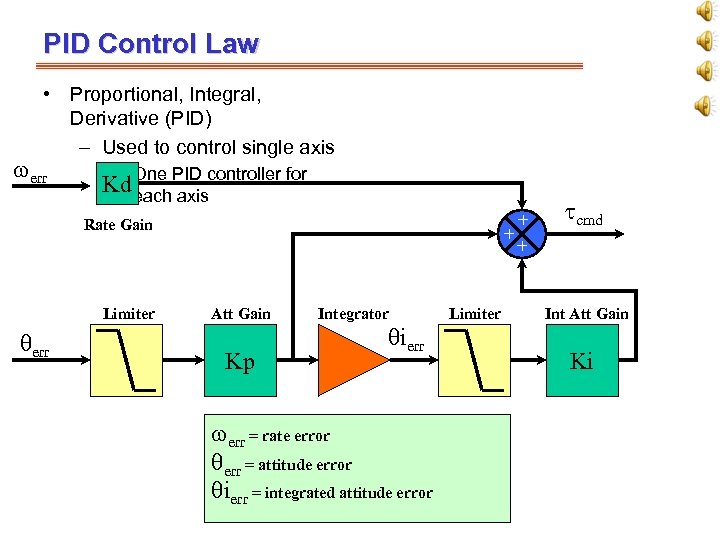 PID Control Law • Proportional, Integral, Derivative (PID) – Used to control single axis werr • Kd One PID controller for each axis + + + Rate Gain Limiter qerr Att Gain Integrator qierr Kp werr = rate error qerr = attitude error qierr = integrated attitude error 3 Limiter tcmd Int Att Gain Ki
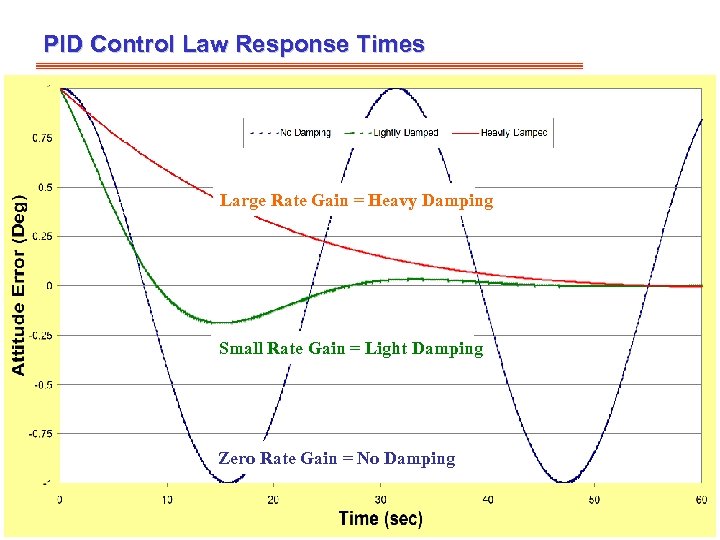 PID Control Law Response Times Large Rate Gain = Heavy Damping Small Rate Gain = Light Damping Zero Rate Gain = No Damping 4
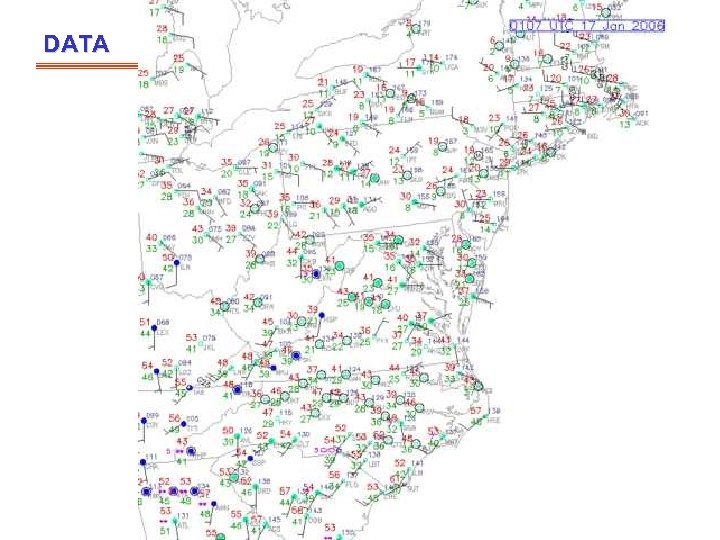 DATA 5
 6
6
 Gateway To Space ASEN / ASTR 2500 Class #1 Colorado Space Grant Consortium
 How was the first day?
 Space?
 Space Clip
 Today - Introductions - What to expect from this course - Format for this course - “How to get an A” - Pictures - Space Grant Introduction
 Introductions
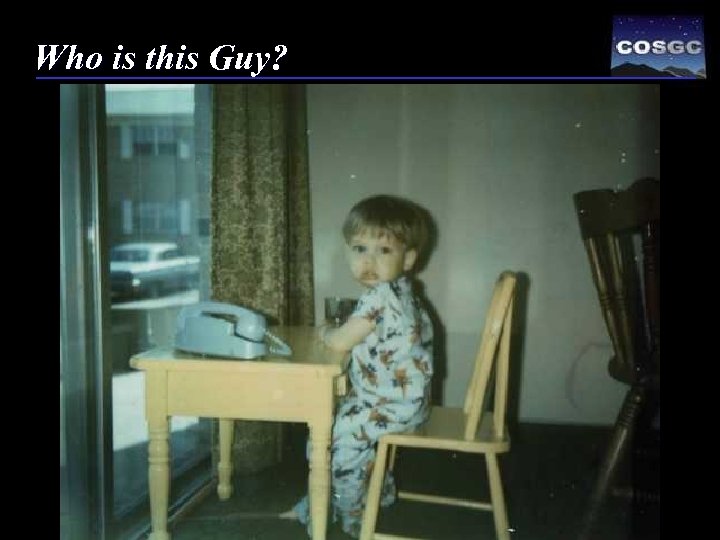 Who is this Guy?
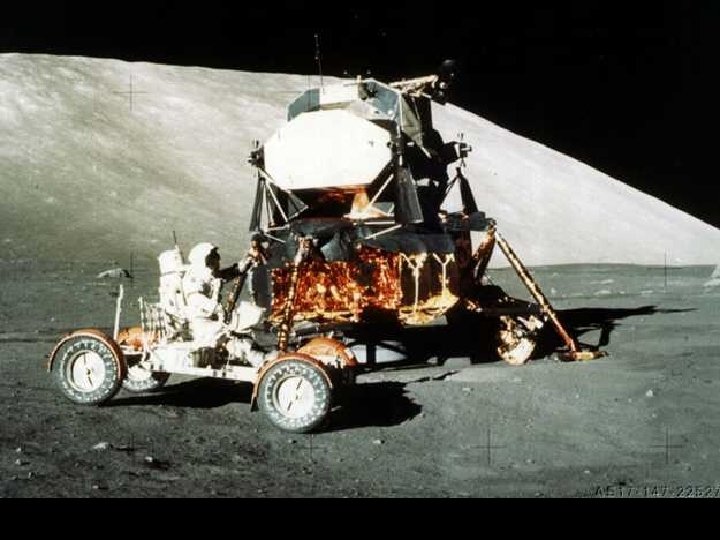
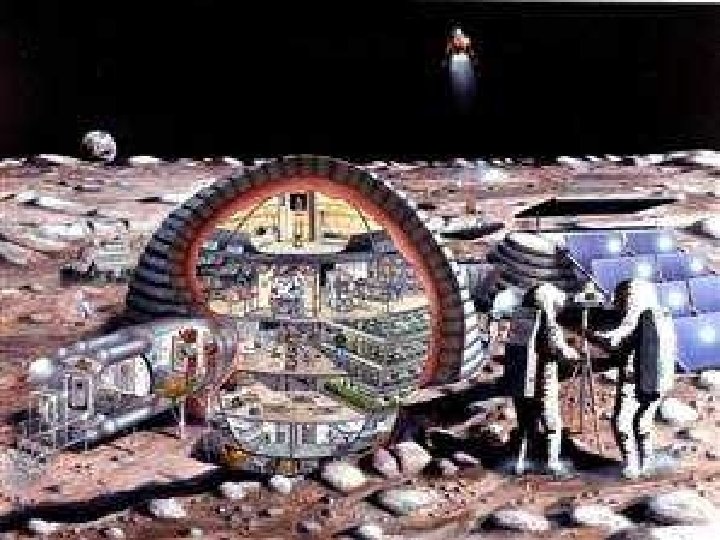
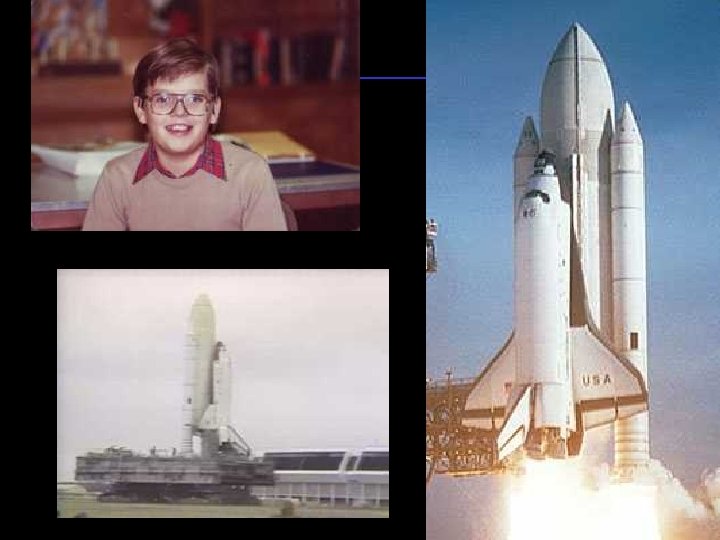
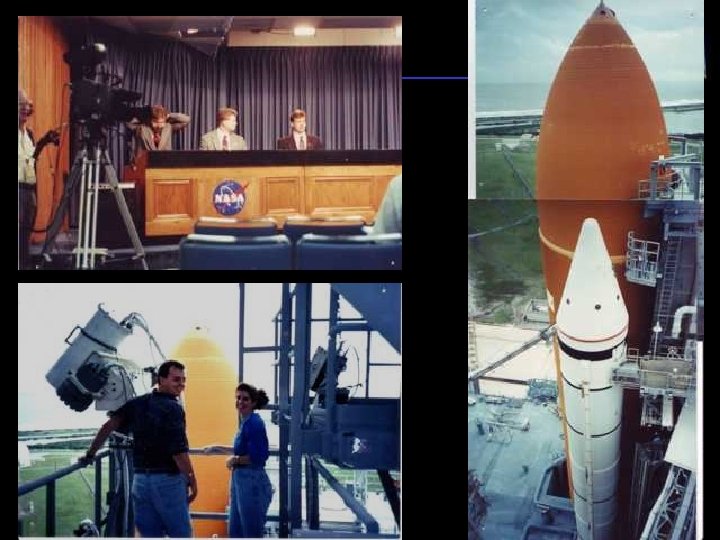 Who is this Guy?
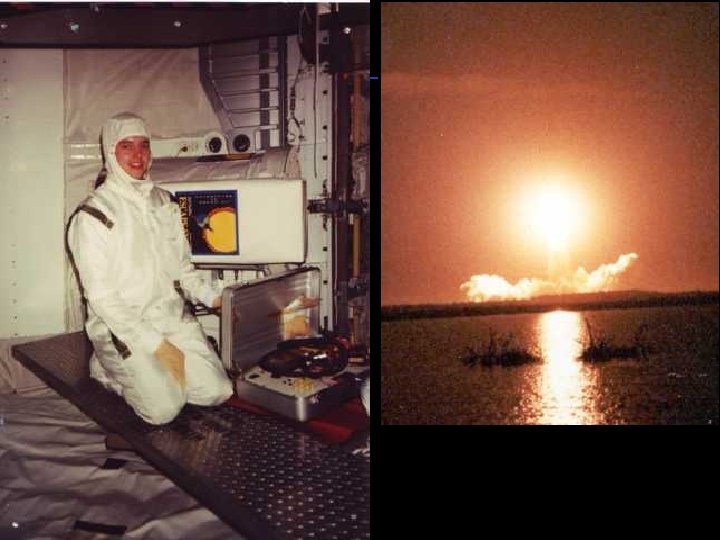 Who is this Guy?
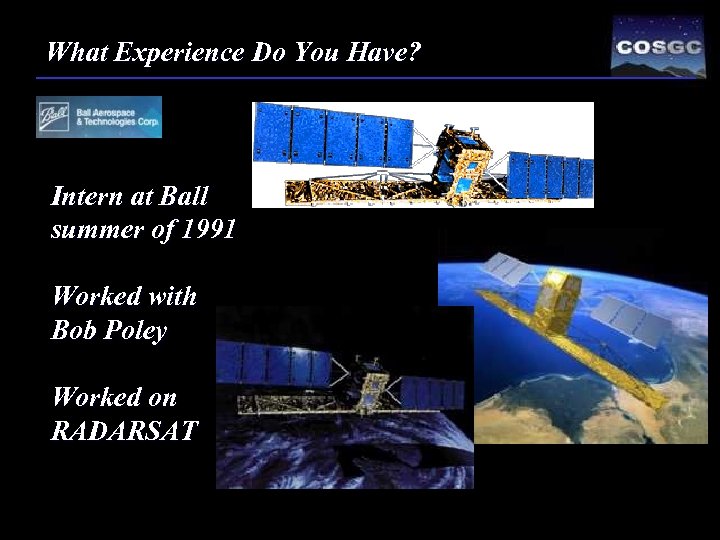 What Experience Do You Have? Intern at Ball summer of 1991 Worked with Bob Poley Worked on RADARSAT
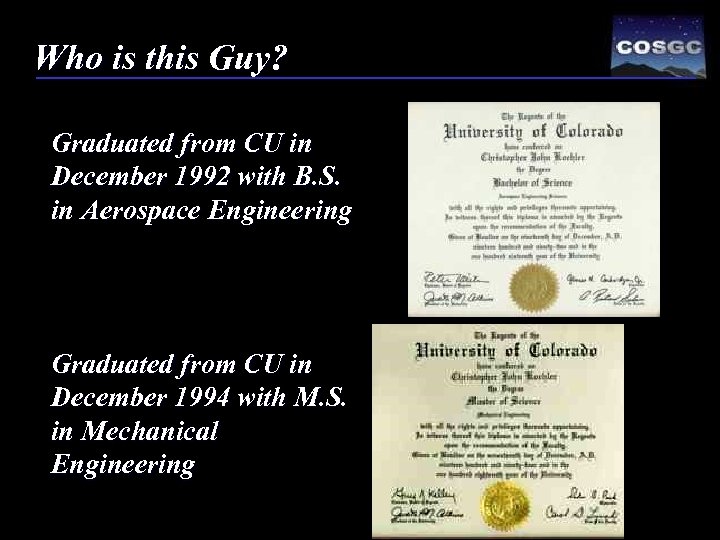 Who is this Guy? Graduated from CU in December 1992 with B. S. in Aerospace Engineering Graduated from CU in December 1994 with M. S. in Mechanical Engineering
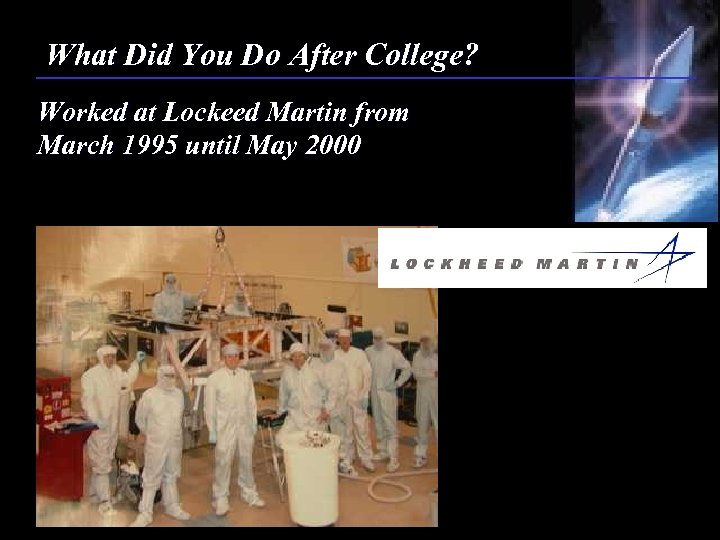 What Did You Do After College? Worked at Lockeed Martin from March 1995 until May 2000
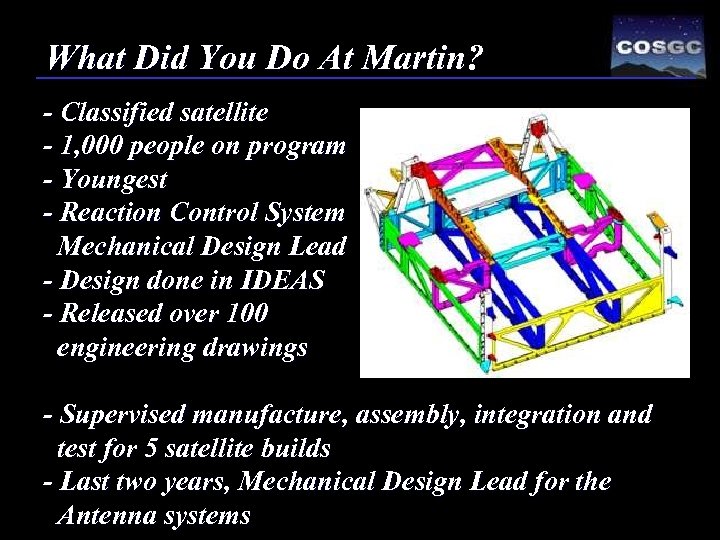 What Did You Do At Martin? - Classified satellite - 1, 000 people on program - Youngest - Reaction Control System Mechanical Design Lead - Design done in IDEAS - Released over 100 engineering drawings - Supervised manufacture, assembly, integration and test for 5 satellite builds - Last two years, Mechanical Design Lead for the Antenna systems
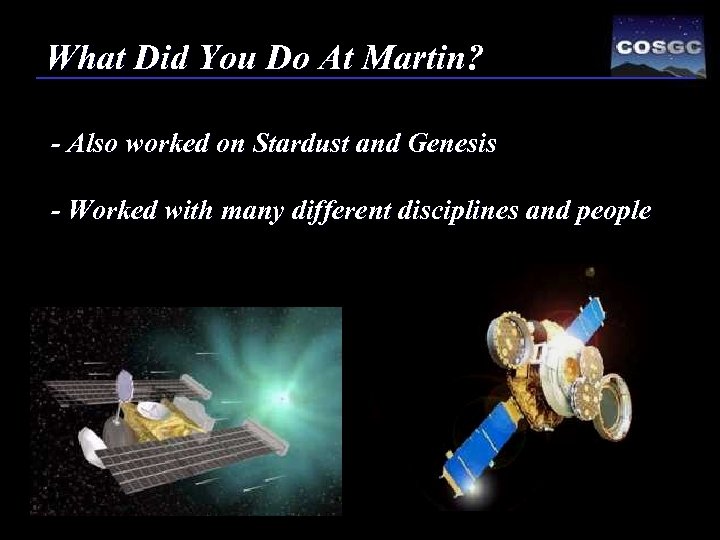 What Did You Do At Martin? - Also worked on Stardust and Genesis - Worked with many different disciplines and people
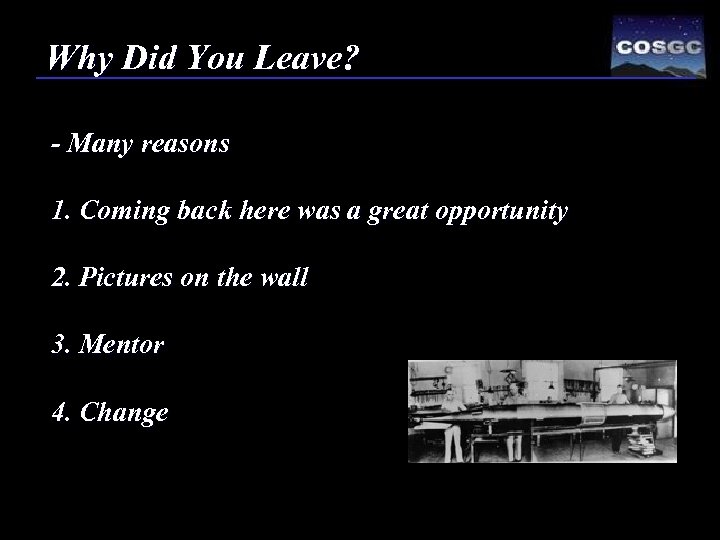 Why Did You Leave? - Many reasons 1. Coming back here was a great opportunity 2. Pictures on the wall 3. Mentor 4. Change
 m
m
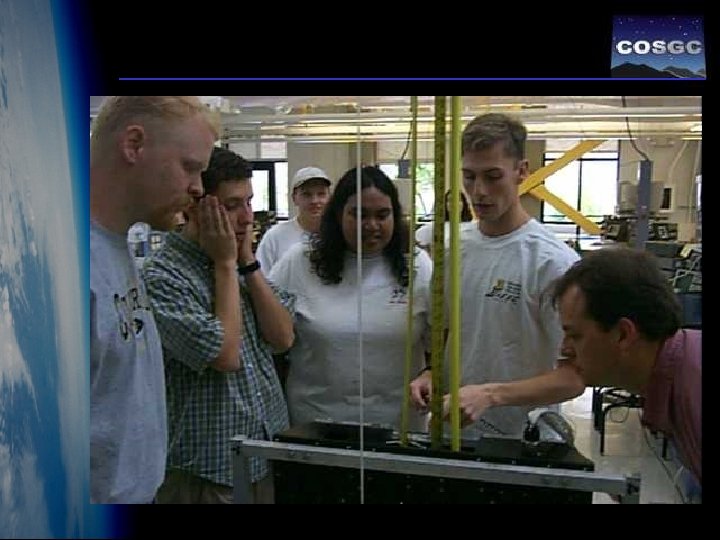
 Who is this Guy?
 Who is this Guy?
 Who is this Guy?
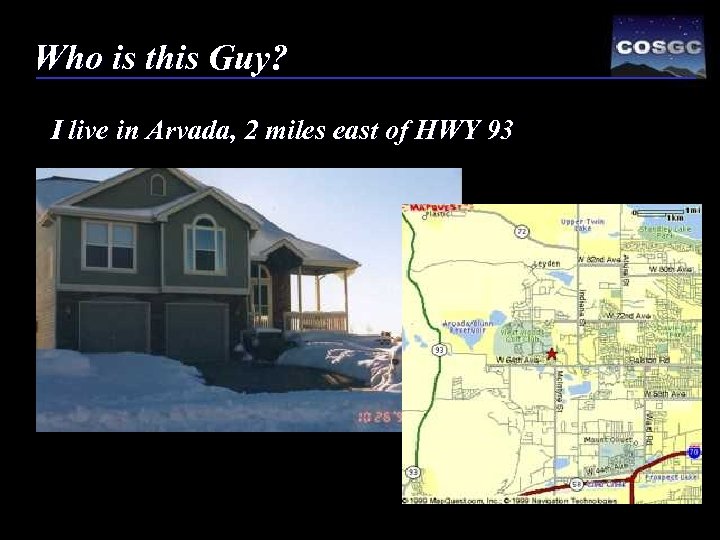 Who is this Guy? I live in Arvada, 2 miles east of HWY 93
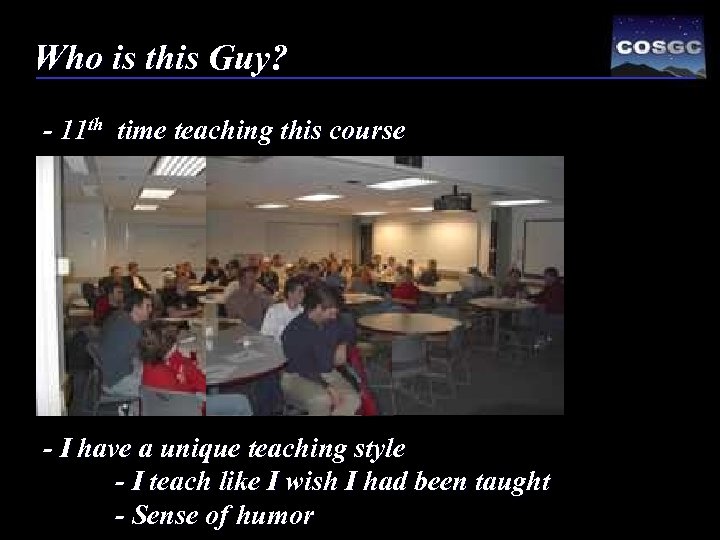 Who is this Guy? - 11 th time teaching this course - I have a unique teaching style - I teach like I wish I had been taught - Sense of humor
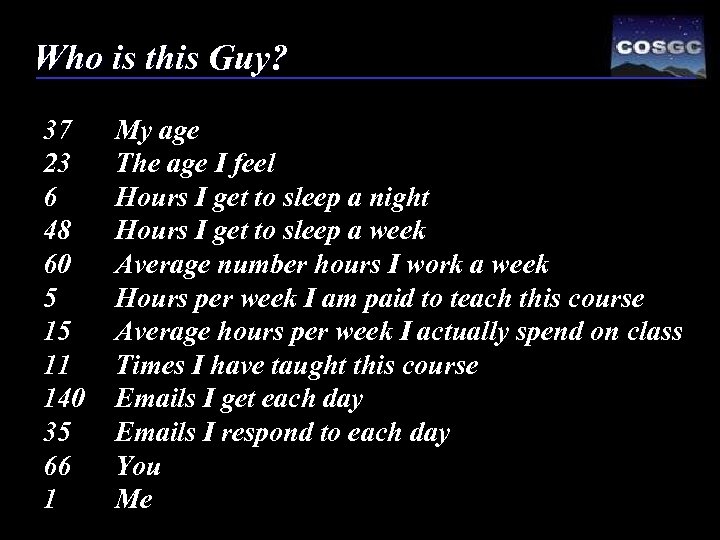 Who is this Guy? 37 23 6 48 60 5 15 11 140 35 66 1 My age The age I feel Hours I get to sleep a night Hours I get to sleep a week Average number hours I work a week Hours per week I am paid to teach this course Average hours per week I actually spend on class Times I have taught this course Emails I get each day Emails I respond to each day You Me
 Your Turn
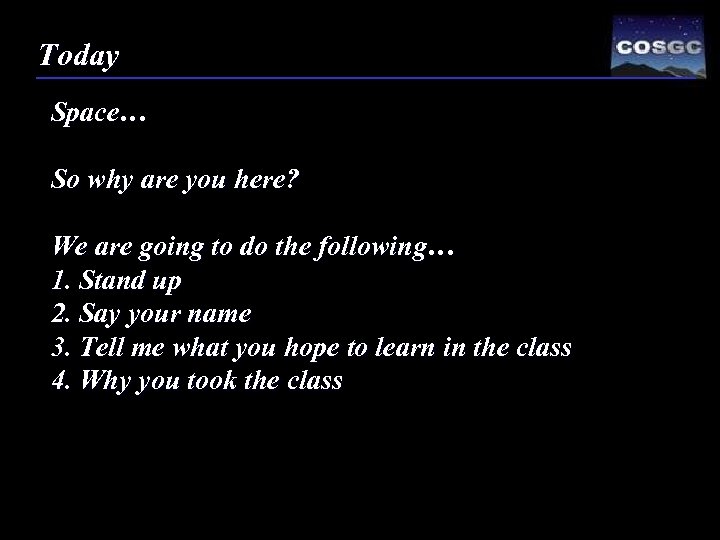 Today Space… So why are you here? We are going to do the following… 1. Stand up 2. Say your name 3. Tell me what you hope to learn in the class 4. Why you took the class
 So Why Are You In College?
 Space in Colorado: - $9. 7 Billion - 142, 500 Coloradoans - Expected to double in 2010 - “Graying of the workforce”
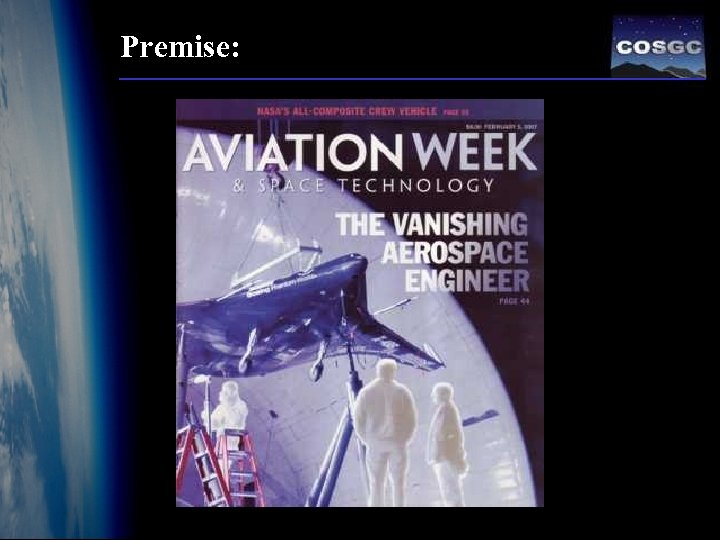 Premise:
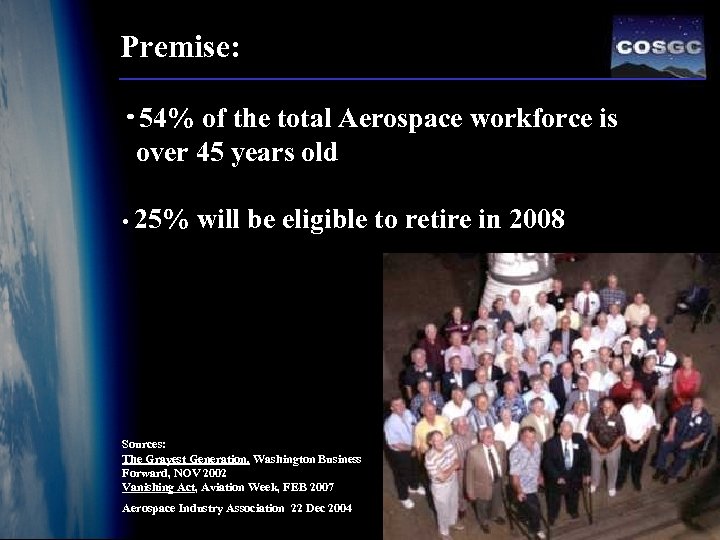 Premise: • 54% of the total Aerospace workforce is over 45 years old • 25% will be eligible to retire in 2008 Sources: The Grayest Generation, Washington Business Forward, NOV 2002 Vanishing Act, Aviation Week, FEB 2007 Aerospace Industry Association 22 Dec 2004
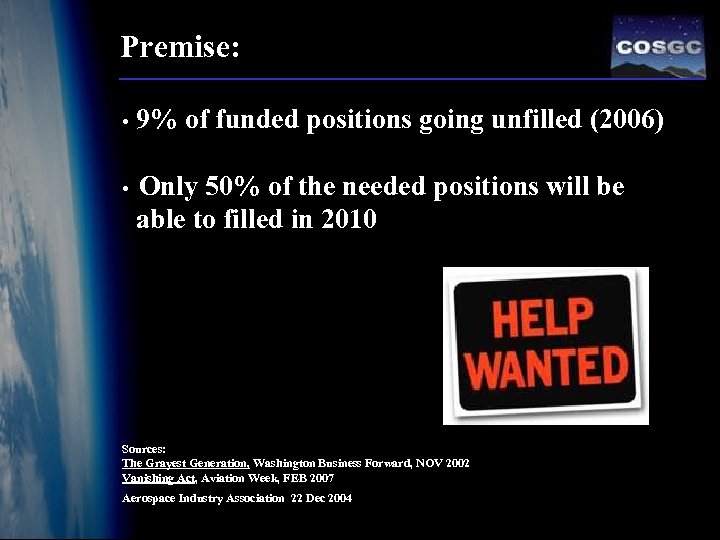 Premise: • 9% of funded positions going unfilled (2006) • Only 50% of the needed positions will be able to filled in 2010 Sources: The Grayest Generation, Washington Business Forward, NOV 2002 Vanishing Act, Aviation Week, FEB 2007 Aerospace Industry Association 22 Dec 2004
 Current Workforce: “Growth in the Science and Engineering (S&E) labor force has been maintained at a rate well above the rate of producing S&E degrees because a large number of foreign-born S&E graduates have migrated to the United States. ” Source: An Emerging and Critical Problem of the Science and Engineering Labor Force, National Science Board, JAN 2004
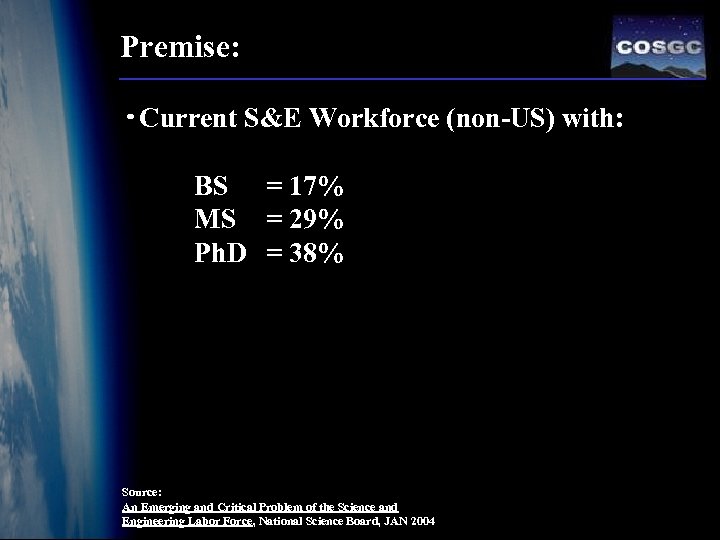 Premise: • Current S&E Workforce (non-US) with: BS = 17% MS = 29% Ph. D = 38% Source: An Emerging and Critical Problem of the Science and Engineering Labor Force, National Science Board, JAN 2004
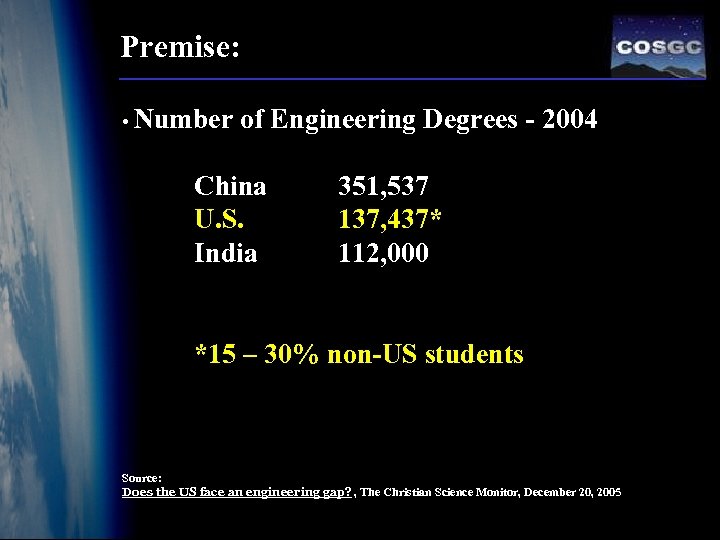 Premise: • Number of Engineering Degrees - 2004 China U. S. India 351, 537 137, 437* 112, 000 *15 – 30% non-US students Source: Does the US face an engineering gap? , The Christian Science Monitor, December 20, 2005
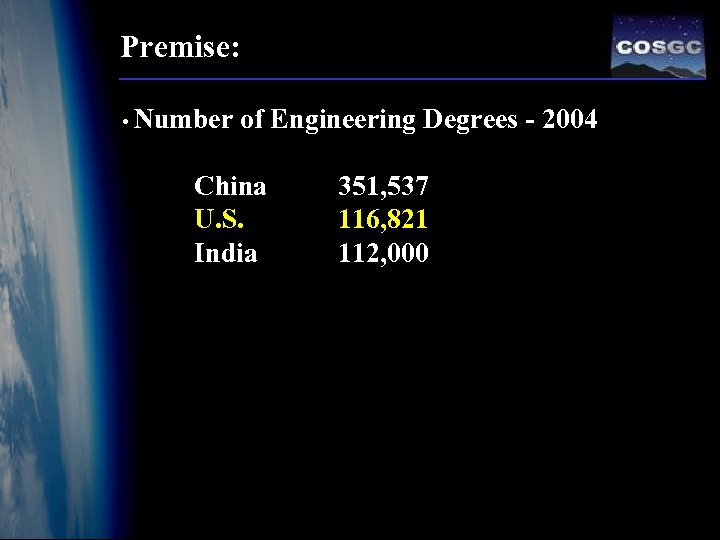 Premise: • Number of Engineering Degrees - 2004 China U. S. India 351, 537 116, 821 112, 000
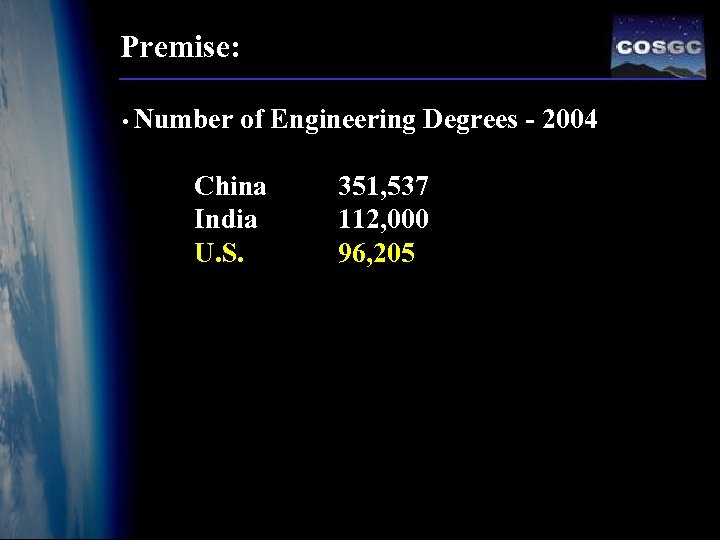 Premise: • Number of Engineering Degrees - 2004 China India U. S. 351, 537 112, 000 96, 205
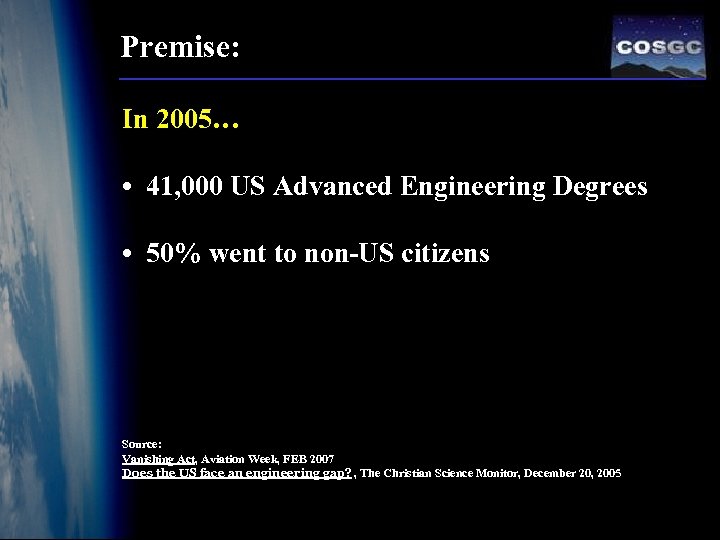 Premise: In 2005… • 41, 000 US Advanced Engineering Degrees • 50% went to non-US citizens Source: Vanishing Act, Aviation Week, FEB 2007 Does the US face an engineering gap? , The Christian Science Monitor, December 20, 2005
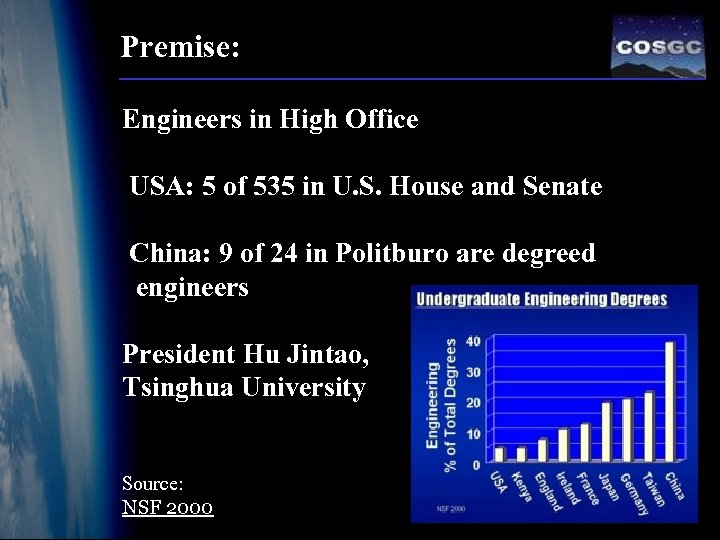 Premise: Engineers in High Office USA: 5 of 535 in U. S. House and Senate China: 9 of 24 in Politburo are degreed engineers President Hu Jintao, Tsinghua University Source: NSF 2000
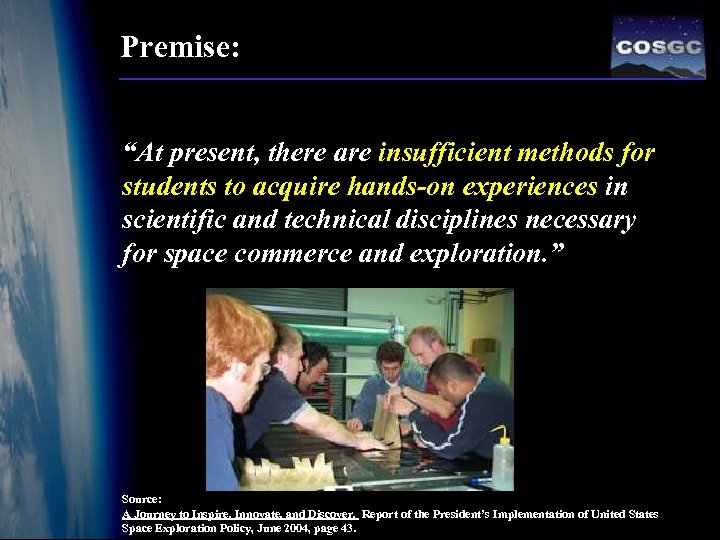 Premise: “At present, there are insufficient methods for students to acquire hands-on experiences in scientific and technical disciplines necessary for space commerce and exploration. ” Source: A Journey to Inspire, Innovate, and Discover, Report of the President’s Implementation of United States Space Exploration Policy, June 2004, page 43.
 Why You Are Here: - You like Space (Star Trek, Star Wars, etc. ) - You want to get a good job after college - Good School - Good Grades - Good Experience - This course and Space Grant gets you all three - Unique point in your life!
 What To Expect
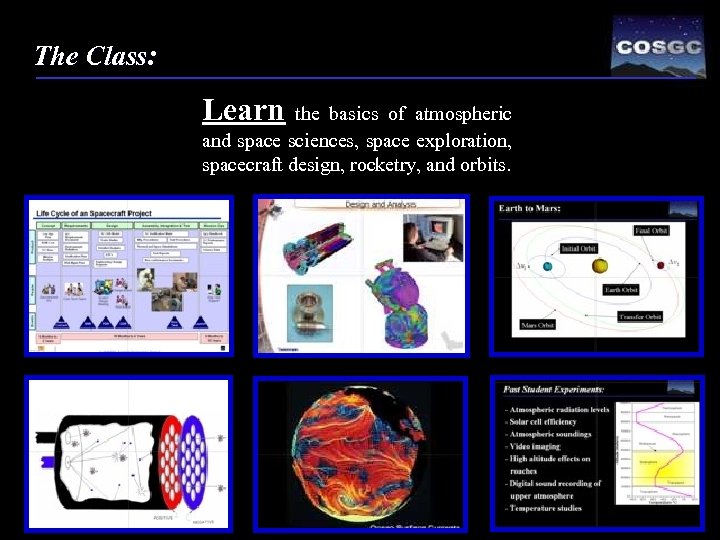 The Class: Learn the basics of atmospheric and space sciences, space exploration, spacecraft design, rocketry, and orbits.
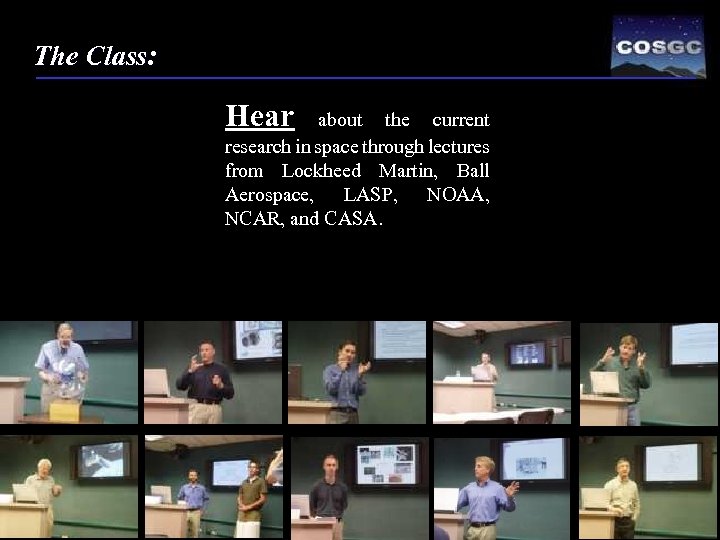 The Class: Hear about the current research in space through lectures from Lockheed Martin, Ball Aerospace, LASP, NOAA, NCAR, and CASA.
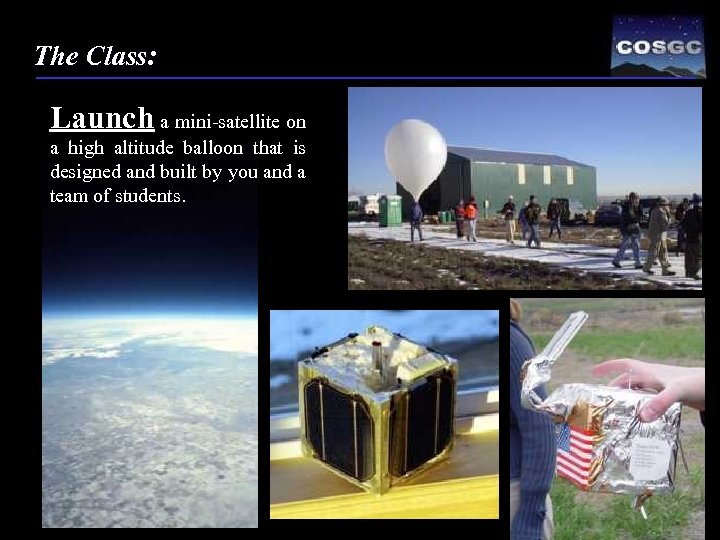 The Class: Launch a mini-satellite on a high altitude balloon that is designed and built by you and a team of students.
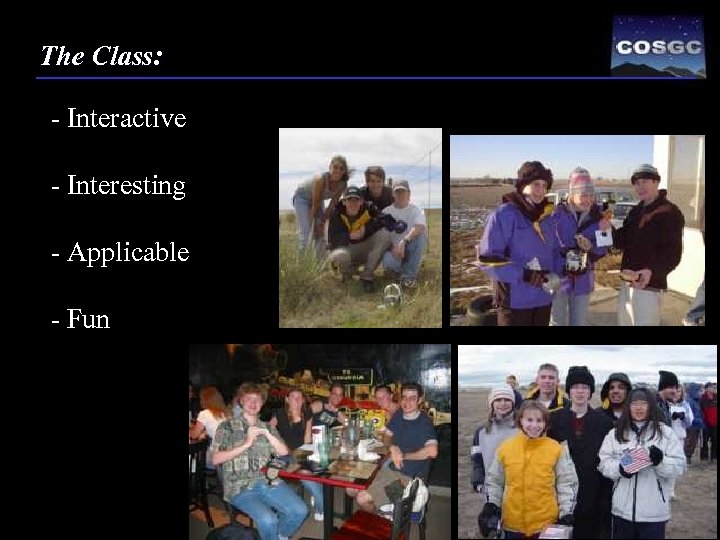 The Class: - Interactive - Interesting - Applicable - Fun
 What to expect from this class: - Plan on being here for the full class (75 minutes) - Be ON-TIME - 1 Minute Reports Each Class - Attendance - No cell phones or laptops - Homework (Only 6) - A lot of work
 What to expect from this class: - If you are not here because you want to be here, then leave… - If you stay, you will work hard - Slackers Not Welcome - Student Expectations from last spring
 Syllabus
 Syllabus:

 How to get an A
 How to get an A: “Everyone starts out with an A” You have to try really hard to get anything lower than CNot in the business of giving bad grades… …But you get the grade you earn Don’t Cheat
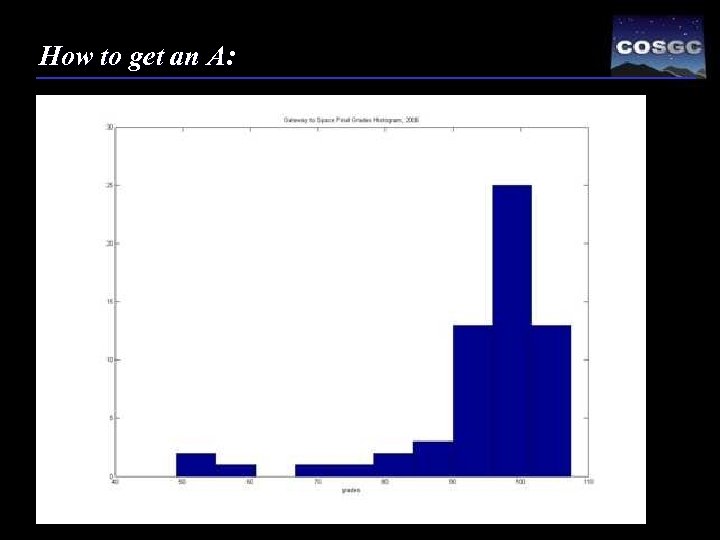 How to get an A:
 How to get an A: Grades are based on a normal 100 point scale There is no curve Team project and participation are based on your team evaluation and instructor evaluation Feedback will be slow Grader – Jordan Schell
 How to get an A: Grade Breakdown - 30% Coursework - Attendance (33) - 1 Minute Reports (~30) - Homework (1 -4, 6) - Community service (1) - 5% Homework 5 - 15% Final Exam - 10% Team Proposal - 7% Team Presentations (2) - 7% Team Design Document (3 Revs) - 12% Team Project and Participation - 14% Final Team Report & Presentation 50% You 50% Team
 Miscellaneous: - Get involved now - Just Do It - Attendance will be taken (Signing for friends) - Coming in late… - Communications via email and this class - Travel and sick
 Miscellaneous: - Mutual Respect “Shut up and be quiet” - Class seating, move to the front of the room - Clap and questions - Office hours 10: 45 -11: 45 T & Th or by appointment - Where to Find Me… - Notes – Take them - Book for course
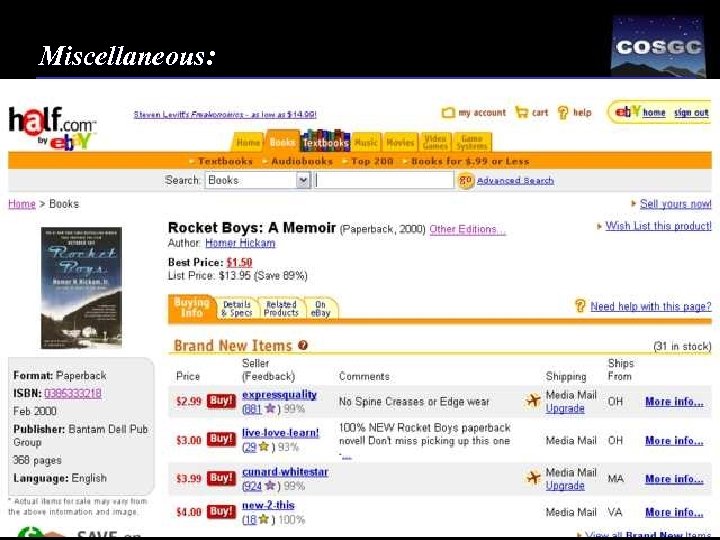
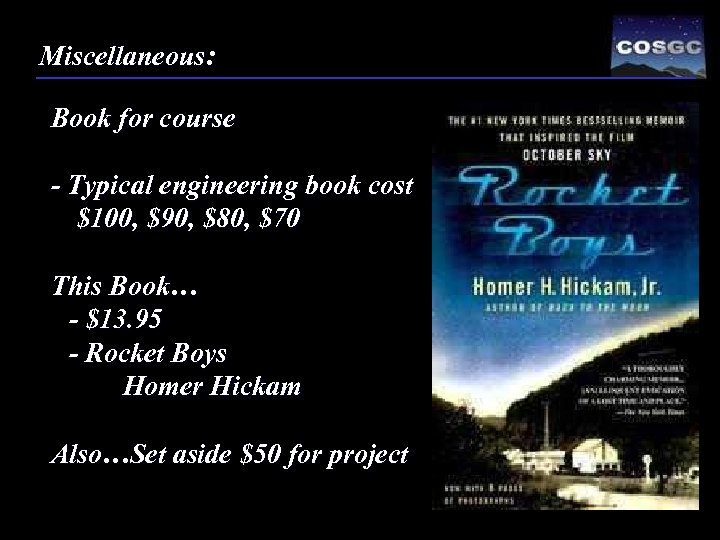 Miscellaneous: Book for course - Typical engineering book cost $100, $90, $80, $70 This Book… - $13. 95 - Rocket Boys Homer Hickam Also…Set aside $50 for project
 Miscellaneous:
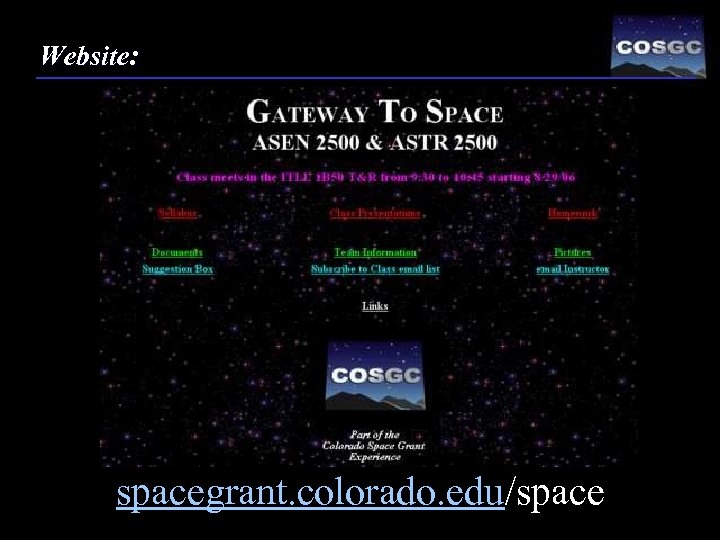 Website: spacegrant. colorado. edu/space
 1 Minute Report
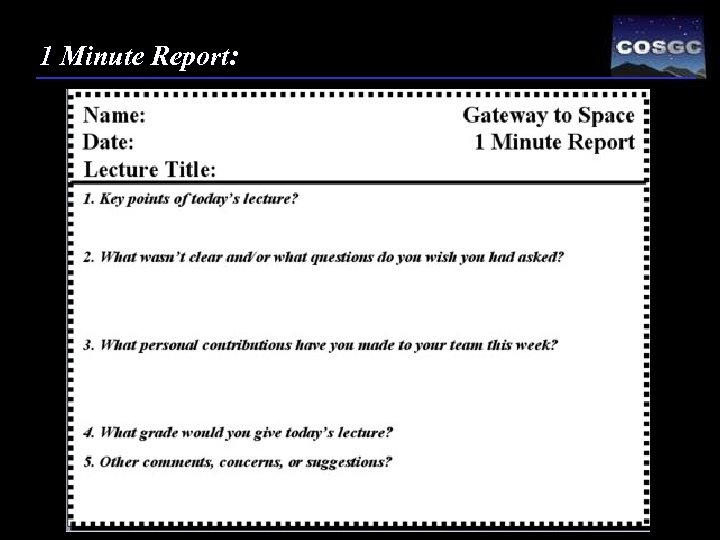 1 Minute Report:
 Homework
 Homework: Submit via email - Subject should be in this format “HW_XX_Lastname_Firstinitial. doc” - Get from Website First Homework is…
 Questions?
 Final Word You’ll Never…
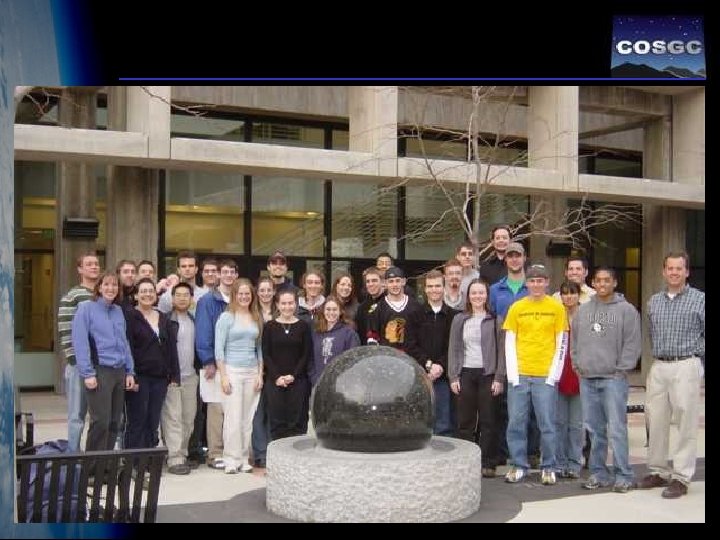
 Picture Time
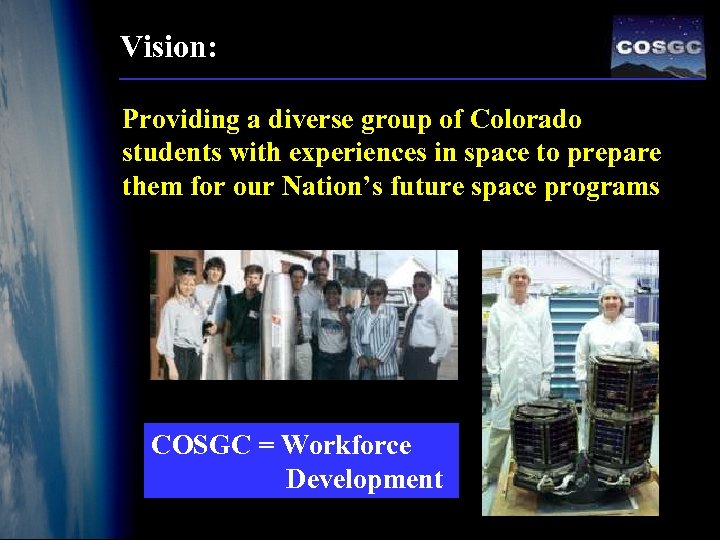 Vision: Providing a diverse group of Colorado students with experiences in space to prepare them for our Nation’s future space programs COSGC = Workforce Development
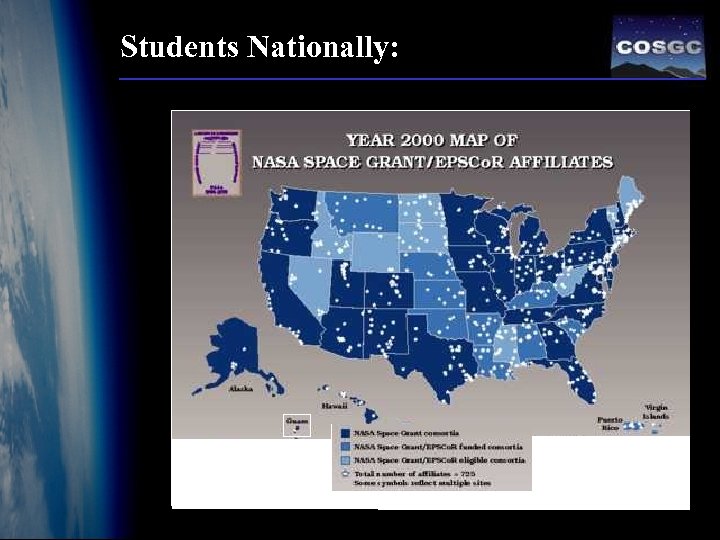 Students Nationally:
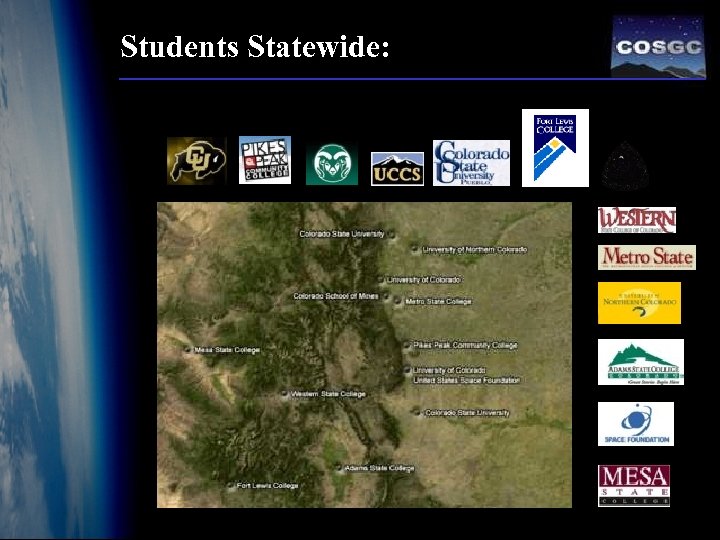 Students Statewide:
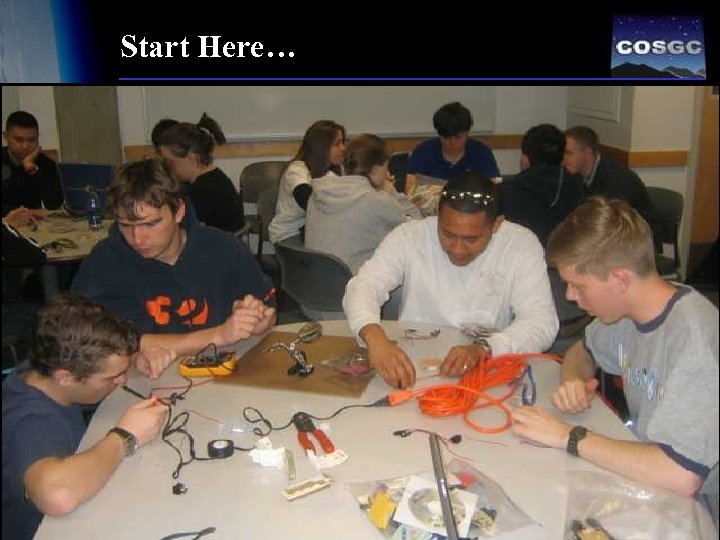 Start Here… Student Training and Management
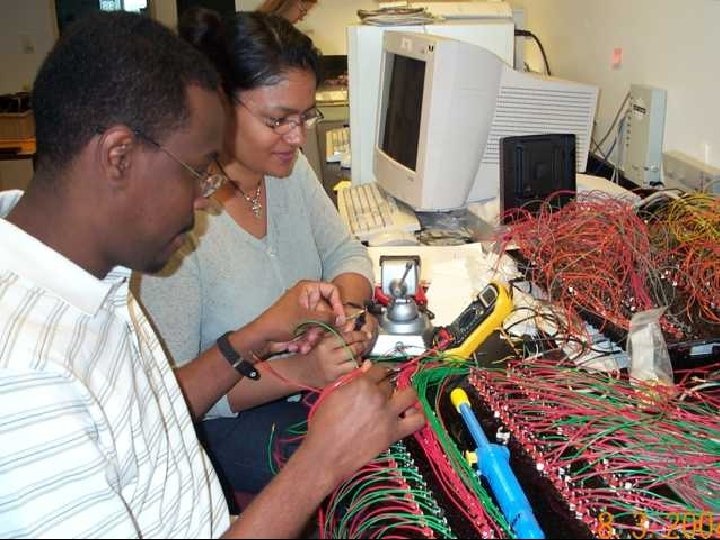 Weaknesses:
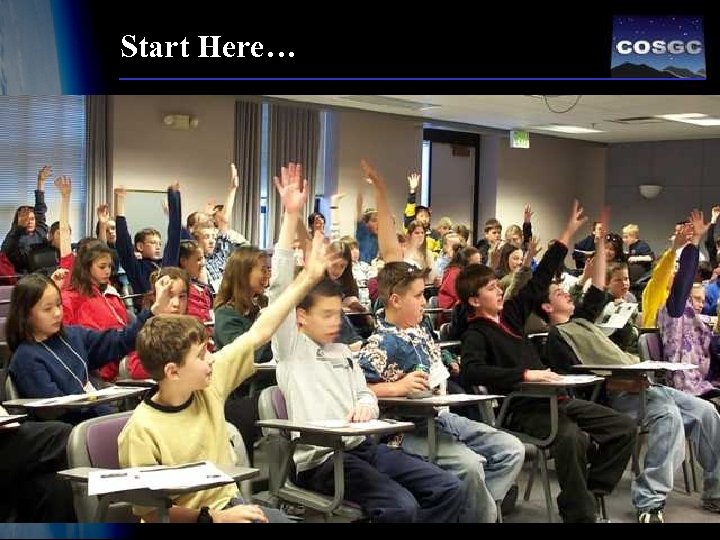 Start Here…
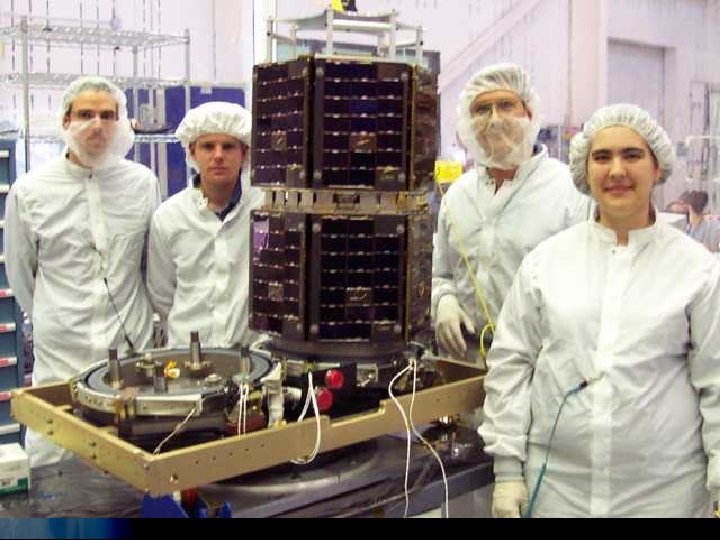 Weaknesses:
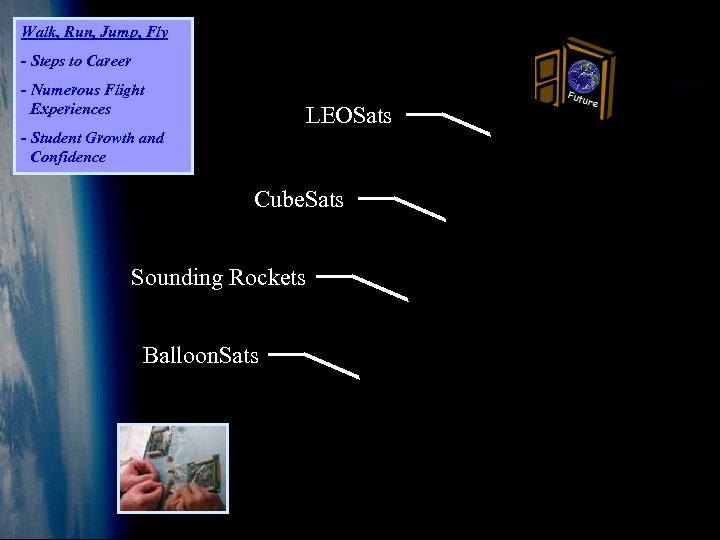 Walk, Run, Jump, Fly - Steps to Career - Numerous Flight Experiences LEOSats - Student Growth and Confidence Cube. Sats Sounding Rockets Balloon. Sats
 DANDE kschirmu@jeffco. k 12. co. us 87 Background image taken at 100, 000 feet by a student Balloon. Sat
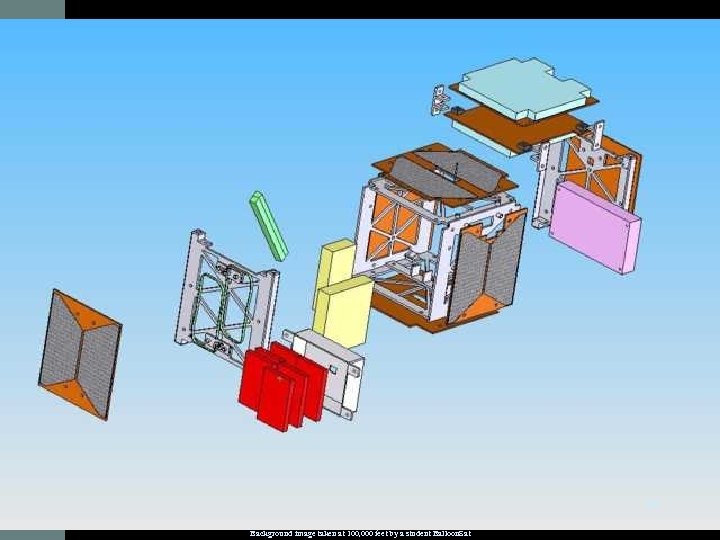 DANDE kschirmu@jeffco. k 12. co. us 88 Background image taken at 100, 000 feet by a student Balloon. Sat
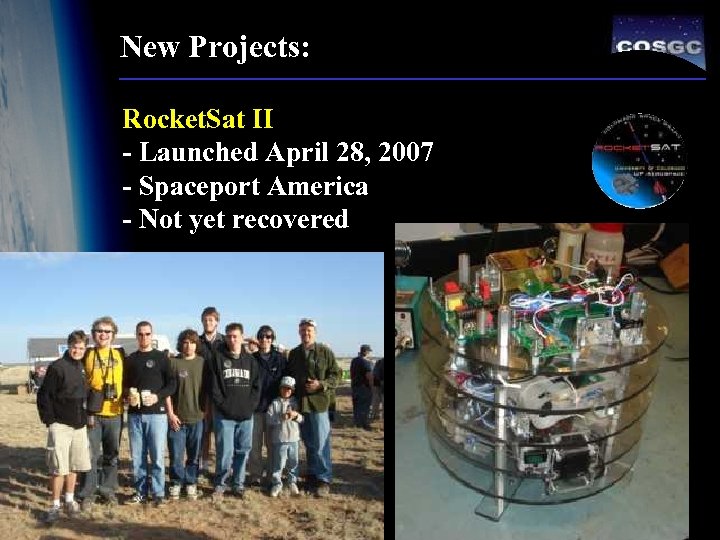 New Projects: Rocket. Sat II - Launched April 28, 2007 - Spaceport America - Not yet recovered
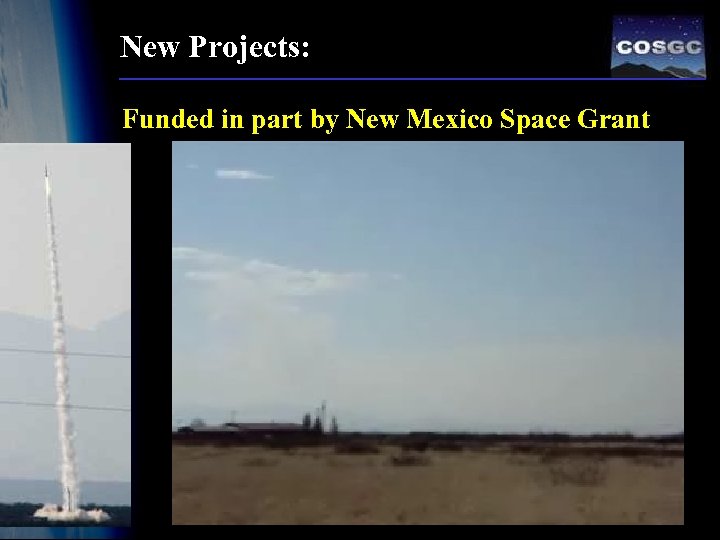 New Projects: Funded in part by New Mexico Space Grant
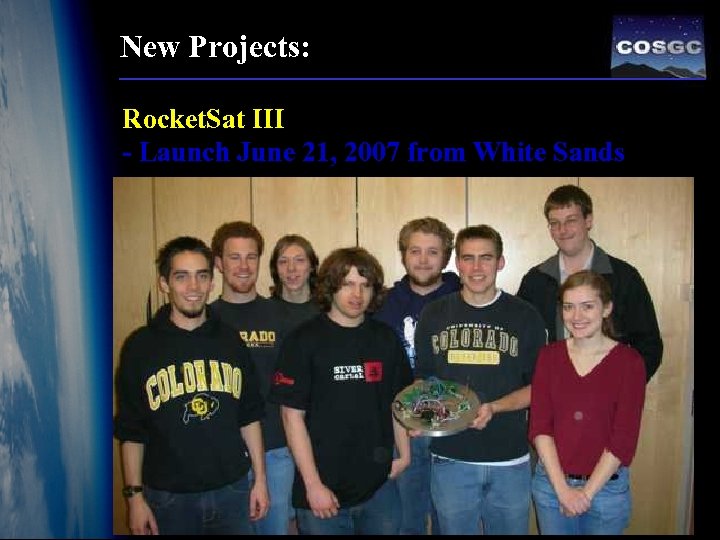 New Projects: Rocket. Sat III - Launch June 21, 2007 from White Sands
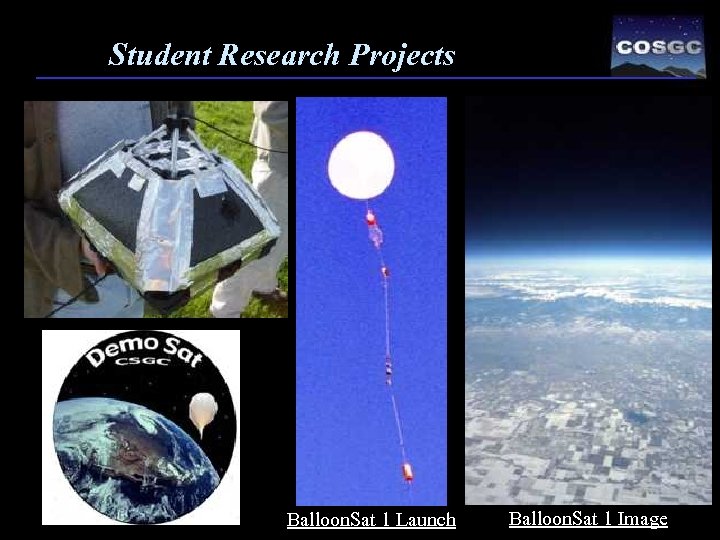 Student Research Projects Balloon. Sat 1 Launch Balloon. Sat 1 Image
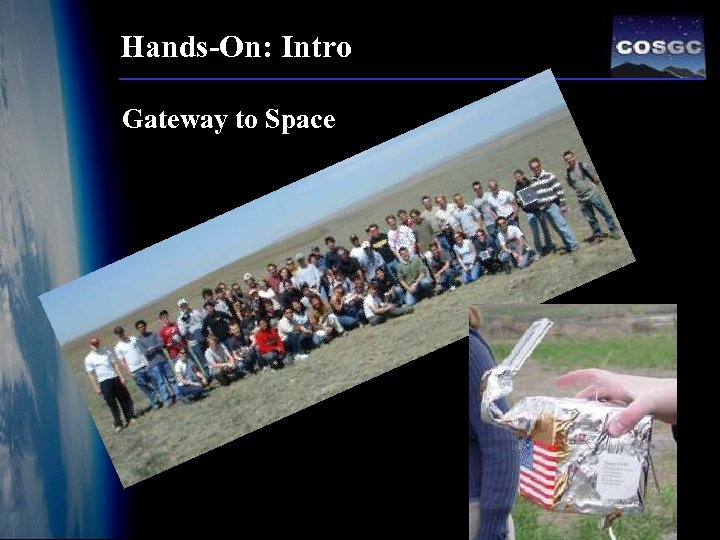 Hands-On: Intro Gateway to Space
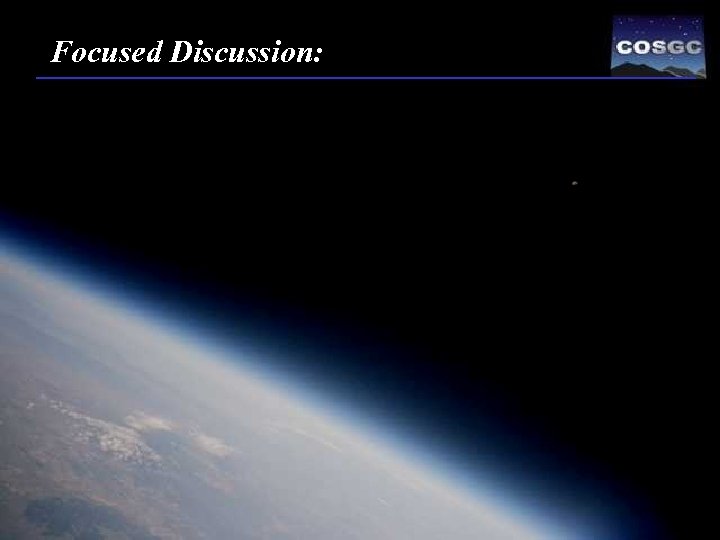 Focused Discussion:
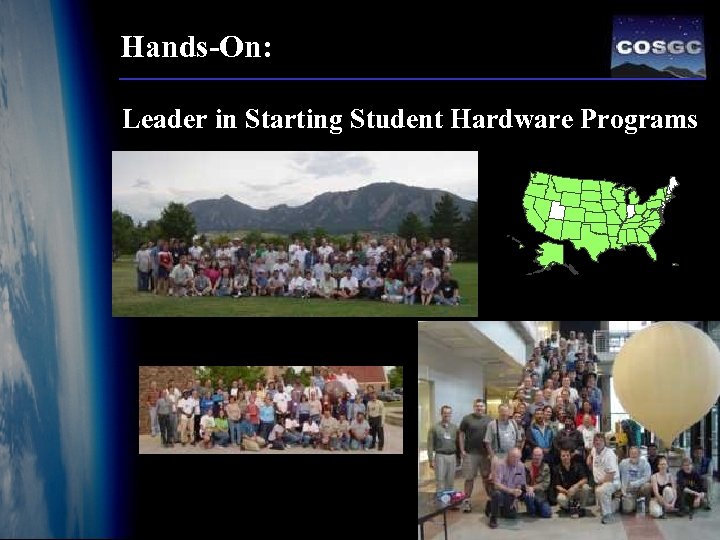 Hands-On: Leader in Starting Student Hardware Programs 1
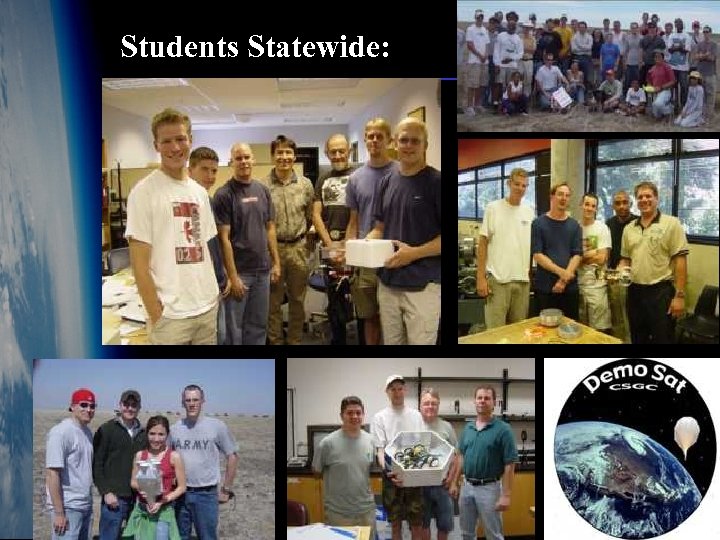 Students Statewide: Interdisciplinary
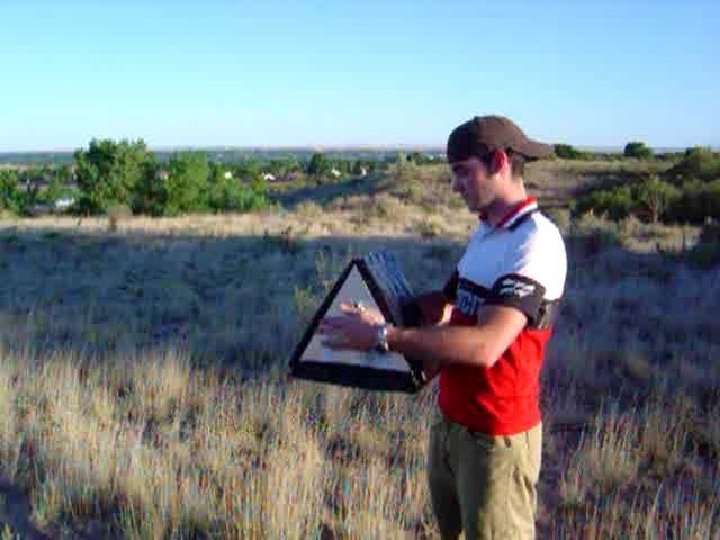 Strengths: Hands-on Discovery Learning
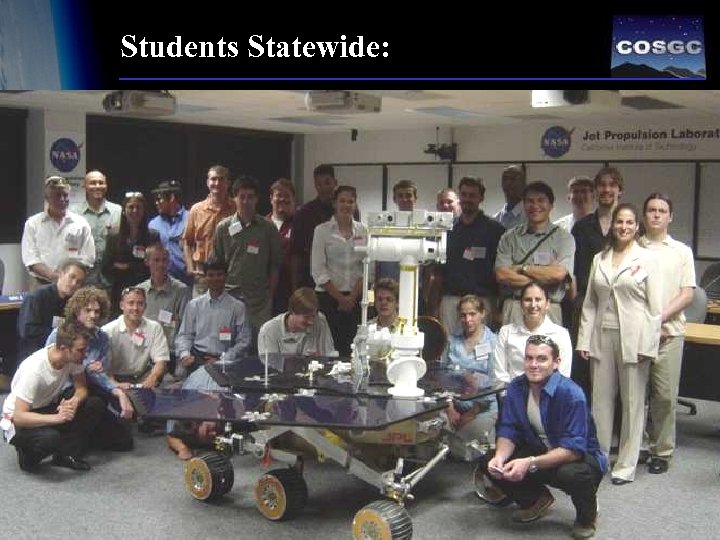 Students Statewide: Interdisciplinary
 Is It working?
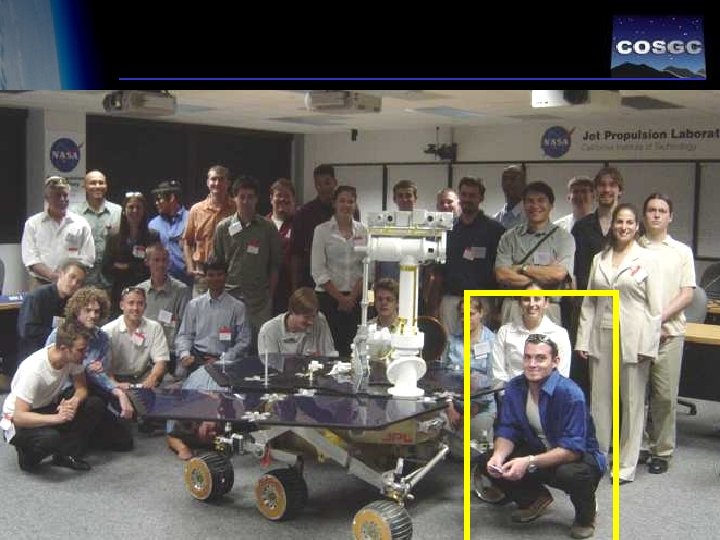 Interdisciplinary
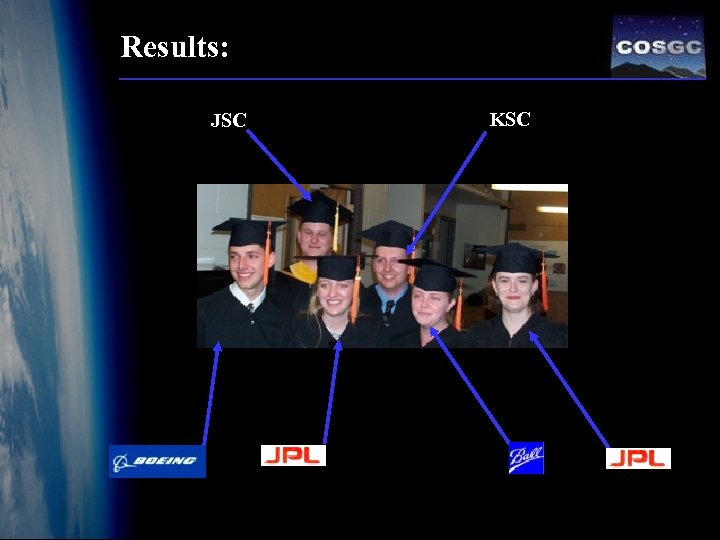 Results: JSC KSC
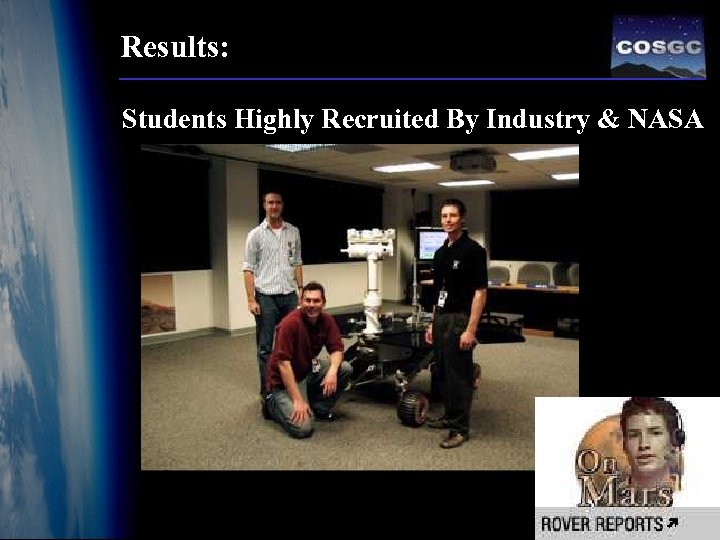 Results: Students Highly Recruited By Industry & NASA
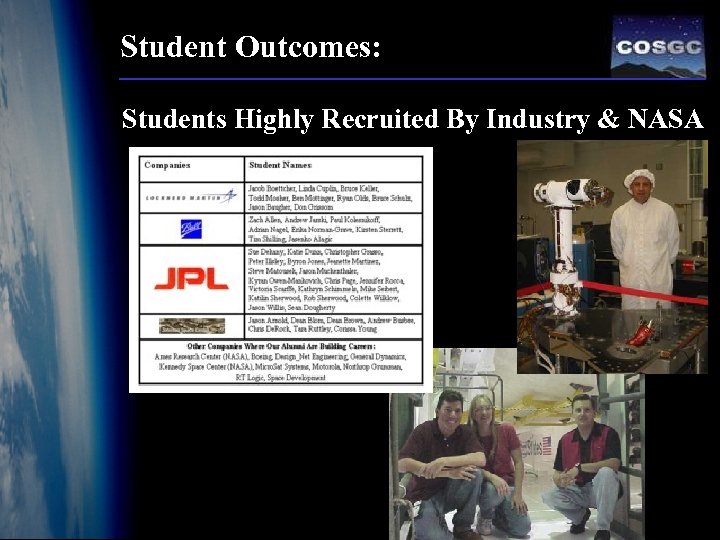 Student Outcomes: Students Highly Recruited By Industry & NASA
 Experience Matters
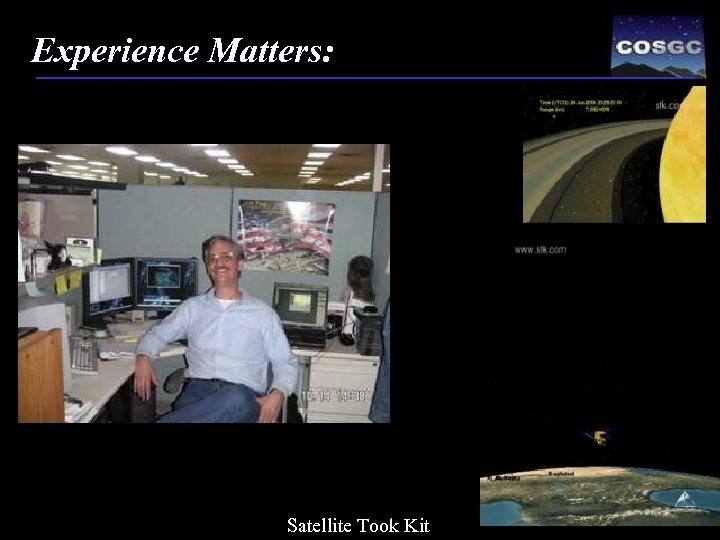 Experience Matters: Satellite Took Kit
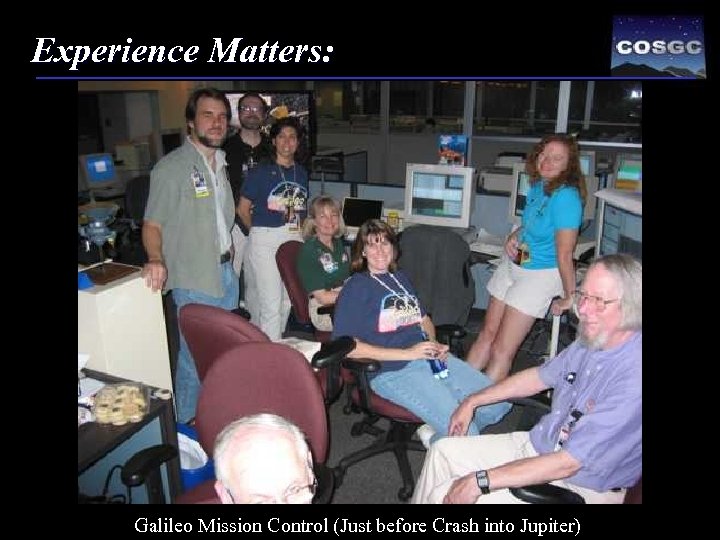 Experience Matters: Galileo Mission Control (Just before Crash into Jupiter)
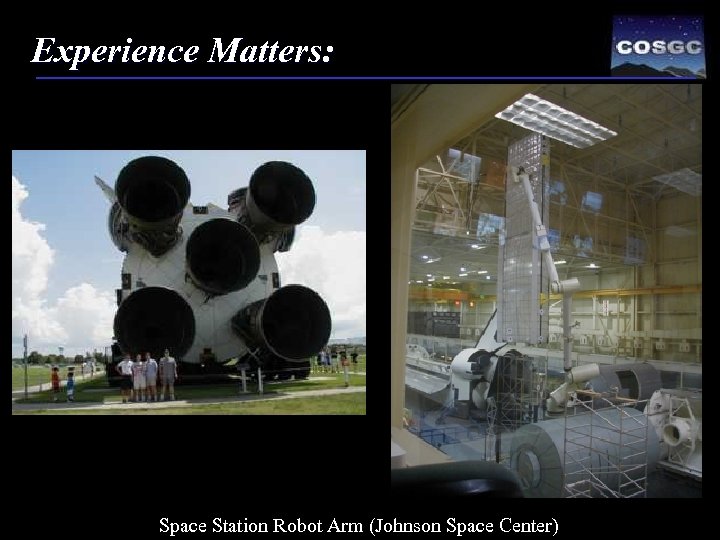 Experience Matters: Space Station Robot Arm (Johnson Space Center)
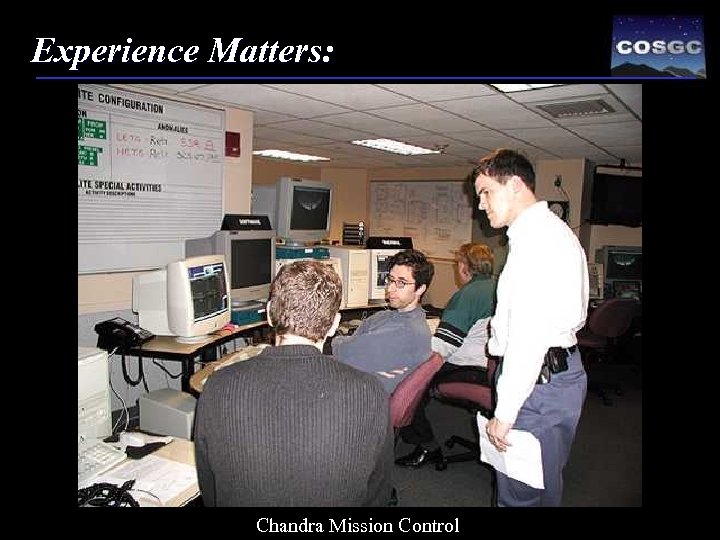 Experience Matters: Chandra Mission Control
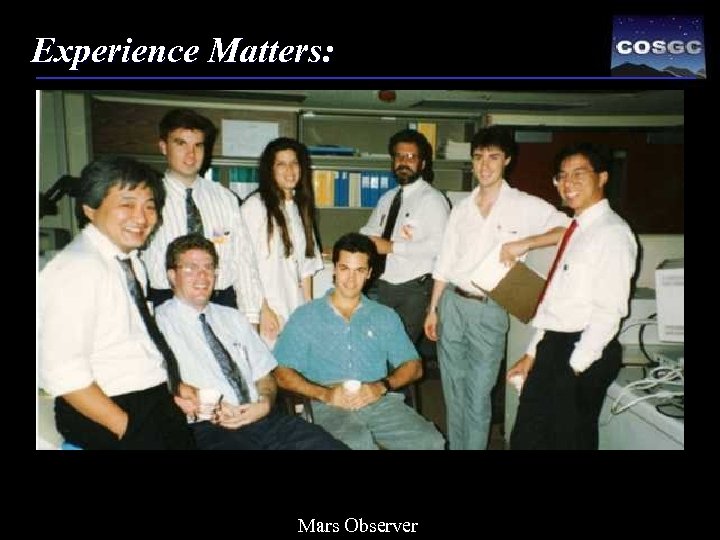 Experience Matters: Mars Observer
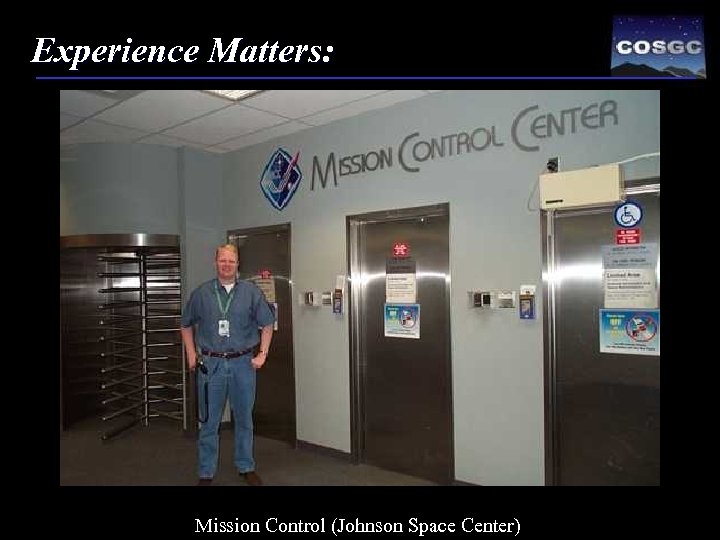 Experience Matters: Mission Control (Johnson Space Center)
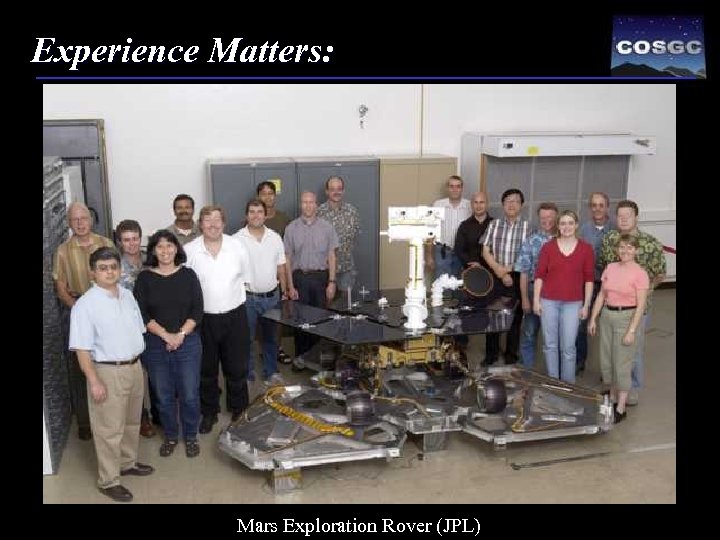 Experience Matters: Mars Exploration Rover (JPL)
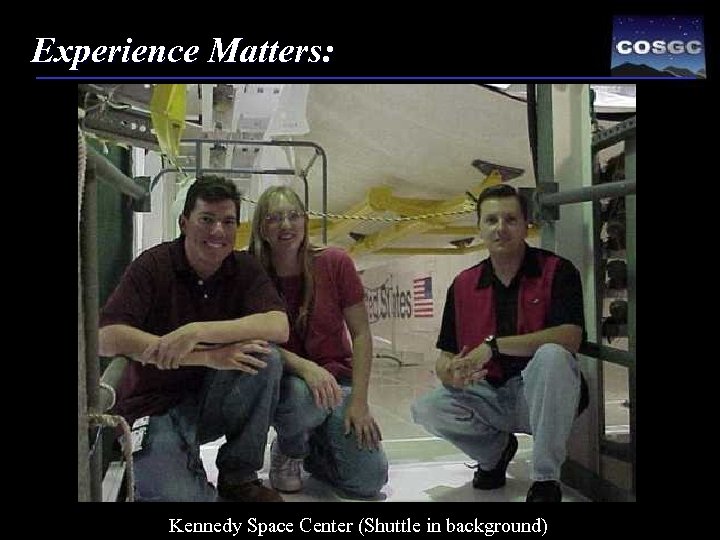 Experience Matters: Kennedy Space Center (Shuttle in background)
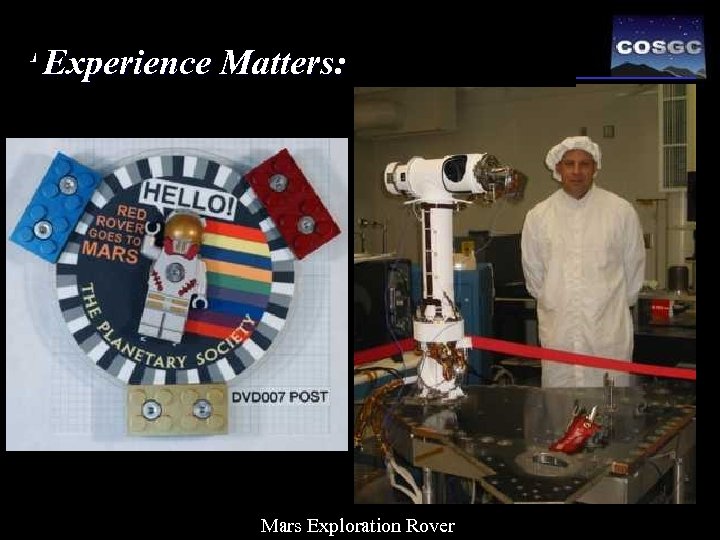 Proof That Space Grant Works Experience Matters: Mars Exploration Rover
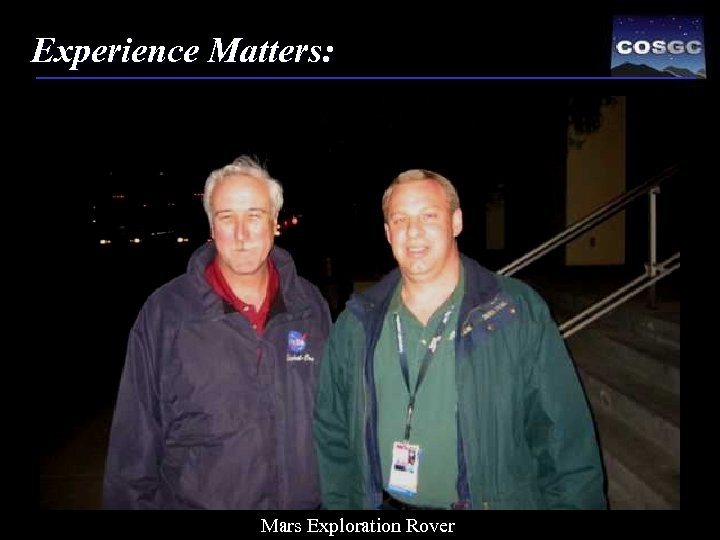 Experience Matters: Mars Exploration Rover
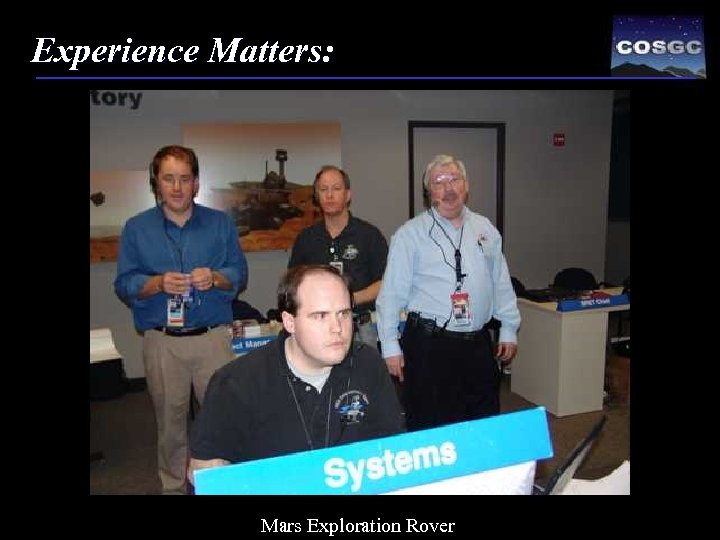 Experience Matters: Mars Exploration Rover
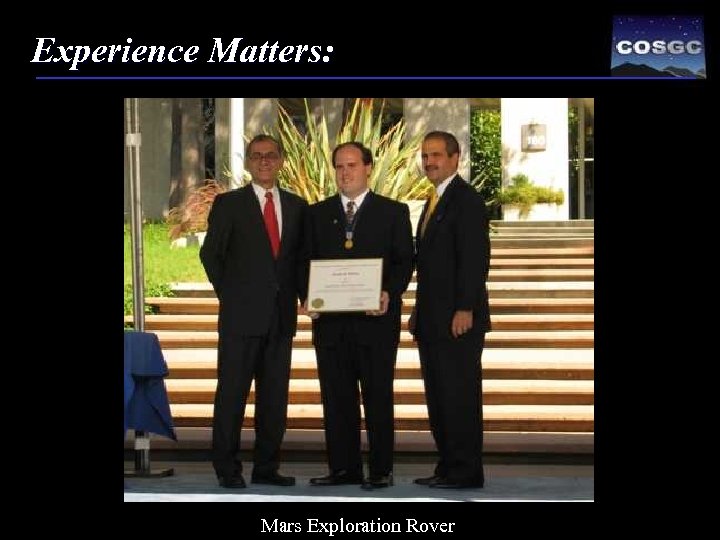 Experience Matters: Mars Exploration Rover
 Space Grant?
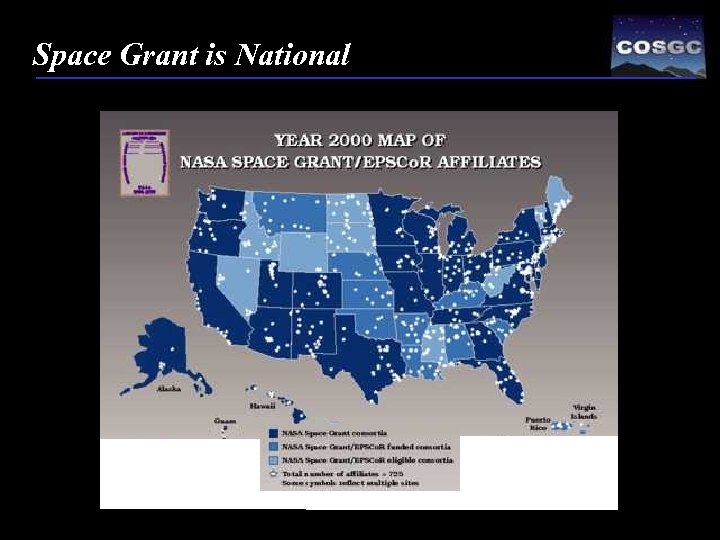 Space Grant is National
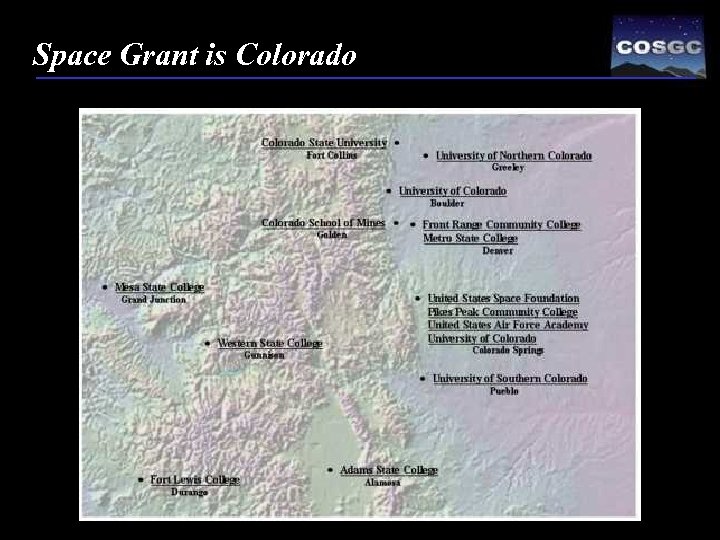 Space Grant is Colorado
 What is Space Grant? Our Vision… The Colorado Space Grant Consortium uses the excitement and opportunities provided by the nation’s aeronautics and space program to inspire, educate, and develop America’s future technological workforce by enabling a diverse community of students to participate in space-based projects, courses, and outreach activities.
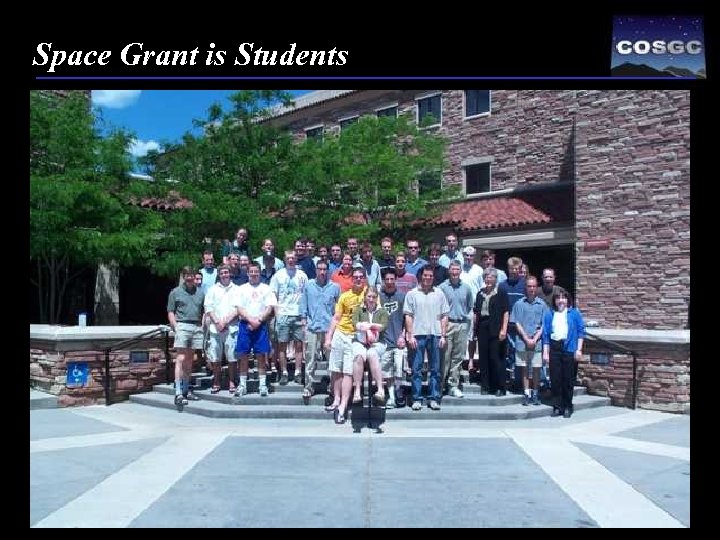 Space Grant is Students
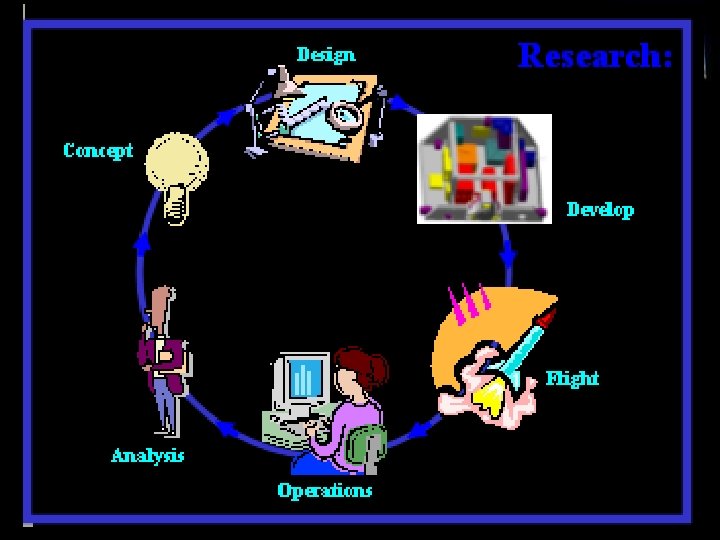
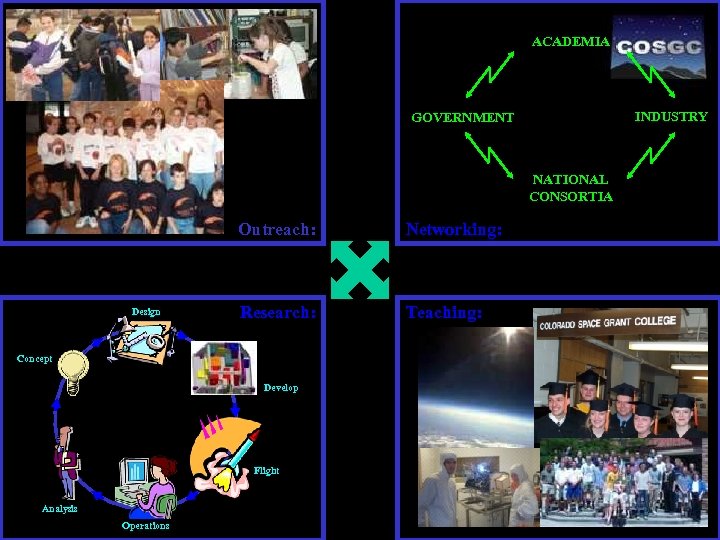 ACADEMIA INDUSTRY GOVERNMENT NATIONAL CONSORTIA Outreach: Design Networking: Research: Teaching: Concept Develop Flight Analysis Operations
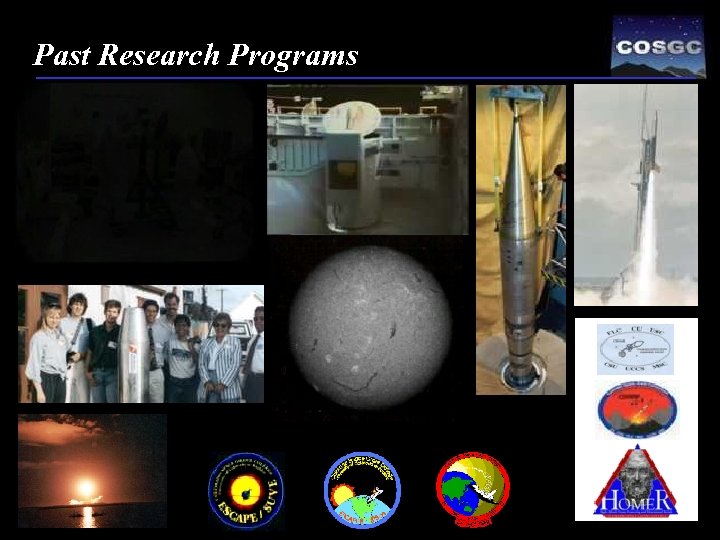 Past Research Programs
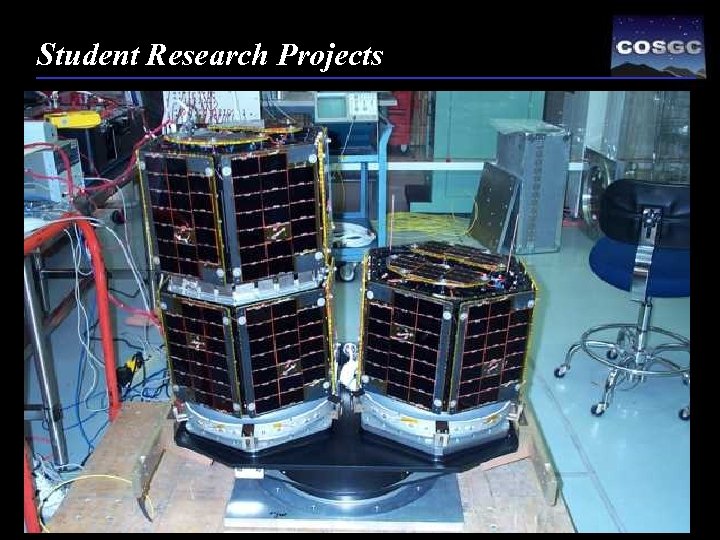 Student Research Projects
 Student Research Projects
 Student Research Projects
 Student Research Projects DINO (Deployment and Intelligent Nanosat Operations
 Student Research Projects