


 Скачать презентацию Gamma-Ray Emission from Pulsars The Famous Supernova
b3ca2e6fda21fd972f2252f07e6a9598.ppt
- Количество слайдов: 16
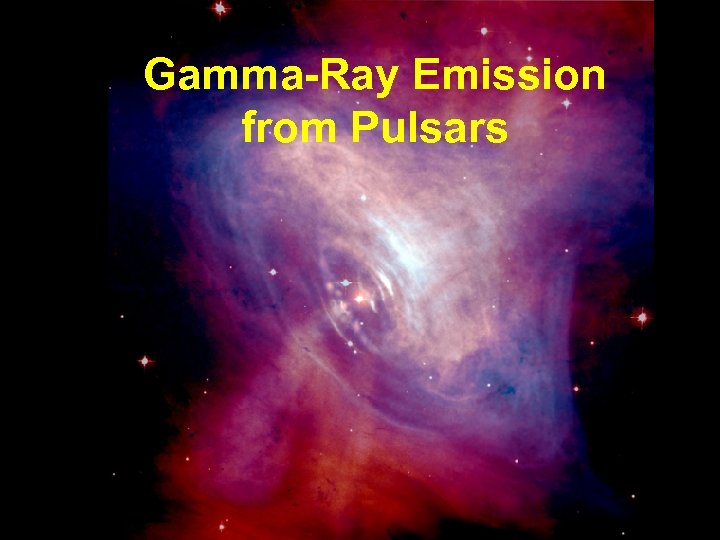 Gamma-Ray Emission from Pulsars
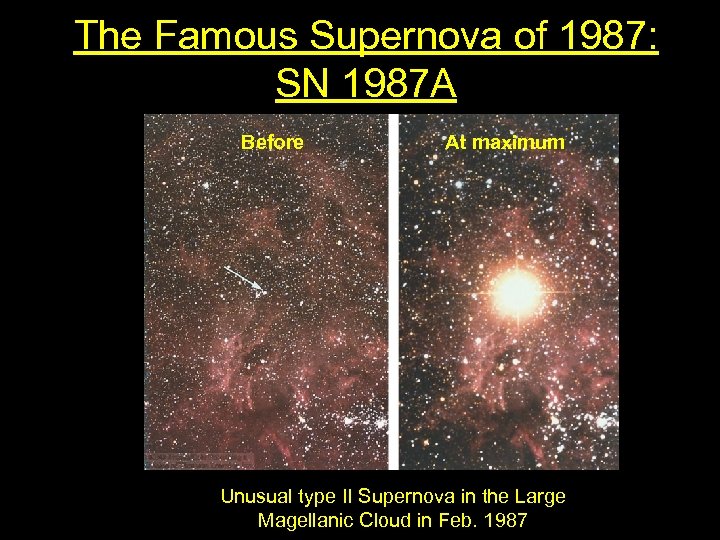 The Famous Supernova of 1987: SN 1987 A Before At maximum Unusual type II Supernova in the Large Magellanic Cloud in Feb. 1987
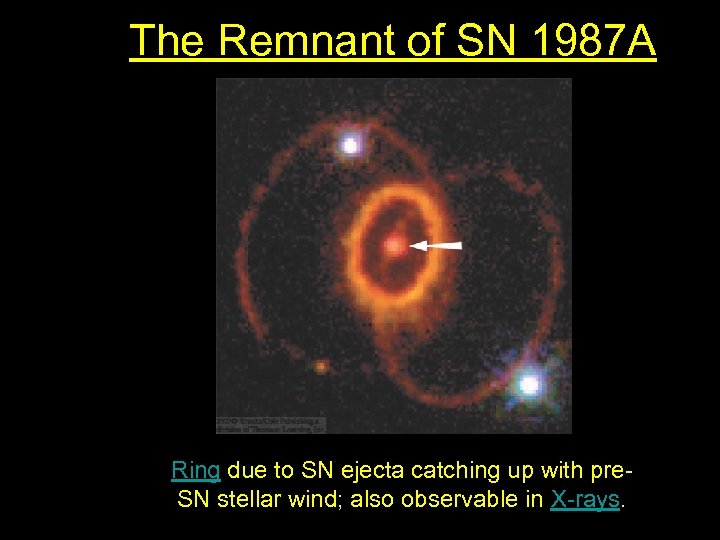 The Remnant of SN 1987 A Ring due to SN ejecta catching up with pre. SN stellar wind; also observable in X-rays.
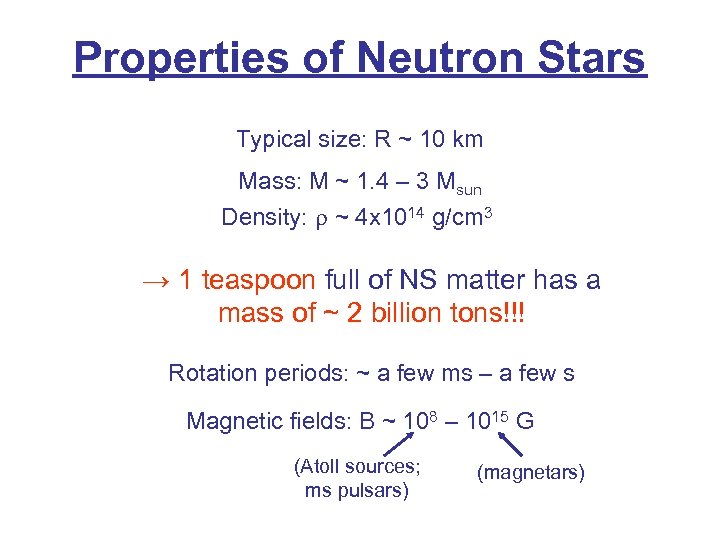 Properties of Neutron Stars Typical size: R ~ 10 km Mass: M ~ 1. 4 – 3 Msun Density: r ~ 4 x 10¹⁴ g/cm 3 → 1 teaspoon full of NS matter has a mass of ~ 2 billion tons!!! Rotation periods: ~ a few ms – a few s Magnetic fields: B ~ 108 – 1015 G (Atoll sources; ms pulsars) (magnetars)
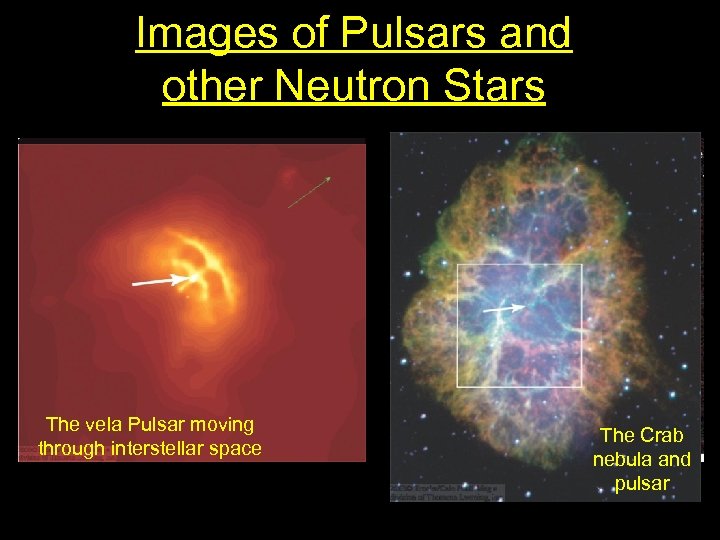 Images of Pulsars and other Neutron Stars The vela Pulsar moving through interstellar space The Crab nebula and pulsar
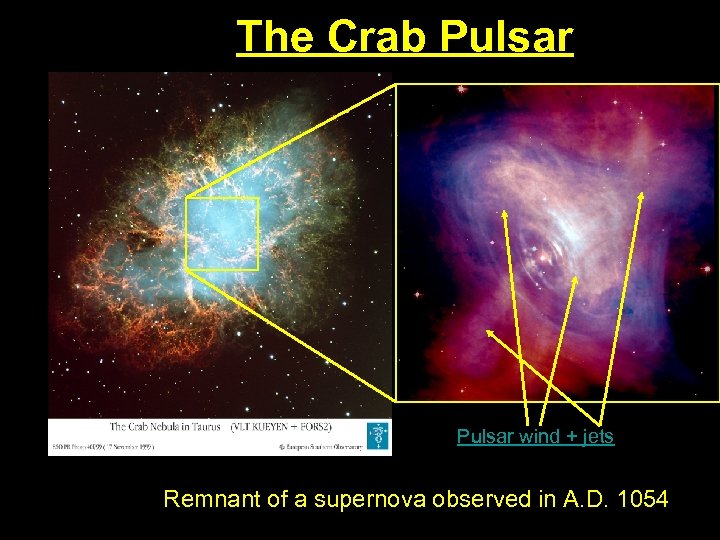 The Crab Pulsar wind + jets Remnant of a supernova observed in A. D. 1054
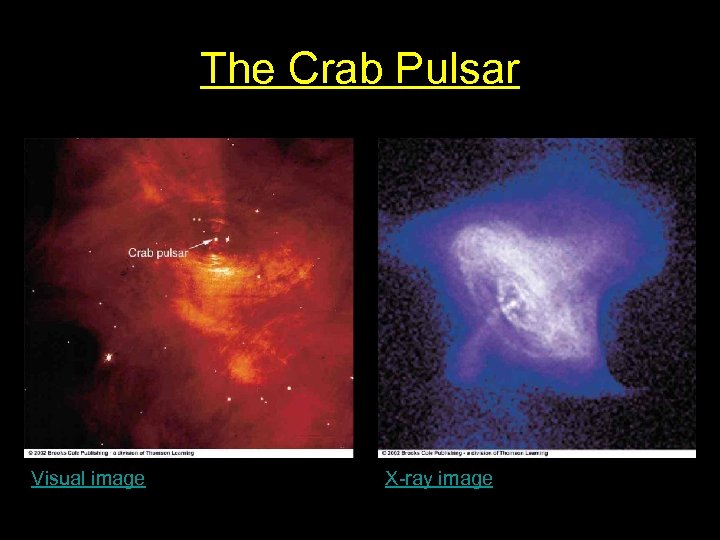 The Crab Pulsar Visual image X-ray image
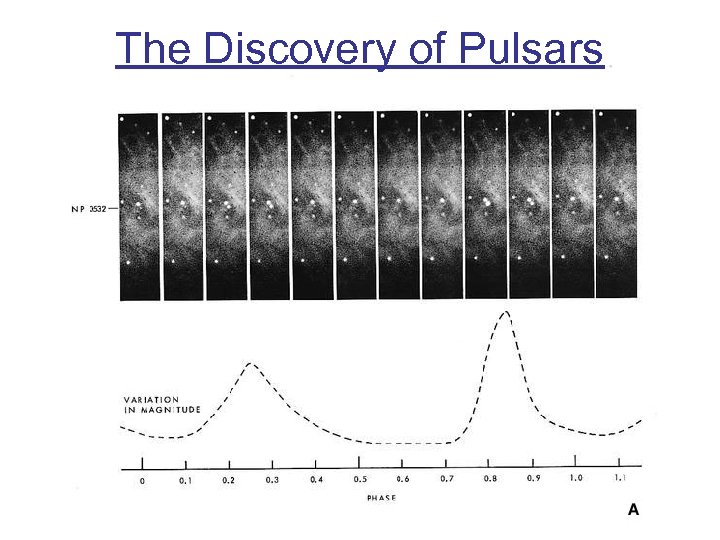 The Discovery of Pulsars
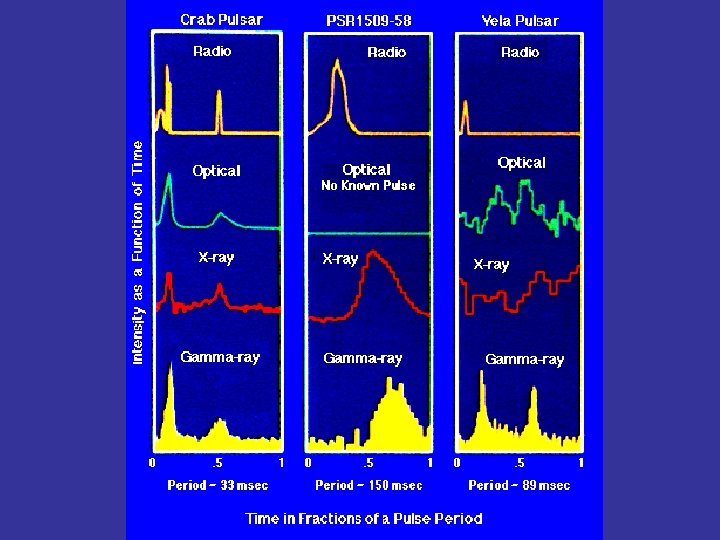
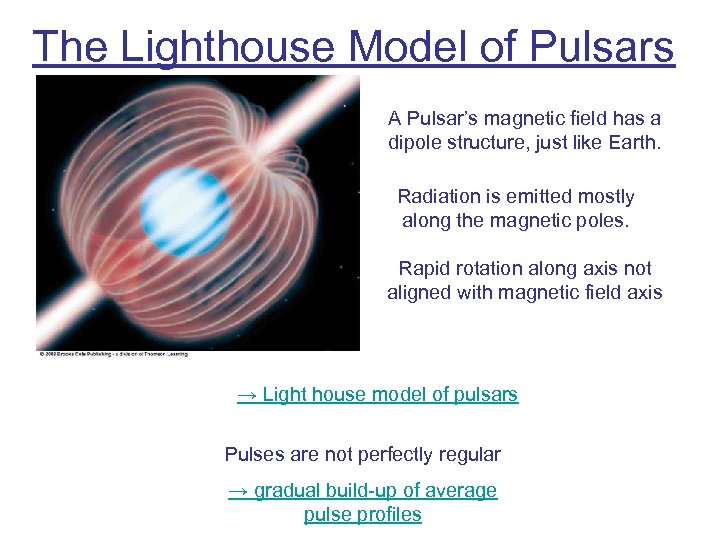 The Lighthouse Model of Pulsars A Pulsar’s magnetic field has a dipole structure, just like Earth. Radiation is emitted mostly along the magnetic poles. Rapid rotation along axis not aligned with magnetic field axis → Light house model of pulsars Pulses are not perfectly regular → gradual build-up of average pulse profiles
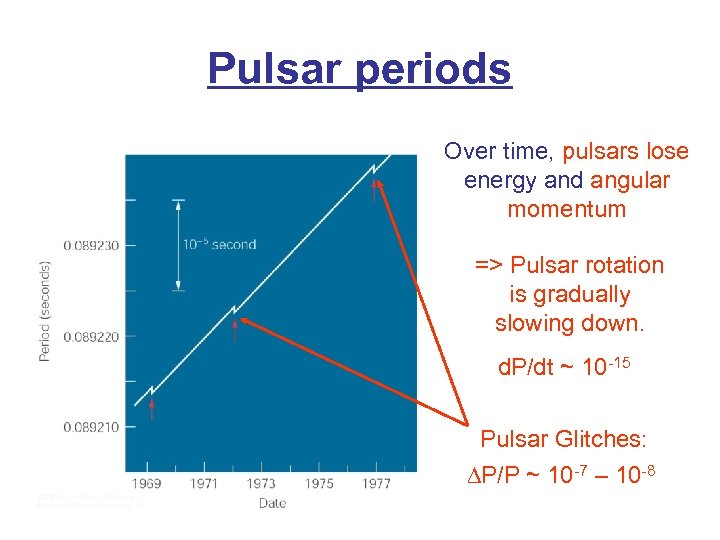 Pulsar periods Over time, pulsars lose energy and angular momentum => Pulsar rotation is gradually slowing down. d. P/dt ~ 10 -15 Pulsar Glitches: DP/P ~ 10 -7 – 10 -8
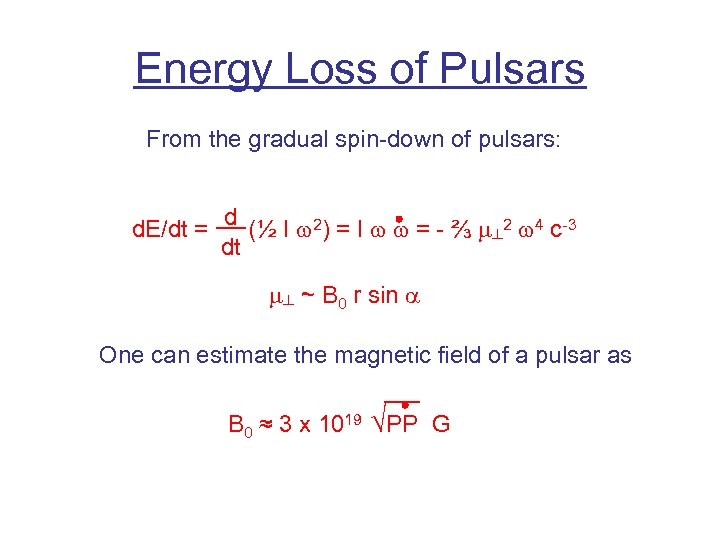 Energy Loss of Pulsars From the gradual spin-down of pulsars: d. E/dt = d (½ I w 2) = I w w = - ⅔ m┴ 2 w 4 c-3 dt m┴ ~ B 0 r sin a One can estimate the magnetic field of a pulsar as B 0 ≈ 3 x 10¹⁹ √PP G
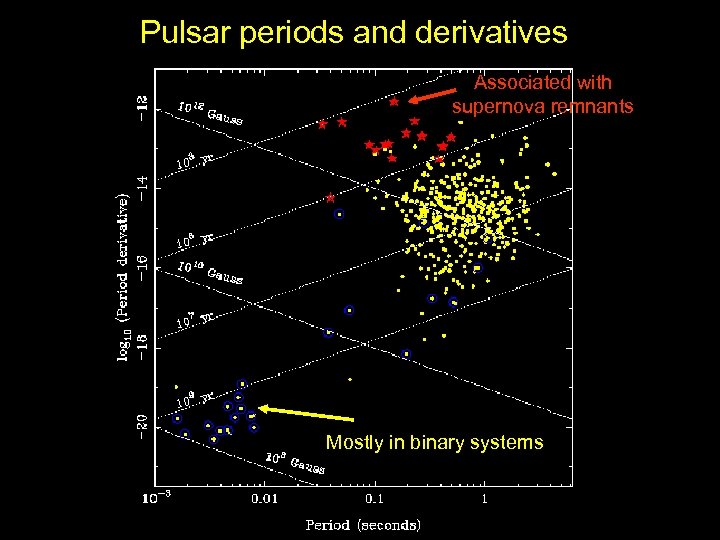 Pulsar periods and derivatives Associated with supernova remnants Mostly in binary systems
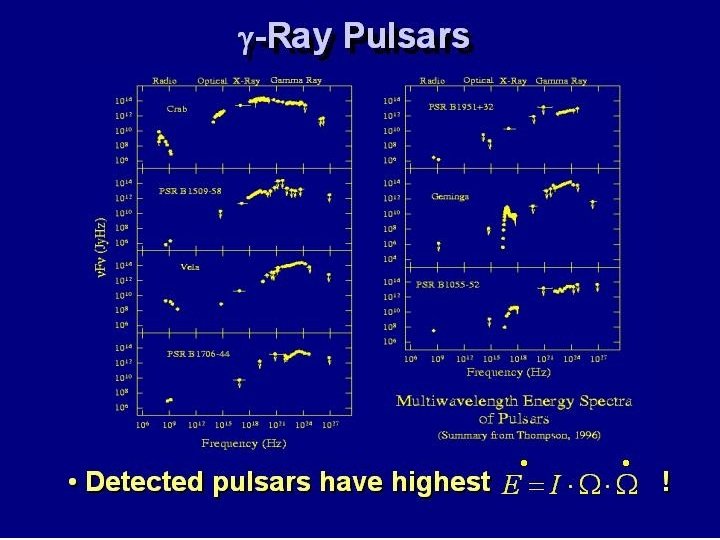
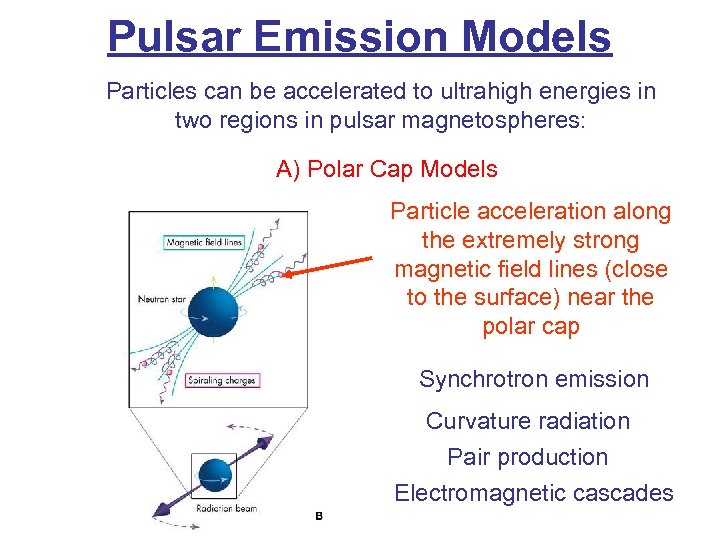 Pulsar Emission Models Particles can be accelerated to ultrahigh energies in two regions in pulsar magnetospheres: A) Polar Cap Models Particle acceleration along the extremely strong magnetic field lines (close to the surface) near the polar cap Synchrotron emission Curvature radiation Pair production Electromagnetic cascades
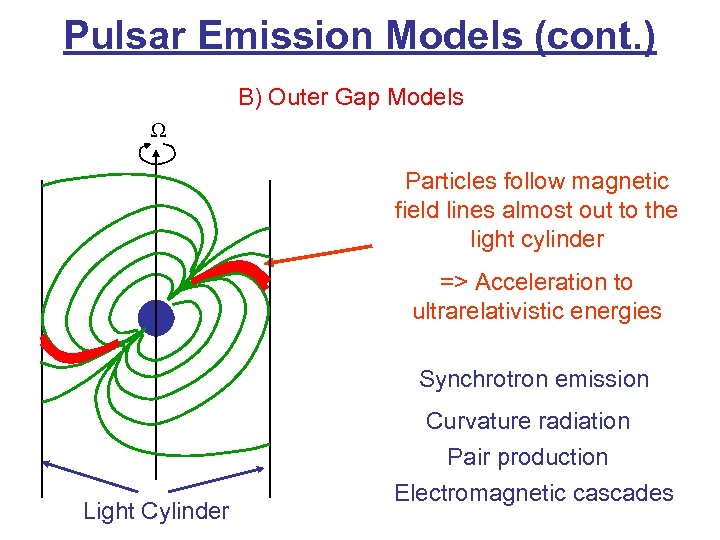 Pulsar Emission Models (cont. ) B) Outer Gap Models W Particles follow magnetic field lines almost out to the light cylinder => Acceleration to ultrarelativistic energies Synchrotron emission Light Cylinder Curvature radiation Pair production Electromagnetic cascades