


 Скачать презентацию GAMES PEOPLE PLAY NEGOTIATIONS WHAT IS NEGOTIATION
peregovory(chapter 5).ppt
- Количество слайдов: 15
 GAMES PEOPLE PLAY: NEGOTIATIONS
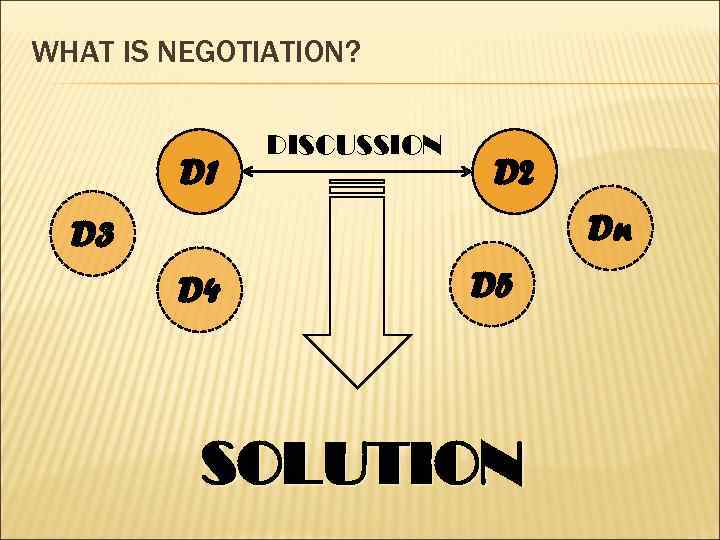 WHAT IS NEGOTIATION? D 1 DISCUSSION D 2 Dn D 3 D 4 D 5 SOLUTION
 GAME THEORY ● Game simulates real life ● Includes 5 elements: Players = decision makers Strategies available Rules Outcomes Payoffs
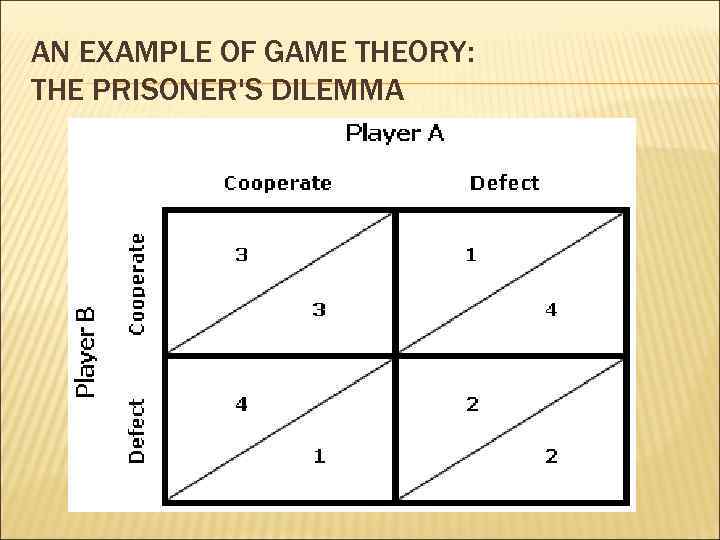 AN EXAMPLE OF GAME THEORY: THE PRISONER'S DILEMMA
 TYPES OF NEGOTIATIONS o o DISTRIBUTIVE Involve win-lose, fixed-amount situations wherein one party’s gain is another party’s loss INTEGRATIVE Involve joint problem solving to achieve results benefiting both parties which can lead to win-win or lose-lose outcome
 FOUR KEY CONCEPTS BATNA Reservation Price ZOPA Value Creation
 KNOW YOUR BATNA! o o o Best Alternative to a Negotiated Agreement (BATNA) Typical example: negotiate or go to court Improving your situation Improve your BATNA Identify the other side’s BATNA Weaken the other party’s BATNA
 RESERVATION PRICE The least favorable point at which one will accept a deal The “walk-away” Example: you are looking for larger office space. You set your BATNA at $20/SF and your Reservation Price at 30$/SF
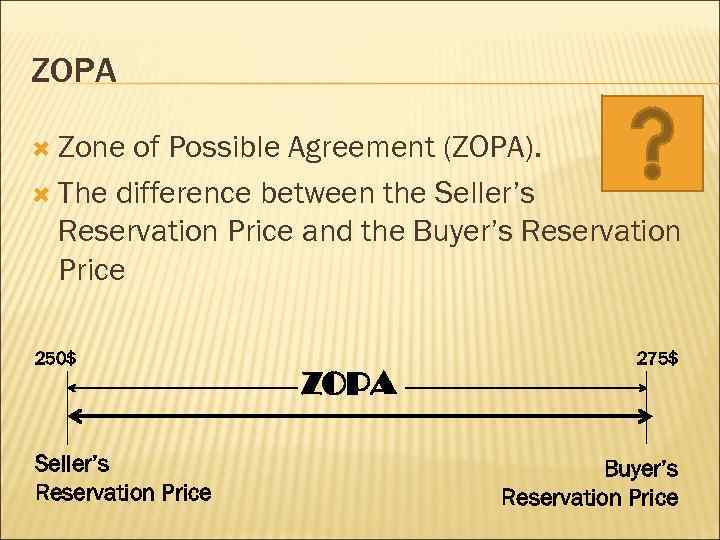 ZOPA Zone of Possible Agreement (ZOPA). The difference between the Seller’s Reservation Price and the Buyer’s Reservation Price 250$ Seller’s Reservation Price ZOPA 275$ Buyer’s Reservation Price
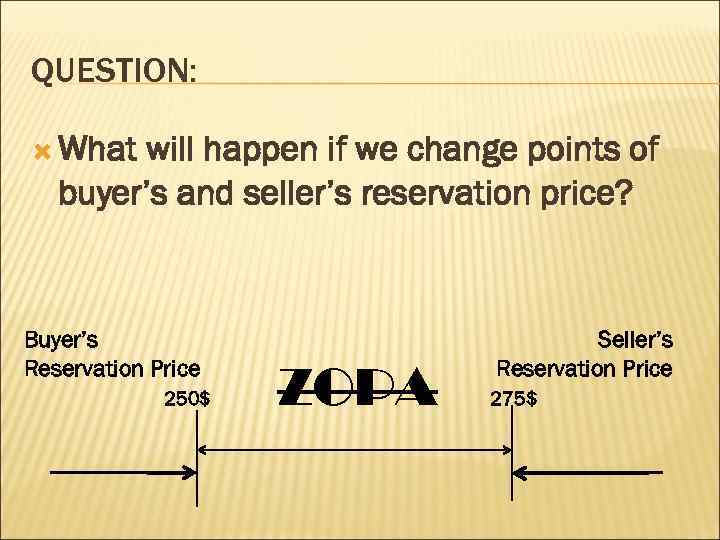 QUESTION: What will happen if we change points of buyer’s and seller’s reservation price? Buyer’s Reservation Price 250$ ZOPA Seller’s Reservation Price 275$
 VALUE CREATION Create value = enlarge the pie Basic principles: Seek out shared interests Propose mutually beneficial trades Secure insecure contracts
 PLANNING THE NEGOTIATIONS: PRE-NEGOTIATING Objectives What is involved? (+extremes) Goals of opposition NOT the costs => what is VALUABLE
 PLANNING THE NEGOTIATIONS: NEGOTIATING confidence and power keep the negotiation in your control aim as high as you feel necessary remain flexible know your business
 COMING TO AN AGREEMENT Write down the terms Discourage the other side from seeking further concessions Be happy =)
 THANK YOU FOR YOUR ATTENTION!