 Скачать презентацию G 22 3033 -008 Web Services and Applications
53fcf721428f9db7244fad7a8fc71aba.ppt
- Количество слайдов: 35



G 22. 3033 -008 Web Services and Applications Robert Grimm New York University
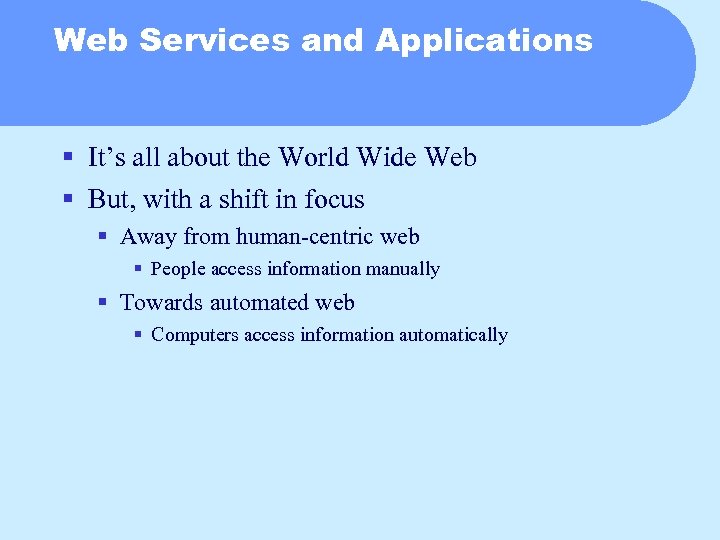
Web Services and Applications § It’s all about the World Wide Web § But, with a shift in focus § Away from human-centric web § People access information manually § Towards automated web § Computers access information automatically
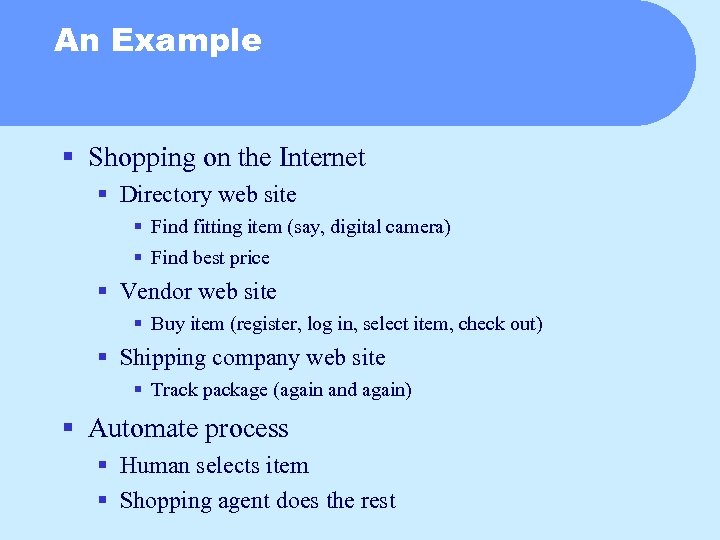
An Example § Shopping on the Internet § Directory web site § Find fitting item (say, digital camera) § Find best price § Vendor web site § Buy item (register, log in, select item, check out) § Shipping company web site § Track package (again and again) § Automate process § Human selects item § Shopping agent does the rest
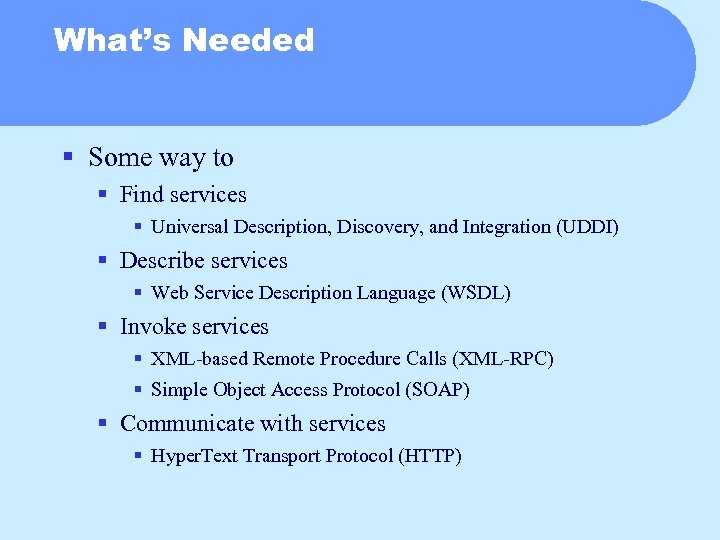
What’s Needed § Some way to § Find services § Universal Description, Discovery, and Integration (UDDI) § Describe services § Web Service Description Language (WSDL) § Invoke services § XML-based Remote Procedure Calls (XML-RPC) § Simple Object Access Protocol (SOAP) § Communicate with services § Hyper. Text Transport Protocol (HTTP)
Web Service Properties § Internet accessible § Standardized messaging § XML-based § Not tied to single OS or programming language § Self-describing § Discoverable
Course Goals § Three goals § Understand web technologies § Hatch ideas for research § Develop methodology for building complex systems § Focus on § Programming model § Also, data model § Engineering of large-scale systems
Course Components § Three components § Readings to introduce topics § Class discussions to deepen understanding and develop new ideas § Programming assignments to provide hands-on experience § Think § Research seminar § Learning by reflection and discussion § Systems building course § Learning by getting your hands dirty
Readings and Class
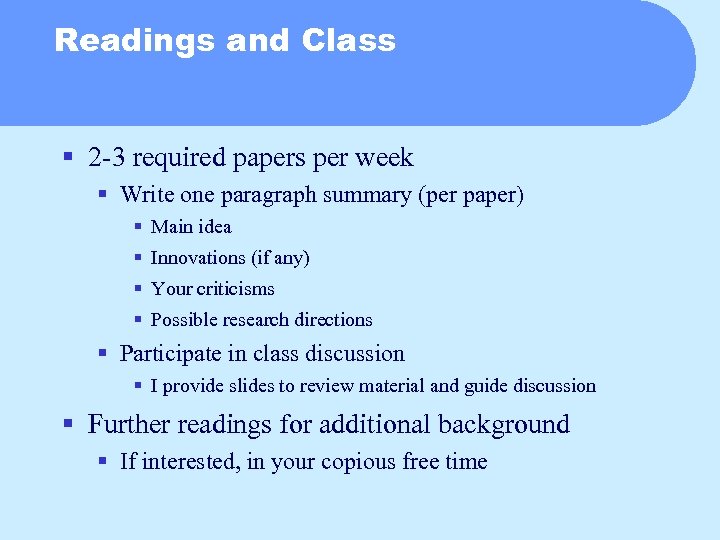
Readings and Class § 2 -3 required papers per week § Write one paragraph summary (per paper) § Main idea § Innovations (if any) § Your criticisms § Possible research directions § Participate in class discussion § I provide slides to review material and guide discussion § Further readings for additional background § If interested, in your copious free time
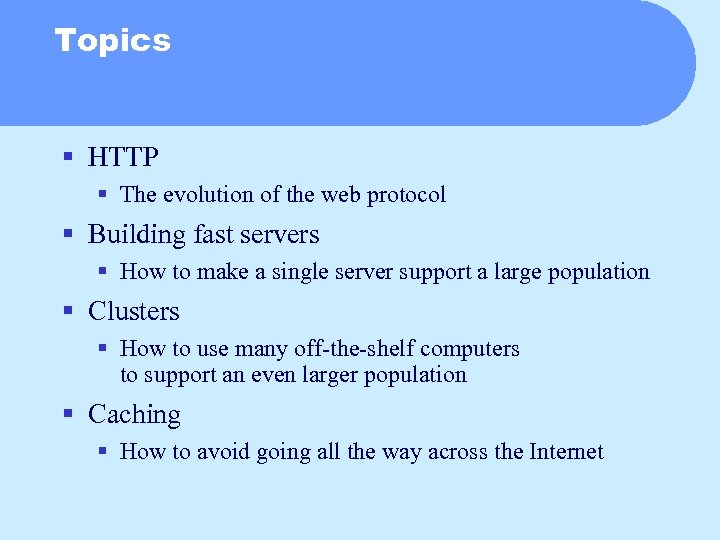
Topics § HTTP § The evolution of the web protocol § Building fast servers § How to make a single server support a large population § Clusters § How to use many off-the-shelf computers to support an even larger population § Caching § How to avoid going all the way across the Internet
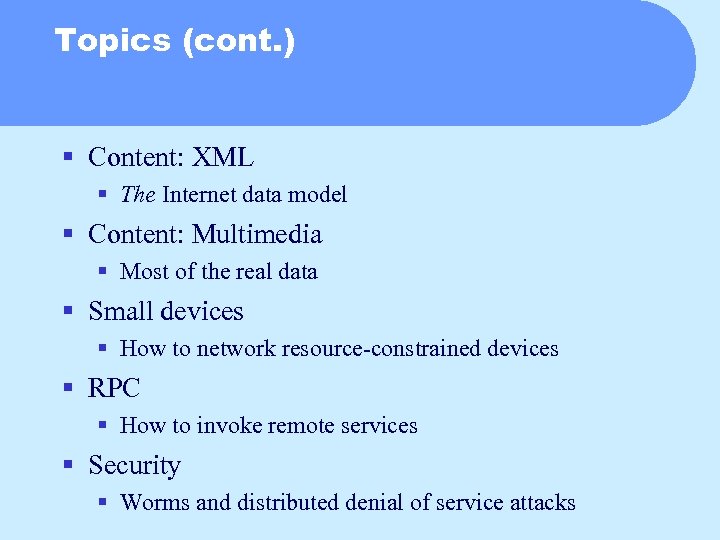
Topics (cont. ) § Content: XML § The Internet data model § Content: Multimedia § Most of the real data § Small devices § How to network resource-constrained devices § RPC § How to invoke remote services § Security § Worms and distributed denial of service attacks
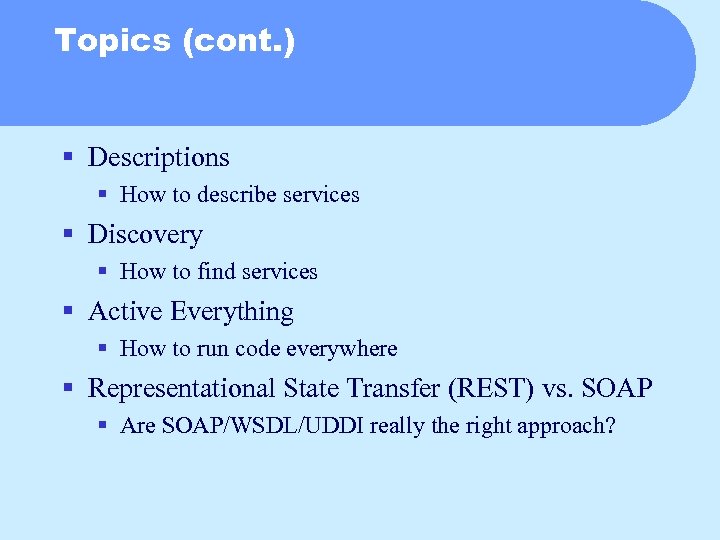
Topics (cont. ) § Descriptions § How to describe services § Discovery § How to find services § Active Everything § How to run code everywhere § Representational State Transfer (REST) vs. SOAP § Are SOAP/WSDL/UDDI really the right approach?
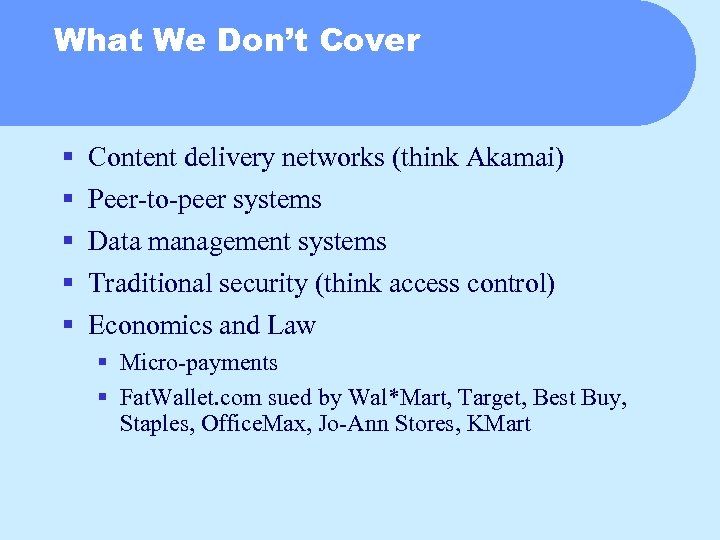
What We Don’t Cover § § § Content delivery networks (think Akamai) Peer-to-peer systems Data management systems Traditional security (think access control) Economics and Law § Micro-payments § Fat. Wallet. com sued by Wal*Mart, Target, Best Buy, Staples, Office. Max, Jo-Ann Stores, KMart
Programming Assignments
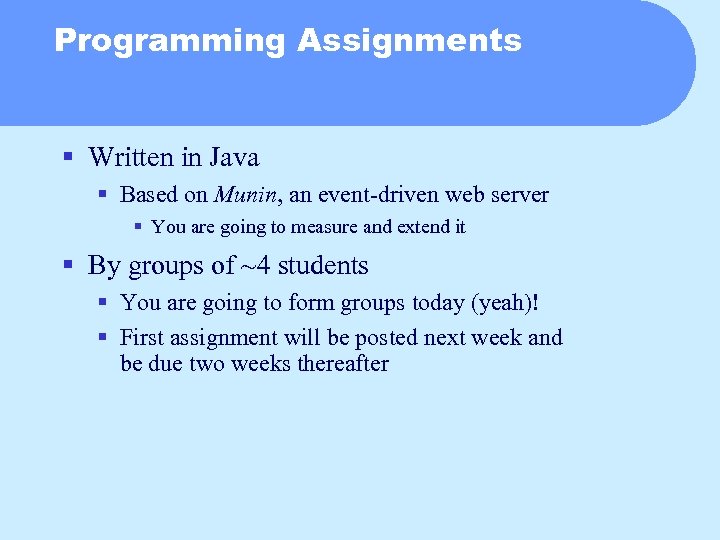
Programming Assignments § Written in Java § Based on Munin, an event-driven web server § You are going to measure and extend it § By groups of ~4 students § You are going to form groups today (yeah)! § First assignment will be posted next week and be due two weeks thereafter
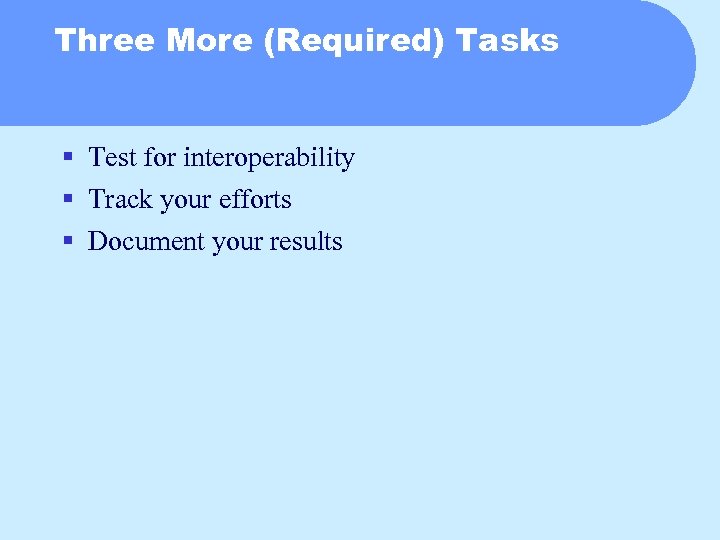
Three More (Required) Tasks § Test for interoperability § Track your efforts § Document your results
Perform Interoperability Testing § This class focuses on standardized protocols § Testing your group’s client with your group’s server is not enough § But don’t want to unleash (potentially) buggy code onto the Internet at large § Therefore § Each group needs to test its client with another group’s server and vice versa
Track Your Efforts § Time in hours person spent on § § § Preparation Design Implementation Basic testing and debugging Interoperability testing Documentation and write-up § Lines of code (use Java. NCSS) § Number of bugs § When introduced and when fixed
Document Your Results § A 3 -5 page extended abstract per assignment § Provide an overview of your goals and design § Convince me § Your client and server work § Comply with standards, handle error cases correctly § Your client and server meet your design goals § Perform a certain way § Other group’s client and server work § Report your project’s statistics § Share interesting anecdotes (e. g. , what was surprising)
Some Application Ideas (For Your Final Assignment) § Discussion board § Think: Paper summaries § Time tracker § Think: Productivity tracking § Web cam proxy § Think: George Orwell or Jen. Cam § Visitor announcement and tracking § Look at 7 th floor lobbies at 715 Broadway
Our Web Cams § Axis web cams with embedded web server § Directly connected to Internet § Support only up to 10 simultaneous connections § One camera overlooking Manhattan § http: //66. 93. 85. 13/ § Two cameras on the 7 th floor at 715 Broadway § orwell 1. cs. nyu. edu, orwell 2. cs. nyu. edu

A Few More Things
Collaboration Policy § Discuss readings and topics with each other § But write reading summaries individually § Help each other with programming questions and interoperability testing § But do not share code outside groups § No sharing between groups § No code from outside resources (such as Internet) § No java. net. URL, java. net. URLConnection
Administrivia § One web site § http: //www. cs. nyu. edu/rgrimm/teaching/sp 03 -web/ § Two mailing lists § § g 22_3033_008_fa 03@cs. nyu. edu g 22_3033_008_fa 03 -readings@cs. nyu. edu Subscribe to both lists Post only plain-text messages, not HTML § x groups § Start forming groups now, notify me by Friday
Administrivia (cont. ) § No official office hours § Just drop by § Email me to schedule a meeting § 715 Broadway, room 711
Let’s Get Started: HTTP/1. 0
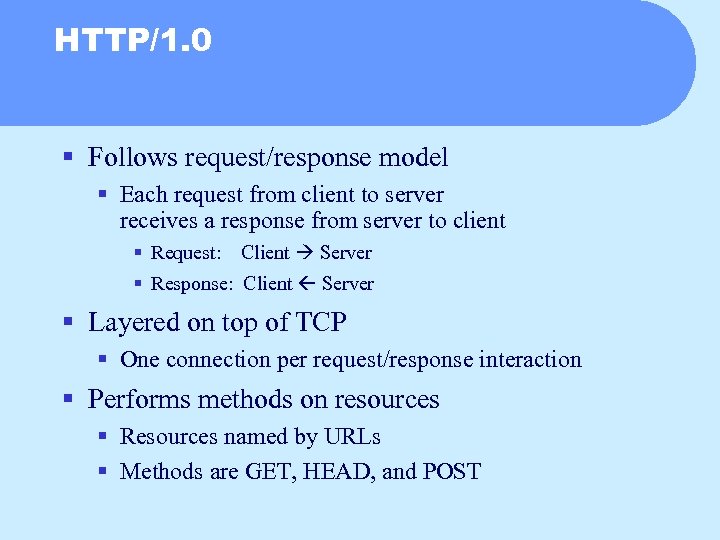
HTTP/1. 0 § Follows request/response model § Each request from client to server receives a response from server to client § Request: Client Server § Response: Client Server § Layered on top of TCP § One connection per request/response interaction § Performs methods on resources § Resources named by URLs § Methods are GET, HEAD, and POST
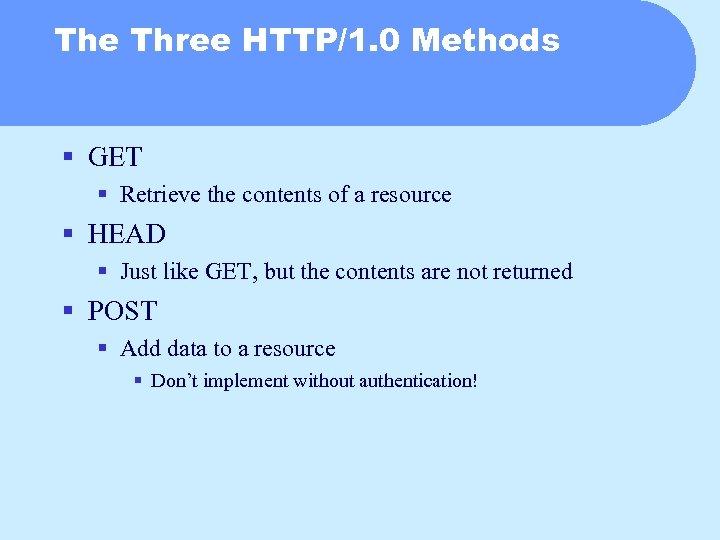
The Three HTTP/1. 0 Methods § GET § Retrieve the contents of a resource § HEAD § Just like GET, but the contents are not returned § POST § Add data to a resource § Don’t implement without authentication!
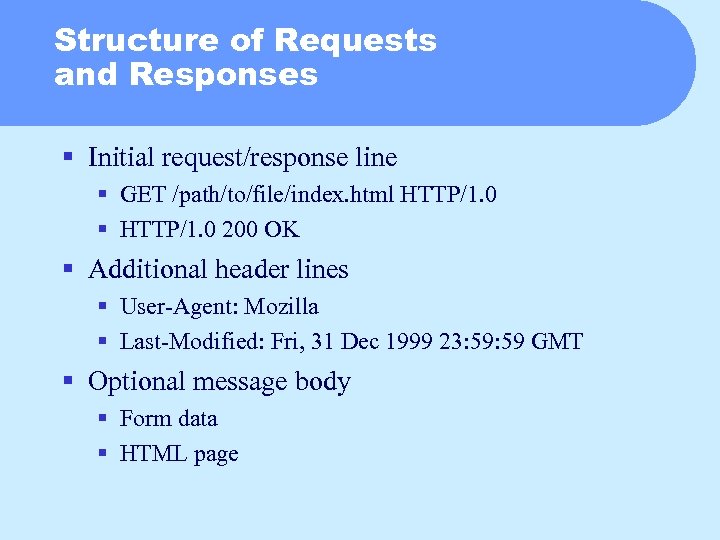
Structure of Requests and Responses § Initial request/response line § GET /path/to/file/index. html HTTP/1. 0 § HTTP/1. 0 200 OK § Additional header lines § User-Agent: Mozilla § Last-Modified: Fri, 31 Dec 1999 23: 59 GMT § Optional message body § Form data § HTML page
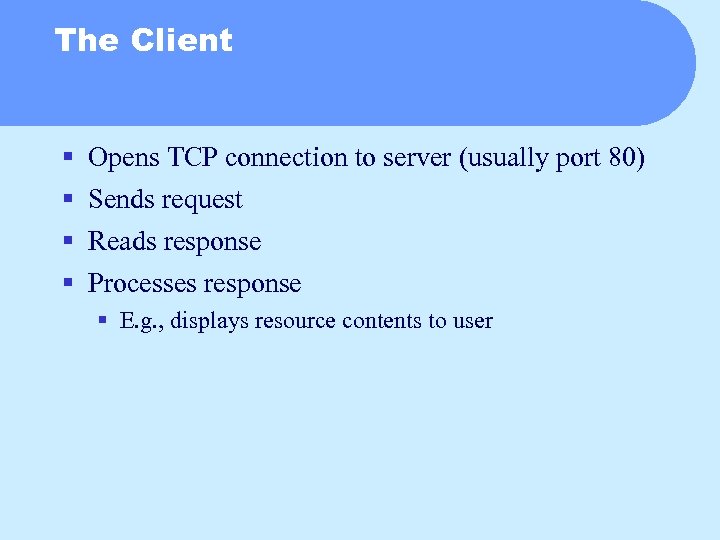
The Client § § Opens TCP connection to server (usually port 80) Sends request Reads response Processes response § E. g. , displays resource contents to user
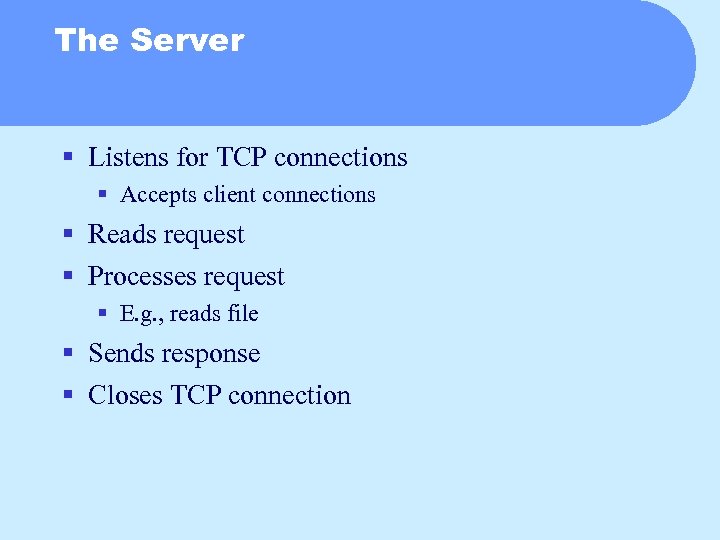
The Server § Listens for TCP connections § Accepts client connections § Reads request § Processes request § E. g. , reads file § Sends response § Closes TCP connection
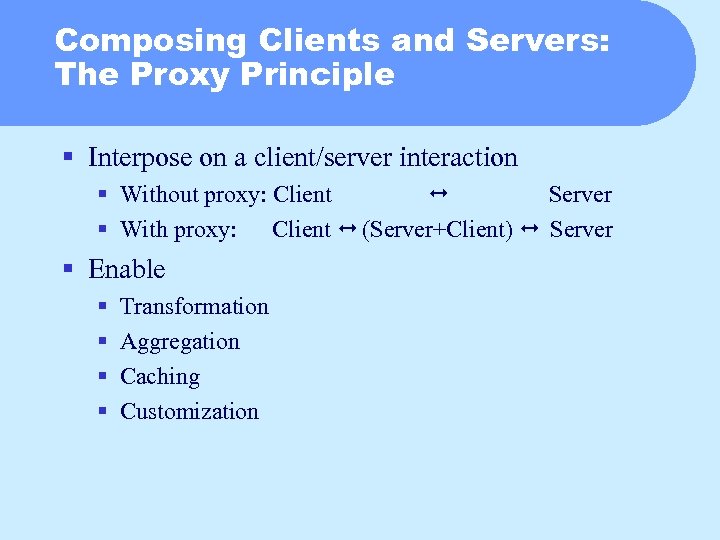
Composing Clients and Servers: The Proxy Principle § Interpose on a client/server interaction § Without proxy: Client Server § With proxy: Client (Server+Client) Server § Enable § § Transformation Aggregation Caching Customization
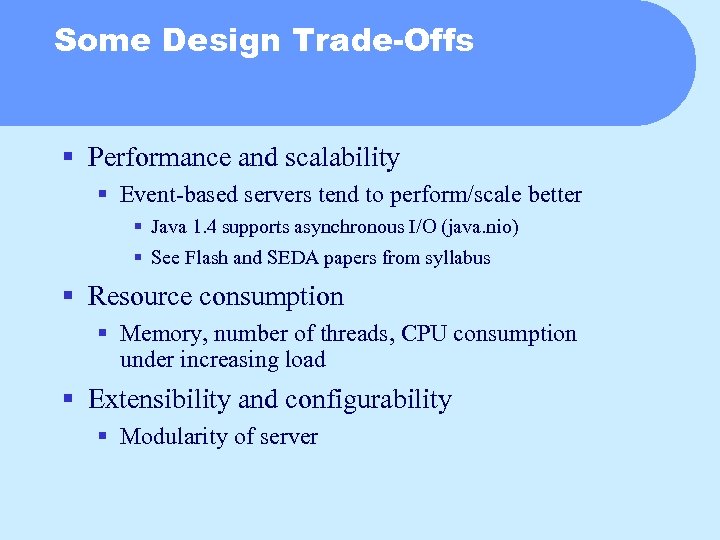
Some Design Trade-Offs § Performance and scalability § Event-based servers tend to perform/scale better § Java 1. 4 supports asynchronous I/O (java. nio) § See Flash and SEDA papers from syllabus § Resource consumption § Memory, number of threads, CPU consumption under increasing load § Extensibility and configurability § Modularity of server
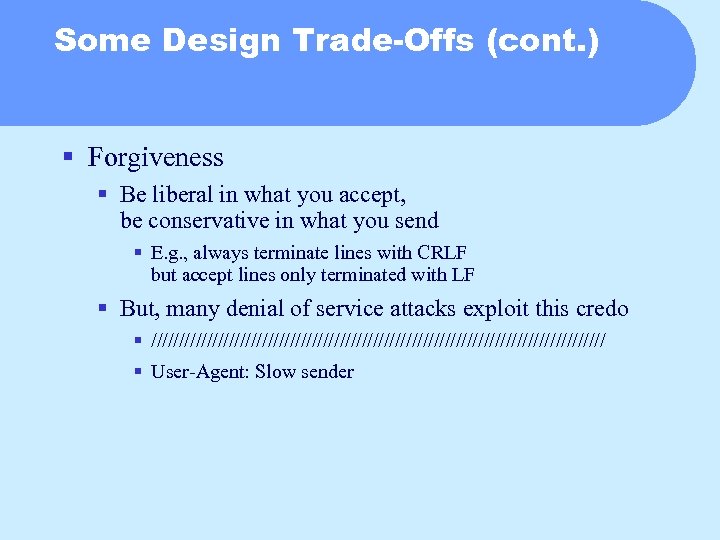
Some Design Trade-Offs (cont. ) § Forgiveness § Be liberal in what you accept, be conservative in what you send § E. g. , always terminate lines with CRLF but accept lines only terminated with LF § But, many denial of service attacks exploit this credo § ///////////////////////////////////////// § User-Agent: Slow sender
Finally: Meet and Greet
Скачать презентацию G 22 3033 -008 Web Services and Applications
53fcf721428f9db7244fad7a8fc71aba.ppt