


 Скачать презентацию Future Tense We can use the simple
e8ad3c3a91086c718f401fd70ae8ce54.ppt
- Количество слайдов: 17
 Future Tense
 We can use the simple future tense : When we predict a future event or situation, 2. e. g. I think that the white robot will win the race. 3. 2. When we make decisions at the time of speaking, e. g. What time do you want to meet tomorrow morning? I’ll meet you at ten. 1.
 Adverbs that used in future tense: tomorrow The day after tomorrow In a few days In two weeks ’ time In a few minutes Two days later Next Sunday In the future
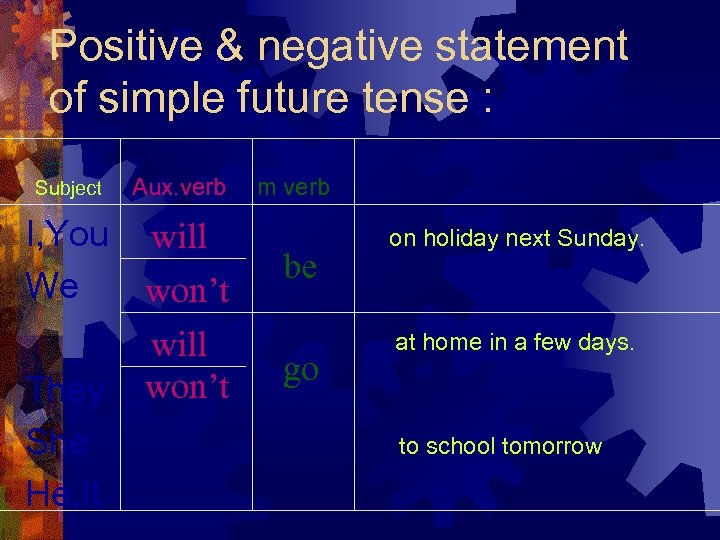 Positive & negative statement of simple future tense : Subject I, You We They She He, It Aux. verb will won’t m. verb be go on holiday next Sunday. at home in a few days. to school tomorrow
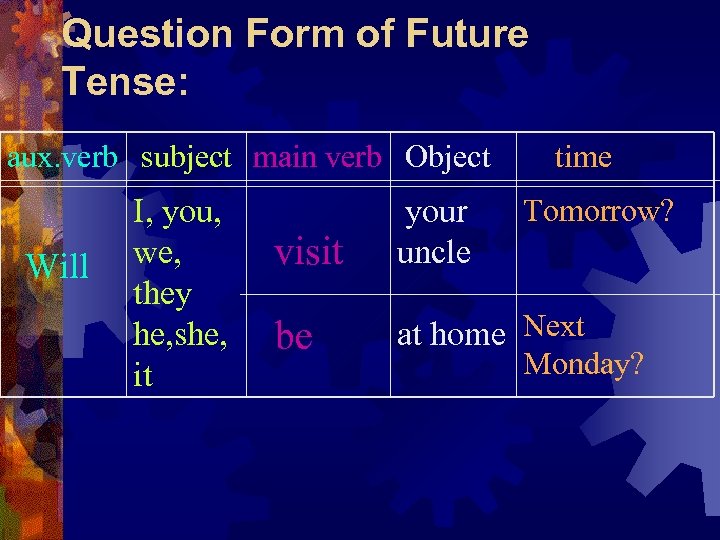 Question Form of Future Tense: aux. verb subject main verb Object Will I, you, we, they he, she, it time Tomorrow? visit your uncle be at home Next Monday?
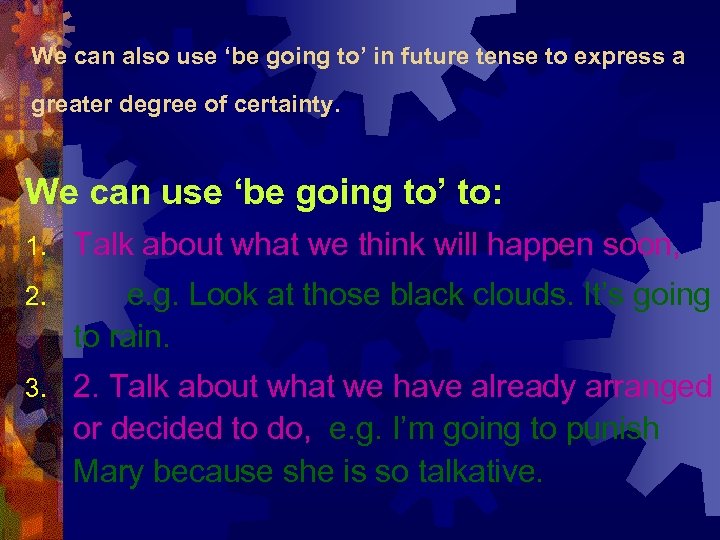 We can also use ‘be going to’ in future tense to express a greater degree of certainty. We can use ‘be going to’ to: 1. Talk about what we think will happen soon, 2. e. g. Look at those black clouds. It’s going to rain. 3. 2. Talk about what we have already arranged or decided to do, e. g. I’m going to punish Mary because she is so talkative.
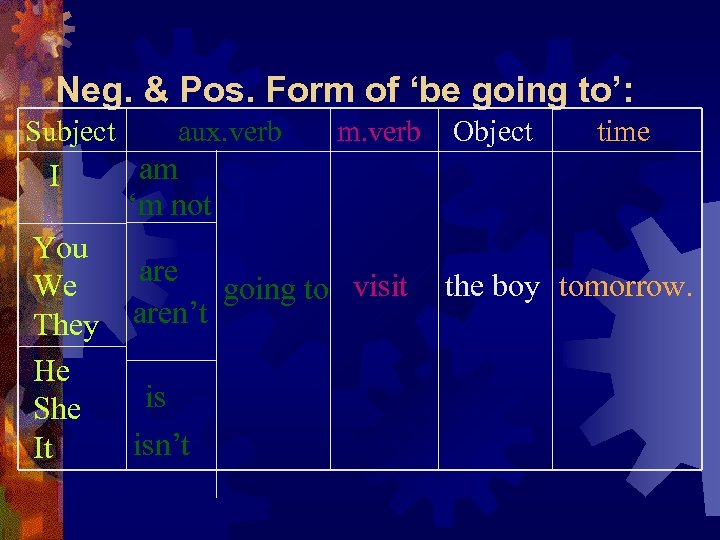 Neg. & Pos. Form of ‘be going to’: Subject I You We They He She It aux. verb m. verb Object time am ‘m not are going to visit aren’t is isn’t the boy tomorrow.
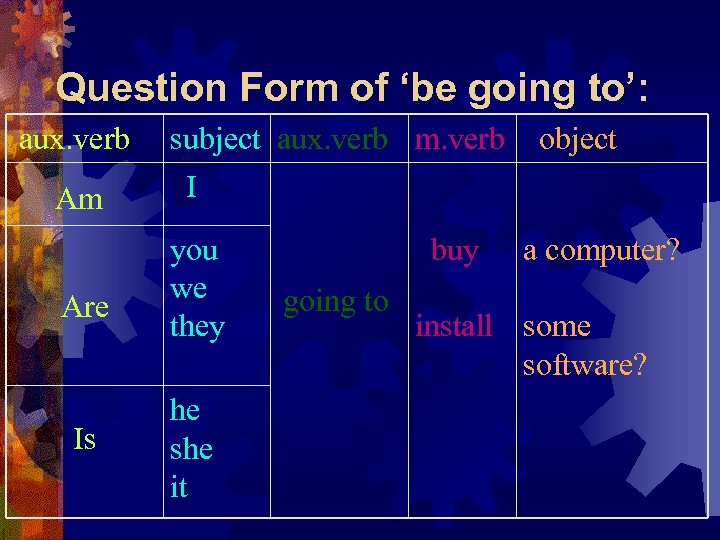 Question Form of ‘be going to’: aux. verb Am Are Is subject aux. verb m. verb I you we they he she it buy going to object a computer? install some software?
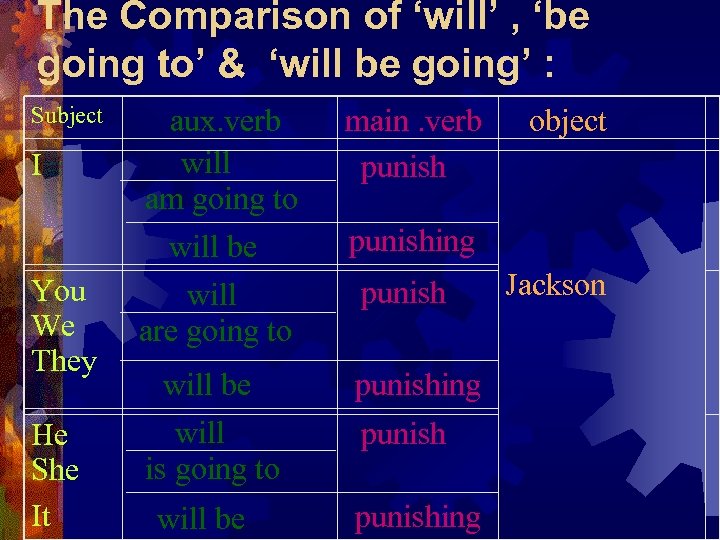 The Comparison of ‘will’ , ‘be going to’ & ‘will be going’ : Subject I You We They He She It aux. verb will am going to will be will are going to main. verb punish will be will is going to punishing will be object punishing punishing Jackson
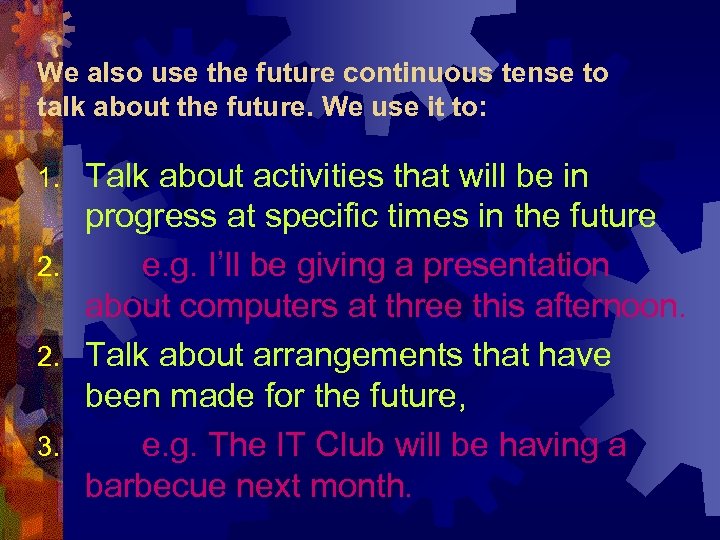 We also use the future continuous tense to talk about the future. We use it to: Talk about activities that will be in progress at specific times in the future, 2. e. g. I’ll be giving a presentation about computers at three this afternoon. 2. Talk about arrangements that have been made for the future, 3. e. g. The IT Club will be having a barbecue next month. 1.
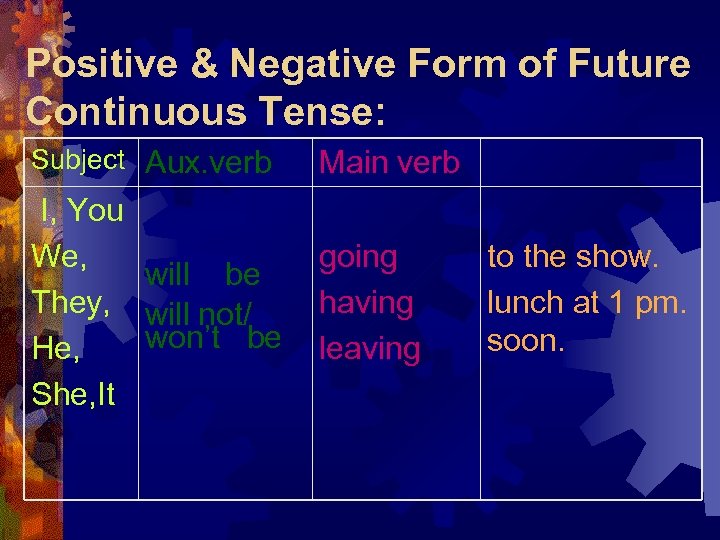 Positive & Negative Form of Future Continuous Tense: Subject Aux. verb Main verb I, You We, will be They, will not/ won’t be He, She, It going having leaving to the show. lunch at 1 pm. soon.
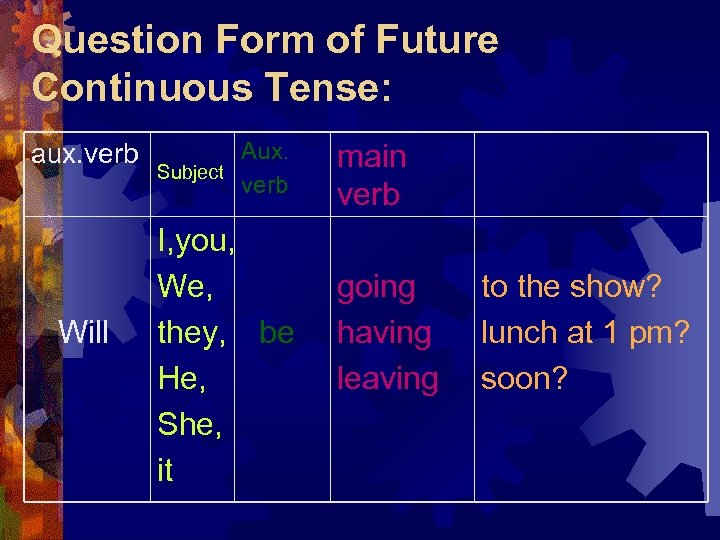 Question Form of Future Continuous Tense: aux. verb Will Aux. Subject verb I, you, We, they, be He, She, it main verb going having leaving to the show? lunch at 1 pm? soon?
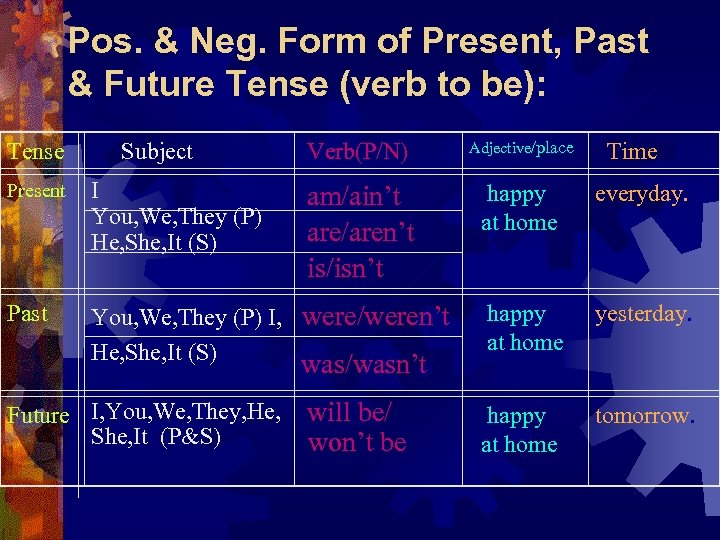 Pos. & Neg. Form of Present, Past & Future Tense (verb to be): Tense Subject Verb(P/N) Adjective/place am/ain’t are/aren’t is/isn’t happy at home everyday. happy at home yesterday. happy at home tomorrow. Present I You, We, They (P) He, She, It (S) Past You, We, They (P) I, were/weren’t He, She, It (S) was/wasn’t Future I, You, We, They, He, She, It (P&S) will be/ won’t be Time
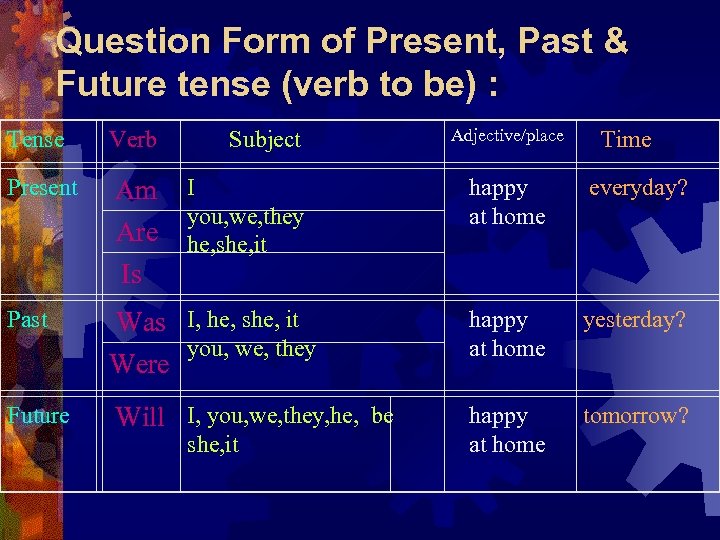 Question Form of Present, Past & Future tense (verb to be) : Tense Verb Subject Present Am Are Is I you, we, they he, she, it Past Future Adjective/place Time happy at home everyday? Was I, he, she, it you, we, they Were happy at home yesterday? Will I, you, we, they, he, be happy at home tomorrow? she, it
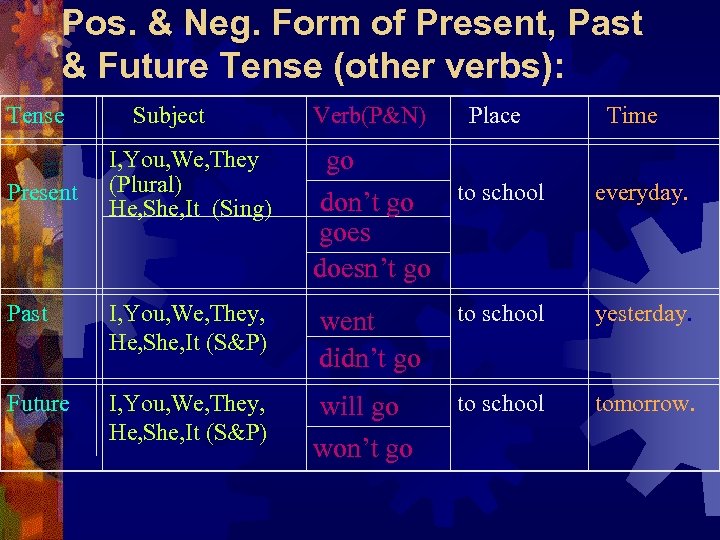 Pos. & Neg. Form of Present, Past & Future Tense (other verbs): Tense Subject Verb(P&N) Place Time I, You, We, They (Plural) He, She, It (Sing) go to school don’t go goes doesn’t go Past I, You, We, They, He, She, It (S&P) went didn’t go to school yesterday. Future I, You, We, They, He, She, It (S&P) will go won’t go to school tomorrow. Present everyday.
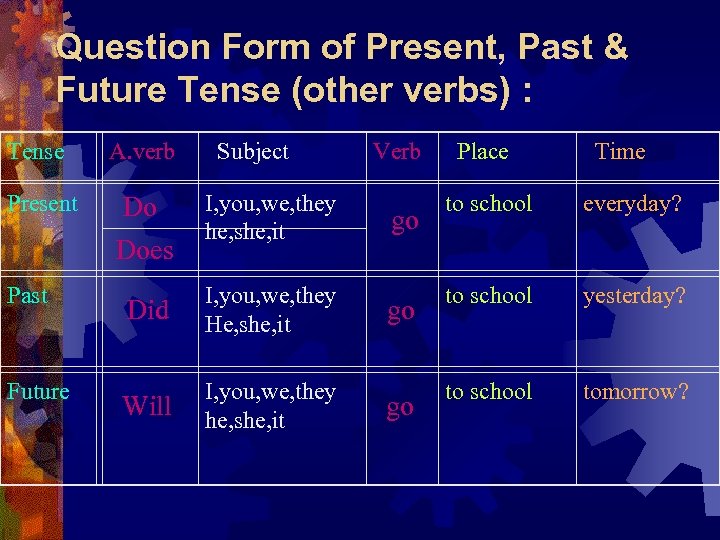 Question Form of Present, Past & Future Tense (other verbs) : Tense A. verb Present Do Does Past Future Subject I, you, we, they he, she, it Did I, you, we, they He, she, it Will I, you, we, they he, she, it Verb go go go Place Time to school everyday? to school yesterday? to school tomorrow?
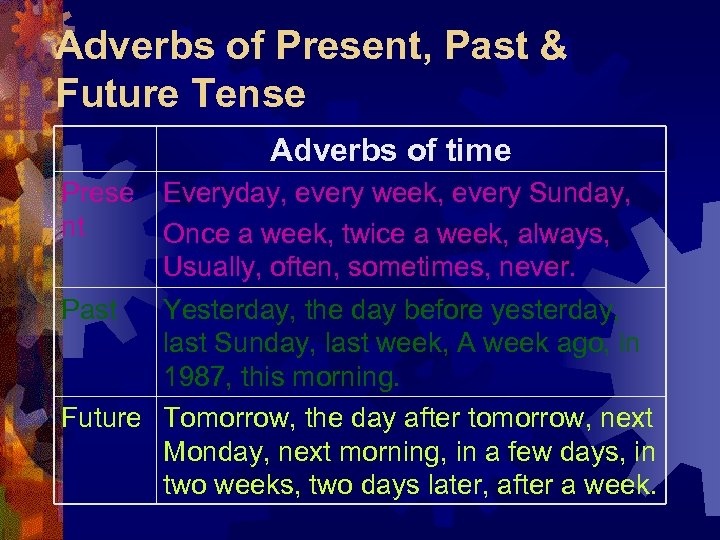 Adverbs of Present, Past & Future Tense Adverbs of time Prese nt Past Everyday, every week, every Sunday, Once a week, twice a week, always, Usually, often, sometimes, never. Yesterday, the day before yesterday, last Sunday, last week, A week ago, in 1987, this morning. Future Tomorrow, the day after tomorrow, next Monday, next morning, in a few days, in two weeks, two days later, after a week.