


 Скачать презентацию Future plans for astro-particle physics activities CSN 2
2b23af1c9d9dd5d1ecce50061ced52e8.ppt
- Количество слайдов: 25
 Future plans for astro-particle physics activities (CSN 2) at LNF A. Paoloni LNF Scientific Committee November 13 th 2015
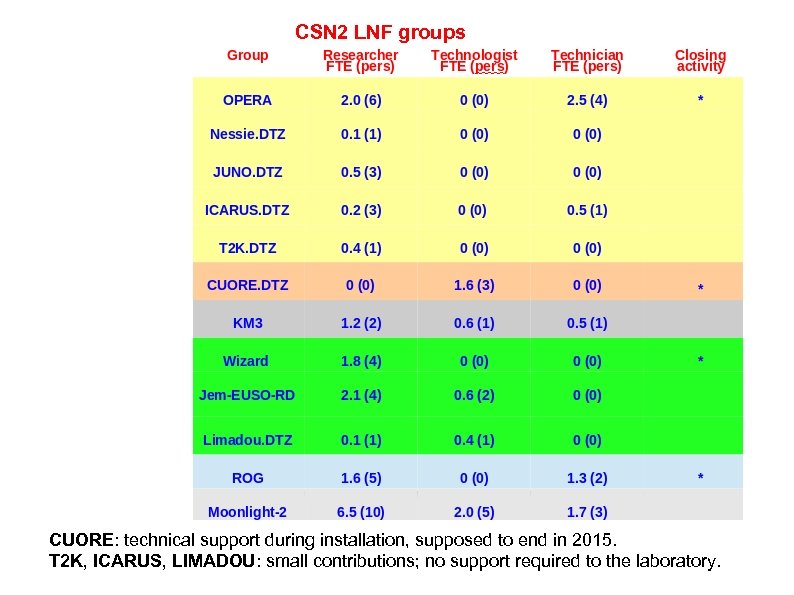 CSN 2 LNF groups CUORE: technical support during installation, supposed to end in 2015. T 2 K, ICARUS, LIMADOU: small contributions; no support required to the laboratory.
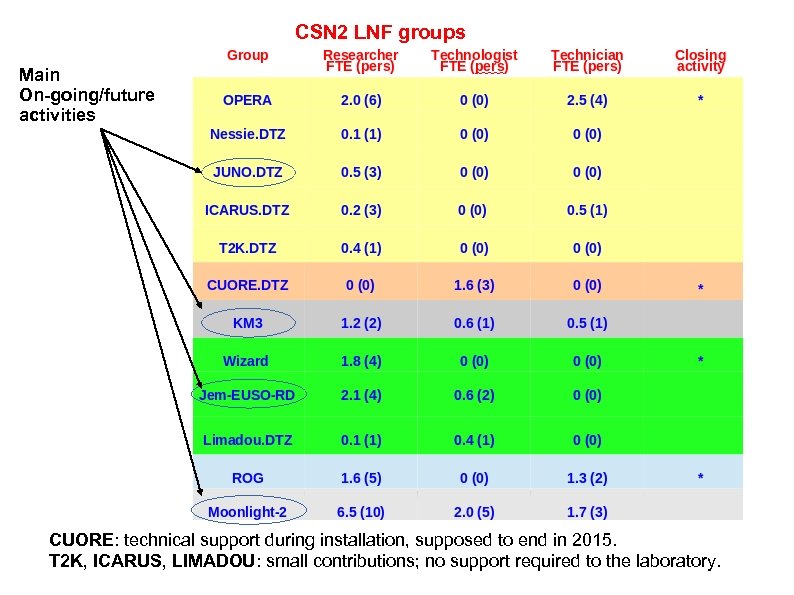 CSN 2 LNF groups Main On-going/future activities CUORE: technical support during installation, supposed to end in 2015. T 2 K, ICARUS, LIMADOU: small contributions; no support required to the laboratory.
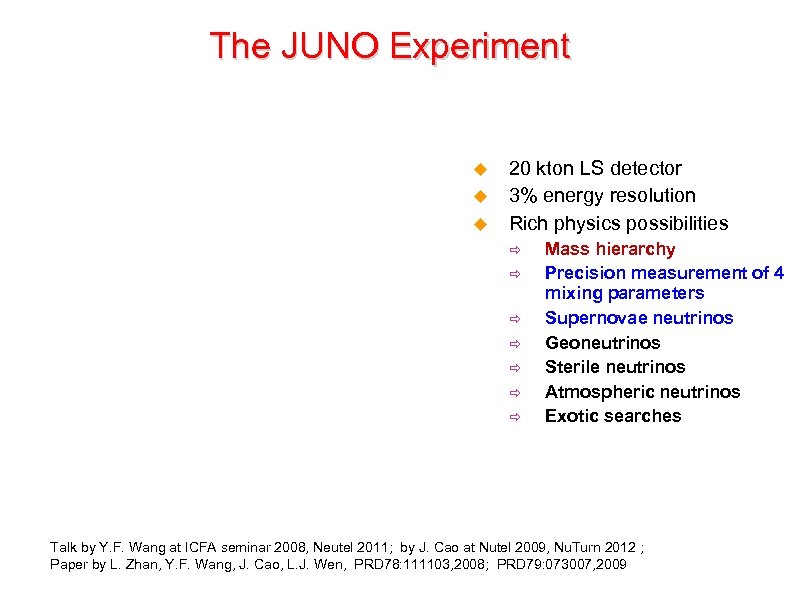 The JUNO Experiment 20 kton LS detector 3% energy resolution Rich physics possibilities Mass hierarchy Precision measurement of 4 mixing parameters Supernovae neutrinos Geoneutrinos Sterile neutrinos Atmospheric neutrinos Exotic searches Talk by Y. F. Wang at ICFA seminar 2008, Neutel 2011; by J. Cao at Nutel 2009, Nu. Turn 2012 ; Paper by L. Zhan, Y. F. Wang, J. Cao, L. J. Wen, PRD 78: 111103, 2008; PRD 79: 073007, 2009
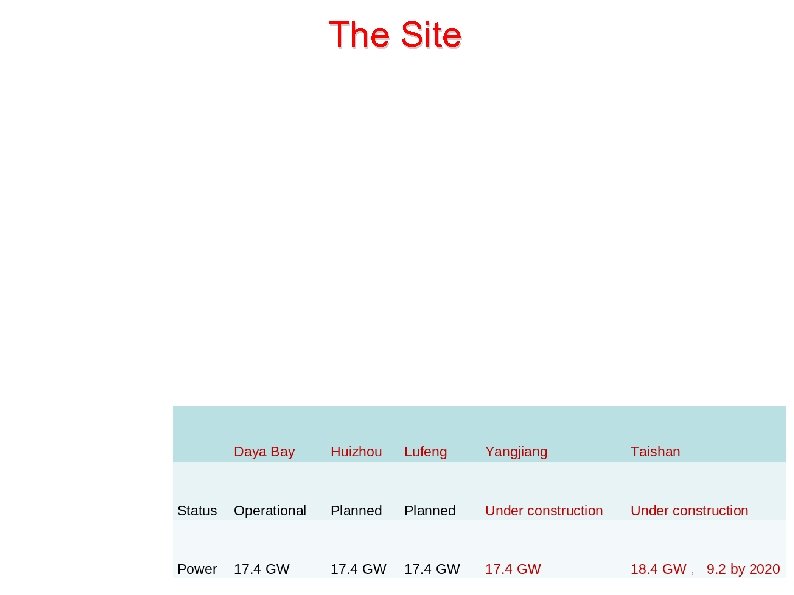 The Site Daya Bay JUNO
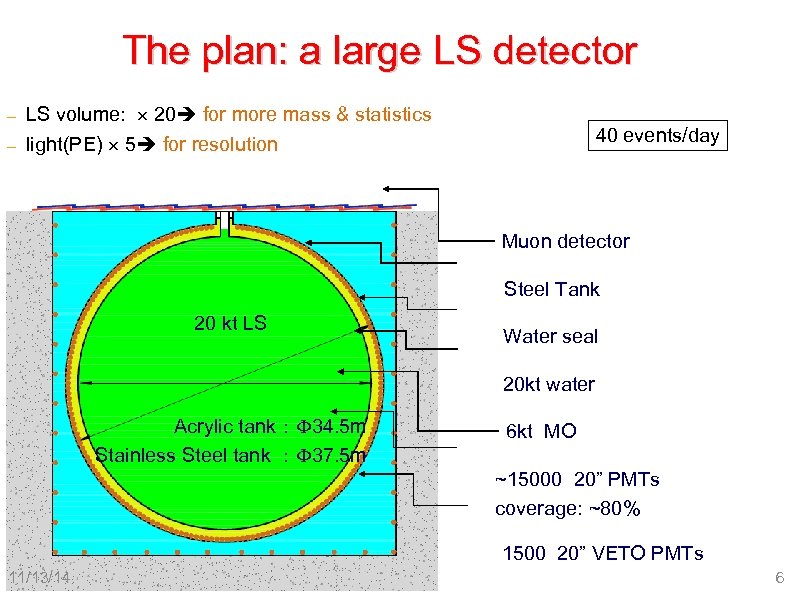 The plan: a large LS detector – LS volume: 20 for more mass & statistics – light(PE) 5 for resolution 40 events/day Muon detector Steel Tank 20 kt LS Water seal 20 kt water Acrylic tank: 34. 5 m Stainless Steel tank : 37. 5 m 6 kt MO ~15000 20” PMTs coverage: ~80% 1500 20” VETO PMTs 11/13/14 6
 Mass Hierarchy at Reactors L. Zhan et al. , PRD 78: 111103, 2008; PRD 79: 073007, 2009
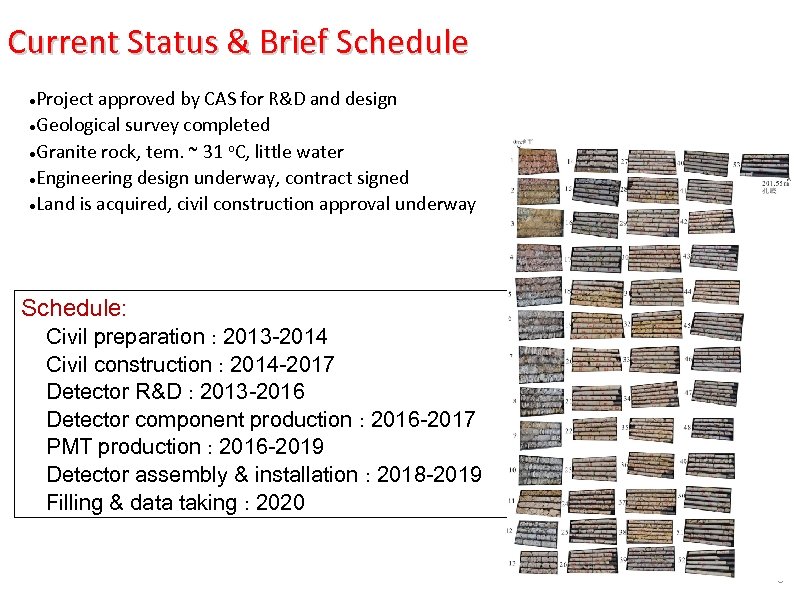 Current Status & Brief Schedule Project approved by CAS for R&D and design Geological survey completed o Granite rock, tem. ~ 31 C, little water Engineering design underway, contract signed Land is acquired, civil construction approval underway Schedule: Civil preparation: 2013 -2014 Civil construction: 2014 -2017 Detector R&D: 2013 -2016 Detector component production: 2016 -2017 PMT production: 2016 -2019 Detector assembly & installation: 2018 -2019 Filling & data taking: 2020 8
 JUNO collaboration JUNO is a chinese experiment with contributions from: INFN (Milano, Ferrara, Perugia, Frascati, Padova, Roma 3), France, Germany, Russia, Cech Republic and USA. The participation is approved by INFN, with an extra-budget (besides CSN 2 funding) of 7 MEuro for scintillator purification. LNF contribution: The OPERA Target Tracker will be employed as a Top Tracker in JUNO. The Hamamatsu 64 ch MAPMT are INFN property. New DAQ and trigger system for the Top Tracker is needed for the utilization in JUNO.
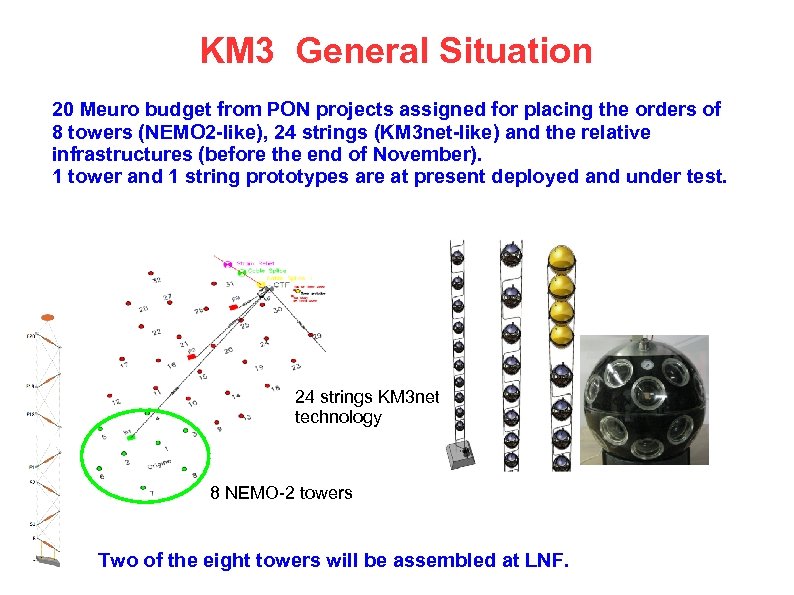 KM 3 General Situation 20 Meuro budget from PON projects assigned for placing the orders of 8 towers (NEMO 2 -like), 24 strings (KM 3 net-like) and the relative infrastructures (before the end of November). 1 tower and 1 string prototypes are at present deployed and under test. 24 strings KM 3 net technology 8 NEMO-2 towers Two of the eight towers will be assembled at LNF.
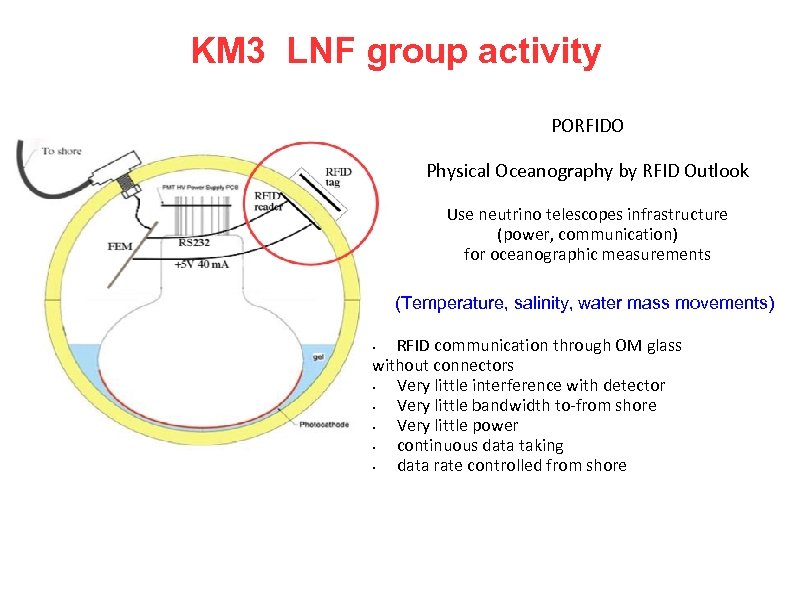 KM 3 LNF group activity PORFIDO Physical Oceanography by RFID Outlook Use neutrino telescopes infrastructure (power, communication) for oceanographic measurements (Temperature, salinity, water mass movements) RFID communication through OM glass without connectors Very little interference with detector Very little bandwidth to-from shore Very little power continuous data taking data rate controlled from shore
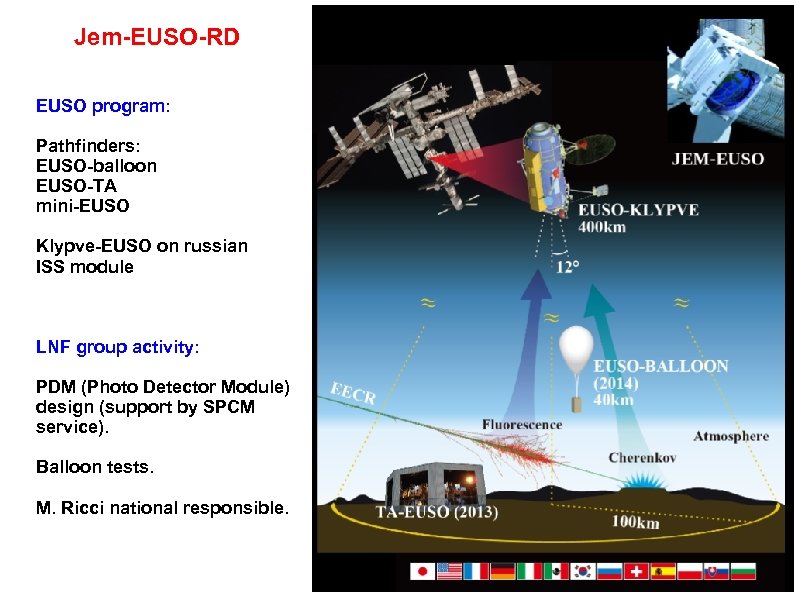 Jem-EUSO-RD EUSO program: Pathfinders: EUSO-balloon EUSO-TA mini-EUSO Klypve-EUSO on russian ISS module LNF group activity: PDM (Photo Detector Module) design (support by SPCM service). Balloon tests. M. Ricci national responsible.
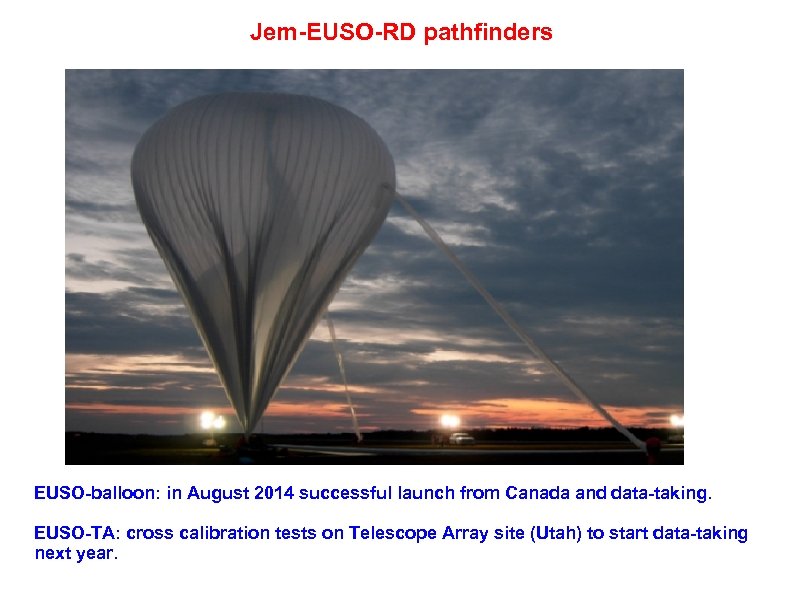 Jem-EUSO-RD pathfinders EUSO-balloon: in August 2014 successful launch from Canada and data-taking. EUSO-TA: cross calibration tests on Telescope Array site (Utah) to start data-taking next year.
 Launch foreseen on 2016.
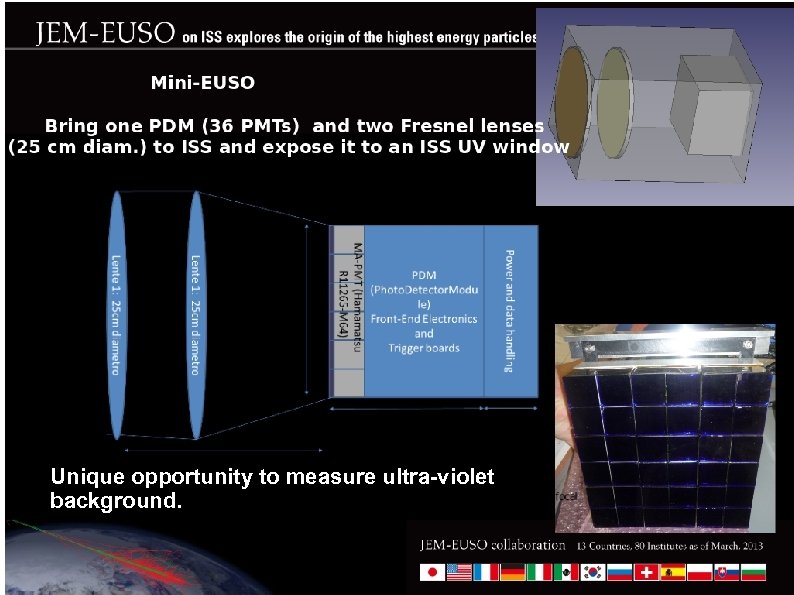 Unique opportunity to measure ultra-violet background.
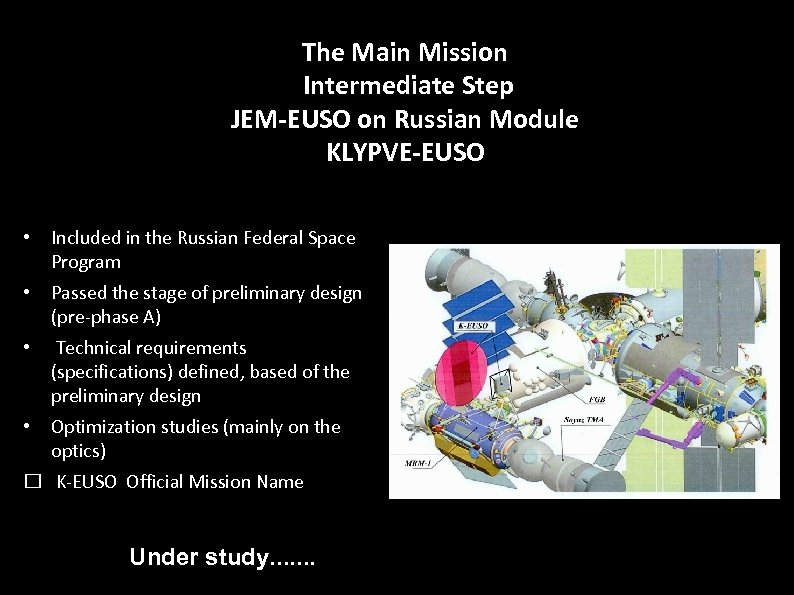 The Main Mission Intermediate Step JEM-EUSO on Russian Module KLYPVE-EUSO • Included in the Russian Federal Space Program • Passed the stage of preliminary design (pre-phase A) • Technical requirements (specifications) defined, based of the preliminary design • Optimization studies (mainly on the optics) K-EUSO Official Mission Name Under study. . . .
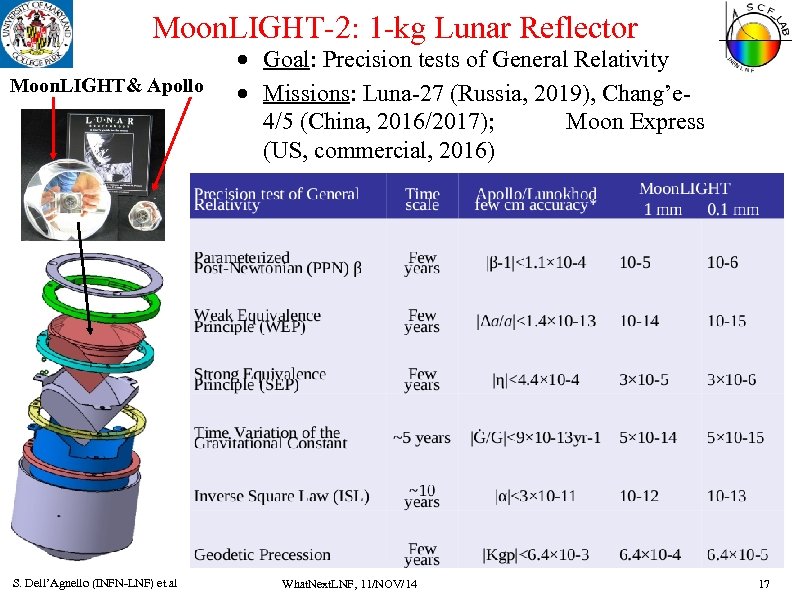 Moon. LIGHT-2: 1 -kg Lunar Reflector Moon. LIGHT& Apollo S. Dell’Agnello (INFN-LNF) et al Goal: Precision tests of General Relativity Missions: Luna-27 (Russia, 2019), Chang’e 4/5 (China, 2016/2017); Moon Express (US, commercial, 2016) What. Next. LNF, 11/NOV/14 17
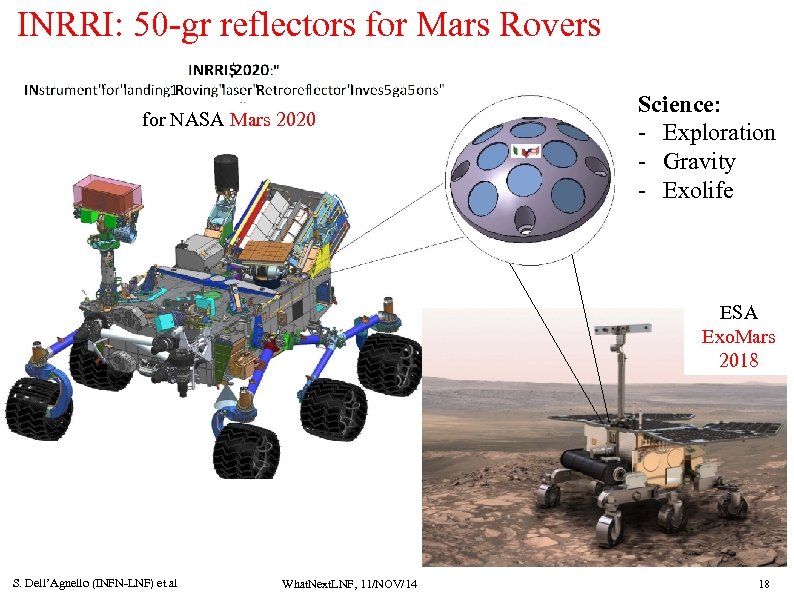 INRRI: 50 -gr reflectors for Mars Rovers for NASA Mars 2020 Science: - Exploration - Gravity - Exolife ESA Exo. Mars 2018 S. Dell’Agnello (INFN-LNF) et al What. Next. LNF, 11/NOV/14 18
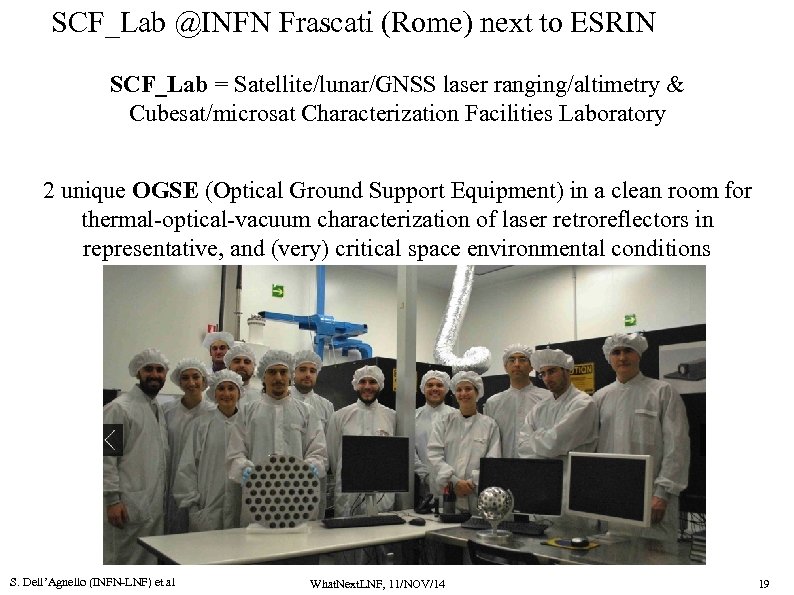 SCF_Lab @INFN Frascati (Rome) next to ESRIN SCF_Lab = Satellite/lunar/GNSS laser ranging/altimetry & Cubesat/microsat Characterization Facilities Laboratory 2 unique OGSE (Optical Ground Support Equipment) in a clean room for thermal-optical-vacuum characterization of laser retroreflectors in representative, and (very) critical space environmental conditions S. Dell’Agnello (INFN-LNF) et al What. Next. LNF, 11/NOV/14 19
 Affiliation of INFN to NASA/SSERVI SSERVI, Solar System Exploration Research Virtual Institute Centrally managed by NASA-ARC, sservi. nasa. gov Solar system Payloads of laser Retroreflectors of INfn for General re. Lativity, Exploration and plane. Tary Science INFN: 1 st Italian Partner of SSERVI Others: UK, Germany, Canada, Korea Netherlands, Israel, Saudi Arabia S. Dell’Agnello (INFN-LNF) et al What. Next. LNF, 11/NOV/14 20
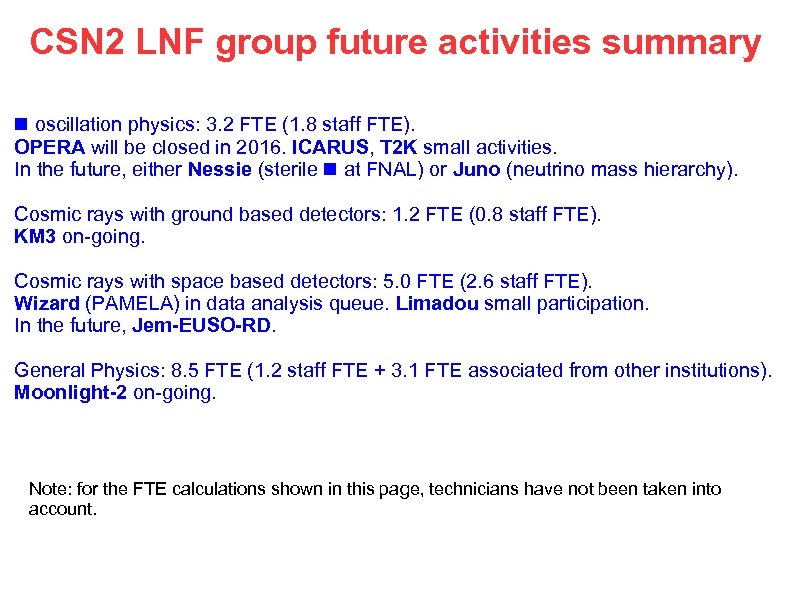 CSN 2 LNF group future activities summary oscillation physics: 3. 2 FTE (1. 8 staff FTE). OPERA will be closed in 2016. ICARUS, T 2 K small activities. In the future, either Nessie (sterile at FNAL) or Juno (neutrino mass hierarchy). Cosmic rays with ground based detectors: 1. 2 FTE (0. 8 staff FTE). KM 3 on-going. Cosmic rays with space based detectors: 5. 0 FTE (2. 6 staff FTE). Wizard (PAMELA) in data analysis queue. Limadou small participation. In the future, Jem-EUSO-RD. General Physics: 8. 5 FTE (1. 2 staff FTE + 3. 1 FTE associated from other institutions). Moonlight-2 on-going. Note: for the FTE calculations shown in this page, technicians have not been taken into account.
 What next LNF: Perspectives of fundamental physics at the Frascati Laboratory. 10 -11 November 2014
 Spares
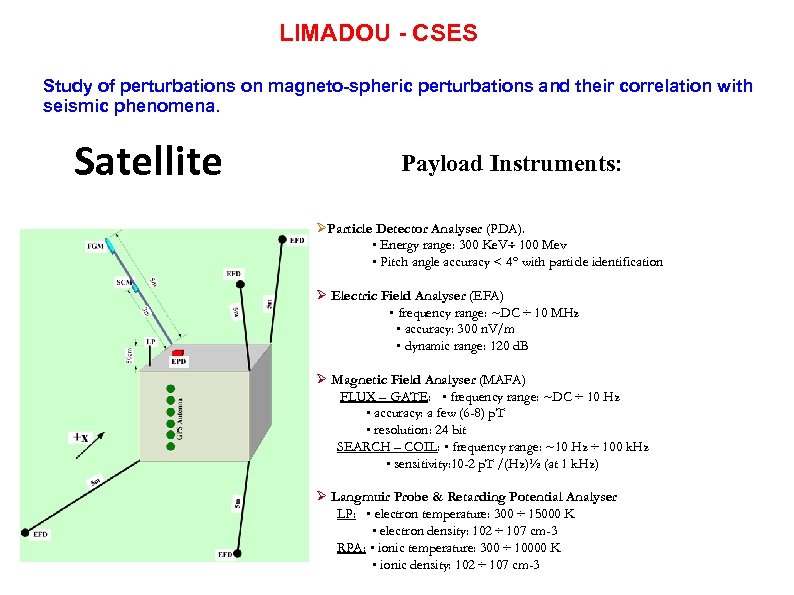 LIMADOU - CSES Study of perturbations on magneto-spheric perturbations and their correlation with seismic phenomena. Satellite Payload Instruments: Particle Detector Analyser (PDA). • Energy range: 300 Ke. V 100 Mev • Pitch angle accuracy < 4° with particle identification Electric Field Analyser (EFA) • frequency range: ~DC ÷ 10 MHz • accuracy: 300 n. V/m • dynamic range: 120 d. B Magnetic Field Analyser (MAFA) FLUX – GATE: • frequency range: ~DC ÷ 10 Hz • accuracy: a few (6 -8) p. T • resolution: 24 bit SEARCH – COIL: • frequency range: ~10 Hz ÷ 100 k. Hz • sensitivity: 10 -2 p. T /(Hz)½ (at 1 k. Hz) Langmuir Probe & Retarding Potential Analyser LP: • electron temperature: 300 ÷ 15000 K • electron density: 102 ÷ 107 cm-3 RPA: • ionic temperature: 300 ÷ 10000 K • ionic density: 102 ÷ 107 cm-3